Art World News

6 Questions With Fanny Lakoubay, Founder of LAL ART Advisory, About the Future of the Digital Art Market

6 Questions With Fanny Lakoubay, Founder of LAL ART Advisory, About the Future of the Digital Art Market

This article is part of the Artnet Intelligence Report Mid-Year Review 2023. Marking five years of our biannual Intelligence Reports, this inaugural half-year edition paints a data-driven picture of today’s art world, from the latest market results to the artists and artworks leading the conversation. Read the full report here.

In three words, how would you characterize the digital art market at this point in 2023?

Emerging, uneven, and promising. This segment has been around for many years, but it has always remained a very small portion of the contemporary art market. However, artists are building for the long term.

What do public sales figures not tell us about what’s going on in the market for digital art?

The press usually highlights auction records, which can be overwhelming for digital art, as sales are often linked to cryptocurrency ups and downs. Collectors of physical artworks are slowly adding this medium to their collections and young people are buying in, but both efforts will take time.

What shifts in the digital art market have surprised you most this year?

We are in a situation similar to that of 2020, where the market is in search of the next wave of collectors. There is a risk of oversupply, but also a great opportunity to get in while prices are not yet very high.

What trends are worth watching closely?

Blue-chip collections, especially in the generative art category, are maintaining high prices. AI art is also developing as a genre, as well as other categories, such as literary NFTs, performance art on the blockchain, digital sculpture, and metaverse architecture. Finally, the new wave of digital artists is bringing renewed attention to historic computer artists, such as Herbert W. Franke, Frieder Nake, and Vera Molnár. Galleries have started exhibiting these pioneering works alongside new digital works, allowing collectors to see a larger art history. This is a great way to build the future on a strong base.

Artist Vera Molnár in her Home and Studio Workshop in Paris. Photo: Catherine Panchout / Sygma via Getty Images.

Artist Vera Molnár in her home and studio workshop in Paris. Photo: Catherine Panchout/Sygma via Getty Images.

How are digital art collectors approaching their investments differently in the wake of crypto winter?

While many crypto art collectors have slowed down, it seems to be mostly due to an oversaturation of works. This creates tension for digital artists who are not yet widely recognized or supported by a core collector group.

What new and emerging technologies could impact the future of the digital art market?

The current blockchain technology still needs to be explored further, and a service layer, such as asset security, insurance, backup services, and display options, needs to be developed to onboard the next wave of collectors.

AI is definitely going to make this happen faster. Besides, decentralized governance and new ways to organize artist collectives, exhibitions, and documentation are not to be underestimated. Many museums, for example, are looking at ways to use DAOs to get their communities to the next level.

Follow Artnet News on Facebook:
Want to stay ahead of the art world? Subscribe to our newsletter to get the breaking news, eye-opening interviews, and incisive critical takes that drive the conversation forward.

Shinsegae Department Store Unveils Dazzling Art Collaboration with Graffiti Maestro Andre Saraiva

Shinsegae Department Store Unveils Dazzling Art Collaboration with Graffiti Maestro Andre Saraiva
image

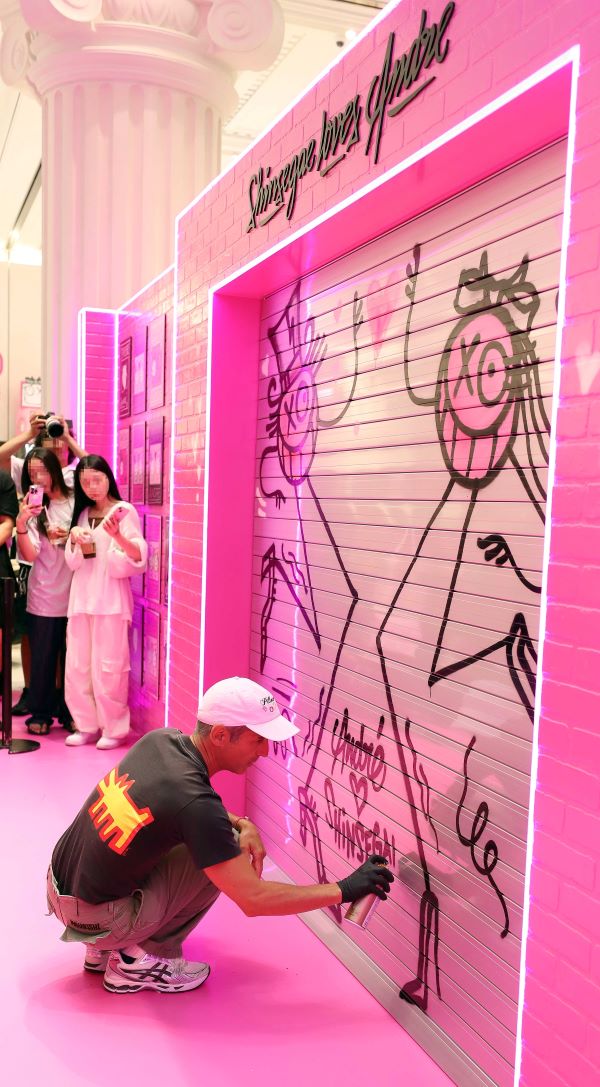
SEOUL, Aug. 28 (Korea Bizwire) — Shinsegae Department Store is currently engaging in an exciting art marketing initiative in partnership with the internationally acclaimed graffiti artist, Andre Saraiva.

Running from August 25 to September 27, the event is centered around the theme ‘SHINSEGAE LOVES ANDRE’. This captivating endeavor showcases a captivating drawing show curated by Andrei Sarayeva himself.

SHINSEGAE LOVES ANDRE 2

Moreover, the store environment will be transformed, featuring bespoke decorations, distinctive shopping bags, and exclusive gifts – all adorned with the distinctive motif of his iconic character, “Mr. A”.

As an integral part of this innovative art marketing campaign in collaboration with Shinsegae, Andre Saraiva is embarking on a journey across Paris, New York, and Los Angeles, bringing his graffiti art to life on city walls and public spaces.

Untitled by André Saraiva (Wikimedia Commons)

Untitled by André Saraiva (Wikimedia Commons)

His creative influence has extended to notable partnerships with global brands, spanning the spectrum from renowned sportswear labels like Nike and Adidas to esteemed luxury houses like Louis Vuitton and Chanel.

At the heart of this venture, Shinsegae Department Store will prominently feature Andre Saraiva’s vibrant graffiti to embellish both the exterior and interior of the establishment.

SHINSEGAE LOVES ANDRE 1

From banners that grace both the interior and exterior, elevator halls that welcome guests, to the refined ambiance of the members’ bars – every nook and corner that patrons encounter will be transformed into an immersive art experience through the collaborative vision of Shinsegae and Andre Saraiva.

Image credit: Shinsegae Department Store, Wikimedia Commons / photonews@koreabizwire.com

Celebrate Creativity and Community at the Detroit Month of Design Festival

Celebrate Creativity and Community at the Detroit Month of Design Festival

All images courtesy of Design Core Detroit

The Detroit Month of Design Festival is a citywide celebration of creativity that gathers designers and the greater community to celebrate Detroit’s role as a national and global design capital. Every September, partners across the city—from emerging studios to established companies and educational institutions—come together to show off their latest works and ideas. These cross-disciplinary events take place in all corners of the metropolis, highlighting the talent and innovation that makes Detroit the first and only UNESCO City of Design in the U.S.

With over 80 events put on by hundreds of creatives, the 13th Annual Detroit Month of Design festival is expected to engage over 50,000 attendees in various neighborhoods throughout September.

For more information, visit detroitmonthofdesign.org.


A woman wears a ruffled pink gown

Dress by Detroit designer Nabeela Najjar from the Building a Lasting Impact exhibition at the 2022 Detroit Month of Design. Photo by Christian Najjar

The Detroit Month of Design is presented by Design Core Detroit. As the steward of the UNESCO City of Design designation, Design Core champions the transformative power of design by supporting creative problem-solvers using myriad solutions to improve our city’s economy.

Through UNESCO, Detroit is part of an elite network of cities around the world that harnesses design to improve the lives of everyday people. The designation puts Detroit’s assets to work, ensuring a more sustainable and equitable future for all residents.

Follow along with all things Detroit Design on Facebook, Instagram, and Twitter.


fabric hangs from a wall and onto a surface in a room cast with pink light

Outdoor Gazebo by Sean Hages

Image of conference room at design studio PopHouse

Image from “313 030 PROJEKT” by The Container Globe

Do stories and artists like this matter to you? Become a Colossal Member today and support independent arts publishing for as little as $5 per month. The article Celebrate Creativity and Community at the Detroit Month of Design Festival appeared first on Colossal.

Oklahoma State University Museum of Art presents ‘Leon Polk Smith: Affinities in Art & Design’

Oklahoma State University Museum of Art presents ‘Leon Polk Smith: Affinities in Art & Design’
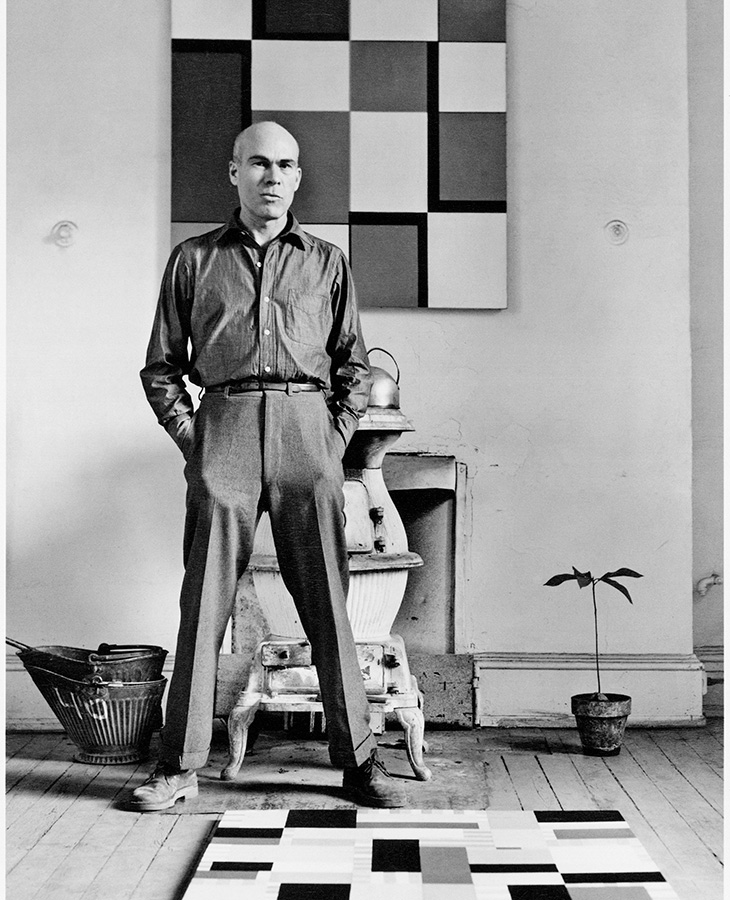
Leon Polk Smith in his Studio, 82 West 12th Street, New York, 1951. Photo by John
Schiff, Courtesy of Lisson Gallery.

Monday, August 28, 2023

Media Contact:
Casey Ihde | OSU Museum of Art Marketing and Communications | 405-744-2783 | casey.pankey@okstate.edu

The Oklahoma State University Museum of Art announces, “Leon Polk Smith: Affinities
in Art & Design,” on view through Jan. 27, 2024. This captivating exhibition explores
the surprising relationships between the art of Leon Polk Smith (1906-1996) and 20th
century industrial design.

The exhibition showcases a selection of works on paper drawn from the museum’s collection
from the Leon Polk Smith Foundation, as well as the George R. Kravis II collection
of fine art and industrial design. Loans of Smith’s large-scale paintings from The
Fred Jones Jr. Museum of Art, Oklahoma City Museum of Art and the Heard Museum, Phoenix,
complete the exhibition to provide a comprehensive survey of Smith’s artistic journey.

The exhibition features art by “a remarkable homegrown artist and from homegrown collections,”
said Arlette Klaric, exhibition curator.

“Only recently has this Oklahoma native begun to gain national recognition as a pioneer
in the mid-century art movement of Hard Edge painting,” Klaric said. “This exhibition
seeks to expand public appreciation of his abstract style by looking at it through
the lenses of industrial design and daily life at the time.”

Looking at contemporary art can be intimidating, especially if seen without context.

“With this exhibition, our goal is to make Leon Polk Smith accessible to the everyday
visitor,” Klaric said. “First, through his personal story, told through sound recordings.
And second, through ties to industrial design, society and culture that offer a readymade
platform of familiar everyday objects and major historic developments experienced
as personal events.”

Five engaging themes — “Stripping Down,” “Nature Revisited,” “Color Explosions,” “Pop Vibes”
and “Paper Revolutions” — guide visitors in looking at Smith’s abstract artistic style,
offering pathways for deeper understanding.

“Our mission is to provide viewers with a unique and enriching experience,” said Vicky
Berry, director of the OSUMA. “By presenting these two collections side by side, we
offer a captivating context that illuminates the complexity of this art form. We believe
it will be a unique opportunity for our visitors and hope to raise awareness about
Smith’s extraordinary contributions to the art world.”

“Leon Polk Smith: Affinities in Art & Design” is on view Aug. 1, 2023, to Jan. 27,
2024, at the OSU Museum of Art in downtown Stillwater. A reception will be held from
5–7 p.m. on Sept. 12, 2023, offering attendees a chance to celebrate and engage with
the artwork. Light refreshments will be provided, creating an enjoyable atmosphere
for all. Learn more at
https://museum.okstate.edu/art/leon-polk-smith.html.

A Colossal Interview: Chris Pappan On Connecting to His Ancestors, Stereotypes, and the Center for Native Futures

A Colossal Interview: Chris Pappan On Connecting to His Ancestors, Stereotypes, and the Center for Native Futures

“Relatives.” All images © Chris Pappan, shared with permission

For Chris Pappan, distinguishing between the past and present, the present and the future, is irrelevant. Time, for him, is circular and cyclical, an understanding he discusses in a new conversation with Colossal.

Our people believe that our ancestors are always with us and watching over us. I think that’s very important. In a lot of my work, I try to honor our ancestors in that way. I’m always looking at old photographs, and I feel like I’m communicating directly with them. Whether they’re my direct ancestors or indirect ancestors, that’s really special… I don’t want it to stay in the past. It’s about the present and the future, as well.

A citizen of the Kaw (Kanza) Nation and of Osage, Lakota, and European descent, Pappan is invested in honoring his ancestors while emphasizing Native American contemporaneity. He often works on municipal ledger paper and other found substrates to depict people in photorealistic detail, mirroring their faces and forms and creating myriad metaphors for split selves, distortion, and human interaction that transcend time and space.

In this conversation, Pappan discusses his evolution as an artist, the complex nature of Indigenous life in Chicago, and the importance of his new venture, the Center for Native Futures.

Read the interview.


Three distorted portraits on a wall in a Y shape with a blue line running through them

“Howageji Nizhuje Akipé (Where the Rivers Meet)” (2023)

Do stories and artists like this matter to you? Become a Colossal Member today and support independent arts publishing for as little as $5 per month. The article A Colossal Interview: Chris Pappan On Connecting to His Ancestors, Stereotypes, and the Center for Native Futures appeared first on Colossal.

London seeks to take back control of art market after Brexit

London seeks to take back control of art market after Brexit

When Alison Jacques took on her new gallery in Mayfair it was an empty concrete shell with no floor and no electricity.

In October, after a total transformation, the 6,000sq ft space will open with an exhibition of work by the American artist Sheila Hicks, who at 89 is the hottest thing in textiles. The show is called Infinite Potential.

The title is a good summing up of the UK art market. Jacques is bullish: “I wouldn’t be making this move if I didn’t have total confidence in London.” Even after Brexit? “I’m almost ashamed to say it because I was a staunch Remainer,” she said. “But if I’m honest we have benefited business-wise. It has been a massive boost for us.”

Alison Jacques, a leading London art dealer, said Brexit has been a “massive boost”

Alison Jacques, a leading London art dealer, said Brexit has been a “massive boost”

Is her

Explore local flower market and delve into art of flower arrangement

Explore local flower market and delve into art of flower arrangement

Flowers possess the enchanting ability to transform any environment, infusing it with a symphony of beauty, fragrance and color. Beyond their visual allure, the delicate blooms wield the power to influence our emotions, sculpting our moods and uplifting our spirits. In this episode of “Shine Bright with Arina”, we delve into the delicate artistry of flower arrangements for your home.

Shot by Zhou Shengjie and Arina Yakupova. Edited by Arina Yakupova and Wang Xinzhou. Reported by Arina Yakupova. Subtitles by Arina Yakupova and Wang Xinzhou.

The language of volor

Color stands as a foundational expressive principle in the realm of floral design. It serves as a powerful tool, endowing each bouquet with a unique identity, perfectly aligned with its intended purpose. Notably, color holds the remarkable ability to influence our emotions, subtly shaping our mood Flowers possess the enchanting ability to transform any environment, infusing it with a symphony of beauty, fragrance and color. Beyond their visual allure, the delicate blooms wield the power to influence our emotions, sculpting our moods and uplifting our spirits. In this episode of “Shine Bright with Arina”, we delve into the delicate artistry of flower arrangements for your home – vibrant shades infuse an energizing effect, while pastels offer a serene and calming aura.

When crafting a flower arrangement, a thoughtful approach to color becomes paramount. Employing the principles of color harmony and coordination, we draw inspiration from Itten’s color circle, a timeless guide that aids us in achieving visual equilibrium. Nature, the ultimate artist, generously blends a myriad of colors for us. Our task is to honor its artistry by aligning our palette with its boundless creativity.

Explore local flower market and delve into art of flower arrangement

Itten’s color wheel helps users combine colors effectively.

Within the realm of floral design, a tapestry of color harmonies awaits our exploration:

  • Pastel Harmony
  • Harmony of Contrast
  • Monochromatic Harmony
  • Triadic Harmony
  • Equilateral Triangle Harmony

Then when you decide what color design you like, you need to pick the flowers. Start with your primary flowers, followed by some accent blooms, decorative elements, and, if desired, a touch of greenery.

Explore local flower market and delve into art of flower arrangement

Zhou Shengjie / SHINE

Arina selects flowers at the Hongqiao Flower Market at 718 Hongjing Road.

Flower arrangement

Before delving into the art of flower arrangement, take a deliberate and thoughtful approach to prepare your floral ensemble. Begin by filling a vase with refreshing cold water, either opting for the embrace of pristine, filtered liquid or allowing tap water to sit first, freeing any lingering chlorine vapors.

Shapes and balance of symmetry and asymmetry

In the world of floral design, the circle takes center stage – a shape that combines flatness and volume in a harmonious way. This shape is a popular choice for enhancing the atmosphere of your home. However, there are other options worth considering, including the triangle, L-shape, and the intriguing S-shape, often referred to as the “Hogarth line.” This artistic technique was first introduced in the book “The Analysis of Beauty” by British artist William Hogarth. He described the undulating, serpentine line as having a special quality of enhancing beauty.

The interplay between symmetry and asymmetry adds an interesting dynamic to floral design. Symmetrical compositions bring a sense of formality and precision, making them well-suited for grand spaces and important occasions. On the other hand, asymmetrical arrangements convey a more relaxed and natural feel, reflecting how plants grow in the wild. Asymmetrical groupings allow you to explore the composition freely with your eyes, while symmetrical designs draw your attention towards the center.

Next, direct your attention to the blooms themselves, engaging in a delicate dance of transformation. Gently sculpt the stems, adorning them with a graceful slant, and grant the gift of graceful exposure by delicately parting them from their lower leaves. With a sense of reverence, nestle these refined stems into the watery haven you have diligently readied. To ensure an enduring display of vibrancy, adopt the daily ritual of stem trimming and the periodic refreshment of water, nurturing the bouquet’s longevity.

With the prelude now complete, the artistry of arrangement unfurls. As you guide the blossoms into their harmonious alignment, leave spaces that allow each bloom to breathe and converse within their aqueous sanctuary. Harnessing the language of texture, weave a tactile tapestry that beckons both the eye and the touch.

Explore local flower market and delve into art of flower arrangement

Zhou Shengjie / SHINE

If you cut stems daily and change the water regularly, your arrangement will last longer.

The canvas of flower arranging is one of personal expression, a testament to an individual’s artistic spirit. While the shared principles stand as steadfast guides, feel emboldened to explore the realm of experimentation, shaping and coloring the tableau as your creative vision dictates. Feel free to do whatever you like to do, however you want. They are flowers, they don’t require a lot of work to look good.

Explore local flower market and delve into art of flower arrangement

Zhou Shengjie / SHINE

Art festival set to return to Toronto

Art festival set to return to Toronto
image

TORONTO — The Toronto Gazebo Commons area, including adjacent streets and lots, will be filled with a variety of food, craft and other vendors as well as live entertainment this weekend.

In its 45th year, the Toronto Art Festival will be held from 10 a.m. to 5 p.m. Saturday and noon to 5 p.m. Sunday.

The two-day event is organized each year by volunteers with the Focus in Toronto group, whose goal is to draw attention to the city while supporting local causes.

The festivities will kick off at 10 a.m. Saturday in the parking lot of Riverview United Methodist Church with opening ceremonies involving local officials, the presentation of the Toronto Lions Club’s Little Miss Lion winner and a performance by the Toronto High School Band.

Taking to the stage there later will be local band 40 Plus at noon, the Toronto High School, Junior High School and Titans cheerleaders at 1:30 P.M. and members of a local dance studio at 2 p.m.

Toronto students who won a poetry contest held at their school will share their compositions at 2:30 p.m., with 40 Plus returning at 3 p.m., followed by Twice as Nice at 5 p.m.

The entertainment lineup for Sunday includes Friends at noon; The Remainders at 1 p.m.; the Tri-State Community Band, an ensemble of musicians of various ages and communities, at 2 p.m.; and the Ron Retzer Trio at 3:30 p.m.

On both days, sections of North Third and Market streets will be lined with booths filled with items ranging from wreaths and decorative candles to baked goods and scented soaps.

There also will be assorted food trucks and groups selling food to raise money for their causes.

Among them are the Toronto High School Band Parents, and members of Riverview United Methodist Church, who members serve up various sandwiches, sides and desserts in its cool, basement level social hall.

Also on hand will be the Toronto Lions Club, which will be cooking up to 250 chicken dinners, until they are sold out.

Each dinner includes a baked potato, side and a roll and costs $10, with proceeds going to community projects supported by the club.

There also will be bounce houses and other activities for children.

Members of Focus in Toronto will be conducting hourly drawings for miscellaneous prizes at the gazebo on both days as well as two special drawings — one for $500 in gas cards and the other for a cooler filled with alcoholic beverages — to be held at 4 p.m. on Sunday.

Today’s breaking news and more in your inbox

Chinese contemporary artist Yue Minjun drops first NFTs with market crashing. Is it a joke? ‘Premium quality NFTs are different,’ he says, and an art collector agrees

Chinese contemporary artist Yue Minjun drops first NFTs with market crashing. Is it a joke? ‘Premium quality NFTs are different,’ he says, and an art collector agrees

Recently, NFT’s market was drastically crashing, and amid the chaos, Chinese contemporary artist Yue Minjun dropped his obscure collection of NFTs called laughing heads, which is supposed to make millions of dollars shortly. 

People gave mixed reactions to the collection. Some said the laughing head collection is different from the available NFTs, and its potential is more than a million dollars, and some took it as a joke. 

But why is this collection so unique and what is the future of NFTs realized by Yue Minjun? We will try to find the answers to all these questions in today’s blog. So stay tuned

Rise of Yue Minjun and NFTs:

Yue Minjun is a Chinese contemporary artist. He got fame in the world of NFTs from his paintings. These paintings depict self-portraits with a wide-mouthed laugh. Themes of his work often include but are not limited to political mockery, social commentary, and the insanity of modern life. How uniquely he conveys an idea is the beauty of his work.

He was born in 1962 in Changchun, China. Yue studied at the Central Academy of Fine Arts in Beijing. His major was fine arts. Yue graduated in 1989. After graduation, Yue chose a career as a painter and started exhibiting his work in China. His work was loved for its satirical and humorous take on Chinese society.

In the early 2000s, Yue decided to take his work 

 one step further and began to exhibit his work in the West. His work received praise from experts. 

In 2021, Yue stepped into the world of NFTs. He created a series of NFTs called “The Laughing Man,” These paintings are said to be self-portraits of the artist with his signature wide-mouthed laugh. These NFTs also proved successful, and they helped to introduce Yue’s work to a new audience.

Yue’s work with NFTs has been met with mixed reactions from the audience. Some have praised his work for its innovation.  While others have criticized it for being too commercial. However, without a second thought, Yue is one of the most important Chinese contemporary artists of the modern world, and his work with NFTs will see advancements for the years to come.

Controversy and Skepticism:

Here are some of the controversy and skepticism surrounding Yue Minjun’s NFTs:

The environmental impact: Yue’s NFTs are minted on the Ethereum blockchain. It is a proof-of-work blockchain. This means that it requires a lot of energy to operate leading to concerns about the environmental impact of Yue’s NFTs.

The lack of utility: Some people argue that Yue’s NFTs have no real-world utility. They are simply a way to speculate on digital assets. This has led to skepticism about the value of Yue’s NFTs.

The price: Yue’s NFTs have been priced at a very high level, which has raised concerns about overvaluation. Some people believe that Yue’s NFTs are simply too expensive for what they are.

The quality of the art: Some people have criticized the quality of Yue’s NFTs. They give an argument that NFTs are simply digital copies of his existing work. This is giving rise to skepticism about the value of Yue’s NFTs as works of art.

Despite these concerns, there is also a lot of excitement about Yue’s NFTs. Some people believe that Yue is a respected artist and that his NFTs are a valuable addition to the NFT market.

Only time will tell whether Yue’s NFTs will be successful or not. However, in light of all the above concerns Yue’s NFTs have turned into a very controversial topic. And people will discuss it for a long time for sure.

Subscribe To Our Newsletter

Subscribe To Our Newsletter

Join our mailing list to receive the latest news and updates from our team.

You have Successfully Subscribed!

Is the art market heading for a crash?

Is the art market heading for a crash?
image

Explainer

19:30

Ultra-wealthy investors have squeezed out other buyers

by Wessie du Toit

image

Prestigious auction houses like Sotheby’s have seen their takings fall dramatically in recent years. Credit: Getty

Remember when celebrities were paying hundreds of thousands of dollars for pictures of cartoon monkeys? The “Bored Ape” craze, promoted by the likes of Justin Bieber and Paris Hilton — not to mention the prestigious Sotheby’s auction house — marked a high point for the crypto assets known as NFTs, touted as a fashionable new frontier in art collecting.

Today, the Bored Ape images have lost almost 90% of their value from their 2022 peak, and investors are suing Sotheby’s, Bieber, Hilton and others for misleading them.


Like what you’re reading? Get the free UnHerd daily email

Already registered? Sign in


The NFT massacre is only one dramatic sign of a wider unease taking hold of the art market. For months there have been ominous reports of cooling demand at auctions and fairs. In June, the flagship modern and contemporary auction at Christie’s took 66% less than the previous year, and even highly bankable artists such as Willem de Kooning and Jean-Michel Basquiat have been struggling to find buyers.

Do these jitters simply reflect the general turbulence in the economic climate? Yes, but also no. As the latest report by Art Basel and UBS confirms, the art market has become dependent on a super-rich class of investors who are largely immune from fluctuations in the wider economy. Global sales actually increased last year, coming close to their 2014 peak of $68.2 billion, but this growth was driven by the most expensive artworks and the most successful dealers. The lower echelons of the market stagnated or declined.

The NFT collapse illustrates the demise of aspirational but merely affluent collectors, who have been stung by falling tech stocks, crypto crashes, inflation and rising interest rates. By contrast, as the Art Basel/UBS report notes, global billionaire wealth has increased by more than a third over the course of the Covid pandemic and ensuing economic turmoil.

These ultra-high-net-worth individuals — increasingly drawn from the Middle East, Far East and Africa, as well as Western countries — have reshaped the art industry since the 2008 crash. Their exclusive tastes, mediated by a globetrotting circus of elite galleries, dealers, advisors and artists, determine what is considered valuable.

And yet the distress signals of recent months suggest this reliance on the wealthiest collectors has only forestalled the inevitable reckoning. There simply aren’t enough of them, or of the works they crave, to provide continuous growth. “Once someone has their de Kooning, they don’t necessarily want to buy another,” commented one art advisor after this summer’s disappointing Christie’s auction.

This partly explains why it is no longer unusual for contemporary artists to fetch big sums at auction while they are still alive. The money needs somewhere to go. But such speculation on faddish works will likely lead to heavy losses down the line (recall how Damien Hirst’s prices plummeted after 2008). Meanwhile, governments have been cracking down on money laundering via artworks, removing one of the biggest incentives for the super-rich to collect them.

As these pressures continue to mount on an increasingly hollowed-out market, it’s not difficult to see how a crash could come about. The financial value of art is ultimately a matter of confidence, and it only takes a few dire auctions for the panic to spread.