Art World News

Nov 18 – HVCA Arts and Greens Holiday Art Market in White Lake

Nov 18 – HVCA Arts and Greens Holiday Art Market in White Lake

Nov 18 – HVCA Arts and Greens Holiday Art Market in White Lake

White Lake, MI –The 17th Annual Arts and Greens Holiday Art Market is set amidst beautiful flowers and greenery inside the Bogie Lake Greenhouses at 1625 Bogie Lake Road, White Lake Twp., Oakland Co., MI. A wide variety of affordable art and gifts by regional artists makes this a favored event of community and HVCA. Greens workshops to be announced by the Greenhouses; music by Cary Kocher and food truck by C.C.’s Soul Food.

Saturday, Nov. 18, 2023
Sunday, Nov. 19, 2023

Sponsored by the Huron Valley Council for the Arts (HVCA) and Bogie Lake Greenhouses.

More info:

https://www.huronvalleyarts.org/arts-greens/

Pictured: Pictured: Abigail Zolinski, Allie Schilz, and Ted & Julie Lepczynski from 2022 event.

If you value the work we do here at Oakland County Times, please:

Buy Advertising on this site

Sign up to Make a Monthly Pledge

For more things to do, visit the Oakland County Times Event Page! 

To submit event info email editor@oc115.com .

Thank you to Jim Shaffer & Associates Realtors for sponsoring this section!

image_pdfSave this post to PDFimage_printPrint this post

‘Abandoned Theatres’ Spotlights the Remains of Small-Town Midwestern Cinemas

‘Abandoned Theatres’ Spotlights the Remains of Small-Town Midwestern Cinemas

All images © Ben Geier, shared with permission

Like many sectors of the U.S. economy, movie theaters struggled during the Covid-19 pandemic. Many were forced to shut their doors after months of lockdown, an additional blow to the small, independently run spots that had been competing with multiplex chains for decades.

When the pandemic hit, Ben Geier already had his eye on local cinemas, particularly those in Midwestern areas that closed years before. He photographed the remains for Abandoned Theatres, an ongoing series that’s both a nostalgic and clear-eyed look at small-town life. As more cinemas shuttered in 2020, Geier’s subject matter became more abundant. “Covid times really allowed me to get out on the road and photograph most of the theatres without anybody around, which gave each photo an eerie quality,” he tells Colossal.

Primarily shot straight on, the images document remnants and what are now relics of an earlier era: painted plywood covers the spot where a poster once hung, metal gates rest along a drive-in wall, and a marquee advertises the phone number of the movie hotline. So far, the series includes about 20 locations with a wide variety of architecture, from the classic State Theatre to the old-world farmhouse style of the Delft.  “I really enjoy rural America and the roadside aesthetic from the ’50s to ’80s, and there’s still a lot of it hiding in small towns, so I try my best to photograph it while it’s still around,” he says. “I have a lot of interests, and the Abandoned Theatre series seemed like a perfect blend of so many of them: Americana, architecture, and neon signs.”

Geier, who’s based in Batavia, Illinois, will be traveling throughout the Southwest U.S. in the coming months, in part, to scout theatres to add to the series. You can find more of his work, including a collection that peers inside a house with impeccably preserved 1960s charm, on Behance and Instagram. (via Present & Correct)


A closed movie theatre called STATE

A closed movie theatre with a white and red facade called Majestic

Two closed movie theatres, one called Gem, the other Liberty

A closed Bavarian style movie theatre called Delft

A modernist movie theatre with large sign and pink box office

A painted brick wall that says Drive-In Theatre and another stone facade theatre that's closed with snow in the foreground

A closed movie theatre with an ELMO sigh

Do stories and artists like this matter to you? Become a Colossal Member today and support independent arts publishing for as little as $5 per month. The article ‘Abandoned Theatres’ Spotlights the Remains of Small-Town Midwestern Cinemas appeared first on Colossal.

Is Oil States’ Pivot Towards Art and Culture Succeeding?

Is Oil States’ Pivot Towards Art and Culture Succeeding?

As supply dwindles and the climate warms, oil states have promised to diversify away from fossil fuels. Building the cultural economy is part of their plan, with Saudi Arabia alone aiming to open more than 200 cultural attractions by 2030. Is it working?

Is Oil States’ Pivot Towards Art and Culture Succeeding?

Aerial view of the National Museum of Qatar, designed by Ateliers Jean Nouvel. Photo: Iwan Baan.

‘Phasing down fossil fuels is inevitable and it is essential—it’s going to happen,’ promised Sultan Ahmed Al Jaber, CEO of the Abu Dhabi National Oil Company, in an interview with The Guardian last month.

With the spigot of oil money supposedly being closed, the United Arab Emirates (U.A.E.), Saudi Arabia, and Qatar are among the countries seeking to diversify their economies, in part by developing their arts and culture industries. To that end, Saudi Arabia aims to open more than 200 cultural attractions by 2030.

A large-scale museum by Centre Pompidou is set to open in Saudi’s AlUla desert complex and archaeological site in 2028 or 2029. That same site will also feature Wadi AlFann (Valley of the Arts), showcasing public art installations by artists such as Ahmed Mater and James Turrell in 2024.

Saudi launched its first-ever art biennale, the Diriyah Contemporary Art Biennale, in 2021, which will return under the art direction of Ute Meta Bauer from 20 February 2024. The Diriyah Biennale Foundation (DBF) also produces the world’s first Islamic Arts Biennale, which launched in January 2023.

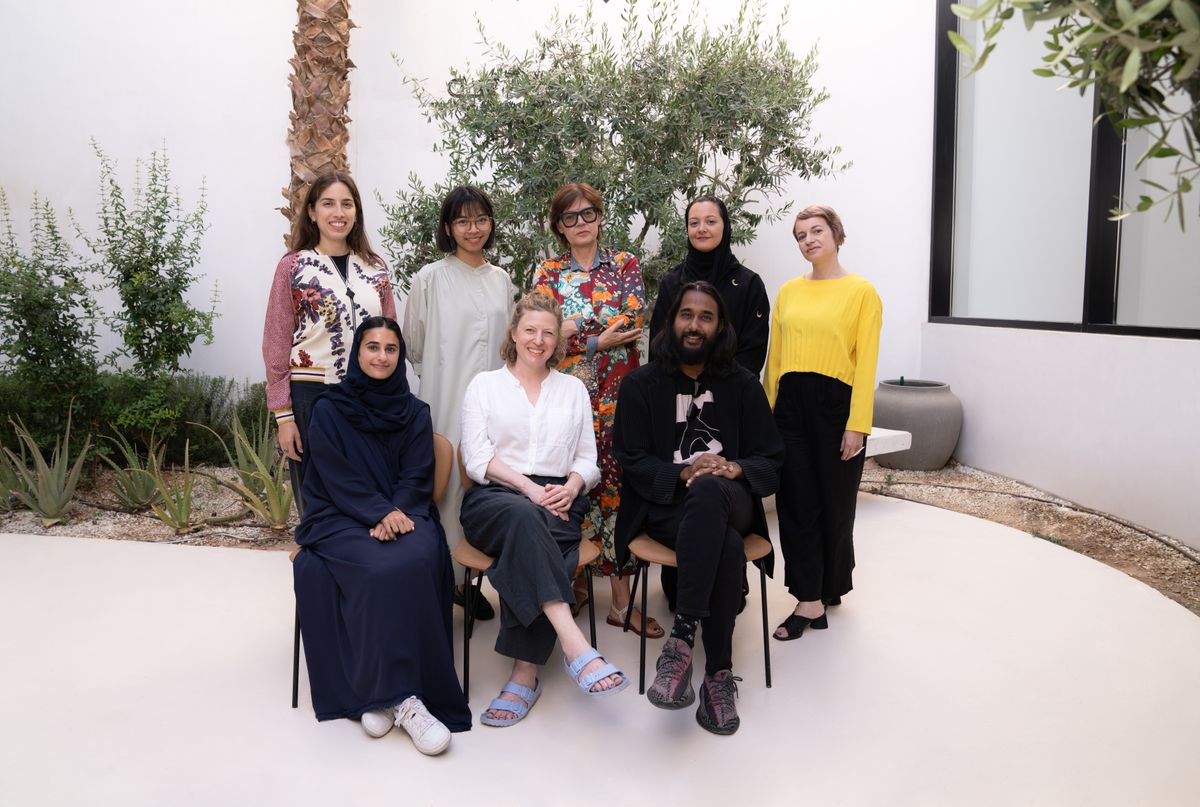
The 2024 Diriyah Contemporary Art Biennale curatorial team. Image

The 2024 Diriyah Contemporary Art Biennale curatorial team. Image courtesy of Diriyah Biennale Foundation. Top (L-R): Ana Salazar, Dian Arumningtyas, Ute Meta Bauer, Wejdan Reda, Anca Rujoiu. Bottom (L-R): Alanood A Alsudairi, Rose Lejeune, Rahul Gudipudi.

According to Aya al-Bakree, CEO of DBF, over 600,000 visitors saw the Islamic Arts Biennale, free of charge, over a four-month period. That’s right up there with the number of ticketed visitors to the 59th Venice Biennale‘s International Exhibition (800,000) and documenta 15 (738,000).

Qatar, meanwhile, has announced plans to build several new museums as part of its 25-year plan to improve cultural infrastructure in the country.

Sheikha Reem al-Thani, Acting Deputy CEO of Exhibitions and Marketing and the Director of Centralised Exhibitions at Qatar Museums, explained that Qatar began its latest cultural infrastructure push by developing museums focused on heritage and culture, and then expanded into sports and technology. New art museums are coming next.

The Art Mill Museum, an international museum of modern and contemporary art, is slated to open in a former flour mill in 2030, while the Lusail Museum will exhibit works from the Qatar Museum’s Orientalist collection from 2029.

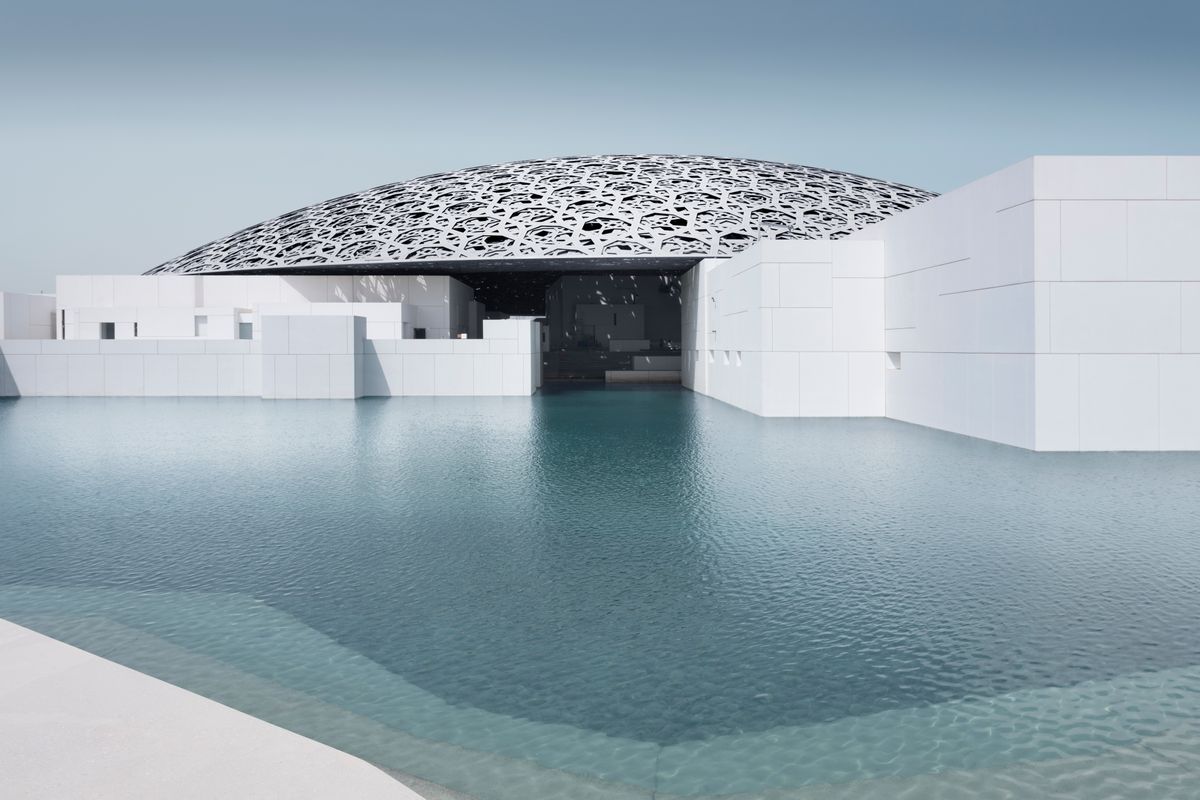
Louvre Abu Dhabi's exterior.

Louvre Abu Dhabi’s exterior. Courtesy Louvre Abu Dhabi. Photo: Mohamed Somji.

The U.A.E. has begun to see the fruits of its Saadiyat Island development, which was drawn up by American architecture firm Gensler in 2004. The Louvre Abu Dhabi opened in 2017 and by 2019 it had attracted over 2 million visitors, making it the most visited museum in the Arab world. (For comparison, almost 8 million people visited the Louvre in Paris last year alone.) The Guggenheim Abu Dhabi, designed by Frank Gehry, will open on Saadiyat Island in 2025.

In April, the U.A.E. launched the Dubai Creative Economy Strategy, aiming to double the number of creative businesses operating in the country by 2025. The Emirates also intends to build a national art collection by sourcing loans from private collectors.

Despite new strategies and the splurge of spending on art museums, arts and culture initiatives will play a negligible role in weaning Gulf economies off oil.

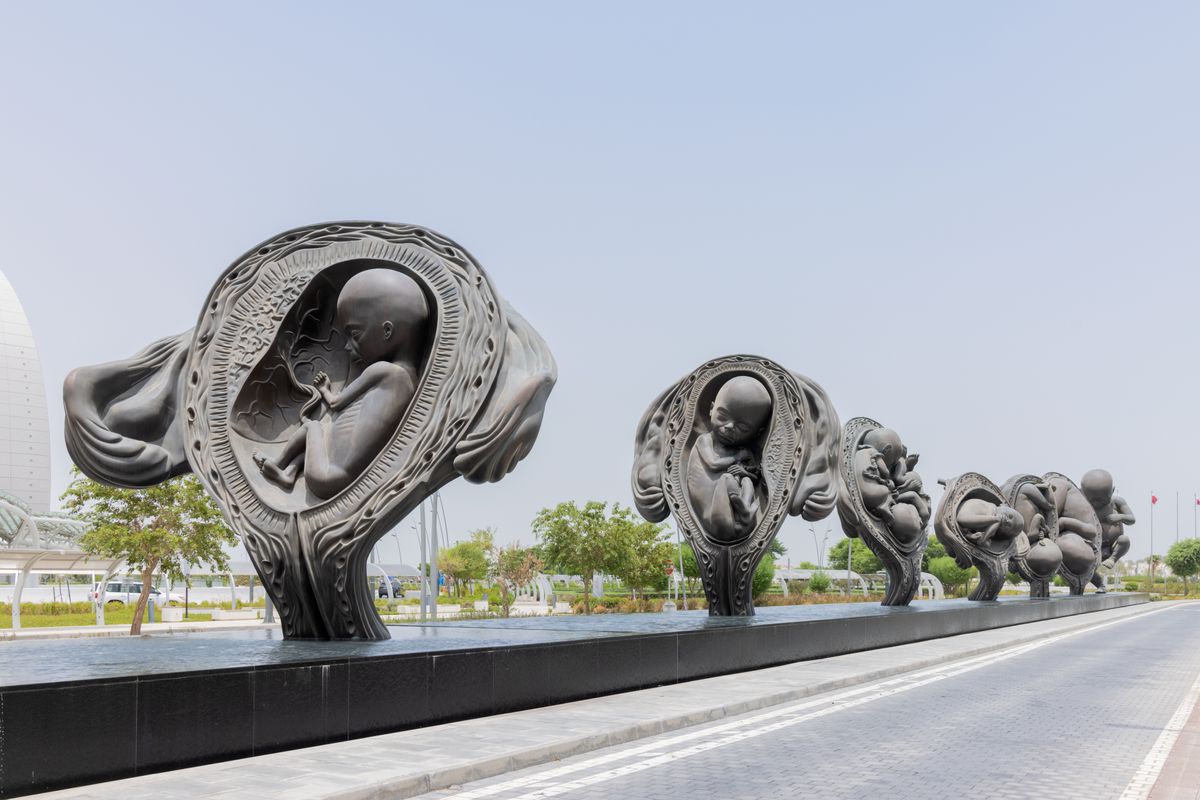
Damien Hirst, The Miraculous Journey (2013). Bronze. Sidra Medical Centre. Photo: Iwan Baan.

Damien Hirst, The Miraculous Journey (2013). Bronze. Sidra Medical Centre. Photo: Iwan Baan. Courtesy Qatar Museums.

As of 2021, arts and culture made up just 1.7% and 2.6% of GDP in Saudi Arabia and U.A.E. respectively, as reported by the World Bank. Saudi Arabia’s Vision 2030 plan would see the cultural sector bring in U.S. $20 billion, or almost 3% of GDP. By comparison, the oil and gas sector made up 42% of Saudi GDP, or $288.5 billion, in 2021. (In the U.A.E., oil and gas makes up less than 20% of GDP, while in Qatar it’s more than half.)

For now, it is difficult to see spending on art and culture as a pivot away from the fossil fuel industry when the two are so obviously entwined.

On 13 September, for example, The King Abdulaziz Centre for World Culture (Ithra) in Dhahran will launch an exhibition entitled Net Zero, a contemporary art exhibition that responds to global environmental challenges. Ithra, who also run the U.S. $500,000 Ithra Prize, is backed by Aramco, the world’s largest corporate greenhouse gas emitter.

By another metric, though—art’s ability to critique power structures and speak up for the marginalised—there is room for optimism.

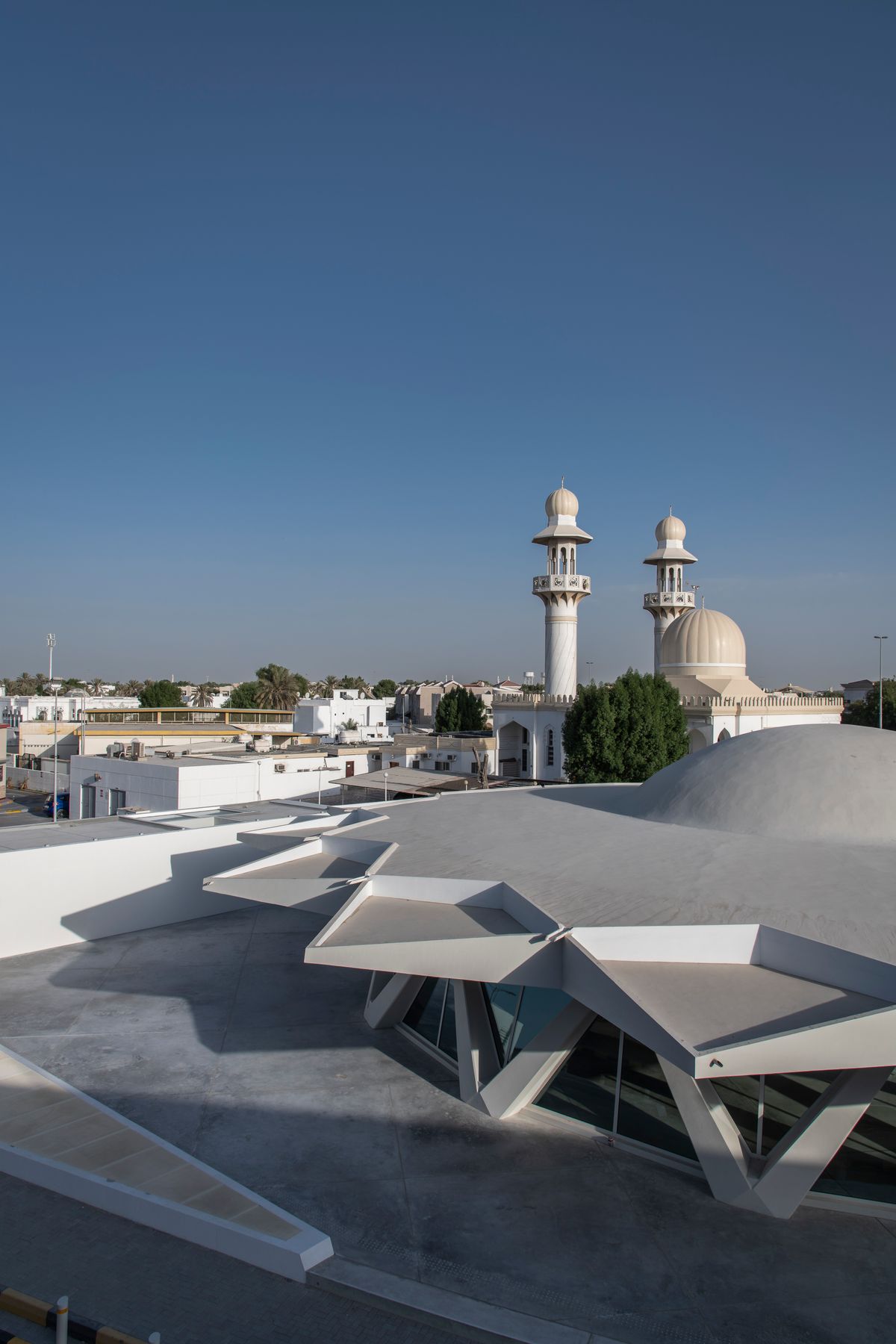
The Flying Saucer, Sharjah, UAE, 2020. Photo: Danko Stjepanovic. Image

The Flying Saucer, Sharjah, UAE, 2020. Photo: Danko Stjepanovic. Image courtesy Sharjah ArtFoundation.

Ocula Magazine’s Global Editor-at-Large, Stephanie Bailey, wrote admiringly of Sharjah Biennial 15 this year, describing the exhibition as ‘subversive’. She said the inclusion of works depicting drug use and same-sex relationships demonstrated a ‘willingness to carefully test the lines of acceptability in the U.A.E.’

At the Diriyah Biennale, she noted ‘significant, if incremental, strides’ made by the inclusion of works that depicted matrilineal family trees and moments of queer intimacy.

(Such freedoms can’t be taken for granted—Turkish curator Defne Ayas was selected to organise the next Istanbul Biennial only to be rejected this month, ostensibly for political reasons.)

While we can expect art world ‘software’ to lag behind the ‘hardware’ of rapid museumification, as happened in China during the 2000s and 2010s, art industry leaders in the Middle East that Ocula Magazine spoke to were optimistic that artists and curators would make good use of the opportunities provided by new museums and biennials.

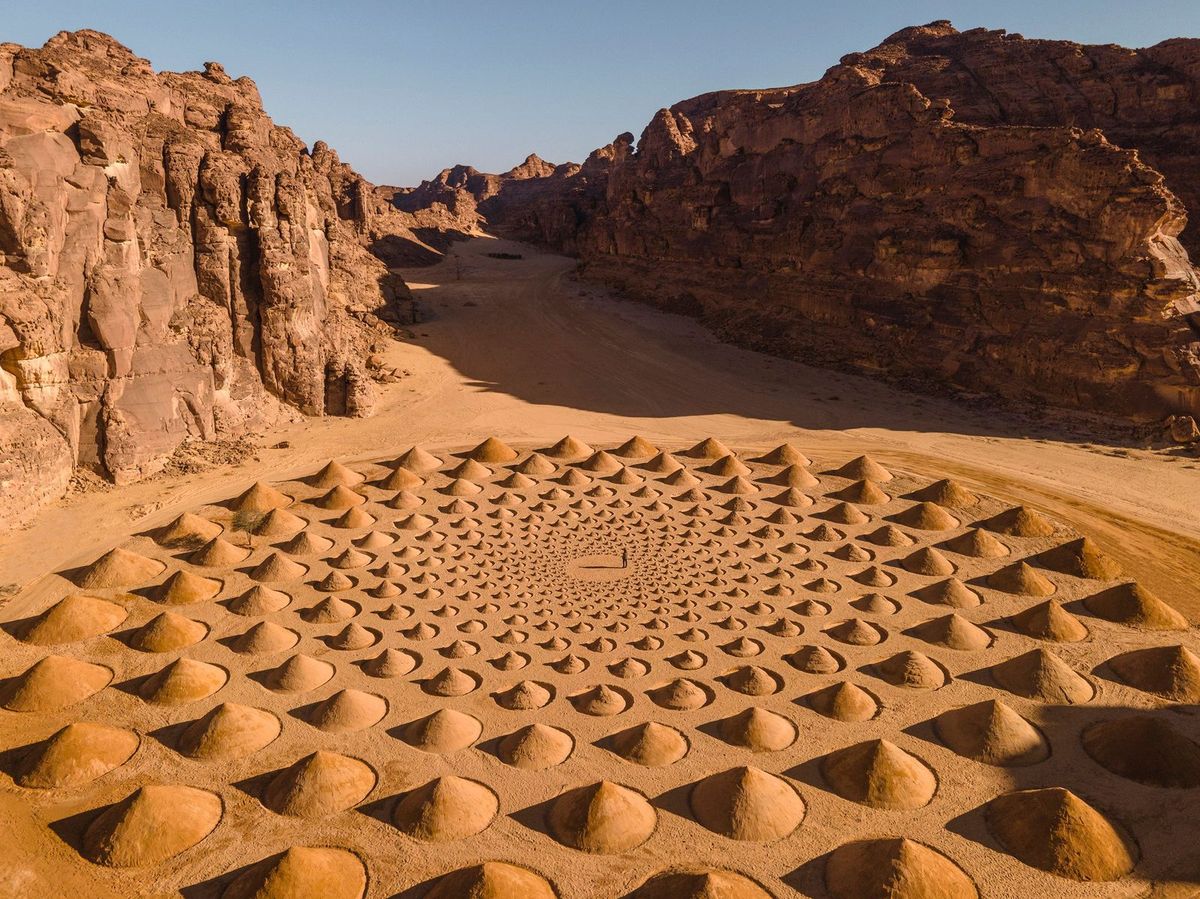
Jim Denevan, Angle of Repose. Exhibition view: Desert X AlUla 2022 (11 February–30 March 2022).

Jim Denevan, Angle of Repose. Exhibition view: Desert X AlUla 2022 (11 February–30 March 2022). Courtesy the artist and Desert X AlUla. Photo: Lance Gerber.

Sabih Ahmed, Associate Director and Curator at the Ishara Art Foundation, a nonprofit in Dubai, said investment in art infrastructure by countries in the Gulf Cooperation Council (GCC) means the younger generation does not have to go to the West to see great art, or pursue a career in the arts.

It finally allows for ‘a polyphony of centres rather than the age-old centre-periphery model for culture,’ he said.

‘I hope that alongside investments in museum-building and the art market, there will also be support for artist-run spaces, artist studios and ateliers, and magazines and publications, which are very important to the biodiversity that all arts require,’ he added.

Antonia Carver is the British-born director of the Saudi nonprofit Art Jameel. She said that, ‘if people choose not to engage with art from the GCC then they are missing out on getting to know bold, innovative cultural practitioners from a great breadth of backgrounds, positions.’

‘This is a time of cultural change, especially in Saudi and the U.A.E., with more and more efforts to promote and support a diverse range of creative expression, and a greater imperative to allocate resources to sustain our cultural landscape for years to come,’ she said. —[O]

The artist’s in studio: Karla Diaz

The artist’s in studio: Karla Diaz

Karla Diaz is a professional comic artist and illustrator from Chile, who has been drawing since childhood. She specialises in character design, comics and writing, and currently works for Sandstorm comics. Below she takes us through her studio setup.

“I live in Santiago, the capital of my country, Chile, and moved into this apartment with my partner a year ago. I work as a freelancer, so my studio is set up at home. It’s divided into two sections: one for traditional drawing, sketching and painting, and the other for all my digital work.

“My digital work setup consists of a 2019 iMac, and the main software I use for my illustrations and comics are Clip Studio Paint and Photoshop. I also use Evernote for writing my scripts, and always have Spotify playing K-pop music. Yes, I’m a K-pop fan!

My current favourite tools are my Copic Sketch Markers.

Karla Diaz

“An old Wacom Cintiq tablet from 2012 helps with my graphic work, and it still does a great job. I don’t use the original iMac keyboard. Instead, I environment, along with some toys and mementos that I’ve collected. However, I don’t like accumulating too many things because they tend to gather dust, which stresses me out. The Ikea panel you can see serves more as decoration and a place to hang my headphones!

“The other part of my studio is the table where I keep all my traditional drawing tools and my iPad. I use the iPad here to view references, watch videos, listen to music, and so on. I also use it for illustrating in Procreate, among other things.

“My current favourite tools are my Copic Sketch Markers. I have two sets: the 72-colour E set, and the set of 24 colours Copic gave me to promote their manga drawing contest. I also have a small set of 12 cool grey Copic Sketch Markers that were given as a gift from my partner.

“Next to my desk, I have a small bookshelf for art and comic books. I plan to replace it with a larger one because it’s getting too small! I have Loish’s artbook collection, lots of French comics, and artbooks from various Japanese artists.

I always try to learn new things, especially drawing and painting techniques. I’m what they call an eternal learner. I love taking courses on digital illustration, art, marketing, social media, and so on.”

Find Karla Diaz at her official website, for commissions and new art.

Artist in residence: Karla Diaz

Karla Diaz; a white and pink artist studio

(Image credit: Karla Diaz)

Karla’s studio setup, clockwise from top left. “This is my LED lamp. I bought it ages ago, and it still works perfectly. I don’t use it much anymore because I prefer to do my drawing using natural light. (Read our list of the best craft lights.)

“My iPad Pro is one of my most cherished tools; like having a mini computer that accompanies me. When I work in cafes, I take it with me to draw or write, as well as when I travel. (Read our guide to the best iPad for drawing.)

“I have two favourite books. The first is Mika Pikazo’s artbook. Her compositions are inspiring and I love her vibrant colours. The second is Anatomy for Artists by Tom Fox.

“I bought this miniature vacuum cleaner mainly because of its adorable cat paw shape, although in truth it doesn’t actually pick up a great deal of dirt.

“This sketchbook has been with me for almost two years, and I only have a few pages left. The size has been a challenge since I’m used to smaller sizes like Moleskine’s sketchbooks.

“This is my collection of compulsively purchased sketchbooks that, in my mind, I’ll eventually manage to fill up. No, really, my plan is to complete them all!”

Artist studio; Karla Diaz

(Image credit: Karla Diaz)

Karla’s studio setup, clockwise from top left. “This is my panel where I organise my week by hand, which works best for me. Below there’s a cork board where I put important information.

“A new raindrop plant that I bought exclusively for this article, as my first plant died and looked very depressing. Now I have a care kit and fertilisers to prevent that from happening again.

“This is my Ikea panel. I love the design and how practical it is. Here, I have some postcards that I bought from SHEIN, pencils, and my Bach Flower Remedies that I use occasionally when I’m anxious.

“I have an Epson L4260 printer for occasional needs, such as paperwork or printing photos. (Read our guide to the best art printers.)

“This Wacom Cintiq 24HD is truly a relic! I bought it around 2011 when I made the jump from a used Intuos tablet to this one with a screen. It’s been one of the best investments I’ve made for my work. It has survived several moves and still works flawlessly, and has never had a dead pixel.”

Artist studio; Karla Diaz

(Image credit: Karla Diaz)

“This illustration was made with Copic markers as a collaboration with an art supplies store. The idea was to create an image using traditional techniques with the theme related to drawing. It was a pleasure for me since this store is one of my favourites.”

Artist studio; Karla Diaz, a bright pink computer keyboard

(Image credit: Karla Diaz)

“I bought this Logitech POP Keys keyboard solely for its design and beautiful colours, but when I started using it, I realised how satisfying it actually is to type on as well. It’s very comfortable, and the battery lasts for a long time too.”

Artist studio; Karla Diaz, cat sat on a stack of books

(Image credit: Karla Diaz)

“Lately, I’ve been using a Sakura Papel Blanco Crema sketchbook, which is 21 x 30cm with 80 sheets. The paper isn’t heavy, but it’s sufficient for using Ecoline paint and Copic markers.

“My cat Koko is already a year old, very cuddly, and always demanding attention. He’s also a rescue cat, and was quite ugly when he was little. My other kitten is Luli (right), who has been with us for two months. She arrived infested with fleas and dirt, but now she’s beautiful!”

Artist studio; Karla Diaz, a mix of coloured pens on a desk

(Image credit: Karla Diaz)

“My first encounter with Copic markers was through a gift from my partner. They gave me a set of 12 cool grey tones, and I fell in love with them as soon as I tried them out. As soon as I could, I bought a large set, and now I can’t stop using them.”

Artist Studio; Karla Diaz, a book shelf with art books

(Image credit: Karla Diaz)

“I’m not a fan of Funko Pops, but I had to have this one of Mr. T, my childhood hero. I bought it without its box at an antique market here, and it was very cheap!

“One of my newer pieces of furniture. I bought it from Ikea when I moved into this apartment. Too bad I underestimated the power of my compulsive purchases, and now I can’t fit any more books in it.”

Artist studio; Karla Diaz, Ecoline paint pots on a shelf

(Image credit: Karla Diaz)

“My partner gave me these Ecoline paints. I first used them at university and always wanted to try them again, so this gift made me happy! They are similar to watercolours and require thick paper.”

Artist studio; Karla Diaz, a sketchbook filled with cartoon characters

(Image credit: Karla Diaz)

“I use my sketchbook to explore different themes and techniques. It’s still challenging for me to draw with ease. I think I’m very self-critical, but I’m working on it.”

Artist Studio; Karla Diaz, coloured pens and headphones on a hook

(Image credit: Karla Diaz)

“These are my Apple AirPods Max headphones. They are incredibly comfortable, and the noise cancellation allows me to concentrate a lot.

“This is a selection of my favourite pencils, which include some Tombow graphites and well-worn Faber-Castell pencils.” (Read our guide to the best pencils for artists.)

Get more Procreate tutorials in ImagineFX

This content originally appeared in ImagineFX magazine, the world’s leading digital art and fantasy art magazine. ImagineFX is on sale in the UK, Europe, United States, Canada, Australia and more. Limited numbers of ImagineFX print editions are available for delivery from our online store (the shipping costs are included in all prices) 

Alternatively, you can access us instantly through our digital options:

• Apple app (for iPad or iPhone)

• Pocket mags (multi-platform app, great for Android users)

• Zinio (multi-platform app for desktop or smartphone)

• Amazon Kindle

How Chattanooga’s murals attract, create and promote business

How Chattanooga’s murals attract, create and promote business

There was a time when The Flying Doughnuts, now one of Chattanooga’s most iconic murals, almost didn’t fly.

Nearly a decade ago in 2014, bakery owner Barbara Koch of Koch’s Bakery commissioned an artist to paint the heavenly pastry scene on an aging building near her establishment. But a city sign inspector cited her for violating a code restricting the size of signs on businesses.

The donuts weren’t simply artwork, the inspector argued at the time. The painting depicted the pastries she sold — which meant it served as advertising.

“If it had been bagels, everything would have been fine,” said Chris Anderson, who was then a Chattanooga City Council member and now serves as a senior adviser to Mayor Tim Kelly, in a recent telephone interview. “Obviously, there’s some absurdity in that.”

(READ MORE: Chattanooga’s Koch’s Bakery closing after nearly 80 years in business)

At that juncture, Anderson assembled a coalition of residents, including artists and civic and business leaders, to collaborate on amending the city’s sign regulations. Some of the modifications were adopted, and some weren’t.

“It wasn’t a question of public opinion about murals — it was more about an outdated ordinance that the public didn’t agree with,” Anderson said.

There were zero people complaining about the mural, he said.

“In fact, there was a pretty big public outcry in favor of the business,” Anderson added.

Ultimately, the Flying Doughnuts rose to glory, and no fines were issued.

Since that time, attitudes about public art of all sorts have evolved. Murals, which were previously associated more with graffiti or considered as illegal artistic expressions, are now gaining acceptance among community leaders.

One example of that involves EPB, the city-owned utility, which earlier this summer commissioned 10 artists to adorn the 10th Street substation. The murals would help transform the urban environment and were part of “building a city where creativity can thrive,” Kelly said.

“Public art is more than a nice addition,” he said at the murals’ unveiling. “It is central to who we are.”

Fast forwarding to today, and the city is again working on updating ordinances to Chattanooga’s sign code, Anderson said. Efforts are currently on hold, pending rulings on a few federal court cases concerning billboards.

“When dealing with sign laws, you’re dealing with the First Amendment, and you have to make sure you’re not violating the Constitution,” Anderson said. “One of the goals will be to codify that murals are not signage and do everything that we can to encourage artistic expression like murals throughout the city.”

Signs of life

The Artist Seven, whose real name is Eric Finley, is one of the most, if not the most, prolific muralist in Chattanooga. Over the past 15 years, he said he has completed an estimated 40 paintings around the city. His work can be found across the U.S., as well.

In early August, he completed a mural featuring several large-scale, interlocking three-dimensional geometrics shapes, adding visual intrigue to The Tomorrow Building at Somer Station. And about a month before that, he finished another piece depicting a crane at Kai Bistro, a new Asian-American eatery set to open soon on the Southside.

“Of course, murals attract business, but more so, they attract development,” he said during a phone interview. “Where you have an area that’s been rundown or abandoned, artists can help change the public’s perspective on an area, so a place doesn’t have the same stigma that it might have once had, which, in turn, helps attract new investors.”

Chattanooga’s Southside, specifically the Main Street area, exemplifies this transformation, he said. Going back 10 to 15 years, the area was a place that people avoided. Now, it’s a popular tourist attraction — a place people want to spend time and money.

(READ MORE: Scenic City Art: A map of murals to visit in Chattanooga)

So, what’s the difference between graffiti, street art and murals – and why do they seem to be gaining popularity?

The term “street art,” Seven wrote in an email, “is broad and can include many different styles of art, unrelated crafts and practices, which could include graffiti. Graffiti itself, which is more properly termed ‘style writing,’ is a very exclusive artform with rules, egos and politics involved. It is not meant or done to be accepted.

“The increasing acceptance of graffiti by society is simply a by-product of the evolution of graffiti’s execution by advanced artists … The popularity of street art and graffiti has increased due to social media and the internet to the point that it is now becoming popular culture, so of course businesses would want to try and capitalize on the draw and appeal of these exciting and raw art forms.”

Marketing made easy

Olivia Reckert is another prominent muralist whose creations can be found throughout Chattanooga, including Big Bad Breakfast, Whiskey Cowgirl, Reagan’s Retro Bar, Westbound, Spice Trail, River City Apparel and EPB’s 10th Street Mural Project. She also has a background in marketing and advertising.

“Murals set the tone and mood of a space,” Reckert said in a phone interview. “Whether it’s through color or shapes, they convey a message. I love working with businesses to determine what goals are for the business.”

One example of how murals help with marketing is Reckert’s work that is splashed all over the walls at Reagan’s Retro Bar, across from Songbirds on Station Street in the Southside. Under black lights, her work makes the space come alive in glowing, neon colors.

The owners were after something to make their bar easily recognizable in photos — even without being “tagged” on social media.

Reckert’s work can also be found in several homes in the area, as she has been commissioned many times to create artwork for short-term rentals. Just by adding color, shape and a sense of movement to the walls, Reckert has the ability to convert an otherwise mundane space into an unforgettable environment guests will remember for years.

“The homeowners don’t want to alter too much,” she said. “But you can really enhance someone’s stay through color and paintings on the walls.”

The Instagram factor

When Amanda and Erik Neil, owners of two local restaurants, Main Street Meats and Easy Bistro & Bar, first moved to Chattanooga, the city was offering grants to attract artists to the area. Since then, the Neils have watched the arts play a pivotal role in transforming the Southside from a desolate area to a tourist hotspot.

“There were all kinds of artists moving to this area at that time,” Amanda said. “I definitely think that did pave the way. This was all before developers started building condos.”

The Neils also have connections with both Seven and Reckert.

(READ MORE: Reasons to love Chattanooga’s arts and outdoors)

Upon acquiring the building that houses Main Street Meats, they inherited one of Seven’s paintings — a giant, psychedelic rooster facing State of Confusion restaurant. Seven had painted the mural as a gift to the previous owner of Niedlove’s Bakery.

“Murals add to a building’s character, but they also help in terms of marketing and social media,” Amanda said in a phone interview. “So many people take pictures in front of that painting.

“Anytime you have anything that’s artsy and creative, it’s really good for social media purposes. If somebody takes a picture and then tags us — it’s a fun way of sharing. And that kind of marketing doesn’t cost any money.”

The Neils have also hired Reckert to set the mood at their new restaurant, Little Coyote, which is slated to open in St. Elmo this fall. Amanda said she plans to give Reckert the creative freedom to do as she pleases as long as she stays within the Southwest color palette and branding.

“There are a lot of different factors that played a role in Main Street becoming so popular,” she said. “And art definitely helped.”

Our cultural narrative

Chattanooga is an easy sell, said Donna Elle Harrison, director of cultural tourism and inclusive marketing for the Chattanooga Tourism Co. And a big part of that is the city’s visual appeal to prospective businesses.

While Chattanooga is known for its natural beauty, Harrison said in a phone interview, its sense of culture and community also help the city stand out among others. Through murals, artists are telling their authentic stories about the city. And when visitors arrive, they learn about the people and history of this area.

“When you think about years ago, there were so many desolate areas,” she said. “MLK Boulevard is way more open and bright than it used to be. At one point in time, we didn’t have those. It’s now driving businesses to want to participate in being downtown.”

(READ MORE: The story behind Art for All Peoples, the mysterious street art popping up across Chattanooga)

Each new company considering relocation to Chattanooga begins with a visit, Harrison said. And when corporate leaders think about moving their enterprises, they think about bringing new employees, as well. And they want to find cities where their people can thrive and be happy.

When business leaders encounter art like murals, there are broader messages intertwined with them — like Chattanooga’s sense of diversity and collaborative community spirit.

“It’s more of an attraction for people to want to work, play and live here,” she said. “These paintings reflect who we are.”

While some murals are used for branding and maybe a little fun (think: the two-story slice of cheesy, gooey pizza at Southside Pizza), others make a statement or memorialize significant people or events. A mural on M.L. King Boulevard honors Martin Luther King Jr., and another on McCallie Avenue pays homage to the “Fallen Five” — five military members shot to death at a Navy reserve center in Chattanooga in 2015. Both are by artist Kevin Bate.

The mural on the AT&T building in downtown Chattanooga, “We Will Not Be Satisfied Until,” centers on Black history and the evolution of the M.L. King neighborhood.

Artist Meg Saligman, who completed the project in 2016, led multiple input sessions and interviewed residents of the M.L. King neighborhood to inform the design and gain an understanding of the community. At 42,000 square feet, it is the largest mural in the Southeastern United States.

Drawing people together

James McKissic serves as president of ArtsBuild. He moved away from Chattanooga during the 1990s but returned about 20 years ago, pleased with the way the arts have helped transform the city.

“The overall public art has made a huge difference in enhancing the city,” he said during a phone conversation.

ArtsBuild’s role is to provide funding for art organizations through grants, art advocacy, internships and various community projects, including the Holmberg Arts Leadership Program named after the Chattanooga Times publisher, Ruth Holmberg. Some of the nonprofit group’s more notable contributions include artwork on the side of the Kinley Hotel, murals by The Artist Seven, installations in places like Soddy-Daisy and Trenton, Georgia, and a collaboration with EPB to finance the murals for the 10th Street Mural Project.

(READ MORE: Alan Cumming to headline fall arts fundraiser in Chattanooga)

According to McKissic, artwork and murals have a profound impact on people — they “spark something within.” They not only rejuvenate neighborhoods, but they also invigorate people as well. It’s something we see everyday, he said — people stopping to take selfies and sharing them across social media platforms.

“Businesses and institutions that are involved with public art — people want to spend more time there and in those neighborhoods,” McKissic said. “The art keeps their attention and keeps them engaged.

“Our mission is to build a stronger community through the arts, and murals build community and draw people together. We’re always in support of more murals and more public art in Chattanooga.”

Contact Jennifer McNally at jmcnally@timesfreepress.com or 423-757-6416.

Delhi hosts India’s first hotel art fair, a new meeting place for art market

Delhi hosts India’s first hotel art fair, a new meeting place for art market
Artix, India's first-ever hotel art fair in India, at the Taj Mahal Palace in New Delhi (August 25-27) (Photo: Courtesy of Artix)

Artix, India’s first-ever hotel art fair in India, at the Taj Mahal Palace in New Delhi from August 25-27. (Photo: Courtesy of Artix)

“I have kept one painting in the bathroom,” says Lindsey Nobel as she steps in front of a large canvas leaning against the wall close to the wash basin. “It was painted during the pandemic,” explains the Los Angeles-based American artist about Gathering, an abstract work linking people with nature.

At Artix, India’s first-ever hotel art fair at the Taj Mahal Palace in New Delhi (August 25-27), each artist, gallerist and collector has a room for themselves. Artworks are mounted on walls and floors in luxury rooms relieved of their furniture. Bathrooms are no exception.

Blue Door by artist Siddharth Shingade at the Gallery Vision Art (Photo: Courtesy of Artix) ‘Blue Door’ by artist Siddharth Shingade at the Gallery Vision Art (Photo: Courtesy of Artix)

“A room for an artist is much more personal,” says Nobel, an abstract artist and sculptor who first came to India on a cruise ship to Chennai two decades ago. Nobel’s conceptual, futuristic paintings in acrylic reflect the idea that “we are all connected”. Colourful droplets of water drip from above in her Syringe Series, a tribute to life and planet Earth.

Nobel is one of the two artists from abroad who are part of Artix, which promotes the philosophy that a hotel is an immersive space suited for creativity and business as a home away from home. “The fair is happening on an entire floor. There are 43 rooms for 20 galleries, 10 solo shows and three collectors,” says Arushi Arts gallery founder Payal Kapoor, one of the creators of Artix.

Six months ago, Kapoor had just returned to Delhi from a tour of international art fairs when she discussed the idea of a hotel art fair in India with Malvika Poddar, founder of fashion boutique Carma and Timsy Anand, the owner of Jalsa, the annual fashion exhibition in Delhi. “We wanted to create a different fair for the new art collectors of tomorrow,” recalls Kapoor. “This showcase encompasses a rich tapestry of artistry, from textiles to jewellery, aimed at nurturing a new generation of connoisseurs,” adds Poddar.

Jewellery designer Archana Aggarwal's collection at Artix (Photo: Courtesy of Artix) Jewellery designer Archana Aggarwal’s collection at Artix (Photo: Courtesy of Artix)

Among the participating galleries at Artix are Dhoomimal Art Gallery, which has two rooms for postmodern and contemporary art, Anant Art Gallery, which has the works of Baroda-based artist Anikesa Dhing and Delhi-based Harsh Nambiar among others, Delhi’s Artoholics, which has FN Souza’s works, and Kapoor’s own Arushi Arts gallery. Gallerists are joined by three private collectors — Priya Paul, Lekha Poddar and Saloni Doshi — while solo shows include artists like Sakti Burman, Sukanya Garg and Faiza Huma.

Paul’s collection at Artix from her 30-year-old archive, the Priya Paul Collection of Popular Art, has travel posters of different airlines and destinations created by famous artists. Among them are limited edition lithographs commissioned by the tourism ministry and the Railways. The posters include Benares on the Ganges in the See India series issued by the traffic branch of the ministry of transport and another, titled Travancore, also from the See India series. A poster issued by the Railways shows Emperor Akbar receiving an emissary of Queen Elizabeth at the Fatehpur Sikri in 1586.

Artix founders Payal Kapoor, Timsy Anand and Malvika Poddar (Left to Right) (Photo: Courtesy of Artix) Artix founders Payal Kapoor, Timsy Anand and Malvika Poddar (Left to Right) (Photo: Courtesy of Artix)

“The hotel art fairs in Hong Kong and London have been well received by the international art community. It is an interesting concept different from whatever we have been doing before,” says Sagan D’Souza of Dhoomimal Art Gallery, whose exhibits include Jamini Roy, Amrita Sher-Gil and VS Gaitonde.

Hotel art fairs are gaining currency in the art world as artists, gallerists and collectors look forward to personal and localised spaces such as a room in a luxury hotel or a repurposed house. Last year, Thailand launched a hotel art fair in Bangkok, joining the existing fairs in Spain (Hybrid Art Fair in Madrid) and Japan (ART in Tokyo). The Artix creators say they will make it a travelling fair, with Hyderabad chosen as the next destination in April 2024 along with an annual edition in Delhi.

Artist Gariba Singh Tekkam's work, which is part of Gallery Arts of Earth (Photo: Courtesy of Artix) Artist Gariba Singh Tekkam’s work, which is part of Gallery Arts of Earth (Photo: Courtesy of Artix)

“Every room is a gallery,” says Poddar about the inaugural hotel art fair in Delhi. “We will take the fair to metros and smaller cities. We have had a good response from the artist community in the country to the new venture,” she adds. “In my view, Artix is a canvas of self-expression, an avenue where imagination breaks free from constraints and conventions,” says Anand.

The ongoing business summits at major hotels in Delhi, including the Artix venue, Taj Mahal Palace Hotel, to coincide with next month’s G20 summit of world leaders have provided a captive international audience to the new fair. “The hotel art fair is an interesting take on the art fair format,” says Shankar Tripathi of Delhi’s Anant Art Gallery. “The fair exposes Indian art to business leaders from the G20 countries,” adds Tripathi.

American artist Lindsey Nobel's painting, Gathering (Photo: Faizal Khan) American artist Lindsey Nobel’s painting, Gathering (Photo: Faizal Khan)

Artix creators are hoping the fair will be an instant hit with India’s art community. “Unlike traditional trade shows, where people are herded through big hallways, in a hotel, they can wander in and out of suites, mingle with each other, even take a break, and sit around the pool,” says Kapoor. “This unique set-up allows buyers to envision how the art will complement their own living spaces, and the intimacy of the setting enables art enthusiasts to appreciate it closely.”

In Macro Photos, Barry Webb Captures the Fleeting, Otherworldly Characteristics of Slime Molds and Fungi

In Macro Photos, Barry Webb Captures the Fleeting, Otherworldly Characteristics of Slime Molds and Fungi

Didymium squamulosum with ice crown. All images © Barry Webb, licensed

Photographer Barry Webb (previously) continues his hunt for the speckled, glimmering, and ice-crested organisms that pop up near his home in South Buckinghamshire, U.K. Armed with a 90-millimeter macro lens, Webb ventures into woodlands and other natural areas where slime molds and fungi thrive. There, he zeroes in on their microscopic features, documenting their wildly diverse characteristics that often last for just a brief moment in time. Recent shots include a tuft of Muppet-like fuzz topping Metatrichia floriformis, a water droplet suspended between two cup-like Craterium minutum, and a cluster of Pink stemonitis filaments propped on spindly black legs.

Webb has won several awards in recent months, including from the Royal Photographic Society and Close-Up Photographer of the Year. Four of his photos will be featured at the Vienna Mushroom Festival next month, prints are available on his site, and you can find more of his work on Instagram.


A fluffy orange growth rests on top of smaller, white-speckled globs

Metatrichia floriformis and physarum

Five small green globules grow from yellow matter

Cribraria

A pink growth with a cluster of tiny, individual filaments

Pink stemonitis

A drop of water is suspended between two cup-like growths

Craterium minutum

Three orange bulbs descend from the edge of a twig

Leocarpus fragilis

Two small growths covered in tiny red spines grow from the left and right of a branch

Holly parachute fungus, Marasmius hudsonii

Do stories and artists like this matter to you? Become a Colossal Member today and support independent arts publishing for as little as $5 per month. The article In Macro Photos, Barry Webb Captures the Fleeting, Otherworldly Characteristics of Slime Molds and Fungi appeared first on Colossal.

Ellicottville Fine Art and Craft Market to feature the area’s best talent next weekend

Ellicottville Fine Art and Craft Market to feature the area’s best talent next weekend
image

ELLICOTTVILLE — This Labor Day weekend will feature the inaugural Ellicottville Fine Art and Craft Market on the lawn of the 1887 Building at the corner of Washington and Jefferson streets.

The Tri-County Arts Council (TCAC), in collaboration with Ellicottville Chamber of Commerce and the Rotary Club of Ellicottville, welcome the public to this new event where people who appreciate real creative talent will have the opportunity to meet local fine artists and craftspeople whose works play an important role in promoting economic growth in their communities.

The event runs from 11 a.m. to 5 p.m. on both days, Sept. 2 and 3.

Many of the featured artists have international reputations in galleries and fine art shows throughout the United States and abroad.

Paula Bernstein, TCAC executive director, said all participating artists and craftspeople have been selected for this event after careful review by the arts council. While some artists are TCAC members, others are people in the community whose work the TCAC has come to know and love.

“We wanted to try something new in Ellicottville, though the event does have some history in the village,” she said. “Fall Festival was originally put together as an art festival. We wanted to bring that back and have this be a juried art festival.”

Sean Huntington, a participating painter from Olean and TCAC exhibitions coordinator, said this event is a sampling of the works of some of the best artists and fine craftspeople in the region.

“The market is kind of the same idea as when the artists and crafters held their shows at Holiday Valley, in the past, but this market is located right in the heart of town,” he said. “We want the village residents and people who visit Ellicottville to get to know the Tri-County Arts Council.”

Trending Food Videos

Huntington said they are excited to showcase the range of talent in the region, and they hope the market is a success so they can keep bringing the event back.

“We want them to know the artists and crafters are here and they service the county,” he added. “Our hope is to make people aware that other fine art activities are going on outside of Ellicottville that they may want to get involved in.”

Huntington said there’s an outlet for high-end art in Ellicottville. He said, with all the beautiful homes in town, people need real art.

“People seeking real art and high-quality craftwork can come to the market where they can meet the artist or craftsperson and buy a piece of artwork that has meaning behind it,” he said. “They can actually get to know the person who has created the piece with their own hands.”

Huntington said markets and fairs are a great way to start a collection of art from local artists. He said people will have a lot of one-of-a-kind artwork to choose from at Ellicottville’s Fine Art and Craft Market, so it’s a good place for them to get a start on their holiday shopping.

Approximately 20 artists and crafters from Allegany, Cattaraugus and Chautauqua counties, as well as Wellsboro, Pa., are participating in the market including painters Huntington, Jud Brown, Robin Zefers Clark, Denise Drummond and Mikel Wintermantel; Theresa Heinz, mixed media; Michael Weishan, photography; Eileen Weishan, fiber art; Lisa Conn, sculpture; jewelry artists Bonnie Hedden, Lisa Hodge and Kaylee Taylor; Keith McKale, wood carvings and sculpture; Michelle Hoff and Karen Fitzpatrick, mosaics and glass; John Crandall, leather; and potters Pam Gifford, Ed Green and Peter Midgley.

The Fine Art and Craft Market will be held rain or shine. There is no admission charge. For more details, contact Huntington at sdhuntingtonartscouncil@gmail.com or visit tricountyartscouncil.org/ellicottville-fine-arts.

Choreographers Make Their Own Kind of Administrative Dance

Choreographers Make Their Own Kind of Administrative Dance
image

“Spreadsheets? That’s just the choreography of numbers,” says a participant in a program that envisions an array of approaches to administrative needs.

Nobody becomes a choreographer because they love spreadsheets. The business side of dance — budgeting, marketing, scheduling and fund-raising — can seem very far away from the in-the-body creative work of the studio and the stage.

During the 20th-century dance boom, dance companies often formalized that divide. Relatively plentiful arts funding meant successful choreographers could hand over administrative duties to executive directors and their well-staffed teams. Maintaining a church-and-state separation even became a kind of artistic virtue: A working choreographer shouldn’t let the practical distract from the creative. Recently, the choreographer Dominic Moore-Dunson asked a mentor, an established dance maker, for marketing advice. The mentor told him not to worry: “Your job is just to make the art.”

But that is now no longer feasible, or even desirable, for most choreographers. Today’s dance makers are far more likely to operate on a project-to-project basis because of limited resources, the desire for creative flexibility, or both. That means they’re often their own administrators — spreadsheets are very much a part of their everyday life. But the dance field’s business “best practices” are decades old. And though there are a variety of grants and residencies to bolster choreographers’ creative endeavors, for a long time, there was little support for the less-glamorous work of dance administration.

In 2020, the National Center for Choreography at the University of Akron in Ohio began the Creative Administration Research program to address that gap. The initiative challenges the perception of arts administration as a duty to be endured or delegated. Instead, said Christy Bolingbroke, the National Center for Choreography’s founding and artistic director, it proposes that choreographers use their considerable creative powers to help imagine structures better suited to their needs. “It’s expanding artists’ creative practice beyond, just, ‘I make dances,’” Bolingbroke said.

Christy Bolingbroke, the National Center for Choreography’s founding and artistic director, with Moore-Dunson. The program, she said, is “expanding artists’ creative practice beyond, just, ‘I make danceJosh Chaney for The New York Times

So far, the Creative Administration Research program has helped 21 dance artists, including Moore-Dunson, envision an array of different approaches to administration. A newly announced $1 million grant from the Mellon Foundation means the program will be able to mount a second phase over the next three years.

Most of the big-picture administrative challenges choreographers face, including scarce funding and dwindling audiences after pandemic shutdowns, aren’t unique to dance. But dance artists may be particularly well equipped to handle them.

“There’s no playbook to follow in making a dance, or in dance thinking,” said the choreographer Silas Riener, who, with his longtime collaborator Rashaun Mitchell, participated in the first round of the Akron program. “Which means dance artists, generally, are problem solvers. So there’s a lot of ingenuity in the field, and now you’re seeing that in the administrative practices.”

Like its older peer, Florida State University’s Maggie Allesee National Center for Choreography, the National Center for Choreography at the University of Akron offers several artistic programs and residencies. But building better infrastructure for dance has been a special focus for the Akron hub since its incorporation in 2015. Instead of following the typical residency model — we’ll give you some money and a space, you make a dance — it aims to strengthen the larger dance ecosystem. “We look at the foundations that people get to dance on and figure out how to fill in some of the cracks, so other people can have better footing,” Bolingbroke said.

The Creative Administration Research program pairs choreographers with what it calls thought partners, collaborators who might be business-minded arts administrators, funders or presenters, but who are also often working artists. The composer and educator Byron Au Yong, who has been a thought partner for the choreographers Raja Feather Kelly and Takahiro Yamamoto, said the breadth of that adviser pool sets the initiative apart.

“There are business and marketing consultants out there, but unless you have an embodied, lived experience of working in the arts in the United States, how can you advise a dance artist?” Au Yong said. “There will always be a disconnect.”

During a series of online retreats, each team reflects on how the choreographer makes work and what kind of structure might best support their process. The program has also hosted two summits, bringing several dozen artists and leaders to the center’s University of Akron home to share their insights into creative administration. (And to dance together — or to “physicalize their administrative thinking and dreaming,” as a news release said.)

For some participating choreographers, the initiative has prompted dramatic change. Banning Bouldin, who uses they/them pronouns, formerly ran their Nashville organization, New Dialect, as a conventional dance company, though their goal was to create a dance hub for the city. A thought partner, John Michael Schert, helped Bouldin recognize that the company model “only fit maybe 40 percent of what we were doing,” Bouldin said, and that it was hampering the organization’s community organizing and engagement efforts. Now, rather than employing a small roster of full-time dancers, New Dialect dedicates more resources to professional development workshops, residencies and performance production.

“Philosophically, we made a really meaningful shift,” Bouldin said. “We’re serving more artists and more of the community in a way that’s financially sustainable.”

Rosie Herrera, the director of Rosie Herrera Dance Theater, found that Creative Administration Research affirmed many of her existing ways of working. Through conversations with thought partners and other artists in the program, she said, she realized that “as a Latina in Miami, who started out just making work with her friends,” she had intuitively avoided many “best practice” traps.

“There was no hierarchy in the company, and we’d always done things like bartering — you know, ‘I’ll dance in your drag show, you do costumes for my show,’” Herrera said. The program allowed her to “choreograph time for reflection,” to articulate how those practices had grown out of the inclusive values that also shape her artistic process.

Moore-Dunson said that spreadsheets “tell a story, the same way the dance I’m going to rehearse later tells a story.”Josh Chaney for The New York Times

Administrative insights sometimes seep back into creative work, too. Bouldin found that letting go of the company director role altered their perspective on studio practice; though they still choreograph, they now feel they’re a facilitator more than a leader. “I’ve gone from a sort of outside or in-front-of relationship to the artists that we’re working with to being inside of these teams and the groups, part of the community,” they said.

In Creative Administration Research’s first phase, the National Center for Choreography team invited most of the choreographers. The second round of the program will feature open application periods, the first beginning Sept. 5. In addition to creating thought partner-choreographer teams, the 2.0 edition will also “seed administrative experiments,” Bolingbroke said, allowing artists to propose specific short-term projects — renting a dedicated operational space, making a temporary administrative hire — which the program will both fund and facilitate. Between large national summits in Akron, the program will host smaller gatherings of artists and administrators in other cities around the country. And a book of essays on the program’s findings is in the works.

Bolingbroke hopes these expanded efforts will help spread the gospel of creative administration not just outward, but also upward to larger arts institutions. There is only so much individual artists can do to fix administrative problems that are often systemic, especially in the wake of pandemic shutdowns.

“We’re in a scary place right now, with a lot of arts organizations cutting back or closing,” Bolingbroke said. “I think as a whole field, we’re going to have to reimagine our way forward together.”

Dance residency centers have not fared well in the post-shutdown reckoning. In January the American Dance Institute announced it was selling its Lumberyard campus, formerly an important dance incubator; in June the choreographer Stephen Petronio decided to shutter his residency center, which had been a haven for dance artists. The center in Akron has survived partly by applying the creative administration principles championed by its own programming.

During its eight years of existence, the center has tested out and rethought several administrative positions, seeking the right balance of stability and flexibility. (For a while, Bolingbroke was its only full-time employee.) That adaptive approach has helped the center weather an uncertain climate. In the past year, it has not contracted but expanded, adding more staff and programming.

As a young organization, “we don’t have too many ‘We’ve always done it that way’ habits that we have to let go of,” Bolingbroke said. “We’re evolving alongside our artists.”

Few choreographers emerge from the program with solutions to every administrative problem. But those problems feel less daunting, Moore-Dunson said, now that he thinks of administration as part of his art.

Before Creative Administration Research, “there was admin over here and artistry over there, and I tried to spend as much of my time as possible on the artistic side,” Moore-Dunson said. “Now I’ve started to see them as one and the same. Spreadsheets? That’s just the choreography of numbers. They tell a story, the same way the dance I’m going to rehearse later tells a story.”

Billionaire Financier Thomas H. Lee’s Heirs Are Selling His Art Privately After His Suicide. Public Filings Show He Leveraged the Heck Out of It, Too

Billionaire Financier Thomas H. Lee’s Heirs Are Selling His Art Privately After His Suicide. Public Filings Show He Leveraged the Heck Out of It, Too

Deaths of key collectors are propelling scores of blue-chip art to the market.  

The Art Detective hears that the $500 million Emily Fisher Landau estate, so far the biggest prize of the upcoming season, will go to Sotheby’s for an auction led by Pablo Picasso’s large-scale 1932 portrait of Marie-Therese Walter. (A Christie’s representative said that the group “is definitely not going to Christie’s as of right now”; Sotheby’s said “there is nothing to share at this time.”)

There’s also the estate of Bay Area art patron Chara Schreyer, with a gorgeous Frank Stella, going under the hammer, as well as a smaller group by postwar masters Willem de Kooning, Richard Diebenkorn, and Franz Kline consigned by San Francisco collector Sanford Robertson in the wake of his wife’s death in 2018.

But one significant collection isn’t heading to auction. The heirs of the financier Thomas H. Lee, who shot himself in February, have decided to sell things privately.

Lee began amassing postwar and contemporary paintings, photographs, sculptures in the 1990s after brilliantly flipping soft-drink company Snapple, which he acquired for about $135 million in 1992 and resold for $1.7 billion two years later. Armed with about $927 million, Lee jumped into the art world as a both a buyer and a philanthropist, frequenting auction salesrooms and joining the Whitney Museum of American Art’s board of trustees (where he served for 29 years).

Thomas H. Lee and Ann Tenenbaum's Sutton Place apartment photographed during an event in 2019. Works by Ellsworth Kelly, Donald Judd, Mark Rothko, Fred Eversley, and Andy Warhol are on view. Photo by Matteo Prandoni/BFA.com ©BFA 2023.

Thomas H. Lee and Ann Tenenbaum’s Sutton Place apartment photographed during an event in 2019. Works by Ellsworth Kelly, Donald Judd, Mark Rothko, Fred Eversley, and Andy Warhol are on view. Photo by Matteo Prandoni/BFA.com ©BFA 2023.

Canvases by Mark Rothko, Roy Lichtenstein, Jackson Pollock, and Francis Bacon hung in the Sutton Place apartment Lee shared with his second wife, Ann Tenenbaum. A monumental 1964 blue-and-red canvas by Ellsworth Kelly was promised as a gift to the Whitney and a collection of photographs to the Metropolitan Museum of Art.

Some of Lee’s most valuable works have been offered for sale privately in recent months, according to dealers, advisers, and auction specialists. The family is said to be working with the art dealer Jeanne Greenberg Rohatyn, a friend of Tenenbaum’s, as well as the advisers Amy Cappellazzo and Andrew Ruth, the latter of whom had a long working relationship with Lee.

The way the heirs are going about things has puzzled some market onlookers.

“It was an up-for-grabs kind of thing,” said a major art adviser. “And it was confusing to someone like me to be talking to different dealers about the same pictures.”

Bacon’s small Study of Gerard Schurmann was spotted in a private viewing room at LGDR gallery in April, when it opened its new gallery on East 64th Street. Greenberg Rohatyn worked there as the “R” in the title until splitting off last week.

Other works on offer included: Warhol’s 1963 5 Deaths Twice 1 (Red Car Crash), Pollock’s 1949 Number 22, Rothko’s nearly eight-foot-tall Olive Over Red (1956), Jean-Michel Basquiat’s 1982 oilstick drawing, and an untitled 1969 Donald Judd wall piece of brass and aluminum.

Thomas Lee and Ann Tenenbaum in New York City, 2019. (Photo by Mike Coppola/Getty Images for Film at Lincoln Center)

Thomas Lee and Ann Tenenbaum in New York City, 2019. (Photo by Mike Coppola/Getty Images for Film at Lincoln Center)

Tenenbaum didn’t respond to the Art Detective’s email seeking comment. A representative said she wasn’t available. 

“Tom Lee used leverage as a vehicle,” said a person familiar with her thinking. “And Ann Tenenbaum doesn’t work like that. It makes sense that she would sell the art whether she had to or not.”

She may have decided to try selling art privately to avoid public scrutiny and speculation about the cause of her husband’s suicide, several art world people said.

The auction schedule apparently didn’t work in her favor either, according to the person familiar with her thinking. May was too close and November too far off, the person said.

Meanwhile, the art market has experienced a dramatic shift in real time; prices that seemed reasonable in March suddenly appeared “aspirational,” according to one person who was offered some works but chose not to make any bids.

Word on the street is that works by Pollock (said to be worth about $40 million in March), Warhol (said to be worth $15 million to $20 million in March), and Basquiat (said to be worth about $7 million now) have sold.

Over the years, scores of Lee’s artworks have been listed as collateral for bank loans, according to public filings reviewed by the Art Detective. These documents offer a rare glimpse into his formidable collection—as well as how the sophisticated leveraged-buyout pioneer put it to work for himself as a financial tool.

The earliest available filing dates to 1995 when Lee began borrowing from Citibank, the first financial institution to offer art lending to its ultra-wealthy clients. (The paperwork lists the collateral as “consumer goods, consisting of paintings, drawings, sculpture and other works of art and decorative objects of every kind and nature.”)

Andy Warhol, 5 Deaths twice 1 (Red car crash) (1963). Courtesy of Sotheby's.

Andy Warhol, 5 Deaths twice 1 (Red car crash) (1963). Courtesy of Sotheby’s.

The timing of the loan suggests, remarkably, that Lee began unlocking value from his art holdings almost immediately after he began collecting. 

Later, in 2004, the Citibank filings listed 65 artworks, an impressive group of names ranging from modernists Piet Mondrian, Juan Gris, and Claude Monet to pioneering photographers Edward Weston, Alfred Stieglitz, and Diane Arbus. He had three works by Jasper Johns, four by Lichtenstein, two Pollocks and two Gerhard Richters.

That same year, Lee took a loan from HSBC Bank USA backed by another 54 artworks, mostly on paper, including an etching by Rembrandt, a gouache by Georgia O’Keeffe, the 1982 Basquiat, and a 1971 Cy Twombly.

During the financial crisis of 2008, Lee augmented that line of credit with higher-value works that included Pastorale, a 1963 painting by de Kooning, and the aforementioned 5 Deaths Twice 1 (Red Car Crash) by Warhol and Study of Gerard Schurmann by Bacon.

Jeff Koons, Jim Beam – J.B. Turner Train (1986) stainless steel and bourbon. Courtesy: Christies.

Around the same time, the financier also sold art to generate cash, according to the adviser who Lee asked “to take what you want” from the collection. Several works by Lichtenstein, Richter, Koons, and Polke were removed from Lee’s collateral pool in 2008-2009, suggesting they were sold. One of his top pieces was the Jim Beam Turner Train by Koons. At the time, those in the know said that the royal family of Qatar bought the work.

Perhaps the largest deal of this kind came toward the end of Lee’s life, when he got a $100 million loan from Bank of America backed by $200 million worth of art, according to a person familiar with the deal. A representative for Bank of American declined to comment.

Now, the haste to sell off Lee’s art is likely because his heirs want to pay off their debt sooner rather than later due to increased interest rates, which have doubled or even tripled investors’ debt burdens over the past year.

“You pay off a loan when you don’t want to have that much debt,” said the major art adviser. “You want to clean up the balance sheet. It’s good housekeeping.”

Follow Artnet News on Facebook:
Want to stay ahead of the art world? Subscribe to our newsletter to get the breaking news, eye-opening interviews, and incisive critical takes that drive the conversation forward.