Art World News

Auctioneer Admits to Helping Create Fake Works Shown as Basquiats in Orlando

Auctioneer Admits to Helping Create Fake Works Shown as Basquiats in Orlando
image

The man has agreed to plead guilty to a charge of lying to federal agents who say he helped to create the works displayed and later seized at the Orlando Museum of Art.

A Los Angeles auctioneer has agreed to plead guilty to making false statements to federal investigators and has admitted to helping create fake artworks that were displayed last year at the Orlando Museum of Art as previously unknown works of the celebrated artist Jean-Michel Basquiat.

The United States attorney’s office for the Central District of California filed court papers on Tuesday announcing the plea by Michael Barzman, nine months after the Federal Bureau of Investigation raided the museum and seized 25 paintings that had been hanging in its Basquiat exhibit, which was called “Heroes & Monsters.”

In court documents, prosecutors said Mr. Barzman, 45, of North Hollywood, had admitted to helping create between 20 and 30 fake artworks and then marketing them for sale as if they were authentic Basquiats.

Prosecutors said Mr. Barzman had worked closely with another man, identified only by the initials, J.F., who took the lead in creating the works. The associate spent as little as five minutes and no more than 30 minutes in creating each piece, Mr. Barzman told investigators, according to court records.

Court documents also say that Mr. Barzman created false provenance for the fraudulent paintings. They say he made up a false story about the paintings having been found in a storage unit, and created false documents to bolster that narrative.

He told investigators that he had sold the works to several buyers. They eventually ended up on view at the Orlando museum. And although the exhibit purported to feature 25 paintings by Basquiat, “most of the featured works had, in fact, been created by defendant and J.F.,” prosecutors wrote in court papers.

Mr. Barzman admitted that he had lied to investigators in October 2022, according to court papers. He faces a maximum sentence of five years in prison.

Mr. Barzman did not immediately respond to requests for comment.

Aaron De Groft, a former director and chief executive of the Orlando museum, who mounted the exhibition and defended the works even after their authenticity was questioned, was removed from his post shortly after the raid. Though the exhibition became an embarrassment to the museum, De Groft has not been implicated in any wrongdoing.

A spokeswoman for the Federal Bureau of Investigation said the investigation was ongoing.

The owners, and the museum, had claimed that Basquiat created the artworks in the “Heroes & Monsters” show in 1982 but that they had disappeared from view for decades, resurfacing in 2012 among the contents of a Los Angeles storage unit. But the plea agreement claims that Mr. Barzman, an auctioneer who ran a business called Mike Barzman Auctions that focused on purchasing and reselling the contents of unpaid storage units, bought the contents of Mr. Mumford’s storage unit and “used the acquisition of Mumford’s stored items to create a false provenance for the fraudulent paintings.”

The charges represent the latest twist in a bizarre case of alleged high-stakes art crime.

Basquiats have become hugely valuable in the decades since the artist’s death. One 1982 painting sold for $110.5 million at Sotheby’s in 2017. Appraisals found that the works shown in Orlando would be worth tens of millions of dollars if they were authentic. (The Basquiat estate’s authentication committee disbanded in 2012, at a time when many artists’ estates had stopped trying to authenticate works because of the costly litigation that could ensue when their decisions were challenged.)

The plea agreement said that these were among the “fraudulent paintings” that were designed to look like works by Basquiat.The United States Attorney’s Office for the central district of California

Soon after the “Heroes & Monsters” exhibition opened last February at the Orlando museum, a report in The New York Times raised doubts about whether the works were in fact by Basquiat. The article noted that one of the artworks being shown was painted on the back of a cardboard shipping box bearing an imprinted instruction to “Align top of FedEx Shipping Label here,” in a typeface that a designer who worked for Federal Express said had not been used until 1994 — six years after Basquiat’s death.

Last May, The Times reported that the F.B.I.’s Art Crime Team was investigating the authenticity of the 25 paintings. Both De Groft and the owners of the artworks had said that the works were made by Basquiat in 1982 and sold for $5,000 to a now-deceased television screenwriter, Thad Mumford, whom they said had put them into a storage unit and forgotten about them.

In an affidavit for the search warrant, Elizabeth Rivas, a special agent for the F.B.I. who for years led its Los Angeles-based art crime unit, wrote that she had interviewed Mumford in 2014, and was told that he “never purchased Basquiat artwork and was unaware of any Basquiat artwork being in his storage locker.”

She said that Mumford also told her that one of the artworks’ owners had “pressured him to sign documents” claiming that he had owned the collection, and offered to give him a cut of the proceeds from any sale. The affidavit stated that before Mumford died, he signed a declaration in 2017 in the presence of federal agents stating that “at no time in the 1980s or at any other time did I meet with Jean-Michel Basquiat, and at no time did I acquire or purchase any paintings by him.” He added that “at no time did I store any Basquiat paintings.”

The F.B.I. raid occurred on June 24, just days before the planned June 30 closing of the Basquiat exhibit, after which the works were scheduled to be exhibited in Italy. In the 41-page affidavit for the search warrant, the F.B.I. said it was investigating the exhibition and attempted sale of 25 paintings, and said its investigation had revealed, among other things, “false information related to the alleged prior ownership of the paintings.”

The search affidavit stated that “forensic information indicates that the cardboard on which one painting was made contains a typeface that was created in 1994, after Basquiat had passed, thereby calling into question the authenticity of at least one piece.” And the authorities also said that their investigation had revealed “attempts to sell the paintings using false provenance, and bank records show possible solicitation of investment in artwork that is not authentic.”

Celebrate World Circus Day on Saturday, April 15

Celebrate World Circus Day on Saturday, April 15
image

This Saturday, April 15, is World Circus Day—and what better place to celebrate than right here in Sarasota, the circus capital of the world and the longtime home of the Ringling Bros. and Barnum & Bailey winter headquarters, the largest attraction in the state in the 1930s and ’40s.

Here are some fun ways to take advantage of World Circus Day and Sarasota’s longstanding circus heritage.

Get Free Admission to The Ringling’s Circus Museum

The Ringling is offering free admission to the Circus Museum and the Bayfront Gardens on Saturday, and there’ll be activities on-site throughout the day, including a juggling party  in the Bayfront Gardens, family art-making in the Education Building and Buster Bailey archival film footage of the Ringling Bros and Barnum & Bailey Circus at the Hat. The museum’s restaurants and concession stands will also offer fun, circus-themed cuisine, like cotton candy cotton candy crème brûlée, a cotton candy martini and a loaded nachos flatbread. Click here for more information.

Stop by the Circus Model Builders’ Convention at Showfolks of Sarasota

There are hundreds of circus model builders out there, and this year they’re showing off their miniature circus reproductions during the free national convention of Circus Model Builders (CMB) at Showfolks of Sarasota. One builder is even coming from Australia. Visitors can check out 40-plus models on April 13, 14 and 15 from 10 a.m. to 5 p.m. daily, and admission is free. Click here for more information.

Hop on a ‘Circus Secrets of Sarasota’ Trolley Tour 

Gawk at local circus landmarks with tour guide Bob Collins, a former marketing executive for Ringling Bros. and Barnum & Bailey Circus, who tells stories about the colorful cast of circus characters, showmen, and performers who called Sarasota home. The tour is offered weekly by Discover Sarasota; there’s one tomorrow, April 12, for those who are interested in attending this week. $48.99; click here for more information.

Visit the Circus Ring of Fame on St. Armands Circle

This homage to circus greats is located in St. Armands’ Circle’s Central Park.  The ring began in 1988 as a way to honor circus artists and Sarasota’s circus heritage; today, visitors and locals alike can stroll by decades of circus history, scanning the plaques’ QR codes with their mobile devices and discovering biographies, photos and videos of every honoree, including famed animal trainer Gunther Gebel-Williams, aerialist Nik Wallenda, comedic daredevil Bello Nock and timeless clowns Lou Jacobs and Emmett Kelly. Click here for more info.

And next week…

Take in “The Greatest ‘Little’ Show on Earth”

The Sailor Circus is America’s oldest youth circus, providing a rigorous after-school circus training program in which students ages 8-18 develop life management skills, gain self-discipline, and bolster their confidence and a commitment to achievement—all while learning the art of the circus. This year, from April 20-23, the Sailor Circus will go “Around the World in 80 Days” for its spring performance. Click here for more information and to purchase tickets.

Traditional Mexican art form on display atNorth Riverside Mall

Traditional Mexican art form on display atNorth Riverside Mall

When Jeanne Heller, director of marketing for North Riverside Park Mall, saw the “Alebrijes: Creatures of a Dream World” exhibition at Cantigny Park in Wheaton last year, she fell in love with the pieces and immediately reached out to Fernando Ramirez, president and founder of the Mexican Cultural Center DuPage who sponsored the exhibition. 

“I was standing in front of them thinking, ‘These would be really cool in a mall,’” she said.

That vision has come to life with “Cartoneria: The Mexican Tradition of Paper Mache,” an exhibition that runs through May 7 at the mall, 7501 Cermak Road in North Riverside.

After several months outside at the park, the pieces were all in poor condition. Ramirez explained that the mall wouldn’t be getting a finished exhibition but could be part of the restoration process. 

“Ultimately, it was a great way to involve the community,” said Heller. “Thirty-five to 40 percent of our guests are Hispanic and speak Spanish. To have these Spanish-speaking artists from Mexico City onsite and able to speak with guests has been incredible.” 

Volunteers were invited to help on five consecutive Saturdays in February and March with work on Jonas the whale, one of nine alebrijes monumentales at the mall.

Alebrijes are imaginary creatures that are made up of parts from different animals and have components of the four classical elements: earth, water, air and fire. They date to the 1930s when Pedro Linares fell into a fever and had a vivid dream where he saw creatures calling out to him saying, “Alebrijes!” 

When he awoke, he used his skills as a cartonero, someone who works with paper and paste, to recreate what he had dreamt. Because the creatures in his dream were “ugly and terrifying” he painted them in bright colors and vivid patterns to make them less scary. 

The mall exhibit also includes 11 tones or spirit animals which are smaller and resemble normal animals except for their colors and patterns.

Of the original six artists who participated in the Cantigny exhibition, three have returned from Mexico to take part in the mall exhibition where each has three alebrijes on display. 

Alejandro Camacho Barrera and Perla Miriam Salgado Zamorano are a husband-wife team of toymakers who started making alebrijes in 2010. That year, they participated in the annual “La Noche de los Alebrijes” parade sponsored by the Museum of Popular Art in Mexico City and won first prize. 

Salgado described herself as “an artisan at heart” and credits her husband with teaching her their trade.

“We help people understand Mexican culture through our toys,” she said.

Camacho is part of the third-generation in his family to make things from wood. His grandfather worked on the boats on the canals in Xochimilco, a borough of Mexico City, and his father was a carpenter. 

“When I was a child, there were always tools and materials at home, so I learned how to use them,” he said. 

He described his pieces as being like a metaphor for humanity: different parts coming together to make a whole.

Artist Edgar Israel Camargo Reyes discovered alebrijes at the Sonora Market in Mexico City when he was a child. He soon found a teacher who taught him the cartonería process. 

He later attended the National Institute of Fine Arts majoring in ceramics and sculpture. Camargo gets inspiration for his alebrijes from nature, especially patterns that occur on fish and insects.

At first, he was nervous about the language barrier when working with the community volunteers last month, but then he enjoyed the process of teaching others again after not having been able to because of the pandemic. 

“People were eager and excited to help out and learn,” he said. 

Camargo never expected to be able to make a living as an artist, much less gain national recognition and be able to travel to different countries. 

“It’s surreal,” he said.

The process of making the alebrijes can take six to 12 weeks. It starts with a boceto (a sketch) and then a maqueta (a mock-up). A steel skeleton is welded together and then chicken wire and Styrofoam are used to give the alebrije shape. 

Finally, eight to 20 layers of paper and paste are used to cover the form before it is painted. At the mall, the artists are using thicker paper and an acrylic-based paste to shorten the process.

The alebrijes and spirit animals at the mall are all going on to permanent installations elsewhere when the exhibition closes. 

“Their first life was at Cantigny, their reincarnation is at the mall, and their second life will follow,” said Ramirez.

“Cartoneria: The Mexican Tradition of Paper Mache” runs through May 7 at North Riverside Park Mall.

Visit northriversideparkmall.com/alebrijes for more information.

In Monica Rohan’s ‘Disappearing Act,’ Free-Floating Fabrics Disguise Landscapes Under Threat

In Monica Rohan’s ‘Disappearing Act,’ Free-Floating Fabrics Disguise Landscapes Under Threat

“Interference” (2023), oil on canvas, framed, 180 x 150 centimeters. All images © Monica Rohan, courtesy of the artist and Jan Murphy Gallery, shared with permission

Draped over invisible clotheslines, vintage fabrics conceal seaside vistas, meadows teeming with dried grasses, and craggy walls of stone in Monica Rohan’s latest works. The artist (previously) renders the vast landscapes of her native Australia in a new series of oil paintings as part of Disappearing Act, her solo show on view later this month at Jan Murphy Gallery in Fortitude Valley, Queensland.

Known for her deft portrayals of pattern and the dimensions of folded textiles, Rohan continues to contrast domestic, human-made material with more organic surroundings. In this series, disembodied limbs draw back the suspended curtains, slowly uncovering the otherwise concealed landscapes. Rohan refers to these small reveals as “portals to seemingly idyllic environments beyond” that accentuate the way paintings—and art, more broadly—intervene in how we experience our surroundings.

The stage-like nature of the paintings draws connections between the limited duration of theatrical performances and the impending losses caused by the climate crisis as they channel “feelings of anxiety and concern toward landscapes under threat,” the artist says. Each is serene with calm waters, sunny skies, and an easiness to its existence, and all notably lack evidence of human civilization. Devoid of a body, the hands add an uncanny tension to the works, as they direct viewers toward what lies behind the curtains and emphasize, as the title suggests, “that the show is about to start.”

Disappearing Act will run from April 26 to May 13. Until then, take a look at Rohan’s Instagram, where she generously shares glimpses into her process.


Monica Rohan's oil painting of vibrant patterned fabrics drawn back by a disembodied hand against a seaside landscape

“The Sea” (2022), oil on canvas, framed, 120 x 183 centimeters

Monica Rohan's oil painting of vibrant patterned fabrics drawn back by a disembodied hand against a forest landscape

“Strung up in late afternoon light” (2023), oil on canvas, framed, 120 x 180 centimeters

Monica Rohan's oil painting of vibrant patterned fabrics drawn back by a disembodied hand

“Select” (2023), oil on board, framed, 35.5 x 28 centimeters

Monica Rohan's oil painting of vibrant patterned fabrics drawn back by a disembodied hand against a mountainous backdrop

“Ridge between mountains” (2023), oil on board, framed, 120 x 90 centimeters

Monica Rohan's oil painting of vibrant patterned fabrics drawn back by a disembodied hand against a river backdrop

“Riverbank” (2023), oil on board, framed, 120 x 90 centimeters

Monica Rohan's oil painting of vibrant patterned fabrics drawn back by a disembodied hand against a meadow backdrop

“Withdraw from the hillside” (2022), oil on board, framed, 120 x 90 centimeters

Do stories and artists like this matter to you? Become a Colossal Member today and support independent arts publishing for as little as $5 per month. The article In Monica Rohan’s ‘Disappearing Act,’ Free-Floating Fabrics Disguise Landscapes Under Threat appeared first on Colossal.

Artist-turned-scribe depicts a morally complex life

Artist-turned-scribe depicts a morally complex life

Rebecca Keller has been a visual artist almost her entire life — and has garnered numerous accolades for her work. But with the debut of her first novel, You Should Have Known, she is exploring a different creative outlet — and is already receiving positive reviews for her effort.

“I don’t know if I ever made a conscious decision to transition from one medium to another. I’ve continued making visual art. I just installed a solo exhibition at the Evanston Art Center. I’ve [now] added another artistic pursuit for which you work really hard for little or no money on top of another of the same,” she said, laughing. 

Keller has been a member of the faculty of the School of the Art Institute (SAIC), where she teaches in three departments — sculpture; art history, theory and criticism; and art education — for more than two decades. She has exhibited her work internationally and is the recipient of a Fulbright scholarship and grants from the National Endowment for the Arts, among other honors. 

But she also has been writing short stories for many years — it fit into her busy life as an artist and teacher and mother. But about 10 years ago, one of her short stories gave her the germ of an idea for the book that eventually became You Should Have Known.

She was interested in exploring a character with a morally complicated life — someone with a strong moral compass who steps off the straight-and-narrow path. Her central protagonist, Frannie Greene, is such a person. 

“If you look at a lot of compelling stories where someone does something really terrible, but with whom we still connect, it’s because we sense that they are justified — that they are trying to get justice and the world is not cooperating so they are forced to take matters into their own hands,” Keller said.

During the course of the novel, Frannie is presented with the opportunity to exact vengeance against someone who has nearly destroyed her entire family. Her decision is an errant impulse in an otherwise exemplary life. And the reader is still rooting for her.

While thinking about her main character, Keller also decided to focus on someone who was older — because older people, especially women, are invisible in our society. Frannie’s invisibility gives her a kind of freedom, however, because who is going to suspect an elderly lady? 

Keller’s choice of setting is a major aspect of the book. Watching her own mother move into an assisted-living facility confirmed Keller’s sense that it would be a great setting for a book. 

“There is a reason so many books are set in semi-enclosed environments — small towns, schools, dormitories, etc.,” said Keller. “Every motivation becomes amplified, everybody knows one another, and secrets are hard to keep. In an assisted-living facility, this situation is compounded by the fact that residents come in with their whole life histories, and their memories might not be accurate. They are at a point in their lives where they are reflecting, with a certain amount of wisdom, but also straining at the bounds that their current situation is imposing.” 

Keller had experience working in a nursing home after college and engaged with senior citizens as an educator at the Museum of Contemporary Art. As part of her research for the book, she talked with doctors, nurses and administrators at senior residences to make sure that a major plot point was realistic.  

After writing the manuscript — and rewriting it twice — Keller embarked on the journey of convincing an agent to promote it to a publisher. It was a rocky road, filled with lots of rejections, even though she won a Novel Slice Award for the first chapter and a work-in-progress award for an early draft. 

In some ways, the life of an artist prepared her for rejection. 

“I was doing a lot of dating but no one was putting a ring on it. I knew what the odds were, going into it. So many excellent books never find a home, or sink like a stone. I remind my students that even the best baseball hitters fail 7 out of 10 times,” she said. 

The responses that most rankled her were from agents who told her that they didn’t think they could market a book with an elderly protagonist.

“This struck me as a distinct lack of imagination. Who do they think reads books — it’s middle-aged and older women!” 

Just as she was refocusing her energy on another book, she decided to submit her manuscript directly, without an agent, to Crooked Lane Press. The publisher quickly got back to her and offered her a contract in January 2022. 

She was surprised at how quickly the physical aspect of the book kicked in. While she was still making a few revisions to the manuscript, she was asked for input about marketing and promotion and the design of the cover. A publicist advised that she could get Keller on Good Morning America for $40,000, an offer Keller passed up.

One of the most exciting parts of the production process, according to Keller, was the creation of the audio book.

“They sent me samples of voice auditions. It was amazing to hear professional actresses interpret these characters who had lived in my head for so long — to see how they portrayed the characters vocally. Luckily, I was really pleased with the actress they chose to read the book,” she said. 

Reviews for the book have been positive. Shelf Awareness, an industry e-newsletter, referred to the book as “a beautifully drawn psychological literary thriller … explores themes of what is right and what is just.” A reviewer for Chick Lit Central wrote that “Keller does a masterful job at weaving in all the other threads that the novel presents — immigration, sexism. racism, even religion. You Should Have Known is a compelling novel that, thematically, goes beyond the plot to ask deeper questions about the responsibilities people have to each other, and the ripple effects of their actions.”

Keller is currently on a book tour, which takes her to Iowa City later this month, and is already at work on a new novel — about an advice columnist on the brink of retirement who decides to explore what happened to several readers for whom she provided advice, and connects with someone who represents a major trauma from her past. Sounds like another fascinating character with a morally complicated life. 

“You Should Have Known” is available at The Book Table in Oak Park. 

Casey’s Promotes Latest Pizza With Customer Challenge

Casey’s Promotes Latest Pizza With Customer Challenge

ANKENY, Iowa — Casey’s General Stores Inc.’s newest tongue-twisting challenge will give guests and fans the chance to win free pizza.

From April 11-25, the “Pepperoni Pepperoni Pepperoni” Challenge invites customers to visit pepperonichallenge.com and test their quick-talking skills by recording a video saying “pepperoni” as many times as possible in 10 seconds.

During the promotional period, guests can unlock free pizza, Casey’s Rewards points and other prizes that can be redeemed in the Casey’s app.

“The Pepperoni Pepperoni Pepperoni Challenge is exciting because it gets our guests engaging with Casey’s and our delicious pizza in a new, fun way, while also utilizing the Casey’s Rewards app,” said Art Sebastian, Casey’s vice president of omnichannel marketing. “We have more than 6 million Casey’s Rewards members now, and they benefit from valuable choices as they earn and redeem rewards points toward in-store purchases, fuel discounts or donations to local schools. This challenge puts our guests’ quick-talking skills to the test to earn even more rewards, and we can’t wait to see their submissions that celebrate our limited-time, fan-requested Pepperoni Pepperoni Pepperoni pizza.”

Fast-talking pepperoni fans can play once per day. Here’s how to participate:

  1. Download the Casey’s app and join Casey’s Rewards at caseys.com/rewards.
  2. Visit pepperonichallenge.com to take on the Pepperoni Pepperoni Pepperoni Challenge.
  3. Fans record themselves saying “pepperoni” as many times as they can in 10 seconds.
  4. Submit and share the video on their social channels to be entered to win, making sure to tag Casey’s.

Casey’s debuted the limited-time-only Pepperoni Pepperoni Pepperoni pizza last month. The pie is layered with crispy-cupping pepperoni, deli-style pepperoni and traditional pepperoni on Casey’s made-from-scratch dough. The pepperoni-loaded pizza is available across the retailer’s footprint for only $16.99 from March 1 through June 20.

Headquartered in Ankeny, Casey’s operates more than 2,400 convenience stores. The company has is the third-largest c-store retailer and the fifth-largest pizza chain in the United States.

Fastline Marketing Group Launches Fastline Auctions, Offering Low Commission Rates and a State-of-the-Art Online Experience for Buyers and Sellers

Fastline Marketing Group Launches Fastline Auctions, Offering Low Commission Rates and a State-of-the-Art Online Experience for Buyers and Sellers

BUCKNER, Ky., April 11, 2023 /PRNewswire/ — Fastline Marketing Group is proud to announce the launch of Fastline Auctions, a new service aimed at helping farmers and dealers list their agricultural equipment for auction on Fastline.com. With over 1 million website visitors, 100,000 emails, and a social media following of over 400,000, Fastline is poised to become the preferred auction destination for buyers and sellers alike.

“Fastline has always been committed to helping farmers and dealers connect with one another,” said Dean Barke, President of Fastline Marketing Group. “Our new auction business will enable us to take that commitment to the next level, by providing an easy, convenient, and cost-effective way for buyers and sellers to connect and conduct business.”

One of the unique aspects of Fastline Auctions is its low commission rates, which will make it an attractive option for sellers looking to maximize their profits. In addition, all equipment listed on Fastline Auctions will be lien-free, giving buyers peace of mind and ensuring a smooth transaction process.

Sellers will also have the ability to set the starting auction bid, allowing them to maintain control over the pricing of their equipment. And with Fastline’s state-of-the-art online auction experience, buyers and sellers can be confident that they are using the latest and most reliable technology to conduct their transactions.

Mr. Barke continued, “Our goal with Fastline Auctions is to provide farmers and dealers with a reliable, transparent, and efficient way to buy and sell agricultural equipment. The most important thing for us is that we operate in integrity and honesty, as we have always done in our 45-year history of supporting the agricultural industry. We want our customers, farmers and dealers, to trust us and feel confident that they are getting a fair deal when they use Fastline Auctions.”.

Fastline’s first auction is scheduled to take place this fall, and the company is currently hiring additional staff in the southeast and midwest to support the new venture. To learn more about Fastline Auctions and apply for a job, please visit Fastline careers page or email us at [email protected]. Equipment dealers and farmers who are interested in listing their equipment on Fastline Auctions can complete an inquiry online here and a Fastline rep will reach out with more information.

Contacts:
Dean Barke
[email protected]

SOURCE Fastline Media Group LLC

Tillman scholar creates mural in honor of Pat Tillman

Tillman scholar creates mural in honor of Pat Tillman

TEMPE, AZ (3TV/CBS 5) — As we get ready for the 19th annual Pat’s Run, we have been bringing you stories about Pat Tillman and his legacy. The event raises $1 million annually to support the Tillman Scholars program. Those scholars work to keep his legacy alive. Another way people continue to learn about Pat is through art.

Artist Mike Sullivan gave us an up-close look at the mockup of a mural he designed that is on display at the newly renamed Pat Tillman Middle School. “I wanted to create something that would inspire kids of Pat’s example and since the school was named after him a lot of people may be familiar with Pat’s story would say, ‘Who was Pat Tillman?’” shared Sullivan.

This was not, however, Sullivan’s first mural dedicated to Tillman. It’s his second. The first was completed shortly after Tillman died and was installed in the original Tillman Tunnel at Arizona State University’s Sun Devil Stadium in Tempe before the start of the next football season.

“I was working with a sports agency in Orange County and one of the heads of the agency played against Pat in High School. And I told him my idea I want to start doing murals in stadiums. And he felt one of Pat would be very deserving at Sun Devil Stadium,” said Sullivan.

The humble hometown hero gave up his pro football career to enlist after 9/11 and died in Afghanistan 19 years ago this month.

Everyone was on board and Sullivan got to work. “Whenever I start a mural, I always do a pencil drawing outline to show the client or the university what the murals going to look like and I remember going to meetings with the head coach who was Dirk Koetter at the time and he looked at my drawing and said,’ Mike, this only tells half the story.’”

In addition to his talent on the field, Tillman earned a bachelor of sciences in marketing, graduating summa cum lade from ASU’s W.P. Carey School of Business in three and a half years. In his offseason, Tillman pursued a master’s degree in history from his alma mater and also volunteered with Boys and Girls Clubs, the March of Dimes and read and talked to students in schools all around the Valley. “He just saw life a different way. And I’ve talked to Jake Plummer, his quarterback, his teammates, his family members, and what I liked about him was similar being an artist, he was always curious about things he always wanted to study, learn more, always wanted to know the other person’s perspective,” said Sullivan.

Although Sullivan never got the chance to meet Tillman in person, he does think that Tillman would be proud of all the work the more than 800 Tillman Scholars do each and every day. “I think he would have a good feeling that his name or his example have helped the Tillman Scholars and students and young people,” said Sullivan.

It was Tillman’s drive to help others and his humble nature that stood out to Sullivan. “What really struck me was that he wouldn’t do any interviews when he announced he was going into the service because he felt he wasn’t any better or worse than any other man or woman serving our country,” said Sullivan.

Sullivan is a nationally known artist. The Tillman mural was the first of many Sullivan has designed, including one of Jackie Robinson at Jackie Robinson Stadium at UCLA. Upcoming murals include other top colleges, top high schools, as well as several professional sports arenas and stadiums.

Artist creates mural in honor of Pat Tillman

Artist creates mural in honor of Pat Tillman

TEMPE, AZ (3TV/CBS 5) — As we get ready for the 19th annual Pat’s Run, we have been bringing you stories about Pat Tillman and his legacy. The event raises $1 million annually to support the Tillman Scholars program. Those scholars work to keep his legacy alive. Another way people continue to learn about Pat is through art.

Artist Mike Sullivan gave us an up-close look at the mockup of a mural he designed that is on display at the newly renamed Pat Tillman Middle School. “I wanted to create something that would inspire kids of Pat’s example and since the school was named after him a lot of people may be familiar with Pat’s story would say, ‘Who was Pat Tillman?’” shared Sullivan.

This was not, however, Sullivan’s first mural dedicated to Tillman. It’s his second. The first was completed shortly after Tillman died and was installed in the original Tillman Tunnel at Arizona State University’s Sun Devil Stadium in Tempe before the start of the next football season.

“I was working with a sports agency in Orange County and one of the heads of the agency played against Pat in High School. And I told him my idea I want to start doing murals in stadiums. And he felt one of Pat would be very deserving at Sun Devil Stadium,” said Sullivan.

The humble hometown hero gave up his pro football career to enlist after 9/11 and died in Afghanistan 19 years ago this month.

Everyone was on board and Sullivan got to work. “Whenever I start a mural, I always do a pencil drawing outline to show the client or the university what the murals going to look like and I remember going to meetings with the head coach who was Dirk Koetter at the time and he looked at my drawing and said,’ Mike, this only tells half the story.’”

In addition to his talent on the field, Tillman earned a bachelor of sciences in marketing, graduating summa cum lade from ASU’s W.P. Carey School of Business in three and a half years. In his offseason, Tillman pursued a master’s degree in history from his alma mater and also volunteered with Boys and Girls Clubs, the March of Dimes and read and talked to students in schools all around the Valley. “He just saw life a different way. And I’ve talked to Jake Plummer, his quarterback, his teammates, his family members, and what I liked about him was similar being an artist, he was always curious about things he always wanted to study, learn more, always wanted to know the other person’s perspective,” said Sullivan.

Although Sullivan never got the chance to meet Tillman in person, he does think that Tillman would be proud of all the work the more than 800 Tillman Scholars do each and every day. “I think he would have a good feeling that his name or his example have helped the Tillman Scholars and students and young people,” said Sullivan.

It was Tillman’s drive to help others and his humble nature that stood out to Sullivan. “What really struck me was that he wouldn’t do any interviews when he announced he was going into the service because he felt he wasn’t any better or worse than any other man or woman serving our country,” said Sullivan.

Sullivan is a nationally known artist. The Tillman mural was the first of many Sullivan has designed, including one of Jackie Robinson at Jackie Robinson Stadium at UCLA. Upcoming murals include other top colleges, top high schools, as well as several professional sports arenas and stadiums.

Dallas and West Texas Institutions Announces New Appointments

Dallas and West Texas Institutions Announces New Appointments

The Dallas Museum of Art (DMA) and the Chinati Foundation have announced new appointments for staff and trustees, respectively.

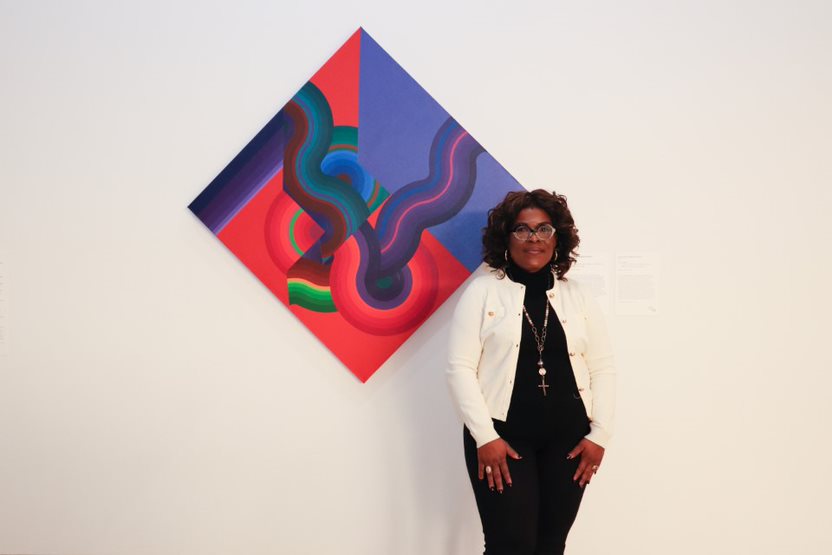
A headshot of cultural worker Nia Amadife.

Nia Amadife. Image courtesy of the Dallas Museum of Art.

Following the recent announcement of changes to its curatorial team, the DMA has also announced a new hire and staff promotions. Nia Amadife has joined the museum in the role of Director of Human Resources. Ms. Amadife most recently served as the Global HR Business Partner & Practice Lead for Childfund International, a nonprofit organization working to support children’s education, health, and safety across the world. In her new position, Ms. Amadife will also serve as an important advocate for the museum’s Diversity, Equity, and Inclusion initiatives. 

Additionally, the museum has announced the promotions of Stacey Lizotte, Brad Pritchett, and Aschelle Morgan. Last July, Ms. Lizotte was promoted to the position of the Allen and Kelli Questrom Center for Creative Connections Director of Education. She has now been appointed Chief Learning Officer in addition to her director role. Mr. Pritchett, who previously served as Chief Marketing & Communications Officer, has been appointed Chief Experience Officer. In his new role, he will maintain his duties related to marketing and communications and will oversee Guest Services and earned revenue. Ms. Morgan, who previously held the position of Director of Communications and Public Relations, has been promoted to Director of External Affairs. In her new position, she will promote the museum as it seeks to better serve the diverse communities of Dallas.

Last month, the Chinati Foundation/La Fundación Chinati in Marfa, named Caitlin Murray as its new Executive Director. Yesterday, the organization announced the appointment of two new trustees to its board: Miguel Fernandez and Franck Giraud. 

In a press release, Mack Fowler and Annabelle Selldorf, chair and co-chair of the board, stated, “Miguel and Franck are accomplished business leaders and dedicated philanthropists. Their vision and expertise will be vital as we focus on Chinati’s future.”

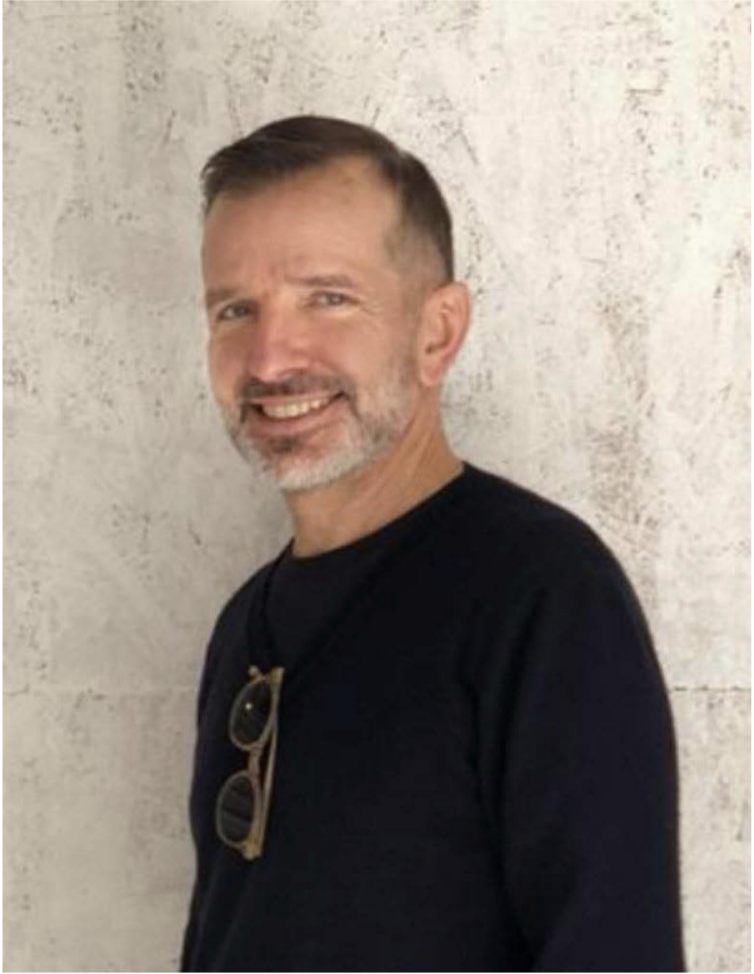
A headshot of Miguel Fernandez.

Miguel Fernandez

Mr. Fernandez serves as the CEO of Flō Networks, XX, which he co-founded in 2001. He also co-founded Saba Investments, a regional technology fund; Stanton Hospitality, an El Paso-based hospitality group; and Sotoak Realty, a real estate company focused on developing downtown El Paso. Additionally, Mr. Fernandez is involved with community groups and nonprofit organizations. He is a member of Borderplex Alliance, an El Paso–based bi-national economic development organization and serves on the Board of Managers of the University Medical Center of El Paso, the primary teaching institution for Texas Tech University’s Paul L. Foster School of Medicine in El Paso.

A headshot of Frank Giraud.

Franck Giraud

Mr. Giraud splits his time between Italy and the United States and has a long history of engaging with contemporary art. He was the international director of 19th- and 20th-century art at Christie’s and later served as the chairman of Giraud, Pissarro, Ségalot (GPS Partners), an art advisory firm with locations in New York and Paris. Additionally, Mr. Giraud has been a supporter of Chinati since his first visit in 1997.