Native

Oregonians celebrate Indigenous Peoples’ Day

Oregonians celebrate Indigenous Peoples’ Day

PORTLAND, Ore. (KPTV) – Oregonians are celebrating Indigenous Peoples’ Day for the third time since the holiday was officially recognized.

On Monday, Native Americans are celebrating their centuries-long history of resilience with ceremonies, dances, and markets showcasing amazing art, jewelry and clothing.

The Portland Indigenous Marketplace will be happening at the PSU Native American Student and Community Center until 3 p.m. The marketplace supports indigenous artists and entrepreneurs by providing barrier-free, culturally respectful spaces that encourage cultural resilience and economic sustainability by promoting public education through cultural arts.

FOX 12 spoke with one of the vendors at the marketplace. She partakes in the market places throughout the year, but says today is a special one.

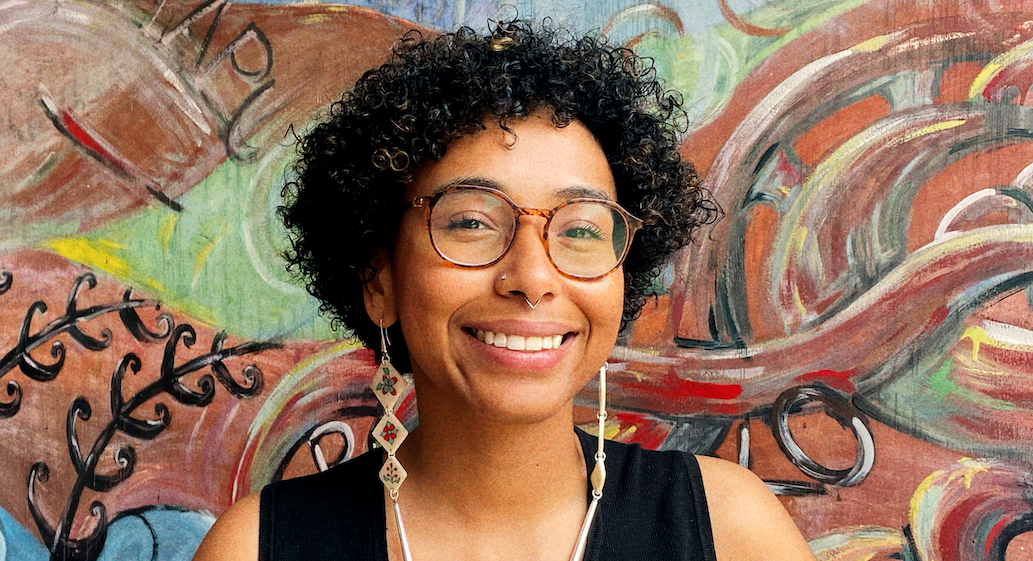
“A long time ago, we weren’t allowed to celebrate our culture or practice our language. It’s 2023 now, we’re in a different time, we can embrace who we are and pass out teachings and music to our younger generation. So it’s a day to reclaim who we are and to celebrate it,” said Rebecca Kirk, owner of Resting Warrior Face.

There’s also another event hosted by the NAYA Family Center on Monday night, from 5 p.m. to 8 p.m., at Barbie’s Village in northeast Portland, where there will be a community dinner, vendors, children’s powwow, and a guest speaker.

The group has more events throughout the month. You can find a list here.

Indigenous Peoples’ Day is also meant to recognize the painful history indigenous people have faced, but for some it’s also a day of protest and resistance.

Events like these all across the U.S. come two years after President Joe Biden officially commemorated Indigenous Peoples’ Day.

An increasing number of states and cities have also recognized it, pivoting from a day long rooted in the celebration of explorer Christopher Columbus, to one focused on the people whose lives and culture were forever changed by colonialism.

Celebrating Community through Cinema: Anpa’o Locke Reflects on Shooting “Kawá”

Celebrating Community through Cinema: Anpa’o Locke Reflects on Shooting “Kawá”
image

AL: Yeah, yeah. It’s definitely not the Lakota story. If it was, it’d be a lot more traditional, but I definitely was not married to that and I think if I was I would definitely restrict myself a lot more. I feel like just embracing what I know about Indigeneity and my perspective of what it means to be a Native person. It was shaped by my mom, was shaped by my grandma, and like, that’s like strongly my narrative and my understanding of what it means to be Lakota.  I only have the Native women really to rely on in my family because the native women in my family lead the shit and are the ones teaching us and are the ones who are making us go through ceremony are the ones who are making us go through all these understandings. And I just wanted to express that aspect and my experience going through that. My experience of being Native is different from other Natives because I’m obviously more black presenting. So I wanted to really showcase that aspect of that story because I feel like that’s what’s been the most integral.

AP: Now that you’re on the other side of production, what’s the big highlight for you in terms of making this film?

AL: Number one: hiring Shaandiin [laughs]. Being able to communicate with her and have her understand what I was looking for and having that relationship with a DP you really respect and you really fuck with. I think the second one is just those instances where I’m thinking through a creative solution. I think a problem came up when one of our locations fell through. So I had to think of something else and that turned out to be such a better thing. Having instances like those where I’m just like, wow, somehow even though we ran through a problem, it was still for the better, it still worked out.

Also having to, like, unclench a little, not be as stressed. I feel like I need someone to take the logistics away for me so I can focus more on the creative. I think that’s my breakthrough now that I’m at the end.


AP: We kind of talked about it a little bit before that idea that each film is kind of like it’s your baby, your own kid to some extent. I also feel that in making films there’s a certain part of it where the film starts to make itself in some regard and it almost communicates to you in some weird way about yourself. For you, what was your take away from your film speaking to you about itself?

AL: Let me think about that. I get what you mean. I feel like the old Lakota saying,  understanding the value of relationships. I feel like the relationships within the film feel real. They feel like what I experienced and I was totally blown away by that. And then, also having really amazing relationships behind the camera as well. And just thinking how these people are fulfilling me creatively and how these people are doing something I totally didn’t expect and that it turns out to be really freaking awesome. Just like having these really beautiful colors coming up to create a final painting. I maybe started the outline, but everyone came and filled this shit up and made it look really crazy and something that I’m really proud of.

This Indigenous Peoples Day, Shop These 16 Authentic Artists

This Indigenous Peoples Day, Shop These 16 Authentic Artists
image

This Indigenous Peoples Day is a time to celebrate the rich history and culture of North America’s Native peoples. Wondering how you can best support the community? Start by shopping a vibrant mixture of authentic Indigenous brands, across ready-to-wear, jewelry, beauty products, home goods, and more. 

These brands are overflowing with creativity and innovation. As seen at major events such as the Santa Fe Indian Market or the Indigenous Fashion Arts festival in Toronto, contemporary Indigenous artisans are creating works that continue their cultural traditions in new, exciting ways. As fashion has a long history of appropriating Indigenous motifs, there’s no time like the present to uplift authentically-made goods.

On Vogue’s must-buy list? Intricate jewelry from Indigenous labels such as Maria Samora and Warren Steven Scott; Graphic apparel from OXDX and Jamie Okuma (who recently became the first Native designer inducted into the CFDA); And beauty products from Cheekbone Beauty and Prados Beauty, among others. Whether it’s fashion, makeup, or home goods, there’s simply something for everyone. So get ready, set, shop!

Below, discover 16 more Indigenous brands. 

Himikalas Pamela Baker

turtleneck dress

Warren Steven Scott

stacked ovoids earrings

Lauren Good Day

leather duffle bag

Manitobah

Rise mukluls

Ginew

Raven jeans

Maria Samora

silver ring with diamonds

Warren Nieto

Thunderbird pendant necklace

Tyler Glasses x Crossing Paths

Mobilize

Alien Floral hoodie

Cheekbone Beauty

Sustain vegan lipstick

Osamuskwasis

Night Rider art print

OXDX

Silversmith tee

Jamie Okuma

graphic stretch top

Indi City

summer mini meds earrings

Prados Beauty x Lauren Good Day

eyeshadow palette

Section 35

Trading Post shirt

How a store in NYC celebrates contributions of indigenous artists

How a store in NYC celebrates contributions of indigenous artists

IE 11 is not supported. For an optimal experience visit our site on another browser.

  • Now Playing

    How a store in NYC celebrates contributions of indigenous artists

    06:44

  • UP NEXT

    How to style like a celeb without the high cost!

    03:49

  • What coats are in style right now? Check out these trends!

    04:07

  • Shop these 4 fan-favorite products for fall

    03:46

  • Shop these fan-favorite items, from a smart lamp to cuticle oil

    04:29

  • Victoria Beckham talks new fragrances with special meanings

    06:07

  • Self-care products to create a personal spa in your home

    04:33

  • Shop these items to help with your winter travels

    04:42

  • Shop these big deals on items for Target Circle Week

    04:30

  • Top tips for decluttering and organizing your closet

    09:37

  • Celebrity hair stylist gives 3 lucky TODAY viewers a refresh

    05:49

  • See TLC’s Stacy London, Clinton Kelly reunite live on TODAY

    09:52

  • Affordable fashion and function for fall: Crock-pot, cashmere, more

    04:38

  • Amazon beauty solutions: Teeth whitening pen, lotion, more

    04:21

  • Save on fall style with these affordable looks: Denim, boots, more

    03:48

  • How to get the glow from TikTok’s beauty filters in real life

    04:20

  • Charlotte Tilbury shares tips on how to fix makeup missteps

    05:54

  • Faves for fall up to 50% off: Rain boots, Case Mate bag, more!

    02:52

  • Twin with this these fashionable mom and daughter matching looks

    05:17

  • Celebrate Hispanic culture with picks from these small businesses

    04:44

Korina Emmerich and Liana Shewey are the co-founders of Relative Arts NYC, a store where all items are made by native artists with a focus on sustainability. They join TODAY live to share some of the beautiful pieces.

‘I’m not going to censor the truth’: This Sicangu Lakota rapper is using music to fight against injustice and share Indigenous culture with the world

‘I’m not going to censor the truth’: This Sicangu Lakota rapper is using music to fight against injustice and share Indigenous culture with the world


CNN
 — 

When Frank Waln raps onstage, he is dripping head to toe in his culture. His long, braided hair frames his face, and Lakota jewelry gifted by relatives and fans hangs from his ears – usually porcupine quills or buffalo bones – as hand-woven bracelets wrap around both wrists.

A beaded medallion beats against his chest as he sings, his voice reverberating with pain and anger, every lyric sizzling with the fury of unavenged injustice.

“My people come from the land / On which you stand / Still fighting the white man,” Waln raps in one of his songs, “My People Come From the Land,” the English translation of Mita Oyate Ki Makoce Etanhanpi.

“Survivors of genocide the trauma’s got me trapped / I used to keep it inside until I decide to rap / My ancestors ain’t die for me to lie in my raps / Can’t take it sitting down, instead I’m fighting back.”

The Sicangu Lakota rapper, born and raised on the Rosebud Reservation in South Dakota, tours the world, merging hip hop and Indigenous music into distinctive, soul-stirring songs.

Sicangu Lakota rapper Frank Waln is bringing Indigenous culture to the American music scene.

“I grew up in a place that used to be a literal death camp, where they marched my tribe to die. I was raised by survivors who could never talk about their trauma because they are still in survival mode,” Waln, 34, said. “Even as a child who didn’t understand it all, I felt all of this sadness inside me, and music helped me process that.”

Surrounded by survivors of the atrocities of colonial violence, the award-winning rapper says he has always carried with him centuries of their heartache. Through music, he says, he found healing – and the opportunity to take back the freedom American colonizers had stolen from his people.

Weaving Indigenous culture into American music

Waln was 7 years old when he found himself mesmerized by an old black piano sitting in his second grade classroom. One day before school, unable to resist any longer, Waln sat at the piano, pressing random keys and relishing every out-of-tune melody.

“I fell in love. I just remember touching those keys, hearing notes,” Waln said. “Hearing music elicited an emotional response that nothing else did, and I’ve been chasing it since then.”

Since that winter afternoon, he has taught himself how to play five instruments. Hip hop has inspired much of Waln’s music – among others, the album “StillMatic” by the rapper Nas – but the musician has grown into his own unique genre.

While a majority of his songwriting is rooted in activism, calling out the ongoing injustices against Indigenous people and forcing listeners to acknowledge America’s blood-soaked history, he doesn’t always sing with anger.

Sometimes his voice takes a softer note. Other times he doesn’t sing at all – telling a story of pain and love only through the delicate notes of the Native American flute.

He centers nearly every song around the instrument, and often the drums, both fundamental components of Indigenous music.

“When people talk about the history of America and the Wild West, they think of the cowboys and the Indians, but when they think about the music of America, we are missing from the story,” Waln said.

“I want to create my own genre that’s rooted in Native music, Native culture and Native sound, that also becomes a space for other Native musicians who don’t have a place in American entertainment and music culture,” he said.

The musician, whose songwriting is rooted in the Lakota tradition of storytelling, also focuses on incorporating his Native tongue, often singing verses in the Lakota language.

‘I’m very adamant about reclaiming my identity in a public space because my grandparents were punished and killed for it,” Waln said. “Having that freedom, recognizing that shift in generations, means everything.”

Reclaiming a culture that was once criminalized

While it may feel like America’s history with the violent theft of Indigenous land and slaughter of Indigenous people was a long time ago, Waln says it hasn’t been very long at all.

It was only 45 years ago that Indigenous people in the United States were allowed to resume practicing their cultural and religious traditions with the passing of the Religious Freedom Act in 1978.

“Every time I perform, there’s people in the crowd who were alive when it was illegal for us to be Lakota. So, even though you know that history is in the past, it’s very much impacted our reality,” Waln said.

Waln, like most Indigenous people in America, has been directly impacted by settler colonialism, he says. His great grandparents, and many others on their reservation, lived through federal boarding schools as children, where they were violently forced to disconnect from their Indigenous cultures.

Harvard University’s Peabody Museum of Archaeology and Ethnology has a sample of Waln’s great grandmother’s hair from when she was in boarding school. Waln’s tribe is still in the process of requesting the return of the hair sample.

Waln sings against injustice.

Indigenous children in the 19th and 20th centuries were given English names, banned from speaking their languages, had their hair cut, were prohibited from dressing in traditional clothes or jewelry and participating in their sacred ceremonies.

Along with forcibly assimilating children into White American society and separating them from their families, the children were also punished violently and hundreds died, according to the US Department of the Interior.

“This created a lot of trauma and PTSD in my whole tribe,” Waln said. “It created a wall between us and our culture. We were disconnected because the people that raised us had to disconnect themselves from their identities just to survive.”

“Some people want to say, ‘well, your tribe got defeated, get over it,’ not knowing the insidious nature of the colonialism, the way they went after us, not just with physical warfare, but also with biological and spiritual and emotional warfare,” he said.

The impact of settler colonialism is still evident in America today, widely impacting Indigenous communities across the country. On the Rosebud Reservation alone, Waln says, poverty is rampant. Unemployment levels are over 80%, and violence and addiction have become a problem that desperately needs solving.

To continue experiencing the consequences of colonialism compounds the trauma experienced by both the old and new generations, Waln says.

“I use music to process this pain,” he said. “In my culture, we look at medicine from a non-Western perspective. And music is medicine, so I’m constantly trying to find new ways to keep making new and better medicine for myself and sharing that with the world, for both Natives and non-Natives.”

In his music, Waln makes no attempt to censor himself to make people feel more comfortable. His courage comes partly from his mother, he says, who always reminds him to speak from the heart.

“This country has a lot of heavy history to reckon with,” Waln said, “and I’m not going to censor the truth.”

Oyate Teca Obmani

When Waln talks about the day he sat at the piano for the first time, he laughs as he reminisces on every detail of the day he found his purpose.

“Since then, the moment I sit down and pick up an instrument, I know that I’m doing what I was born to do,” he said, sitting in a Boston hotel lobby ahead of an event at Harvard University.

The musician travels the world, speaking at events and performing at tribal celebrations, universities and museums including the Smithsonian National Museum of the American Indian.

In the song Concentration Camp Blues,” he sings about the struggles of living on a reservation: “Concentration camp blues / Never make the news / These settlers rigged the game when they made the rules.”

In “What Made the Red Man Red,” Waln flips a racist song from the 1953 Disney animation “Peter Pan”: “Your history books (lies) / Your holidays (lies) / Thanksgiving lies and Columbus Day / Tell me why I know more than the teacher / Tell me why I know more than the preacher / Tell me why you think the red man is red /Stained with the blood from the land you bled / Tell me why you think the red man is dead.”

Other Waln songs focus on more personal struggles and often honor loved ones in his life, including his mother, one of his deepest sources of inspiration and a beloved spiritual leader who passed away in 2018.

“Music is like prayer for me,” Waln said. “I wouldn’t know what to do without music and my culture. I wouldn’t be alive without them.”

Along with hip hop, instrumental songs and Indigenous interpretation covers of music by artists like Fleetwood Mac, Waln has created his own blend of American music with Indigenous influences.

His evolving sound is showcased in his new song “Stardust,” released Monday, Indigenous People’s Day. It features Waln singing a poem he wrote over a piano piece. It highlights the significance of star knowledge for the Lakota, many of whom were astronomers, Waln says, and knew that bodies are made of the same particles as stars, far before Western science learned about it.

Waln performs during a rally at the Oak Flat Campground in Arizona's Tonto National Forest, in 2015.

Despite his extensive accomplishments – including three Native American Music Awards – Waln measures his success differently.

“I define success from an Indigenous perspective. I wouldn’t be on the right path if elders and people back home weren’t supporting what I’m doing as an artist,” he said.

Back on the Rosebud Reservation, Waln’s community held a ceremony for him in 2013, when he was given his Lakota name, Oyate Teca Obmani, which means “walks with the young/new nation.”

“My elders saw the impact I was having and how I was representing our culture and inspiring young Native people to be proud of who they are, to claim their Indigeneity, and that led to the name,” he said.

Supported by his community and thousands of people – both Indigenous and not – Waln is on a mission to educate, heal and unite.

“Some people think we don’t exist anymore,” Waln said. “That’s why I do what I do. Music is my weapon, my tool, to create change in the world.”

Crazy Horse Memorial®: Native Americans’ Day celebration to feature Cheyenne River Sioux Tribe member

Crazy Horse Memorial®: Native Americans’ Day celebration to feature Cheyenne River Sioux Tribe member

Crazy Horse Memorial® will host its annual Native Americans’ Day celebrations on Monday (Oct. 9, 2023). The all-day event features a Native Americans’ Day Program, hands-on activities, and performances by Pamyua, a nationally acclaimed Alaska Native performance group.

The Native Americans’ Day Program begins at 10:00am and will feature speaker Dr. Jacob Weasel (Cheyenne River Sioux Tribe) who recently ascended Mount Everest in his quest to summit the highest points on all seven continents. His journey is aimed to raise funds for his non-profit, The Wopila Project, for playground equipment at Lakota Homes in Rapid City. The Program will also host participation dancing with the familiar face of Starr Chief Eagle who has spent over 10 years teaching visitors at Crazy Horse Memorial® and students in the Rapid City Area School system.

Crazy Horse Memorial Educator of the Year, which honors an individual who has made significant contributions to Native American education in the last year, will be named. The award includes a $1,000 grant to the recipient’s school library or to programs of his or her choice that help indigenous students. Last year’s Crazy Horse Memorial Educator of the Year was Dr. Joseph Marshall III (Sicangu Lakota), an educator and administrator who has worked at both high school and college levels, a founding member of Sinte Gleska University, and the author of over 20 published works that include non-fiction, novels, screenplays, and collections of short stories and essays.

Hands on activities for all ages will feature the creations of dream catchers and bracelets. These activities will be guided by regional Native American artists. In addition to the crafts, hands-on activities such as a coloring wall will be on display so visitors young and old can draw what Native Americans’ Day means to them.

Pamyua will take to the Veranda Stage in the afternoon to share their Inuit culture and unique blend of music and dance through three different interactive sessions at 12:30, 1:30, and 4:30. Pamyua was created by brothers Phillip and Stephen Blanchett with a musical concept to blend Inuit drum/dance melodies with R&B vocal styling and arrangements. Joining the Memorial all the way from Alaska, they bring a high-energy, educational presentation that all ages will enjoy. In coordination with Custer Area Arts Council, Pamyua will be visiting Southern Hills area schools the following week.

As always, free tatanka stew will be available for lunch to all visitors while supplies last, courtesy of Korczak’s Heritage, Inc., Laughing Water Restaurant®, and Custer State Park.

All crafts, programs, and performances are included at no additional cost when you visit the Memorial. South Dakota was the first state to officially celebrate Native Americans’ Day on the second Monday of October annually since 1990.

The South Dakota Legislature established the Native Americans’ Day holiday at the urging of Gov. George S. Mickelson, then governor of South Dakota. The transformed holiday was a direct result of correspondence between the editor of Indian Country Today, Tim Giago, and the governor. Giago, an Oglala Lakota hailing from Pine Ridge Indian Reservations, had written a column in the Lakota Times expressing the need for change. In addition to the newly created holiday, Mickelson further declared 1990 as a “Year of Reconciliation” in observance of the 100th anniversary of the Wounded Knee Massacre.

The first Native Americans’ Day observance was held at Crazy Horse Memorial® and more than 1,200 people attended the event on October 8, 1990. “We can’t turn back the clock,” Gov. Mickelson said, “we can only turn to the future together. What we can do as leaders, both Native American and white, is teach others that we can change attitudes.” The Native Americans’ Day celebrations at Crazy Horse Memorial® will be the 33rd annual for South Dakota.

For more information, please visit www.crazyhorse.org and follow Crazy Horse Memorial® on all social media and/or contact Amanda Allcock at 605-673-4681 or email Amanda.Allcock@crazyhorse.org.

Rebuilt pavilion at Bde Maka Ska to open with new restaurant, market, amenities

Rebuilt pavilion at Bde Maka Ska to open with new restaurant, market, amenities

After a four-year absence, Bde Maka Ska will get a new concessions pavilion this month to once again serve as a community gathering space, bringing with it new dining experiences, art and improvements to trail safety.

The $6.5 million project features two new buildings and renovations, including a small performance stage, an all-gender indoor restroom, outdoor seating, redesigned landscaping with native trees and flowers and a rebuilt boat launch that opened in July. It opens to the public Oct. 20.

“As beloved as the original pavilion was, I believe this new building will quickly become a favorite gathering space and a Minneapolis icon,” said Al Bangoura, Minneapolis Park system superintendent, in a statement.

Former concessionaire Lola on the Lake will return to Bde Maka Ska, joining with Pimento Jamaican Kitchen to open Pimento on the Lake, which will offer beach-inspired twists on Jamaican cuisine. In the south building, Pimento Market will offer curated goods, gifts and treats from local businesses owned by people of color.

“Our market will be more than just a place to shop. It’s a cultural experience to foster unity and showcase the rich tapestry of talent in Minnesota,” according to a statement from Tomme Beevas, founder of Pimento Jamaican Kitchen.

Before the pavilion burned down in an accidental hookah fire in 2019, the area on the lake’s northeast side had been a popular gathering place for locals and visitors, said Park Board Commissioner Elizabeth Shaffer.

“I feel like it’s gonna be a big family reunion when we open back up,” she said.

The pavilion’s look respects the original design, Shaffer said. For instance, standing tables remain lakeside for those who want a view of the water. She believes the traffic and revenue generated in the rebuilt space indirectly will help the Uptown neighborhood.

Pimento Market staying open year-round will be good for the customer demand that accompanies nearby winter activities like loppet races, she said.

“I’m excited to encourage everyone to come out and meet me at the lake,” Shaffer said. “There’s still time for good enjoyment with the warm weather we’ve been having.”

The pavilion will display two naval artifacts recently returned to the Park Board: the wheel from the USS Minneapolis, a cruiser commissioned in 1894, and the bell from the USS Minnesota, a World War I-era battleship. The artifacts, thought to be missing before they were tracked down two years ago at Minnetonka High School, had been on display at the lake for decades.

The pavilion mural will be painted by artists in the We Are Still Here program, a partnership between the Native American Community Development Institute and Hennepin Theatre Trust that matches emerging Native artists with established mentors. The program is funded by the McKnight Foundation and the Minnesota State Arts Board.

The mural will feature pictures of lake recreation and running that non-Native people can relate to as well as Natives, said Angela Two Stars, arts director for All My Relations, a NACDI program. “It’s a great space to help reinforce that there was a story that existed here prior to colonization,” she said.

The mural is a capstone project for artists Jearica Fountain, Racquel Banaszak and Summer Cohen, who are mentored by lead artist Thomasina Topbear.

“The more visible you can make Native people, the more that narrative becomes part of our storytelling,” Two Stars said.

How Charlottesville native Kathryn Wingate uses surrealism to explore the human experience

How Charlottesville native Kathryn Wingate uses surrealism to explore the human experience

Behind multiple exhibitions in Ix Art Park, several local murals and a recent piece at Burning Man lies Kathryn Wingate, a Charlottesville artist born and raised. Following her recent successes, Wingate is approaching new goals with the fierce creativity and originality of her work thus far. 

Since beginning to work with Ix Art Park during the pandemic, Wingate has found significant momentum in her artistic career, particularly in creating public, community-oriented art. Between her work with Ix Art Park and several murals for local businesses, Wingate has found sharing her art with Charlottesville to be a “beautiful” experience. 

“It was a really cool experience to work with other artists to bring those visions to life, but also to experience people in the community seeing the work and responding to it in a positive way,” Wingate said. “It’s really inspiring and like seeing little kids go into it and be excited by it and then want to make art themselves.”

One of Wingate’s proudest accomplishments recently was bringing a collaborative sculpture that she designed and painted to Burning Man, an art festival in Black Rock City, Nevada. This piece, a larger-than-life sculpture depicting four perspectives of a human head, is indicative of some of her goals moving forward with her work.

“I really would like to do murals that reflect my personal work,” Wingate said. “I want to make more immersive versions of my pieces, more installation work, or just bigger, more involved paintings.” 

From a young age, Wingate was interested in art, teaching herself how to draw and paint. Wingate studied Communication Arts at Virginia Commonwealth University, where she came to realize that her true passion lay in painting. 

“I’ve always known that I wanted to be an artist and have always felt a compulsive desire to create,” Wingate said. “It’s always felt like my mission to bring the non-physical visions in my mind into the physical world.”

Wingate attributes some of her interest in art to her experiences with synesthesia — a phenomenon characterized by the crossover of two senses in someone’s brain — causing her to perceive letters and numbers in distinct colors when she reads and writes. This relationship between color and communication inspires much of Wingate’s art. 

“I think a lot about how to portray abstract sensations or feelings within the body that don’t have human words to describe,” Wingate said. “I can explain [these concepts] visually, but I can’t always explain them with words.”

During the pandemic, Wingate spent several months designing and crafting two pieces as a part of Ix Art Park’s Looking Glass Immersive Art Space — “The Mad Traveler’s Treehouse” and the “Kaleidoscopic Cave.”  

The Treehouse consists of a small, kaleidoscope-like room of mirrors, as well as several interactive light and sound elements, including a two-way mirror that reveals a hidden map upon the press of a button. The unique and whimsical space lays out the story of a past fictional “traveler” to be unfolded by visitors. 

The Kaleidoscopic Cave is a part of Ix Art Park’s event space. The windowless space — once known as “The Rabbit Hole” — was transformed by Wingate into a colorful, magical space. 

According to Wingate, the common thread throughout her work lies in an “inner reflection”.

“The treehouse has this opportunity to look into these mirrors and sit within the sacred reflection of yourself in the space,” Wingate said. “Then in the cave … it’s a magical experience of being in this sacred little cavern.”

This exploration of self is furthered in Wingate’s personal artwork, which consists primarily of figurative oil paintings. These paintings — a variety of surrealist depictions of the human body — signify Wingate’s interest in illustrating and understanding the relationship between the human body and the abstract sensations that humans experience. 

“I’m interested in how the physical form that a person is extends non-physically,” Wingate said. “I’m looking deep within myself and experiencing what it means to be alive and conscious.”

Powered by her authenticity and originality, it is clear that whatever Wingate creates next will be just as thrilling as her work thus far. Now in a part-time position at Ix Art Park, Wingate is taking the time to focus on her paintings and expanding the reach of her personal work. 

Wingate’s work — including many of her paintings as well as photos and videos of her immersive pieces — can be found on her website and her Instagram

Paradise City Arts Festival brings together over 200 artists from around the country

Paradise City Arts Festival brings together over 200 artists from around the country

NORTHAMPTON, Mass. (WGGB/WSHM) – In Northampton, hundreds of art enthusiasts had a chance to check out some cool pieces at the Paradise City Art Festival.

“You’ll see things at Paradise City that you probably won’t see anywhere,” said Linda Post.

In a scenic backdrop, art fans from near and far gathered at the 29th annual Paradise City Arts Festival.

Western Mass News spoke with Linda Post, she’s the founding director of the event that brings local and national artists together.

“First of all, it’s all about the artist; and there are 220 of them here, coming from every part of the country,” explained Post. “We have a contingent definitely from here in the pioneer valley. There’s probably about 40 artists from western Massachusetts. But we have artists from California, New Mexico, from Florida, from North Carolina.”

One of those artists is Bay State native, Whitmore Boogaerts, he and his sculptures have been here from the very beginning and he’s not moving them any time soon.

“It’s the present, the past, and the future,” added Boogaerts. “I can’t tell you how many people I talk to that have bought five, six pieces; ‘we love our piece’ and they come and buy another one.”

Post told us her event not only spotlights talented artists, but gives a glimpse into their host city.

“We are so much about the art, the food, the music; that’s very much what Northampton is all about too, and so we personify the very best, we like to think, of Northampton,” expressed Post.

In addition to highlighting the city, the festival also showcased some rarities in the art world.

“There’s one woman here, who’s stuff I haven’t seen before,” noted Bonni Bynes, one of the visitors. “She knits, with tiny, tiny needles; making jewelry. So she makes these small knitted things with beads and jewelry, that’s absolutely phenomenal.”

If you or anyone would like to stop by the fair, you still have time to visit. The paint dries on this perfect picture, Monday at 4 p.m.

Look and listen: San Diego artist and professor honors stories of displaced peoples

Look and listen: San Diego artist and professor honors stories of displaced peoples
image

Visual artist John Halaka came into a greater awareness of civil and human rights as a college student in the 1970s, and that desire to learn about and amplify the varied histories and experiences of others has only expanded over the years. That expansion can be seen in his latest exhibition, “Listening to the Unheard/Drawing the Unseen: Meditations on Presence and Absence in Native Lands,” focused on the stories of Native American, Black, and Palestinian people.

“I wanted to figure out a way to place the experience of Palestinians in this broader anti-colonial discourse, this broader history of resisting colonization, imperialism. One of the ways to do that — and I’m not inventing this in any way, there are a lot of others who have done this — is to talk about the similarities in terms of the anti-colonial struggle,” he says, noting that his own Palestinian ancestry has been part of what motivates his work. “This history of erasure that was experienced by a whole lot of people across the planet. Residing here in America, and being influenced by the American Indian Movement, the Civil Rights Movement, I wanted to learn more about that and there are definitely heroes within those movements.”

The drawings — on display at the Oceanside Museum of Art through Feb. 18, 2024, with a celebration event on Nov. 18 —are taken from the artist’s “Landscapes of Resistance” and “Forgotten Survivors” series, featuring drawings on maps of the United States and Palestine and narratives of dispossession, reclamation, and resistance.

Halaka was born in Egypt to Palestinian and Lebanese parents before his family immigrated to the U.S. when he was 12. He is a professor of visual art at the University of San Diego. His work has been exhibited nationally and internationally, and he’s won numerous grants and awards (including a Fulbright fellowship in 2011 to document the stories of Palestinian refugees living in Lebanon). He took some time to talk about his latest exhibition and why he finds it critical to listen, to see, and to learn about these histories of erasure. (This interview has been edited for length and clarity. )

Q: What led you to focus on these experiences of displacement and survival in “Listening to the Unheard/Drawing the Unseen”?

A: It definitely started a bunch of years ago with focusing on the rights of Palestinians, the rights of an indigenous population that was forcibly displaced from their land, that has, in many ways, been sort of erased from history. In 1982, I remember going to the library and looking at every dictionary and the word “Palestine” only referenced the historical land, there was nothing in there for Palestinians, so they had literally been erased from our discourse in the West. Being a person who’s interested in civil rights and human rights, I felt like I needed to begin to focus on that. In part, yes, my history as a descendant of Palestinians had something to do with that, but it was really kind of a deep interest in the rights of human beings, the people that I was most familiar with.

There was also a strong influence when I was a college student in the ‘70s in New York. I started to become aware of the Civil Rights Movement. It’s not like it was new in the world, but it was sort of new to me, these rights of people fighting to be seen as human beings, to be treated as equals, to have a place in society without being forced to constantly compromise or justify their existence. At the same time, I started to become aware of the American Indian Movement, AIM, and the Native folks that began to address the history of erasure that they have experienced over multiple generations. The history of denial of their humanity. Those were pivotal influences on me in the ‘70s. Later on, in the ‘80s, as I began to address and make work that explored ideas of justice, I began to focus on the rights of Palestinians because that was the topic that I felt closest to, most interested in, and began to spend a whole lot of time researching it, reading, listening to people, and reading some more and becoming familiar with both the capital “H” history and the lowercase “h” history. What I mean by that is the history of individual men and women who experience dispossession, who experience displacement, who experience a sense of being rendered unseen in a world where we can easily be forgotten. That began in 2004 or 2005 when I took my first trip to Palestine. Before that, it was all reading about it. Then, having conversations with people in Gaza, having conversations with people in the West Bank, having conversations with internally displaced Palestinians who became citizens of Israel and learning things that books never fully, clearly, or eloquently conveyed. I spent from that time on going back and beginning to record the stories of these individuals. Not that the books were in any way bad, I’m not saying that, but compared to the stories of these folks — in many cases men and women who never went to school, they spent their lives as laborers, as farmers, a whole bunch of them in refugee camps in extremely rough conditions — they were able to convey their personal and their families’ experiences, which I found tremendously moving. So, yes, for me, it started with an interest in the rights of individuals, civil rights, American Indian rights, and the rights of Palestinians as a displaced population that I was most familiar with and most connected to.

Q: And do you mind briefly sharing a bit about your personal connection to the Palestinian refugees and that experience?

A: I was born in Egypt. My father’s family is Palestinian; my mother’s family is Lebanese. We grew up as Arabs in Egypt, so you blend in. Both sides of my family are working-class, middle-class families. My dad worked in a bank, my mom was a seamstress and made dresses at home on our dining room table. We were very much a working-class family, but they were completely apolitical. They didn’t talk about politics. Occasionally, when uncles would visit, they would have conversations about politics, but I didn’t grow up in a household where we discussed politics. There are a whole lot of reasons for that, and I don’t want to go into it now, but I didn’t grow up with an emotional kind of connection to Palestine. I knew my father’s family was Palestinian, I knew my mama’s family was Lebanese, and we heard good things, but we didn’t really grow up knowing about the history of displacement, which is really odd, right? My father’s family is not a refugee family; my grandfather moved to Egypt before Israel was established by probably three decades. He died as a relatively young person in the early ‘30s, so I don’t know his story. He moved to Egypt, probably in the early 20th century, maybe just when the British settled into Palestine at the end of World War I and kind of took over the administration of Palestine after the Ottoman Empire was sort of dismantled at the end of World War I. I think that’s the period when my grandfather moved from Palestine to Egypt. His brothers stayed in Palestine, so there’s still a branch in Palestine. So, there is the historical connection, but it’s really the political connection that I came to when I was coming of age as a college student.

Q: Some of the pieces are taken from “Landscapes of Resistance,” a series honoring the work of Native American, Black, and Palestinian artists, activists, and scholars, including images of Toni Morrison, James Baldwin, Mary Brave Bird, and Leonard CrowDog. Can you talk a bit about what you learned during your research process of a couple of these individuals, and how that informed the resulting images of them that we’ll see in this exhibit?

A: There were a lot of things that brought this project about. One of those things was that I wanted to figure out a way to place the experience of Palestinians in this broader anti-colonial discourse, this broader history of resisting colonization, imperialism. One of the ways to do that — and I’m not inventing this in any way, there are a lot of others who have done this — is to talk about the similarities in terms of the anti-colonial struggle. This history of erasure that was experienced by a whole lot of people across the planet. Residing here in America, and being influenced by the American Indian Movement, the Civil Rights Movement, I wanted to learn more about that and there are definitely heroes within those movements.

So, I started with the idea that I was going to do a whole bunch of drawings on maps of the U.S. and a whole bunch of drawings on maps of Palestine. I deliberately chose activists, artists, and scholars because those are people that I’m most influenced by, and honor their efforts by doing two things: one is presenting their image on this map as a way of reclaiming a land that has been denied them. What is a map? A map is a graphic representation of a space that gives us permission to say, ‘Oh, this is America and it reveals roads and states and cities and towns,’ but it also conceals a massive history of destructive dispossession. So, a map is a dual reality, the seen and the unseen. What I wanted to do is reclaim the map, and I started out with Native American activists to reclaim the land by subduing the map by having their faces, their presence, be reemerging from those fields of colors and roads. There’s two things that happen at the same time: one is I want to honor the work of folks that I thought were really important to me, and two is I wanted to use it as an opportunity to really learn a lot about each of them. I made a list and I started to read and read and read, and also listen to anything that was available online, in terms of their presentations and lectures. It was this accumulation of knowledge; by no means am I an expert or scholar or somebody who can talk about these folks with great depth, but it was a way of immersing myself in their work and allowing them to emerge from these graphic fields of domination that represented this history of erasure. They become, in a way (and I say this word with some reluctance, but I can’t think of a better word) the drawings become these micro-monuments for these individuals. They’re not set in stone by any means; they’re kind of scrambles of lines that emerge from a field. From the early stages of this project, the drawings were fairly light and the faces were even more ghostly than they became and I think because I often tend to work and rework drawings, they became a lot more solid in the drawings. This idea of playing with ghosts, of spirits, that have taught me, that have guided me and a lot of others in reflecting on this history of denial, erasure, and oppression.

I wanted to pay homage to them, and I have to admit that there was always this trepidation of, is it my place to make drawings of these human beings, whether they’re Native American, African American because I’m neither? I’m not in any way speaking for them, I’m simply honoring them and it is my place to honor them because they’re remarkable human beings, influential human beings. I wanted these micro, personal monuments spoke to the emergence of African American folks, of Native American folks, of their presence. Not that they’ve been invisible, but they’ve been unseen. What these scholars and artists do is that they make that history seen, they make that history accessible to us, and that’s what this show is about, is helping to make the unseen, seen against these contemporary and historical waves of erasure.

Part of that series was also to address the invisible, or the unseen, work of migrant farmers or laborers. So, there’s a series of drawings of hands. I really just wanted to focus on the hands of laborers, the people that feed us, the people that clothe us, the people that fix our things and build our things. That’s an important part of it because this country is built on bonded hands, of laborers who have been unseen, whether they’re an enslaved population, whether they’re under indentured servitude, or whether they’re very horribly paid and horribly treated laborers. I mean, my refrigerator has apples that were probably picked by somebody who’s getting very little money, so we’re all part of that cycle of consumption that is based on the sweat and blood of folks that we don’t even consider. Not only that, but who are often horrifically mistreated.

Q: Indigenous People’s Day is Monday, honoring the histories and cultures of Indigenous people in America. In thinking about the ideas of displacement and survival you talk about in your work, some of your pieces include the imagery of maps — of the United States and of Palestine — noting their use as political tools that guide “its users to embrace as normal, virtuous, and permanent, a political worldview of a nation that has been shaped by documented histories of genocidal settler-colonial expansion, ruthless and dehumanizing enslavement, as well as exceptionally abusive labor practices that have greatly enriched the settlers.” How has the work you’ve done here caused you to think about your own part in helping to rectify this continued oppression?

A: I’m glad you asked me that question because it’s a really complicated issue to grapple with. As a person of Palestinian descent, as a person who’s really active in thinking about culture and history of displacement, I’m sort of torn because I’m also an immigrant to this so-called nation of immigrants. I challenge the idea that we’re a nation of immigrants; I often will say that we’re really a nation of settlers. So, how do we deal with that history? How do I deal with the history of benefiting from these centuries of genocide, of land theft? I don’t have an answer for that and I don’t know very many people that do, but I address it and I grapple with it. I live in San Diego, right? I live on land that was taken from people and I don’t have a clear answer, so I grapple with that and I’m very uncomfortable. I acknowledge that, as an immigrant, I have to acknowledge my history and my presence as a settler on people’s land. I have to acknowledge that this is their land that I’m occupying, that I’m living on. Hopefully, I’m living on in a thoughtful manner, but I don’t have an answer on how to rectify that history.

Q: Your artist’s statement for “Listening to the Unheard” talks about the ongoing erasure and resistance of Indigenous and formerly enslaved peoples, and our responsibility to these communities. What do you make of the more recent increase we’ve seen to censor and silence books, education, and conversations about the experiences and histories of both the LGBTQ community and people of color? What happens when we don’t listen to, and refuse to see, the people who’ve been historically and repeatedly pushed to the margins?

A: I think it’s an amazingly troubling process, the censorship that’s going on and increasing across this nation. It’s troubling because it perpetuates this history of making these folks unseen and unheard. Whether they’re issues that are addressed currently with LGBT issues, or histories of formerly enslaved populations, or even histories of Indigenous populations that are not told in a comfortable, sensitive, Kumbaya kind of way. These are complex histories and they need to be heard. I think we all have a responsibility to learn, we all have a responsibility to listen, we all have a responsibility to acknowledge that we’re benefiting from this history. When there are questions, I say to folks, “We’re not guilty of our parents’ sins, but we are responsible to learn of the wrongs that they’ve done and how those wrongs benefit us.” That responsibility is an important thing that we take on and I think it’s been denied, it’s been suppressed, it’s been silenced and erased by these efforts to censor books. That is very troubling. It’s an effort by ultra right-wing individuals, or maybe thoughtless individuals, who are afraid to acknowledge that history and are afraid to acknowledge that they’re benefiting from it. I think it’s very troubling. Again, I don’t have answers, but I think it’s a question that we need to address and I think we need to address it in complex ways. It’s not just a black-and-white thing like, ‘Oh, they’re wrong. They’re right.’ I think we need to acknowledge the fear of those who are erasing these histories and say, ‘What’s going on? What’s your fear?’ I’m not saying to justify or coddle it, but I think we need to have complex conversations about these histories and their efforts to censor it are not complex conversations, they’re oppressive acts, but I think we need to be better than that in addressing those acts. But yeah, it’s a very troubling time in America.