Native

Artist Profile: Isabella Madrigal ‘24 on the Cahuilla Community and Multidisciplinary Creativity | Arts

Artist Profile: Isabella Madrigal ‘24 on the Cahuilla Community and Multidisciplinary Creativity | Arts

Isabella D. Madrigal ’24, Cahuilla playwright, stage and TV actress, and now aspiring filmmaker, has created collaborative and meaningful art all her life and doesn’t plan to stop any time soon.

Madrigal grew up surrounded by artistry. Her father is a musician and cultural singer in the Cahuilla Band of Indians, which led her to begin participating in cultural dance in her youth. Madrigal said that being an enrolled member of the Cahuilla community remains an integral part of her creative work.

In high school, Madrigal wrote “Menil and Her Heart,” a play based on Cahuilla stories that tackles the issue of Missing and Murdered Indigenous People, the horrifically high rates of Indigenous people — especially women — who are victims of homicides and disappearances. The play follows a pair of Cahuilla sisters, portrayed by Madrigal and her real-life sister Sophia. When Menil (portrayed by Sophia) goes missing, Nesune (portrayed by Isabella) must go on an adventure to find her. With a cast entirely comprised of Cahuilla community members, the show was performed 16 times throughout Southern California. Despite attending a performing arts high school, Madrigal felt discouraged by the lack of roles for Indigenous people. Her play not only thematically tackled Native issues, but also put the spotlight on the talents of her community’s actors.

Motivated by a desire to give back to her community, Madrigal entered college thinking she would become a doctor and spent two years as a pre-med student. However, during her sophomore year, she realized that the academic requirements prevented her from pursuing art due to the time commitment.

“I was like, okay, I’m gonna take a break for a semester. I can come back to it, but I’m going to try to get involved with my art things, do more of what I was doing before. And that just really changed my whole Harvard experience,” Madrigal said.

Exploring the world of professional arts gave Madrigal insight into the ways that Native artists give back to the entertainment industry. Through playing roles in TV shows such as “Echo” and “Rutherford Falls,” and working with Native directors who “were centering native communities,” Madrigal experienced the process as a mode of “healing.” Furthermore, the recent increase in dynamic roles for a variety of Indigenous actors has been encouraging. She pointed out “Echo,” which is part of the Marvel Cinematic Universe, in which she played a younger version of the grandmother of the main character, an Indigenous superhero. The change in the acting landscape between today and Madrigal’s time in high school exemplifies the tangible impact of Indigenous artists.

“Without Native creators writing, not really collaborating, not directing, that would never have been an opportunity for me. So I’m really grateful for all the older people who have put in so much work to get us to this space. And how people are constantly challenging: How can we be better? How can this be a better process?” Madrigal said.

Now, Madrigal is excited to turn “Menil and Her Heart” into a film as a 2022 recipient of an Artist Development Fellowship from the Office for the Arts at Harvard. She wrote a screenplay version of her work for her English senior thesis and plans on a short film version after graduation to serve as a proof of concept for a larger feature.

“I’ve loved doing the play, because it’s live and we can be there. But there’s a limit to the amount of people that we can bring this to,” Madrigal said.

“In a film, it was really exciting for me to think about how exactly I’m gonna represent this visually. And part of the story is it goes into these alternate worlds that are inspired by some cultural stories,” she added.

Even with the change in format, Madrigal said that the heart of the story remains unchanged.

“The screenplay version really focused on this issue of Missing and Murdered Indigenous People, specifically women, girls, and Two Spirit people, and the incredible devastation that it has had on a lot of Indigenous communities, my community. But it’s really a global issue. And I think that part of it — why am I writing and who am I writing for — has stayed the same,” Madrigal said.

When prompted to give artistic advice, Madrigal offered a simple and effective maxim.

“As an art maker, you really don’t exist alone or in a vacuum,” she said.

Madrigal’s work strives to bring people together, regardless of the boundaries between audiences and performers or writer and subject. Wherever film, theater, and “Menil and Her Heart” take her, she won’t be alone.

Royal Winnipeg Ballet to premiere T’əl, a historic Indigenous-language production

Royal Winnipeg Ballet to premiere T’əl, a historic Indigenous-language production
image
Open this photo in gallery:

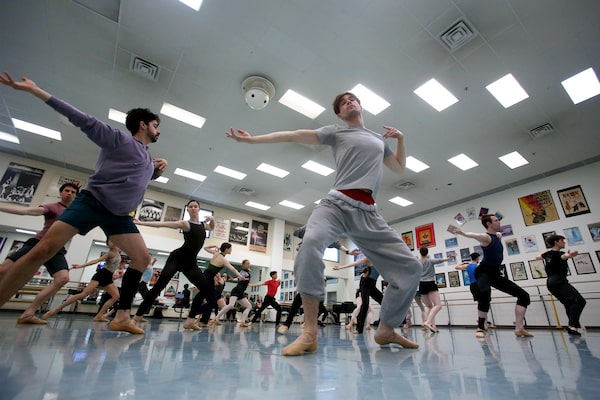
Dancers Stephan Azulay, front left, and Tymin Keown, front right, rehearse for the Royal Winnipeg Ballet’s T’əl: The Wild Man of the Woods, which debuts April 25.

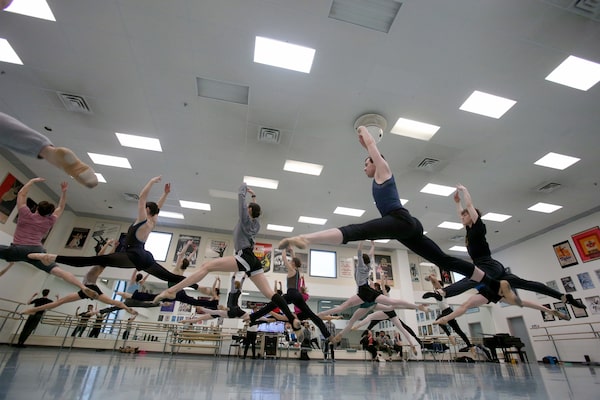
Silhouetted against beams of fluorescent light shining from the ceiling of a vast studio, more than two dozen dancers from the Royal Winnipeg Ballet listened closely to choreographer-in-residence Cameron Fraser-Monroe.

In the centre of the room, ballerina Emilie Lewis spread her arms out like wings. She took flight to the sound of her instructor’s voice, held aloft by the encircled ensemble lifting her from below.

“Brilliant. Keep paying attention to each other,” said Mr. Fraser-Monroe, nodding with satisfaction.

Open this photo in gallery:

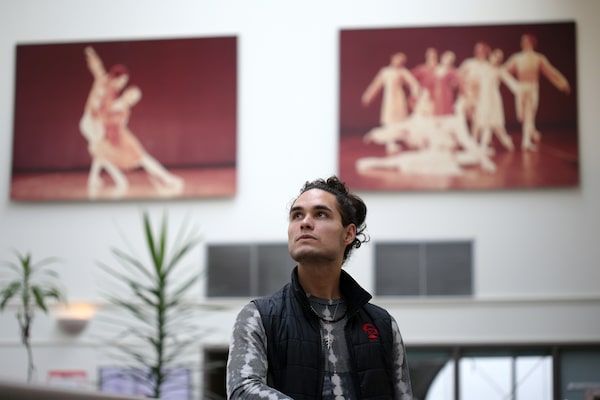
Cameron Fraser-Monroe is a member of the Tla’amin First Nation in B.C., whose stories inspired T’əl.

That evening, a week before the RWB’s last production of the season, as sonorous strings filled the air, the 26-member troupe was acutely aware: They were about to make history. For the first time since it was founded in 1939, North America’s longest continuously operating ballet company is collaborating with Indigenous artists from across Canada and the United States to present a performance in a First Nations language.

T’əl: The Wild Man of the Woods, an entirely new ballet, will premiere at Winnipeg’s Centennial Concert Hall on Thursday for a four-show run. But there are already talks about the international touring company taking it on the road.

Contrary to most ballets, which typically rely solely on movement as a storytelling device, the hour-long piece will be narrated in Ayajuthem and English by Elder Elsie Paul, a knowledge keeper of the Tla’amin First Nation on British Columbia’s upper Sunshine Coast. A residential school survivor, Ms. Paul is one of the few remaining people fluent in Ayajuthem, a language native to her nation.

Open this photo in gallery:

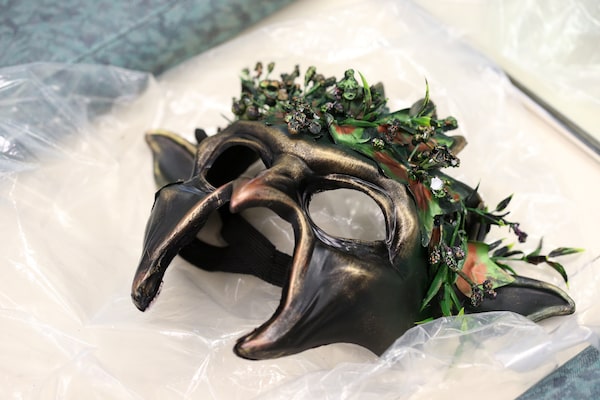
Indigenous artists have been involved at all levels of T’əl’s production, from costuming and music to the narration in the Ayajuthem language.

Two-spirit composer and cellist Cris Derksen, who comes from a line of chiefs from the North Tall Cree Reserve in Alberta on her father’s side and has Mennonite heritage on her mother’s side, will join the Winnipeg Symphony Orchestra with a live score from the pit of the concert hall.

Navajo designer Asa Benally, a New York-based alumnus of Yale University, is leading the costume work.

T’əl – pronounced “tall” and spelled in Ayajuthem with an upside-down and backward “e” – is inspired by the various legends that Mr. Fraser-Monroe, the creative force behind the RWB’s performance, grew up hearing as a member of Tla’amin, years before he found his calling in ballet.

“It feels like all my life’s work has led up to this point,” he told The Globe and Mail.


The dancers lift each other through the air on poles as they follow Mr. Fraser-Monroe’s choreography. Usually, ballet tells a story through movement alone, but T’əl is narrated in Ayajuthem and English.


A decade ago, Mr. Fraser-Monroe was a teenaged newbie in Winnipeg just trying to get through RWB’s rigorous program.

In Grade 10, he was visiting the Prairie city on a trip with his dad when he was recommended by his West Coast dance teacher to try out for the prestigious ballet school. At the audition, he was offered a scholarship on the spot. He soon left his British Columbia high school for the housing facility on campus, joining ambitious peers recruited by the RWB from around the world.

After getting commissions by many national ballet companies as a choreographer, and performing globally as a dancer, the 25-year-old now holds the company’s coveted choreographer-in-residence position that allowed him to create T’əl.

“We’ve all been talking about how I wanted to make this happen for over two years,” Mr. Fraser-Monroe said, sitting in the RWB’s lobby. “This is the kind of story that’s for everyone, but especially pays honour to something we never get to see or hear among the Eurocentric fairy tales we’re used to at the ballet.”

The piece follows the tale of a wild man who kidnaps children from a village after dark and then disappears – until one day a young woman dares to be brave as she ventures to save her sister.

“It’s simple like most ballet stories, but there’s so many layers,” said Mr. Fraser-Monroe, who has been working on the piece since October last year. He went back to Tla’amin to learn everything about the legend of T’əl straight from the source: his elders.

Open this photo in gallery:

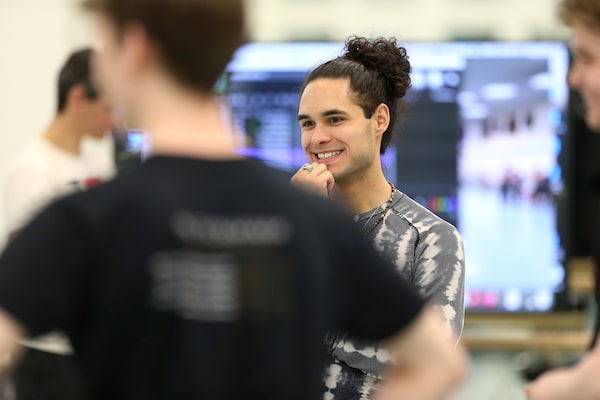
Talking with elders helped Mr. Fraser-Monroe, 25, to get to the heart of the story he wanted to tell.

He frequently consults by phone with his dad and auntie to learn about traditional teachings. In order to fully understand this story, however, he had to sit down with Ms. Paul, who then shared with him its significance.

“Because I’m bringing forward a story that wasn’t told to everyone as they’re falling asleep at night, and for which there is no official text, I have to often fulfill the role not only of creation, but also of education,” he said.

“In my past works, that’s meant me being the one that is speaking. But I thought I can’t do nearly as good a job of passing down this story as the person who has spent her entire life maintaining it through hardship.”

The English narration is so the tale can be understood by everyone, while the words in Ayajuthem are an homage to the few who know where it comes from.

Stories such as this, Mr. Fraser-Monroe said, barely made it through Canada’s assimilation policies and residential schools. They were also made illegal during the potlatch ban, which saw the Canadian government forbid Indigenous peoples to pass along their customs to their descendants from at least 1885 to 1951.

“That’s what makes this so special. Now, our piece will give this story its legs,” Mr. Fraser-Monroe said. “It can be told over and over again.”


Open this photo in gallery:

None of the dancers in T’əl are Indigenous, but Mr. Fraser-Monroe hopes the production will inspire other Indigenous artists to consider ballet.


The dancers Mr. Fraser-Monroe is working with for T’əl are not new to him. He has performed with some of them and choreographed the whole troupe on at least two other occasions, albeit never on such a large scale.

But he is cognizant of the fact that none of the company’s dancers are Inuit, Métis or from a First Nation.

That’s something he is hoping the new production can change, inspiring other Indigenous artists to embrace the potential of ballet. In the meantime, he is making the conscious casting choice to give featured roles to every dancer of colour in the company.

“I’m proud for this piece to be a first in many respects. I just don’t want it to stop there, with me or anyone else,” he said. “Because when I walked into this space, I didn’t see myself fitting in. I just didn’t see myself represented.”

André Lewis, RWB’s artistic director, who will celebrate 50 years with the company in 2025, called the new work a “historic milestone.” He said it epitomizes the power of storytelling through dance and showcases a commitment to cultural diversity.


Open this photo in gallery:

‘It feels like all my life’s work has led up to this point,’ Mr. Fraser-Monroe says.

On the night of the premiere, Mr. Fraser-Monroe’s two moms are coming from their home in Vernon, B.C. His brother, who is on a volleyball scholarship in New Brunswick, is driving from Saint John.

His dad, who is from Tla’amin, is also flying in. But he’s not sure whether his dad’s husband can make it. “I think he just broke his ankle,” the dance director said with a chuckle.

Mr. Fraser-Monroe is hoping to watch his ballet from somewhere in the furthermost corners of the concert hall.

“I’ve spent so much of my time with the work right in my face,” he said. “That night, I just get to enjoy it with everyone else.”

Forge Project art space in Upstate New York transitions into a non-profit

Forge Project art space in Upstate New York transitions into a non-profit

Forge Project—the New York-based social-justice initiative founded to support Indigenous art, culture and decolonial education—is transitioning to a non-profit model that leaders believe will help the institution be more sustainable in the long term and serve as an example for Native self-determination.

The organisation was first launched in 2021 by Becky Gochman—who is married to an heir of the wealthy Gochman family, founders of the Academy Sports + Outdoors retail chain—and Zach Feuer, a former New York gallerist and the director of the Gochman family’s collection, which largely focuses on work by contemporary Indigenous artists. In the past three years, under the direction of Candice Hopkins, Forge Project’s executive director and chief curator and Sarah Biscarra Dilley, the director of Indigenous programmes and relationality, Forge Project has supported almost 300 Indigenous artists, hosted other cultural workers and cultivated new audiences for their work, as well as cared for a collection of more than 175 works by contemporary Indigenous artists. The organisation has also taken part in important collaborations, like one with Bard College to overhaul the university’s Native American-studies programme.

The organisation first opened as a limited liability company, “simply because that was the fastest way we could get off the ground, and because we felt there was a real urgency to our work”, according to Hopkins.

But even in Forge Project’s earliest days, Gochman and Feuer (who are not Indigenous) wanted to enable self-determination and Indigenous leadership at the institution, Hopkins says. For more than a year, Forge Project has been working to develop a new organisational model that will open the now non-profit up for more financial support from diverse sources.

As part of the transition, Forge Project has created an Indigenous Steering Council to help guide the institution and its vision, a model of governance not necessarily unique in Indigenous communities, Hopkins says. Members of the council serving three-year terms include Indigenous artists like Sky Hopinka, Jolene Rickard, G. Peter Jemison and Jeffrey Gibson (who opened the US pavilion at the Venice Biennale last week as the first Indigenous artist to represent the country with a solo show there). Unlike other non-profits, Forge Project is now structured so that the board of directors will answer to the Steering Council.

Candice Hopkins, Forge Project’s executive director and and chief curator. Photo by Thatcher Keats, courtesy of Forge Project

“One of the questions that we wanted to answer as we transitioned was, ‘How do we always enable Indigenous leadership, no matter the makeup of the board?’” Hopkins says. “We are really conscious of the fact that the majority of wealth in this settler country is not held in Native hands. That means a lot of our supporters as we grow might not necessarily be Native philanthropists, but we hope that there are folks who are really invested in ideas of how philanthropy can enable repair and restitution.”

As part of reaching those goals, Forge Project has signed a memorandum of understanding with the Stockbridge-Munsee Band of Mohicans, a tribe made up of members descended from the Moh-He-Con-Nuck, or the People of the Waters That Are Never Still. Forge Project’s Ai Weiwei-designed spaces are located in Taghkanic, New York, on a 60-acre campus on unceded lands of the Moh-He-Con-Nuck. Aims of the collaboration include expanding research and cultural access to the site and supporting avenues of return.

“We’re thinking about how the work we do can also directly benefit them,” Hopkins says.

Indigenous art has slowly received more mainstream attention over the past decade or so, Hopkins says, and has accelerated recently. This year’s Venice Biennale highlighted and awarded Indigenous artists for their work, and the market is slowly catching up to increased institutional and curatorial awareness.

“This has always been central for us, it just hasn’t been central for everyone else,” Hopkins says. “I feel like there’s real momentum right now with Native artists, and rightly so. Honestly, they’re making some of the best work.”

Olive Hill native wins art award

Olive Hill native wins art award

By Jeremy D. Wells

Carter County Times

Olive Hill native and painter Michelle Ward-Ciancio is passionate about Appalachian artists – but especially local artists. The artist, who was nominated for an Appalachian Arts Award this year, noted that in addition to herself another Olive Hill native, Samantha Arthurs, was nominated in the best author category for her fiction book, “A Crooked Mile.” She also pointed out that Catlettsburg’s Holly Forbes was nominated in the Singer-Songwriter and Best Female Vocalist categories – ultimately taking home the award for the latter.

Arthurs, unfortunately, did not take home the award in her category. West Virginia native Storm Young took home that award instead. But Arthurs announced through her social media accounts that she was appreciative of the experience, nonetheless. 

“Making it to the finals for an award like this is honestly cool in its own right!” she wrote. “To be placed in a category with two other female Appalachian authors is nothing to sniff at.” 

Arthurs book, which is set in the fictional rural Montana town of Rust, tells the story of a pair of young people yearning to escape their small town life. 

Ward-Ciancio, who was nominated in the best painter category, took home her award too; but the artist was intent on focusing on how just how many nominees – and winners – came from our corner of Kentucky. She pointed out that nominees came from all across the 13 states that make up the Appalachian Region; from Alabama and Georgina in the south to Pennsylvania, Maryland, and parts of New York at the northern end. So, she said, to have so many locals represented was outstanding.

Even the folks who presented her with her award, for her portrait of Toni Morrison, were Carter County residents. Ward-Ciancio accepted her award from Dan and Mindy Click, of the Grayson Gallery & Art Center. 

She said she was overcome with emotion, and had to blink away tears as she thanked her friends and family, including her husband and children. She also said she had to, “acknowledge my inspiration for this painting – Toni Morrison – a truly remarkable lady. If you don’t know much about her life, I’d encourage you to look her up. I’m just hopeful that my daughter and any of the other young women in our lives, including those in the audience, can push the boundaries and create a legacy as strong as hers.” 

The Appalachian Arts and Entertainment Awards were held on March 16 this year, at the Mountain Arts Center, in Prestonsburg. The organization behind the awards, “seeks to celebrate art in all its forms and recognize the artists from or living in our communities all along the Appalachian Mountains, who are making the world a more beautiful place to live in through art.”
Contact the writer at editor@cartercountytimes.com

(Submitted photos)

​​8 Places to Appreciate Indigenous Culture in the United States

​​8 Places to Appreciate Indigenous Culture in the United States

There are approximately 5.2 million “American Indians and Alaska Natives” in the United States, making up 2% of the population. To truly understand American history, we must look to the First Nations that occupied the land long before European settlers arrived. Their Indigenous culture and traditions strengthen the fabric of the United States, and as time passes the country has slowly recognized and reconciled past errors. The last few years have been full of long-awaited victories, like the Washington Commanders and Cleveland Guardians finally changing their names, or TikTok emerging as a platform for Native creators to share their stories.

Today, we celebrate Indigenous culture. It is all around us. To further learn from and appreciate the Indigenous people of America, visit any of these places.

1. Navajo Nation

The Navajo Nation is the largest Native reservation in the United States, spanning 16 million acres throughout Arizona, New Mexico, and Utah. There are countless sites that have risen in popularity due to their picturesque nature, including Monument Valley and Antelope Canyon. When you visit these sites, you will have a Navajo guide as they are the only ones granted commercial access to sacred land.

The annual Navajo Nation Fair is held in Window Rock, Arizona—Navajo Nation’s capital. Taking place every September, this weeklong celebration features horticultural exhibits, art displays and markets, a parade, and a cultural showcase.

Other attractions include ancient Anasazi ruins and perfectly preserved dinosaur tracks from the Jurassic Era. The Navajo are renowned for their hospitality, operating three lodging properties in the heart of Navajo Nation—the NavajoLand Hotel in Tuba City, Quality Inn Navajo Nation Capital, and Quality Inn Lake Powell. All three are staffed almost exclusively with Navajo people and ready to accommodate you as you “explore Navajo.”


2. Miccosukee Village

The Miccosukee people were originally part of Creek Nation but migrated to Florida before it became part of the United States. Most were pushed west as a result of wars, but 100 or so refused to surrender and took shelter in the Everglades. Today, over 600 members of the Miccosukee Tribe are direct descendants of those who stayed behind, and have established a prominent presence just 25 miles west of Miami, Florida.

There are three exciting opportunities for visitors to Miccosukee Village. First, guests can learn how to touch and mount a Florida alligator. Those who are bold enough will find that a live alligator wrestling selfie is hard to top—but equally hard to take. Second, guests can take an airboat ride through the Everglades with Miccosukee fishermen, hunters and froggers as guides. A highlight of the trip is a visit to a small island, where you can see an old-fashioned Miccosukee camp.

Finally, the Miccosukee Museum features a village with “chickees,” traditional open-sided houses of the Miccosukee people, as well as patchwork sewing and cooking demonstrations. There are several annual festivals, the most highly anticipated of which is the Miccosukee Indian Arts & Crafts Festival, featuring storytelling, fire performances, and handmade arts and crafts. All proceeds go to the Miccosukee Educational Fund to provide educational programs for Miccosukee youth.


3. Grand Canyon West Rim

The Grand Canyon West Rim is home to the Hualapai Tribe. As such, National Park passes are not accepted here. There are over 1,300 tribal members living on the premises and well-known attractions like the Skywalk and zipline are part of their entrepreneurial ventures. This means any fees or money spent while there directly benefits the Hualapai people.

Your journey starts with a visit to Hualapai Point, formerly known as Hualapai Ranch. There, you’ll find a trading post with tribe ambassadors crafting artistic creations from Sunday to Tuesday. From Friday to Sunday, there are daily performances by Hualapai singers and dancers. For traditional cuisine, try the Gwe Ma’Jo Restaurant, serving breakfast and lunch—the frybread is a must. You can purchase handmade souvenirs at Native Hands, on site.

Popular lookout areas include Eagle Point and Guano Point, with panoramic views of the Canyon. Colorado River rafting is also available through Hualapai River Runners. They offer one or two day tours with certified Hualapai guides. On the tour, you’ll learn about the geology of the region, local flora and fauna, and history of the Hualapai people and their Indigenous culture. Guests can stay at the Hualapai Lodge, the starting point for river rafting along Route 66, the Cabins at Grand Canyon West near Hualapai Point, or RV parking near the main terminal. RV reservations must be made by phone. All activities close by 4:30 pm.


4. Cherokee Nation

The Cherokee Tribe was one of the most displaced by the Trail of Tears. Originally located in the Southern Appalachian Mountains of Georgia, modern Cherokee Nation consists of 14 counties in Oklahoma. With much resilience and resolve, the Cherokee people have continued to thrive. Responsible for the first newspaper in Native territory, they have always been renowned as a progressive people, boasting a long history of trade and alliance with Great Britain and Europe long before any settlers arrived.

Popular sites include the Cherokee National History Museum, where guests can take lessons in arts and crafts and study the Cherokee Syllabary. The highly anticipated Cherokee Art Market takes place every October in Tulsa, Oklahoma, to which only the most elite artists are invited to compete for a $75,000 grand prize. Guests can observe artwork demonstrations and admire stunning displays of Native jewelry, pottery, textiles, paintings, and sculptures at this event.

Note that the Cherokee Nation in Oklahoma is different from the Eastern Band of Cherokee based in the Qualla Boundary of North Carolina. If you’re visiting the latter, don’t leave without stopping at the world famous Qualla Arts and Crafts Mutual, located right across the street from the Museum of the Cherokee Indian.


5. Haudenosaunee (a.k.a. Iroquois) Confederacy

Also referred to as The League of Nations or Haudenosaunee, the Confederacy is made up of six different tribes: the Seneca, Cayuga, Mohawk, Onondaga, Oneida, and Tuscarora Tribes. They came together centuries ago, and their organizational model is believed to have influenced the U.S. constitution. Scattered throughout upstate New York, Wisconsin, Quebec, and Ontario, guests can visit attractions hosted by each respective tribe.

The Seneca Iroquois National Museum in Salamanca, N.Y. features over 300,000 pieces of ancient and modern art, including wooden face masks, corn husk dolls and horn rattles. They moved to a new building in 2018 and have expanded significantly to include an outdoor amphitheater, archives, offices, and the Onöhsagwë:de’ Cultural Center. There are events year-round, including moccasin making classes, corn husk doll classes, singing and dancing classes, and other explorations of Indigenous culture. Every November they have an annual festival that features and supports local artists and Indigenous food vendors.

In Victor, New York, the Ganondagan State Historic Site is located on the original site of a 17th century Seneca town. Today, it connects visitors to the culture and natural world of the Seneca through workshops and lectures by Indigenous speakers, interactive exhibits, and the annual Hodinohso:ni’ Art Show at the on-site Seneca Art & Culture Center.

On Labor Day weekend, the Annual Iroquois Festival takes place at the Iroquois Museum in Howes Cave, New York. The beautiful costumes that the dancers and singers wear might be the highlight of the festivities. As always, be sure to ask before taking any photos. The Iroquois Museum is open April through November generally and is well worth a visit.


6. Standing Rock Sioux Reservation

Spanning more than two million acres, the Standing Rock Sioux Reservation is the fifth largest in the United States. The reservation is rich with historical significance and natural beauty.

The region is known for its bald eagle spotting opportunities, with the eagle considered sacred in Native cultures. Visitors can drive along the Standing Rock National Native American Scenic Byway, which spans 86 miles. It has markers and interpretive signs that tell the history of Indigenous tribes in the area.

Along the drive, make a stop at the Aktá Lakota Museum & Cultural Center. The Lakota are one of the main tribes of the Sioux. The museum has a collection of artifacts, a gift shop, and events like book readings and Museum Monday, free weekly presentations held in July and August to educate the public about Lakota philosophy, anthropology, and other disciplines.

In nearby Mobridge, you’ll find the Klein Museum, with 10 murals by Native artist Oscar Howe. This is also home to the Sitting Bull Monument. Chief Sitting Bull was the Sioux leader known for defeating General Custer at Little Bighorn but beloved for much more, and the monument was built to mark his final resting place.

If street art is your thing, stop by Eagle Butte. The Red Can Graffiti Jam is an annual festival organized by the Cheyenne River Youth Project that has resulted in various murals throughout the area. They blend Lakota and graffiti culture to revitalize neighborhoods and give a new platform to Indigenous artists.


7. Wind River Reservation

The Wind River Reservation in southwestern Wyoming is home to both the Eastern Shoshone and Northern Arapahoe Tribes.

Nature lovers can take a trip up the Wind River Canyon Scenic Byway. A 40-minute drive (not including stops), the aptly named byway goes from Shoshoni to Thermopolis, home of the world’s largest mineral hot spring. There are plenty of camping options at Gannett Peak, the state’s highest point, with elevations upward of 13,000 feet.

Be sure to stop by Sacajawea’s gravesite at Sacajawea Cemetery in Fort Washakie, Wyo. Fort Washakie is also the final resting place of Chief Washakie, one of the most prominent leaders of the Eastern Shoshone Tribe. The Fort hosts Eastern Shoshone Indian Days, the reservation’s largest annual event, open to the public and held in June. The event features a collective powwow, rodeo and re-enactment of the signing of the Treaty of 1868.


8. Chickasaw Country

The Chickasaw Nation has a jurisdictional territory in Oklahoma, but migrated throughout Mississippi, Kentucky, Alabama, and Tennessee. The Chickasaw Cultural Center in Sulphur, Okla. is a state-of-the-art venue with permanent and rotating exhibits, agritours and cooking demonstrations, a speaker series, and hands-on educational activities.

In Oklahoma City, Exhibit C Gallery serves as an art gallery and retail space. It is Chickasaw owned and features pieces by Native artists. It is also a tourist information hub and can provide information on other indigenous attractions and activities throughout Chickasaw Country. For those in Mississippi, Tupelo also has a Chickasaw Heritage Trail.


Jen Ruiz is a full-time travel writer and content creator. She is based in Puerto Rico.

Lt. Gov. Peggy Flanagan hits the runway at Native Nations Fashion Night

Lt. Gov. Peggy Flanagan hits the runway at Native Nations Fashion Night

Native Nations Fashion Night is the largest showcase of its kind in the Upper Midwest, and this year, longtime supporter Lt. Gov. Peggy Flanagan, of the White Earth Band of Ojibwe, will be one of the models.

The fourth-annual runway show and artisan market, taking place this Thursday at Quincy Hall in Minneapolis, is spearheaded by Delina White, the designer behind IamAnishinaabe, who dressed the state’s most stylish politician for her 2023 inauguration.

White, a member of the Leech Lake Band of Ojibwe, who lives on the reservation near Walker, Minn., will be showing her own contemporary looks, which are infused with Indigenous traditions, such as elaborate beadwork. Indigenous models will showcase everything from fur clothing by an Alaskan Native Tlingit designer to modern ribbon skirts by a Dakota dressmaker. All will riff on the theme of “Messengers, Protectors and Great Mysteries.”

In addition to the fashion show, the evening will have a marketplace for shopping the wares of Native artists, including clothing, jewelry and beauty products. There will also be Indigenous foods and music by Native Son/DJ AO.

White created the event to showcase the talent of Indigenous fashion designers, models, hairstylists and makeup artists. It’s intended to celebrate the community’s creativity and skill and share it with a broader audience. (The date of the event was selected to coincide with “Native Nations Fashion Night” Day, a proclamation made last year by Flanagan, on behalf of Gov. Tim Walz.)

While White recently exhibited her work at the Textile Center as a McKnight Fiber Artist Fellow, she says clothing and accessories are best displayed on the runway. “It has to be worn,” she said. “You have to see it in motion.”

Native Nations Fashion Night: “Messengers, Protectors and Great Mysteries”

When: April 25, 5-10 p.m.

Where: Quincy Hall, 1325 Quincy St. NE., Mpls.

Tickets: $50 general admission, $150 VIP, nativenationsfashion.com

Black Hills Indian Artist Market showcases unique Native American artwork

Black Hills Indian Artist Market showcases unique Native American artwork

RAPID CITY, S.D. (KEVN) – The Black Hills Indian Artist Market returned to Rapid City’s Dahl Arts Center for the fourth consecutive year.

Paintings, photography, and more were on display, but the market featured more than just visual art. In addition, the market included live music, a fashion show, and more. The artwork included at the market often utilized vibrant colors and traditional themes, which artists and organizers attributed to the unique styles of tribes in and around the Black Hills.

“If you go on any South Dakota Reservation, art is a huge industry,” Mike Two Bulls, one of the market’s organizers and a member of the Indian Art Committee, said.

Two Bulls also said the market began as Native Americans had experienced economic hardships during the COVID-19 pandemic.

Now that things have improved, the market helps them to showcase their creativity, network with other artists, and gain recognition for their craft.

Ziigwan Spring Market aims to support local Indigenous artists

Ziigwan Spring Market aims to support local Indigenous artists

More than 50 Indigenous vendors took part in a spring market at Winnipeg’s Maples Collegiate Saturday, to promote and support local artists and their work.

The market was called “Ziigwan,” which means spring in Ojibwe. The event was put on by the school alongside Prairie Tipi Indigenous Home & Gift.

“We have a wide variety of Indigenous artisans and small businesses here,” said Renata Meconse, one of the co-organizers. “We’re really trying to make an event that encourages entrepreneurship and also to be able to support local and Indigenous.”

Visitors could purchase handmade ribbon skirts, jewelry, as well as printed and painted art work. 

Meconse said events like the Ziigwan market are important to Indigenous and non-Indigenous curators and community members.

“Coming to local markets, you can really look at purchasing things that are going to benefit local people, local families, and they’re made by local people and local families,” she said.

Meconse added that the market also aims to give back, by benefiting Indigenous graduates at Maples Collegiate.

“We’re really happy to develop that relationship with the school and very, very glad that they reached out to us and wanted to look at ways of how they can reach different communities,” Meconse said.

‘Each drum has its own story’: NSCAD exhibit explores Indigenous language revitalization

‘Each drum has its own story’: NSCAD exhibit explores Indigenous language revitalization

At the Treaty Space Gallery on NSCAD’s port campus in Halifax, 13 meticulously painted hand drums have been hung on the walls, each expressing individual journeys of revitalizing Indigenous languages.

Some are adorned with words in the language of the artists who created them, others feature cultural motifs tied to their language.

“Each drum has its own story,” said artist Joshua Schwab-Cartas, who led the project, titled Living our Languages, which is made up of paintings on rawhide drums.

The exhibit aims to dispel the notion that Indigenous languages are disappearing, and speaks to the experience of existing within institutions that aren’t built for Indigenous people.

Scholars, artists and researchers affiliated with the university organized and facilitated multiple workshops with local Indigenous artists to create the artwork on the drums featured in this exhibit.

The workshops encouraged community-building, bringing together artists with a common goal of expressing their connection to their language.

Woman standing next to drum
Artist Natalie Laurin with her drum, titled G Bay. A ceinture fléchée, or arrowed sash, surrounds the artwork, which depicts the lively waters of Georgian Bay, where Laurin said she feels most at home and connected to her roots. (Sis’moqon/CBC)

Natalie Laurin, a Métis exhibitions co-ordinator with the gallery, was part of the team that facilitated the workshops who spoke on the importance of community-building at NSCAD.

“We are a pretty small amount of Indigenous students, staff and faculty here,” said Laurin.

“We first gathered and we went around and everyone talked a little bit about where they’re from and where they’re at, and their language learning journey and destigmatizing [that journey].”

Participants ranged in their level of fluency, she said. Some had grown up in their language. Others were just beginning to learn it.

Laurin said the gallery focuses on highlighting stories and contemporary artwork of Indigenous people and their relationship to the land, as well as treaties and treaty education.

She created a drum that depicted the land because that is where she feels most connected to her culture.

“That’s where I feel most inspired to learn the language,” she said.

“I miss home and I wanted to show it on [my drum], and I miss my family from there and sitting at the kitchen table hearing my pépère talk in his French accent with Michif words sprinkled in there.”

Man standing by drum
Artist Joshua Schwab-Cartas is pictured with the drum titled Guie’ saa, which he created with his daughter, Najeli Schwab Nicolantonakis. (Sis’moqon/CBC)

Schwab-Cartas, a Binnizá scholar and assistant professor at NSCAD, said the project is “really about celebrating the resiliency of our ancestors and everybody who has sat around that kitchen table teaching us our language… whether it’s around the table or over Zoom or in my case under a mango tree in our community.”

The exhibit is also about representation, feeling seen and carving out a space where Indigenous people feel reflected and honoured, Schwab-Cartas said.

“Most education systems, like mainstream education, don’t really take into consideration Indigenous methodologies, needs, agendas and objectives,” he said.

“This space wasn’t created for us or by us,” he added. The exhibit “is a way of telling NSCAD and other institutions that we are an important part of the makeup of universities.”

Girl standing next to a drum hanging on the wall
Najeli is pictured with a drum, pictured on the right, which she created in with her father. Titled Guie’ saa, which translates to flower celebration, it celebrates their language using designs that are part of women’s regalia among Isthmus Binnizas, a Zapotec people. (Sis’moqon/CBC)

Schwab-Cartas collaborated with his eight-year-old daughter, Najeli Schwab Nicolantonakis, to create a drum that represents the regalia worn by women in their Binnizá culture to honour women and the legacy they carry in his language-learning journey.

“Some of the first words I ever like learnt in my language came from my great-grandmother and my grandmother,” he said.

He is learning the language together with his daughter, Najeli, and said he is honouring the strong women in communities that bring their cultural life forward. That includes his daughter, whom he said is “going to be the next matriarch in our family, who can speak about our culture and language.”

The exhibit include QR codes that contain stories, songs, or expressions of language from participants and also a browser allowing access to Native Land Digital, a website that maps Indigenous territories, treaties and languages across the world.

Some of the QR codes feature the voices of participants speaking about the drums they created, said Sydney Wreaks, a Kanien’keháka research assistant and facilitator with the project.

Woman standing with three drums surrounding her
Artist Sydney Wreaks is shown next to their drum in the centre of the photo. Titled Onkwehonwe Lakoterihwaien:ni, it means the responsibility of human beings in Kanien’kéha kateweiénhstha, and represents our relationship with the land. (Sis’moqon/CBC)

“You’re going to have some people talking specifically about maybe the design and the history behind that, and how it’s tied to their language or singing and going through their languages,” Wreaks said.

The Living our Languages exhibit runs until April 30.

MORE TOP STORIES 

Venice Biennale titled ‘Foreigners Everywhere’ platforms LGBTQ+, outsider and Indigenous artists

Venice Biennale titled ‘Foreigners Everywhere’ platforms LGBTQ+, outsider and Indigenous artists

VENICE – Outsider, queer and Indigenous artists are getting an overdue platform at the 60th Venice Biennale contemporary art exhibition that opens Saturday, curated for the first time by a Latin American.

Brazilian curator Adriano Pedrosa’s main show, which accompanies 88 national pavilions for the seven-month run, is strong on figurative painting, with fewer installations than recent editions. A preponderance of artists are from the Global South, long overlooked by the mainstream art world circuits. Many are dead — Frida Kahlo, for example, is making her first appearance at the Venice Biennale. Her 1949 painting “Diego and I” hangs alongside one by her husband and fellow artist, Diego Rivera.

Recommended Videos


Despite their lower numbers, living artists have “a much stronger physical presence in the exhibition,” Pedrosa said, with each either showing one large-scale work, or a collection of smaller works. The vast majority are making their Venice Biennale debut.

Visitors to the two main venues, the Giardini and the Arsenale, will be greeted by a neon sign by the conceptual art cooperative Claire Fontaine with the exhibition’s title: “Stranieri Ovunque — Foreigners Everywhere.” A total of 60 in different languages hang throughout the venues.

When taken in the context of global conflicts and hardening borders, the title seems a provocation against intransigent governments — at the very least a prod to consider our shared humanity. Through artists with underrepresented perspectives, the exhibition address themes of migration and the nature of diaspora as well as indigeneity and the role of craft.

“Foreigners everywhere, the expression has many meanings,’’ Pedrosa said. “One could say that wherever you go, wherever you are, you are always surrounded by foreigners. … And then in a more personal, perhaps psychoanalytic subjective dimension, wherever you go, you are also a foreigner, deep down inside.”

“Refugee, the foreigner, the queer, the outsider and the Indigenous, these are the four subjects of interest in the exhibition,” he said.

Some highlights from the Venice Biennale, which runs through Nov. 26:

GEOPOLITICS AT THE BIENNALE

Facing the threat of protests, the Israel Pavilion stayed closed after the artist and curators refused to open until there is a cease-fire in Gaza and the Israeli hostages taken by Hamas are released.

Ukraine is making its second Biennale art appearance as a country under invasion; soft diplomacy aimed at keeping the world focused on the war. Russia has not appeared at the Biennale since the Ukraine invasion began, but this time its historic 110-year-old building in the Giardini is on loan to Bolivia.

For a short time during this week’s previews, a printed sign hung on the Accademia Bridge labeling Iran a “murderous terrorist regime,” declaring “the Iranian people want freedom & peace.” The venue for the Iranian pavilion was nearby, but there was no sign of activity. The Biennale said it would open Sunday — two days after the departure from Italy of G7 foreign ministers who warned Iran of sanctions for escalating violence against Israel.

LGBTQ+ ARTISTS

As a queer artist born in South Korea and working in Los Angeles, Kang Seung Lee said he identified with Pedrosa’s “invitation to look at our lives as foreigners, but also visitors to this world.”

His installation, “Untitled (Constellations),” which considers the artists who died in the AIDS epidemic through a collection of objects, is in dialogue with spare paper-on-canvas works by the late British artist Romany Eveleigh, who died in 2020. “The works speak to each other, an intergenerational conversation, of course,’’ said Lee, 45, whose works have been shown in international exhibitions, including Documenta 15. This is his first Venice Biennale.

Nearby, transexual Brazilian artist Manauara Clandestina presented her video “Migranta,” which speaks about her family’s story of migration. “It’s so strong, because I can hear my Daddy’s voice,’’ she said. Clandestina, who hails from the Amazon city of Manaus, embraced Pedrosa during a press preview marking her Venice debut. She said she continues to work in Brazil, despite discrimination and violence against transgender people.

NEWER NATIONAL PARTICIPANTS

The Giardini hosts 29 national pavilions representing some of the oldest participating nations, like the United States, Germany, France and Britain. More recent additions show either in the nearby Arsenale, or choose a venue further afield, like Nigeria did this year in Venice’s Dorsoduro district.

The Nigerian Pavilion, in a long-disused building with raw brick walls that exude potential, houses an exhibition that spans mediums — including figurative art, installation, sculpture, sound art, film art and augmented reality — by artists living in the diaspora and in the homeland.

“These different relationships to the country allow for a very unique and different perspectives of Nigeria,’’ said curator Aindrea Emelife. “I think that it’s quite interesting to consider how leaving a space creates a nostalgia for what hasn’t been and allows an artist to imagine an alternative continuation to that. The exhibition is about nostalgia, but it’s also about criticality.”

The eight-artist Biennale exhibition “Nigeria Imaginary” will travel to the Museum of West African Art in Benin City, Nigeria, where Emelife is curator, which will give it “a new context and a new sense of relevancy,’’ she said.

BREAKTHROUGHS

Ghana-born British artist John Akomfrah created eight multimedia film- and sound-based works for the British Pavilion that looks at what it is to be “living as a figure of difference” in Britain. Images of water are a connecting device, representing memory.

“In the main, I’m trying to tease out something about collective memory, the things that have informed a culture, British culture let’s say, over the last 50 years,’’ Akomfrah told The Associated Press. “As you go further in, you realize we’re going further back. We end up going to the 16th century. So it’s an interrogation of 500 years of British life.”

Considering the question of equity in the art world, Akomfrah indicated the adjacent French Pavilion — where French-Caribbean artist Julien Creuzet created an immersive exhibition — and the Canadian Pavilion on the other side, featuring an exhibition examining the historic importance of seed beads by Kapwani Kiwanga, who is in Paris.

“I mean, this feels like a very significant moment for artists of color,’’ said Akomfrah, who participated in the Ghana Pavilion in 2019. “Because I’m in the British Pavilion. Next to me is the French one, with an artist, Julien, who I love a lot, of African origin. And then next to me is a Canadian pavilion that has a biracial artist, again, with African heritage.

“So that’s certainly not happened before, that three major pavilions have artists of color inhabiting, occupied, making work in them. And that feels like a breakthrough,” he said.