Native

Saint Louis Art Museum Mounts First Exhibit of 20th Century Native American Art

Saint Louis Art Museum Mounts First Exhibit of 20th Century Native American Art


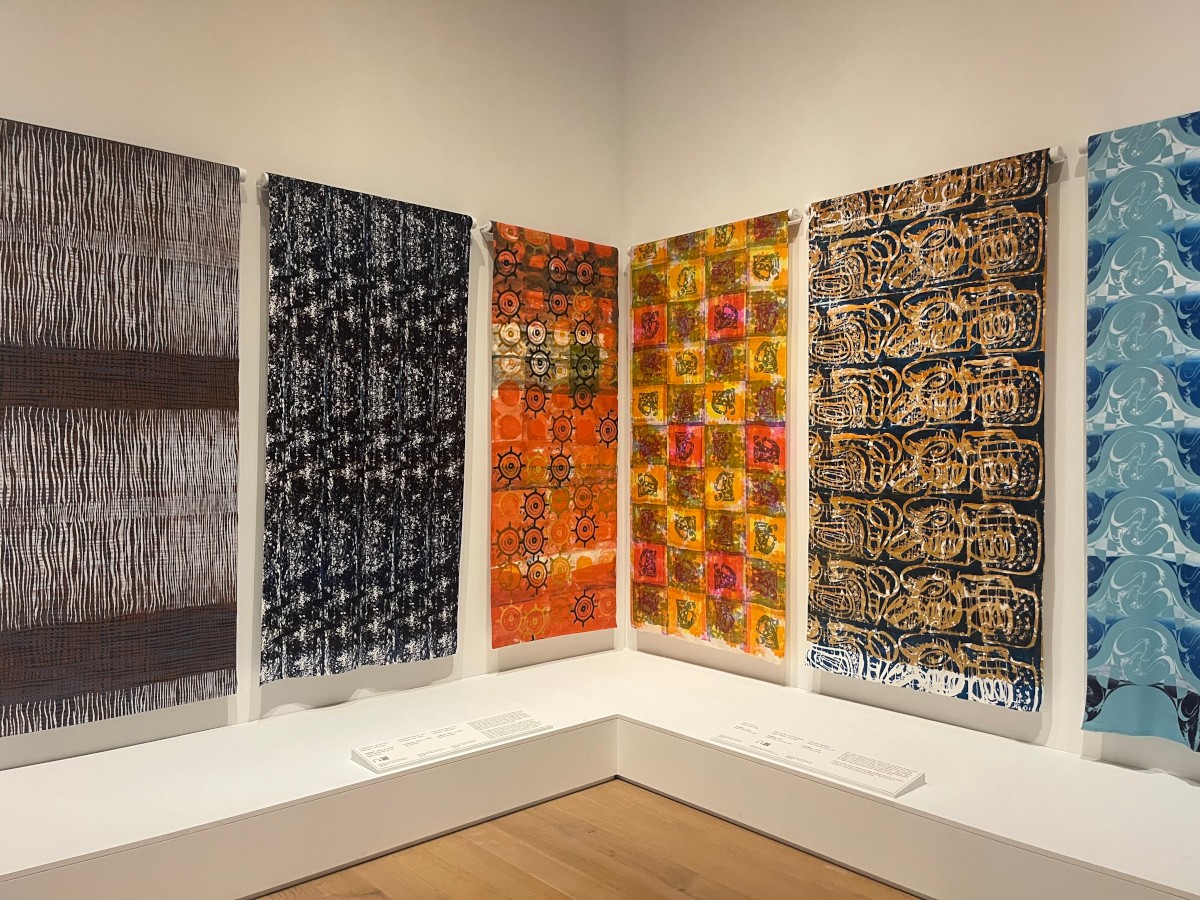
Today, the Saint Louis Art Museum presents its first exhibition focusing on modern and contemporary Native American art.

Action/Abstraction Redefined: Modern Native Art, 1940s-1970s uses themes of artistic continuity and student experimentation to reshape narratives of Native American art following World War II. The exhibit opens today with a free, public preview celebration from 4 to 8 pm featuring cocktails, entertainment and guided discussions.

“It’s a thematic look at this really pivotal chapter in the history of Native American art where we broadly see a transition from ancestral forms of media to new modes of expression that are more in line with contemporaneous global art practice,” says Alexander Brier Marr, the Saint Louis Art Museum associate curator of Native American art who put together the St. Louis presentation of the exhibition.

The exhibit was first shown by the Institute of American Indian Arts in Santa Fe, New Mexico. The IAIA is the only art school devoted to native arts in North America and is home to many prominent native artists, including Kay Walkingstick and Lloyd Kiva New.

The St. Louis exhibit features works primarily from the Museum of Contemporary Native Arts at IAIA alongside work borrowed from other national lenders and from SLAM’s own collection. It is currently the only expanded presentation of the exhibition in the country. Organized chronologically, the show features 90 works by about 40 different artists.

When Marr first saw the IAIA’s collection of postwar native art in 2018, he was blown away and knew he wanted to bring some of it to St. Louis.

“It’s a really fascinating story, where native artists are very strategically engaging with multiple sources,” Marr said. “So they’re creating really new pathways for artistic production, while still retaining an anchor in their communities and their heritage.”

The Saint Louis Art Museum was one of the first museums in the country, if not the first outside of the southwest, to collect contemporary Native American work in the early 1930s, according to Marr. The current museum collection, however, has a gap in the 20th century that this new exhibition will fill.

The exhibit expands and responds to the museum’s 2008 Action/Abstraction: Pollock, de Kooning, and American Art, 1940-1976 exhibition with an array of Native American art including paintings, sculptures and literary works. The influence of ancestral indigenous art on prominent American artists, including Jackson Pollock and Adolph Gottlieb, is also showcased in the presentation.

One featured artist is Fritz Scholder, a former instructor at IAIA, whose New Mexico Number 1 series depict the state’s landscapes and terrain through colorful abstraction. In this period, many native artists were inspired by modern art movements that freed them from stereotypical expectations of Native American art.

Native artists are helping to surface the colonial histories and experiences of native people, but they’re also just creating great work, Marr says with a chuckle.

“There’s this sense of a real movement taking place and of achievement and competence and success among native artists, which is really coming through,” he says.

To accompany and build upon its art, the exhibition includes printed and audio exhibition guides, catalogs, books and even a media wall with direct thoughts and quotes from the artists.

The exhibit will be on display through September 3 in the Mae W. Whittaker Gallery 212 at the Saint Louis Art Museum (One Fine Arts Drive, Forest Park, 314-721-0072, slam.org). Ticket prices are $6 to $12, with free entry on Fridays. Upcoming exhibition-related events at SLAM include an artist panel conversation at 6 p.m. on Friday, as well as a Family Sunday event from 1 to 4 pm that features dancing and art projects for children. In late July, the Saint Louis Art Museum will collaborate with the MFA Creative Writing program at IAIA for a native literary festival with author readings and writing workshops.

Subscribe to Riverfront Times newsletters.

Follow us: Apple NewsGoogle News | NewsBreak | Reddit | Instagram | Facebook | Twitter | Or sign up for our RSS Feed

Sundance Institute receives $4M for Indigenous Program – TownLift, Park City News

Sundance Institute receives $4M for Indigenous Program – TownLift, Park City News

PARK CITY, Utah — Sundance Institute recently received its most substantial endowment — a $4 million donation from Federated Indians of Graton Rancheria (FIGR) towards the Institute’s Indigenous Program. The FIGR Tribal Chairman, Greg Sarris facilitated the endowment. As a participant in Sundance Institute’s 1992 Screenwriters Lab, Sarris is well-versed in the industry.

“When I was a part of the Screenwriter’s Lab at Sundance in 1992, I witnessed firsthand the incredible support that the Institute provides to all artists, but Indigenous talent specifically,” said Greg Sarris, Tribal Chairman of the Federated Indians of Graton Rancheria in a statement on the Sundance Institute website. “We are excited to see the creative breakthroughs from future fellows and scholarship recipients. Supporting and nurturing these artists will open up pathways to success for the entire California Indigenous creative community and enable us to tell our stories.”

The Sundance Institute said the generous gift would go a long way in supporting indigenous artists from California-based tribes, whether they are federally or non-federally recognized. The Federated Indians of Graton Rancheria | Sundance Institute Endowment will allow the Sundance Institute to build on the already robust offerings available to artists through the Indigenous Program, which has been a crucial aspect of the Sundance Institute’s work since its founding in 1981.

In 1994, the Indigenous Program was officially launched, with founder Robert Redford extending an invitation to Native American filmmakers to participate in Sundance’s inaugural filmmaking lab.

Artists from California-Based Tribes can apply now through August 28, 2023, here: https://apply.sundance.org/prog/2023_sundance_institute_graton_fellowship_for_california_indian_artists/

Indian Museum Hosting Keepers of the Culture Powwow Saturday

Indian Museum Hosting Keepers of the Culture Powwow Saturday

The Mid-America All-Indian Museum (MAAIM) will host the Keepers of the Culture Powwow, a celebration of Native American families.

The event will be this Saturday, June 24th, from 2 p.m. to 8 p.m.

Powwow contests include the Potato Dance, War Whoop, Lulu and Switch Dance, and the Stumblingbear Regalia Cupboard will be lending shawls and ribbon shirts to youth who wish to participate.  The Native American Elders Council will also sell concessions throughout the powwow.

Admission for the event is free. Visitors are also welcome to explore the galleries free of charge during the event, which will be the last opportunity to view the current exhibits, “Voices and Votes: Democracy in America,” “The American Indian Vote,” and “Celebrating the Centennial of the 19th Amendment: Women Vote.”

From 1 p.m. to 2 p.m., attendees will be able to meet the artists featured in “Following Blackbear,” the inaugural annual invitational exhibit for Native artists. Brandon Buffalohead, Josh Johnico, Michelle Sutton and the three founding artists of the Warclan Collective will be present to discuss their work. “Following Blackbear” will be on view at MAAIM through July 29th.

Visitors are being asked to park at Exploration Place and walk across the Keeper Plaza to MAAIM, as the small parking lot in front of the museum is reserved for elders and those who are handicapped.

Large-scale tipi work by Cannupa Hanska Luger on display at Phoenix Art Museum

Large-scale tipi work by Cannupa Hanska Luger on display at Phoenix Art Museum
image

Cannupa Hanska Luger’s Incendiary (2023), a vibrantly colored, large-scale tipi work from a recent series that explores the adaptability and versatility of the nomadic structure as a metaphor for the resilience of Indigenous peoples in the face of settler-colonial violence, is now on view at Phoenix Art Museum (PhxArt).

The painted and shaped canvas is a significant addition to the museum’s contemporary art collection and furthers the museum’s efforts to collect and display art that reflects a diversity of voices from the Southwest region and Arizona.

Incendiary by Luger was acquired by the museum with funds from the Men’s Arts Council, a support group dedicated to supporting acquisitions, exhibitions and education and engagement programming. It is on view now in the Katz Wing for Modern Art.

“Adding Incendiary by Cannupa Hanska Luger into the collection of Phoenix Art Museum represents a significant step forward in growing contemporary Indigenous perspectives within the PhxArt Collection,” said Jeremy Mikolajczak, the museum’s Sybil Harrington director and CEO.

“The work is a wonderful example of how Luger uses Indigenous knowledge to challenge histories and stereotypes and, in dialogue with other works, assertively demonstrates a reframing and repositioning of historical narratives of Native peoples. Incendiary joins other paintings and multimedia works in our contemporary art holdings by contemporary Indigenous artists such as Fritz Scholder and Steven Yazzie.”

Luger was born in 1979 on Standing Rock Reservation in North Dakota. Now based in New Mexico, he is an enrolled member of the Three Affiliated Tribes of the Fort Berthold Reservation and is of Mandan, Hidatsa, Arikara, Lakota and European heritage.

By incorporating wide-ranging media, from ceramics, steel and fiber to video and repurposed materials, Luger creates monumental installations and sculptures, performances and wall works that attempt to reframe and reclaim 21st-century narratives about Indigenous cultures and identities. His work unites historical references and tradition with contemporary concerns, all to imagine and dream of Indigenous futures.

Luger is a 2022 Guggenheim Fellow and a recipient of a 2021 United States Artists Fellowship Award for Craft. In 2021, he was named a GRIST Fixer, and in 2020, he was named a Creative Capital Fellow and a Smithsonian Artist Research Fellow, among other previous awards and accolades. Luger has exhibited nationally and internationally at institutions such as The Metropolitan Museum of Art, Gardiner Museum, Kunsthal KAdE, ASU Art Museum, Berkeley Art Museum, New Orleans Museum of Art, Mesa Arts Center and the National Center for Civil and Human Rights.

Incendiary (2023) is one of 10 canvases from Luger’s tipi series, a recent investigation of painting. For the Plains people, tipis represent a nomadic lifestyle, defined by patterns of migration that mirror the movements of buffalo herds. The structures were often made from the skins of hunted buffalo, making them part of the land and the humans who constructed them simultaneously. Tipis also adapt to the land on which they exist, similar to how Indigenous peoples have adapted over centuries of struggle and ongoing conflict with colonizers.

As part of his tipi series, Luger transformed the word “tipi” into an acronym—Transportable Intergenerational Protection Infrastructure. The acronym suggests that the structure can cross time and space, even into future realms of existence, thus solidifying its status as a testament to Indigenous resilience and innovation.

Incendiary, like other canvases from the body of work, features recognizable graphic forms of stars and oversized cartoon eyes with curled eyelashes, which are drawn from specific historical references. The eyes reference stereotypical cartoon characterizations of Indigenous peoples in early animations, while the overall pop aesthetic refers to historical Air Force nose art. This type of nose art first appeared on British Royal Air Force Tomahawks during World War II and was later adopted by U.S. forces to adorn US P-40s, or Warhawks.

By appropriating this imagery and placing it onto a Native nomadic structure, Luger reflects on the ability of Indigenous peoples, their knowledge and their technologies to withstand the colonial violence and aggression these designs represent. It is also a reflection on how Native American cultural motifs have been appropriated by Western popular culture for centuries.

Learn more about the artist at garthgreenan.com. For more information about PhxArt Museum, visit phxart.org.

Kindness is best shown through art for this Nigerian native

Kindness is best shown through art for this Nigerian native

Atim Annette Oton is a native of Nigeria, on the continent of Africa. What may come as a surprise to many: she never skips breakfast, and aims to eat the standard of three meals a day.

Her father was from the south east of Nigeria from a town called Eket in Akwa Ibom State. Her mother was born in Harlem, and is of Trinidadian and Jamaican descent. Oton is the curator at Calabar Art Gallery in Harlem, named after the Nigerian city of Calabar.

The greatest influences on her path were her parents, along with a mentor. “My parents — they lived life fully and made me think the world was mine as a Black African child living in Nigeria and spending summers in Europe and the US,” she stated.

“One of my mentors was the prolific Black architect Max Bond, who I later worked for when I was in architecture. He was the one who taught me the philosophy that ‘Architecture is Revolution’, which I adapted to ‘Design is Revolution’ and ‘Business is Community,’” she added.

Oton’s parents were focused on education as a path to success. An act of kindness she remembered was when her parents would pay to send people to school.

“My mother was focused on artists and supported their work by buying. Acts of kindness in Nigeria I saw were usually focused around providing access for others – to gain employment or to eat without paying for meals,” she continued.

She said that since coming to New York, she has seen residents being supportive in their local neighborhoods, doing simple things like cleaning up streets and supporting local businesses before and after the pandemic.

Growing up in Nigeria, her hobbies included tennis and chess. Now, she does a lot more reading.

Other ways that Oton has made contributions to her NYC community now include serving 13 years on Community Board 8, which represents Prospect Heights, Crown Heights and Weeksville.  Most of those were spent as the chair of the Economic Development Committee.

She is big on purposeful activities in the community, such as the Harlem Arts Stroll and Crown Heights Arts Stroll to bring the local community into art galleries and spaces. Additionally, she was also involved with the Crown Heights Job Fair to bring employers and jobs to community residents. “Both are about Economic impact for the community and businesses who participate,” she added.

In regards to creating opportunities for African, African American, and Caribbean communities, Oton is “very interested in issues we are having in workforce shortage, hiring gaps in jobs and inadequate training for the paradigm shift that is coming and is currently happening as technology takes over.”

It is clear that since the pandemic, these issues have escalated. “We need to expand the numbers, create more strategies to give people varied skills and stop the unemployment numbers in the African, African American, and Caribbean communities,” Oton continued.

Oton wants to have a way to make this change in the workforce, so job fairs are the start. She will be taking part in the Bed-Stuy Job Fair, being held on Sept. 19 this year at Marcy Plaza. Find details on the Job Fair here: https://www.eventbrite.com/e/bed-stuy-job-fair-tickets-648134817687.

Oton said  her legacy “will revolve around art and what Calabar Gallery does for Black artists locally and globally via our exhibitions in and out of our gallery, in art auctions, art fairs, art licensing opportunities and through our residencies.”

For the gallery, Oton states “the legacy is about providing places, opportunities and support for artists to innovate, sustain, grow and expand their work and careers.”

Ways the gallery is doing this include the creation of 3 Social Justice Art Residencies: one at coLAB Arts in New Jersey, the Grenada Arts Residency based out of Cannes Brulees Rum Factory in Grenada, and one with the Elizabeth Foundation for the Arts in Manhattan.

Learn more about the residencies here: https://calabargallery.com/art-residencies/.

For the younger generation, it’s about bringing more young people to art through local art strolls and the art projects we expose them to. “It’s also about growing Black Women Art Collectors — an initiative to increase the number of collectors, particularly the next generation,”  she added.

To stay updated on the work of Oton and Calabar Art Gallery, those who are interested can follow the gallery on social media, and subscribe to their newsletter, which can be found here: https://calabargallery.com/.

Celebrating Black Music with Detroit artist Alise King

Celebrating Black Music with Detroit artist Alise King

Celebrating Black Music Month with Detroit artist Alise King


Celebrating Black Music Month with Detroit artist Alise King

03:47

(CBS DETROIT) – Award-winning artist and Detroit native Alise King, also known as The Soulful D.I.V.A., began her singing journey at the age of 10. 

She is known around Detroit and beyond for her powerful voice and beautiful spirit. 

The “D.I.V.A” (Divine Instrument Vocalizing her Ability) has opened up for artists such as Aretha Franklin, Bobby Brown, Kelly Price and Dru Hill, to name a few. She has also performed at many events, including the Smooth Jazz Festival at Hart Plaza and Detroit’s Masonic Temple. 

Some of King’s accolades include the 2015 Female R&B Artist by the Detroit Black Music Awards, 2016 Best Female Soul Artist by the Detroit Honor Awards and 2016 Best Local Artist by the Best in Black Awards.

King will perform a tribute to legendary Stevie Wonder at The Kick Off To The Health, Love & Music Festival on July 22. 

She joined CBS News Detroit for a live performance on Thursday, June 22. Watch the full performance here: 


Celebrating Black Music Month: Alise King

05:12

SLAM brings more contemporary Native American artwork to St. Louis this summer

SLAM brings more contemporary Native American artwork to St. Louis this summer

The Native American artwork familiar to many viewers tends to be traditional, historic creations. But a new exhibition at the St. Louis Art Museum brings a different focus — abstraction.

Called SLAM’s first exhibition of contemporary and modern Native American art, the paintings, sculptures and textiles highlight post-World War II creations that likely are less-known than the much-hyped work from the New York scene.


“Who Knows” (mid-20th century) by Christine Nofchissey McHorse, Navajo


“Action/Abstraction Redefined: Modern Native Art, 1940s-1970s” expands on SLAM’s 2008 exhibition on abstraction, says Alexander Brier Marr, associate curator of Native American art. It will “help visitors to see our historic collection of Native American art in new ways.”

The 80-plus-piece exhibition happens to complement other current exhibitions that highlight contemporary Native American pieces: the Luminary’s “Counterpublic” and the Pulitzer Arts Foundation’s “Faye HeavyShield: Confluences.” Using the next few weeks to see all three will be a valuable experience for St. Louis art lovers. In addition, HeavyShield’s work is at SLAM’s Donald Danforth Jr. Gallery 322.

People are also reading…

“This spring and summer, contemporary Native American art has been much more visible across St. Louis than any of the last seven years I’ve been here,” Marr says. He believes that St. Louis museums are responding to increasing national focus on contemporary Native works. Plus, he points out: “There is strong Indigenous history here.”

Yet, SLAM did not own a postwar Native painting until this year, when it purchased Fritz Scholder’s 1966 oil “New Mexico #45.” Filling that gap in the museum’s collection had been a priority, Marr says.

Other works by Scholder will be part of the exhibition organized by the Museum of Contemporary Native Arts at the Institute of American Indian Arts in Santa Fe, New Mexico. Artworks on display will include those by Lloyd Kiva New, Linda Lomahaftewa, Alfred Young Man, T.C. Cannon, Anita Fields, Christine Nofchissey McHorse and many others. The St. Louis museum adds a few dozen more works to the traveling exhibition.


“Untitled (Dark Landscape)” (ca. 1960) by John Hoover, Aleut


A difference between the abstract work of Native American artists and New York painters such as Jackson Pollock and Willem de Kooning is that the Native artists sometimes refer to their tribes’ ancestral forms, Marr says. The abstractions may include traditional colors, geometric shapes or symbolic images.

Abstraction offered Native artists a way to experiment and also to connect their art to emerging movements. One of the featured artists, George Morrison (Chippewa), worked in New York, where he exhibited and was associated with avant-garde painters there.


“New Mexico #40” (1966) by Fritz Scholder, American and Luiseño


Although he originally considered himself an abstract expressionist first, Morrison later started exploring his American Indian heritage. (Conversely, Pollock, who grew up in Arizona, is said to have been influenced by Native art he saw there while young; he also witnessed sand painting in 1941 at the Museum of Modern Art in New York, which is also believed to have been an influence.)

Marr expects that this new exhibition of Native American abstraction will surprise some visitors, while others may be more familiar with it. But even he was impressed by a Santa Fe show in 2008: “The depth of abstraction blew me away.”

What “Action/Abstraction Redefined: Modern Native Art, 1940s-1970s” • When June 23-Sept. 3; hours are 10 a.m.-5 p.m. Tuesday-Thursday and Saturday-Sunday, 10 a.m.-9 p.m. Friday (closed Monday) • Where St. Louis Art Museum, 1 Fine Arts Drive, Forest Park • How much $12, $10 for seniors and students, $6 for children 6-12; free for children 5 and under, for members and to all on Fridays • More info slam.org

#lee-rev-content { margin:0 -5px; }
#lee-rev-content h3 {
font-family: inherit!important;
font-weight: 700!important;
border-left: 8px solid var(–lee-blox-link-color);
text-indent: 7px;
font-size: 24px!important;
line-height: 24px;
}
#lee-rev-content .rc-provider {
font-family: inherit!important;
}
#lee-rev-content h4 {
line-height: 24px!important;
font-family: “serif-ds”,Times,”Times New Roman”,serif!important;
margin-top: 10px!important;
}
@media (max-width: 991px) {
#lee-rev-content h3 {
font-size: 18px!important;
line-height: 18px;
}
}

#pu-email-form-breaking-email-article {
clear: both;

background-color: #fff;

color: #222;

background-position: bottom;
background-repeat: no-repeat;
padding: 15px 0 20px;
margin-bottom: 40px;
border-top: 4px solid rgba(0,0,0,.8);
border-bottom: 1px solid rgba(0,0,0,.2);

display: none;

}
#pu-email-form-breaking-email-article,
#pu-email-form-breaking-email-article p {
font-family: -apple-system, BlinkMacSystemFont, “Segoe UI”, Helvetica, Arial, sans-serif, “Apple Color Emoji”, “Segoe UI Emoji”, “Segoe UI Symbol”;
}
#pu-email-form-breaking-email-article h2 {
font-size: 24px;
margin: 15px 0 5px 0;
font-family: “serif-ds”, Times, “Times New Roman”, serif;
}
#pu-email-form-breaking-email-article .lead {
margin-bottom: 5px;
}
#pu-email-form-breaking-email-article .email-desc {
font-size: 16px;
line-height: 20px;
margin-bottom: 5px;
opacity: 0.7;
}
#pu-email-form-breaking-email-article form {
padding: 10px 30px 5px 30px;
}
#pu-email-form-breaking-email-article .disclaimer {
opacity: 0.5;
margin-bottom: 0;
line-height: 100%;
}
#pu-email-form-breaking-email-article .disclaimer a {
color: #222;
text-decoration: underline;
}
#pu-email-form-breaking-email-article .email-hammer {

border-bottom: 3px solid #222;

opacity: .5;
display: inline-block;
padding: 0 10px 5px 10px;
margin-bottom: -5px;
font-size: 16px;
}
@media (max-width: 991px) {
#pu-email-form-breaking-email-article form {
padding: 10px 0 5px 0;
}
}
.grecaptcha-badge { visibility: hidden; }

Native Hawaiians weigh in on federal funds, protections

Native Hawaiians weigh in on federal funds, protections

Mahalo for supporting Honolulu Star-Advertiser. Enjoy this free story!

Las Vegas >> Bipartisan staff of the U.S. Senate Committee on Indian Affairs were at the first Western Regional Native Hawaiian Convention held in Las Vegas to highlight that Congress has secured hundreds of millions of dollars in dedicated federal funding, the most ever, for Native Hawaiians and to seek input on amending legislation to extend protection to Native Hawaiian art and artists for the first time.

U.S. Sen. Brian Schatz of Hawaii, chairperson of the Senate Committee on Indian Affairs, was not at the convention but addressed attendees in a video Wednesday and told the Honolulu Star-Advertiser in an email, “Over the last few years, we delivered the largest amount of dedicated funding to the Native Hawaiian community ever.”

“In the Senate Committee on Indian Affairs, we’ve made historic, bipartisan progress to gain broad support for Native communities. And we’ve worked hard to make sure Native Hawaiians are heard and included in any bill that impacts their community,” Schatz said.

Schatz thanked colleagues in the Senate Appropriations Committee for helping to secure the historic funding, adding that it’s “a unique moment in history.”

“The way I look at the work we’re doing is to try to understand all the injustices that have occurred, and then to try to reverse them in a systematic way,” he said. “We have a president, the first-ever Native Interior Secretary, and the public recognizing the need to right historical injustices.”

The decision from the Council for Native Hawaiian Advancement, or CNHA, to hold the conference on the mainland also provided an opportunity for committee staff to meet with Native Hawaiian attendees and provide updates on Native Hawaiian equities in the 118th Congress, while garnering feedback on legislative efforts.

CNHA President and CEO Kuhio Lewis said the decision to host a mainland conference came because there are now more Native Hawaiians living outside of Hawaii and it’s important to unite the community for myriad reasons, including advocacy.

“There is strength in numbers,” Lewis said. “There are Native Hawaiians living in all 50 states. That’s a powerful tool; rather than just two senators, you now have 100.”

The conference drew about 2,000 attendees, some 65% from states outside of Hawaii, he said.

Schatz said, “Native Hawaiian issues are national issues. Our committee is at the convention this year to hear directly from the Native Hawaiian community and help us shape a number of bills this Congress, including 2023 Farm Bill reauthorization, the draft ARTIST Act and the Truth and Healing Commission on Indian Boarding Schools Act.”

Committee staff hosted a formal listening session Wednesday to get feedback from Native Hawaiians on the latest amendments to the Respect Traditional Indigenous Skill and Talent (ARTIST) Act of 2023, which if passed, would update the Indian Arts and Crafts Act.

IACA was first passed in 1935 as a “truth in advertising” federal law to protect Native American arts and crafts from counterfeit sales in the United States. IACA has been amended three times since its passage, and over the past four years the Senate Committee on Indian Affairs received testimony calling for reforms.

“The ARTIST Act is about protecting Native artists and their works against counterfeits and strengthening existing law to enforce these protections. Native Hawaiians aren’t currently covered by the Indian Arts and Crafts Act, which provides these protections to other Native artists,” Schatz said. “Hearing directly from the Native Hawaiian community on issues that directly impact them is critical, and that’s why our committee is at the convention this week. Comments we receive from the listening session will help us shape legislation and serve as a resource for future discussions.”

If ARTIST passes, the new amendments are expected to:

>> Add protection for Native Hawaiian-produced arts and crafts.

>> Expand enforcement and improve the ability of federal officers to arrest and prosecute violations.

>> Create a grant program to fund arts programs in schools.

Preliminary feedback during the session was favorable, although some testifiers said adequate enforcement would be critical, and that language in the bill must clearly define Native Hawaiian in a way that offers adequate protection, while not making ancestry impossible to prove.

Makalika Naholowa‘a, executive director of the Native Hawaiian Legal Corp. and president of the National Native American Bar Association, also noted a lack of legal resources with only about 20 Native attorneys nationwide practicing intellectual property law.

Kaleiheana Stormcrow, a Native Hawaiian artist, cultural practitioner and scientist, testified, “I think it’s super important that Native Hawaiians are included in this act. Our cultural and intellectual property has not been protected for far too long. It really hurts my heart to see non-Hawaiians benefiting from our cultural practices while many of us are unable to survive here on the islands.”

State Rep. Daniel Holt, co-chair of the state legislative Hawaiian caucus, said Native Hawaiian products must have the same protections afforded to Native Americans.

“Aloha is not for sale. Aloha is our way of life. I ask that you please show our lahui aloha by passing the ARTIST Act and giving Native Hawaiian-made products the protections that they deserve,” Holt said.

The conference follows several other recent Hawaiian equities actions taken by the Senate Committee on Indian Affairs. Last month, Schatz held a virtual meeting with Native Hawaiian farmers and producers from across the state to discuss the needs and priorities of the Native Hawaiian community in the 2023 reauthorization of the Farm Bill, which first passed in 1933 and only meaningfully addressed the unique needs of the Native producers for the first time in 2018.

Key Farm Bill priorities for Native Hawaiian producers, include:

>> Equity for Native Hawaiians in program access.

>> Grant navigation assistance.

>> Recognize traditional ecological knowledge.

>> Defray high shipping costs.

>> Cost share and match waivers.

>> Productive repurposing of unused agricultural lands.

Schatz and U.S. Sen. Lisa Murkowski, R-Alaska, vice chairman of the committee, earlier this month also led committee passage of S.1723, a bill to establish the Truth and Healing Commission on Indian Boarding School Policies in the United States, and for other purposes.

“The impacts of federal Indian boarding school policies led to some of the same outcomes for Native Hawaiians as for other Native communities, including the loss of language and culture. It’s important that the federal government continues to enact laws — like the Native American Language Resource Center Act and Durbin Feeling Native American Languages Act — to help right these historical wrongs,” Schatz said.

FEDERAL FUNDING

Federal funding for the Native Hawaiian community:

>> $200 million+: Native Hawaiian education, including $170 million for Native Hawaiian education program.

>> $69 million: Native Hawaiian health care.

>> $54 million: Native Hawaiian housing, including $5 million for emergency rental assistance and access to new programs at Treasury, including for homeowner assistance.

>> $2 million+: Federal funding to support Native Hawaiian cultural tourism opportunities.

Also includes new funding and programs for the Native Hawaiian community:

>> $90 million: New funding for broadband deployment on Hawaiian Home Lands.

>> $25 million: New Native Hawaiian climate resiliency and adaptation funds.

>> New public safety resources, including $3 million to establish a new Native Hawaiian Resource Center on domestic violence.

>> Technical fix to clarify that Native Hawaiian organizations have access to federal grants to serve survivors in their own communities.

>> New landmark Native language laws.

>> New behavioral health resources for Native committees.

Source: U.S. Senate Committee on Indian Affairs, bipartisan staff presentation

High art becomes body art as visitors to Amsterdam’s Rembrandt House Museum get inked

High art becomes body art as visitors to Amsterdam’s Rembrandt House Museum get inked


MENU

ACCOUNT

SECTIONS

OTHER

CLASSIFIEDS

CONTACT US / FAQ

#pgevoke-tipform {
margin: auto;
max-width: 300px;
background-color: white;
border: 5px solid #ccc;
border-radius: 5px;
color: #222;
padding: 45px 15px 15px;
position: relative;
font-size: 14px;
font-family: proxima-nova, Arial, sans-serif;
}
.pgevoke-tipform-header {
background-color: #eee;
color: #222;
font-weight: bold;
font-size: 14px;
text-transform: uppercase;
position: absolute;
top: 0;
left: 0;
width: 100%;
padding: 10px 5px;
margin: 0 auto 10px;
}
.pgevoke-tipform-field {
width: 100%;
margin-bottom:10px;
}
.pgevoke-tipform-field input {
width: 100%;
}

Victoria Hospital looking for Indigenous artists to decorate new Children’s Hospital rooms

Victoria Hospital looking for Indigenous artists to decorate new Children’s Hospital rooms

Children’s Hospital has put out a call for First Nations, Inuit and Métis artists to submit their work and ideas to decorate new rooms being built for Indigenous patients.

“Wellness is about the whole child and we really want to create spaces that are familiar to Indigenous people,” said Nicole Yawney, the Youth Indigenous Wellness Consultant for Children’s Hospital at Victoria Hospital.

The goal is to design and shape the new rooms to be more welcoming to Indigenous patients through art, especially since the Children’s Hospital already offers specialized care to many Indigenous children from across the country — including those from remote northern communities, she said. 

“So many folks are just transplanted and they experience culture shock,” said Yawney. It can also be difficult for family members who are trying to process whatever illness their children are experiencing.

nicole yawney
Nicole Yawney is the Youth Indigenous Wellness Consultant for the LHSC. (Submitted by the LHSC)

‘Where are we in our spaces?’

One of the barriers that impacts Indigenous children is the lack of support for cultural healing processes because of how the hospital is currently built, according to Yawney.

“If kids can’t leave their rooms, if they’re hooked up to machines and they want specific ceremonies and teachings by their elders and knowledge keepers, we need to have these spaces created for them,” said Yawney.

Hospitals aren’t always welcoming to Indigenous people and displaying the artwork will be empowering for kids and families who need to use and stay in those spaces, she said.

“I’ve had some kids who are just being really on guard and as soon as they hear I’m Indigenous, they’re like ‘Oh, you’re Native!’ and immediately their guards are let down and I’m able to kind of be that bridge.”

“It really does make a difference to see a space that kids can identify with and I’ve heard that time and time again. It’s like ‘Where are we in our spaces?’ This area is unique and specific to the local First Nations,” said Yawney, who added she is hoping to see art submitted from many Indigenous traditions from all over Canada.

“We’re really wanting to create these spaces that tell the story from each population.”

Proposals can be sent to nicole.yawney@lhsc.on.ca with the subject line being “Attention: Youth Indigenous Wellness Program.” The deadline for artists is July 15.