Native

How Denver Native Troy Walker Went From Law School to Standup to Jimmy Kimmel

How Denver Native Troy Walker Went From Law School to Standup to Jimmy Kimmel

More than 11,000 screenwriters have been on the picket line since May 2, causing production to stop on sets all over Hollywood and the nation. Some of the first casualties of the writers’ strike were live, late-night programming, such as Jimmy Kimmel Live!, The Late Show With Stephen Colbert, The Tonight Show Starring Jimmy Fallon, Late Night With Seth Meyers and Last Week Tonight With John Oliver.

While Jimmy Kimmel’s nightly monologue and witty interviews with famous guests are no longer available live, the Denver area will get to see the folks behind the show’s humor when several members of the writing staff come to Comedy Works South in Greenwood Village. Jesse Joyce, Devin Fields and Troy Walker will be there for live performances from Thursday, June 22, through Sunday, June 25.

Walker is a Denver native who began his standup career in the city and also holds a law degree from the University of Denver’s Sturm College. We caught up with the comedian about his professional path, how his time in Denver affected his style, and his favorite jokes he created for Jimmy Kimmel Live!.

Westword: How did you make the switch from practicing law to comedy?

Troy Walker: Actually, it was kind of the reverse. I started doing standup when I was going to [Metropolitan State University of Denver] as an undergrad and just doing open-mics. I kept doing it while I was getting a political science degree, which is one of those degrees where you are sort of like, “What do I even do with this?” But I took a bunch of legal classes at Metro as part of that degree, and I always really liked them. I had professors tell me I should consider law school. I didn’t really know what to do with this degree, and I also figured it’ll be easier to keep doing standup in school than out of it. I decided to take the LSAT, and I got a decent score, so I applied to CU Boulder, the University of Denver and the University of Arkansas, because I had a cousin who was going to undergrad down there. Even if I knew I didn’t want to live in Arkansas, I felt like I should keep my options open. I got into all of them, but DU gave me a scholarship. That was my first choice, because I got to stay in Denver and focus on law school while trying to do shows and stuff at night to continue to pursue comedy.

Where does your love of comedy come from, and what are some of your inspirations?

I like to think that I have a really broad comedic sensibility. I probably first started with cartoons, like everybody else. I watched so much TV as a kid, like the Nickelodeon stuff, and then when it would flip over to Nick at Nite, I was watching Bewitched, the original Get Smart, The Dick Van Dyke Show, The Golden Girls and The Cosby Show — obviously pre-nightmarish stuff, or at least before we all knew. I used to watch Letterman with my dad, and I really liked the Top Ten List as a kid. And I would watch hours of The Simpsons. My voice comes from all these different things that I enjoyed as a child, so when I started watching standup, I was already comedic-minded. I remember watching the original Def Comedy Jam when I was young, and I would just watch any special I could. I remember when Comedy Central came out and they were doing all that premium stuff, and that was a game-changer. My influences as a kid came from Jerry Seinfeld, Mitch Hedberg, Richard Pryor, Chris Rock, Dave Chappelle, George Carlin, Damon Wayans, Martin Lawrence and all these different people. I love Eddie Izzard. Dress to Kill is kind of slept on, but I think it’s one of the greatest specials ever. John Leguizamo had those one-man shows on HBO, like Freak, that were influential. I also just adore Living in Color. I was just soaking up all this different stuff, and when I would run out of stuff, I would go search out even older stuff and find old Bob Newhart records, The Mary Tyler Moore Show, All in the Family and just all these things. I was just steeping myself in comedy — not intentionally, necessarily, but because I enjoyed it.

How has your comedic voice evolved as you’ve done more standup and written for larger projects?

The more standup and comedy you absorb, the more you realize there’s a sort of music to it. It’s like you have your own ways of doing things and your own voice, but you learn how to write the music from observing all these different comedic troupes in action. For instance, the rule of three in comedy is something you end up picking up through osmosis from all of these different sources because you’re always seeing comedians do things in sequences of threes. You’re always seeing misdirects — the ways you hide certain information in storytelling until the perfect moment — and all these little technical things came from observing others perform and studying it. And then, once you start doing it yourself, you’re figuring out how to do your own version of these universal comedic principles. What you discuss in your standup set gets to be pretty unique to you. You’re basically taking your worldview and what you think is funny and trying to figure out how to make it funny for people from disparate backgrounds.

Did your upbringing in Denver influence your comedic style?

Denver is one of the best places to start doing standup. I honestly believe that because there’s a ton of stage time, and nothing helps you get better more than just being on stage all the time. Denver is in this unique situation where you’ve got all these different elements in one place. It’s right in the middle of the country in a state that’s a rectangle, but it looks like a square, and there’s not much around it. You’re kind of isolated, and I think that’s helpful, especially because you’re going to stumble and try out a bunch of things that aren’t really you, but they’re all things that help you figure out your voice. Denver also has all kinds of audiences: Comedy Works Downtown is the yuppie crowd; Comedy Works South is a little bit older and more family-oriented; the Denver Improv has a little more Black and Hispanic audiences; and then you’ve got the mountain shows with rural audiences out in Sterling, Fort Morgan and the eastern plains. At the end of the day, a lot of what standup is to me is being able to look at a room full of bikers and be like, “I’ll be fine. I’ve got material for this.” I think that it helps what I do now, because Jimmy Kimmel’s show is for a national audience, and being able to write stuff that works for everyone was essential. … For the first six years I was doing this, I never thought I’d turn it into some kind of real career. Like, if you had told me at 21, when I started, that I’d be living in Los Angeles, it would have blown me away.

How did you end up securing your current gig as a staff writer for Jimmy Kimmel Live!?

After I went to Montreal’s New Faces in August 2014, my agents told me to move to L.A. So in January 2015, I moved out for the pilot season. I hit the city and was auditioning pretty much right away. I did commercials and classes, and I was just trying to meet people. Every once in a while, people get really lucky and instantly take off as soon as they get to town. For me, it was a lot of ups and downs. Times were hard for six years or so; I just couldn’t seem to figure out how to make stuff catch fire for me. … My first three years, I didn’t really have a day job, and I was just kind of piecing it together from a variety of different sources, and then I couldn’t really do that anymore. I had to go back to having a day job, and I was working at a bank, which is what I was doing in Denver before I left, and that was a hard transition. I don’t come from money or any kind of thing like that. My mom is a principal; she helps me as much as she can, but I had to work.

One of the things that helped convince me to stay in L.A. was advice I got from my agent, who said, “If you feel like you need to go back, that’s okay. We’ll figure that out, but I think you should bet on yourself.” And she was right. The pandemic hit while I was working at this bank. I was lucky to be working at the bank because we were essential, so I was employed during the whole pandemic. As the pandemic started to let up, they started to send out writing packets again. One of my friends, Bryan Cook, who’s another writer at the show, sends me a text one day while I’m at the bank and he’s like, “Oh, are you writing the Kimmel packet?” I didn’t even know there was a Kimmel packet, but he told me more about it, and I submitted my clips that week. I never thought I was going to get it. And then the next week, they asked for my credits, and I sent those. Then they asked for my references, and I sent those. I started hearing from the references that they had contacted them. Finally, they asked me to do an interview, and the next thing I knew, I received a call from the Kimmel team with some of the best news of my life.

What has your experience been like writing for Jimmy Kimmel Live!?

Working at Jimmy Kimmel Live! is easily, without question, one of the absolute best things that has ever happened. I love it. I love everyone there. It’s like one of those things you hear about that makes you feel kind of crazy. My job doesn’t feel like work; it kind of feels like every day I’m going to hang out with my friends. We’re a pretty tight-knit little comedy family.

What is your favorite joke you’ve written for the show?

Individual jokes are hard for me to say because you write so many that it’s kind of like sending them off and letting them go, you know? I think. My favorite bit that I got to co-write and be a part of was the Kwanzaroo. We do this bit every year called the Chanucorn, which one of the head writers, Gary Greenberg, created a long time ago. It’s basically this mystical Hanukkah unicorn, and then the gag is basically that he interrupts Jimmy in the monologue at some point during Hanukkah every year and Jimmy’s like, ‘The Chanucorn is not real; Gary made up this dumb thing.’ For my first Hanukkah in 2021, I pitched the idea of the Kwanzaroo interrupting the Chanucorn’s yearly appeal to Jimmy with another, totally real holiday character based around Kwanzaa. Gary and I worked together on that, and I had a lot of fun performing in that one. … The coolest thing, among many, that I’ve gotten to be a part of since I started working at the show was, of course, getting to write for the Oscars. I’ve been a movie fan my entire life, so getting to be a small part of Hollywood’s biggest night is, of course, an incredibly surreal, once-in-a-lifetime experience that I only got to have because I’m lucky enough to work at Jimmy Kimmel Live!.

What can audiences expect from the show that you and your fellow Jimmy Kimmel Live! writers will be performing at Comedy Works South?

There are a few standups on the show who are writers on the show: me, Jesse Joyce, Devin Fields, Rory Albanese and my friend Bryan Cook, whom I mentioned earlier. Before I got there, they were talking about doing this standup show together at Jimmy’s Comedy Club in Vegas. Obviously, those plans were derailed by the pandemic, but when I got there, the staff started loosely talking about doing it again. We did a test run of it at a local L.A. show, and we had such a good time that we started thinking about it again. I thought, “Well, maybe I should ask Wende [Curtis] at Comedy Works about dates.” Wende is the awesome owner of Comedy Works, and she’s always up for some kind of new idea. We set up some dates; Bryan and Rory unfortunately couldn’t do it with us this time, but me, Devin and Jesse will be at Comedy Works trying to give people a great show. I wish I could tell you it was a little deeper than that, but we have a good crew of funny, experienced guys, and I honestly think our show’s tremendous, so I hope people come out ready to laugh.

Writers of Jimmy Kimmel Live!, June 22-25, Comedy Works South, 5345 Landmark Place, Greenwood Village. Find tickets ($16 for Thursday, June 22, $24 for all other dates), times and more information at comedyworks.com.

BITS & BYTES: ‘Indian Theater’ at Bard College; Brian Cox at Crandell Theatre; Becket Arts Center offerings; ‘Tiny father’ at Barrington Stage Company; Community Day at the Clark; BCC Alumni at Pittsfield Suns

BITS & BYTES: ‘Indian Theater’ at Bard College; Brian Cox at Crandell Theatre; Becket Arts Center offerings; ‘Tiny father’ at Barrington Stage Company; Community Day at the Clark; BCC Alumni at Pittsfield Suns

The Hessel Museum of Art at Bard College hosts an opening reception for ‘Indian Theater: Native Performance, Art, and Self-Determination since 1969 at the Hessel Museum of Art, Bard College’

Annandale-on-Hudson— On Saturday, June 24th from 2 p.m. to 5 p.m., the Hessel Museum of Art at Bard College hosts an opening reception for “Indian Theater: Native Performance, Art, and Self-Determination since 1969 at the Hessel Museum of Art, Bard College”.

“Indian Theater” is the first large-scale exhibition of its kind to center performance and theater as an origin point for the development of contemporary art by Native American, First Nations, Métis, Inuit, and Alaska Native artists, beginning with the role that Native artists have played in the self-determination era, sparked by the Occupation of Alcatraz by the Indians of All Tribes in 1969.

asinnajaq (Inuk), Still from Rock Piece, 2015. Image ourtesy the artist.

Native artists then and now are at the vanguard of performance art practices and discourse. As part of Indian Theater, their work uses humor as a strategy for cultural critique and reflection, parses the inherent relationships between objecthood and agency, and frequently complicates representations of the Native body through signaling the body’s absence and presence via clothing, blanketing, and adornment.

In the exhibition, song, dance, and music are also posited as a basis for collectivity and resistance and a means to speak back to a time when Native traditional ceremony and public gatherings were illegal in both the United States and Canada. In addition to artworks, the exhibition includes important archival material documenting the emergence of the New Native Theater movement in Santa Fe in 1969 as well as materials directly related to the early self-determination era.

The exhibition progresses with a survey of video, performance, sculpture, painting, drawing, and beadwork that at once pay homage to the legacy of innovative Native aesthetic traditions and this continuing tradition of experimentation and performativity.

The show runs from June 24th to November 26th at the Hessel Museum of Art at Bard College. More information can be found by visiting the Hessel Museum of Art online. 

***

The Crandell Theatre presents “A Conversation Between Brian Cox and Peter Biskind”

Chatham— On Thursday, July 6th at 7 p.m., the Crandell Theatre presents “A Conversation Between Brian Cox and Peter Biskind”.

‘Succession’.

The Crandell Theatre is thrilled to announce that celebrated Succession star Brian Cox will join FilmColumbia’s Peter Biskind live on stage in a special Q+A to benefit the renovation and restoration of Chatham’s historic theater.

Cox and Biskind will discuss Cox’s “Succession” character, media titan Logan Roy, and the staggering success of the acclaimed HBO series.

Trained as a Shakespearean actor, Cox broke out in Michael Mann’s 1986 film “Manhunter” playing serial killer Hannibal Lecter before returning to his roots on the stage. He starred in many productions with the Royal National Theatre, Royal Court, and the Royal Shakespeare Company, notably playing Titus Andronicus and King Lear. His subsequent roles span across more than 200 films and television shows, including “Adaptation”, “X-Men 2”, “Rob Roy”, “Braveheart”, “Rushmore”, “Fantastic Mr. Fox”, “Zodiac”, “Rise of the Planet of the Apes”, “Coriolanus”, “Churchill”, “Penny Dreadful”, “The Big C” and “Deadwood”.

Brian Cox. Photo by David Ho.

Crandell board member and author Peter Biskind is a contributor to “Vanity Fair” and “Esquire” and the former executive editor of “Premiere”. His latest book, “Pandora’s Box: How Guts, Guile, and Greed Upended TV”, about the streaming revolution, will be released this fall. He is the author of five previous books, including the bestseller “Easy Riders, Raging Bulls: How the Sex-Drugs-and-Rock ‘n’ Roll Generation Saved Hollywood”. He is also the co-executive director and co-artistic director with Laurence Kardish of FilmColumbia, the Crandell’s signature annual festival.

The discussion is on Thursday, July 6th at 7 p.m. at the Crandell Theatre on Main Street in Chatham. Tickets are $25 per person. All proceeds from the event will benefit the restoration fund. For tickets and more information, visit the Crandell Theatre online.

***

Becket Arts Center (BAC) presents two artists’ receptions and a concert

Becket— On Saturday, June 24th, the Becket Arts Center (BAC) presents two artists’ receptions and a concert. 

By Brian DiNicola. Image courtesy of Becket Arts Center.

From 2 p.m. to 4 p.m. the main gallery hosts artists “Entitled Figure”, featuring artists participating in the second juried show of the summer. This exhibition features five artists, each inspired by the human form. The artists are Brian DiNicola, Mary Davidson, Joan Green, Mollie Kellogg and Kristine Villeneuve-Topor.

From 4 p.m. to 5 p.m., the art lounge will host a reception for artist and cafe owner Olivia Pattison.

Both shows are on view Thursday through Mondays from June 24th through July 10th. The opening receptions are free.

On Saturday, June 24th at 5 p.m., as part of BAC’s Music Brings Communities Together Program, BAC also presents singer-songwriter Louise Mosrie in concert on the art center’s lawn. Lawn chairs, coolers, and snacks are welcome to this free, all-ages event.

For more information, please visit Becket Arts Center online.

***

Barrington Stage Company Season continues with a co-world premiere production of ‘tiny father’

Pittsfield— On Tuesday, June 27th, the Barrington Stage Company Season continues with a co-world premiere production of “tiny father”, a new play by Mike Lew (Teenage Dick) and directed by Moritz von Stuelpnagel (Hand to God), co-presented by Barrington Stage Company and Chautauqua Theater Company.

Top row: Playwright Mike Lew, Director Moritz Von Stuelpnagel. Bottom row: Andy Lucien and Jennifer Ikeda. Image courtesy of Barrington Stage Company.

Daniel’s friends-with-benefits relationship leads to unexpected results when he finds himself face-to-face with becoming the father of a micro-preemie in the NICU. He knows nothing about babies, and Caroline, the night nurse, is happy to point that out. Over the course of his tiny daughter’s hospital stay, he will need to take more than a few tiny steps to find his way into becoming a father.

The production will feature Andy Lucien who has been seen on television in roles on “The Blacklist”, “Madam Secretary”, “Daredevil”, and “The Marvelous Mrs. Maisel” as Daniel; and Jennifer Ikeda from Broadway’s “Top Girls” and “Seascape”, Film’s “Advantageous”, and television’s “Elementary” as Caroline.

The performances run June 27th through July 22nd on the St. Germain Stage at the Sydelle and Lee Blatt Performing Arts Center on Linden Street in Pittsfield. Tickets are $60 and $25 for youth. There is a senior discount offered at the matinee performances.  There are post-show discussions with select cast and creative team members on July 6th and 13th. 

For tickets and more information, call the box office at 413-236-8888 or visit Barrington Stage Company online.  

***

The Clark to host its Annual Community Day

Williamstown— On Sunday, July 16th from 10 a.m. to 5 p.m., the Clark Art Institute opens its doors for Community Day, an annual day of fun for all ages. 

Image courtesy of the Clark.

Adventure around the Clark’s 140-acre campus and take advantage of free admission to the permanent collection galleries and special exhibitions, including “Edvard Munch: Trembling Earth”, “Humane Ecology: Eight Positions”, and “Elizabeth Atterbury: Oracle Bones”. 

Inspired by these exhibitions, connect with the surrounding world for an enchanting day of art, activities, food, and more. Dance to live music inspired by the sounds of nature, learn how natural pulp becomes paper, and participate in creating a collective forest full of color and magic. As always, surprising entertainment and encounters are sure to abound.

Community Day is on Sunday, July 16th from 10 a.m. to 5 p.m. at the Clark Art Institute on South Street in Williamstown.  Visitors enjoy free admission all day and from 11 a.m. to 4 p.m., there will be art-making activities, live entertainment, and more. Refreshments and select activities are available for purchase. This event happens rain or shine. For more information, visit the Clark online.

***

BCC Alumni Night with the Pittsfield Suns

Image courtesy of the Pittsfield Suns.

Pittsfield— On Saturday, July 15th at 6 p.m., Berkshire Community College (BCC) will hold an Alumni Night at the Pittsfield Suns game. The Suns will face the Westfield Starfires. The National Anthem will be sung by a BCC alum. There will also be a first pitch raffle. 

The game will be on Saturday, July 15th at 6 p.m. at Wahconah Park on Wahconah Street in Pittsfield. All BCC alums receive free admission to the game. BCC alumni also receive BOGO (buy one, get one) free admission for the entire Suns season. To view the season schedule, visit the Pittsfield Suns online.

Rising has yet to establish its voice – but this year’s festival gave us significant and thrilling work by First Nations artists

Rising has yet to establish its voice – but this year’s festival gave us significant and thrilling work by First Nations artists

Rising has just completed its second run across Melbourne. The newest addition to the city’s festival scene, Rising replaced the much-loved White Night festival and the much-celebrated Melbourne International Arts Festival.

As a new major arts event for a city that has a year-long calendar of significant festival activity, Rising has yet to establish what kind of intervention it is making in our cultural conversation – although its slick marketing line, “Music, Food, Art and Culture under Moonlight”, speaks to the notion of Melbourne as a wintry ethereal nighttime stage.

Led by artistic directors Hannah Fox and Gideon Obarzanek, Rising 2023 was an eclectic mix of local and international work. Some offered spectacle and thrill (Tanz and Euphoria) and some offered participation and community (The Rink and 1000 Kazoos).

But I found the highlight of Rising to be the significant and thrilling work created by First Nations artists across dance, visual art, theatre and music.

A key part of the journey of seeing work at Rising was the act of embodied witnessing.

My top three works situated witnessing as a political act. Witnessing is an act of deep listening, designed to change and shift your perspective. These works invite you to revisit what you thought you knew.

Each functioned to rethink questions of history and philosophy, to reshape notions of culture and memory, and troubled legacies of colonial violence.

Jacky

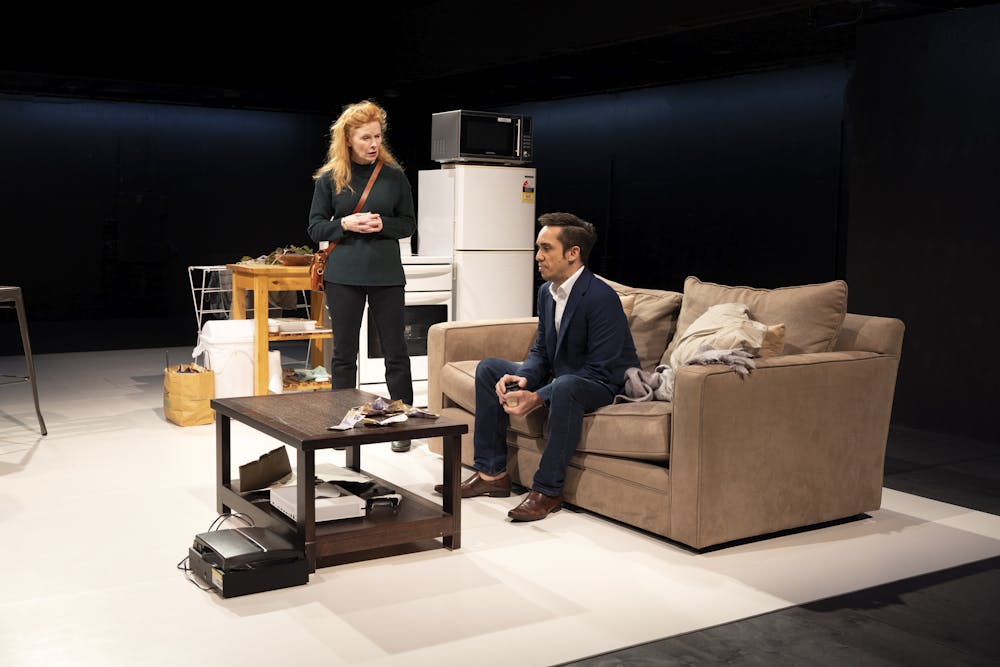
Jacky, a new play by Arrernte playwright Declan Furber Gillick, is a beautifully nuanced and performed investigation of the weight of white expectation and capitalism and its potentially dangerous impact on First Nations people.

Jacky (Guy Simon) is a young man who has moved from his community to the city with aspirations of securing a white-collar permanent job and owning an apartment. Jacky’s younger brother, Keith (Ngali Shaw), is sent by family to join him and soon upturns the ordered trajectory of Jacky’s life.

What quickly emerges is a profoundly uncomfortable look at what constitutes palatable Aboriginal behaviour by white people.

Jacky is a profoundly uncomfortable look at what constitutes palatable Aboriginal behaviour by white people.
Pia Johnson/Melbourne Theatre Company

Jacky’s well-intentioned white boss (Alison Whyte) engages in culturally incompetent behaviour when she requests Jacky pretend he is from a local family group. Jacky’s sex work client, Glen (Greg Stone), requests that Jacky participate in an act of racist role-play.

Keith challenges the social expectations of “good Aboriginal” Jacky has been relying on. He plays witness to the bind Jacky finds himself in: whether he succumbs to the demands of white expectation, or forfeits the social and material gains that are part of playing the role of “sexy Black poster boy”.

Jacky is part of the Melbourne Theatre Company’s season, playing at Arts Centre Melbourne. For me as a white audience member, the performance lays bare an act of political witnessing as Furber Gillick’s writing demands you pay attention and not look away.

Titled in reference to Jacky Jacky, an Aboriginal guide who was awarded medals for his service to NSW, the play troubles ideas of subservience and collaboration within white and First Nations relationships.

It reveals the racist and white supremacist underpinnings of ideas of Aboriginal inclusion premised upon white understandings of success in a capitalist system.


Read more:
Joyous, comic and grim: the best new Indigenous playwrights


Shadow Spirit

The exhibition Shadow Spirit brings together 30 contemporary First Peoples artists and collectives from across the country into an immersive exhibition, including 14 specially commissioned works.

Curated by Kimberley Moulton, Shadow Spirit weaves throughout the decaying and compelling site of the rooms above Flinders Street Station. Works incorporate a range of forms including light, sound, sculpture, screen and projection.

Ambitious and stunning, as you wander through the exhibition works pay tribute to AC/DC; speak to contemporary hero narratives; and feature First Nations Jedi Knight figures blinking back at you on full-size screens under expansive celestial skies.

There is a giant sculptural bandicoot spirit animal; works that map the spirits and energies of Country, waterways and skies and speak to how ancient knowledges protect land and children; and works that directly address the space between what is known and tangible, and what is felt and intuited.

A sculpture with a doll's head and petrol pump.

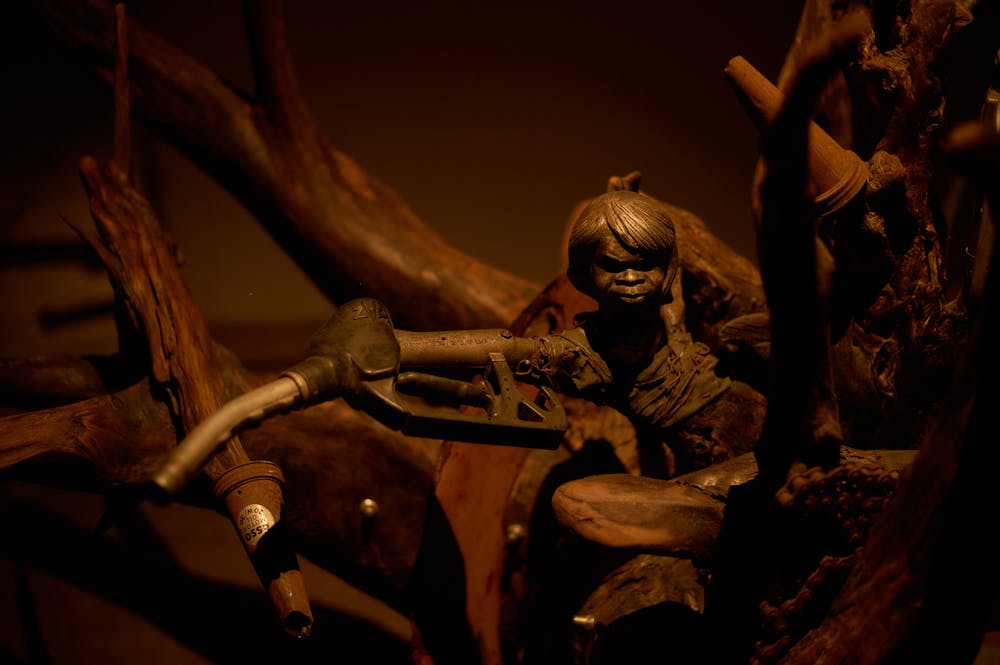
Deeply Rooted is a monstrous and confronting homage to colonial violence and destruction. Deeply Rooted, 2023, Karla Dickens – Wiradjuri.
Eugene Hyland/Rising

One stand-out moment is Wiradjuri artist Karla Dickens’ sculptural works Deeply Rooted.

These spiky works fuse together native hardwood from the artist’s Country with found objects like witches hats, steel caps, broken pieces of rabbit trap, petrol nozzles with the sculptural doll-like head of an Aboriginal child.

Together, these objects create a monstrous and confronting homage to colonial violence and destruction, and a comment on the failure of successive governments to implement meaningful policy change.

Another stunning moment is Rarrirarri in the large ballroom.

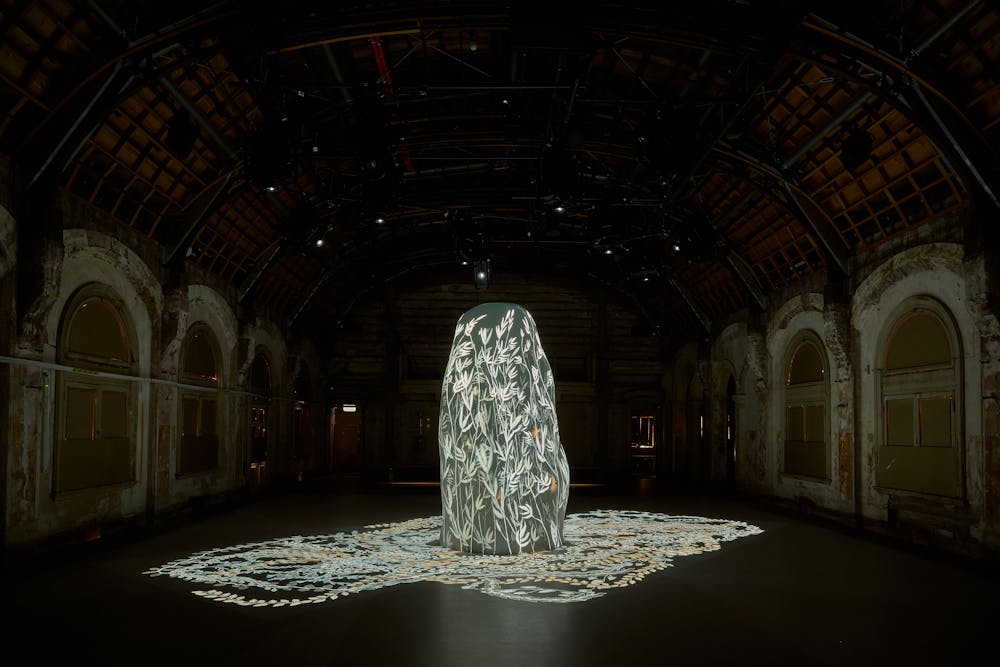
Artistic collective The Mulka Project and Mulkuṉ Wirrpanda (Yolŋu) have collaborated on an installation. A stone monolith (part Uluru and Kata Tjutu and part termite mound) rises from the centre of the room. Across this screens stunning graphic projections of floral and animal landscapes.

A sculpture with projected flowers in a dark ballroom.

Rarrirarri requires you to sit and watch it for some time. Rarrirarri, 2023, The Mulka Project and Mulkuṉ Wirrpanda (NT) – Yolŋu.
Eugene Hyland/Rising

Rarrirarri speaks clearly to desert landscapes and ceremonial and spiritual Country. It requires you to sit and watch it for some time, as the experience of passing time and a landscape of seasonal change reveals itself in the stunning moving graphics of the art work.

The exhibition’s location at the Flinders Street ballroom brings these stories of creation, ancestral knowledge, spirituality and the legacies of colonial violence into conversation with the city’s civic centre. This site is full of cultural memory as a meeting place for railway workers for over 100 years, and its deeper history as a Wurundjeri and Boon Wurrung gathering place across thousands of generations.

Shadow Spirit invites you to linger, to witness and absorb the breadth and depth of knowledge and culture and story threaded through each room in the space.

You are asked to consider your own position and history in relation to these stories, and how you connect and belong within the ancient and contemporary narratives running through the exhibition.

It is a gift to Naarm: a physical and spiritual centre for reflection and communion and gathering, a showcase of the excellence of our First Nations artists and a demonstration of art itself as a political witness.


Read more:
Bark Ladies: how women’s Yolŋu bark paintings break with convention and embrace artists’ strong personalities


Tracker

A co-production between Australian Dance Theatre and Ilbijerri Theatre, Tracker is a remarkable piece of storytelling about Wiradjuri elder Alec “Tracker” Riley.

Riley worked with the NSW police for over 40 years solving crimes to great acclaim. He was the great, great uncle of director-choreographer Daniel Riley.

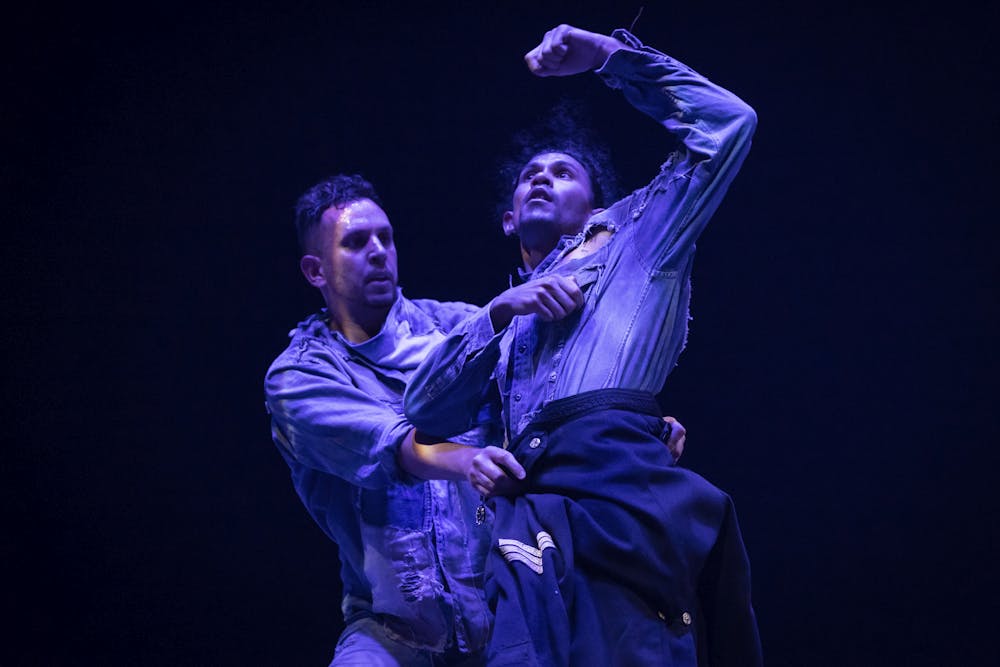
Blending contemporary dance, text, live music and a simple but effective 270-degree rotating set design of scenic painted curtains and greenery rigged around a circular ring, Tracker takes us deep into ancestral Country in the middle of the night.

Our protagonist (Ella Ferris) has travelled to reconnect with the spirit of her great great uncle prior to giving birth to her own child.

Two dancers in blue light and denim clothes.

Tracker takes us deep into ancestral Country in the middle of the night.
Pedro Greig/Rising

She seeks to understand and uncover this piece of her past in order to keep her son safe. In doing so, she reveals how our access to the truths of these stories of cultural resilience are obscured and hidden by layers of history and colonialism.

As the remarkable stories of Tracker Riley’s success in finding missing children and bringing criminals to justice are revealed, three spirit guides appear (Tyrel Dulvarie, Rika Hamaguchi and Kaine Sultan-Babij). Their poetic and synergistic movements echo, enhance and articulate the searching nature of the story.

As the audience, we bear witness to this uncovering of a piece of our nation’s past. Throughout the work, we seek to understand how this extraordinary man successfully forged a path between ancient wisdom and colonial structures – yet received no pension at the time of his retirement.

This is a powerful and ambitious story, asking us to look more closely at history and what the past can reveal about today.

Jacky is at Arts Centre Melbourne until June 24. Shadow Spirit is at Flinders Street Station until July 30.


Read more:
60 years of The Australian Ballet and 90 years of ‘Australian’ ballet: Identity asks us to reflect on Australian dance today


Mississippi River Centers Inaugural Wakpa Triennial Art Festival In Minnesota’s Twin Cities

Mississippi River Centers Inaugural Wakpa Triennial Art Festival In Minnesota’s Twin Cities

“Wakpa” is Dakota for “river.”

Even before the Dakota were on this land, there was the river. Many rivers, but one superior to all others: Ȟaȟáwakpa. White people called it the Mississippi River.

The inaugural Wakpa Triennial Art Festival takes place June 24 through September 16, 2023, throughout Minnesota’s Twin Cities, the state capital of St. Paul side-by-side with its big brother Minneapolis. Ȟaȟáwakpa winds through them both.

ADVERTISEMENT

The river makes as good a place as any to start thinking about the event.

The father of rivers shares a story common across the continent with thousands of its offspring. Native people used these waterways to participate in vast trade networks. European traders tapped into them upon arrival. As the colonizers steadily pushed Indigenous inhabitants off their land, the rivers were increasingly used for industry.

They were dammed and dredged and diked to scale up shipping and textile production and power generation. Their natural cycles of flooding were halted by white men. Concrete barriers went up. Their banks were straightened. Adjacent wetlands were pumped dry.

America’s rivers then became toilets, early residents piping their waste directly to the banks and later, civil engineers directing sewage overflow their way during times of heavy rain. Trillions of gallons of herbicide and pesticides flowed into them from farms and lawns. Toxic industrial waste. “Dilution is the solution to pollution,” the operative phrase for industry.

ADVERTISEMENT

Once a paradise for fish and birds and plants, the country’s rivers nearly died. Riverfront land was often the least valuable and least attractive in cities across America through the 20th century.

It wasn’t until the last 25 or 30 years that the value of rivers for people, not products, began to be understood and appreciated by places fortunate enough to be blessed with a river.

“I grew up here and the river used to stink like a sewer,” Colleen Sheehy, Executive Director of Public Art Saint Paul and the Project Director of Wakpa Triennial Art Festival, told Forbes.com. “It’s taken decades for us to turn back to the river. There’s a lot about the river that not only people coming from outside the Twin Cities, but people here I think will discover.”

Artist, boat builder, fisherman, former professor, clean water activist and Twin Cities native Seitu Jones is aiding in the discovery. His Wakpa Triennial project, artARK, will provide opportunity for more intimate acquaintance with the river. The 20-foot-long wooden and aluminum pontoon boat will serve as something of a research vessel with an artist/naturalist as part of the crew.

ADVERTISEMENT

ArtARK will use art and ecology to foster a greater understanding of the Mississippi River watershed and residents’ role as river stewards.

“I live two miles away from the river, one of the greatest rivers in the world, and many folks–my neighbors–will pass over the river three or four times in a day, but nobody ever gets to the river’s edge,” Jones told Forbes.com.

When the project is completed later this summer, the public will have the opportunity to tour the Mississippi River aboard the artARK. The experience will be participatory as guests can help interpret and present scientific data including pH and oxygen levels, temperature, turbidity, clarity, salinity, and observations of invertebrates, fish, birds and mammals through writing, visual art, and performance with the help of the vessel’s artist/naturalist.

“There’s been much more attention placed (on the river) as this recreational and environmental and inspirational resource (in recent years),” Jones adds.

Instead of using and abusing the Mississippi River, the Twin Cities are increasingly caring for and restoring it. A river once working for industry, is now working for people.

ADVERTISEMENT

Sewage is being treated before making its way to the river. New public parks are bringing people to the river’s edge. The once-radical possibility of removing the river’s locks and dams through town are being considered, part of a national trend returning health to riverine ecosystems and the people who live by them.

“The river going through St. Paul is stunning; there are beautiful limestone cliffs and bluffs along the river in the downtown–it’s spectacular,” Sheehy said.

Sean Sherman’s (Oglala Lakota) Owámni restaurant overlooks the river by St. Anthony falls in St. Paul. Sherman, “The Sioux Chef,” was named one of Time magazine’s 100 most influential people for 2023 due to his ongoing efforts promoting Indigenous food ways.

Reservations at the restaurant are extremely hard to come by, planning should be made months in advance. While waiting for a table, enjoy views of the river, thankfully, now, without the sewer smell.

ADVERTISEMENT

A Thriving Arts Community

The Wakpa Triennial will feature over 40 public events and programs, community-based performances, and temporary public art installations throughout the metro area. Most will be free to attend. In addition to sites along the river and in parks, new commissions will be found in galleries, museums, and alternative spaces indoors and out.

Why now?

Sheehy believes the Twin Cities’ arts community has finally grown to a level where it can support an event of this ambition.

ADVERTISEMENT

“I’m old enough to have seen (the Twin Cities’ art scene) develop from the major institutions to this wonderful density of small organizations that are connected to communities and neighborhoods and specific artistic disciplines,” Sheehy explained. That development extends to artists. “From being a place where a lot of artists would move away to pursue careers in New York, L.A., and now we’re a place where artists are thriving.”

Wakpa also furthers a national and global trend.

These kinds of biennials and triennials have been increasing as efforts to lift up an art scene (and) create exciting new work that gets people out traversing a city, learning more about the city,” Sheehy said.

Discovery is a major goal for Wakpa.

“When I’ve gone to these kinds of art festivals in other cities, they’ve been a beautiful way of learning a city because typically, if I traveled to another city, I’ll go to the big museums, but I don’t necessarily get into the neighborhoods,” Sheehy said.

ADVERTISEMENT

You are on Native Land

Minnesota, along with parts of South Dakota, North Dakota, Nebraska and Canada are the ancestral homelands to the Dakota people. Scandinavians found it in the late 19th century. They were given free land taken from the Dakota to farm and homestead.

Minnesota is still often associated with these Nordic immigrants–look at the Minnesota Vikings football helmet. More residents of Norwegian and Swedish ancestry continue living there than any other state.

ADVERTISEMENT

But St. Paul also has the largest Hmong community in an urban area in the United States. Minneapolis has the largest Somali population outside of Mogadishu.

In the 1950s, 60s and 70s, a federal program known as the Indian Relocation Act incentivized tens of thousands of Native people from across America to leave their reservations and move to cities for greater economic opportunity. It was another government effort to disassociate Native people from their land and culture under the guise of “progress,” and Minneapolis was a major relocation hub.

To this day, it has one of the largest Native populations of any American city.

“There are these cultural communities that people can experience and help to dispel the idea that we’re this all-white German Scandinavian area,” Sheehy said. “There’s a lot of diversity that is adding so much to our understanding, our experiences of city and art and food and customs.”

The Wakpa name was selected only after consultation with Dakota leaders and artists.

Of the more than 100 Minnesota-based artists contributing to the festival, a majority are people of color.

ADVERTISEMENT

Organizational partners include Wakan Tipi Center which honors sacred Dakota sites in the area, Oyate Hotanin, an Indigenous arts organization, the Asian Economic Development Association, Center for Hmong Arts and Talent, the contemporary Native American art gallery All My Relations Gallery and the Hmongtown Marketplace.

And the Philando Castile Peace Garden.

Philando Castile and George Floyd and Duante Wright…

ADVERTISEMENT

George Floyd was murdered by a white police officer in Minneapolis, not Mississippi. The Twin Cities prides itself on being one of the most progressive and educated communities in America, yet, police murder has been the area’s defining attribute since Floyd’s death was witnessed worldwide.

It wasn’t an isolated incident. Cops in the Twin Cities have an outrageous record of unwarranted violence against minorities.

Philando Castile was a young Black man shot and killed by police in the metro area in 2016. The longtime employee of the St. Paul Public School System perished sitting in his car after being pulled over for a broken taillight.

ADVERTISEMENT

Minneapolis police rampaged in the days after Floyd’s murder. They were heard on their own body cam footage enjoying “hunting” peaceful protestors.

Like Castile, Duante Wright was a young Black man killed by police while sitting in his car after being pulled over in suburban Minneapolis for a traffic stop. His death occurred during the trial of Floyd’s murderers in 2021.

A damning report from the Department of Justice released on June 16, 2023, found the Minneapolis Police Department for years has engaged in a pattern of excessive force and racial bias among other civil rights abuses.

ADVERTISEMENT

“We’re still struggling to recover and rebuild,” Sheehy said of the demonstrations following Floyd’s murder. “Not only physically rebuild, but to rebuild what future we want here that’s based on equity and inclusion, and to address these sadly persistent disparity gaps that exist in the Twin Cities, and in Minnesota, between white communities and communities of color.”

Wakpa Triennial leans in, placing these conversations and sites front and center.

“One node of the triennial in Minneapolis is around Minnehaha and Lake Street, it’s called the Longfellow neighborhood, it’s the location of the third precinct building that was burned, that was the focus of a lot of demonstrations. That’s the precinct Derek Chauvin worked at,” Sheehy explains.

Chauvin is the officer who choked Floyd to death.

“The building wasn’t burned to the ground, but it’s standing empty with a fence around it for these three years,” Sheehy said. “There’s a lot of rethinking and rebuilding in that node because there were a number of important small cultural businesses and organizations whose buildings burned and it’s an opportunity to come to that neighborhood, think about what happened there, and learn more about how the neighborhood is rebuilding.”

ADVERTISEMENT

Artists and the arts community will be key to that effort.

Rebuilding a community following Floyd’s murder, and Wright’s, and Castillo’s.

And rehonoring Native homelands.

And restoring a river.

Travel Wisconsin: Native American Culture

Travel Wisconsin: Native American Culture

Wisconsin is home to 11 federally recognized Tribes, each with their own distinct traditions and cultural heritage. Tribes welcome the public to experience rich traditions throughout the year, with many unique events and opportunities in the summer. Here’s to experiencing Wisconsin’s Native culture. 

Visit Bayfield County to experience Ojibwe culture (Bayfield County) 

Discover natural beauty and the artwork of Native artists when visiting Bayfield County this summer.  

The Red Cliff Band of Lake Superior Chippewa established Frog Bay Tribal National Park, which was the first tribal national park in the country. The park protects 300 acres of land and 4,000 feet of shoreline on Lake Superior. When you visit, you’ll find nearly 2 miles of rustic trails, interpretive signs, bridges and a view of five of the Apostle Islands. 

Head over to Madeline Island afterward to learn about Ojibwe culture. Dine at the newly opened restaurant in La Pointe, Miijim, where you can enjoy Indigenous comfort dishes with a French twist on small plates. The dishes feature locally foraged and Native-grown foods while offering a unique exploration into Indigenous Miijim, meaning “food” in Ojibwe. 

Explore the Madeline Island Museum, which is operated by the Wisconsin Historical Society, and has a featured exhibit with works from an internationally recognized Ojibwe artist, as well as an exhibit showcasing beadwork from Native youth. For a place to stay when you visit, rent a campsite at the Buffalo Bay Campground. The lakeside campground offers panoramic views of Lake Superior and the Apostle Islands and is next to the Legendary Waters Resort and Casino with all its modern conveniences. 

Visit Lac du Flambeau for outdoor recreation and cultural experiences throughout the summer (Vilas County) 

Fish the famous Flambeau Chain with a Native American guide, paddle the areas 71 miles of rivers and streams or catch glimpses of wildlife and the many birding opportunities on the Powell Marsh – 12,000 acres of wetlands and one of the top birding destinations in Wisconsin.  

Visit the George W. Brown, Jr. Ojibwe Museum & Cultural Center for exhibits dovetailing the old ways and the new ways into a holistic picture of Ojibwe life and history. Book in advance to take advantage of their guided tours, programs and events. Take in one of the weekly Waaswaaganing Indian Bowl Pow Wows happening every Tuesday until August 15.  

For more than 70 years, the Lac du Flambeau Band of Lake Superior Chippewa have been educating visitors and sharing Ojibwe culture through pow wows at the Indian Bowl. They have even been visited by President Dwight Eisenhower. Today, you’ll experience a beautiful permanent pow wow venue that honors heritage and tradition while creating space for contemporary expression of Native culture. 

When you’re visiting Lac du Flambeau, book a room at Lake of the Torches Resort Casino to extend your stay. Time your visit with a Native American arts and craft show that’s happening at Lake of the Torches on July 29 where you can browse a variety of handcrafted goods. 

See smoke dancing and more at the annual Oneida Pow Wow (Outagamie County) 

The Oneida Pow Wow is a powerful way to experience Native American culture and celebrate the tribe’s past, present and future! The popular event is taking place the weekend of June 30-July 2 at the Norbert Hill Center in Oneida. 

You’ll be amazed by the incredible talent during the dance and drum contests. Competitors of all ages travel to the pow wow to show off their skills in several traditional dances, including Oneida’s own smoke dance style. When there’s downtime between competitions, check out the dozens of booths surrounding the dance area. Vendors will be selling Native American-made crafts, food and more. 

Start your summer getaway at TravelWisconsin.com 

Local artists jam for World Make Music Day in Kona

Local artists jam for World Make Music Day in Kona

Sitting in the back of a Kona restaurant on World Make Music Day, Pualani Willing and her partner were listening to local artist Hāwane Rios and Kailiwai sing original and traditional Hawaiian songs with soft rain as an accompaniment.

“We need more of this,” said Willing, a native of Waiʻanae. “Back in the day growing up, this was all day, every day. This is what we do as Hawaiian – we dance, we sing, we share.”

Hawaiian artist Hāwane Rios dances during the International Make Music Day at The View Restaurant Bar & Grill, Kona Country Club on June 21, 2023. (Megan Moseley/Big Island Now)

Make Music Hawaiʻi was established in 2020 as part of World Make Music Day, an international celebration of music that occurs every year on June 21 in more than 1,000 cities. The organization invites every kind of musician to share their favorite types of music and songs with anyone they come across on that day.

This was the second year the event occurred at The View Restaurant Bar & Grill at Kona Country Club. It drew a strong local crowd to support Hawaiian musicians.

Make Music Day in Kona on June 21, 2023. (Megan Moseley/Big Island Now).
ARTICLE CONTINUES BELOW AD

Playing ‘ukulele and guitar, talented local musicians performed in the open-air restaurant against a backdrop of Keauhou Bay and the golf-course.

Kenny Tagavilla, also known as Kenny T, plays country-flavored compositions about his home, has performed at both Make Music Day events in Kona.

“It’s a local crowd that’s here to enjoy the music,” he said. “This is like home to me. It’s awesome to be able to share.”

ARTICLE CONTINUES BELOW AD

Kona-native Tagavilla has become a popular locally, performing for 20 years at local bars and restaurants. But now he owns a trucking company and is busy with his family, so he has had to be more selective with his gigs.

Following Kekahi Young & Friends, Tagavilla wrapped up the evening’s events by performing alongside Guy Nagata and singing songs off his new album “Cruisin’.”

Kekahi Young & Friends perform during the International Make Music Day at The View Restaurant Bar & Grill at the Kona Country Club on June 21, 2023. (Megan Moseley/Big Island Now)

Keoni and Kalina Llanes, owners of The View Restaurant Bar & Grill, were happy to see a large turnout that evening. The seats and bar were full at the restaurant that can fit 120 people.

ARTICLE CONTINUES BELOW AD

“It’s nice to see the community come out,” Keoni Llanes said. “What we created was a local spot. It’s for tourists, too, but really we like to push the locals because they’re always here for us no matter what.

“They support us 100 percent, during our ups and downs and no matter what. It’s a family vibe and that’s what makes The View what it is today.”

For more information about Make Music Day, click here.

Peace Love Art: Charity Art Sale Partners Professional Athletes With Artists for Great Causes

Peace Love Art: Charity Art Sale Partners Professional Athletes With Artists for Great Causes

250 Artists, 11 Sports and Entertainment Celebrities, and 10 Charities join forces to promote the sale of over 700 works to support the arts and multiple charitable causes. Preview now, with the sale going live from July 9 through July 15, 2023.

TAMPA, FL / ACCESSWIRE / June 22, 2023 / The 3rd Annual Peace Love Art charity sale takes place Sunday, July 9-Saturday, July 15, 2023, featuring works by 250 international artists partnered with 10 charities to support the arts and causes. Featured artists include:

Christian Clayton (b 1967, Colorado, USA)
Christian Clayton (b 1967, Colorado, USA) “Waiting for You” Mixed Media on Canvas
Sample of the art available during the sale.
  • Canadian Artists Rachael Blakey, Jeffrey Malcolm, Luba Stoykovich
  • Cuban-born Artists Edel Alvarez, Pedro Hernandez, Alejandro Mazon, Ernesto Piloto
  • French Artist Geff Strik
  • Japanese Artist Kaoru Shibuta
  • Native Artists Ken Fury, Ramsey Kunkel, Craig Marks, Lauren Siyowin Peters, Brian Taaffe
  • Nigerian Artist Dominic Ibe Ajike
  • South African Artist Antoine de Villiers
  • Syrian Artist Randa Hijazi
  • USA Artists Christian Clayton, Obrianna Cornelius, Jay Decker, John Hall, Michael Kirst, Deborah Kolp, Steven Lester, Laura Letchinger, David Platt
  • UK Artists Bernard Gray and Cheryl Roach

“Last year’s event focused on Indigenous Artists supporting Dream Catcher Foundation,” said A+C Founder Rob Canton. “We were thrilled with the success of PLA: Indigenous Collective due to the dozens of artists that generously supported the Foundation and partnerships forged with several indigenous influencers. Everyone came together to promote indigenous artists and fight against murdered and missing indigenous women.” Rob added, “We built on that success by joining forces with 10 charities, resulting in 250 artists and 700 works of art this year.”

Eugene Brave Rock, best known for starring as “The Chief” in Wonder Woman (2017), is passionate about arts-particularly indigenous art. A Blackfoot from the Blood Tribe, which is part of the Blackfeet Confederacy, Gene recognizes the value of leveraging arts for causes, including his personal journey to preserve indigenous languages through his own Oki Language Project. “Native artists do a wonderful job preserving the culture of our various peoples,” said Gene. “Leveraging arts to support the preservation of languages is an amazing use of the arts for good.”

Houston Astros’ World Series Champion and Gold Glove winner Kyle Tucker’s charitable mission is bringing awareness to hospice care and helping support the quest to bring more affordable, quality care to those requiring it. “My family’s experience when my grandfather was in hospice brought to light the important role of organizations and people that devote their lives to providing compassionate, end-of-life care for our loved ones and their families,” said Kyle. “We are thrilled that many artists chose the Kyle Tucker Foundation to support through the sale of their artwork and hope people take time to see their amazing work and perhaps take home a piece or two.”

These are two of the 10 charity beneficiaries of this year’s Peace Love Art. Other charity ambassadors include Lance McCullers Jr., Eli Ankou, Chris Godwin, Johnny Damon, Allie LaForce, Joe Smith, and Jimmy Buffett-founded Save the Manatees Club.

Supporters and art collectors can preview the artwork now at https://PLA2023.givesmart.com and the site will be live for purchases from July 9 through July 15. All artists have generously agreed to direct half the funds raised from each sale to the partner charity of their choice.

###

About A+C Foundation: A+C empowers athletes/artists to give using without the high costs and risks associated with creating their own 501(c)(3). Their fiscal sponsorship allows the opportunity to gain instant tax-exempt status. For more information, visit www.artsandcauses.org.

Contact Information

Rob Canton
CEO
[email protected]
813-495-3572

SOURCE: A+C Foundation

.

Commentary: What it feels like to have your history-making play canceled during the Taper’s closure

Commentary: What it feels like to have your history-making play canceled during the Taper’s closure
image

I am a Los Angeles-based playwright. My new play, “Fake It Until You Make It,” commissioned by Center Theatre Group, was about to go into production at their Mark Taper Forum. Two weeks before my director, Michael John Garcés, began rehearsal, the organization “paused” the theatrical season at the Taper. However, at this time there is no date or guarantee of “unpausing,” so it is effectively canceled.

This play was going to be the first by a Native American playwright on that stage and the last play of a historic all-female/gender nonbinary season. Also canceled was Chay Yew’s production of Lauren Yee’s “Cambodian Rock Band.” I am writing because canceling these productions has done real damage to communities here in Los Angeles and nationally, and that damage has to be acknowledged.

“‘Cambodian Rock Band’ was birthed in Southern California, home to our country’s largest Cambodian American population. It’s a community we’ve forged a deep and meaningful relationship with — the community is part of this show,” Lauren tells me. Chay shared what actor Joseph Ngo posted online: “This is heartbreaking news for my Khmer community. For at least a year now, they have been planning to see this production…We wanted to be seen, known, and have our story heard.”

In my case, I heard from Native American people across the country about the anger and hurt they feel at the news. This is more than a play to us. We have been erased on our own lands for centuries. It is not just my voice as a Lakota woman that was silenced, but the voices of two Southern California Native actors (among other Native artists) who were going to reclaim the Taper stage for their own people. This cancellation is part of a legacy that constantly reasserts that we have no power here. That we are never safe. Once again, our stories are disposable or just not relevant.

My family and my team lost a considerable amount of money due to this decision. In addition, I forfeited a Broadway co-commission (more money) to do this play on CTG’s expedited timeline because I wanted this production to premiere at my hometown theater. CTG also turned down a co-production with another theater that may have given us enough support to continue next week. At least it would have guaranteed us a production elsewhere. It is sobering to discover that, regardless of having a play produced on Broadway this season and a national tour in the works, my play was canceled with only three hours’ notice before the public announcement.

This is hard to write because I was on the Theater Communications Group board with both Meghan Pressman and Snehal Desai and consider them friends. I spoke with them before writing this, so I know how deeply both of them care about art, artists and audiences. I know that it was their board of trustees that made the extreme, unexpected decision to cancel. I also know the financial situation at CTG is truly dire. Ticket sales are low. Giving is down. Jobs were lost. But this does not relieve them, or their board, of their responsibility to the artists and communities that are affected. The board needs to support Snehal, an incoming artistic director of color who is being handed the keys to a mess. A mess on fire. He’s going to need help from all of us to put the fire out.

I went online and reread CTG’s 2020 “Commitments to Change,” and their follow-up posts of failed promises from the institution. That led me to the words of Rachel Davidson, daughter of Founding Artistic Director Gordon Davidson: “My father knew that for the Taper to have meaning, the plays had to have purpose. His dream was a theater that both builds community and made Angelenos aware that they are all part of a community. It was a place to give voice to those not yet heard.” That hit me hard because that is what both Lauren and I seek to achieve with our work.

I believe that this moment, as painful as it is, is an opportunity for a true reset at CTG. Playwright Jeremy O. Harris, who instigated this season of women/nonbinary playwrights, commented: “I hope that CTG is putting all of their resources into returning next season with a diverse audience foaming at the mouth to see your show. With other femme and Indigenous artists around the work to support it.”

As CTG rebuilds financially, it must invest in programs that actually listen to communities and include their voices. Invest in the community, not to make them patrons but to make them partners. Change the culture of the spaces to be welcoming to all peoples. This theater is built on Native land. For years, commitments to the community have been made, promise after promise has been broken. The land is gone, the trust is gone, our Khmer and Native plays have now been taken away. It is time for better.

Begin the process of reparations with an actual reset, back to Gordon Davidson’s mission of this theater. Show us with specific, targeted action. Make the new budget reflect their core values to win back our trust. I have other productions, but I intended this project to be a production entirely made up of Los Angeles artists for the Mark Taper Forum. This is the stage it belongs on. Invite all of us in so that Lauren and I can successfully bring our plays home.

Indigenous festival ʔəm̓i ce:p xʷiwəl (Come Toward the Fire) releases 2023 lineup, with headliners Black Belt Eagle Scout and Reservation Dogs’ composer Mato Wayuhi

Indigenous festival ʔəm̓i ce:p xʷiwəl (Come Toward the Fire) releases 2023 lineup, with headliners Black Belt Eagle Scout and Reservation Dogs’ composer Mato Wayuhi

THE CHAN CENTRE for the Performing Arts at the University of British Columbia and Musqueam today announced initial details about the second annual Indigenous festival, ʔəm̓i ce:p xʷiwəl (Come Toward the Fire).

Taking place on September 16, just ahead of the National Day for Truth and Reconciliation (September 30), the event will highlight a vast range of Indigenous artists from Musqueam and Indigenous nations across Turtle Island (North America). With a mandate to celebrate Indigenous culture, creativity, and community, the festival will feature free outdoor programming from 1 to 5:30 pm then a ticketed evening festival concert from 6 pm, all at Chan Centre for the Performing Arts.

The gathering’s hən̓q̓əmin̓əm̓ name was provided by Musqueam and elder Larry Grant, with thanks to Musqueam artist Miss Christie Lee Charles for suggesting the name “move toward the fire.” The fest’s overarching goal is to support the movement to return Indigenous voices to the forefront and bring them back to the centre—the fire—and the heart of the community, following generations of erasure through colonization and Indian Residential Schools.

“Musqueam is excited to partner with the Chan Centre for the Performing Arts and welcome Indigenous performers to our territory for the second year of ʔəm̓i ce:p xʷiwəl,” yəχʷyaχʷələq, Chief Wayne Sparrow, Musqueam Indian Band, says in a release. “In our culture, fire is the centre of our longhouses, where our ceremonial work takes place. Being called ‘toward the fire’ is a call to join us in this celebration of Indigenous cultural expression. We look forward to strengthening our relationship with the Chan Centre to continue uplifting Indigenous voices for many years to come.”

The 2023 lineup is loaded with changemakers and top talent.

Headlining act Black Belt Eagle Scout, aka Katherine Paul, is a Swinomish/Iñupiaq singer-songwriter and multi-instrumentalist. Paul, who was born and raised along the Skagit River on Puget Sound in the Swinomish Indian Tribal Community, grew up immersed in the musical traditions of her culture, performing as a jingle dress dancer with her family’s drum group, the Skagit Valley Singers. Her musical style has been compared to that of Feist, Snail Mail, and Julien Baker, with Pitchfork saying her “reverberant, wide-open sound suggests a sense of possibility and the broad sweep of history” Paul’s 2023 album, The Land, The Water, The Sky, was made in honour of her ancestral lands.

“Through gauzy instrumentation and driving percussion interspersed with hints of the Coast Salish music tradition, Paul paints the soundscape of the Pacific Northwest with an impressive clarity,” according to a release. “The album is a testament to community and the power of coming home, as she reflects on her COVID-era move from Portland, Oregon, back to Swinomish and the healing that followed. The Land, The Water, The Sky recognizes not only her own lineage but the history of the land itself. The music invites listeners to take a journey of healing and resistance through Paul’s eyes.”

This evening performance will be hosted by Musqueam’s Christie Lee Charles, who goes by the stage name Miss Christie Lee. A direct descendant of the great warrior Capilano, Charles is the City of Vancouver’s first Indigenous poet laureate as well as a rapper, storyteller, Coastal hand-drum singer, filmmaker, and speaker for her ancestors. (Charles will also perform a set during the day.) The xʷməθkʷəy̓əm artist and mother incorporates traditional knowledge and ancient hən̓q̓əmin̓əm̓ dialect into her work as a hip-hop artist and emcee, rapping about life, culture, and empowerment while encouraging Indigenous youth to be proud of their roots.

Art Attack: All the Best Art Shows to See in Denver and Beyond

Art Attack: All the Best Art Shows to See in Denver and Beyond

It’s unfortunate that some of our favorite art openings and events are located in distant parts of the state, such as Ridgway’s Space to Create grand opening and a contemporary take on the Buffalo Soldiers by artists down in Fort Garland. But it may as well be First Friday for 40 West, with several co-op shows debuting; there’s also the first-ever Rocky Mountain College of Art + Design alumni show, and RedLine continues its salute to Indigenous artists with an exhibition by Arthur Short Bull.

Whether the drive is long or short — or to be postponed — there’s no reason to not see art this weekend. Here’s where to go:

Block Party and Grand Opening Celebration
Ridgway Space to Create, 675 Clinton Street, Ridgway
Thursday, June 22, 4 to 7 p.m.
RSVP at Eventbrite

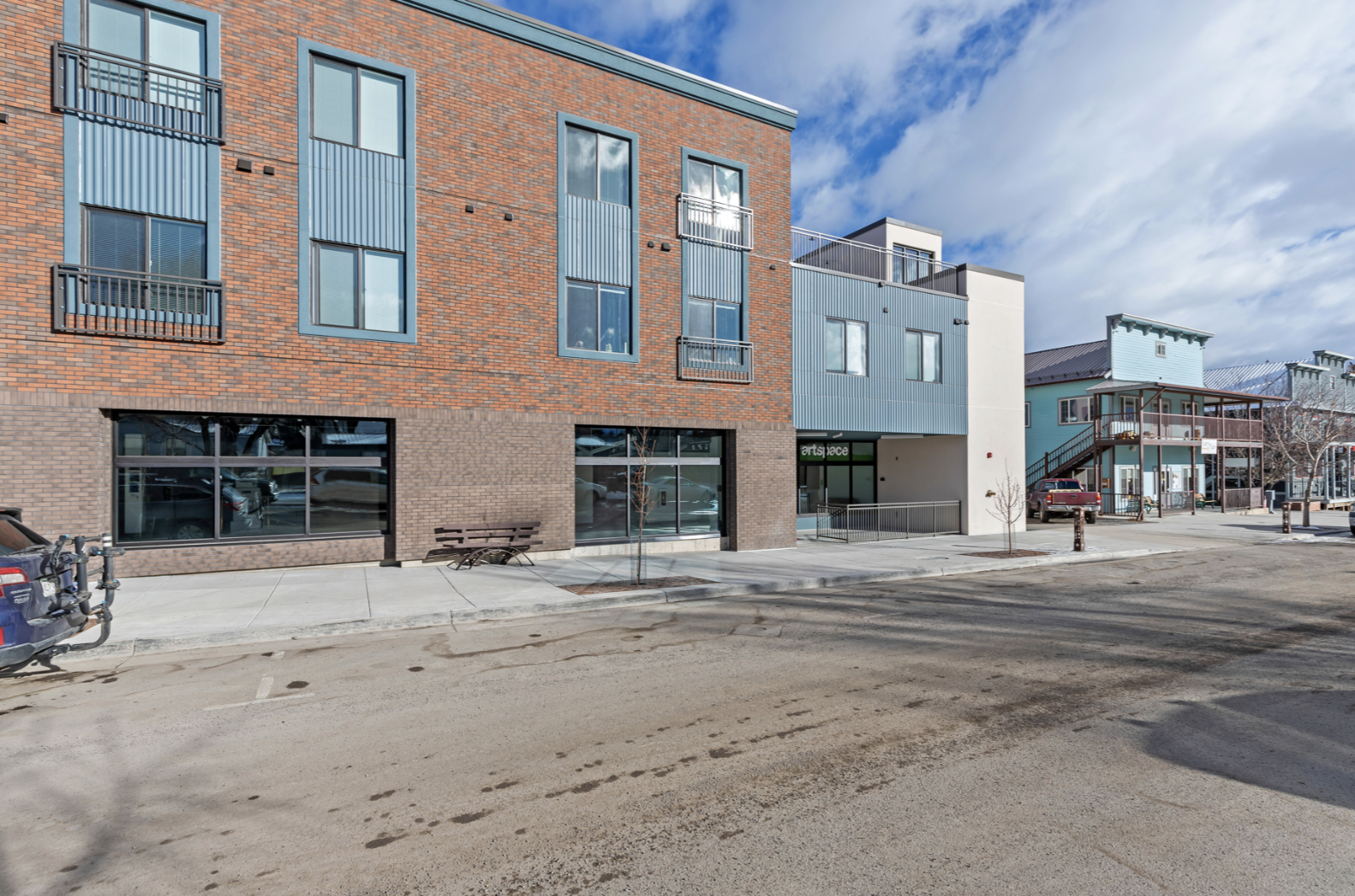
Granted, this would be a perfect way to spend a late afternoon/early evening if you are visiting the faraway paradise of Colorado’s San Juan Mountains. But it’s a significant nod to the state’s designated Creative Districts, which pop up in spots both urban and remote. Ridgway’s will celebrate its first ten years by cutting the ribbon on the new Artspace Space to Create artist community that solidifies the town’s FUSE Creative Main Street project. It’s a big deal. Should you find your way to Ridgway in time, have a peek at the new development and enjoy music, food, art, poetry and high-flying aerialists at the opening bash. If not, It will be there to see when you are.

Deborah Bryon, Life on Life’s Terms
Gary Manuel, In and Out
Annalee Schorr, Mirror, Mirror on the Wall, in the North Gallery

Spark Gallery, 900 Santa Fe Drive
Thursday, June 22, through July 16
Artist Reception: Friday, June 30, 6 to 9 p.m.
Last Look: Sunday, July 16, 1 to 4 p.m.
Spark packs in three member solos when shows change this week, with showcases for Deborah Bryon, who explores what it’s been like to return to the politically divisive outside world after COVID; sculptor Gary Manuel, whose mixed-media works combine wood, metal, recycled materials and fiberglass; and a series of mirrored Mylar Plexiglas paintings and cubes with geometric patterns by Annalee Schorr. Note that the formal opening reception is on Friday, June 30.

Winyan Tate (Wind Woman): Selected Works by Arthur Short Bull (1991 – Present)
RedLine Contemporary Art Center,
Friday, June 23, through August 9
Opening Reception: Friday, June 23, 6 to 9 p.m.; free food and drink; $5 donation for non-members

RedLine continues its Roots Radical exhibition series with the work of Oglala Lakota Arthur Short Bull, who grew up on the Pine Ridge Reservation but now dwells in beautiful La Veta, Colorado. Winyan Tate (Wind Woman) focuses on the recurring character of Wind Woman, who symbolizes the decimation of Indigenous life and traditions, including references to Wounded Knee. His interest in this history rises from his heritage, as it was preserved by his ancestor Amos Bad Heart Bull, who fought with Crazy Horse and later recorded his tribal story in a ledger book. Short Bull continues the storytelling through his own watercolor paintings and poetry.

Unwavering: First Annual Alumni Exhibition
Rotunda Gallery, Rocky Mountain College of Art + Design,
1600 Pierce Street, Lakewood
Friday, June 23, through September 1
Opening Reception: Friday, June 30, 4 to 7 p.m.
RMCAD’s first alumni exhibition (destined to become an annual event) has been a long time coming, considering that the school has been around since it was founded by Philip J. Steele sixty years ago. For a start, the show will honor ten 21st-century graduates — some who have taken the fine-art path, while others launched their own commercial-art businesses. But they all exhibit excellence in the follow-through, which is why you should see this show.

Brian Cavanaugh, Blossom and Decay
Leo Franco, Castle
Guest artist: Bruce Thorn, Letters from Distant Galaxies

Pirate: Contemporary Art, 7130 West 16th Avenue, Lakewood
Friday, June 23, through July 9
Opening Reception: Friday, June 23, 6 to 9 p.m.

Pirate’s first summer opening branches out in all directions. Brian Cavanaugh contributes mixed-media sculptures of human bodies made from organic plant materials over a wire armature (think Arcimboldo, only wild and weedy); Leo Franco brings new wood sculptures as modernist constructions; and guest artist Bruce Thorn goes overboard as a storyteller with Letters from Distant Galaxies, a tale of telepathic intergalactic love rendered in small oils and on vintage hubcaps. That will be a sight to see.

Deborah Abbott, What is on your plate? (Body and Soul)
Maria Valentina Sheets, Air Uprising

Core Art Space, Hub at 40 West, 6501 West Colfax Avenue, Lakewood
Friday, June 23, through July 9
Opening Reception: Friday, June 23, 5 to 9 p.m.
Several shows are debuting at the Hub at 40 West, including double solos at Core. Deborah Abbott’s fun wall assemblages for What is on your plate? are meant to encourage good-natured self-reflection. Meanwhile, glass-art maestra Maria Valentina Sheets’s kiln-fired glass paintings take up more contentious issues on the theme of anarchy. Incidentally, Sheets has recently been commissioned by Judy Chicago to create a stained-glass version of her painting “Queen Elizabeth.”

Alane Holsteen: The Call of Beauty
Kelly Pierce: Works on Paper

Edge Gallery, Hub at 40 West, 6501 West Colfax Avenue, Lakewood
Friday, June 23, through July 9
Opening Reception: Friday, June 23, 5 to 9 p.m.
Edge opens two solos, including paintings of flora by Alane Holsteen and a collection spanning twenty years of pop art and other works in reaction to two decades of news stories, from 9/11 to the present by Kelly Pierce.

Matt Lay, Monomyth
Rebecca Yaffe, Signal to Noise
Contrast

Next Gallery, Hub at 40 West, 6501 West Colfax Avenue, Lakewood
Friday, June 23, through July 9
Opening Reception: Friday, June 23, 6 to 9 p.m.

At Next Gallery, Matt Lay’s Monomyth references Joseph Campbell’s version of a hero’s transformative epic journey as it might relate to our own lives, while Rebecca Yaffe’s monoprints are immersed in design, pattern and mastery of medium, free of philosophy. Contrast is a group show by gallery artists.

RiNo Summer Art Market
RiNo ArtPark, 1900 35th Street
Saturday, June 24, noon to 4 p.m.

The RiNo ArtPark will be hopping when the RiNo Summer Art Market drops in on Saturday, with live DJ spins, Crazy Golf, a noon family storytime at the Ragland Library and a sweet duo of food trucks. Concurrently, ArtPark’s new Truss House performance stage will be offering tours and Good Bones, a dance theater work by Odd Knock Productions (4:30 and 7:30 p.m.; tickets, $20, at Eventbrite). But — no surprise — the art is the highlight of the afternoon, with work by more than thirty queer artists to celebrate Pride.

Yard Art Contemporary
100 Gaylord Street
Saturday, June 24, 10 a.m. to 5 p.m.
Sunday, June 25, 11 a.m. to 4 p.m.
Yard Art is making one big statement this summer with a huge, two-day outdoor art sale sporting a lineup of twenty local artists, some of them familiar from past Yard Art events, and some new names, too. A group of young musicians from New Cottage Arts will perform live beginning at 3 p.m. Saturday, if you like to listen while you art.

Jonathan Solter, Illuminarium
Threyda, 878 Santa Fe Drive
Saturday, June 24, 6 to 11 p.m.
Tickets: $25 here
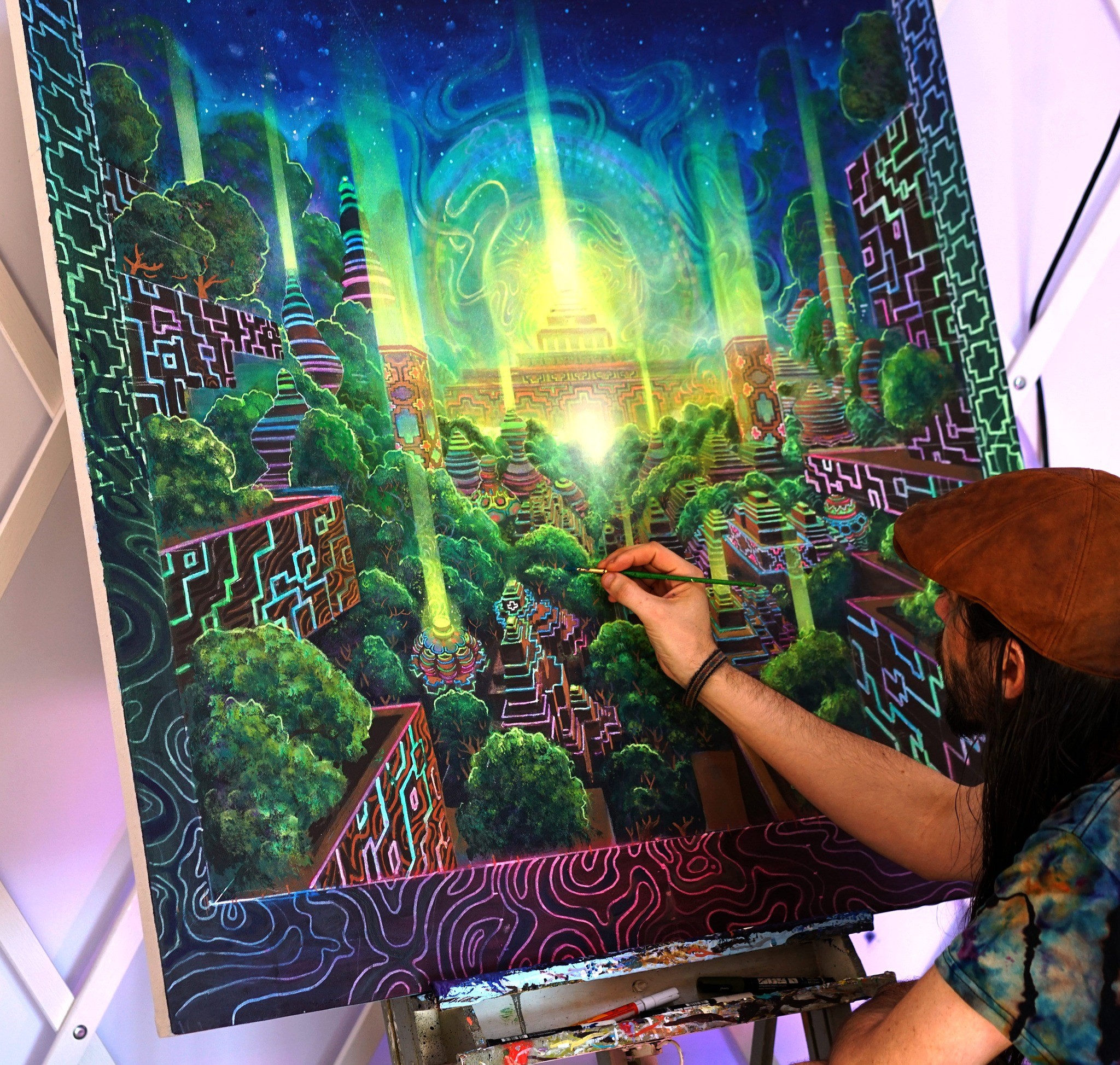
Threyda will fête Bay Area psychedelic visionary artist Jonathan Solter, a live painter and muralist whose specialty is inspired by higher dimensional travel, ancient civilizations and animism, with a one-night ticketed party offering a signed print and free food and drink for the $25 entrance fee. Solter is hanging solo works and others created in collaboration with Seth McMahon for the event.

buffalo soldiers: reVision
Fort Garland Museum & Cultural Center, 29477 Highway 159, Fort Garland
Saturday, June 24, 9 a.m. to 5 p.m.
Free on opening day; $5 to $7 (free for kids 18 and under) thereafter, RSVP here
Fort Garland may be a hike from Denver, but the region has a history that goes back centuries, including one not everyone knows about: Beginning in 1866, the 9th Cavalry Black regiment of the nation’s first Buffalo Soldiers was stationed at the fort. Ironically, the soldiers, many of them former slaves, were utilized at the front line of the Indian Wars.

Their story will be reinterpreted through art created for buffalo soldiers: reVision, a new exhibit opening this weekend at the History Colorado’s Fort Garland Museum & Cultural Center. The show was organized by Chip Thomas, aka Jetsonorama, a physician and artist known for wheat-pasting buildings with Native-inspired photos for his Painted Desert Project, which began in Navajo Nation and has spread to other Indigenous enclaves. Thomas enlisted artists Esther Belin, Mahogany L. Browne, Rosie Carter, Gaia, Andre Leon Gray, Theodore Harris and Tom Judd to help him tell the Buffalo Soldier story through a new lens. One could hope that this show will travel to 
the History Colorado Center in Denver one day, but we suggest heading straight to traditional Ute territory in the San Luis Valley area to check it out as soon as you can.

Interested in having your event appear in this calendar? Send the details to [email protected].