Native

Derussifiying Russian Art

Derussifiying Russian Art

Andy Warhol was definitely not a Ukrainian. The artist was born into a family of Ruthenian descent and raised in a Pittsburg ethnic ghetto. By the time his generation came of age, his ties to the mother country were already severed. Warhol anglicized his surname by dropping the final “a,” and had the ambition to worm his way into the elite WASP circles of New York City. His family did hail from an area in the Carpathian Mountains with unstable borders, however, and at one point the region fell within Ukraine. Thus, the Google search for “Andy Warhol Ukrainian” returns more than one million results, some of them from academic journals.

To be fair to Ukrainians, they are not the only Slavs claiming the great American artist, but, especially in the last year, Ukrainians have been particularly aggressive about making corrections in online databases and approaching Western museums to relabel art—Polish, Jewish and especially Russian—“Ukrainian.” A good deal of that effort can be traced to the activities of one woman, Oksana Semenik. She is a Twitter influencer who personally approaches curators even while directing her 24,000 followers to tag museums on social media, asking to make corrections.   

Advertisement

In an interview with the podcaster Johnathan Fink, the activist explained that it is “Russian propaganda” to label certain works in American collections as Russian or to even cite Russia as the artists’ place of birth. Her goal is to “liberate and decolonize our [Ukrainian] culture from the Russian context,” even likening herself to Ukrainian soldiers in the trenches; they are doing important work liberating the land, but her fight is in American and Western museums. Semenik lamented:

Why do they have this great Russian culture? Because they spend a lot of money for cultural propaganda…they [Russians] were promoting their so-called “culture”. But a lot of these artists were, of course, stolen, you know, from Ukraine or from Belarus.

She added: “Russia stole all those artists and international museums still keep all this stolen art for Russia. Holding them as hostages.”

The language sounds shrill, so I wanted to give Semenik an opportunity to restate her thoughts—maybe she would be able to explain herself better in her native language. She didn’t respond to my direct messages.

I wanted to hear about her methodology. In the podcast interview, she said that she researches the artists’ genealogies to confirm their Ukrainian heritage. However, it appears that her most notable subjects don’t usually have any Ukrainian blood.

Advertisement

Having followed the post-Soviet cultural trends in Eastern Europe, I have a guess at Semenik’s methodology: She looks at a map. If she sees that an artist set his foot in the country within its 1991 borders, she labels him as Ukrainian. But most of these artists lived before independent Ukraine was created, graduated from Russian academies, weren’t a part of any native Ukrainian art movements, and communicated in Russian. The land that is now Ukraine was once diverse, and its biggest cities, where high culture blossomed, were majority Russophone.

Thus the artists in question weren’t in any meaningful sense Ukrainian. For instance, one of Semenik’s recent tweets shows a painting of a peasant women by Zinaida Serebryakova with the caption: “Here is «Harvesting” [sic] by [Ukrainian flag] Zinaida Serebryakova. She made it in 1915 in Kharkiv region during First World War.”

But Serebryakova (1884-1967) was a St. Petersburg-educated daughter of the Benois clan of Russian artists with French roots. Her works added a straightforward but tender touch to the exhibitions of the Russian Art Nouveau group Mir iskusstva. The Serebryakovs had a country estate in Neskuchny village, where the artist was born and where she later spent the happiest years of her life. At the time, Neskuchny was part of Russia’s Kursk Governorate, but is now in the Kharkov Region of Ukraine.

In wokespeak, that should make Serebryakova a settler-colonialist dispatched to Russify Ukraine. One of Semenik’s biggest beefs is forced Russification. After the revolution, Serebryakova moved to Paris, the end destination of many white emigres. She completed most of her work in France. A free woman in a free country, she never to my knowledge called herself a Ukrainian.

Whether or not Serebryakova will be relabeled is an open question, but museums are already making dubious corrections. The Met recently relabeled Kuindzhi, Repin, and Aivazovsky, three 19th- to early-20th-century artists, all household names in Russia. All three have links to the territory of post-Soviet Ukraine, and in Repin’s case, blood ties. All three were commercially successful and exhibited in Europe where they became known as Russians; it was no KGB conspiracy. To strip them of the Russian context, as activists intend, is to strip their work of its most important context.

Arkhip Kuindzhi (1841-1910) was a master of mysterious luminous landscapes whose subjects included both the Russian and Ukrainian countryside. When in 1904 Mir iskusstva magazine referred to him one of the prominent Jews of Russia, he responded immediately:

I feel compelled to tell esteemed Mr. Menshikov [the author of the article] that I am Russian. My forefathers were Greeks who came from Crimea’s south coast during the reign of Empress Elizabeth and founded the town of Mariupol, as well as 24 villages.

Maybe if the commentator had called Kuindzhi a Ukrainian, the painter would let it slide, but the man is on record insisting he’s Russian.

Ivan Aivazovsky (1817-1900) was a prolific master of Romantic seascapes, who was appointed the official painter of the Russian Navy and hobnobbed with cultural, political, and military elites of imperial Russia. An ethnic Armenian, he was born and spent most of his life in the Crimean city of Feodisia.

Since in 1954, a half a century after the artist’s death, the Soviet Union transferred the administration of Crimea to Ukraine. Ukraine can now claim every artist who lived on the peninsula, yet the Western Ukrainian cities ofLviv and Rivne renamed their Aivazovsky streets during the campaign of derussification. I can see it from their point of view—the claims to Aivazovsky’s Ukrainness are rather thin: Semenik points to the fact that during the Crimean War the painter evacuated to (the Russian-speaking) Kharkov, where he hung out with Ilya Repin, whom Semenik claimed for Ukraine.

Ilya Repin (1844-1930) was the grand master of Russian realism. He was born in a family of Cossacks in Chuguev, Kharkov Governorate, now Ukraine, where his father served in the Uhlan Regiment—an agent of occupation. Repin painted Russian historical and socio-political subject matter as well as portraiture. He was a key member of the enormously influential Russian Peredvizhniki movement, or the Wanderers, which organized traveling exhibitions enabling the audience in the provinces, including many cities of contemporary Ukraine, to view the art that was previously available only in St. Petersburg and Moscow.

If Russia “stole” Repin from Ukraine, the heist was conducted in broad daylight—Repin’s Ukrainian roots were never a secret. He painted Ukrainian subject matter, including most notably Reply of the Zaporozhian Cossacks (1871-72), a historical painting showing the bawdy warriors writing a letter to the Turkish sultan. This and many other Ukrainian-themed works were celebrated in his lifetime and after.

Repin knew the key figures in the Russian creative intelligentsia circles and wrote memoirs in Russian. Although, like Serebryakova, he was around when the Ukrainian People’s Republic declared its independence in 1918, the artist was a supporter of the liberal Provisional Government in St. Petersburg. He died on his estate in the Finnish village of Kuokkala, forty kilometers away from Leningrad (now St. Petersburg). If anything, his life illustrates how Russian and Ukrainian cultures were intrinsically interconnected.

It certainly wasn’t the same for all ethnic groups. Isaak Levitan, another Peredvizhnik and one of the most influential painters of the Russian landscape, was expelled from Moscow twice because of settlement laws. His friend Anton Chekhov forbade his sister from marrying the artist.

The relabeling efforts are not focused solely on Russians. Semenik has laid claim to multiple lesser known Polish American artists, such as John D. Graham and Jacques Hnizdovsky (Graham was a White Russian, to boot). Then there are the Jewish Americans, Louise Nevelson, Louis Lozowick, Boris Margo, Jules Olitski, Todros Geller, and Saul Rabino. Considering that over the centuries Cossacks and Ukrainian nationalists waged wars of genocide against Jews and Poles, that seems wrong.

Jews who, in the early 20th century, fled Russian Empire’s Pale of the Settlement were uninterested in the internal squabbles of Eastern Slavs. On the other hand, the American artistic community was fascinated with the Russian avant-garde. If museums identify a Jewish American artist’s place of birth as “Russia,” it is probably because the artist himself believed it to be the case.

It gets even stranger when Ukrainians pressure museums to change the title of Western artwork. The National Gallery in London changed Degas’s Russian Dancers to Ukrainian Dancers and the Met changed its Russian Dancers into Dancers in Ukrainian Dress. What did Degas, who never stepped foot in Eastern Europe, ever do to deserve to get dragged into Russo-Ukrainian territorial disputes? Art museums exist to celebrate the artists and their vision, not to serve the needs of far-away nationalist movements. I am not convinced that Degas knew the word “Ukraine,” and in any event, the series was called Russian Dancers in his lifetime. If he believed, rightly or wrongly, that he was drawing Russian dancers, then that is the title of the painting.

Relabeling art based on the demands of activists makes curators look like amateurs unfamiliar with artists’ biographies or the content of their work—or even the basic facts of history. Ukrainians may look to Western museums to be affirmed, but no museum should subordinate its art and the artists to momentary politics.

Meet the Filmmakers Behind this Year’s Sundance Film Festival Indigenous Film Tour

Meet the Filmmakers Behind this Year’s Sundance Film Festival Indigenous Film Tour

Influenced by watching his mom when he was a child, Greyhorse explains how his ancestors played a huge role in not just his vision behind the film, but the actual film itself. His grandmother provided the film’s Diné Bizaad voice-over narration, and other family members constantly brought him inspiration throughout the creative process. 

“My mom always taught me to never dwell in the negative and always focus on what you can change and do for yourself to get out of whatever you’re going through because that’s the only thing you can control. So I began to think about who I am and all my ancestors that came before me and the people who raised me and loved me. It was the matriarchal figures in my life — my grandma, my mom, my aunties — they truly had the key to what sacrifice and resilience was in my family and what it looked like. I always admired the way they all carried themselves and were always able to provide home and the foundation of home. That was the center of this film.” 

woman looking to the left side with her hand on her forehead
A still from “I Am Home”

“I watched my mom navigate the world and the obstacles with so much strength and confidence,” Greyhorse continues. “And I know that that carries over to my voice and film and what intrigues me about being human, being Indigenous, being Polynesian, and the culture that affects the decisions that we make in order to keep moving forward. It’s why I’m drawn to storytelling, because storytelling is power, and sometimes it’s a power that you can’t put into words.” 

The decision to use the Indigenous language Diné Bizaad for the narration was a meaningful one for Greyhorse. And having his grandmother narrate the poem just felt right. 

“I’m drawn to stories that challenge me — this being one of them — stories that feel very close to home, pun intended,” he laughs. “I felt like the wisdom in her voice would carry a message far beyond just the visuals and what I had written already. I wanted her to have her moment where there was sort of this reverence of the audience to hear her speak and hear the elegance and history and beauty within our language.”  

When asked what he hopes the audience will take away from his film, he explains, “I want the audience to feel the love, inspiration, growth, and empowerment that went into this film. It was just for me,” Greyhorse continues. “It was something very personal to me that I could look at and be reminded of why I’m doing this. I used it to calm my mind at a time of turmoil and take away self-doubt and reinspire me, and I hope that message comes across to audiences when they watch the film.”

For Fox Maxy, inspiration came from multiple sources — both good and bad. Her debut feature-length film, Gush, which had its premiere in the New Frontier section at the 2023 Sundance Film Festival, was partially inspired by Maxy’s pain. But that pain ultimately led to her finding joy as an artist and a filmmaker. 

Maxy explains that making the film involved a lot of “trying to feel joy after so many long periods of pain.” She was especially inspired by the concept of transmutation. “There’s something in the filmmaking process for me — it comes from something ugly, it comes from something horrific, it comes from survival, being a woman but also being in a world with men and finding a balance and a respect between the two … after a time period of disrespect.” 

Summer markets start to gather and inspire creative people

Summer markets start to gather and inspire creative people

Billings, MT- Starting Saturday, the 9th the Native American Development Center will be hosting Beyond Indigenous: Summer Markets for Creatives.


Flowers

These markets will serve as a vending opportunity for both native and non-native artists.

Beyond indigenous is spearheaded by one of N.A.D.C.’s subsidiary T.R.I.I.A. 

T.R.I.I.A. stands for teaching, reaching, innovative indigenous artists.


TRIIA

Which is what they hope to accomplish and more with the summer markets.


Event

Three markets will be hosted this summer with the first one being this Saturday from 9 till 1.

Two more markets will be held at the same time on July 15th and August 12th.


Art 2

All three markets will be held at the eagle seeker community center, which was previously the shrine.

More information on the markets and how to apply to be a vendor can be found here


NADC

The public is also invited to attend the markets to see some of the incredible pieces made by artists right in their community.


Art

More from this section

Lawndale Announces 2023/2024 Artist Studio Program Participants

Lawndale Announces 2023/2024 Artist Studio Program Participants

Earlier this week, Lawndale, a Houston-based nonprofit exhibition space, named Tay Butler, Sol Diaz, and Ayanna Jolivet Mccloud as its 2023/2024 Artist Studio Program (ASP) participants. 

The nine-month program provides artists with 24-hour access to a private studio, a monthly honorarium of $750, and up to $2,000 for project development and materials. Recently, the National Endowment for the Arts awarded Lawndale a $20,000 grant in support of this artist-in-residence program. 

This year, the program received over 140 applications. The selection committee was comprised of the following panelists: Regina Agu, 2017/2018 Artist Studio Program participant; Jamal Cyrus, Lawndale Advisory Board Member; Melissa Noble, Interim Director of the Cynthia Woods Mitchell Center for the Arts/Coordinator of Interdisciplinary Initiatives; Jeremy Johnson, Lawndale’s Operations & Exhibitions Manager; and Anna Walker, Lawndale’s Executive Director.

Learn more about the 2022/2023 ASP artists below, via descriptions provided by Lawndale.

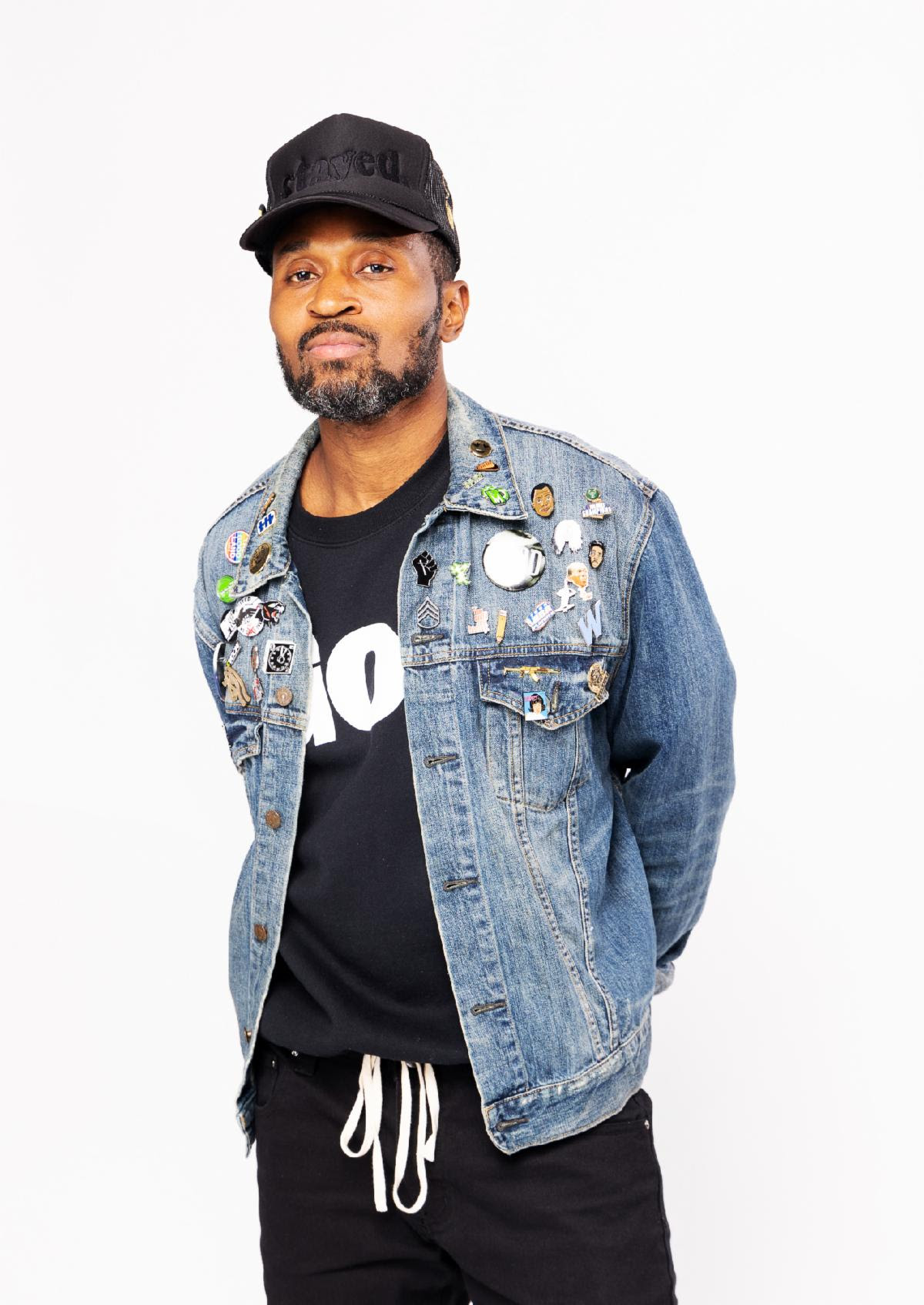
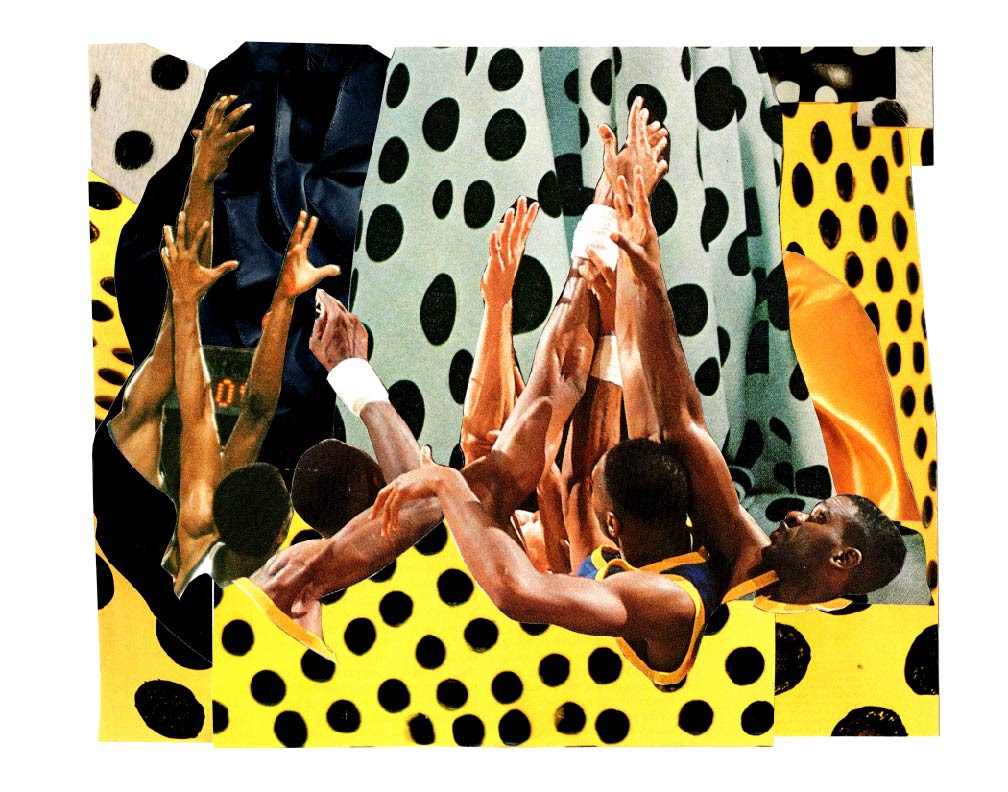
Tay Butler is a multi-disciplinary visual artist based in Houston, TX. He received his BFA in Photography and Digital Media from the University of Houston and completed his Photography MFA at the University of Arkansas. After retiring from the U.S. Army and abandoning a middle-class engineering career to search for purpose, Mr. Butler reignited a rich appreciation for Black history and a deep obsession with the Black archive. Through collage, photography, drawing, video, sound, performance and large-scale installation, Mr. Butler utilizes past histories and imagery to create new understandings of the present while imagining a brighter future.

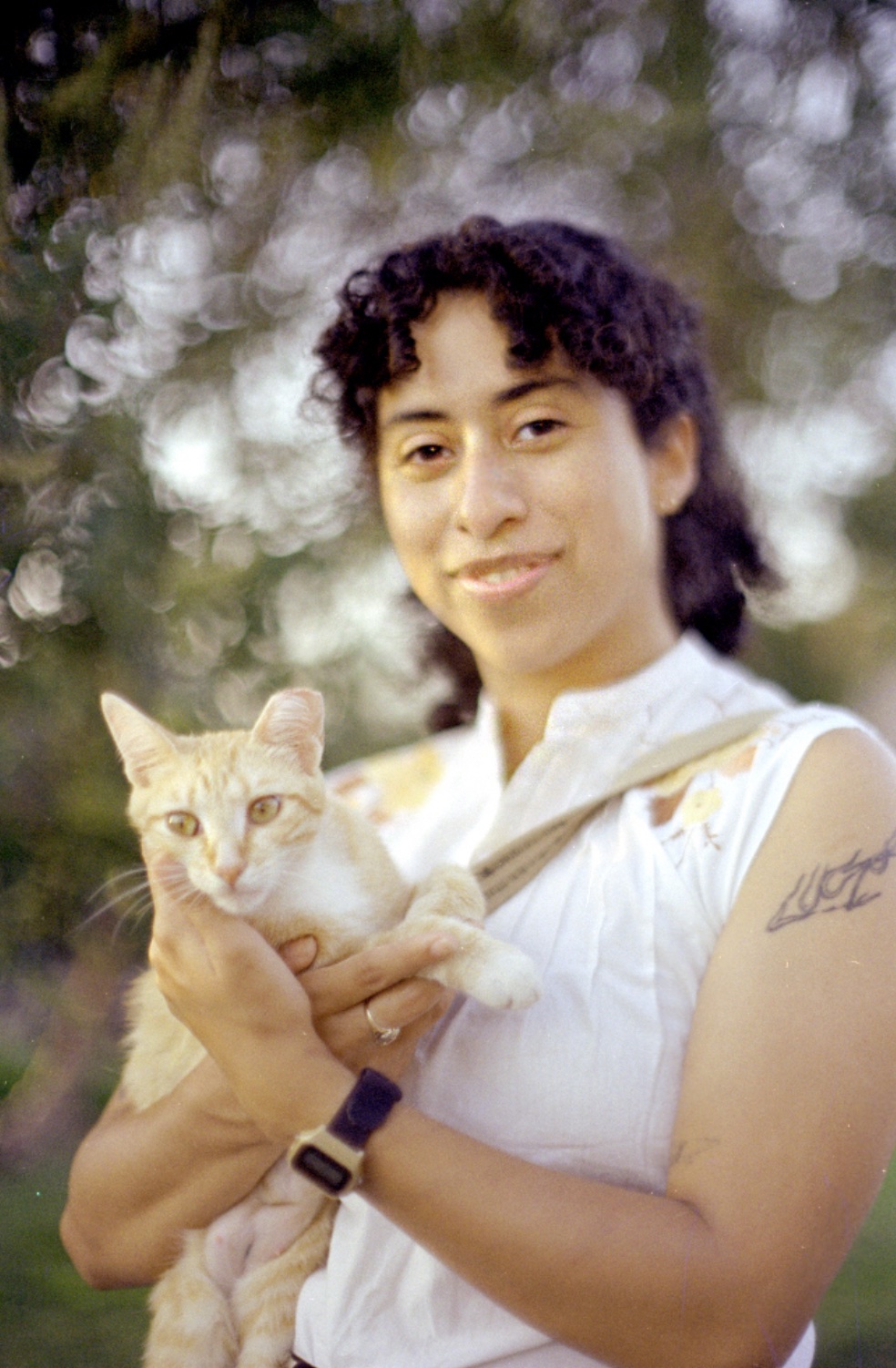
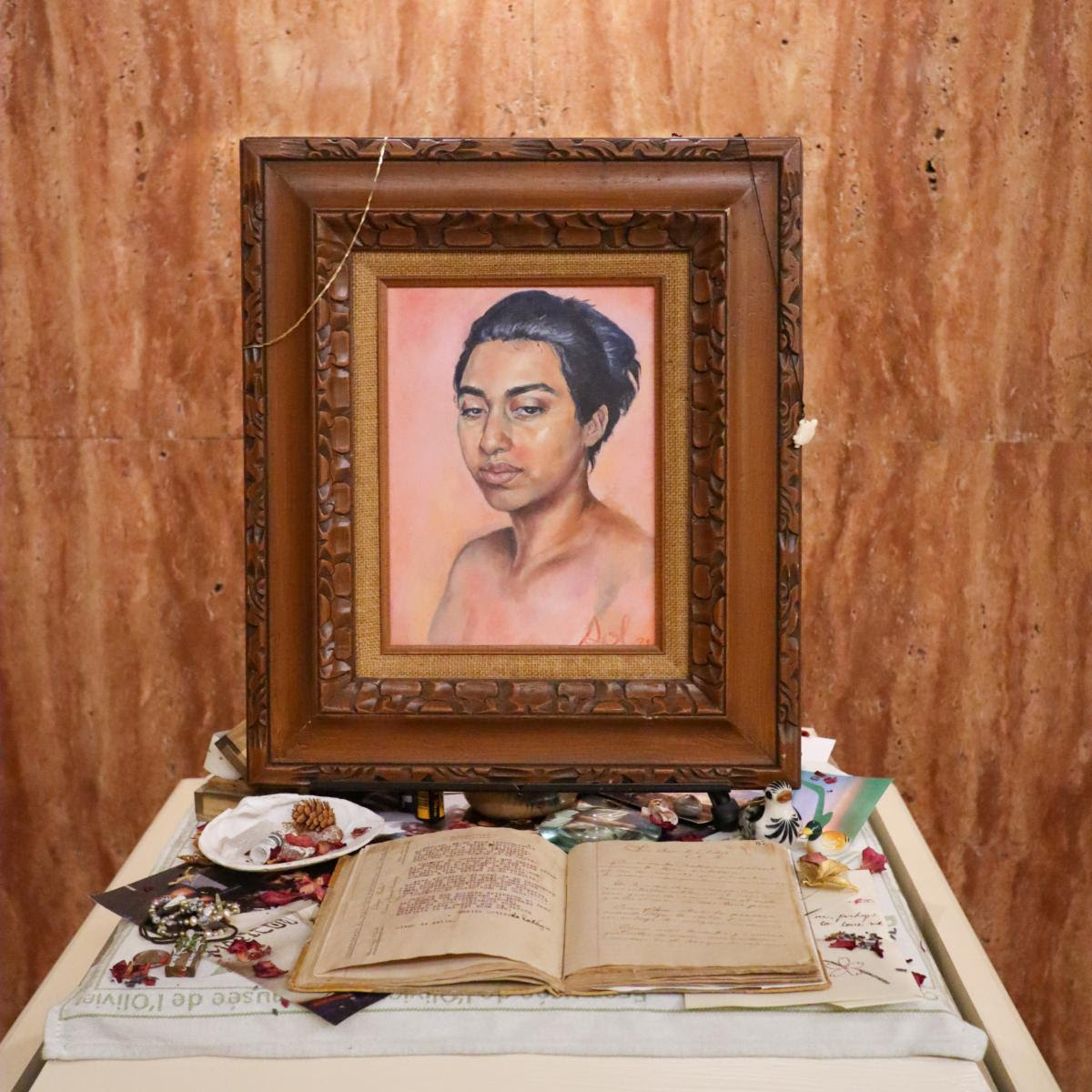
Sol Diaz is a Houston-based visual artist who graduated from the University of Houston – Downtown in 2021. They have exhibited their work at notable venues throughout the city, including Box 13 ArtSpace, HCC’s Wedgespace, Houston City Hall with the Mayor’s Office of Cultural Affairs, Project Row Houses, and Sawyer Yards. They are the recipient of the Summer Studios Residency with Project Row Houses, The Idea Fund Grant with DiverseWorks, and are featured in a collaborative publication by Mujeres Malas and Fifth Wheel Press. In their work, Mx. Diaz explores personal narratives, history, and the poetic relationship between nature and man. Guided by this inspiration, and working from their own relationship to colonization as a first-generation queer person, Mr. Diaz crafts an animist vision of growth in marginal spaces. Their work stands on its own as a quiet, spiritual, and radical act.

Ayanna Jolivet Mccloud views her creative practice and environmental advocacy as forms of stewardship. She creates art about the environment in relation to the African diaspora and examines broader themes around memory, geography, spatial studies, and materiality. Ms. Mccloud has rooted her practice in the Americas, participating in exhibitions and residencies in the U.S., Caribbean, and Latin America. Working at the intersection of advocacy, narrative change, and creativity, Ms. Mccloud develops frameworks for new ways of imagining and advocating for water, nature, and people in greater Houston through the lens of climate resilience and environmental justice. In her leadership at Bayou City Waterkeeper, Ms. Mccloud advances a collaborative vision for water justice in greater Houston through wetland protection, urban water management, flood mitigation, and water quality. Ms. Mccloud is a fourth-generation artist and native Houstonian and is inspired by the people, culture, ecology, and the seemingly banality of Houston and the Gulf Coast.

The Metropolitan Museum of Art Announces Lineup of Summer and Fall 2023 Exhibitions and Programs

The Metropolitan Museum of Art Announces Lineup of Summer and Fall 2023 Exhibitions and Programs

Highlights include a historic exhibition of works by Édouard Manet and Edgar Degas, new contemporary commissions by Nairy Baghramian and Jacolby Satterwhite, and a major exhibition examining the artistic contributions of north and east Africa to the Byzantine Empire

New York (June 8, 2023) —The Metropolitan Museum of Art announced today its upcoming summer and fall exhibitions along with new live arts performances and summer initiatives, including the return of the bike valet program, ongoing date night offerings, and more.

“The stories we tell at The Metropolitan Museum of Art are ever expanding,” said Max Hollein, Marina Kellen French Director of The Met. “Through groundbreaking exhibitions, compelling displays, and powerful performances and programs, this upcoming season is sure to delight, inspire, and engage audiences from near and far.”

Highlights of The Met’s summer exhibitions include: Grounded in Clay: The Spirit of Pueblo Pottery (opening July 14), a presentation of Pueblo Indian pottery and the first community-curated Native American exhibition in the history of The Met; Tree & Serpent: Early Buddhist Art in India, 200 BCE–400 CE (opening July 21), featuring never before publicly exhibited masterpieces that trace the aesthetic impact of the religion on Indian art; Art for the Millions: American Culture and Politics in the 1930s (opening September 7), surveying how artists searched for cultural identity during a decade of political and social upheaval in the United States; The Facade Commission: Nairy Baghramian, Scratching the Back (opening September 7), the fourth in a series of contemporary commissions for The Met’s facade and the artist’s first public installation in New York City; and Picasso: A Cubist Commission in Brooklyn (opening September 14), a focused exhibition dedicated to a captivating, but lesser-known chapter of the artist’s Cubist period. It will bring together for the first time six paintings linked to Picasso’s unrealized decorative commission for the Brooklyn residence of artist, collector, and critic Hamilton Easter Field (1873–1922).

Fall season highlights include: Manet/Degas (opening September 24), the first major exhibition examining one of the most significant artistic dialogues in the genesis of modern art; The Great Hall Commission: Jacolby Satterwhite, A Metta Prayer (opening October 2) an immersive multi-channel video installation and a series of performances that will transform the Museum’s iconic Great Hall; Vertigo of Color: Matisse, Derain, and the Origins of Fauvism (opening October 13), exploring how the artists manipulated and experimented with color to create a new artistic vocabulary; Proof: Maxime Du Camp’s Photographs of the Eastern Mediterranean (opening October 23), the first exhibition to focus on The Met’s rare collection of photographs made by Du Camp in advance of his landmark 1852 book, Egypte, Nubie, Palestine et Syrie; and LineagesKorean Art at The Met (opening November 7), which will celebrate the 25th anniversary of the Museum’s Arts of Korea gallery with a collection of works tracing the history of Korean art.

Additionally, Africa & Byzantium (opening November 19), a major exhibition of nearly 200 works that explores the tradition of Byzantine art and culture in Africa from the 4th through the 15th century and beyond, will be presented at The Met Fifth Avenue through March 3, 2024, and feature many international loans being exhibited in the United States for the first time.

On November 20, 45 galleries dedicated to European Paintings, 1300–1800 will reopen, following the completion of an extensive skylights renovation project that began in 2018. The major reinstallation will highlight fresh narratives and dialogues among more than 700 works of art from the Museum’s world-famous holdings.

The 2023–24 season of MetLiveArts will include music, dance, and theatricalized culinary experiences that will invite deeper connections and make powerful observations about relevant cultural narratives as well as the Museum itself.

Upcoming public programs include Short Films for Short Nights, screenings of early video art accompanied by live music (July 7-9); the grand opening of the 81st Street Studio, a new children’s library and multipurpose active learning center (opening September 9); and the return of MetFest, the Museum’s community-wide block party (October 21).

The Museum also announced a continuing tradition of the summer season: the return of its popular bike valet program, which will be offered on Saturdays, Sundays, and select holidays through Labor Day (September 4). Guests visiting the Museum, regardless of transportation method, have the opportunity to experience The Met’s current blockbuster exhibition program, including Karl Lagerfeld: A Line of Beauty (through July 16), with extended viewing hours until 9 p.m. on Sundays, and Van Gogh’s Cypresses (through August 27).

###

Contact:
Communications@metmuseum.org

Wyoming Arts Council Fellowships Deadline Extended to June 16

Wyoming Arts Council Fellowships Deadline Extended to June 16


Wyoming Arts Council logo

The Wyoming Arts Council is extending the application deadline for all 2024 Fellowships (Visual Arts, Performing Arts, Native Art, and Creative Writing). The application deadline is now June 16. 

Applications are juried by noted artists and professionals in the field who are from outside the state. All fellowship recipients will receive a $5,000 unrestricted award as well as an opportunity to showcase their work in the state. Fellowships are open to Wyoming residents, and are merit-based awards.

The Visual Arts Fellowships are selected based on the artist’s portfolio and honoring work that reflects serious and exceptional investigation. Artists working in any medium may apply. Up to three fellowships may be given each year. Applications must be submitted online through CaFE . The jurors for this year’s Visual Arts Fellowships are Lawrence Diggs and Ginger Porcella.

The Performing Arts Fellowships are given to honor excellence in the artists’ field and are based on appropriate media samples and artist statements. Up to four fellowships may be awarded; two in the category of Music and two in the category of Theatre and Dance. Artists may only apply in one category (Music or Theatre and Dance) and applications must be submitted online through Submittable The juror for this year’s Performing Arts Fellowship in Theatre and Dance is Mathew Roberts and the juror for the Music category is Mark Rabideau.

The Creative Writing Fellowships are awards of merit, based on a writer’s body of work, and honoring Wyoming’s literary artists whose work demonstrates exceptional writing. One fellowship will be awarded in each category of Poetry, Creative Nonfiction, and Fiction, for a total of up to three fellowships. Writers may only submit in one category and applications must be submitted online through Submittable. The jurors for this year’s Creative Writing Fellowships are Ramona Ausubel for Fiction, Juan J. Morales for Poetry, and Katherine E. Standefer for Nonfiction. 

The Native Art Fellowship is based on the artist’s portfolio, honoring the work of Native artists based within Wyoming. Artists working across any artistic discipline or medium (visual, literary, performing, folk & traditional, etc.) may apply. This fellowship is designed to raise the profiles of the highly talented Native artists in Wyoming and celebrate their artistry. Fellowships are open to Wyoming residents, and are merit-based awards. This year’s jurors are Karen Ann Hoffman, a Haudenosaunee Raised Beadwork artist and citizen of the Oneida Nation of Wisconsin and artist Daniel McCoy, of the The Muscogee Nation, who resides in Santa Fe, New Mexico with his family.  Applications must be submitted online through Submittable.

Mister Cartoon, tattooist to the stars, draws on ‘memories and fantasies’ for first solo show

Mister Cartoon, tattooist to the stars, draws on ‘memories and fantasies’ for first solo show

He’s the tattoo artist to the stars, having inked the flesh of Eminem, Snoop Dogg, Christina Aguilera, 50 Cent and so many others. He’s exhibited work in museums and galleries — not to mention murals on public walls — in Paris, London, Tokyo, Bangkok and elsewhere internationally. He’s known for dynamic automotive air brush design. And his limited-edition Nike Air Force 1 sneakers? They sell for upwards of $2,000.

But Mister Cartoon has not yet had a solo exhibition in his hometown of L.A. — or anywhere else — until now.

The artist, a San Pedro native, who’s been integral to the rising popularity of the Chicano art movement over the last 30 years, will debut “Just My Imagination” at Hollywood’s Beyond the Streets and Control Gallery this Saturday. The show includes 20 new paintings and graffiti’d works on paper, as well as an updated, hand-painted mini-sculpture of his signature cat character, Bronson, and one of his vintage custom art cars, “The Gangster Squad.” Beyond the Streets Publishing is also releasing a new book of 290 drawings, over two decades, that traces the evolution of Mister Cartoon’s designs.

On a recent tour of the exhibition as it was being installed, Mister Cartoon — a.k.a. Mark Machado, or “Cartoon,” as he’s often referred to — appeared humbled by the imminent opening, which he says has been “a long time coming.”

“It’s living up to where people think you’re at, because I’ve been in so many exhibitions,” he says. “I want to show people, through my art, what kind of music I’m interested in, my passion for and obsession with cars and automotive, taking people’s tattoos and peeling them off and putting them on the canvas, taking a mural off of a [Chevrolet] Impala and putting it on a canvas. It’s a huge moment, I don’t take it for granted.”

Mister Cartoon's painting.

One of Mister Cartoon’s paintings, “Clown Town,” at Beyond the Streets and Control Gallery.

(Jason Armond/Los Angeles Times)

Roger Gastman, who co-curated the Museum of Contemporary Art’s 2011 “Art in the Streets” exhibition, had included Cartoon in three iterations of his traveling exhibition spotlighting graffiti and street artists, “Beyond the Streets.” The two had been talking about Cartoon doing a solo show for years.

The challenge was time. Cartoon’s popularity in the tattoo community and his commercial success as a graphic designer and in the fashion industry had, in a sense, hampered his ability to move forward as a fine artist — he didn’t have time to take a step back and create the large body of work needed for a solo show.

“He’s been busy,” Gastman says. “He’s one of the most sought-after tattoo artists, sought after as a painter and designer of cars, for commercial work and everything else. Being able to sit down for six months and make paintings is not something that’s been easy for him to do. He’s never made this many paintings [at once] before. For this show, it was: Let’s go for it. Let’s do the big show. Tell the stories that have been in your head forever.”

The exhibition was hatched when, in 2022, Beyond the Streets opened a flagship bricks-and-mortar space on La Brea Avenue along with the adjacent Control Gallery to showcase contemporary art. Gastman sometimes uses the two outlets for related programming, and Cartoon’s exhibition will fill both galleries — “a total takeover,” Gastman says.

These Mister Cartoon's designs are inspired by T-shirts he airbrushed at car shows in the early '90s.

These Mister Cartoon’s designs are inspired by T-shirts he airbrushed at car shows in the early ‘90s.

(Jason Armond / Los Angeles Times)

Cartoon, 54, spent half a year creating art for the show, working in his home studio in the San Fernando Valley that he shares with two of his four children. Though consisting of new work, the show has the feel of a survey exhibition given its scope. It touches on Cartoon’s roots as a graffiti artist, his foray into sign painting, his passion for lowrider custom-car culture and the years, in the early ‘90s, on the road with his creative partner, photographer and director Estevan Oriol, immersed in the hip-hop scene. Not to mention his pivot to tattoo art at the time, a game-changer for his career that elevated his presence as an artist.

Stepping away from the grind of commercial work and clients, he says, “I was able to paint for me and my peers and my family. The freedom has been very special, a time for self-refection: What do I want to say on my platform? Who am I as an artist? How can I take 30 years and put it into a couple of rooms, show my evolution?”

The answer, Cartoon says, was an exhibition he describes as “a collage of my memories and fantasies.”

The show is especially personal. At its heart, it’s about relationships — between Cartoon and his family, friends and tattoo clients throughout the years, but also his relationship to music and cars and art as well as, more generally, humans’ relationships to work and death. Characters appear repeatedly in the paintings, amalgams of figures in Cartoon’s life. His tattoo designs show up on their body parts and appear around the gallery. Vintage cars he’s owned populate the canvases.

Mister Cartoon's work.

This Mister Cartoon painting, on view at Beyond the Streets and Control Gallery, is about his teenage years.

(Jason Armond / Los Angeles Times)

Cars saved Cartoon’s life, he says. Growing up in a working-class family, in the ‘70s and ‘80s, he recalls his parents worked “all the time” at the print shop they owned. “I hung out with the homies on the street,” he says. “We started writing on walls and terrorizing a bit. I saw friends get incarcerated or pass away due to street life, and that definitely pushed me into the car world. It was a way to still be cool with the fellas, but not gangster activities.”

All the work in the show is made with automotive paint and using the technique of airbrush painting. Cartoon tattoos in the black and gray fine-line style developed in prisons in the West and on the streets of East L.A. in the ‘70s. As such, most of his paintings on canvas are rendered in black, white and gray tones. But three paintings in the show — inspired by cars — stand in sharp contrast. Glossy, bursting with color and framed with shimmering, delicate line work, they’re painted on sloping pieces of hand-hammered aluminum that mimic the look of car hoods. The works are especially labor intensive, repeatedly sanded, primed and painted, then sealed. The curved metal and high gloss surface create reflections that lend the works an almost three-dimensional quality.

Mister Cartoon's paintings.

These Mister Cartoon paintings on aluminum mimic the look of car hoods.

(Jason Armond / Los Angeles Times)

Clouds, a recurring theme in Cartoon’s work over the decades, factor in heavily. His cityscapes appear under skies blanketed with stormy or pillowy clouds. Other canvases, filled to the edges with clouds alone, contain hidden faces — “Easter eggs” — in the nooks and shadows.

“When I started traveling, I’d look out the window of an airplane, just looking up at the sky, and they just always seemed so innocent,” Cartoon says of clouds. “They look like paintings to me. I’ve been drawing them since I was a kid. They’re free form and always flowing, moving. It’s that dream state.”

Cartoon’s fantasies in some of the paintings are as vibrant as his memories of real-life experiences — often more so, he says. One painting on aluminum depicts “Mexican Marilyn Monroe — Mariposa — and El Vez,” he says. Bathed in aqua and cobalt, the characters rise out of a ‘57 Chevy Bel Air convertible. The image captures Cartoon’s affection for the “glamorous, noirish” 1940s and 1950s.

“My father grew up then,” he says. “I think I spent a lot of my life fantasizing about living in that era and buying all the cars at the dealership. Go back in my time machine to 1959: ‘Hey, how much for that used ‘57 convertible? $1,200, you say? OK, wrap it up. I’ll take three.’ This is the American dream. In this case, the Mexican American dream.”

Mister Cartoon's work.

Mister Cartoon’s “Under the Streetlamp.”

(Jason Armond / Los Angeles Times)

Cartoon listens to classic soul music from the ‘60s and ‘70s when he paints — hence, the title of the exhibition, from a Temptations song — and music from those eras will play in the background in the galleries.

There will also be a large-scale tattoo station installation on view, filled with Cartoon’s hand-painted signs, an ode to his history in the medium and still-active tattoo shop in Santa Monica.

“This is where my canvas is breathing and walking around,” he says. “It could end up in a plane or in a casket, or get married or go to Austria. The tattoos travel.”

Mister Cartoon.

Mister Cartoon with one of his custom lowrider cars.

(Jason Armond/Los Angeles Times)

Cartoon leans against his 1939 Chevy Master Deluxe parked inside the gallery. It’s glossy midnight blue. It has a broad, proud nose “with the attitude of Al Capone,” he says, and it features a mural of gangsters on both sides and the trunk.

“I’m a storyteller,” Cartoon says. “This show, it’s the story of good times and bad times, the yin and yang of life, positives and negatives, the struggle and the joy and the build of it all.”

In the ‘80s and ‘90s, he adds, he witnessed the collision of emerging hip hop, tattoo culture, street art and street fashion as well as evolving Lowrider car culture and the growing Chicano art movement all of which are storylines in the show.

“I was told back then to find your part. ‘How are you gonna contribute to this cultural movement?’” he says. “I tried breaking, I tried DJ’ing and I decided I can draw better than I can dance. So I better stick with that.”

“Mister Cartoon’s “Just My Imagination”

Where: Beyond the Streets and Control Gallery, 434 N La Brea Ave. L.A.

When: June 10 – July 16, Wed.-Sun. 11 a.m. – 6 p.m. Free

Info: beyondthestreets.com

A new place for public art comes to the Charlestown Navy Yard

A new place for public art comes to the Charlestown Navy Yard

A naval yard is an unexpected place to see public art. That’s exactly why Now + There, an arts organization with the goal of using temporary public art to create change, felt it important to transform an empty lot in the Charlestown Navy Yard into something inspiring. “First of all, it’s an active Navy Yard,” says Kate Gilbert, the executive director of Now + There. “So you have the traces of the industrial complex there, as well as just open, vacant space.”

The federal site, operated by the National Park Service, isn’t far from the Tobin Bridge, which cuts through Charlestown. “And on one side of the bridge, you have one of the largest housing units in a very ethnically, racially, socioeconomically diverse population that historically has not felt comfortable coming over to the Navy Yard,” Gilbert points out.

For the next three years, Now + There, in partnership with the National Park Service and Boston Harbor Now, will be exploring Charlestown Navy Yard’s past, present and future, through a different lens. The new venture, Lot Lab, transforms the empty space by utilizing public art that is meant to facilitate public engagement around a certain theme. “Repair and mend, that’s the theme this year,” Gilbert says. “Repair and mend the space as well as social relations.

It’s a decided departure from Now + There’s previous temporary installations, which have lived across various neighborhoods in Boston. Now, the organization can utilize the Lot Lab to feature and highlight multiple artists making innovative and thought-provoking art that engages the public. Artist Kyle Browne is leading flag-making workshops with Charlestown youth while three inaugural artists — Boston-based Massiel Grullón and Sam Fields and international artists Ghada Amer — all navigate themes of identity and togetherness in their installations, which will be up through October 31.

At Lot Lab in Charlestown, one of the circle of raised flower beds in artist Ghada Amer’s “Women’s Qualities” spells out the word “caring.” (Robin Lubbock/WBUR)

Ghada Amer’s “Women’s Qualities” circles an empty part of the lot. Metal planters, welded into the shapes of letters spell out different attributes, which Amer sourced from surveys asking people what they feel the qualities of women are. “You can see that there are words like ‘resilient,’ ‘strong,’ ‘beautiful.’ It’s more of an idea of a woman who doesn’t exist or if she did, the world wouldn’t like her anyway.” While highlighting these “qualities,” Amer’s work also questions whether there are unrealistic expectations for women. The planters, filled with plants native to New England, are also commentaries on gardening, a form of labor usually associated with womanhood.

Boston native Grullón has painted a little bit of everything, from murals to leather jackets to banners. Her style often alchemizes visual languages from the 1970s with space-age design and graphic shapes. But for the Lot Lab, Grullón had to think horizontally, instead of a vertical approach, to artmaking for her installation “Knotical Waves.” Her canvas is not a wall or a structure — it’s what visitors walk on. ”I learned a lot from being able to do a design installation that large scale on the ground,” Grullón says. “You learn something new every day, you know. And that just helps you grow as an artist.”

Artist Massiel Grullón stands at one end of her ground mural “Knotical Waves” at Lot Lab, near the Charlestown Navy Yard. (Robin Lubbock/WBUR)

Visitors walk on and around the gradated, blue lines that snake along the asphalt, colors that were inspired by Boston Harbor. Others can take photos in an arch made by the lines that jump up onto the side of a shed onsite. Grullón’s piece is having its intended impact. “So the whole installation is meant to be interactive because it kind of leads the viewer to walk around it and also be part of it,” she notes. “My work is very interactive because you can put yourself into it.” There is an additional hope that by following “Knotical Waves,” visitors will bump into each other and perhaps conversations will happen if they do.

For both Grullón and artist Sam Fields, this will be their most large-scale installations to date. Fields, who lectures part-time at The School of the Museum of Fine Arts, is an artist who often works with fiber and fabric to make incisive commentary on the intricacies of women and labor. Nine current and former students of Fields have assisted her in weaving a massive wall hanging called “Stay.” It will be installed in July but for now, visitors can enjoy a preview of the artwork at the Lot Lab. “I was inspired by the older rigging in sailboats,” says Fields. “And so this ‘stay’ is what wraps around the mast and helps hold it up. And it is attached around what is called a ‘mice.’”

Artist Samantha Fields demonstrates the process of splicing nautical rope at Lot Lab near the Charlestown Navy Yard. (Robin Lubbock/WBUR)

As Fields completed more and more research about the rope riggings, she considered the word “stay” and what it means to different groups of people. “What does it mean to stay? What does it mean to stay soft? What does it mean to stay here? What does it mean to stay out?” Fields says. “The piece is responding to the sight of the Navy Yard and its political, racial, colonial history, its economics of rope-making and physical location and the current climate of Charlestown.”

The 360 eyes (a permanent loop at the end of a rope) required to make “Stay” have been a particular site of inspiration for Fields. She and her assistants could simply knot rope together to complete the eyes. But instead, they’re splitting and mending rope together, a process called splicing that Fields found upon further research makes the rope stronger. “I thought the splice is a really beautiful analogy for community building in that a splice has multiple strands that have to come undone and then reconfigure themselves to be woven together.”

Flags created by Charlestown teens and youth for display on a flagpole at Lot Lab. (Robin Lubbock/WBUR)

It’s a harkening back to the general theme of repair and mend that is the guiding light for this year at the Lot Lab. While Field’s work heavily engages the past and Grullón and Amer’s the present, Browne’s flag workshops look toward Charlestown’s future. Charlestown children of varying ages have already produced myriad flags. They flap in the wind, hoisted high on a flagpole. “The flags represent who they want to see as the future of Charlestown,” says Gilbert. Some reference existing flags of countries, like the yellow and blue of the Bahamas. Others invent completely new imagery.

The Lot Lab isn’t a static space. It’ll be activated by future partnerships with Company One Theatre and Illuminus Boston, an organization that centers the use of light-based immersive art. Now + There also plans to respond to the people who engage with the Lab as a site of art making. “Our philosophy around public art is that it evolves in relationship to people’s inputs,” she says. “We encourage people to come tell us what they think. There’s a QR code. We’re going to have public art ambassadors there at least twice a week. And, you know, we want to hear and be responsive and invite people to participate.”

“Altars of Reconciliation” Unites Faith and Culture

“Altars of Reconciliation” Unites Faith and Culture
image

Erin Shaw

Protect Us From Ruin.

Erin Shaw’s Protect Us From Ruin shows photographs of three shadowed women confined within wooden panels like church windows. Each panel is wrapped with colorful bands that both imprison and protect the figures. 

That dichotomy, between protection and captivity, represents the friction between Shaw’s identity as a member of the Chickasaw Nation and a Christian. As long as I can remember, I’ve had one foot in two worlds,” she explains in an accompanying statement. It’s been the work of my life to live in that tension as best I can, understand and reconcile it.”

The artwork is at the Knights of Columbus’s Blessed Michael McGivney Pilgrimage Center at 1 State St., in its exhibition, Altars of Reconciliation,” running now through Aug. 13. 

The traveling exhibition from Christians in the Visual Arts (CIVA) explores the complicated history of Christianity among Native peoples and attempts to unify the contrasting — but not necessarily contradictory — identities of faith and culture. 

Often framed as a Christian vs. Traditionalist’ dichotomy, the real story is not nearly so clear-cut,” reads a plaque at the entrance to the exhibit. Shaw and fellow artists Tony A. Tiger and Bobby C. Martin use the medium of art to express the relationship between religion and ethnicity.

image

Erin Shaw

Everything Belongs IV.

Shaw uses wooden panels cut and arranged in cathedral structures along with exquisitely detailed paintings of naturalistic images. The combination brings together the church and the outside world, to show that holiness can be found in all aspects of life.

image

Erin Shaw

Sacred Unseen.

Many of Shaw’s pieces feature tangles, from the layered lines wrapping around the panels in Protect Us From Ruin, to a bowl full of tightly wrapped balls in All My Sorrows, to a painted circle of woven strips in Sacred Unseen. These knots symbolize the enmeshed identities of Christian Native Peoples, with all the confusion and tension that comes from belonging to two separate categories. But Sacred Unseen suggests that faith is to be found within the tangle, and that the identities are not separate at all, but can be intertwined as one.

image

Tony A. Tiger

Old Ways, New Vision

Tony A. Tiger’s Old Ways, New Vision is one of several prints layering tribal designs over old photographs. The combination of bright colored patterns over the black-and-white figures brings the photographs to life, as if drawing them into the physical world. Tiger has ancestry in the Muscogee Creek, Seminole and Sac and Fox nations, as well as generations of Christianity behind him. Those who employed Christian organizations and churches as a means to end tribalism in North America did so without a true knowledge and faith in its Author,” he says in his artist’s statement. Tiger’s artwork reflects the Christian traditions that align with Native beliefs to create an amalgamation of old and new, and show history in a new light.

image

Bobby C. Martin

Mom.

Bobby C. Martin, a Christian and Mvskoke artist, contributes a series of charcoal portraits against a background of gold leaf. The gold is reminiscent of Renaissance paintings of saints, exalting ordinary men and women to show that holiness is found within them all. Likewise, the black-and-white charcoal recalling everyday mundanities combines with the gold representing the divine to demonstrate divinity within the mundane. In Martin’s artwork, Native people are holy, and Christianity is found embedded within Native communities.

As one might expect from the pilgrimage center of the Knights of Columbus, Altars of Reconciliation” seeks to find peace with Christianity within Indigenous tradition. In doing so, it avoids an examination of the history of violence within colonization that was the context of much of the missionary work that brought Christianity to Native peoples in the first place. But as Indigenous artists, Shaw, Tiger, and Martin encourage viewers to embrace the unity between faith and culture, not to dwell on the atrocities that led to the initial imposition of that faith. Their artwork invites viewers to find worship through art, to consider the tangled threads of identity that make up a person, and to realize that who we are is an amalgamation of different parts. When they all fit together, it can create something beautiful.

Altars of Reconciliation” runs at the Blessed Michael McGivney Pilgrimage Center, Knights of Columbus Museum, 1 State St., through Aug. 13. Admission is free. Visit the center’s website for hours and more information.

Art Industry News: The National Comedy Museum Has Acquired Joan Rivers’s Archive of Jokes + Other Stories

Art Industry News: The National Comedy Museum Has Acquired Joan Rivers’s Archive of Jokes + Other Stories

Art Industry News is a daily digest of the most consequential developments coming out of the art world and art market. Here’s what you need to know on this Friday, June 9.

NEED-TO-READ

Hurvin Anderson’s Dispatches From the Barbershop – The familiar scene of Anderson’s local establishment recurs in the artist’s current exhibition,Hurvin Anderson: Salon Paintings,” at the Hepworth Wakefield in the U.K. “Apart from the home, it is one of the places Black men and women can speak freely,” Anderson said of the place that has inspired a range of canvases that delve into the “sociopolitical context of the shops.” (New York Times)

Artist Chinyee Dies at 94 – The first-generation Chinese-American artist, whose native home of Nanjing, China, and travels around the world with the United Nations influenced her colorful abstract canvases, has died. In 2007, her gallery Alisan Fine Arts organized a 50-year retrospective at the Shanghai Art Museum and two of her works are currently on view at the Fondation Vincent Van Gogh in Arles, France, as part of the traveling group exhibition, “Action, Gesture, Paint: Women in Abstraction, A Global History (1940–70).” (E-mail)

Joan Rivers’s Comedy Trove Heads to Museum – A collection of more than 65,000 typewritten jokes penned by the late comedian will soon be in the collection of the Jamestown, New York-based National Comedy Museum. The cache is in good company, joining collections of works by George Carlin and Carl Reiner. (NYT) 

MOVERS & SHAKERS

Curator of British Pavilion Named – Tarini Malik will serve as the curator of John Akomfrah’s work at the next edition of the Venice Biennale, slated to open in April 2024. Malik has been a curator at London’s Hayward Gallery and Whitechapel Gallery, and said that the exhibition will “draw on the legacies of the work John has made over the past 40 years,” and will both “feel connected to the city of Venice, but also look at the institution of the British Pavilion.” (The Art Newspaper)  

Sukanya Rajaratnam Joins White Cube – The New York-based gallerist will join White Cube in the role of global director of strategic market initiatives this September. Rajaratnam left her position at Mnuchin Gallery after 15 years in January. (ARTnews)

A.I.-Powered Collecting Platform Launches – Docent, billed as the “Spotify for art collecting” is set to launch during Basel art week in Switzerland before going live in Paris, London, and Miami later this Fall. (Press release) 

FOR ARTS SAKE

Tate and Museum of the Home Acquire Rebecca Solomon Work – The two institutions now jointly own the Pre-Raphaelite artist’s canvas, which reflects the gender, race, and religious mores of its time. The central figure was modeled by Jamaican-born Fanny Eaton, who inspired many artists of the period. (Press release)  

Rebecca Solomon, A Young Teacher (1861). Courtesy of Tate and Museum of the Home.

Follow Artnet News on Facebook:
Want to stay ahead of the art world? Subscribe to our newsletter to get the breaking news, eye-opening interviews, and incisive critical takes that drive the conversation forward.