Native

Red Bull Doodle Art World Final Recap

Red Bull Doodle Art World Final Recap
Chiara Croce can still remember when May 27, 2023 was so far off that it seemed like a blank page. But when the artist from Milan put pen to paper and created a doodle for the Red Bull Doodle Art competition in her native Italy, she started down an artistic path that would take her all the way to the World Final in Amsterdam. And after sharing a three-day immersive experience in the Dutch capital with professional artists and fellow creatives from around the globe, May 27 became the day she was named the competition’s global winner for 2023.

Red Bull Doodle Art winner Chiara Croce of Italy poses with her trophy

© Tom Doms / Red Bull Content Pool

Red Bull Doodle Art empowers a new generation of artists. To enter, you simply let your mind wander, put pen to paper, and create a doodle. This year, the competition received more entries than ever – over 120,000 – with expert judges choosing one national winner in each of 62 participating countries.

When Croce was announced the winner for Italy, she knew she had stamped her ticket to the World Final; but there was more to do before she got there.

To prepare for Amsterdam, each national winner created a new doodle that incorporated a signature icon drawn by celebrated artist Burnt Toast (Scott Martin of Canada). In doing so, not only were they able to choose one of five monochromatic designs by Burnt Toast to integrate into their artwork, but they also received feedback and mentorship from him directly. Croce chose a Burnt Toast icon of a character sitting on a bench, weaving it into her own innovative doodle.

Chiara Croce’s winning doodle

© Chiara Croce

When Croce and the other national winners arrived in Amsterdam for the World Final, they dived into a ‘phygital’ experience that combined the physical and digital realms of art. As they got to know each other and shared their varied doodling styles and inspirations, they took a tour of Amsterdam’s iconic sites, heard keynote talks and engaged with the expert global judging panel, which in addition to Burnt Toast included UK artist Mr Doodle (Sam Cox), Dutch entrepreneur and digital creator Anna Nooshin, free running athlete Noa Diorgina of the Netherlands and 2017 Red Bull Doodle Art winner Ayaka Toyomasu of Japan.

Croce and the other finalists also took part in a full-day workshop featuring collaborative doodling and info sessions with experts on creating digital collectibles led by Ledger: that is, minting NFT artwork. And that workshop was no mere exercise, because by the afternoon of day two, the 61 new pieces that the national winners had created with Burnt Toast’s collaboration went live for an open-edition mint on the Nifty Gateway marketplace as the Red Bull Doodle Art NFT collection mentored by Burnt Toast.

Meanwhile, at Amsterdam venue Capital C, a special gallery showcase open to the public was displaying both the original pen-and-paper doodles and the new NFT creations of the national winners. It was there – based on the criteria of creativity, artistic skill and the way the doodles conveyed a love for life – that the judges made their decision. When Croce’s name was announced, she couldn’t believe she had taken the trophy.

Judges Ayaka Toyomasu, Anna Nooshin, Noa Diorgina and Burnt Toast

© Tom Doms / Red Bull Content Pool

“Now that I have won this competition, I feel like I’m on top of the world,” Croce said right after her win in Amsterdam. “My upcoming dreams and goals are represented in my doodle that won the Italian final, and from here I want to become a famous comic artist.”

Now, Chiara’s winning piece, featuring Burnt Toast’s signature pastel color, will live on permanently on blockchain as the winner of Red Bull Doodle Art 2023.

You can explore more about Red Bull Doodle Art and the winning doodle right here.

Part of this story
Red Bull Doodle Art

Where does the mind take you?

View Event Calendar

Upper Mattaponi Indian Tribe hosts 34th annual powwow

Upper Mattaponi Indian Tribe hosts 34th annual powwow

.lee-gift-article .btn {
float: left;
margin-right: 20px;
font-weight: 500;
padding: 8px 20px 8px 15px;
font-size: 16px;
border-radius: 20px;
background-color: var(–lee-blox-masthead-color) !important;
border-color: var(–lee-blox-masthead-color) !important;
}
#lee-gift-btn svg {
height: 22px;
width: 22px;
fill: #fff;
float: left;
margin-right: 10px;
}
.gift-links svg { margin-right: 10px; color: #888; }
.gift-links div { padding: 8px 0; }
.gift-links div:first-child { border-bottom: 1px solid #ddd; margin-top: 5px; }
.gift-links a { color: var(–lee-blox-accent-color); font-weight: 500; cursor: pointer; }
.gift-copy-clip {
display: none;
position: absolute;
background-color: var(–lee-blox-accent-color-secondary);
color: #fff;
padding: 5px 10px;
font-size: 11px;
bottom: 0;
right: 0;
border-radius: 5px;
}
.gift-copy-clip svg { margin-right: 2px; color: #cae5b3; }
@media (max-width: 997px){
.lee-gift-article .btn {
float: none;
margin-left: -10px;
}
}
/*
@media (max-width: 768px){
.lee-gift-article .btn {
margin-left: -25px;
padding: 10px 15px 10px 10px;
font-size: 14px;
}
#lee-gift-btn svg {
height: 20px;
width: 20px;
}
}
*/

Share this article paywall-free.

The tribal grounds in King William County came to life Saturday when hundreds of artists, dancers, community members and tribal leaders gathered as the Upper Mattaponi Indian Tribe kicked off its 34th annual powwow.

A powwow is a traditional event that Native American tribes have hosted for thousands of years.

“It’s a celebration of culture, families, renewing kinships and is an integral part of our culture,” said Keith Anderson, chief of the Nansemond Indian Nation.


052823-rtd-met-spotnews

Pernell Richardson of the Haliwa-Saponi dances in the arena on Saturday during the Upper Mattaponi Indian Tribe’s 34th annual powwow in King William County.


The celebration commenced with a traditional grand entry, in which dancers dressed in traditional regalia and led by veterans and head dancers enter into a round arena to the sound of drumbeats. Once everyone entered the arena, flags including the U.S. flag, POW flag and the Upper Mattaponi tribe’s flag were raised before a traditional honor song and opening prayer were performed.

People are also reading…

It is also customary to honor veterans and of any and all cultures who attend powwows, Anderson said. Veterans of all ages and who served in a variety of wars were invited into the arena and walked in a circle while audience members applauded to honor them for their service.

image

Following the grand entry, the arena was filled with performers of all ages representing several Native American tribes as they competed in dancing and drumming competitions.

Attendees could also stop by dozens of vendors selling Native American clothing, jewelry and art. Along with the vibrant dancing, singing and shopping, attendees could enjoy Native American foods — most notably fry bread, a fried piece of dough that is usually served with sugar or honey or can be enjoyed as a taco.


052823-rtd-met-spotnews

Julia Hunter, a shawl dancer, participates in the Upper Mattaponi Indian Tribe’s powwow on Saturday.


Anderson emphasized that anyone is welcome to attend powwows, no matter their culture or background.

“We love our people and are inclusive,” Anderson said. “I’ve never met someone who attended a powwow that didn’t feel inspired or encouraged that we as people have a lot of similarities instead of differences.”

The powwow continues Sunday on the Upper Mattaponi Tribal Grounds from 11 a.m. to 5 p.m., with the grand entry starting at 1 p.m. Admission is free, and donations are accepted.

Katie Castellani

(804) 649-6122

kcastellani@timesdispatch.com

@Katie_c912 on Twitter

#lee-rev-content { margin:0 -5px; }
#lee-rev-content h3 {
font-family: inherit!important;
font-weight: 700!important;
border-left: 8px solid var(–lee-blox-link-color);
text-indent: 7px;
font-size: 24px!important;
line-height: 24px;
}
#lee-rev-content .rc-provider {
font-family: inherit!important;
}
#lee-rev-content h4 {
line-height: 24px!important;
font-family: “serif-ds”,Times,”Times New Roman”,serif!important;
margin-top: 10px!important;
}
@media (max-width: 991px) {
#lee-rev-content h3 {
font-size: 18px!important;
line-height: 18px;
}
}

Artists work to beautify Central 70 project as CDOT nears full completion of multi-million dollar overhaul

Artists work to beautify Central 70 project as CDOT nears full completion of multi-million dollar overhaul

DENVER — As the Colorado Department of Transportation (CDOT) nears completion of the Central 70 project, some beautification measures are taking place along and above the new tunnel — and the community is taking note.

“They actually did an open call, so they had a bunch of artists apply over a period of time and then they narrowed it down to a handful of artists,” said Alexandrea Pangburn, a local artist selected to paint a mural on a huge generator that sits atop the new I-70 cap.

“I don’t know if you’ve noticed, but anytime you go under a bridge there’s always barn swallows just kind of diving around,” Pangburn said. “You’ll see them every once in a while around here, so I just wanted to bring them to a larger than life scale. I’ve got my design on here and just making sure that my colors are correct.”

Pangburn said she’s proud of her latest work coming to life right in the heart of the city.

“The birds and the florals are all spray painted,” she said. “It’s a lot of practice. I had a lot of good mentors through my time.”

The new art is an effort to beautifyan area of town that has been traditionally underserved.

“And a lot of the board members are community members here,” Pangburn said. “They had a voice in choosing the art that went up. My art specifically caters to the area that I’m painting. Local, native species of flora, fauna. And I really enjoy clean lines against my realism, so I’m just super inspired by those color schemes.”

And that effort is being recognized by those in the community, who feel the art work is jazzing up what would otherwise be considered drab and dull.

“It looks beautiful,” said Juan Casillas who lives just a block away from the mural. “The color. It’s really popping out. It shows that Swansea is changing. It’s getting more beautiful and more clean.”

“I’m painting a huge generator,” Pangburn said. “I think it runs the fans and lights for the tunnel. And then there’s another artist, Bimmer Torres, he’s doing the other one and he starts in a couple weeks. People that have been passing are like, ‘Oh, it looks awesome. Great job. Thank you for doing this.’ So that always feels good as an artist.”


D7 follow up bar 2460x400FINAL.png
The Follow Up
What do you want Denver7 to follow up on? Is there a story, topic or issue you want us to revisit? Let us know with the contact form below.

Remembering renowned Native artist and OSU graduate Benjamin Harjo

Remembering renowned Native artist and OSU graduate Benjamin Harjo

The art world and OSU Cowboy family lost one of its beloved members last weekend with the passing of renowned Native American artist and printmaker Benjamin Harjo Jr. (Seminole/Absentee Shawnee).

Harjo died May 21 at the age of 77.

Graduating from OSU in 1974 with a Fine Art degree, Harjo went on to produce heavily sought-after artwork for over five decades.

As one of our nation’s prominent Native American artists, Harjo never lost sight of his Oklahoma roots, staying based in Oklahoma City throughout his prolific career.

Among his many national accolades and accomplishments, Harjo received the 2002 OSU Distinguished Alumni Award, was named the Red Earth Festival Honored One in 2003, was recognized by the OU Health Center Foundation as an Oklahoma Living Treasure, and was inducted into the OSU Alumni Hall Of Fame in 2012.

Harjo and his wife Barbara served on the Art Advisory Council that established the OSU Museum of Art.

Inspired by his heritage, Harjo helped redefine Native art by forging his own path. His colorful geometric shapes and pen and ink styles are highly recognizable throughout the world and galleries across the nation.

Harjo’s collections can be seen at First Americans Museum (OKC), Red Earth Art Center and Gilcrease Museum (Tulsa), Wheelwright Museum of the American Indian in Sante Fe, and the Smithsonian Institute’s National Museum of the American Indian. His final gallery showing can currently be viewed at Oklahoma Contemporary Arts Center as a part of the Patterns of Knowing collection.

A friend and mentor to many, with his genuine smile and signature beret, Benjamin Harjo, Jr.’s life and legacy will continue to inspire artists and the Native community for years to come.

Street Faire of the Lakes to feature new artists and activities in Detroit Lakes on June 2-3

Street Faire of the Lakes to feature new artists and activities in Detroit Lakes on June 2-3

Detroit Lakes, Minn. (KDLM) – Street Faire of the Lakes is returning to downtown Detroit Lakes on June 2-3 with plenty of new additions to the outdoor arts and crafts festival.

Elle LeMere, marketing manager for the Historic Holmes Theatre, said this year’s faire will feature some new artists and crafts aimed at younger kids.

“Kent Estey is a native American painter and artist and he’s really amazing and he make really beautiful nature scapes,” said LeMere. “And really uses a good value for the color … and he’s really popular in the area and he’s done a lot of other art shows before, but this is the first time he’ll be at Street Faire.”

LaMere also said a custom puzzle maker that designs their work around educating kids will also have a booth at this year’s Faire.

“You Name It Toys, they make homemade puzzles that are meant for kids,” she said. “They both watched their children grow, and learn, and develop, and the noticed, when they played with puzzles, this activity really held their attention, and it involved them and their playtime as well. (The kids) became really excited once they mastered a puzzle and learned while doing that they mastered basic shapes, colors and letters through the process of completing those tasks.”

For parents looking for something, or someone, to distract their kids while they shop, Lemere said, she has that covered too.

“We’re bringing our art class teacher, Kate Stearns, and she’s setting up a booth in the Street Faire and she’s going to be doing rock painting, and it’s free,” said LeMere. “Parents can drop their kids off and have them paint a rock, and hang out with Kate … and the kids can do a free fun craft and take it home with them.”

She also said the Street Dance will be back this year for the first time since 2019. This year’s concert will feature the rock band, Get Over It, who play classic rock and country from the 1970s to today. The concert will get underway at 9 p.m. on June 2 at the Eagle’s Beer Garden. The cost is $5 and the show is 21+.

New York Mills Cultural Center hosts annual ‘Celebrating Cultures’

New York Mills Cultural Center hosts annual ‘Celebrating Cultures’

New York Mills Regional Cultural Center will present “Celebrating Cultures,” an annual community art and cultural exchange from 4-7 p.m., on Wednesday, May 31 at the New York Mills Sculpture Park/Barn, which is located just of U.S. Highway 10.

“Last year, we had it out at a sculpture park,” said Cheryl Bannes, New York Mills Cultural Center artistic director. “We had about 100, 150 people show up. We had dancers and drummers from White Earth.”

Celebrate the cultures of the region with this public community event hosted by the Cultural Center and Niijii Radio, which is an independent broadcasting radio station to the people of the White Earth Indian Reservation in Callaway.

“We had a number of dancers from White Earth, which was really fabulous. it is something everyone needs to come out and see and then we had a Finnish display from Finn Creek (Open Air Museum),” Bannes said.

This year is the third annual event held in partnership with Niijii Radio. Niijii Radio will once again work with partners to share Native American dancing, drumming and storytelling, as well as a variety of indigenous artists and makers.

ADVERTISEMENT

“We have so much going on,” Bannes said. “There is something for everyone. There’s food, there are demonstrations by artists. There’s art people can do. There’s art that they can purchase.”

“Celebrating Cultures” event presented by New York Mills Regional Cultural Center.

Contributed / Cheryl Bannes

At this year’s event, organizers are opening the event up to vendors to sell their goods. Vendors who are selling goods are asked to pay a booth fee of $25 (and keep 100% of their own profits). Artists demonstrating or sharing practices do not pay any fees.

“As you know, the New York Mills area has a strong Finnish heritage. But it also is historically, Ojibwe lands,” Bannes said. “And there are there’s a lot of history in this area that isn’t being acknowledged perhaps as best as it could be. “

Ideas for participation in “Celebrating Cultures” include art activities for children and adults, artist/maker demonstrations, cultural exchange sharing presentations, food booths/trucks and any creative way to share and celebrate a variety of cultures, organizers of the event stated.

“What we’ve found is that a number of people living here in this part of Minnesota have not had the opportunity to go to perhaps a powwow or see the Native American regalia and understand the dance and the drumming,” Bannes said.

Indigenous art and craft vendor or demonstration at “Celebrating Cultures.”

Contributed / Cheryl Bannes

In the case of extreme/inclement weather on the day of the planned event, New York Mills Cultural Center officials are planning on a rain date of June 2.

“This was a great way for us to be able to bring everyone together to create an atmosphere of appreciation and understanding and the dancers and drummers from White Earth are wonderful in explaining what the dances are for or the meaning or the history of each of the dances,” she said.

Bannes said organizers of the event have invited people of many cultures over the years and just wait to see who shows up sometimes.

ADVERTISEMENT

“This year, one of the things that we’re getting is an Aztec dance troupe coming up from Minneapolis. We’re very excited about that,” Bannes said.

Those with questions about the event are encouraged to contact the New York Mills Cultural Center at 218-385-3339 or

info@kulcher.org

.

“The first couple of years of the event, we were really stifled a little bit by COVID. And so we’re growing this to be an all-inclusive, welcoming event,” Bannes said. “We want everyone to come and feel welcome and anybody who would like to join in should give us a call.”

Event activities and performances:

  • Performances:
    • Aztec Dance Performance at 4 p.m.: The Kalpulli Yaocenoxtli traditional Mexica-Nahua (Aztec) cultural group is dedicated to preserving and practicing the traditions of the Mexica-Nahua culture through dance, drum, song and philosophy classes for all. They are based in St. Paul.
    • Buffalo River Dance Troupe at 5 p.m.: Ojibwe dancing, drumming and storytelling.
    • Open Mic from 6-7 p..m.: Share a cultural story, song, poem, etc. with fellow attendees. Keep your sharing to 5 minutes or less to allow everyone a chance to share.
  • Activities/Learnings/Demonstrations:
    • Finland in a Suitcase from 4-5:30 p.m.: Join Amy & Adam Tervola Hultberg of Finn Creek Open Air Museum to explore the Finnish culture.
    • Improv for Kids with visiting artist Valerie David from 4:30-6 p.m.: Learn some skills and then try them out during Open Mic.
    • Roots & Wings Forest School: Sharing creative nature activities for kids in celebration of outdoor culture.
    • Precious Plastics: Reuse, reduce and recycle in style with the Otter Tail County Solid Waste Department by creating repurposed plastic art creations from discarded plastic items.
    • Soccer: Learn some soccer skills from Perham’s Latino-Community soccer team, FC Perham.
    • Art Activities: Art activities for all ages with Cultural Center staff/board/volunteers.
  • Indigenous Artists and Makers: A variety of Indigenous artists and makers will share their creative practices.
    • Regalia Viewing: Teresa Rojas will bring different regalia for people to see the intricacies and details.
    • Dream Catcher Demonstration: Tonya Strom will demonstrate/share about dream catchers.
    • Chokers/Bracelets: Char Ellis will create chokers and bracelets.
    • Quill Work: Dana Trickey will be selling quill work art pieces.
  • Food & Drinks:
    • Native Harvest: Offering wild rice hot dish and sumac tea for purchase.
    • Taqueria Escobar Food Truck: Local family-owned Taqueria from Pelican Rapids with delicious Mexican food.
    • Lions Bar: New York Mills Lions Club will serve beer.

FRANK LEE is the features writer for the Wadena Pioneer Journal. He may be reached at 218-631-6470 or at

flee@wadenapj.com

.

I cover the community of Wadena, Minn., and write features stories for the Wadena Pioneer Journal. The weekly newspaper is owned by Forum Communications Co.

They Sell Seashells (With Gems) From the Seashore

They Sell Seashells (With Gems) From the Seashore
image

Designers from Glenn Spiro to Silvia Furmanovich are turning shells into fine jewelry.

On a recent vacation in Careyes, Mexico, Sara Beltrán scoured the beach looking for beautiful seashells for her Dezso jewelry line. And finding an unusual one, she thinks, is like discovering a great diamond.

“Amazing shells are hard to find,” Ms. Beltrán, a New York-based designer, said. “You can’t buy them or create them; it’s a gift from Mother Nature.”

Ms. Beltrán is among a group of designers who are mixing humble mollusk shells with gemstones, along with gold and other precious metals, in upscale contemporary jewelry.

Another such designer is Glenn Spiro, who buys Victorian-era objects decorated with shells from antiques dealers, then removes those shells for use in new designs. For example, one of his earring designs featured large snail shells, each shell enhanced with a central 4.5-carat diamond surrounded by more than 150 tiny diamonds, while another design starred greenish scaphopod shells, also called tusk shells, each scaphopod encrusted with eight pear-shape diamonds totaling almost four carats and small white diamonds totaling almost a half-carat. Prices start at $20,000.

Even the French house Boucheron embellished a brown and white marbled seashell, conus marmoreus, with 286 diamonds totaling 6.54 carats for a brooch in its Carte Blanche high jewelry collection, a 26-piece set called Ailleurs, unveiled in Paris in July 2022.

“It is the goal of high jewelry to arouse emotion and poetry, and it is our duty to question what is considered precious,” the house’s creative director, Claire Choisne, wrote in an email. “If someone understands the message, and the creativity, she or he will fall in love with this kind of piece, just like clients of contemporary art would.”

She said that while most people associate “precious” with large, shiny diamonds and other gems, for her, it’s the opposite. Her high jewelry collections have featured bamboo, marble and sand: “I wanted to show that precious materials are also found in nature, as I think it is the best designer in the world.”

While many might consider such approaches modern or novel, this method of working with shells is not new. These designers are actually bringing shells back to their roots: For most of history, shells were highly valued, and even used as currency. Cowrie shells, for instance, were used as currency in West Africa as early as the 14th century, and later, they were used for trading among African, Asian and European nations. For centuries, Native Americans shaped clam and conch shells into beads, some of which were added to ceremonial garments and accessories, while others were used as a currency known as wampum.

To create the Jack Coquillage Brooch, Boucheron’s designers embellished a conus marmoreus shell with diamonds and white gold.

In the early 1940s, shell jewelry evolved, when Fulco di Verdura, the Italian aristocrat turned New York jewelry designer, fashioned lion’s paw and scallop shells into glamorous statement pieces worn by customers like the Standard Oil heiress Millicent Rogers and the actress Paulette Goddard. The designer purchased some of those shells from the American Museum of Natural History in New York, and had them set with gold, diamonds and sapphires.

The New York jeweler Seaman Schepps also created his signature turbo shell earrings in the 1940s. The style originated when a client asked him to turn a pair of turbo shells from the Indian Ocean into earrings. The earrings, adorned with diamonds and other gems, continue to be a best seller for the brand, which is now owned by Anthony Hopenhajm.

“There is a lot of great historical jewelry,” he said. “But there are very few designs like our turbo shell earrings that are still worn today by both women in their 20s and their grandmothers.”

A shell’s organic beauty seems to attract everyone from the beachcombers who pluck them from the shore to jewelers, who see in them myriad ways to bring texture, pattern and volume to their designs.

As sea creatures secrete layers of calcium carbonate to form hard shells to protect their soft bodies, the uniform patterns and varying hues that make shells so captivating are created in the process, said Jessica Goodheart, assistant curator of mollusca at the American Museum of Natural History in New York.

“The coiled patterns are shaped when the snail’s body rotates during torsion,” Dr. Goodheart said, “and the varying colors come from chemicals generated either internally or as the result of something absorbed in the diet.” When the shells are discarded, they eventually wash up on the shore.

Many people associate shells with casual jewelry styles, like the puka shell necklaces of the 1970s and the cowrie shells of the 1990s. But today, as designers look for more unusual and organic elements, shells have come to the forefront again.

The organic origins of shells are what attracted Claudia Ortega, an interior designer based in Mexico City, to Ms. Beltrán’s jewelry.

Sara Beltrán, the designer behind the Dezso jewelry line. “The shells remind me of the sea, of the smells, the sounds and peacefulness,” she said.Tony Cenicola/The New York Times
Two pairs of earrings Ms. Beltrán designed: left, shells topped with polki diamonds set in 18-karat rose gold; right, shells that the designer handpicked in Sag Harbor, N.Y., set with marquise diamonds.Tony Cenicola/The New York Times

“Sara is one of the jewelers who is breaking new ground and showing us that jewelry doesn’t have to be so rigid and made in just gold and gemstones,” said Ms. Ortega, who has been collecting Ms. Beltrán’s work for more than a decade. “Her pieces are fun and contemplative, and they aren’t a show of money or value, but they say so much more about the person who wears them.”

For Ms. Beltrán, the value of her designs isn’t in the worth of their gold or gems. “The shells remind me of the sea, of the smells, the sounds and peacefulness,” she said.

She brings the shells she’s gathered — on the beach, or through visits to a shell dealer in Paris — to Jaipur, India, where she designs pieces, inspired by the symmetry of Art Deco style, and then has them made by craftspeople with whom she has worked for years.

“I lay out all the shells and pair them with the gemstones that will enhance their colors and patterns,” Ms. Beltrán said. For example, she topped each of her white conical shell earrings with a one-carat polki diamond set in 18-karat rose gold; paired a large orange clam shell with a three-carat Madeira citrine for a necklace; and adorned an orange spotted mitra stictica shell with a three-carat emerald-cut citrine that had been set in 18-karat rose gold. Prices for her shell designs range from $1,700 to $20,000, depending on the gems.

A pair of earrings by the Brazilian designer Silvia Furmanovich. Over the past two decades, Ms. Furmanovich has looked to shells and other unusual materials for inspiration.

For the past 20 years, the Brazilian designer Silvia Furmanovich has also used natural elements in her colorful jewelry. Those elements include bamboo, wood and shells, and, she said, she continues to look for other unusual materials and artisan-made crafts to incorporate into her designs.

On a 2019 trip to Kyoto, Japan, for instance, she purchased some antique clam shells that had been painted in gold leaf with scenes from Japanese literature for use in a matching game called Kai-awase that was popular during the Edo period (1603-1868). She turned those shells into earrings set with gold and diamonds, some accented with emeralds, others with fire opals.

And during a trip, to Sedona, Ariz., she met some American Indian artists who specialized in inlaying gemstones in shells, and enlisted their skills in creating a new capsule collection of jewelry, inspired by their traditional motifs. Among the new pieces is a set of lavender shell earrings with amethysts and diamonds, accented with mosaics made of abalone, mother-of-pearl and turquoise, crafted by those artisans whom she met in Arizona.

Ms. Furmanovich said she is touched by the beauty of shells: “They remind me of the spirit of the sea, summer, nature and joy.”

Homage to the (town) square: Welcome to Buffalo AKG

Homage to the (town) square: Welcome to Buffalo AKG
click to enlarge The new Jeffrey E. Gundlach Building, seen here in the foreground of a rendering, expands the Buffalo AKG's exhibition space to more than 50,000 square feet, and is part of the museum's $230 million expansion. - IMAGE COURTESY THE BUFFALO AKG ART MUSEUM

  • IMAGE COURTESY THE BUFFALO AKG ART MUSEUM
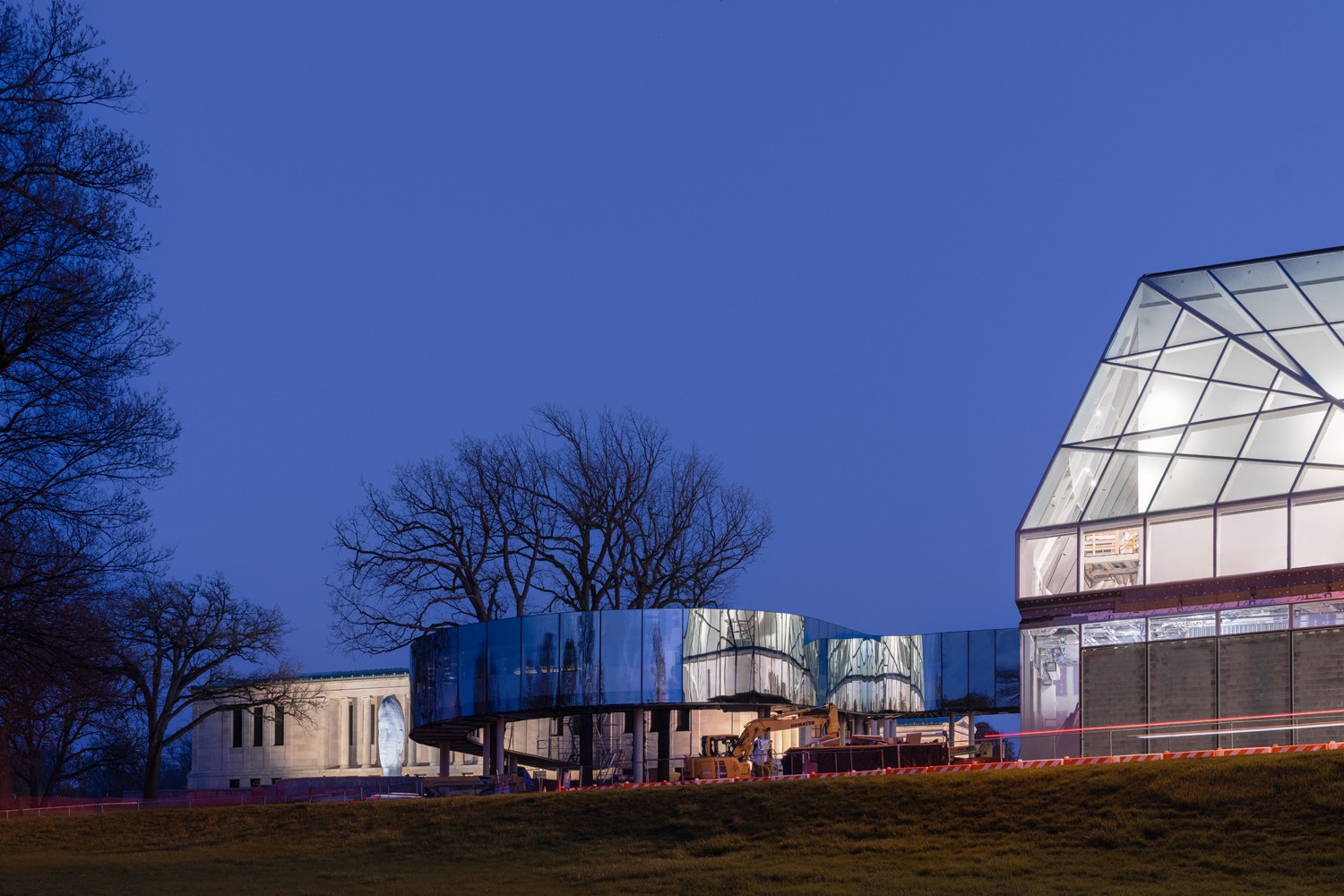
  • The new Jeffrey E. Gundlach Building, seen here in the foreground of a rendering, expands the Buffalo AKG’s exhibition space to more than 50,000 square feet, and is part of the museum’s $230 million expansion.

Known until recently as the Albright-Knox Art Gallery, Buffalo’s most major art museum was founded during the Civil War in 1862. Today, it’s the 6th oldest public art institution in the United States and is on the cutting edge of contemporary museum culture.

Poised to reopen on June 12 after a four-year, $230 million expansion and renovation, the freshly dubbed Buffalo AKG Art Museum now houses more than 50,000 square feet of state-of-the-art exhibition space, five classroom studios, a public gathering space with a major sculptural commission, underground parking, and more than half an acre of public green space at its 1285 Elmwood Ave. campus.

And all that extra room means the ability to pull work out from the vaults into the gallery lights.

AKG Director Janne Sirén said in years past, the museum was able to show roughly 130 works from the collection at any given time.

click to enlarge Household-name contemporary artists fill the collection at AKG—and post-expansion, more of the work can be displayed. Pictured is a selection of that work in the historic and newly renovated Wilmers Building. - PHOTO COURTESY THE BUFFALO AKG ART MUSEUM

  • PHOTO COURTESY THE BUFFALO AKG ART MUSEUM
  • Household-name contemporary artists fill the collection at AKG—and post-expansion, more of the work can be displayed. Pictured is a selection of that work in the historic and newly renovated Wilmers Building.

“Now when our visitors come on opening day and thereafter, they will be able to see more than 400 works,” he said.

Everything about the museum’s new design, additions and recent acquisitions serves a central concern that preoccupies museums and major galleries as they shift fully into the 21st century: inclusion.

Entertaining largely white, well-off people who politely encounter high culture, museums have long needed to become open, interactive creative hubs and expand their collections of artistic voices to reflect a wider range of human experiences. The only alternative is to fade from relevance.

Now, at 161 years old, Buffalo AKG is poised to grow with generations far into the future.

INCREASING VISIBILITY AND ACCESS

A key word for the museum’s new identity is “porous.”

Major characteristics of the new building and renovations to the older ones promote visual communication between the museum’s interior and the outside world.

click to enlarge Old meets new: The Gundlach Building at right, with a skyway that connects to the museum's renovated older buildings. - PHOTO COURTESY THE BUFFALO AKG ART MUSEUM

  • PHOTO COURTESY THE BUFFALO AKG ART MUSEUM
  • Old meets new: The Gundlach Building at right, with a skyway that connects to the museum’s renovated older buildings.

“Effectively, it’s a way of pulling down that barrier that separates the museum from what lies beyond the museum,” Sirén said.

Designed by Shohei Shigematsu of the New York firm Office of Metropolitan Architecture (OMA) and New York firm Cooper Robertson, the new Jeffrey E. Gundlach Building is a glittering, glass-walled tower wrapped around a central, walled exhibition space that will keep the art safe from sunlight exposure. But visitors inside the halls and common spaces of the structure–as well as the serpentine glass skyway that connects the buildings–will be visible from street level, and they’ll be able to see the campus and bustling streets from inside the building. Some indoor sculptures will also be visible through the glass façade.

“Art museums have historically been somewhat, let’s say, inaccessible—even just visually, castles on a hill,” Sirén said. “They’ve protruded this sense of inaccessibility, perhaps even elitism. So the challenge we gave to our architect and his team was a building that communicates with its public, with the surrounding environment, with the city, with the community.”

An entire wing of the museum will be free to visitors year-round. Museum leadership hopes the renovated Seymour H. Knox Building—and especially its new, central Town Square space—will be used by the public as a place to rest, eat lunch, and socialize.

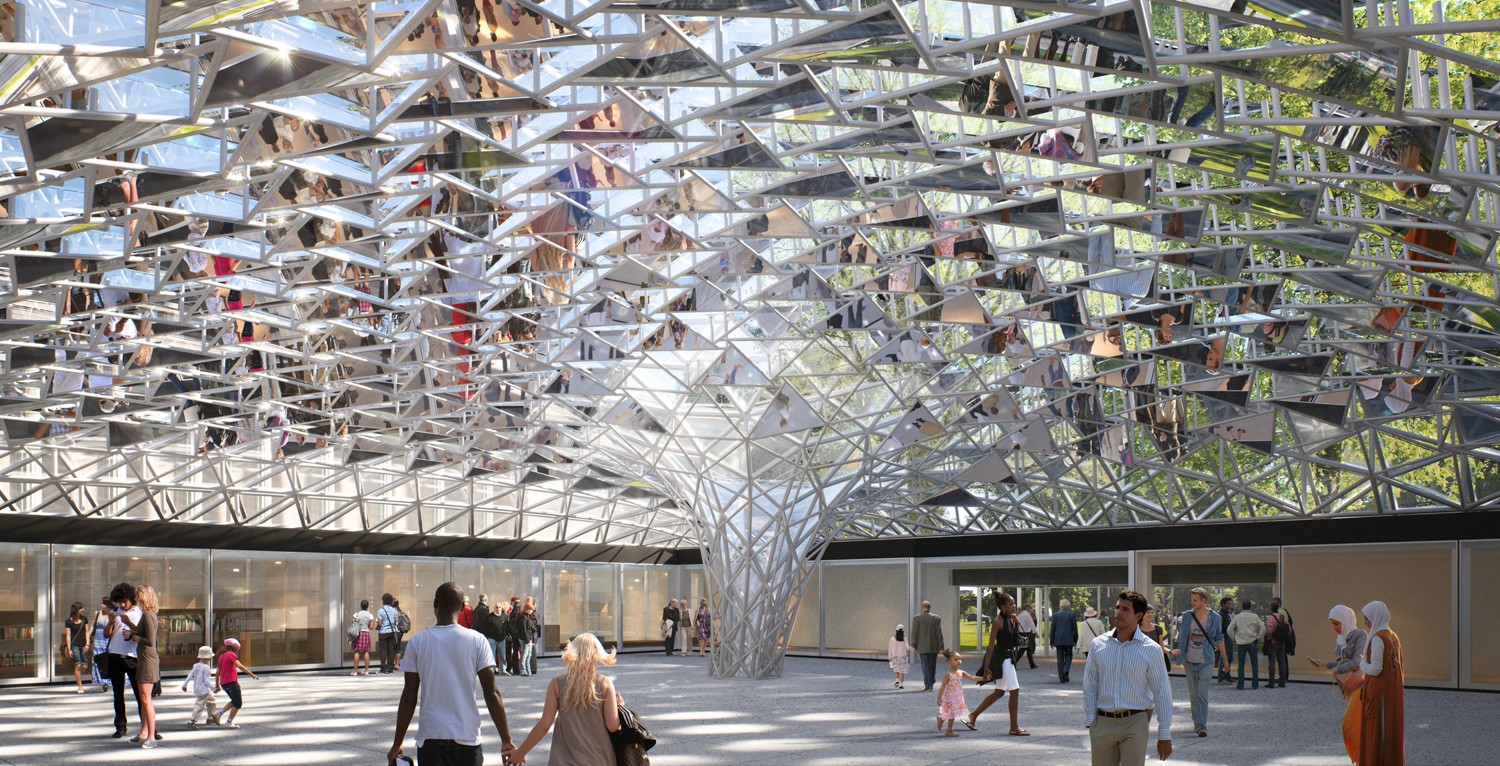
Major structural changes to the Town Square’s ceiling, floors and walls were required to convert the 6,000-square-foot center from an outdoor courtyard and sculpture garden into a weather-tight room that would support the Knox building’s anchor artwork.

click to enlarge

  • IMAGE COURTESY THE BUFFALO AKG ART MUSEUM
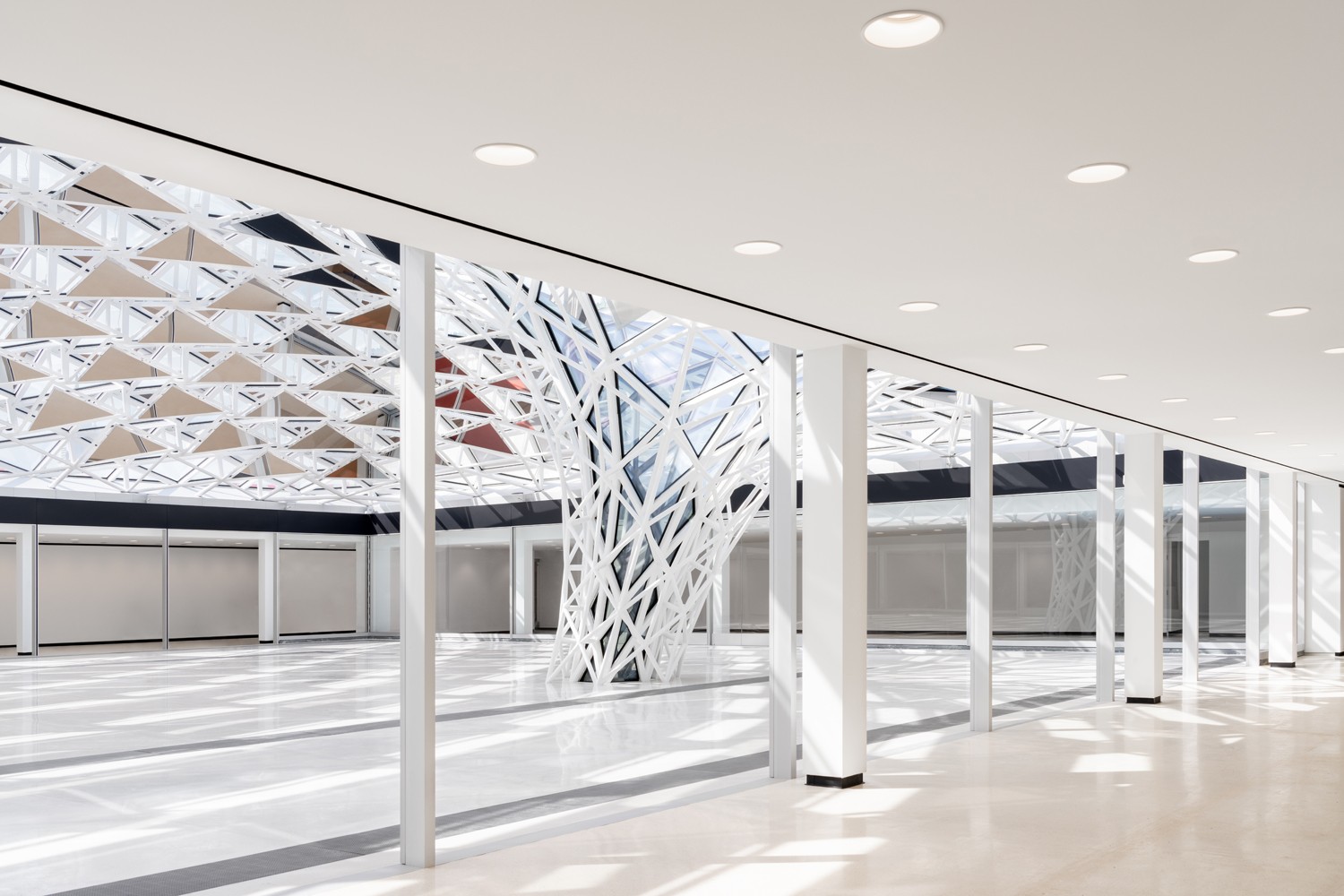
  • “Common Sky” is the anchor artwork in the renovated Knox Building. Comprising the ceiling and funneling to the floor of the Town Square space, the artwork creates an indoor-outdoor tension.

That work, “Common Sky,” is a several-ton, site-specific sculpture designed by renowned Icelandic-Danish installation artist Olafur Eliasson and Sebastian Behmann of Studio Other Spaces, and it’s in line with the AKG’s new transparent aesthetic. Heavy as it is, the work seems to float above the square—where performances, readings, and other events will be presented.

Overhead, dozens of mirrored and clear glass triangles serve as both reflections of the activity below and windows to the sky. Together, the panels funnel into a hollow column, also made of glass, reaching the floor. The sculpture doubles as a memorial to the apple tree that stood in the courtyard for decades. Its hollow, glass trunk (and drainage system under the floor), will bring the sky down “into” the space as it rains or snows.

“It allows us to be close to the elements even though the space is enclosed,” Sirén said.

click to enlarge

  • IMAGE COURTESY THE BUFFALO AKG ART MUSEUM
  • A rendering of “Common Sky” in the new Town Square space of the renovated Knox Building.

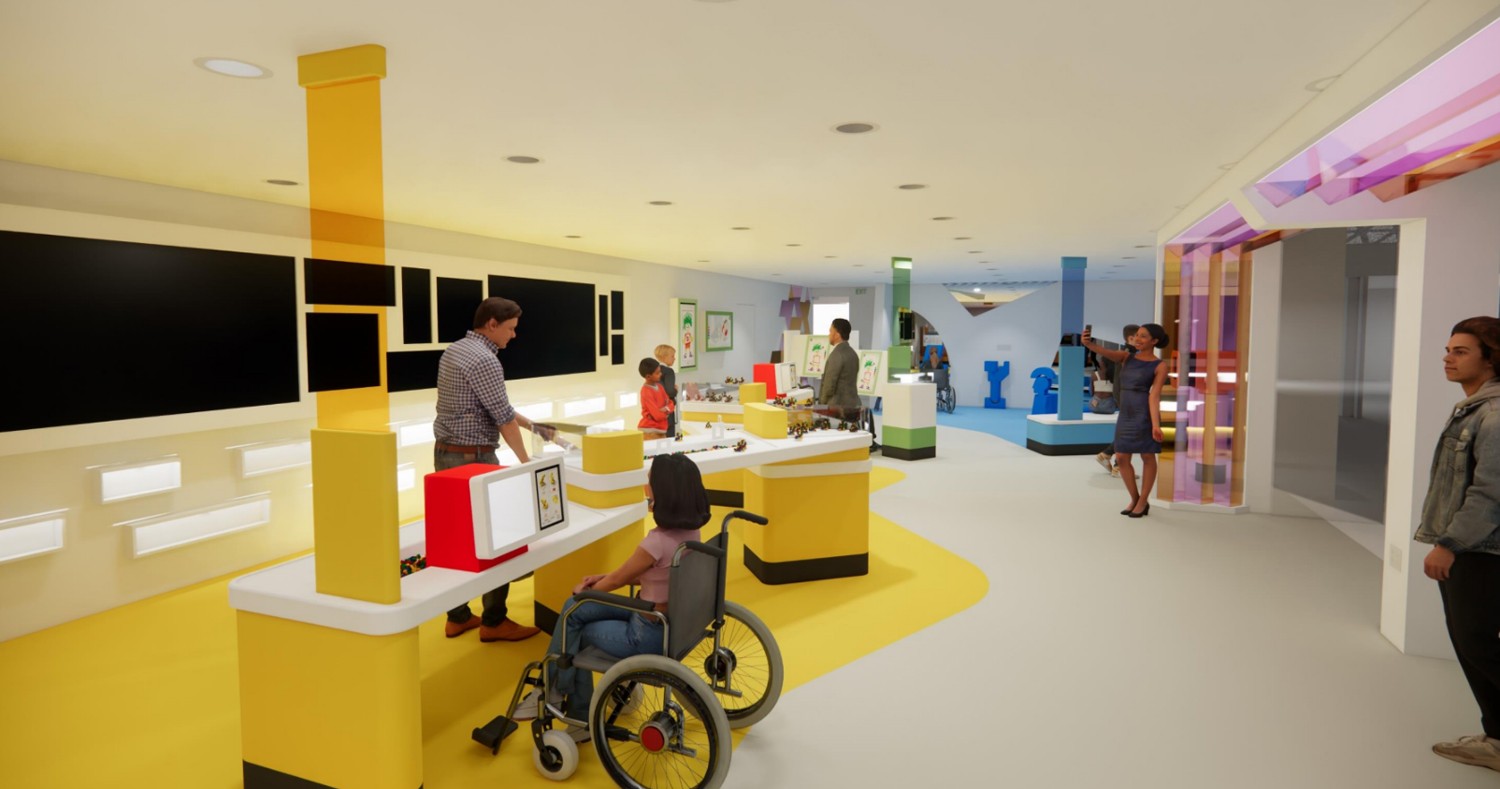
The Town Square is flanked by a cafe called Cornelia—named for Cornelia Bentley Sage Quinton, the museum’s second director and the first woman director of a major art museum in the United States—and the Creative Commons, an accessible, multi-generational learning space that’s the result of the first ever philanthropic partnership between the LEGO Foundation and a fine art museum.

“That’s a space where children of all ages, whether they are one or 90, can engage in various different types of activities and learn through the act of play,” Sirén said.

The Creative Commons will host hands-on creative learning opportunities and connections with museum collections. Each of the five new classroom studios has a specific programming focus, including a studio for children and their caregivers, and studios equipped with tools for making with different media.

click to enlarge A rendering of the Creative Commons, created in partnership with the LEGO Foundation, at the renovated Knox Building at Buffalo AKG. - IMAGE COURTESY THE BUFFALO AKG ART MUSEUM

  • IMAGE COURTESY THE BUFFALO AKG ART MUSEUM
  • A rendering of the Creative Commons, created in partnership with the LEGO Foundation, at the renovated Knox Building at Buffalo AKG.

The museum’s programming features inclusive engagement considerations, such as the multi sensory tours for people who are blind or have low vision, tours in partnership with Alzheimer’s Association of WNY, and an access program to support under-resourced groups and organizations working with people with disabilities.

REPRESENTATION IN THE COLLECTION AND PROGRAMMING

For any art lover, a stroll through the museum’s halls will yield an unending sequence of excited recognition. The walls are lined with important contemporary masterworks seemingly plucked from a survey of contemporary Western Art textbook, and more often than not they are the actual paintings, sculptures, and assemblages used in the textbooks as iconic representatives of an art genre or movement.

That includes Paul Gauguin’s “Yellow Christ,” and masterworks by Jackson Pollock, Mark Rothko, Andy Warhol, Clifford Still—too many cannon artists fill the collection to do it justice in a line or two.

The AKG has recently begun collecting more art from historically underrepresented demographics, with an emphasis on work made by living artists of color. Notably, the museum was early in acquiring art by African Americans—including sculptor Richard Hunt and painter Horace Pippin—while they were working artists in the 1940s and ’50s. But it was also guilty of the same institutional biases that have shaped museum collections for generations.

“What was on our walls was primarily by white men in the past,” Sirén said. “And as we look at the art world of today, it is not solely populated by white men—however, revolutionary and radical they may have been, or might still be in some instances—they are women artists, artists representing different ethnic groups, different nationalities, different linguistic groups, different sexual orientations. All of these artists are in the mix of our work today.”

click to enlarge

  • PHOTO COURTESY THE BUFFALO AKG ART MUSEUM
  • Installation view of Lap-See Sam’s “Dreamers’ Quay,” on display at Buffalo AKG.

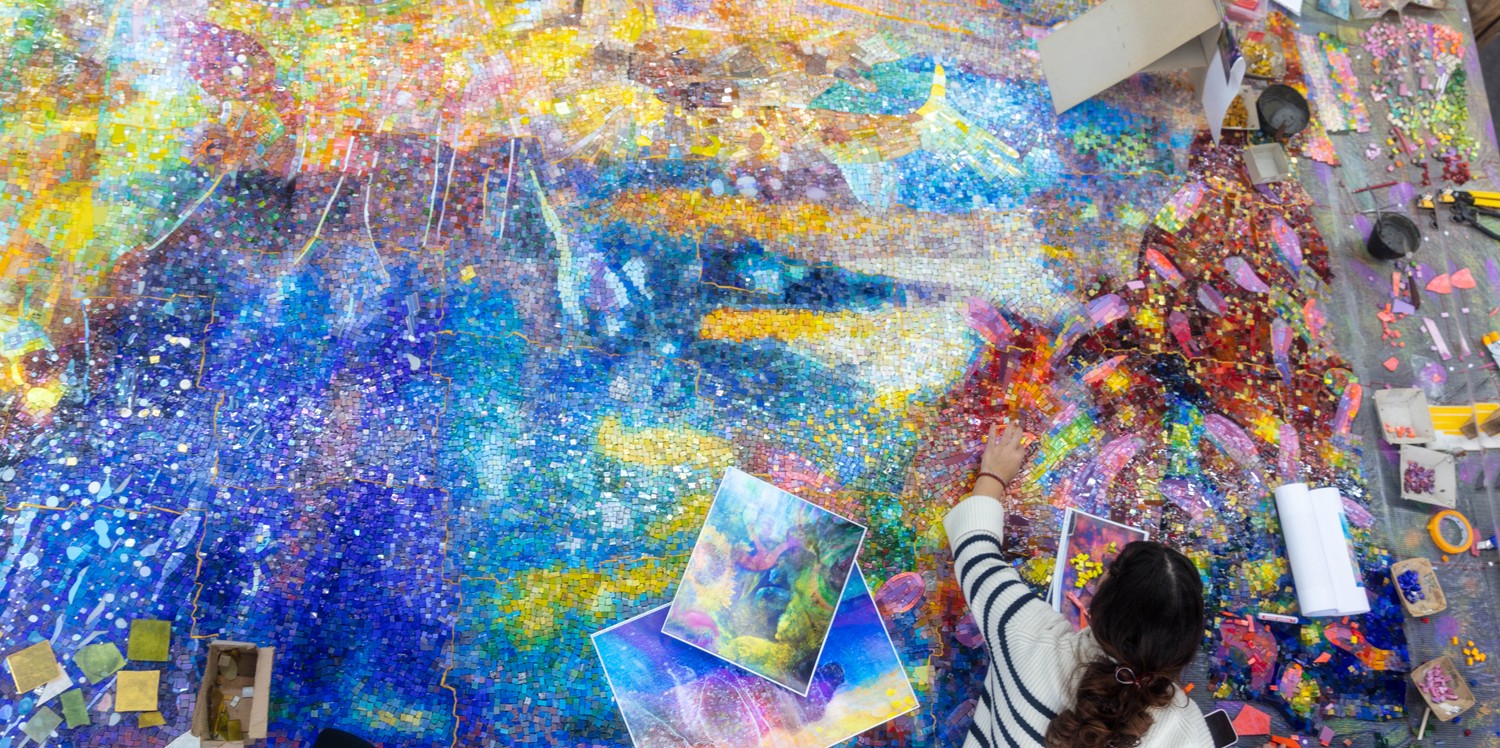
After the museum reopens, its inaugural exhibitions will include “Dreamers’ Quay,” an immersive multi-channel video installation by Lap-See Sam, a Swedish artist of the Chinese diaspora, in the Gundlach Building’s Ronnen Glass Box Theater. It will also debut a site-specific artwork commissioned from Dominican artist Firelei Báez: a 30-foot-long mosaic based on an Afrofuturist myth about women cast overboard in the Middle Passage thriving underwater, titled “Chorus of the Deep (something ephemeral and beautifully whole, when seen from the edge of one’s vision, too full when taken head on).”

click to enlarge Artist Firelei Báez works on a 30-foot-long site-specific mosaic commissioned by Buffalo AKG and installed in the Knox Building. - PHOTO COURTESY THE BUFFALO AKG ART MUSEUM

  • PHOTO COURTESY THE BUFFALO AKG ART MUSEUM
  • Artist Firelei Báez works on a 30-foot-long site-specific mosaic commissioned by Buffalo AKG and installed in the Knox Building.

In recent years the museum has more aggressively collected works by Black, Latino, and Indigenous artists, including Niagara Falls-based artist Jay Carrier (Onondaga/Tuscarora).

Carrier’s painting “The Hand of the Devil Was Warm in the Night” came to the AKG’s collection in 2022. It’s a mixed media work of an Indigenous man with headdress regalia with a title drawn from U2’s song “I Still Haven’t Found What I’m Looking For”—a reflection of Carrier’s change of heart when he started the painting in 1985. He was then enrolled as a BFA student in Santa Fe, painting what he describes as “reductive” native imagery for the local tourists market.

“I didn’t really feel good about selling them,” he said. “So I kind of changed my philosophy and perspective, how I wanted to represent myself as an artist, slash Native American artist.”

Carrier reworked the painting, which he said represents a pivot in both his style and meditations on identity. He said he’s proud that it’s part of a major contemporary collection today.

“Inroads are being made,” Carrier said, regarding museum representation of Indigenous fine artists. “But it comes in waves.”

A LIVING COLLECTION AND ITS COMMUNITY

The museum has more than doubled in size, but its growth can be measured in other ways. Under Sirén’s decade-long stewardship, its operating budget went from $6.7 million to $17 million. Full time museum staff increased from 62 to 150.

Sirén also launched the museum’s Public Art Initiative, its partnership with local government bodies and private businesses to support and install murals and sculptures throughout the city, spreading art to where more people live, work, and play.

click to enlarge Buffalo AKG director Janne Sirén. - PHOTO COURTESY THE BUFFALO AKG ART MUSEUM

  • PHOTO COURTESY THE BUFFALO AKG ART MUSEUM
  • Buffalo AKG director Janne Sirén.

After fundraising began for the expansion and renovation in 2016, the museum staff and architects conducted two years of town hall meetings to solicit input on what the community wanted to see.

Engaging audiences is a Sisyphean task, but one that the Buffalo AKG is up for, Sirén said.

When he became director in 2013, he was surprised to learn that more than 50-percent of the museum’s visitors were under 35—a remarkable statistic for a North American art museum, he said. For that he partially credits the museum’s longstanding efforts to expand representation in its collection and listen to what the public wants.

“I think that there’s something sort of in the DNA of the museum—being on the cutting edge, being revolutionary for the sake of being revolutionary—I think it’s been easier for us to pivot our collecting power,” Sirén said. “It hasn’t been a challenge for us to be courageous once again, and expand the philosophical breadth and content of our collection to include and really foreground artists that previously may have been marginalized.”

Following the museum’s opening celebration and ribbon cutting on Monday, June 12, Buffalo AKG will host an opening weekend Thursday, June 15 to Sunday, June 18, featuring free admission to the whole campus, performances and activities. Visit buffaloakg.org for details.

EXTRA, EXTRA:
The museum’s new half-acre Great Lawn and other surrounding green spaces will get some use this summer as visitors gather for free, open-air musical performances on the lawn and on the museum’s stone steps facing Olmstead’s Delaware Park and Hoyt Lake.

At 7 p.m. on Sunday, July 16, the Buffalo Philharmonic Orchestra will give a free concert on the Great Lawn.

The Lipsey Summer Jazz at Delaware Stairs series takes place on Sundays from July 23 through Aug. 13, and the chronological lineup is Silver Serenade: The Horace Silver Project (a quintet tribute to Silver’s lesser works); singer-saxophonist Camille Thurman with George Caldwell and Friends; singer Heather Bambrick with trumpeter Chase Sanborn; and The Buffalo Jazz Composers Workshop ensemble of composers and performers.

More details at buffaloakg.org.

Rebecca Rafferty is an arts writer for CITY. She can be reached at [email protected].

click image champion-story-banner.gif

Cincinnati native continues father’s legacy bringing art to West End

Cincinnati native continues father’s legacy bringing art to West End

CINCINNATI (WXIX) – A Cincinnati native is working to restore a piece of the West End’s history and its legacy that celebrates art, culture and diversity.

Toilynn O’Neal Turner, the founding director of the Robert O’Neal Multicultural Arts Center, is working to renovate the historic Regal Theater to help revitalize the art scene in the West End.

”I’ve seen art save lives,” Turner said. “I mean, it can definitely change the dynamics of racism and conflict. Art is one of those spaces we can all come and be together and appreciate. And it can help build dialogue.”

Her father, Robert O’Neal was a prominent artist who merged his work and activism to inspire others.

While he passed in 2018, Turner is now working to continue his legacy, creating the Robert O’Neal Multicultural Arts Center, a nonprofit that highlights African American artists while also exposing more of the community to the art scene.

”So we’ve been able to start some art programs for young people, [such as] free dance classes [and] free visual art classes,” Turner explained. “We’ve had a few fundraisers and so we’re really just building capacity in our programming.”

The project Turner is working on currently with the iconic Regal Theater will soon be a new home for the arts center, which she says holds so many happy memories for her and others who grew up in the West End.

”The Regal was our babysitter our safe space,” she said. “We were able to watch African American films like Shaft and Pam Grier and we were given popcorn and a hotdog. And we thought that was everything. Our lives were simplistic, but at the same time we had a community, which I think is sometimes what we’re missing.”

Recently, Turner was able to get the Regal marked as a historical designation through the state and is raising $20 million to complete renovations.

”The kids are so inspired by the activities to the point where it’s almost like you get emotional because they’re almost like, some of those kids haven’t used scissors. Some of those kids haven’t been exposed to the symphony and the opera and there’s a great partnership in the neighborhood of us really trying to make a difference,” she explained.

Just like her father, Turner is hoping to leave an imprint on the city and continue to inspire others over the years to come.

”Working with the artists and teaching them how to be educators is important that we give that gift to someone to live beyond us. And that’s how my father lived,” she said. “There are so many artists that he touched in the community. I want to have that same impact.”

Turner says she needs about $13 million to still to complete renovations.

Her goal is to re-open the Regal Theater in 2025.

See a spelling or grammar error in our story? Please click here to report it and include the headline of the story in your email.

Do you have a photo or video of a breaking news story? Send it to us here with a brief description.