Native

Airport exhibit spotlights Indigenous heritage

Airport exhibit spotlights Indigenous heritage

Key Points:

  • A new exhibit sponsored by the United Methodist Board of Global Ministries spotlights 26 contemporary Native American artists.
  • Some of the art subtly refers to issues such as missing and murdered Native American women, abuse at Indian boarding schools and climate change.
  • The show, “This Land Calls Us Home: Indigenous Relationships with Southeastern Homelands,” features more than 60 paintings and objects that will be on display until November 2024.

While traveling several years back, the Rev. Chebon Kernell came across something interesting at Hartsfield-Jackson Atlanta International Airport.

It was “A Walk Through Atlanta History,” a permanent exhibit tracing the city’s story up to the 1996 Centennial Olympic Games.

“They included Indigenous peoples there, but it was on just one little panel of this massive display,” said Kernell, executive director of the Native American Comprehensive Plan of The United Methodist Church. “I noticed that one panel was about 13,000 years of (Native American) history. And the entire rest of the exhibit was 200 years.

“That didn’t sit well with me, and so I began to use that example as a teaching moment, to talk about how we have silenced histories, especially in this country.”

Visitors view the newly installed works of “This Land Calls Us Home,” on view at Concourse T North, near gates T12-15 at Hartsfield-Jackson Atlanta International Airport in Atlanta. Photo by Dan Curran for Global Ministries.

Visitors view the newly installed works of “This Land Calls Us Home,” on view at Concourse T North, near gates T12-15 at Hartsfield-Jackson Atlanta International Airport in Atlanta. Photo by Dan Curran for Global Ministries.

The Rev. Chebon Kernell (Seminole/Muscogee), executive director of the Native American Comprehensive Plan of The United Methodist Church, speaks with a reporter at the opening of “This Land Calls Us Home,” held at Hartsfield-Jackson Atlanta International Airport in Atlanta on Nov. 6. Photo by Susan Clark, courtesy of Global Ministries.

The Rev. Chebon Kernell (Seminole/Muscogee), executive director of the Native American Comprehensive Plan of The United Methodist Church, speaks with a reporter at the opening of “This Land Calls Us Home,” held at Hartsfield-Jackson Atlanta International Airport in Atlanta on Nov. 6. Photo by Susan Clark, courtesy of Global Ministries.

Glenn Kellum, a colleague at the United Methodist Board of Global Ministries, where Kernell worked at the time, suggested he meet with airport officials to talk it over. They were amenable.

“So fast-forward five years later, we have developed an art exhibit that gives contemporary examples of Native American culture, identity and even our hopes and dreams for this area that we still consider our homelands in Georgia,” Kernell said.

“Double Woven River Cane Basket” (left) and “United First Nations River Cane Basket” (right) were created by Vivian Garner Cottrell, who is of Cherokee and Irish descent and a fourth-generation basket maker. Cherokee patterns are woven into each basket with natural dyed material using black walnut, bloodroot, berries and bois d’arc shavings. Photo courtesy of Global Ministries.

Double Woven River Cane Basket” (left) and “United First Nations River Cane Basket” (right) were created by Vivian Garner Cottrell, who is of Cherokee and Irish descent and a fourth-generation basket maker. Cherokee patterns are woven into each basket with natural dyed material using black walnut, bloodroot, berries and bois d’arc shavings. Photo courtesy of Global Ministries.

Artist Vivian Garner Cottrell (Cherokee) stands near a display case that features one of her baskets at the opening of “This Land Calls Us Home” held at Hartsfield-Jackson Atlanta International Airport in Atlanta on Nov. 6. Photo courtesy of Global Ministries.

Artist Vivian Garner Cottrell (Cherokee) stands near a display case that features one of her baskets at the opening of “This Land Calls Us Home” held at Hartsfield-Jackson Atlanta International Airport in Atlanta on Nov. 6. Photo courtesy of Global Ministries.

He curated the exhibit with the help of museum professionals and other Native American Methodists and scholars. It is sponsored by Global Ministries.

The show, “This Land Calls Us Home: Indigenous Relationships with Southeastern Homelands,” features more than 60 paintings and objects by 26 artists and will be on display in the T North Concourse until November 2024. It’s free to travelers in the airport.

Artists discuss their work

“Warhol Sequoyah” by Jeff Edwards portrays Sequoyah, creater of the Cherokee syllabary, in a style popularized by the late artist Andy Wahol. Edwards often uses the famous Sequoyah portrait in the styles of other artists. Photo courtesy of Global Ministries.

“Warhol Sequoyah” by Jeff Edwards portrays Sequoyah in a style popularized by the late artist Andy Warhol. Photo courtesy of Global Ministries.

Artists Jeff Edwards and Tony A. Tiger talk about some of their art in related story, including Edward’s “Warhol Sequoyah” and Tiger’s “Influence of Ancestors,” seen at the top of this story.

“Global Ministries is pleased to partner with representatives from our denomination’s Native American community to present this exhibit for display at Atlanta’s airport,” said Roland Fernandes, the top executive of Global Ministries and the United Methodist Committee on Relief, in a statement. “The installation offers a unique opportunity to help facilitate a greater understanding of Native American and Indigenous peoples of the Southeast. Many of the artists have close ties to specific ancestral sites now in the greater Atlanta and Georgia region, which may also be of special interest to travelers visiting the Atlanta area.”

Jeff Edwards, who has three pieces of art in the exhibit, said it was the first time his artwork was featured in an airport.

“I think it’s pretty neat,” he said.

One of Edwards’ pieces is an Andy Warhol-inspired piece about Sequoyah, whose creation of the Cherokee syllabary made reading and writing in Cherokee possible.

“I thought it was kind of cool that you actually have to be a traveler (to see the exhibit),” Edwards said. “If you get a six-hour layover, it’d be kind of cool to have an art show to go to.”

Some of the exhibits tackle Native American issues such as missing and murdered Indigenous women, abuse at Indian boarding schools and climate change, albeit subtly.

“You’ll see little bits and pieces in some of the expressions that we’ve selected,” said Kernell, a Native American scholar and educator. “Sometimes they might take a little bit, maybe an explanation from the artist or different things, to kind of bring it to the forefront.”

“Spearfinger’s Deception” was created by Luzene Hill of the Eastern Band of Cherokee Indians. Her work is informed by pre-contact culture of the Americas and advocates for Indigenous linguistic, cultural and individual sovereignty. In Native American lore, Sprearfinger could transform herself from the ugly, old woman she was into a beautiful young female. Her deadliest weapon was her sharp finger that resembled a spear or awl, which she used to cut her victims. Photo courtesy of Global Ministries.

“Spearfinger’s Deception” was created by Luzene Hill of the Eastern Band of Cherokee Indians. Her work is informed by pre-contact culture of the Americas and advocates for Indigenous linguistic, cultural and individual sovereignty. In Native American lore, Sprearfinger could transform herself from the ugly, old woman she was into a beautiful young female. Her deadliest weapon was her sharp finger that resembled a spear or awl, which she used to cut her victims. Photo courtesy of Global Ministries.

The Rev. Chebon Kernell (second from left), executive director of the Native American Comprehensive Plan, leads a stomp dance demonstration at the opening of “This Land Calls Us Home” held at Hartsfield-Jackson Atlanta International Airport in Atlanta on Nov. 6. Photo by Susan Clark, courtesy of Global Ministries.

The Rev. Chebon Kernell (second from left), executive director of the Native American Comprehensive Plan, leads a stomp dance demonstration at the opening of “This Land Calls Us Home” held at Hartsfield-Jackson Atlanta International Airport in Atlanta on Nov. 6. Photo by Susan Clark, courtesy of Global Ministries.

For example, there is a painting by Jody Bradley Lipscomb of a young girl clutching a tree. Titled “The Crying Tree,” it alludes to abusive Indian boarding schools — a few operated by Methodists — intended to separate Native Americans from their culture. “The Crying Tree” refers to an oak grove where children sought refuge from Cherokee Indian Boarding School in North Carolina.

Tony A. Tiger, another artist featured in the airport show, believes exposure to Native American art could do the opposite of the boarding schools by sharing Native culture with people of other races.

“We have a narrative to share with America,” Tiger said. “I think it’s important that people understand that we weren’t savages; we did have civilization here with many different languages and we had large villages.

“With more knowledge … possibly we can treat each other better.”

An exhibit at Hartsfield-Jackson Atlanta International Airport in Atlanta, “This Land Calls Us Home: Indigenous Relationships with Southeastern Homelands,” showcases 60 works of art by 26 Native American artists. It will be on display in the T North Concourse until November 2024. Photo by Jim Patterson, UM News.

An exhibit at Hartsfield-Jackson Atlanta International Airport in Atlanta, “This Land Calls Us Home: Indigenous Relationships with Southeastern Homelands,” showcases 60 works of art by 26 Native American artists. It will be on display in the T North Concourse until November 2024. Photo by Jim Patterson, UM News.

“Know Your Enemy” by Jeff Edwards portrays a Cherokee Native American. The spider held by the subject’s left hand originally was the head of Oklahoma Gov. Kevin Stitt. It was changed to a spider because of concerns the reference would be missed by non-Oklahomans. Photo courtesy of Global Ministries.

“Know Your Enemy” by Jeff Edwards portrays a Cherokee Native American. The spider held by the subject’s left hand originally was the head of Oklahoma Gov. Kevin Stitt. It was changed to a spider because of concerns the reference would be missed by non-Oklahomans. Photo courtesy of Global Ministries.

But Edwards said there’s a line he won’t cross between honoring his Cherokee heritage and doing what he called “pity pieces,” or art that reflects stereotypes.

“Oh, look at what has happened to us Cherokee. We’ve had such a horrible history.” Edwards said. “Yes, of course we have. But … we’re still here, you know, so we survived that history.”

Having the exhibit at the airport means it may reach people who don’t go to museums very often.

“One advantage … is to counteract the historical silencing that I feel the other exhibit does in the tunnel area of the airport,” Kernell said. “To have something more in depth that provides the community with a deeper understanding of Native American people.”

Patterson is a UM News reporter in Nashville, Tennessee. Contact him at 615-742-5470 or [email protected].

To read more United Methodist news, subscribe to the free Daily or Weekly Digests.


About the Native American Comprehensive Plan

The Native American Comprehensive Plan serves as the United Methodist entity that resources, strengthens and advocates for the local church in Native American communities and contexts for all generations. 

“Post-COVID … the focus that we’ve taken is (to cultivate) relationships with the entities that surround us and do a lot of education to the non-Native American world about the things that we’re going through,” said the Rev. Chebon Kernell, executive director of the plan.

“We have relationships with universities. We have relationships with museums … and we’ve tried to reach what they’re teaching so that a good message about Native American people today can be taught that can be a good pedagogy there.”

Read more


Watch video: Stomp Dance
“This Land Calls Us Home” is an artistic multidimensional exhibit highlighting the contemporary expressions of Indigenous peoples and their relationship with their ancestral domains and homelands. Representing primarily Mvskoke and Cherokee indigenous communities, “This Land Calls Us Home,” tells a story of the eternal connection that modern Native American people have with their respective homelands. Sixty works of art by 26 Native American artists will be on display in the Hartsfield-Jackson Atlanta International Airport in Atlanta, Ga., until November 2024. Video courtesy of Global Ministries. Click here to watch video

‘It’s been a grim year—but the importance of art cannot be overlooked’

‘It’s been a grim year—but the importance of art cannot be overlooked’

As the year ends, our thoughts are with the victims caught up in the war in Gaza. Our readers will be universally distressed at the suffering of innocent people, Palestinian and Israeli. Gaza has rightfully had saturation media coverage during the past few weeks. But at The Art Newspaper our remit is very much narrower: to focus on the impact of armed conflict on art, museums, archaeological and historical sites, religious buildings and heritage.

Gaza must be rebuilt and every society depends on its culture to help bind its people together

Needless to say, losses to culture pale into insignificance compared with the deaths, the injuries and the suffering caused by the displacement of millions of people—and the terrible fate of hostages. But in the long run, Gaza must be rebuilt and every society depends on its culture to help bind its people together.

Determining what damage has been caused to Gaza’s heritage is at present a very challenging task. The Art Newspaper has no correspondent in Gaza and, even if we did, reporters there operate under either Israeli or Hamas control. As all journalists know only too well, truth is the first casualty of war. But using a wide spread of media sources, we have done our best to assemble data on damage to Gaza’s culture.

Sadly, art has hardly flourished in Gaza because of the territory’s tragic late-20th century history. In 1948, the year the state of Israel was created, Gaza had a population of less than 50,000. Now it has 2.4 million inhabitants, making it among the most densely populated territories on earth. Half its people are registered refugees. Art must seem a luxury for people in these circumstances, although it can provide inspiration.

Quandary for museums and artists

The Gaza conflict creates a dilemma for museums and artists outside the region: should they express their views on the rights and wrongs of the Israeli and Hamas sides? Most museums have no special expertise in international relations and arguably should avoid getting entangled in political issues, although they should rightfully be concerned about threats to culture. Artists, as individuals, make their own decisions.

Looking back over this year, the situation in Ukraine since the Russian invasion of February 2022 is highly distressing. Assembling reliable information on damage to Ukrainian heritage has been difficult, although more feasible than for Gaza. Hardly a month has gone by since last year when The Art Newspaper has not carried a report on Ukraine. Our articles have covered damage to historic sites, Russian looting of Ukrainian museums, sanctioned Russian collectors and sponsors, leadership changes at Russian museums and Western support for Ukrainian artists. Sadly, the invasion has meant that cultural links between Russia and the West have become even more difficult than at the height of the Cold War.

Apart from these two terrible conflicts, what other major issues faced the art world in 2023? Restitution of African and Oceanic art seized during the colonial period, as well as the return of Native American and Canadian First Nations artefacts, is now very much on the agenda, particularly over items looted in the late 19th century by British troops during battles at Maqdala (Ethiopia), Benin (present-day Nigeria) and the Asante empire (present-day Ghana). Museums in Europe and North America will face even greater pressures for restitution in the coming year.

One can hardly avoid mentioning the crisis which hit the British Museum this summer, its most damaging since the Second World War. Revelations that one of its senior curators had allegedly stolen 2,000 antiquities from the museum over a 25-year period seemed almost unbelievable.

Hartwig Fischer rightly resigned as director, to be replaced by the steady hand of Mark Jones (formerly at the Victoria and Albert Museum) as the interim head. The search is now on for a new permanent director, who should take over by next summer. Their main challenges will be to restore the British Museum’s reputation, ensure security, and launch the ambitious masterplan to refurbish the building and redisplay the collection.

Looking back on 2023, one of the brightest spots was the Vermeer exhibition at Amsterdam’s Rijksmuseum. It deserves the highest praise for several reasons: reassembling so much of the master’s oeuvre (28 out of the 37 paintings), its elegant presentation, the number of visitors (650,000) and what it added to our scholarly knowledge of the artist. Vermeer was a triumph, a bright spot amid this year’s man-made disasters.

• Martin Bailey is special correspondent for The Art Newspaper

Music Data from Streaming Platforms Tell Us About Top Indian Artists

Music Data from Streaming Platforms Tell Us About Top Indian Artists


Top streamed artists in India across platforms like Spotify, Apple Music, Wynk Music and Amazon Music include Arijit Singh, Sidhu Moose Wala, Jasleen Royal, Anirudh Ravichander (clockwise from top left)

Tis the season for all of India’s reigning artists on streaming platforms to come to the front, in one way or another. Even if it isn’t through concrete data about the number of streams, the likes of Spotify, Apple Music, Wynk Music and Amazon Music have had us Wrapped, Rewind, Replay and Recap, among other actions.

While Spotify Wrapped undoubtedly draws most of the eyes for not just for its aesthetic and presentation, like with most stats related to the vast Indian population, it can only claim to hold a mirror up to a certain share of the country’s music listening audience. While YouTube is among the most-used platforms for music, we don’t have much beyond the weekly stats of top streamed songs. That said, here’s a platform-wise look at the streaming trends highlighted by some of the major players in India and what it tell us.

Spotify Wrapped India

According to Spotify India stats, Arijit Singh, Pritam and Anirudh Ravichander are among the most streamed artists in India in 2023. While Singh may not have shared his Wrapped card, Pritam – behind big hits like “Kesariya” from Brahmastra and “Tere Pyaar Mein” from Tu Jhoothi Mein Makkaarshowed off his stats, with 4.5 billion streams. Anirudh – the singer-composer behind the hugely popular soundtracks to Jawan (“Chaleya”) and Leo (“Badass”) – shared that he had 2.8 billion streams in India in 2023.

The top 10 most streamed artists on Spotify India are entirely dominated by film soundtrack artists, except late Punjabi star Sidhu Moose Wala, whose tragic death in 2022 seems to have propelled more fandom and an everlasting legacy in the making. His 2021 full-length Moosetape snagged the third-most streamed album on Spotify as well.

Albums from previous years seem to stay in the top 10 for Spotify listeners, with the exception of Punjabi-Canadian artist Shubh’s Still Rollin’ which came out in 2023 and KING’s Champagne Talk from October 2022.

KING enjoys the top spot for the most streamed song of the year on Spotify India, with “Maan Meri Jaan” being quite ahead. Even more curious, though, is the second spot, secured by Karachi singer-songwriter Kaifi Khalil’s tune “Kahani Suno 2.0,” also from 2022. It goes to show that borders might divide us, but when it comes to music, Indians are more than happy to put a good song on repeat. This was in fact just as evident in 2022, when Ali Sethi and Shae Gill’s “Pasoori” was among the most streamed songs.

Only four out of the top 10 most streamed songs are from movie soundtracks, which continues to give a strong indication that a good song need not necessarily be attached to a film.

Apple Music Replay India

A fully paid service unlike Spotify, Wynk or YouTube, Apple Music’s India Top 100 songs brought up quite a few differences in listening habits. Arijit Singh still sat the top spot, though, with “Apna Bana Le” by composers Sachin-Jigar and lyricist Amitabh Bhattacharya from the movie Bhediya clinching the top spot on the playlist. KING’s “Maan Meri Jaan” came in second, followed by AP Dhillon’s “Dil Nu” with Shinda Kahlon and international songs like “Calm Down” by Rema and Selena Gomez. Dhillon’s song “Summer High” comes in at the fifth spot, followed by “Kesariya” from Brahmastra and “Baller” by Shubh and Ikky.

Punjabi music certainly dominates the Top 100, even by Apple Music’s own admission. Dhillon and Shubh are joined by Riar Saab and Abhijay Sharma’s “Obsessed” and Sharn, 40K and THE Paul’s “Mi Amor.” In the top 20, Shubh has three more songs and Dhillon has two more, with fellow Punjabi-Canadian artist Karan Aujla’s “On Top” also in the top 20.

Within the top 10, however, sandwiched between those Punjabi hitmakers is “Besharam Rang” by Vishal-Shekhar, Shilpa Rao and Caralisa Monteiro from the movie Pathaan. It makes Rao and Monteiro the only female Indian artists in the top 10 on Apple Music in India.

Wynk Rewind 2023

Arijit Singh, Pritam and Amitabh Bhattacharya emerge as the top three artists on Wynk Music as well, but it’s not because of “Kesariya.” For Singh and Bhattacharya, their work on “Phir Aur Kya Chahiye” (from the soundtrack to Zara Hatke Zara Bachke with Sachin-Jigar put them among Wynk Music’s top streamed artists. For Pritam, it was “Tum Kya Mile” and “What Jhumka” from Rocky Aur Rani Kii Prem Kahaani.

The platform’s top three streamed songs, however, painted a different story – Jasleen Royal’s “Heeriye” (featuring Arijit Singh, because he’s everywhere) was the most streamed song, followed by “Chaleya” by Anirudh Ravichander (and sung by, you guessed it, Singh and Shilpa Rao) and Vishal Mishra and Shreya Ghoshal’s “Zihaal e Miskin.”

There was also a language-wise breakdown of top artists offered by the platform, with Arijit Singh dominating Hindi (and Bengali) songs and Anirudh Ravichander leading Tamil. S.S. Thaman was the most streamed for his Telugu songs, while Taylor Swift was the most streamed artist with English songs and Karan Aujla for Punjabi. Other top artists include rapper MC Square in Haryanvi, composer Arjun Janya in Kannada, composer-singer Hesham Abdul Wahab in Malayalam and Zubeen Garg in Assamese, among others.

Amazon Music Best of the Year

Included with a Prime membership with the retail company, Amazon Music shared that Anirudh Ravichander’s “Chaleya” was the top track of 2023, with Shilpa Rao earning the spot of top artist this year.

The top streamed Hindi song on the platform was “Tere Vaaste” from Zara Hatka Zara Bachke, composed by Sachin-Jigar and sung by Varun Jain, Shadab Faridi and Altamash Faridi.

Miley Cyrus’ viral hit “Flowers” was the most streamed international song on Amazon Music, with fellow pop artists Taylor Swift and Dua Lipa noted as the top streamed international artists in the country.

In terms of streams, Kerala indie-folk act When Chai Met Toast and Haryanvi hip-hop artist MC Square were the top indie and hip-hop artists of the year, respectively.

Similar to language-based music trends on other platforms, Ravichander remained the top Tamil artist, Aujla, Diljit Dosanjh and AP Dhillon were among the most streamed Punjabi artists and S.S. Thaman was the top Telugu artist on Amazon Music in India.

133-year-old Indigenous arts supplies store in Lakewood keeps artistic traditions alive for all

133-year-old Indigenous arts supplies store in Lakewood keeps artistic traditions alive for all

Cecelia Bull Bear has been making quillwork art for as long as she can remember.

“I learned from my grandmother, Ethel Black Crow, and my aunt, Rose Spotted Eagle, when I was real young,” the 76-year-old Denver-based Oglala Lakota artist said. “I’ve been doing it all my life.”

Quillwork is an art form that uses porcupine quills to embroider clothing and make jewelry, and it is one of the oldest artistic traditions practiced by Indigenous North Americans, mostly in the northern plains of what is now the U.S. and across Canada.

To Bull Bear, who is from the Medicine Root District of the Pine Ridge Reservation in South Dakota, quillwork products are as precious as gemstones.

“Quillwork is like wearing diamonds,” Bull Bear said. “Quillwork is sacred. It was here before the beadwork people do now.”

Bull Bear is one of many artists who patronize and sell their art at the reopened Orr’s Trading Post, a Native arts supply store that has long been an important community hub for Indigenous people.

New owner Lakota Sage wants to expand Orr’s 133-year legacy as a community hub and arts store into a destination for authentic Indigenous arts.

Formerly located in Englewood and Denver and operated by the Orr family for generations, the new owner, Lakota Sage, reopened the store in Lakewood near Colfax Avenue and Kipling Street in February after the previous owners decided to close down.

Orr’s has always offered Denver’s Indigenous community a place to buy supplies to make regalia, practice traditions and create art; even Bull Bear’s grandmother used to buy supplies at Orr’s when it was on Colorado Boulevard in Denver.

“Most people come here to buy supplies, so when word started getting around it was closing, the community started freaking out a little,” Sage, a Lakota citizen of the Standing Rock Sioux Tribe, said of why he restarted the business.

This new location continues the business’ legacy of serving Denver’s Indigenous community, but Sage also wants it to be a place where people who are not Indigenous can come to see and buy local artists’ artwork.

Here, Sage hopes, they can also learn about sacred traditions and see that Indigenous art and culture is alive and well in Denver.

Orr’s Trading Post in Lakewood on Wednesday, Nov. 15, 2023. The Native American arts supply store has started selling finished art as well. (Photo by Hyoung Chang/The Denver Post)

“The more we can have representation, the better,” Sage said. “Because we are still here; we’re still remembered.”

That’s also why Bull Bear said being able to sell her work at Orr’s is so important to her: Not only is quillwork sacred, but here in Denver, the skill is a rarity.

Bull Bear is the only practicing plains quillwork artist in the area; many people stopped doing quillwork to take up the less complicated beading art that is most commonly associated with Indigenous embroidery now. She’s started classes in Denver to keep the tradition alive here.

“They say it’s a dying art, but if people like me teach it, I think we can keep it alive,” she said. “It’s really a blessing to try and teach it to new generations. We need to take care of it.”

Newer local artists also get a chance to show people their work at Orr’s.

Tom Salazar, an Indigenous third-generation Coloradan, is a self-taught artist who sells beaded jewelry at Orr’s and buys a lot of his supplies there. His art is also meant to show people Native American traditions are still alive, and he said Orr’s is the perfect place to teach people about art through his and others’ work.

“Art is something I like to do so people don’t forget where we came from,” Salazar said. “A lot of people don’t see Native art as something somebody put their heart and soul into. When I make something, I genuinely have a love for my ancestry and love for the community to where I want to make it authentic.

“A place like Orr’s is a great place for the community to make and see authentic jewelry.”

Jewelry by artist Tom Salazar are for sale at Orr's Trading Post in Lakewood on Wednesday, Nov. 15, 2023. The Native American arts supply store has started selling finished art as well. (Photo by Hyoung Chang/The Denver Post)
Jewelry by artist Tom Salazar are for sale at Orr’s Trading Post in Lakewood on Wednesday, Nov. 15, 2023. The Native American arts supply store has started selling finished art as well. (Photo by Hyoung Chang/The Denver Post)

Sage also has branched the store out for more than just the beadwork and regalia-making products.

Other wares include macaw feathers for Nahua, or Aztec, people of Mexico; shells of all types, sea stars and urchins for coastal nations and Pacific Islanders; painted beads from Peru; and katchina dolls, ancestral spirits of the Hopi and Pueblo people of the Southwest, are all available at Orr’s.

“There’s something for everybody here,” Sage said. And that goes for non-Indigenous people, too.

A whole section of the store is dedicated to naturopathy, with traditional teas that have healing properties lining a wall and sages, sweetgrass and palo santo available for ceremonies and smudging. Stones with different astrological and healing purposes are also available in different sizes and shapes for different uses.

“It’s not just a store for Natives; it’s a store for everybody,” Sage said. “The idea behind that is the more people we can get in here, the more these local Native artists can be seen and our culture appreciated. It’s a helping hand for everybody.”

Get more Colorado news by signing up for our daily Your Morning Dozen email newsletter.

Artist uses material culture from his native Saudi Arabia to explore identity, heritage and history

Artist uses material culture from his native Saudi Arabia to explore identity, heritage and history
Saudi artist Sultan bin Fahad.
Image Credit: Supplied

A room filled with vibrantly coloured beaded works depicting the three holy sites every Muslim pilgrim aspires to see—Makkah, Madinah and Jerusalem—constituted an artwork by Saudi artist Sultan bin Fahad created for the first edition of the Diriyah Biennale in the JAX district of Riyadh at the end of 2021. Titled Dream Travelled (2021), the room is startlingly beautiful, almost meditative with its alignment of Hajj murals and images from the Holy Qur’an made of thousands of coloured beads. The work was pivotal not only for its aesthetic and subject matter but for its display in the first ever contemporary art biennale to be staged in the Kingdom. Over the last several years, Sultan bin Fahad has created artworks and staged exhibitions that often incorporate remnants in the form of relics, discarded objects and memorabilia from Saudi Arabia’s past in the creation of highly conceptual artworks that look to revive and remember their role in the Kingdom’s social metamorphosis.

2

Image Credit: Amer Al Aad/The Kurator

“I use nostalgia to investigate Saudi culture, contemporising our past and digging up the stories emanating from within found objects,” Bin Fahad explains. In March 2019 he staged ‘The Red Palace’ exhibition inspired by the Red Palace in Riyadh, an important palace in the Kingdom’s capital that played an important role in key historical and political events of the 20th century. The exhibition took place during a crucial time for the Kingdom—just a few months prior to the granting of tourist visas to allow visitors access to Saudi Arabia after it had been closed for decades. In many ways, the Saudi art -scene, which had been a largely grassroots and underground enterprise for decades, has grown in tandem with the Kingdom’s grand schemes for transformation and is now supported by the Ministry of Culture. Bin Fahad is one of the country’s artists whose work has been widely exhibited both at home and abroad in a variety of public and private exhibitions.

Conceptual in nature that allows the viewer to investigate the meaning behind his art while reveling in the -aesthetic -magnitude of his variously sized installations, Sultan bin Fahad, as he explains, wants to shine light through his art on unknown parts of history. “My work is all about taking unfamiliar parts of history to recontextualise them in familiar ways through conceptual art; to me, it’s about deconstructing prior ideas, stripping them down, and giving them new life in my own personalised conceptual world,” he says. His main medium remains the material culture of his native Saudi Arabia. Through his work, he reinterprets stories and narratives found in the historical telling of the Kingdom and gives them new life and form through his art. The result are works that serve to reimagine found objects, Islam, Saudi history and identity.

The artistic journey and process of creating his work, which regularly involves scavenging to find old or lost material, is intrinsic to Sultan bin Fahad’s art creation. “I’m always on the -lookout for the next great thing,” he says. “All my works are special to me—and The Red Palace was a particularly special case, a happy accident of venue inspiring creation, the space itself being vital to my work there—but to be honest my greatest work is always the one I’m working on, and when that’s done and exhibited to the public the floor is open for their -judgement.”

His work is one that commemorates but also intellectualises the Kingdom’s past and present history and it does so through a nostalgic beauty—one that strives to rekindle moments that might have been forgotten to most, but which serve as vital understanding for the present day transformation occurring in Sultan bin Fahad’s country.

3

Image Credit: Amer Al Aad/The Kurator

During this year’s inaugural Islamic Arts Biennale in Jeddah, staged by the Diriyah Biennale Foundation, Sultan bin Fahad presented Holy Land (2023), a mixed media installation -revealing the souvenirs and other wares that were once sold by merchants and pilgrims in the two Holy cities of Makkah and Madinah. In the form of prayer mats, thermos flasks, bottles, tins and other objects, all decorated in the style of their countries of origin, the pieces reflect remnants of an economy that now no longer exists. Onto the objects, Sultan bin Fahad has imposed images once found on flasks sold to create what he called “a garden of love and joy” in which the visitors to the artwork can choose their own path.

“For writers they say write what you know, so for me it’s more so that I create what I know while also always trying to know more,” he explains. “I have a process: I think of or learn of -something I like (whether a tangible piece, a story, or a theoretical object), I start researching everything about it in a deep dive, and then I begin conceptualising it to life through an exciting creation. Sometimes it’s a success, sometimes it isn’t, but what’s most important to me is not the endpoint but the process; the creative journey is integral in my opinion to knowing the past and understanding the future.”

In reflecting on his country’s past through found materials and other items, Sultan bin Fahad also creates work that allow for present personal exploration, as he did with Holy Land. The visitor or viewer of the work takes in the messages, historical and cultural symbolism presented to them, and then, through the work, is provided ways to personally reflect.

4

Image Credit: Amer Al Aad/The Kurator

In Desert Kite (2022), a large outdoor installation bin Fahad created for the last edition of Desert X AlUla. Created in the shape of a desert kite, or keyhole, a traditional construction found in the northwest of Saudi Arabia created to trap animals, which appeared in deserts and ancient sites of heritage, including AlUla’s landscapes, were also most likely used by the Nabataeans to decorate their monuments and to -celebrate and protect their -communities both in life and death. Sultan bin Fahad recreated the shape to create a form that both collects and herds—like its ancient predecessor. Inside, the structure has an open-air circular chamber within which a clear urn in the form of a tall spike is placed in the center and can also been seen from outside of the structure. If one looked carefully at the urn, it seemed that mythical creatures could be trapped inside.

While a work that reflects on Saudi’s ancient past, it also leaves room for the visitor to experience it and explore. The open-air chamber itself is akin to a meditative room. Inside, the spectator can stop, rest and ponder not only the heritage Sultan bin Fahad recreates but also the beauty of AlUla’s natural surroundings.

In another recent work, this time in the form of a carpet collection titled Delights commissioned by Iwan Maktabi for the first of its kind curated collection of carpets that commissioned creatives from the Gulf region, Sultan bin Fahad -commemorates familiar phrases traditionally used during weddings and other happy occasions. Laden with vibrant colours and elaborate detailing, like that found in Dream Travelled, the visuals Sultan bin Fahad used for his collection of carpets were inspired by a traditional Saudi tin box of delights with inscriptions of prosperous wishes. They were historically offered to guests attending weddings. On the carpet, the hands of the bride and groom’s fathers come together to seal the promise of everlasting union. The image is framed by rose petals, swirling lines and colored vines reflective of the edges of time. The collection depicts a scene of happiness, unity and adoration. It is a moment of divine order and love—one to stand the test of time.

The collection is, like other works by Sultan bin Fahad, a journey through time, place, culture, beauty, strife and history.Connecting past to present, Sultan bin Fahad’s stories evoke -multi-layered journeys between the latent relationship of what is remembered and what remains silently contained within the corporeal.

Art for bin Fahad is a journey through intangible memories and tangible cultures. It rekindles the past with the present.

‘A deeply thoughtful show’: artist Louise Bourgeois at AGNSW

‘A deeply thoughtful show’: artist Louise Bourgeois at AGNSW

As you make your way towards the Art Gallery of New South Wales, you will come across the giant sinewy bronze legs of the artist’s monumental sculpture Maman (“mum” in French) looming near the entrance.

As large to us as humans appear to spiders, Maman borrows the form of a daddy longlegs, but through its title switches both parent and gender. The artist replaces our fear of spiders with the love and protection associated with motherhood.

Despite a life and career mostly spent in New York City, where she moved in 1938 and remained until her death in 2010, the artist, born and educated in France, insisted on her “right to defend her Frenglish”. Titles of her works and her extensive body of writings move seamlessly from her native tongue to English to a deeply personal intermixing of both languages.

London’s Tate acquired the original Maman in 2008, but six other versions also exist. One now stands in the Domain, marking the arrival of Louise Bourgeois in Sydney and the opening of the first large scale show in the new Sydney Modern.

First opened to the public just over a year ago, the Sydney Modern promised “a 21st-century gallery providing one of the world’s great art museum experiences”. This exhibition matches this ambition with a deeply thoughtful and sensuous show.

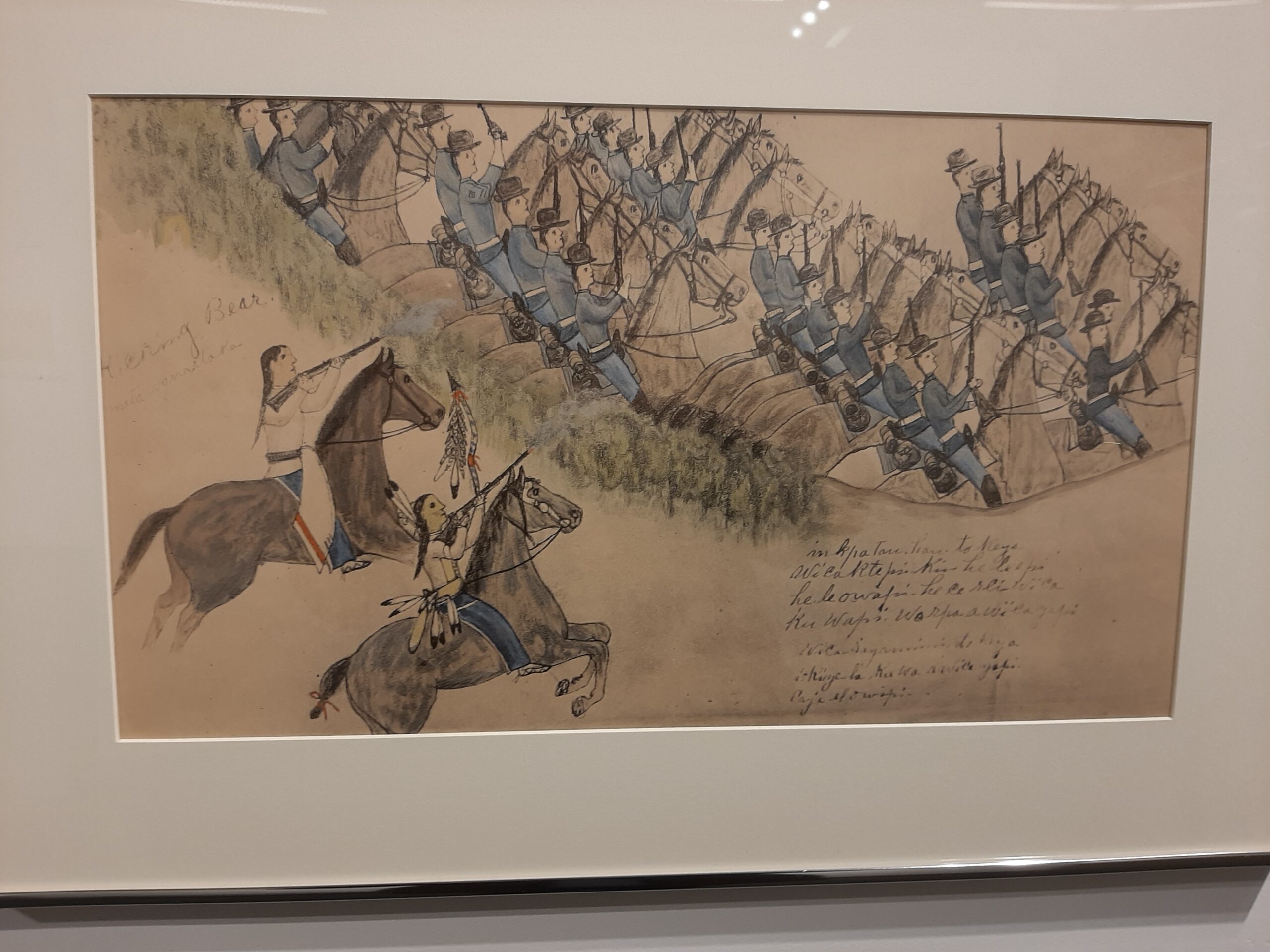
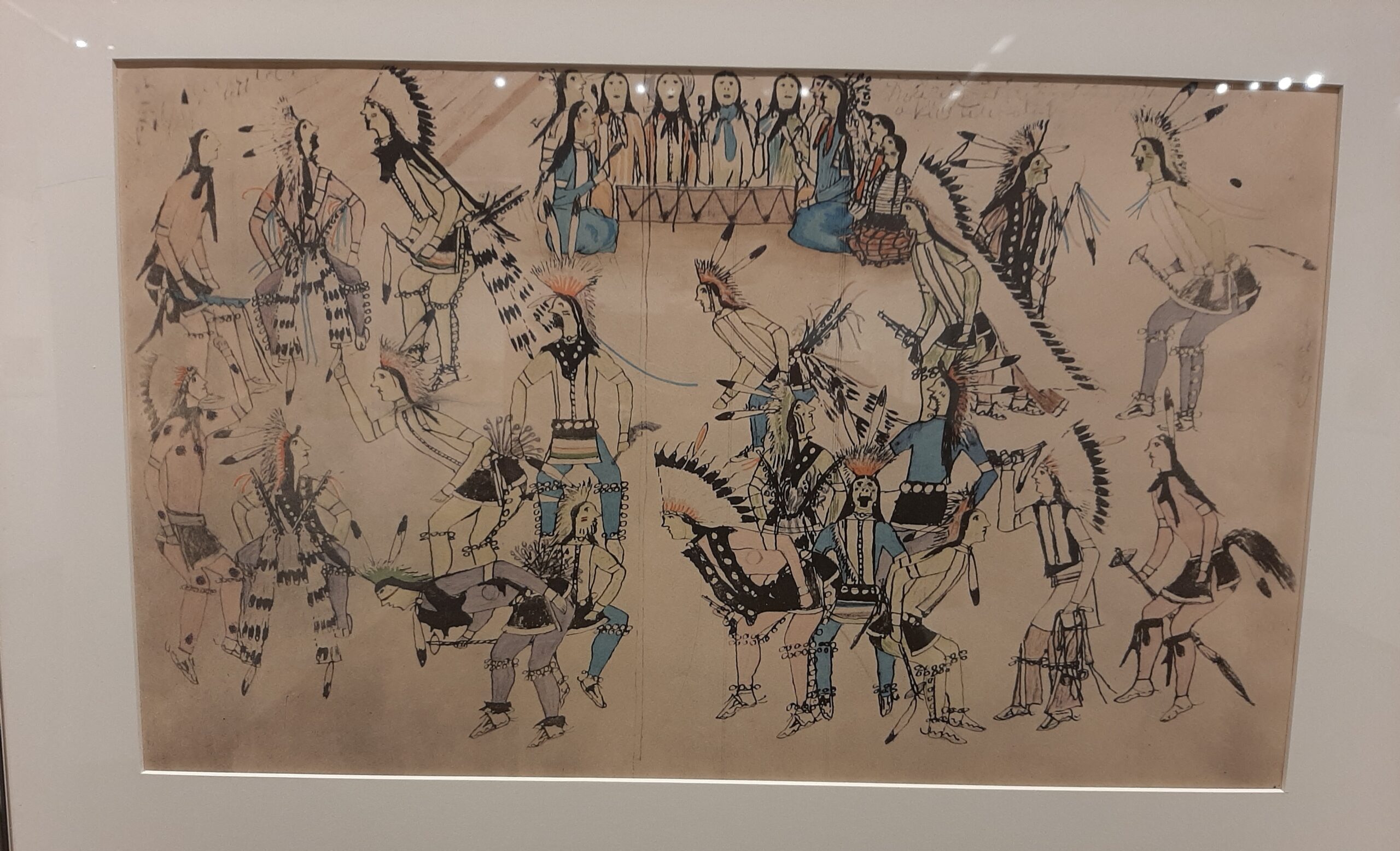
NATIVE ART OF THE NORTHERN PLAINS ON DISPLAY AT MUSEUM

NATIVE ART OF THE NORTHERN PLAINS ON DISPLAY AT MUSEUM

LATE 19TH AND EARLY 20TH CENTURY ARTWORK FROM SEVERAL NATIVE AMERICAN TRIBES IS NOW ON DISPLAY AT THE SIOUX CITY PUBLIC MUSEUM.

MUSEUM CURATOR MATT ANDERSON SAYS THESE WORKS WERE LAST SHOWN LOCALLY IN 2004:

https://kscj.com/wp-content/uploads/2023/12/NATIVEART1.mp3

NATIVEART1 OC…..THE SHOSHONE. :18

ANDERSON SAYS THE FIFTY PRINTS BY NINE AMERICAN INDIAN ARTISTS WERE PUBLISHED IN TWO PARTS AS A LIMITED EDITION IN 1938.

THERE IS A SEPARATE THEME TO EACH HALF OF THEM:

https://kscj.com/wp-content/uploads/2023/12/NATIVEART2.mp3

NATIVEART2 OC…….IN THOSE. :16

THE SECOND GROUPING HAS ONE THEME IN PARTICULAR BY ONE ARTIST:

https://kscj.com/wp-content/uploads/2023/12/NATIVEART3.mp3

NATIVEART3 OC…….BIG HORN WENT. :23

THOSE DRAWINGS WERE DONE FROM THE 1890’S THROUGH 1910.

THE EXHIBITION WILL BE ON DISPLAY THROUGH MARCH 3RD, 2024 AT THE PUBLIC MUSEUM LOCATED DOWNTOWN AT 4TH AND NEBRASKA STREETS.

To S.C. native Darius Rucker, Hollywood star is dream come true

To S.C. native Darius Rucker, Hollywood star is dream come true

HOLLYWOOD, Calif. (WMBF) – One of the biggest stars to come out of the Palmetto State was honored with his own star.

Darius Rucker got a star on the Hollywood Walk of Fame.

“This is stuff you only dream about when you’re from South Carolina, struggling growing up and just wanting to be a singer and that’s all I ever wanted to be was a singer,” Rucker said.

Rucker received the star in the category of Recording, and it’s the 2,766th star along the walkway in California.

[embedded content]

He said he was walking along the Walk of Fame and said he couldn’t believe he now has something in common with so many legends.

“I’m walking the streets the other day and I’m seeing Marilyn Monroe and Charley Pride and Buddy Hackett, these are names that stuck in my mind because they’re big stars,” Rucker said. “To be here with a star on the Hollywood Walk of Fame, it’s the biggest thing that’s ever happened to me.”

While he thanked many people who helped guide him throughout his career, including his band Hootie and the Blowfish, he thanked his kids and said being their dad has been the best part of his life.

“They’re my heart, my soul, everything I do is for them and it’s been an amazing thing to be your father. As great as all this stuff is, it’s not as cool as being your dad, I love you guys so much,” Rucker said.

But the people he wanted to thank the most are the fans who have gone out to buy records and who have spent their hard-earned money to get tickets to his shows.

“I want to thank everybody who comes out every year to see us play, I can’t say thank you enough and I still can’t believe I have a star on the Hollywood Walk of Fame,” Rucker said.

Other recording artists in the Hollywood Walk of Fame Class of 2024 are Toni Braxton, Def Leppard, Sammy Hagar and Gwen Stefani.