Native

BottleRock promoters to bring Latin music festival to Napa in June

BottleRock promoters to bring Latin music festival to Napa in June

Big crows return to BottleRock Napa Valley music festival


Big crows return to BottleRock Napa Valley music festival

02:29

NAPA – The promoters behind the music festival BottleRock Napa Valley announced this week that they are bringing Latin music artists to Napa next year for the first annual La Onda Festival.

The two-day event will take place June 1 and 2, a week after BottleRock and will be held at the Napa Valley Expo.

The organizers said the lineup will be spread across the Latin music spectrum with an emphasis on Mexican musicians.

The event will also feature DJ sets, local and regional Latin cuisine and interactive aspects such as a spa, dance club and silent disco.

“We have a wonderfully diverse population in Northern California, but up until now, our Latin communities, and those who enjoy Latin music, have had to travel to Southern California or out of state to enjoy a multi-day festival devoted to Latin music,” organizers for La Onda said in an email. “We are happy to be able to offer this experience in NorCal with La Onda.”

Napa County is about 36% Hispanic, with nearly 29% of the population being native Spanish speakers.

Organizers said they plan to make this an annual event, similar to BottleRock.

The lineup will be announced Monday, and a presale will take place next Wednesday.

First Friday Artwalk to celebrate holiday season, spirit of giving

First Friday Artwalk to celebrate holiday season, spirit of giving

The spirit of the holiday season is in full swing at the galleries that are part of the Steamboat Springs art community. Snowy landscapes, images of ski season and other Yule-tiding pieces are among the many works that will be revealed during December’s First Friday Artwalk, which occurs today. 

Pine Moon Fine Art, at 117 9th St., will open an all-artist exhibition titled “Small Works.” A reception for the showing occurs 5-8 p.m. Friday. Additionally, the gallery has announced it will host an Art Talk series, with the inaugural event set for 5:30-6:30 p.m. Dec. 7.

The series will feature artists who are part of the Pine Moon family. The first presenters will be Paulina M. Johnson, Tibby Speare and Attila Feszt. Johnson will be sharing her paper on edge work, Speare will present on her jewelry and Feszt will discuss his stylized drawings and paintings. All are invited to come, learn and be inspired to create. Light refreshments will be served during the presentation.


“Breaking Trail,” paper on edge by Paulina M. Johnson. Johnson is among the artists who will present at Pine Moon Fine Art during December.
Pine Moon Fine Art/Courtesy Photo

Continuing the theme of collective energy in art, Steamboat Creates is reaching out to artists to become part of the Riverwalk Artist Collective Member group. Applications are open for 2023 and accepted members will show and sell their work alongside other Yampa Valley artists at The Depot Arts Center in 2024. 

Artists who work with all mediums are welcome to apply at steamboatcreates.org or by emailing Visual Arts Coordinator Jillian Tomlinson at gallery@steamboatcreates.com. More information can also be obtained by calling 970-879-9008.


Additionally, the GIFT members’ show will celebrate local member-artists and their small works at the main gallery throughout December. This complements the Holiday in the Rockies festivities scheduled 10 a.m. to 4 p.m. on the first three Saturdays in December (Dec. 2, Dec. 9, Dec. 16) at the Riverwalk Gallery. Santa will be present as shoppers look for that perfect holiday gift.

“December Snow,” a watercolor by Terri Robertson, is among the pieces that are part of the GIFT show at Steamboat Creates.
Steamboat Creates/Courtesy Photo

The Schoonover Gallery at 929 Lincoln Ave. will be displaying the art of J. Nelson, who passed away in October 2022. As a nationally acclaimed painter and storyteller, he presented the story of Lakota legends. While not of native ancestry himself, Nelson formed a deep bond with the Lakota community while living in the area of Pine Ridge.

According to Ray Schoonover, “Jim’s paintings are a metaphor for a spiritual connection to the natural world.”

“Five Songs of the Wind,” an acrylic on wood panel by J. Nelson, celebrates Lakota legend and culture.
Schoonover Gallery/Courtesy Photo

“The subject matter that I paint is not a modern Indian, but a people at a period of time when animal spirits were tied to everyday life,” Nelson explained before his death. “These people knew their placement in the great circle of life; they lived close to their grandmother (Earth Mother) and were guided by their grandfather (Sky Father).” 

He further elaborated that this concept is relevant during a time when people are “reaching back into the ancient times for a simpler way of life.”

Nelson’s work is respected at a deep level by native peoples as it allows for an opportunity to present the legends that are a deeply-rooted facet of their cultures.

More information on the Schoonover Gallery can be found at schoonovergallery.com.

The work of three different artists will be featured during December at the Jace Romick/R-Diamond Gallery at 833 Lincoln Ave. in downtown Steamboat Springs. 

Jace Romick is releasing “Jackson II,” a limited-edition color photograph from Jackson Hole. It is the first time the piece, which is widely recognized and celebrated, will being shown in color and in a hand-built frame made by Romick himself.

“Jackson II” can be viewed at the Jace Romick Gallery for the first time in color during the December First Friday Artwalk.
Jace Romick/Courtesy Photo

Additionally, the aluminum mixed media work of Gregory Block will continue to be on display, capturing the color of aspen trees through the use of soda cans and tacks. Brian Bonebrake will be presenting “Minis,” which are small pastel renditions of Western-inspired subjects including ski runs and buffalo.

More information on the First Friday Artwalk, and the galleries and artists that participate in it, can be found at steamboatcreates.org.

In the Now: Gender and Nation in Europe, Selections from the Sir Mark Fehrs Haukohl Photography Collection

In the Now: Gender and Nation in Europe, Selections from the Sir Mark Fehrs Haukohl Photography Collection

In the Now unites nearly fifty women artists who are resisting traditional ideas of gender and nationality, as well as of photography itself. The first museum survey of photography-based works by women artists born or based in Europe, this exhibition interrogates the continent’s legacies of nationalism and patriarchal power structures—which continue to shape everyday life, particularly for women. 

In the Now highlights the expansive nature of the Sir Mark Fehrs Haukohl Photography Collection at the Brooklyn Museum and Los Angeles County Museum of Art. Made entirely after 2000, the exhibition’s more than seventy artworks offer a window into the first decades of the twenty-first century. In the section titled “Gender,” photographers such as Bettina von Zwehl and Elina Brotherus contend with (mis)representations of women’s bodies and experiences, bucking against oppressive beauty standards and the male gaze. “Nation” unpacks the promises—and realities—of contemporary Europe and the ongoing fallout of European nationalism and colonialism. The controlled explosion in Sarah Pickering’s Landmine (2005), for example, underscores the relative peace in England as British troops supported the U.S. invasion of Iraq. And in “Photography,” women artists upend this male-dominated medium with experimental approaches—as in Shirana Shahbazi’s Farsh-13-2006 (2006), a Vermeer-inspired photographic portrait translated onto a carpet hand-knotted in her native Iran. Together the works defy outdated definitions of a woman, an artist, a nation, and a photograph.

Learn more about our touring exhibitions, and bring this exhibition to your institution by emailing exhibitions@brooklynmuseum.org.

The exhibition is accompanied by a catalogue of the collection published by Steidl, featuring an essay by Rebecca Mark, Director of the Institute for Women’s Leadership and a professor in the Department of Women’s, Gender, and Sexuality Studies at Rutgers University.

BlackStar Projects honors Black, brown, Indigenous artists during inagural gala

BlackStar Projects honors Black, brown, Indigenous artists during inagural gala
image

BlackStar Projects’ inaugural 2023 BlackStar Luminary Awards program honors Black, brown, and Indigenous film and culture. Individuals and collectives are recognized for their accomplishments as artists and cultural workers in the disciplines of art, film, and visual culture.

This year’s honorees include Telfar Clemens and Babak Radboy of the Telfar brand; Shannon Maldonado, founder and creative director of YOWIE; June Givanni, curator and director of the June Givanni PanAfrican Cinema Archive; and COUSIN, a group supporting Indigenous artists expanding the form of film.

A winter wonderland of art: Three art markets coming to Fort Valley Rd. on Dec. 2

A winter wonderland of art: Three art markets coming to Fort Valley Rd. on Dec. 2
image

Handcrafted dolls, authentic Native American jewelry, woven textiles and handmade soaps — from Dec. 2-3, art enthusiasts and holiday shoppers can find an array of local, handcrafted artworks along North Fort Valley Rd. as the Museum of Northern Arizona (MNA), Coconino Center for the Arts (CCA) and Flagstaff Arts and Leadership Academy (FALA) host their annual winter markets.

This weekend marks the third year the three groups have coordinated their markets together to create a cultural corridor along Highway 180. Each market will have free admission starting at 10 a.m. and will feature pieces created by a variety of artists, from middle school students to professional Diné jewelers.

14 Things To Do Around D.C. This Weekend

14 Things To Do Around D.C. This Weekend

This website uses cookies so that we can provide you with the best user experience possible. Cookie information is stored in your browser and performs functions such as recognising you when you return to our website and helping our team to understand which sections of the website you find most interesting and useful.

A new tribute album honors the Judds’ stunning legacy and timeless collection of hits

A new tribute album honors the Judds’ stunning legacy and timeless collection of hits

Get unlimited access with a subscription

Essential Digital

$1 for 6 months

Subscribe Now

What’s included

  • Unlimited access to and our apps.
  • The eNewspaper: a digital replica of the newspaper.

Sunday Plus

92¢ per week

Subscribe Now

What’s included

  • 92¢ per week for the first 12 months*
  • All the features of Essential Digital
  • Sunday print delivery of
  • USA TODAY Crossword

Daily Plus

$2.99 per week

Subscribe Now

What’s included

  • $2.99 per week for the first 12 months*
  • All the features of Essential Digital
  • Sunday – Friday print delivery of
  • USA TODAY Crossword

‘I am not an anti-Semite’: Pro-Palestine solidarity cancelled across Europe

‘I am not an anti-Semite’: Pro-Palestine solidarity cancelled across Europe

In early October, when Israel began bombing Gaza, Bangladeshi photojournalist Shahidul Alam was busy co-curating a planned photography exhibition in Germany.

Feeling worried, he took a break from his work and took to social media to decry Israel’s attacks on the densely populated Palestinian enclave.

Alam is no stranger to human rights abuses and speaking his mind.

In 2018, he was celebrated in Time magazine for his decades-long career documenting political unrest in Bangladesh. That year, he was detained for more than 100 days, accused of “false” statements after criticising Prime Minister Sheikh Hasina in an interview.

Since the onset of Israel’s war on Gaza, Alam has posted about the conflict dozens of times on Facebook to his 114,000 followers.

On October 8, one post read: “The news of semi-naked Israeli bodies being paraded is horrendous and cannot be justified … I feel for all Palestinians and Israelis lives destroyed.”

Another, on October 29, said: “This weekend’s horrific violence is the ugly reality of Israeli apartheid, the rotten fruit of decades of occupation of a stateless people divested of basic rights and freedoms.”

On November 21, the German Biennale for Contemporary Photography dropped the veteran shooter, accusing him of anti-Semitism.

“Various posts by Shahidul Alam on his Facebook channel after October 7 have given a platform to content that can be read as anti-Semitic and anti-Semitic content,” it said.

Alam’s two Bangladeshi co-curators, Tanzim Wahab and Munem Wasif, resigned in solidarity, prompting organisers to scrap next year’s exhibition tour of three German cities.

They said that among the allegedly anti-Semitic posts were an “uncommented interview by Shahidul Alam with the Palestinian ambassador to Bangladesh, a comparison of the current war with the Holocaust, and accusations of genocide by the state of Israel against the Palestinian population in Gaza”.

They also complained that Alam had not deleted “racist and other comparable comments” against Israelis from his page, ostensibly made by some of his followers.

Alam, Wahab and Wasif deny the allegations.

“We have a moral responsibility to decide which side of history we will stand on,” they said in a statement on Tuesday.

Alam told Al Jazeera: “I am an anti-Zionist which means I am against colonialism, settler colonialism, against racism, against apartheid and genocide.

“I am not an anti-Semite, and it’s most unfortunate that Germany chooses to conflate the two, [as this] serves and furthers the white supremacist agenda.”

The episode is one of many high-profile fallouts across the Western arts world in recent weeks over the Middle East war, focused on accusations of anti-Semitism.

Several tense cases are focused in Germany, which has a special responsibility to Israel given its history arising from the Holocaust. However, artists, protesters and activists say Berlin’s crackdown confuses criticism of Israeli policies with anti-Jewish racism.

‘Extremely distressing’

Israel began bombing Gaza after Hamas, which governs the densely populated Strip, attacked southern Israel, killing about 1,200 Israelis and kidnapping more than 200. To date, Israel’s strikes, officially aimed at crushing the Palestinian group, have killed more than 15,000 people, among them many children.

In the wake of the Hamas attack, the Frankfurt Book Fair “indefinitely postponed” an appearance by Palestinian author Adania Shibli, who was due to receive a prize for her novel Minor Detail on October 20.

On November 13, Haitian-born curator Anais Duplan was left “speechless” after his Afrofuturism exhibition at Germany’s Museum Folkwang was abruptly cancelled by the museum’s director Peter Gorschluter.

Gorschluter said Duplan’s social media posts “do not acknowledge the terroristic attack of the Hamas and consider the Israeli military operation in Gaza a genocide”.

Meanwhile, several artists have resigned from their posts at the renowned German modern art exhibition, Documenta, in a showdown that has dominated Europe’s cultural headlines for weeks.

On November 16, most of the exhibition’s six-member finding committee quit in solidarity with Ranjit Hoskote, who had quit days earlier after a German daily, Suddeutsche Zeitung, revealed that he had signed a 2019 letter published by the Indian arm of the Boycott, Divestment, Sanctions (BDS) movement.

That letter prompted German accusations of anti-Semitism against Hoskote, a writer and curator.

Hamja Ahsan
Hamja Ahsan, a British artist and activist, says he has been feeling ‘extremely distressed’ amid the Documenta fallout [Courtesy: Tsering Parodi]

Earlier, the managing director of Documenta, Andreas Hoffmann, publicly condemned two Indonesian artistic directors of the last Documenta in 2022 for allegedly liking, and then unliking, an Instagram post in support of Palestine.

The pro-Palestinian post had been published by British artist and activist Hamja Ahsan, who took part in Documenta’s 2022 edition as a solo artist. Ahsan’s Instagram account username, realdocumenta, was later suspended. He alleged that Hoffmann had complained to the social media platform citing a trademark violation.

Ahsan told Al Jazeera he believes Hoffman’s complaint was a pretext to censor his pro-Palestinian content, as he described the episode as “extremely distressing”.

Hoffmann said that Ahsan’s username “infringed the trademark ‘Documenta’ … Based on its terms of use, Instagram came to the conclusion that the account had to be blocked.”

‘Propaganda against Palestinians’

Cultural sectors from the United Kingdom to the Netherlands have been impacted, too.

Earlier this month, several filmmakers withdrew from the world’s leading documentary festival, held in the Netherlands, after organisers criticised a pro-Palestinian protest on opening night during which activists raised a banner on stage reading “From the river to the sea, Palestine will be free”.

The artistic director of the International Documentary Festival Amsterdam (IDFA), Orwa Nyrabia, initially applauded the protest, but later condemned the slogan.

Palestinian filmmaker Basma Alsharif, who was among those to abandon the festival, accused Nyrabia of peddling misinformation.

“This kind of propaganda against Palestinians of being anti-Semitic is the thing that has been used widely against us for a long time,” Alsharif told Al Jazeera of the “river to the sea” slogan, which is deemed a rallying cry by pro-Palestinian protestors, but a call to destroy Israel by supporters of the Jewish state.

“There have been decades of fighting to get that [misinterpretation] cleared up and clarified but it’s very clear that it’s not working, because [accusations like this] are being used very aggressively against us right now.”

Basma Alsharif
Basma Alsharif, a Palestinian filmmaker, withdrew from one of the world’s most prominent festivals because organisers condemned a pro-Palestine protest [Courtesy: Basma Alsharif]

Nathan Thrall, an acclaimed American author based in Jerusalem, was looking forward to the London launch of his book, A Day in the Life of Abed Salama: A Palestine Story, on October 12, but the event was abruptly cancelled by police on security grounds.

The Palestine Festival of Literature, which was set to host him, announced the measure, which London’s Met Police force did not deny; “We do not comment on security advice given to individuals,” they told Al Jazeera.

Thrall’s work of narrative non-fiction details the challenges faced by Palestinians under Israeli occupation.

He told Al Jazeera that his London appearance had been the “biggest event of my book tour”.

“This was a time when the atmosphere in the UK was very [politically] hostile to expressions of sympathy for Palestinians,” said Thrall.

The writer, whose US book events were also cancelled, added, “Obviously, I wouldn’t want to hold an event if there really was an issue of safety” but questioned whether “events centred around a pro-Israel book would have had the same safety concerns”.

After almost two months of cancellations and condemnation, pro-Palestinian creatives in Europe see an uncertain future.

“Being an artist is already so precarious,” said Alsharif. “So how is it possible that someone’s personal political view on something in the cultural sector [can be] punished?

“That’s a very dangerous precedent. And if you don’t stand up then it means that anything [you say or do] can be scrutinised if it doesn’t fall under an agenda.”

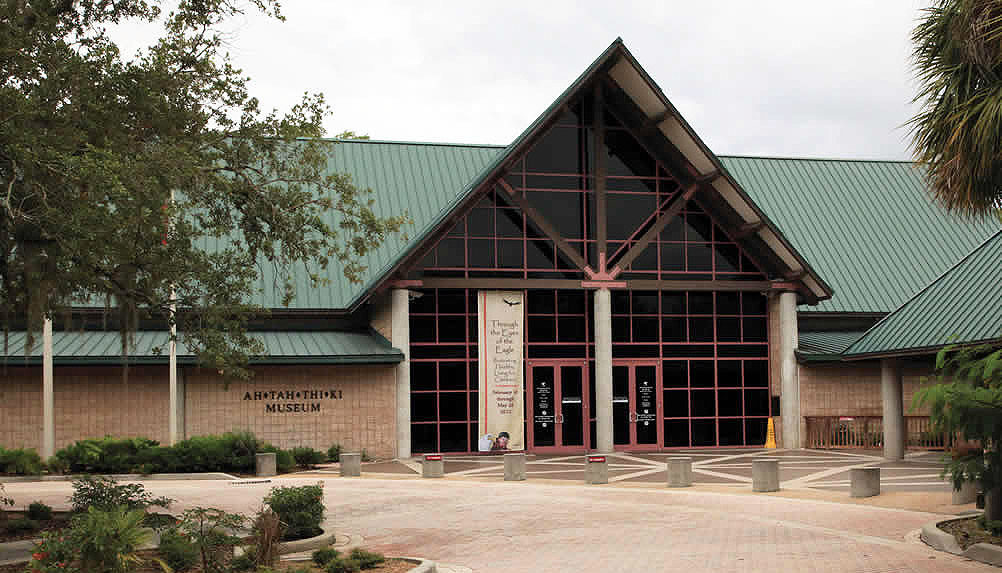
Seminole Tribe’s Ah-Tah-Thi-Ki Museum To Host Art Basal Pop-Up

Seminole Tribe’s Ah-Tah-Thi-Ki Museum To Host Art Basal Pop-Up
Ah-tah-thi-ki-Museum

BIG CYPRESS, FL – The Seminole Tribe of Floridas Ah-Tah-Thi-Ki Museum will participate in Miami Art Week, showcasing a special pop-up exhibit at the Seminole Okalee Indian Village & Venue in Hollywood, Florida on Saturday, December 2. The exhibit marks a milestone for the museum as it debuts at Art Basel for the first time, presenting the exhibit “EeLitchKo” under the category of cultural institutions. Art enthusiasts holding a 2023 Art Basel VIP pass can access this exhibit for free, featuring the latest works from Seminole artists like Samuel Tommie’s dynamic acrylics and Durante Blais-Billie’s intricate natural fiber art. “EeLitchKo” offers a unique chance to engage with Indigenous Floridian artists and their creations. For further details, visit the museum’s website at Ah-Tah-Thi-Ki Museum Pop-up.

Samuel Tommie_Majestic Series
Samuel Tommie, Majestic Series

In addition to the Art Basel participation, the museum will host two holiday markets. The first, the Hollywood Holiday Marketplace, will take place on Saturday, December 2, from 10 a.m. to 4 p.m. at Seminole Park, located at the Seminole Okalee Indian Village. Following this, the third annual Big Cypress Holiday Market is scheduled for Friday, December 8, and Saturday, December 9, from 10 a.m. to 4 p.m. each day, at the Museum Festival Grounds. These markets will feature a wide array of Native arts, crafts, clothing, and jewelry for sale, along with Seminole food vendors.

Admission to both the holiday markets and the Ah-Tah-Thi-Ki Museum will be free, offering a perfect opportunity to experience and purchase authentic Seminole creations.

This Canadian producer used AI to transform U.S. singer’s hit into a K-pop track

This Canadian producer used AI to transform U.S. singer’s hit into a K-pop track

When Canadian producer Jordan Young started playing around with AI voice-cloning technology — ultimately creating a fake Kanye West song that sounded, well, just like Kanye West — it immediately prompted him to think about the ethical implications of the technology. 

“As soon as I made it, I started to think … if anybody can make music with anyone’s voice, what does this mean for artists? What does this mean for music?” said Young, who has worked with Beyoncé, BTS and Dua Lipa.

He and his company Hooky recently developed a technology that could make an artist sound like they were singing in a different language from their own.

That resonated with American pop singer Lauv, who at the time had just finished a Korean tour and wanted to find a meaningful way to thank his fans. Why not develop a new version of his song Love U Like That, transformed to make it sound like he was performing in Korean?

The process began with Young’s company tapping Kevin Woo, a South Korean singer-songwriter who is fluent in English and Korean, to rewrite and sing the song in a new tongue. That interpretation has to capture the nuances of the Korean language, explained Young.

Three men are pictured in a music studio.
From left, Jordan Young, Lauv and Kevin Woo. Young’s company tapped Woo, a K-pop artist, to work on a Korean-language version of Lauv’s song facilitated by AI. (Hooky)

“It’s not just, throw it into a translator website and whatever it spits out, that’s your song. You have to be artistic about it,” Young said.

The recordings also had to match musically. For example, if Lauv sang in falsetto on a few bars, Woo did the same in his Korean-language demo.

Enter artificial intelligence.

The technology is trained on “every corner” of Lauv’s voice, as Young puts it — from the highest frequencies and tones to the lowest — to build a comprehensive model of his vocals.

The Korean-language demo written and sung by Woo is then combined with the AI model of Lauv’s voice, creating a Korean-language song that sounds like it’s sung by Lauv.

WATCH | The Korean-language version of LAUV’s Love U Like That: [embedded content]

It’s been a year of reckoning for creative industries wrestling with artificial intelligence.

The music business in particular has seen an explosion of AI-generated songs made to sound like the world’s most popular artists — such as the viral track Heart On My Sleeve, which featured computer-generated vocals that sounded like Drake and The Weeknd.

Some artists are fighting the non-sanctioned use of their voices and likeness, while others like Grimes, John Legend and Demi Lovato are embracing the tech to varying degrees. 

“At minimum, we should give artists control over how their voice is used,” said Young, who is from Toronto, noting that’s where the idea came from to use AI to change languages.

“It was about creating a control mechanism for artists to be able to manage their likeness in a world where AI can totally disrupt that.”

Other companies are working on technology that focuses on music and translation.

AudioShake, a San Francisco company that specializes in audio separation, isolates a song’s vocal track from the music, then uses AI to transcribe and translate the song, building technology that maps the original English with the new language so that fans can follow the lyrics of the original song in their language. Pop singer Sia is one of their clients.

Meanwhile, South Korea’s largest record label HYBE used in-house AI technology so that its artist Lee Hyun, known as MIDNATT, could record his song Masquerade in six different languages: English, Korean, Spanish, Japanese, Chinese and Vietnamese.

The singer recorded his song in each language, which was then combined with demos of native speakers reading out the lyrics. Hyun speaks Korean as well as limited English and Chinese.

“It’s a scary thing that people don’t fully understand, and often AI is portrayed as this monolithic thing, and it’s not,” said Young.

“AI is actually many different technologies that can come together in many different ways.”

Artists already trying to reach international fans

Even before AI came to the forefront this year, artists had already been trying to use different languages to target fans, according to Kristin Robinson with Billboard Magazine.

She points to Despacito, a 2017 song by Puerto Rican singer Luis Fonsi and Puerto Rican rapper Daddy Yankee, that saw its remixed version featuring Justin Bieber become a huge hit. 

“Having Justin Bieber hop onto a Latin track is not something I would have ever anticipated. Having Beyoncé try to sing in Spanish is not something I had on my bingo card for Beyoncé to do.”

But with AI now factored into this already successful trend, Robinson says people will likely have mixed feelings about “the authenticity” of the process.

A woman wearing a plaid jacket with green and gray details holds one hand to her cheek and crosses her other arm.
Kristin Robinson, a music publishing reporter at Billboard Magazine, says artists have been trying to target international fan bases using different languages even before the emergence of this technology. (Caity Krone)

It remains to be seen if this type of music will be well received. Robinson says that using the technology in a way that is both ethically and culturally appropriate is an important part of the conversation.

That was reflected in some of the online reaction to Lauv’s Korean-language version of Love U Like That. 

Some fans said they were “obsessed” with the new version, while others questioned the optics of a white artist using technology to insert his voice over a song sung by a Korean artist. Still others suggested different ways to have Lauv and Woo sing on the same track.

Getting ‘nuance’ of language important: Toronto artist

Toronto jazz vocalist and songwriter Jacqueline Teh hopes to incorporate her family’s language — Hokkien, a Chinese dialect from the Fujian province — into her future projects. As a multilingual artist, she can see the benefits and the downsides of using AI to create songs in different languages.

She says the technology seemed exciting at first, adding that it can be a “great springboard” for artists to access other languages.

But she says credit and agency are incredibly important to artists — and that she wouldn’t want AI to come between a potential relationship with a language that’s new to her, or with a person who speaks a language different from her own.

LISTEN | AI in music generates existential questions for artists: 

Front Burner29:01The Beatles and the future of AI music

Featured VideoBefore his death, John Lennon recorded a demo of a new song, “Now and Then” on a cassette. His Beatles bandmates later tried to repurpose it for release, but abandoned the project in part because of the poor voice quality. This week, Paul McCartney revealed that, 43 years after Lennon’s death, the song will drop – thanks to AI technology. It’s just the latest example of artificial intelligence’s increasing presence in the music industry. Fake Drake songs, AI-generated Kanye covers and posthumous Biggie collabs have raised alarm about copyright, and existential questions about songwriting and creativity. Today, Saroja Coelho speaks with the host of Vulture’s Switched on Pop podcast, Charlie Harding, about what the technology means for the music industry and art itself. For transcripts of this series, please visit: https://www.cbc.ca/radio/frontburner/transcripts

“I think with language there’s so much nuance and there’s so much slang and there’s so much that can’t really be translated just through technology,” she said, which is why working with a native speaker makes the song more meaningful to her. 

She says as long as artists aren’t using AI to bypass the hard work that goes into creating meaningful relationships with fans and other artists, “there’s so much that is accessible to us with technology.”

Young, the producer, is working on a new translation project — potentially with a Canadian artist. He says now that the genie is out of the bottle, the industry has to figure out how to steer the tech in the right direction.

“I’m never going to build something that removes the human being from the creative process,” he said. “And there are lots of companies that are attempting to do that right now.”