Native

Véxoa Nós Sabemos: A powerful exhibition of Brazilian Indigenous art at Tufts University Art Galleries

Véxoa Nós Sabemos: A powerful exhibition of Brazilian Indigenous art at Tufts University Art Galleries

Upon entering the Tufts University Art Galleries’ exhibition of Véxoa: Nós Sabemos, you are greeted by a vibrant variety of colors, mediums and sounds. Véxoa, originally showcased in the Pinacoteca de São Paulo in Brazil, found its new home at Tufts this September.

The exhibit, curated by Naine Terena, features the work of 22 contemporary Brazilian Indigenous artists from a wide range of regions and peoples. Terena herself is a member of the Terena people of Brazil, making Véxoa the first art exhibit in Brazil to be curated by an Indigenous person.

Claudia Avolese, a senior lecturer in the visual and material studies department at the SMFA, has led the project through its transition from São Paulo to Medford as TUAG’s guest

organizer of Véxoa.

“I moved to the U.S. in 2019. When I was still in Brazil, as a professor at the University of Campinas in São Paulo, I was following the whole process of putting together the concept of the exhibition, the invitation to [Terena],” Avolese said. “So when I moved and was hired at Tufts, this was in my mind because Boston … is the place with the largest Brazilian community outside of Brazil.”

Avolese worked closely with Terena to bring Véxoa to a new space while preserving its main principles and artworks.

Véxoa means “we know” in the Terena language. Avolese said that the title conveys that the Indigenous artists of this exhibit are speaking for themselves.

“They know what they need. They know what they want, and it is about opening a space for their voice,” Avolese said.

Véxoa showcases many different styles of art, ranging from Buriti fiber masks and hanging textiles to massive, vibrant paintings and documentary-style film. This is in part supported by the diversity of the artists, who hail from completely different peoples and regions of Brazil.

“To [Terena], this is a space to put different cultures from these different Indigenous perspectives in dialogue,” Avolese said.

For Avolese, a hanging installation by Kya Agari particularly stands out. 

image

“The textile, the way it hangs and when you start to walk through them, they kind of move and become alive,” she said. “So if you’re looking at it far away, it seems like abstract drawings, and when you start to relate to it, this idea of the corporeality of the work and the performativity of the work becomes more and more present to you.”

Agari made this textile piece specifically for the TUAG installment of Véxoa. The untitled work originally appeared painted on the walls of the São Paolo exhibition.

 “When we asked [Agari] if we could reproduce the work, she said she actually wanted to change it and do a different work,” Avolese explained.

Some Tufts students may have viewed Véxoa independently on a self-led walk, but some have experienced a course-specific tour led by Elizabeth Canter, manager of academic programs for TUAG.

“Studio art classes might be really interested in the process and materials that are being used in the exhibition, whereas [an] anthropology of the environment class was maybe thinking more about how these Indigenous artists are simultaneously artists and activists really engaged in the fight for their Indigenous rights and their Indigenous land,” Canter said.

Canter added that students see and connect to the various pieces of art in different ways.

“I’m always sort of amazed at what students see in different pieces and in the work and the connections that they make and how that makes me see things differently,” Canter said, “And I hope that works for them too.”

Tufts students are not only viewers of Véxoa but are also involved behind the scenes.

Muri Mascarenhas, a junior double-majoring in education and child study and human development with a visual arts minor, is part of the TUAG Student Programming Committee.

“I lived all my life in Brazil before coming to college,” they said. “Coming here to Tufts was my first time abroad, and my goodness how I miss Brazil.” 

In September, the Tufts Portuguese department hosted an event with Véxoa in which Mascarenhas introduced the panelists to students. The panel included Avolese as well as two of the artists whose work is featured in Véxoa: Denilson Baniwa and Daiara Tukano.

Mascarenhas also created a booklet that interacts with the exhibition and a musical listening guide.

“I curated a playlist of 40 songs from Brazilian Indigenous artists, and it’s there at the exhibition to listen [to] and available online. It’s good jams for all tastes from heavy metal, Indigenous [artists] from Brazil, … to pop, reggaeton, to everything,” they said.

Mascarenhas emphasized how special the exhibition is to them and how much work their colleagues put into presenting Véxoa at TUAG.

However, they also expressed disappointment in its reception from the community so far.

“I can tell you it’s been a little frustrating. The outreach to the local Brazilian community has been very weak. This was such a special opportunity, and I don’t think the local population of Brazilians came to the exhibition, or the local schools with Brazilian kids,” Mascarenhas said.

They also added that it seems as though many local Brazilians have not heard of Véxoa or the fact that it is free and open to the public.

Much of the Boston Brazilian population has historically voted for right-wing Brazilian candidates, with political scientists having predicted that the population would vote for former President Jair Bolsonaro in Brazil’s last election.

These politics, Mascarenhas contends, tend to go hand in hand with apathy toward expanded Indigenous rights. Mascarenhas expressed that they wished more local Brazilians had come to the exhibition to challenge their perceptions and open their perspectives of Indigenous life.

Avolese spoke wearily of the misconception that if Indigenous peoples are not isolated, then they lose their identity.  

“[These cultures are] not trapped in the past. They’re dynamic and they’re being transformed, and that doesn’t make them less Indigenous. … Most Indigenous populations in Brazil, they’re living at what you could call sort of the border between two cultures. … The majority of Indigenous people are living in urban centers,” Avolese said.

Véxoa’s run at TUAG continues until Dec. 10, 2023, when a final event will mark the exhibition’s closing. The event will involve a tour led by Avolese and a talk in both English and Portuguese.

Gold Award-winning artist returns for solo exhibition

Gold Award-winning artist returns for solo exhibition

Published on 17 November 2023

1048x656_RichardBell_JonathanMcBurnie.jpg

Rockhampton region will get a chance to see the works of one of Australia’s most significant Indigenous artists, in an exclusive exhibition at Rockhampton Museum of Art, from mid November.

Richard Bell’s exhibition Bell’s Theorem will be the largest solo exhibition in the artist’s home state to date.

It will also be his first in Australia after his critically acclaimed participation in the 58th Venice Biennale (Bell gatecrashed the world’s most famous biennale with a scene-stealing and provocative installation, roaming the canals on a barge)  and major solo exhibitions at Tate Modern in London and Van Abbemuseum Eindhoven, the Netherlands.

Bell has also been the subject of a highly awarded documentary, You Can Go Now, available on SBS.

Bell’s Theorem covers around four decades of the artist’s career and shows how his artwork has been informed by a lifetime of activism for Aboriginal land rights. The artist often employs humour and catchy phrases in his paintings and videos to express the conflicts between ‘Western, colonial and Indigenous art production and its reception.’

In addition to his paintings, the exhibition will also include a travelling artwork Embassy, inspired by the Aboriginal Tent Embassy which was pitched on the grounds of Parliament House in Canberra in 1972 by four young activists. Bell’s Embassy, which is jointly owned by the Tate Modern in London and Museum of Contemporary Art in Sydney, will be the venue for public dialogue at various times during the exhibition.

Bell was born in Charleville and lived in several locations around Queensland in his formative years, including Rockhampton.

He won Rockhampton Art Gallery’s Gold Award in 2018 for his painting Untitled that mimicked the style of Roy Lichtenstein and Jackson Pollock to provoke ideas about ‘place’. Along with prizemoney, the Gold Award came with an invitation to undertake a solo exhibition at Rockhampton Museum of Art.

Rockhampton Regional Council Communities and Heritage spokesperson Cr Drew Wickerson said that Rockhampton Museum of Art is delivering on a promise to provide access to some of Australia’s most significant contemporary artists, right here in Rockhampton.

“This is a major exclusive for the Rockhampton Museum of Art, demonstrating that RMOA is now a leading regional art gallery for Queensland and Australia. This world-class artist’s works will be on show, for free, for all our residents and visitors to the region this summer,” he said.

Bell’s Theorem will be on display from 18 November 2023 to 18 February 2024 at Rockhampton Museum of Art, 220 Quay Street, Rockhampton. Admission is free.

Rockhampton Museum of Art is owned and operated by Rockhampton Regional Council.

McAllen native wins 3 Latin Grammys, including songwriter of the year

McAllen native wins 3 Latin Grammys, including songwriter of the year
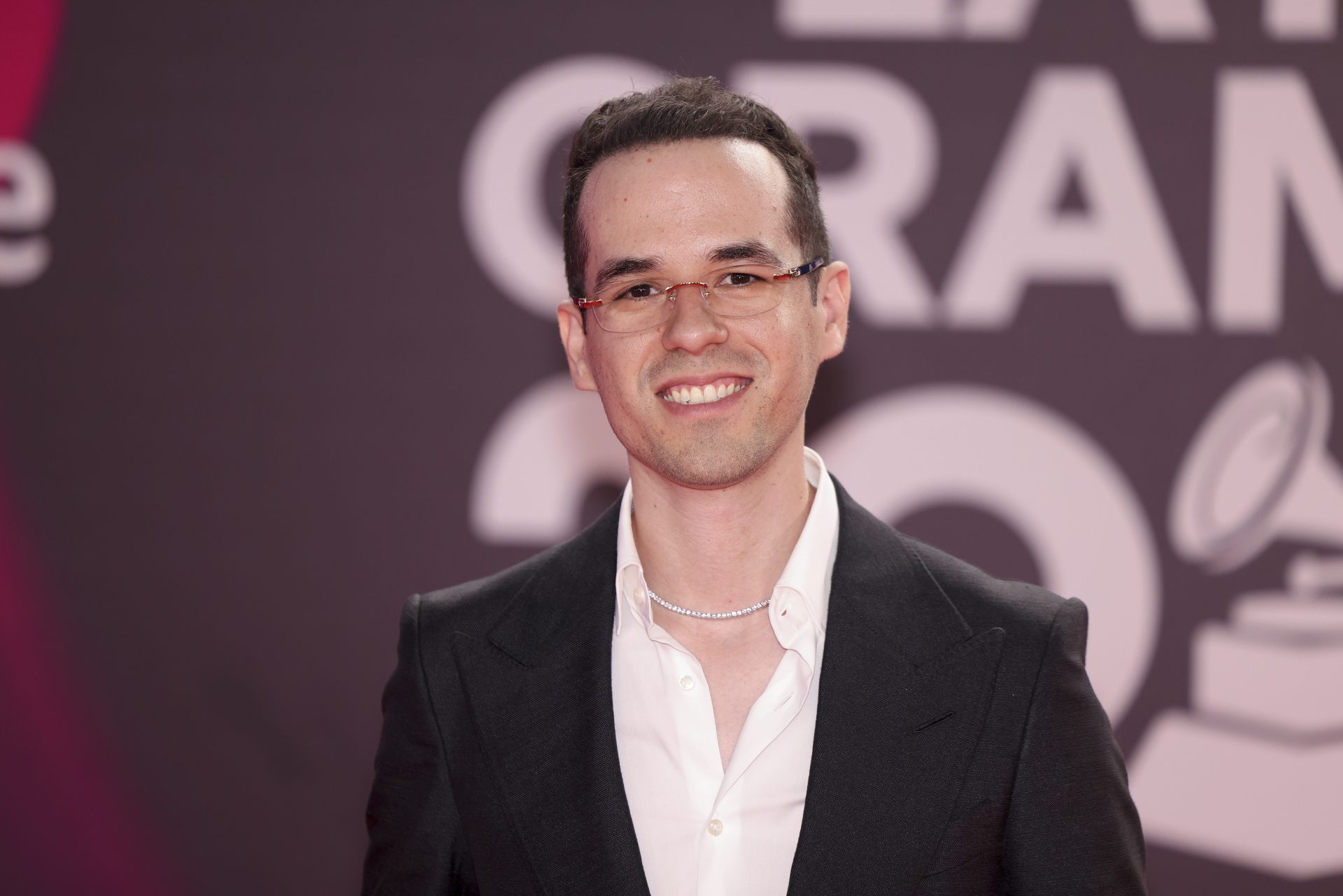
Édgar Barrera arrives at the 24th annual Latin Grammy Awards in Seville, Spain, Thursday, Nov. 16, 2023. (Photo by Vianney Le Caer/Invision/AP)

Only have a minute? Listen instead

McAllen native Édgar Barrera won three Grammys Thursday evening, including the new songwriter of the year category during the 2023 Latin Grammys ceremony in Spain. 

The 32-year-old is the first winner in the newly created songwriter of the year category, which aims to recognize the written excellence, profession and art of songwriting, the Latin Recording Academy said on its March 21, 2023 announcement.

Barrera also won Grammys for the producer of the year and best regional song categories, with the latter featuring three of his nominations (“Alaska” by Camilo and Grupo Firme, “La Siguiente” by Kany García featuring Christian Nodal and “un x100to” by Grupo Frontera featuring Bad Bunny).

[embedded content]

The best regional song win also includes fellow Rio Grande Valley stars Grupo Frontera, known in their hometown as the Sons of Edinburg, for their song with Bad Bunny “un x100to.”

The Mexican-American composer, who was born in McAllen and grew up in Miguel Alemán, Tamaulipas, led this year’s Latin Grammys nominations with 13. Barrera also had nominations in the record, song, album of the year — as well as the best pop song and best tropical song categories. 

Thursday’s wins adds to Barrera’s acclaim, totaling one Grammy and 21 Latin Grammys

“Being an artist who is a public figure and things like that doesn’t really catch my attention,” he previously told The Associated Press earlier this year. “I don’t like that prominence or anything like that. Being hidden behind, writing the songs, producing, doing what I like to do, what I know how to do, that is enough, and I don’t need the mark of being the artist, of being named.”


Read more about Barrera here:

Édgar Barrera is the producer behind your favorite hits — and the Latin Grammys’ top nominee

Russian artist jailed for seven years over anti-war price tag protest

Russian artist jailed for seven years over anti-war price tag protest

Alexandra Skochilenko was convicted of spreading ‘false information’ after she replaced five supermarket price tags with criticism of Russia’s war in Ukraine.

Russian artist Alexandra Skochilenko has been sentenced to jail for seven years after being found guilty of spreading “false information” about the Russian military by replacing a handful of supermarket price tags with messages criticising the war in Ukraine.

The 33-year-old, known as Sasha, is one of thousands of Russians to be detained, fined or jailed for speaking out against Moscow’s invasion of its neighbour amid an escalating crackdown on free speech and opposition to President Vladimir Putin.

Skochilenko was arrested in her native St Petersburg in April 2022, after an elderly customer at the supermarket found the slogans on the price tags and notified the police.

“The Russian army bombed an arts school in Mariupol. Some 400 people were hiding in it from the shelling,” one read, in reference to Russia’s brutal siege of the southern Ukrainian city. Another said, “Russian conscripts are being sent to Ukraine. Lives of our children are the price of this war.”

Judge Oksana Demiasheva delivered the verdict on Thursday hours after Skochilenko, who has a congenital heart defect and coeliac disease, had made a final statement to the court, asking for compassion and to be set free.

As well as the prison term, the artist was banned from using the internet for three years.

Skochilenko, wearing a colourful T-shirt decorated with a large red heart, reacted with shock to the sentence, covering her face and wiping away tears.

Supporters shouted “shame” and “we’re with you Sasha”, the AFP news agency reported.

Skochilenko’s lawyers left without giving any comment.

Skochilenko’s arrest came about a month after authorities adopted a law effectively criminalising any public expression about the war that deviated from the Kremlin’s official line.

Human rights group Memorial – now banned in Russia – said police spent 10 days interrogating supermarket staff and inspecting security camera footage before arresting the artist.

“They sometimes give less for murder than for five price tags in a supermarket,” Boris Vishnevsky, a politician linked to the opposition Yabloko party, told AFP.

“Hopefully, someday, the pendulum will turn the other way.”

Skochilenko was accused of committing what the state prosecutor described as a serious crime out of “political hatred” towards Russia. He had asked for her to be jailed for eight years.

Skochilenko admitted to swapping the tags but denied that the text written on them was false. She said she was a pacifist who valued human life above all else.

“How weak is our prosecutor’s faith in our state and society if he thinks our statehood and public safety can be ruined by five little pieces of paper?” she said in court.

“Everyone sees and knows that you are not judging a terrorist. You’re not trying an extremist. You’re not even trying a political activist. You’re judging a pacifist,” she said.

Friends of Alexandra Skochilenko hug each other after the verdict.
Skochilenko’s friends and supporters said the verdict was a disgrace [Olga Maltseva/AFP]

Amnesty International condemned the verdict.

“Her persecution has become synonymous with the absurdly cruel oppression faced by Russians openly opposing their country’s criminal war,” it said in a statement.

Memorial has designated Skochilenko a political prisoner and has launched a campaign calling for her release.

She has already been in detention for nearly 19 months, meaning that her overall term will be reduced by more than two years, since every day served in a pre-trial detention centre counts as 1.5 days of time served in a regular penal colony.

But she has struggled in custody due to pre-existing health conditions, and her need for a gluten-free diet, according to her lawyers and her partner.

According to OVD-Info, a prominent rights group that monitors political arrests and provides legal aid, a total of 19,834 Russians have been arrested between February 24 2022, when Russia began its invasion, and late October 2023 for speaking out or demonstrating against the war.

Also on Thursday, opposition politician Vladimir Milov was convicted in absentia of spreading false information about the army and sentenced to eight years. Milov, who was once Russia’s deputy energy minister and is now an ally of imprisoned opposition leader Alexei Navalny, has left the country.

ArtSEA: Art, film and food to honor Native American Heritage month

ArtSEA: Art, film and food to honor Native American Heritage month

And here’s where I start to run out of room. But not before I let you know about several Indigenous-themed documentaries coming up at Northwest Film Forum. While Killers of the Flower Moon may be getting all the box office buzz, these docs reveal powerful Native American histories as well (and with much shorter running times). 

Bad Press (Nov. 16-19) is a gripping story about the fight for free press in the Muskogee Nation, where the tribe’s own legislative branch worked to gain full editorial oversight of what was reported in the tribal newspaper. Ever Deadly (Nov. 18-22) profiles mesmerizing Inuk throat singer Tanya Tagaq via concert footage and animated storytelling. 

And as part of the “Moving History” series, NWFF is also screening two video segments about prominent Northwest Native activists: Upper Skagit elder and environmentalist Vi Hilbert; and Bernie Whitebear (Confederated Tribes of the Colville Reservation), who played a major role in the occupation of Fort Lawton and the founding of the Daybreak Star Cultural Center (both screening Nov. 26).

Which brings us to shopping. If you’re planning to partake in “Black Friday” madness, consider channeling some of that consumer energy toward one of our region’s many options for buying Native art. 

Daybreak Star Cultural Center houses the original Sacred Circle Gifts and Art shop, featuring all kinds of cool cards, jewelry, prints, calendars and more made by Indigenous artists. (Also currently on view: an exhibit by painter Shana Yellow Calf Lukinich, who blends Coast Salish, Plains and Metis/Chippewa styles.)

And there’s another Sacred Circle shop at Sea-Tac Airport — which I can personally attest is a great way to pass the time when your Thanksgiving travel has been horribly delayed.

The Duwamish Tribe is hosting its hugely popular Native Art Market in the Longhouse and Cultural Center once again (Nov. 24-26), featuring a wide array of arts and gifts made by local artisans. 

And while you’ll have to wait for a restock to purchase the gorgeous Eighth Generation blanket recently featured on the cover of British Vogue (wrapped around Killers of the Flower Moon star Lily Gladstone — who, by the way, grew up partly in Seattle and took drama classes at Stone Soup Theatre), you can shop for other items at the new location of the Snoqualmie Tribe-owned store. 

Founded in 2008 by Louis Gong (of Nooksack heritage), Eighth Generation recently moved from inside Pike Place Market to a bigger location across the street — all the better to bring you more wares crafted by Native makers from across the country, including warm, fuzzy piles of fashion-mag-worthy wool and cotton blankets.

Rockford native Jodi Benson previews ‘Disney 100: The Exhibition’

Rockford native Jodi Benson previews ‘Disney 100: The Exhibition’

CHICAGO, Ill. (WIFR) – Celebrating a century of the Walt Disney Company, “Disney 100: The Exhibition” hosts 10 interactive galleries, with more than 250 pieces of art, props and costumes.

Making an appearance at the Chicago exhibition Thursday, was Jodi Benson, who portrayed Ariel in “The Little Mermaid” (1989).

Growing up in the stateline, Benson says she would not change anything about her early acting days.

“Everything was a surprise, like once I did the film, I had no idea that anyone would ever know who I was, because we were supposed to be anonymous,” Benson said. “I really didn’t know if I had the talent to be able to take it to the next level.”

Benson graduated from Boylan Catholic High School. 10 years later, she would be cast in “The Little Mermaid” (1989).

“I love Ariel, I love my character, I love what she stands for, I love that new generations can fall in love with her,” Benson said.

She says she has always loved the arts, but truly discovered her passion performing as a young Rockfordian.

“I started singing when I was probably 5 years old and started to do some community theater, took a few dance classes and then I was able to do a few shows during high school and also did the summer theater program at Rock Valley Starlight. It was a wonderful start in Rockford. I wouldn’t change a thing,” Benson said.

“Disney 100: The Exhibition” opens Saturday, Nov. 18 at the Exhibition Hub Art Center in Chicago. Tickets can be purchased on their website.

First Nations art a feature to Sovereign Hill upgrades

First Nations art a feature to Sovereign Hill upgrades

A NEW Wadawurrung cultural precinct at Sovereign Hill is set to include works by five First Nations artists.

The announcement of the contributing artists was made last week and will include works by Aunty Marlene Gilson, Dr Deanne Gilson, Tammy Gilson, Kait James and Lynette Fagan.

The project is set to be completed mid-next year and display sculptures representing the history of Wadawurrung people.

“The Wadawurrung cultural precinct will extend that knowledge of our laws, our traditional practices, of our creation stories, our oral stories that have been passed down to us,” said Dr Gilson.

“It will celebrate that continued living culture as despite the referendum results, we must move forward and educate the future generations.”

Sovereign Hill CEO Sara Quon said the precinct is a special and important addition to the living museum.

“This project is something that came from our master plan, but it came from consultation with traditional owners,” she said.

“As we sat down through the formation of our master plan, this was a project that we agreed was important.

“To be here nearly three years later working with artists on the realisation of that is very special.”

The State Government has contributed $6 million towards a wider upgrade that includes the First Nations art project and Member for Eureka, Michaela Settle, was at the site for the announcement.

“Sovereign Hill is a huge part of the Ballarat economy, but more than that it’s a big part of our lives,” she said.

“I think that’s what’s so extraordinarily special about today, is that something that’s been in lives for so long is now going to have a Wadawurrung cultural precinct.”

Other works as part of the funding include a ‘valley of lights’ dining event as well as an indoor dining overhaul, gold panning space upgrades, and improvements to accessibility.

In total the works should create 69 new construction jobs, with 11 ongoing positions once complete.

Sita Ram: The unknown Indian artist who painted for British rulers

Sita Ram: The unknown Indian artist who painted for British rulers
Roomee Durwaza and Entrance to the Emambarra at Lucknow, Watercolour on paper, c. 1815-25, 13.0 x 19.7 in (From the DAG collection)dag collection

The painting above depicts the open area in front of Bara Imambara, a historical building complex in Lucknow, the capital city of the Indian state of Uttar Pradesh.

Built in 1784 as part of a famine relief works project by Nawab Asaf-ud-Daula, the prince of the royal house of Oudh, it is one of the last great and palatial buildings constructed in the Mughal style. The complex includes several structures, including the Bhool Bhulaiya (a labyrinth) and the Asfi mosque.

Look at the painting again. You can see the outer gate of the complex, and the Imambara itself is out of view. To reach the imposing building, visitors have to pass through this gate and two large courtyards before reaching the central hall, which is one of the world’s largest arched constructions without the support of beams or pillars.

In the painting, straight ahead, there’s the Rumi Darwaza, the imposing gateway to old Lucknow. Then there’s a solitary elephant and some scattered people.

This evocative watercolour drawn by the once-obscure and long-anonymous Indian artist Sita Ram, will feature in an exhibition of Iconic Masterpieces of Indian Modern Art, organised by DAG, in Delhi later this month.

From June 1814 to early October 1815, Sita Ram travelled extensively with Francis Rawdon, also known as the Marquess of Hastings, who had been appointed as the governor general in India in 1813 and held the position for a decade. (He is not to be confused with Warren Hastings, who served as India’s first governor general much earlier).

Sita Ram’s Gate leading to the Imaumbarah, and East side of the Roma Durauzeh in the British Library was part of the paintings made for Lord Hastings. Similar in its angle of view and composition, instead of the lone elephant and a few figures, this features a long procession approaching the Rumi Darwaza. Made around the same period, it is unclear which came first, the painting featured here or the one under discussion. (source: From the book, Iconic Masterpieces of Indian Modern Art, Edition 3)

dAG collection

As art historians tell the story, Lord Hastings sailed upstream with a vast retinue – his wife, and staff and a painter who he mentions only as a “Bengal draftsman” – in a flotilla of 220 boats over 15 months from the city of Kolkata (then Calcutta) to the distant reaches of Jind, now situated in Haryana.

The purpose of the long journey was to “meet the rulers in northern India, with a view to possible expansions of British control, and to monitor more closely an ongoing war in Nepal”, according to art historian Giles Tillotson.

During the journey, Sita Ram painted 229 large water colour paintings portraying the buildings and landscapes that unfolded along the way”. Together, they amount to a “continuous visual narration of the expedition and complement Hasting’s written account”, says Mr Tillotson.

JP Losty, a former curator of the British Library in London, wrote that “some of the paintings illustrating the river journey are among the most tranquil and beautiful creations in Indian painting”.

The paintings – averaging 40 by 60cm – were pasted into 10 annotated albums which Hastings took back home at the end of his term in India. They were passed down to his descendants and for a century and a half – 1820s to 1970s – Sita Ram’s works were “unseen by the outer world, and his name was unknown”.

In 1974, Hasting’s family sold two of the albums containing 46 paintings in an auction at Sotheby’s in London. As the album covers bore Sita Ram’s name, the world got a glimpse of this previously unrecognised artist and his work, according to Mr Tillotson.

𝘛𝘩𝘦 𝘙𝘶𝘮𝘪 𝘋𝘢𝘳𝘸𝘢𝘻𝘢 𝘧𝘳𝘰𝘮 𝘵𝘩𝘦 𝘯𝘰𝘳𝘵𝘩-𝘸𝘦𝘴𝘵 by Sita Ram from the British Library collection

British Library Collection

“On this evidence alone, specialists of Indian paintings saw Sita Ram as one of the most important Indian artists of this period,” he says. “But still very little was known about him”.

As the paintings were offered for sale anonymously, there was no way of connecting Sita Ram with Hastings.

Twenty years later, the family decided to sell the remaining eight albums along with three others containing more paintings made by Sita Ram on later journeys in Bengal in 1817 and 1821. The collection was acquired by the British Library.

“It now appears that Hastings was not the artist’s only patron. After Hastings left India, he continued to work for other patrons, or he made other versions of his works, either to keep himself or sell to others,” says Mr Tillotson.

Sita Ram’s artworks contribute to the genre known as Company Paintings, distinguished by their use of watercolour, a departure from the conventional gouache, and executed on paper, assembled into folio-bound albums.

The paintings took their name after The English East India Company, founded in 1600, which was established for trading. But as the powerful multinational corporation expanded its control over India in the late 18th Century, it commissioned many remarkable artworks from Indian painters – Sewak Ram of Patna and Ghulam Ali Khan of Delhi were notable names – who had previously worked for the Mughals.

Not much is still known about Sita Ram. Hailing from Bengal, he seems to have been trained in the late Mughal school of Murshidabad, the capital of the prince of Bengal. “When the school fell by the wayside, artists like Sita Ram moved on to find patrons in the new cities emerging under British rule,” says Mr Tillotson.

Was Sita Ram a trained draughtsman? Losty seemed to think so. He wrote that Sita Ram’s work was “overlaid by exposure to a precise style of draughtsmanship” which he could have probably acquired through being trained as a botanical draughtsman or an architectural draughtsman “as well as his training in the English watercolour topographical style”.

Losty said many of Sita Ram’s paintings “promised to be of great interest in the discovery of India’s past before the advent of photography and the Archaeological Survey”.

Mr Tillotson says Sita Ram was “one of the most versatile and inventive of Indian artists working for European patrons in the early 19th Century”.

“Scenes such as this courtyard before the Imambara in Lucknow [in the painting] seem familiar to us 200 years later; all that has changed is an increasingly urban landscape that is now encroaching on the setting.”

BBC News India is now on YouTube. Click here to subscribe and watch our documentaries, explainers and features.

Presentational grey line

Read more India stories from the BBC:

Presentational grey line

Related Topics

Feds fund $8M for first UVic chair of decolonial Indigenous art practices – Vancouver Island Free Daily

Feds fund $8M for first UVic chair of decolonial Indigenous art practices – Vancouver Island Free Daily

Globally renowned Indigenous art historian and curator Heather Igloliorte joins the University of Victoria as the inaugural Canada Excellence Research Chair in Decolonial and Transformational Indigenous Art Practices.

Igloliorte’s research in decolonial and resurgent Indigenous creative practices in Canada will focus on institutional, community-based and collaborative research towards decolonization across the country and internationally.

“The arts have the power to challenge the historical narrative of Canada’s colonial ‘truth’ as told—and hidden—by museums, galleries, educational institutions and public spaces,” Igloliorte said in a news release. “With art, we can create meaningful shifts in relationships between Indigenous and non-Indigenous peoples and support systemic and structural cultural, social and economic change towards decolonization.”

The $8 million in federal funding – through the Canada Excellence Research Chairs program and administered by the Social Sciences and Humanities Research Council – was announced Nov. 16 and includes support for 34 new research chairs.

READ ALSO: University of Victoria’s Indigenous art practices impact chair hopes to be catalyst for change

Applying her skills in digital media, artistic processes and boundary-pushing curatorial methods, Igloliorte will bring together Indigenous knowledge and artistic practices from the past, present and future. In the process, she will move institutional, community-based research and museum practices towards decolonization.

“Alongside many partners who have committed to share in the work of this CERC, our goal is to leverage the transformative power of art and creative intervention for the benefit of Indigenous futurity – especially through the work of artists and communities,” Igloliorte said.

Indigenous Futurisms is a scholarly and artistic movement that imagines alternative futures for Indigenous Peoples.

“I look forward to uniting and empowering an international network of artists, curators, scholars and community members to advance new decolonial and Indigenous scholarship and practices through research and experimentation in art-making, exhibitions, policy and public engagement. We believe it’s time for innovative work to revolutionize museum and gallery practices for the 21st century.”

READ ALSO: UVic students explore ancient life on barely documented Indigenous land

Igloliorte will provide training and mentorship to Indigenous and other equity-deserving post-secondary students through hands-on learning and opportunities to experiment and innovate.

The new position represents progress, said Lisa Kalynchuk, UVic’s vice-president, research and innovation.

“It recognizes the pivotal role arts-based research can play in creating a more just society and shines a spotlight on the impact of Indigenous-led scholarship. We’re beyond excited to welcome Heather to UVic and we know her contribution to our students and extended arts community will be profound,” Kalynchuk said.

oak baySaanichUVic