Native

Things to do: Stephanie Land reading, Native play debut and live music

Things to do: Stephanie Land reading, Native play debut and live music

Here’s a quick guide to some upcoming events happening around Missoula in the coming week.


111323-mis-nws-musical-01.JPG

From left, University of Montana students Connor Romandine, Lucy Schindler, Andy Lottis, McKay Cheney, Rikky Johnson, Nick Monsos, Monroe Ayers and Mikayla Kay in the Zootown Cabaret, a student performing ensemble for musical theater, rehearse “35mm: A Musical Exhibition” at McGill Hall on Thursday, Nov. 9. The student group is staging a musical based on photographs by a Broadway photographer who grew up in Missoula.


‘35mm: A Musical Exhibition’

(Friday-Saturday, Nov. 17-18)

The Zootown Cabaret, an auditioned UM musical theater group, is staging an unconventional new show with Missoula ties.

In “35mm: A Musical Exhibition,” still photographs (seen on a projection screen) formed the inspiration for the music. New York composer-lyricist Ryan Scott Oliver, a rising star in the theater world, wrote songs in a variety of genres based on photographs by his husband, Matthew Murphy, a theater and dance photographer who grew up in Missoula.

Details: 7 p.m. doors, 7:30 p.m. show. $17 general, $10 students. Contains mature themes and language.

People are also reading…

Bass loops take the lead

(Saturday, Nov. 18)

During the low points of 2020, Cole Grant, a bassist who plays with the local jazz-jam-improv group Transcendental Express, spent a lot of time jamming not with his friends, but a looping pedal.

That time turned into an album’s worth of short loops that he released as a beat tape.

He’s expanded that effort with a new project under the name C Dylla G. (The name’s an homage to the late producer James Yancey, who went by J Dilla.)

Quarantine long over, he brought in collaborations for a triple-album’s worth of new beats, each around a minute and 20 per record. You can hear work by saxophonist Lhanna Writesel, multi-instrumentalist Sean Burress, singer-songwriter Gabrielle Tusberg and former “Pea Green Boat” host Annie Garde.

To bring the loops to life for a release show, Grant booked Suite Two, a community performance space, and booked three artists that will interpret one album each: DJ Slacks, S_nya and Doctor Fly, plus visuals by Rainbow Gorilla.

Details: 8 p.m., $10 suggested donation. Suite Two is located at 1001 S. Fourth St. W.

Funksgiving at the Wilma

(Saturday, Nov. 18)

The Bozeman tradition of Funksgiving, now in its ninth year, is expanding to Missoula.

A ’70s costume party, in which the bands and the audience can dress up, has sold out the past three years in its home city.

The music is provided by the Sweet Groovalicious Funk Machine with some special guests: L.A. singer Adryon de Leon, Bozeman country singer Paige Rasmussen, and local vocalist Kelley Sinclair. Montana “power disco” duo Desperate Electric will open.

Some proceeds will go to the nonprofit Montana Land Reliance, which works with “private landowners to permanently protect agricultural lands, fish and wildlife habitat and open space,” according to its website.

Details: Tickets are $20 advance, $23 day of, logjampresents.com. Doors at 7 p.m., show at 8.


020919 stephanie land1 kw.jpg (copy)

Stephanie Land seen at her home in Missoula in 2019 not long after “Maid” was published.


Kurt Wilson


Stephanie Land reading at MPL

(Sunday, Nov. 19)

The Missoula author of the best-selling memoir “Maid,” which was turned into a Netflix series, has written a follow-up book, “Class: A Memoir of Motherhood, Hunger, and Higher Education.”

Released early this month, the book covers Land’s experience raising a young daughter on her own while finishing an English and creative writing degree at the University of Montana.

At this hometown celebration, she’ll discuss the book with local novelist and vlogger Hank Green.

Details: Free, 7 p.m. MPL Cooper Room on the fourth floor.

Original play addressing MMIP

(Sunday, Nov. 19)

A new play by a local Indigenous writer that addresses the epidemic of Missing and Murdered Indigenous People will get a stage reading this weekend.

“Can’t Drink Salt Water” is an original work by Missoula playwright Kendra Mylnechuk Potter (Lummi). She wrote and starred in an original full-length show, “The Buffalo Play,” which premiered in Missoula and New York. She was also the subject of a documentary, “Daughter of a Lost Bird,” about her adoption by a white family in Missoula and her search for her adult mother.

According to the Rep, the play follows two stories: “a mother’s relentless search to find her missing daughter with the journey of a young woman newly arrived at Bethel House, an evangelical shelter for victims of sex trafficking.”

The director of this reading is Pirrone Yousefzadeh and the cast includes Indigenous actors from around the U.S. and Canada, including Elva Guerra of the FX series “Reservation Dogs.” 

This is a staged reading, meaning there’s no set and costumes, and the Rep has committed to a full production in the future.

Details: 4 p.m., Montana Theatre, PAR/TV Building. Tickets are $5-$50 at montanarep.com. Recommended for adult audiences.

String Orchestra of the Rockies concert

(Sunday, Nov. 19)

The SOR’s final concert of the calendar year, “Musical Stars and Serenades,” features two soloists and a youth guest orchestra.

The soloists are the group’s music director, Maria Larionoff, a violinist and former concertmaster for the Seattle Symphony, and Adam Collins, cellist and professor at UM. They’ll take the spotlight on Vivaldi’s Concerto for Violin, Cello and Strings.

The orchestra’s “Risings Stars” group, which includes UM undergraduates and area high school students, will join them for Dvorak’s Serenade for Strings.

Details: 4 p.m., UM Music Building Recital Hall.


110323-mis-nws-stolen-waters-01.jpg (copy)

Heather Cahoon shares poems while speaking at the first night of the Stolen Waters Summit at the University of Montana’s Payne Family Native American Center in early November.


Glacier Symphony with Native poetry

(Saturday-Sunday, Nov. 18-19)

For “Vision Spirit Land,” the symphony has some special collaborations from an Indigenous poet and artist.

The centerpiece of the concert is the world premiere of “The Hunting Moon,” a symphonic piece by the group’s conductor John Zoltek. It includes nearly 15 poems by Heather Cahoon, a UM professor and member of the Confederated Salish and Kootenai Tribes. The narration will be accompanied by guest soloist Suzanne Teng on flute. The pre-concert and intermission will feature work by Monica Gilles-BringsYellow, a Missoula-based Salish visual artist, and the concert will have two ceremonial songs by Kevin Kickingwoman, a Blackfeet artist, Browning High School instructor and the 2023 Montana Teacher of the Year. Besides Zoltek’s original composition, the concert features Ralph Vaughan Williams’ “Visions” and pieces by Samuel Barber and Dvorak, along with visuals.

Details: Saturday at 7:30 p.m. and Sunday at 3 p.m. in McClaren Hall at Wachholsz College Center at Flathead Valley Community College in Kalispell.

Quick hits

Local show at Free Cycles: The Benevolents (7 p.m.) and the Two Tracks (8:30-10 p.m.). The Benevolents are a local folk-rock-jam group; while the Two Tracks are a Sheridan, Wyoming, Americana outfit that recently released a new album, “It’s a Complicated Life” that was deemed to be “pure excellence” by American Songwriter magazine. Admission is $5 at the door, no one will be turned away for lack of funds. All ages. Friday, Nov. 17.

Locals at the Badlander: Catch a three-pack of old-school musicians with The Skurfs, Modular Haze and Bacon and Egg. 7 p.m., $10, on Friday, Nov. 17.

‘Napoleon Dynamite’ reunion: The cast of the cult film is celebrating its 20th anniversary with a screening and an on-stage discussion: Jon Heder as the title character, Efren Ramirez as Pedro and Jon Gries as Uncle Rico. Friday, Nov. 17, 8 p.m. Dennison Theatre, griztix.com.

Noise-heavy groups at VFW: Attendees of the late noise/heavy/anything event Total Fest may recall Gaythiest of Portland. They’ll play with local metal-doom outfit Swamp Ritual and a local noise-improv group whose name includes the word “Panic,” led by Tricia Opstad and Dusty Shriver. Friday, Nov. 17, $10, all ages, Doors at 8 p.m., show at 7:30 p.m.

You must be logged in to react.
Click any reaction to login.

#lee-rev-content { margin:0 -5px; }
#lee-rev-content h3 {
font-family: inherit!important;
font-weight: 700!important;
border-left: 8px solid var(–lee-blox-link-color);
text-indent: 7px;
font-size: 24px!important;
line-height: 24px;
}
#lee-rev-content .rc-provider {
font-family: inherit!important;
}
#lee-rev-content h4 {
line-height: 24px!important;
font-family: “serif-ds”,Times,”Times New Roman”,serif!important;
margin-top: 10px!important;
}
@media (max-width: 991px) {
#lee-rev-content h3 {
font-size: 18px!important;
line-height: 18px;
}
}

#pu-email-form-breaking-email-article {
clear: both;

background-color: #fff;

color: #222;

background-position: bottom;
background-repeat: no-repeat;
padding: 15px 0 20px;
margin-bottom: 40px;
border-top: 4px solid rgba(0,0,0,.8);
border-bottom: 1px solid rgba(0,0,0,.2);

display: none;

}
#pu-email-form-breaking-email-article,
#pu-email-form-breaking-email-article p {
font-family: -apple-system, BlinkMacSystemFont, “Segoe UI”, Helvetica, Arial, sans-serif, “Apple Color Emoji”, “Segoe UI Emoji”, “Segoe UI Symbol”;
}
#pu-email-form-breaking-email-article h2 {
font-size: 24px;
margin: 15px 0 5px 0;
font-family: “serif-ds”, Times, “Times New Roman”, serif;
}
#pu-email-form-breaking-email-article .lead {
margin-bottom: 5px;
}
#pu-email-form-breaking-email-article .email-desc {
font-size: 16px;
line-height: 20px;
margin-bottom: 5px;
opacity: 0.7;
}
#pu-email-form-breaking-email-article form {
padding: 10px 30px 5px 30px;
}
#pu-email-form-breaking-email-article .disclaimer {
opacity: 0.5;
margin-bottom: 0;
line-height: 100%;
}
#pu-email-form-breaking-email-article .disclaimer a {
color: #222;
text-decoration: underline;
}
#pu-email-form-breaking-email-article .email-hammer {

border-bottom: 3px solid #222;

opacity: .5;
display: inline-block;
padding: 0 10px 5px 10px;
margin-bottom: -5px;
font-size: 16px;
}
@media (max-width: 991px) {
#pu-email-form-breaking-email-article form {
padding: 10px 0 5px 0;
}
}
.grecaptcha-badge { visibility: hidden; }

These Indigenous Artists Are Using Public Art to Make Their Voices Heard

These Indigenous Artists Are Using Public Art to Make Their Voices Heard

From the ancient petroglyphs at Nevada’s Grimes Point Archaeological Site to the vibrant murals adorning Indian Alley in Los Angeles, Native American communities have been harnessing the power of visual art to tell their stories for thousands of years. And we’re not just talking about paintings hung behind gallery doors. Instead, many Indigenous artists are sidestepping institutional barriers and bringing their works into the public eye via moving outdoor installations intended to amplify the diverse history, traditions, and stories of their peoples. (Not that their body of work isn’t gaining more and more recognition in the exhibition space as well—Jeffrey Gibson is set to be the first solo indigenous artist to represent the US at the Venice Biennale in 2024.)

Why public art? Part of the reason lies in the numbers. While the US Census Bureau’s 2021 American Community Survey noted a significant growth in those identifying as American Indian and Alaska Native—from 5.2 million in 2010 to 8.7 million—Indigenous peoples still only account for about 2.6% of the country’s total population. As such, going public is a way for Native artists to make their voices heard, to shout from the rooftops, “We exist.”

Heather Ahtone, the director of curatorial affairs at the First Americans Museum, says that while it’s important to remember that there’s no singular Native viewpoint, there is some commonality between works created by Indigenous Americans, including a continuous reverence for and connection to the land and their communities.

For Ahtone, the significance of Indigenous narratives goes beyond just dates and events; it’s about a spiritual connection to a specific place, or what she calls a Genesis story. She says that for many Native American cultures, “Knowledge doesn’t rest in books but in music and oral history.” What’s more, she sees Indigenous architecture like Navajo hogans, Plains tipis, and Pawnee lodges as not just functional buildings but artistic expressions of cultural identity.

Today, Native artists across the country and beyond are projecting their creative visions larger and louder than ever before, pushing the boundaries of contemporary art and paving the way for a more inclusive and dynamic cultural landscape. Here are just a few of the places where Indigenous artists have transformed buildings, town squares, city streets, and more into captivating super-sized canvases.

Native American artists share their stories, history, culture at film festival

Native American artists share their stories, history, culture at film festival
‘Wallowing Bull’ being filmed. Photo courtesy of Christian Wallowing Bull.

Emily McCauley, Contributing Writer

The Virginia Museum of History and Culture will host Pocahontas Reframed from Nov. 17 through 19, the East Coast’s largest Native American film festival, according to Bradby Brown, Pocahontas Reframed director. 

“Storytelling is the heartbeat of indigenous culture, and that’s really what the film festival is about, is native people telling their stories about native history and culture,” Brown said. 

The festival will occur from 9 a.m. through 4 p.m. in the Robins Family Forum at the VMHC. Films will occur all day at the festival, totaling 31 films over the three days.

The Tsenacommacah Eastern Indian Marketplace will take place at the festival for the first time this year on Saturday and Sunday, with native artisans selling jewelry, pottery, clothing, gourds and more, according to Brown. 

November is Native American Heritage Month, and the festival occurs the weekend before Thanksgiving, making it a good time for the event, Brown said.

The purpose of the festival beyond storytelling is educational and to allow students and citizens to learn about and appreciate American Indian culture, languages and cinema, according to Brown. 

“Every year more and more people come to it and I think they really enjoy it,” Brown said. “The films are really what bring people in —  we have musical performances as well.”

Musician Christian Wallowing Bull will show his short film titled “Wallowing Bull” at the festival on Nov. 17 at 10:30 a.m., according to the festival’s website. 

The film represents Wallowing Bull’s family on the Wind River Indian Reservation, he said. The Eastern Shoshone and Northern Arapaho tribes share this reservation together.

“I am North Arapaho and the song and the film are supposed to represent the essence of the reservation as well as my people and my family,” Wallowing Bull said. 

The song in the film represents the healing of his people and shows the significance of buffalo to the tribes on the reservation, Wallowing Bull said. 

“Within the video we captured buffalo here on the reservation and that is very significant to our people and we understood we wanted to bring that element to our film slash music video,” Wallowing Bull said. 

The two tribes have considered themselves buffalo people for many generations and are working with an organization called the Wind River Tribal Buffalo Initiative to bring buffalo back to their land, according to Wallowing Bull. 

Wallowing Bull hopes the attendees can witness the power and energy that is in the native communities on the Wind River Reservation in Wyoming, he said. 

“I have always considered myself a modern-day storyteller,” Wallowing Bull said. “That for me as an artist and an Arapaho tribal member I believe I’m honoring traditions that have been passed down for many generations from my people and being able to tell stories about what it looks like today in society.”

“Rabbit Stories,” an animated film written fully in Cherokee, according to Joseph Erb, writer, producer and director. 

Erb aims to create media that includes Cherokee and represents native life in the present day, he said.

“So that people understand that our language is today’s language, not a past language,” Erb said.

“Rabbit Stories” is set in the present day, so audiences will see recognizable buildings and the capital of Cherokee Nation, Tahlequah, Oklahoma, Erb said. 

Erb said he feels many people outside of indigenous communities think their stories are just entertainment, but these stories have values and accurate knowledge of medicine and history.

“For indigenous media, we are such a small group, we don’t have these areas where someone can really focus in on our creativeness of this media and this is a film festival that does that and I just wanted to be a part of it,” Erb said. 

The VHMC, the event’s host, is dedicated to recognizing and remembering that native culture is still part of Virginia history and Virginia culture, said Joseph Rogers, the director for partnerships and community engagement at the VHMC.

“There were concerning efforts to erase native peoples from Virginia,” Rogers said. “That is an aspect of our history that we have not faced well enough.”

When one walks into the museum, the flags out front say “Your history. Your story,” and the VMHC means that for native people as well, Rogers said. 

“We cannot discount that their culture and their history is what makes this all possible,” Rogers said. 

Creating the ability for people to tell their own stories is the VMHC’s goal for this year and upcoming years, Rogers said.

“I want people to come in with an open mind so that they are able to see the stories that are put in front of them,” Rogers said. “That they’re able to think about what people went through in order to make those stories and then I would love them to commit themselves to ensure that more of those stories are heard.”

Poetry in Denver: A list of Denver’s recurring open mics where you can

Poetry in Denver: A list of Denver’s recurring open mics where you can
image

A panel of former poet laureates, national slam poetry champions and Slam Nuba alumni recently spoke to Denverite about their formative years in Denver’s creative scene.

After that story published, a few local poets reached out and what they had to say got us thinking about the city’s current poetry scene. Namely we thought, “Where is it and how can someone get plugged in?” So we looked around and made a few calls…

As colder weather stifles the joy and frequency of outdoor extracurriculars, you might consider attending a local open mic as a way to find community, share art and convene in the company of Denver’s creative historians.

Here is a list of recurring open mics around the city.

Did I miss any? Email me at [email protected] with details. 

Final Fridays with Slam Nuba at Redline Contemporary Art Center

Date: Last Friday of each month

Address: 2350 Arapahoe St.

Aerik “Phaentompoet” Francis with Slam Nuba hosts an open-mic and slam every final Friday of the month at Redline Contemporary Art Center in Denver. Doors and signups open 7:30 p.m. Show starts around 8:00 p.m.

General admission is $10; $5 for students.

Sacred Voices at Lighthouse Writers Workshop

Date: First Friday of each month

Address: 3844 York St.

Sacred Voices partners with Lighthouse Writers Workshop to host an open mic on the first Friday of each month. Sign ups open at 6 p.m. Show starts at 6:30 p.m. This is an all ages event. Events are free and open to the public, donations are appreciated.

Sacred Voices at Denver Community Media

Date: Second Friday of each month

Address: 2101 Arapahoe St.

Sacred Voices an open mic on the second Friday of each month at Denver Community Media. Sign ups begin at 6 p.m. Show starts at 6:30 p.m. Performances are limited to 10 minutes. Events are free and open to the public, donations are appreciated.

Bodies of Culture BIPOC Open Mic at Mercury Cafe 

Date: Second Thursday of each month

Address: 2199 California St.

Bodies of Culture is a diverse group of musicians and professionals with a dedication to equity in Colorado’s music industry. In partnership with Levitt Pavilion they host an open mic every second Thursday of the month. Sign ups start at 6:30 p.m. Shows start at 7 p.m.

Poetry Slam at Mercury Cafe

Date: Every Sunday night

Address: 2199 California St.

Poets can compete for $50 at Mercury Cafe’s weekly Sunday slam. Show runs from 8 p.m. to 10 p.m.

Words with em’ocean at Green Spaces 

Date: Second Tuesday of each month

Address: 2590 Walnut St.

Curated and hosted by poet Emma Christine Johnson, artistically known as em’ocean, is an open mic every second Tuesday of the month inside of Five Points co-working and marketplace Green Spaces. Sign ups begin at 6 p.m. Show starts at 6:30 p.m.

Follow their Instagram account for updates.

Blush & Blu Bar Open Mic 

Date: Every Tuesday night

Address: 1526 E. Colfax Ave.

Blush & Blu Bar, a queer inclusive bar on Colfax, hosts an open mic every Tuesday featuring a rotating host of poets. Show starts at 7:30 p.m.

The Corner Beet

Date: Every Monday night

Address: 1401 North Ogden St.

Capitol Hill’s The Corner Beet hosts a weekly open mic on Monday night open to musicians, poets, comedians and more. Doors and talent sign ups begin at 6 p.m.

Petals & Pages 

Date: First Thursday of each month

Address: 956 Santa Fe Dr.

Bookstore, flower shop and community space Petal & Pages on Santa Fe hosts monthly open mic nights on the first Thursday of each month. Priority is given to performers of marginalized genders. Sign ups begin at 5:30 p.m. Show starts at 6 p.m.

Shades of Honey 

Date: Every other month

Shades of Honey is a community collective seeking to amplify the voices of Black, Brown and Indigenous artists within Denver. Co-founded by Karia White and Donavon Bright, the group hosts open mics every other month.

Be sure to follow their instagram for information on upcoming events.

Punketry! + Open Mic at Mutiny Information Cafe 

Date: Second Wednesday of each month

Address: 2 S. Broadway

A mixture of punk and poetry comes together every second Wednesday of the month at Mutiny Information Cafe, hosted by Sarah Rodriguez. Shows start at 7:30 p.m.

Snap Crackle Poetry Open Mic at Mutiny Information Cafe 

Date: Second Sunday of each month

Address: 2 S. Broadway

Hosted by South Broadway Press is an open mic on Sunday mornings at 10 a.m. on Broadway.

Community Cypher All Genre Open Mic  

Date: Third Thursday of each month

Address: 2900 N. Downing St. Suite 1B

The part open mic, part party, part workshop all genre open mic hosted by Creative Strategies for Change takes place every third Thursday of the month. Sign ups start at 6:30 p.m. Shows start at 7 p.m. The event is all ages and a suggested $5 donation is encouraged.

Stain’d Arts Open Mic 

Date: Second Tuesday of each month

Address: 525 Santa Fe Dr.

Hosted by nonprofit Stain’d Arts every second Tuesday of the month at Town Hall Collaborative. Performers have 5 minutes to share their work and sign ups are on a lottery system starting at 6:30 p.m. Shows start at 7 p.m.

36 Hours in Acadiana, Louisiana

36 Hours in Acadiana, Louisiana
image

10:30 a.m.
Time travel to a historic village

When the British forcibly removed the Acadians from parts of Canada in the mid-18th century, an event known as Le Grand Dérangement, the French-speaking Acadians started making their way down the Mississippi River, creating settlements in South Louisiana. Vermilionville was the name given to Lafayette when it was established in the 1820s as one of those settlements. Today, Vermilionville, a 23-acre, open-air living history museum along the banks of the Vermilion River, tells the story of that migration and how the Acadians’ mingling with Creole, Spanish and Native American traditions created the unique culture of today’s Acadiana. Visitors can embark on a guided boat tour of the grounds, be entertained by costumed actors and historical reenactments, or join Cajun dance lessons and jams. The on-site restaurant, La Cuisine de Maman, also hosts an all-you-can-eat Sunday brunch. Adult admission, $10; handicap-accessible.

Art Hounds: The past and present of Native art

Art Hounds: The past and present of Native art

Artist and photographer Theresa Drift of Cook, Minn., and theatermaker Payton Counts of Net Lake, Minn., both saw the “Native American Art: Past and Present” gallery show at the Northwoods Friends of the Arts in Cook.

It’s a mixture of contemporary and historical pieces by local artists, including paintings, metalwork, birchbark baskets, beadwork and quilting. The show also includes a few pieces from Grand Portage artist George Morrison, a well-known mid-century painter. 

Counts appreciated the range of the show, which is presented in one room. “I thought it was nice to see a mixture of contemporary as well as older pieces of work, kind of this like partnership of art connecting to the community.” 

“It definitely shows the changing culture and [that] it’s not a static thing,” agrees Drift. “It’s constantly evolving and growing.” 

MPR News is supported by Members. Gifts from individuals power everything you find here. Make a gift of any amount today to become a Member!

The exhibit runs through Sat., Nov. 25. The gallery is open 10 a.m. to 4 p.m. Thursday and Friday and 9 a.m. to 1 p.m. Saturdays. 


Art teacher and illustrator Heather Zemien of Brooklyn Park, Minn., has been following Off Leash Theater Productions for the past year, ever since she saw their original “Off-Kilter Cabaret.”

She’s looking forward to seeing the second annual production this weekend. The cabaret features seven artists living and making art with a range of mental and physical abilities.

The performance includes dance, comedy, puppetry, musical composition, spoken word and storytelling. The show is emceed by storyteller Amy Salloway, whose work Zemien has followed since seeing her on stage last year. 

The show strikes a special chord for Zemien, whose late partner was in a wheelchair. She says she’s excited to see and support this all-inclusive show.  

“Off Kilter Cabaret” will be performed at the Cowles Center for the Performing Arts in Minneapolis Fri., Nov 17 and Sat. Nov 18 at 7:30 p.m. and Sun., Nov 19 at 2 p.m. 

The building is fully accessible. All three shows have American Sign Language and audio descriptions available. Masks are required. 

Please note: the accompanying music in the radio piece is “Interlude 4” from A.J. Isaacson-Zvidzwa’s composition “Angels Sang to Me.” Isaacson-Zvidzwa is one of the seven artists featured in this weekend’s “Off Kilter Cabaret.” 

Young Dance in “Organic Knitting” at the 2022 Off-Kilter Cabaret

Courtesy of Off-Leash Area


Philip Muehe, managing director of the Rochester Repertory Theatre, suggests a romantic comedy musical in Lanesboro, Minn., for your entertainment this holiday season. The Commonweal Theatre Company in Lanesboro is staging the musical “She Loves Me” through Dec. 23. 

The show features cheerful, catchy numbers about two shopkeepers who get on each others’ last nerve. Secretly, though, they’ve become pen pals through a lonely hearts group.

When they finally find out that the person with whom they’ve fallen in love over letters is, in reality, the person right across the shop, heartwarming hilarity ensues.  

If that plot sounds familiar, the Commonweal put on an adaptation of the play “Parfumerie” on which the musical “She Loves Me” is based back in 2011.

The story was the inspiration for several movies, including the 1998 romcom “You’ve Got Mail” with Tom Hanks and Meg Ryan.  

Updated designs released for National Aboriginal Art Gallery

Updated designs released for National Aboriginal Art Gallery

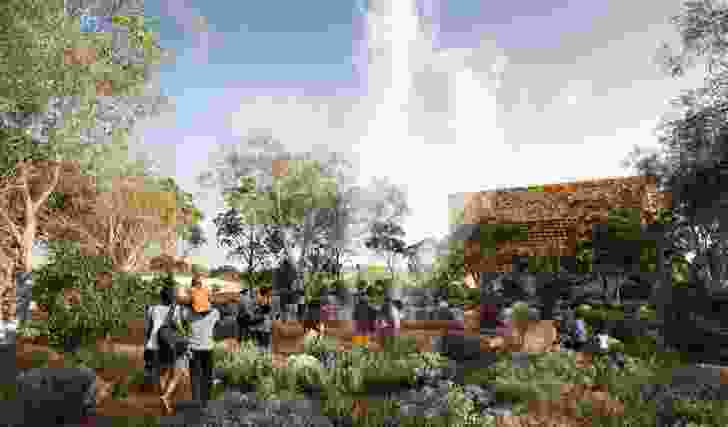
The Northern Territory government has unveiled new designs for the National Aboriginal Art Gallery in Mparntwe (Alice Springs), with updates made to the interior atrium and facade.

In March 2022, the territory government appointed BVN and Susan Dugdale and Associates to design the gallery with landscape architecture to be completed by Aspect Studios and Clarsen and Clarsen. The project has been co-designed with the local Arrernte community as well as with input from First Nations peoples from across Australia through the National Reference Group, which comprises 11 members, nine of whom identify as First Nations people and three as Traditional Owners of the local estate group of Mparntwe.

Gallery amenities and features remain relatively the same with a First Nations-led and governed gallery, a cultural welcoming circle, a four-storey atrium, a top-floor event and function space, a ground-floor cafe, an outdoor public area, healing gardens to protect and preserve sacred sites, and a Kwatye (water) play park still planned for the site.

The pinkish, earthy shade of the atrium and stairwell area has been updated to a more neutral, creamy colour palette with the skylights above the stairwell redesigned.

The pinkish, earthy shade of the atrium and stairwell area has been updated to a more neutral, creamy colour palette with the skylights above the stairwell redesigned.

Image:

Northern Territory Government

The atrium and stairwell has been redesigned with two oval-shaped skylights above the stairwell replacing three geometric triangular apertures. A walkway originally depicted as being suspended above the stairs and wrapping around to the right of the atrium has also been removed and substituted with a more subtle walkway to the left of the stairs.

Render of the cultural welcome space.

Render of the cultural welcome space.

Image:

Northern Territory Government

Plans state the vision for the gallery is to celebrate and display First Nations artwork, share stories and interpretations of the world’s oldest continuous culture, encourage local participation in arts programs and events, generate employment opportunities during the construction phase and upon completion of the gallery, as well as “create a high-quality cultural facility that stands as an iconic architectural statement, driving tourism, enhancing liveability, and promoting social and economic objectives.”

A tender for the construction of the project is now open until 14 December 2023. Construction is expected to commence in late 2027, with the gallery anticipated to open in early 2028.

Elon University digital art showcase displays importance of recognizing Indigenous artists, history

Elon University digital art showcase displays importance of recognizing Indigenous artists, history

Elon University’s Center for Race, Ethnicity and Diversity Education hosted a beading workshop, as well as an Indigenous digital art showcase, as part of its Native American and Indigenous Heritage Month celebration.

The workshop was led by Vickie Jeffries, a tribal administrator for the Occaneechi Band of the Saponi Nation, and took place in the CREDE office Nov. 13. 

“Inventive Minds: An Indigenous Art Showcase” displayed a variety of artworks from different time periods. Set up in the CREDE office on the second floor of Moseley, viewers walked around and looked at art from museums, caves and more. 

Sitting beside the art pieces were explanations of the meanings behind the works, such as the importance of the colors, symbols and history of the pieces. Attendees could also scan QR codes on the descriptions to learn more. 

The showcase on Nov. 8 featured photographs of rock paintings found inside a cave in Alabama  displayed as a group of works on one screen. According to the description, the paintings were discovered in an unnamed cave in 1999. While only a few of the paintings were pictured in the display, there were thousands of images found within the cave.

According to Jan Simek, an archeologist and professor at the University of Tennessee, the paintings are thought to have held spiritual importance because the region’s indigenous groups believed that caves were “portals to the underworld.” 

image
Charlotte Pfabe | Elon News Network

Paintings from an unknown cave in Alabama on display in Elon’s Center for Race, Ethnicity and Diversity Education on the second floor of Moseley on Nov. 8. The creators of the paintings are unknown, as the art dates back to 660 and 949 C.E. 

Many students involved in the CREDE’s African-American, Black, Latinx, Hispanic, Asian, Pacific Islander, Native American, Alaskan Native and Multiracial initiatives — or ALANAM — coordinated and attended the event as well. 

Sophomore Maylee Clerici works in ALANAM initiatives as a student coordinator and member of the organization’s marketing team. She said that she played a role in choosing to display the rock paintings because they “reveal a little bit about the mystery of the past and how Native American communities thrived in those earlier years.” 

According to Clerici, the artists are unknown.

“It’s a little bit unknown who the artists are but the artists date back to 660 and 949 C.E. during the woodland period,” Clerici said. 

Another piece of artwork displayed was a painting featuring symbolism of turquoise. The piece, titled “Turquoise Water and Sky: The Stone and its Meaning,” comes from the Museum of Indian Arts and Culture in Santa Fe, New Mexico.

According to the painting’s description, turquoise represents the sky and the water in Native American culture, and is said to have healing and protective powers. It’s commonly used in Pueblo and Navajo ceremonies and gatherings, according to the MIAC

Native American and Indigenous Heritage month continues through the entire month of November. The CREDE started its Heritage month celebrations with a kick-off event featuring indigenous artists, food and prizes on Nov. 1 and plans to continue the celebrations by supporting local Indigenous artists. 

Junior Jorah Midgette is a member of ALANAM initiatives as well and said that the best way to get involved with NAHM activities and ALANAM events is to keep in touch with the CREDE. She also said that the goal of these events is to “prioritize space for native and indigenous students here on campus.”


Festival spotlights Indigenous artists

Festival spotlights Indigenous artists

When Gabriel Ayala — an internationally recognized guitarist and painter — noticed the lack of Native American cultural events in Tucson, he created his own.

The first Native American Arts and Music Festival is Friday, Nov. 24, at the Plaza at Hotel Congress.

The theme, “All My Relations,” encourages the exchange of cultures.

A member of the Yaqui people of Southern Arizona, Ayala said the city had Tucson Indian Days 20 years ago.

“It was a full week of cultural events that led up to a giant powwow at the convention center,” Ayala said.

“It unfortunately just fizzled out and never happened again. I was always disappointed and wishing that something like this would happen again. I took it upon myself to reach out to the people at Hotel Congress and pitched them the idea. They loved it, and I’m very thankful that they are hosting the event for us.”

Ayala participated in “Tucson Indian Days,”

“It was seven full days,” he said.

“Every night, there were concerts or some type of cultural event happening at various locations throughout all of Tucson. Now, it’s just vanished. I remember being a part of these events. I remember going to watch these concerts. I remember as a powwow dancer going to the powwow and dancing all weekend long. It was at the hockey rink, and they would have to put mats over the ice. What a great memory. It’s too bad it’s just a memory, and this generation doesn’t know it. Hopefully in the years to come, we will make this a weeklong festival.”

He hopes to see his event continue to grow, highlighting different Native American cultures.

“I want to start bringing something back,” Ayala said.

“Here, it’s Native American Heritage Month, and there’s not a lot going on. So, I thought if I can bring it back, we’ll start with a one-night event, go into two days next year and start slowly adding a day or two here and there. I would love to be responsible for bringing back ‘Tucson Indian Days.”

The upcoming event will honor Native American contributions in the Southwest by highlighting local Indigenous musicians, artisans and dancers.

Ayala said it was important to him to showcase traditional and contemporary performers. Among this year’s performers are world champion hoop dancers Sampson and Scott Sinquah.

The show’s headliner is One Way Sky, an alternative rock group of youth from the Tohono O’odham Nation and Gila River Indian Community.

Ayala said he wanted to spotlight this up-and-coming group.

“As an older musician, someone who has been at it for my whole life, I felt it is important to showcase them, these artists that don’t always have the opportunity to be a headlining band,” Ayala said.

Many performers are also visual artists. Along with playing the Native American flute, Randy Kemp is a storyteller, painter and printmaker. He is a member of the Choctaw, Muscogee-Creek and Euchee tribal nations.

Adrian Wall is a renowned sculptor, Native American flute player and singer-songwriter from the Acoma Pueblo in New Mexico.

Ayala chose artists from a range of mediums, who will bring clothing, wall art, jewelry and other types of artwork.

“Everything is going to be really diverse and multimedia, so it’s not the same things at every booth. Everybody is going to be unique to themselves,” Ayala said.

During the event, Ayala will act as emcee. He wanted to spotlight others.

“For me, I didn’t want it to be just about me,” Ayala said.

“I didn’t want to run an event so I could just showcase myself and blast myself the whole night. In our culture, it’s never about that. It’s about giving back. For me, this festival is really about giving back and letting everyone else shine.”