Photography

Two very different Bostons, two less different photographers

Two very different Bostons, two less different photographers
Irene Shwachman, “Washington Street, Adams Square,” May 23, 1962.Boston Athenaeum

Berenice Abbott’s book “Changing New York” (1939) is one of the great photographic documents. Inspired by Eugène Atget’s visual chronicling of Paris in the first quarter of the 20th century, Abbott sought to do something similar for New York.

Before New York there was Boston, albeit on a much smaller scale and far shorter span of time. The architectural historian Henry-Russell Hitchcock commissioned Abbott to photograph several East Coast cities in 1934. Boston was one of them. The Boston Athenaeum has 24 of those photographs in its collection. Seventeen of them, along with two from 1954, and 25 photographs of Boston in the ‘50s and (mostly) ‘60s by her friend Irene Shwachman are in “Developing Boston: Berenice Abbott and Irene Shwachman Photograph a Changing City.”

Berenice Abbott, “Washington Street at Adams Square,” 1934.Boston Athenaeum

The show, which runs at the Athenaeum through Dec. 30, achieves the happy effect of feeling extensive while being quite compact. It also includes two maps, a Shwachman portrait of Abbott, a Shwachman self-portrait, several sets of her negatives, an invitation to a 1962 Athenaeum show of her work, a Boston Globe article about that show, a copy of “Changing New York,” and copies of three books about Atget.

Irene Shwachman, “The West End. 18th- and 19th-Century Buildings,” January 25, 1959.Boston Athenaeum

Abbott (1898-1991) you’ve heard about. Shwachman (1915-1988) is nowhere near as well known. Starting in 1959, she spent nine years working on what she called “The Boston Document.” It consists of more than 3,500 negatives, showing the transformation of the city during those years. Most of that time, she worked on her own. From 1962-63, she was employed as a photographer by the Boston Redevelopment Authority (today’s Boston Planning & Development Agency), until a project manager fired her. He was shocked, shocked, to learn that the BRA was employing a photographer who was a woman.

Berenice Abbott, “70-73 Beacon Street,” 1934.Boston Athenaeum

Shwachman’s photographs in “Developing Boston” hold their own against Abbott’s, both because there are more of them and because of the nature of the city each woman was documenting. In 1934, “changing” was not a word that much described Boston. There’s a static quality to many of Abbott’s photographs here. A picture of Beacon Street facades could be mistaken for Atget’s Paris (not that that’s a bad thing). That’s owing in part to the architecture and in part to the relatively long exposure times required by Abbott’s view camera. Even so, there’s a sense of a city that, while by no means lifeless, is far from vibrant.

Irene Shwachman, “Noonan’s Food Store, Reed and Lenox Streets, South End,” July 2, 1965.Boston Athenaeum

That reflected the city’s economic situation. The Great Depression only worsened a decline that had been going on for years. The city Shwachman recorded was in the throes of making up for lost time. The West End was being torn down (Shwachman’s husband had grown up there and urged her to chronicle its destruction). Government Center was replacing Scollay and Adams squares. Even when a given neighborhood wasn’t affected, the larger impact could be felt. What stands out in a charming picture of a corner store in the South End from 1965 is the signage. Look closer, though, and looming in the background is the recently completed Prudential Building. It’s on sentry duty for the future.

The Athenaeum’s Lauren Graves, who curated the show, has done something slightly risky. She intersperses Abbott’s and Shwachman’s photographs. Sometimes adjacent photographs are even of the same subject: Faneuil Hall, the Old State House, the Harrison Gray Otis House.

Berenice Abbott, “57 Hancock Street,” 1934.Boston Athenaeum

This interweaving is risky for two reasons. With all due respect to Shwachman, she wasn’t the photographer Abbott was (as she’d have been the first to admit). Conversely, the city Shwachman had in front of her camera was so much more dynamic. Yet the quality of both photographers’ work and the expertness of the hanging mean that risk turns into reward. Each enhances, and enlarges, the other.

“Developing Boston” has two pendants. One consists of 10 photographs of Boston and Cambridge taken by local teenagers under the sponsorship of the Boston nonprofit Artists for Humanity. Talented beyond their years, the photographers are Nancy Gonzales, Victoria Kutta, Rose Narcisse, and Alexander Vazquez.

Paul Caponigro, “Eaton Street, West End,” Boston, 1959.Boston Athenaeum

“The Caponigro Collection: Boston in 1959,″ which also runs through Dec. 30, comprises 11 black-and-white photographs taken in that year by Paul Caponigro. Nine are of the West End, two of Back Bay. These facades, doorways, and exteriors have such character they almost feel like interiors. They recall Abbott’s advice to Shwachman: “The buildings are the people.” The size of the images, in the vicinity of 5 inches by 3 inches or the reverse, adds to their very considerable appeal. They’re also striking for being so uncharacteristic. Caponigro, who turns 91 in December, is best known for deeply spiritual landscapes, still lifes, and nature studies. These are very different. The show could just as aptly have been called “Developing Caponigro.”

DEVELOPING BOSTON: Berenice Abbott and Irene Shwachman Photograph a Changing City

THE CAPONIGRO COLLECTION: Boston in 1959

At Boston Athenaeum, 10½ Beacon St., through Dec. 30. 617-227-0270, bostonathenaeum.org


Mark Feeney can be reached at mark.feeney@globe.com.

Opinion | ‘It’s Fun to Be Alive’: 13 Older Photographers Show Us Their Work

Opinion | ‘It’s Fun to Be Alive’: 13 Older Photographers Show Us Their Work
image

Larry Fink, 82: The thing is, I’m 82. The crescendo of my life is over, and the crashing waves are soon to come. Which is to say, death is foreboding. I’m in pretty good shape. I have this disease and that disease. But basically, I’m still jumping around. Whatever that’s worth, it’s fun to be alive. I tell you what: I really love my wife.

Martha Posner (pictured below): Say somewhere in the interview that I love Larry, too.

‘Up close and personal’: LensCulture street photography awards

‘Up close and personal’: LensCulture street photography awards
image

Caroline Grimprel: ‘Before living in Japan, I didn’t know much about its aesthetics. I imagined Tokyo as an Asian New York: bustling, noisy, fast. It was quite the opposite: quiet voices due to cultural etiquette, quiet restaurants because of an absence of metal cutlery, silence in the metro. The smallest towns and countryside felt depopulated. When I look at all of these photos, it is this serenity and loneliness that comes through the most. Individuals isolated in large ensembles, perfectly positioned in these settings’

With a good eye at the plate and behind the camera, Nathaniel Lowe stays in the moment

With a good eye at the plate and behind the camera, Nathaniel Lowe stays in the moment

has a good eye. That’s important when you’re a baseball player, needing to determine if it’s a fastball or slider, ball or strike, in roughly 250 milliseconds — roughly the time of a sixteenth-note in a 60 BPM song. He’s put that to good use: His .371 OBP is second-best on the Rangers — behind only AL MVP candidate Corey Seager — and his 37 doubles are best in the American League.

But Lowe doesn’t just use those discerning peepers on the field. When the 2022 Silver Slugger Award-winner isn’t at the park, you’re likely to find him peering at the world through his camera’s viewfinder. You see, Lowe has become quite the photographer over the years — ever since his mother gave him a camera when he was just 20 years old.

“My grandmother had a nice camera when I was a kid,” Lowe said at the MLB Studios last week, one morning after knocking in the game-winning run against the Mets. “And then my mom got me a camera. That was my starter kit. It just kind of worked from there. Photography makes you pay attention to where you’re at and take it all in and be pretty present. It’s a nice reminder: That’s what’s most important.”

With Lowe feeling the good vibes from the night before, the two of us got up to talking about his photography, what he looks for when he’s sizing up a shot, and we even broke down a few of my favorite pics he’s uploaded to Instagram. Here is our conversation below, edited slightly for length and readability.

MLB: So, the first camera came from your mom. Have you upgraded over the years?
Nathaniel Lowe: Yeah, once or twice. It’s a not a great thing, but anybody that takes pictures will tell you that the gear is a dark hole. You fall down the rabbit hole and spend too much money in a hurry. So yeah, my cameras are way smarter than me. They’re nicer than any camera I ever need, but they work for me.

MLB: So, 2 a.m., you’re in bed and can’t take photos, you’re out there looking at lenses? 

Lowe: Unfortunately! My targeted ads on Instagram are just ruining me. Like, all the lenses are too nice and the cameras are too nice. I find a way to leave the cap on and pull the trigger a couple of times. I guess that’s photography.

MLB: Part of your job is travelling and seeing the world. Now you try and distill that in an image. What is it that that you look for in a photo? What is it that you’re trying to capture?

Lowe: This year has been a lot out the window of the airplane. I haven’t really published anything — I guess that’s a word for it. But yeah, we’ve had some pretty cool times where we’re getting out after a day game and getting around a thunderstorm or travelling on the West Coast while the sun is setting. The flight from anywhere in Southern California up to Seattle while the sun setting is one of my favorite flights. I think we’ve done that twice now.

MLB: You mentioned that photography helps keep you in the present. Now, baseball is a really stressful job. Is this something that also allows you to relax if away from the field?

Lowe: Yeah, absolutely. If you start looking ahead too far on the baseball field — you look two or three games out and are trying to do too much, the game piles up in a hurry. Being present, being simple and doing one thing at a time is very important.

MLB: How do your teammates react? Are they into it? Are they asking you to be the wedding photographer for them?

Lowe: I try not to step on anybody’s toes and stick it in their faces. But we’ve got some we got some pretty fun characters in the clubhouse, so I’ll probably bust it out. I’d like to make sure that it’s waterproof coming down the stretch. We’ll see how that goes.

MLB: One thing I noticed in a lot of your photos, you have a really great eye for geometry, lines and patterns. Is that something you’re thinking about when setting up a shot? Is it in editing that you really find what you wanted to capture?

Lowe: I think that photos invoke feelings of where you’re at and what you’re doing at the time. It’s a reminder that you want things — ideally — to be clean and organized. Inevitably, it goes awry, but’s important to have it all lined up how I want it be lined up. I just know if the subject comes out how I want it to come out, then I think it’s a good picture.

MLB: That’s a good transition. I wanted to discuss a few of your photos specifically. I’d love to know what you were thinking or what caught your eye at the time. So this one was from 15 weeks ago, I think in Chicago.

Lowe: Yes, that’s Chicago. So, Chicago’s sunset is beautiful, right? Like, the cotton candy sky and the pink and all that stuff. That’s not something you get many other places. So yeah, the darker street and then a big building reflecting a sunset in the background — I really enjoyed how the colors looked and I felt like it turned out pretty nice.

MLB: This one of four fighter jets is one of my favorites. It’s so crisp and clean.

Lowe: Spring training is a treat because the Air Force Base is a couple miles south of the stadium. So when these F-35s are flying in there, it hits home because my dad was a military pilot. And then there’s something about — same thing — the sunset and the rocks and then sometimes the symmetry of when they’re up there doing their thing. That’d be a pretty close second to my job, that seems like a lot of fun.
MLB: That’s right, your Dad was in the real Top Gun fighter school. So, have to know: Is the movie real?

Lowe: I mean, he memorized the whole thing. He was a Top Gun encyclopedia for a while there when it was all the craze. That was his job and I can’t let it go to his head, but it’s kind of cool.

MLB: Back to photography again. This one is very different from the other two we’ve looked at.

Lowe: Yeah, this is in the Pike Place Market down in Seattle. I thought the bustle was pretty cool. This is before I really paid any attention to neon signs. It makes it easy for the autofocus of the camera to just to wrap it all in and get all the light in there. I’d love to set up a tripod and do a real slow exposure, so the people are all blurred. I just haven’t committed to it. But yeah, I like walking through there. It’s just so different from what I grew up in.

MLB: Now, last one. This one is from the ballpark, but it’s certainly not your standard ballpark photo.

Lowe: Oh yeah, the catwalk! I love going up on the catwalk and Globe Life Field is so nice, like, they really just went all out with it. I think we threw a couple baseballs down there to see how long it would take them to fall. We took the cameras up there and saw where the the pyro stuff is for the fireworks. Not everybody really gets that view, so getting up there and getting on the catwalk was a treat.

I love the symmetry of all the seats and how it’s all regimented and then, ideally, things go a little haywire in between the foul lines. It’s funny how the stadium is symmetrical and organized and then on the field can sometimes be such a mess.

MLB: Do you have a dream of something you’d love to shoot one day?

Lowe: I’d love to shoot baseball. I think shooting baseball would be great, especially after being on the field and feeling the emotions and seeing the game flow and being able to capture the whole picture. Like, sometimes you see those sunset pictures on the prairie in Kansas City or in Denver, like, that’s super cool. I’d love to [do something similar with a baseball game.]

MLB: So, you don’t necessarily want to do game photography. 

Lowe: Shooting game stuff would be great, but at the same time, most of the stadiums are really great and a work of art. Anytime you can take that in and just be appreciative of where you get to go to work, it’s super cool.

Wichita photographer, friend to many on life support after sideline collision, family says

Wichita photographer, friend to many on life support after sideline collision, family says

WICHITA, Kan. (KWCH) – The Wichita sports and photography community is supporting the family of a well-known photographer and Wichitan, Linda Gregory. She was injured Monday while shooting photos at a junior varsity high school football game at Wichita Northwest High School. Gregory fell and hit her head in a sideline collision. An ambulance took her to a local hospital where, her husband, Mel, said her condition worsened.

Mel Gregory earlier Tuesday shared on Facebook that Linda was on life support, and they were waiting for family members to arrive. He thanked everyone for their support and said when Linda was injured, she was doing what she loved. Tuesday night, Mel shared an update that Linda remained on life support and isn’t expected to survive.

“There is little hope left for her but she ight live on in the bodies of others,” Mel wrote. “Linda has been my soulmate, my bestest in everything and she will go as she would like to have gone.”

In her years dedicating time to sports photography, Linda formed close-knit friendships with coaches, players and parents in the League 42 youth baseball league, as well as at Northwest High School.

Among those she impacted was Joanna Chadwick, a longtime journalist and teacher who’s dedicated much of her career to covering high school sports and whose husband used to coach at Northwest.

“I never knew I needed her. I have a mom, I have a mother-in-law, they’re amazing people. I never knew I needed Linda Gregory, and I don’t think I was the only one that did,” Chadwick said.

Chadwick discussed how effectively Linda told stories through the lens of her camera. She said Linda and Mel started taking photos for League 42 when the league began 10 years ago.

At Northwest High School, the couple never missed a game.

“When she came up to Northwest, I mean, they were at every game: home, away, they were there,” Chadwick said. “If they were sick, by God, they were going to be there for at least the first half.”

Chadwick recalled how a follow on Twitter and a chance meeting at a store led to a cherished friendship.

“That spawned the friendship and suddenly they became part of the family,” she said of Mel and Linda Gregory.

It’s a bond that many share with the couple.

“You know, you think about how a friendship can happen like that and you think about, ‘Linda and Mel love me, they love my family,’” Chadwick said. “But it wasn’t just us.”

For those that don’t know Linda Gregory…

“I can’t even explain it enough to people that didn’t know here, how many people she touched,” Chadwick said.

It’s those people, the community, that are supporting Linda and her family.

“Whether she took their child’s senior portraits or she showed up to their son’s t-ball game, she just loves the community and she loves people,” Chadwick said.

Celebrated Photographer Manja Wachsmuth Joins Prestigious Lürzer’s Archive’s Best Ad Photographers 23/24

Celebrated Photographer Manja Wachsmuth Joins Prestigious Lürzer’s Archive’s Best Ad Photographers 23/24

Photographer Manja Wachsmuth renowned for her captivating culinary imagery, is set to have her fascinating image “Shattered Pinot Noir” featured in the highly anticipated Lürzer’s Archive’s BEST Ad Photographers 23/24. This inclusion marks the second occasion that Manja Wachsmuth’s work has been showcased among the industry’s most revered photographers.

The Burst series, initially created for the 2023 Women’s Work exhibition “ The Shape of Things”, encapsulates Manja Wachsmuth’s distinctive artistic perspective and mastery of the craft. The series captures the essence of both the tangible aftermath of bursting moments and the metaphorical echoes of the expat experience. “Like many, I sometimes grapple with a sense of fracture and detachment, magnified during returns to visit family after years apart. Surprisingly the act of smashing things has a rather therapeutic impact!”

Being selected for inclusion in the Lürzer’s Archive’s BEST Ad Photographers 23/24 for the second consecutive time is a testament to Wachsmuth’s dedication and undeniable talent. It is an honour that Wachsmuth humbly acknowledges, standing alongside photographers whose work has long been a source of admiration and inspiration.

“I’m thrilled and honoured to be featured in this year’s edition of Lürzer’s Archive’s BEST Ad Photographers,” Wachsmuth shared. “Since my early days in the studio basement during my apprenticeship years, Lürzer’s has been an endless source of inspiration and a guide towards photographic excellence, and I am grateful for the recognition and opportunity to share my creative journey with fellow artists.” For more information, print requests, and personal viewing of Manja’s printed portfolio, contact Film Construction’s EP Belinda Bradley

Manja Wachsmuth recently joined the roster of talented photographers and directors at Film Construction and has won awards and fans with her Scandinavian sense of elegant composition. Manja creates masterful food photography, captivating product shots, expressive portraiture and lifestyle imagery that captivates.

Danish-born but now resident in Auckland, Manja’s work is a testament to photographic power. From darkroom beginnings to culinary artistry, she has become a master of precision and purpose in commercial photography. Especially food and all its intricacies.

Lürzer’s Archive’s BEST Ad Photographers publications showcases the outstanding work of photographers who have demonstrated exceptional skill and creativity in the field of advertising photography. The publication serves as a definitive source of inspiration for artists, advertisers, and photography aficionados around the world.

Photographer comes out of retirement to pay for his wife’s Alzheimer’s care

Photographer comes out of retirement to pay for his wife’s Alzheimer’s care

KANSAS CITY, Mo. — John Ross and his wife, Lisa, joke that they’re attached at the hip.

The two have been married for 31 years. At one time, they worked together at their company, Phoenix Photography.

“She ran the company, she ran the business, and I was just the technical person who did all the camera work,” John said.

John Ross, Phoenix Photography

But he had to take on more work at the studio when Lisa was diagnosed with Alzheimer’s in 2020.

John said he noticed symptoms as early as 2018 but didn’t know what was going on.

“As this developed, we had to close,” John said. “I couldn’t do everything, and it was a huge emotional adjustment for me.”

It was also a big financial adjustment.

“When you need to get a caregiver, you’re looking at somewhere in the vicinity of $600 a week,” John said.

That’s why he had to pick up his camera, come out of retirement and once again open the doors to their photography studio.

Doctor’s orders state Lisa can’t be left alone.

However, their studio is conveniently attached to their home.

“There’s a number of things that I need to cover and take care of, our bills, and keep her here,” John said. “We’ve been in this house for 30 years now, so I want her to stay.”

The Alzheimer’s Association reports the disease now costs $45 billion to treat and care for patients, with cost of care expected to grow to $1 trillion by 2050.

“Alzheimer’s is a huge health crisis, but it’s also very much becoming a financial crisis as well,” said Michelle Garrard, community program specialist for the Alzheimer’s Association Heart of America Chapter.

Michelle Garrard, Community Program Specialist for the Alzheimer's Association Heart of America Chapter.

Through her work with those struggling with the disease and with the association, Garrard has seen the struggles of caregivers like John.

“I think it’s been a big issue, but for sure, with the pandemic and the staffing crisis that we have encountered, prices are just going up and up and up for long-term care,” Garrard said.

The emotional toll of caregiving can be just as difficult.

“One thing to take away is when it’s your spouse, you don’t get to go home,” John said. “You don’t get to go someplace and rest. You’re not out of it ever.”

But with Lisa by his side, John said he wants to continue to capture photos and moments.

“We have years left, and I want to make sure she’s 100% taken care of here,” he said.

The photography studio is having a grand reopening on Sunday, Sept. 10.

Details are below.

Embracing the Magic of Fall: Your Guide to Nailing Fall Landscape

Embracing the Magic of Fall: Your Guide to Nailing Fall Landscape

Hey, fellow landscape photography enthusiast! Can you feel that slight chill in the air yet? Yep, fall is right around the corner, and you most likely already know what that means: it’s prime time for capturing those breathtaking autumnal landscapes. The vibrant colors and the cozy vibes are a landscape photographer’s dream come true. But, before you dash out with your camera, let’s chat about how to get prepped for some epic fall photography.

Scoping Out the Scene

Let’s start by scoping out the best spots. Do some research before you even pack up your camera bag; this can be online, hitting up photography forums, and perhaps even consider stalking Instagram for those jaw-dropping autumn shots that may be in your area. Each will form inspiration and build your hunger to catch your own shot.  Make a list of spots you’re dying to explore – from classic locations to hidden gems that’ll may make your portfolio pop. And yeah, don’t forget to figure out how to get there without getting too lost (GPS is your friend). By planning it out in advance, you take the guess work out, except that is the guess work regarding the weather. If you are like me here in Ireland, you know that clouds and rain main ruin your day, even though they weren’t exactly forecast. However, this adds to the chase and makes catching those banger shots even more worthwhile, at least for me. 

Getting Your Gear Game On

Time to give your gear some love! You may have been out over the summer in some wild places, so best to take the opportunity to “fall clean” as such and ensure that everything is in tip-top shape. Clean that camera sensor, give your lenses a wipe down, and make sure your filters aren’t smudged. Nobody likes spots ruining a perfect shot. Oh, and a tripod? Non-negotiable for some. It is like that steady rock that’ll keep your shots tack sharp, especially when that golden hour light starts playing its magic tricks. Some may argue against a tripod, and that’s fine too. Go with whatever you feel comfortable with, as this is all that matters at the end of the day. Trying some macro shots can also be fun, as you may encounter some fungi on the forest floor.

Befriending the Light

Speaking of magic tricks, let’s talk about that dreamy fall light. Early mornings and late afternoons, that’s when you’ll want to be out and about. The sun’s not too harsh, and the colors get all warm and cozy. But don’t ignore overcast days. They’re like nature’s soft box, making colors pop and shadows play nice. Embrace the weather, whether it’s sunny, cloudy, or somewhere in between. If it’s cloudy, then woodlands can be perfect, as can waterfalls, as you won’t have to deal with hot spots in your frame from direct light as it streams through the foliage.

Rocking Composition

Alright, let’s geek out on composition for a bit next. You know the rule of thirds? Use it to create some balance and interest in your shots. I call it a tool rather than a rule, as it isn’t the make or break for an image. Instead, do what feels right and tells your story of the scene that you see. Leading lines? They’re like breadcrumbs guiding viewers through your photo story and can come in many different shapes and sizes. The key is to look out for them when composing your shot, and in fall, it could even be leaves as they lie on the ground in front of you.  And don’t forget about framing — using natural elements to add depth and context to your shots. Play around, break some rules, and find your style, but most of all, enjoy being out in the fall conditions more so. That being said, it can also be good to explore as fall ends, as you will end up with less foliage, and some last leaves may shine through. 

Rain, Fog, and Drama

Remember, it’s not just about the perfect blue skies. Rain and fog can be your new BFFs. Raindrops on leaves? Instantly adds a touch of magic. Fog? It can create mysterious and moody landscapes. So, don’t stay tucked in when the weather gets a bit dramatic. Grab that rain cover for your gear and maybe even an umbrella for yourself. It’s all part of the adventure, after all. I firmly believe that bad conditions do not exist in landscape photography; there is always a shot. Granted, it may not be a banger, but it still will be a shot. What has happened quite often is my expectations were low to begin with, based on the poor weather, which meant when I did bag a shot, it felt like a bonus.

Time for Some Fun Techniques

Ever tried that artsy shot with a blurry background and a single leaf in focus? You will be familiar with shallow depth of field, and fall is perfect for it. Macro shots of fallen leaves or dew-covered grass can also create a shot which shows the true essence of fall photography, as the colors will be more vibrant. Also, long exposure shots are your secret weapon. Capture the motion of falling leaves or flowing streams, and watch the magic happen as the leaves follow the flow of the water and leave their streaks behind in your shots. Watch the water before you compose and look out for swirling patterns as the leaves take their journey, as these will develop into circular patterns in your long exposure shots. 

Dress the Part

Okay, I know we’re all about the shots, but let’s not freeze our fingers off. Layer up, as you can always peel off if you get too toasty. A warm hat, gloves, and a jacket that’s wind-resistant should be in your bag. You may feel that you don’t need them when heading out; however, it’s best to have them rather than be looking for them. There is nothing worse than being beaten back by the cold when an extra 30 minutes may have been needed for those perfect conditions to occur. Don’t forget comfortable shoes. You might have to hike a bit for that perfect shot, so make sure your feet are up for the adventure. Many people, when starting out in landscape photography, underestimate the power of comfortable and waterproof shoes. These will allow you to get into that stream and catch the flow of the water far mor easily.

A polarizing filter is an especially good tool to have in your camera bag all year round. However, it is in the fall that this tool can effectively be a game-changer. Two of the properties of this filter can really come into their own during this season: the ability to remove glare and see into the water in front of you and to enhance the natural colors of a scene. When I am shooting in fall, this is the single most important filter to have in my bag, as it is the only filter that cannot be replicated in post-production.

So, there you have it, your guide to embracing fall with open arms and a camera in hand. Get ready to capture the magic of this season like never before. It’s time to let your creativity run wild and document the world, as it transforms into a canvas of warm hues and enchanting landscapes. Happy shooting! 

Have you more to add to this article? I’d love to hear your thoughts in the comments below.

Award winning bird images are the best thing you’ll see all day

Award winning bird images are the best thing you’ll see all day
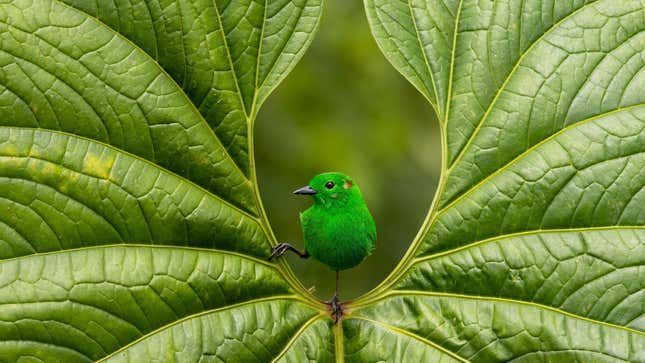
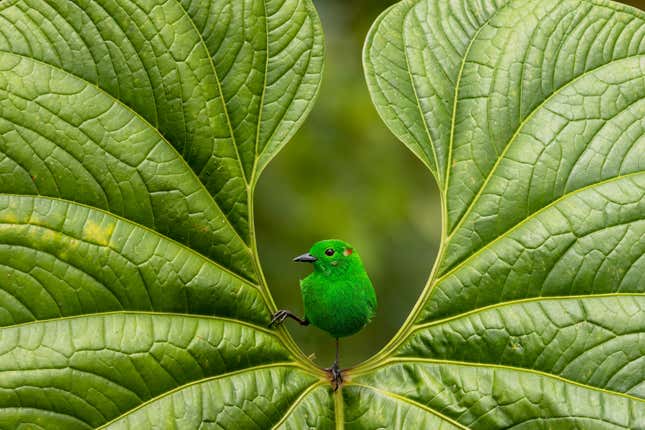
A glistening-green tanager in Ecuador, in a gold-award-winning image in the Best Portrait category.
A glistening-green tanager in Ecuador, in a gold-award-winning image in the Best Portrait category.Photo: Nicolas Reusens

Photographers from around the world recently submitted 20,000-odd images of bird species to the Bird Photographer of the Year contest. The showcase captures the diversity of the class Aves, as well as the dramatically different habitats the animals occupy and the ecological niches they inhabit.

Advertisement

(Un?)fortunately for you, this slideshow is not 20,000 pages long. But here’s the cream of the crop from those submissions: 27 award-winning images of the bevy of birds on our planet.

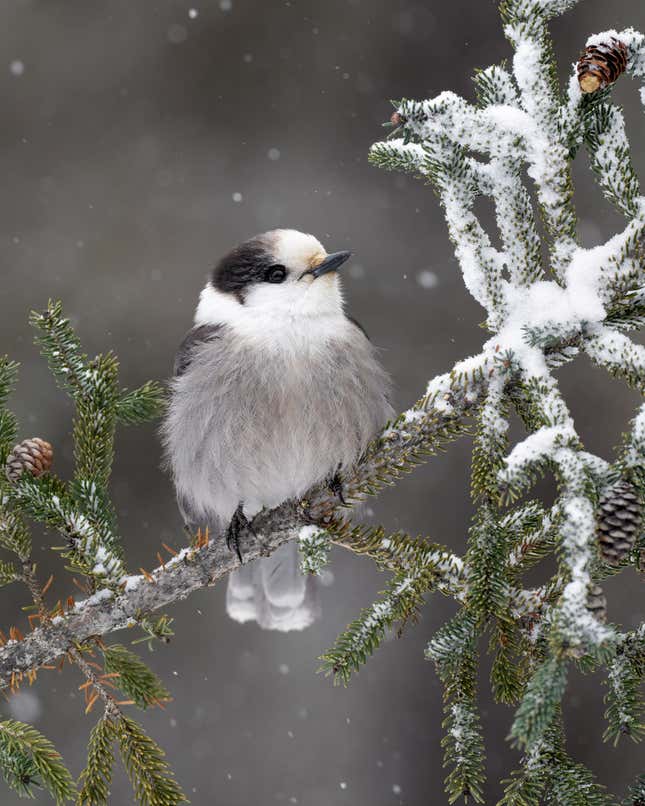
A Canada Jay on a snowy branch.
A Canada jay on a snowy branch.Photo: Jake Levin / Bird Photographer of the Year

A Canada jay (Perisoreus canadensis) perches on a branch in upstate New York’s Adirondack Park. This photo was the bronze award winner in the Best Portrait category.

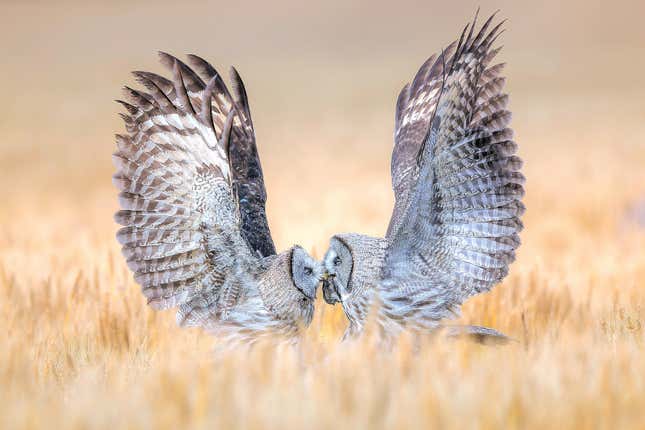
A great grey owl hands off food to a juvenile.
A great grey owl hands off food to a juvenile.Photo: Qiuqing Mu / Bird Photographer of the Year

An adult great grey owl (Strix nebulosa) hands off prey to its juvenile. This image was the bronze award winner in the Bird Behavior category.

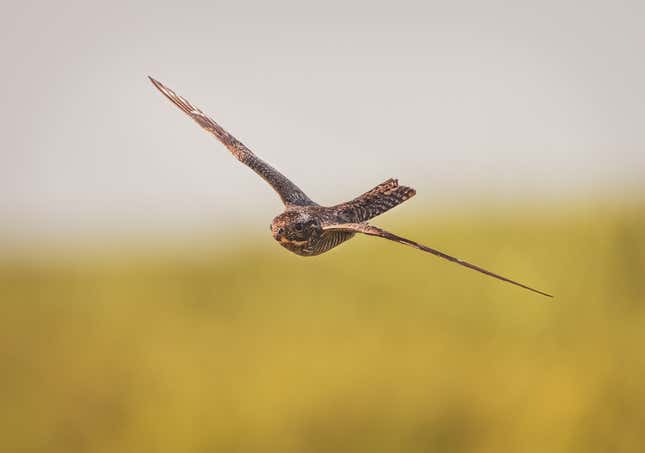
A common nighthawk in flight.
A common nighthawk in flight.Photo: Richard Sanchez / Bird Photographer of the Year

Spotted in Florida, this nighthawk took the bronze award for the Birds in Flight category.

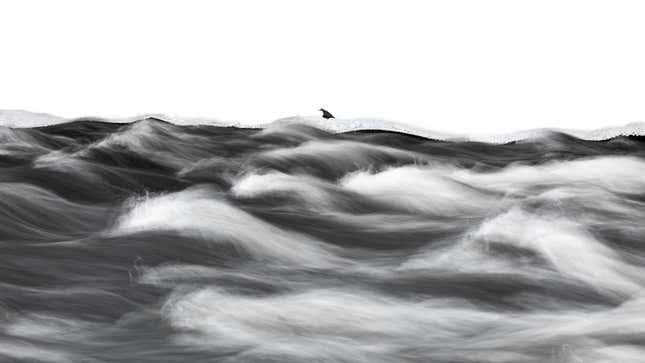
A white-throated dipper in Finland.
A white-throated dipper in Finland.Photo: Stefan Gerrits / Bird Photographer of the Year

The white-throated dipper appears to float on the rushing waters of Finland’s Kitka River in this bronze award winner in the Birds in the Environment category.

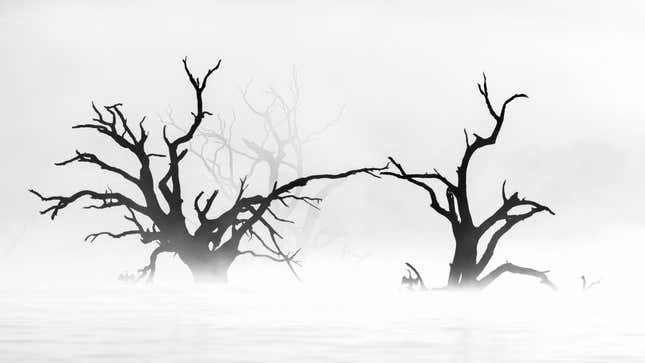
If you squint, you can see the Australasian darters in this shot.
If you squint, you can see the Australasian darters in this shot.Photo: Cheng Kang / Bird Photographer of the Year

Another black-and-white shot from the competition features two Australasian darters stretching out their wings at the base of two gnarled dead trees. This image was the bronze award winner for the Black and White category.

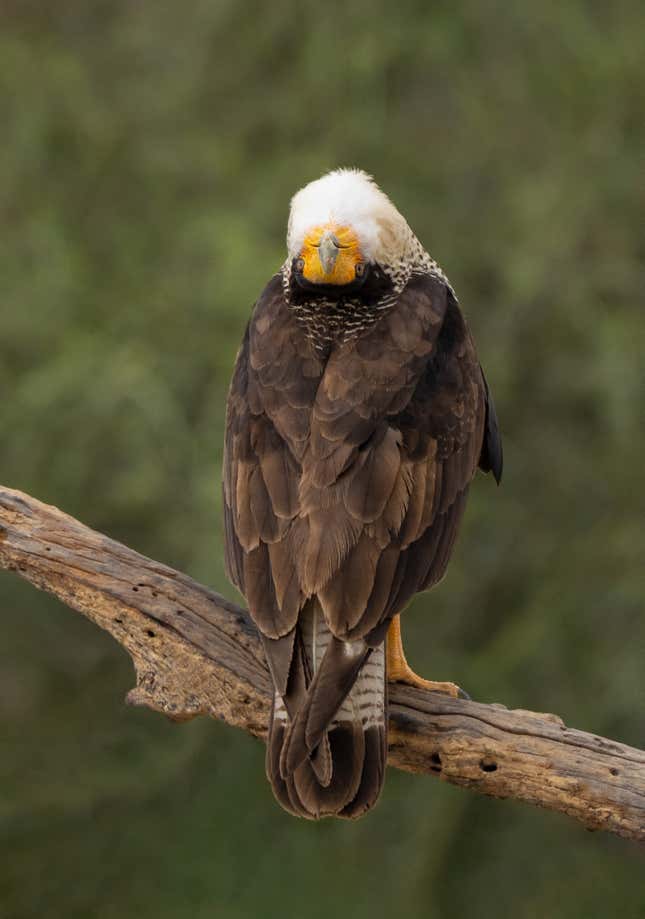
A northern crested Caracara mugs for the camera.
A northern crested Caracara mugs for the camera.Photo: Ann Gillis / Bird Photographer of the Year

You’d be forgiven for looking twice at this image just to figure out what’s going on. In the shot, a crested caracara stretches its head all the way back to look behind its body at the photographer. This image was the bronze award winner in the Comedy Bird Photo category.

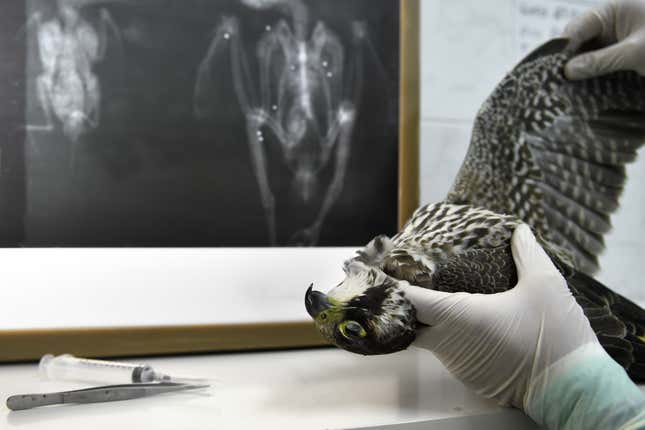
A dead Peregrine flacon is studied in a rescue center in Livorno.
A dead Peregrine flacon is studied in a rescue center in Livorno.Photo: Luca Giordano / Bird Photographer of the Year

In this photo, a dead Peregrine flacon is held by a researcher at a rescue center in Livorno, Italy. A poacher killed the bird, and X-rays of the animal (seen in background) reveal lead shot in its body. This image was the bronze award winner in the Conservation (Single Image) category.

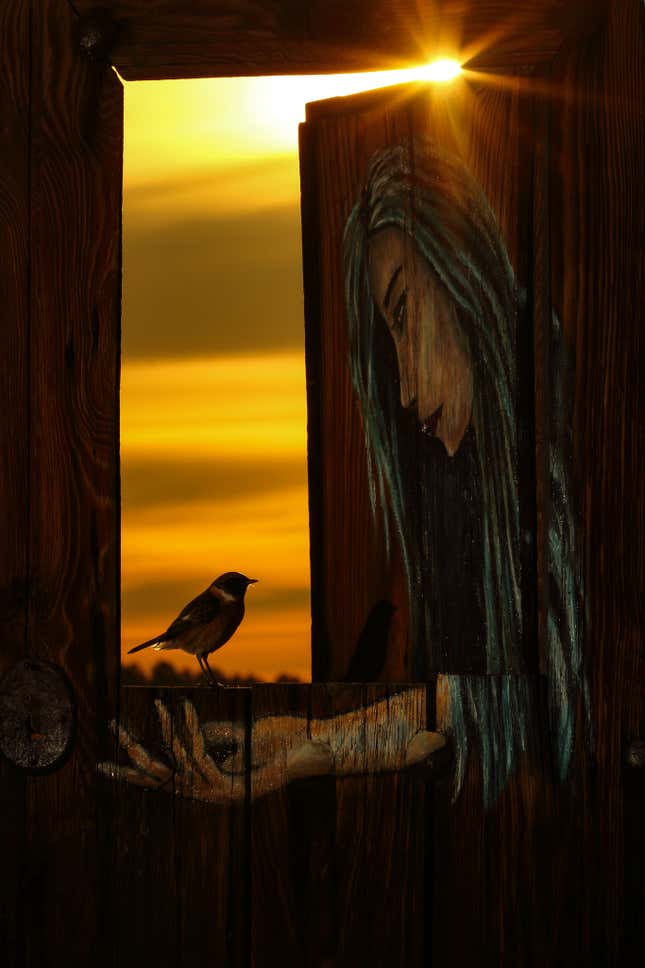
A European stonechat in a window of a farmhouse.
A European stonechat in a window of a farmhouse.Photo: Julian Fernandez Quilez / Bird Photographer of the Year

A stonechat (Saxicola rubicola) perches in the ajar doorway of an abandoned farmhouse. Note the hand of the painted woman in the image, which almost looks to hold the bird. This photo won the bronze award in the Urban Birds category.

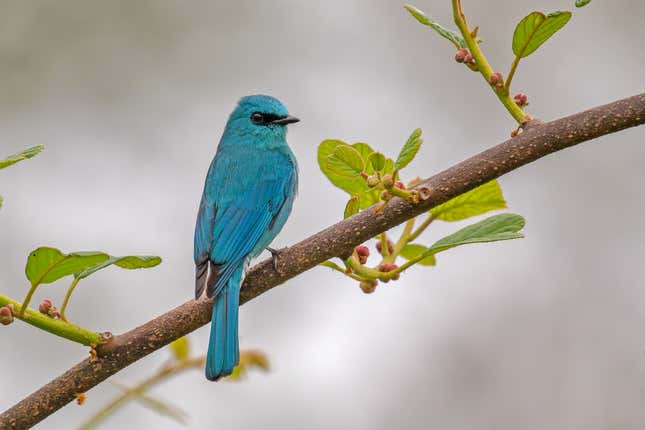
A bright blue flycatcher on a branch.
A bright blue flycatcher on a branch.Photo: Arko Saha / Bird Photographer of the Year

The gold award winner for the 11 and Under category captures the Verditer flycatcher (Eumyias thalassinus) in all its bluish-green glory.

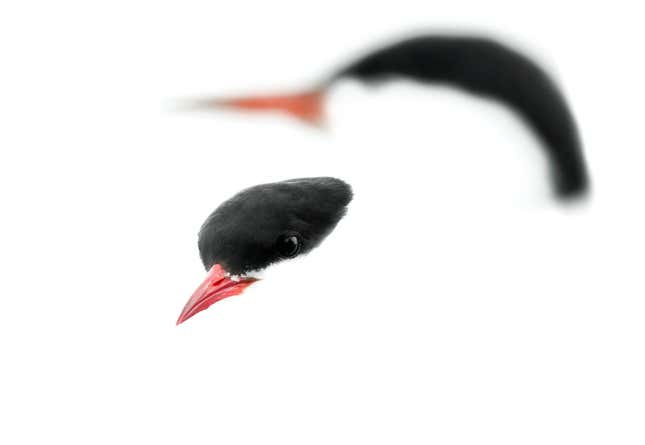
An arctic tern and a common tern are vanishingly white in this shot taken in Sweden.
An arctic tern and a common tern are vanishingly white in this shot taken in Sweden.Photo: Harry Sedin / Bird Photographer of the Year

Two terns (the tops of their heads, at least) are captured in this shot taken on a Swedish inlet. The image is the gold award winner in the competition’s 12-14-Year-Old category.

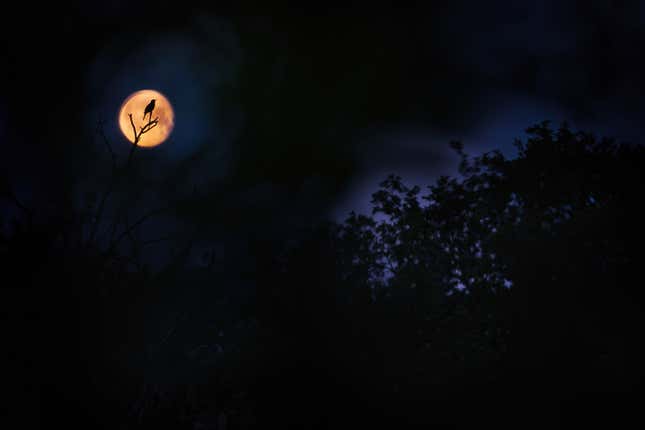
A blackbird silhouetted against the Moon.
A blackbird silhouetted against the Moon.Photo: Anton Trexler / Bird Photographer of the Year

A striking shot of a blackbird set against a bright orange moon was this year’s Young Photographer of the Year winner. The image is also the gold award winner in the 15-17-Year-Old category.

A glistening-green Tanager is framed by a leaf in the Ecuadorian rainforest.
A glistening-green Tanager is framed by a leaf in the Ecuadorian rainforest.Photo: Nicolas Reusens / Bird Photographer of the Year

The gold award winner in the Best Portrait category is this captiving image of a glistening-green tanager (Chlorochrysa phoenicotis) in a large leaf in the Ecuadorian rainforest.

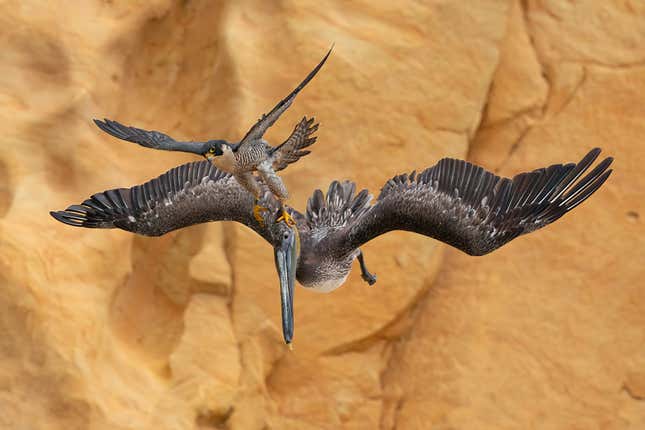
The overall winning image of a Peregrine falcon striking out at a brown pelican.
The overall winning image of a Peregrine falcon striking out at a brown pelican.Photo: Jack Zhi / Bird Photographer of the Year

The winner of the gold award in the Bird Behavior category, and this year’s Bird Photographer of the Year, captured this shot of a Peregrine falcon striking a brown pelican that ventured too close to its nest.

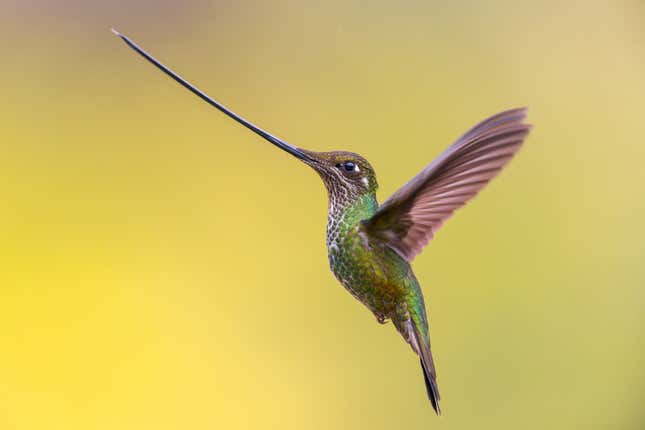
A sword-billed hummingbird in flight.
A sword-billed hummingbird in flight.Photo: Rafael Armada / Bird Photographer of the Year

A sword-billed hummingbird in flight was the gold award-winning image for the Birds in Flight category.

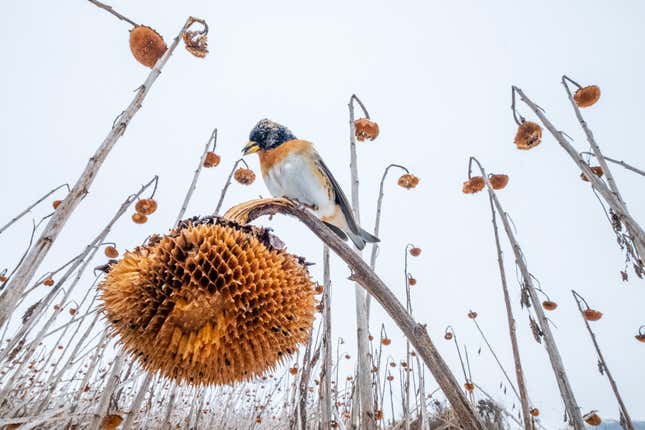
A brambling in a field of dead sunflowers.
A brambling in a field of dead sunflowers.Photo: Mateusz Piesiak / Bird Photographer of the Year

A white and orange brambling appears to match its environment: a grey sky and a field of dead sunflowers. The sunflowers were killed off by flooding, and this brambling found a happy perch atop one of the fallen flowers. The shot was the gold award winner for the Birds in the Environment category.

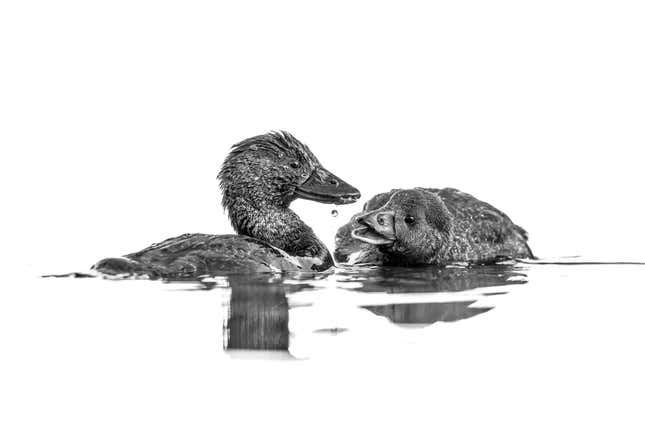
A young musk duck (right) with its mother.
A young musk duck (right) with its mother.Photo: Jason Moore / Bird Photographer of the Year

The gold award winner in the Black and White category is this Robert McCloskey-esque shot of two ducks. The duck on the right is a juvenile, apparently intrigued by a morsel in its mother’s mouth.

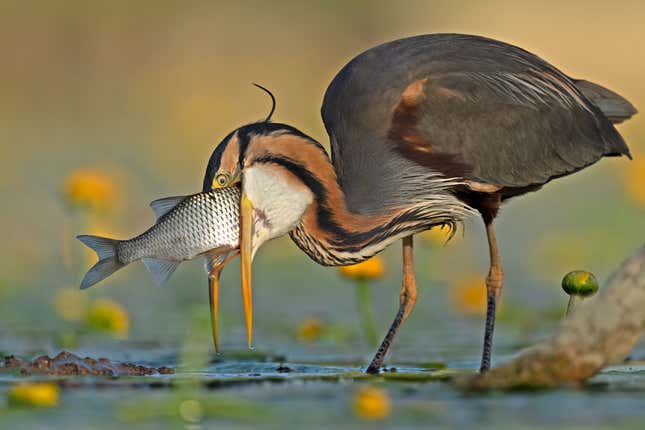
A purple heron eating a large carp.
A purple heron eating a large carp.Photo: Antonio Aguti / Bird Photographer of the Year

A purple heron gobbles down a large carp in this shot taken in Italy’s Lake Chiusi. The image is the gold award winner in the Comedy Bird Photo category.

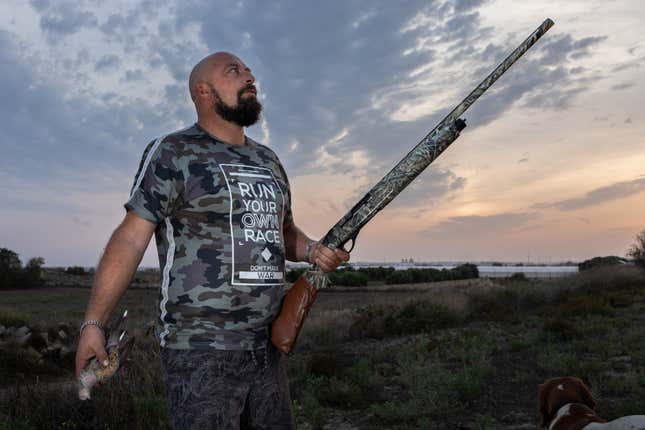
A hunter holding his quarry, a European turtle dove.
A hunter holding his quarry, a European turtle dove.Photo: Ewan Heath-Flynn / Bird Photographer of the Year

A hunter in Malta holds a legally-hunted European Turtle Dove in this gold award-winning image in the Conservation (Single Image) category. A spring hunting moratorium was in place in Malta between 2017 and 2022, but was lifted last year, exposing the doves to potential overhunting.

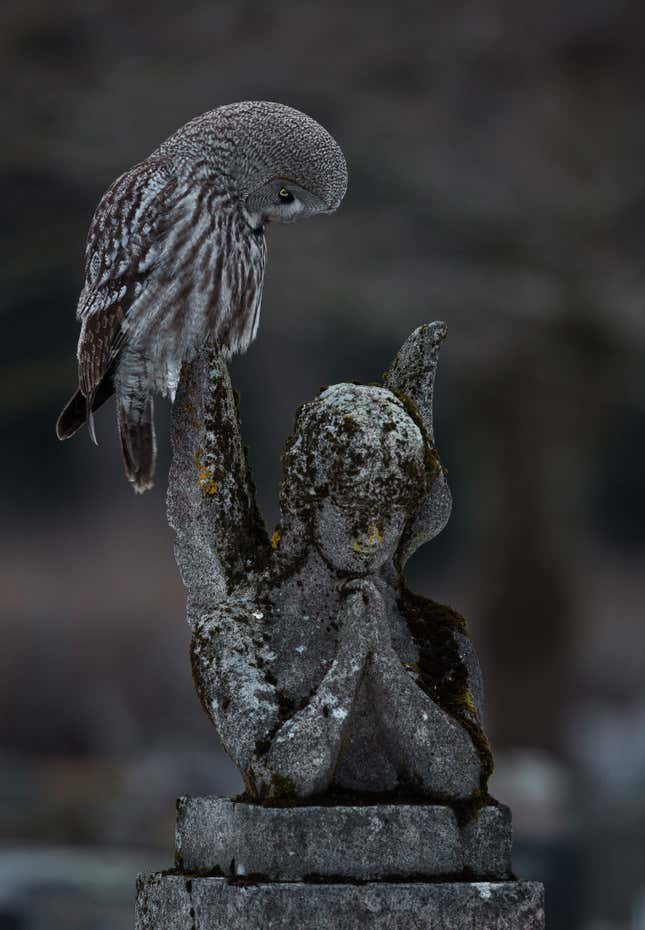
A great grey owl peering an angel statue in a cemetery.
A great grey owl peering an angel statue in a Helsinki cemetery.Photo: Arto Leppänen / Bird Photographer of the Year

An owl in Helsinki ogles the stone angel on which it’s perched in this shot, which took home the gold award in the Urban Birds category.

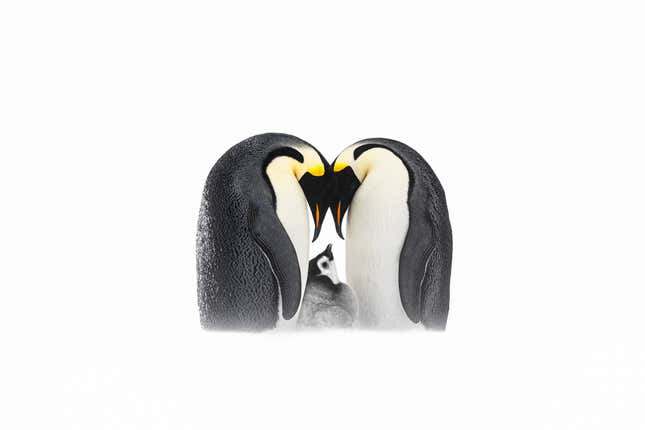
Two Emperor penguins peer at their chick.
Two Emperor penguins peer at their chick.Photo: Thomas Vijayan / Bird Photographer of the Year

Emperor penguins stare at their chick in this shot. The parents’ posture evokes a sense of security around their progeny, especially surrounded by the harsh (and in this image, blindingly white) backdrop of Antarctica.

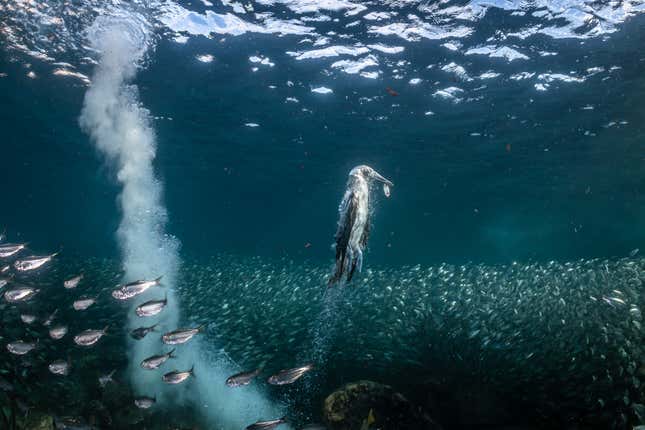
A blue-footed booby rises from a dive with a sardine it caught.
A blue-footed booby rises from a dive with a sardine it caught.Photo: Henley Spiers / Bird Photographer of the Year

A blue-footed booby towing a sardine won the silver award for Bird Behavior, in the only featured image showing a bird underwater.

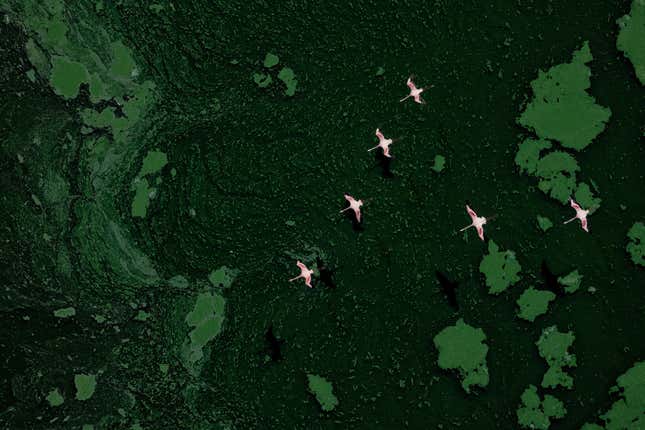
A flock of lesser flamingos flying over Lake Bogoria, Kenya.
A flock of lesser flamingos flying over Lake Bogoria, Kenya.Photo: Paul Mckenzie / Bird Photographer of the Year

In this image, six flamingos fly over an algal bloom in a Kenyan lake, earning the silver award for the Birds in Flight category. The bright pink flamingos contrast nicely with the deep green of the algae below.

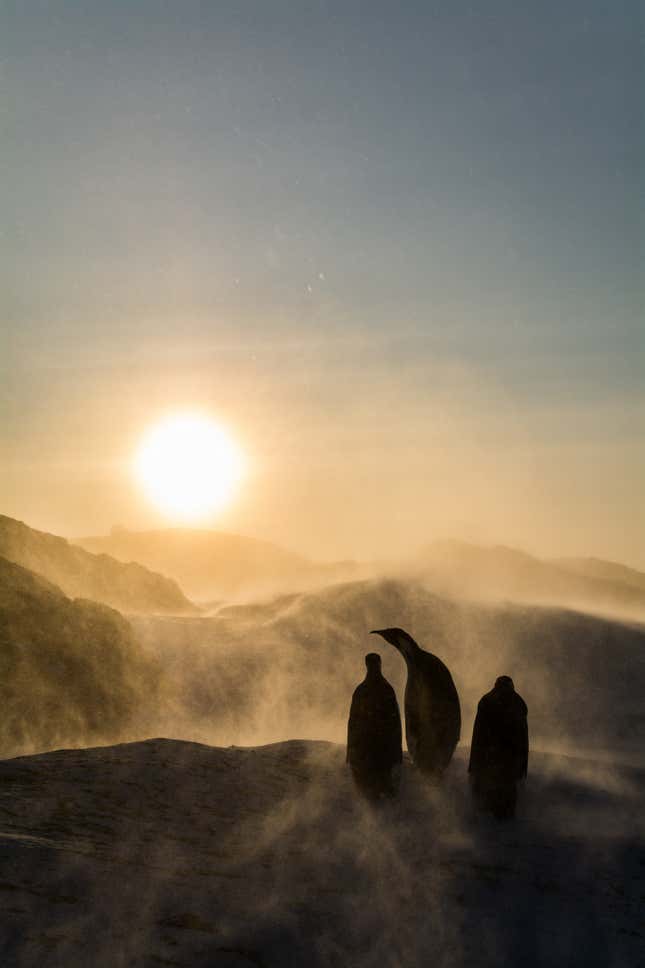
Emperor penguins looking towards the sun shining over Antarctica.
Emperor penguins looking towards the sun shining over Antarctica.Photo: Clément Cornec / Bird Photographer of the Year

A trio of emperor penguins look out across their harsh landscape. Antarctica can be -104 degrees Fahrenheit (40 degrees Celsius), with gale-force winds. But in this moment, the sunny, snow-swept landscape appears serene.

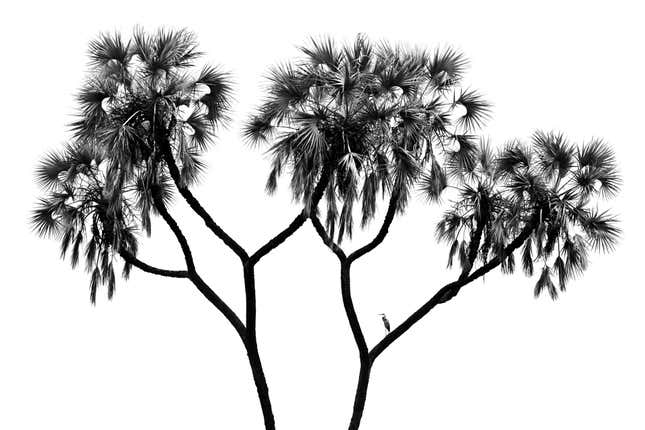
A lone black-headed heron in a Doum palm in Kenya.
A lone black-headed heron in a Doum palm in Kenya.Photo: Yaron Schmid / Bird Photographer of the Year

A black-headed heron (Ardea melanocephala) stands on a palm tree in Kenya’s Samburu National Reserve. This photo won the silver award in the black-and-white category.

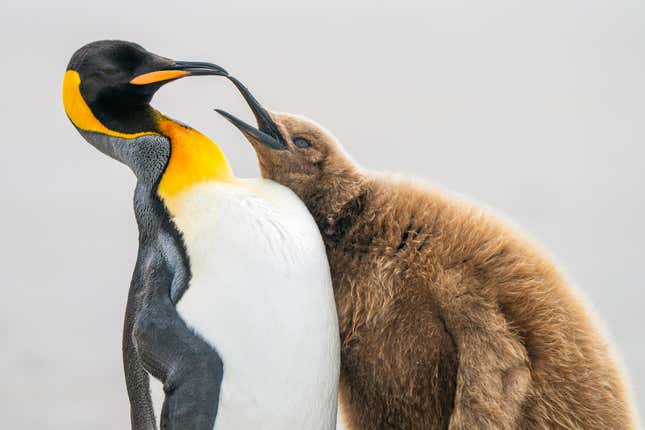
A young king penguin harries an adult for some food.
A young king penguin harries an adult, perhaps for some food.Photo: Levi Fitze / Bird Photographer of the Year

A juvenile king penguin, characterized by its chunky brown feathers and shown on the right, is seen bothering an adult. The amusing shot took home the silver in the Comedy Bird Photo category.

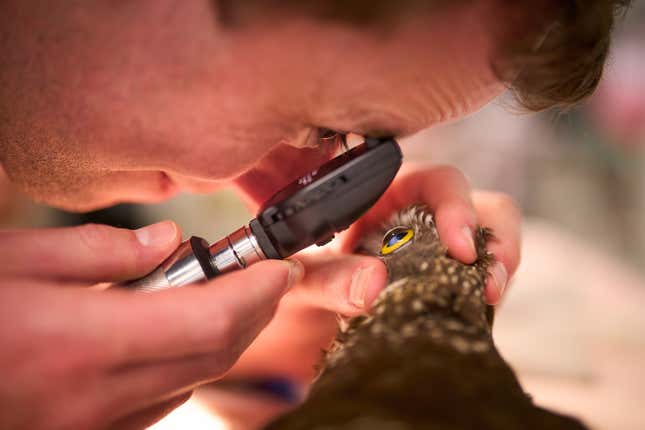
The eye of a southern Boobook owl named 'Rocket' is inspected by a doctor.
The eye of a southern Boobook owl named ‘Rocket’ is inspected by a doctor.Photo: Michael Eastwell / Bird Photographer of the Year

In this shot, a southern boobook, the smallest owl species in Australia, is being examined for possible eye injuries. The image won the silver award in the Conservation (Single Image) category.

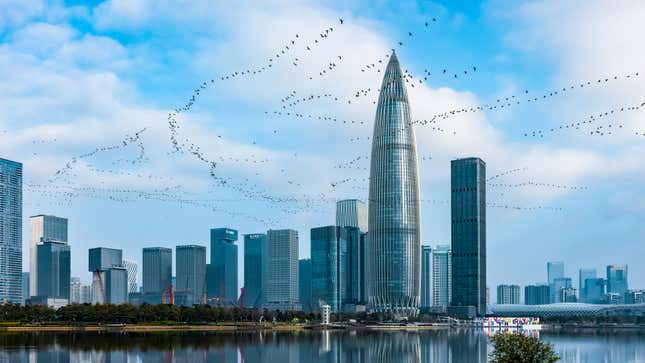
Migrating flocks of great cormorants fly over Shenzhen, China.
Migrating flocks of great cormorants fly over Shenzhen, China.Photo: Xiaoke Wang / Bird Photographer of the Year

The silver award winner for the Urban Birds category is this image of migrating great cormorants, which flocked over the skyline of Shenzhen, China.

Israeli photographer claims prize for images of birds in Kenya

Israeli photographer claims prize for images of birds in Kenya

Israeli photographer Yaron Schmid claimed second place in the “Black and White” category of the International Bird Photographer of the Year competition for 2023 winners.

Read more:

Speaking to Ynet, he described how he captured his winning image in northern Kenya, in the Samburu Reserve. “It’s a reserve through which a river runs and most of the wildlife congregates around the river. The reason I and many others visit is because it’s an excellent place to see leopards and other big cats, numerous elephants, unique animals that live only there, and breathtaking landscapes.”

11 View gallery

THE HERON IN THE PALMSTHE HERON IN THE PALMS

The Doum Palms photograph

(Photo: Yaron Schmid/ Bird Photographer of the Year ©)

“One of the unique things about this area is the Doum palms, which have branches that split into two like the English letter ‘Y’. When I saw a vulture perched on one of the branches, contrary to my usual nature photography, I decided to capture it from a distance, so its silhouette would stand out amidst the palm branches. I converted the image to black and white due to the relatively harsh lighting and to simplify the image so the vulture would stand out more,” Schmid explained.

American photographer Jack Zhi claimed first place overall in the competition with his image titled “Grab the Bull by the Horns,” capturing a female bullfinch attacking a much larger rival in mid-air.

“For four years, I tried to capture the rare sight of a female bullfinch attacking a much larger rival in mid-flight. I love the expression in the rival’s eyes – surprised and frightened. The action was very fast, but I will remember this moment forever,” Zhi said. HE received a £5,000 prize for winning the competition.

11 View gallery

GRAB THE BULL BY THE HORNSGRAB THE BULL BY THE HORNS

Grab the Bull by the Horns

(Photo: Jack Zhi / Bird Photographer of the Year©)

More than 20,000 photographs from around the world were submitted to the competition. Photographers competed in various categories, including Best Portrait, Birds in the Environment, Attention to Detail, Black and White, Bird Behavior, Birds in Flight and Urban Birds.

Other photos that reached first places in the various categories

11 View gallery

GREEN PLANET FLAMINGOSGREEN PLANET FLAMINGOS

Green Planet Flamingos

( Paul Mckenzie / Bird Photographer of the Year ©)

11 View gallery

GLISTENING - GREENGLISTENING - GREEN

Glistening – Green

( Nicolas Reusens / Bird Photographer of the Year ©)

11 View gallery

BLUE - FOOTED FISHING DIVEBLUE - FOOTED FISHING DIVE

Blue – Footed Fishing Dive

(Henley Spiers / Bird Photographer of the Year © )

11 View gallery

A MOTHER’S LOVEA MOTHER’S LOVE

A Mother’s Love

(Qiuqing Mu / Bird Photographer of the Year © )

11 View gallery

SUNFLOWER PARADISESUNFLOWER PARADISE

Sunflower Paradise

( Mateusz Piesiak / Bird Photographer of the Year ©)

11 View gallery

FASCINATING DROPLETFASCINATING DROPLET

Fascinating Droplet

(Jason Moore / Bird Photographer of the Year © )

11 View gallery

URBAN PARADISEURBAN PARADISE

Urban Paradise

( Xiaoke Wang / Bird Photographer of the Year ©)

11 View gallery

FLYING SWORDFLYING SWORD

Flying Sword

( Rafael Armada / Bird Photographer of the Year ©)

11 View gallery

A MOMENT OF PRAYERA MOMENT OF PRAYER

A Moment of Paryer

( Arto Leppänen / Bird Photographer of the Year ©)