Photography

Opinion | Trump’s Mug Shot Has More in Common with Washington’s Portrait Than You Might Think

Opinion | Trump’s Mug Shot Has More in Common with Washington’s Portrait Than You Might Think
image

Eagerly anticipated and immediately meme-ified, the mug shot of Donald Trump that the Fulton County Sheriff’s Office circulated last week was in some ways utterly conventional: a head-and-shoulders view with unflattering lighting and a law enforcement logo in the corner.

In nearly every other way, of course, the image is singular, a photograph for the ages, one that will forever punctuate this moment in the history of the presidency. But that wasn’t its only contribution to posterity.

In ways that have been less widely noted, it is also an important new entry in the history of presidential portraits, whose significance lies in how they invite us to think not just about our leaders but also about the nation itself.

Both politically and symbolically, any president represents the nation; by some significant measure, then, his image is its image. In its mood and in the circumstances of its creation, Mr. Trump’s mug shot initially seems like a jarring disconnect from the most august traditions of presidential portraits, with their carefully constructed air of gravitas. But in its effect, and in the way its subject has begun to deploy it, the picture is the natural evolution of all the images that came before it.

Since the first days of the Republic, portraits of our commanders in chief have proved to be important and versatile political tools. Few presidents have failed to note their power. George Washington was known to proudly display his portraits to Mount Vernon visitors, while Barack Obama surprised many by selecting the painter Kehinde Wiley in a clear bid to define himself — visually as well as politically — as something new.

A portrait of President Barack Obama, painted by Kehinde Wiley, on display at the Brooklyn Museum in 2021.Gabriele Holtermann/Sipa, via Associated Press

The standard line is that successful presidential images make their subjects look strong, active and, above all else, presidential. When we look deeper, however, we find that the history is more complex and consequential. Time and time again, presidents have wrestled with or in some cases openly fought back to challenge the ways they were being pictured. They sought control. By that standard, Mr. Trump’s mug shot is no outlier. Not all presidential portraits look like the ones hanging in our museums.

Take the example of John Quincy Adams, who was one of the most prolifically depicted people of his age. From his childhood as the son of a president and throughout his long career in public life, he was the subject of dozens of painted portraits, sculptures and photographs. As a result, Adams had clear ideas about how men of his stature should be depicted for posterity. He even made a short list in his diary of the portraits he felt captured him best. Only those few, he said, were “worthy of being preserved.”

After photography was introduced in the United States in 1839, Adams sat several times for daguerreotypes. In fact, the oldest existing photograph of a president is a daguerreotype Adams sat for in 1843, now in the collection of the Smithsonian’s National Portrait Gallery. Yet Adams never warmed to photography. He had trouble sitting for long exposures, and he confided to his diary that his own daguerreotype portraits were “hideous,” “repulsive” and “too true to the original.” Ultimately, he found the nascent technology too unstable for creating the kind of image worthy of being “transmitted to the memory of the next age.”

John Quincy Adams, 1843.Philip Haas, via The Smithsonian National Portrait Gallery, Washington DC.

If Adams worried about the photographs he posed for, later presidents worried about the photographs they didn’t consent to. Beginning in the late 19th century, the advent of portable cameras made it possible for photographers to capture subjects unawares. Theodore Roosevelt called out what a newspaper at the time called a young “camera fiend” for attempting to “snap” him as he was leaving church. A decade or so later, Woodrow Wilson threatened to punch a journalist who refused to stop photographing as he and his daughter returned from a sweaty bicycle ride. It’s well known that the White House sought to keep evidence of Franklin Roosevelt’s physical disability out of sight, but advisers were also anxious that even the most routine candid shot might make him look bad.

In 1937, Popular Photography magazine reported that the White House press office was up in arms about unauthorized snapshots of Roosevelt chomping on a hot dog at a political picnic. It also objected to blurry photos of the president enjoying opening day at a baseball game. Those photos, taken from far away, were of such poor quality that they apparently prompted messages to the White House questioning the state of the president’s health. In the era of the candid camera, control was hard to come by.

The rise of digital photography didn’t transform presidential portraiture so much as it upped the ante on the question of control. As the first social media president, Barack Obama walked the line between control and interactivity. Finally, it seemed, a president could communicate directly to citizens without having to go through the traditional filters of mainstream media. The administration took advantage of nearly every new social media outlet as it emerged. In addition, White House photographers, led by Pete Souza, built a huge visual archive of presidential photographs shared in real time on Flickr. But those controlled communications butted up against a new culture of remixing and interactivity. Just as soon as those authorized images were released, the inevitable memes followed. Some of those flattered; others, not so much.

In each of these moments, transformations in the technology of photography prompted anxieties about presidential representation. If an awkward daguerreotype, blurry snapshot or quirky meme would come to symbolize the president, then what did that say about the nation? Yet as unwelcome as they might have been for their subjects, these images are presidential portraits, too, and they tell a visual history as important as any rendered in oil paints and framed in gold leaf.

All of which brings us back to Mr. Trump’s mug shot. He posted it on X, the platform formerly known as Twitter, declaring “never surrender,” even though he had just literally surrendered. It was an effective move that, like his assertive scowl, was designed to reclaim the narrative. Already, this vernacular image is far more recognizable than many formal portraits that hang in the National Portrait Gallery. Mr. Trump may yet follow George Washington in proudly displaying it to visitors. Whatever the case, the mug shot, like the unstable daguerreotype and the blurry snapshot and the meme, absolutely deserves to be “transmitted to the memory of the next age.”

The Times is committed to publishing a diversity of letters to the editor. We’d like to hear what you think about this or any of our articles. Here are some tips. And here’s our email: letters@nytimes.com.

Follow The New York Times Opinion section on Facebook, Twitter (@NYTopinion) and Instagram.

Cara Finnegan, a professor of communication at the University of Illinois Urbana-Champaign, is the author of “Photographic Presidents: Making History From Daguerreotype to Digital.”

Illustration source photographs by Ana Rocio Garcia Franco and seraficus via Getty Images.

Doug Muir’s time capsule photography is a window into the past

Doug Muir’s time capsule photography is a window into the past

Get the latest Syracuse news delivered right to your inbox.
Subscribe to our newsletter here.

On Sept. 11, 2001, Doug Muir was sitting at Lake Skaneateles with his daughter Heather Muir. When he learned of the tragedy unfolding in New York, Washington D.C. and Pennsylvania, he grabbed his camera and ran back to Syracuse to capture the reaction of people in the city.

“He was right in the middle of everything. I mean, often I would be with my parents at marches and then he’d go off and photograph and those would be picked up by various Bay Area newspapers,” Heather said of his career. “It wasn’t like he was there as a journalist, he was there as a participant.”

Whether he was living in Texas, the Bay Area or central New York, Muir was always able to perfectly capture a moment through his photos. During the summer, highlights from decades of Muir’s work were on display at the Everson Museum of Art. The exhibit presents a wide range of artifacts from Muir’s life, from his start as a photographer in Syracuse to his passing in 2016.

A majority of the events featured in the exhibit took place during the 1970s when Muir was heavily involved in the social and political movements of the time — both as a participant and an observer.

“He was involved in many trades and with people who were in the union. He would be around the Syracuse campus or with his plumbers and steamfitters,” Heather said. “Whether it was working or photographing, or growing up, he really saw Syracuse, and he had this remarkable memory.”

Capturing anti-Vietnam War marches and gatherings of the Black Panther Party, Muir’s close proximity to the events created incredibly unique photos. Heather said that her father’s access to these events allowed him to take “shots that someone who was on the periphery wouldn’t have seen.”

Courtesy of Heather Muir

Doug Muir participated in numerous significant social and political movements during the course of his career. He was able to document the work of numerous unions, including plumbers and students, as both a journalist and a participant. Courtesy of Heather Muir

The exhibit also highlights Muir’s connection to central New York. Both sides of his family immigrated to Syracuse from Scotland and Ireland respectively, and he spent the majority of his childhood growing up in the south side of the city, Heather said. She described her father as having a deep understanding of Syracuse and his work reflects changes in the city as Muir grew up.

Throughout his career, Muir had a strong, 50-year relationship with Light Work, a photography center in Syracuse, said Daniel Boardman, the director of the center. Muir was featured in many issues of Light Work’s single-artist publication series, and many of his images were featured in the collections.

Boardman said that Muir’s work exemplifies Light Work’s mission to present and support under-recognized, lens-based artists. Boardman said that Muir’s best skill was making images live no matter what the scenario they were taken in was.

“Doug was a superbly skilled photographer who was able to capture his community, family, and everyday life with wonder, tenderness and complexity,” said Boardman.

Steffi Chappell, an assistant curator at the Everson, said the personal vision of Muir’s work was the key reason the museum wanted to present it to the public.

“The magic of Doug Muir’s work can be found in his ability to capture everyday people, situations and scenery, but make all of those things memorable,” Chapell said. “His photos always echo with familiarity, and reveal timeless connections between people and the public and private spaces they inhabit.”

In addition to the exhibit, Heather and her family worked to produce a documentary about Muir and his career. They wanted to help tell Muir’s story through family and friends who knew him as well as with his photographs.

No matter where he was working, Muir was able to establish a special connection with the people and places around him with his photography, Heather said. He always made it a priority to properly represent the time period he was working in and the people who were making history at that time.

“He remembered every detail about Syracuse, from his first paycheck at (a candy shop) or what happened at every intersection,” Heather said. “I just think that intimacy with a place is important.”

membership_button_new-10

The Best Lenses for Street Photography With Fujifilm Cameras

The Best Lenses for Street Photography With Fujifilm Cameras

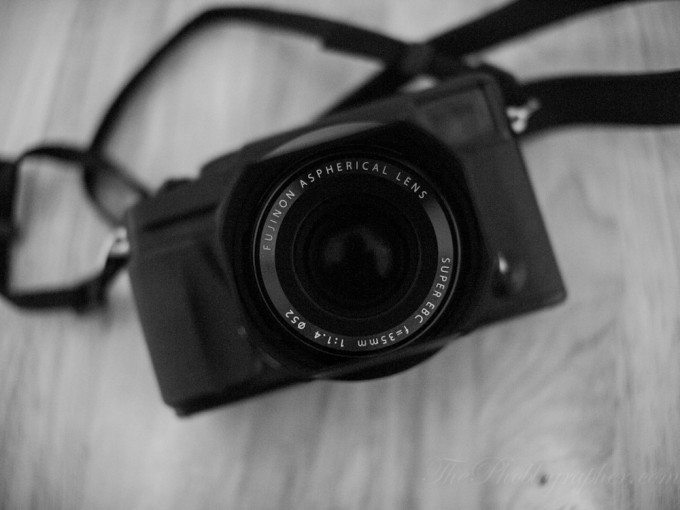
Street photography is a given with Fujifilm cameras. They’re set up pretty perfectly for doing just that. Not only do you get lenses that are pretty small, but they deliver great image quality when paired with the company’s incredible cameras. I mean, who wouldn’t like the look of Fujifilm Acros? Scroll through Instagram and you’ll find so many photos that look like film — and they’re bound to have been shot on Fujifilm. Here are some of the best lenses for street photography with Fujifilm cameras.

A Special Discount for Phoblographer’s Readers

This piece is presented in partnership with FUJIFILM. We’ve independently and ethically reviewed all the products in this post already without sponsorship. And we worked with them to recommend a few key gems to you.

Visit the FUJIFILM on-line store  to make your purchase. Enter the coupon code phoblographer to receive FREE ground shipping. Offer expires October 31st 2023.

How We Test and Choose the Best Lenses for Street Photography With Fujifilm Cameras

  • The Phoblographer’s various product round-up features are done in-house. Our philosophy is simple: you wouldn’t get a Wagyu beef steak review from a lifelong vegetarian. And you wouldn’t get photography advice from someone who doesn’t touch the product. We only recommend gear we’ve fully reviewed in these roundups.
  • If you’re wondering why your favorite product didn’t make the cut, there’s a chance it’s on another list. If we haven’t reviewed it, we won’t recommend it. This method keeps our lists packed with industry-leading knowledge. Some of our stories include affiliate links. If you buy something through one of these links, we may earn an affiliate commission.
  • When we test lenses, we’ve got various things in mind. First off, we consider who might want to buy the lens and what they might do with it. With that in mind, we try to tackle at least three genres of photography with that lens in a variety of situations. If the lens has weather resistance, then we’ll test it accordingly with a weather-resistant camera. We also test the autofocus of the lens in continuous mode, single mode, with exposure preview effects, without those effects, and then with all the major image quality parameters. These days, no one really makes a bad lens — but some are far better than others.
  • In this specific roundup, we’re basing our findings on the reviews that we’ve done. We’re choosing a favorite, but we’re also giving photographers a bunch of others that they might like depending on how they shoot.

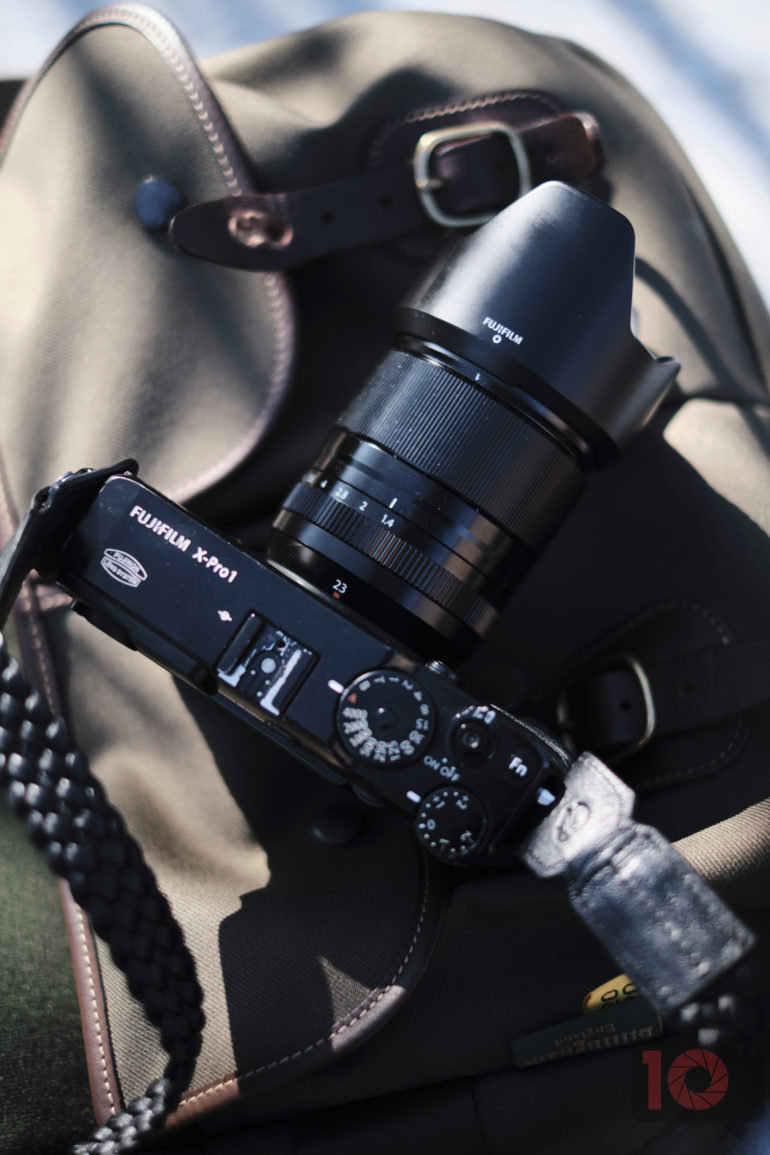
The best Lens for Street Photography With Fujifilm Cameras: FUJIFILM 23mm f1.4 R WR

There’s a lot to love about this lens. Fujifilm revamped the autofocus motors to improve it over the previous version. They also modernized the optics to help it render sharper images with newer sensors like those on the X-H2. It’s also weather resistant, so you can take it out with you in tougher conditions. Honestly, it’s a lens that might never leave your camera. Nothing hits quite like this lens and your favorite film simulation. We like pairing it with Glimmer glass for retro-vibes.

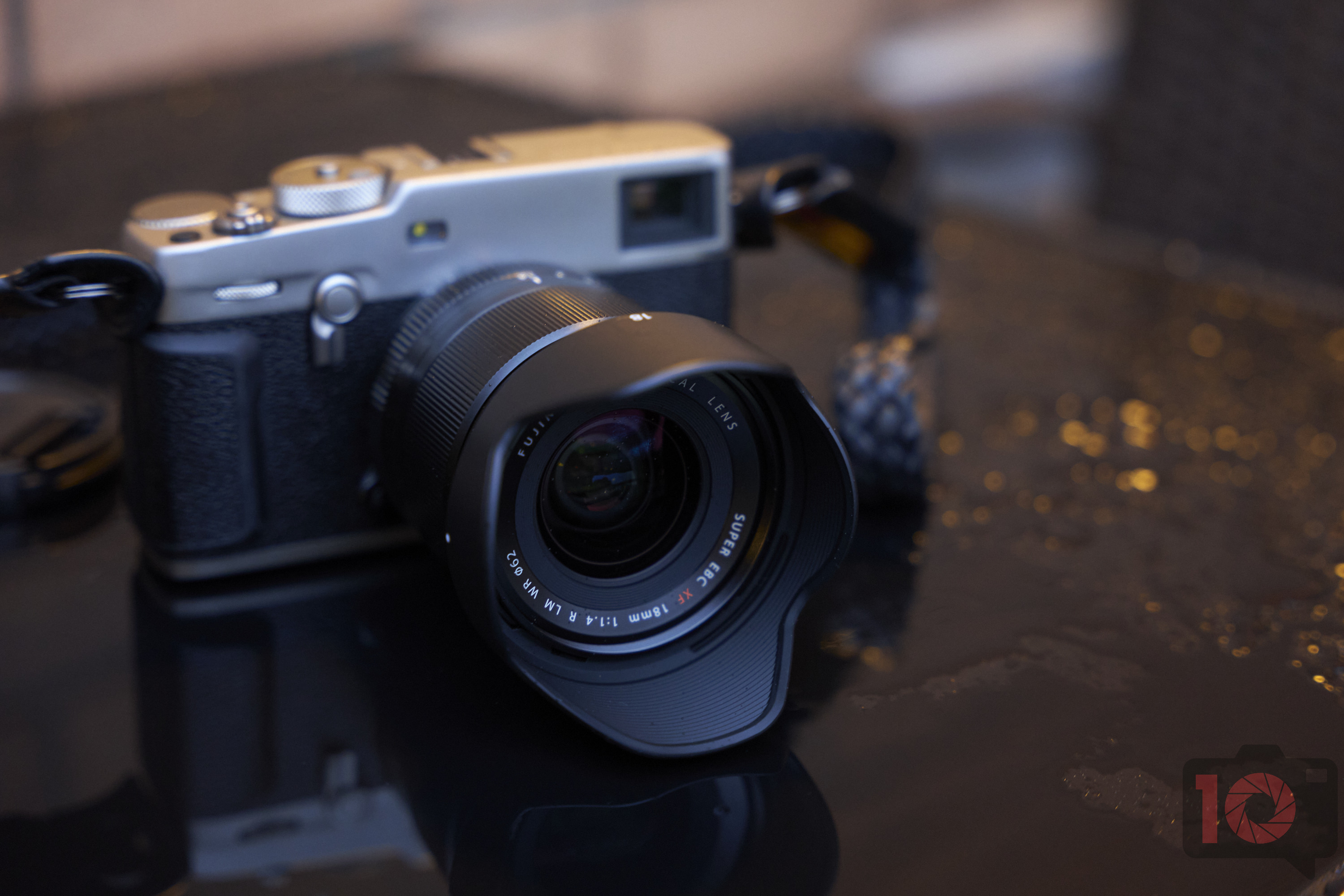
I honestly thought that my favorite lens for street photography would be the 18mm f1.4 R WR, but nope. It’s this!

Combine it with your favorite film simulations and the right exposure for results that you’re going to love. I prefer Classic Chrome, Astia, Pro Negative High Contrast, and Classic Negative.

Why It’s Great

  • Weather resistance
  • Fast autofocus
  • Build quality
  • It still makes Fuji’s sensors look good!
  • Pretty good pricing at the Fujifilm online store

Tech Specs

Specs are taken from the FUJIFILM online store.

  • Lens Configuration: 15 Elements in 10 Groups with 2 aspherical and 3 ED elements
  • Focal Length: 23mm
  • 35mm Equivalent Focal Length: 35mm
  • Angle of View: 63.4
  • Maximum Aperture: F1.4
  • Minimum Aperture: F16
  • Number of Aperture Blades: 9 (rounded diaphragm opening)
  • Aperture Step Size: 1/3EV (22 steps)
  • Minimum Focusing Distance (cm): 19
  • Minimum Focusing Distance (in): 7.48
  • Maximum Magnification: 0.2x
  • Lens Diameter (mm): 67
  • Lens Length (mm): 77.8
  • Lens Length (in): 3.06
  • Lens Weight (g): 375
  • Lens Weight (lb): 0.82
  • Filter Size: 58mm
  • Lens Mount: FUJIFILM X mount
  • Approximate External Lens Dimensions: 67mm x 77.8mm

This lens is available for $899.95. In our review conclusions, we said:

The Fujifilm 23mm f1.4 R WR LM is a worthy successor to the original. Fujifilm improved the image quality by making it sharper. Some of us won’t want our photos too sharp, so I’d recommend using a haze filter or an intensifier to soften it up a bit. There’s also weather resistance and faster autofocus. At the same time, it’s pretty long. Ergonomically speaking, I personally like a fatter, shorter lens. But practically speaking, this is one of the best lenses Fujifilm has ever made.

The Best Lenses for Street Photography Might Be Different For You

Here are three other great options that photographers will enjoy. These lenses render different views, and all have different looks — especially Fujifilm’s beloved 35mm f1.4. But for some photographers, these might be the best lens for street photography with Fujifilm cameras because of image quality, balance, or affordability.

FUJIFILM 35mm f1.4 R

What’s Great

  • Exceptional image quality
  • Jaw dropping sharpness
  • Focusing speed has improved with further firmware updates, but still isn’t top notch
  • Excellent metal build quality
  • The finish will make it look like an old lens over time

Tech Specs

  • Lens Configuration: 8 elements in 6 groups (includes 1 aspherical element)
  • Focal Length: 35mm
  • 35mm Equivalent Focal Length: 53mm
  • Angle of View: 44.2
  • Maximum Aperture: F1.4
  • Minimum Aperture: F16
  • Number of Aperture Blades: 7 (rounded diaphragm opening)
  • Aperture Step Size: 1/3EV (22 steps)
  • Minimum Focusing Distance (cm): 28
  • Minimum Focusing Distance (in): 11.02
  • Maximum Magnification: 0.17x
  • Lens Diameter (mm): 65
  • Lens Length (mm): 50.4
  • Lens Length (in): 1.98
  • Lens Weight (g): 187
  • Lens Weight (lb): 0.41
  • Filter Size: 52mm
  • Approximate External Lens Dimensions: 65mm x 50.4mm

This lens is available for around $599. Our review concluded by saying:

When I made the purchase of the X-Pro 1, I was torn between the 18mm f2 and this lens. I think I made the right decision due to the faster aperture despite the fact that I like shooting wider. Either way, this lens is a wonderful piece of glass that every photographer going into a mirrorless system should consider. Granted, it does have its contenders. Panasonic’s 25mm f1.4 and Voigtlander 25mm f0.95 may keep Micro Four thirds users locked in at the time of this publishing. Sony doesn’t have anything in the equivalent area to step into the arena, though some can argue that the 30mm f3.5 may be a suitable fit.

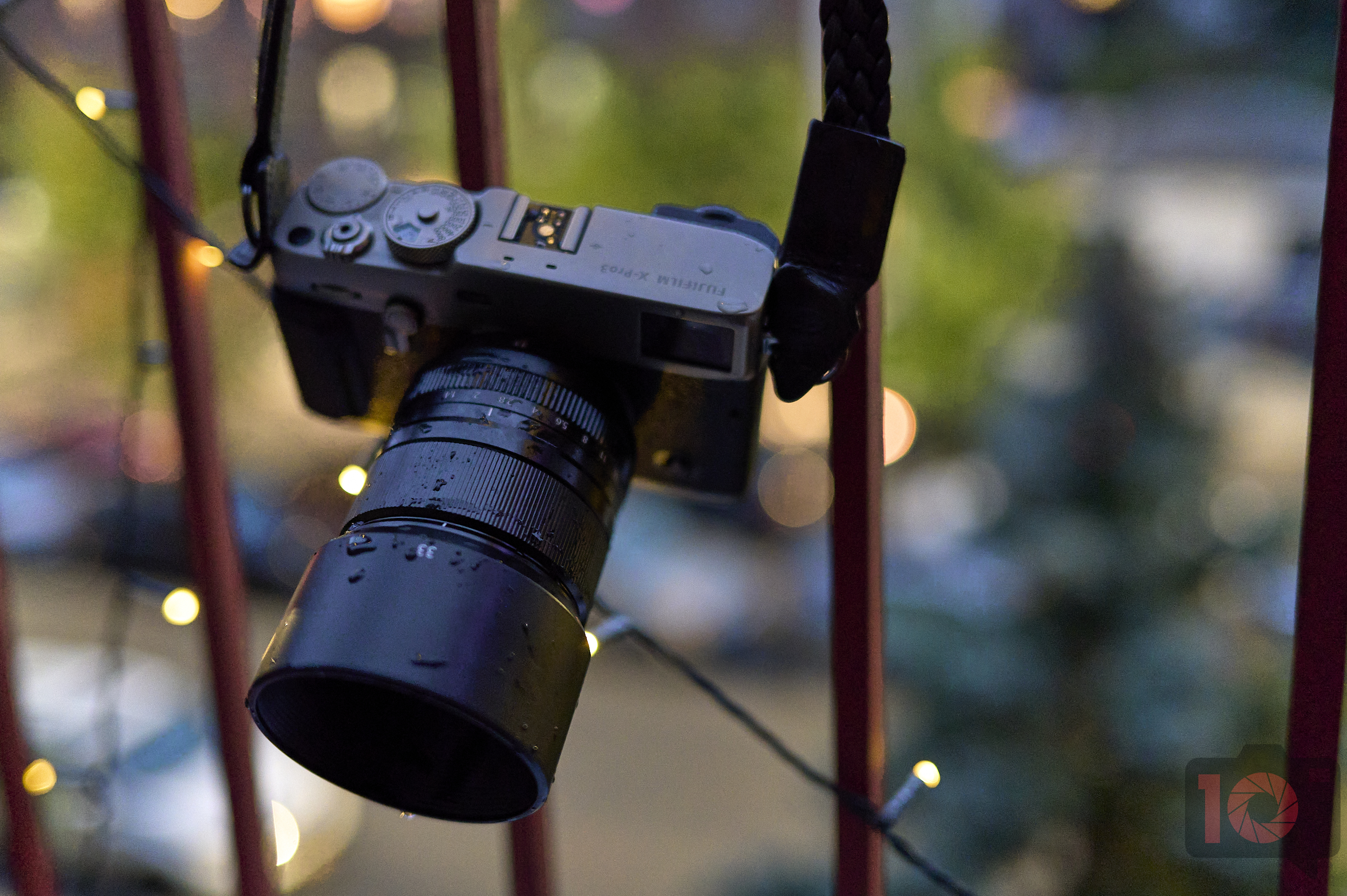
FUJIFILM 33mm f1.4 R WR

What’s Great

  • Weather sealed
  • Lightweight
  • Decent size, not too large or small.
  • Insanely fast on the X Pro 3 and XT4
  • Beautiful image quality
  • I’m glad this isn’t directly replacing the 35mm f1.4 because that lens has beautiful render.
  • Can be a fantastic wedding lens one moment and then a great fun lens the other moment.

Tech Specs

  • Lens Configuration: 15 elements in 10 groups with 2 aspherical and 3 ED elements
  • Focal Length: 33mm
  • 35mm Equivalent Focal Length: 50mm
  • Angle of View: 46.9
  • Maximum Aperture: F1.4
  • Minimum Aperture: F16
  • Number of Aperture Blades: 9 (rounded diaphragm opening)
  • Aperture Step Size: 13EV (22 steps)
  • Minimum Focusing Distance (cm): 30
  • Minimum Focusing Distance (in): 11.81
  • Maximum Magnification: 0.15x
  • Lens Diameter (mm): 67
  • Lens Length (mm): 73.5
  • Lens Length (in): 2.9
  • Lens Weight (g): 360
  • Lens Weight (lb): 0.8
  • Filter Size: 58mm
  • Lens Mount: FUJIFILM X mount
  • Approximate External Lens Dimensions: 67mm x 73.5mm

You can get this lens for around $799.95. In our review, we state:

“Mount the Fujifilm 33mm f1.4 R WR LM to your camera, and you’ll probably fall in love nearly immediately. The balance, the build quality, and the reliability all work together to make this a fantastic lens. Couple that with one of the great Fujifilm simulations and you’ll be very happy. It focuses incredibly fast in any situation you’ll need to it. And it also reliably tracks your subjects.”

FUJIFILM 18mm f1.4 R WR

What’s Great

  • It’s quite sharp
  • Swift autofocus
  • Lightweight and ergonomic
  • Withstands the elements
  • Great for a variety of applications
  • Beautiful optics

Tech Specs

  • Lens Configuration: 15 elements in 9 groups (includes 3 aspherical and 1 ED elements)
  • Focal Length: 18mm
  • 35mm Equivalent Focal Length: 27mm
  • Angle of View: 76.5
  • Maximum Aperture: F1.4
  • Minimum Aperture: F16
  • Number of Aperture Blades: 9 (rounded diaphragm opening)
  • Aperture Step Size: 1/3EV (22 steps)
  • Minimum Focusing Distance (cm): 20
  • Minimum Focusing Distance (in): 7.87
  • Maximum Magnification: 0.15x
  • Lens Diameter (mm): 68.8
  • Lens Length (mm): 75.6
  • Lens Length (in): 2.98
  • Lens Weight (g): 370
  • Lens Weight (lb): 0.81
  • Filter Size: 62mm
  • Approximate External Lens Dimensions: 68.8mm x 75.6mm

Get this lens for around $999.95. In our review, we state:

“The Fujifilm 18mm f1.4 LM WR lens provides the classic 28mm equivalent focal length with a fast aperture. The linear motor delivers even more impressive autofocus, and it’s weather sealed. Images are beautifully sharp with painterly bokeh, gorgeous colors, and solid contrast. The film simulations make editing a breeze and get you back to shooting in no time. It is a lens that you can and will want to take with you everywhere.”

What to Know About The Best Lenses for Street PHotography With Fujifilm Cameras

  • Fujifilm X Mount (which we’re focusing on here) has many lenses available. And so, we’re choosing the best lenses for street photography with Fujifilm Cameras: from the ones that we’ve reviewed. Luckily, we’ve reviewed the vast majority of lenses for Fujifilm X Mount. You can find them in this guide here.
  • So what makes a lens the best lens for street photography? A few things: at the top of it all is portability. I mean, what’s the point of using a lens if you never want to handhold it or carry it for a long time? Then there’s image quality. Fujifilm’s newer lenses are a bit cleaner than the previous ones were. However, a lot of the image quality is also based on whatever film simulation you’re using. We also value weather resistance because it helps prolong the shelf-life of your product.
  • With Fujifilm, we typically just use single autofocus and have it select from the entire area. Otherwise, we use Continuous autofocus and choose the widest zone right in the center. It typically nails the exposure.
  • We’ve reviewed nearly all of Fujifilm’s X series lenses. You can take a look at this guide.

Picking the Right One For You

If you’re still a bit confused as to the right lens for you, here are some questions to ask yourself

  • What’s your budget?
  • How will you use the product?
  • What lighting situations are you in, and how will that affect what you’re doing? Our reviews hyperlinked in this article can help with that.
  • Are you traveling a lot with it?
  • Will you be using it in a situation that’s a bit rougher?
  • Can you live without the best quality?
  • Who else uses this product? How are they using it?
  • What’s so appealing about this product that I can’t get from what I have already or something else?
  • When will I really have time to use this product?
  • Where will I bring this product?
  • How will this product help bring me joy and joy in my photography?

These are just a few of the questions that we ask ourselves, but we think that you should ask yourself these for sure.

Kehrer Verlag : Burt Glinn. Half a Century as a Magnum Photographer – The Eye of Photography Magazine

Kehrer Verlag : Burt Glinn. Half a Century as a Magnum Photographer – The Eye of Photography Magazine

Burt Glinn. Half a Century as a Magnum Photographer celebrates the compelling, elegant, and expressive ways Burt Glinn experienced the world through photography. Highlighting his extraordinary talent for picturing iconic and everyday scenes from the second half of the 20th century, this is the first monograph covering the breadth of Glinn’s storied career.

From the Introduction by Sarah Stacke:
I remember Burt’s wit and his lopsided grin when he told stories, which was a lot. He loved fine things, especially clothes. He had big opinions, high expectations, and an incredible grasp of the narrative, technical, and administrative aspects of photography. […] For more than half a century, Burt covered it all: conflict, celebrities, wildlife, science, corporations, travel, society, culture. Yet, looking through his archive, his interests clearly emerge. The chapters in this book present five themes Burt returned to again and again.

From the text Notes from Family by Elena Prohaska Glinn:
Burt began creating annual lists of his stories in 1948 and continued for 60 years. The lists reveal how diverse his interests were throughout his life. As an example, in 1959, one of Burt’s favorite years, he photographed more than 30 stories. It began when he abruptly left a New Year’s Eve party after hearing Cuba’s president Fulgencio Batista was on his way into exile and Fidel Castro was taking control. Burt caught the last Yellowbird flight from New York to Miami, then got a $20 charter plane to Cuba, where he spent nine days on the road with Fidel and his soldiers, document- ing their triumphant procession into Havana. After some rest and assignments stateside, he covered the ultrarich and almost famous, often ridiculous, at Badrutt’s Palace Hotel St. Moritz in the haute Swiss Alps. Back in New York, he photographed Sammy Davis Jr., followed by the Beatniks.

From the interview by Sarah Stacke with Susan Meiselas:
Burt’s editorial eye is key. He really knew how to see the world by placing himself in it. He was part of the generation who were lucky to work when magazine assignments were still plentiful and long. He came out of that tradition, which meant that he went places, then stayed and documented them over time. His photographs of the Berlin Wall being built were an example of incredibly good work.

Burt Glinn (1925–2008) is known as one of the most prolific photographers of his generation. Born in Pittsburgh, Pennsylvania, Glinn served in the US Army and studied literature at Harvard University. In 1951, while working for LIFE magazine, he joined Magnum as an associate and became a full member in 1954, one of the first Americans at the young agency. Glinn gained recognition for his coverage of the Cuban Revolution and his in-depth color series on the South Seas, Japan, Russia, Mexico, and California, each of which was published as a complete issue of Holiday. In the 1960s, he became one of the first photographers to enter the field of annual reports and for the next four decades created a visual record of corporate America’s rapid growth. Throughout his career, he regularly covered national and international historical events, cultural icons, and political figures for leading publications. Whenever possible, Glinn made images of religious communities and leaders, as well as sacred architecture and rituals. Many of these photographs became his personal favorites.

Burt Glinn. Half a Century as a Magnum Photographer
Sarah Stacke (Ed.)
Texts by Elena Prohaska Glinn, Sam Glinn, Mark Lubell, Susan Meiselas, Martin Parr, Gilles Peress, Sarah Stacke, Larry Towell, Alex Webb, Eelco Wolf
Designed by Bonnie Briant
Hardcover, 24 x 30 cm
144 pages
100 color and b/w illustrations English
ISBN 978-3-96900-121-9
Euro 45,00 / US$ 55.00
https://www.kehrerverlag.com/en/burt-glinn-half-a-century-as-a-magnum-photographer-978-3-96900-121-9

Missed Opportunities 18 August 2023 with John Enman Photography

Missed Opportunities 18 August 2023 with John Enman Photography

This past week I had to rush to Kelowna for an appointment and I didn’t want to be late. As I drove I noticed that I was missing some great photographs — two coyotes hunting in an open field, a large owl on a roadside post, hawks sitting by a marsh and the sun glowing off the white cliffs along a lakes as I passed.

As I began to write this article I was reminded of a long trip to Salt Lake City, Utah that my wife and I made some years ago. Our route was to head east to Calgary, then turn south to the boarder and follow the Missouri river as it snaked it’s way through canyons and gullies, then head west to Salt Lake City.

We left later than we should and were driving with as few stops as possible because I had promised my brother I would be at his house for a family event the next day. That was the first (and only) time I took that scenic drive. We kept realizing we should be stopping over and over again. Linda said, “We will never do that to ourselves again, we need to leave lots of time, even days, to photograph subjects when we see them.”

I think that many photographers have had the circumstance where the chance at a great photograph was missed because of the wrong lens or camera.

I remember a photograph of a moose wandering in the hazy morning fog. All I had was a cheap point and shoot camera. Sure I got the shot, but the photo was lacking because of the limitations of the small sensor and short lens. I spent time working on it with Photoshop, eventually changing it to a black and white because the image was noisy with a purplish cast and the quality of the final image was poor. Wrong camera.

The Boy Scouts say, “Be prepared,” and I think that is a good idea for photographers. When film use was common, most serious photographers had more than one camera; one loaded with black and white film, one with colour negative film, and sometimes one with colour slide film. I used to put a short zoom on one and a telephoto on the other. Since digital imaging many photographers only carry one camera, colour or black and white images can be chosen with any computer program.

Now I have my main DSLR camera, and two little mirrorless cameras; A Fuji I have mentioned in other articles and a fun little Nikon V1.

Sometimes I like the portability of a little Canon G1x digicam I also have. I don’t use it much — only if I am going to a party or walking around town. It is one of the rare digicams with the crop size sensor that’s found in many larger cameras, I mainly use it for subjects that are close to me and rarely use it for scenic photos.

Concerning roadside photo opportunities, I’ll mention my father. The chance of him taking a good picture was never very good, but he was certainly dedicated. He was a contractor that worked all over the Utah and there was usually a very dirty camera jammed under his pickup seat or sometimes stored on his excavator and he rarely missed an opportunity to photograph anything that interested him. The sheer volume of pictures he took out weighed the bad pictures. He mostly used slide film and my brothers and I looked forward to his evening slide shows. There were always lots of interesting photos and it was fun to view pictures that he hand fed in his old projector.

Like my father, we not only should be continually looking for photographic opportunities, but we should prepare for them by having some kind of camera with us. I’m not a fan of camera phones, but as they say the camera that with you is better than none.

Stay safe and be creative. These are my thoughts for this week. Contact me at www.enmanscamera.com or emcam@telus.net.

'Missed Opportunities' black and white Ocean Tree (Photo by: John Enman) Cropped
Farmer's tree in colour 'Missed Opportunities 18 August 2023' (Photo by: John Enman)

Leica Analog Cameras Offer A Mindful, Tactile Journey

Leica Analog Cameras Offer A Mindful, Tactile Journey

I’d be lost without my computer, my iPhone and my digital camera when on assignment. But sometimes I’d much prefer to just wander the woods alone, with film, foregoing the near-perfect efficiency that digital technology provides. And though I started my journalism career using an analog camera, I switched to digital for both personal and professional use when the time and price was right.

There’s no question it was a boon, making quick work of any sort of editing that would have formerly required a redo. But I missed the surprises—the places where art resides and where flashes of the unexpected are nothing short of dazzling. Apparently I’m not alone. Leica, for example, maintains an analog presence in its product portfolio to demonstrate its commitment to the full spectrum of photography and all that implies.

“Analog cameras immerse the photographer in a tactile journey, beginning from loading the film to deliberating over each shot due to the finite nature of film. This process prompts a mindful approach to composition, rendering photography a deeply personal practice,” says Mike Giannattasio, U.S. president of Leica.

Which begs the question: Are we selling a piece of our collective soul at the expense of a richness that only time and imperfections can serve up?

Not nostalgia

I came of age on LP records, when the size of one’s collection was as much a badge of honor as the length of one’s hair. When CDs came along, I was quick to embrace them, appreciating their clarity without the disruption of the familiar crackle of a turntable needle. I subsequently found renewed fulfillment in not only the ritual of vinyl, but also the warmer, fuller sound that digital can’t touch.

Interestingly, writing instruments, as in pens designed for re-use, are continuing to rise in popularity, though email is no doubt the most efficient mode of communication. A pen, like a record, engages the senses, requiring interaction that a computer does not. Traditional books, too, are holding space against digital equivalents with some studies showing greater recall and generally increased enjoyment from print.

David Sax explains this and more in the Revenge of the Analog, “Surrounded by digital, we now crave experiences that are more tactile and human-centric. We want to interact with goods and services with all our senses, and many of us are willing to pay a premium to do so, even if it is more cumbersome and costly than its digital equivalent.”

But what are we really “craving” as we delve into our imperfect analog pasts?

“Digital technology has undoubtedly revolutionized the photographic process, but the speed and ease it offers sometimes come at the expense of the craft’s mechanical essence,” explains Giannattasio. “Using an analog camera is an engaging experience; it demands patience, purposefulness, and creativity—factors less prominent in the digital space. The conversation creates space for cohabitation of analog and digital, embracing the diversity of experiences crafted by the creative act of making a photograph.

“What we define as a revival underscores that there is a place for the craft of analog in our digitalized world, highlighting a desire amongst photographers to engage with the world in a deliberate way,” Giannattasio continues. “This return to analog opens the door to a new generation of photographers looking to explore the medium’s experiential side, even as it allows seasoned photographers to reconnect with their roots.”

But it’s not all black and white.

Sax remarks, “The choice we face isn’t between digital and analog. That simplistic duality is actually the language that digital has conditioned us to: a false binary choice between 1 and 0, black and white. Samsung and Apple. The real world isn’t black or white. It is not even gray. Reality is multicolored, infinitely textured, and emotionally layered.”

And that makes us sublimely human.

How to photograph the super moon on August 31

How to photograph the super moon on August 31

By Sean Scott, Canon Master | 30 August 2023

With the second of two supermoons in August set to grace our skies tomorrow night, we asked Canon Master Sean Scott for a few tips for capturing it. 

The first step in all photography is deciding what kind of image you want to capture. This will determine your location, which camera and lens to use, and which settings.

Image: Sean Scott

If you want a landscape image with the moon taking up a smaller portion of the image, you’ll want to use a wide-angle lens, but if you want a large image of the moon, it’s best to use a telephoto lens.

From here you can determine the best location to shoot, which will be key in the outcome of your image, especially for shooting a subject like the blue supermoon. 

For a wide angle shot, you want to find a nice location without too much light pollution to let the moon light up your landscape. Some of my favourite spots are Burleigh Heads or the Byron Bay Lighthouse.

If you’re using a telephoto lens, then using an app like The Photographers Ephemeris is great.

This will not only give you the time of the moon rise but also a lot of information as to where the moon will rise and be in the sky at night.

The basics

The specifics on how to shoot the moon will depend on if you are using a wide-angle lens or a telephoto lens, but these basics apply across all lenses.

  •        A good tripod to stabilise the camera and ensure a clear image is always the best starting point
  •        A remote shutter either via the Canon app or even a 2 second timer works will also be helpful to stop camera shake when pressing the shutter
  •        You will also want to turn off image stabiliser on the lens as it is not needed with a good tripod set up
  •        For those looking to run images through processing, it’s best to set the camera to Manual mode and shoot in Raw, as this will provide the most post processing options.
Image: Sean Scott

Exposure 

It’s important to keep in mind that the actual exposure setting will continue to change as the night gets darker, which will impact the outcome of your images. If the exposure time is too long for the lens you have selected, you will capture the movement of the moon, resulting in blurred images.
With a wide-angle lens, you have a lot of options for a longer exposure – I would normally start at 400 ISO F8 and then adjust the exposure time to suit. 

With telephoto lenses I like to shoot at 1/250 second and adjust aperture and ISO to suit.  If you’re looking for a silhouette, then exposing for the bright part of the moon will achieve this. 

Image: Sean Scott

Incorporating a subject

If you’re hoping to place a subject in front of the moon with a telephoto lens, then this tip is for you. You will need to get a long way away from your subject with a telephoto lens if you want to place them in the same shot as the moon – up to 1km away. I recommend you do a test shoot so you can make sure that you have the angles right for when the moon rises. 

There is no right or wrong way of shooting the moon and just setting the camera to manual and experimenting with some string will not only give you a variety of results but also teach you more about your camera. 

The important things to remember that will enable a great photo are the tripod, remote shutter, and making sure the exposure time is not too long for the lens you have selected.

The Unusual Photography of Pen Densham – Larchmont Buzz

The Unusual Photography of Pen Densham – Larchmont Buzz
Pen Densham unrolls one of his large photographs inspired by nature.

One of our favorite things about writing the Buzz is learning more about our fascinating neighbors, like Pen Densham. Well-known as an accomplished film and television producer, writer, and director, Densham is also a photographer.

Densham began his career in still photography, but abandoned it to develop his career in film and television. The longtime Windsor Square resident, who now lives in West Hollywood, told us his interest was piqued a few years ago when he saw the photography of his teenage daughter taking a high school photography class.

“Her work was so free, it was inspiring,” explained Densham. Since returning to photography and now using a digital camera, Densham has developed a unique body of impressionistic images inspired by nature. Recently Densham invited us to take a look at his work.

There’s no manipulation of the image in the dark room, everything is done by Densham through the lens.

“I was raised loving photography. My mother and father made 35 mm theatrical short films. I even rode an alligator in one at the age of four. Cameras seemed like magician’s instruments. I yearned to cast “spells” with them,” wrote Densham in the introduction to one of his photography books, filled with images inspired by his koi pond.

“Casting a spell” is a theme throughout Denham’s work. His images are very large, some as large as six feet. The sense of motion and vibrant color draw the viewer in. His work is inspired by nature and is created without any manipulation of the digital images in Photoshop.

“I keep it very simple,” explained Densham. “I don’t know how to do any of that. I’m interested in creating something you’ve never seen.”

“Waiting, by a wind blown tree, a wave smashed beach, a vigorous mountain stream. I want to pull everything in the world through my lens. I want to paint with the sun, at a 186 thousand miles a second,” wrote Densham on his website.

“The leaves are turning” by Pen Densham, from his New Zealand series.

Once captured by the camera, the images are beautifully printed on very large paper, which adds depth to the image, drawing the viewer deeper into the image trying to figure out what you are looking at. Naturally, we asked as he gave us a tour of Schoos Design where much of his work is displayed. Densham explained we were looking at a reflection, or a plant rippling in the breeze or a wave. He has managed to cast a spell with his camera and capture a moment on film that we would never have seen otherwise.

Densham said he will often wait until he finds the right moment to snap the shutter, and thanks to digital photography he can take hundreds of shots, overexposing some or using long blurring shutter speeds to create just the right image. He loves finding patterns and developed a series of images where he folded the image on itself, creating a mirrored reflection.

Koi by Pen Densham from his book “Exploring the Dragon’s Gate.

Densham brings his filmmaker’s eye to still photography, creating dynamic moving images. He made a conscious decision to forget about all the rules of photography that he learned years ago in his search for “qualia,” the philosophical term for experiences that have no words, just feelings. The images are colorful, cheerful, and uplifting. Abstract and yet familiar. What a treat to explore with the artist!
Densham with a gallery of images featuring light reflections that are mounted on glass.
Print Friendly, PDF & Email