Photography

The Great Debate: Why Gear Does Make You a Better Photographer |

The Great Debate: Why Gear Does Make You a Better Photographer |

In the world of photography, the debate over whether gear truly impacts the quality of a photographer’s work has been going for years. Some argue that it is the photographer’s skill and vision that matter most, while others firmly believe that having the right gear can significantly elevate one’s abilities. This article aims to shed light on the argument that gear does make you a better photographer, by exploring how advanced equipment empowers photographers, enhances creative possibilities, and enables the pursuit of excellence.

1. Technical Advantages

High-quality gear offers technical advantages that cannot be denied. State-of-the-art cameras boast superior sensor technology, higher resolutions, and improved dynamic range, allowing photographers to capture images with exceptional detail and clarity. Advanced autofocus systems enable swift and precise focusing, especially in challenging shooting conditions, ensuring critical moments are not missed. Additionally, better low-light performance reduces noise and allows for high-quality images even in dimly lit environments.

  • Sensor Technology: Advanced cameras feature cutting-edge sensor technology with higher megapixel counts and improved sensitivity to light. Higher megapixels allow photographers to capture images with exceptional detail and resolution, enabling larger prints and greater cropping flexibility without sacrificing quality. Improved low-light performance reduces noise and allows for cleaner images in challenging lighting conditions.
  • Dynamic Range: Superior dynamic range in modern camera sensors means a broader range of tones can be captured in a single exposure. This increased dynamic range enables photographers to retain more details in both shadows and highlights, reducing the risk of overexposure or underexposure in high-contrast scenes.
  • Autofocus System: High-end cameras come equipped with advanced autofocus systems that provide fast and precise focusing. These systems use sophisticated algorithms and multiple focus points to track subjects accurately, making them ideal for fast-paced action photography or capturing fleeting moments in wildlife and sports photography.
  • Image Stabilization: In-body or lens-based image stabilization technology helps reduce camera shake, resulting in sharper handheld shots, especially in low-light conditions or when using telephoto lenses. Image stabilization is particularly valuable for landscape photographers who shoot in dim light or during long exposures.
  • Burst Mode and Buffer Capacity: Modern cameras offer high-speed continuous shooting in burst mode, enabling photographers to capture a series of rapid-fire images in quick succession. Coupled with large buffer capacities, which can hold multiple shots before slowing down, this feature is advantageous for photographing fast-moving subjects or sequences in sports and wildlife photography.
  • Weather-Sealing: High-quality camera bodies often come with weather-sealing, protecting the camera’s internal components from dust, moisture, and adverse weather conditions. Weather-sealed cameras allow photographers to work confidently in challenging outdoor environments without worrying about potential damage to their gear.
  • Expanded ISO Range: Advanced cameras provide an extended ISO range, allowing photographers to shoot at higher ISO settings without significant loss of image quality. This capability is valuable for low-light photography, where higher ISO sensitivity is required to maintain faster shutter speeds and avoid camera shake.
  • Advanced Metering Systems: Modern cameras feature sophisticated metering systems that analyze the scene’s lighting conditions and determine optimal exposure settings. Evaluative metering, matrix metering, or multi-zone metering modes help ensure accurate exposures even in complex lighting situations.
  • High-Speed Connectivity: Advanced cameras often come with built-in Wi-Fi, NFC, or Bluetooth connectivity, enabling photographers to transfer images wirelessly to smartphones, tablets, or computers. This feature streamlines the process of sharing images on social media or transferring files for immediate editing and delivery.

2. Creative Flexibility

Having a wide array of lenses, filters, and accessories at your disposal provides creative flexibility that can significantly enhance your photographic expression. Specialized lenses, such as ultra-wide-angle or telephoto lenses, open up new perspectives and enable photographers to experiment with unique compositions. Filters like polarizers and neutral density filters allow for greater control over light and exposure, resulting in visually stunning and creatively compelling images.

  • Versatile Lenses: High-end camera systems often offer a diverse selection of lenses, from wide-angle to telephoto, macro to fish-eye. These lenses provide photographers with various perspectives and focal lengths, enabling them to capture a wide range of subjects and scenes. Wide-angle lenses can emphasize expansive landscapes, while telephoto lenses bring distant subjects closer, making them versatile tools for landscape, wildlife, and portrait photography.
  • Specialized Lenses: Advanced gear often includes specialized lenses, such as tilt-shift lenses or ultra-fast primes. Tilt-shift lenses allow photographers to manipulate perspective and control depth of field creatively, resulting in unique and eye-catching images. Ultra-fast primes with wide apertures enable creative depth of field control, producing beautiful bokeh and isolating subjects from their backgrounds.
  • Filters and Accessories: Creative filters, such as polarizers and neutral density filters, add another layer of flexibility to the photographer’s toolkit. Polarizers enhance colors and reduce glare, while neutral density filters allow for longer exposures even in bright conditions. Graduated ND filters help balance exposure in high-contrast scenes, giving photographers more control over the final image.
  • Artistic Effects: Advanced cameras often include in-camera creative features, such as multiple exposure modes, creative picture styles, and built-in filters. These features allow photographers to experiment with various artistic effects directly in-camera, making the creative process more accessible and enabling instant results.
  • Panoramic and Stitching: Some advanced cameras have built-in panorama modes or in-camera stitching capabilities. These features enable photographers to capture sweeping vistas and expansive landscapes in a single frame, saving time and effort in post-processing.
  • High-Speed Photography: Advanced cameras with fast continuous shooting capabilities are essential for capturing fast-paced action and fleeting moments. They empower photographers to freeze fast-moving subjects, such as athletes in sports events or wildlife in action, providing ample creative opportunities.
  • Focus Stacking and Bracketing: Focus stacking allows photographers to combine multiple images taken at different focus points to achieve greater depth of field. Bracketing, on the other hand, enables capturing a series of shots at different exposures to later combine them for enhanced dynamic range or creative HDR (High Dynamic Range) images.
  • High-Resolution Sensors: Cameras with high-resolution sensors offer photographers the ability to capture intricate details and fine textures. These images are well-suited for large prints or extensive post-processing, allowing for more creative latitude in editing.

3. Pursuit of Specialization

Photographers who specialize in specific genres, such as wildlife, sports, or macro photography, often require specialized gear to excel in their field. Fast telephoto lenses enable wildlife photographers to capture elusive creatures in their natural habitat, while macro lenses bring out the intricate details of tiny subjects. Specialized gear allows photographers to push the boundaries of their craft and achieve outstanding results in their chosen niche.

  • Specialized Lenses: Different genres of photography often require specific types of lenses to capture subjects effectively. For example, wildlife photographers often require long telephoto lenses to capture distant animals without disturbing them. Portrait photographers may prefer fast prime lenses with wide apertures for beautiful bokeh and subject isolation. Advanced camera systems provide access to a wide range of specialized lenses, allowing photographers to choose the best tools for their chosen genre.
  • Fast and Accurate Autofocus: Specialized photography often involves capturing fast-moving subjects or fleeting moments. In wildlife photography, for instance, a quick and accurate autofocus system is essential to track and focus on animals in motion. Advanced autofocus capabilities in modern cameras ensure that photographers can achieve sharp and well-focused images in challenging shooting conditions.
  • Low-Light Performance: Some genres of photography, like astrophotography or night photography, demand exceptional low-light performance. Cameras with high ISO capabilities and low noise at high ISO settings enable photographers to capture clear and detailed images in dimly lit environments.
  • High-Speed Continuous Shooting: Sports and action photographers need to capture fast-paced moments with precision. High-speed continuous shooting allows photographers to capture a rapid sequence of images, increasing the chances of capturing the perfect shot during dynamic events.
  • Weather-Sealing and Durability: Specialization often takes photographers into various environments and conditions, such as wildlife reserves, rugged landscapes, or extreme weather. Weather-sealed and durable camera bodies ensure that the gear can withstand harsh conditions, providing reliability and peace of mind during challenging assignments.
  • Image Stabilization: Specialized photography often involves using long lenses or shooting in low light, where camera shake can be a concern. In-body or lens-based image stabilization helps minimize camera shake, resulting in sharper images when shooting handheld.
  • High Resolution and Image Quality: Some genres, like landscape or architectural photography, require high-resolution sensors and excellent image quality to capture intricate details and textures. Advanced camera systems with higher megapixels offer photographers the resolution they need to produce large prints or create stunning and highly-detailed images.
  • Customization and Functionality: Specialized photographers benefit from customizable camera controls and functionality tailored to their unique needs. Many advanced cameras offer programmable buttons and customizable menus, allowing photographers to set up their gear according to their shooting preferences and requirements.

4. Faster Workflow

High-end gear can significantly improve a photographer’s workflow, leading to increased efficiency and productivity. Fast camera processors, larger buffer capacities, and high-speed memory cards enable photographers to shoot continuously without interruption, essential in fast-paced events or wildlife photography. Advanced editing software, coupled with powerful computers, streamlines the post-processing phase, allowing photographers to fine-tune images with ease.

  • Speed and Performance: High-end cameras are equipped with powerful processors and advanced technologies that ensure swift performance. Faster startup times, rapid autofocus, minimal shutter lag, and shorter buffering times all contribute to a seamless shooting experience, especially in fast-paced situations where decisive moments need to be captured quickly.
  • Burst Mode and High-Speed Continuous Shooting: Advanced cameras offer burst mode or high-speed continuous shooting, allowing photographers to capture a rapid sequence of images in quick succession. This is particularly useful in sports, wildlife, and action photography, where capturing a series of frames ensures that the perfect moment is not missed.
  • Autofocus Performance: Advanced autofocus systems with sophisticated algorithms and numerous focus points enable photographers to achieve precise and swift focusing even in challenging shooting conditions. This ensures that critical shots are captured accurately, reducing the need for time-consuming manual adjustments.
  • High-Speed Memory Cards: High-quality and high-capacity memory cards with fast read/write speeds ensure that images can be saved quickly and efficiently. This is especially beneficial when shooting in continuous mode or when capturing large raw files that require fast data transfer.
  • Wireless Connectivity: Many advanced cameras come with built-in Wi-Fi, NFC, or Bluetooth connectivity, allowing photographers to transfer images wirelessly to smartphones, tablets, or computers. This eliminates the need for physical connections and expedites the process of sharing images, editing on the go, or delivering files to clients promptly.
  • Customizable Controls: Advanced cameras often feature customizable buttons and menus, allowing photographers to set up their gear according to their shooting preferences. This customization streamlines access to frequently used settings, reducing the time spent navigating through menus and enabling quicker adjustments.
  • High-Speed Post-Processing: A faster workflow is not limited to the shooting phase alone; it extends to post-processing as well. High-performance computers, coupled with efficient image editing software, enable photographers to handle large files and complex edits swiftly. This ensures that the post-processing phase is productive and minimizes delays in delivering the final images.
  • Enhanced Organization and File Management: Advanced cameras often offer features for custom file naming, folder organization, and image sorting. This helps photographers maintain a structured and efficient file management system, making it easier to find and work with specific images during the post-processing phase.

5. Confidence and Trust

Investing in quality gear instills confidence in photographers, allowing them to focus on their creative vision without being hindered by technical limitations. Knowing that their equipment is up to the task empowers photographers to take risks, experiment with different techniques, and push the boundaries of their creativity. This sense of trust in their gear can lead to more inspired and daring photographic endeavors.

  • Reliability in Performance: High-quality gear offers consistent and reliable performance, even in challenging conditions. Photographers can trust that their cameras and lenses will work seamlessly, allowing them to focus on the creative process without worrying about technical malfunctions or limitations. This reliability instills confidence in the photographer’s equipment and encourages them to push their boundaries.
  • Meeting High Standards: Advanced gear is often associated with higher standards of quality and craftsmanship. By using professional-grade equipment, photographers align themselves with the tools that many successful professionals in the industry rely on. This association reinforces their belief in their abilities and cultivates a sense of trust in their gear’s capabilities.
  • Handling Diverse Situations: Specialized gear, such as fast telephoto lenses for sports or high-resolution sensors for landscape photography, allows photographers to tackle diverse shooting scenarios with ease. Knowing that they have the right tools for the job, photographers gain the confidence to approach different situations and subjects, adapting their skills to each unique setting.
  • Pursuing Artistic Vision: Advanced gear empowers photographers to pursue their artistic vision without feeling restricted by technical limitations. This creative freedom fosters confidence in their ability to capture their unique perspective and transforms their gear into an extension of their artistic expression.
  • Adapting to Challenges: In dynamic situations where speed and precision are crucial, advanced gear, such as high-speed autofocus systems, empowers photographers to adapt quickly to changing circumstances. The ability to respond swiftly to fleeting moments builds trust in their gear’s responsiveness and their own instincts as photographers.
  • Creative Exploration: High-quality gear opens up new possibilities for creative exploration. With access to specialized lenses, filters, and in-camera features, photographers can experiment with different techniques and styles, nurturing their creativity and expanding their artistic horizons.
  • Resilience in the Face of Adversity: Trust in one’s gear can be especially valuable in challenging conditions, such as adverse weather or unpredictable environments. The confidence that their gear can withstand these conditions fosters a sense of resilience in photographers, encouraging them to venture into unique and extraordinary situations.
  • Delivering Consistent Results: Consistency in image quality is crucial for professional photographers. With advanced gear, photographers can produce high-quality images consistently, building trust among clients and peers in their ability to deliver exceptional work.

6. Encouraging Growth

While gear alone cannot make someone a better photographer, it can undoubtedly encourage growth and skill development. As photographers become familiar with advanced gear, they gain a deeper understanding of its capabilities and nuances. This knowledge empowers them to make informed decisions, use their equipment to its fullest potential, and explore new possibilities in their photography.

  • Technical Proficiency: Advanced gear often comes with sophisticated features and settings that may be initially unfamiliar to photographers. As they explore these functionalities, photographers become more technically proficient, gaining a deeper understanding of their equipment and how to use it effectively. This enhanced technical knowledge empowers them to make better-informed decisions in their shooting and post-processing, leading to improved image quality.
  • Expanding Creative Vision: High-quality equipment opens up a world of creative possibilities. Access to specialized lenses, filters, and in-camera features allows photographers to experiment with different styles and genres. This exposure to new techniques encourages them to think outside the box, explore unique perspectives, and develop their artistic voice, ultimately expanding their creative vision.
  • Pursuing New Challenges: With advanced gear, photographers can confidently tackle more demanding and challenging projects. Whether it’s capturing fast-paced sports events, challenging lighting conditions, or intricate macro subjects, the capabilities of their equipment inspire photographers to pursue new challenges and push the boundaries of their craft.
  • Embracing Creativity: Knowing they have the tools to realize their creative ideas, photographers feel encouraged to embrace their creativity fully. They can experiment with various compositions, lighting setups, and post-processing techniques without the fear of technical limitations. This freedom fosters a sense of playfulness and curiosity, essential for fostering growth in artistic expression.
  • Adapting to Diverse Scenarios: High-quality gear enables photographers to adapt to diverse shooting scenarios effectively. Whether it’s capturing wildlife in the wild or shooting landscapes in challenging weather, advanced equipment provides the versatility required to excel in different situations. As photographers adapt to varied scenarios, they gain valuable experience and grow as versatile and adaptable artists.
  • Feedback and Learning: Using advanced gear often exposes photographers to a community of fellow enthusiasts or professionals who share their passion. Engaging with this community through workshops, forums, or social media platforms can provide valuable feedback and opportunities for learning and growth. Constructive criticism and exposure to other photographers’ work can inspire photographers to continuously improve and refine their skills.
  • Measuring Progress: High-quality equipment contributes to improved image quality and overall results. As photographers observe their progress and witness the tangible improvement in their work, they gain confidence in their abilities and feel encouraged to continue their pursuit of excellence.
  • Motivation for Investment: Investing in advanced gear signifies a commitment to the craft of photography. The financial investment motivates photographers to make the most of their equipment, continually seeking growth and improvement to justify the investment.

7. Rising to the Occasion

In some situations, exceptional gear can be the differentiating factor between capturing an outstanding shot and missing the opportunity altogether. Fast-action sports photography, wildlife in low light, or challenging environmental conditions are scenarios where having superior gear can be a game-changer. In these instances, advanced equipment enables photographers to rise to the occasion and produce exceptional images that might have been otherwise unattainable.

  • Fast Action Photography: Sports events, wildlife encounters, or fast-moving subjects demand quick reflexes and swift shooting. Advanced gear with high-speed continuous shooting and rapid autofocus enables photographers to capture fleeting moments with precision and accuracy. This capability is crucial in fast-action photography, allowing photographers to freeze action and capture the decisive moment.
  • Low Light Situations: Shooting in low-light conditions requires gear with excellent high-ISO performance and low noise. Advanced cameras with superior low-light capabilities allow photographers to capture compelling images even in dimly lit environments, such as night photography or indoor events.
  • Dynamic Lighting: Outdoor photography often involves dynamic lighting conditions, such as sunrise and sunset or rapidly changing weather. Advanced gear helps photographers adjust to shifting light, allowing them to make quick exposure adjustments and capture the best possible shots in challenging lighting situations.
  • Wildlife Photography: In wildlife photography, subjects may be elusive and unpredictable, necessitating quick reactions and a long reach. Advanced telephoto lenses and fast autofocus systems enable photographers to capture wildlife in their natural habitat without disturbing the animals or missing critical moments.
  • Photojournalism and Documentary Photography: Photojournalists and documentary photographers often encounter fast-paced, unpredictable situations. Advanced gear equips them with the tools they need to document events as they unfold, ensuring they can capture authentic and impactful images in real-time.
  • Portrait Photography: Portraits often involve capturing fleeting expressions and genuine emotions. Advanced gear with fast and accurate autofocus ensures that portrait photographers can focus precisely on their subjects’ eyes, resulting in compelling and emotionally evocative portraits.
  • Landscape Photography: While landscapes may appear still, the lighting and weather conditions can change rapidly. Advanced gear allows landscape photographers to adapt quickly to shifting light and weather, enabling them to capture the most captivating and dramatic scenes.
  • Travel Photography: Travel photographers encounter diverse shooting scenarios and may have limited time to capture iconic landmarks or fleeting moments. Advanced gear with versatile lenses and fast performance empowers travel photographers to maximize their shooting opportunities and create impactful travel images.

Conclusion

While it is true that a skilled photographer can create beautiful images with any camera, it is essential to acknowledge the undeniable advantages that advanced gear brings to the table. High-quality equipment empowers photographers with technical capabilities, creative flexibility, and confidence to pursue their vision and master their craft. It is the combination of a photographer’s skill, vision, and the right gear that unlocks their full potential, leading to outstanding results and continued growth as an artist. In the end, gear may not be the sole determinant of a photographer’s success, but it is undoubtedly a valuable tool that plays a crucial role in helping them become a better photographer.

Has having the latest and best gear helped you in your own photography journey or so you think that gear doesn’t even matter ?

Let me know in the comments below and let’s chat.

15 Great Photography Games to Play in 2023

15 Great Photography Games to Play in 2023

For photographers who cannot get enough of photography in the real world, there are plenty of ways to enjoy it in the virtual world.

Perhaps the most famous photography game of all time is Pokémon Snap, a cult classic for the Nintendo 64 that has received a much-anticipated sequel on Nintendo Switch. However, photography games go far beyond on-rails “point and shoot” games like Pokémon Snap.

Great Photography Games Guide
Credit: The Pokémon Company International

Some games, such as Season, A Letter to the Future, instead use photography as a vital narrative element to tell a compelling story. Others try to simulate photography in video game form, proposing a realistic photo experience.

There is even a subset of photography games that are “horror” video games, where the character uses a camera to photograph ghosts and monsters or sometimes even must survive a terrifying situation armed only with a camera.

Some games are not about photography but include sophisticated “photo modes,” allowing virtual photographers to capture incredible, lifelike images of amazing scenes or even plan out real-world shoots using a game. Beginner photographers can also learn some basic skills using photo modes. For example, games with realistic lighting engines can teach people much about how light interacts with different subjects.

Table of Contents

Games in Which Photography is the Primary Gameplay Element

These video games are ones where photography is the sole or primary way the player interacts with the game. The gameplay loop itself is photography. This does not necessarily mean a game is a photography simulator, although it can be. It just means the player spends most of their time taking photos during normal gameplay.

New Pokémon Snap

[embedded content]

Available on: Switch, $60

Retro alternative: Pokémon Snap (Nintendo 64, $14-100 depending on condition)

New Pokémon Snap is the long-awaited sequel to Pokémon Snap on Nintendo 64. Released more than 20 years after the original game, New Pokémon Snap on Nintendo Switch is a beautiful game that offers the same fundamental gameplay loop as its predecessor, albeit with way better visuals, many more Pokémon, and a handful of new features.

In New Pokémon Snap, players assume the role of a Pokémon Photographer and travel around different habitats in an on-rails hovercraft. The craft moves through the levels at a constant rate, although the player can speed up. Players can capture photos of a wide range of Pokémon exhibiting different behaviors and interesting poses by using different items and paying close attention to their surroundings. Players are scored based on how centered a Pokémon is, its pose and behavior, its size in the frame, and its rarity. Players are encouraged to replay levels to see new areas and unlock secret interactions.

Great Photography Games Guide
Credit: Fujifilm

Nintendo even worked with Fujifilm to make a mobile app for the game that allows players to print images from an Instax Mini Link printer. There is also a Pokémon-themed printer available.

Great Photography Games Guide
Credit: The Pokémon Company International

Summary: This game is suitable for players of all ages and is a great choice for anyone who loves Pokémon. It is not a great choice for people who want their images judged based on genuine composition or people who want a photography simulator.

Lushfoil Photography Sim

[embedded content]

Available on: PC and Consoles, Coming Soon

While not yet available, Lushfoil Photography Sim is poised to be a beautiful, realistic photography simulation game on PC and consoles. Published by Annapurna Interactive, Lushfoil is currently in beta testing and is built upon developer Matt Newell’s prior games, Castle Rock Beach, West Australia and Mýrdalssandur, Iceland.

Using Unreal Engine 5, Lushfoil promises significantly improved visuals with better fidelity and realism. Many locations will appeal to landscape and nature photographers, including environments in Italy, Japan, France, Nepal, and China.

The game provides players with a realistic DSLR camera and a first-person drone that they can use to explore environments and capture lifelike photos.

Summary: This photography simulation looks like it will offer a fun, realistic photo experience for its players. While it may not have the charm of a game like New Pokémon Snap, Lushfoil will probably appeal to more serious photographers.

Afrika

[embedded content]

Available on: PlayStation 3, $100-$150 used

Given that Afrika is a PlayStation 3 game – and very expensive on the used market – it is only a compelling choice for video game collectors or extreme photography gamers. However, if someone could find the game for cheap, they will find a relatively in-depth game with many exciting photography features.

In Afrika, the player is a photojournalist or zoologist hired to photograph wild animals in Africa. The game is all about missions, which players receive at base camp. Traveling by foot, car, or even hot air balloon, players must explore and find specific animals to photograph.

Completing missions earns players in-game money, which they can spend on new supplies, like an upgraded camera or new lenses. Given that it is a PlayStation game, it is no surprise that the in-game cameras are Sony models, including the Sony a100, a350, and a700. Players can even unlock a vertical grip for the a700 model. Lenses include various Sony A-mount zooms and the 300mm f/2.8 G, which is the cream of the crop.

There are also remote control cameras, camera traps, and automatic “Crittercam” equipment to unlock.

[embedded content]

When players photograph virtual animals, they unlock real-life photos and videos of animals. Be careful, though, as being attacked by an animal in the game results in losing all the photos from a safari.

Summary: Despite receiving mixed reviews and not selling well, Afrika is a very in-depth game. Having imported the game when it launched in Japan, I would welcome a sequel, but that will never happen.

Umurangi Generation

[embedded content]

Available on: PC, Switch, and Xbox, $15-25

An indie darling, Umurangi Generation, landed on PC in 2020 and arrived on consoles the following year. In the stylized first-person game, players must take photos of objects with specific lenses. Aside from these missions, players can explore the world to their heart’s content.

By progressing through the game and completing missions, players unlock different lenses, including telephoto and fisheye optics, and can apply additional edits and effects to their images.

There is an expansion, Umurangi Generation Macro that added camera systems like shutter speed, aperture, and ISO adjustments, plus four new levels. The DLC also added roller skates to allow players to move around the world more rapidly.

Umurangi Generation delivers a strong narrative, offers interesting photography elements, and has been received very well by critics.

Summary: Some photography games offer a compelling story, while others offer interesting photography simulation elements. Very few games offer both. Umurangi Generation is one of those rare gems.

Pupperazzi

[embedded content]

Available on: PC, Switch, and Xbox, $14-20

Few photographic subjects are as popular as cute animals, especially dogs. Some dogs even have their own Instagram accounts with millions of followers. Pupperazzi is all about taking photos of virtual dogs to build a social media following.

Players are tasked with getting the best photos of the cutest and most stylish dogs. As players get more followers, they can acquire upgraded camera gear. Players must overcome obstacles to get the best shot of the most popular dogs.

In their review for Game Informer, Jill Grodt says that Pupperazzi is “…the gaming equivalent of cotton candy. It’s sweet and makes the day feel more festive, but it’s not going to tide you over if you’re looking for something with real substance.”

The game is simple, sweet fun with a charming exterior and not an awful lot happening under the surface. There is nothing wrong with that, by the way. When you crave cotton candy, it tastes great, even though it is shallow and fleeting.

Summary: Cute dogs, photography, and photos of cute dogs. What else could somebody want? Depth? That is not here. But did I mention the cute dogs?

Games That Use Photography as a Gameplay or Narrative Element

There are also many games where photography is part of a game’s design but is used more to help tell the story or work alongside other essential gameplay elements. While a game like Season, A Letter to the Future has players use a camera a lot, the photography elements work alongside other activities to tell an engrossing story. The camera is part of the experience but not the entire experience.

Beasts of Maravilla Island

[embedded content]

Available on: PC, Switch, and Xbox, $10

A very affordable game, Beasts of Marvilla Island puts players in the shoes of a young wildlife photographer as they explore an island and try to capture photos, solve puzzles, and learn more about the mysterious locale.

Based on reviews, the game does not seem especially impressive, and it runs poorly on Nintendo Switch. However, it still earns a spot on this list because it is just $10, and it sports an engaging art style. Besides, on Steam, players enjoy the game, so it is far from universally panned.

Summary: This game has mixed reviews but is an affordable photography-oriented game with a lovely art style and interesting premise. It is a good choice for people who want a quick game at a fair price.

Season, A Letter to the Future

[embedded content]

Available on: PC, PlayStation, $25-30

PetaPixel’s Jaron Schneider wrote a fantastic, in-depth review of Season, A Letter to the Future earlier this year. That is the best place to learn about the game. However, very broadly, the game is about investigating the idea of memory and experience.

Through exploration; recording using a camera, tape recorder, and journal; and digging into the mysterious world, the game leads the player to question the concept of remembering. The in-game camera is straightforward, although not quite as simple as the one in New Pokémon Snap, it remains a valuable tool for the player to grapple with the idea of the temporariness of memories and the permanence of photographs.

Summary: A good choice for people who want to enjoy a relatively short story in a mysterious world. Photography matters here, but not in the way that it does in a photo simulation game.

The Good Life

[embedded content]

Available on: PC, Switch, Xbox, Playstation, $20-40

Armed with a camera and the ability to transform into an animal, the protagonist in The Good Life tries to solve a murder mystery in a strange British town. In her human form, the hero, Naomi, is a journalist able to take photos. Exciting photos will earn Naomi more social media followers, which results in more money to spend on items.

Naomi can explore the town in different ways as a cat or dog. Yes, it is a strange game.

As the player tries to get to the bottom of the underlying mystery, they must also ensure Naomi is clean, rested, and fed. The game is part investigation, part exploration, and part role-playing game.

Summary: The RPG uses photography as a gameplay element, but the star of the show is the complete absurdity of nearly everything that occurs.

Snapshot

[embedded content]

Available on: PC and Mac, $10

Snapshot is an odd game challenging to fit into a box. On the one hand, the main character’s camera is required to play the game, so photography is a critical gameplay element. On the other hand, the player’s camera is used to manipulate objects in the world rather than take photos.

The side-scrolling game forces players to capture “snapshots” of objects in the world and then use those photos to solve puzzles and overcome obstacles.

Summary: Photographers who enjoy puzzles but do not necessarily need great photos in their video games should consider Snapshot.

Eastshade

[embedded content]

Available on: PC, Xbox, PlayStation, $12-25

This is a weird one. In Eastshade, the player is a traveling painter exploring the eponymous island of Eastshade. Anthropomorphic animals populate the island, and the player explores from a first-person perspective.

Technically the player is painting pictures, but the process is a lot like composing a photograph, so it is more of an adventure photography game than anything else. Alongside these compositional exercises, players must also use their artistic talents to help the island’s inhabitants.

Despite its oddities, the game has fared quite well with critics, with many lauding Eastshade for its immersive world and lack of combat elements.

Summary: Eastshade is a good choice for adventure game fans. It is a serene, peaceful game that is somewhat light on “photography” but heavy on character.

Beyond Good & Evil

[embedded content]

Available on: PC, Xbox 360, $10

Will Beyond Good & Evil 2 ever come out? It is hard to say, given that the game was first announced more than six years ago with no release date in sight. However, the original game, launched in 2003, remains a classic.

Players take control of Jade, an investigative reporter armed with a camera. Jade is much more than just a photographer, though, she is also skilled in martial arts and is a hitwoman. She has quite the CV.

Players take photos, sneak around, solve puzzles, and defeat enemies throughout the game’s story. Jade uses her camera to obtain evidence, complete assignments, and earn money. After upgrading her camera, she can even use it to attack enemies.

There is a good reason gamers so badly want Beyond Good & Evil 2 to come out finally — the original game is so good.

Summary: While the game’s graphics have not aged that well, and some gameplay elements are dated, Beyond Good & Evil delivers an engrossing story, stars an excellent protagonist, and uses a camera in interesting, albeit limited, ways.

Horror Games with Photography Elements

Horror games and psychological thrillers deserve their own category. They are scary, disturbing, and not for everyone.

Fatal Frame Series

[embedded content]

Available on: PC and Consoles – Varies

The Fatal Frame series started in 2001 and is still going strong to this day with the latest release, Fatal Frame: Mask of the Lunar Eclipse. While each entry in the series differs a bit, in every case, the player is equipped with a “Camera Obscura.” It is not an actual camera obscura but a special camera that can capture and calm spirits.

The player’s camera is their defense against the horrors lurking in the game’s many shadows. The camera can damage ghosts. The amount of damage the camera deals to an enemy depends on whether they are focused. As players defeat more enemies, they get more points, which they can use to upgrade the camera and acquire more powerful film.

Only some spirits in the games are out to get you. Some are passive and more like collectibles. However, if a player misses a spirit, they may be gone forever, never to be seen again.

While all games in the series are generally well-received by critics, save for a bad entry on Nintendo 3DS, Fatal Frame II: Crimson Butterfly stands above the rest and is considered by many to be among the best horror games ever made.

Summary: For photographers who love horror, are interested in Japanese folklore, and like taking photos under pressure, the Fatal Frame series is perfect.

Phasmophobia

[embedded content]

Available on: PC , on Consoles in August 2023, $14

Fatal Frame is sort of like a ghost-hunting game, but Phasmophobia fully leans into the idea of capturing photos of ghosts. Phasmophobia is also notable because it is a cooperative horror game, one of the few multiplayer games in this guide.

Players communicate using in-game walkie-talkies and work together to complete missions. Of course, these missions are all centered around finding ghosts. Thanks in large part to a lively Twitch community and popularity on YouTube, Phasmophobia has found a passionate community of fans. The game is coming soon to Xbox Series X/S and PlayStation 5.

Summary: This paranormal investigation game is all about using cooperation and a camera to capture footage of ghosts. It is a good choice for horror fans and photographers looking for a game to play with friends.

Outlast

[embedded content]

Available on: PC, Switch, Xbox, PlayStation, $20

In Outlast, players assume the role of an investigative journalist learning more about an abandoned psychiatric hospital.

Played from a first-person perspective, the player must avoid enemies, as they have no weapons to attack any threats or defend themselves. Further, much of the game occurs in pitch darkness, so the only way to see is by looking through a camcorder equipped with night vision.

Summary: A terrifying game that tests the mettle of its players.

Martha is Dead

[embedded content]

Available on: PC, PlayStation, $30

Another first-person game, Martha is Dead, takes place in Italy in 1944 and blurs the lines between reality, superstition, and the tragedy of World War II.

Set in a fictional town occupied by German soldiers, the player takes control of a photography-obsessed young girl, Giulia, who discovers the corpse of her twin sister, Martha, when taking nature photos at a lake near their home.

The narrative-driven game explores trauma, the blurry line between reality and delusion, and mental illness primarily through the lens of Giulia’s 1940 Rolleicord camera. The player uses photography to work through concepts of memory and how tragedy can disrupt the very idea of reality itself.

Summary: Players must confront terror through the lens of a Rollei camera. While emotionally driven, the game sports plenty of jump scares and horror, so it is far from a lighthearted romp through Italy.

Games with Great Photo Modes

Beyond the above games that are, at least in part, about photography and taking photos, plenty of games have nothing to do with photography but include spectacular in-game camera features and photo modes.

Games like Gran Turismo 7 and Forza Horizon 5 enable players on PlayStation and Xbox, respectively, to capture highly realistic and beautiful photos of cars.

[embedded content]

Narrative games like Red Dead Redemption, God of War, The Last of Us, and Horizon Forbidden West let players take time away from story progression to capture beautiful, lifelike portraits and landscape images using sophisticated cameras, complete with exposure controls, editing tools, and sometimes even different focal lengths and apertures.

Great Photography Games Guide
Red Dead Redemption 2 is a beautiful video game that has proven very popular among virtual photographers.

Virtual photographers like Frederic Verdickt show that players must have a photographer’s eye and artistic skills even for virtual photography.

[embedded content]

Summary

As video games become more realistic and virtual worlds grow richer, there are many ways for real-world photographers to enjoy photography in video games.

Whether it is taking lifelike virtual photos, enjoying a narrative through a virtual camera lens, or melding a passion for cameras with a love of horror, many great photography-themed video games are available on PC and consoles.

Today’s Photo from Ted Grussing Photography: Things Happen

Today’s Photo from Ted Grussing Photography: Things Happen

… things happen … some bad and some good … sorrow and joy … farewells and hellos … loss and gain and over none of these things do we have a say or control over. A year ago, this past weekend I lost One do to some very rare circumstances and two days later I welcomed Katie into our home.

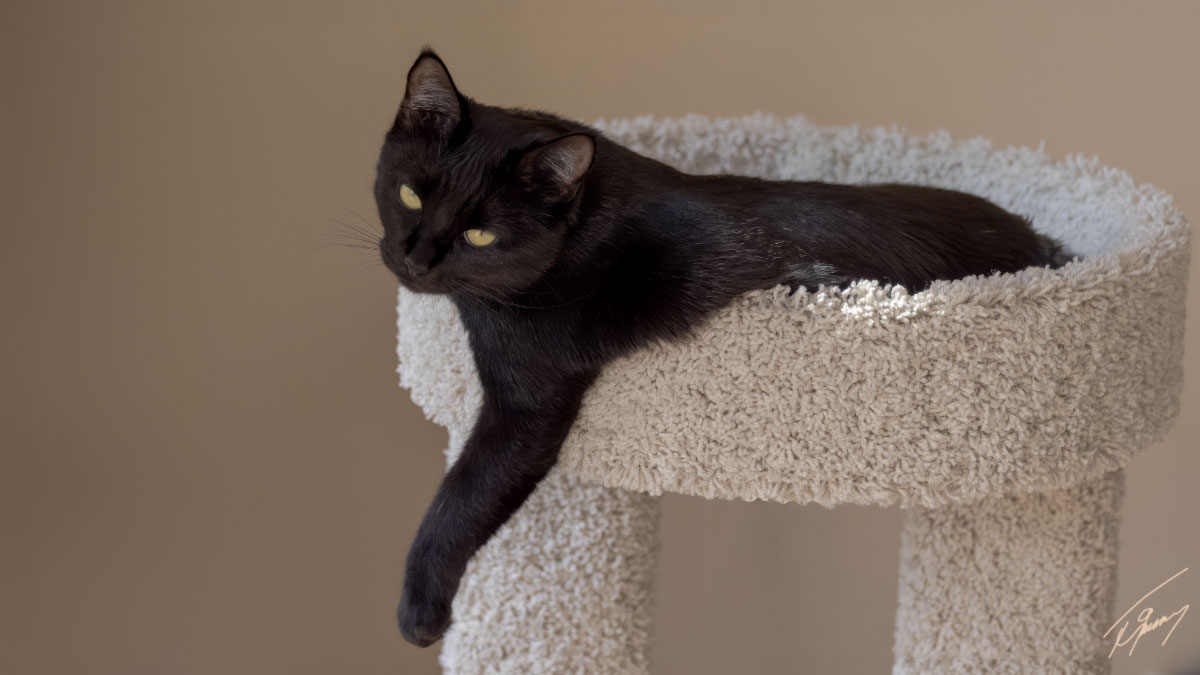
That is a photo of One above, taken a few weeks before she left … she was with us for almost ten years and below is a photo of Katie, shortly after she was welcomed into our home. She has taken over as the gentle ruler of our home.

The problem with befriending these wonderful creatures and bringing them into our lives is that they have short lifespans when compared with ours … that means we will experience loss and it is difficult to lose a creature that has so intertwined its life with yours. There were thoughts of not welcoming another four-legged friend into my life … the freedom of not having the responsibility was considered, but the thought of the vacuum and joy that they bring into life prevailed, and Katie pictured below, came home just two days after losing One.

Unlike our previous cats, Katie is an indoor cat, and she seems very happy with that … and her three condos and the attention of everyone who enters our home. For me I have the rich memories Of One, Q, and Nimbus whilst building new ones with Katie. Not much travel, but I love where I am and the day tripping that I do in Arizona … it is a good life, and I am blessed!

The Humane Society of Sedona was the temporary home for all of our feline friends whilst in Sedona (33 years … 31+ full time.) Support them … they save a lot of critters and bring joy to a lot of people!

Have a beautiful day, smile at those you meet and greet … keep breathing and share smiles with all whom you meet. Life is beautiful and precious, and the best part is that we can share these blessings with others.

Cheers,

Ted

Love some one—in God’s name love some one—
for this is the bread of the inner life, without which
a part of you will starve and die; and though you feel
you must be stern, even hard, in your life of affairs,
make for yourself at least a little corner, somewhere
in the great world, where you may unbosom and be kind.

Love Some One by Max Ehrmann

###

photo_tedgrussingThe easiest way to reach Mr. Grussing is by email: ted@tedgrussing.com

In addition to sales of photographs already taken Ted does special shoots for patrons on request and also does air-to-air photography for those who want photographs of their airplanes in flight. All special photographic sessions are billed on an hourly basis.

Ted also does one-on-one workshops for those interested in learning the techniques he uses.  By special arrangement Ted will do one-on-one aerial photography workshops which will include actual photo sessions in the air.

More about Ted Grussing


Healing Paws

Healing Paws

This is an advertisement

Exceptional Winners of the 2023 Nature inFocus Photography Awards

Exceptional Winners of the 2023 Nature inFocus Photography Awards
Nubian Ibexes jumping on a cliff

“The Things You Do for Love” by Amit Eshel. Winner, Wildscape & Animals in Their Habitat.
“Looks like the set for the next Mission Impossible, but for Nubian Ibexes, the high-altitude rocky terrains are home. The vulnerable ibex species is known for many things–large semi-circular horns, the ability to scale mountains with ease and the territorial fights that males engage in during the rutting season. Displays of dominance begin with showing off their impressive horns. If that doesn’t do the trick, it’s time to escalate by pushing and shoving the opponent and literally locking horns with them. Ibexes also stand on their hind legs as they get ready to strike.”

The 2023 Nature inFocus Photography Awards recently announced its winners during a ceremony held in Bangalore, India. The winners were selected from 24,000 images of wildlife submitted by over 1,500 photographers. In the end, filmmaker and conservationist Srikanth Mannepuri was named Photographer of the Year for a portfolio of images that highlight the threats facing mangrove forests along the coast of India.

Photographers from around the globe were invited to submit their best photography to six categories—Animal Portraits, Animal Behaviour, Conservation Focus, Creative Nature Photography, Wildscape & Animals in Their Habitat, and Photographer of the Year Portfolio. While the contest’s origins are in India, this year’s competition saw increased participation from international photographers.

“The Nature inFocus Photography Awards has grown to become a meeting place for national and international photographers,” says Rohit Varma, one of the founders of Nature inFocus. “Every year, we see images that reveal new facets of our natural world while shining a light on pertinent global conservation issues. We are thrilled to see the growth in the number of participants and the geographical locations. It truly has become an international platform for wildlife photographers!”

From exciting moments of leopards stalking their prey to incredible compositions using insects, the creative visions of nature from this year’s winners are exceptional. We’ve gathered some of our favorite winners from this year’s contest below, and you can check out the full list on the Nature inFocus website.

The Nature inFocus Photography Awards highlights the power of wildlife.

Tiger pulling softshell turtle from a lakeTiger pulling softshell turtle from a lake

“Shell I Eat You?” by Sankhesh Dedhia. Winner, Animal Behaviour.
“This stunning action shot captures a rarely-seen natural history moment, where the legendary Arrowhead of Ranthambhore fishes out an Indian Softshell Turtle from the lake for lunch. A tiger’s diet in the wild can be very varied as the felid can prey on pretty much everything on its turf, even a turtle, hence proved!”

Nature inFocus Photography Awards 2023Nature inFocus Photography Awards 2023

“Disappearing Guardians” by Srikanth Mannepuri. Winner, Photographer of the Year – Portfolio.
“Entirely shot from a drone, the photographer zooms out on the mangrove forests of coastal Andhra Pradesh to capture the magnitude and scale of the threats this unique ecosystem is facing today.”

Spinner Dolphins diving into the PacificSpinner Dolphins diving into the Pacific

“Lights Will Guide You Home” by Merche Llobera. Special Mention, Animal Behaviour.
“A pod of Spinner Dolphins dives back into the beautifully lit waters of the Pacific Ocean, creating this stunning scene of a cetacean avalanche. One of the dolphins can be seen gazing into the camera lens, adding a touch of curiosity and connection to the frame.”

Leopard pulling langur into a treeLeopard pulling langur into a tree

“A Love Like No Other” by Afroj Sheikh. Winner, Animal Behaviour.
“Caught in the crosshairs of a hungry leopard, the vulnerable mother and baby langur had little chance of survival. The hunt and the chase had led the predator and prey up a tree before the mother succumbed to the suffocating hold of the large cat. But in embracing death, the mother was able to save her offspring.”

Ant eating honeydew on a plantAnt eating honeydew on a plant

“A Sappy Alliance” by Avinash PC. Winner, Animal Behaviour.
“Symbiotic relationships are plenty in the natural world! But none as sappy and sugary as the mutualistic relationship between ants and aphids. Aphids are tiny, sap-sucking insects that are serious plant pests. They secrete a sugar-rich liquid called honeydew, a favorite food of ants! So much so that the ants protect these insects from other predators and even shepherd them to the healthiest parts of the plant to maintain a steady stream of sweet honeydew!”

Brown booby dipping its head underwaterBrown booby dipping its head underwater

“Inspector Booby” by Suliman Alatiqi. Winner, Animal Portraits.
“Brown Boobys spend a significant portion of their lives in the open ocean. Their clumsy nature on land earned them their namesake, derived from the Spanish word bobo, which means stupid or daft. They are excellent foragers of the sea and plunge-dive to feed on anything from anchovies and sardines to squid and shrimp. The photographer watched this individual dipping its head underwater at short intervals and got in position to capture a close-up portrait of the bird from the perspective of its fated prey.”

Bonobo holding a mongoose pupBonobo holding a mongoose pup

“The Bonobo and His Pet” by Christian Ziegler. Winner, Animal Portraits.
“The last great ape to be described, the Bonobo, is one of our closest living relatives. Here, a wild Bonobo who caught a mongoose pup is looking after it like a pet. He later released the animal unharmed. This behavior has only been recorded once before by Prof Barbara Fruth at this site.”

The winners were selected from 24,000 images.

Line-forest Skimmers position themselves aptly on the perennial Phanera vahlii creeperLine-forest Skimmers position themselves aptly on the perennial Phanera vahlii creeper

“Symmetry in Mimicry” by Arkaprava Ghosh. Winner, Creative Nature Photography.
“Mimicry is the highest form of flattery, they say. But in the animal world, it is among the best defense mechanisms. Here, Line-forest Skimmers position themselves aptly on the perennial Phanera vahlii creeper to resemble an inflorescence. Notice how the dragonflies have raised their abdomens in unison? Fooling a predator never looked this intricate.”

Harvestmen at night with dew on its legsHarvestmen at night with dew on its legs

“Slender in the Night” by Arnav Deshpande. Winner, Young Photographer.
“Like the spiders they are commonly confused with, Harvestmen too have eight legs–mostly long and thin in contrast to their bodies. They are living fossils, the original ‘Daddy Longlegs,’ having remained unchanged for millions of years. On a rainy night, the young photographer spotted this Opilione sheltering in a crevice, raindrops glistening on its limbs.”

Silhouette of mayfly on a blade of grassSilhouette of mayfly on a blade of grass

“Chiaroscuro” by Kai Kolodziej. Winner, Creative Nature Photography.
“Here is a gentle reminder that photographing the natural world is not just about documenting the megafauna but also zooming in on the speck on a blade of grass to reveal the chiaroscuro of a mayfly.”

Andaman Day Gecko inside a chandelierAndaman Day Gecko inside a chandelier

“Gecko’s Garage” by Vidyun Hebbar. Special Mention, Young Photographer.
“The Andaman Day Gecko or the Green Emerald Gecko is a bright-colored gecko endemic to the Andaman islands. The young photographer was on vacation when he spotted this shy creature lurking inside a chandelier light.”

Amur leopard in the snowAmur leopard in the snow

“The Rarest of Them All” by Sergey Gorshkov. Special Mention, Wildscape & Animals in Their Habitat.
“One of the rarest cats in the world, the Amur Leopard certainly makes you earn your sighting. The critically endangered felid faces several threats, including poaching for its fur. While suitable habitats are present across Russia and China, these leopards are threatened by the scarcity of prey animals.”

Conservation of elephants in Sri LankaConservation of elephants in Sri Lanka

“Giants in Peril” by Lalith Ekanayake. Special Mention, Photographer of the Year – Portfolio.
“In Sri Lanka, Asian Elephants are considered sacred animals, associated with the Temple of the Sacred Tooth Relic in Kandy. Despite this cultural status, they face challenges such as human-elephant conflict and habitat loss. Villagers often suffer crop destruction, yet maintain respect for these majestic creatures.
Once found throughout the island, the elephants’ ancient homes and migratory routes are now restricted. They are classified as Endangered by the IUCN, highlighting the need for immediate conservation efforts.”

Two Indian SkimmersTwo Indian Skimmers

“Skimmer Love” by Padmanava Santra. Special Mention, Creative Nature Photography.
“The atmospheric blue brushstrokes, the warm sunset glow on the orange bills of the Indian Skimmers and the bokeh on the water body; what’s not to love about this image?”

Lion Rolling on its BackLion Rolling on its Back

“Easy Like a Sunday” by Bharath Kumar V. Special Mention, Animal Portraits.
“Live life king-size, they say. So if you are the king of the jungle, what do you do after a hearty meal but roll over and relax? Never mind the flies all around, trying to break your siesta.”

Mugger Crocodiles in a river in IndiaMugger Crocodiles in a river in India

“Cry Me a River” by Hiren Pagi. Winner, Conservation Focus.
“Every once in a while, news sites report that a dead crocodile was found in the Vishwamitri river, a fleeting acknowledgment of the water body’s ~270 Mugger Crocodiles. The image shows the conditions in which these reptiles coexist with humans. The river has become a dumping yard for the nearby establishments, and in various places, drainage water also makes its way into the mix. The Mugger Crocodiles of the river face many threats, including habitat loss and water pollution.”

A pair of Oriental Honey Buzzards raid a beehiveA pair of Oriental Honey Buzzards raid a beehive

“Raiders of Hives” by Pranav Mahendru. Winner, Young Photographer.
“In the dense forests of Satpura, a pair of Oriental Honey Buzzards raid a beehive. These raptors hunt for food in beehives and wasp nests but, unlike what their name suggests, they prefer bee and wasp larvae over actual honey.”

Animals in Dubai with skyscrapers in the backgroundAnimals in Dubai with skyscrapers in the background

“Worlds Apart” by Dileep SS. Winner, Wildscape & Animals in Their Habitat.
“Think Dubai and the first thing that comes to mind is architectural marvels that make the sky seem at arm’s reach. The tall buildings may be Dubai’s trademark visuals, but another world coexists alongside the dazzle, where wildlife thrives in the desert. The image juxtaposes these two worlds—the towering skyscrapers and the endless sands—a gentle reminder to look beyond the concrete.”

Nature inFocus: Website | Facebook | Instagram

My Modern Met granted permission to feature photos by Nature inFocus.

Related Articles:

Photography Contest Honors the Incredible Wildlife at Kenya’s Maasai Mara

Winners of the 2023 Audubon Photography Awards Celebrate the Beauty of Birds

Comedy Wildlife Photography Awards Is Taking Hilarious Entries for 2022 Contest

Winners of the 2023 BigPicture Natural World Photography Competition Embrace Our World’s Biodiversity

Free smartphone photography workshop at Neal Smith Wildlife Refuge

Free smartphone photography workshop at Neal Smith Wildlife Refuge

#inform-video-player-1 .inform-embed { margin-top: 10px; margin-bottom: 20px; }

#inform-video-player-2 .inform-embed { margin-top: 10px; margin-bottom: 20px; }

Join photographer Mike Cox as he covers the world of smartphone photography at Neal Smith National Wildlife Refuge from 10 a.m. to noon Saturday, Aug. 19.

Cox will discuss the limitations of mobile phone photography, how to choose the right phone, various phone camera modes, phone accessories and tips for improving your shots.

After the classroom session, Cox will lead the group on the photo walk from 11:00 a.m. to noon. Participants will have the opportunity to capture some of the beautiful summer prairie sights using their phones only. To register and for information, contact Nancy Coronoa at nancy_corona@fws.gov or call 515-994-3400

The refuge is located right off highway 163 in Prairie City at 9981 Pacific Street — only about 30 minutes east of Des Moines. For more information about the refuge and event, including driving directions, visit fws.gov/refuge/neal-smith.

#inform-video-player-3 .inform-embed { margin-top: 10px; margin-bottom: 20px; }

Bruce Mathews captures flowers in abstract – The Martha’s Vineyard Times

Bruce Mathews captures flowers in abstract – The Martha’s Vineyard Times

Bruce Mathews transforms breathtaking floral specimens into glorious works of art. His not-to-be-missed photography show, “Flowers When No One’s Looking,” at the Edgartown library runs through the end of August.

Mathews eliminates the existing background from his still lives, which he sets up by suspending his flowers in water, freezing them, and tugging apart their blossoms or seed pods. He locks his subject matter into place with a solid black or pure white background, eliminating any illusion of depth and thereby transforming nature into elegant abstract compositions of color and shape that he composes intuitively with his keen eye.

Moving chronologically from left to right along the wall, we begin with the white background prints from around 2020, with flattened flower petals that spread out, caught in a moment of time. Those in “Yellow Flag Iris” seem to twist and turn in the wind. Shot through a car window, the petals have different levels of luminosity, sheer translucency at certain points, and darker intensity when they fold over on themselves. 

Quite the opposite are Mathew’s photos with the deep black background, which increases the flowers’ brilliant hues and creates razor-sharp edges that emphasize the organic shapes and focus our eyes on the overall composition. His works are produced as giclée prints. These high-quality pieces are made on fine-resolution printers capable of fine detail and color range, giving the prints a painterly quality. This is immediately apparent when you approach the pieces, as in his exquisite “Bird of Paradise,” which, like an avian, appears caught mid-flight. Another with inherent movement is “Moth Orchid,” where three specimens float by as we gaze straight on, mesmerized by the intricacy Mathew captures with his lens.

There is plenty of motion in his black-and-white milkweed series as well. In “Milkweed Seeds No. 6,” for example, a succession of black seeds, with their dangling, wispy threads, line up back-to-back to create a fan-like arc of figures — perhaps wearing African masks and flowing robes — that whimsically falls backward from a standing position until hitting the ground. Of course, another might see a completely different scene. Each print beckons for its own interpretation, bestowed by the eyes of the beholder.

With just a few exceptions, Mathews arranges his “subjects” rather than capturing flowers as they appear in their natural, outdoor environment. There is nothing random in “Siberian Iris,” for instance, where a dominant, fabulously hued central purple bloom is flanked by two duplicate sentinels on either side, thereby establishing perfect symmetry. The title of “Arrangement No. 3 with Peruvian Lily” denotes Mathews’ intentionality with his composition. While still quite close up, he fills the space with a variety of very different flowers, which burst the confines of the picture frame.

Mathews began his photographic journey at about 18 years old, working in a darkroom and taking pictures of his own. He then studied at Boston’s Museum School and at Pratt Institute in New York. In the late 1970s, he started assisting a great many photographers, doing mostly corporate industrial work, producing annual reports, brochures, and the like, building a client list that included AT&T, American Express, Citibank, JPMorgan, Wall Street Journal, and Young & Rubicam, among others. Working with some 60 photographers over the years, he recounts, “That’s where you really learn photography. There’s nothing like it.”

When Mathews first moved to the Vineyard full-time in 1999, he started out by giving bus tours for a few years, and then picked up his own photography again. At first, he shot flowers outdoors, but yearned for something unique. Also, with health challenges, he says, “I needed to get some specialty that didn’t require a lot of moving about, so I decided to shoot flowers just in my home.” His approach, he says, “Is picture-making; that other was picture-taking.” 

With his unique vision, Mathews gives us an alternate vision of the botanical world that brings nature to a high art.

Bruce Mathews’ “Flowers When No One’s Looking,” on view at the Edgartown library throughout August. Reception on Monday, August 14, from 4 to 6 pm. For more information about Bruce Mathews, visit brucemathewsphotography.com.

New Fashion Photo Book by Jvdas Berra is Treasure of Inspiration

New Fashion Photo Book by Jvdas Berra is Treasure of Inspiration

You might not necessarily know the name Jvdas Berra, but you’ve surely seen his photos. The Mexican photographer who has had his work published by Vogue, ELLE, Nylon, Marie Claire, InStyle, Image Amplified, Vanidades, Photography Master Class, and NatGeo among others, is now coming out with a new book entitled Jvdas. And just like many photographers, he got into the art form just by trying it out — telling us that he abandoned his studies in film a long time ago.

Part of what makes Jvdas’s work so peculiar is his ideas. He told us several years ago that his mind is more or less mental chaos. “My inspiration comes from many places, born from a sound, an image, to a feeling I may be experiencing,” he told us. “Similarly, cinema greatly influences my thinking, so I attribute much of my changing style to filmmaking.” He added on that he’s not a very tidy person overall.

My love for animals is even greater than my love for fashion. From childhood I always looked at the beautiful pictures in National Geographic magazines and one of my biggest dreams since I can remember was dedicate myself to wildlife photograph until I met fashion photography and gradually I was able to make riskier projects.

Jvdas Berra to us in an interview

Jvdas mixes in several romantic and magical elements to his imagery, and that’s why we called him one of the best fashion photographers of 2023. His Birds of Prey series, specifically incorporated the use of avian friends to promote conservation in a subtle way throughout the images. The same idea was applied to Autumn for the Elephants. And while still quite magical, we don’t see the animals in Desperate Hollywood Wife. His entire output of artwork, however, is unified with a sense of beauty, mystery, and surreal creativity that isn’t seen all that often anymore.

In the new book by Jvdas Berra, you’ll find several of these images for you to be inspired by. The photographer tells us that he manages every part of the production — including location scouting. That’s a major part of how these images happen. Additionally, we also have to consider things like the set design, pre-production, and all. For sure, Jvdas’s work is a production in and of itself. There’s a lot of work involved, and it shows.

More importantly, Jvdas’s work is all things done mostly in-camera. This isn’t a book of AI artwork. Instead, it’s a body of photography that has been created with real people — not some sort of composite put together with prompts. The images are all real.

That statement brings us to the point of authenticity — which is something that the pandemic majorly emphasized but that has started to disappear. Images are things that we simply consume as part of digital content. But this is a book. A photography book is far different from what you see on a screen. It contains within it several images that you can sit and stare at. There are no distractions or apps pinging you for attention. Instead, it lets you stare and ask yourself several questions about the photo. More importantly, it forces you to move around and interact with it vs sitting in front of a screen. Depending on the paper that you’re printing the photo on, you’ll get one experience or another.

Photo books are incredibly important, and Jvdas’s is no exception.

All images used with permission in our interviews from Jvdas Berra.

Gripping images from India’s environmental photography prize look at the bigger picture

Gripping images from India’s environmental photography prize look at the bigger picture

Editor’s Note: Call to Earth is a CNN editorial series committed to reporting on the environmental challenges facing our planet, together with the solutions. Rolex’s Perpetual Planet initiative has partnered with CNN to drive awareness and education around key sustainability issues and to inspire positive action.


CNN
 — 

A peckish tiger lunching on a softshell turtle, an ant snacking on honeydew, and a pair of glittery slug moth larva are just a handful of scenes depicted in the winning images from the Nature inFocus Photography Awards 2023.

The prize, based in India, recognizes both local and international photographers capturing critical moments in the natural world.

Nature and wildlife storytelling platform Nature inFocus runs the competition. “Every year, we see images that reveal new facets of our natural world while shining a light on pertinent global conservation issues,” said Rohit Varma, one of the group’s founders, in a press release.

A six-member jury composed of wildlife and environmental specialists across film, photography and business selected the winning photographs for each category from 24,000 images that were submitted by 1,500 photographers, according to Nature inFocus.

The winners were presented with their awards during a ceremony on July 29 in Bangalore.

Among the winning images is a photostory focusing on the devastation facing the intricate mangrove forests of the Godavari River in Andhra Pradesh, India.

The scale of the The Godavari River’s coastal mangrove forests are at risk in Andhra Pradesh, India. The image is part of a photostory put together by Srikanth Mannepuri who won the “Photographer of the Year – Portfolio” category.

Using a drone to capture a birds-eye view of the mangrove destruction, Srikanth Mannepuri highlighted the many risks forests face, including plastic waste, deforestation, and aquaculture – despite being a carbon sink and integral buffer against coastal erosion. Mannepuri, a wildlife conservationist, filmmaker and photographer, earned the “Photographer of the Year – Portfolio” title.

Other winning images include rarer wildlife sightings, such as a pair of agitated mountain goats locking horns in a cinematic rocky landscape. In the “Wildscape & Animals in Their Habitat” category, photographer Amit Eshel traveled to Israel’s Zin Desert to capture the two male Nubian ibexes in a heated face-off during rutting season.

A photograph of two male Nubian ibexes fighting one another with their impressive horns landed photographer Amit Eshel first place in the “Wildscape & Animals in Their Habitat” category.

According to the IUCN, the Nubian ibex is a vulnerable species – facing threats from agriculture to extreme weather.

In the “Conservation Focus” category, Jo-Anne McArthur was recognized for a haunting image depicting the scorched remains of a eucalyptus plantation following Australia’s bushfires in 2020. McArthur photographed a veterinarian searching for survivors whilst surrounded by charred trees.

Varma takes pride in the Award’s global scope.

“We are thrilled to see the growth in the number of participants and the geographical locations. It truly has become an international platform for wildlife photographers.”

How Much is a Photographer Worth? Is $300 Too Low For a Day’s Work?

How Much is a Photographer Worth? Is $300 Too Low For a Day’s Work?

Cameras held aloft

It takes a lot of hard work to become a professional photographer. There are untold hours of toil to perfect the craft and lots of money spent to reach a pro level. So when you get there, how much should you be paid for a day’s work?

This is the issue raised by Roxy Facer this week who called out Vogue Polska for paying her $300 for a full day’s shoot and edit — a fee she deemed to be low.

Even for established professionals, photography can be a difficult career in which to make a living. There are few jobs and freelancing can be very insecure.

Facer, who is primarily a videographer specializing in 8mm and 16mm film, may well feel entitled to mock the $300 fee, as a job like that surely should be closer to $1,000. However, many photographers wouldn’t think twice about accepting that rate.

Sure, it’s not great, but it’s not exactly terrible either. Anyone working in editorial knows that rates have been tumbling for years. Inflation has been rising and prices are going up, but photographers are getting paid less.

This is in part due to the shifting landscape of media. Magazines and newspapers have more readers than ever before but the majority of those come in digital form and publications simply don’t receive anything like the money per reader they used to get in print.

The owners and board members of these huge companies avoid bearing the brunt of these seismic changes. Instead, the cuts are passed down onto the men and women who work tirelessly to put these publications together, e.g. photographers.

Perhaps Facer is not used to the relatively low fees offered to editorial photographers and is more accustomed to commercial fees.

Is $300 Enough Money for a Day Shoot?

I would wager that most editorial photographers would accept $300 as a day rate. As mentioned, it is definitely on the lower end, but it is not catastrophic. If, and that’s a big if, a photographer was paid that every weekday of the year, that is a respectable $78,000 salary before taxes. Depending on where you live in the country, and how big your overhead is (photographers do tend to have larger than normal overhead), it’s a livable wage.

But the fact is photographers don’t get hired every day. And even if they do, there is no guarantee of timely payment or even payment at all — just look at how long some have been waiting to get paid from Outdoor Photographer magazine.

It’s the big companies that are usually worse at this. Smaller companies tend to pay promptly but many, myself included, have had horrific experiences chasing major media companies for payments that should have come weeks, months, and even years ago.

Why Call Them Out?

Many have questioned whether what Facer did is a wise move for her future prospects, but she has nearly 40,000 TikTok followers and this particular episode has propelled her even further up the social media/influencer ladder.

Good for her.

There is no handbook on how to make it as a photographer, every creative takes a different path. Success comes in all forms and you have to take what comes your way.

Rather than burning her bridges, Facer may have opened up new career pathways by exposing the industry’s low rates — something that most photographers wouldn’t dare do for fear of losing clients.


This story is part of PetaPixel’s weekly newsletter Clipped Highlights.


What is Clipped Highlights?

Clipped Highlights is a free, curated, weekly newsletter that will be sent out every Wednesday morning and will focus on a few of the most important stories of the previous week and explain why they deserve your attention. This newsletter is different from our daily news brief in that it provides unique insights that can only be found in Clipped Highlights.

In addition to unique takes on the biggest stories in photography, art, and technology, Clipped Highlights will also serve to feature at least one photo series or art project that we think is worth your time to check out. So often in the technology and imaging space we focus on the how and not the what. We think that it’s just as important, if not more so, to look at the art created by photographers around the world as it is to celebrate the new technologies that makes that artwork possible.

If this kind of content sounds like something you’re interested in, we encourage you to subscribe to the free Clipped Highlights newsletter today. You can read this week’s edition right here, no subscription necessary, to make sure it’s something you want in your inbox.

#mc_embed_signup{background:#fff; clear:left; font:17px Helvetica,Arial,sans-serif; width: 100%;} /* Add your own Mailchimp form style overrides in your site stylesheet or in this style block. We recommend moving this block and the preceding CSS link to the HEAD of your HTML file. */

We’ll also make sure to share each edition of Clipped Highlights here on PetaPixel so if you aren’t a fan of email, you won’t be forced to miss out on the weekly newsletter.


Image credits: Header photo licensed via Depositphotos.

At the Photographic Resource Center: Shanghai, Missouri, and points between

At the Photographic Resource Center: Shanghai, Missouri, and points between

CAMBRIDGE — “Exposure” has a specific meaning in photography. It’s what happens when a lens opens and film (or the digital equivalent) is exposed to light, producing an image. Among the word’s other meanings is giving visibility to someone or something. Both meanings relate to “EXPOSURE 2023: The 27th Annual PRC Juried Members Exhibition.”

Since PRC stands for Photographic Resource Center, the relevance of the first meaning is a given. The second meaning pertains because the idea is to give the 10 PRC members whose work is on display a higher profile, and deservedly so.

The participants were chosen by juror Shana Lopes, assistant curator of photography at the San Francisco Museum of Modern Art. The show runs through Sept. 17 at Lesley University, in Porter Square. Note that the VanDernoot Gallery, where the show is hung, is open Friday-Sunday only.

Jimmie Allen, “Keith and Drake, Louisiana, Missouri,” 2022.Jimmie Allen

It’s in the nature of juried shows to be diverse, and “EXPOSURE 2023″ certainly is. No one would mistake Jimmie Allen’s small-town Missouri with Lei Han’s Shanghai. But there’s a general sense throughout of interiority, contemplativeness, or both. It’s more condition than theme. Also notable is that the work of six of the photographers is in black and white, not something much seen these days. Finally, almost no faces appear in the 39 works on display. (Allen’s photos, with their quasi-sociological intent, is the big exception.) It’s only when seeing a face becomes the exception rather than the rule that you realize how rare that absence is.

Kathryn Rodrigues, “Mend Myself,” 2022.Kathryn Rodrigues

Sometimes a face is there but concealed, as in Kathryn Rodrigues’s “Mend Myself,” a self-portrait where a small rake comes between the photographer’s face and her camera. It’s a striking image. Or it can be because a person is seen from behind, as in Amy Broderick’s “Frailty.” Broderick is one of the photographers whose work here is in color, which adds to the snapshot-like look of her images.

Yuang Li, “In the WTC,” 2023.Yuang Li

The richness of that color differs considerably from the drained, subdued, almost spectral hues in the three images each from Han and Yuang Li. The former show Shanghai during lockdown, a year ago. “Seemingly tranquil” the photographer calls them. That tension between adverb and adjective conveys a subtlety and disquiet reflected in the images. Those qualities are no less evident in what Li calls “hollow, eerie scenes”: urban landscapes emptied of people, spaces where the pursuit of public security can induce personal insecurity.

Joetta Maue, “Sky Bed,” 2022.Joetta Maue

You could argue that the remaining photographer who uses color, Joetta Maue, may not primarily be a photographer. Her two works in the show are irregularly shaped assemblages, joining photos, drawings, and embroidery. One is large, with four combined pieces, and the other is very large, with 19. Unframed and unmatted, both works are a kind of zone, made up of varying sizes, shapes, textures, subjects, and media.

Denise Laurinaitis, “In Flight,” 2020.Denise Laurinaitis

Denise Laurinaitis has six photographs in “EXPOSURE.” They have the feel of everyday family moments. Yet there’s also a sense of disorientation. Why is the girl in “Hair Donation” turned away from the camera? Why is the girl, presumably the same one, striking an abracadabra pose in “Hose Spray”? What’s that toy plane, in “In Flight,” doing hovering just over the ground? A strong sense of hovering can be felt throughout “EXPOSURE.”

Nicholas Gaffney, “Summer (Beach),” 2021.Nicholas Gaffney

Nicholas Gaffney also has a half-dozen photos, and they’re also about family. But they’re the family on the road — taking trips around New England, in 2021 — not around the house. So there’s a balance between the familiar and unfamiliar. It’s a shaky balance, as Gaffney intends. These are often photographs, he writes, where “the image is taken after the ‘decisive moment’ has seemingly come and gone.”

Bruce Myren, “American Elm [Massachusetts Avenue, Cambridge, MA],” 2017/2023.Bruce Myren

For a number of years, Bruce Myren has been photographing American elm trees: “to observe natural history in relation to cultural history,” as he writes. The three examples here are handsome and moving, which is to say worthy of their subject. One of them shows an elm framed between two buildings on Massachusetts Avenue, in Cambridge. Its just-so placement between the two structures is mirrored by Myren’s just-so placement of it within the frame.

Anh-Thuy Nguyen, “Taste of a Memory: Nha Trang #31,” 2022.Anh-Thuy Nguyen

The one other photographer who has an image in which a face appears is Anh-Thuy Nguyen. Her five pictures here are gold-toned salt prints. The format may not register with viewers, but their appearance will. The images, which show Nguyen’s native Vietnam, are delicate, poetic, and evocative. She used Vietnam sea salt in their making, noting that both “salt and photography are for preservation.” What a marvelous observation — marvelous observation being, in general, the goal of any photographer.

EXPOSURE 2023: The 27th Annual PRC Juried Members Exhibition

At VanDernoot Gallery, University Hall, Lesley University, 1815 Massachusetts Ave., Cambridge, through Sept. 17. 617-975-0600, www.prcboston.org


Mark Feeney can be reached at mark.feeney@globe.com.