Photography

The BigPicture 2023 World Nature Photography Finalists

The BigPicture 2023 World Nature Photography Finalists
image

Explore

Now in its 10th year, the California Academy of Sciences’ renowned BigPicture Photography Competition celebrates some of the world’s best photographers and the year’s most striking images. Judged by an esteemed panel of nature and conservation photography experts, the competition’s winning images and finalists highlight Earth’s biodiversity and illustrate the many threats that our planet faces. Each photo, in its own way, inspires viewers to value and protect the remarkable diversity of life on Earth. Below, we present the grand prize winner and some of our personal favorites from this year’s competition.

In Body Image
BACKYARD FRIEND: Grand Prize winner. Photo by Corey Arnold.

With a wildlife corridor passing through their property, a retired couple living on the outskirts of Asheville, North Carolina frequently finds four-legged visitors at their back porch, including this beautiful American black bear (Ursus americanus). In fact, residents of Asheville are known for their close relationship with wild black bears in the area. Photographer Corey Arnold theorizes that through this coexistence, the bears may be growing more intelligent and increasingly bold—resulting in close contact like that featured here.

In Body Image
WAITING FOR LOVE: Finalist; winged life category. Photo by Audun Rikardsen.

An Arctic moth perches on a leaf in the night, theoretically on the lookout for a mate. Thanks to the freezing temperatures, and flanked by the ethereal tendrils of the Northern Lights, it moved very slowly, allowing the photographer to capture it.

In Body Image
THE SECRET LIFE OF UNDERWATER HIPPOPOTAMUSES: Finalist; aquatic life category. Photo by Mike Korostelev.

An image years in the making: Seemingly coy hippopotamuses (Hippopotamus amphibius) sit below the surface of the water, eyes fixed on the camera. After extensively researching this specific family, including taking underwater drone footage of their behavior, photographer Mike Korostelev eventually felt comfortable enough to jump in and take this image. Why all the preparation? These hefty creatures kill more people per year than sharks, making an underwater image of them as spectacular an endeavor as it is dangerous.

In Body Image
MUSHROOM TORNADO: Finalist; landscapes, waterscapes, and flora category. Photo by Liu Yang.

A mesmerizing, yet deadly, spore scene. This beautiful, mushroom-forming fungus (Armillaria novae-zelandiae) is a member of the Physalacriaceae family—one of three Armillaria species native to New Zealand. This highly invasive species is often found on decaying wood and capable of causing root rot in plants with which it comes into contact.

In Body Image
BROTHERLY HUG: Finalist; terrestrial wildlife category. Photo by Daniel Valverde.

Exhibiting a behavior that’s all-too human, a proboscis monkey (Nasalis larvatus) hugs another after preventing it from falling out of a tree. Endemic to the jungles of Borneo, these highly social animals are on the brink of extinction.

In Body Image
TRANSITION: Finalist; art of nature category. Photo by Thorben Danke.

Impossible to see with the naked eye, this microscopic view of a lesser stag beetle (Dorcus parallelipipedus) shows what it looks like from head to chest. While these beautiful bugs look deceptively smooth on the surface, a closer look reveals a symphony of scales and textures.

In Body Image
HVALDIMIR PLAYING WITH ROPES: Finalist; human/nature category. Photo by Audun Rikardsen.

When they coined the phrase “whale of a tale,” they must have been thinking of Hvaldimir—a beluga whale (Delphinapterus leucas) with an incredible backstory. After surfacing off the coast of Norway in 2019 wearing a Russian harness and a camera mount, locals believed that Hvaldimir had been trained as a spy. Beyond this theory, not much else is known about him, but as this image suggests, he’s gotten into a fair amount of trouble with humans. As he’s no longer part of a pod due to his domestication, he seeks out human interaction, which can be quite dangerous.

These images originally appeared on bioGraphic, an online magazine about nature and regeneration and the official media sponsor for the California Academy of Sciences’ BigPicture Natural World Photography Competition.

Lead photo by Mike Korostelev

Today’s Photo from Ted Grussing Photography: This is Here

Today’s Photo from Ted Grussing Photography: This is Here

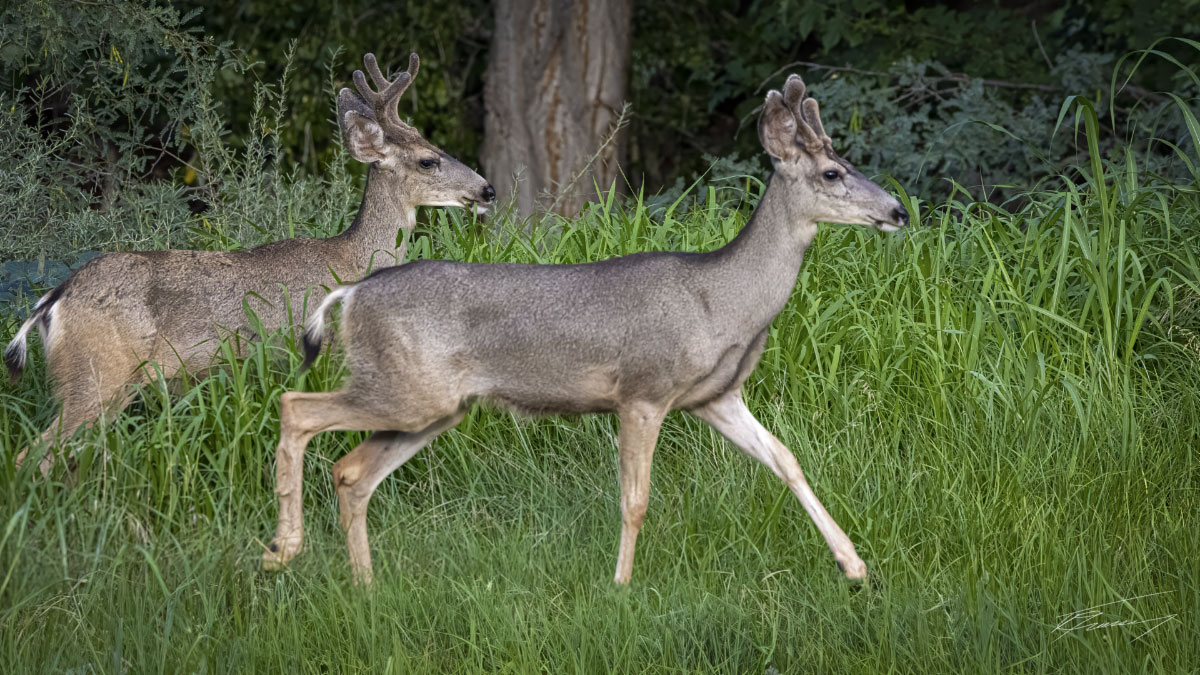
… another short one for tonight … the shot above is what typifies the beauty of Sedona … this truly is here and it is a wonderful place to be. The shot below is of a pair of Couse White Tail deer as they passed by our home early one evening … all this and more welcomes you to Sedona. There are so many other species of wildlife that live in the area and so many fabulous vistas for you to take in!

Busy day coming up and a little computer work to finish up … have a beautiful day and share your joy with others.

Cheers,

Ted

The book of day and the book of night burst with
wonder, testifying that there is more in the world than
we, and that we shall yet be other than we are.

excerpt from Lamentations by Max Ehrmann

###

photo_tedgrussingThe easiest way to reach Mr. Grussing is by email: ted@tedgrussing.com

In addition to sales of photographs already taken Ted does special shoots for patrons on request and also does air-to-air photography for those who want photographs of their airplanes in flight. All special photographic sessions are billed on an hourly basis.

Ted also does one-on-one workshops for those interested in learning the techniques he uses.  By special arrangement Ted will do one-on-one aerial photography workshops which will include actual photo sessions in the air.

More about Ted Grussing


Healing Paws

Healing Paws

This is an advertisement

Steele Creek Park opens for annual photography contest submissions

Steele Creek Park opens for annual photography contest submissions

BRISTOL, Tenn. — Nature lovers are invited to submit their best photos of Steele Creek Park’s natural beauty through its 17th annual Wildlife Weekend Photography Contest and Show held in conjunction with Wildlife Weekend.


Steele Creek Park sign vertical

Steele Creek Park is located in Bristol, Tennessee.


“This is always a fun opportunity for anyone with a camera to show what a beautiful and diverse park we have, right here in the middle of Bristol,” said Robin Feierabend, contest coordinator, in a press release from Bristol, Tennessee. “It helps us get that message out and, hopefully, makes more people aware of the importance of nature and the need to preserve what we have.”

Exhibit of Inuit photography centers Indigenous perspectives at new-look Arctic Museum

Exhibit of Inuit photography centers Indigenous perspectives at new-look Arctic Museum

The exhibit “Iñuit Qiñiġaaŋi: Contemporary Inuit Photography” brings Inuit perspectives on modern life in the Arctic to the Peary-MacMillan Arctic Museum. (Kelli Park photo)

As Bowdoin College’s Peary-MacMillan Arctic Museum welcomes visitors into a brand-new, modern space, the curatorial staff has set course for the future with a fresh vision that gives more attention to Indigenous perspectives and modern life in the Arctic.

The relationship between Bowdoin College and the Arctic dates back to 1860, when students and faculty began traveling north to study Arctic cultures and environments. Later, Bowdoin graduates and explorers Robert E. Peary, class of 1877, and Donald B. MacMillan, class of 1898, led historic expeditions to the Arctic.

Peary is reputed to have been the first man to reach the North Pole in 1909, although a rival explorer claimed to have beat him. The architecture of the historic Peary home on Eagle Island, Harpswell, reflects a ship and faces north to symbolize his passion for the Arctic. Peary purchased Eagle Island in 1881 for $200 and is said to have kept his Greenlandic sled dogs on a nearby island.

In 1967, Bowdoin College created the Arctic Museum and, in the 1980s, its Arctic Studies Center was established. The museum staff has known for the past few decades that a new space was needed. In early 2021, after a year’s delay caused by the COVID-19 pandemic, construction began on the John and Lile Gibbons Center for Arctic Studies, now home to the museum.

“The old space was beautiful and charming in its way, but it was never designed to be a museum space,” said Genevieve “Genny” Lemoine, curator of the Peary-MacMillan Arctic Museum. “It was very exciting to be able to work with the architects and the designers on this space.”

The Center for Arctic Studies is the first commercial construction project in Maine to use mass timber, a pioneering wood-based product that was sourced from Austria. Museum staffers say the building was assembled like “a huge piece of Ikea furniture.” The museum space is climate-controlled, solar-powered, and wheelchair-accessible, unlike the previous facility.

“Iñuit Qiñiġaaŋi” collects work from five Inuit photographers. (Kelli Park photo)

A display of photographs by Brian Adams, curator of the “Iñuit Qiñiġaaŋi” exhibit. (Kelli Park photo)

The space, however, isn’t the only change taking hold.

“People continue to have a very stereotypical view of what it’s like to live in the Arctic,” said Lemoine, whose archaeological research has taken her across the Canadian Arctic and northern Greenland for 30 years. “If we only show them our historic images, they’ll still think that people live year-round in igloos, when, in fact, Inuit culture is a modern culture.”

“They’re working hard to live in the modern world on their own terms and to maintain fundamental aspects of their society — hunting seals and using seal products and getting out on the land when they can, even if they’re working a 9-to-5 job in the community,” said Lemoine. “They’re still Inuit.”

The museum is shifting its narrative to emphasize modern Inuit culture.

“We’ve been moving the museum in this direction for many years,” said Lemoine. “The original exhibits naturally focused on Peary and MacMillan and the work that they did. It had a lot of content about Inuit society, but mostly in relation to their work.”

Although the work of Peary and MacMillan is still a significant part of the museum, the current narrative weaves in information about how contemporary Inuit live traditionally off the water, the ice and the land, while adapting their practices to the changes and challenges of colonialism, modernization and climate change.

Lemoine reveals that one of her favorite objects in the collection is a necklace carved of a single piece of walrus ivory from Greenland. Miriam MacMillan, who explored the Arctic alongside her husband, gave the necklace to the museum long ago, with no information. The beauty of the piece and the skill required to create it are not the only reasons Lemoine calls it a favorite.

“More than 20 years ago now, I was working with some Inuit elders in our collection when I opened the drawer where the necklace was stored and the two women, who were sisters, looked at it and said, ‘Our father made that,’” said Lemoine.

The sisters’ father had worked with MacMillan in the 1920s.

“There we were, working with the descendants in the collection as well. It really exemplifies the continuity of Peary and MacMillan’s long history in some of these communities and our own work in some of these communities,” said Lemoine. “It really nicely tied that together and gave a lot more meaning to this already beautiful object. It’s those kinds of moments that are really the most exciting.”

The “Collections and Recollections” exhibit on the third floor of the Peary-MacMillan Arctic Museum. (Kelli Park photo)

Lemoine and Susan Kaplan, director of the museum, recently started an initiative to collect contemporary Inuit photography as a way of centering the perspectives of the Indigenous community. The museum hired Inupiaq photographer Brian Adams to curate a new exhibit and purchased 30 prints with funding from Bowdoin alumni.

The exhibit, “Iñuit Qiñiġaaŋi: Contemporary Inuit Photography,” dismantles stereotypes about the Arctic while showing aspects of modern Inuit life through the eyes of five Inuit photographers: Adams, of Alaska; Jenny Irene Miller, of Alaska; Jennie Williams, of Labrador, Canada; Niore Iqalukjuak, of Nunavut, Canada; and Minik Bidstrip, of Greenland.

“We wanted an Indigenous person to curate it and we wanted a photography expert to curate it, and Brian is both of those things,” said Lemoine. Adams chose the photographers. He was reluctant to include himself, but the curatorial staff insisted. Adams and the other photographers then talked about their work and selected the images that would be included in the exhibit to share an in-depth look at modern life in the Arctic. Attempts to reach Adams for an interview were unsuccessful.

“It’s such a diverse range of photography that really highlights the talent and the different directions that young photographers in the Arctic are taking their work,” said Lemoine. The exhibit will remain in place for one to two years.

Through this new lens, the exhibit offers glimpses into the stories of those whose lives are carved by the north.

“There are modern people living up there and these days, with climate change, they’re facing challenges and problems that they don’t have much control over. … They didn’t create climate change, but they’re among the first people to have to deal with it in a very significant way,” said Lemoine. “I hope it makes people think a little bit about globalization and the interconnectedness of what’s going on today.”

The Peary-MacMillan Arctic Museum is open from 10 a.m. to 5 p.m. Tuesday-Saturday and 1-5 p.m. Sunday. Admission is free. For more information, go to bowdoin.edu/arctic-museum.

Kelli Park pursues her interest in culture as a freelance writer and photographer, teacher of multilingual learners, and part-time faculty at the University of Southern Maine, which recently gave her the opportunity to travel to Greenland as part of the Arctic Education Alliance. She lives in Cundy’s Harbor and seeks out adventures near and far with her son, Kieran.

Vintage Video Shows What It Was Like Being a Pro Photographer in 1946

Vintage Video Shows What It Was Like Being a Pro Photographer in 1946
[embedded content]

Camera technology has evolved dramatically since the advent of photography and as a result, being a professional photographer has significantly changed too. A vintage video created by Vocational Guidance Films, Inc. in 1946 shows what being a professional photographer used to be like.

As spotted by PopPhoto, the public domain video was upscaled using artificial intelligence by DIY Extravaganza on YouTube.

“Photography is often called the universal hobby. It is a means of creative expression within the reach of people in all walks of life, and it speaks a language that everyone can understand,” the narrator says in the video above.

Even though the video is nearly 80 years old, and the gear that photographers use is much more advanced now than it was then, it is interesting how many aspects of being a professional photographer remain true today.

The video expertly summarizes the timeless appeal of photography and its influence on the world. The vocational video touches on how photography can immortalize fleeting moments that will never occur again, making visible things that are impossible to see with the naked eye, and telling exciting stories in compelling ways.

“Photography as a hobby can lead to photography as a career, and often does, but professional work calls for a lot more than just snapping pictures here and there,” the video explains.

For example, to become a successful professional portrait photographer, the photographer must understand their subjects and be able to showcase their character and personality in a single moment.

Another type of photographer, a commercial photographer, must be versatile and skilled in many different situations and when taking a wide range of images.

This is also true of a photojournalist, although they must be able to work under tight deadlines in a way unrivaled by other photography careers. An interesting video from 1937 shows how photos were transmitted by wire in the early to mid-20th century.

No matter the type of photography, all photographers, amateur and professional alike, must be well-versed in compositional skills, as highlighted in this excellent video from 1949, which has stood the test of time.

The old-school vocational video may look and sound old, but the lessons contained within still hold primarily true and may even continue to do so for another 80 years.

Soccer Star Blasts Ball Straight Into Photographer’s Lens

Soccer Star Blasts Ball Straight Into Photographer’s Lens
Trinity Rodman hitting a volley
Photographer Wolfgang Zac about to be blasted by a soccer ball from the foot of Trinity Rodman.

Photographers have to go above and beyond to get the perfect shot and that sometimes means putting themselves in the line of fire — like one photographer did while shooting a soccer player for a magazine.

Wolfgang Zac was going for a dynamic shot of U.S. women’s star Trinity Rodman while shooting photos for a feature for The Red Bulletin magazine.

Zac wanted a shot of Rodman smashing a volley and told her to hit the ball as close to him as possible — but she got a little too close.

In the clip, Rodman takes her first shot which narrowly sails over the photographer’s head causing them both to react. But the second time, Rodman blasts the ball straight into Zac’s lens, seemingly snapping the lens hood in two.

However Zac is unfazed by the incident even shouting “Yes!” straight after the smack.

In the above video, we get to see the resulting shot which Zac must have been happy with as it captures Rodman in a powerful pose with the ball perfectly framed.

“I said the closer the better…and she did her best,” writes Zac on Instagram.

The fabulous photo was used as the first image in The Red Bulletin magazine’s feature on Rodman who is a 21-year-old star for Washington Spirit and is currently an active player at the Women’s World Cup held in Australia and New Zealand.

Rodman also happens to be the daughter of former NBA and Chicago Bulls player Dennis Rodman.

Risking it All

The extent of the damage to Zac’s camera equipment is not clear, if it is just a broken lens hood then he has gotten away lightly.

“That looked expensive af,” an Instagram user responded to the video. “Just destroys a camera that cost like 2k dollars,” another writes.

Red Bull USA called it “dedication to the craft” while Zac himself made light of it all writing: “Hahahahahahahaha! fuggin hell yezzz for capturing the ‘one shot, kill the camera’ moment!”


Image credits: Red Bull USA.

Meet the man reviving the lost art of old-school photography

Meet the man reviving the lost art of old-school photography

With the internet, we assume we have all of humanity’s knowledge at our fingertips, but surprisingly, a lot of it has been lost — including how people used to take photos.

That’s why Brian Scadden has single-handedly managed to resurrect the lost art of old-school photography. Seven Sharp paid a visit to the Carterton local last week.

Scadden has a collection of vintage cameras ranging from the 1840s to the 1970s.

For some of them, he uses cameras with glass plates coated in his own self-made chemicals. The collector said he taught himself the techniques from books because there were few other sources available.

“You’ve just got to be very careful you don’t get this into your eyes because it can actually blind you!” the photographer said.

ADVERTISEMENT

He has also taught about 30 people over the years, running workshops and sharing his passion. The skilful and patient techniques required are more satisfying than digital photography, according to Scadden.

More on this topic

“In New Zealand, I was the only one for years and years and years,” he said.

“Some people call me the godfather of it.”

Scadden has even played the part of Jos Divis, a photographer who documented life in the mining town of Waiuta, in the recent documentary The Forgotten Photographer.

He has also been invited to America for Civil War re-enactments, where he uses his cameras to capture scenes from history.

Scadden said one of the challenges of old-school photography is that people have to hold still for a long time, which makes it hard to smile.

“It’s very, very difficult to hold a smile.

ADVERTISEMENT

“You do see the odd ones where they hold a smile, but it’s pretty rare.”

The photographer said he enjoys preserving a piece of history and creating unique images that will last for generations.

I paid $3,000 for my wedding photos and they are the WORST pictures

I paid $3,000 for my wedding photos and they are the WORST pictures

I paid $3,000 dollars for the WORST wedding photos ever – and now my photographer is ghosting me because I asked for a refund

  • Brooke is a Montana-based bride who received the ‘worst’ wedding photos
  • She took to TikTok to share the ‘terrible’ snaps that she paid $3,000 for
  • The newlywed noted that she hasn’t gotten her money back 

A new bride has revealed she paid a whopping $3,000 for wedding photos that ended up being ‘terrible’. 

Brooke is a Montana-based content creator who frequently shows off her handmade crafts, however, she has now taken to TikTok to blast her wedding photographer for giving her the ‘worst pictures’. 

In a viral clip, which has so far amassed over  2.6 million views, she gave her followers a peek at the ‘out of focus’ snaps. 

She accused the photographer – whom she didn’t name – of poorly editing the images, not capturing her best angles, and then refusing to refund her when she complained. 

Brooke is a Montana-based who has revealed she paid a whopping $3,000 for wedding photos that ended up being 'terrible'

In a viral clip, which has so far amassed over 2.6 million views, she gave her followers a peek at the 'out of focus' snaps

She accused the photographer - whom she didn't name - of poorly editing the flicks, not capturing her best angles, and refusing to refund her

Brooke said: ‘Want to see some of the worst first dance wedding photos I’ve ever seen in my entire life? Well I have got you covered because they’re mine. 

‘If you are married and you’ve had issues with your wedding photographer, what did you do?’

She noted that when she and her husband got their photos back, she was ‘floored’ because the snaps were ‘out of focus, the other photographer was in them, [and] they were just bad all around.’ 

The newlywed explained that after she saw the flicks, she did what ‘any dissatisfied customer would do’ and contacted the photographer. 

However, according to Brooke, the woman who snapped them just became ‘pissed off.’ 

She then showed viewers two photos from her first dance that were ‘out of focus.’ 

‘She will not answer my husband’s phone calls, [or] my mother-in-law’s phone calls, she told me I’m not allowed to contact her other than email, which I have. 

‘We got married in October, and it’s now May and I’m still dissatisfied with the photos, they’re out of focus, I don’t have many photos of guests that attended actually almost everybody came from out of state – my maid of honor was from out of the country and I have one photo with her and it’s blurry. 

She noted that when her and her husband got their photos back, she was 'floored' because the snaps were 'out of focus, the other photographer is in them, they are just bad all around'

She lamented over this photo specifically because it made her feel very insecure

Brooke explained this photo was supposed to show her and her friend's matching foot tattoos, however, the photographer cut out their feet

In this flick captured on her wedding day, the second photographer was in the frame

The photographer also cut off guest's heads in other photos

‘So, I just don’t even know what to do at this point, any help would be welcomed,’ she explained. 

In a series of follow-up videos, she showed many other snaps that she claimed were blurry and poorly edited. 

She said that in one photo she and her friend wanted to capture their matching foot tattoos and the photographer cropped out their feet. 

The photographer also cut off guest’s heads in other photos and even had the second photographer in frame. 

The new bride noted that she saw the photographer’s social media and liked that she photographed women with similar body types as her and booked her, adding that she did ask to see the photographer’s galleries but never got a chance to.   

Brooke explained that she attempted to contact the photographer many times, however, has yet to hear back. 

Brooke said she attempted to contact the photographer many times, however, has yet to hear back

Brooke said she attempted to contact the photographer many times, however, has yet to hear back

Viewers flooded the comments section and agreed with Brooke, with many pushing her to get her money back

Her latest update revealed that she had sent the photographer a formal list of demands, adding that if they weren’t met she would be taking her to small claims court. 

Viewers flooded the comments section and agreed with Brooke, with many pushing her to get her money back.

One person wrote: ‘When I say my mouth dropped!!! Those are terrible!! Girl… I’m so awfully sorry! I’d sue!’

‘Oh my, I didn’t think it would be this bad, I feel so sorry,’ another user commented. 

Someone else wrote: ‘Girl, she did you so dirty. I’m so sorry.’ 

‘Sue!’ commented another person. 

Why AI Food Photography Is So Unappetizing

Why AI Food Photography Is So Unappetizing
image

The other day I found myself, as one is wont to do, wasting 10 minutes by playing around with an AI image generator. I was hungry at the time, and so eventually I began creating options for a hypothetical lunch: a shadowy charcuterie platter, rising up like the ruins of an ancient city with a sunset in the background; rings of rigid-looking calamari, seemingly made from lucite or glass, arranged in an artfully askew stack; and a circle of 12.5 cartoonish, smooth, translucent-red shrimp under a banner of cursive text that read, simply, “Shimp.” Some of the images looked like food; none of them looked edible.

As my lunchtime experiment showed, getting AI to generate a quality image requires knowing what you’re doing — starting with well-written prompts (beyond just “plate of shrimp”), a crucial step I had not taken. Sometimes, the results are amazing, like the AI-generated images Bon Appétit recently commissioned from artist Bobby Doherty, which accompanied a piece about an editor’s conversation with ChatGPT as it developed dishes for a hypothetical New American restaurant. Some of AI’s ideas for the menu were eye roll-inducing, as can be the case with New American restaurants, but Doherty’s vivid, otherworldly art still looks good enough to eat.

It would seem, however, that the average AI-generated food image is not quite there. In various corners of Reddit and Google Images, pizza slices and leaves overlap strangely or blend into each other, curries shimmer around the edges, , and other supposed foods . On Adobe Stock, users may monetize AI-generated art, provided they have the rights to do so, and label their uploads as illustrations. Most of the platform’s photorealistic still lifes and tablescapes are passable, though a few veer into the grotesque: , all body and no head, or . Images like these, and even ones that are less absurd, often reside somewhere in the uncanny valley — a much-debated locale that looms large in many conversations around AI.

Still, as tech companies tout AI’s applications for recipe development and even teaching cooking techniques, artificial neural networks are also making their entrance into the world of food photography. Some stock photo agencies, including Shutterstock, have partnered with AI platforms on their own image generation tools. Startups like Swipeby and Lunchbox intend to court restaurants and delivery operations in need of visuals for their online menus. Of course, a way to create visuals — paying food photographers to do their jobs — already exists. And beyond that ethical morass is a more immediate legal problem: Some AI models have been trained with creative works, often unlicensed, scraped from the internet, and can respond to requests to mimic specific artists. Understandably, the artists are starting to take things to court.

All moral concerns aside, for the time being, at least, food still looks most reliably delicious in the hands of food photographers, videographers, and food and prop stylists. So what is AI getting wrong? Karl F. MacDorman, a scholar of human-machine interaction and associate dean at Indiana University’s Luddy School of Informatics, Computing, and Engineering, says there are many theories as to what might cause certain representations to elicit feelings of eeriness or unease as they near full accuracy. “The uncanny valley is often associated with things that are liminal,” MacDorman says, as when we are not sure if something is alive or dead, animal or non-animal, real or computer-animated. This can be especially pronounced when an image mixes disparate categories, or assigns features to a subject that usually belong to very different things. It’s perhaps unsurprising that AI, at this relatively early juncture, might struggle with all of this.

While the original uncanny valley hypothesis, posited in 1970 by roboticist Masahiro Mori, was concerned only with humanoid figures, other uncanny valleys have since been demonstrated. There can be a similar effect with renderings of animals, and in a 2021 study, MacDorman and psychologist Alexander Diel found that houses can be uncanny, too. MacDorman suggests that food, likewise, has the capacity to be uncanny because of how intimately it’s connected with our lives.

John S. Allen, author of The Omnivorous Mind (published in 2012), has explored that connection from both a scientific and cultural perspective. An anthropologist who specializes in the evolution of human cognition and behavior, Allen speculated as to why some AI food can be so off-putting. “The familiar but slightly-off images are maybe the most disturbing,” he wrote in an email after I sent him some of my weirdest finds. “Maybe I interpret those in the same way I might look at something that I would usually eat, but which has spoiled or become moldy or is harboring a parasite or is in some other way not quite right.”

In The Omnivorous Mind, Allen argues that young children develop what he deems a theory of food (“sort of like a first language,” he says) that is shaped over time by varied experiences and cultural influences. “Our first visual impressions of what we eat set up expectations, based on experience and memory, about what something should taste like or whether we will like it or not,” Allen says. “When the food looks off, that sets up a negative expectation.”

MacDorman’s research supports a similar idea. When it comes to “configural processing” — simultaneously responding to many features at once, as with face perception — he says humans do rely on models we’ve developed of the food that we’re eating. “We have a model of what a shrimp should look like, what’s a good example or a bad example of shrimp,” he explains. If you see a shrimp that’s strangely long and thin, it’s not uncanny because it’s novel; it’s uncanny because it’s bringing to mind a familiar model, and when we try to fit them together, “there’s something definitely not meeting your expectations.”

Still, MacDorman thinks there can be feelings other than uncanniness at play in an adverse reaction to an AI-generated food image. “It could even be empathy,” he suggested. With a headless shrimp, for example, “you might feel bad because you wouldn’t want to be it.”

Some foods may provoke stronger reactions than others. “For me it’s the meat, all the way,” says San Francisco-based food photographer Nicola Parisi. “I do think meat in general is a very hard thing to photograph, even as a human, and I can see some of the same struggles with AI” She thinks it also has yet to master other things some humans have trouble grasping, like composition, styling, and staying on trend. A dated backdrop, or a plating technique that’s no longer en vogue might not trigger any deep psychological phenomena, but they can certainly contribute to an overall value judgment of an AI-generated image. “A photo can be taken with a nice camera, and you can light it well, but it can be boring, or the styling won’t be great,” Parisi says. “A high-quality image could still be bad, you know what I mean?”

Luckily, there are professionals out there who know how to make food look great every time, and unlike AI, they can actually eat.

Hannah Walhout is a writer and editor based in Brooklyn.

Commercial photography technique: Lighting jewelry

Commercial photography technique: Lighting jewelry

It can be difficult to isolate jewelry from the background. With this commercial photography technique, I’ll show you how to float a necklace named Pegasus. Bonus! It can be any color at all.

Reminder: I am a Fotopro Featured Photographer and a Platypod Pro.

The set

The set consists of a four-sided rectangular box. Bottom, two sides and back. The front is left open to allow LED lights to add color to the background. The stage has a 30-inch threaded rod which is mounted in a 2×4 for stability. This is the product platform. A piece of drafting vellum is painted with black watercolor. A hole is made to slide the vellum over the threaded rod.

Point the camera straight down. With this configuration the product — in this case, Pegasus — blocks view of the rod from the camera. A dab of tacky wax holds Pegasus in place. The vellum paper adds texture and gives a cloudlike appearance to the surface under the product. With no shadows possible from the main light the product ‘floats’ in the scene.

pegasus jewelry photographed
Final image showing a commercial photography technique to float an object. Photographed at f/5.0 to keep the background soft and smooth.
pegasus jewelry before processing
Pegasus jewelry before processing. Final image showing a commercial photography technique to float an object. Photographed at f/5.0 to keep the background soft and smooth.

The gear

In addition to the set you’ll need a tripod. I’m using a Fotopro T-Roc Max. Make sure that your tripod adjustment collar is secure so you camera lens doesn’t crash into the rod. The camera is suspended over the set using a Platyball and Platypod Handle. With the camera suspended it’s wise to weight the tripod for stability. I’ve used a Neewer sandbag filled with pea gravel. You could use a weighted backpack as well. The Handle works well as it can be adjusted in many different configurations. At the end of the handle is a second ball-head. There are three Platypod Ultras. Two are holding Platypod Goosenecks. I’m using these to display the chain. The third Ultra is supporting a Falcon Eyes F7 fold LED light. With two LED panels completely controllable you can dial in ANY color and brightness desired.

Look into the gear description above to see how everything comes together.

Camera and lens

Olympus OM-D E-M1 Mark III is my camera. A 60mm M. Zuiko f/2.8 Macro lens gets great detail. The wide aperture is important in whatever lens you choose to use. The wide aperture allows the background to fade to super softness. Closing down your aperture lets more of the black watercolor read in your image adding a bit more texture and more choices for the look for which you are going.

Main light is an COB LED from Zhiyun and is behind the scrim to keep the light from being too harsh on the subject. The larger the light source the softer the shadow edge transitions on your subject. Check out my review on the Zhiyun 100 watt LED light.

The shoot

With a super reflective subject such as jewelry you want to get light into spaces. Rather than spend a lot of time adding more confusion to the set I suggest using Photoshop as your lighting tool making a couple exposures holding a white card in place and moving it around the set. Ultimately I’ve found this to be a faster and cleaner way to work.

pegasus photographed at f/11 for more depth of field
Note the extra detail in the background. Photographed at f/11.

Photoshop

After capturing your images, it’s a quick trip to Adobe Camera RAW (or Lightroom if that’s your preferred software). Take the frames for blending and load them as layers in Photoshop. Take the photo that has the most information you want and place it on the bottom. Highlight all layers, and just to be safe, click Auto-Align Layers in the Edit menu. If there was a slight bump of the camera this will ensure you won’t end up with blurry fills. Add black masks to the upper layers. Paint with a soft white brush to allow the other areas to blend into the bottom layer working one layer at a time.

photoshop layers palette for commercial photography technique
Layers palette. Three layers for capturing all the light from different angles masking in what is wanted. See the text for the rest of the post production.
hue saturation layer illustration photoshop
Even thought there is complete color control of the background on the set sometimes clients change their mind, imagine that! Masking out the jewelry a Hue Saturation placed below allows for even more possibilities.

Even though we have complete control of the color of the background during capture, we can change the color in post as well. Adding a Hue Saturation layer while masking out Pegasus gives us even more control.

Finishing moves

I made a couple tweaks to complete the post-production. One side of the chain fell out of depth of field because I was trying to allow the background to go super smooth. Instead of going back to the set, I made a copy of the camera left chain, flipped it and masked it into the right side. There was a little dodging and burning on a Soft Light layer. Finally, I added a Levels layer with a mask to vignette just a bit to keep the viewer’s eye from escaping out of frame.

If you have any questions about this commercial photography technique please don’t hesitate to drop them in the comments below.

Yours in Creative Photography, Bob