Photography

Jonathan Bayer obituary

Jonathan Bayer obituary
image

My friend Jonathan Bayer, who has died aged 87, was both a noted photographer and a writer on photography. His work, like him, was droll, watchful and kind.

His gelatine silver print Arthur, Arthur (1956), in the collection of the Art Institute of Chicago, shows a large praying mantis clinging to net curtains. Although it suggests the inevitable triumph of nature over man, the image’s mood is curious rather than fearful. So, too, with Jonathan’s later work – Trees and Pram in Park (circa 1977, part of the Government Art Collection), and the elegiac Thames landscapes in the book Eye on the Estuary (2000) are meditations on fading worlds.

Jonathan’s background shaped his eye. When I met him a decade ago over a board lunch at a London prison, Jonathan asked what I did in (his term) “real life”. I answered that I was writing a book on the Bauhaus, patiently explaining that it had been a German art school. His answer – “Yes, my father was at the Bauhaus” – took me aback, as did his gentle admission that that father had been Herbert Bayer, head of printing at the school and inventor of its celebrated typefaces.

Herbert was, in fact, Jonathan’s stepfather, having married his mother, Joella (nee Haweis), after she divorced Jonathan’s father, Julien Levy. Joella was the daughter of the poet and notorious bohemian Mina Loy; Julien was also of the avant-garde aristocracy. It was his New York gallery that had brought Paris to the US in the 1930s, in the form of Surrealists such as René Magritte and Max Ernst, drawn to the French capital. Jonathan spent his infancy dandled on their knees.

In 1946 the Bayers moved to Aspen, Colorado, taking the 10-year-old Jonathan with them. There he was sent to the progressive Fountain Valley school, where he studied alongside Matisse’s grandson. After that he went to Harvard, and then to a PhD in international relations at the University of Pennsylvania. Finding life at the Washington office of the European Coal and Steel Community dull, he moved to London in 1972 to pursue a more congenial career as a photographer.

In 1987 Jonathan co-founded the cooperative London Independent Photography group. He also began to paint, showing at the Morley Gallery – sophisticated works with echoes of his stepfather’s Bauhaus friends Josef Albers and Paul Klee.

Paintings by these two also hung in his south London flat, where he entertained with the mid-Atlantic courtliness of one of the nicer characters from Henry James. Jonathan was a great laugher, and provoker of laughter; his lamb hotchpotch was memorable.

In 2013, he married his longtime partner, Miranda Townsend, who survives him.

‘Airborne’ elephant dangles from a crane by its feet in award-winning photo

‘Airborne’ elephant dangles from a crane by its feet in award-winning photo

As conservationists look on, an elephant is dramatically hoisted feet-first into the air by a truck, its long trunk dangling down towards the ground.

The stunning shot is one of the winners of this year’s Environmental Photography Award — the third annual photo contest hosted by the Prince Albert II of Monaco Foundation.  

Photographer Marcus Westberg, who observed the chaotic scene in Malawi’s Liwonde National Park, was named winner of the Change Makers: Reason for Hope category. 

Human settlements are increasingly overlapping with elephant habitats, resulting in problems for both elephants and people. In Liwonde National Park, elephant numbers have risen to almost 600 in the last eight years as a result of better law enforcement and security. The local population, which was increasing at a rate of 10% each year, had been spotted raiding crops in nearby villages. Translocation — in which the animals are moved to a different area away from people — is one solution to mitigate conflict in surrounding villages.  

In 2022, after three years of planning, the nonprofit conservation organization African Parks and wildlife translocation specialists Conservation Solutions relocated 263 elephants 220 miles (350 kilometers) from Liwonde in the south of the country to Kasungu National Park in the northwest.

The full image of Marcus Westberg’s winning photograph. (Image credit: Marcus Westberg)

Conservationists identified a suitable herd, darted the animals with tranquilizers from helicopters, and then placed them in trucks using cranes. Meanwhile, a team of specialists worked quickly on the ground, monitoring the elephants’ health to ensure their safety. 

Related: Wild African elephants may have domesticated themselves

Although translocation of wild elephants has become common, there are still many difficulties that need to be managed throughout the process, such as the risk of elephants falling or hurting themselves or their calves. Some elephants may have underlying health problems that are not immediately obvious, such as heart conditions, and these can be exacerbated by the general anesthetic that is administered for the translocation. The process can also pose a risk to humans — three men were killed by the elephants after they were relocated because of an unfinished fence, the Guardian reports

In Malawi, protected areas are fragmented, meaning the rising elephant population can no longer migrate naturally. By moving some of the animals from areas with large populations to areas where there are fewer elephants, experts can safeguard populations and protect the needs of communities.

“Translocations have come to symbolize the mixed feelings I have about our relationship with the natural world,” Westberg said in a statement emailed to Live Science. 

“On the one hand, they are an essential tool for strengthening endangered wildlife populations, bringing them back to areas from where they have disappeared. So, they are worth celebrating. On the other hand, they are only necessary because we have relentlessly destroyed habitats, blocked migration corridors and hunted wild animals to the brink of extinction.”

Which of These Is the Ultimate Landscape Photography Camera? |

Which of These Is the Ultimate Landscape Photography Camera? |

When it comes to cameras, two of the most important specs for landscape photographers are resolution and dynamic range. In recent years, cameras from Fujifilm and Hasselblad have reinvigorated medium format by modernizing camera options and reducing their prices to the point that they have become a viable alternative to full frame. So, which company makes the best camera for the genre? This helpful video review compares the Hasselblad X2D 100C and Fujifilm GFX 100S to help you decide. 

Coming to you from fototripper, this great video review takes a look at the Hasselblad X2D 100C and Fujifilm GFX 100S for landscape photography. It really is amazing how far along medium format options have come in just a few short years, with both cameras offering 102-megapixel sensors with loads of dynamic range along with a wide range of useful features. Perhaps the biggest differentiator is price. The GFX 100S is almost $3,000 cheaper than the X2D 100C, though the Hasselblad does offer some extra features, like 1 TB of internal storage, a viewfinder with higher magnification and resolution, and a larger rear screen. On the other hand, Fujifilm’s option includes things like more focus points, a faster burst rate, two card slots, and more. No doubt, both are great options. Check out the video above for the full rundown. 

Ecstatic, devastating, revolutionary: Nan Goldin’s seminal work debuts in Australian show

Ecstatic, devastating, revolutionary: Nan Goldin’s seminal work debuts in Australian show

Nan Goldin’s photography can often feel like a sunburst. Sometimes, it’s the chiaroscuro of the New York artist’s camera flash, haloing its subjects in a beam so blinding that everything else seems to melt away. Or it’s the fading light filtering in through a window, casting bathrooms and bedrooms – unkempt, grimy, mottled with the debris of life – in an aureate glow. A lyrical documenter of queer life during the Aids crisis, her best-known works are suffused with the texture and ambience of memory: singular moments of warmth against roiling clouds of devastation.

A new exhibition at the National Gallery of Australia collects 126 works from The Ballad of Sexual Dependency – the photographs that Goldin presented as slideshows, prints, and a 1986 book that remains a seminal entry in the American artist’s five-decade career, as well as the lineage of photography at large. It’s the first time the entire set of prints has been shown in Australia, although the slideshow version has played a few times, most recently in 2010.

Goldin’s Bruce on top of French Chris, Fire Island, N.Y., 1979 (1979), Cibachrome print.

“There is a popular notion that the photographer is by nature a voyeur, the last one invited to the party,” writes Goldin, in her introductory essay to the book. “But I’m not crashing; this is my party. This is my family, my history.”

With this manifesto, she invites us into her universe of earth-shaking infatuations and glimmering heartbreak, often limned with a startling intimacy. The romantic and the platonic become ambiguous. Friends and freaks of all ilks populate her photographs – skinheads and gutter punks, queens and dandies, rakes and debauchees, always at their least guarded. They are in various states of undress, sprawled across unmade sheets, making and falling out of love with equal fervour. In Canberra, the photographs fill one darkened room – which, in its cocooning silence, feels appropriately numinous.

Inside the NGA’s Nan Goldin exhibition.

“Photo plays such a talismanic, extraordinary role in Nan’s life,” says Anne O’Hehir, the NGA’s curator of photography. “She’s very clear that it saved her life.”

Now 69, Goldin was raised by middle-class Jewish parents in the stifling suburbs of 50s Boston . When she was 11, her older sister Barbara died by suicide after periods of hospitalisation – a tragedy which reverberates through all of Goldin’s art, O’Hehir says. “Probably her whole life is trying to keep Barbara’s memory alive.”

For years after Barbara’s death, Goldin “barely talked above a whisper,” she said in a 2014 Guardian interview; it wasn’t until she left home at 14 and enrolled at an alternative school a few years later that another form of expression unveiled itself. A teacher gave her a camera; as the lore goes, she simply never stopped.

Taken between 1979 and 1986, the photographs in The Ballad of Sexual Dependency mostly span Goldin’s time in the queer enclaves of Provincetown, Massachusetts, as well as New York’s downtown bohemia in the 80s. Named after a number from Bertolt Brecht’s The Threepenny Opera, The Ballad of Sexual Dependency is similarly theatrical in sweep, cataloguing the web of relationships in the artist’s life: what Goldin saw as the unimpeachable alienation between men and women, and our addiction to love in the face of certain doom. “I’m trying to figure out what makes coupling so difficult,” she writes in the introduction.

Goldin’s Suzanne on the train, Wuppertal, West Germany, 1984 (1984), Cibachrome print.
Goldin’s Cookie at Tin Pan Alley, New York City, 1983 (1983), Cibachrome print.

Chosen family remains a potent thesis throughout. Faces of Goldin’s nearest and dearest recur. The performer and longtime friend Suzanne Fletcher features 11 times: eyes closed in momentary bliss as she showers, or gazing out a train window – or, later, tear-stained by Goldin’s bed. The late Cookie Mueller – the John Waters muse and it-girl who inspired legions of urban legends – appears in three variations, each divorced from her public persona. In one photograph titled Cookie at Tin Pan Alley, the actor perches ruminatively at the bar, in between takes of a film shoot.

skip past newsletter promotion

Goldin’s Suzanne in the shower, Palenque, Mexico, 1981 (1981), Cibachrome print.

The sheer proximity between Goldin and her subjects, says O’Hehir, up-ended decades of photographic tradition which had long prized distance between artist and sitter. “And if you did have an intimate portrait, it was the male photographer and the muse.” She namechecks the classic couples of art history: Alfred Stieglitz and Georgia O’Keeffe, Edward Weston and Charis Wilson, Harry and Eleanor Callahan. “I don’t think it’s that normal before Nan for people to photograph their friends in the same way.” She points to Suzanne in the shower: “Traditionally, that’s meant to be Nan’s lover. And it’s not – it’s her best friend. She doesn’t even make a distinction: everybody’s looked at with a lens of desire, because she wants to make them all look beautiful.”

Even at its most ecstatic, however, The Ballad of Sexual Dependency is punctuated with the tang of melancholy. The creeping despair of the HIV/Aids epidemic increasingly colours otherwise joyous photographs of Goldin’s community caught in interstitial moments: preparing to go out, midway through a birthday party, raising a drink to their lips as they sunbathe. “When thousands are dying in New York, Nan is showing her friends just doing stuff beyond being sick and in hospital. [They’re] having kids and playing Monopoly. It’s a simple idea, but to see people like that – it’s very powerful.”

Goldin, recently, has become well-known for her staunch (and successful) campaign against the Sackler family, whose pharmaceutical company has fuelled the deadly opioid crisis in America while donating millions to landmark art institutions around the world. The campaign was documented in last year’s Oscar-nominated film All the Beauty and the Bloodshed – but Goldin’s work has always been political. “I think Nan was probably born with a little clenched fist,” O’Hehir laughs.

Goldin’s Twisting at my birthday party, New York City, 1980 (1980), Cibachrome print.

Goldin first presented The Ballad of Sexual Dependency as public slideshows in clubs and bars: a tongue-in-cheek revolt in a time where “everyone’s making slides so they can bore each other to death,” O’Hehir says. “Dad’s doing his little holiday slides, click click click. She’s using that very heterosexual nuclear family tradition … and flips it to say: we’re having a family album as well, but it’s my chosen family.” During the slideshows, Goldin would accept feedback from a vocal audience, and eventually winnowed down more than 700 photographs to a slim volume of 126. “People would shout out, ‘Oh, I love that one, Nan!’ Or: ‘I hate that!’ She’d take it out if people said they looked ugly.”

The Ballad of Sexual Dependency, then, is both documentary and glorification: a record of queer life which elevates its subjects to the stuff of mythology. There is one notable exception: Brian, the louche layabout who Nan met while tending bar, and who became an abusive lover to her over a relationship that lasted several years.

Brian wields an outsized presence in the room – photographs of him fill the centre of the exhibition in what O’Hehir calls the emotional climax of The Ballad of Sexual Dependency. His first appearances are roguish, almost bewitching. “You understand that Nan’s seeing him in that way,” O’Hehir says. Soon, though, his face turns stony, glowering into the lens like a threat.

Then the gut punch: a photograph titled Nan one month after being battered. Blue-black bruises bloom across the artist’s face in the aftermath of a beating which almost left her blind; in red lipstick and pearl necklace, she stares defiantly down the barrel of the camera. “She says it’s important to make the private public: this is the reality, and as much as you don’t want to talk about it, I’m going to put it in my book and you can all look at it … We will not vanish.”

Goldin’s Nan one month after being battered, 1984 (1984), Cibachrome print.

O’Hehir gestures towards Parliament House, a few blocks away from the NGA. “It’s just as important now as it was in 1986 … All that stuff in parliament, we haven’t gone anywhere. The fact that people can still be put through it for coming forward.”

Perhaps, suggests O’Hehir, The Ballad of Sexual Dependency remains perennially relevant as a celebration of the fringes – an arms-outstretched howl against conservatism. “I think the world is becoming a very fearful place again,” she says. “And when you think of how people were afraid of HIV/Aids at the time when this came out – the fear just ends in violence.”

Photographer shines light on young migrants after media forgets about them

Photographer shines light on young migrants after media forgets about them

Photographer shines light on young migrants after media forgets about them – InfoMigrants

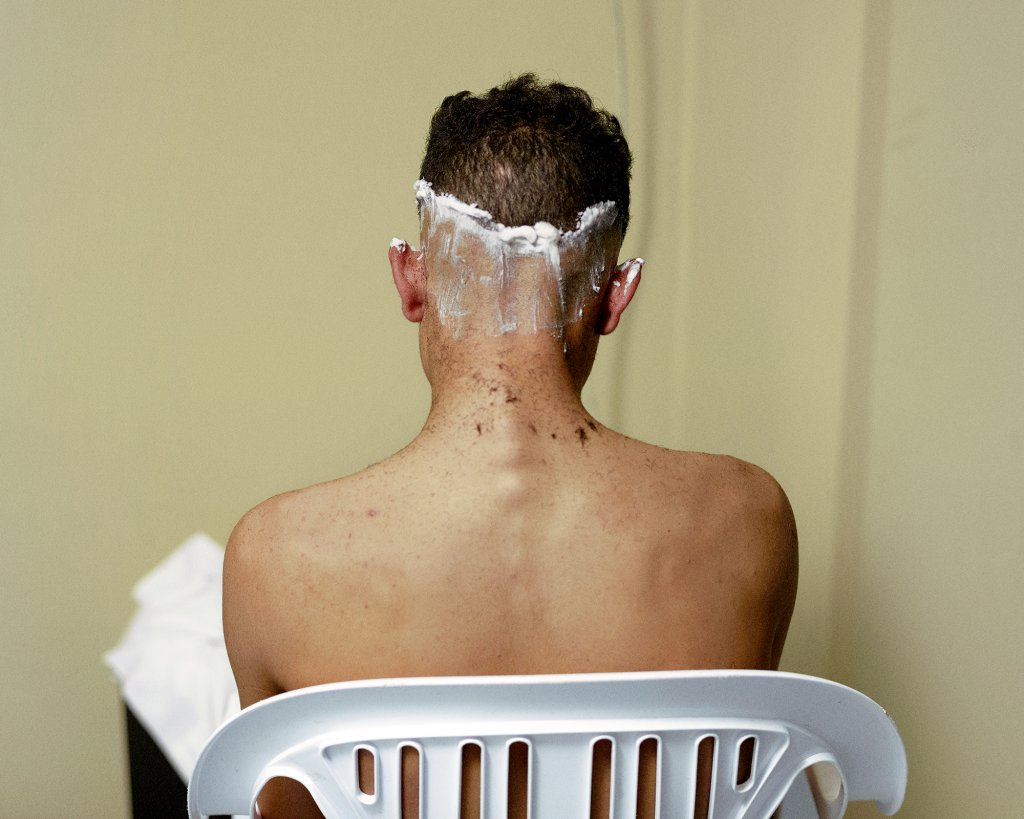
Many migrants feel like they are forgotten once they arrive at their destination and apply for asylum or residency | Copyright: Felipe Romero Beltrán 2023, courtesy Loose Joints

Thousands of migrants are photographed arriving in places like Spain each year. But with the next round of arrivals, the images of the previous migrants are quickly forgotten. Photographer Felipe Romero Beltran decided to work with migrants to stage images to bring their narratives back into the present.

Spain is one of the countries that remains at the forefront of the ongoing migration movements across Europe. In 2022, almost 30,000 migrants arrived on Spanish soil by sea, according to the United Nations. 

This is only half the number of 2018, but with pandemic-related travel restrictions now a thing of the past, the number of people embarking on perilous journeys across the Mediterranean is once more on the rise.

Every time a boat arrives — whether by rescue or by succeeding under its own steam — the same images travel around the world: tired migrants and refugees being assisted on land with blankets and water; somewhere nearby there’s usually an ambulance or Red Cross vehicle in the shot.

In some instances, these migrants can simply be seen walking away, usually never to be heard of again, as they enter the asylum system with all its pitfalls and rejections.

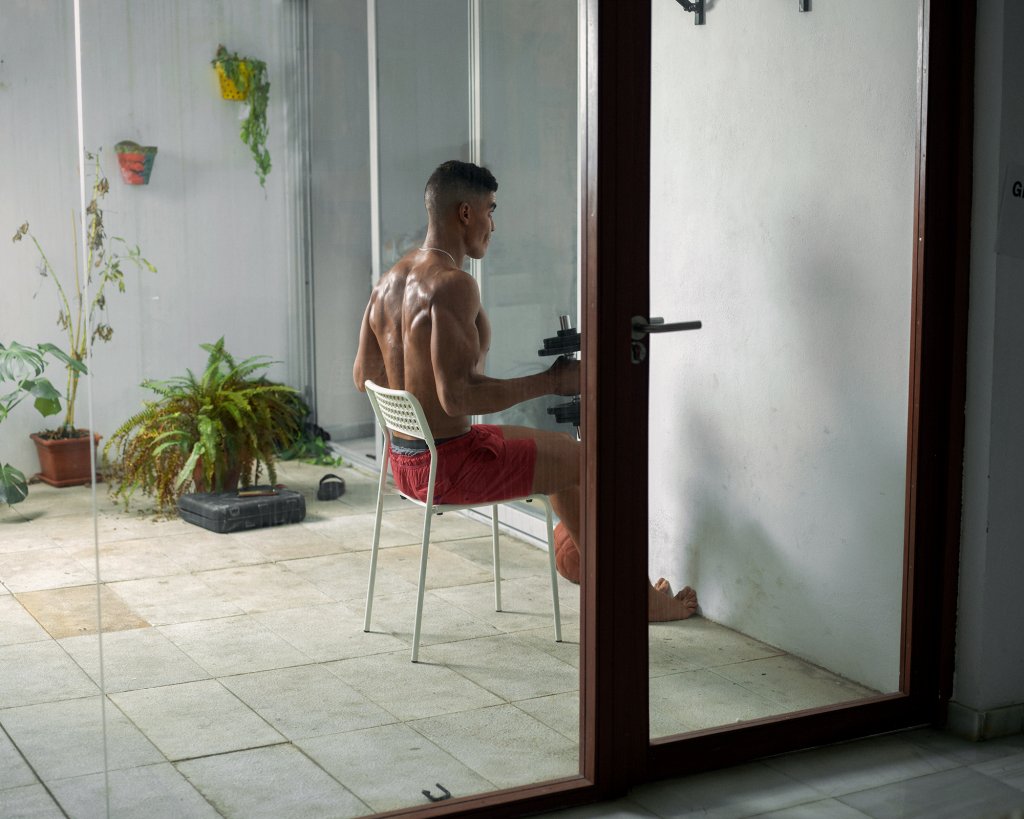
Years of monotony and boredom await young migrants as their applications are being processed | Copyright: Felipe Romero Beltrán 2023, courtesy Loose Joints

Photographer Felipe Romero Beltran decided that this is not where their story should end. In fact, for many this is the real beginning of the journey, having succeeded in coming abroad. This is why he decided to follow a number of young migrants from Morocco after their arrival in Spain to highlight their experience once they made it.

Part documentation, part photography art, Beltran, born in 1992, focuses on the lives of nine Moroccan men, who did not know each other prior to the photo shoots. They share their experiences, their fears, their frustrations as well as their hopes. They examine what masculinity mean in a new culture, which may not echo the expectations imparted upon them in their home countries.

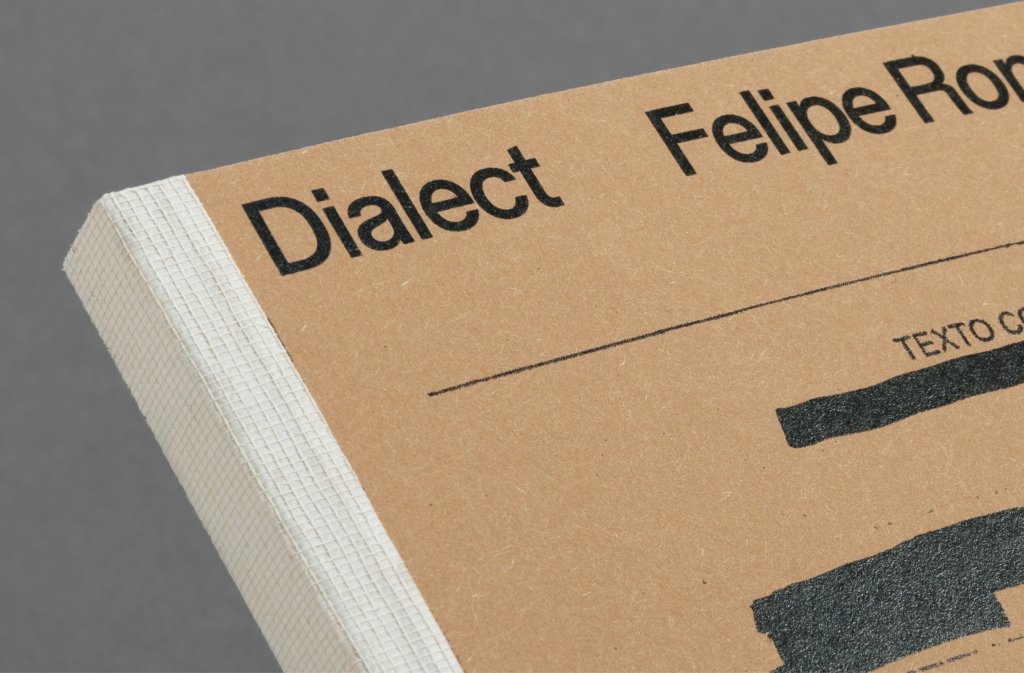
The result is a book and a photographic series called “Dialect,” which aims to change the way we view the phenomenon of migration.

“Dialect” by Felipe Romero Beltran documents the lives of young Moroccan migrants waiting for residence papers in Spain after migrating across the sea | Copyright: Felipe Romero Beltrán 2023, courtesy Loose Joints

Years of idle waiting

Beltran had time to get to know the nine subjects in the book: they are required to stay in Spain for three continuous years before they can apply for residency and start a regular life. 

During this time, they rely on state welfare for food and housing and are not allowed to work. Even with a certain number of classes they can join, such as Spanish lessons and integration classes, three years is a long time for boredom to not set in.

Beltran’s images cut through this boredom, highlighting the reality of such migrants who instead of pursuing their dreams find themselves stuck killing time in a bureaucratic quagmire.

“I proposed the project and explained that I wanted to take photographs of them in this limbo state, documenting the years of waiting,” Beltran explains.

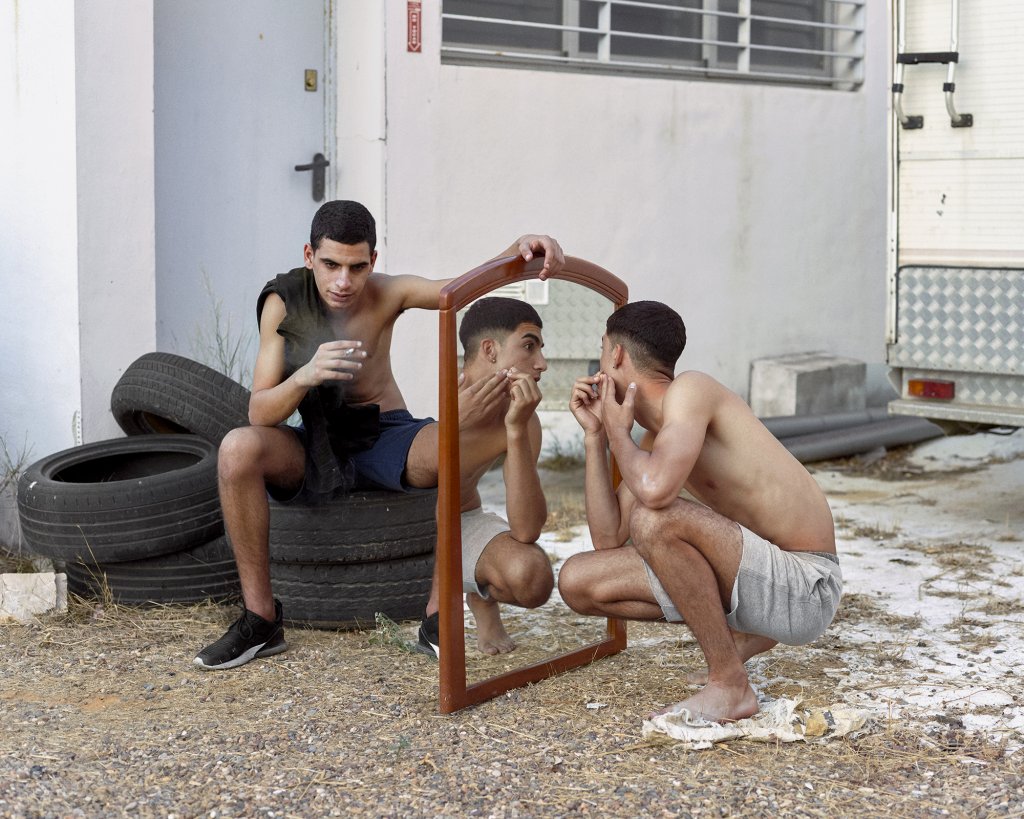
Staring at a wall in more ways than one: migrants complain that their lives have little purpose while they await the outcome of their residency application | Copyright: Felipe Romero Beltrán 2023, courtesy Loose Joints

This is one of the reasons why Beltran decided to have a good amount of the images staged; he asked his young subjects to reenact moment of their migration journeys — to share glimpses into the nightmares of migration in pictures which look almost like a piece of physical theater.

“There was an activity around taking the images — it was something during the day that (could get them) excited. And it was fun,” Beltran explained. 

“Everyone was laughing, and they just make jokes each other during the sessions.”

Immigration as a barrier

With the veil between art and reality thus deliberately being lifted, Beltran also incorporated some of his own experience of being stuck in bureaucratic waiting game in Spain: A few years before, he had moved to Spain from Colombia himself, where he suffered with the immigration authorities despite being a highly educated native Spanish speaker.

With the subjects of his “Dialect” project being francophone, he figured that the hurdles must be even considerably higher. To illustrate this, he also included a video named “Recital” in his work, in which he got the nine young migrants to try to read the first four pages of Spain’s immigration law.

[embedded content]

“They weren’t understanding a word,” he said, highlighting how this removes their sense of agency over their own fate — even if they have Spanish lawyers attached to their cases.

“These legal procedures are really, really complicated, even for native speakers,” said Beltran, adding that this leads to an overall sense of helplessness among migrants and refugees.

Re-enacting nightmares

Beltran says he hopes that his photographic project can help humanize the experiences of migrants to audiences which appear to increasingly be desensitized to images of migrant suffering.

The images are abstract and stylized — they look more like Instagram than the evening news. They look like they will fill museums and not front-pages.

“One of the reasons this project stood out to me is because it’s technically documentary photography, but it feels like fashion imagery,” Beltran explains.

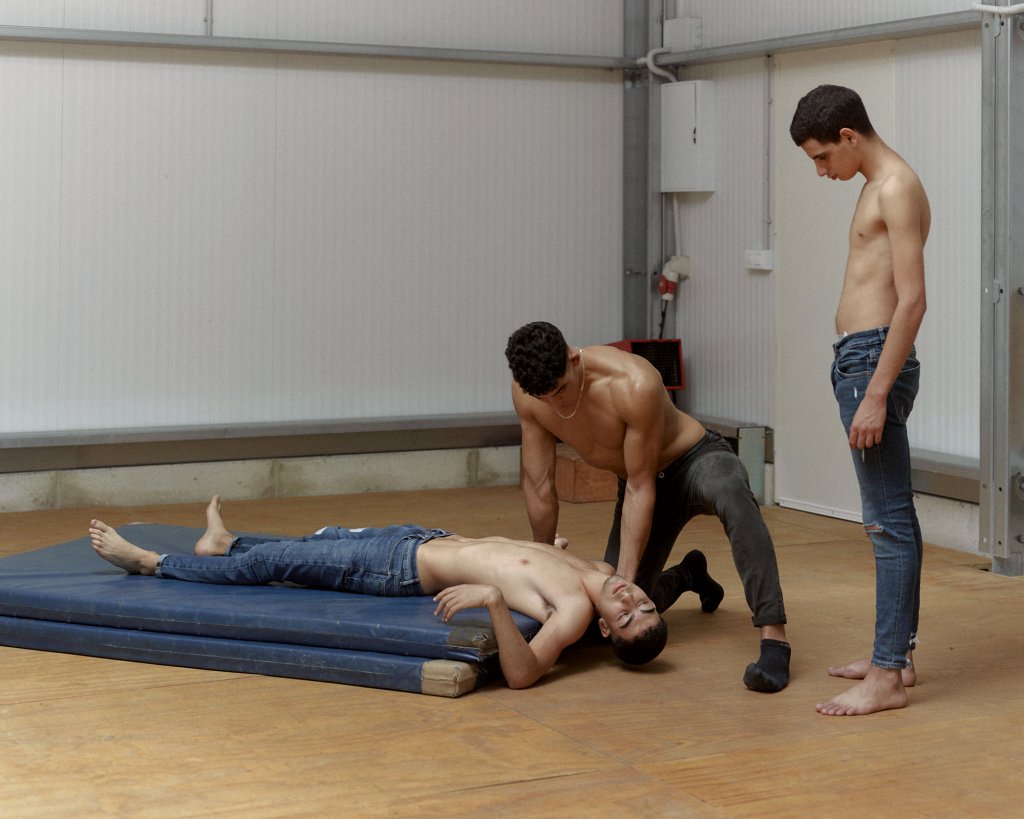
This is part of the reasons why some of his reenactments really hit a nerve: they are interesting to look at but only reveal their full story on second sight. In one image, one of the subjects lies on a blue gym mat — symbolizing the way he laid on Spain’s shores upon surviving his migration ordeal.

A mat to symbolize the crashing waves of the sea upon arrival: Migrant Youssef shows how exasperated and sick he felt after his journey | Copyright: Felipe Romero Beltrán 2023, courtesy Loose Joints

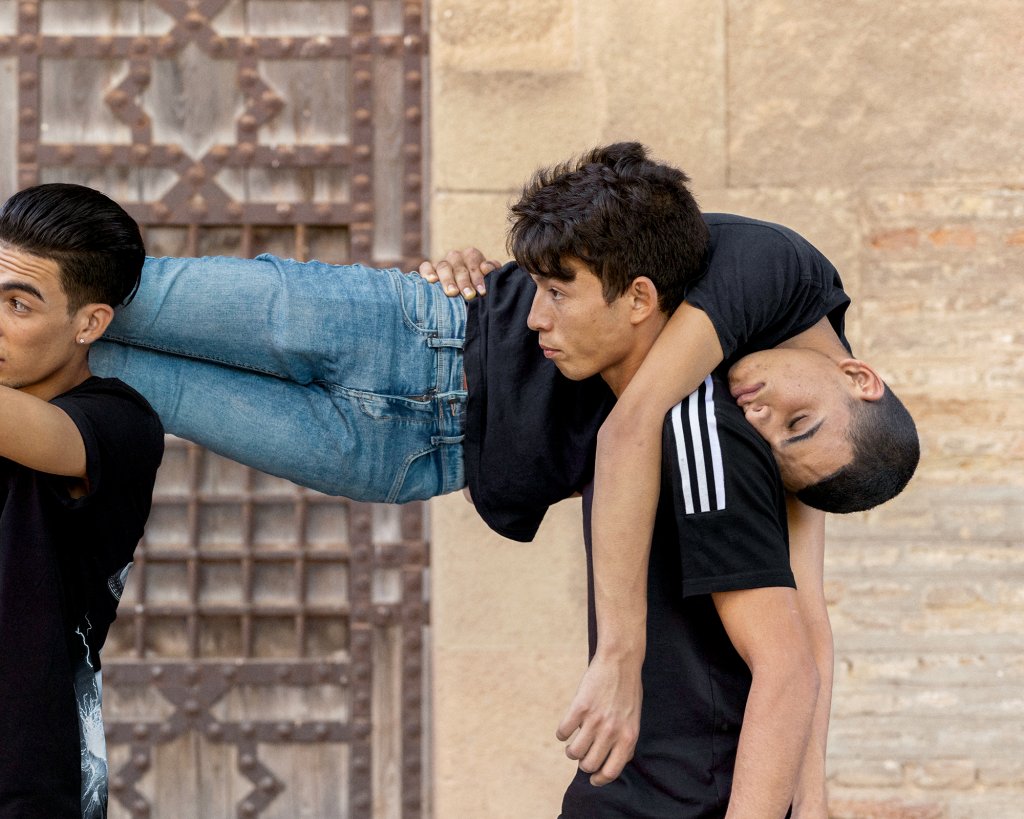
In another such scene, two men are seen carrying a third on their shoulders, recreating the moment that he fainted during a day-long walk to Seville.

Beltran says that Dialect covers “three years of state violence for nine young Moroccan migrants exiled in Kafka-esque limbo in Seville, southern Spain. 

“When underage migrants enter the country illegally and cannot be verified as adults, their custody remains in the hands of the state – subjecting them to a lengthy process of up to three years to gain legal status.”

Young migrant Bilal’s body is being carried after a fainting episode – another re enactment featured in “Dialects” | Copyright: Felipe Romero Beltrán 2023, courtesy Loose Joints

It is in this state of suspension and liminality, Beltrán says, that he engages with the body as a metaphor:

“Using a carefully articulated language between photography, performance and collaboration, the weight of dead time is registered upon the shoulders of these young men, entering into dialogue with their memories, journeys, and the humiliating mundanity of waiting and migration.”

Elevating the mundane to an art form: Felipe Romero Beltran tries to highlight the beauty in young lives hoping to achieve much more in the future | Copyright: Felipe Romero Beltrán 2023, courtesy Loose Joints

Dialect by Felipe Romero Beltrán is published by Loose Joints, and is available through to www.loosejoints.biz 


More articles

Local artist brings rodeo photography to celebrate Strathmore Stampede

Local artist brings rodeo photography to celebrate Strathmore Stampede

Local artist brings rodeo photography to celebrate Strathmore Stampede – StrathmoreNow.com – Local news, Weather, Sports, Free Classifieds, and Job Listings for Strathmore and southern Alberta.

Local News

Written by Tommy Osborne
Monday, Jul 10 2023, 8:00 AM

“Connection” by Logan Armstrong
All photos taken by Logan Armstrong

Article continues below advertisement

To celebrate the upcoming Strathmore Stampede, local photographer Logan Armstrong is bringing his rodeo-themed photography to the Vault Cultural Collective from July 29- August 12.

artLogan Armstrong

An architect by trade, Armstrong explained his architecture experience combined with his love of the rodeo in a very unique way, as architecture is primarily geometric shapes and straight lines while rodeo is very fluid and organic. This gives his work a distinct style.

“It’s really interesting to try to blend those two into a piece of artwork that speaks to something bigger than itself,” Armstrong said.

art“Late Night Flight”

Armstrong married into a rodeo family so it wasn’t a big part of his life early on, but once he got into it he became fully invested in the rodeo style of life and photography. Saying “I took a camera to a rodeo event and it just kind of snowballed from there,” Armstrong explained his work focuses on showing people a different view or perspective of the rodeo. Even if you’ve been involved in rodeo your whole life he’s hoping he can offer something new.

“Rodeo is one of the places where you really can play with a lot of different small details that work with all those different things. There’s so much in rodeo to shoot; most people see rodeo in the same light in the same way, from the grandstands or from a lens far away, and I try to just bring it to you from a different perspective, a closer one, lower one, and just try to find those interesting moments that are kind of unexpected.”

art“Connection”. This photo is of Armstrong’s wife and her horse, and Armstrong said photos like these to capture special memories are what makes photography so special to him.

The above photo “Connection” highlights how Armstrong approaches his work. Not only does it offer a beautiful glimpse into the bond between a horse and its rider for people who may not see this side of rodeo, it also perfectly showcases what rodeo is all about for many who are involved.

“For the people who do rodeo and participate in that lifestyle, the connection to the animal and those type of small moments are what it’s all about.”

“I’d like to highlight those smaller details and intimate moments and the actual art that comes out of rodeo.” 

art
artThese two photos are what kicked off Armstrong’s photography adventure

If you are interested in learning more about Armstrong and viewing more of his work, you can visit his website crowbaitcreative.com. If you are interested in purchasing some prints or commissioning him for a photo shoot or even you can reach out through his Facebook or Instagram. While rodeo and western photography is his main focus, he has experience with many different styles and genres, including portrait work, family photos, and more.


art“Swing Away”

 Send your news tips, story ideas, pictures, and videos to news@strathmorenow.com  

Next Story

23 Photographs Of Cats Crossing A Paper Wall By Nils Jacobi

23 Photographs Of Cats Crossing A Paper Wall By Nils Jacobi

Nils Jacobi, self-described as a “catographer”, is back on Bored Panda! He is known for capturing unique and quirky photographs of cats and today we want to share some of his funny pictures of felines crossing a paper wall.

Jacobi began his photography journey in 2011 upon completing his studies in industrial design. After exploring various areas of photography, he made a decision to focus on working with cats due to the increased attention his cat photos received compared to his other work.

Continue scrolling for some playful cat images! If you’re interested in seeing more of Jacobi’s photographs, check out our previous post by clicking here

More info: Instagram | youtube.com | tiktok.com | Facebook | furryfritz.com

Switzerland Bans Photographers ‘Suggestive’ Photos of Gymnasts

Switzerland Bans Photographers ‘Suggestive’ Photos of Gymnasts

gymnast

The Swiss Gymnastics Federation (STV) has banned photographers from taking “suggestive” photos of gymnasts.

The association has imposed the ban in a bid to ensure that gymnasts can only be photographed in a way that focuses on their poses and positions.

The German newspaper BILD reports that the Swiss federation will ban sports photographers from shooting pictures of gymnasts in poses which have them spreading their legs upwards.

‘Ethically Sensitive’ Photography

“To protect gymnasts, the STV strives to ensure that no suggestive or otherwise ethically sensitive photos are published and passed on. Especially photos where gymnasts were photographed in the crotch,” STV states in its updated guidelines.

“The STV is aware that such photos can arise in action photography. However, publication should be avoided. The main concern of the STV is to sensitize the media professionals and to let common sense prevail.”

According to STV’s new guidelines, photographs of gymnasts in a position that sees their legs spread upwards, such as on a balance beam or uneven bars, will be banned.

Meanwhile, photographs of gymnasts in the splits pose being allowed will be dependent on the angle of the picture.

Naomi Kempter, who works in the Ethics Department at STV, says the photography ban is essential and should have been imposed sooner to protect gymnasts from sensitive images.

“We wanted to send a signal that we no longer want such photos. It was high time for something like this,” Kempter tells BILD.

Protecting Athletes

According to the publication, Germany is also taking measures to protect gymnasts and ensure that they are only photographed in certain poses and angles.

The German Gymnastics Federation says it has “adjusted” positions in which photographers can stand in order to prevent photos taken with the gymnast’s legs spread — such as directly in front of an athlete.

If the German Gymnastics Federation discovers sensitive photos of a gymnast being circulated in the media or online, the association says it will also speak directly to the photographer who has taken the images.

In May, Japan also introduced its first nationwide laws to criminalize exploitative “photo voyeurism.” The issue of taking sexually exploitative images of others is particularly serious at sporting events in the country.

Young athletes in sporting attire in Japan are frequently targeted by people engaging in sneak photography of a sexually malicious nature.


Image credits: Header photo licensed via Depositphotos.

Barbara Livingston: Renowned Photographer Devoted to Capturing Beauty

Barbara Livingston: Renowned Photographer Devoted to Capturing Beauty

Renowned photographer Barbara Livingston suspects Thoroughbreds view her as an “odd clicking person.”

Humans would more likely describe her as a wonderful clicking person.

Make no mistake, clicking sounds emanate from her almost constantly as she strives to record the magnificence of one horse after another, all the while brightening the dawn at racetracks across the country with her smile.

Livingston is the chief photographer of the Daily Racing Form. As important as that is, it does not begin to describe her impact on the industry. She has set an unthinkable pace in winning five Eclipse Awards, three for photography and two for audio/multi-media. Her itinerant life revolves around securing the next great image.

 “It’s not a passion for me. It’s actually an obsession, and I’m not sure it’s always helped me because it’s such a strong drive,” Livingston said in 2018. “But what are you going to do? When you are obsessed, you just are.”

That obsession led to the publication of seven books, four comprising her popular “Old Friends” series, which depicts the nobility of retired Thoroughbreds. For Livingston, her art is much more about the horse than the array of equipment she uses.

The native of Schenectady, N.Y., became fascinated with Thoroughbreds at a young age. She was 10 when she used an Instamatic to take her first images at the track. She was 13 when she recorded Ruffian’s victory in the Spinaway Stakes at Saratoga Race Course.

What is it about Thoroughbreds that they have maintained a lifelong hold on Livingston?

“I’m never able to explain what it is,” she said. “They are almost mythical creatures.”

Livingston thrives on the opportunity to work one on one with her equine subjects.

“I’ve been seeking an answer that sums up the feeling you have when you are with horses, when you are listening to them, when you are feeling them, when you are smelling them,” she said. “There is something incredibly spiritual about that connection. Even a horse you don’t know will watch you and think of how to work with you.”

Livingston is painstaking in her attention to detail. She has undoubtedly strained the patience of many a staffer as she waits and waits for the one shot that she knows is there, the one shot that she must have.

“She is very meticulous and demanding. She won’t do anything second-rate, ever,” said Michael Blowen, who founded Old Friends at Dream Chase Farm in Georgetown, Ky., in 2003.

Blowen estimates that Livingston’s work helped raise more than $50,000 for retired Thoroughbreds at his farm, which takes its name from her book series. She snaps all of the photos in an annual magazine published by Daily Racing Form that helps to draw attention to Blowen’s cause.

With each image, Livingston conveys the dignity of the horse, its power and, in some delightful instances, its playfulness.

 “They are very rarely static,” said Blowen. “There is always movement, and that is the beauty of these horses.”

Blowen added, “She could have made a ton of money taking photos of celebrities. Thank God she decided she was going to focus on these Thoroughbreds because she’s made a huge difference to the animals and the sport.”

Whether it is a horse or human in need, Livingston wants to help. She has arranged more than her share of horse adoptions. She rallied to the side of horses in desperate need after the 2017 hurricane in Puerto Rico.

Closer to home, Livingston immeasurably brightened the Thanksgiving and Christmas of Jacqueline Holcomb, an avid racing fan and a patient at Pathways Nursing and Rehabilitation in Niskayuna, N.Y., who is unable to speak.

For Thanksgiving 2018, she arranged FaceTime with two of Holcomb’s favorites from the riding world, Edgar Prado and Julie Krone. When she used social media to suggest fans might reach out to Holcomb for Christmas, they responded with almost 100 cards and 15 presents.

 “She was so appreciative,” Livingston said. “You could tell with her eyes.” (Holcomb passed away in 2020.)

In 2017, Livingston also spent time clicking away in a pasture with Boom Towner. She was not on assignment. There was no fee. She has documented his life in pictures every 10 years, and he turned 30 in 2017, graying around his temples and jaw and very much slowing down.

 “A lot of older horses, I definitely initiate those,” Livingston said, “because I like the idea of recording the history of a horse where people might not be doing so as much.”

And so Livingston focuses in, revealing the essence of each Thoroughbred one click at a time.

Note: This profile was written in 2018 and has been updated.


Fun Facts

  • Livingston kept a diary when she was young and wrote of her desire to be a photographer
  • Livingston also aspired to be an artist, but did not feel she had enough ability to pursue that
  • Graduated from Syracuse with degree in experimental photography
  • Estimates that she drives between 30,000 and 40,000 miles annually 
  • Her license plate: Alydar