Photography

Can I Learn Photography on My Own?

Can I Learn Photography on My Own?

I have heard many different questions from those interested in photography, from staples such as “What is the best camera” to more obscure inquiries, such as “Is photography dying?” For some reason, the question in this article’s title caught me more off guard than most.

As someone who has worked for himself for a decade, I have a number of irons in a number of fires; it’s simply good practice for survival when you have to generate your own money. As a result, I have certain tools at my disposal that help guide me when it comes to trending topics and questions. One such tool is AnswerSocrates.com, where you can see trending searches on whatever topic you choose, in whichever country you choose. I have never used it for photography content, funnily enough, but out of curiosity, I checked what the most common questions are for the topic. I expected to see questions about the best cameras, lenses, and bags, as well as basics such as “What is ISO?” and “What are the best camera settings?” The latter is an all-time favorite of mine. It’s tantamount to asking what is the best medicine!

This turned out not to be the case, but it wasn’t far off either. Many of the different questions were familiar, such as “can photography be a career,” “when was photography invented,” and “should photography be considered art,” but one stuck in my throat as I mouthed it.

‘Can I Learn Photography on My Own?’

Perhaps it’s oversensitivity on my part, but I love this question. I imagine many trolls would give sharp responses to it, but they are forgetting that many haven’t grown up with Google in their pocket. In fact, the question reminded me of a gentleman with whom I had a similar conversation to the one I would have with people asking this question. I’ll call him John for the sake of this brief anecdote.

I am a friend of John’s son, and upon his son getting married, I was asked if I’d shoot the wedding as they wanted someone they could trust, and it wouldn’t be a conventional wedding. John was in his 70s and his wife, at some juncture, told me that he had just picked up a camera for the first time and was loving it, but he had no idea of how to learn what to do. He wasn’t tech-savvy, he didn’t use the internet, and books seemed to be outdated or light on useful information. Eventually, I spoke to John about photography, and he asked a similar question to the one on Answer Socrates: he wanted to know if it was possible to learn the craft on his own.

Now, in the case of someone who doesn’t use the internet and isn’t tech-minded, it’s more of a challenge, but it isn’t necessarily an obvious path for those who live on the internet either. John had an information drought when it came to photography, but the digital natives have information overload. Where do you get the best information? How do you know it’s reliable? Can you truly get to a reasonable standard on your own? Without the internet, you will need either better books than John could find, or relinquish the “on my own” part in favor of photography clubs or tutoring. Or, you find someone who can use the internet on your behalf.

But, yes, you absolutely can learn photography on your own. Digital content is of a standard these days that you could become a leading photographer completely solo, and with the combination of YouTube, websites like Fstoppers, and paid tutorials, you have everything you need. I want to underpin all of the following by saying that you ought to be shooting as much as possible and experimenting while you’re at it. Do not be afraid to miss or fail — that’s the only way you will make any progress.

The order of play for teaching yourself photography ought to be starting with the foundations. The twin pillars of getting off the ground are the fundamentals of photography and understanding your camera. When it comes to the fundamentals of photography, there are nearly more resources than there are cameras; learn about the exposure triangle, and you’re mostly set. In my early days, I printed it out and put it in my camera bag.

Understanding your own camera is just as easy to do. Let’s say you buy a second-hand Sony a7 III (no affiliation, it was just a camera I bought and used for years), you will need to learn how to set it up for your use, which buttons do what, where settings are in the menu system, and so on. The manual is one way of doing it, sure, but I would recommend heading over to YouTube and typing “Sony a7 III beginner’s guide” or words to that effect. This will result in brilliant tutorials like this one by Sidney Diongzon.

Once you’re able to take pictures, you need to figure out what sort of images you want to create. No matter what genre motivated you to try photography (mine was macro), I implore you to shoot anything and everything and see what you enjoy. If you wanted to try your hand at landscape, for instance, you can follow the same pattern as above and search YouTube for something akin to “Beginner’s guide to landscape photography” and look for a popular video. I would recommend Mads Peter Iversen’s entry on that first page.

Now, there’s a supplementary point I’d like to add here. Depending on how you define “on my own,” you can accelerate your progress. When I read “on my own,” I imagine that to mean without formal education or a one-on-one tutor. In which case, you should join photography communities or groups. From Reddit, to 500px, to Discord servers, there are myriad photography groups that provide useful feedback on images as well as inspiration from other photographers. For me, this was a sub-forum on a car website, but it had me engaging with photographers far above my station.

To push forward from a solid foundation, you have the choice of investing in the skill or taking the potentially longer path of trial and error. The amount of free content is staggering, and the caliber of some of it is marvelous, so it’s feasible to reach a high standard without anything paid, but the best tutorials tend to cost. The Fstoppers tutorial library is proven, and I have watched many of them, so can speak to the standard, although given where I write this, you’re welcome to get a second opinion!

Final Thoughts

To me and many others who have been around the space a while, the question “can I learn photography on my own” seems to have an obvious answer, but that evidently isn’t the case for everyone. So, if you are interested in photography and are wondering if you need some formal training to be proficient at the craft: no, you do not.

If you taught yourself photography, share in the comments some tips for those who might be curious about dipping a toe in these waters, but are intimidated to do so without in-person guidance.

Winner of 2023 Mullins Conceptual Photography Prize announced

Winner of 2023 Mullins Conceptual Photography Prize announced

5 July 2023

Melbourne photographer and multi-disciplinary artist Chris Bowes has won the $25,000 Mullins Conceptual Photography Prize for 2023.

A close up of part of Sun Kissed #1, #2, #3, #4, 2023 by Chris Bowes.

He describes his winning series Sun Kissed #1, #2, #3, #4 as a series of experimental photographs created using a hand-made camera that, rather than capturing a representational image, instead captures the colour of light.

“They are presented in pairs, each pair containing an imprint of the light at sunrise and sunset over the course of several days. As such, the work’s aim is to reduce landscape photography to its most basic form, imbuing photographic film with an impression of the sun rather than capturing it washing over the environment.”

Run by the Australian Photographic Society (APS), The Mullins Conceptual Photography Prize is an acquisitive prize that seeks to find Australia’s best conceptual photographs. Entries in the Award must be a still work that has been substantially produced by photographic means, and it is open to analogue and digital photography, collage and mixed media. 

In addition to taking home the $25k prize money, Bowes’ series will be acquired and join the previous MCPP winners in the Muswellbrook Regional Arts Centre’s (MRAC) permanent collection of post-war paintings, ceramic and photography.

The adjudicators of the competition, Victoria Cooper, Eloise Maree, Doug Spowart, and Len Metcalf, also decided that four other finalist works should be Highly Commended. They were:

The Colony Reclaims the Land by Melanie Cobham

‘The Colony Reclaims the Land’ by Melanie Cobham. This image is a series of 35mm negatives depicting the Australian landscape, intervened by a colony of termites. The negatives were fed into a termite mound and crossed over by the colony as it travelled assiduously across the nest. The work plays with the dialogue of living on colonised land by inviting a native colony to reclaim its own image. 35mm negative intervened by a colony of termites.

A flying saucer over Clyde Mountain, shows Declan, dead at two hours old, how to make a new body out of light, 2023 by Judith Nangala Crispin

A flying saucer over Clyde Mountain, shows Declan, dead at two hours old, how to make a new body out of light by Judith Nangala Crispin. This is part of a series of afterlife portraits of birds and animals, ascending between earth and outer space. I place cadavers on emulsion, creating images with Lumachrome glass printing sun printing, clich-verre and chemigram. Decomposition chemistry creates colour and detail. Each print is exposed 30-50 hours in natural light. This work draws on my experience of tracing my family’s Aboriginal ancestry. I am trying to honour the lives of animal and birds with whom we share this planet. Lumachrome glass print, chemigram, drawing. Deceased newborn microbat, dried take-away baby octopus, salt, wax, crayon, paint, potassium ferricyanide, silver nitrate, household chemicals. Exposed 16 hours in a metal bucket, in rainlight.

I Knew at the Time, 2023 by Jess Leonard, and I don’t always understand/selectively mute, 2022 by Arrayah Loynd.

I don't always understand/selectively mute (diptych) by Arrayah Loyndi. I don't feel like I belong in my body, it feels awkward and uncomfortable like an ill fitting suit. I live in a constant state of confusion...of others, of myself. I am not who they say I am, I am not who you think I am. I am no one and nothing, I am everyone and everything, So come and find me, but only in the small moments when I want to be found. I make no promise that I will be there. (neurodivergence/trauma). Archival pigment printing on canson rag.
I don’t always understand/selectively mute (diptych) by Arrayah Loyndi. I don’t feel like I belong in my body, it feels awkward and uncomfortable like an ill fitting suit. I live in a constant state of confusion…of others, of myself. I am not who they say I am, I am not who you think I am. I am no one and nothing, I am everyone and everything, So come and find me, but only in the small moments when I want to be found. I make no promise that I will be there. (neurodivergence/trauma). Archival pigment printing on Canson rag.

All the finalists are showing until August 26 at the Muswellbrook Regional Arts Centre. You can see them all here. 

Today’s Photo from Ted Grussing Photography: Cool … dreams of

Today’s Photo from Ted Grussing Photography: Cool … dreams of

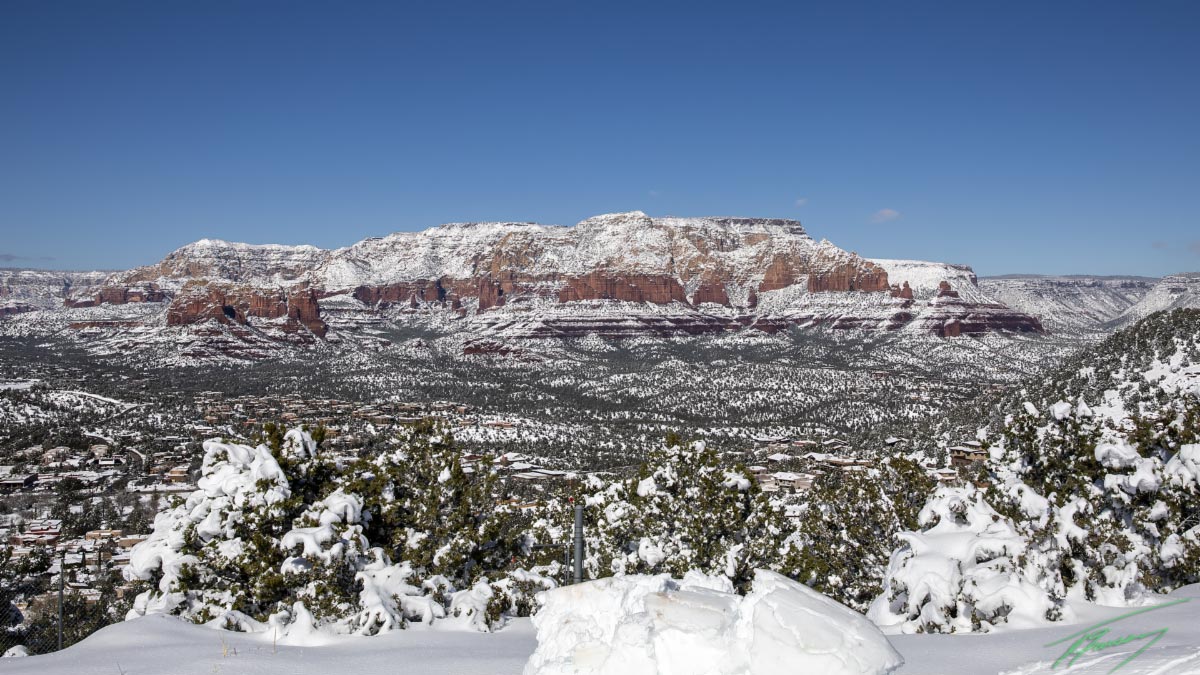
… it is that time of year when we think of cool …perhaps not everyone, but me for sure … 105F today and about the same for tomorrow and the same outlook well into next week. I started working on several wildlife photos tonight, but when it came time to finish them I chose to delete them instead. So, a little while ago I came on some of my photos of cooler days here and chucked the wildlife photos. I like the scenes of cooler days, so here are a couple that did the trick for me … enjoy them.

The shot above is a December day in the neighborhood and on the right side you are looking at west Sedona in the lower right part of the image and uptown about mid image also on the right. Wilson mountain is under the right side of the clouds and Long Canyon is mostly in shadow under the clouds on the left.The temperature was a delightful 50F. The photo below is a shot looking due north from the north end of the runway a winter wonderland and the temperature a very pleasant 32F.

Wishing you a very Happy Fourth of July … the day we celebrate the decision to break ties with an oppressive government and follow our own path to freedom and the celebration of individual freedom … and to establish a government responsive to and answerable to its citizens … a government that had enumerated powers established by and for the people … a government of limited powers … and for a time that is how it went. So let’s celebrate the genius that is the United States of America and the young men and women who were responsible for this incredible experiment of individual liberty …inalienable rights which come from God not government!

Hot dogs and hamburgers are to be consumed in quantity tomorrow as I join a friend at a 4th of July Party! Back tomorrow evening and without doubt feeling stuffed. Have a beautiful day and always speak up for our freedoms … exercise them or lose them!

Smiles,

Ted

To-morrow, O to-morrow!
Fast fall the fading years. A thought, a dream
Of gentle words; of faith and love a theme;
A smile, a step or two, and all is done.
Quick is the veering stream of life full run;
Yet in the crimson west still gleam
To-morrow and to-morrow’s endless dream.

excerpt from To-morrow by Max Ehrmann

###

photo_tedgrussingThe easiest way to reach Mr. Grussing is by email: ted@tedgrussing.com

In addition to sales of photographs already taken Ted does special shoots for patrons on request and also does air-to-air photography for those who want photographs of their airplanes in flight. All special photographic sessions are billed on an hourly basis.

Ted also does one-on-one workshops for those interested in learning the techniques he uses.  By special arrangement Ted will do one-on-one aerial photography workshops which will include actual photo sessions in the air.

More about Ted Grussing


Healing Paws

Healing Paws

This is an advertisement

5 Powerful Lightroom Masking Techniques for Landscape Photography |

5 Powerful Lightroom Masking Techniques for Landscape Photography |

When you edit landscape photos, you will often make use of a variety of masks to target adjustments to different areas of the frame. Lightroom has made some major steps forward in its masking capabilities in recent iterations, making it far easier to efficiently and precisely process your photos. This excellent video tutorial will show you five uses for Lightroom’s masking capabilities when working with landscape images. 

Coming to you from Michael Shainblum, this fantastic video tutorial will show you five useful techniques for using masks to edit landscape photos in Lightroom. If you have not tried out Lightroom’s new masking panel yet, it really is worth taking an hour or so to dive in, as it is impressively powerful and makes a significant impact on your efficiency. I have improved the quality of many of my photos by using it, simply because its quick and accurate work make it viable to perform edits that simply would not have been worth the time and effort under old systems, particularly when I am editing large batches of shots. Check out the video above for the full rundown from Shainblum. 

And if you really want to dive into landscape photography, check out “Photographing The World 1: Landscape Photography and Post-Processing with Elia Locardi.” 

Paolo Di Paolo obituary

Paolo Di Paolo obituary

The photographer Paolo Di Paolo, who has died aged 98, documented the renaissance of Italy following the dark days of the second world war, capturing that country’s 1950s and 60s glamour. His star shone brightly for 15 years before he turned his back on photography, but in that time he recorded the luminosity of cultural figures such as Pier Paolo Pasolini, Gina Lollobrigida and Tennessee Williams, as well as the optimism and dignity of ordinary people.

His pictures captured the shift from a more innocent, rural life, in a style that mirrored the neorealism movement in Italian film, as embodied in the shot of three boys on a bucolic hill looking towards the sprawl of Rome. His keen eye recorded the societal tension between the haves and have-nots, but his humanist approach highlighted the elegance of every person, regardless of circumstance. He said: “You might not know the subject but you understand the situation. In every image there is a story to tell … that is my law.”

Di Paolo started out as a self-taught amateur, taking photographs for pleasure with a considered approach. “Each shot had to be a good one. If the situation was not as I had in my mind, I wouldn’t take the picture.”

In 1954, he took his photos to Mario Pannunzio, the editor of the influential weekly current affairs magazine Il Mondo. Pannunzio recognised Di Paolo’s talent, and the photographer found his spiritual home.

The Little Warriors of Monte Mario, Rome, 1954, by Paolo Di Paolo.

He earned money working for other publications, notably Tempo, who sent him on assignment abroad. However, it was on home soil, on the self-titled 1959 assignment for Successo magazine, The Long Road of Sand, that Di Paolo produced some of his finest reportage. He embarked on a road trip along the coast in his Arnolt MG, with the author and poet Pasolini in the passenger seat, documenting Italians on vacation at the dawn of a new era. Di Paolo said: “I was looking for an Italy that looked to the future.”

His intelligence, empathy and discretion garnered trust and allowed him to take many candid portraits of major cultural figures including Sophia Loren applying makeup, Marcello Mastroianni sipping coffee and Kim Novak ironing. He formed a strong bond with the enigmatic actor Anna Magnani and his portraits of her with her son capture, and are captured by, intimacy.

Paolo Di Paolo in Rome, 2017.

Paolo was born into a poor family in the village of Larino, in Molise. His father, Michele Di Paolo, ran a small shop that sold tobacco and salt and his mother, Michelina (nee Lallo), was a smallholder and a skilled painter and embroiderer. He had five step-siblings from his father’s two previous marriages.

He attended the village school then moved to Rome to complete the final year of his studies at Liceo Classico Augusto, before returning to Larino. During the war he served in the Granatieri (Grenadiers) near his home, but did not see action. Afterwards he began writing for local newspapers, but he wanted more from life.

In 1949, at the age of 24, he left home to study history and philosophy at La Sapienza University of Rome. He intended to return to Larino to become a teacher there, but fell in with a group of young artists that was a hotbed of ideas and creativity, and realised he needed to explore a different path.

He had been making ends meet working at a tourism magazine, and was on his way to their offices in 1953 when he saw and fell in love with a Leica IIIc camera in the window of a nearby opticians. He had found the means with which to express himself.

He resigned from his job and used his severance money to buy the camera. Abandoning his studies shortly before graduation, he threw himself into the new humanist movement in photography. “The strength and enthusiasm that motivated us young people was overwhelming: our happiness was intoxicating.”

However in 1966, with the rise of television and the dawn of salacious celebrity culture, Il Mondo closed. Di Paolo was devastated. He wrote a telegram to Pannunzio: “ Today … the ambition to be a photographer has died.”

The following year Di Paolo photographed the Valentino haute couture show, but he was becoming increasingly disillusioned. In 1968 he went to see a photo editor who wanted him to exploit his society contacts, to get “some spice”.

The actor Anna Magnani and son at her villa in San Felice Circeo, 1955, by Paolo Di Paolo.

Di Paolo’s strong ethical sense clashed with this new aggressive style and he refused to be associated with the paparazzi. At the peak of his powers, he hung up his camera and shut away his 250,000 negatives, prints and slides.

He moved to the countryside outside Rome, taking a job as an art director for the carabinieri (Italy’s regional police). Over the next 40 years he produced books, which included his photos of the cadets’ lives, and calendars, for the force. In 1973, he married Elena Marcelli, his former assistant, and they had two children, Michele and Silvia. He lived a quiet life and indulged his passions for winemaking, dogs and vintage cars.

In 1997, Silvia was hunting for a pair of skis in the cellar of her parents’ home when she was shocked to discover his photographic archive. She had no idea her father had been a photographer. She asked him about his work but he was reluctant to speak about it. It would take years of cajoling before he allowed Silvia to bring his work back to life.

Finally, recognition flowed. His first exhibition, Il Mio Mondo, was held at the gallery il museo del louvre in Rome, in 2016. Three years later, the MAXXI museum in the city staged a major retrospective, Mondo Perduto, with an accompanying monograph that is the only collection of his work to date.

Pierpaolo Piccioli, the creative director of Valentino, saw the MAXXI exhibition and, inspired by Di Paolo’s 1967 Valentino pictures, invited the then 94-year-old to photograph behind the scenes at the fashion house’s 2020 spring/summer couture show in Paris.

A documentary about Di Paolo’s life and work, The Treasure of His Youth, by the fashion photographer Bruce Weber, premiered at the Rome film festival in 2021 and is due for release in the UK next year. In May, to coincide with his 98th birthday, Di Paolo was awarded an honorary degree from La Sapienza.

He is survived by Elena, his children and two grandchildren, Matilde and Leonardo.

Ukraine: The Latest – How war photography shows the cost of Ukraine’s independence

Ukraine: The Latest – How war photography shows the cost of Ukraine’s independence

Today on Ukraine: The Latest, we bring you updates from the front lines, analyse the issues facing international businesses in Russia, and – with British volunteer Edward Matthews – discuss photography and the challenges facing rescuers during the Kherson floods.

Associate Editor of Defence, Dom Nicholls, starts by discussing how the Russian military adapted to the counter-offensive:

The British MOD says that Moscow had achieved some success, but continued to suffer from key weaknesses, especially overstretched units and a shortage of artillery munitions. So I think that chimes with what we’ve been saying for the last few days, that it’s a hell of a fight going on.

And of course, neither side has air superiority or can even really achieve local air superiority. That means being able to own the sky for a short period of time to give you a  measure of freedom of maneuver underneath it. It is a very, very tough fight we are seeing.

Senior Reporter Daniel Woolfson discusses the issues faced by multinational companies in Russia:

One of the things some businesses have said is that they don’t want to exit too harshly because they want to avoid an intentional bankruptcy, which would see their businesses essentially handed to the Russian state. For the long term future I think a lot of these companies, the really big brands, are not completely writing off Russia.

There have been reports of buyback clauses inserted into deals to which would mean that these companies can buy the Russian parts of their businesses back at a certain point in time. Numerous CEOs have been quoted saying, you know, they don’t want to write it off completely 10, 20 years from now.

So I think there clearly is a hope of returning to Russia if and when the geopolitics allows. 

Also in the episode, David Knowles interviews Edward Matthews, a British volunteer documentary photographer. He tells David about the photo he is proudest of, taken in Lviv, at the funeral of a Ukrainian soldier:

I think the image is so important to me because it depicts the cost of Ukrainian independence. It’s a country that wants to be independent and wants to set its own rules and the price of that is bloody. And that’s been the case historically for a long time. But this image, with the depiction of Jesus Christ in the background, it’s just so beautiful and heartbreaking. When I was taking this image there was an air raid siren on Independence Day and emotions were very high. I’m not even afraid to say that I cried; it was such an emotional day.

For more photography from Edward Matthews, please go to https://emrismedia.com/

Russian President Vladimir Putin chairs a meeting with members of the government


Russian President Vladimir Putin chairs a meeting with members of the government

Listen to Ukraine: the Latest, The Telegraph’s daily podcast, using the audio player at the top of this article or on Apple Podcasts, Spotify, or your favourite podcast app.


War in Ukraine is reshaping our world. Every weekday the Telegraph’s top journalists analyse the invasion from all angles – military, humanitarian, political, economic, historical – and tell you what you need to know to stay updated.

With over 30 million downloads, our Ukraine: The Latest podcast is your go-to source for all the latest analysis, live reaction and correspondents reporting on the ground. We have been broadcasting ever since the full-scale invasion began.

Ukraine: The Latest’s regular contributors are:

David Knowles

David is Head of Social Media at the Telegraph where he has worked for almost two years. Previously he worked for the World Economic Forum in Geneva. He speaks French.

Dominic Nicholls

Dom is Associate Editor (Defence) at the Telegraph having joined in 2018. He previously served for 23 years in the British Army, in tank and helicopter units. He had operational deployments in Iraq, Afghanistan and Northern Ireland. 

Francis Dearnley

Francis is Assistant Comment Editor at the Telegraph. Prior to working as a journalist, he was Chief of Staff to the Chair of the Prime Minister’s Policy Board at the Houses of Parliament in London. He studied History at Cambridge University and on the podcast explores how the past shines a light on the latest diplomatic, political, and strategic developments.

They are also regularly joined by the Telegraph’s foreign correspondents around the world, including Joe Barnes (Brussels), Sophia Yan (China), Nataliya Vasilyeva (Russia), Roland Oliphant (Senior Reporter) and Colin Freeman (Reporter). In London, Venetia Rainey (Weekend Foreign Editor), Katie O’Neill (Assistant Foreign Editor), and Verity Bowman (News Reporter) also frequently appear to offer updates.

Kimberling Area Library to host a photography class

Kimberling Area Library to host a photography class
image

The Kimberling Area Library will be hosting a class on photography. 

On Wednesday, July 12, the KAL will host the Photography Tips and Trick and Fun Stuff to Shoot class as part of their Learning on Wednesday program. The class will take place in the library’s community room at 10:15 a.m.

The class is free and open to the public. Instructor Jane Ballard, a member of Table Rock Lake Art Guild, will be instructing. Ballard will go over some of the rules of composition that may be flexible to capture familiar and unique objects in different ways to share with others. 

“In our nature rich environment, many of us want to capture our living spaces with the perfect photo to share,” states a release from KAL. “You will leave with a passion and connection to others to expand your skills and knowledge and become a better photographer.” 

Coffee and light stacks will be provided. Pre-registration is not required.

For more information visit www.kalib.org.

Adaptalux Pod Mini: Flexible LED lighting that works

Adaptalux Pod Mini: Flexible LED lighting that works

The Adaptalux Pod Mini is the latest generation of Adaptalux Pod. It brings you its fully adaptable lighting system in an ultra-transportable, miniature and robust package. I reviewed the main Adaptalux Control Pod last year and really enjoyed using it for macro and product photography. So when the good people at Adaptalux asked if I wanted to try the brand new Pod Mini, it was a simple “Yes please!” from me.

The Pod Mini is the little brother to the Adaptalux Control Pod and acts as the heart of the Adaptalux Studio Lighting System. It provides power and control to a lighting arm which connects magnetically to the single port. The modular and magnetic design makes adjusting your lighting quick and easy.

Adaptalux Pod Mini - flexible LED lighting
Adaptalux Pod Mini — Flexible LED lighting

Pros

  • Quick and easy installation and setup; click and connect
  • Soft and diffused, yet powerful lighting
  • Small and lightweight
  • Ultra portable and robust (will even fit in your pocket)
  • Great battery life — up to 8 hours
  • Various mounting options, hot shot, tripod and clamp
  • Uses the same lighting arms as the control pod
  • Appears to be a solid build
  • Fantastic website that explains all the functions well

Cons

  • Did not come with any clamps or adapters for hot shoe mount etc — all optional extras, but really are required
  • Did not come with any Lighting Arms or diffusers (but I already had some)
  • Does not work with the Control Pod App for remote usage (but when it’s right on the camera you don’t need that)
Adaptalux Pod Mini — flexible LED lighting with Lighting Arms

All technical specifications have been taken from the Adaptalux website.

Adaptalux Pod Mini — Technical specifications

Pod Mini

  • Weight: 0.2 kg
  • Dimensions: 10 × 8 × 6 cm
  • Front plate: Colour Black, Red, Blue, Green
  • Lighting arm Port: 1
  • Charging via USB C (cable supplied)
  • Light arms and Diffusers all attach magnetically

Lighting Arms (not supplied)

  • 200 lumens per Lighting Arm. Up to 3W per Arm
  • Adjustable beam angle <1150 to 200
  • Available are 200-lumens white LED arm (5700K), and a 400-lumens Super white LED lighting arm (5700K)
  • Also available with blue, green and red lights for drama, amber & UV (all optional extras)

Adaptalux Pod Mini — Ergonomics and build quality

Small but well-built and robust, it literally fits in your hand (or even pocket). I often have trouble with my hands and find small fiddly things difficult to handle. But I didn’t have a problem with the Pod Mini at all. Even the accessories (optional extra) have great ergonomics and grip handles making adjustments easy.

Adaptalux Pod Mini — In the field

I used the Adaptulx Mini-Pod on the (optional) hotshoe adapter on my Sony A7RIII and Sony 90mm macro lens. I went into the backyard on a cold, gray, wet winter’s day in the darkest part of the garden to test out the light. It’s pretty easy to use the Mini-Pod, as it’s very small and light. Not as much power as you would have with, say a flash, but it makes capturing images in low light much easier. Shutter speed 1/125 second, f/5.0, ISO between 200 and 500.

Quality of light

Depending on the light arm used, the light emitted is between 200 and 400 lumens at 5700K. The beam of light can be widened or narrowed by twisting the end of the light arm. The filter or diffuser pod clip on the end of the light arm, to further soften the light emitted.

Controls, menus and display

It’s really very basic. The power up and down buttons on top make the light extremely easy to use while in the field. The Lighting Arms just click and twist and you’re good to go. You can adjust the beam by twisting the end of the light arm.

Recycle times and battery life

As it’s a constant LED light, there are no pesky recycle times, just constant soft light. Battery life up to eight hours. The below images were taken without the light at the minimum shutter speed of 1/50 seconds, ISO 320, f/5.0.

Adaptalux Pod Mini — Final thoughts

If you’re a macro photographer, I think you’ll love what these little light pods could do for you. It was everything I wanted in the Pod Mini after reviewing the Pod Controller. It’s small, lightweight, fits in your pocket and easily attaches to your hot shoe when out and about. Plus, it’s well-built and easy to use. The tech is pretty basic; you can switch cameras or even share with a friend, and the shoe mount connects with any camera.

It’s not exactly cheap, but good lighting rarely is. While the Pod Mini itself is under $100, you need more than just the pod. I suggest a bundle pack buy: 2x Pod Minis, 2x Super Bright White Light Arms, 2 x 30% diffusers, and 1x camera mount. This will set you back around AU $400 or US $268.

New publication details how the Alfredo Boulton’s photography helped define an artistic history of Venezuela

New publication details how the Alfredo Boulton’s photography helped define an artistic history of Venezuela

Alfredo Boulton (1908-1995) was a dapper and sophisticated Caracas-born Venezuelan from a wealthy merchant family who, like many Latin American intellectuals of the period, dedicated himself to numerous activities: photography, art history, politics, cultural diplomacy and collecting, as well as multiple business enterprises. The range of these interests makes it hard to pin him down, but they also allow us to detect a broader sense of cultural purpose that cuts across all these disciplines.

As Mary Miller, the director of the Getty Research Institute, states in her introduction to this remarkable book, Alfredo Boulton: Looking at Venezuela 1929–1978: “In no small measure, Alfredo Boulton is the essence of 20th-century Venezuela, a mantle I suspect he would gladly accept.” Boulton has become such a paradigm for a certain vision of modern Venezuela that it is almost impossible to separate him from a national identity that he both reflected and, in many ways, constructed. Boulton’s Venezuela was a country in rapid expansion due to the discovery of massive oil deposits and a national government that was democratic and developmentalist. Perhaps more than any other country in Latin America, Venezuela embodied the values of the American Dream, yet its cultural identity, thanks in part to Boulton and his intellectual cohort—including the critic Mariano Picón Salas and the political theorist Arturo Uslar Pietri—tried quite explicitly to forge a national identity that was rooted in its specific history.

Mestizaje essence

For Boulton, the essence of Venezuela was in its mestizaje, a mixture of white, Indigenous and Black cultures. He was the first person to document art and artefacts from the Pre-Hispanic, Colonial, 19th-century and Modern periods of Venezuela, publishing scholarly accounts such as his three-volume Historia de la pintura en Venezuela (1964-1972) that emphasised continuity over rupture, as if all these artistic forms were roots feeding into the trunk of Venezuelan identity. In Boulton’s art-historical model, all traditions converge in Modernism, where they fuse into a harmonious whole.

His exotic and sexualised representation of mestizo men represent his intellectual construct of a successfully fused multi-ethnic culture

Although Idurre Alonso, the book’s editor and Getty Research Institute’s curator of Latin American collections, makes the claim that “there has never been a project that looks at Boulton from a multidimensional point of view and emphasises his influence in the shaping of art”, this is not strictly true. In 2008 the Museum of Modern Art in New York (MoMA) published an almost 400-page volume, Alfredo Boulton and his Contemporaries: Critical Dialogues in Venezuelan Art 1912–1974, which was subsequently published in Spanish by Fundación Cisneros in collaboration with MoMA. The MoMA volume contains several of Boulton’s own writings, which are absent from the Getty book, but covers many of the same issues.

This new volume is published to mark the acquisition by the Getty of Boulton’s archive, including his photographs and papers, and accompanies an exhibition at the Getty Center (29 August-7 January 2024). The Getty brought together an international group of scholars to analyse the material and publish their findings. While the Covid-19 pandemic interrupted the full process, the result is nonetheless very impressive, with especially insightful essays by Alonso, Natalia Majluf, Jorge Francisco Rivas Pérez, Mónica Dominguez Torres and Alessandra Caputo Jaffe, each of which focuses on a different facet of Boulton’s life and work. The book is structured in three sections, each looking at a specific aspect of his career: his photography, his relationship to Modern art, and Boulton the art historian.

Flora; la Belle Romaine (around 1940)—Boulton was influenced by both Surrealism and Constructivism
© J. Paul Getty Trust, Getty Research Institute, Los Angeles

As a photographer—he was given his first camera in 1920 by his uncle, Henry Lord Boulton, and studied in Europe, influenced by contemporary Surrealism and Constructivism—Boulton was not quite in the league of other artists of the period, such as Alfred Stieglitz or August Sander, and his attempts to have an international career mostly floundered. But, as this book argues, his images nonetheless provide a fascinating window into contemporary Venezuela—and, especially, his relationship to it. His exotic and sexualised representation of mestizo men represent both his intellectual construct of a successfully fused multi-ethnic culture and his own thinly veiled attraction to these same bodies. Alonso rightly points to the problematic nature of this projection from a member of a mostly white elite, while also providing an interesting conceptual framework in which to understand the images and their context of “belleza criolla” (creole beauty).

Tireless promoter

In his relationship with Modern art, we see Boulton as a tireless promoter of Venezuelan art, using and building networks with institutions like MoMA (of which he was the International Council chairman) and the Organization of American States in Washington, DC, to promote Venezuelan artists. Unfortunately, the period in which he was most active, the 1960s and 1970s, were barren in terms of international interest in Latin American art. Beyond the scope of this book, it might have been interesting to see how some of those seeds bore fruit after 2000, with exhibitions like Armando Reverón at MoMA in 2007 or the current Gego exhibition (Gego: Measuring Infinity until 10 September) at the Solomon R. Guggenheim Museum, New York. Venezuelan Modernism became very much part of the art-historical canon, a process Boulton did not get to experience directly, but which can be attributed, in part, to his efforts to make the country’s art legible abroad.

The section dedicated to Boulton’s art history is illuminating, as it focuses on his extraordinary archival efforts to trace the production of Venezuelan Colonial artists when few people considered them to be of any interest. In the dominant narrative of the time, Peru and Mexico were the centres of Colonial production, and Boulton made a compelling case for the inclusion of the Caribbean as an important centre for production and exchange of artistic languages between the Catholic and the native. Equally remarkable is his obsession with the figure of Simón Bolívar (1783-1830), the liberator of Venezuela from the Spanish Empire. Boulton organised an exhibition in which he traced the physiognomy of Bolívar through his representation in art, seeing how his features vacillated between white European, Black and mestizo, depending on the political winds of the times.

In 2010, Hugo Chávez, the then president of Venezuela, ordered the exhumation of Bolívar’s remains, to be performed live on national television in one of the most extravagant and disturbing spectacles of modern politics in this century. His purpose was to prove that Bolívar had been poisoned by the Spanish, and he described looking into Bolívar’s skull and communicating with him beyond the grave. Herein lies one of the tragedies of contemporary Venezuela: how the refined scholarship of someone like Boulton inadvertently created an image of the country embodied in its historical liberator, an image ready to be literally manipulated in the pursuit of a populist and catastrophic political programme.

Alfredo Boulton: Looking at Venezuela 1929–1978 paints a compelling portrait of a period in which art, art history and politics were part of a modernising project—a project that then fell apart in multiple ways. This publication has the merit of resisting the temptation to tell this tragic story of subsequent national collapse, focusing instead on trying to understand Boulton in his original context.

• Idurre Alonso (ed), Alfredo Boulton: Looking at Venezuela 1929–1978. Getty Publications, 288pp, 164 colour & 19 b/w illustrations, $60/£50 (hb), published 18 July

‘We’re contemporary, we’re traditional, we’re unique’: the African photographers rewriting the rules

‘We’re contemporary, we’re traditional, we’re unique’: the African photographers rewriting the rules

At first glance, Congolese photographer Kiripi Katembo’s images look like playful sci-fi montages: shaky Kinshasa streetscapes in which giant rocks seem to be falling out of the sky, like a lo-fi apocalypse. On closer inspection there are no special effects: the images are actually reflections in puddles, turned upside down, each capturing a fleeting moment of street life in a shimmering, suitably surreal fashion that’s arguably closer to the sensory experience of being there. It’s a testament to ingenuity: Katembo, who tragically died of malaria aged 36 in 2015, had little access to professional photography equipment, so he found his own way of using the camera. There was also an element of necessity. Most Congolese people do not want to have their picture taken, he once explained, so he had to seek less obtrusive ways of documenting his community.

Many Africans would have good reason to be suspicious of a camera pointed at them. The histories of photography and colonialism go hand in hand, especially in Africa. As Zimbabwean novelist Yvonne Vera once wrote: “In Africa … the camera arrives as part of the colonial paraphernalia, together with the gun and the bible.” Even as European powers were carving up the continent in the 19th century, explorers were returning the first photographic images of Africa, which inevitably reflected the mindset of the people creating them: “untamed” landscapes filtered through fantasies of “the dark continent”; quasi-scientific portraits of “subjects”, or even “specimens”.

A century on the gaze has reversed, and what a relief it is. Judging by A World in Common, the Tate Modern’s energetic, expansive new exhibition, Africa has taken photography and run with it. As well as a survey of modern Africa in all its variety and complexity, the show tracks how artists like Katembo have used photography in their own ways, subverting conventions, finding fresh modes of expression, even forging new, postcolonial identities for the continent. “It’s an attempt to reimagine the possibilities of photography,” says curator Osei Bonsu, “not just as a tool that documents reality but as something with the potential to liberate storytellers and give artists the agency to think the world anew.”

Shimmering street life … one of Kiripi Katembo’s ‘puddle’ photographs, Evolution.

One of the easiest places to track African photography’s evolution is in the tradition of studio portraiture. At the turn of the 20th century, as in Europe, entrepreneurial white photographers set up studios for well-to-do locals. Santu Mofokeng’s archive of portraits of Black South Africans from the time shows them dressed in formal western attire – waistcoats, bonnets, bow ties – posing stiffly in mock-Victorian interiors. These Africans have commissioned their own photography, at least, but they could also be textbook illustrations of “internal colonisation”.

By the 1950s, the utopian, post-independence spirit of Pan-Africanism was sweeping the continent, and the medium was in the hands of Africans themselves. In West Africa, photographers like Malick Sidibé, Seydou Keita, and James Barnor were capturing this optimistic mood through both photojournalism and studio portraiture. Portraits from Barnor’s Ever Young studio in Accra, Ghana, capture young professionals such as nurses or teachers, or family occasions like weddings or births. The sitters appear relaxed and smiling, looking forward to bright futures.

Contemporary photographers have built on this tradition. Ethiopian Atong Atem and Nigerian Ruth Ginika Ossai’s studio portraits are bursting with colour and pattern and flamboyance. Ossai often selects the loudest possible fabrics, or backgrounds inspired by Igbo gospel videos and Nollywood films. “I wish my images to fill my subjects with power and agency, so they can be free and allow their true selves to shine through,” she says.

By the time we get to Hassan Hajjaj’s portraits of the “Kesh Angels” – female bikers in Marrakesh, Morocco – western notions of both portraiture and Arab women have been turned on their heads. Straddling street bikes and wearing colourful djellabas and veils, these women are cool, confident and confrontational. You’re not looking at them; they’re looking at you.

Rider in Pink, from the series Kesh Angels, about female bikers in Marrakesh.

“It’s the idea that, if the camera has been a tool for misrepresenting certain bodies or subjects, how can it in equal measure now become a tool for liberating those subjects?” says Bonsu.

There is little straight photojournalism in the show; with many of these photographers, the work is less about capturing an outer reality than expressing an inner one. The term “Afrofuturism” has been overused to the point of exhaustion in recent years, and it fails to describe much of what’s going on here. As much as they imagine the future, many of these works incorporate the past – not just colonial legacies but the traditions they overwrote and all but erased. Modern fashions mix with tribal masks; historical images of shackled labourers are superimposed on to modern-day mining sites; African spiritualism mixes with Christianity and Islam. Past, present, future – it all becomes one. You could see it as an African state of mind.

“My reality is not the same as that which is often presented to us in western photographs,” said the late Rotimi Fani-Kayode, whose sensual portraits fuse European painting conventions with Yoruba iconography, and African ceremonial garb with modern fetish gear.

“The way that I see us Africans is that we exist in so many different points,” says Aïda Muluneh, one of the leading lights in African photography. “We are contemporary, we’re traditional, we’re unique in that way. And then we’re global at the same time. There are artists that live abroad; there are artists like myself that live on the continent. But within that, you have to look at what we are trying to say.”

skip past newsletter promotion

‘I wish to fill my subjects with power and agency’ … Adut and Bigoa by Atong Atem.

Muluneh began as a photojournalist for the Washington Post; now she constructs striking tableaux that read like dream images: semi-abstract desert landscapes, white-painted women, swathes of saturated reds, blues and yellows. “These are colours that I feel very strongly towards, almost to the level of an obsession,” she says. “But they are more of a seduction; to seduce the audience into the image because there’s a lot of layers inside of it.”

Muluneh’s work often focuses on female perspectives and identities. Her Water Life series of 2018, for example, addresses access to water, and women’s work in fetching it. Each image is planned almost like a movie shoot, she explains, beginning with sketches, set building, costume design, makeup, often followed by a challenging location shoot, in this case at Ethiopia’s baking hot Dallol salt flats. “My biggest concern was that my lights were going to explode or my camera was going to melt,” she says. “We were out in this unforgiving sun and that desert wind, which is basically heat and fire in your face.”

Muluneh grew up in Europe and north America before returning to Ethiopia in 2007. As well as her own work, she has been busy building a local photography scene there – teaching, mentoring, setting up workshops and establishing a biennial festival, Addis Foto Fest, in 2010. Four years ago she set up a companion event in Abidjan, Ivory Coast, where she now lives. These are additions to a busy network of photography festivals that has emerged in the past 15 years, including Bamako’s African Photography Encounters, in Mali, and Lagos Photo, in Nigeria. These shows also introduce western photographers to Africa, just as artists such as Muluneh are exhibited globally.

‘My reality is the same as that which is presented to us in western photographs’ … Nothing to Lose I by Rotimi Fani-Kayode, 1989.

The Tate has its own colonial baggage, of course, as an institution founded on the wealth of a sugar industry that was enabled by conquest and enslavement. But the images being served up for British consumption at Tate Modern now show us Africa on its own terms. It feels like less of a “them and us” situation. Many Britons themselves have African ancestry, just as many of these photographers have British connections. Ossai now lives in Yorkshire; Khadija Saye, whose portraits emulate 19th-century techniques but incorporate traditional spiritual practices, was a British Gambian artist who died in the Grenfell tower fire; Fani-Kayode lived and worked in Britain until his death in 1989. Bonsu describes his family as Ghanaian-Welsh. Inevitably themes of modern migration emerge, as in the work of Dawit Petros, an Eritrean emigrant who now lives in Canada. In his portraits, figures stand in the landscape with long mirrors obscuring their faces – literally reflecting where they’re coming from as they head somewhere new.

One of the guiding lights of the exhibition, Bonsu explains, was Cameroonian intellectual Achille Mbembe, who saw the west’s “dark continent” attitudes towards Africa as a reflection of its “desperate desire to assert its difference from the rest of the world … Africa still constitutes one of the metaphors through which the west represents the origin of its own norms, develops a self-image.” The colonial gaze was never really about the west’s ideas of Africa, in other words; it was about the west’s ideas of itself. But Mbembe’s notion of “a world in common” highlights the interconnectedness of the modern world, and the possibility of “thinking the world from Africa,” says Bonsu. “In doing so, one would gain a more expanded understanding of humanity.” Where the west once thought it was shaping African culture, Africa is now shaping ours.

  • A World in Common: Contemporary African Photography is at Tate Modern, London, from 6 July to 14 January. Until midnight 5 July, Guardian readers can buy two tickets for the price of one using the code GN23AWIC. The Guardian is a media partner for this exhibition