Photography

The big picture: humour and hot dogs in 1970s Hull

The big picture: humour and hot dogs in 1970s Hull
image

Sean Plunkett took this picture at a hotdog stand at Hull Fair in the early 1970s when he was studying photography at Ealing College in London. It is part of a series of portraits he made of the city in which he grew up that came to light last year when he sent them to a publisher, Café Royal Books. After college, Plunkett had worked in mines in Australia and, for most of his life, as a builder in the UK. None of his pictures had ever been published. A book of his Hull pictures is now out, and another, from a trip he made to Sicily 50 years ago, is planned. Sadly, Plunkett died in the spring, aged 75, of motor neurone disease.

Speaking last week, his son, Leo, also a photographer and film-maker, explained how the pictures had been unknown to the family until Sean started making prints of them a few years ago. “It was funny,” he says, “I’d go to the print lab that I also use, and the people there would see my name and say: ‘Are you any relation to Sean Plunkett?’ They had been printing his pictures and they thought they were incredible.”

He is not sure whether his dad had any regrets in not pursuing his original vocation – “building work is probably a more secure job” – but he suggests he never lost interest in photography, introducing his son to cameras from an early age. He can see his father’s character in the Hull pictures. “He took pictures of things he found funny, or bizarre,” he says. “He was good with people, and he had an ability to get right up in their faces – even with some fairly dodgy looking guys in Sicily.” Leo is planning an exhibition of his dad’s work, and there is a website devoted to it. It’s just a great shame, he suggests, that Sean didn’t live to see the book. “He’d have loved it.”

Why Bird Photography with the Panasonic S5 II is Really Fun!

Why Bird Photography with the Panasonic S5 II is Really Fun!

Bird photography is one of the most fun things to do in the summer. Using the Panasonic S5 II, you get the benefit of a small full-frame camera with the autofocus algorithms you need to do this kind of work. Couple this with clean high ISO results and a good photographer, and you’ll make lots of great photographs. So here’s why the Panasonic S5 II is so fun to use when photographing birds.

This piece is presented in partnership with Panasonic. We’ve independently and ethically reviewed all the products in this post already without sponsorship. And we worked with them to recommend a few key gems to you.

Recommended Pieces of Gear

Of course, the L-Mount Alliance has a lot of great lenses for bird photography. Give them a try!

Scene Detection Mode

Since they entered the L-mount alliance, Panasonic featured both animal and human detection autofocus. And with the Panasonic S5 II, it combines that with phase detection autofocus. What’s more, it can be applied to almost every single autofocus mode pretty easily. Unlike a few other brands, Panasonic bundles animal and bird detection together — which means you can photograph ravens one moment and catbirds the other moment.

Trust us, this makes it a whole lot easier to photograph birds once you give it a bit more assistance. And it might even help you find birds in the trees with more ease.

Sure, a lot of brands can do this. But no other brand at the moment embraces both full-frame technology and the ability to make your own unique custom LUT profiles and apply them to photos. In this way, you can theoretically make photos from the Panasonic S5 II look like photos from old magazines.

Here are a few other tips on how to make the most of bird photography with the Panasonic S5 II.

The Non-Tech Tips First

Before we dive deeper into bird photography with the Panasonic S5 II, let’s list off a number of bird photography tips:

  • Move slow. Loud shoes and fast movement can easily frighten birds. If you have to move fast, be as silent as possible.
  • Bring a hat with a visor. Often, you’ll be looking up into the trees. The sun’s rays can be very annoying to your eyes without protection. This is an even more important thing if you wear glasses. Even if you have an anti-reflective coating, the sun’s rays can affect the way you see. With all this said, be sure to also carry a glass cleaner and wipe your glasses down. There’s nothing worse than forehead smears on your glasses enhanced by reflections from the sun.
  • Bring bug spray. No one wants to photograph birds when they’re being swamped by mosquitos.
  • Silence your smart devices. Not only are they a distraction, but they can sometimes frighten a bird. There’s nothing more annoying than photographing birds and someone trying to call you on WhatsApp or Facebook Messenger.
  • Dogs and bikes can also frighten birds. Try to stay away from them.
  • Other people will often walk by you and ask if you see anything fascinating when they see you’ve got a big camera and lens. When you’re speaking to them, speak softly and say something along the lines of, “If you’re in the area when I find something, I’ll show you.” Curious people asking you about what camera to buy, and all have really made me miss potentially great photos. But there’s no general need to be stand-offish.
  • Bring a water bottle with you. Ideally, it will be refillable.

Keep these in mind as you’re shooting. And now, let’s dive into using the Panasonic S5 II while doing bird photography.

1 Area AF

After you’ve got scene detection dialed in, use the 1 Area AF setting. At least, that’s what I prefer to use because it’s so one of the best options for tracking and finding birds in the wild. Sure, you can use the actual tracking autofocus setting, but 1-Area AF more or less does the same thing. This setting also gives you the best versatility between finding a subject and staying locked onto it. The camera will by default try to find birds throughout the scene, but it’s really tough to do when they’re hiding in trees. You can use this and manual focus override to give it a bit more assistance.

The 1-area AF setting is also consistently the most reliable of the bunch. So that will mean that you’re fiddling with the camera far less.

Pro Tip: The auto-area autofocus won’t always be the best assistance to you. If an American Robin is camouflaged against leaves, the camera won’t be able to know it’s necessarily there. The same goes for it being such a small bird in the scene.

1

When to Use Constant Preview

We know that photographers love using the constant preview setting. But there are situations where you really shouldn’t be using it. Besides draining the camera’s battery, it can affect the autofocus performance speed. I typically shoot in aperture priority when doing bird photography with the Panasonic S5 II. Turning off the constant preview setting can boost the autofocus abilities. However, sometimes, the bird can be backlit, and when it’s obfuscated by the trees, the bird might then be seen as a very dark object by the camera. But if you’re using the constant preview setting or overexposing by around a stop or so, the Panasonic S5 II should be able to see the bird with little extra effort.

Most of the time, I really don’t use the constant preview setting when I’m testing cameras, as I prefer the read the camera’s light meter. This practice also makes you remember to check the ISO settings, aperture, and all. Otherwise, if you see the scene as it will be rendered by the camera, it might just prompt you to shoot the photo. We should, instead, be much more careful.

Why Using the Continuous Autofocus Mode is Essential

One of the biggest features of the Panasonic s5 II is that it’s got phase detection autofocus in the continuous autofocus mode. This can make it better to autofocus in many situations. When doing bird photography with the Panasonic S5 II, always keep it in the AF-C mode. Birds don’t really just stay still. They’re in trees and constantly hunting around for bugs or something else. They’re also constantly looking around for something or another. Even if they’re moving pretty slowly, also consider that the tree branches are moving. Using continuous focus is so much better than constantly hammering the button in AF-S mode.

To be specific here, I’m not really talking about pigeons or mourning doves. But here’s some insight into the movements of various birds:

  • House Finches and Sparrows tend to stick around looking at something for only a little bit. They’ll then hop to turn around and look at something else. They’re also always constantly moving their heads around.
  • American Robins can sometimes sit very still if they’re overheating. But generally, they’ll even walk on the ground. These birds tend to stick to the trees or ground that’s the same color as they are.
  • Woodpeckers are often very skittish
  • Gold finches are small and move very fast. Sure, they’re bright. But if the sun is reflecting off of the leaves, then the camera might see them as a bit more yellowish in color. This makes spotting goldfinches that much more difficult to do. Use the 1-area AF setting to help.
  • Crows and other blackbirds can be very difficult for any camera to spot. Overexpose the scene to give the camera a bit more assistance.
  • White Breasted Nuthatches make very careful, deliberate movements. And they also tend to make similar movements all the time. Photographing them requires patience.
  • Cardinals tend to be skittish but far less then woodpeckers. Just give them their space and they’ll be alright.
  • Starlings tend to be pretty easy to photograph overall.

At least ISO 1600

When you’re photographing birds with the Panasonic S5 II, go for at least ISO 1600 and use the mechanical shutter. Electronic shutters can have issues with rolling shutter. And when you’re shooting at ISO 1600, you can ensure that you’re getting a fast enough shutter speed to get a crisp photo of the bird. I tend to shoot at around ISO 3200 just in case due to how the aperture can change with a variable zoom lens like the Panasonic 70-300mm or 70-200mm lens.

Follow all these tips, and you’ll see that bird photography with the Panasonic S5 II is super simple.

Raiders’ Davante Adams assault charge for shoving photographer dismissed

Raiders’ Davante Adams assault charge for shoving photographer dismissed

Prosecutors have dropped a misdemeanor assault charge filed last October against Las Vegas Raiders wide receiver Davante Adams after he shoved a photographer to the ground as he left the field following a road loss against the Kansas City Chiefs.

The case filed in Kansas City municipal court was dismissed on June 5, the court confirmed to CBS News.  The Kansas City Star first reported the dismissal. 

Adams shoved photographer Ryan Zebley to the ground in an “intentional, overt act” that inflicted “bodily injury,” while walking off the field following the team’s 30-29 loss against the Chiefs, according to court documents filed by prosecutors at the time the charge was filed,   

Las Vegas Raiders v Kansas City Chiefs
Davante Adams of the Las Vegas Raiders warms up before kickoff against the Kansas City Chiefs at GEHA Field at Arrowhead Stadium on Oct. 10, 2022, in Kansas City, Missouri.

Cooper Neill / Getty Images


CBS Sports reported Zebley, was a freelance cameraman who was working for ESPN during “Monday Night Football.” He claimed to have suffered whiplash, headaches and a possible concussion. 

Adams apologized through the media and on social media following the push, which was caught on camera. He tried to reach out to the photographer on Twitter. 

— Christopher Brito contributed to this report. 

Inside Kiama Blowhole’s secret underground chamber

Inside Kiama Blowhole’s secret underground chamber

As Scott Gutterson walks the rocky route to the Kiama Blowhole entrance and climbs down over sharp rocks, he makes the decline to the sea look easy, but it isn’t.

“I’m on a rock ledge here, it’s maybe 4 metres off and goes vertically down 10 metres,” he says.

“I’ll jump in there because I love a little dose of adrenaline to start the swim, but I’m assessing the risks constantly.”

The ex-navy officer of 20 years and ocean swimmer lives in Gerringong on the New South Wales south coast and has been exploring the ocean for the past six years.

The Kiama Blowhole is his favourite spot.

Free diving around the Kiama Blowhole means waiting until the swell and tides are low.()

“In the blowhole itself, the water comes in, and obviously everyone’s seen it blow through the hole in the top,” Mr Gutterson says.

“But there’s a chamber in the back of the blowhole and on a flat day, there’s a mini cave in there.”

Mr Gutterson is a self-taught photographer who captures his adventures above and below the waterline using a GoPro camera.

“You get this effect in the summer with the light coming directly from the east, the blowhole will blow, and you get this beautiful double rainbow effect,” he says.

Free diving at the base of Kiama’s world-famous blowhole. ()

Mr Gutterson documents his free dives, especially at the blowhole, where there are a couple of resident stingrays.

He says the first time he went to the bottom of the blowhole he found a couple of bronze statues.

He has also found fishing rods, hats, a pushbike and money.

Mr Gutterson free dives near a stingray in Kiama Blowhole’s underground chamber.()

From below

Mr Gutterson enjoys listening to the sounds in the blowhole.

“When you actually hear it go below the waterline at the bottom, it’s like a depth charger going off and it’s amazing,” he says.

Mr Gutterson swims below the Kiama Blowhole opening.()

As a member of the Werri Point Swimmers group, Mr Gutterson says it’s important people are comfortable in the ocean and know their limitations.

The Kiama Blowhole was formed from basalt lava flows 260 million years ago.()

As an emergency services worker, he’s been involved with rescues at the blowhole.

“Definitely do not jump in from the top because that would be irresponsible,” he says.

“I don’t ever put myself in the situation where I’m putting other people at risk.

“If I can’t get out of the blowhole when it’s a big swell, Plan B takes me to Storm Bay.

“Plan C is to swim around the headland and go into the harbour.”

Inside the Kiama Blowhole, looking out.()

Dangers of sea caves

Surf Life Saving NSW CEO Steve Pearce warns swimmers it’s not safe to go near the blowhole.

“The Kiama Blowhole and surrounding area has been synonymous over the years with numerous drowning fatalities involving major rescues of both swimmers and rock fishermen who have been swept off the rocks or caught in the water due to large swells developing,” he says.

“We would never encourage anyone, regardless of the conditions, to swim in and out of sea caves because you just don’t know what situation could arise that could present a danger to you, and in turn present a danger to all those first responders who would have to come to your assistance.”

World’s biggest blowhole

Kiama Council’s Sally Bursell says more than a million people visit the blowhole each year.

“It runs best on a south-easterly swell, and can get as high as 30m,” she says.

“And it is our claim to fame, that we have the biggest blowhole in the world.”

Sally Bursell says the blowhole is most active in a south-east swell. ()

Historian Malcolm Bedford volunteers at the Pilots Cottage Museum at Blowhole Point. He’s lived in Kiama so long now he rarely visits the blowhole, which is 200 metres away.

“If it’s going as high as the lighthouse, we’ll go down and watch it,” he says.

“It’s bigger than the ones in Hawaii as the opening in the rock is 2.6 metres.”

Water can reach heights of 30 metres at the Kiama Blowhole.()

Mr Bedford says that over the years, 25 people have died at the blowhole.

“Not many people drowned in it, they drowned on the rocks around it, where they come to have a look,” he says.

When there were no fences around the blowhole, you could do whatever you wanted to.

“You could go right down to the edge and look in. You could throw things in, and you could dive in, and that had really bad consequences,” Mr Bedford says.

Town rubbish dump

From 1859 to 1939, the blowhole was used as the town rubbish dump.

“Residents threw dead cows, dead horses and butcher’s shop waste into the blowhole, and of course the sharks loved it,” Mr Bedford says.

Malcolm Bedford holds reports of sightings of the shark known as Big Ben.()

Sunday afternoon shark feeding sessions were a regular activity for locals, who enjoyed the event as much as the 20-foot-long (6-metre-long) shark named Big Ben, who frequented the blowhole for more than two decades.

These days, it’s standing room only at the blowhole on weekends.

“It’s … a great vantage point to see whales,” Ms Bursell says.

Mr Gutterson at the foot of the Kiama Blowhole.()

And Mr Gutterson’s photos from inside the blowhole’s chamber offer another perspective.

“To see it [the blowhole] from underneath as well, it provides a whole other story about the ecosystem, creatures living and breathing underneath the viewing platform, which is amazing,” Ms Bursell says.

Birdlens Creation: Preserving Lifelong Memories Through Photography

Birdlens Creation: Preserving Lifelong Memories Through Photography

The art of photography transcends mere documentation and becomes a powerful tool for storytelling. It is not just about freezing a moment in time but about crafting a visual narrative that stirs emotions and preserves cherished memories for a lifetime. Keeping the same in mind, Birdlens Creation is planning to expand its horizons in wedding filmmaking and create new songs specifically tailored for weddings. 

In today’s fast-paced world, capturing precious moments has become a crucial aspect of our lives, to reminisce in the future. From glamorous fashion shows to intimate weddings, photography has evolved into an art form that allows us to relive the cherished memories whenever we please. Kolkata-based, Birdlens Creation is one such company that excels in this realm. It stands as one of the best wedding photography companies dedicated to creating lifelong memories for couples across the nation.

The company is led by Subhajit Banik, formerly a renowned supermodel, with a remarkable portfolio that includes prestigious print ads for top brands like “Idea,” “Nokia,” “Star Cement,” “Khadims,” and “7up,”. With participation in esteemed fashion weeks such as Mumbai Fashion Week, Kolkata Fashion Week, and Lakmé Fashion Week, he holds a strong background in modeling. 

Banik has been an ardent admirer of photography, ever since his modeling days. His curiosity for the art led him to take it up professionally. As an assistant photographer, Subhajit had the privilege of working alongside numerous professional photographers, honing his skills and gaining invaluable insights into the world of photography. Through these collaborations, he was able to refine his skills and acquire knowledge about the multifaceted realm of photography. Equipped with the practical training and experience he acquired, he laid the foundation of his company which now strives to exceed clients’ expectations and delivers stunning photographs that tell a story.

Aiming to immortalize the true spirit of weddings, Subhajit’s company goes beyond traditional photography. It recognizes the ever-increasing importance of photography in today’s society and believes that each photograph has the power to encapsulate a lifetime of memories. It specializes in wedding photography, ensuring that no precious moment is missed. From the radiant smiles during the pre-wedding preparations to the heartfelt emotions exchanged during the ceremony, every aspect is meticulously captured with an artist’s eye.

By composing unique and personalized songs, the company aims to add an extra layer of emotion and significance to the already magical atmosphere of a wedding celebration. This innovative approach will further enhance the overall experience for couples and their loved ones, creating memories that are both visually and musically enchanting.

Surprising Ways That Bad Images Improve Your Photography

Surprising Ways That Bad Images Improve Your Photography

We all want to take better photos. There are countless ways of learning how to do that. Attending courses and workshops, watching YouTube videos, and reading books and articles such as this are traditional approaches. But there is one unexpected way too: embracing bad photography.

I love bad photography. It’s not because it gives me any sense of satisfaction or feeling of superiority, although we all have come across people who think that way. No, I think bad photos are brilliant, not least because I believe I am perfectly capable of taking them.

Why? Firstly, there is the obvious answer: we can learn from bad photos. Why do we think they are bad? What would we have done differently? We can then go out and avoid making those mistakes again.

Secondly, bad photos allow us to challenge our beliefs about what a good photo should be. It’s easy for us to dismiss pictures because they don’t comply with what are arbitrary standards that we accept as good. Just because some famous photographer or art movement has declared that things should be done in a certain way doesn’t mean it is universally applicable. Similarly, just because you do something one particular way doesn’t mean everyone else should do so too.

Pushing the boundaries helps us to discover something new and interesting.

Passing Fads Make Bad Photographs

The way we have done things in the past often doesn’t apply to the way we do things today. New art movements have always been met with resistance before they are accepted. Then, after a period of popularity, they become passé. The same applies to photography. There are fads in our art that are forever going out of fashion.

For example, it wasn’t that long ago when photographers were raving about hyper-real HDR images. Selective color was once considered cool as well, as too were signatures on photos. All of those were my pet hates from the start and I am glad to see them disappearing. (If you think that distracting squiggle protects your photo from theft, check out the performance of generative fill that’s coming to Photoshop.) Similarly, something I was once guilty of, the too-heavy use of mid-tone contrast, is now met with disdain.

Consequently, when we look at pictures from 10 or 15 years ago, we often see those images as gaudy and tasteless. Thankfully, those techniques have pretty much gone out of the window and more subtle approaches to developing photos have come to the fore.

There’s More Than One Type of Bad Photo

I think there are different types of bad photos. Firstly, there are those shot by beginners that really are not bad at all. They may be underexposed, have wonky horizons, consist of a jumble of distractions, have lines that lead our eyes in randomly around the picture, show a lamppost growing from the top of someone’s head, and are oversaturated, but it is important that we take them.

Those are a few of the types of mistakes that everyone has made along the way. But when someone wobbles when they take their first steps, we don’t think of their attempt as being bad. Similarly, our first photos are just the starting point on our never-ending journey of learning photography. That’s fantastic, isn’t it?

The difficulty though is that novices don’t necessarily recognize their mistakes. They don’t see that their pictures have errors unless they are pointed out. Sadly, the majority of non-photographers will praise their images because they don’t recognize the mistakes either.

It’s not just beginners. I’ve seen a professional bridal portrait with a road cone lying on its side in the shot, and another where a stray hair was running across the bride’s face. I wonder whether those photographers were encouraged to turn professional by well-meaning family and friends.

Equally, many of those who do offer criticism don’t do it with compassion. I know young people who have been put off photography by unnecessarily harsh judging. More about that later.

Learning From Bad Photos

Here are two bad photos.

For me, the second one worked better because the person was not in the background, although I preferred the gull looking to the side. Also, the blue door in the background is a distraction, and I probably should have taken a couple of steps to the right. Usually, If I didn’t want them for this article, I would have consigned those to the bin as rubbish.

Is It Bad Photography When the Subjects Are Materially Poorer Than Us?

Some subjects we deem to be immoral. For example, it is generally considered poor judgment to photograph the homeless, as it is seen as photographers taking advantage of their situation to promote themselves. There are counterarguments to this, as such photos can help fight social injustice and inequality. Not only that, many of the photographers I know who do capture images of people who are down on their luck also work to help their subjects.

Recently, an article here by Kim Simpson promoted an exhibition by Martin Parr. His work has been criticized for sneering at and looking down on working-class people. Yet, if you listen to him talk about his work, or speak with those he has worked with, this could not be further from the truth; he shows compassion towards his subjects. Those criticisms are more likely driven by envy. However, I think there may be another reason behind why he and others shoot situations that are outside their usual experiences.

I speak to lots of photographers, and many of them say that they find it easier to photograph people and places they are unfamiliar with than in their own backyard. That is because it is harder to see the appeal of what is mundane to them. Some go on a vacation and happily capture photos of people in the streets of their exotic destination, but they don’t find their own neighborhood as appealing.

Yet, a visitor to where they live would be captivated by it. Photographing things, people, and places that have novelty make it easier for us to find an interesting shot. Furthermore, some photographers have told me that they find shooting in their hometown intimidating.

I guess there is truth in this as yesterday, I was photographing a member of the Royal Family. I found that much easier than I would have done with one of my peers because the situation was unfamiliar to me.

When we shoot the ordinary stuff we see daily, our reaction to the photo is less likely to be excitement because of its familiarity. In our mind, it may well be a bad photo, but your viewers won’t necessarily see it in the same light. Additionally, by honing our photography on mundane subjects, we build up a portfolio of technical, compositional, and storytelling skills that we can later apply to extraordinary subjects. If we can shoot everyday stuff well, then we can quickly apply the same techniques to things that take us by surprise.

Another Type of Bad Photograph Comes From an Unexpected Source

My old junior school headmaster had a saying he used to frequently use at morning assembly,

Empty vessels make most noise.

Mr Drake. Circa 1976

There are photos that are shot by more experienced photographers that, nevertheless, have no meaningful narrative and lack style.

Strangely, these are often shot by a particular type of unsuccessful photographer who believes they are the king of their genre. They vociferously shout about how fabulous their work is while taking the opportunity of putting others down. They are usually easy to spot on the internet by their scathing comments and their uninvited criticisms. Similarly, as I mentioned earlier, they can be judges at photography competitions. If you want to find bad photos to learn from, look at theirs.

Conversely, you will also find almost every photographer who has succeeded in the art has done so because they have a positive attitude toward others. They are supportive and encouraging and gently help others to achieve better. They are often over-critical of their work and deserve praise too. If you consider your photos to be bad, surround yourself with people like that. At the same time, give someone else a helping hand to improve and you will become better too.

Question of the Week: What photography genre do you want to specialize in?

Question of the Week: What photography genre do you want to specialize in?

Tamron – Need lightweight, compact mirrorless lenses? Tamron has you covered, with superior optics perfect for any situation. With weather sealing and advanced image stabilization, you’ll open up your creative possibilities.

Radiant Photo – Radiant Photo superior quality finished photos with perfect color rendition, delivered in record time. Your photos — simply RADIANT. The way they are meant to be.

AfterShoot – AfterShoot helps photographers cull their photos faster, leaving them more time to spend on creative tasks. Save $10 with the code PHOTOFOCUS10.

Mylio Photos – Access your photos from anywhere, without the cloud! Easily showcase your photos on-the-go, resolve duplicates, find faces and look for those stunning locations.

Skylum – Your photos, more beautiful in minutes. Skylum adapts to your style and skill level. Check out Luminar Neo’s unique sky replacement and portrait editing tools, now available.

B&H – B&H is a world renowned supplier of all the gear photographers, videographers, and cinematographers need and want to create their very best work.

MPB – Grab used but perfectly working cameras and lenses for less, or turn your old gear into cash by trading and selling them on MPB!

Train Sim World 3 Adds Ticket Checking, Photography Scenarios on PS5, PS4

Train Sim World 3 Adds Ticket Checking, Photography Scenarios on PS5, PS4
Train Sim World 3 PS5 PlayStation 5 1
Image: Push Square

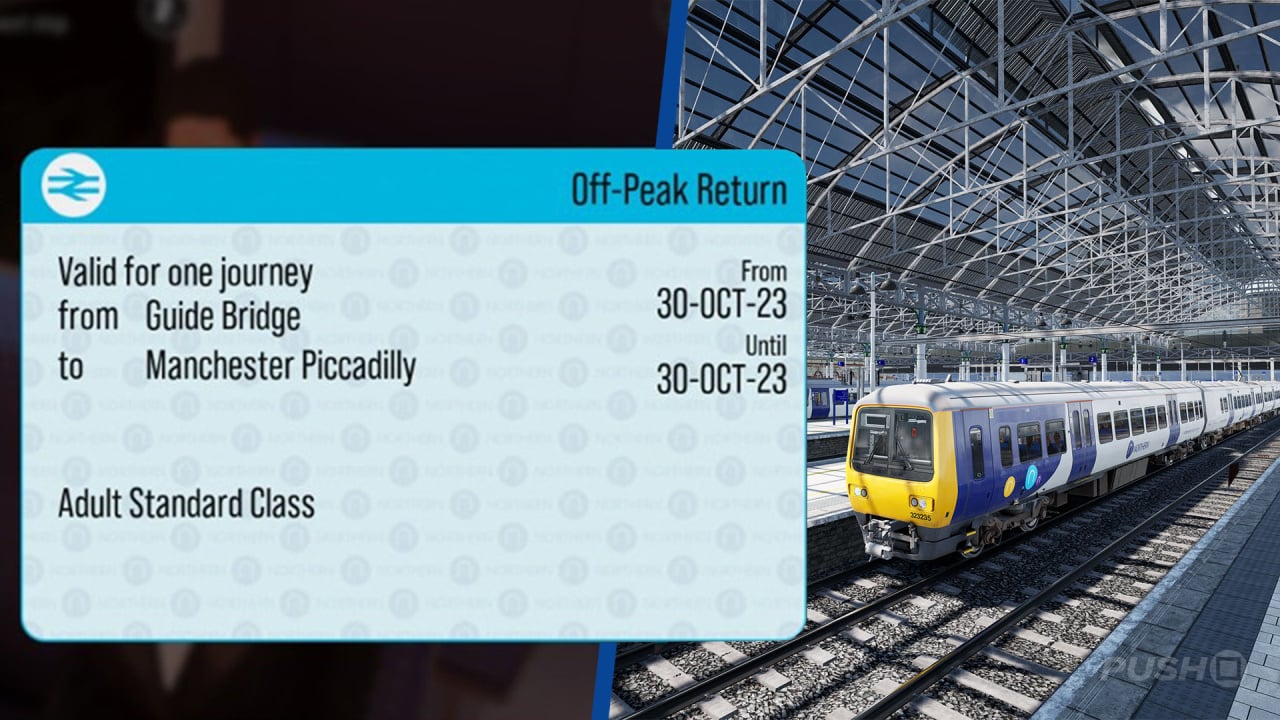
Train Sim World 3’s next major expansion, adding a modern version of Manchester’s iconic Piccadilly station as part of the Glossop Line, will incorporate a couple of new gameplay elements. While there’ll be the usual scenarios pertaining to actually driving the route, a couple of new experimental challenges will see you working as a guard and engaging in a spot of photography.

For those not familiar, guards are the people who walk up and down the train during a journey, answering questions and checking tickets. You’ll need to ensure everyone’s got the appropriate ticket for their travel in order to earn points, and also ensure the doors get opened promptly so that everyone can get on and off in time. You won’t, to our knowledge, have to deal with drunks, however.

Meanwhile, the photography mission will see you taking some snaps of the Class 323 which runs the route, with your best pictures eventually being used as part of a display within the virtual Manchester Piccadilly itself. On a livestream, executive producer Matt Peddlesden said he’s eager to hear feedback on the new gameplay elements to try to understand whether fans would like to see more of it.

The Manchester to Glossop expansion will release on 27th June, 2023, so you can test it all out for yourself in a few days. We’ll try to go hands on with it as soon as possible and bring you our thoughts, as we’re a few expansions behind right now and are due a big article on all the latest content that’s been added to the game.

Photography: Teen Suicide with Flycatcher and Ogbert the Nerd

Photography: Teen Suicide with Flycatcher and Ogbert the Nerd

Posted: 24th June, 2023 by The Editor

Teen Suicide continues to impress me. I saw them back in 2018 at Baby’s All Right for the first time and was immediately hooked. Their bedroom-pop/indie rock blend of sounds alongside emo vocals make for a unique sonic experience. The band always sported a D.I.Y. attitude with their lo-fi production and constant release of new music. However, I think what sets this band apart is their true love for music. In between songs, Sam Ray, lead guitarist, singer, and songwriter, would talk about what the next song would be. Riffing off what it means, or how it was created, while fiddling with his guitar. The band overall just seemed so happy to be on tour and playing to as large of a crowd as NYC’s LPR could hold. Throughout the set, the band would go from playing off the set list, to just playing whatever they wanted. Some of their classics such as “everything is fine”, “give me back to the sky”, and “the same things happen to me all the time even in my dreams” were sprinkled into the set alongside new tracks such as “spiders” sung by Sam’s wife and music partner, Kitty. The band’s easy-going energy and effortlessness on stage made it such a delightful night.

New Jersey’s Ogbert the Nerd and Flycatcher opened for Teen Suicide, sporting some true NJ pride. Ogbert’s math-rock sound clearly captured the attention of many. Fans in the crowd sported Ogbert’s merch and screamed out nearly every lyric. The band is certainly gaining traction, and I can’t wait to see what they will do next. Following Ogbert were fellow NJ friends, Flycatcher. At times during their set, they reminded me of an early Foo Fighters in some ways. Although their sound is not as rock-heavy as the Foos, their musicianship is insane. Their rhythm section was consistent and impressive. Flycatcher definitely know how to write catchy tunes, and are now on my radar.

The entire night was an incredible experience, and truly encapsulated what it means to be a part of the music community and space. Sarah was there taking some photos, check them out!


Photos by Sarah Knoll

The Alternative is ad-free and 100% supported by our readers. If you’d like to help us produce more content and promote more great new music, please consider donating to our Patreon page, which also allows you to receive sweet perks like free albums and The Alternative merch.