Photography

Street Photographer Captures Life’s Strange Visual Coincidences

Street Photographer Captures Life’s Strange Visual Coincidences

Street Photography by Anthimos Ntagkas

Street photographer Anthimos Ntagkas is always on the lookout for an interesting scene. With a keen eye for observation, Ntagkas is able to capture small, humorous coincidences that most of us overlook. From people unknowingly mimicking a nearby mural to a man’s bird tattoo appearing in the sky, these charming scenes are immortalized for eternity thanks to Ntagkas.

While he used to wait at his favorite locations for people to pass by, Ntagkas’ creative process changed over time. And, thanks to that change, he’s opened himself up to even more creative possibilities.

Nowadays, I don’t choose the place, but I make every location work for me,” he tells My Modern Met. “I combine people with elements everywhere I stand. Luckily the themes in this type of photography are endless, and I never lose interest.”

Ntagkas is always pushing himself to do something different with his work. And through his street photography, he’s found the perfect creative outlet.

“It is not only capturing the moment and the people in the streets,” Ntagkas explains, “but you also have to be an artistic director in order to combine people and elements in a fascinating perspective.”

Anthimos Ntagkas is known for his creative street photography.

Coincidental Street Photography by Anthimos NtagkasCoincidental Street Photography by Anthimos Ntagkas
Street Photography by Anthimos NtagkasStreet Photography by Anthimos Ntagkas
Funny Street Photography by Anthimos NtagkasFunny Street Photography by Anthimos Ntagkas

All about life’s little coincidences, his images often reveal the humor that happens when odd situations align.

Funny Street Photography by Anthimos NtagkasFunny Street Photography by Anthimos Ntagkas
Street Photography by Anthimos NtagkasStreet Photography by Anthimos Ntagkas

His candid photos demonstrate his wit and humor, as well as his photography prowess.

Coincidental Street Photography by Anthimos NtagkasCoincidental Street Photography by Anthimos Ntagkas
Funny Street Photography by Anthimos NtagkasFunny Street Photography by Anthimos Ntagkas

“It is not only capturing the moment and the people in the streets, but you also have to be an artistic director in order to combine people and elements in a fascinating perspective.”

Street Photography by Anthimos NtagkasStreet Photography by Anthimos Ntagkas

Anthimos Ntagkas: Instagram

My Modern Met granted permission to feature photos by Anthimos Ntagkas.

Related Articles:

Street Photography Reveals the Candid Coincidences Hiding in Plain Sight

Street Photographer Shares the Moments When He’s Been “Caught” Taking a Photo

Street Photographer Captures the Magical Moments That Happen When We’re Not Looking

Street Photographer Captures Serendipitous Moments That Go Unnoticed on City Sidewalks

Today’s Photo from Ted Grussing Photography: Slope Soaring … For Dick

Today’s Photo from Ted Grussing Photography: Slope Soaring … For Dick

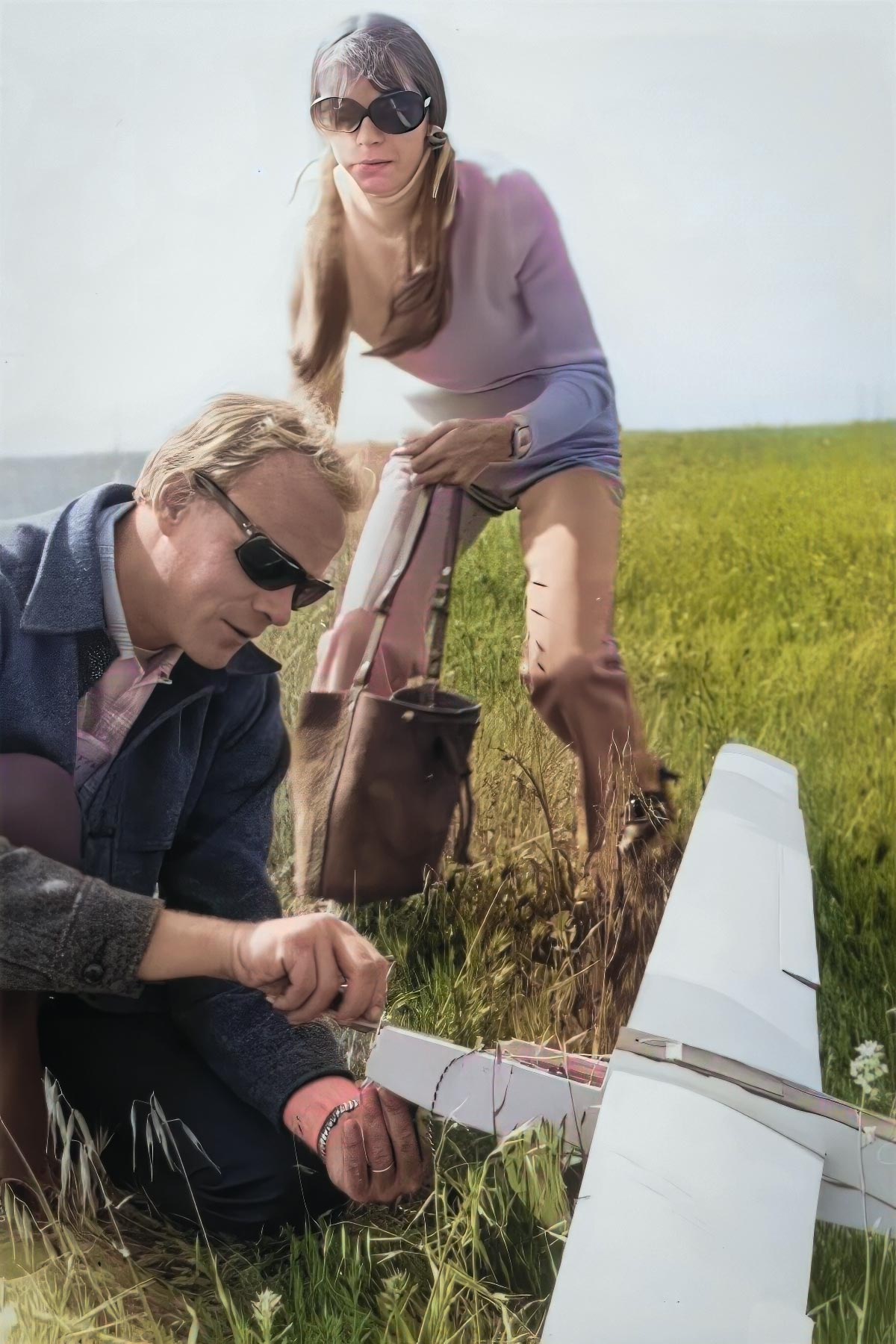
… a few days ago I got an email with photos from a friend on the east coast recounting the days that he and friends spent slope soaring RC gliders at Cape Cod … well, I never did Cape Cod, but I did fly RC gliders on the bluffs overlooking the Santa Ana River and the beautiful Huntington Beach, beaches and the Pacific Ocean.

I wanted to send Dick a few photos of those days so I have been combing old and forgotten folders with scans from those days … time got away from me so the length of the search has determined what will go out tonight. I always wanted to be a pilot, but those days were not here then … I was busy running the family business and going to law school at night as well as coaching the Costa Mesa Synchro Sylphs synchronized swim team which Corky and I along with several other parents had formed. Flying the RC gliders was a great way of releasing stress and enjoying the days on the slopes.

In the top photo all was going well … Corky and I had smiles on our faces and my sailplane was performing as it should … then I brought it in for a landing and when slope flying that can be a bit of a trick with rotor type air behind the bluff face. The photo below shows my beautiful glider in a somewhat disassembled state after a crash landing … fortunately my crew was there to give comfort and aid … what fun.

Tomorrow night some of the photos doing slope soaring in the real thing … that started at the other end of my career.

Last below, a photo of Corky that I found and have spent time working it up … it was taken back in the mid to late 80’s on a ferry to Denmark from Germany. We were with good friends and business partners. Fun times … also fun to re-work old photos and colorize them.

Have a beautiful day and smile … we are here and breathing!

Cheers,

Ted

To-morrow, O to-morrow!
Fast fall the fading years. A thought, a dream
Of gentle words; of faith and love a theme;
A smile, a step or two, and all is done.
Quick is the veering stream of life full run;
Yet in the crimson west still gleam
To-morrow and to-morrow’s endless dream.

excerpt from To-morrow by Max Ehrmann

###

photo_tedgrussingThe easiest way to reach Mr. Grussing is by email: ted@tedgrussing.com

In addition to sales of photographs already taken Ted does special shoots for patrons on request and also does air-to-air photography for those who want photographs of their airplanes in flight. All special photographic sessions are billed on an hourly basis.

Ted also does one-on-one workshops for those interested in learning the techniques he uses.  By special arrangement Ted will do one-on-one aerial photography workshops which will include actual photo sessions in the air.

More about Ted Grussing


Healing Paws

Healing Paws

This is an advertisement

Capturing Wellness: Photography and Mental Health

Capturing Wellness: Photography and Mental Health

In today’s fast-paced and digitized world, finding solace and maintaining good mental health has become crucial. There are many ways one can find an escape from it all, and one of those is the powerful ally of photography. Beyond being a mere hobby or artistic expression, photography can have numerous benefits for mental well-being. Engaging with photography can have a positive impact on a person’s state of mind, providing them with a creative outlet, promoting mindfulness, fostering self-expression, and connecting them with their surroundings. 

Today’s world seems to be growing louder and moving faster. It’s easy to fall into the trap of the daily routines that, at times, sees us forgetting what we enjoy. There’s now this mindset of hustling. Thanks to numerous social media types, the idea of “work, work” is glorified, with one’s mental health being sacrificed. Hard work is something we need to do in order to live the life we seek. But at what cost?

Oh, that cost is what makes you who you are if you’re not careful. You’re a photographer. You picked up a camera because it’s something you enjoy. It’s something that grounds you. It’s something that gives you a voice. Does life get in the way sometimes? Yes. But that doesn’t mean you should give up on what you find peace in. Photographer Lucy Lumen goes on to discuss the benefits of photography being that much-needed positive influence on your life. She goes on to talk about how photography offers you the ability to be creative, cutting down on consumption of content, exercising as you walk around with your camera out in the world, belonging to a community, and the ability to practice mindfulness. 

These concepts are easy to write down or talk about. However, putting it into practice isn’t always so easy. We’re all on our own journey, so maybe going out and making photographs, even one meaningful photograph, can be that first step towards that light at the end of the tunnel. Speaking for myself, photography offers me a chance to silence the noise in my life. For me, it’s therapeutic. 

Through the act of capturing images, individuals can find solace, express themselves creatively, and cultivate mindfulness. Whether it is through a professional camera or a smartphone, photography is a versatile tool that has the potential to transform lives and nurture mental well-being. So, keep picking up a camera and embark on a journey of self-discovery, connection, and healing. Remember, we all have a finite amount of trips around the Sun. Life gets difficult. Life gets stressful. But make time for yourself. Pick up that camera, and go have some fun. 

Photographer Gives Rescue Dogs Their Ears Back With the Help of AI

Photographer Gives Rescue Dogs Their Ears Back With the Help of AI
A dog with cropped ears
Junior. Original photo, left, edited with DALL-E, right.

A photographer has digitally reversed the cruel practice of ear cropping dogs with the help of artificial intelligence (AI).

Sophie Gamand used AI image generator DALL-E to rebuild the ears of shelter dogs who had their ears chopped off before arriving at a humane society.

“I have been taking photos of adoptable dogs in shelters across the U.S. (and abroad) for over a decade,” she tells PetaPixel. “The portraits I used are part of those archives.”

a dog with cropped ears
Peanut
a dog with cropped ears
Mason

Gamand says that she has long considered the practice of mutilating dogs’ ears “absurd and cruel” and when thinking of how she could use AI to spotlight shelter dogs she decided to use the technology to give them their ears back.

“I used DALL-E. It wasn’t particularly difficult but the results could be hit or miss,” she explains.

“The photo needed to be clear and the angle easy to work with. When I used people’s own photos, I struggled a bit more than when I used my studio portraits.”

To create the images, Gamand erased the dogs’ cropped ears on DALL-E and typed in a text prompt, in this case “dog ear”, and then clicked generate after which she was presented with four different options to choose from.

a dog with cropped ears
Thunder
a dog with cropped ears
Raven
a dog with cropped ears
Xena

Gamand was inundated with requests from people who wanted her to “add ears” to their adopted dogs.

“I really didn’t expect that. These people shared they had always wondered how their dogs might have looked like with their natural ears,” she says.

“Some became very emotional when I sent them the results. I spent a week retouching hundreds of images until I was all eared out. It’s been a fun and touching project.”

a dog with cropped ears
Chato
a dog with cropped ears
Kato

Why is Cropping Dogs’ Ears Cruel?

The American Veterinary Medical Association (AVMA) opposes the ear cropping and tail docking of dogs when done solely for cosmetic purposes.

“One of the top reasons people crop their dogs’ ears, is because they are under the impression that it will prevent ear infections. This has not been proven,” Gamand writes on her website.

“Another argument is to prevent ear injury, particularly with working dogs. But this argument seems weak considering most working dogs have intact ears…Moreover, most dogs today are pets and not working dogs.”

a dog with cropped ears
Lisa
a dog with cropped ears
Halo

The biggest reason for ear cropping appears to be purely for looks — to make dogs look more intimidating.

“It is rooted in traditions of blood sports such as bull-baiting and bear-baiting,” Gamnd continues.

“There are various types of crops: the long crop, the show crop, the short crop, and the shortest one called the battle crop, where the ears are cropped very close to the skull, which can lead to serious health issues.

“The battle crop is routinely seen on dogs who end up in rescue. The ear canals are exposed to the elements and debris, and these dogs may suffer ear infections because of this.”

a dog with cropped ears
Marzipan
a dog with cropped ears
Sophie

However, the American Kennel Club still recognizes that ear cropping “as prescribed in certain breed standards are acceptable practices integral to defining and preserving breed character,” according to a press release from 2008 which remains on its website.

“Perhaps the cruelest aspect of ear cropping, is that it robs dogs of one of their most important communication tools,” adds Gamand.

The photographer points out that dogs need their ears for picking out where a sound is coming from and to communicate with other dogs and humans.

“Many dogs have intricate and complex social lives, meeting dogs during their walks and at the dog park, living in humans’ homes and having to contend with children, and more,” she adds.

“Cropping ears is akin to tying someone’s hands behind their back and making them approach someone in silence.”

More of Gamand’s work can be found on her website, Instagram, and Patreon.


Image credits: Header photo licensed via Depositphotos.

Is This the Perfect Camera for Street Photography?

Is This the Perfect Camera for Street Photography?

Micro four thirds is enjoying a bit of resurgence right now, with its lighter and smaller size, lower cost, and array of excellent lenses making it a fantastic choice for a wide number of genres and applications. Is it the ideal system for street photography? This great video makes a case for why that might be so.

Coming to you from Robin Wong, this insightful video makes a strong case for why the Olympus OM-D E-M10 line of cameras is perfect for street photography. It used to be that those who avoided micro four thirds did so mostly because the sensor was simply too small to provide decent noise performance and autofocus was often too slow to be trustworthy in more demanding situations. However, in recent years, sensor technology has come a long way, as has autofocus performance, and that small size, which was one seen as a hindrance, is now fantastic for anyone who wants a portable but high-performing kit or who wants to remain discreet, as is usually the case for street photography. On top of that, many micro four thirds cameras contain innovative features not found elsewhere, so if you haven’t given it a look in a while, now is a good time. Check out the video above for the full rundown from Wong. 

The Reuse Of Photography In Movie Music Videos: To Bargain Or Not To Bargain – Music and the Arts

The Reuse Of Photography In Movie Music Videos: To Bargain Or Not To Bargain – Music and the Arts

To print this article, all you need is to be registered or login on Mondaq.com.

This article explores whether filmmakers need to
obtain the consent of actors to use their performances in music
videos promoting their movies. The SAG-AFTRA Basic Agreement
provides that photography of an actor cannot be used without
separately bargaining with the performer and reaching an agreement,
but there are four exceptions. An arbitration decision in 1986
found that music videos using actors’ clips fell within the
“in exploiting the picture” exception, but with the
changing landscape of the entertainment industry, future
arbitrators and courts may need to interpret the exceptions
differently.

Top Gun: Maverick, Black Panther: Wakanda
Forever
, A Star Is Born, Furious 7 . . .
fabulously successful movies whose success was driven at least in
part by iconic music videos featuring their theme songs and the
performances of their charismatic leads. But were the producers of
the music videos allowed to use excerpts of those performances
without the consent of the actors? And more importantly, what if
you, as a filmmaker or distributor, want to promote your new
picture by creating a music video using movie clips backed by the
incredible new song you just spent a fortune producing and/or
licensing? Assuming you have obtained the rights from the copyright
owners of the relevant song and sound recording to use them in a
music video, and you of course have the right to promote the
picture, there is one more hurdle for you to jump: do you need the
consent of the actors who appear in the clips to “reuse”
their performances?

According to Section 22.A. of the Screen Actors Guild – American
Federation of Television and Radio Artists (“SAG-AFTRA”)
Codified Basic Agreement of 2014, as amended (“SAG-AFTRA
CBA”), the photography of a performer may not be used in any
other field or medium other than in the picture for which the
performer was employed, without separately bargaining with the
performer and reaching an agreement regarding such use. However,
there are four exceptions to the reuse prohibition. Specifically,
Section 22.A., Paragraph 3, provides that a producer’s right to
reuse photography shall not be restricted if the photography is
used “in exploiting the picture, or in trailers, promotional
films thirty (30) minutes (or less) in length for theatrical and
television motion pictures, or in advertising . . . .”
Therefore, whether you can use excerpts of actors’ performances
in a music video without their consent will depend on whether the
music video falls within one of these four exceptions.

Surprisingly, the only authority on this subject is an
arbitration decision from June 28, 1986, by the name of Screen
Actors Guild (SAG) vs. Columbia Pictures Industries, Inc. et
al.,
decided in the veritable digital dark ages long before
the existence of YouTube, Instagram, Twitter, Tik Tok, and other
forms of social media that are now readily available to people to
exploit their music videos through. In the arbitration proceeding,
SAG claimed that the named producers failed to “first
separately bargain” with actors for the reuse of their clips
in music videos and thus violated the Codified Basic Agreement of
1977, as amended. On the other hand, the producers took the
position that they had the right to exploit and advertise their
motion pictures in any manner and media they deemed effective, and
that such reuse ultimately fell within the exceptions of Section
22.A., Paragraph 3. In analyzing whether the music videos at issue
could reasonably be construed to fall within the exceptions, the
arbitrator relied on the evidence record regarding the bargaining
history relating to the “derivation, meaning and definition of
the terms” relied on by both sides to support their respective
arguments. With respect to the “trailers” and
“promotional films” exceptions, the arbitrator found that
the meanings of both words, as used in the motion picture industry,
were placed in a context significantly different from music videos,
despite similarities in their ability to promote a picture, and
therefore held that the music videos could not be reasonably
construed to fall within either exception. However, the arbitrator
ruled that the music videos, while not qualifying as trailers or
promotional films, fell within the “in exploiting the
picture” exception, reasoning that the producers used the
music videos to promote and publicize their theatrical motion
pictures to enhance profits to be gained from each release, which
in turn helped further the exploitation of such pictures. Having
concluded that the music videos fell within one of the exceptions,
the arbitrator subsequently denied SAG’s claims, with no need
to analyze the “in advertising” exception as a result of
the exceptions being joined by a disjunctive “or.”

Unfortunately, while SAG vs. Columbia Pictures Industries,
Inc.
is certainly persuasive, arbitration decisions do not
form binding precedent. Therefore, it is unclear how an arbitrator
or court would rule on the issue today. The lack of binding
precedent may lead to inconsistent applications of the reuse
prohibition exceptions and, consequently, conflicting awards.
Nonetheless, an arbitration decision can still serve as a valuable
starting point for future arbitrators and courts in determining
whether music videos can fall within the exceptions set forth in
the SAG-AFTRA CBA. Because arbitration decisions are not
precedential in nature, there is room for future arbitrators and
courts to use their discretion and expand their interpretations of
the exceptions, which may be crucial considering the changing
landscape of the entertainment industry and how content is created,
distributed, and consumed in today’s digital age.

Take, for example, the term “exploiting.” Back in
1986, as revealed in the evidence record of SAG vs. Columbia
Pictures Industries, Inc.
, “exploiting” was
associated with the promotion of a motion picture to enhance
profits. In the motion picture industry today,
“exploiting,” in a contractual and legal context, is
commonly understood to mean the distribution and monetization of a
motion picture. Moreover, the perception of trailers and
promotional films has also changed over time. In 1986, a trailer
was seen as a form of teaser viewed in theaters or on
videocassettes prior to a feature, while a promotional film was
typically a longer “behind the scenes” piece providing an
inside look into the making of the movie, available as a television
special or in a “special edition” video. And as for music
videos in 1986, they were usually broadcast on MTV (and other
specialty channels) or less often sold as compilations or
standalone video releases (“Thriller”!).

Nowadays, it is much more difficult to distinguish a trailer
from a promotional film because of the various forms each can take.
Studios, production companies, directors, and producers now have
the latitude to utilize and incorporate into their marketing
campaigns teasers, standard trailers, clip trailers, featurettes,
television spots, and other forms of advertising in a variety of
media, including social media and streaming platforms as well as
traditional broadcast and distribution media. Although each form
shares a common goal in creating public interest in a particular
picture, they differ from one another in their style, content, and
length, making it difficult to assert with absolute certainty that
one form qualifies as a trailer but not as a promotional film, or
vice versa. This is all to say that the context behind the reuse
prohibition exceptions is different today than it was in 1986, and
therefore, we must adapt to the changing times and analyze the
exceptions with a modern lens.

In doing so, we may very well end up with the same conclusions
as the arbitrator in SAG vs. Columbia Pictures Industries,
Inc
. At the same time, however, a modern lens opens the door
to modern interpretations of the exceptions and arguments as to
whether music videos can fall within the exceptions. For example,
considering the industry’s definition of “exploiting”
today, it can be argued that music videos cannot fall within the
“in exploiting” exception because they do not actually
distribute or make motion pictures available for viewing by an
audience. Conversely, it can be argued that a music video that
incorporates movie clips is just another form of trailer, as it is
generally the same length as a standard trailer, involves the same
use of visual montages from a movie, appears in the same media as
other trailers, and ultimately serves the same promotional purpose,
with the only difference being the utilization of one music piece
in place of excerpted dialogue and voice-over narration. The same
can also be argued of promotional films, as a movie music video is
intended to promote the featured movie and is well within the time
limits required by SAG-AFTRA. Additionally, despite not being
analyzed in SAG vs. Columbia Pictures Industries, Inc., it
may be argued that music videos can fall within the “in
advertising” exception. Technological innovations have
completely reshaped the way in which products and services can be
advertised today, as evidenced by the rapid shift over time from
traditional forms of advertising, in which advertisers paid media
outlets to have their messages appear in print and on television,
to product placement, digital advertising, and influencer
marketing, where the connection between the advertiser and the
advertisement may be less direct. For instance, a movie music video
can be incorporated into a marketing campaign and used as a tool to
generate interest and excitement for a movie prior to its release.
Movie music videos are often showcased on various sites and social
media pages, which subsequently increases public discussion of the
actual movies. A movie music video provides viewers just one of
many opportunities to form and express their own hopes,
expectations, and opinions about a movie, such as how the song
complements the overall tone of the movie or even a simple
appreciation of the movie as a whole—all of which increase
visibility and exposure for the movie. When the Codified Basic
Agreement was first negotiated to include the exceptions, the
definitional “intent” of each term, which formed the
basis of the exceptions, was grounded in an understanding that is
now arguably outdated, but with the introduction of new forms of
advertising and entertainment media and changing perceptions, the
exceptions must be evaluated in a modern context, which will in
turn shape future discussions and analyses.

If you contact SAG-AFTRA today, it will take the same position
it took, though unsuccessfully, in SAG vs. Columbia Pictures
Industries, Inc.
: that music videos are a separate
entertainment product for a separate entertainment medium and
should be set apart from the exceptions, and thus, producers are
required to separately bargain with actors regarding the reuse of
their photography. SAG-AFTRA will argue that today’s music
videos are governed by its 2012 Music Video Agreement, as amended
(“MVA”), which did not exist at the time of the 1986
arbitration, and that the MVA explicitly states that SAG-AFTRA is
“the exclusive bargaining agent for all performers employed in
the production of music videos in any media to speak, act, sing or
in any other manner perform as talent . . .” Additionally, the
MVA defines “Principal Performers” as performers
“who are used on-camera who speak dialogue or portray a major
part in the Music Video . . . .” However, when analyzing the
language in the MVA more closely, a strong argument can be made
that the MVA does not actually govern the reuse of actors’
photography in music videos. Actors who have excerpts of their
performances used in music videos are neither employed to perform
in the production of the music video nor are they used on-camera in
such a production. Rather, photography is simply being reused. As
the MVA is a written legal contract between SAG-AFTRA, which
represents its members, and their employers, we must be precise in
our interpretation of the MVA. Currently, the MVA is silent about
the reuse of photography, whereas the SAG-AFTRA CBA is clear that
there is no need to separately bargain with actors if the reuse
falls within one of the exceptions of Section 22.A., Paragraph
3.

As the entertainment industry continues to evolve, we must adapt
our analysis of the reuse prohibition exceptions and utilize a
modern approach in interpreting the purpose and meaning of each.
And while it does not appear SAG-AFTRA has debated the issue of
whether the consent of actors is required to reuse their
performances in music videos since 1986, if the issue is ever
resubmitted to arbitration or litigated before a judge or jury,
filmmakers and distributors have well-founded arguments that such
use can fall within the exceptions. Moreover, because of these
arguments, it is unlikely that the producers of the music videos
for some of the most famous movies of our time, like those named
above, had to separately bargain with the actors to reuse their
performances. Nevertheless, in any event, and as best practice,
filmmakers and distributors should ensure they negotiate a full
buyout with actors for the use of their performances in any media
in case they later plan to incorporate movie music videos in their
marketing and promotional schemes.

The content of this article is intended to provide a general
guide to the subject matter. Specialist advice should be sought
about your specific circumstances.

3 Reasons Budding Photographers Fail

3 Reasons Budding Photographers Fail

Finding success as a photographer requires a complex multitude of factors, but regardless of your ultimate goal in the craft or the specific genre in which you are interested, there are some universal truths every budding creative should be aware of. This helpful video essay discusses three common reasons why budding photographers fail to find success. 

Coming to you from The School of Photography, this insightful video essay discusses some of the most common reasons up-and-coming photographers fail to achieve success. I found the points about excuses and underestimating how much effort goes into a successful shot particularly salient. There is a ton of marketing done on different shortcuts to success — things like Lightroom presets, AI editing, and more. And to be fair, many of these do offer improved efficiency in some cases, but there is a difference between someone with established skill improving their workflow versus substituting shortcuts for lack of experience and creative initiative. At some point, we simply have to get out there with our cameras and practice, practice, and practice some more. After all, isn’t that why we were all interested in photography in the first place? No matter how advanced technology gets, there is no substitute for creative experience. Check out the video above for the full rundown. 

Capturing the Essence of Artomobilia With Photography

Capturing the Essence of Artomobilia With Photography
5/5 – (1 vote)

May/June 2023

In the central core of Carmel, 20,000+ car enthusiasts congregate throughout the Carmel Arts & Design District every summer for Artomobilia. This annual first-class automotive event combines art and automobiles. This year, Artomobilia will take place on Saturday, September 9, 2023.

Capturing the Essence  ArtomobiliaCapturing the Essence  Artomobilia

A LOOK BEHIND THE LENS

Photography plays a crucial role in documenting the Artomobilia event. Photographers capture images of the showcased cars, the venue, the crowd, and other elements that highlight the atmosphere and essence of the event. These photos serve as a visual record of the event, preserving the memories and allowing people who couldn’t attend to experience it vicariously.

Photographing Artomobilia allows attendees to capture personal memories of the event. People often take their own photos of the cars, the venue, and their experiences during Artomobilia. These images are shared on social media, fostering engagement and creating a sense of community among participants.

Overall, photography at Artomobilia serves to capture and promote the beauty, creativity, and passion associated with automotive art. The photographs play a vital role in documenting the event, attracting attendees, promoting artists’ work, and sharing the experience with a broader audience.

Artomobilia Event Director John Leonard shared his thoughts on the impact that photography has, especially post-event.

“My sense is, for instance, that the Indianapolis 500 race is inextricably connected to the track, but the track is there all year round, and it kind of gets celebrated all the time,” Leonard said. “But the Artomobilia events are a moment in time, and then it goes back to its regular thing. So, my view is that without these guys taking photos, a lot of the action is lost or simply left to everybody’s recollections. The thing that I love about having these photographers, as well as everybody else that contributes photos, is that it keeps the event alive long after it happens, and the images really help rekindle those memories about what happened, and without those, it’s difficult to describe.”

Meet the Photographers Behind Some Iconic Shots

SEAN GROVE

Capturing the Essence ArtomobiliaCapturing the Essence Artomobilia

A lifelong car enthusiast, Sean is an Indianapolis-based automotive artist with interests in both photography and industrial design.

“I met John [Leonard] at the second Artomobilia Show, and I was in middle school at the time,” Grove shared. I was very fresh into photography, and I’ve been officially involved with [Artomobilia] for about ten years now.

Between Artomobilia and the associated events that John and his team put together, these are the main channels that I’ve used to generate a wide variety of images. From my perspective, it’s all about the art and personality of the cars, and getting to see the cars displayed as art is really nice, especially in a region where that’s not typically what you see with car shows. John and his team have really created something very special within the Midwest region, where they place an emphasis on the art of the cars. As a photographer, the [fund- raising events] are even more fun because the venues, like Lucas Estate, have allowed better access to the cars — not having to fight the crowds—and having a beautiful environment to shoot makes it a different opportunity to be even more artistic and to take a more elegant approach to it.”

View more of Grove’s work at seangrove.myportfolio.com.

ANTHONY ROSS TYLER PHOTOGRAPHY

Capturing the Essence ArtomobiliaCapturing the Essence Artomobilia

Anthony Ross Tyler is a commercial and fine art automotive photographer/graphic designer based out of Nashville, Tennessee.

An incredible and historic opportunity to capture the iconic image of three generations of the Ford GT in both road and road trim. With the assistance of the Ford Chip Ganassi Racing Team, the Indianapolis Motor Speedway Museum, members of the Artomobilia Alumni, and renowned photographer Anthony Ross Tyler, these images were captured, representing more than 60 years of Ford Performance. This extraordinary image was featured on the cover of Carmel Monthly as part of the publication’s
coverage of Artomobilia that year.

“It was definitely one of those shots in my portfolio that even if I hadn’t shot it, I would still like to look at it,” Tyler expressed. “It was a really cool experience. This was a ‘John Leonard’ project where he cooked it up with the Artomobilia team and landed on that theme.”

The issue was getting all five cars in one controlled spot for the iconic photo shoot.

“What we were trying to accomplish was every single car being lit like it was the hero in the shot,” Tyler recalled. “We needed a controlled location and a place where I could have a camera 20 or so odd feet off the ground because we weren’t going to show all five cars from ground level in a way where they would all translate as being epic and important.”

With the assistance of his young son and five Hot Wheels cars, Tyler arranged all five Ford GT models in different layouts to take back to Leonard and his team for approval.

“I took a macro lens on my camera, and basically using armchair math, I figured out how high the camera needed to be and arranged the Hot Wheels [models] into different layouts that I thought would work. We landed on the one with the new Ford GT [that year] in the middle with all of the other generations pointing towards it, providing an excellent view of all five vehicles in the shot.”

View more of Tyler’s work at photo.arosstyler.com.

JASON LAVENGOOD PHOTOGRAPHY

Capturing the Essence ArtomobiliaCapturing the Essence Artomobilia

Jason Lavengood is an internationally recognized fine art and commercial photographer based in Indianapolis, Indiana. Lavengood’s epic shots of the 2022 Ferrari SF90 are a sampling of his exceptional collection of works.

“For me, it’s very much about art,” Lavengood shared. “I’ve been a photographer since I started developing film at [age 13]. Artomobilia is a day-long festival in Carmel that’s just cool, and it’s done so top-notch. It’s much more than just cars with the people, food, and music. It’s an amazing event. It was pretty cool rolling up to a brand new SF90. It was the first time I had seen it in person. John presented the shots to everyone at Artomobilia, and they really liked the head on shot, so that’s the one we ended up using on the cover. I was so proud about that. It was really cool.”

Lavengood shared that intricate shots like these are not as easy as just pointing and shooting. There are many factors that determine the outcome of a shoot, in particular outdoor shoots in an urban environment.

“It had been an early morning shoot, and I had scouted the location the day before, but I had not anticipated the shadows of the building and the way that the sun was reflecting off of some of the windows that created some shadows,” Lavengood explained. “We had to wait for the sun to move before we could shoot. So, lighting, especially natural lighting, and waiting on the sun, the clouds, or whatever, are huge factors in any shoot like this. And then there’s being able to put a large object in a place where there aren’t’ too many distractions. Whether that’s street signs, people, or traffic; you want the focus to be on the car, and you have to have or create an environment that allows that.”

View more of Lavengood’s work at lavengoodphotography.com.

Stay tuned for more Artomobilia coverage over the next few months! Carmel Monthly is proud to be a longtime media sponsor! For more information, visit artomobilia.org.

How photography brings refugee and Turkish children together

How photography brings refugee and Turkish children together

Amid a culture of antagonism toward Syrian refugees in Turkey, a photography project has fostered friendships between refugees and Turkish children. Sirkhane Darkroom’s workshops have allowed children to express their emotions in new, creative ways.

In Istasyon, an impoverished neighbourhood on the outskirts of the ancient Turkish city of Mardin, children play under a mulberry tree, occasionally reaching up to pick the ripe berries hanging from the branches.

They each have a small analogue camera which they have been using to take photos of their friends as they run around in the spring sunshine.

The group of nine children, aged between nine and twelve, are a mix of Turks and Syrians who live in the local area and have just returned from school.

Mardin is in the southeast of Turkey, about 20 miles from the Syrian border, and is home to over 85,000 registered Syrian refugees, many of whom live in abandoned tower blocks which were previously owned by the government.

“The photographs the children produce beautifully capture their everyday moments, from playing outside with friends to private moments at home with their family, exploring their local area, and taking selfies. Despite the tough conditions they are living through, their images are brimming with joy”

Turkish, Kurdish, and Syrian children attend free photography workshops held by the Sirkhane Darkroom, a non-profit darkroom and photo lab.

The workshops are led by Serbest Salih, a photographer from Kobani, Syria who fled to Turkey after the Islamic State group attacked his home town in 2014.

The 28-year-old, who speaks Turkish, Kurdish, Arabic, and English, describes photography as his “fifth language” which helps him to express himself and heal from the trauma he’s been through.

Now, he’s passing that on to the children, using photography as a tool to build the children’s self-confidence, bridge divides, and bring children together.

Istasyon, a neighbourhood in Mardin where a lot of Syrian refugees live [photo credit: Jessie Williams]

The photographs the children produce beautifully capture their everyday moments, from playing outside with friends to private moments at home with their family, exploring their local area, and taking selfies.

Despite the tough conditions they are living through, their images are brimming with joy.

Serbest begins each workshop with games before he hands out donated cameras and teaches them how to shoot their own photos. He talks to them about composition and light, different perspectives, and how to develop the negatives and print them in the darkroom.

Before the workshops, he says, the children living here rarely mixed. Now they laugh and play together.

Rojbin takes a photo during a workshop outside [photo credit: Jessie Williams]

At the beginning of each programme – which is flexible, but often lasts around 8 weeks – there is some judgement between the Turkish and Syrian children, but by the second or third week, “local people start respecting the Syrians; they start saying their names and not just calling them ‘Syrians,’” he says.

Aysenyr, an 11-year-old Turkish girl from Mardin, says she’s made new friends while on the programme. “A lot of them are Syrian – Maria, Bashra, Suha, Huda. After we came to the workshop we are still friends, especially the girls. We are always playing together,” she says, while taking a photo of her friend Rojbin, 10.

These friendships seem especially important right now, with the rise of anti-Syrian racism in the lead-up to the recent elections, coupled with the threats of deportation back to Syria from politicians.

In a nearby school in Midyat, two Syrian sisters, Delal, 9, and Gufran, 12, take photos during a workshop. The family fled their home in Aleppo, Syria, eight years ago, settling in Gaziantep, south-central Turkey. Then the twin earthquakes struck in February, destroying their home and displacing them a second time. They arrived in Midyat shortly after.

Both of the girls wear matching strawberry earrings, their dark hair tied back in ponytails. They are shy at first but gradually come out of their shell as the workshop progresses, with Serbest gently encouraging them during games and when taking photos. The girls are yet to find a school in Midyat, so these workshops are their only way of socialising with other children.

“This workshop has made me feel comfortable here in Midyat,” says Gufran. “Before I didn’t know how to use the camera and now I know how to take photos. I love this workshop, I learnt a lot of new things here.”

Delal adds, “I’ve made lots of friends from Turkey, I play with them a lot and see them outside of the workshop. It’s helped me to feel more at home. I learnt how to empathise with other people. I want to carry on with photography – I want to capture everything I see.”

Delal (L) and her friend play rock, paper, scissors during a workshop in Midyat [photo credit: Jessie Williams]

Not only is Serbest helping children in Mardin province who have been displaced by the devastating earthquakes, but he has also started travelling to earthquake-affected areas to deliver workshops to children there, such as Adiyaman and Kahramanmaras — two cities that saw some of the worst destruction.

“It was a disaster in Adiyaman — people are still in denial, they are still living in containers. Most of the children don’t go to school, their mental health is bad,” he says. “But, at the end of the workshop the children were smiling, they were more relaxed and started talking more about their emotions.”

“When they see the photos show up after being in the chemicals they are so surprised – for them, it’s like magic, they’re like ‘oh my god, is it magic? How did you do this?’”

The workshops are helping them to express themselves – and enabling them to capture memories, albeit painful ones. Hasan, 12, one of the children living in Kahramanmaras took a photo of his collapsed home, which is now a pile of rubble. He told Serbest: “I captured this photo because my grandfather was inside the house and he passed away.”

Serbest plans to go back there once he can raise enough money to buy materials through a new fundraiser. He travels there in a second-hand caravan, which he uses as a mobile darkroom and photo lab.

Normally he takes the caravan to reach remote rural villages around Mardin, after realising that some families weren’t sending their children to the workshops – particularly girls – because of the cost of transportation into Mardin.

His goal is to train the children to become teachers so they can pass on their knowledge to their own communities and expand the workshops across Turkey and the Middle East.

Serbest Salih teaches children during a workshop held by Sirkhane Darkroom [photo credit: Jessie Williams]

The Sirkhane Darkroom has already had several exhibitions of their work and will have one in Ithaque, an exhibition space in Paris, in October. They have also produced a photo book — I Saw The Air Fly, and are now selling children’s prints online at the Photobook Café.

At the end of the programme, Serbest takes the children to the darkroom and shows them how to develop and print their photos.

Their inquisitive faces are illuminated by light as they gaze at their negatives and become awestruck when they see their photos start to appear on paper. “When they see the photos show up after being in the chemicals they are so surprised – for them, it’s like magic, they’re like ‘oh my god, is it magic? How did you do this?’” he says, laughing.

Serbest, whose name means freedom in Kurdish, is giving these vulnerable children the freedom to explore their curiosity, be creative and have fun in a place where sometimes children are forced to grow up quickly — child labour and child marriage are common here, he says. The workshops are a chance for them to just enjoy being children.

“I’m trying to tell them, in photography, there are no bad photos, there are no rules, just be yourself. I’m trying to let them feel confident and have a safe space to believe in themselves.”

Jessie Williams is a freelance journalist, editor, and writer based in London. Her interest lies in global current affairs, humanitarian issues, women’s rights, migration, culture, and politics – with the aim of exploring the human stories behind the headlines.

Follow her on Twitter: @JessieWill5

Sharjah’s Xposure Photography Festival open for 2024 season entries

Sharjah’s Xposure Photography Festival open for 2024 season entries

Sharjah’s Xposure International Photography Festival is now accepting entries for its next International Photography and Film Awards.

The annual competition is returning for its eighth event next year. The festival and its awards component received more than 17,000 submissions from 180 countries this year. Organisers say they recorded an 80 per cent increase in submissions compared with previous years.

Amateur and professional photographers are invited to submit work to the competition before October 30. Photographers can submit up to 10 images or films in one of the categories.

These include Architectural Photography, Drone Photography, Nature and Landscape, Photojournalism, Portraiture, Street Photography, Short Film and Moving Image. Two categories have also been created in collaboration with Samsung, including Night Photography and Mobile Photography.

One person will also be named overall winner of the competition, receiving a $6,000 prize. Category winners will receive $3,000, whereas runners-up will be awarded $1,500. The top five entries in each category will also be displayed in an exhibition during the festival.

A category is also dedicated to UAE residents. The Junior category is open to amateurs who dabble in stills, whether captured on phone, DSLR or mirrorless cameras. The entries must have been photographed in the past three years. The highest-rated seven works will be exhibited at Xposure 2024. Equipment prizes will be awarded to first and second-place winners.

“Xposure is a globally recognised platform for celebrating photography, film and other visual mediums,” says Tariq Saeed Allay, director general of Sharjah Government Media Bureau.

“The annual celebration has created prolific new opportunities for up-and-coming photographers and visual artists to showcase themselves and highlight their careers.”

Updated: June 20, 2023, 1:43 PM