Photography

These Stunning Photography Projects Tell Stories of Conservation

These Stunning Photography Projects Tell Stories of Conservation

With a new grant, two local photographers have gotten a boost to their work as they spotlight activists and share environmental issues through a lens of resilience.

Vital Impacts, a conservation storytelling nonprofit, announced the winners of its Environmental Photography Grants in May. This was the program’s inaugural year, and 372 submissions from 68 countries vied for the winning spots.

But in the end, two storytellers earned the $20,000 awards: Peruvian-Mexican photographer Musuk Nolte and Tailyr Irvine, a Salish and Kootenai photojournalist. Now, each will embark on an in-depth project documenting environmental issues and solutions in their local communities.

“As photographers, we are in a unique position to inform and influence change, but pressing the shutter is just the start,” says Vital Impacts co-founder Ami Vitale in a statement. “For images to have significance, they need to tell a story and reach people.”

The work honored by Vital Impacts is meant to do just that—highlight community-led conservation efforts. The program supports visual artists over the course of a year. With the grant money, the photographers gain more freedom to focus time on their projects, and the Vital Impacts team also provides mentorship to the winners.

people stand on a cliff staring down a massive construction toothed wheel

To make way for a coal mine, people were evicted from their village in Lützerath, Germany. In this image by honorable mention winner Ingmar Björn Nolting, activists block the path of an excavator.

Ingmar Björn Nolting / Courtesy of Vital Impacts

Nolte, one of the grant recipients, began photography at the age of 16 and took his first job working at a Peruvian newspaper just three years later. As an adult, his work has evolved—now, Nolte is “increasingly focused on topics concerning human rights, Indigenous cultures and, more recently, water issues,” he tells Smithsonian magazine in an email.

In his upcoming project, supported by Vital Impacts, water issues will be front and center: Nolte’s photographs will highlight Peruvian communities reviving ancestral water harvesting practices and planting queñual shrubs to combat climate change.

The queñual is a small tree with reddish bark that’s native to the high regions of the Andes. Adapted to cold weather, it can produce oxygen in high-altitude environments, enrich soils and prevent erosion. Though the queñual shrubs were largely deforested, planting new ones helps store and filter water.

a shrub with red stems, small leaves and several branches on a mountainside

A queñual shrub growing in the Andes

Musuk Nolte / Courtesy of Vital Impacts

Nolte’s work captures the “Queñual Raymi,” or Queñual festival, in which the communities of Cusco plant up to 150,000 of the shrubs in a single day, he says. The festival centers ideas of reciprocity—people gather to plant the queñual shrubs, knowing their efforts will give back to future generations.

With these images, “instead of focusing on scarcity and despair, we get to learn that there are ways to combat climate change one shrub at a time,” contest judge Sabine Meyer, photography director for the National Audubon Society, says in a statement. “We also get to learn that solutions have existed for a long time—this story will give a voice to experts and amplify their knowledge in ways that will resonate at a larger scale.”

one woman holds a shrub, the other wraps a cloth around some on the ground

Women from the Abra Malaga community pick out queñual shrubs to plant high in the mountains.

Musuk Nolte / Courtesy of Vital Impacts

The planting of queñual shrubs is accompanied by the revival of another ancestral practice called water seeding. In this conservation technique, communities collect rainwater in wells, so it can infiltrate the subsoil and be used during the dry season.

Nolte says his photography aims not to merely document, but to tell stories that promote empathy. “I am interested in photography as a tool for generating discourse and constructing narratives,” he says. “These stories enable us to bring other realities closer, often complex and critical ones. The role of photography and documentary work, in my view, is to bridge these realities with knowledge, providing context and direction.”

Irvine, the second grant winner, is working on a long-term project to produce in-depth coverage of Native America. The work she will do with the new funding is focused on bison restoration as well as the Land Back movement—a call for public lands, once taken illegally from Native Americans, to be given back to tribal nations. Her images will investigate how returning land to its original stewards affects wildlife and conservation.

Three buffalo grazing in a snowy field

Buffalo graze on a hill in the Turtle Mound Buffalo Ranch on the Fort Peck Reservation in Montana. These animals are part of a long-term effort to return bison to the lands they once roamed.

Tailyr Irvine / Courtesy of Vital Impacts

Born and raised on the Flathead Indian Reservation in western Montana, Irvine began her photography work as a college student to combat the misrepresentation of Native Americans that she saw in the media. “It was always stereotypes and poverty porn, and for me growing up, that’s not really what it looked like,” Irvine says to Smithsonian magazine. “I got into journalism to tell the stories that people don’t know.”

For example, one of her past reporting projects centered around Indigenous youth who attended a camp in rural Texas, where they learned traditional knowledge, including the role buffalo play in North America’s ecosystems. Elders from the Lipan Apache community taught students to set up tepees, sing and prepare the region’s traditional foods, such as cactus.

“Irvine’s existing body of work details such subtle and complex stories,” says David Barreda, senior photo editor of National Geographic, in the statement. “I fully expect this project, in her hands, to bring her to new heights in storytelling and a more wide-spread understanding of the real-world experiences of her community.”

Three young people skin a rabbit in dim light

Students learn to skin and quarter rabbits at a camp in rural Texas, meant to reconnect young people in the Lipan Apache community with their heritage.

Tailyr Irvine / Courtesy of Vital Impacts

The Vital Impacts grant aims to uplift photographers who are spotlighting their own communities. Both winners say they are careful to represent their subjects fairly—Nolte says he sees photography as a process that should connect the story’s actors with the images, and Irvine says she’s meticulous in checking facts.

“Irvine and Nolte’s personal connections to their sources and their stories foster trust and enable them to delve deep into the lived realities of the people they photograph,” Barreda says in the statement. As a result, their upcoming work funded by the grant can deconstruct stereotypes and build an appreciation for diverse cultures, he adds. “I eagerly await to see what stories they have to tell.”

Get the latest stories in your inbox every weekday.

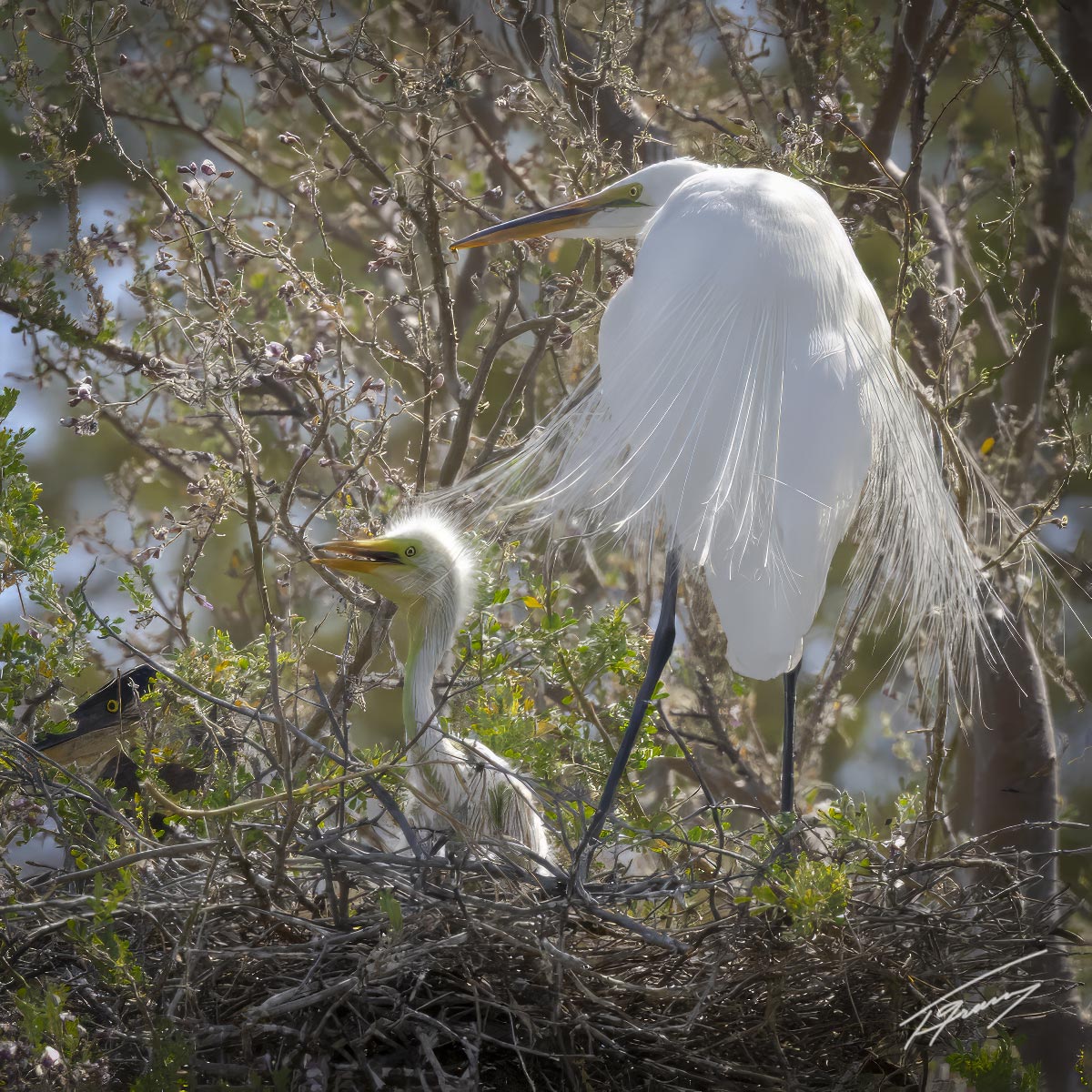
Today’s Photo from Ted Grussing Photography: Time With The Kids

Today’s Photo from Ted Grussing Photography: Time With The Kids

… a lesson in things that are important affirmed by what we experienced on the lake this morning … family! As new life continues to brought into existence, let’s do what we can to make it a blessing … responsibilities and wonder … an unlimited future and a gaze into the unknown days ahead.

Shooting the red tail hawk family in a little while … have a beautiful day and make choices that will bring a smile into your soul!

Keep breathing!

Ted

Let me not follow the clamor of
the world, but walk calmly
in my path. Give me a few friends who will love me for what
I am; and keep ever burning
before my vagrant steps
the kindly light of hope.

excerpt from A Prayer by Max Ehrmann

###

photo_tedgrussingThe easiest way to reach Mr. Grussing is by email: ted@tedgrussing.com

In addition to sales of photographs already taken Ted does special shoots for patrons on request and also does air-to-air photography for those who want photographs of their airplanes in flight. All special photographic sessions are billed on an hourly basis.

Ted also does one-on-one workshops for those interested in learning the techniques he uses.  By special arrangement Ted will do one-on-one aerial photography workshops which will include actual photo sessions in the air.

More about Ted Grussing


Healing Paws

Healing Paws

This is an advertisement

Behind the Lens: Male Idols Revealing their Passion for Photography

Behind the Lens: Male Idols Revealing their Passion for Photography
image

K-Pop idols are renowned for their remarkable versatility, excelling not only in singing, dancing, and rapping but also often showcasing talents that go beyond these expected areas. It’s particularly delightful to discover idols who harbor a deep passion for photography and demonstrate remarkable prowess in this artistic field. They beautifully capture a range of subjects, from intriguing portraits to candid shots of people, creating a visual feast that leaves their fans awestruck.

Check out some of our photographers and the art they share!

Stray Kids Hyunjin

Hyunjin is known to be the group’s artistic member. He’s not only the group’s main dancer and painter but also a photographer! He would always take us on his beautiful journeys when he travels by sharing the beautiful photos he takes! He also often takes photos as inspirations for his paintings.

NU’EST / Wanna One Hwang Minhyun

Our beautiful prince, Hwang Minhyun, is overflowing with talent. As if his honey voice is not enough, he is also artistic when it comes to photography. His main Instagram is for when he is in front of the camera, and his photography Instagram is for when he’s behind it. Both are filled with nothing but beauty!

The Boyz New

image

Whenever New takes photos, he’ll always label it with #NewShot, and it’s honestly fans’ favorites! He took the hashtag to the next level as he gifted fans with a photobook of photos he took of his beloved members! A gift is an understatement, especially with the photos he had.

Infinite L

image

L is not only a genius in singing and acting, but fans call him “the OG photographer” in the idol world. The man literally has published photography books and is always taking photos. He even took photos of his fellow junior idol group, LOVELYZ

WayV Kun

Kun takes excellent photos; he even inspired some fans to take up photography! Not limited to, but Kun is a huge fan of aviation and nature photography. He even has a separate account to share his beautiful art!

WINNER Kang Seungyoon

Kang Seungyoon has been into photography for quite a while now, and if you’re a fan, you would know that he uses the name “Yooyeon” for his photos. He’s still very much active with his photography side. He recently had an exhibition titled “Sky Roof.” 

ATEEZ Hongjoong

image

Hongjoong not only has to be the captain of 7 chaotic members and writes bangers after bangers for his group, he still finds the time to be a fantastic photographer. He also had an exhibition for his photos that fans could attend for free but donated proceeds to a charity. You can check out some of his amazing works

.

VICTON Sejun

Sejun is a total camera fanatic, and it really shows in his work! The photos he took and shares on his photography Instagram truly are remarkable; it’s about time he holds an exhibition as well.

Jerry Uelsmann, The Artist Who Turned Photography Upside Down

Jerry Uelsmann, The Artist Who Turned Photography Upside Down
Untitled (1969) © Estate of Jerry N. Uelsmann
Owl Boy (1959) © Estate of Jerry N. Uelsmann

In the 1960s, if you visited the darkroom at the University of Florida (UFL), you might see students carrying wet prints to show their teacher, Jerry Uelsmann. His classes were exceedingly popular; he allowed students to call him by his first name, and he was known to smoke cigars and occasionally pop popcorn during class. That signature sense of humor and playfulness runs through Moa Petersén’s new book Eighth Day Wonder, a biography of her friend, Jerry Uelsmann, the man who turned the photography world upside down. 

Petersén, an art history scholar who first met Uelsmann in 2016, spent years on the biography. It’s a book about an individual, but it’s also about a singular moment in the history of photography, as more artists challenged the conventions of “straight photography” and experimented in the darkroom.   

By “breaking the rules” established by those who came before him, Uelsmann helped redefine what photography could be. In stark contrast to the purist ideals of the time, his work didn’t capture an external reality but expressed an internal vision. Using multiple enlargers (as many as seven) and countless negatives, he placed images on top of one another to create impossible montages, composed of many layers. 

In the age of Photoshop, it’s easy to take for granted what Jerry Uelsmann did in the darkroom, but as Petersén explains, it was nothing short of revolutionary. The idea that a photograph could be therapeutic and capture the unseen, hidden contours of the human imagination—revealing our memories, fears, and desires—was both thrilling and unsettling. Similarly, the notion that a photograph could be made after the moment when the shutter was released—e.g. in the darkroom—felt liberating. 

At the time, some insisted his work was “not photography.” Uelsmann countered with the simple fact that all his images were made using materials from a photography shop: what could they be, if not photographs? It’s no wonder Uelsmann’s classes filled up quickly, as young photographers embraced that characteristic rebel spirit. 

While Uelsmann’s photographs have recurring motifs—eyes, trees, hands, shells, and nuts among them—our interpretations are highly subjective, as each of us will project our own memories and emotions onto every layer. While some have dubbed him a Surrealist, he’s an artist who defies easy categorization, and Petersén accepts and celebrates the true complexity of his work and legacy. 

In many ways, Uelsmann’s photographs are as mysterious and elusive as the vast natural landscape that surrounded him and informed much of his work. His darkroom sat in a wild corner of Gainesville, Florida, where alligators roamed and oak trees grew tall. In that darkroom, Jerry Uelsmann created entirely new worlds, unbound by the rules of space and time. Up became down, and past became present. 

The title of Petersén’s book, Eight Day Wonder, references something Ansel Adams once said:  “God created the earth in six days, and on the seventh day he looked down on the earth and thought, ‘Maybe some things need to be changed.’ So he created Jerry Uelsmann.” 

Although Jerry Uelsmann never got a chance to see the final result of this biography, out now by Kehrer Verlag, he comes to life once more throughout its pages. He and Petersén remained friends until his passing in 2022. He talked with her about the place we go when we die—wherever and whatever it might be. Perhaps unsurprisingly, he called it the “big darkroom.”

Self-portrait as Robinson and Rejlander, 1964, colored version. © Estate of Jerry N. Uelsmann
Untitled (1959) © Estate of Jerry N. Uelsmann
Untitled (1963) © Estate of Jerry N. Uelsmann
Small Woods Where I met Myself (1967) © Estate of Jerry N. Uelsmann
Untitled (1973) © Estate of Jerry N. Uelsmann
Untitled (1962) © Estate of Jerry N. Uelsmann
Untitled (1968) © Estate of Jerry N. Uelsmann
Enigmatic Figure (1959) © Estate of Jerry N. Uelsmann
Untitled (1967) © Estate of Jerry N. Uelsmann
Moa Petersén, Eighth Day Wonder: Jerry N. Uelsmann

Further reading:

Surreal Photography Helps An Artist Cope During a Time of Grief

After Coming Back From the Dead, This Photographer Created the Most Astonishing Images of the Human Body

Enchanting Photos from a Cabin in the Woods

Discover More

How to Win Awards for Your Photography

How to Win Awards for Your Photography

We all want people to like and enjoy our images. Social media is plastered with countless pictures whose owners are all seeking attention and some kind of approval from others.

As we progress, it can become apparent that many of these opinions or “likes” are from people who don’t understand photography in any depth and often are friends and family just trying to be supportive. So, you might decide to pitch yourself up against your peers in a competition and see if your images really are as good as you hope.

Often, entering photography competitions can bring us back down to Earth with a bump. Our favorite photos may not win anything at all. Rather than curse the judges, we can use this as a learning opportunity. Most competitions won’t give you detailed feedback, so you won’t always know precisely why the image didn’t win an award. But, there are common technical and creative criteria that judges use both consciously and subconsciously. While we can’t help looking at things subjectively, despite our best attempts, there do tend to be common factors for competition winners.

First of all, you have to make sure that you follow the rules and guidelines with your entries. Otherwise, you risk being disqualified! Once your image finds itself in front of judges, there are then things that judges tend to look for. We will look at these in some detail later. Finally, it is important to be open to improving. There might be areas of your work that you don’t realize would benefit from extra training or practice. Competitions can reveal these. We may feel a little resentful, to begin with, but if we want a chance of winning something another time then we need to be open to finding ways to grow. Similarly, we also need to be open to and understanding of the subjective, personal nature of how we each see images.

Top tip: Don’t just compete to win – compete to grow.

Meet the Basic Requirements

If you don’t follow the rules you aren’t going to win! There is no point in entering photography competitions if you don’t follow their guidelines. You may simply be disqualified before a judge even looks at your image. Check the format, image size, color space, and naming conventions first of all so that you know your file will be accepted. You must also ensure that you are not breaking any of the regulations. Some competitions may only allow pictures of wild animals and not domestic ones or those that live in zoos. Others may have categories where no post-production is allowed. Breaking these kinds of rules is likely to get you banned and disgraced, even if your image were to slip through the net initially and win.

Enter the right number of images into the correct (or most suitable) categories. Give them files at the size asked for and in the right format. Don’t give the organizers any reason to disallow your entry. I know it sounds obvious, but it is easy to miss something in the rules and people do get disqualified from competitions at all levels. You won’t get anywhere by rebelling against the regulations. Maybe debate them another time, but when entering competitions or salons it is time to be on your best behavior!

Top tip: Read the rules and guidelines and then read them again! Make sure you stick to them.

What are Photography Competition Judges Looking For?

As a competition Judge for the Societies of Photographers, I work with a set of criteria when judging an image. These 10 elements are readily available on their website on a page describing what the judges are looking for. Other photographic societies and competitions may also have the marking scheme or guidelines for assessment available on their sites. If so, make sure you read them as they are a great source of information that can help you to get into the mind of the judges.

Excellent Camera Technique

Avoid technical errors – make sure you have good technique backing up your artistry. Judges will be looking at things such as:

  • Choice of Aperture, Shutter Speed, and ISO
  • Lens Choice: Focal Length and Perspective
  • Sharpness

Basically, we want to see that you are in control of your kit and that you know what you are doing. If you are losing sharpness because you have some motion blur in your subject or from trying to hand-hold a longer exposure, then this comes across as poor technique (unless it is obviously Intentional Camera Movement (ICM) or the like). Perhaps you have got a little too much in focus and could benefit from a shallower depth of field. Or maybe the focal length you’ve chosen distorts the subject badly and doesn’t look considered and deliberate. If judges see anything like this then your image won’t do well. The industry expects to see some degree of technical mastery from its award-winners.

Top tip: Practice until good technique becomes second nature. Make sure that whether you stick to or break the “rules” it looks to others as though you are in control and acting deliberately.

Use of Lighting

How a scene is lit can make all the difference. Whether it is the warm glow of sunrise on a landscape, beautiful gradients of light on a product, or the controlled contrast of Rembrandt lighting for a portrait, your photo can go from OK to great if the lighting looks good. So, whatever genre you shoot, it is vital to have good quality, interesting light for your subject. Sometimes that might mean that you need to revisit a landscape on another day when it isn’t looking flat under a grey sky. It could mean getting training in studio lighting and reshooting images where lighting patterns are a little off. Even with a great subject you still need great lighting to win awards.

Top tip: Any light, natural or otherwise, can look dull or interesting. Work hard to avoid dull!

Composition Skills

Judges want to see images that look like they have been put together deliberately. Even if we can’t work out your precise intent, a well-composed image helps us to read it and perceive a sense of structure. You may choose to use a well-known device such as the “rule of thirds” or “golden ratio”, but that is not what a judge is normally looking for (there may well be exceptions to this, but hopefully that would be stated in the guidelines for application). Your image needs to look like you meant it rather than being a happy accident. There are all sorts of ways that you can compose an image and all sorts of reasons for choosing the various tools. Award-winning photography shows the photographer’s input, the deliberate arrangement of elements to create a composition.

Top tip: Arrange elements within the image deliberately. Make sure we can see your interpretive stamp on the composition.

Originality

As we’ve already mentioned, it is important to get the technical elements right. But don’t forget that “rules” can be broken. Something subtly outside the norm can look like a mistake, so go bold! Make it obvious that this is a deliberate artistic choice rather than a technical lapse. Breaking a “rule” for the sake of it is unlikely to lead to a great image. Do so with purpose – use a technique a certain way to make a point or to tell a story.

Judges see hundreds or possibly thousands of images when assessing competition entries. One way to catch their eye and stand out from the crowd is to be original. Something that stops you in your tracks and disrupts the flow of very similar-looking pictures has a chance of doing well. It still has to have the elements of technique, lighting, and composition in place. But to be noticed amongst a sea of technically good images you need something extra – a degree of artistry or originality.

Another thing: watch out for trends.

It might be tempting to copy others if there seems to be a trend for certain types of images to do well. However, this can be a bad move. For one thing, by the time you’ve done your version, it might have already become old hat. Others have been working at this for some time before their images have been seen winning awards. So, further down the line, it will be harder to wow the judges with something they have seen a lot. Secondly, it could side-track you from developing your own style. Sometimes we get inspired by something different and that can be a good thing. But if we are trying to chase awards by doing what the judges seem to be rewarding right now then we can derail our own progress and become a less successful cheap imitation of someone else. It is better to learn from and be inspired by others’ images while continuing to cultivate your own style.

Top tip: Develop your own style – be inspired by others but don’t copy.

Careful with Image Titles

Sometimes you may be limited to a particular naming convention for your entries, such as your name_category_country or the like. If this is the required format, then obviously you should adhere to it. However, many competitions allow you to enter your own title for images with few requirements (in some cases anything not including your name). This can be an opportunity for you to guide the judges’ thinking when they view the image. If you are worried something might be misunderstood or that the story is potentially too ambiguous then the title may be a useful way to offer clarification. Perhaps there is a reason for the styling or the posing or the use of color, for example, that the judges may not pick up on straight away. By all means use a descriptive title if it helps them understand.

However, don’t let the title carry too much weight. There is a danger that if the image only works with its title present that you are testing your copywriting skills more than your photographic ability… If the title doesn’t get read out or displayed then you may be in trouble if you are relying heavily on it. Likewise, if the title is too long then it becomes rather ridiculous and may simply be cut off or ignored. When presenting qualification panels such as for Fellowship, it is normal to read a statement of intent. This helps the judges understand the body of work, the reasons for it, any constraints that were in place, etc. Very rarely is this the case for individual pictures. Aim for images that tell their own story with titles that are a gentle lead, rather than a big neon sign.

Print Competitions

When submitting prints there are further things to take into consideration. You need to make a good impression by presenting the print well. Make sure that you choose an appropriate paper type and mount, for example. Tatty-looking prints make a bad impression. An unusual colored mount may take attention away from the print, so risking a lower score. You should be presenting your best work in the best way you possibly can within the rules of the competition. Yes, this can cost more, but there is no point in entering substandard prints as they just won’t score as well.

Take a look at my previous article on creating the perfect print for more information on this topic.

Top tip: Invest in good quality prints for competitions and tailor the paper and mount to suit the image.

Don’t Give Up

Doing well and becoming one of the best in your field always takes practice and perseverance. If you put in plenty of hard work, then you would expect to improve and increase your chances of success.

Top tip: Choose competitions that don’t have a limit on the number of awards, but instead give awards to those who reach a particular standard.

Where the awards on offer are limited, you always rely a bit on luck and on what others decide to enter. With some of the monthly competitions run by photography societies, they often have a benchmark for achieving an award that can mean each month there can be any number of award-winning images from zero to double figures. That way you know that if you reach the standard, you gain an award, even if there are others whose images are still deemed better than yours.

You Might Not Win Anything

Despite all your efforts, it is of course still possible that you might not win anything. It is important to be able to learn to live with this as competition success is by no means guaranteed. If you put all your emphasis on trying to win something, then you could risk falling out of love with photography and being resentful towards others. Try to see each competition you enter as a goal for improving something about your image-making. If you focus on your creativity and technique rather than on what you think is needed to be a winner, then you may well find success without having to chase it.

Top tip: Make sure that first and foremost you keep making images that you like and that you enjoy creating.

Keep Learning and Improving

Even if you do start doing well, allow yourself to keep evolving your own style. Think of the competition as a way to focus your improvement and get some kind of measure of it rather than as an end in itself. Listen to feedback if you get any. Seek out feedback from photographers and artists whose opinions you value and trust. They may be able to point you in the right direction to get your work to the next level. Never think that you know it all and have no need to work on your skills. There is always something you can do to broaden your creative horizons and hone your technique. If you keep getting better, then you increase your chances of success.


About the author: Joe Lenton is a qualified Judge and Mentor for The Societies of Photographers and has also judged for photography club competitions. He works as a freelance advertising photographer and his work can be seen at joelenton.com. All of the images in this article have won awards in competitions.


Image credits: All images © Joe Lenton, all rights reserved

Nature Photographer Robbed of Canon R5 at Gunpoint Near San Francisco

Nature Photographer Robbed of Canon R5 at Gunpoint Near San Francisco
[embedded content]

A photographer was robbed at gunpoint in the San Francisco Bay Area in the early morning just as he was setting up to take wildlife photos.

Jim Roach, 72, found himself surrounded by three armed robbers last Friday in the Oakland Hills, east of San Fransico, who put a gun to his ribs and demanded his valuables.

“They said ‘Give me your phone’ and then I couldn’t find my phone and they got angry and they looked in my car for my phone and they found my camera,” he tells KTVU.

“I do take precautions all the time I got caught a little off-guard with this one because it was real early in the morning and I wasn’t quite expecting it, but I’m usually very cautious.”

A Popular Photographer

Roach is very popular on the hyperlocal social network site Nextdoor where he regularly delights internet users with his photos of bobcats, coyotes, eagles, and other animals that are an antidote for the often gloomy posts about crime in the area.

“Until this event, I didn’t realize that my pictures were this popular,” he says. “When this happened, wow, the outpouring of love on Nextdoor was over the top.”

Roach’s Nextdoor community has created a Gofundme page in a bid to raise money to replace his stolen R5, Canon 100-500mm lens, and a 2x extender.

The robbers used Roach’s credit card at a gas station within half an hour of the hold-up and the photographer is having to deal with replacing his ID, cards, and mobile phone.

“They were young kids,” Roachs tells KTVU. “Clearly somebody’s telling them to do what they’re doing and teaching them what to do. They’re just as much victims as I am if you ask me.”

Camera Crime

Regular readers of PetaPixel will know that San Francisco is synonymous with camera crime with multiple documented attacks last year.

In Roach’s case, the bandits were not specifically looking for camera gear, instead they simply got lucky adding more stolen goods to their loot.

The problem is not just contained to the Bay Area. In April, PetaPixel reported on a scary incident in Dallas, Texas where a photographer was shot at while taking photos of the skyline.


Image credits: Feature photo courtesy of Gofundme page.

John Fielder’s lifetime of Colorado photography can now be viewed online

John Fielder’s lifetime of Colorado photography can now be viewed online

Anyone at home can now view the vast and varied beauty of Colorado through the eyes of the state’s most celebrated landscape photographer.

History Colorado on Tuesday announced it had finished digitizing, cataloging and organizing a webpage dedicated to more than 6,500 images of John Fielder’s illustrious career spanning close to 50 years. The organization had previously announced Fielder donating his life’s work in hopes of inspiring an appreciation of nature and climate action.

The photos found on the John Fielder’s Colorado Collection webpage can be pulled for private and commercial use. The site includes curated lists for viewers to explore the mountains and plains of every county in the state just as Fielder did.

For decades, the photos have been seen on coffee tables and across walls of homes and offices everywhere. That includes the office of Gov. Jared Polis.

“This photograph is a constant reminder of the natural wonders found in our state, which generations of conservationists, lawmakers and everyday people have fought to protect for the enjoyment of future generations,” Polis said in a news release. “This collection, and the exhibitions that will come from it, are a chance for us to celebrate John and all he has accomplished, but more importantly, to honor the legacy he has created and the gift he is giving to the people of Colorado.”

Later this summer, History Colorado expects to open an exhibit at its downtown center affording a more intimate journey through Fielder’s career. Much of that career has been dedicated to conservation; Fielder has always sought wilds and waters to photograph and show to lawmakers in charge of protection.

The collection “is a profound opportunity for Coloradans to see the breathtaking vistas that define the Centennial State,” History Colorado Executive Director Dawn DiPrince said in the news release, “and evaluate if the relationship we have with the land will allow for our grandchildren to experience the same wonders.”

Sign Up for free: Peak Interest

Your weekly local update on arts, entertainment, and life in Colorado Springs! Delivered every Thursday to your inbox.

Success! Thank you for subscribing to our newsletter.

#nsltr {
min-width: 100%;
margin: 10px 0;
padding: 10px 20px;
background-color: #0f69e9;

background-image: url(https://static.gazette.com/emails/circ/Audience%20Images/peak%20interest%20signup%202.png);
background-size: cover;

}

#nsltr-header {
color: #ffffff
}
#nsltr-body {
text-align: center;
color: #ffffff
}
#nsltr-button {
margin-top: 5px;
}
#successnsltr {
min-width: 100%;
margin: 10px 0;
padding: 10px 20px;
background-color: green;
text-align: center;
color: white;
}

#successnsltr a {
color: white;
}

.hideblock {
display:none;
}

h6 a {
color: black;
text-decoration: none;
padding: 5px;
background-color: #bbccdd;
font-weight: 600;
}

Upon the announcement of his donation, Fielder in an interview explained how he had seen landscapes change since he started photographing in the 1970s. In a life that saw him lose his wife to illness and son to suicide, Fielder described the loss of nature as heartbreaking as well.

“It’s like losing a wife and son, you think about them every day,” he said. “So too do I think about the impact humans have on Earth and what it’s going to be like here.”

In preparation for the donation, sifting through tens of thousands of files from his pre- and post-digital camera days gave him that reflection. It has been a deep time of reflection for Fielder, 72.

After months of quietly battling pancreatic cancer, he recently went public with the diagnosis.

One “incredible asset to (organizing the collection) is I revisited all these places that have defined my life, the most sublime places in Colorado,” Fielder said in a previous Gazette interview. “That was an incredible treat.”

He thought back to his father from his North Carolina childhood. He remembered the man for volunteering and raising money for charitable causes.

“He was a man who believed you have to give back to your community,” Fielder said. “I’ve been able to give back to my community, and I feel like no matter what happens to me, I’ve achieved all of my goals.”

HIPA and HUAWEI Themes launch 11 digital photography collections

HIPA and HUAWEI Themes launch 11 digital photography collections


شرطة أبوظبي تناقش “الأمن الإلكتروني” للأسرة

أبوظبي في 6 يونيو/ وام/ نظمت مديرية التحريات والتحقيقات الجنائية بقطاع الأمن الجنائي وإدارة الشرطة المجتمعية بقطاع أمن المجتمع في القيادة العامة لشرطة أبوظبي مجلساً توعوياً بعنوان “الأمن والسلامة الإلكترونية..مسؤولية مجتمعية” وذلك في روضة الأمل بمنطقة الشهامة في إمارة أبوظبي بحضور عدد كبير من أولياء الأمور والكادر التعليمي وتلاميذ الروضة.وشهدت الجلسة تفاعلاً كبيراً من الأطفال وأسرهم والكادر التعليمي حول الطرق الآمنة للتعامل مع البرامج والألعاب الإلكترونية واتخاذ الإجراءات السليمة التي تضمن أمنهم وسلامتهم عند التعامل مع شبكة الإنترنت.وأكد الرائد علي فارس النعيمي بمديرية التحريات والتحقيقات…

Slowing Down Can Help Photographers Find Their Subject

Slowing Down Can Help Photographers Find Their Subject

Westphal College of Media Arts & Design Photography Professor Andrea Modica is known for using a distinctive technique to photograph her subjects that requires a great deal of patience. Eschewing the latest technology, Modica uses a large-format camera that was state-of-the-art in the 1920s and a platinum print-making process that was popular the mid 1800s. In a moment when digital photographers can instantly review their shots and have limitless options for editing and retouching, Modica’s process stands apart for the time it takes — both to make the photograph and to make the subjects feel comfortable enough to forget about the big camera in the room.

Modica, a Guggenheim Fellow and Fulbright Scholar whose photos are part of permanent exhibitions in the Museum of Modern Art, the Metropolitan Museum of Art and the Whitney Museum of American Art and have been published in The New York Times, The New Yorker and TIME magazine among others, puts in the time to build trust with her subjects, whether they’re minor league baseball players you might recognize, Italian high schoolers, or Mummers in South Philadelphia. Her latest work, on display at Unique Photo in Philadelphia through June 30, is a series set in an equine hospital in the small town of Budrio di Bagnarola in northern Italy. Modica spent eight years photographing the caregivers and their patients, ultimately producing a book recognized as one of the best collections of photography in 2022.

Modica discussed her work on the project at length in an introduction for the book, that she excerpted below for the Drexel New Blog. She also took a moment to discuss the challenges of teaching a new generation of photographers and the benefits of a more deliberate process.

Three years ago, I began photographing with my 8X10” view camera at a horse hospital in the small town of Budrio di Bagnarola in northern Italy. The facility is owned by the prominent veterinary surgeon Fabio Torre and it attracts remarkable and, generally, very valuable horses for a range of procedures. I became aware of the hospital through Dr. Torre, who is also an art enthusiast. I was immediately drawn to the contrast of these magnificent animals rendered so vulnerable.

I began photographing the horses in their post-operative recovery rooms: simple padded stalls with overhead windows, which produce lovely, filtered light. The floors are covered with the doctor’s recycled shredded junk mail, medical journals and art magazines. The stalls are at once theatrical stages and humble boxes.  In my photographs the horses are in a state of post-operative anesthetic sleep. They are recovering from operations that include, among other things, fracture repairs, complicated dental work and castrations.

The second facet of this project is comprised of still lifes of the tools of surgery prior to procedures. I spent many hours photographing Dr. Torre’s extensive collection of spectacular tools, choosing to use the recovery stalls as my studio, thus employing the same light and atmosphere as the prior group of photographs. These images include the marks on the walls, made by the horses as they awaken from their post-operative anesthetic sleep. These platinum prints are titled with the name of each tool, which often refers to its inventor and the procedure for which it is used.

The next group of photographs in this project includes still lifes of the tools of surgery after the procedures. I made these photographs in the operating room, where I utilized the lights of the surgical theatre. I was particularly drawn to the manner with which the tools were returned to the table after use, often reflecting the type of surgery performed. For example, after a routine arthroscopic surgery the instruments are often returned in neat piles, while a post-colic table may convey a sense of a more dramatic emergency procedure. The titles of these platinum prints include the date and name of the surgical procedure.

The final part of this project is a series of short films. I filmed each horse’s eye while the horse was being sedated before the operation. The films can be quite abstract, referring often to landscape. The soundtracks are comprised of the horse’s heartbeat, the doctors’ conversations and the staticky radio playing contemporary Italian pop music and advertisements.

For all the images in this project I produce 8×10” contact prints on vellum, utilizing the 19th century, hand-coated platinum process. The delicate tones created by this process illuminate the details in the horses’ powerful physiques and the sensuous light in which they sleep, as well as the odd piles of shredded paper on which they lay.

Inspired by the region’s High Renaissance art, the mannerly structure of the photographs in combination with the soft platinum tones are in direct contrast to the aggressiveness of the procedures the horses have endured and their anesthetic vulnerability. I am transfixed by their slumber; they appear comfortable, yet fragile, both powerful and compromised. This induced sleep marks the end of their operation and the beginning of their recovery. It is at once terrifying and hopeful, always moving. The title of each of these photographs includes the horse’s name and breed, the date and the type of operation the horse has undergone.

In the end, all the images from the horse hospital project are highly descriptive, yet not illustrative of any specific idea; they will be absorbed and interpreted by the viewer. The extended tonal range of the platinum print in combination with the formal elements I employ welcome a broad audience, as well as a great variety of complex and impactful interpretations. Both the films and the platinum prints can be deceptive in their seductive beauty, finally presenting potentially unsettling information, perhaps inviting us to ponder our own vulnerability and temporariness, strength and endurance. As with much of my work, this project is not documentary in nature, but truly conceptual.

Modica is now teaching students who have lived their entire lives in the age of digital photography. And while these tools enable photographers to record places and parts of life that were previously inaccessible, Modica and her colleagues emphasize the value of learning and maintaining a deliberate process.

“The fast pace of producing digital images can be challenging, in fact. In the Photography program we are committed to teaching the students to slow down the shooting process and be more decisive and informed practitioners,” she said. “To assist with this, all our majors start with mastering analog techniques, including working with a large format camera, hand processing film and working in the darkroom, as well as getting a deep understanding of the history of photography and contemporary trends in both fine art and commercial applications.”

For more information about Modica’s work, visit: http://www.andreamodica.com/

Reporters interested in speaking with Modica should contact Britt Faulstick, executive director, News & Media Relations, bef29@drexel.edu or 215.895.2617.

Extraordinary shots from a prestigious Scottish landscape photo awards

Extraordinary shots from a prestigious Scottish landscape photo awards

Great Scot! The extraordinary winning images from the 2023 Scottish Landscape Photographer of the Year contest, from crashing waves to tropical-looking beaches

Advertisement

Prepare to fall under Scotland’s spell, courtesy of these spellbinding pictures.

These remarkable photographs are all winners and finalists in the 2023 Scottish Landscape Photographer of the Year awards, an annual contest that celebrates the scenery of Scotland in all its glen-filled glory.

This year, the contest saw more than 4,000 images submitted by both Scottish photographers and talent from further afield – everywhere from Australia to the Netherlands. An Edinburgh street blanketed in snow, a thundering waterfall on the Isle of Skye and a glorious white-sand beach in the Outer Hebrides are among some of the beautiful landscapes that were captured by photographers whose work was honoured in the contest.

The title of Scottish Landscape Photographer of the Year, however, goes to Brian Pollock – based in the town of Bearsden near Glasgow – for his portfolio of three ‘stunning’ images taken in the Scottish Highlands.

Commenting on his victory, Pollock says: ‘The outdoors and the Scottish landscape, in particular, have been a huge part of my life for as long as I can remember and it is a privilege to be able to share that passion through my photography.’

Competition founder Stuart Low weighed in: ‘Once again, I’m humbled by the huge support shown by photographers to the awards. These awards and the photographers’ images promote Scotland massively and give the country a huge boost for tourism. I’m sure that this year’s collection of stunning images will touch many people’s hearts.’ Without further ado, here’s MailOnline Travel’s pick of the breathtaking images that have garnered acclaim in the contest – scroll down to the very bottom to see pictures from the overall winner…

Commended in the 'Landscapes' category, this otherworldly photograph by Alan Johnstone shows a misty morning in Binning Wood in East Lothian

This picture by photographer Glenn Murray shows Gairloch Church in Northwest Scotland in the late afternoon. Murray says: 'The pre-setting sun provided this rich, saturated scene.' The image is part of a wider collection that is highly commended in the 'Portfolio' category

Titled 'Going Up', this picture by photographer Graham Niven shows a waterfall 'defying gravity' on the Isle of Skye. It's from a collection of images that are highly commended in the 'Portfolio' category

This atmospheric picture shows Ardmair Beach near the village of Ullapool in Northern Scotland 'under leaden skies'. Commended in the 'Seascapes' category, it's the work of photographer Rob Sutherland

The ferocity of Storm Brendan, a storm that struck Scotland in early 2020, is captured 'raging' against the 'ballast bank' earth bank in the town of Troon, South Ayrshire, in this dramatic shot by photographer Stuart Strachan. It's a runner-up in the 'Seascapes' category

A runner-up in the 'Landscapes' category, this dreamy photograph shows 'trees appearing through a cloud inversion at sunrise'. It's the work of Marc Pickering

This enchanting shot by photographer Robert Quig shows mist over a cluster of lochside trees. It's from a series of images that are highly commended in the 'Portfolio' category

This glorious shot from Quig's portfolio shows 'a splash of sunlight' on Luskentyre beach on the west coast of Harris, in the Outer Hebrides, 'prior to a stormy weather front approaching from the north'

Commended in the Seascapes category, this stunning aerial shot by photographer Bill Crookston shows a rocky beach at the southern end of the Cowal peninsula in Argyll and Bute

Appropriately titled 'White Out', this cleverly-composed picture of a snowstorm in Aberdeen takes the top prize in the Urban category. Photographer David McLauchlin points out the person 'casually walking across the road' in the image, 'seemingly unconcerned' by the snowy weather as they look at their phone

Describing this breathtaking image, photographer Grant Bulloch says: 'A day of passing snowstorms provided a backdrop to the oil platform on the far side of the Firth of Forth.' Bulloch adds that the picture was taken from the slopes of Arthur's Seat, a hill in Edinburgh, using a special telephoto lens. It's commended in the 'Seascapes' category

Commended in the 'Landscapes' category, this spectacular image was captured by Steven Oates at the Corrieshalloch Gorge in Braemore. Oates says 'an early morning, summer visit' to the gorge was 'rewarded with a fast-flowing and full falls, mist, and some striking rays from the low rising sun'

Commended in the 'Seascapes' category, this painterly photograph by Mark Ferguson shows waves crashing against the sea cliffs of Yesnaby on the west coast of Orkney Mainland island

This moody shot of St Andrews Harbour by Graham Hutchison, titled 'City Lights', is commended in the 'Urban' category

Fog spills over Craigmore hill near the Perthshire village of Aberfoyle in this powerful shot by photographer Richard Fox. It's part of a series of images that is highly commended in the 'Portfolio' category

This enchanting photograph forms part of Erik Lornie's highly commended collection of images in the 'Portfolio' category. Titled 'Winter at Loch Gamhna', it shows a beautifully soft orange sky in the 'afternoon light on a peaceful winter's day in the Cairngorms National Park'

The sunrise brings a beautiful amber tone to this striking photo of the Needle, a 37m- (121ft) tall rock in the Quiraing on the Isle of Skye. It is part of a wider portfolio by Jos Pannekoek that is highly commended in the 'Portfolio' category

This magnificent shot - a second image from Jos Pannekoek's highly commended portfolio - shows Stac Pollaidh mountain in the Northwest Highlands of Scotland behind radiant reeds bathed in 'golden light', with a 'beautiful rainbow' overhead

Almost tropical in appearance, the turquoise waters of Farr Bay on the north coast of Scotland can be seen in this brilliant shot by Calum Hamilton, which is highly commended in the 'Seascapes' category

'I left Inverness at 8.30 in the fog and rain as this was the first time in Torridon I was out for some photos and new locations,' says photographer Arthur Mitchell, describing the story behind this magical image of a Highlands fisherman's hut. The photo forms part of his commended portfolio

Steve Marson recalls capturing slender Downy Birch trees 'in the rising sun on a wintry autumn morning beside the River Dee'. It's from a collection of images that are highly commended in the 'Portfolio' category

This dynamic photograph from Steve Marson's highly commended portfolio shows 'challenging conditions on the west coast of Lewis', with 'dramatic seas and skies'

Captured by Alan J Bain, this charming shot of Edinburgh's Circus Lane 'caught in an early morning snow shower' is one of a collection of images that is commended in the 'Portfolio' category

Autumnal trees are reflected in the waters of the Union Canal on a foggy morning in Linlithgow, a town in West Lothian, in this richly-coloured shot. Taken by David Queenan, it's from a collection of pictures that are highly commended in the 'Portfolio' category

This striking photograph is the handiwork of photographer Ian Bowie, whose body of work is highly commended in the 'Portfolio' category

Another image from Ian Bowie's highly commended portfolio, this image shows the Harris mountain landscape in the Outer Hebrides of Scotland. The photographer says: 'I'd been expecting conditions to be fine and, with light showers forecast, I headed up An Clisham hoping for a sunrise over these little but impressive range of summits'

This shot was commended in the 'Portfolio' category, with photographer Bob Davis saying he was 'struck by the juxtaposition of the washing line against the industrial harbour'

Finn Curry captured this striking photograph shortly before the arrival of a storm. It's one of a series of photos that have been named runner-up in the 'Portfolio' category

This magical winter-time scene, featuring the mountain of Buachaille Etive Mor in the Highlands of Scotland, was captured by overall winner Brian Pollock. He describes the snowy landscape - captured from his perch on the nearby peak of Beinn a'Chrulaiste - as 'pristine'. The picture is from a collection of photographs that also take the top prize in the 'Portfolio' category

This transfixing picture, taken by overall winner Brian Pollock, shows the mountain of Binnean Beag (foreground) and the peaks of the Grey Corries in the West Highlands 'as light breaks at the edge of a rain storm'