Photography

ARTIST ROOMS Brings Big Names in Photography to Small Places |

ARTIST ROOMS Brings Big Names in Photography to Small Places |

When an exhibition of works is announced by a photographer as influential as Diane Arbus, you would be forgiven for assuming that the work was on show in a major venue in New York or London, but you would be wrong.  

It’s exciting to hear that Arbus’ work is currently on show in the Gracefield Arts Centre in Dumfries, a town in southwestern Scotland. Word quickly spread through Scottish arts and photography networks about this rare opportunity to see work from this iconic photographer in a local arts trust venue, through the ARTIST ROOMS program, a joint venture between the Tate and National Galleries of Scotland. 

Diane Arbus is one of the most influential photographers, whose work has had a profound impact on the world of photography. Her approach to photography was revolutionary, as she captured the lives of people across the social spectrum, from the margins of society, with honesty and empathy. Her images were not just portraits, but also an example of strong visual storytelling. Arbus’ unique approach to photography captured a raw and unfiltered glimpse into the lives of her subjects and the dynamics of their surroundings.

Arbus’ images often depict individuals who at the time were on the margins of society, including circus performers and transgender individuals. However, rather than portraying them as objects of curiosity or pity, she showed their humanity and individuality, challenging conventional societal norms and stereotypes. This quality is what has always drawn me to her work. I can feel the connection she had with her subjects almost leaping off the paper.

This was my first visit to The Gracefield; a category B listed building that hosts Gallery 1, while the purpose-built Gallery 2 building hosts further exhibition, arts, and crafting space along with a café. Upon entering the building, there was an instant feeling of community, and I was reminded of my time spent working at my own local community arts venue, from the handwritten chalkboard “what’s on” display, to the various rooms used for community arts projects throughout the year. The hallway directly outside the gallery features a timeline of Diane Arbus’ life, with key moments charted along the way, including her marriage to Allan Arbus in 1941, who gifted her with a camera, prompting enrollment in photography classes alongside photographer Berenice Abbott.

The gallery space itself was as fresh and minimalistic as any major exhibition venue I have been to. Track lighting placed considered illumination onto the prints, which were mounted inside white frames on white walls, to allow the work to have the space to communicate directly. Walking around the gallery and considering each print, I felt very fortunate to be in a quiet space allowing absorption and reflection. For the majority of my visit, I was the only person in the gallery space, which was an absolute luxury. I compared this visit to the time I saw Don McCullins exhibition in the Tate in Liverpool, when I felt a need to move on between images quite promptly due to the conveyor belt of admirers moving from image to image.

The exhibition spans Arbus’s full career, beginning with early works from the mid-1950s taken with a 35mm camera, to the distinctive square format she adopted from 1962, made famous through such iconic images as Identical Twins, Roselle, N.J. 1966. A highlight within the exhibition is the rare limited-edition portfolio, A Box of Ten Photographs 1969-71. These ten original prints produced by Arbus represented who she was as an artist and how she saw her work in the world, a legacy that became more solidified with her death by suicide in 1971.

ARTIST ROOMS is a touring collection of international modern and contemporary art, presenting solo exhibitions drawn from a national collection jointly owned by Tate and National Galleries of Scotland. ARTIST ROOMS gives young people the chance to get involved in creative projects, discover more about art and artists, and learn new skills. The ARTIST ROOMS program is an absolute gift to local communities, bringing major exhibitions to people who would otherwise not get to see them. There are so many barriers which separate who attend exhibitions and who do not, and geography is a huge factor in that. The act of bringing exhibitions to local communities makes the phrase “art is for everyone” closer to being truthful. I am a firm believer in the ability of the arts to transform communities and break down barriers, and this places importance on local arts initiatives.

Arbus’s extraordinary portraits will be on display in Gallery 2 until July 29, 2023. The exhibition at Gracefield follows its inaugural presentation at The Civic, Barnsley in Yorkshire. The exhibition will continue its tour north in Scotland to Shetland Museum and Archives, before returning to England to North Hertfordshire Museum, Hitchin, at the end of the year.

Lead image photograph of Diane Arbus around 1968 © Photo: Roz Kelly / Michael Ochs Archives via Getty Images.

All images used with permission of The Estate of Diane Arbus.

‘Capture the Atlas’ reveals Milky Way Photographer of the Year winners

‘Capture the Atlas’ reveals Milky Way Photographer of the Year winners

It’s Milky Way season. From early spring through late summer our galaxy’s billions of stars arc across the night sky and it’s become a staple of astrophotography. The trend comes into the spotlight with the announcement this week by travel photography blog Capture the Atlas of its 6th annual Milky Way Photographer of the Year collection.

Published in late May each year – the peak time for photographing the Milky Way – 

– its aim is to inspire astrophotographers and others to capture and share the beauty of our galaxy. 

The 25 stunning Milky Way images it showcases come from 25 photographers from 16 countries. The final 25 images were selected by Dan Zafra, editor of Capture the Atlas, from over 3,000 entries. They include stunning images from unusual locations for astrophotography including Yemen, Madagascar, Switzerland, Bulgaria, Slovenia, Japan, Iran and Indonesia. 

The winning images also include plenty taken in classic astrophotography locations such as Namibia, Chile’s Atacama desert and New Zealand. 

Here are our favorite images from the Milky Way Photographer of the Year: 

(Image credit: Steffi Lieberman / 2023 Milky Way Photographer of the Year)

1. ‘Night under the Baobab Trees’ by Steffi Lieberman 

One of the most notable winning images in this year’s competition was this one, above, taken using a Sony A7R III astro-nodified camera by photographer Steffi Lieberman in Madagascar, a location not normally associated with astrophotography. “This photo means a lot to me, and I can’t even begin to tell you how difficult it was to take it,” said Lieberman. “From the road conditions to the armed security guards protecting you while you take photos, everything about it was an adventure.” 

(Image credit: Lorenzo Ranieri Tenti / 2023 Milky Way Photographer of the Year)

2. ‘South of Home’ by Lorenzo Ranieri Tenti

Namibia – a dream destination for astrophotographers after incredible foregrounds – featured heavily in the contest. “The panoramic photograph captures the breathtaking scene in the Gross Spitzkoppe Nature Reserve, where the southern Milky Way gracefully spans a remarkable formation of smooth granite boulders,” said Lorenzo Ranieri Tenti about the above image. “This area holds a unique charm, with Mount Spitzkoppe being the sole prominent feature for kilometers, majestically rising 700 meters above the endless savannah.” The photographer used a Sony A7S astro-modified camera. 

(Image credit: Jakob Sahner / 2023 Milky Way Photographer of the Year)

3. ‘The La Palma Astroexperience’ by Jakob Sahner

The Canary Islands are blessed with volcanic peaks that sit above the clouds, shielded from light pollution, as proven by this image, above, from the island of La Palma by Jakob Sahner. “La Palma and the Canary Islands are ideal for astrophotography due to the trade wind clouds that sit at around 1000 meters,” said Sakner who also used a Sony A7S astro-modified camera. “Being above these clouds makes it clear enough for capturing images, provided there is no haze or high cirrus clouds.” 

(Image credit: Jose D. Riquelme / 2023 Milky Way Photographer of the Year)

4. ‘The Night of Huayhuash’ by Jose D. Riquelme 

Jose D. Riquelme used a Sony A7 IV to capture Peru’s Huayhuash (pronounced “why-wash”), an Andes mountain range within the Cordillera Huayhuash Reserved Zone. “It’s home to stunning landscapes with mountains and lakes, offering unique opportunities to capture the Milky Way in all its splendor,” said Riquelme. “Night photography in this location is an unforgettable experience, as the altitude and clean air allow the stars to shine brightly.”

(Image credit: Iván Ferrero / 2023 Milky Way Photographer of the Year)

5. ‘Celestial Shield’ by Iván Ferrero

Ávila, Spain was the location for Iván Ferrero’s image of Aunqueospese, a 14th-century Gothic castle. “I embarked on a two-and-a-half-hour drive … the rough dirt road forced me to abandon my car and trek for about thirty minutes,” said Ferrero, who used a Sony A7R III camera. “Once it got dark, I captured a panoramic shot of the ground before tracking the Milky Way as Orion took its position … I kept the tripod low to prevent blurring and ensure stability.” 

When the ‘Milky Way season’ takes place depends on your position on the planet. Large referring to the time of the year it’s possible to see the bright core of the Milky Way – located within the constellations Sagittarius about 25,800 light-years distant – it’s January-November in the Southern Hemisphere and February-October in the Northern Hemisphere. However, the best time to see and photograph the Milky Way is typically between May and June. 

Astrophotography in June 2023 – what to shoot this month
Why you need to plan now for Great American Eclipse of 2024
Best lenses for astrophotography
Best star tracker camera mounts

How a carnival performer in drag helped topple a dictator: Bolivia’s history of queer resistance revealed in London photography show

How a carnival performer in drag helped topple a dictator: Bolivia’s history of queer resistance revealed in London photography show

As a culture war around issues of trans and gender-non conforming identities rages on, an archival exhibition in Bethnal Green, east London, emphasises how queer communities the world over have been placed at the forefront of politics for decades, and played central roles in resistance movements.

Barbarella’s Kiss (until 11 June), at the curator-favourite non-profit space Auto Italia South East, surveys the work of the Bolivian artist and queer activist David Aruquipa Pérez, who has amassed a collection of photographs of his travesti friends (a Latin American-specific term for gender non-conforming people assigned male at birth) performing at carnivals from the 1960s to the 1980s. Many of them embody the character of the China Morena, a flamboyantly dressed feminine figure popular at Bolivian carnivals, and which Pérez asserts originated with trans communities.

“The parades are catwalks—the fashions dictate those in normal society and the China Morena are hugely influential,” Pérez said shortly before the show’s opening, for which he transformed into a China Morena, wearing a bright red dress, and performed a dance accompanied by a soundtrack of recordings from historic carnivals to “invoke his sisters both dead and alive”.

David Aruquipa Pérez’s Lucha (Luis Vela) at a rural festival, La Paz, Bolivia, c. (1973) colour photograph

Courtesy of the artist and Diversidad – Comunidad de Investigación Acción en Derechos y Ciudadanía

The exhibition takes its title from an incident—of which no photographic evidence exists—in which the travesti Barbarella kissed the Bolivian dictator Hugo Banzer Suárez at a carnival in 1974. Humiliated and enraged, Banzer banned the travesti from performing and drove them underground. But in doing so, he also served to emphasise their subversive role in the wider resistance movement that would topple his military rule in 1978.

Barbarella’s Kiss is a document of sexual and gender diverse people’s fight for fair and equitable inclusion with culture and society,” says Auto Italia’s director Edward Gillman. He relates the show’s themes to the ongoing fight for liberation among trans and gender-nonconforming people in the UK. “The exhibition evidences that gender diversity is rich and kaleidoscopic, and that the human experience encompasses a complex range of live gender experiences—more than the mainstream political-religious right in the UK would like us all to believe.”

Pérez, who co-curated the exhibition with the artist Aitor González, emphasises how central carnivals are to Bolivian society. “To be visible in the carnival is participate in society—everyone is watching you. And when your presence is banned, the mere act of gathering becomes one of resistance.”

The simultaneous repression and hyper-visibility so often faced by trans and queer people was addressed in a talk at the exhibition, for the launch event of Viscose—a fashion theory magazine that has dedicated its fourth issue to issues of transness in fashion. “Dressing is a public act,” says Viscose’s founder Jeppe Ugelvig, “and the images of the Chinas Morenas, as well as this current issue of the magazine, both underline how gender nonconforming people have long been at the forefront of politics,” he says, adding that one must always look to the fringes and undersides of society to properly observe how fashion and power interact.

Viscose’s Trans issue contains a number of historic, archive articles that show, among other things, how attitudes towards gender identity have in some ways become more, not less, reactionary over time. It reminds us that the roads to freedom, both social and legal, are not always linear, nor are they geographically siloed. But while it is a troubling fact that something so innocuous as a garment can still cleave a nation’s politics, there is power too in remembering that the act of wearing a dress can help bring down a dictatorship.

Photos of the month: May 2023

Photos of the month: May 2023
Fans lifted up their hands for The Flaming Lips while the band performed at Boston Calling on May 27. Erin Clark/Globe Staff
Emily Stockdale, 10, of Quincy (center) and her sister Alexandra, 9, held flags as they attended the Cedar Grove flag planting ceremony at Walsh Playground on Memorial Day.

Jessica Rinaldi/Globe Staff

Tara Whelan (left) and Chelsea Brayman chatted with their daughters Kennedy Whelan, 7; Reilly Brayman, 9; and Rory Brayman, 13; while they rode the commuter line together to Gillette Stadium to see Taylor Swift on May 19.

Erin Clark/Globe Staff

Allston-Brighton has seen Korean expats bring business to the area. One of those businesses is Seoul Jangteo, where a window looks out to Brighton Avenue.Jonathan Wiggs/Globe Staff
Rob Crean, playing the part of historic figure Isaiah Thomas, talked about the Boston Massacre at the site outside the Old State House in Boston on May 19.Craig F. Walker/Globe Staff
Jayson Tatum, Marcus Smart, and Jaylen Brown sat on the Celtics bench at the end of Game 7 of the Eastern Conference finals against the Heat on May 29, the day Boston’s season ended.Jim Davis/Globe Staff
A photographer took a photo of the crescent moon above the Leonard P. Zakim Bunker Hill Memorial Bridge on May 22.Matthew J. Lee/Globe Staff
David Paulson, (center,) a Wildlife Biologist Volunteer, held up a pool noodle as a female peregrine falcon known as “Young Mama” tried to protect her nest from Chalis Bird (right) a wildlife biologist with MassWildlife. He was collecting two peregrine falcon chicks to assess their health and fit them with ID bands before the birds fledge their nest atop UMass Lowell’s Fox Hall, the city’s tallest building, on May 25.

Jessica Rinaldi/Globe Staff

Evan Stein of Jamaica Plain stopped to pose his 8-month-old son, Jonah, for a photo in a field of buttercups inside the Arnold Arboretum on May 29.

Jessica Rinaldi/Globe Staff

Sophia Barros (left), of Latin Academy, was en route to winning the Girls 100-meter hurdles during the Boston City League track and field championships at White Stadium on May 16. Barry Chin/Globe Staff
Second through the gate to the Boston Public Garden was 5-year-old Colin Krygowski, of Westford, during the Duckling Day Parade hosted by The Friends of the Public Garden on May 14. Pat Greenhouse/Globe Staff
The Everett Crimson Tide Percussion Ensemble played on The Grand Staircase in the State House. After their performance, vibraphone player Luciana Rodrigues (left) and marimba Alisson Solis Deras hugged on May 21. Pat Greenhouse/Globe Staff
Celtics players celebrated after it was announced that Derrick White’s buzzer-beater in Game 6 of the Eastern Conference finals was good, sending the series against the Heat to Game 7.Jim Davis/Globe Staff
Brett Fenstermacher, Allison Olinsky, and Emma Reichheld danced along with funk band Lunatic Neighbor during PorchFest in Somerville on May 13. More than 200 musical acts performed on porches, stoops, and front yards all over town. Erin Clark/Globe Staff
Taylor Sala, of Templeton, celebrated her recent 30th birthday in the Pink Room at Fancy That Tea House & Tea Shoppe in Walpole.
Pat Greenhouse/Globe Staff
Northeastern University students celebrated the conclusion of their university’s 121st commencement at Fenway Park on May 7.Matthew J. Lee/Globe Staff
Vicky, who arrived recently from Peru, used the Google Translate app on her phone to hear the proper pronunciations as she helped her son with his English homework inside the family’s rented two-bedroom apartment in Chelsea on May 8.
Jessica Rinaldi/Globe Staff
At Sunny Crest Farm, farmer and owner Bill Broderick (left) took Tony Russo, owner of the closed Russo’s in Watertown, on a tour of his orchard in Sterling on May 8. Russo got his apples from this farm.
Suzanne Kreiter/Globe Staff
People looked out on “The Cloud Terrace” on the 51st floor of the Prudential Tower, with a 360-degree open air roof deck, at View Boston, the new observatory on top of the building, on May 16.Lane Turner/Globe Staff
Kindergarten teacher Lisa Furtado stood on a chair in her classroom at the James B. Congdon Elementary in New Bedford on May 8 while a maintenance crew looked for a mouse that was spotted in the class. David L. Ryan/Globe Staff
Veronica “Ronnie” Dane rested in bed as home aide Laura Goupil passed through the bedroom at her home in Stratham, N.H., on May 4. Ronnie, who suffers from Myalgic encephalomyelitis/chronic fatigue syndrome (ME/CFS) spends over 20 hours in bed per day to save energy for picking her kids up from school and other daily tasks. Craig F. Walker/Globe Staff
Boston Celtics guard Marcus Smart and Philadelphia 76ers center Joel Embiid exchanged looks after Smart was called for a foul in the first quarter of Game 4 of the Eastern Conference semifinals on May 7 in Philadelphia.Barry Chin/Globe Staff
Boston Mayor Michelle Wu acknowledged aapplause backstage after she played piano during the Concert For The City 2023 at the Boston Symphony Orchestra on May 7.Jessica Rinaldi/Globe Staff
Alastair Adam and his wife Leslie arrived for the live viewing of the coronation of King Charles III at the British Consulate-General’s Residence on Beacon Hill in Boston on May 6Craig F. Walker/Globe Staff
A pedestrian walked on Devonshire Street in Boston on May 27.Craig F. Walker/Globe Staff
Karen Read, a Mansfield woman charged with murder in the death of her boyfriend John O’Keefe, a Boston police officer, appeared in Norfolk County Superior Court for a pre-trial hearing on May 3.John Tlumacki/Globe Staff
Red Sox player Raimel Tapia’s hair went flying out of his helmet as he slid into second base after hitting a double in the fourth inning against the Toronto Blue Jays on May 4.John Tlumacki/Globe Staff
A farm cat roamed through the barn on May 3 at Clark Farm, a Carlisle farm that specializes in organic vegetables.John Tlumacki/Globe Staff
Shayla Johnson, 41, sat with her 1-year-old son, Ronin, at their home in Assonet on May 2. Johnson participated in a trial that includes a break to to allow time for people recovering from breast cancer to have children. Ronin was born in 2022 after his mother’s pause in hormone therapy.
Craig F. Walker/Globe Staff

.overflow_x_hidden {
overflow-x: hidden;
background: #000000;
}

#page-footer {
background: #ffffff;
}

.image img {
max-height: 100%;
max-width: 1400px;
margin-left: auto;
margin-right: auto;
display: block;
}

.img_caption{
max-width: 1400px;
margin-left: auto;
margin-right: auto;
color: #fff;
}

.overline{
color: #fff;
}

.article.header h1 {
color: #fff;
}

.article.header h2 {
color: #fff;
}

.byline{
color: #fff;
}

.affiliation{
color: #fff;
}

.date{
color: #fff;
}

.time{
color: #fff;
}

.dropcap {
color: #fff;
}
.html-render{
color: #fff;
}

.paragraph p {
color: #fff;
}

.paragraph h1{
color: #fff;
}

.paragraph h2 {
color: #fff;
}

.paragraph h3 {
color: #fff;
}

.paragraph h4 {
color: #fff;
}

.paragraph h5 {
color: #fff;
}

.paragraph h6 {
color: #fff;
}

.divider {
border: 0;
border-bottom-color: currentcolor;
border-bottom-style: none;
border-bottom-width: 0px;
border-bottom: 2px solid #fff;
clear: both;
max-width: 150px;
margin: 40px auto;
}

.paragraph a, p a:hover {
border-bottom: 2px solid;
color: #fff;
}

.paragraph p a:hover {
border-bottom: 2px solid;
color: #a8a8a8;
}

.comments-toggle {
color: #005dc7;
background: #fff;
}

.comments-container {
font-size: 12px;
line-height: 14px;
border-bottom: 2px solid #ddd;
margin-top: 40px;
margin-bottom: 40px;
padding-bottom: 24px;
background: #fff;
}

.sharebar_comment_count{
color: #fff;
}

King George hosts family appreciation day with discounted portrait photography

King George hosts family appreciation day with discounted portrait photography

King George School hosted a family appreciation day on June 1 for students and their families to drop by and have their picture taken, grab a hot dog and an ice cream, and visit with each other.

Jill Tressel, the principal at King George School, said the day was a way to give back and thank families for their support of the school and fundraising efforts. The school recently completed a long-term playground project, organized by the School Community Council.

“We have a professional photographer who is taking family pictures and individual student pictures outside today,” Tressel explained. “So, families will be able to access their pictures online, and they can buy just one if they want, or the whole package.

“We’ve had a really good response, and then we have Devo’s Dogs here, so students and parents are buying hot dogs, and the Kona Ice food truck is on their way.”

Jennifer Rayner dropped by the school on a break from work to see her daughter, Lila, and get some photos taken together. She said it was a rare opportunity and she was pleased with the results.

“The school throws a lot of great events, and I wanted to just come say ‘hi’ to my kid and see her in her everyday world,” Rayner commented. “We haven’t been part of the school for very long, but they seem to do lots of fun fundraisers and family oriented events.”

“We definitely have lot of activities here, and it’s a great school,” Lila agreed. “I don’t really like getting my picture taken, but it’s for the memories, so.”

The photographer is Mitchell Stevens, a portrait photographer who recently moved to Moose Jaw from Brandon, MB, and is putting the final touches on his studio at 44 Fairford Street West. Like many, Stevens started as an amateur photographer. He decided to go full-time after realizing his photos were having an impact beyond what he had realized. He is committed to working with clients until they like the photo he’s taken of them.

“I was just doing [photography] for fun, but I had a few friends whose lives I ended up changing, because I improved their self-esteem entirely,” Stevens explained. “I had a friend who went to a few different studios for professional shots and ended up leaving, crying, which I didn’t know until later. But we worked together, and tried a few things, you know, like, ‘OK, that sucks… Let’s try it again.’ And I’ve carried on from there.

“It’s been busy today. I haven’t even finished setting up, I’ve just been taking photos since I got here, so that’s pretty fun.”

Tressel noted this is the first time King George School has brought in a photographer. Most families struggle to find time for family photos, and having professional photos taken has the potential to be stressful and expensive.

“Our SCC is also sponsoring 10 families today, so their pictures will be paid for,” Tressel said. “We’re just offering an opportunity for a family portrait, which is something that families may or may not be able to afford sometimes.”

With the day turning out a popular success, future end-of-year family portrait days could become regular.

Scottish Landscape Photographer of the Year announced

Scottish Landscape Photographer of the Year announced
Brian Pollock photographBrian Pollock
  • 32 minutes ago

The winner of the 2023 Scottish Landscape Photographer of the Year award has been announced.

Bearsden-based Brian Pollock took the honour with a portfolio of images shot in the Highlands, including the mountain Buachaille Etive Mòr in winter.

He said the outdoors and Scotland’s landscape in particular had been a huge part of his life.

Mr Pollock added: “It is a privilege to be able to share that passion through my photography.”

Other winners include overall runner-up Finn Curry and Simon Dear, who won the best landscape prize.

The seascape award went to John Threlfall, Simon Dear won the landscape accolade while David McLauchlin picked up the urban prize with a wintry scene.

The competition’s founder Stuart Low said awards had bounced back from the travel restrictions of the Covid pandemic.

Buachaille Etive Mòr

Brian Pollock

Dawn at Loch Ken

Stuart Tilbury

David McLauchlin's image Whiteout

David McLauchlin

Rainbow at Stac Pollaidh

Jos Pannekook

John Threlfall's image Sail Free

John Threlfall

Finn Curry's photograph

Finn Curry

Related Topics

Raspberry Pi Keeps Re-enactment Photography Authentic

Raspberry Pi Keeps Re-enactment Photography Authentic

When it comes to historical re-enactments, one thing you don’t want to do is break immersion. That’s where TankArchives’ latest Raspberry Pi project comes into play. Using a Raspberry Pi Zero , he’s turned a vintage 1940s Argust A camera digital thanks to a Raspberry Pi High Quality camera module. Best of all, the original camera was not damaged during the creation of the project. Using this Pi-powered digital camera, TankArchives can capture images while retaining the appropriate look and feel of the era.

The camera used in this project, the Argust A, isn’t a terribly expensive antique to acquire. TankArchives explains that you can find a working model for around $50. That said, it’s still a historical relic and being a re-enactment fan, it’s no surprise TankArchives wanted to preserve it as much as possible.

Raspberry Pi

(Image credit: TankArchives)

In this case, TankArchives has opted to use a Raspberry Pi Zero W along with a Raspberry Pi HQ Camera module. Although TankArchives is using the wireless model of the Pi Zero, you could get away with using one without wireless support. The new Global Shutter Camera is also a viable alternative to the HQ camera, as it can capture fast moving images with no rolling-shutter artefacts. The project also uses an Adafruit Joy Bonnet for controls, a 5V boost converter, as well as a 450 mAh LiPo battery. An intermediate 16mm M12 lens is included as well.

Although everything fit inside the camera housing, TankArchives explained that they would rather have used a different camera module. The HQ Camera module had to be partially cut so it would fit inside the original lens hole. It also doesn’t have autofocus so the camera has to be disassembled to manually adjust the focus. With all of the hardware in place, the final camera relies on a digital shutter and can last for roughly an hour off a single charge.

The software used to capture images was created using a mixture of Python 3 and libcamera2. Picamera2 can also be used and provides a Pythonic means to interact with the camera. According to TankArchives, capturing images is somewhat slow and the unit takes a minute or so to completely boot. Taking a photo requires a couple of seconds to fully capture.

If you want to recreate this Raspberry Pi project or just get a closer look at how it goes together, check out the original thread shared to Reddit by TankArchives.

Beginner basics: What is ISO in photography?

Beginner basics: What is ISO in photography?

In the world of photography, there are several technical terms that can be overwhelming for beginners. ISO is one such term that often confuses aspiring photographers. In this article, we will try to simplify the concept of ISO and explain its significance in digital photography.

What is ISO?

ISO stands for International Organization for Standardization, which sets standards for various industries, including photography. In photography, ISO refers to the sensitivity of a digital camera’s image sensor to light. It measures how much light is needed to create a properly exposed image. In simpler terms, ISO determines the camera’s ability to capture images in low light conditions without compromising the quality.

Back in the days of film, ISO referred to film sensitivity. It still worked pretty much the same way as today’s modern cameras, in that ISO 100, was great for bright sunny days, while ISO 1600 or even ISO 6400 was more for dark indoor settings or night photography.

Understanding ISO Settings

ISO is represented by a numeric value, such as ISO 100, ISO 400, or ISO 640. The lower the ISO number, the less sensitive the image sensor is to light, resulting in less noise in the image. On the other hand, higher ISO numbers increase the sensor’s sensitivity, allowing you to capture images in low light environments but at the cost of introducing more noise.

What is noise?

So, what exactly is noise? Noise in photography refers to the grainy veil that can obscure details and degrade the quality of an image. It occurs in low light situations or when using high ISO settings, as the camera’s sensor struggles to gather enough light, resulting in amplified noise. Noise can distort colors, reduce sharpness, and create an overall lack of clarity. Often making the images unusable. Noise can also be caused by severely underexposed images, rather than high ISO.

What is BASE ISO?

Many camera manufacturers have base ISO settings, this is the lowest native ISO on that camera (or brand). Why is this important? It gives you the potential to produce the highest image quality, minimizing the visibility of noise as much as possible. Older DSLRs and a number of modern cameras have a base ISO of 200, whereas most modern digital cameras (like my Sonya7RIII) have a base ISO of 100. Google the base ISO for your camera and always try to stick to the base ISO to get the highest image quality. However, that’s not always possible to do, especially in low light conditions.

ISO200 - Minimal noise even due to low light conditions
ISO200 — Minimal noise even due to low light conditions

ISO and exposure

ISO is closely related to two other fundamental aspects of photography: aperture and shutter speed. Together, these three factors determine the exposure of an image. While aperture controls the amount of light entering the camera through the lens, and shutter speed determines the duration of the exposure, ISO affects the camera’s sensitivity to light. Balancing these settings is essential to achieve a well-exposed image without overexposure or underexposure.

What ISO should you use?

The choice of ISO setting depends on the shooting conditions and desired artistic effect. For well-lit environments, such as outdoor daylight, a low ISO setting (e.g., ISO 100 or 200) is suitable. This ensures minimal noise and maximum image quality. In low light situations, like indoor or night photography, higher ISO values (e.g., ISO 800 or above) can be used to capture brighter images. However, it’s important to note that higher ISO values may introduce noise, reducing the overall image quality.

Modern digital cameras and ISO performance

Advancements in camera technology have significantly improved the performance of higher ISO settings. Many modern cameras can handle high ISO values with minimal noise, allowing photographers to capture quality images even in challenging lighting conditions. However, it’s still advisable to use the lowest possible ISO setting to maintain optimal image quality whenever feasible.

Topaz labs with a high setting (93) using the Low Light Model.

Can you remove noise in post-production?

Of course, it’s not always possible to use ISO100, especially in low light situations or if you need to increase your ISO to get a faster shutter speed. That is where post-production can help. It can’t always fix every image, but in certain situations, it can help enormously. you can try Lightroom Denoise, Topaz Denoise, Luminar Neo Noiseless AI, DXO Pure Raw3, just to start you off.

A final word on ISO

ISO is a crucial setting in photography that determines the sensitivity of the camera’s image sensor to light. By understanding ISO and its relationship with aperture and shutter speed, photographers can capture well-exposed images in various lighting situations, striking a balance between sensitivity and image quality.

Want to learn more? Check out these Photofocus articles:

Photography essentials to buy during Insta360 summer sale

Photography essentials to buy during Insta360 summer sale

One of Insta360’s biggest sales of the year is happening right now, and you can grab a whole lot of cool photography gear, including action cameras and selfie sticks, at great prices. Here are our top picks from the Insta360 summer sale.

Compatible with DJI Mavic Air 2 and Air 2S, Insta360 Sphere is a product that will let you capture 5.7K 360-degree immersive drone footage with endless reframing possibilities. The ultimate tool to level up your aerial videography content, Sphere features Insta360’s proprietary Flowstate stabilization technology to ensure that the captured video is silky smooth.

Typically priced at $430, the Sphere is available to buy for just $352 during the Insta360 summer sale.

[embedded content]

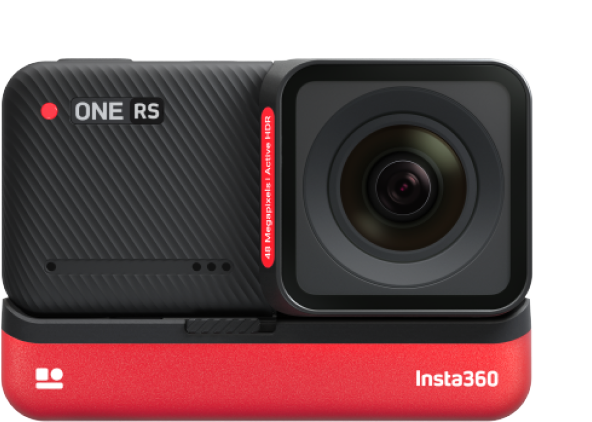
Insta360 ONE RS is an incredible action camera with a high-performance 4K Boost Lens whose 1/2-inch image sensor captures detailed wide-angle 4K/60fps videos and 48MP stills. It comes with a fresh sports HDR mode, designed especially for dynamic shooting scenes. Meaning, the camera balances the exposure while maintaining a stable picture, ensuring more light and dark details. In addition, ONE RS supports a 6K widescreen mode. This mode adopts the classic 2.35:1 ratio, and can shoot super textured 6K movie-like movies with one click.

You can buy the ONE RS for $239 during the Insta360 summer sale, which is a 20% discount on its regular price of $300.

The Twin Edition of Insta360 ONE RS comes with two swappable lenses. In addition to the 4K lens detailed above, with this model, you also get a 360-degree panoramic lens to shoot 5.7K high-definition videos. So, whether it is skiing or riding a motorcycle, you can enjoy one-click shooting without worrying about composition, and then freely select the angle and picture for editing in the later stage.

Insta360 ONE RS Twin Edition is available to buy at $441 during the summer sale, which is a discount of $140 on its regular price.

insta360 summer sale

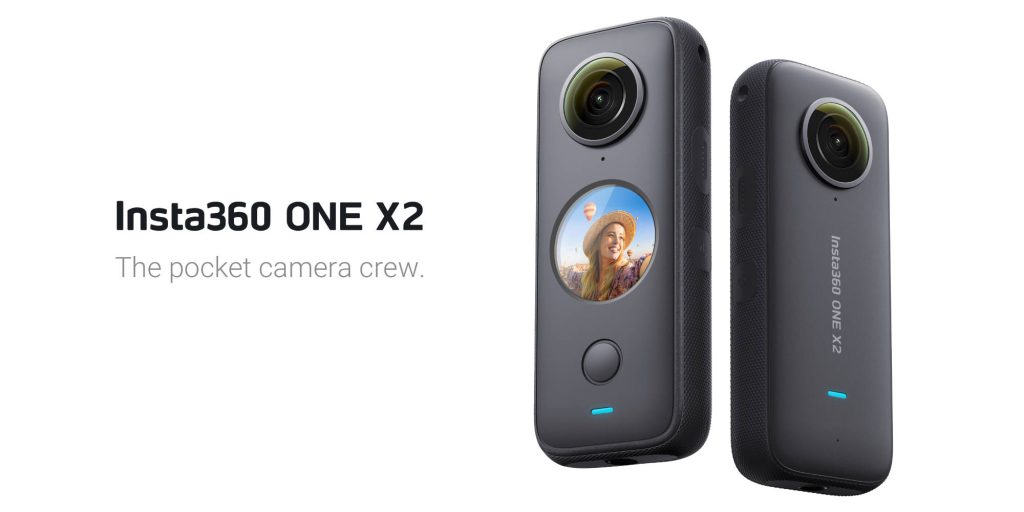
With its 5.7K 360-degree photo and video capturing prowess, the ONE X2 is perfect for places where you may not be allowed to fly a drone. Ideally paired with Insta360’s famed Invisible Selfie Stick (currently available at a discount of 12%), the product comes equipped with a high-brightness touchscreen and can shoot for up to 80 minutes. It allows you to capture easy drone-like angles and third-person perspectives with the flick of a wrist. Moreover, the camera is waterproof up to 10 meters, which means you can take it out in a rainstorm or while surfing without worrying.

Typically priced at $430, the Insta360 ONE X2 is available to buy for just $364 during the ongoing summer sale.

Insta360 ONE X2

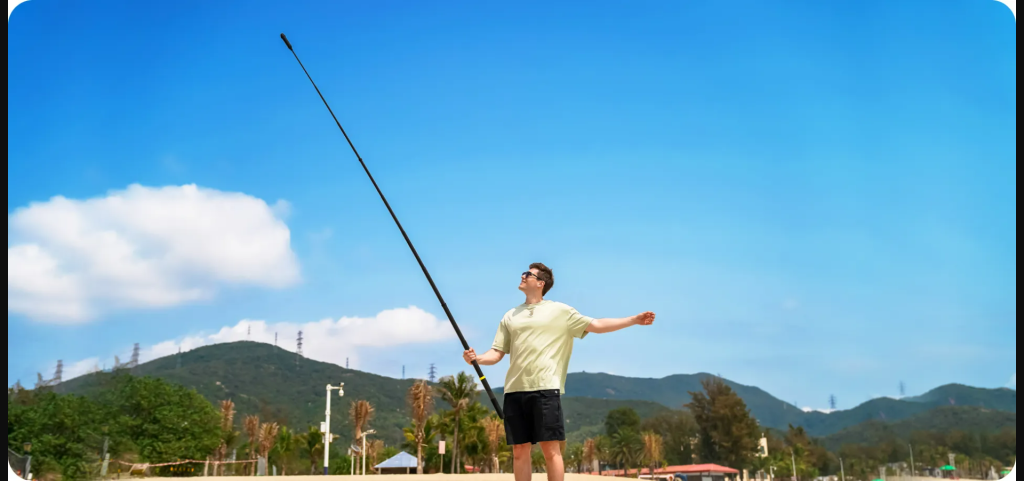
The ultimate tool for creative, third-person shots, Insta360’s Extended Edition Selfie Stick extends to up to 3 meters with adjustable lengths in between. However, at its most compact, the product measures only 14 inches, which makes it super convenient to carry. Pair it with one of Insta360’s 360-degree cameras, such as the ONE X2 above, and you can capture otherwise impossible angles with ease!

During the summer sale, Insta360 Extended Edition Selfie Stick can be grabbed for $89 at a discount of 11%.

Meanwhile, if you already own an Insta360 product, you might want to check out the discounts on accessories here.

Read: Hover X1: New 125g self-flying camera drone with Follow mode

FTC: We use income earning auto affiliate links. More.