Photography

Frank Ocean Publishes New Mutations Photography Book

Frank Ocean Publishes New Mutations Photography Book

Frank Ocean’s luxury company, Homer, is publishing a new book of the musician’s photography. Th 48-page book, Mutations, retails for $75. See excerpts from the book below.

Frank Ocean made headlines in April when he headlined the first Sunday night of Coachella 2023. The set was not streamed, and he played songs including “Novacane, “Bad Religion,” and more before abruptly leaving the stage due to the festival’s curfew. Ocean did not return for Coachella’s second weekend, citing an apparent leg injury as the reason for his absence.

Read “A Visit to Homer, Frank Ocean’s New York Luxury Store” on the Pitch. Plus, check out “Dissecting Frank Ocean’s Coachella Performance and Its Aftermath.”

Frank Ocean Mutations

Photo by Frank Ocean

Frank Ocean Mutations

Photo by Frank Ocean

Frank Ocean Mutations

Photo by Frank Ocean

Frank Ocean’s New Project Is Here

Frank Ocean’s New Project Is Here

Crazy to think that in the two years since Frank Ocean launched Homer, his nascent luxury label, he still hasn’t released any new music. Really makes you think. Reeeeaallllllyyyy makes you think.

Still, Homer’s roll hasn’t really slowed. With or without Frank’s direct input, Homer continues to launch jewelry collections and the occasional semi-affordable collectible — “semi”-affordable because, compared to Homer’s four- and five-figure necklaces, the $50 art books and posters almost look like bargains.

Here we are on June 1 and Homer’s done it again. The imprint has released Frank Ocean’s latest photography book, Mutations, on the Homer website.

For $75, you get a 48-page booklet printed in America on “tissue-weight paper,” according to a press release. Published by Homer, Mutations comprises “a retrospective of artwork from October 19 to December 22, 2022” including photographs taken by Frank Ocean himself.

Frank is responsible for most of the Homer photography anyways, so the fact that he’s taking plenty of his own photos is hardly a surprise. Still, you never know when and how this guy will release anything so there’s that, at least.

Other recent Homer developments include a $25k penis ring and an offer to listen to fans’ music — whatever came of that last one, though, is unknown.

Frank fans have staunchly stuck by their man despite his “disappointing” showing at Coachella 2023, and Homer seems to at least be conscious of Frank Ocean followers’ wariness of the high price tags attached to most of the Homer jewelry, which is why the company is also offering lower-priced trinkets, accessories, and one-offs like the Mutation book.

It ain’t new music, but it’ll have to do for now.

Shop our favorite products

Frank Ocean reveals first post-Coachella release: a book of photographs

Frank Ocean reveals first post-Coachella release: a book of photographs

Frank Ocean reveals first post-Coachella release: a book of photographs


Frank Ocean. Photo by András Ladosci.


Frank Ocean is back with a book of photographs. Mutations is a 48-page collection shot by Ocean himself, available at his fashion boutique Homer both online and in-store for $75. The photos were taken between October 19 and December 22, 2022 and are printed on “tissue-weight paper,” according to a press release.

Mutations is Frank Ocean’s first public offering since his performance at weekend 1 of Coachella. Initially signed on as the headliner for both weeks, Ocean dropped out of the second date after harsh criticism of his first set. In a press statement, Ocean said that a leg injury suffered before the first weekend’s show had forced him to bow out of returning to the desert. Part of the resulting media frenzy around the debacle included a Billboard report alleging that the festival had spent millions of dollars on a hockey rink that went unused.

Still, the magazine does look quite nice! See some previews of it below. It’s part of a new Homer collection, which we’ll learn more about soon.

Frank Ocean reveals first post-Coachella release: a book of photographs

Frank Ocean reveals first post-Coachella release: a book of photographs

Frank Ocean reveals first post-Coachella release: a book of photographs

Carrie Mae Weems: the photographer recreating and reframing famous historical moments

Carrie Mae Weems: the photographer recreating and reframing famous historical moments

Carrie Mae Weems is widely acknowledged as one of the most influential American artists working today. She is most celebrated as a photographer, but her complex body of work encompasses video, text, installation, sound and digital images and has been challenging representations of race, gender and class for more than four decades. Laurie Simmons, Mickalene Thomas, Shirin Neshat, Catherine Opie and Hank Willis Thomas are among the vast community of artists who acknowledge the impact of this senior figure on their work.

In 2014 Weems was the first African American woman to be given a solo exhibition at the Solomon R. Guggenheim Museum in New York and in 2021 she took over the Park Avenue Armory with a giant film installation and performance-based show focusing on the history of violence in the US. This epic work has been reconfigured into a seven-chapter panoramic film that forms the culmination of Carrie Mae Weems’s new survey at the Barbican in London, her first solo show in a UK institution and the largest presentation of her work in Europe.

The Art Newspaper: You initially trained in dance, but it was when you were given a camera for your 20th birthday that you decided to take up photography in earnest. What was it about photography that appealed to you?

Carrie Mae Weems: I didn’t really know that I wanted to be a photographer until my boyfriend gave me the camera. And almost immediately it literally all just clicked into place. I never thought about taking photographs before but from the first photograph I took, I knew that this would become my tool and my path and that I was going to follow this through.

Carrie Mae Weems’s Untitled (Woman and Daughter with Make Up) from the Kitchen Table Series (1990) © Carrie Mae Weems; Courtesy of the artist; Jack Shainman Gallery; New York / Galerie Barbara Thumm; Berlin

In both your 1981-82 Family Pictures and Stories and your breakthrough 1990 Kitchen Table series you used a documentary style to depict your family and those close to you—as well as yourself—but the aim was emphatically not to document. Why did you adopt this approach?

While I was very interested in the documentary format, I had ethical concerns about taking photographs of people without their knowledge and/or their consent. So it was out of my overarching concern and discomfort with the documentary format that I began photographing myself and using my own body and my own family as a conceptual frame for dealing with larger ideas, but doing so in ways that I actually had control over. Myself and my family were available material for the exploration of ideas, concerns and assumptions about the body, about politics and about family—and in this case about the Black family. At the time I wasn’t so much focused on the notion of performance. The idea of acting in a certain way in the presence of the camera didn’t come to me until much later, when I was looking at my photographs and understanding more what I was actually up to.

But for a long time viewers still persisted in reading these works solely as autobiographical.

This inability to understand the work and refusal to consider the work beyond what seemed to be “immediately present” had a lot to do with the times. For as much as the work was in some ways embraced, it’s also been dismissed. It was not thought of as conceptual art. It was easier to talk simply about race than it was to talk about the more complex issues that were really explored through the work itself. There had never been anything really quite like it and viewers and writers didn’t have a frame of reference for unpacking a Black body beyond itself. The only thing that was even remotely similar was Cindy Sherman’s [Untitled] Film Stills, but for many years no one wrote about us in the same breath. Until very recently there has been a refusal to engage with the work more deeply, more intellectually, more compassionately, and to position it within the frame of Post-modernism, which is exactly where it was positioned.

Four works from Weems’s From Here I Saw What Happened and I Cried (1995-96) series © Carrie Mae Weems; Courtesy of the artist; Jack Shainman Gallery; New York / Galerie Barbara Thumm; Berlin

Another series which was also denied a nuanced reading is From Here I Saw What Happened and I Cried (1995-96) in which you rephotographed 33 often harrowing 19th- and 20th-century photographs of Africans and enslaved African Americans and presented them in a circular lens-like format beneath glass sandblasted with texts you had written.

I am not a historian but I am deeply interested in the history of how images are made, presented and constructed, and trying to get to their deeper meaning. So this work can be looked at in terms of American photography, in terms of African American representation and also in terms of contemporary American photography and white photographers and their assumptions around Blackness […] There are just so many ways to unpack it. But for a long time the levels of the work, its structure and its complicatedness were simply not regarded—it was not thought of in the fullest possible way. Reviewers again turned back to race as a quick and easy way to discuss the work without really examining it much further. Now people are just starting to catch up to the way in which the work has functioned, which is lovely to see after all these years.

As well as using documentary footage in your films you have also made your own versions of historical moments in the American civil rights movement and in history in general, from the assassinations of Medgar Evers, Martin Luther King and Malcolm X to the dropping of the Hiroshima atom bomb. Why did you choose to make these reconstructions?

The decision to construct certain things goes back to my ethical concern about what right do I have to appropriate the work of others? So I thought how wonderful it would be to use a group of people along with myself to restage those moments and to tease them out in a very different way by presenting them as a performance where all of the construction of the image—the track, the lights, the camera—is made clear also to the viewer. Via this understanding that all photographs are constructed, you are invited into a certain kind of history and a certain kind of complicatedness that you wouldn’t ordinarily get if I simply appropriated existing images. I was challenging myself to go beyond appropriation to build my own constructed memory and to ask my students, my colleagues and friends, to participate along with me in the construction of things that have been historically important to us and that essentially made us who we are.

Weems’s The Assassination of Medgar, Malcolm and Martin from Constructing History (2008) © Carrie Mae Weems Courtesy of the artist, Jack Shainman Gallery, New York / Galerie Barbara Thumm, Berlin

Your images are also meticulously composed and can be gorgeously seductive. What’s the role of beauty in your work?

I think it’s partly a way of bringing the audience to complicated subjects. It’s disarming. It allows you to get closer to memories, to ideas that, more often than not, we would turn away from except that the image is compelling in and of itself. Also I’m an image maker, I love beautiful things!

You have also often taken your art out into the world to confront injustices, most recently with the public health campaign Resist Covid/Take 6!, designed to bring attention to the impact of Covid-19 on Black, Latino and Native American populations. Do you see yourself as an activist as well as an artist?

I’m a politically-minded person and I think to be able to step outside of the museum and the gallery to bring important ideas and visual material directly into various communities is important. I’m not sure if I’m an activist, I think that I’m a deeply concerned artist who is certainly deeply engaged in the historical moment in which I live. I’m impacted, I’m troubled, I’m disturbed, I’m angry. And yet anger has to be controlled: rageful art normally doesn’t get me where I need to go. Provocation and inquiry are closer to home.

Carrie Mae Weems’s vast multi-disciplinary installation and performance work The Shape of Things was staged at the Park Avenue Armory in 2021 Photo: Stephanie berger; © the artist

Biography

Born: 1953 Portland, Oregon

Lives and works: Syracuse, New York

Education: 1981 BFA California Institute of the Arts; 1984 MFA University of California, San Diego

Key shows: 1995 J Paul Getty Museum, Malibu; 2007 Metropolitan Museum of Art, New York; 2014 Solomon R. Guggenheim Museum, New York and Studio Museum in Harlem, New York; 2021 Park Avenue Armory; 2022 Württembergischer Kunstverein, Stuttgart

Represented by: Jack Shainman Gallery, New York, and Galerie Barbara Thumm, Berlin

Carrie Mae Weems: Reflections for Now, Barbican, London, 22 June-
3 September

People are applauding a photographer for photos where she didn’t force girls to smile

People are applauding a photographer for photos where she didn’t force girls to smile

People are praising a photographer for some “powerful” photos, in which she didn’t force young girls to smile.

Brooke Light, a photographer based in Charlotte, North Carolina, frequently shares videos with posing tips and clips of her professional photoshoots on. In posted last month, she described a major strategy she’s followed when taking photos of girls: Having them pose without smiling.

“When your photoshoots allow girls to show up, take up space and not smile if they don’t want to,” Light wrote in the text over the video, as she held up her camera.

The video went on to show the results of the photoshoot, starting off with a black and white photo of a girl adjusting her hair. Light proceeded to show other portraits of the girls, who had their heads up or to the side and bodies turned, all while opting not to smile for the camera.

In the caption, Light described the benefits of the not forcing girls to smile when having their pictures taken. “Never underestimate the power of a photoshoot for your kids’ confidence,” she wrote.

As of 1 June, the video has more than 947,800 views, with many people in the comments applauding how the photos turned out and expressing how moved they were by them.

“They look powerful and authentic,” one wrote, while another agreed: “I can feel their power through my phone.”

A third wrote: “The fact that this made my eyes tear up tells me I still have some healing to do.”

Other people praised the girls in the photoshoot and also acknowledged how their own children don’t like smiling for the camera.

“I love how they are not trying to be anything ‘extra’ just their own raw and savage selves,” one wrote.

“Omg I have a daughter who would LOVE this. She is stone cold with her facial expressions and she hates a forced smile,” another added, while a third wrote: “My twin girls don’t smile for ANYONE at photo shoots.”

, she shared a few of the black and white photos that she took of boys, who didn’t have any “forced smiles, fancy clothes or kiddy poses”. She also expressed her gratitude for her followers in the caption.

“I’ve never had my creativity or my photography validated so much in my life. Thank you for the outpouring of love on these photos this week. It’s meant more than you can ever know,” Light wrote.

The Independent has contacted Light for comment.

Richard Avedon Once Called Fashion Photography A “Loveless, Lying Art”. Was He Right?

Richard Avedon Once Called Fashion Photography A “Loveless, Lying Art”. Was He Right?
image

But at 19, making mug shots for ID cards for months on end, the poet manqué was still unfulfilled. “I must have taken pictures of maybe 100,000 baffled faces before it ever occurred to me that I was becoming a photographer,” he would later reflect. These quotidian images were pared down to portraiture’s essentials out of necessity: heads and shoulders presented against a seamless white background with one direct source of light. Despite the work’s repetitive nature, its influence can be felt in Avedon’s distinctive later style, in his painstaking scrutiny of faces and expressions.

His portraits are intimate close-ups that reveal every blemish and nuance of physiognomy with an uncompromising, even brutal, honesty. The frontality of his composition and his very lack of “style” set him apart from the majority of his contemporaries, with the exception of his friend Diane Arbus. Between them, they discarded the conventions of the first 100-odd years of portrait photography and, by reducing it to its core, redefined what the essence of portraiture should be. Their subjects stand alone, uneasy and isolated – revealing something intimate and essential about their characters in the process.

This is as true of his first works as his final ones, composed more than half a century apart. An early photograph, from 1947, shows a smiling boy in Noto, Sicily, facing the viewer with his hands resolutely by his sides. The sparse background, barely in focus, is dominated by a tree, its mushroom-shaped branches resembling nothing so much as the aftermath of a nuclear detonation. One of his last portraits was also of a child, his godson Luke Avedon, another young man confronting the world alone. Except he isn’t smiling, and behind him there is a white out – nothing at all.

And yet if Avedon’s harshly seductive outlook was remarkably consistent from 1947 to 2003, his sources of inspiration were innumerable. His journey has its roots in theatre. In 1949, he spent several months as the associate art director of Theatre Arts Magazine. His short tenure served a purpose: focussing his mind on pursuing talents that could interpret something of the human condition through the roles they played. Buster Keaton’s desperate Vaudeville gestures dissolve easily into the existential anguish of Bert Lahr’s Estragon in Waiting for Godot. Avedon’s subsequent scrutiny of fame emphasised its bleakest manifestations: Michelangelo Antonioni is delivered to us half-paralysed from a stroke, Marilyn Monroe is at her most wounded and remote, Ezra Pound is seen in the grip of mania, while the head of Chet Baker, sunken by addiction, barely hovers in the frame at all, as if shortly to slip from view.

L’Inaperçu: Photography à la Carte

L’Inaperçu: Photography à la Carte

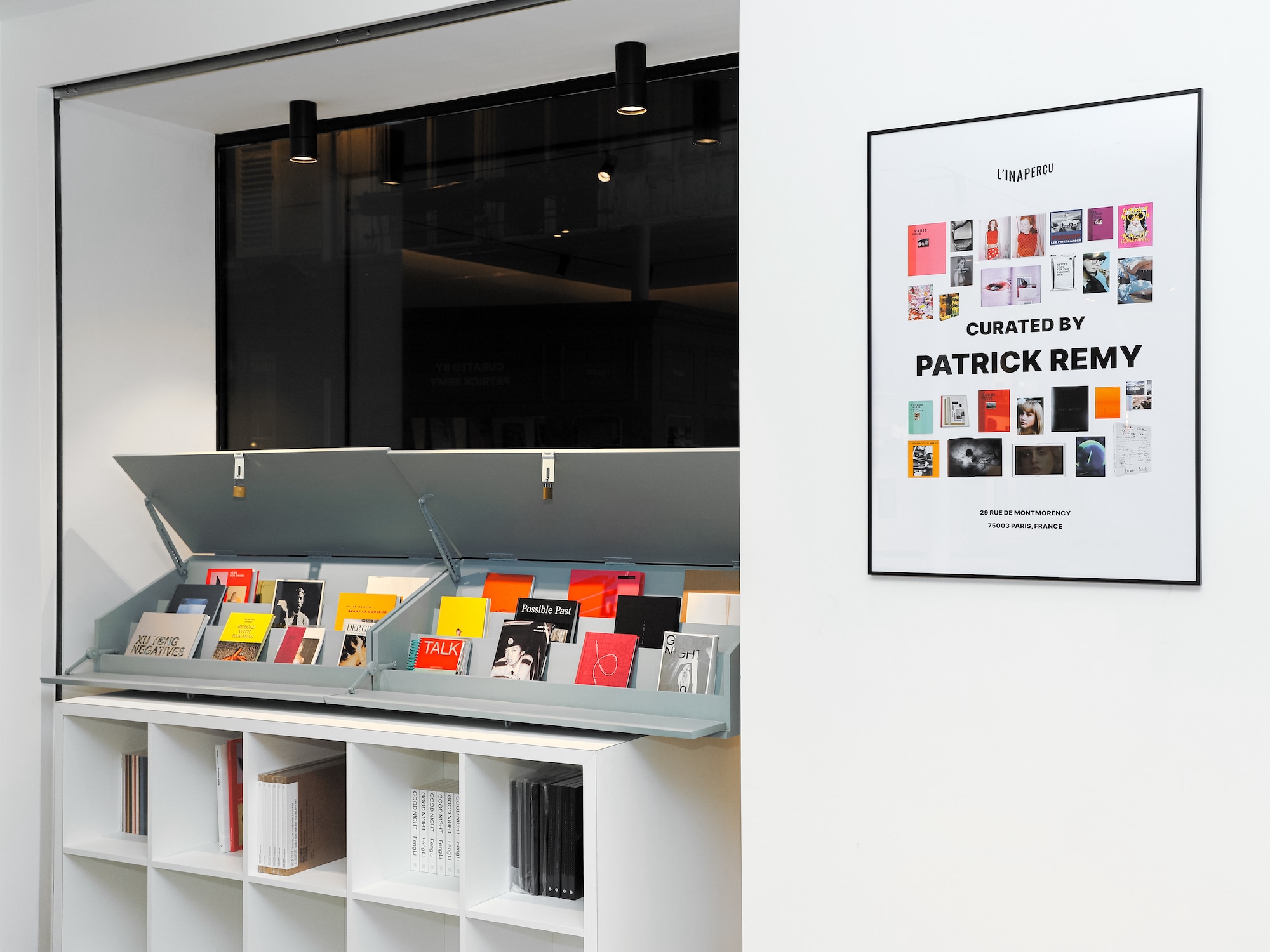
Have you seen it yet? On the corner of rue Beaubourg and rue de Montmorency, l’Inaperçu feels at home in the Marais neighborhood. It’s a unique venue where you can savor a raspberry Pavlova while leafing through the latest Cindy Sherman book.

Jean-Yves Huang, l’Inaperçu’s founder, set himself the challenge of combining culture and photography. It all began with an article in The PhotoBook Review by photography historian Clément Chéroux, dedicated to the “photobook phenomenon.” “When I read the article, I realized that photobooks were not photo albums, but small works of art. It was a revelation,” explains Huang. Initially interested in contemporary art, he then discovered the world of photography, and in particular the photobook. After years of work, l’Inaperçu was born.

© L’Inaperçu

© L’Inaperçu

© L’Inaperçu

Will you have some photography with that?

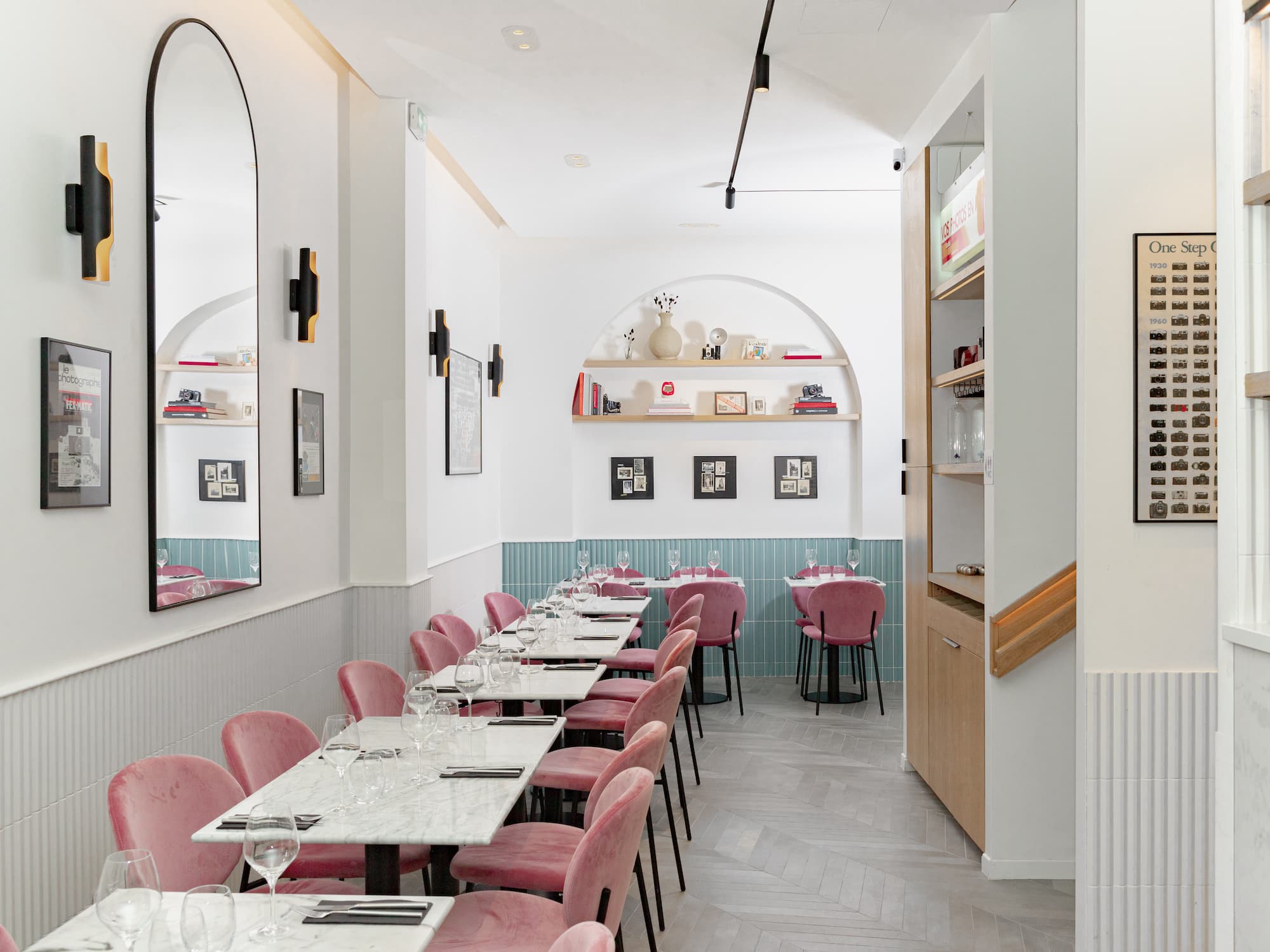
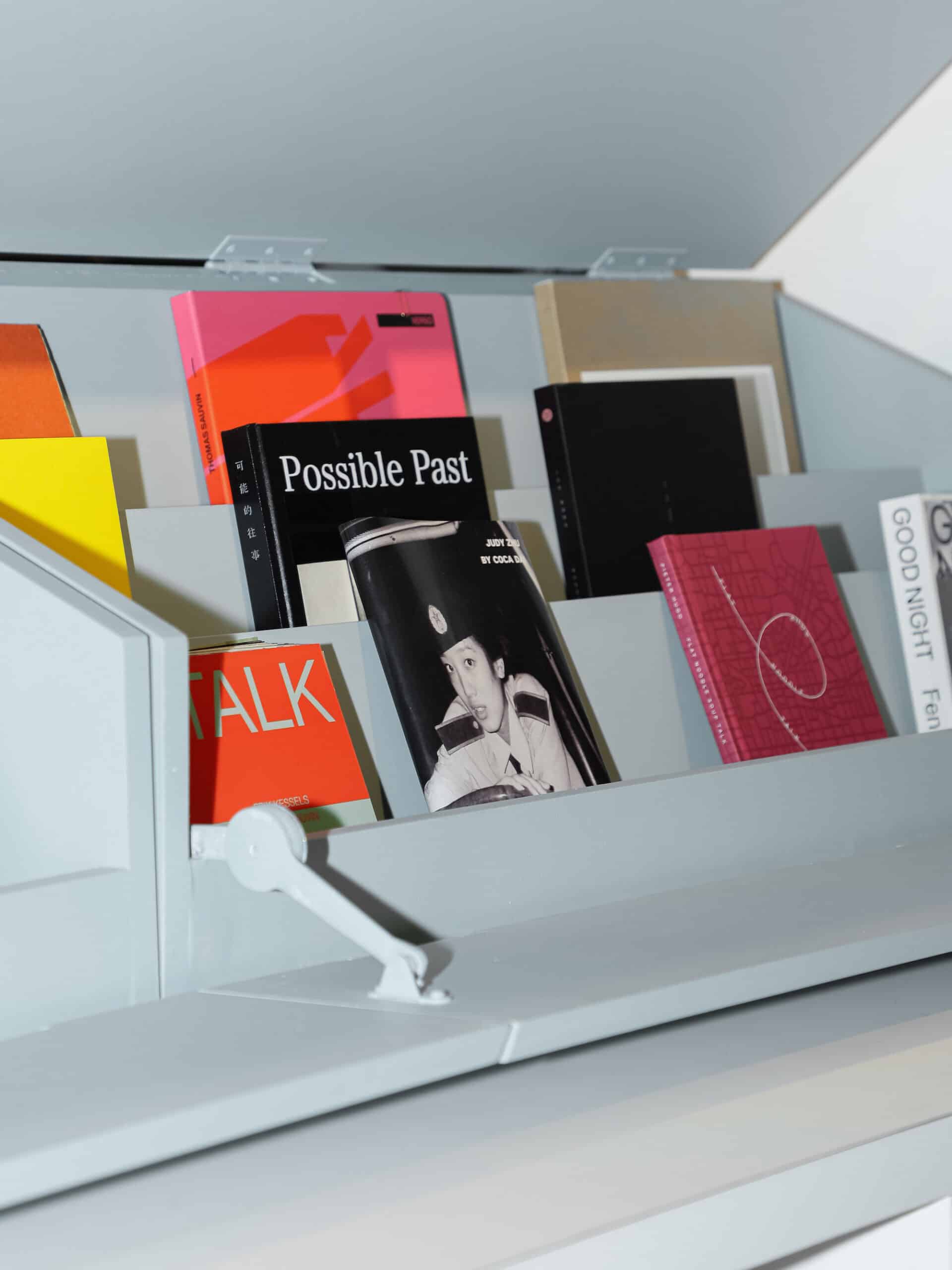
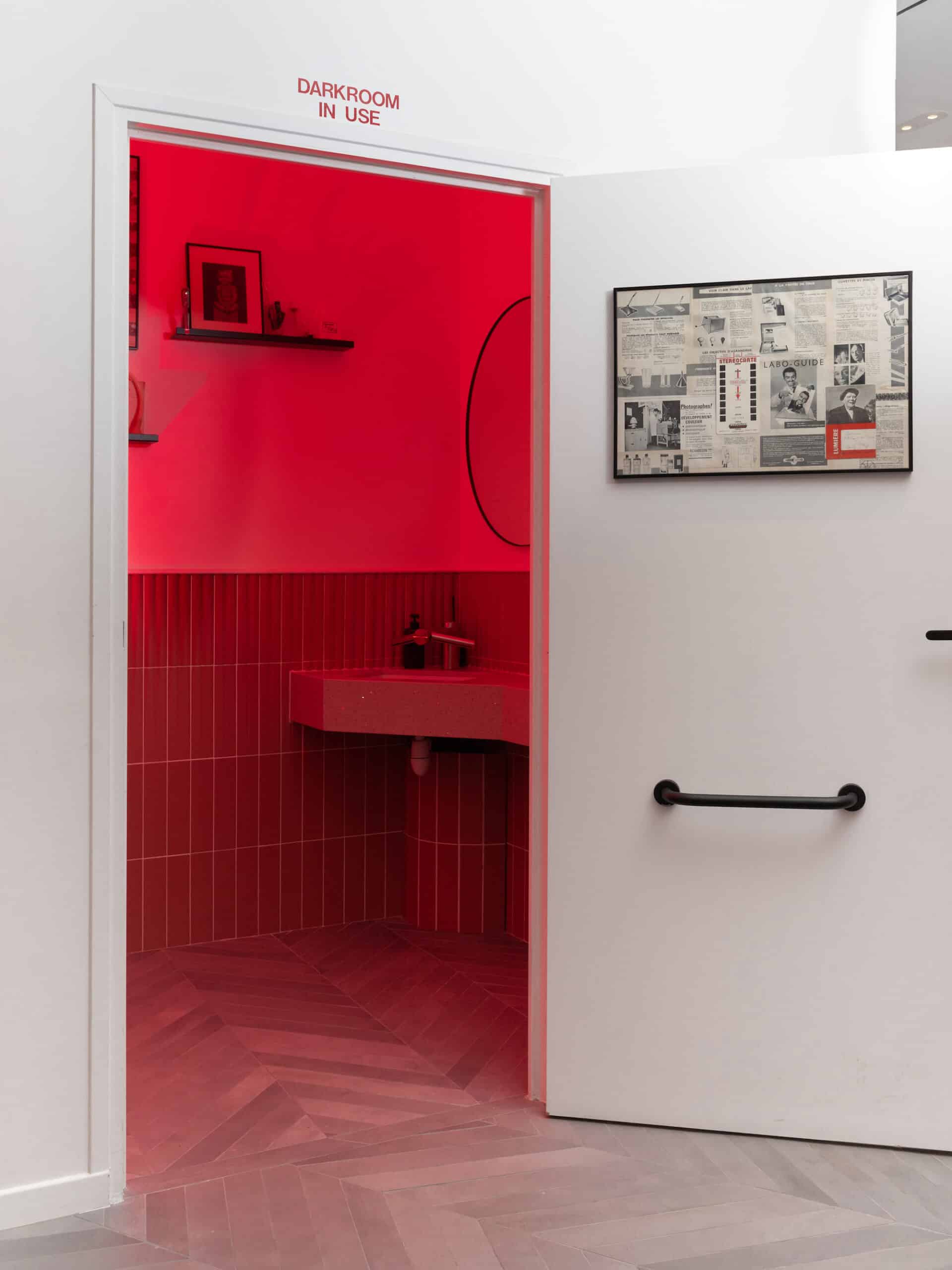
As soon as you walk through the door, it’s like you’re in the literary Paris of the quays of the Seine. Photobooks take up pride of place in the stalls, and a real newsstand features a curated selection of the day. The décor is all celadon blue, the signature color of the place. On the café side, we plunge into vernacular photography of the 1960s. The space is cleverly laid out. The restrooms reproduce the atmosphere of a darkroom, with their red lighting and the photographic bath.

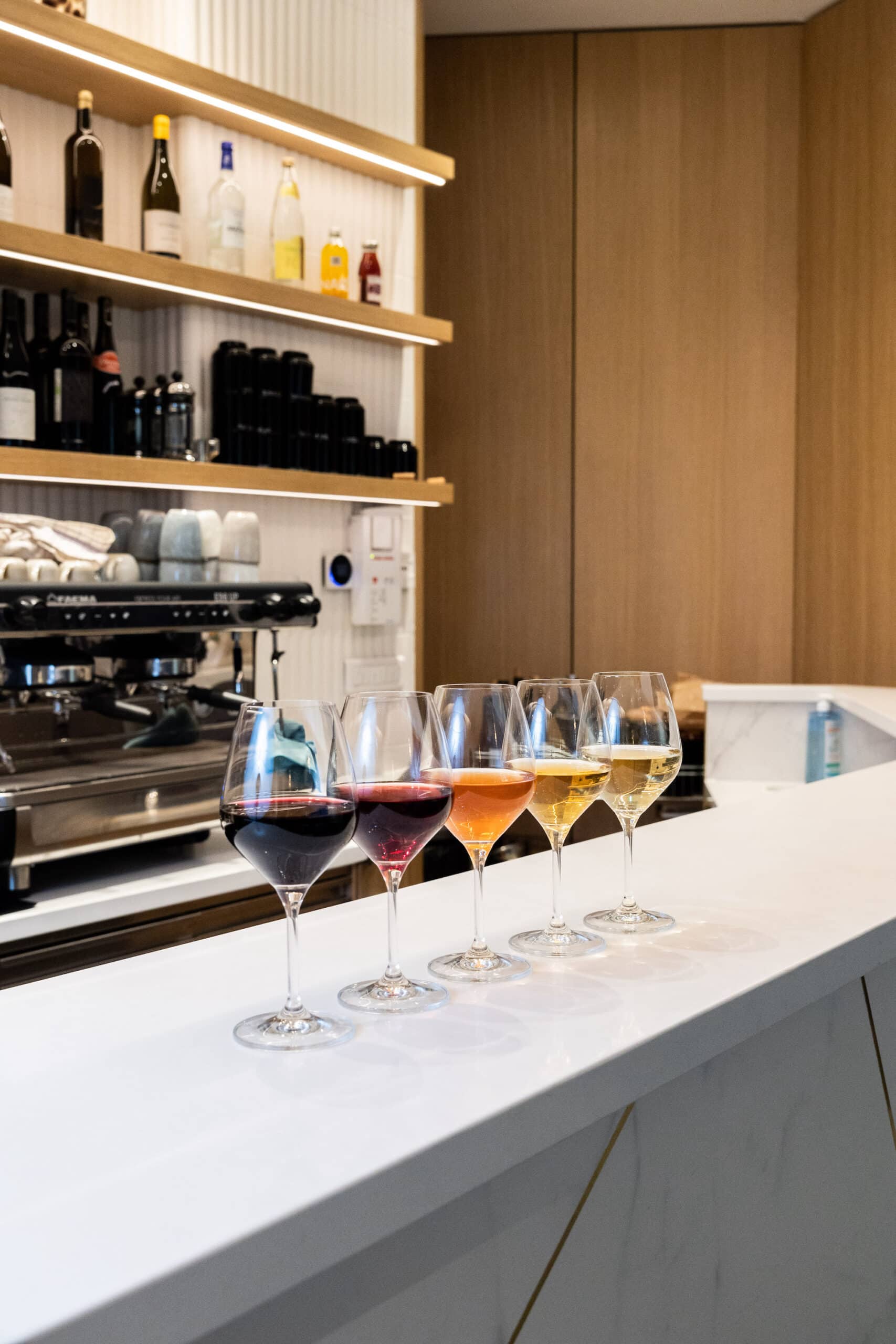
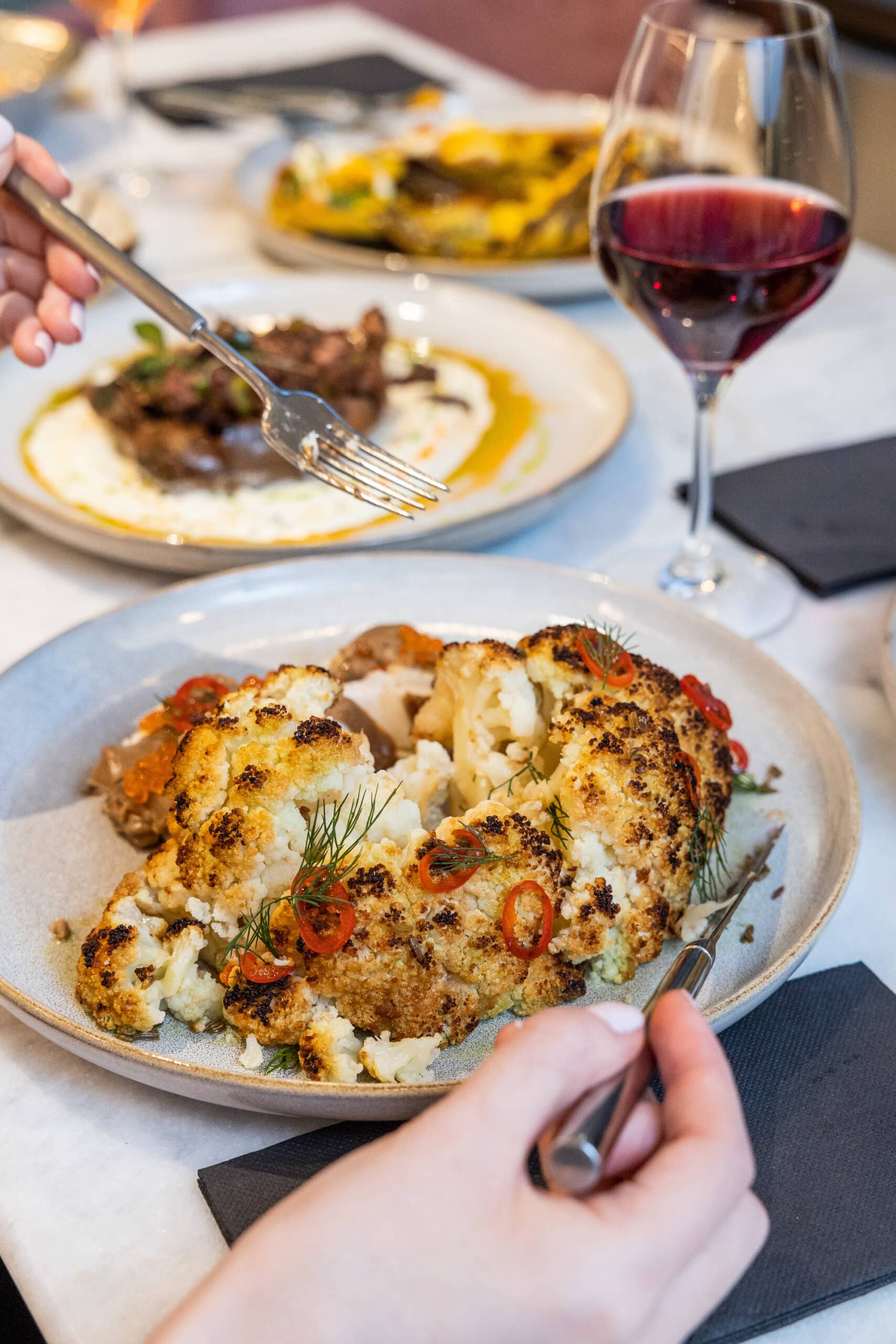
The menu offers original creations that foreground vegetables without being vegetarian: cream of pea soup, red cabbage pickles, smoked duck breast… Each dish is a true work of art: a feast for the eyes and the taste buds.

© L’Inaperçu

© L’Inaperçu

© L’Inaperçu

© L’Inaperçu

Carte blanche to photographers

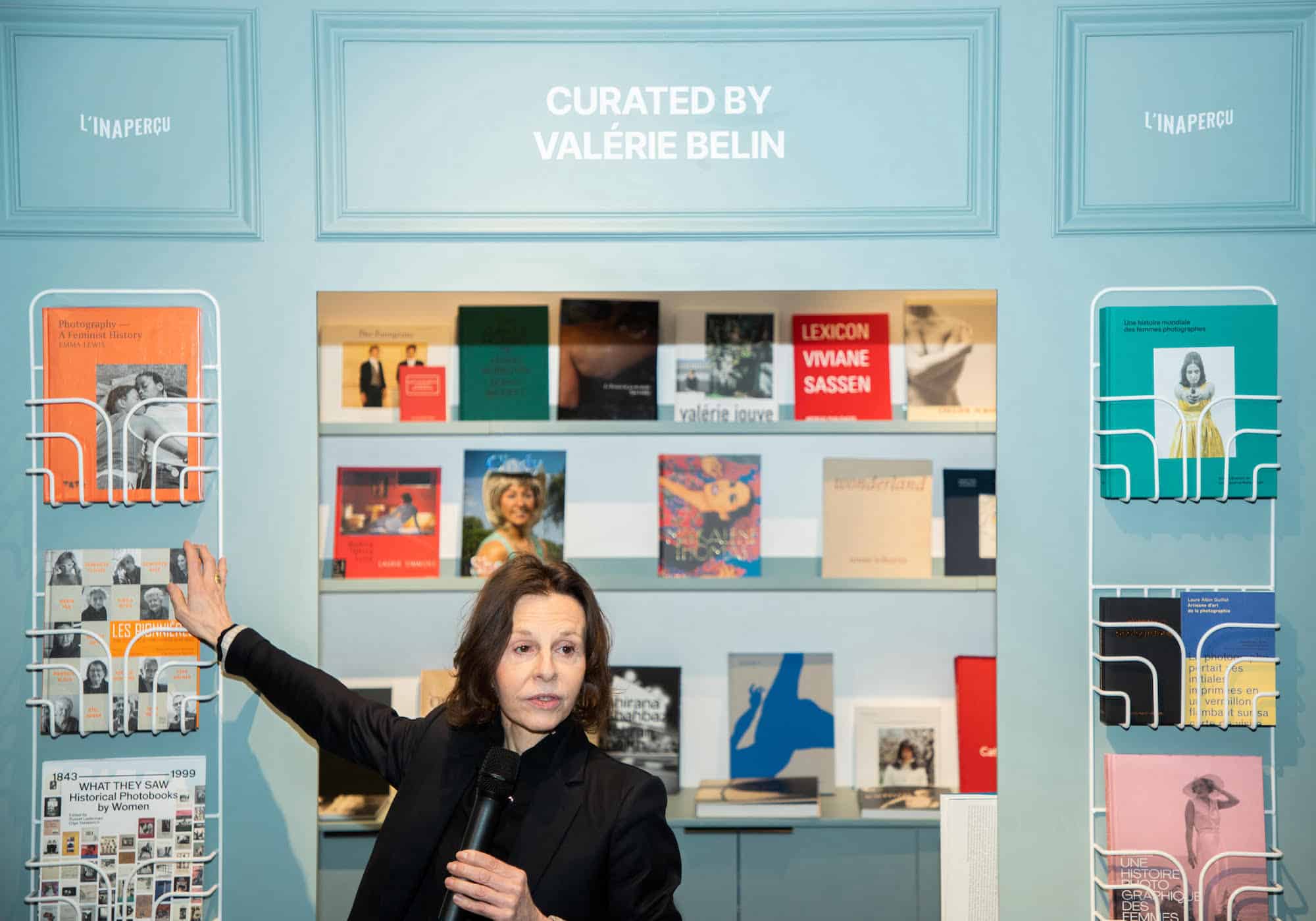
Rare and out-of-print works, collector’s boxes, signed photographic prints… the selection at l’Inaperçu is unprecedented in Paris. The venue adopts a curatorial model, drawing on the French tradition of art photography, publishing houses, and galleries. The latest selection was curated by the photographer Valérie Belin, who handpicked some 60 books celebrating women photographers, including Annie Leibovitz, Sarah Moon, Sabine Weiss, and Tina Barney. Offering carte blanche to the guest photographer, the space is all about idiosyncratic choices. “The more radical the selection, the better,” announces Huang.

Half-bookshop, half-art gallery, l’Inaperçu also hosts cultural events. On April 27, Louis Vuitton held the launch of their latest photography book, Fashion Eye Texas by Sean Thomas. The book is displayed alongside a meticulously picked array of covers, where quality triumphs over quantity. Huang proudly reminds us: “Above all, I’m a collector.”

© L’Inaperçu

L’inaperçu, 65 Rue Beaubourg, 75003 Paris. Bookshop open Tuesday to Saturday, 12pm to 7pm. Café and restaurant open Tuesday to Saturday, 12pm to 10.30pm.

Capturing Beauty and Empowering Women: The Visionary Photography of Maya David

Capturing Beauty and Empowering Women: The Visionary Photography of Maya David

Imagine a world where every woman feels beautiful, confident, and empowered in her own skin.

Thanks to the extraordinary talent and passion of English/Irish photographer Maya David, that world is becoming a reality. With her artistic eye and unwavering commitment to celebrating diversity and body positivity, Maya has become a force to be reckoned with in the photography industry.

Maya David 2023

Maya’s journey began years ago, when she discovered her love for capturing the essence of femininity through her camera lens. Drawing inspiration from her travels and the vibrant cultures she encountered, Maya decided to make Bali and Ibiza her creative hubs. These stunning locations serve as the backdrop for her awe-inspiring work, adding an extra touch of magic to each frame.

At the core of Maya’s photography lies a powerful message: every woman deserves to feel comfortable and proud of her natural form. Maya’s determination to challenge societal norms and redefine beauty led her to launch the groundbreaking project, ‘What Makes You Feel Feminine?’ in 2019. This project not only sparked meaningful conversations about femininity but also served as a catalyst for women around the world to embrace their unique bodies.

Maya’s work quickly caught the attention of the fashion world, earning her a well-deserved spot in prestigious publications like Vogue Greece and Vogue Spain. Her images graced the pages of Vogue Greece in 2021, showcasing her ability to capture the strength and beauty of women from all walks of life. The following year, Vogue Spain recognized Maya’s groundbreaking contributions, cementing her status as a trailblazer in the industry.

What sets Maya apart from other photographers is her ability to effortlessly blend artistry with authenticity. Each photograph is a testament to her exceptional skill in capturing the raw emotions and inner beauty of her subjects. Whether she is photographing a free-spirited bohemian bride, a confident businesswoman, or a radiant expectant mother, Maya’s images radiate a sense of joy, liberation, and self-acceptance.

Through her lens, Maya shows us that beauty knows no boundaries and that every body is worthy of celebration. She invites women to let go of societal expectations, embrace their flaws, and recognize the power they hold within themselves. Maya’s photographs are a powerful reminder that true beauty lies not in conformity, but in embracing one’s individuality.

Maya David’s work serves as a beacon of hope and inspiration in a world that often imposes narrow definitions of beauty. With her unwavering dedication to diversity and body positivity, she has become a catalyst for change. Through her lens, she empowers women to love themselves, to embrace their uniqueness, and to stand tall with confidence.

As we continue to navigate the ever-evolving landscape of beauty standards, Maya David remains at the forefront, challenging norms and capturing the true essence of femininity. Her photographs have the power to transform hearts, shift perspectives, and ignite a movement towards self-love and acceptance.

So, the next time you find yourself questioning your own beauty or struggling to fit into a mold, remember Maya’s work and the message she sends: you are perfect just the way you are.

Robert Capa and Gerda Taro’s 20th Century War Photography

Robert Capa and Gerda Taro’s 20th Century War Photography
robert capa and gerda taro war photography


Robert Capa was born in Hungary in 1913, while Gerda Taro was born in Germany in 1910. Both immigrated to Paris during the 1930s where they started working together. They frequently worked in dangerous and explosive environments. They dedicated their lives to capturing the impact of violence on society. They were known for war photography which documented armed wars, military activities, and the effects of war on individuals and societies.

What is War Photography?

taro republican soldiers photographtaro republican soldiers photograph
Republican Soldiers, La Granjuela, Córdoba front, Spain by Gerda Taro, 1937 via Magnum Photos

By representing war, artists want to bring attention and awareness to social and political issues. War photography, also known as art depicting scenes from wars, can be considered activist art. It covers armed conflicts, military operations, and devastation. The practice played a particularly significant role in the 20th century. The expansion of mass media and the development of new technologies made it possible for photographers to document and share images of war more widely and quickly than ever before.

Depicting War

goya third may 1808 paintinggoya third may 1808 painting
The Third of May, 1808 by Francisco Goya, 1814, via Wikimedia

Art and war have had a complex and often intertwined relationship throughout history. Some artists use their art to document and bring attention to the realities of war and how it affects different people. It has also played a role in shaping public perceptions and attitudes about conflict.

In Western art history, Francisco Goya is famous for his series The Disasters of War (1810-1820) which contains 82 visual depictions of the French occupation of Spain that was led by Napoleon Bonaparte. Goya made the etchings to protest against the French occupation and their aggression in Spain. He depicted the aftermath of war and the struggles of dealing with what was left, both physically and emotionally. The Third of May, 1808, is one of Goya’s most famous paintings depicting the execution of a Spanish peasant by the French troops. Another renowned painting depicting war is Guernica by Pablo Picasso.

Get the latest articles delivered to your inbox

Sign up to our Free Weekly Newsletter

Photojournalism

capa taro photographcapa taro photograph
Robert Capa and Gerda Taro, via Museum of Jewish Heritage, New York

The 20th century found Europe in turmoil over social and political issues. Photography and magazines broadened the scope of visual information. That’s when photojournalism arose as a new profession to fill the need for visual information and documentation of triumphs and atrocities of wartime.

One of the best-known war photographers of the 20th century was Robert Capa. He covered conflicts around the world, including the Spanish Civil War, World War II, and the Vietnam War. His photographs were known for their emotional impact and ability to convey the human cost of wars. Moreover, Picture Post published The Greatest War Photographer in the World: Robert Capa on December 3, 1938, featuring a range of 26 images taken during the Spanish Civil War.

However, Robert Capa was actually a pseudonym for two photographers, Endre Erno Friedmann and Gerta Pohorylle. They were partners both personally and professionally. They met in Paris in the 1930s and began working together as photographers, covering conflicts and wars worldwide. Eventually, the two separated and Friedmann continued using the name Robert Capa, while Pohorylle took the name Gerda Taro. She became the first woman photographer that depicted wars.

Who Was Robert Capa?

taro capa war photographytaro capa war photography
Photographer Robert Capa during the Spanish civil war by Gerda Taro, 1937 via Wikimedia

Robert Capa was a Hungarian-born photographer best known for covering conflicts and wars. Capa began his career as a photojournalist in the 1930s and became one of the best-known war photographers of the 20th century. In 1933, he moved to Paris because of his Jewish identity. He fled the nation due to the danger of the Nazi administration in Hungary. Capa covered conflicts in many parts of the world, including World War II, the Vietnam War, and the Spanish Civil War, which he documented alongside his partner Gerda Taro. He worked for major publications such as Life magazine and Magnum Photos.

capa falling soldier war photographycapa falling soldier war photography
Death of a Spanish loyalist militiaman. Córdoba, Spain, by Robert Capa, via Magnum Photos

Robert Capa’s most famous photograph is The Falling Soldier. It was captured in 1936 at the start of the Spanish Civil War. The photograph shows a Republican soldier being shot and falling to the ground. Capa took this photograph during the Battle of Cerro Muriano, a conflict between the Nationalist and Republican forces in Spain. The photograph became a symbol of the Spanish Civil War and it contributed to Capa’s fame as a war photographer. It was first featured in French and British periodicals and later reproduced in several books and exhibitions.

His other famous photographs include The Kiss of Life which shows a utility worker being rescued from an electrical wire by a colleague after a workplace accident in New York City and the D-Day landings which show Allied soldiers landing on Omaha Beach during the Normandy invasion on D-Day in World War II. Capa often worked in dangerous and volatile environments since he was committed to documenting the direct impact of a conflict. Capa’s photographs continue to be highly regarded and widely exhibited and he is considered one of the pioneers of war photography.

Who Was Gerda Taro?

taro republican training war photographytaro republican training war photography
Republican militiawoman, training on the beach outside of Barcelona by Gerda Taro, 1936 via Magnum Photos

Gerta Pohorylle, known as Gerda Taro, was an artist best known for her work as a war photographer during the Spanish Civil War. Taro was born in 1910 in Stuttgart, Germany. She became interested in photography as a teenager. As Germany sank into economic, social, and political instability, anti-Semitism grew stronger. Taro became interested in left-wing politics after becoming acutely aware of the emergence of the far-right movement. She was detained after spreading anti-Nazi flyers throughout Leipzig in March 1933. Taro went to France soon after, urged by her parents.

Taro began her career as a photojournalist in the 1930s. She also became known for her coverage of the Spanish Civil War. Taro and Capa worked together for major publications such as Life magazine, covering the conflict between the Republican and Nationalist sides. She was known for her bravery and fierce commitment to her work. Some of Taro’s best-known photographs include Refugees from the Spanish Civil War which shows a group of refugees fleeing the conflict in Spain, The Funeral of a Republican Soldier which shows the funeral of a soldier killed during the Spanish Civil War, and The Republican Army on the March that shows Republican soldiers marching through a Spanish town during the conflict.

taro spectators funeral lukacs photographtaro spectators funeral lukacs photograph
Spectators at the funeral parade of General Lukacs by Gerda Taro, 1937, via Magnum Photos

Taro’s photographs capture the human toll of the conflict and the devastating impact it had on civilians. Her pieces are poignant and powerful images that convey the suffering and desperation of the refugees as they seek safety and security amid conflict. Like Capa, Taro is considered one of the pioneers of war photography.

Gerda Taro died in 1937 while covering the Spanish Civil War. Taro was hit by a tank during the Battle of Brunete and died from injuries a few days later. Robert Capa died in 1954 while covering the First Indochina War in Vietnam. Capa was traveling with a group of French soldiers when he stepped on a landmine and died. Both photographers died on battlefields while trying to capture soldiers fighting.

Taro and Capa’s War Photography in Popular Culture

mexican suitcase moviemexican suitcase movie
The Mexican suitcase movie poster from 2011, via Artium Museoa

Taro and Capa’s work has been widely exhibited and featured in books and publications. Their lives and careers have been the subject of multiple films, documentaries, and other popular culture works. For example, there is a song called Taro by the British indie rock band Alt-J. The lyrics of Taro reference Gerda Taro’s life and work as a photographer, with lines like Taro took pictures/Of the world’s disasters and Taro took pictures/Of the factory girls. The song also references Taro’s death at 26 while covering the Spanish Civil War.

Gerda Taro: Inventing Robert Capa is a documentary film about Taro and her work as a war photographer. The film explores Taro’s life and career, including her relationship with Capa. It examines the impact of her work on documentary photography. Gerda Taro: On the Front Line is a book about Taro’s life and career as a war photographer. The book explores Taro’s work in the Spanish Civil War and her role as a documentary photography pioneer.

There is also a film on Robert Capa called Robert Capa: In Love and War. The film explores Capa’s work covering conflicts around the world, including the Spanish Civil War and World War II. Trisha Ziff directed the 2011 documentary film The Mexican Suitcase which depicts the narrative of about 4000 film negatives created by photographers David Seymour, Gerda Taro, and Robert Capa during the Spanish Civil War. The film traces the images’ history from their disappearance at the start of World War II through their rediscovery in 2007.