Photography

Chateau du Sureau: Yosemite Photography Weekend & More

Chateau du Sureau: Yosemite Photography Weekend & More

OAKHURST — The Yosemite Photography Weekend is the first-of-its-kind experience offered in partnership with Château du Sureau, a Relais & Châteaux resort located at the gateway to Yosemite National Park, and The Ansel Adams Gallery, an authorized concessioner of the National Park Service operated in Yosemite Valley by the Ansel Adams family since 1902.

Image of the Chateau de Sureau logo.Participants will follow in the footsteps of the visionary Ansel Adams, learning his innovative techniques adapted for digital cameras while visiting the iconic park scenes he made famous, and enjoy a Five Diamond stay at the nearby luxury property. This expert-guided curated instructional program is for photography enthusiasts at all levels.

The Ansel Adams Photography Weekend is offered June 9 to 11 (one spot left) and November 4 to 6, 2023, and is priced at $2,700 double occupancy; and $2,350 single occupancy.
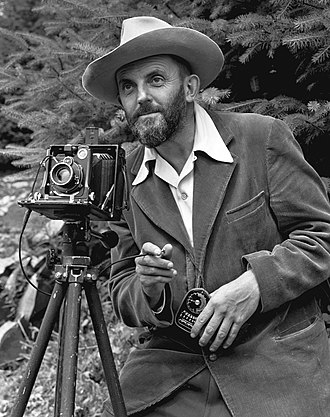
Image of Ansel Adams.

Ansel Adams, circa 1950.

The weekend package includes elegant accommodations inclusive of all meals and transportation to and from the park. During a full-day guided experience in the park, participants will gain insight into the artistic creativity of Ansel Adams through a curated discussion and presentation of Adams’ fine print original photographs. They will also visit Yosemite’s most picturesque locations, where they will be taught how to best use their cameras to incorporate Adams’ photographic techniques and compositions.

Designed for beginning photographers, hobbyists, and Ansel Adams enthusiasts, participants will have the opportunity to frame in their own lens the scenes made famous by Adams and replicate his awe-inspiring use of light. They will be transported to an “outside classroom” for a walking tour of Cooks Meadow where digital camera techniques and compositional theory will be discussed. Then the group will be transported to other scenic areas of Yosemite Valley to have the opportunity to put their skills to the test.

Participants will receive a detailed list of required and recommended equipment, which includes wide angle and zoom lens, filters, a tripod and a carrying bag.

Back at Château du Sureau, the weekend will commence with a welcome reception and group dinner. While in-residence, guests will enjoy luxurious accommodations, expansive grounds and gardens to explore, an outdoor pool, and all-inclusive inspired dining moments throughout their stay at The Elderberry House and Cellar Bar. Specialty treatments may also be reserved in Spa du Sureau.

Image of the Cellar Bar at The Elderberry House.

Cellar Bar at The Elderberry House.

A detailed itinerary and equipment list for the November 4 to 6, 2023 weekend can be found here: 

Yosemite Photography Weekend Itinerary November (PDF)

Rates are exclusive of tax and 22% service fees, and reservations must be reserved seven days in advance.

In the event of forecasted heavy rain, participants will have the option of reserving a 2024 experience or requesting a full refund. A 50% advance deposit is required. Cancellations are allowed up to 14 days prior to the event.

Guests can book by clicking here.

About Château du Sureau
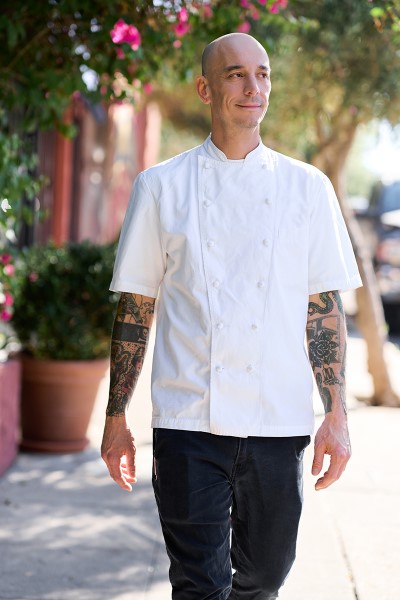
Image of Chris Flint.

Chris Flint.

Nestled across nine-sprawling acres of rolling foothills at the gateway to Yosemite National Park, Château du Sureau blends the charm and beauty of France’s Provencal region with central California’s verdant landscape. This luxurious hideaway features ten elegantly appointed guestrooms inspired by the South of France in addition to the private Villa du Sureau.

The Elderberry House offers an inventive menu from Culinary Director Chris Flint showcasing the finest local, seasonal, and organic ingredients sourced locally, and is complemented by a premier wine list. That caliber of dining is a rarity for the destination, and Chef Chris’ new role as Culinary Director is a major reason diners have the opportunity to experience a Michelin-starred quality menu. The three-course and six-course menus can be found here.

Château du Sureau features a full-service spa, outdoor pool, and expansive gardens and grounds provide moments of wellness and tranquility. Beyond the estate’s gates, an adventure travelers’ paradise awaits, from Yosemite National Park just 16 miles away to scenic hiking, biking and fishing excursions. Château du Sureau is a member of Relais & Châteaux and a AAA Five Diamond hotel.

Image of Château du Sureau from the air.

Image by Château du Sureau.

About The Ansel Adams Gallery

From its origin in 1902 in a tent in the California wilderness, Best’s Studio, now operating as The Ansel Adams Gallery, has evolved into a center that celebrates the arts and grandeur of our environment. The Gallery strives to cultivate aesthetic appreciation and a concern for our natural world by offering visitors a unique variety of crafts, books, fine arts, and an extraordinary collection of Ansel Adams original photographs. With over 70 years of photography educational programming started by Ansel Adams, the Gallery hosts classes, workshops, and private photo tours to help visitors make the most of their Yosemite experience.

Featured image courtesy of The Ansel Adams Gallery. 

Check out this great documentary about Ansel Adams! 
[embedded content]

Google Doodle Honors Corky Lee, Photographer of Asian-American Life

Google Doodle Honors Corky Lee, Photographer of Asian-American Life

Google Doodle Corky Lee

Visitors to Google today will see a striking Google Doodle celebrating the life and work of photographer Corky Lee.

In honor of Asian Pacific American Heritage Month, Google is highlighting Lee’s lifetime of photography and powerful activism. May 5 also holds special significance because the date was proclaimed “Corky Lee Day” in honor of Lee’s work and contributions to New York City’s communities in 1988.

A Chinese American photographer, journalist, and activist, Corky Lee was born in 1947 in Queens, New York City, to Chinese immigrant parents. “When he was in school as a young boy, he learned about the transcontinental railroad in social studies class. During the lesson, he saw a photo that celebrated the completion of the railroad — but noticed a lack of representation for the thousands of Chinese laborers who helped build it. Lee later shared that this event inspired his life’s work. He went on to teach himself photography and attended Queens College to study history,” Google explains.

Throughout his life, Lee captured powerful moments from countless protests and demonstrations. He dedicated his life to representing the efforts of the Asian Pacific American community, including its members’ achievements and struggles.

Google Doodle Corky Lee
American visitors to Google on May 5, 2023, will see this excellent illustration of the late Asian American photographer Corky Lee. May 5 has been “Corky Lee Day” since 1988 because of the photographer’s countless contributions to documenting the achievements and struggles of Asian Americans. Lee passed away in 2021 at age 73. It’s believed the he contracted the sickness that ultimately took his life while he was protecting the residents of Chinatown in New York City from a surge in anti-Asian violence.

One of Lee’s most notable photographs showed young Chinese American Peter Yew as he was dragged away by police in 1975. Yew’s “crime” was intervening to protect a 15-year-old boy being beaten by police following an alleged traffic violation. Police then assaulted Yew, and Yew was subsequently charged with numerous offenses, including assaulting an officer.

Lee’s photo of Yew helped inspire a response from thousands of Chinatown residents who gathered to protest police brutality. Lee’s images of the protests remain just as powerful and vital decades later.

[embedded content]

Throughout his life, Corky Lee’s photographs were published in many publications, including Time Magazine, The New York Times, New York Post, and many more. He received numerous awards and was the subject of many exhibitions.

ABC 7 in New York writes, “Lee would often say his camera was his sword to combat racial injustice,” adding that a 2022 Exhibit, “Photographic Justice: A Tribute to Corky Lee,” also included the works of 31 fellow photographers all inspired by Lee, and who aim to honor him by carrying his legacy forward.

Corky Lee died at age 73 in January 2021 following complications from COVID-19. ABC 7 reports that it’s suspected that Lee contracted the illness that would claim his life while patrolling Chinatown to protect its residents from anti-Asian violence.

Today’s Google Doodle was made possible with the help of Corky Lee’s brother, John “Johann” Lee, and E. Samantha Cheng.

“Throughout our childhood, our parents expounded upon the importance of doing the right thing. Simply because it was the right thing to do and carried with it an implicit call to action. Perhaps they were prescient in giving Corky his Chinese name (Lee Young Kuo). Loosely translated it means, ‘to praise,’ ‘uplift the nation,’ and so he did. Through his lens, he gave Americans of Asian descent their history, pride, and dignity and reminded all Americans of Asian contributions to the national American mosaic. Corky raised the consciousness not only of his camera’s subjects but that of the nation as well,” says John “Johann” Lee.

[embedded content]

E. Samantha Cheng, the founder and executive producer of Heritage Series LLC and APA Legacy, adds, “Although Corky is gone, his life’s work and passion live on in his photographs. Through his commitment to raising the visibility of all Asians and their contributions to America, his images have become tools to combat racism and bias and proof that we are all Americans.”

Additional information about Corky Lee’s life, work, and vigilance in bringing the Asian American Pacific Islander community is available in a Google Arts and Culture article.

Google has honored photographers with special Google Doodles before, including one for a father of photography, Louis Daguerre in 2011, a tribute to street photographer Robert Doisneau in 2012, and a Doodle that celebrated photography pioneer Anna Atkins in 2015.


Image credits: Google

Enchanting childhood photos show King Charles III’s early love of photography

Enchanting childhood photos show King Charles III’s early love of photography

He’s already one of the most photographed people in British history. And as King Charles III prepares to be crowded in Saturday’s coronation, an army of news photographers will be jostling to take his picture once more, not to mention the tens of thousands lining the streets, cameras in hand. 

But it all could have been so different. Had his great-uncle King Edward VIII not abdicated, making this grandfather king and placing him directly in line to the throne, Charles would have led a very different life as a less important Royal. 

Perhaps then, he’d have had more time to follow one of his passions, and turn it from hobby to profession. Could, in fact, he have been on the other side of the lens, as a working photographer – like his mother’s cousin, Lord Lichfield? 

Prince Charles plays with a camera in the grounds of Balmoral Castle, Scotland, 28th September 1952.

Three-year-old Prince Charles plays with a twin-lens reflex camera in the grounds of Balmoral Castle, Scotland (Image credit: Lisa Sheridan/Studio Lisa/Hulton Archive/Getty Images)

It’s a strange thought, given the Royal Family’s vexed relationship with photography over the years, from the involvement of paparazzi in Diana’s death, to Prince Philip losing his temper with photographers, to the ill-fated snapshot of Prince Andrew (himself a keen photographer) that contributed to his recent downfall.

On the whole, though, photography has played a positive role for Royals, as an endless stream of iconic images have helped sell them as a force for stability and family values, both amongst their own subjects and across the world. (Indeed, we can all learn useful tips on posing like the Royals for our own pictures.)

And just look at how many incredible images of the late Queen Elizabeth were shared following her death last year, with a continuing fascination in new pictures emerging, such as these photos of the Queen and her corgis.

Perhaps most significantly, the archive photos on this page, taken in the grounds of Balmoral Castle, Scotland on September 28 1952, show just how fascinated the infant Charles was with the idea of taking pictures himself.

28th September 1952: Queen Elizabeth II plays with her children, Charles and Anne in the grounds of Balmoral Castle, Scotland

Queen Elizabeth II plays with her children, Charles and Anne in the grounds of Balmoral Castle, Scotland (Image credit: Lisa Sheridan/Studio Lisa/Hulton Archive/Getty Images)

These heartwarming images were captured by Lisa Sheridan (1894-1966), a portrait photographer who worked under the professional name of ‘Studio Lisa’ and had a close working relationship with the Royal Family.

One (top) shows the young Charles keenly interested as his mother, the Queen, plays with the twin-lens reflex camera, while in another (above) he becomes engrossed in the device himself. In a third (below), it’s all smiles as he stands clutching the camera in front of his mother and sister, Princess Anne.  

Royal photographer Lisa Sheridan in her studio in 1960 (Image credit: Getty Images)

Such images shouldn’t really surprise us, because a love for photography seems to run deep within the Royal Family as a whole. Queen Victoria and Prince Albert first became Patrons of the Royal Photographic Society in 1853, a tradition that’s continued ever since, with The Princess of Wales (aka Kate Middleton) recently taking up the RPS mantle from the late Queen. 

Queen Elizabeth herself was captured a number of times with a camera in her hands, and famously filmed her coronation tour in 1953. Meanwhile, with the next generation of Royals are getting even more hands-on with photography. For instance, Princess Kate, who’s known to be a Canon user, published a photo book called Hold Still (opens in new tab) in 2021, documenting the realities of the pandemic through photos of the people who lived through it.

King Charles, however, has himself become a keen and accomplished painter, whose preferred medium is watercolors. According to the UK newspaper The Independent, “King Charles never sells his originals but has been making money for his charitable foundation for many years by offering limited edition signed prints at up to £15,000 (around $19,000) each. It was revealed in 2016 that sales of his prints had raised £6 million (over $7.5m) and the amount is believed to have soared since then.” 

40 of his paintings are currently on display in his Sandringham House residence in Norfolk.

Who is Corky Lee? The Chinese-American photographer celebrated on Google Doodle

Who is Corky Lee? The Chinese-American photographer celebrated on Google Doodle

Today on 5 May, Google users in America will be able to see the iconic Chinese-American photographer Corky Lee honoured with a doodle.

Since 1988, the date has been declared “Corky Lee Day” to celebrate the creative and his contribution to the lives of New Yorkers.

Sign up to our free Indy100 weekly newsletter

As the search engine often does, Google has honoured Lee with a personalised Google Doodle that will appear for users on the US version.

But who is Corky Lee and what did he do?

Lee was a Chinese-American photographer, activist and journalist. Born in 1947 in New York to Chinese-born parents, he gained a degree in American studies and became inspired by photographers such as fashion photographer Bill Cunningham.

He began capturing the everyday activity in Chinatown in Manhattan and the lives of Asian American Pacific Islanders (AAPI).

Lee photographed major events such as festivals, protests and parades and shone a light on the diverse community and its successes and struggles – this community is reflected within the vibrant Google Doodle.

One of his most famous images taken in 1975 captured the moment a young Chinese-American boy, Peter Yew, was dragged away by police with blood coming from his head, sparking protests against police brutality.

More recently, in 2014, Lee poignantly recreated a photo of the completion of the transcontinental railroad that excluded any of the Chinese labourers who worked on it. For the recreation, he contacted the descendants of the labourers who had been left out of the original 1869 image.

His work had been featured in publications such as Time Magazine, The New York Times and New York Post, and his work inspired two films about his life.

In 2021, Lee died from complications due to Covid-19 on 27 January at the age of 73.

Have your say in our news democracy. Click the upvote icon at the top of the page to help raise this article through the indy100 rankings.

Best Cameras for Product Photography: Your Ultimate Guide

Best Cameras for Product Photography: Your Ultimate Guide

Product photography can make or break your business. With the rise of online shopping, high-quality product photos have become more important than ever before.

You need the right equipment to achieve stunning visuals, and your camera is one of the most important pieces. In this article, we’ll explore the best cameras for product photography to help you choose the perfect one for your needs.

Introduction

Product photography has become an essential part of e-commerce. Whether you sell products on your website, Amazon, or other marketplaces, high-quality images can increase your sales and conversion rates. But to achieve stunning visuals, you need the right equipment; your camera is one of the most important pieces.

In this article, we’ll explore the best cameras for product photography to help you choose the perfect one for your needs.

Why You Need a Good Camera for Product Photography

The quality of your product images is directly related to the quality of your camera. A good camera can capture minor details, colors, and textures, making your products look more attractive and appealing to potential customers.

Moreover, a high-quality camera allows you to shoot in different lighting conditions, producing consistent and professional-looking images. Investing in a good camera can help you stand out and boost sales.

What to Look for in a Camera for Product Photography

When choosing a camera for product photography, several factors must be considered. Here are some of the most important ones:

Resolution

Resolution refers to the number of pixels in your image. The higher the resolution, the more detail your camera can capture. For product photography, a resolution of at least 16 megapixels is recommended.

Sensor Size

The sensor is part of the camera that captures the light and converts it into an image. A larger sensor size allows more light to enter the camera, resulting in better image quality, especially in low-light conditions.

Lens Compatibility

Having the right lens for your camera is crucial for product photography. A camera with interchangeable lenses gives you more flexibility and options. Look for a camera compatible with various lenses, including macro lenses for close-up shots.

ISO Range

ISO measures the sensitivity of your camera’s sensor to light. A higher ISO range allows you to shoot in low-light conditions without sacrificing image quality.

Autofocus

A fast and accurate autofocus system, especially for shooting small objects, is essential for product photography. Look for a camera with a reliable autofocus system that can focus quickly and accurately.

Tethering Capabilities

Tethering allows you to connect your camera to a computer or mobile device and control it remotely. This is useful for product photography as it will enable you to see your images in real-time and make adjustments as needed.

Top 5 Cameras for Product Photography

Now that we’ve covered what to look for in a camera let’s dive into the top 5 cameras for product photography.

Also read about best cameras for filming hunts.

Canon EOS 5D Mark IV

The Canon EOS 5D Mark IV is popular with professional product photographers. It features a 30.4-megapixel full-frame sensor, which delivers stunning detail and clarity.

The camera’s autofocus system is fast and accurate, making it easy to focus on small objects. It also has a wide ISO range of 100-32000, which can be expanded to 102400, allowing you to shoot in low light conditions without sacrificing image quality.

The camera is compatible with various lenses, including Canon’s excellent macro lenses. It also has tethering capabilities, allowing you to control the camera remotely.

Nikon D850

The Nikon D850 is another popular choice for product photographers. It features a 45.7-megapixel full-frame sensor, which delivers incredible detail and sharpness.

The camera’s autofocus system is fast and accurate, with 153 focus points and 99 cross-type sensors. It also has a wide ISO range of 64-25600, which can be expanded to 102400.

The camera is compatible with various lenses, including Nikon’s macro lenses. It also has tethering capabilities, allowing you to control the camera remotely.

Sony Alpha a7R III

The Sony Alpha a7R III is a mirrorless camera gaining popularity among product photographers. It features a 42.4-megapixel full-frame sensor, which delivers stunning detail and dynamic range.

The camera’s autofocus system is fast and accurate, with 399 phase-detection points and 425 contrast-detection autofocus points. It also has a wide ISO range of 100-32000, which can be expanded to 102400.

The camera is compatible with various lenses, including Sony’s excellent macro lenses. It also has tethering capabilities, allowing you to control the camera remotely.

Fujifilm X-T3

The Fujifilm X-T3 is a mirrorless camera that is popular among product photographers. It features a 26.1-megapixel APS-C sensor, which delivers excellent detail and color reproduction.

The camera’s autofocus system is fast and accurate, with 425 autofocus points. It also has a wide ISO range of 160-12800, which can be expanded to 51200.

The camera is compatible with Fujifilm’s excellent macro lenses. It also has tethering capabilities, allowing you to control the camera remotely.

Olympus OM-D E-M1 Mark II

The Olympus OM-D E-M1 Mark II is a micro four-thirds camera gaining popularity among product photographers. It features a 20.4-megapixel sensor, which delivers excellent detail and color reproduction.

The camera’s autofocus system is fast and accurate, with 121 autofocus points. It also has a wide ISO range of 200-25600, which can be expanded to 6400.

The camera is compatible with various lenses, including Olympus’s excellent macro lenses. It also has tethering capabilities, allowing you to control the camera remotely.

Other Factors to Consider

When choosing a camera for product photography, there are other factors besides the ones we’ve discussed. These include:

Budget

Cameras can range from a few hundred to several thousand dollars. Consider how much you’re willing to spend before making a purchase.

Image Stabilization

Image stabilization can help reduce camera shake and produce sharper images. Look for a camera with built-in image stabilization, or consider investing in a stabilizer for your lens.

Shooting Speed

If you need to shoot multiple products in a short amount of time, consider a camera with a fast shooting speed.

Excellent Choices

Choosing the best camera for product photography depends on various factors, including budget, desired features, and personal preferences.

However, the Canon EOS 5D Mark IV, Nikon D850, Sony Alpha a7R III, Fujifilm X-T3, and Olympus OM-D E-M1 Mark II are all excellent choices popular among professional product photographers.

Consider your needs and preferences when making your final decision. You can get a complete buying guide on looking for the best cameras for product photography on the best cameras magazine Website.

Frequently Asked Questions

Can I use a smartphone for product photography?

Yes, smartphones are capable of taking good product photos, especially with the use of additional lighting and accessories. However, a dedicated camera will generally offer better image quality and more control over settings.

Do I need a macro lens for product photography?

A macro lens can help capture small products and details. However, it’s not necessary for all product photography. Other lenses, such as a standard zoom lens, can also be used.

What lighting should I use for product photography?

Soft, diffused lighting is ideal for product photography, as it creates even lighting and reduces harsh shadows. This can be achieved with various lighting setups, including natural light, studio lights, or a combination.

What file format should I use for product photos?

It’s best to shoot in RAW format, which captures all the information from the sensor and allows for more flexibility in post-processing. However, RAW files require more storage space and processing time than JPEG files.

Can I edit product photos in post-processing?

Yes, post-processing can help enhance and refine product photos. Standard edits include adjusting exposure, color balance, and contrast and removing blemishes and imperfections.

Print Friendly, PDF & Email

Google Doodle honours legendary American photographer Corky Lee. See who is he

Google Doodle honours legendary American photographer Corky Lee. See who is he
Corky Lee is a legendary American photographer, whose contributions to society are being celebrated through today’s Google doodle. This comes as the US Asian Pacific American Heritage Month is being celebrated.

Through photography, Lee captured the diversity of the Asian-Pacific American community. Let us get to know more about the life and brilliance of the American activist, photographer and journalist.

What did Corky Lee do?

Lee’s work was focused on celebrating the contributions and experiences of numerous Asian Americans. It showed the variation of the Asian Pacific American community.

Lee looked to challenge stereotypes, ensure social justice and promote greater visibility for Asian Americans. To honour him, May 5 was designated as ‘Corky Lee Day’ in 1988.

Family

Corky Lee was the second child of Lee Yin Chuck and Jung See Lee, and had an older sister and three younger brothers. His parents were immigrants from China. His father, who was a soldier in World War II, owned a laundry business. The mother of Lee worked as a seamstress.

Basic details

Lee was born on September 5, 1947 in Queens, New York City, USA. On January 27, 2021, the activist died in Queens, New York City, USA. His occupation was community organizer, journalist, activist and photographer.

Awards

Corky Lee won various awards like Photographer-Artist-in-Residence Award, Syracuse University (1993); Special Recognition Award, Asian American Journalists Association (1993); New York Press Association Award (2002); Artist-In-Residence, New York University’s Asian/Pacific/American Studies Program & Institute (2002); Pioneer Award, Organization of Chinese Americans (2008); Susan Ahn Award for Civil Rights and Social Justice for Asian Americans and Pacific Islanders, Asian American Journalists Association (2009) and UC Regents Lecturer, University of California, Los Angeles Asian American Studies Center and Department & Luskin School of Public Affairs Urban Planning Department (2014).

FAQs

Q1:When was Corky Lee born?
Lee was born on September 5, 1947.

Q2:Where did Corky Lee die?
Queens, New York City, USA

Disclaimer Statement: This content is authored by a 3rd party. The views expressed here are that of the respective authors/ entities and do not represent the views of Economic Times (ET). ET does not guarantee, vouch for or endorse any of its contents nor is responsible for them in any manner whatsoever. Please take all steps necessary to ascertain that any information and content provided is correct, updated, and verified. ET hereby disclaims any and all warranties, express or implied, relating to the report and any content therein.

Autistic and deaf man gains photography award

Autistic and deaf man gains photography award
CJ Ware

An autistic and deaf man has been recognised by the Royal Photographic Society for his talents with a camera.

CJ Ware, 30, from Paignton took up photography 13 years ago and has now obtained a Licentiate qualification from the society.

He had three heart attacks as a teenager and requires a wheelchair much of the time.

Mr Ware said: “I feel I hide behind my camera – it’s like a comfort blanket”.

“It’s sort of my safety net.

Photo of woman leaning backwards

CJ Ware

“If I am getting a bit uncomfortable somewhere I will get the camera out, take some photos, and it helps me feel a bit more relaxed and calm.”

To achieve a Licentiate, a photographer must submit 10 photos that reflect their ability, using a variety of techniques.

About 13 years ago he teamed up with professional photographer Clive Figes, who mentored him and quickly noticed his talent.

Photo of men on a bench

CJ Ware

“I learned to treat CJ as a human being, a human being with gifts that I haven’t got.

“To treat him like a decent person, to show interest in him”, Mr Figes said.

Mr Ware explained his photographic style: “I like to do weird imagery. I spot things that people often overlook.”

presentational grey line

Follow BBC News South West on Twitter, Facebook and Instagram. Send your story ideas to spotlight@bbc.co.uk

Related Internet Links

The BBC is not responsible for the content of external sites.

Student’s ceramics, photography exhibited

Student’s ceramics, photography exhibited

WILLIAMSPORT — “Moving the Earth, Capturing the Sun” is the title of a one-student exhibit on display in the lobby of The Gallery at Penn College. The exhibit showcases ceramics and photography by Alexis M. Burrell, a senior in graphic design at Pennsylvania College of Technology.

Burrell’s works are on display in conjunction with “Graphic Design 2023,” the annual student portfolio exhibition in the gallery; she is one of 24 seniors exhibiting in that show. Both exhibits run through today.

Explore the work of Frank Muramoto, a Japanese American photographer who captured a changing Pueblo

Explore the work of Frank Muramoto, a Japanese American photographer who captured a changing Pueblo

Muramoto’s grandson hopes his grandfather’s work inspires people to be more open-minded

Muramoto died in 1958, but some of his family still lives in the area. His grandson, David Muramoto, was very young when his grandfather was most active. 

“I can remember getting my picture taken in Deluxe Studios down in Pueblo, and I remember my grandfather smiling and giving me a beaded doll to hold,” David Muramoto said. “And, gosh, I think that the best I can say about my meeting him for the first time was I didn’t drool.”

The younger Muramoto said he’s come to know his grandfather through his photography and hopes his grandfather’s work can inspire people to be more open-minded. 

“The fact that he was able to talk to people, everybody from Indian tribes to black Baptist groups, to all these different groups, I think says an awful lot in terms of just accepting the diversity that our country has become,” he said. 

Courtesy of Pueblo County Historical Society

Highlighting art, history and traditions in the modern day

Robin Lawrentz, the former president of the Japan America Society of Southern Colorado, said highlighting art and figures from the internment era can help foster a sense of belonging among Asian Americans in Colorado. 

“We would want to develop a knowledge and appreciation for that type of history,” he said. 

While the Japanese community in Southern Colorado isn’t what it once was — in Pueblo, 2022 census data shows less than 1 percent of Pueblo’s population identifies as Asian, across all ethnicities — Lawrentz said he and other Japanese Americans hold events to help retain that connection to their culture.

On top of celebrating Japanese traditions, like Mochi-tsuki, when you pound rice to make mochi rice cakes, there are smaller events. 

“We have ongoing language courses, we have ongoing cooking classes,” Lawrentz said. “There are a lot of just little things that are going on.”

The El Pueblo History Museum’s exhibit, “Through the Lens: The Photography of Frank Muramoto,” is free and open through the end of July.

CPR News’ Caitlyn Kim contributed to this story.

Spotlight on Barrio Alegria’s OJOS Photography Project

Spotlight on Barrio Alegria’s OJOS Photography Project

Spotlight on Barrio Alegria’s OJOS Photography Project – BCTV Skip to Content

/ Articles / Arts & Culture, Community /

by The Berks Alliance

May 05, 2023

Using experienced photographers as mentors, Barrio Alegria’s OJOS Photography Project provides the skills and education for aspiring artists to learn the basic elements of shooting photographs and editing their work.  The project, which has been operating for nearly six years, offers workshops between June and September for anyone wanting to explore their interest in photography.  Participants take a two-hour workshop and then are given a Digital Reflex Camera to use for a week.  After the workshop is completed, the participants choose five of their photos for a public display, and they are asked to tell a story related to each of their photographs.

Initially focused on young potential artists, the program is open to others in community.  The idea is to not only hone the participants artistic skills but to enhance their connection to the community. Program participants have described how the program has not only improved their skills, but it has enhanced their appreciation of the city in which they live and a broader understanding of life in the city.

This initiative fits well withing Barrio’s focus, to enhance community engagement by using the arts while stimulating involvement and helping transform the city.  Envisioning a Reading in which poverty is eliminated through the engagement of Reading citizens in building community wealth, increasing self-reliance and economic resilience, and promoting social justice.

Over time, Barrio has established itself as a place residents can trust. As its relationship with the community has developed, young people in particular were attracted to its programming. Using the arts to engage neighbors in the community, it has helped foster safe spaces where people are comfortable talking about challenges and look for solutions.

When: May 31, 2023, 12:00 PM

Register in advance for this meeting: https://us02web.zoom.us/meeting/register/tZwud-qtrjksGtWOaBCnqDs1hLUqApT3m0Pd

We need your support!

Your contribution makes community media possible.

A donation of any size to your nonprofit media organization supports the future of media access in our community – the things you love, and the places you care about, by the people you know.