Photography

‘Greatest sport there is’: PBR photographer reflects on three decades of experience

‘Greatest sport there is’: PBR photographer reflects on three decades of experience

BILLINGS — In the dirt and on the ground, that’s how professional PBR photographer Andy Watson captures his photos. His is a talent that didn’t appear overnight. Watson has nearly thirty years of rodeo photography experience under his belt.

“I grew up around horses and tried my hand at riding. Was not good at riding bulls. Was not much better at riding bucking horses,” Watson said Saturday at MetraPark.

There was something else that the Three Forks resident found that he was great at.

asdfds_2.5.1.jpg

Andy Watson
A photo by Andy Watson

“It’s my job to hunt photos I call it. I’m always looking, I’m always trying to find interactions with guys, interactions with cowboys and fans, or fans and sponsors,” said Watson.

It was back in 1996 when the self taught photographer first got his foot in the door at MetraPark, selling the photos he captured of the Nile Rodeo to the PBR.

“I jumped in with both feet. I had no money. I was buying airplane tickets all over the country and trying to sell 8 by 10s to the riders and tried to make ends meet. 29 years later, here we are,” Watson added.

Now, Watson and his wife Jacey own Bull Stock Media based out of Bozeman. Founded in 2009, the media production company offers a variety of services from real estate to landscape photography. Bull Stock Media is also the official photographer of the PBR.

dsf_1.22.1.jpg

Alina Hauter/MTN News
Andy Watson

“I’m coming up within the next year, I’ll hit 700 premiere series events, not counting all the rodeos, challengers tours, and the other events that I’ve done,” said Watson.

He’s seen all the changes when it comes to his art and the sport.

“The speed of photography has changed. The cameras have changed. And it’s good because with social media, all the needs with photography, it’s all instant. Everyone wants it right now,” Watson said.

There’s a reason why he’s spent over 230 days out of the year on the road for nearly three decades.

“This is the greatest sport there is. I love being here. I love everything about the cowboys, the bulls, the stock contractors, the crew that puts this whole thing on. It’s a job, but it’s not a real job. It’s a fun job,” said Watson.

asfds_2.7.1.jpg

Andy Watson
A photo by Andy Watson

Bull Stock Media also produces two bull-riding events each year, one in Livingston and one in Big Sky.

“This year, July 13, we got all these great bull-riders. We got pretty much the same staff that comes to all these. It’s an incredible event, you get to watch the sun set on Lone Peak and feel that warm summer air in July. It’s awesome,” Watson added.

Black-and-white photography’s ‘enduring power’ in Hong Kong show

Black-and-white photography’s ‘enduring power’ in Hong Kong show

But during the 19th century and first half of the 20th, the library’s collection of photographic works was essentially a French one, Triebel says.

image
Identical Twins, Roselle, New Jersey, United States (1966, printed 1969) by American photographer Diane Arbus. Photo: Mabel Lui

Hoping to diversify it and give it more international scope, and recognising the rising prominence of American photographers, Lemagny planned a networking trip to New York, with a meeting with Arbus seemingly in the books.

But for one reason or another, that meeting never materialised, says Triebel. “When he came back to Paris, he found a letter from her saying, ‘I’m so sorry, it was a bad time, and we didn’t manage to meet. Could I sell to French National Library a few of my photographs?’”

image
A black-and-white portrait of Diane Arbus, taken in New York, circa 1968. Photo: Getty Images

Today, this group of 20 prints has become one of the most prized parts of BnF’s extensive photography collection, and two of the most well-known works – Identical Twins and Triplets in Their Bedroom, New Jersey, United States (1963, printed 1969) – can be seen in Hong Kong as part of the BnF’s collaboration with the M+ museum of visual culture in the West Kowloon Cultural District.

The two institutions, together with the French May Arts Festival, are presenting “Noir & Blanc – A Story of Photography”, which marks M+’s first exhibition dedicated to the medium, and the first major exhibition of BnF’s photography collection in Asia.
With works spanning 1915 to 2019, the exhibition features 280 black-and-white photographs: 250 are from BnF, featuring works by acclaimed photographers such as Arbus, Henri Cartier-Bresson, Mario Giacomelli and Robert Frank; and 30 are from the M+ collection, including works by Asian pioneers and contemporary figures like Chang Chao-tang, Fan Ho and Lang Jingshan.
image
Smoky World (1959) by Hong Kong photographer Fan Ho features at the exhibition. Photo: Fan Ho

For Triebel, part of the reason BnF chose to curate an exhibition centred around black-and-white photography – which was first conceived for the Grand Palais in Paris – is because of the medium’s “enduring power”, and its role in the history of photography.

First, she says, there’s the practical and economic accessibility.

“It’s easy to create in black and white because the material is not expensive. You may create your own print in your bathroom. For colour, you have to go to a laboratory, you have to go to someone else who will print for you, so it’s much more difficult, and it’s also much more expensive for young photographers, for beginners.”

Pauline Yao, the lead curator of visual art at M+, adds that there’s an additional artistic dimension to black-and-white photography because of the printing process.

“It’s a medium that has been more hands-on,” she says. “There’s a handcrafted nature to it that I think is unique amongst the medium, because people who are working in it are really close to that actual process of making the print.”

image
Pauline Yao, the lead curator of visual art at M+. Photo: M+

The ability of black-and-white photography to transcend time also provided a strong foundation for the powerful exhibition.

“Black and white has the power to create a sense of intemporality,” Triebel says. “You have, side by side in the exhibition, sometimes prints that have 20, 30 years of distance, and you don’t have [that] impression.”

“Noir & Blanc” is split into three thematic sections, all of which highlight aesthetic elements of black-and-white photography. The first, “Aiming for Contrast”, focuses on the two opposing values of black and white, of light and dark.

One little detail can pop out much more. With colour, you might be lost with all the colours going on

Pauline Yao, M+’s lead curator of visual art, on black-and-white photography

Notable photographs in this section include Arbus’s works, both photographs that look ordinary upon first glance but come across as increasingly unsettling after one notices the incongruence between the twins’ and triplets’ alikeness and their distinct facial expressions.

Meanwhile, Jug and Fruit, Connecticut, United States (1915, printed 1976) by American photographer Paul Strand brings to light the history of the printing process and the technological transformations it has undergone.

“At the beginning, it was not possible to have a perfect black and white as we may have now, due to … the sensibility of the negative plates,” Triebel says. That’s why Strand actually painted the jug in black before photographing it. “He was, as we said, aiming for contrast.”

Filipino artist explores her ‘Chineseness’ in Hong Kong show Tracings

Other images in this section include Hong Kong photographer Yau Leung’s Two Women (Gloucester Road) (1961), who wear contrasting cheongsams, and American photographer Imogen Cunningham’s Two Callas (1925, printed ca. 1970), a sharp, detailed image that offers a feeling of sensuality.

“Contrast is what creates a really powerful image,” Yao says. “You have to remind yourself, if you’re seeing this in colour, it wouldn’t have the same effect at all.

“There’s something about the medium of black and white that can create a visual potency and also an expressive efficiency, as they say – efficient in expressing something, because it’s just these two values, and you can juxtapose them in certain kinds of ways.

“One little detail can pop out much more. With colour, you might be lost with all the colours going on, and you wouldn’t catch that.”

image
Two Callas (1925, printed ca. 1970) by American photographer Imogen Cunningham features at the exhibition. Photo: Imogen Cunningham Trust
image
Two Women (Gloucester Road) (1961) by Hong Kong photographer Yau Leung features at the exhibition. Photo: Photo Pictorial Publishers Ltd.

The second section, “Light and Shadow”, focuses on how photographers use light to express varying moods and illuminate different textures.

One such example is Cleaning Woman Working the Night Shift at City Services Building, New York (1945, printed ca. 1960) by American photographer Weegee (Arthur Fellig), who was born in 1899 in what was then Austria-Hungary.

“You look at it, and it just looks like a black photo with a tiny, white figure, but when you really use your eyes to get the right angle, you can see the detail of the floor come up,” Yao says.

image
The second section of “Noir & Blanc”, titled “Light and Shadow”, focuses on how photographers use light to express varying moods and illuminate different textures. Photo: M+

“You just appreciate the technique, and you appreciate that there’s such a nuance that our eyes are able to discover, which we wouldn’t see on the screen. We wouldn’t notice this if we’re looking on the phone.”

Also in this section is the famed photograph Behind the Gare Saint-Lazare, Place de l’Europe, Paris, France (1932, printed ca. 1950) by Henri Cartier-Bresson. A prime example of the French photographer’s concept of “the decisive moment”, the image features a man leaping above the water and his reflection, just before his foot breaks the surface.

Hong Kong photographer Fan Ho’s Approaching Shadow (1954), for which the diagonal shadow was actually added in the darkroom, is also featured, as are nine works by American photographer Man Ray.
image
Behind the Gare Saint-Lazare, Place de l’Europe, Paris, France (1932, printed circa 1950) by Henri Cartier-Bresson features at the exhibition. Photo: Mabel Lui
image
Approaching Shadow (1954) by Fan Ho features at the exhibition. Photo: Ho Fan

Electricity – Nine Rayogrammes for Parisian Electricity Distribution Company (1931) is a commercial showcase – one that is rarely collectively exhibited today – of Ray’s signature experimental style.

The final section of “Noir & Blanc”, titled “Colour Chart”, showcases the tonalities and gradation of light from white to black. Pepper, No. 30 (1929, printed 1971), one of American photographer Edward Weston’s most notable still lifes, sees the dimensionality of a green pepper and resulting tones highlighted by a light from above.

“Thanks to these three thematics – contrast, light and shadow, and tonalities – I think that the public will easily understand the aesthetic power of black and white, and why it remains so important nowadays,” Triebel says.

image
Electricity – Nine Rayogrammes for Parisian Electricity Distribution Company (1931) by American photographer Man Ray features at the exhibition. Photo: Mabel Lui

“You think of [black-and-white] photography as representing reality and capturing our world – but actually, it’s not the way we see the world, because we don’t see in black and white, we see in colour,” Yao adds.

“So black and white does actually create moments of abstraction and makes our world that’s familiar feel unfamiliar, or there can be a strangeness or oddness that’s added in. It’s a very unique medium.”

“Noir & Blanc – A Story of Photography”, Main Hall Gallery, M+, West Kowloon Cultural District, 38 Museum Drive, Kowloon, Tue-Thurs and weekends, 10am-6pm, Fri 10am-10pm. Until July 1. Tickets can be bought on the M+ website.

Stunning Photograph Shows 2024 Solar Eclipse?

Stunning Photograph Shows 2024 Solar Eclipse?
Claim:

A real photo captured by NASA’s James Webb Space Telescope (JWST) shows the April 8, 2024, solar eclipse.

Context

The real photo [pictured above] was not taken by JWST, nor was it taken in 2024. The image that went viral is a digital drawing that accurately recreates the photo.

The essayist Annie Dillard once wrote of a solar eclipse that “what you see in an eclipse is entirely different from what you know.” Perhaps it’s why the best part of total solar eclipses are looking at some of the absolutely stunning photographs that circulate on social media. 

Following the eclipse that arced across North America on April 8, 2024, posts on X (formerly Twitter) went viral, claiming that NASA’s very own James Webb Space Telescope (JWST) had the best pic.

(X user @avenaim)

Snopes investigated the origin of the photo at the request of readers. We found a photo that closely resembled the one posted online—it’s the photo used in our header image. However, that photo was not taken by NASA’s JWST, nor was it of the 2024 solar eclipse. A reader tipped us off that the exact image present in the viral post was actually a recreation of the same photo we discovered created by an artist named Cathrin Machin. Here’s what we found:

First, we investigated social media profiles from NASA and JWST — we figured that the scientists and astronomers who took the photo would be proud of the telescope’s capture and post about it.

Instead, we found posts from the official JWST X account explaining that the Webb telescope cannot look at the sun, because it was designed to detect and view much, much fainter signals. JWST was designed with a sunshield specifically to block sunlight from interfering with the instruments. This means that the image could never have been taken by Webb.

Next, we ran the image through reverse-image search engines like TinEye and Google Lens, which provided us with mixed results. While TinEye found no matches, Google Lens came up with several, many of which, we noted, were posted before the eclipse on April 8. So, in addition to not being from JWST, the image isn’t of the 2024 North American solar eclipse.

It does actually show a solar eclipse in North America — it’s just the one that happened on Aug. 21, 2017. Several of the links provided by the Google Lens search credited the picture to Dr. Sebastian Voltmer, a filmmaker and astrophotographer.

By looking at Voltmer’s social media, we confirmed he took the original photo, with the best version of the photo coming from his Flickr page. According to the details provided in the Flickr caption, Voltmer captured the image through a telescope in Wyoming using a photographic technique called HDR, which combines several different images taken with different exposure lengths to best capture detail in images with high light/dark contrast. When Voltmer posted the photo to social media, he rotated it 90 degrees to fit a vertical aspect ratio.

In 2020, Australian artist Cathrin Machin took Voltmer’s social media image and redrew it in painstaking detail over the course of 10 days. Comparing Machin’s version, posted on her Instagram page, to the versions that went viral after the 2024 eclipse, the colors cleanly matched. We suspect that Machin’s image was mirrored and filtered, which may be why we did not find it using reverse-image search sites like TinEye.

So, no, the image in question was not taken by the James Webb Space Telescope. However, don’t think of it as a discredit on the limitations of JWST — instead, think of it more as a credit to the telescope, which has changed our perception of astronomical imaging ever since its launch, astrophotographers like Voltmer, who managed to take an absolutely stunning photo from the Earth’s surface, and talented artists like Machin that add even more on top.

Sources

“ABOUT.” Website by Dr. Sebastian Voltmer, 14 July 2011, https://voltmer.de/about/.

Cole, Margherita. “Artist Spends 10 Days Recreating the Spectacular Sight of a Solar Eclipse.” My Modern Met, 1 Feb. 2021, https://mymodernmet.com/cathrin-machin-solar-eclipse-digital-painting/.

Google Lens. https://lens.google.com/search?ep=gsbubb&hl=en&re=df&p=AbrfA8pDj-eLtdBoFywOYPGl4J91aRHmjGVQqI3LFDW_ZIupy_e5ttLrKsKYze_-AezMBfFTUwqRZ8hQX7FML4bSZmY8Lq2cmLWfbZ6KeND01zC85cunVp2hz7JWn_ow7639FpB_UleoKfrwOVO4TSK08XvB9ZDzBEhF0E1JNExWlkJlqtuj5KKaOKtZy3tcDFgqCnkfcbKGJeMvq0NkMrcW1MvvApBFkG4TaqIKd537awA467LJlXf5fX5QVU31nPzVtZSpU69GJmHumMJmqKur3q0_r0Lz4g%3D%3D#lns=W251bGwsbnVsbCxudWxsLG51bGwsbnVsbCxudWxsLDEsIkVrY0tKR0pqTW1ZM05XWXpMV0U1WVdVdE5EQXlOQzFoT0daakxUWTNOREkzTlRGaE9ESTJNUklmT0hsa1FrMDBOSFJZVDNkaGEwaDRiR3BST0hJemVEbEpSMWc0TnpkQ1p3PT0iLG51bGwsbnVsbCxbW251bGwsbnVsbCwiMy0zIixudWxsLDgwXSxbImUwN2NlYWFiLTI4YTUtNDJiMy04YjdiLTliZTI3MjIyMTEzMyJdXSxudWxsLG51bGwsbnVsbCxbbnVsbCxudWxsLFtdXV0=. Accessed 9 Apr. 2024.

“Https://Twitter.Com/Avenaim/Status/1777442521209282862/Photo/1.” X (Formerly Twitter), https://twitter.com/avenaim/status/1777442521209282862/photo/1. Accessed 9 Apr. 2024.

“Https://Twitter.Com/NASAWebb/Status/1775629331357642755.” X (Formerly Twitter), https://twitter.com/NASAWebb/status/1775629331357642755. Accessed 9 Apr. 2024.

“Https://Twitter.Com/SeVoSpace/Status/1776736821617319995.” X (Formerly Twitter), https://twitter.com/SeVoSpace/status/1776736821617319995. Accessed 9 Apr. 2024.

Instagram. https://www.instagram.com/p/C5b41osy-C2/?hl=en. Accessed 9 Apr. 2024.

Instagram. https://www.instagram.com/p/CC3S10SgYoc/?img_index=1. Accessed 11 Apr. 2024.

The Sunshield Webb/NASA. https://webb.nasa.gov/content/observatory/sunshield.html. Accessed 9 Apr. 2024.

TinEye Reverse Image Search. https://tineye.com/search/ea998d3f04d504ce8c8ace8ca9be5800e321d6e0?sort=score&order=desc&page=1. Accessed 9 Apr. 2024.

Voltmer, Sebastian. Corona Earthshine 2017. photo, 6 Sept. 2017. Flickr, https://www.flickr.com/photos/spacemovie/36659081780/.

Renowned AP Photographer Mat Otero Chronicles the Celestial Spectacle of the 2024 Total Solar Eclipse

Renowned AP Photographer Mat Otero Chronicles the Celestial Spectacle of the 2024 Total Solar Eclipse

A high-definition, realistic photo represents the celestial spectacle of the 2024 total solar eclipse, as if viewed and captured by a skilled, renowned photographer who's adept in astronomical photography. The stunning sight of the moon covering the sun completely, radiating the solar corona, creates an eerie darkness and a breathtaking atmosphere. The star-studded background magnifies the effect and the aura of the rare celestial occurrence.

In an insightful report from Fort Worth, Texas, Mat Otero, a seasoned photographer with nearly three decades at the AP, captured the fleeting grandeur of the total solar eclipse in April 2024. With millions of eyes set on the rare event, Otero’s preparation was rooted in experience, having previously documented both annular and partial solar eclipses. His challenge was to stand out within the surge of global media coverage.

Having researched extensively and equipped with the appropriate gear, including neutral density filters and a new 200-600mm lens, Otero utilized all his expertise to anticipate the movements of the sun. Throughout his preparation, he also considered environmental influences, such as the unpredictable cloud cover that threatened to obstruct his view on the day of the eclipse.

Positioned strategically within the Fort Worth Zoo to reflect on a parallel story about animal reactions to the eclipse, Otero managed to encapsulate the moment despite technical difficulties. Laying on his back with cameras ready, he captured the dramatic interplay between light and darkness.

The resulting image is a testament to visual storytelling, evoking awe and wonder akin to ancient depictions of celestial events. Otero’s photo, through its dynamic realism and artistic impact, transcends language barriers, cementing a place in the historic visual archive of notable astronomical phenomena.

Summary: Matt Otero, an experienced AP journalist, has expertly documented the total solar eclipse of 2024 using extensive preparation and sophisticated photographic equipment. Despite the threat of clouds and technical glitches, his persistence paid off, resulting in a powerful image that marvelously captures a moment of cosmic significance.

Industry Overview
The photography industry has witnessed significant changes over the years, blooming into a multifaceted market that encompasses various segments, from news and media to commercial and fine art photography. The advent of digital technology has revolutionized the way photographers capture and distribute images, introducing new challenges and opportunities.

Professional photographers like Matt Otero, who specialize in documenting rare astronomical events, require advanced equipment to best capture these moments. The industry for photographic equipment is evolving continuously to meet the specific needs of photographers. The presence of high-resolution cameras, specialized lenses, and accessories like neutral density filters are critical for capturing events such as solar eclipses.

Market Forecasts
The forecast for the photography market remains optimistic, despite the challenges posed by the ubiquity of smartphone cameras. There is an increasing appetite for high-quality imagery, as seen in the realm of journalistic photography. The demand for professional-grade equipment is projected to rise, driven by professionals and enthusiasts alike who are willing to invest in gear that affords them greater control and enhances their ability to capture unique phenomena.

Additionally, the excitement generated by events such as the 2024 total solar eclipse offers lucrative opportunities for tourism, specialized gear manufacturers, and media outlets. This kind of event can stimulate the economy in the areas within the path of totality, where people gather to witness the celestial spectacle.

Industry Issues
The photography industry is not without its challenges. The ease of access to advanced photography technologies has led to an increase in amateur photographers, which in turn can saturate the market and make it more difficult for professionals to stand out. Moreover, legal issues such as copyright infringement are prevalent, as the ease of capturing and sharing images online has been accompanied by an escalation in unauthorized use.

As photographers like Matt Otero continue to capture stellar events, such as the total solar eclipse, they also grapple with environmental variables. Weather conditions remain an unpredictable factor that can adversely affect the likelihood of capturing a clear image, emphasizing the need for meticulous preparation and often, a contingency plan.

The story of the 2024 solar eclipse also underscores the importance of preparedness and adaptability in the face of technical hitches which are commonplace in field photography. Investing in reliable equipment and keeping abreast of technological innovations within the camera industry is of paramount importance for professionals in the field.

For more information on technological advancements in the photography industry and upcoming astronomical events, consult reputable sources like NASA or visit photography-focused platforms such as National Geographic. These resources offer insights and updates that are valuable for both professionals and enthusiasts looking to enhance their craft or stay informed about celestial occurrences.

[embedded content]

Iwona Majkowska

Iwona Majkowska is a prominent figure in the tech industry, renowned for her expertise in new technologies, artificial intelligence, and solid-state batteries. Her work, often at the forefront of innovation, provides critical insights into the development and application of cutting-edge AI solutions and the evolution of energy storage technologies. Majkowska’s contributions are pivotal in shaping the future of sustainable energy and intelligent systems, making her a respected voice in both academic and industrial circles. Her articles and research papers are a valuable resource for professionals and enthusiasts alike, seeking to understand the impact and potential of these transformative technologies.

Hermosa Surfer Walk of Fame photographer Mike Balzer

Hermosa Surfer Walk of Fame photographer Mike Balzer

by Kevin Cody

In 2001, Surfer’s Journal editor Steve Pezman invited Hermosa Beach surf photographer Mike Balzer to bring his portfolio to the magazine’s San Clemente office. The Surfer’s Journal founder and former Surfer magazine editor was planning a photo spread on South Bay surfers. But after viewing Balzer’s portfolio, Pezman spiked the idea. 

Pezman hadn’t anticipated Balzer’s portfolio to include chiseled, tow-in pioneer Laird Hamilton at Off the Wall, Pipeline Masters champion Bruce Irons breaking a fin loose at Backdoor, and a camera-board shot of Rob Machado getting barreled on a board with Jimi Hendrix’s portrait.

On Saturday, April 27, Balzer will be installed in the Hermosa Beach Surfer’s Walk of Fame, along with longtime friend and collaborator Greg Browning, and Hawaiian surfer David Nuuihiwa

Labeling Balzer a South Bay photographer, Pezman recognized, was like calling Bob Dylan a folk singer. It wasn’t simply that his portfolio wasn’t provincial, but that it spanned the traditional, violence strewn divide between contest and soul or freestyle surfing. 

The divide traces back to 1967 when rebel stylist Mickey “Da Cat” Dora advanced to the semi finals of the Malibu Invitational and then mooned the judges. Most people in surfing saw the divide as unbridgeable. Balzer recognized it as the crucible for surfing’s future and proved it with free surfing photos of World Championship Tour professionals, like Machado, and contest photos of feral surfers like Christian Fletcher. But Balzer didn’t merely document the revolutionary transition in surfing in the 1990s — from getting barreled to getting air. He helped instigate the revolution by encouraging top contest surfers to perform free of contest constraints. 

The freestyle sessions he organized were primarily in the South Bay because that’s where he lived. The piers, sand berms and steep, ocean view streets provided the camera angles he needed. The Santa Ana winds and the early morning sun, unobstructed by tall buildings, gave him “golden hour” lighting. And the South Bay’s steep, fast waves provided the launch pads his surfers needed to break free of the wave’s two-dimensional surface. 

The spring 2001 Surfer’s Journal carried 24 pages of Balzer photographs, the most the coffee table-format magazine had ever devoted to a single photographer’s work. They included three different surfers performing fin-free (out of the water) snapbacks at the Manhattan Beach pier in the late 1990s, a maneuver so revolutionary at the time that one, of Gre Browning, made a magazine cover and the others inside double spreads. Today snapbacks are a near compulsory contest maneuver. 

The headline to the Surfer’s Journal spread was “Portfolio: Mike Balzer…By the Bootstraps.”

Chris Rodriquez free falling at the Redondo Breakwall on Jan. 6, 2023. Mike Balzer took the photo from the Hermosa Pier, almost a mile north of the Breakwall.

Just don’t call it a vacation

To his neighbors on 25th Street in Hermosa Beach, Mike Balzer is Dr. Plumeria. His lawn is lined with the tropical natives that most of the year look like a briar patch. But come summer the plumerias form a wall of color and scent that evoke warm breezes and mai tais. His whole block does. A front yard sign reads, “Come to the door and ask for a cutting. We will get it for you. Mahalo.” Neighbors have made liberal use of the invitation.

Balzer bought his first plumeria in 1995 from a local nursery that was throwing them out because the dormant plumerias looked dead. 

“I bought them for their smell. It brings me back to Hawaii,” he said. The plumeria is so reminiscent of Hawaii it is popularly thought to be native to the islands, though it spread throughout the tropics from Central America.

His red blooming cuttings from Bali, where he went with Body Glove team surfers and former Peninsula High stars Alex Gray and Holly Beck, and Hawaiian surfers Kalani Robb, and Cheyne Magnusson

Plumerias are one of the perks that come with a job most people view as a perk in itself. 

During the two week Bali trip Balzer stayed at Kuta Beach in a resort owned by the father-in-law of Rizal Taongon, Bali’s most famous surfer.

“You tell people you spent two weeks in Bali, or Hawaii, and people go, ‘Wow, you must have had fun.’ I’m not looking for sympathy, but if you did it, you’d know it is work,” he said.

 “You try to be first down on the beach so you can shoot the arrival shot and you wait until the last surfer is out of the water to shoot the departure shots. Then you carry your cameras, tripods and lenses up the beach, which can be a long hike in soft sand, while the surfers are yelling to hurry up because they want to get back to the hotel to eat,” he said.

As evidence the trip was no vacation, the former competitive surfer noted that he didn’t surf once, even though it was his first trip to Bali’s world class waves. 

He did concede, though, “If I won the lottery, I’d still be a surf photographer. It’s a disease.”

Ted Robinson at Hammerland, January 1994. Photo by Mike Balzer

The incidental photographer

Like most top surf photographers Balzer is self-taught. He studied environmental design and real estate at San Diego State, where he enrolled to be close to the surf after graduating from Mira Costa High School in 1977. 

“I bought my first surfboard in sixth grade for $125 from (former U.S. Surfing champion) Mike Purpus at Petrillo Surfboards on PCH. Mike threw in 25 bars of purple surf wax. For years, just the smell of surf wax scared me because I was so afraid of surfing when I got that board. During junior lifeguards, if a kid wanted to borrow my board. I’d say, ‘Go ahead,’ because then I could stay on the beach.”

During his Pier Avenue Junior High years he preferred riding dirt bikes, a diversion that decades later would pay unanticipated dividends. He and his 24th Street neighbor Gary Lane would ride their Honda 125s in the rabbit field that is now Manhattan Village Shopping Center. Builder Dave Garrett, the “Dad of 24th,” would take the neighborhood kids to Jawbone Canyon and to the track at Saddleback Park. 

But 24th Street was also home to legendary surfboard shaper Phil Becker, who was shaping for Rick Stoner. Balzer’s father Jack, an Allstate Insurance agent, insured Stoner’s Hermosa Beach shop.

“I finally started surfing in eighth grade because motorcycle riding wasn’t cool. By high school, I was surfing year round with the 24th Street crew, which included Becker, John Croteau, Clem Camu and Gus and Guy Bergstrom. I’d bring all my high school friends to Rick’s Surf to order boards and we’d go to Phil’s shaping bay, which was like walking into Picasso’s studio. I brought Rick so much business that one day Rick’s air brusher Dave Hollander said to me, ‘Son, we’re going to give you a 20 percent discount.’ I thought that was really cool.” (Becker, Hollander and Rick’s glasser Steve Mangiagli would found Becker Surf in 1980, following Rick Stoner’s sudden death from a brain aneurysm.) 

At San Diego State, Balzer joined the school’s surf team and placed third in the first contest he ever entered, a NSSA (National Scholastic Surfing Association) event at Black’s Beach.

By his junior year he was the top surfer at the perennial surf powerhouse. His teammates included fellow Hermosan Matt Warshaw and Warshaw’s roommate Bill Sharp. Ironically for them and fortuitously for the future surf photographer, Warshaw would become Surfer magazine’s editor and Sharp the editor of rival Surfing magazine. (Warshaw would also write The Encyclopedia of Surfing, while Sharp would go on to become director of the Billabong Biggest Wave contest. Another San Diego State teammate was Mark Theodore, who would use the nickname Balzer gave him as the name for his independent South Bay record label, Theologian Records.)

Despite his college contest success, Balzer had no illusions about a competitive surfing career. 

“Ted Robinson from Manhattan Beach would kill us every time we competed, and unfortunately we were also surfing against guys like Mike Parsons and Tom Curren.”

(Parsons would win the Pro Surfing Association title in 1991 and the Big Wave Award in 2001 for riding a 60-foot wave at Cortes Bank. Curren went on to win world titles in 1985, 1986 and 1990.)

Nor did Balzer foresee a future in surf photography. His parents had given him a Pentax, the poor man’s Nikon, when he went away to college. But he saw photography as a tool to improve his surfing. “I wanted to document what could be done on a wave,” he said.

“It was easy to grab my camera on the way out the door and take a few shots if it looked good. If it looked really good, I’d ditch the camera and just go surfing,” he wrote in the story that accompanied his Surfer’s Journal photos.

By the time he graduated from San Diego State in 1983, he’d had only one photograph published, taken on an epic day from the cliff above Black’s. He sent it to a small magazine called Breakout because he didn’t think the more established surf magazines would publish him. Breakout gave the photo a two page spread and paid him in bragging rights.

After graduation, Balzer returned to Hermosa Beach to work as a beer salesman with Bay Distributors. His territory was West LA, which he found too high brow for his taste or his beer. “They’d tell me they wouldn’t serve Bud to their dishwashers,” he remembered.

“My parents grew up during the depression and to them a job was where you wore a suit and tie,” he said.

But it wasn’t his idea of a job. He quit the beer business after three years to work as a photographer for the Miss Universe Pageant. 

One evening in 1983, he photographed the Manhattan pier with the 8th Street lifeguard tower in the foreground. A fire raging in Zuma intensified the sunset. Surfer bought the photo and ran it across two pages with a story on South Bay surfing.

That led to steady assignments from his old San Diego State teammate Sharp, who was now Surfing’s editor.

But the surfing assignments were sporadic and paid poorly, so he kept his Miss Universe job until one morning in 1988 when he photographed local surf star Chris Wells at the Avenues in Redondo Beach. After the session, Wells asked Balzer to stop at Body Glove. Wells needed to pick up an entry for a Bud Pro Surf contest at the Wild Rivers Water Park in Irvine. 

Tyler Hatzikian at Hammerland, Jan. 11, 2010. Photo by Mike Balzer

Joining the Body Glove family

Balzer left his Surfing magazine business card at the office for Body Glove president Robbie Meistrell. The next day Meistrell called to ask Balzer to shoot the water pool contest.

Balzer’s photo from the contest of future nine-time world champion Kelly Slater scored the cover of Surfing.

Meistrell was sufficiently impressed to offer Balzer a full time position with Body Glove. Balzer accepted, even though it meant begging off an assignment to photograph the Miss Universe contest in Taipei the following week. He said it was an easy call.

“I was looking to bring our photography in-house because I wanted to own the photos. We had been using freelancers who kept the rights,” Meistrell said. 

Balzer secured his place in the Body Glove family one day at Jocko’s in Hawaii.

“The surf was so big that everywhere else on the North Shore was closed out,” recalled Meistrell. “I caught some smaller waves and then this macking set came in and Scott Daley (Body Glove’s marketing director) yelled at me to ‘whip it’ as I was scrambling up the face. So I did, and when I got to my feet I remember thinking, ‘Oh my God, I can’t believe I did that.’ I rode it all the way to the beach and I didn’t want to go back out. So I walked up to Balzer, who was shooting from the shore and yelled at him, ‘Did you get that?’”

Three oversize prints of the wave line the entryway to Meistrell’s home on the 11th hole of the Arnold Palmer Golf course in La Quinta. 

“This was my dream job at a time when there weren’t many full time surf photography jobs,” Balzer said. “More than anyone except my family, they’ve helped me get to where I am today. I had been doing assignments with rented lenses from Samy’s in Hollywood. Body Glove enabled me to buy my own equipment. My first big purchase was an 800 mm lens and a Canon F1 body with a motordrive and a big viewfinder that you could see through with sunglasses on.”

Balzer’s Body Glove responsibilities included photographing the Budweiser U.S. Pro Surfing Association contests. Body Glove had bought the PSA from founder Joey Buran. The California tour was meant to be a stepping stone to the WCT, but with its Prime Time cable contract and $500,000 in prize money, pro surfers began defecting to the Bud Tour from the WCT, which offered less prize money and didn’t have a TV contract.

 “The surf manufacturers all thought you had to have a pro representing your products on the World Tour. But the pros were never around for appearances or ad shots because they were traveling the world. We were paying Australian pro Glen Winton $1,500 a month and couldn’t get him to pose for a wetsuit photo. And for most of the pros, the sponsorship money wasn’t enough to cover their expenses. Our tour kept the pros home and cut down on their expenses,” Meistrell explained.

 “In 1989,” Balzer recalled, “Robbie decided to put up $30,000 for the season’s final event. It was the biggest first place prize in surfing’s history. WCT’s biggest prize was $20,000. 

“We got a permit for Lower Trestles, and had Surfline’s Sean Collins pick the best wave window for the week-long event,” Balzer said. “It got so much attention that the president of (apparel maker) OP called and asked to enter Tom Curren, who was the world champion. Robbie said okay, but to be fair to the guys on the tour, Curren would have to start in round 1. The tour’s top point earners were seeded in round 3. OP wouldn’t agree and Robbie wouldn’t back down.”

Christian Fletcher ended up winning with his innovative, aerial pyrotechnics that would, like the photos Balzer had been taking in the South Bay, help change how surfers surfed and contests were judged.

“No one on the WCT, not even Curren, was doing aerials then,” Balzer said.

One of Balzer’s favorite surfers during this period was Rob Machado.

One day he told Surfing’s mercurial photo editor Larry “Flame” Moore that he should keep an eye on this rising young NSSA surfer from Cardiff. Moore thought Balzer was pushing Machado because Machado surfed for Body Glove, and ignored the advice, only to see Machado win the Bud Pro tour in 1993 and show up on the cover of his bitter rival Surfer.

But Surfing printed plenty of other Balzer photos in what Balzer described as a mutually beneficial arrangement.

Surfing got free photos, Body Glove got free publicity, and Balzer benefited from Flame’s mentoring. In time, Balzer developed a reputation for tack sharp focus and speed blur photos. One year, Moore presented Balzer with a Golden Flame Award for Best Speed blur for a shot of free style surfer Dan Malloy at Rocky Point.

When Flame finally gave Machado a cover in 1994, it became one of the most memorable covers in surf magazine history. 

Balzer had been working on camera boards with Spyder Surf shaper Dennis Jarvis and Redondo Beach artist Ted Vetterlein.

After years of trial and error, using South Bay surfer Greg Browning as his test pilot, Balzer figured out where to mount the camera, where to pre focus the lens and how to rig a radio controlled shutter release that he could trigger from the beach.

“I asked Rob to come up with art for the deck of the board and he suggested Jimi Hendrix because Rob plays the guitar. Vetterlein had to look through a fisheye lens as he airbrushed the portrait to compensate for the camera lens’ distortion,” Balzer said. 

“We flew with the board on a private plane to Isla Natividad. This was before digital cameras, so you could only get 36 shots from a roll. Rob and Taylor Knox, who was with us, fired off 15 shots messing around with self portraits. 

“Fortunately, conditions were perfect, and we got some keepers.

“After processing the film I showed it to Rob and Taylor, and they were blown away. Then we walked into Surfing and said to Flame, ‘Here it is, your cover.’ He looked at the photos and said, ‘Nice.’ That was it.

“We walked out in shock. Time went by and one day the magazine arrived in the mail and we had the cover and 14 pages from the trip on the inside.”

Kyle Beatty at Burnout, January 23, 2017

Flaming out

In 1993, Body Glove sold the Bud Tour to Prime Sports and Balzer lost his dream job. A year later Budweiser pulled its support and the tour collapsed

“Robbie Meistrell was ahead of his time,” Balzer said. “Proof of his concept is the guys he helped make the transition from amateur NSSA contests to the WCT. They included Kelly Slater, Machado, Shayne Beshne, Taylor Knox, Shea Lopez and Pat O’Connell.

“But the rest of the surf industry wouldn’t support him because they didn’t want to help a competitor, even though Body Glove was a separate entity.”

 Meistrell remembered offering sponsorship of a contest to apparel maker Gotcha for one dollar just to get them involved. They turned him down.

In June 1995, Balzer switched his allegiance from Surfing’s Flame to Surfer photo editor Jeff Devine.

It was an emotional break, but the student felt he had outgrown his teacher and was finding the loyalty Flame demanded oppressive. 

“With Flame, if you switched to Surfer it was like going over to the devil,” Balzer said.

The breaking point came following an expression session at a Bud Pro contest in Santa Cruz. 

“Jason ‘Ratboy’ Collins was doing aerials that had never been documented before. I gave my photos to Surfer and they printed them as a two page fold-out. When Flame saw it, he lost it. I had to tell him my first responsibility was to the Bud Tour, and he knew that.

“The aftermath was all out war. Flame would call South Bay photographers and assign them to poach on my shoots. It’s like going to a party and not bringing beer, or girls. Most of the photographers wouldn’t do it. They’d call to tell me what Flame was up to.”

Mike Balzer with his preferred long, fixed lens, March 2019. Photo by Ken Pagliaro (KeinPagilaro.com)

The golden years

At Surfing, Balzer found a new mentor in Aaron Chang.

“Aaron was the standard everyone else was measured by. He did everything well – land shots, water shots, portraits, scenics. He had no weaknesses,” Balzer said. 

In Balzer, Chang saw a work ethic uncommon in their field and enlisted him as an assistant.

“Mike had tenacity, drive and a sense for being in the right spot. But what I remember about him most was his sense of humor and positive attitude in the face of sometimes huge obstacles,” Chang said.

One of their most memorable jobs together, Balzer said, involved a fashion shoot in the dolphin pool at Knott’s Berry Farm.

“The plan was for my brother Todd and me to sit in the pool on surfboards while a trainer standing on a 600 pound dolphin and its 300-pound baby circled us. They made one lap and then the trainer jumped out of the pool and yelled at us to get out as fast as we could. 

“We set up the shot one more time and then the trainer said, ‘We’re done. I don’t think they like you.’ Later in the day, a lady tried to pet one of the dolphins and it bit her.”

“The dolphins were smart. They wanted the job done in two takes and that was it,” recalled Chang.

Balzer’s first solo assignment from Devine was in Puerto Escondido, the Mexican Pipeline, with number three ranked Corey Lopez of Florida. The trip scored Lopez and Balzer their first Surfer cover. 

Balzer’s early career covered what is today recognized as the golden age of surf photography. Manual cameras required years to master and the great photographers’ styles were as distinctive as great artists’ paintings. Palos Verdes native Jim Russi was known for his exquisite lighting, Chang for his versatility and perfectionism, Divine for his water shots and Balzer for sharp focus, blurs and camera board shots.

The transition from film to digital photography both democratized and debased the craft. Auto exposure, autofocus and instant playback made it possible for just about anyone to take a good photograph. Like monkeys at a typewriter, it might require hundreds of tries to get a printable result. But unlike 36 exposure film rolls, digital camera cards have nearly limitless capacity. 

“With digital, you don’t need experience. If you mess up, you save the photo in Photoshop,” Balzer said.

Balzer said he reluctantly switched from film to digital because publications, which once insisted on slide film instead of negative film because of slide film’s superior sharpness and color, now insist on digital photos.

“The primary reason is speed. Magazine editors and marketing directors want photos sent yesterday,” Balzer said. “You can shoot digital in the morning in Bali and have the images in California before noon.”

Back to Body Glove, and the future

In 1997, Balzer was at the Santa Monica pier for the premier of a surf film when he said to a friend that he was going to marry the dark haired girl they were admiring across the room.

“I don’t know why I said it. But when I walked up to the bar Nick Christianson, whom I knew from NSSA, introduced us. She was with her parents and I’d just had my hair buzzed and was going to South Africa the next day, so I wasn’t interested in meeting anyone. Which is probably why I was so relaxed talking to her. I sent her some postcards from South Africa and called her when I got home.”

Three years later Balzer and Mishell, a physical therapist, were married and he decided to cut back on traveling to spend more time with his children Shane, and Malia. 

Staying close to home gave him time to resume motocross riding.

“One day at a track in San Bernardino, I pulled my helmet off and shook out my hands and a guy runs up to me and says, ‘What the hell are you doing here?’ I said, ‘Who are you?’ He took off his helmet and it was Mike Parsons. He was sponsored by Arnett sunglasses and said I should be shooting their ads.

“He lined me up to shoot Steve Lamson, the number one guy in the 125 class, at the Honda test track. It was an ad for Fox, which makes motocross apparel and accessories. Because I rode I understood the culture and they started sending me more work.”

“One day I got a call on my message phone asking my day rate to shoot Jeremy McGrahy, who is the Michael Jordan of motocross. He’s the guy who sells out Anaheim stadium.” 

Balzer’s work for Fox led to him becoming a regular contributor to Racer X, a new, fast-growing bible of motocross.

Then, as his motocross career was taking off, an old surf friend lured him back to Body Glove.

During Balzer’s first round with Body Glove, one of his favorite surfers was an enthusiastic, squeaky-voiced, 90-pound 13-year-old and rising NSSA surfer named Greg Browning.

“Our first session at the Redondo Avenues got Greg a photo in Surfing’s annual calendar. After that, he’d call every night and say, ‘Let’s look at it in the morning.’” 

Their relationship led to Browning’s first Surfer magazine cover, in August 1997, taken at the Manhattan Beach pier.

“Before Greg knew he had made Surfer’s cover, I blew it up huge, mounted it on foam core and had all his friends sign it. Then I hung it over our fireplace and invited him over for a party. He freaked when he walked in.”

Despite growing up walking distance from the Manhattan pier, Balzer had never shot from the pier until Browning suggested it on a day the two were leaving El Porto.

“The surf at the pier was just as bad as El Porto, but I saw from the angle the sun hit the water on the north side that it would be a good place to shoot from,” Balzer said.

Balzer would score three Surfer cover shots from the pier – the one with Browning, one with Ventura surfer Keoni Cuccia breaking his fins loose, and one with Huntington Beach pro Jeff Deffenbaugh inside a tube with the focus so sharp that the blues of his eyes can be seen.

“I’ve had a lot of photographers ask me how I got that photo so sharp, but I have to keep that one a secret,” Balzer said. SWOF/ER

“Civil War” — a nightmarish exploration of war photographers’ experiences

“Civil War” — a nightmarish exploration of war photographers’ experiences

Unlike other war movies, writer/director Alex Garland’s Civil War (trailer) is told from the point of view of those behind the cameras. War photographers in search of the elusive moneyshot, Lee Smith (Kirsten Dunst’s veteran photojournalist) and Jessie Collins (Cailee Spaeny’s ambitious newbie) take their quest all the way to the top. The film follows them from New York City to Washington DC–from war-torn city streets, through the free-for-all frontier law of rural areas, all the way to the White House. As Sammy (Stephen McKinley Henderson’s veteran journalist) says on the way, “It’s not a story if it never gets filed.”

The scariest part of the film isn’t the gunfire, explosions, death, or destruction. By far the film’s scariest feature is its ontological instability, the watching of one’s world crumble with nothing in the way of recourse. The lack of cues from limited access to media heightens the sense of helplessness. The lack of partisan politics is part of the film’s power. There is precious little information about what will come next, which adds to the fear and anxiety.

There is a paradox here, a struggle between exposure and isolation: exposure to danger and isolation from information.

The camera work of the better found-footage films, like The Blair Witch Project, Chronicle, and Cloverfield, which the latter’s director Matt Reeves likened to “looking through a soda straw,” is eerie and effective in a similar fashion. There’s such a sense of exposure. The first-person point of view makes the viewer feel “in” the movie, as opposed to passively watching it. Much like the security camera footage of Columbine, and the camera-as-character of Cloverfield, Garland gives us a crippled information flow while subjecting us to total exposure. 

Filmmakers are typically trying to get movie cameras “out of the way” of the movie. Filmmakers typically aim for the camera to be transparent, much as transparency has been advocated in computer interface design. Authors Jay Bolter and Diane Gromala have argued that the interface needs to be reflective as well as transparent, as in windows and mirrors and their book of the same name. The interface needs to get out of the way sometimes (transparency) and provide cues for interaction at other times (reflection). Moving images have similar needs to fulfill.

In Civil War, the cameras are so decidedly in the way as to become focal points. Snapshots pause on the screen as they are taken. Their wobbles, glitches, blurs, and unrelenting singularity of viewpoint define and redefine our experience in the film’s undulating chaos. In this way, Garland deftly mixes form and content, mention and use. The photographic process is integral to the picture.

Even if it’s far from grainy security camera footage, the camera’s limits are what define this viewing experience. Even in defying our expectations, it is a surprisingly effective film. Even with its focus on photography, in Civil War the best shot is all Garland’s.

Previously: WATCH: `Ex Machina` examines love and exploitation in the age of AI

[embedded content]

Stellar Photography Shines a Light on Suffolk’s Night Sky

Stellar Photography Shines a Light on Suffolk’s Night Sky

A high-definition, realistic photograph of the night sky as observed from Suffolk. The celestial bodies glisten against the darkness, forming a panorama of twinkling stars. Milky Way's brilliance spills across the scene. Constellations are discernible, their forms etched delicately by the distant stars. The landscape below is subtly illuminated, hinting at the verdant meadows and quaint, rural environs of Suffolk. A few wisps of cloud streak across the sky. The image captures the serenity and extraordinary awe of a clear, star-studded night in rural England.

Summary: The serene skies of Suffolk become the stellar canvas for Jon Allard, an astrophotography enthusiast whose recent work underscores the fascination with the cosmos. This article delves into the implications of such photography on tourism, the growing astro-tourism industry, and the challenges of preserving night skies in the face of light pollution.

Under the tranquil Suffolk skies, Jon Allard, through his lens, has artfully documented the majestic swirl of the Milky Way. This particular capture atop Aldeburgh beach is merely the latest star in his growing galaxy of night photography. Suffolk’s natural beauty and ideal stargazing conditions have rendered it a hotspot for astronomical enthusiasts and photographers like Allard.

From March through May, and sporadically during summertime, the Milky Way reveals itself to those patient enough to seek out its splendor. Jon Allard’s dedication to astrophotography represents humanity’s ceaseless intrigue with the universe above.

Astro-tourism is on an upward trajectory, with destinations like Suffolk rising to meet the demand of travelers eager to experience the celestial sights firsthand. The economic benefits are tangible, as dark sky reserves and astro-festivals increasingly contribute to local revenue.

However, the popularity of night sky photography brings its own challenges. Advancements in camera technology, while necessary to capture the night sky’s nuances, prompt discussions on sustainable practices. The influx of visitors to remote locations requires careful management to avoid harm to delicate ecosystems. Additionally, combating the scourge of light pollution remains paramount, necessitating policy changes and community action.

In this dawning age of astro-tourism and astrophotography, opportunities abound for business growth in tourism, hospitality, and photography equipment sectors. Educational initiatives are also key, fostering public knowledge on preserving our night skies and engaging in astrophotography mindfully.

The celestial photograph taken by Allard serves as a beautiful reminder of our connection to the vast universe – and highlights the necessity for sustainable practices to maintain and share the wonder of starry nights for generations to come.

Under the serene Suffolk skies, astrophotography enthusiast Jon Allard captures the galactic beauty of the night, highlighting an emerging trend in the global tourism industry—astro-tourism. Suffolk, with its dark skies, has become a prime location for those looking to gaze into the cosmos, and Allard’s photos only magnify its allure. The charm of stargazing is not unique to Suffolk, as regions around the globe capitalize on their celestial offerings, drawing visitors from near and far.

The trend of astro-tourism parallels the expansion of the overall travel industry, where unique experiences drive destination choices. Market forecasts anticipate continued growth in this niche, alongside the increasing popularity of activities like aurora viewing, meteor shower gatherings, and dark sky festivals. These events not only promote local tourism but also have the potential to boost spending in accommodation, food, and specialty equipment designed for nocturnal adventures.

Yet, while the stars are aligning for the tourism sector, challenges such as light pollution are prompting necessary conversation. Communities and industry stakeholders are advocating for regulations to curb artificial light leakage that obscures the night sky’s natural splendor. This advocacy plays a crucial role in safeguarding astro-tourism’s future and preserving delicate night environments for wildlife and ecosystems that depend on natural darkness.

Moreover, the burgeoning interest in astrophotography fosters growth in the photography equipment industry, with an increased demand for high-sensitivity cameras, tripods, star trackers, and specialized lenses. Innovations continue to evolve, pushing the boundaries of what can be captured on camera under the night sky.

In summary, while Jon Allard’s photographs underscore a personal passion for the heavens, they also reflect greater movements within various industries tied to the astro-tourism market. The imperative for protective measures of our dark skies creates a unique intersection where conservation efforts meet economic interests—a convergence that, if navigated thoughtfully, promises a bright future for night sky enthusiasts and the industries they influence.

To learn more about astro-tourism and astronomy-related initiatives, one might visit the International Dark-Sky Association’s website at International Dark-Sky Association or the World Tourism Organization’s portal at World Tourism Organization to discover how these organizations are impacting the industry.

[embedded content]

Leokadia Głogulska

Leokadia Głogulska is an emerging figure in the field of environmental technology, known for her groundbreaking work in developing sustainable urban infrastructure solutions. Her research focuses on integrating green technologies in urban planning, aiming to reduce environmental impact while enhancing livability in cities. Głogulska’s innovative approaches to renewable energy usage, waste management, and eco-friendly transportation systems have garnered attention for their practicality and effectiveness. Her contributions are increasingly influential in shaping policies and practices towards more sustainable and resilient urban environments.

Unleashing the Macro Universe in Your Pocket: Moment’s Groundbreaking Lens Revolutionizes Smartphone Photography

Unleashing the Macro Universe in Your Pocket: Moment’s Groundbreaking Lens Revolutionizes Smartphone Photography

High-definition, realistic visual depiction of a ground-breaking scenario, where the vast expanse of the macro universe is unleashed from a pocket-sized object - a momentous lens that revolutionizes smartphone photography. The image should clearly portray a smartphone lens dramatically bringing into view celestial bodies, galaxies, and other astronomical elements that were previously unseen, capturing their minute details and grandeur within its frame, thereby metaphorically placing the abstract concept of the 'macro universe' inside one's pocket.

Prepare to be mesmerized by the minuscule wonders that have been eluding the naked eye! The renowned camera accessory company, Moment, has ushered in a new era for macro photography enthusiasts and smartphone users worldwide. With the release of the Moment 75mm Macro Mobile Lens, the realm of professional macro photography is now accessible to all, wrapped up in a reasonably priced package that broadens its reach to an eager audience.

Retailing at a modest $119, Moment’s latest marvel doesn’t play favorites – it’s been crafted with compatibility in mind for high-end smartphones such as the iPhone 13, Google Pixel 7, and Samsung Galaxy S22. Even if you’re not the owner of one of these tech titans, fear not! A compatible case ensures that other smartphone models can join in on the magnified fun, making sure no one misses out on the chance to elevate their photography prowess.

This macro lens is not just about bringing the tiniest details into sharp focus; it’s about fusing creativity with functionality. With an optional adapter at hand, it pairs up with a 67mm filter, promising an exciting adventure into the art of photography. Moment strides further in empowering passionate content creators with cutting-edge accessories that lend a professional touch to smartphone cameras.

Sure, you can snag this lens easily through Moment’s online store, but bear in mind the small print – some phone models need specific cases or a universal adapter to join the macro party. Despite these additional considerations, the Moment 75mm Macro Mobile Lens stands as a significant advancement for mobile photography, inviting everyone to capture the intricate beauty of the tiny universe around us with vivid clarity.

Intrigued? Here’s a quick FAQ rundown on the Moment 75mm Macro Mobile Lens:

**What exactly is the Moment 75mm Macro Mobile Lens?**
An innovative creation by Moment, this camera accessory is designed to enable anyone with a compatible high-end smartphone to snap professional-grade macro photos.

**How much does the Moment Macro Lens cost?**
The consumer price for the Moment Macro Lens is $119.

**Which smartphones are compatible with the Moment Macro Lens?**
Compatible models include the iPhone 13, Google Pixel 7, and Samsung Galaxy S22, which all require a specific case. Universal adapters allow the use of other models.

**Is there a solution for phones incompatible with the macro lens?**
Yes, a universal adapter is available for phones that don’t directly pair with the Moment Macro Lens, priced at $29.99.

**Can I use filters with the Moment Macro Lens?**
Yes, the lens can be used in conjunction with a 67mm filter with an optional adapter.

**Where can I purchase the Moment Macro Lens?**
This lens is available directly from Moment’s online store.

**Do I need anything extra to use a macro lens with my smartphone?**
Yes, a compatible case or a universal adapter for other smartphone models is necessary.

**Glossary:**
– Macro Photography: A technique that captures close-up images of small subjects, making them appear larger than their actual size.
– Universal Adapter: A device that enables the macro lens to be compatible with diverse smartphones that are not directly compatible.

**Related Links:**
Shop Moment
Apple
Google Pixel
Samsung

Diving into a domain of photography that was once reserved for high-end DSLRs and complex equipment, Moment’s 75mm Macro Mobile Lens promises to spark a new wave of creativity and exploration. In a world that’s growing increasingly mobile, the power to capture the extraordinary in the ordinary now fits comfortably in your pocket. So why wait? The magnificent microcosm awaits your lens, and the perfect shot is just a click away!

[embedded content]

Marcin Frąckiewicz

Marcin Frąckiewicz is a renowned author and blogger, specializing in satellite communication and artificial intelligence. His insightful articles delve into the intricacies of these fields, offering readers a deep understanding of complex technological concepts. His work is known for its clarity and thoroughness.

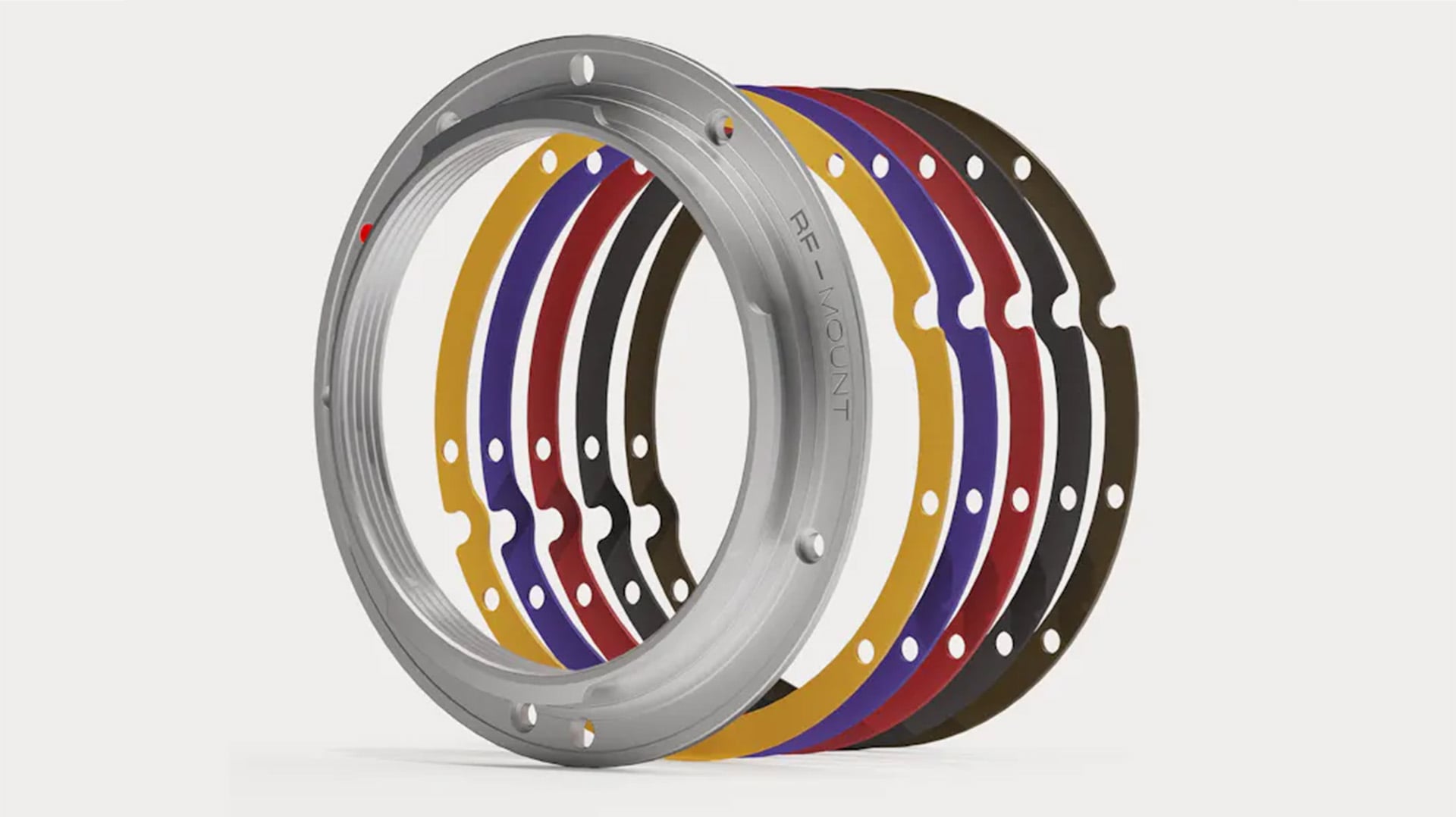
You can convert the Module 8 PL Tuner to Fujifilm X and Leica L mounts

You can convert the Module 8 PL Tuner to Fujifilm X and Leica L mounts
[embedded content]

Happy NAB2024 everyone. Last we covered the Module 8 series, its L1, L2, and L3 tuners just got a new PL version that acts as both a tuner and a PL lens adapter for RF and E mount cameras. Now, Moment is releasing a mount conversion kit for $100 that allows you to convert the tuners’ mounts. This allows you to switch between the previously available RF and E mounts or adapt the tuners between two new options: the Fujifilm X and Leica’s L mounts.

YouTube videoYouTube video
[embedded content]

What are the Module 8 Tuners?

Moment 8 tuner vs vintage glassMoment 8 tuner vs vintage glass

If you are a fan of classic lenses, you may have already heard of the Module 8 Tuners. They’re essentially front filters that give your lenses a “classic lens look”. Specifically, Lenses like the Canon FD,  Super Baltars, and Canon K-35. If the claim is solid, getting a Tuner is an order of magnitude cheaper than getting a high-end vintage lens.

Here is the deal: if you like vintage looks, digital filters are great, but they are not the real thing. A lens “look” is tied to its optics and is hard to reproduce in post. There is a reason that old optics are getting a renaissance. The Nour TripletPetzval 80.5mmLensbaby Velvet, and the Daguerreotype Achromat 2.9/64 Art Lens are just a few samples. They are more on the stills side, but you get my point.

Optical flows are hard to reproduce digitally, but what if you reproduce them optically? That’s what the Module 8 Tuners are for. Of course, it does not hurt that multiple-Oscar winner Iain Neil is the optics designer behind this project.

Module 8 Tuners showcaseModule 8 Tuners showcase

Specifications

Lens Type Variable Look Zoom Attachment
Materials Aerospace Quality
Mechanical Design Precision Multi-cam
Lens Side Mount Canon EF Lenses and PL Lenses Only
Electronics Support Canon, Tamron, Sigma
Electronics Support EF Tuner: Focus (wire), Aperture, IS and Autofocus Pass though – PL Tuner: None
Inspired By Canon® K-35
Neutral Setting Yes
Adjustment Rage 0-10
Halation (Center) Low/Medium
Halation (Edge) Low
Axial Aberrations Spherical
Full Frame Aberrations 5th Order Coma Oblique Spherical
Resolution 4K+
Max. Bokeh Effect Soap Bubble
Magnification Factor 1.1x
Tuner Breathing < 0.25%
F/# Range (Optimal) EF Tuner: F/1.2-F/2.8 – PL Tuner: F/1.0-F/2.8
Stop Loss < 1/4
Lens Image Circle Full Frame
Coatings Vintage Emulation
Weight 180g (E Mount) – 170g (RF Mount) – 280g (PL Tuner)
Tuner Dial Rotation 70 degrees
Firmware Update EF Tuner: Via Micro USB – PL Tuner: No Firmware
Warranty 1 Year
Dimensions EF Tuner: Ø76mm x L31mm – PL Tuner: Ø80mm x L45mm
Moment Tuner conversion kitMoment Tuner conversion kit

Price and availability

The mount conversion kit costs $100 per unit. Personally, I find this price to be quite “bananas” for what is essentially a rear mount part and a shim kit.

Sponsor shout-out: A huge shout-out for our #NAB2024 gear sponsors. They pick up the bill so you can get amazing free content: Nanlite, ProGrade Digital, Sennheiser, SmallRig, Ugreen, YC onion

An AP photographer explains how he captured the moment of eclipse totality

An AP photographer explains how he captured the moment of eclipse totality
image

FORT WORTH, TEXAS (AP) — Photographer Mat Otero has been working at the AP in the Dallas bureau for nearly 30 years. In that time, he’s covered an annular and partial solar eclipse, so he was prepared for the challenge of making a photo of the only total solar eclipse on this scale he will likely cover in his career (the next coast-to-coast eclipse in the U.S. is expected in 21 years). This is what he said about making this extraordinary image.

Why this photo