Photography

Edward Burtynsky’s photos are stunning — but do they move people to take environmental action?

Edward Burtynsky’s photos are stunning — but do they move people to take environmental action?

On the second floor of the prestigious Saatchi Gallery in West London, small circular splotches of ruby, slate and marigold fill a large framed print hanging on the wall.

Passersby from a photography group remark that it looks like the work of 19th-century Austrian painter Gustav Klimt. But it’s not a Klimt. In fact, it’s not even a painting.

It’s an aerial photograph of salt ponds in Senegal, captured in 2019 by Canadian photographer Edward Burtynsky. Digging shallow ponds allows workers to harvest the salt, which from Burtynsky’s vantage point made the Earth’s surface look like a porous, multi-coloured sponge.

The Saatchi is currently devoting two floors to an exhibition entitled ​​Burtynsky: Extraction/Abstraction, the largest of his storied career. The collection, which he calls a survey of what he’s been doing for the past 40 years, features 94 large-format photographs, 13 murals and an augmented reality experience curated by Marc Mayer, the former director of the National Gallery of Canada and Musée d’art contemporain de Montréal.

Burtynsky’s photographs take the audience from a waste transfer site in Scarborough, Ont., to the swirling grey swaths of a tailings pond at Wesselton Diamond Mine in South Africa, the world’s fifth-largest diamond producer by volume (about 9.6 million carats a year).

Burtynsky with Jim Panou in Agbogbloshie Recycling Yard, Accra, Ghana, 2017.
Burtynsky is seen at work in Agbogbloshie Recycling Yard in Accra, Ghana, in 2017. (Nathan Otoo, courtesy of the Studio of Edward Burtynsky)

“The urgency that I’ve been feeling over the last decade has now hit a kind of a fever pitch,” Burtynsky told CBC News.

Burtynsky, who is also showing some of his work at the Flowers Gallery in London, says he has spent more than four decades “bearing witness” to the way civilization has transformed the planet, and hopes this exhibition will “move us all to a place of positive action.”

Whether or not Burtynsky has been successful in his mission, however, is uncertain. Some critics say that rather than confronting viewers with the reality of environmental destruction, his undeniably arresting photos distance them from it. 

Indeed, some visitors to the Saatchi Gallery said they were more interested in the images than the sobering context.

“I’m not sure I need to know the details of whether it’s in Senegal or Turkey, Chile or, you know, the Skeleton Coast or Russia,” said Tony Greenwood, a self-proclaimed Burtynsky fan. “I mean, it’s interesting, but to be honest with you, I prefer to just stand back and just be a bit awestruck.”

A quiet kind of activism

Others think Burtynsky fulfils his brief. 

“It has an impact on you from an environmental perspective that you don’t get from looking at it on a small scale,” said Mark Smith, an amateur photographer who visited the exhibition with his wife, Helen.

Captured by Burtynsky in 1996, this photograph shows the nickel tailings just outside of Sudbury, Ontario, one of the most mineral-rich areas in the world.
Captured by Burtynsky in 1996, this photograph shows the nickel tailings just outside of Sudbury, Ont., one of the most mineral-rich areas in the world. (© Edward Burtynsky, courtesy Flowers Gallery, London)

The exhibition, which opened last month and runs until early May, features a “process room” that houses some of Burtynsky’s cameras and behind-the-scenes images of him in the field, as well as a personal journal from 1983.

In it, Burtynsky outlined what would become the thesis for his work: “We as a species are taking voraciously from nature. But my work will focus on both nature and how we take from nature; the industry and the conversion of nature into the products that we consume.”

This image of the Thjorsá River in Iceland was taken in 2012. Burtynsky says it’s a good time ‘to really talk about biodiversity loss and talk about what’s happening to the climate in amongst the other crises that we’re facing.’ (© Edward Burtynsky, courtesy Flowers Gallery, London)

Smith thinks Burtynsky’s work is “a far better way” of getting people to think about environmental degradation than protests.

“This is reflecting back what’s actually happening. This scale just makes you think, wow, there is something that needs doing here. Whereas somebody gluing themselves to the top of a train or whatever — it’s just getting in my way. It’s just irritating me. And I just think these people are fools.”

Smith is referring to Just Stop Oil, a British environmental activist group that uses civil disobedience to demand “the U.K. government stop licensing all new oil, gas and coal projects,” according to its website.

Group members have made headlines in recent years for gluing themselves to central London streets, forcing the shutdown of major roads and disrupting international sporting events such as the Wimbledon tennis championships.

“We’re basically talking about the need for a revolution on so many levels at this point in our history,” said Adrian Johnson, a spokesperson for Just Stop Oil. “The government, the media in general, are just not getting the message through reliably, accurately and fully enough to the general public: We are destroying our only home.”

Targeting galleries

Just Stop Oil has also targeted cultural institutions. In 2022, two supporters threw tomato soup over Vincent Van Gogh’s Sunflowers in London’s National Gallery. The painting was unaffected, thanks to its protective glass case, but the two activists then glued themselves to the wall beneath the painting, which has left a mark from where the wall was repaired, according to Johnson. 

“I was recently in the National Gallery and, to be honest, the most moving thing that I saw amongst all of the beautiful art was … the marks of where their hands were,” he said. 

Two protesters are on their knees in front of a painting that has been vandalized with a can of soup.
Activists with Just Stop Oil are seen gluing their hands to the wall after throwing soup at Van Gogh’s painting Sunflowers at the National Gallery in London on Oct. 14, 2022. (Just Stop Oil/Reuters)

Johnson says the reason cultural centres are a frequent focal point of disruption is because of funding from the fossil fuel industry. For example, last December, it was announced that BP had made a £50-million ($86 million Cdn) deal with the British Museum to help fund a structural redevelopment project.

In 2017, a report released by the Carbon Majors Database showed 100 fossil fuel companies have been the source of more than 70 per cent of the world’s greenhouse gas emissions since 1988.

Burtynsky told The Telegraph newspaper in January that the choice many art institutions are facing between accepting funding from “big banks and other hugely profitable businesses” or going bust is a difficult one. 

“At a certain point, if every artist and arts organization worldwide turns down hugely valuable funding, there’s an undeniable risk of them being starved out of existence. The objections and criticisms are valid, because this [climate] crisis we’re facing is real … But perhaps those energies can be shifted,” he said in an email statement to CBC News. 

“These are big issues that we’re facing,” he said. “At this time in my life, to wade into those issues is beyond me. And it’s not where my strengths lie. My strengths lie, I think, in visualizing and storytelling.”

Visitors are seen inspecting Burtynsky’s work at the Saatchi Gallery in London. (Lauren Sproule/CBC News)

When asked about Burtynsky’s form of activism — capturing and displaying evidence of the planet’s destruction — Just Stop Oil’s Johnson says he supports it, but that it’s “not going to be enough.”

“That is why I would say there is the need and the legitimate invitation for civil disobedience, kind of like a radical flank … Changes in society for the better have shown us time and time again that you basically need to address it on all fronts.”

Photographer’s new book highlights hundreds of kids who want to make the world a better place

Photographer’s new book highlights hundreds of kids who want to make the world a better place


CNN
 — 

For the last decade in my job as a photographer, I have traveled the country to take pictures of young people and listen to their stories.

I am confident when I tell you the most important thing I’ve learned:

They are going to be fine.

Yes, the kids stare at their phones. A lot. And yes, they watch mind-numbingly inane videos, and yes, they share way too much on social media.

They also survived a once-in-a-century pandemic, live with economic uncertainty and an especially nasty political environment — and they are growing up with the frightening and unpredictable effects of climate change. Let’s cut them some slack.

Through interviews and photoshoots with thousands of kids, many of them shown in my new book, “Force of Nature: A Celebration of Girls and Women Raising Their Voices,” I have been privileged to spend time with young people who are kind, inquisitive, ambitious, creative and desperate to make the world a better place.

Meet Zoe, who created a line of dolls with hair just like hers. At 10, she is the CEO of her own company. Lindsey, at 16, along with three classmates, started a lawsuit against the US Department of Education due to numerous changes to Title IX that limited protections of those reporting and protected the accused. And Sunny, 8, who is fighting for her right to play sports in her home state of Texas.

Perhaps the thing I find most inspiring about these kids is their commitment to inclusivity and diversity and simply being nice to each other. They are more open to differences in race, gender, sexuality, body type and background, and are actively working to create a more welcoming society. The hang-ups and prejudices of older generations are not theirs.

There is a tendency when talking about younger generations to mythologize what times were like “in our day.” The grass was greener, the sky was bluer, and movies cost $4.50.

However, “in our day,” we were also less accepting to kids who were different, less understanding of mental health issues, less attuned to the dangers of bullying, and we were more likely to acquiesce to preconceived gender roles. Children today care deeply about those issues and are actively working to make things better.

Witnessing the potential and hope embodied by the younger generation fills me with pride and not a small amount of awe. This generation has found their voices and is using them to create lasting change.

Elizabeth, who earned valedictorian of her college class as a nonspeaking autistic emphasizes how important it is to find and use our voice. Through the technology of her adaptive speaking device, she told her class: “God gave you a voice. Use it. And no, the irony of a nonspeaking autistic encouraging you to use your voice is not lost on me. Because if you can see the worth in me, then you can see the worth in everyone you meet.”

Here are some of the amazing kids I met, in their own words.

CG, 15

CG placed fourth in her state for wrestling against the boys.

“My twin brother wrestled, and I asked my dad if I could do it too,” CG said. “I never felt like I couldn’t do something because I was a girl.”

Zoe, 10

After not being able to find dolls with hair like hers, Zoe became CEO of her own company selling dolls that have relatable skin tones and hair like her.

“I am on a mission to empower the next generation of curly and confident girls that will change the world,” Zoe said. “I make dolls with relatable skin tones and hairstyles for other girls that look like me.”

Sunny, 8

Sunny is fighting for her right to play softball with her friends in Texas.

Sunny wants trans kids in the future not to have to fight like her.

“I like playing sports because I love making friends and running fast. When my mom told me about the anti-trans bills in Texas, I wanted to speak for myself. I will keep speaking out until my voice is heard. I’d be so sad if I couldn’t play softball anymore, but it’s not just about losing sports. It is about my right to live.”

Mistura, 16

Mistura is sharing her refugee story through speech and writing.

“I advocate for refugee and immigrant issues,” Mistura said. “I emigrated from Nigeria when I was six, so I know what it is like growing up in a place that is not home and then having to push yourself to call that place home. Speaking up about this issue brings me so much peace because I am constantly thinking about those who don’t have a voice like I do.”

Elizabeth, 25

Elizabeth is the nonspeaking autistic valedictorian of her college class, who gave her speech through a speaking device.

Elizabeth has a nonprofit organization that helps others like her find their voices.

“God gave you a voice. Use it.  And no, the irony of a nonspeaking autistic encouraging you to use your voice is not lost on me.  Because if you can see the worth in me, then you can see the worth in everyone you meet.”

Jai, 17

Jai is a member of Brown Girls Do Ballet.

Jai is part of Brown Girls Do Ballet, which increases representation of underrepresented populations in ballet.

“When I dance, my movements tell a story: the story of a brown dancer, an artist, an advocate, and a voice for the voiceless. My tights match my brown skin tone, which represents my past, my present, and my bright future.”

Regan, 18

Regan, who lost her sister to cancer, made her mission to educate people about childhood cancer.

Regan lost her sister to cancer and, in the wake of that loss, made it her mission to bring light to those going through the same battle as her sister, Emerson.

“When I was 15, I lost my sister – my best friend to cancer.  Ever since that day, my mission has been to bring light to people about childhood cancer.  I believe the only way to bring attention to something is to use your voice.  Through Smasherson, the foundation that my family created to honor my sister, I am able to tell her story to so many people and help them to understand how important it is to support these causes.”

Lindsey, 18

Lindsey and three classmates filed a lawsuit against the US Department of Education due to limits placed on Title IX.

Along with three classmates, Lindsey started a lawsuit against the US Department of Education due to numerous additions to Title IX under President Donald Trump that they say limited protections of those reporting Title IX violations and protected the accused.

“What could a group of high schoolers possibly do about a federal law? Turns out, we can use the power of the law ourselves. Although the lawsuit did not succeed, the Biden administration announced an executive order that overturned the regulations the same day our lawsuit went public.”

Sydney, 10

Sydney has made it her mission to help kids to feel safe at school.

Sydney endeavors to make her school a safe and bully-free zone.

“I was elected a Love Leader at my school.  I try to let people know to stay strong.  Hurt people hurt people. It’s not you, it’s them.  There’s been some bullying at my school, and it is not okay.  It’s important to take words seriously.  I want to make school a place where everyone can feel welcomed, safe and comfortable.”

‘A Deeper Beauty’: New Exhibition Displays Oklahoma Photography From Well-Known Filmmaker

‘A Deeper Beauty’: New Exhibition Displays Oklahoma Photography From Well-Known Filmmaker

A new exhibition in a Paseo art gallery aims to show how Oklahoma is as captivating as any place in the world.

JRB at the Elm is featuring the work of filmmaker and Prairie Surf Media co-founder, Matt Payne.

However, this exhibition features his work through a different medium, still photography.

The world through 105 millimeters, may give you a lens into his world.

“You’re capturing beauty in these places that are totally unique to these moments in time,” says Payne.

Payne works to capture beauty in the small and large, but he also works to see beyond beauty.

“I want there to be more than a photograph,” Payne explains. “I want there to be a story.”

There are stories across the 6 continents he’s travelled to displayed in the JRB gallery.

“Some of the most beautiful places in the world,” he says – adding there is none he finds more beautiful than where he calls home.

“To me, the Oklahoma photographs are the ones I’m most proud of. They’re the most unique,” he says. “As much natural beauty, or as much cultural beauty as everywhere I’ve been.”

Payne’s Oklahoma home called to him during his time in L.A. It’s the home where he helped open Prairie Surf Studios and started Prairie Surf Creative.

It’s a home where skies have no limits.

“These post storm mammatus clouds, these collapsing super cells, a super cell spinning up, foggy morning,” Payne says of his favorite weather events to shoot. “What ultimately I want is, I want the world to celebrate Oklahoma the way that I celebrate it; the way we collectively celebrate it.”

It’s a way to celebrate the beauty captured in 46.9 pixels. It’s all through a lens picked up when Matt’s own story took a turn.

“When a friend of mine passed away,” Payne said. “I tried really seeking out beauty to get through some of the pain that caused.”

There’s salve in each shutter and beauty in each story. The story of a unique moment in time and of the one who see it in 105 millimeters.

“They’re a deeper beauty. It’s the beauty of our people,” Payne says. “How beautiful the souls of the people are here.”

The exhibition will be open through the end of April.

NatGeo’s Photographer flips the lens to focus on visual storytellers

NatGeo’s Photographer flips the lens to focus on visual storytellers
NatGeo’s new series, Photographer gives us a glimpse behind the lens.

National Geographic is justly renowned for its incredible photographs and eye-popping video footage, capturing all manner of natural marvels in gorgeous, jaw-dropping detail. Now the people behind those amazing shots are getting their moment in the spotlight with the documentary series, Photographer.

If you’ve ever wanted to know more about what it’s really like to be a NatGeo photographer, this series will take you behind the scenes as the photographers strive to meet the challenges and inevitable surprise obstacles to get that timeless shot. Each episode focuses on a different photographer, combining vérité footage with in-depth interviews and archival footage to help viewers see the world through their eyes—whether it be capturing a hummingbird in flight, chronicling a campaign against oil rigs in the Bahamas, or recording protests, rocket launches, tornadoes, or the behavior of whales, to name a few.

The exclusive clip above features photographer Anand Varma, who started out studying marine biology, intent on following in his father’s footsteps as a scientist, But after taking a job as a camera assistant, he fell in love with photography and has carved out his own niche at the interface of science and art. His latest project is a photographic series centered on metamorphosis—in this case, trying to capture the formation and hatching of a chicken embryo on camera.

That’s a daunting challenge, and as the opening scene reveals, Varma’s first attempt failed. “The Saran Wrap eggs are not doing very well at all,” he tells the camera after working well into the wee hours. Environmental conditions have to be tightly controlled but overnight both the main humidifier stopped working and the backup humidifier didn’t kick in. That made the embryos’ environment 18° F hotter than it should have been. But Varma perseveres and eventually succeeds, commenting that a new growing embryo after 12 days resembles “a little velociraptor foot.” The embryo is actually blinking inside its unshelled yolk.

Photographer premieres on the National Geographic Channel on March 18 and will be available for streaming on Disney+ and Hulu on March 19.

Official trailer for NatGeo’s new series, Photographer.

Listing image by YouTube/National Geographic

In photos: Winning highlights from the British Wildlife Photography Awards

In photos: Winning highlights from the British Wildlife Photography Awards

British Wildlife Photography Awards 2024 was held last evening [March 14, Thursday] in Bristol, United Kingdom. The images represent the rich diversity of the UK’s wildlife.

This yearly competition, that’s been active since 2009, aims to celebrate the history of British nature via a myriad of categories, with adults aged 18 or above eligible to participate. 

It was founded by Maggie Gowan, a Horticulturist and Curator of Photography. BWPA eventually grew into a “revered and treasured competition” as per the website. The competition has been directed by photographer Will Nicholls since 2022. 

The photos with their details are usually published in the awards’ collection of books. 

The overall winner of the competition was an image called “Ocean Drifter” captured by Ryan Stalker.

  • Overall and Coast & Marine winner: 'Ocean Drifter' by Ryan Stalker

    Overall and Coast & Marine winner: ‘Ocean Drifter’ by Ryan Stalker

    The competition’s overall winner, also the winner of the Coast & Marine, was an image named “Ocean Drifter” shot by Ryan Stalker. The image depicts an image of a football wrapped in goose barnacles below the waterline. As per the description by BWPA:
    Above the water is just a football. But below the waterline is a colony of creatures.”
    This football was found “washed ashore” in Dorset after embarking on a significant transatlantic journey. It returned to the sea later, just in time to capture the photograph.
    While this species is not native to the UK, the photographer shot and submitted the picture considering it having washed up ashore due to the strong Atlantic storms. 
    Stalker says: “Although the ball is waste and should not be in the sea, I do wonder about the journey the ball has been on. From initially being lost, then spending time in the tropics where the barnacles are native and perhaps years in the open ocean before arriving in Dorset.”
    Nevertheless, this image also sheds light on the waste that draws non-native features into the waters of the UK, potentially leading to the proliferation of invasive species. 
    An escalation in human waste deposited in the sea might boost the likelihood of additional creatures reaching the country’s shores.
  • Animal Behaviour category winner: 'Three Frogs in Amplexus' by Ian Mason

    Animal Behaviour category winner: ‘Three Frogs in Amplexus’ by Ian Mason

    This image, which was captured by Ian Mason and called ‘Three Frogs in Amplexus, ‘ depicts a common frog–Rana temporaria- in Perthshire, Scotland.
    “Every March, our garden ponds suddenly come alive with hundreds of frogs that seem to appear overnight from nowhere. I have been photographing them for many years, and I am always fascinated and amused by their antics. Here, there has been a competition to mate with a female,” says Mason.
    “For a lot of the time, there is a frenzy of activity, but sometimes they freeze long enough to get a shot. The image is taken with the lens at water level, and the background is a distant larch tree.”
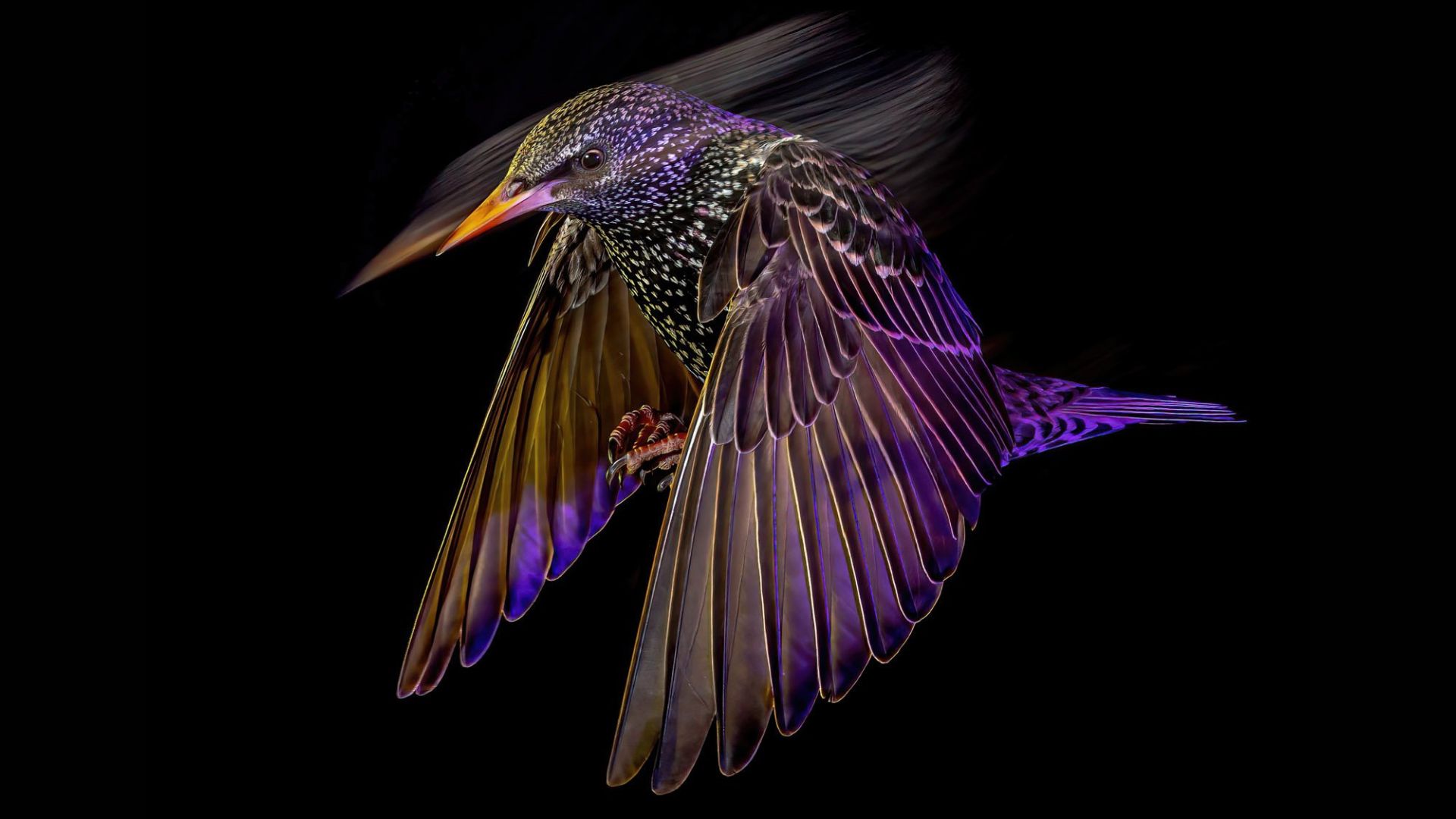
  • Animal Portraits winner: 'Starling at Night' by Mark Williams

    Animal Portraits winner: ‘Starling at Night’ by Mark Williams

    This image, “Starling at Night” captured by Mark Williams, represents a common star in Solihull, West Midlands, England.
     
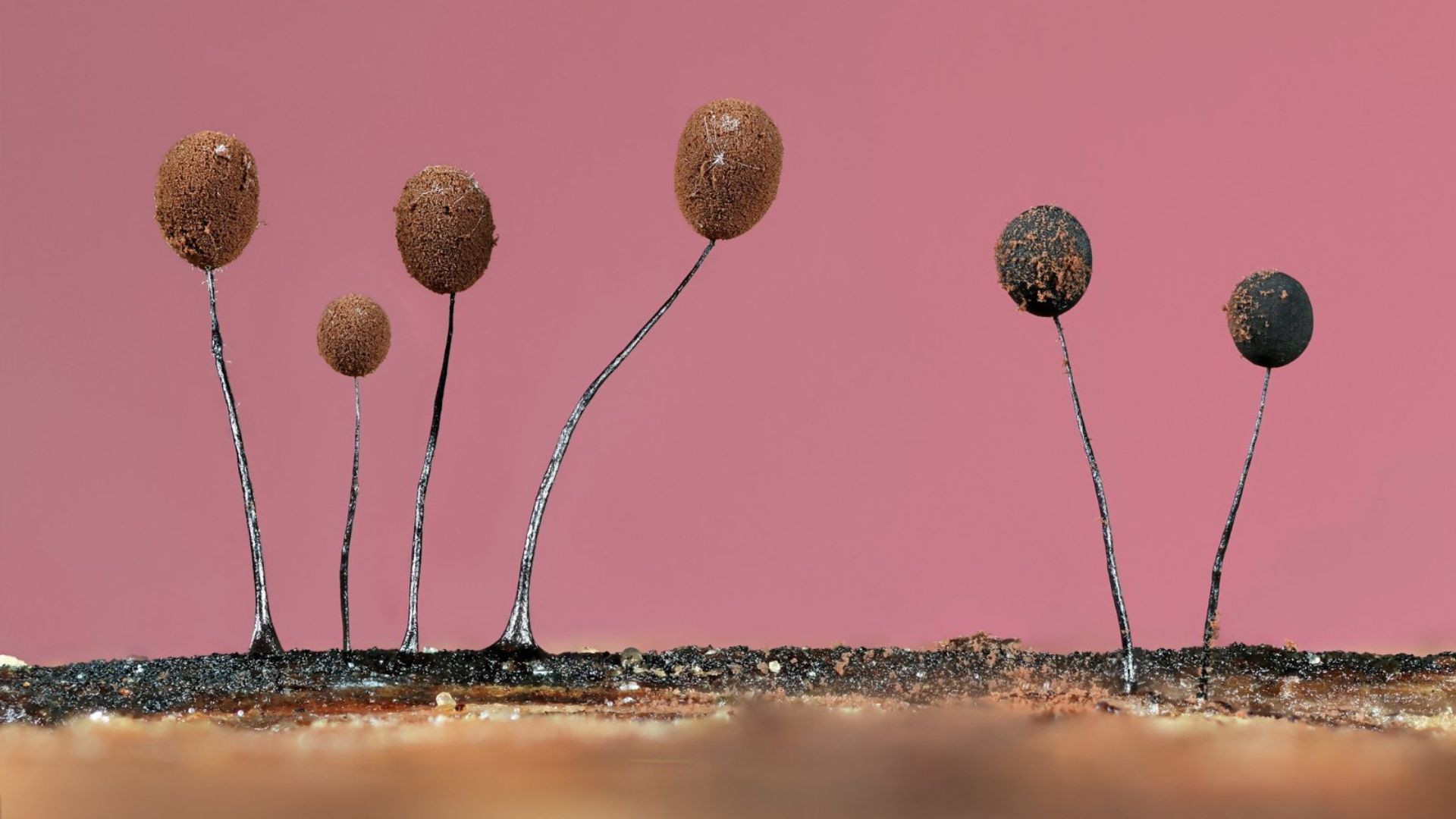
  • Botanical Britain winner: 'Tiny Forest Balloons' by Jason McCombe

    Botanical Britain winner: ‘Tiny Forest Balloons’ by Jason McCombe

    Jason McCombe took this image of slime mold in Essex, England, and called it ‘Tiny Forest Balloons.’
    McCombe says that slime molds are neither plants nor fungi. “I had never noticed them before, but when I set out to find some to photograph, I discovered that, if conditions are right, they’re everywhere!”
    “They’re just so small that if you are not looking for them you will simply overlook them. Each head on these fruiting bodies is approximately 1mm wide, and the depth of field when shooting at such high magnification is so shallow that focus stacking is required. This image was made using 160 images, each focused on a different area of the scene, then stacked together to create one highly detailed image.”
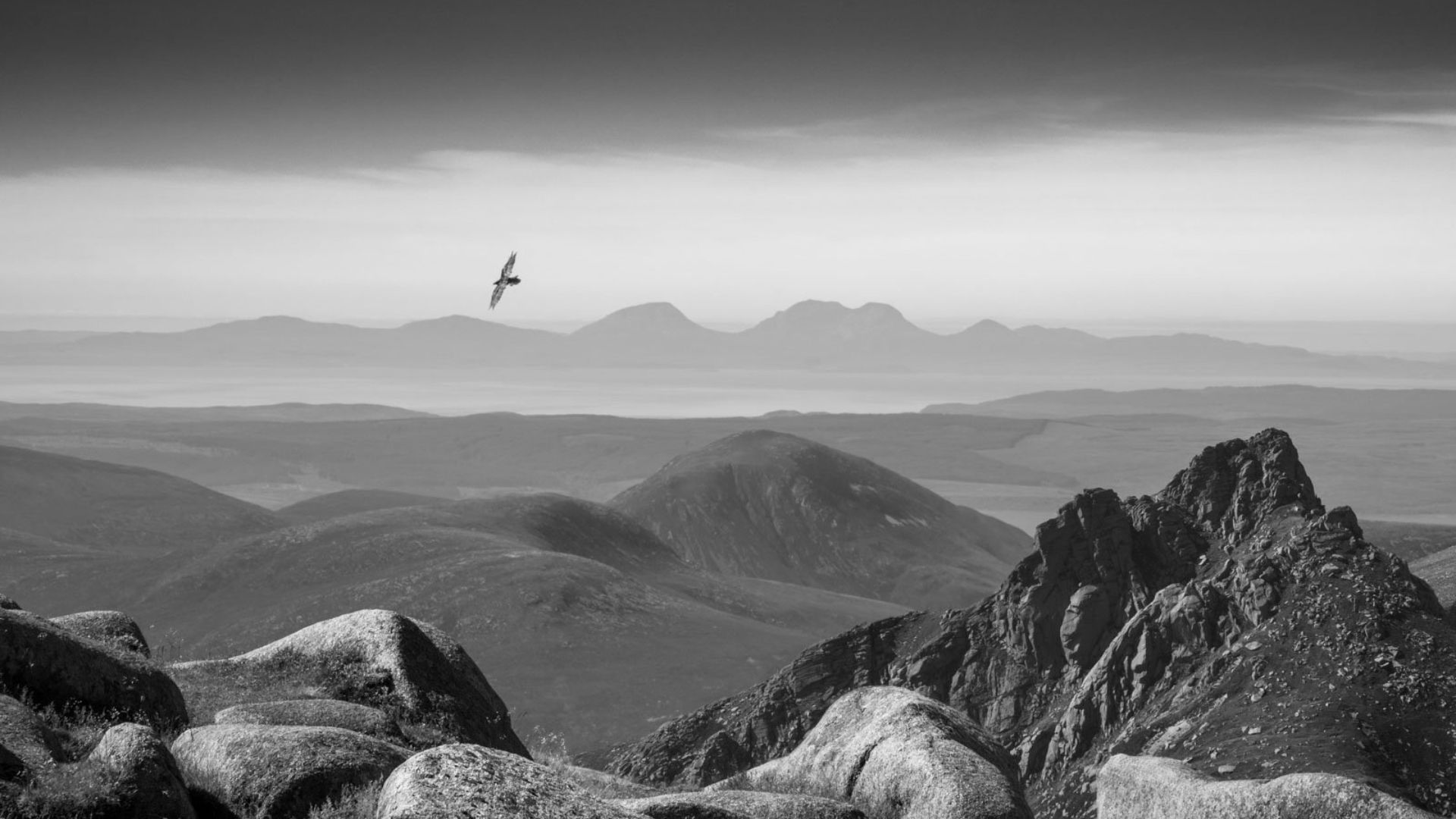
  • Black & White winner: 'Raven Above Arran' by Robin Dodd

    Black & White winner: ‘Raven Above Arran’ by Robin Dodd

    The image called ‘Raven Above Arran’ by Robin Dodd illustrates a raven soaring the skies of Isle of Arran, Scotland.
     
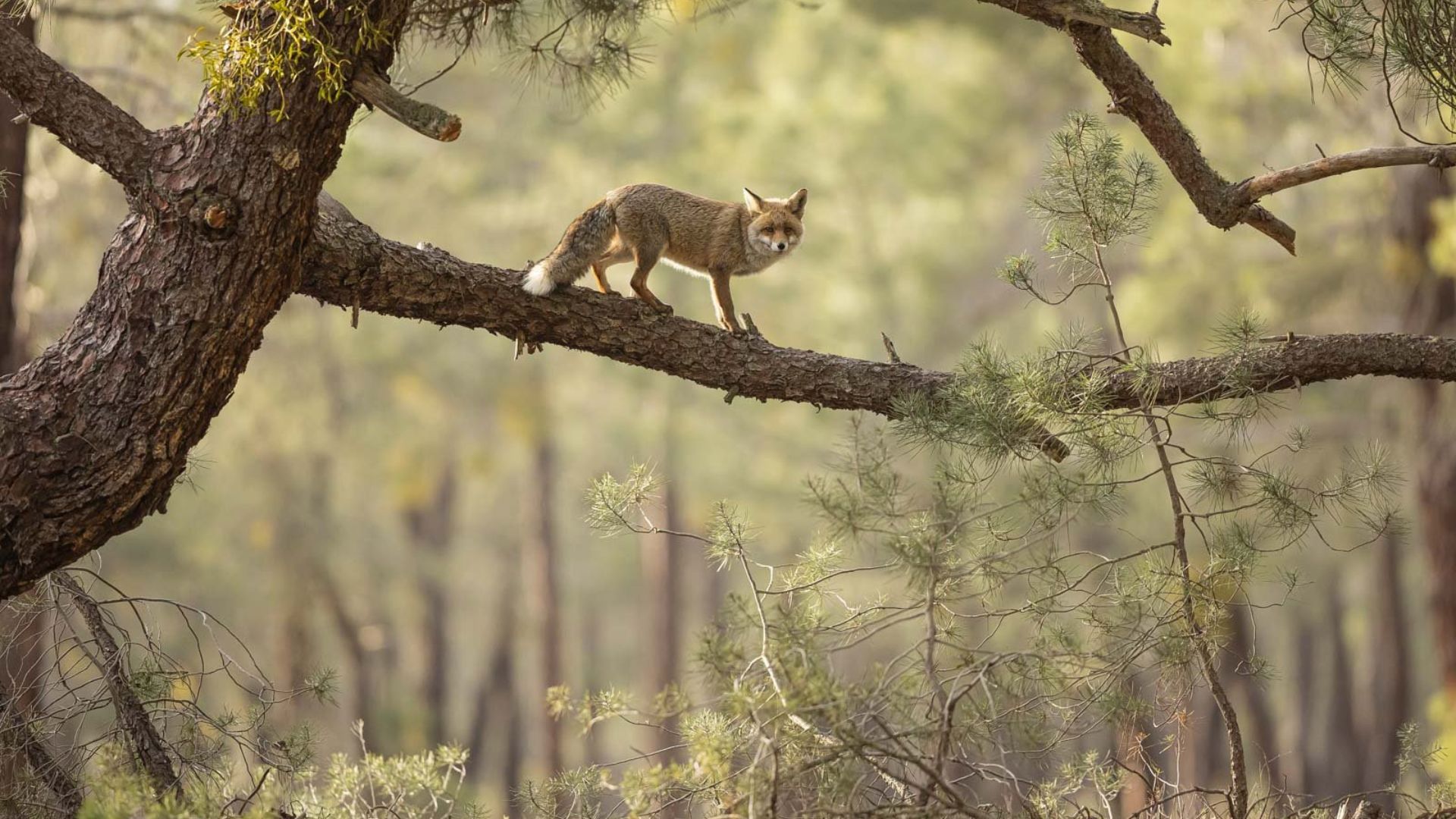
  • Habitat winner: 'The Tightrope Walker' by Daniel Valverde Fernandez

    Habitat winner: ‘The Tightrope Walker’ by Daniel Valverde Fernandez

    Daniel Valverde Fernandez captured this shot of a red fox among the trees of Sherwood Pines Forest Park, Nottinghamshire, England.
    The image called ‘The Tightrope Walker’ illustrates the fox walking along a tree branch at a significant height from the ground. The picture shows the adaptability of these animals and how they “are true tightrope walkers of nature.”
    Fernandez says, “The fox is perfectly framed between the branches and its silhouette is subtly highlighted by the sun’s rays falling on it.”
  • Hidden Britain winner: 'Three’s a Crowd' by Ross Hoddinott

    Hidden Britain winner: ‘Three’s a Crowd’ by Ross Hoddinott

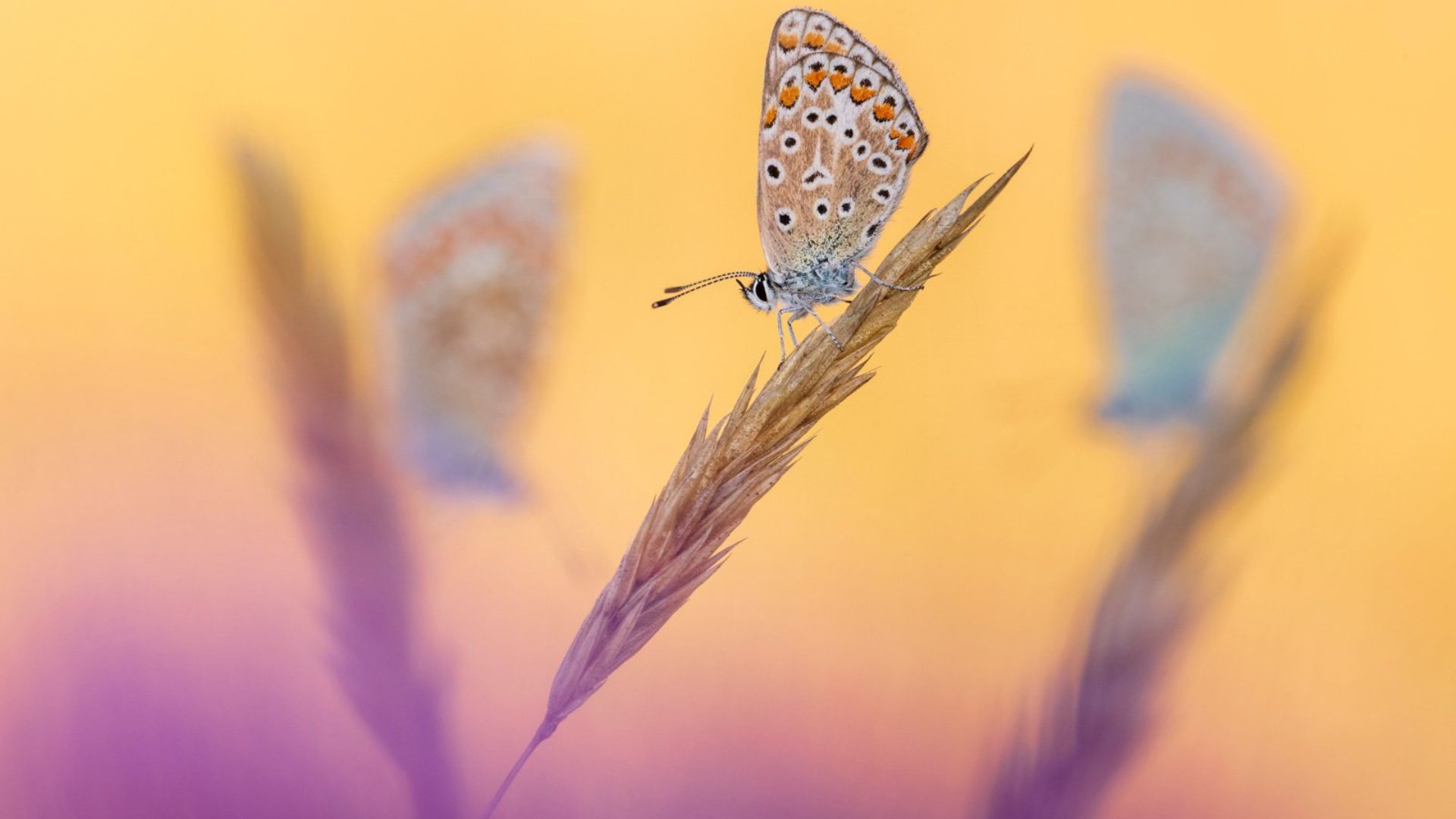
    The photo shot by Ross Hoddinott is of a common blue butterfly taken in Vealand Farm, Devon, England.
    It’s called ‘Three’s a Crowd’, representing a group of three butterflies against an aesthetic backdrop in Devon.
  • Urban Wildlife winner: 'Day Walker' by Simon Withyman

    Urban Wildlife winner: ‘Day Walker’ by Simon Withyman

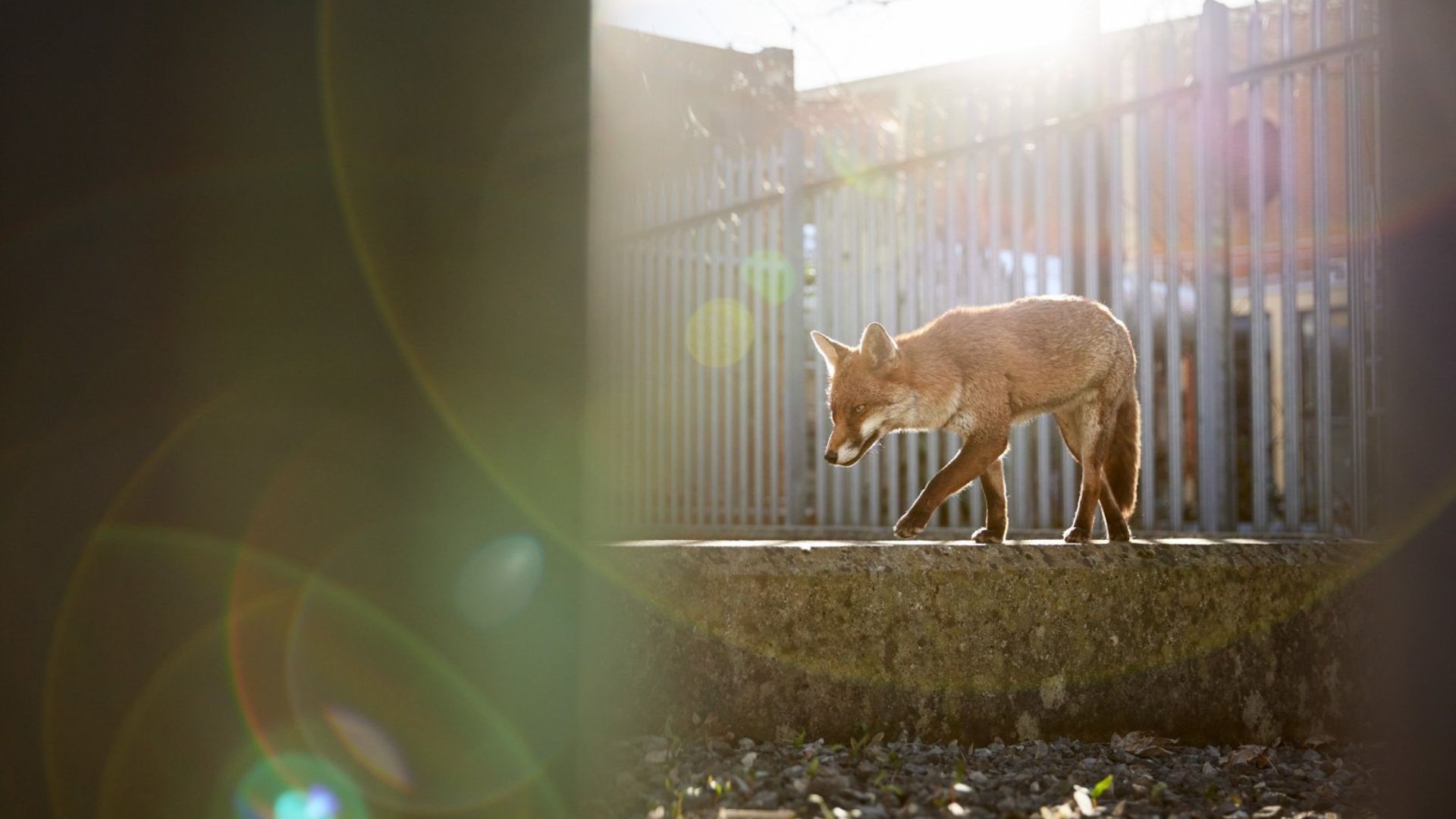
    Another image of a red fox winning the Urban Wildlife category was shot by Simon Withyman in Bristol, England.
  • Wild Woods winner: ‘Beech for the Sky’ by Graham Niven

    This image, called ‘Beech for the Sky’ by Graham Niven, represents Beech in East Lothian, Scotland.
    Niven says that the image is of the Beech tree grove near Dunbar in East Lothian, captured when the leaves are almost gone, the branches show their ‘canopy shyness’ – a phenomenon observed in many species of trees in which the crowns of mature trees do not touch each other.
    “In doing so, the trees form a canopy that has channel-like gaps which, when photographed from below, appear to create an intricate network of channels between the respective canopies. Besides the wondrous vision you are afforded, it’s also just a great excuse to lie down in the forest,” he says.
  • British Seasons winner: 'The King’s Quarters' by Warren Price

    British Seasons winner: ‘The King’s Quarters’ by Warren Price

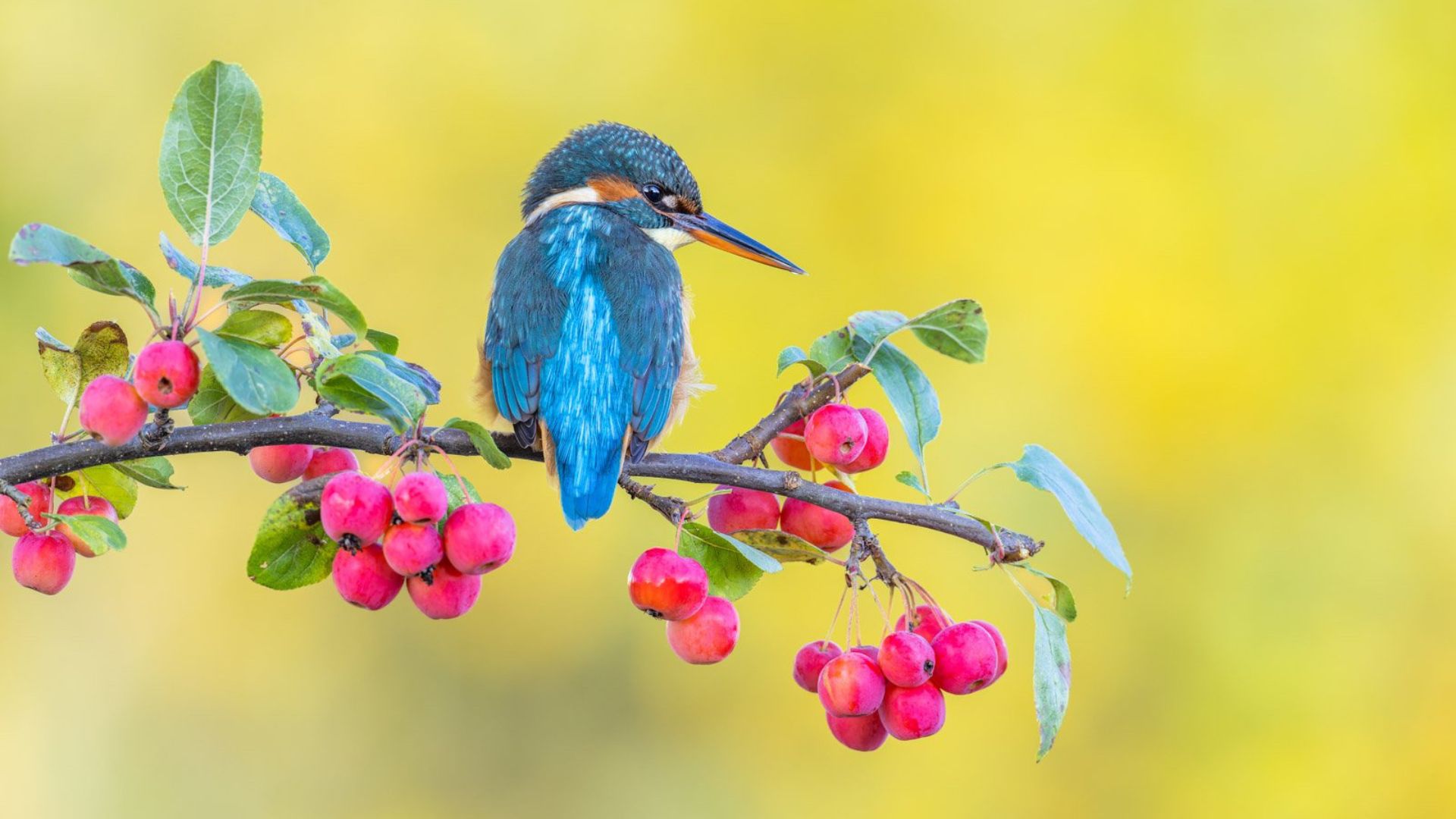
    ‘The King’s Quarters,’ an image of a common kingfisher taken in Bedfordshire, England, was captured by Warren Price.

Nature photographer Michael Kinney to host spring photography workshop

Nature photographer Michael Kinney to host spring photography workshop

Danville, Pa. — The public will have a chance to learn from nature photographer and videographer Michael Kinney at an upcoming workshop organized by the Middle Susquehanna Riverkeeper Association.

Kinney will be conducting a special Spring Photography Workshop at the Montour Preserve on March 21 at 10 a.m.

The workshop aims to provide participants with valuable insights on camera selection, basic photography skills, and entry-level underwater photography. Attendees will have the opportunity to engage in a comprehensive camera and equipment demonstration, which will assist them in choosing the right gear based on their skill level and specific requirements.

Lycoming County, Pa. — The essence of Nature Photography Day is to capture the beauty of nat…

The session will then proceed to cover fundamental photography techniques before delving into entry-level underwater photography skills. Pre-registration is mandatory for attendance, and interested individuals can learn more about the workshop and sign up on the official website.

Michael Kinney is a passionate nature photographer and videographer who strives to foster a deep connection between people and the natural world. His work primarily focuses on capturing vivid underwater imagery, including captivating shots of creatures like hellbenders and trout, according to vernalschool.org.

Keep your news local

Access to independent, local news is important, do you agree?

We work hard to deliver timely, relevant news, for free. 100% of your contribution to NorthcentralPa.com goes directly to helping us cover news and events in the region.

Thank you for saying that local news matters!


Wedding photographer to pay $40,000 in damages for scamming multiple couples

Wedding photographer to pay $40,000 in damages for scamming multiple couples
bride wedding photographer scambride wedding photographer scam

A Colorado photographer has pleaded guilty to scamming couples and photographers out of thousands of dollars. Suzanne Neville was accused of taking money for wedding photography services and then failing to deliver.

YouTube videoYouTube video
[embedded content]

According to CBS News Colorado, at least 39 victims will be eligible for financial restitution if the judge accepts the plea agreement. However, Parker police say they have reports from over 120 potential victims.

One victim, Sarah Garcia, spoke to CBS News about her particular case. She paid $1,400 for a wedding package in 2020. “She had a website and definitely looked legit. Facebook, Instagram, had a huge portfolio,” Garcia said. “An engagement session, a boudoir shoot, and eight hours of photography at the wedding, with two photographers. The only stipulation was you had to pay in full the same day.”

However, Garcia says she faced difficulty contacting Neville to schedule the engagement shoot and other services. The day before the wedding, a completely different photographer reportedly showed up at the wedding. “I didn’t know her name, had never seen her face,” the bride said. “She said it was the day before that Suzanne had reached out to her and asked her to come shoot our wedding. She said someone was in the hospital with COVID or something like that.”

Not only did she and her groom not take the engagement and boudoir photos they’d paid for, but Garcia later learned Neville never paid the replacement photographer. So, she had to pay another $1,200 to get the wedding photos.

After requesting a refund from Nevill, Garcia faced several dismissals. It wasn’t until she threatened legal action that Nevill finally sent over a refund contract. “In the contract, it said things like I wasn’t allowed to leave reviews on social media. I wasn’t allowed to contact her or her associate again,” Garcia said. She added that she refused to sign the contract and went on threatening to sue. Eventualy, Nevill returned her money, and not even all of it.

“Some women say that they never got their photos and they never got their money back,” Garcia told CBS News. There’s a Facebook group warning against hiring Nevill, and it counts a staggering 16,000 members. Other than wedding couples, many other photographers claim that Nevill still owes them thousands of dollars.

In January, Nevill admitted to one count of class five felony theft, out of the eight charges she faced. As part of her plea deal, she will pay nearly $40,000 in restitution and serve a four-year deferred sentence. This means that she will not have to serve any jail time, as long as she abides by the terms of the plea agreement. If the judge approves Nevill’s plea deal on Friday, the 39 victims of her theft will receive the financial restitution they are entitled to. However, Parker police have received reports from more than 120 victims, with the most recent report being filed in February of 2023.

The sentencing is scheduled for Friday at the Douglas County Courthouse.

Choose your wedding photographer wisely

To be quite honest, “an engagement session, a boudoir shoot, and eight hours of photography at the wedding, with two photographers” for $1,400 sounds too good to be true. It should be the first red flag if you ask me, enough to keep looking for photographers. But I understand that not everyone has the budget or knows general photography pricing. Sadly, this isn’t the first case of a scam like this.

So, when looking for a wedding photographer, start by looking at their portfolios and find the ones you like. But even after you do this, make sure to double-check samples of their images. Unfortunately, there are photographers who take someone else’s work and present it as their own – but a quick reverse image search should help you here.

It probably goes without saying, but read other people’s reviews. You can find them on their Facebook pages, Google, Yelp, and specialized websites like WedingWire, Zola, and The Knot. Organizations like the Professional Photographers of America (PPA) have directories of members, where you can sometimes find reviews from past clients.

Now that you’ve made the selection, reach out to as many photographers as you can and compare the prices. This will give you an idea of the price range so you’ll be able to weed out these “deals” that end up in a disaster. I know planning a wedding is stressful and time-consuming, and this takes up even more of your time. But unless you want your Uncle Joe to take photos with his phone and shaky hands, you should take these steps first.

[via CBS News]

Landscape photography

Landscape photography

‘A Thousand Shadows’ by Navin Sakhuja is, on the surface, a book of lavish landscapes. It holds images that have been created during his personal photographic trips into some of the most popular, pictorially rich landscape destinations of the world. The skilled camera gleans heaps of striking and aesthetically satisfying pictures. But then it has its own challenges.