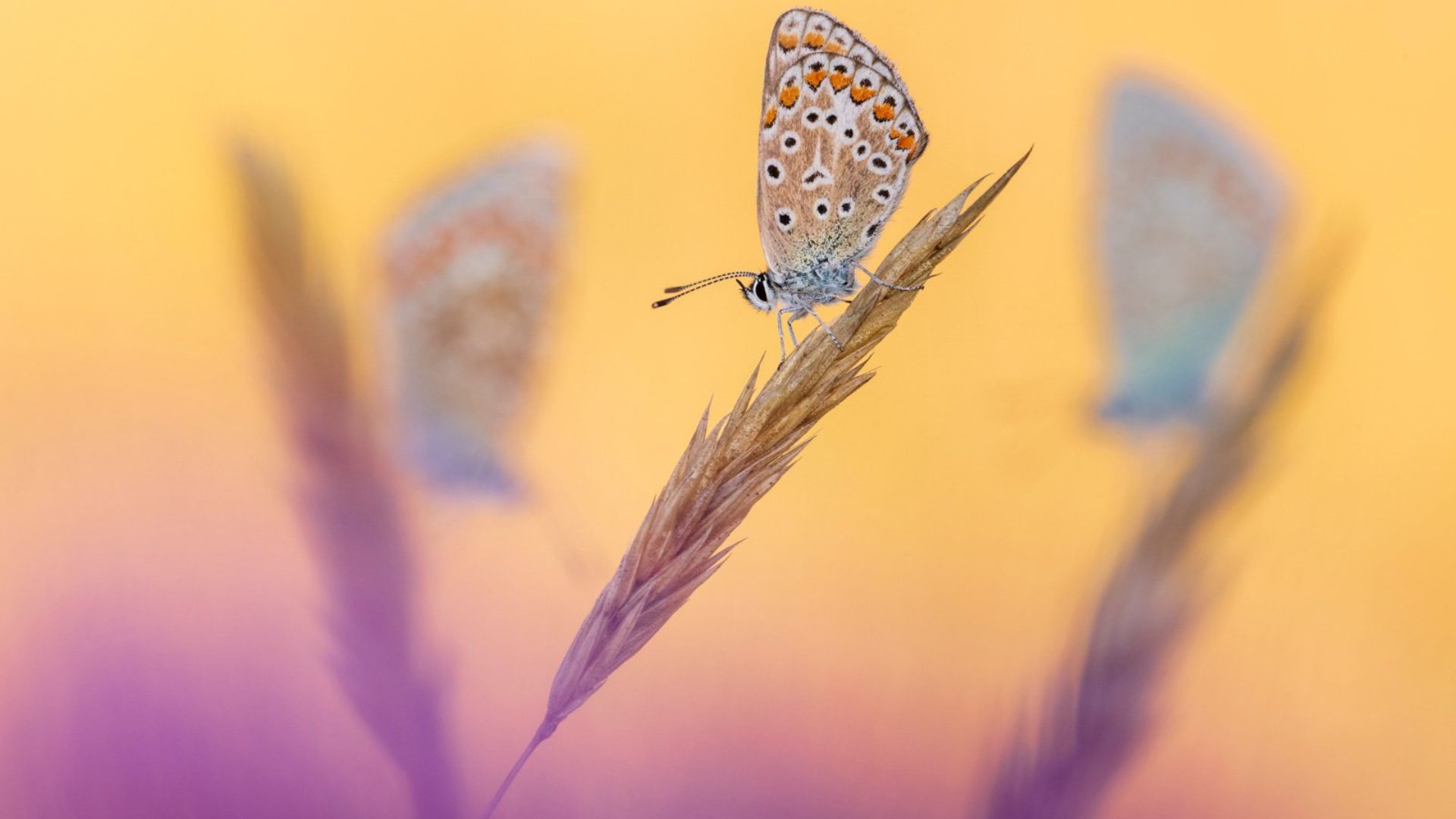
British Wildlife Photography Awards 2024 was held last evening [March 14, Thursday] in Bristol, United Kingdom. The images represent the rich diversity of the UK’s wildlife.
This yearly competition, that’s been active since 2009, aims to celebrate the history of British nature via a myriad of categories, with adults aged 18 or above eligible to participate.
It was founded by Maggie Gowan, a Horticulturist and Curator of Photography. BWPA eventually grew into a “revered and treasured competition” as per the website. The competition has been directed by photographer Will Nicholls since 2022.
The photos with their details are usually published in the awards’ collection of books.
The overall winner of the competition was an image called “Ocean Drifter” captured by Ryan Stalker.
-
Overall and Coast & Marine winner: ‘Ocean Drifter’ by Ryan Stalker
The competition’s overall winner, also the winner of the Coast & Marine, was an image named “Ocean Drifter” shot by Ryan Stalker. The image depicts an image of a football wrapped in goose barnacles below the waterline. As per the description by BWPA:
“Above the water is just a football. But below the waterline is a colony of creatures.”
This football was found “washed ashore” in Dorset after embarking on a significant transatlantic journey. It returned to the sea later, just in time to capture the photograph.
While this species is not native to the UK, the photographer shot and submitted the picture considering it having washed up ashore due to the strong Atlantic storms.
Stalker says: “Although the ball is waste and should not be in the sea, I do wonder about the journey the ball has been on. From initially being lost, then spending time in the tropics where the barnacles are native and perhaps years in the open ocean before arriving in Dorset.”
Nevertheless, this image also sheds light on the waste that draws non-native features into the waters of the UK, potentially leading to the proliferation of invasive species.
An escalation in human waste deposited in the sea might boost the likelihood of additional creatures reaching the country’s shores. -

Animal Behaviour category winner: ‘Three Frogs in Amplexus’ by Ian Mason
This image, which was captured by Ian Mason and called ‘Three Frogs in Amplexus, ‘ depicts a common frog–Rana temporaria- in Perthshire, Scotland.
“Every March, our garden ponds suddenly come alive with hundreds of frogs that seem to appear overnight from nowhere. I have been photographing them for many years, and I am always fascinated and amused by their antics. Here, there has been a competition to mate with a female,” says Mason.
“For a lot of the time, there is a frenzy of activity, but sometimes they freeze long enough to get a shot. The image is taken with the lens at water level, and the background is a distant larch tree.” -
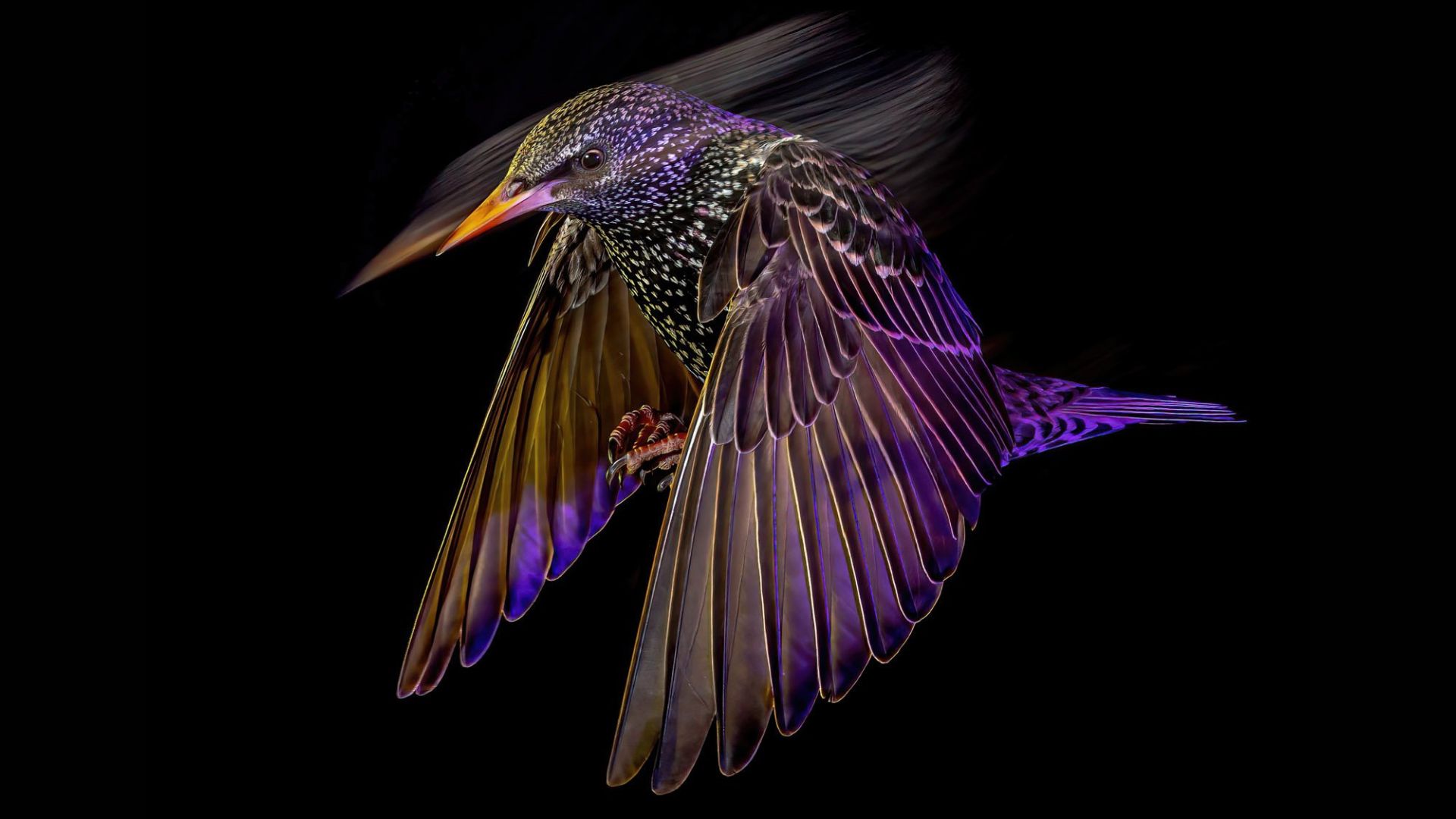
Animal Portraits winner: ‘Starling at Night’ by Mark Williams
This image, “Starling at Night” captured by Mark Williams, represents a common star in Solihull, West Midlands, England.
-
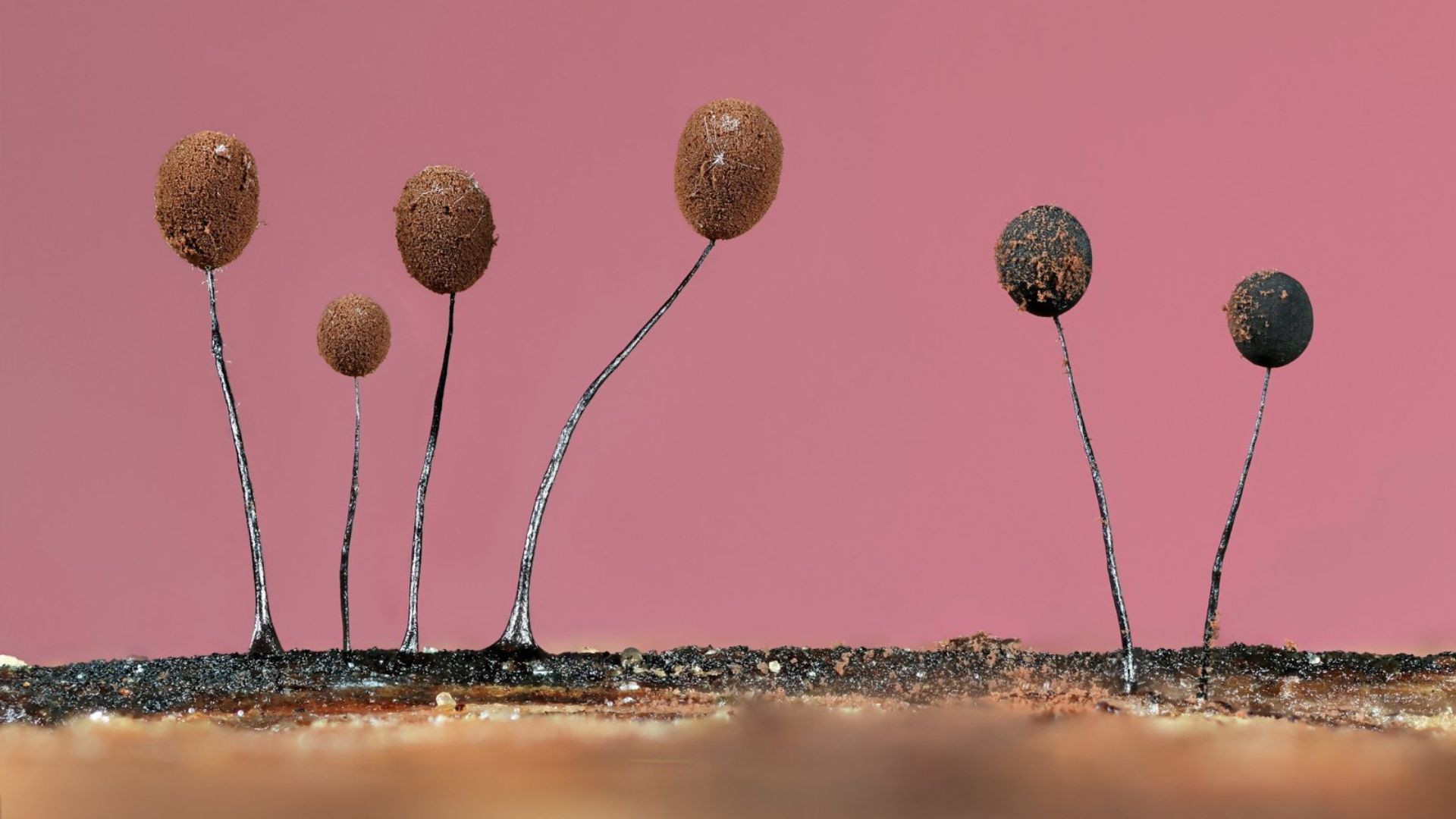
Botanical Britain winner: ‘Tiny Forest Balloons’ by Jason McCombe
Jason McCombe took this image of slime mold in Essex, England, and called it ‘Tiny Forest Balloons.’
McCombe says that slime molds are neither plants nor fungi. “I had never noticed them before, but when I set out to find some to photograph, I discovered that, if conditions are right, they’re everywhere!”
“They’re just so small that if you are not looking for them you will simply overlook them. Each head on these fruiting bodies is approximately 1mm wide, and the depth of field when shooting at such high magnification is so shallow that focus stacking is required. This image was made using 160 images, each focused on a different area of the scene, then stacked together to create one highly detailed image.” -
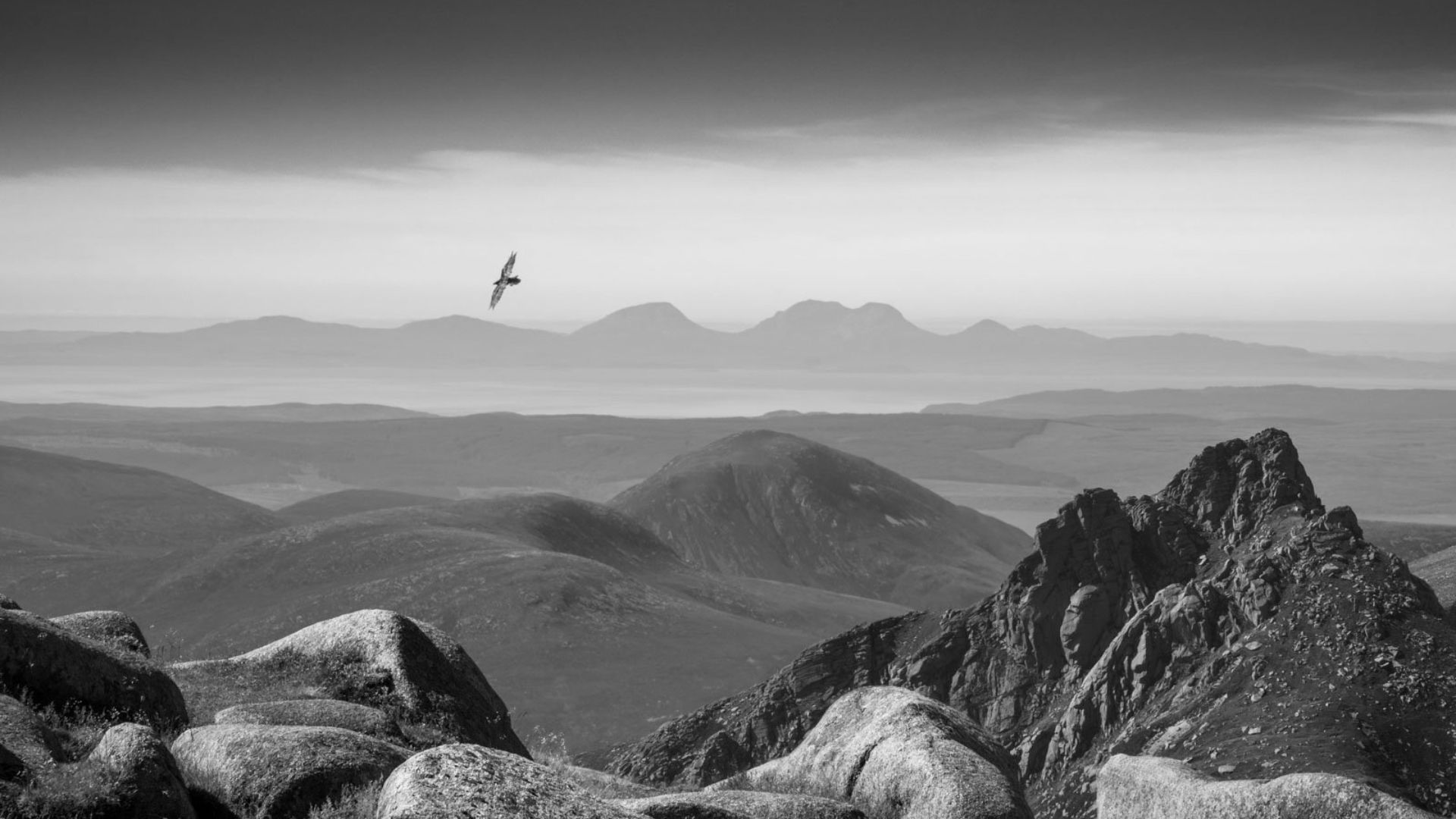
Black & White winner: ‘Raven Above Arran’ by Robin Dodd
The image called ‘Raven Above Arran’ by Robin Dodd illustrates a raven soaring the skies of Isle of Arran, Scotland.
-
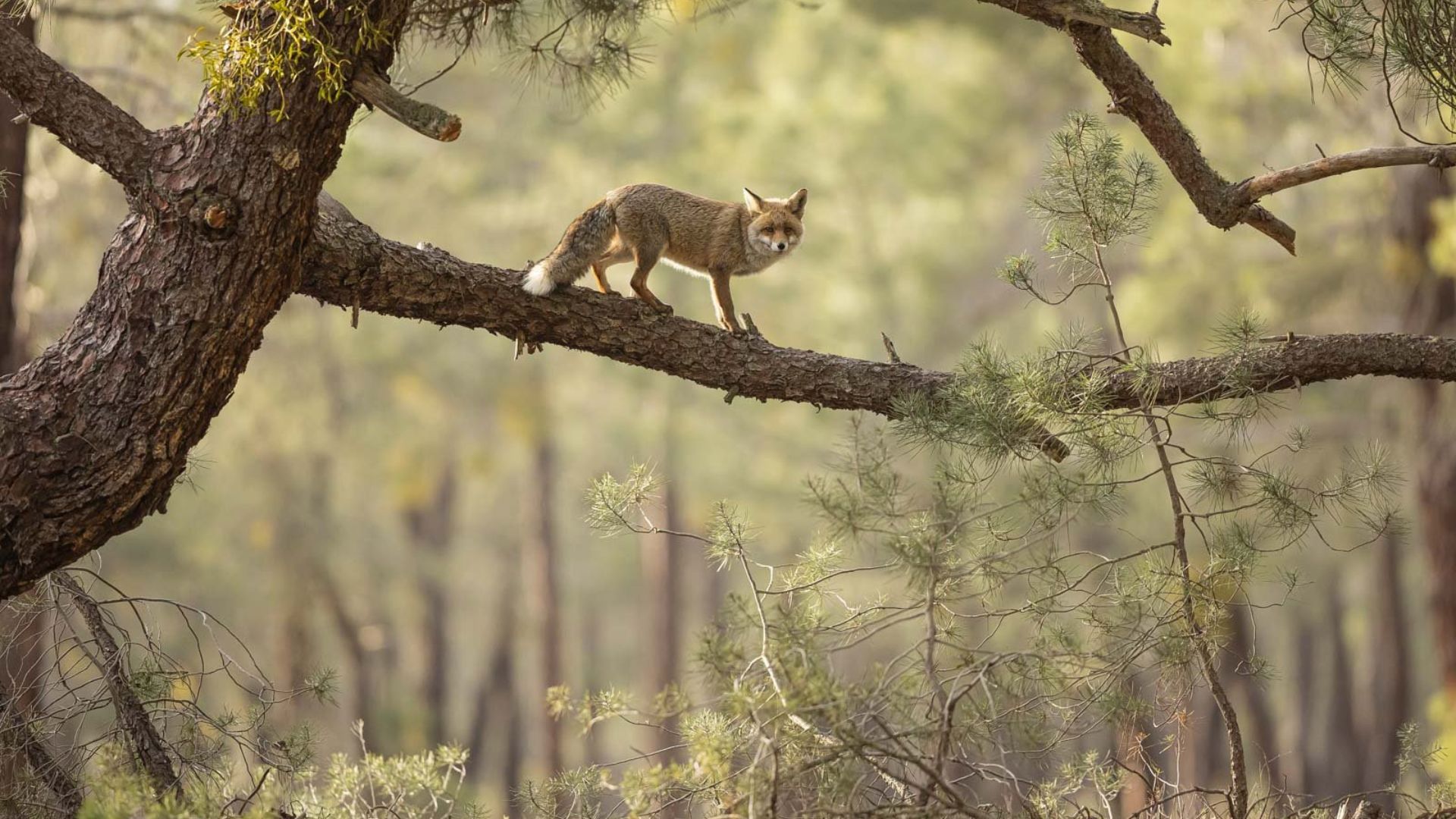
Habitat winner: ‘The Tightrope Walker’ by Daniel Valverde Fernandez
Daniel Valverde Fernandez captured this shot of a red fox among the trees of Sherwood Pines Forest Park, Nottinghamshire, England.
The image called ‘The Tightrope Walker’ illustrates the fox walking along a tree branch at a significant height from the ground. The picture shows the adaptability of these animals and how they “are true tightrope walkers of nature.”
Fernandez says, “The fox is perfectly framed between the branches and its silhouette is subtly highlighted by the sun’s rays falling on it.” -
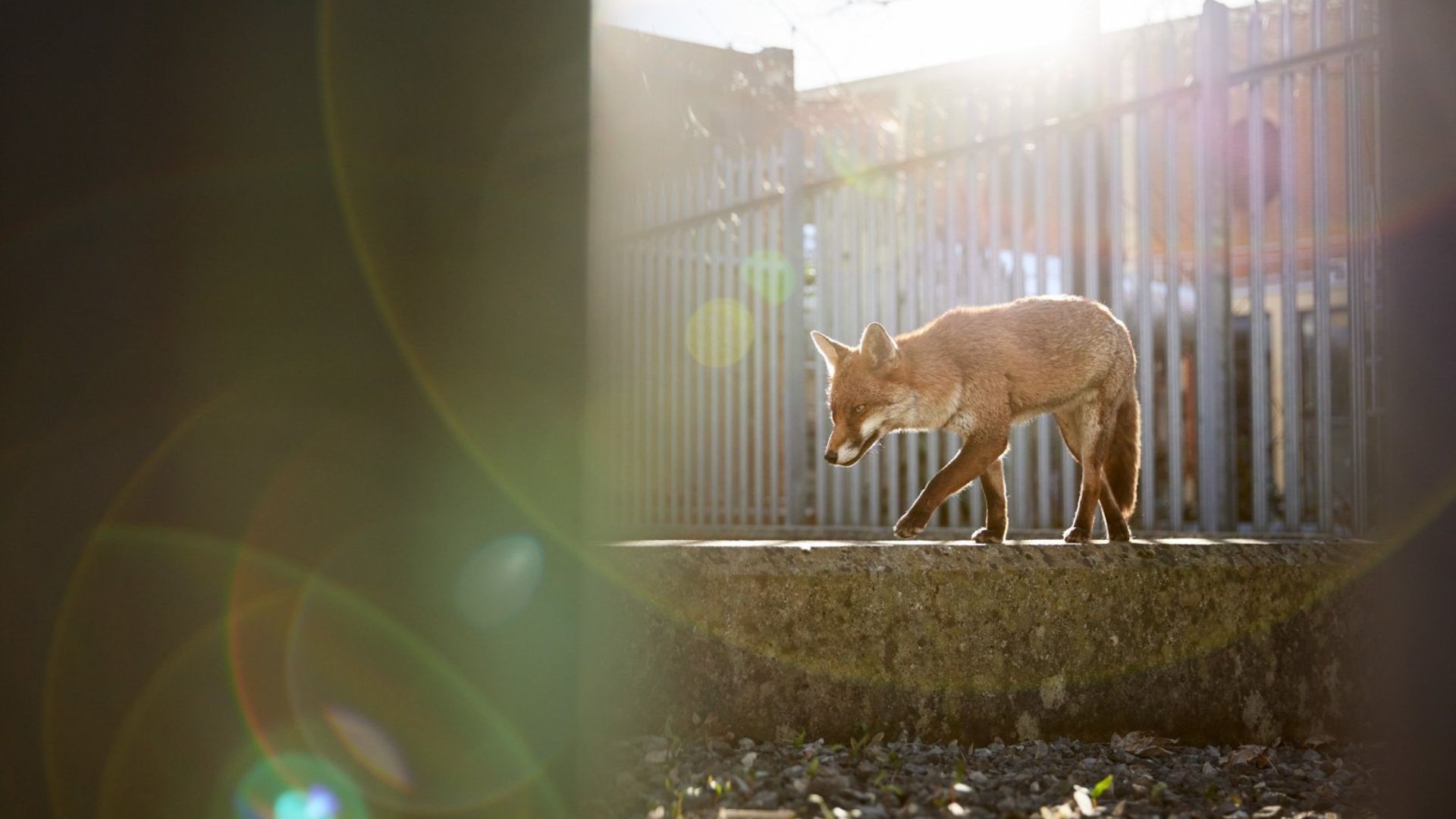
Urban Wildlife winner: ‘Day Walker’ by Simon Withyman
Another image of a red fox winning the Urban Wildlife category was shot by Simon Withyman in Bristol, England. -
Wild Woods winner: ‘Beech for the Sky’ by Graham Niven
This image, called ‘Beech for the Sky’ by Graham Niven, represents Beech in East Lothian, Scotland.
Niven says that the image is of the Beech tree grove near Dunbar in East Lothian, captured when the leaves are almost gone, the branches show their ‘canopy shyness’ – a phenomenon observed in many species of trees in which the crowns of mature trees do not touch each other.
“In doing so, the trees form a canopy that has channel-like gaps which, when photographed from below, appear to create an intricate network of channels between the respective canopies. Besides the wondrous vision you are afforded, it’s also just a great excuse to lie down in the forest,” he says. -
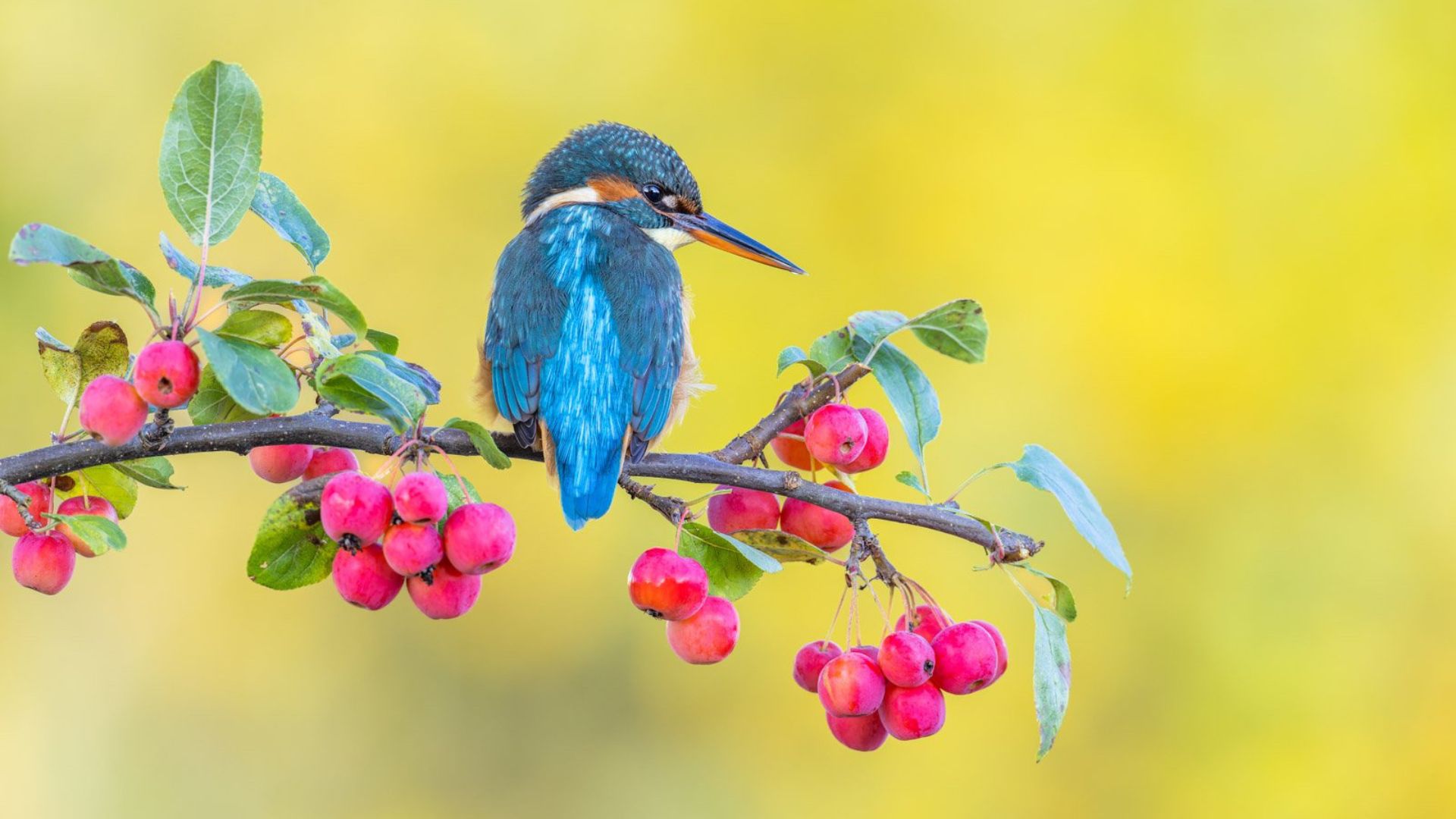
British Seasons winner: ‘The King’s Quarters’ by Warren Price
‘The King’s Quarters,’ an image of a common kingfisher taken in Bedfordshire, England, was captured by Warren Price.