Photography

The Atlanta Center for Photography takes flight

The Atlanta Center for Photography takes flight
Compositional Thoughts: Tracing Beinecke by Davion Alston, exhibiting through April 27 at the ACP Project Lab

Courtesy of Davion Alston and the Atlanta Center for Photography

What do outré Pink Flamingos director John Waters and poetic R.E.M. frontman Michael Stipe have in common?

Both have a side hustle as photographers. And both have visited Atlanta to talk about their artistic vision and share this under-the-radar side of their creative output. For 26 years, creatives like Waters and Stipe (along with such photo luminaries as Annie Leibovitz, Gregory Crewdson, and Larry Sultan) have come to Atlanta at the behest of one of the city’s formative arts organizations: Atlanta Celebrates Photography.

Founded in 1998, the organization’s goal is to promote Atlanta’s importance as a photo-centric town. “It has become an integral part of a pretty strong photography community,” says Joe Massey, an arts patron and early supporter of Atlanta Celebrates Photography through his family’s H.B. and Doris Massey Charitable Trust.

Atlanta Celebrates Photography is best known for its annual monthlong photography festival in October. “The festival allowed people from all walks of life, no matter what they do, who have a love for photography to discover Jackson Fine Art, the High Museum of Art, Spelman College Museum of Fine Art, all these places that they may not normally go,” says Amy Miller, who helmed the organization for 14 years. “That was one of the most important aspects of the festival.”

But, like so many arts organizations dealing with a changing funding landscape (as in, less money to go around from grant sources), Atlanta Celebrates Photography has recently reinvented itself, moving away from its focus on the signature festival. (The festival will remain, but with a shorter run.)

Rebranding as the Atlanta Center for Photography, the reimagined organization will feature a more year-round approach. That mission is anchored in its first brick-and-mortar gallery space, on buzzy Edgewood Avenue across the street from Staplehouse. Large windows on a busy street make the tiny, 300-square-foot ACP Project Lab the perfect venue for a driving city, a beacon for rotating exhibitions of photo-based work, including that of recent Yale MFA grad Davion Alston, whose solo show exhibits through April 27.

And there’s more to come, says the organization’s new executive director, Lindsey O’Connor. She has held positions at the High Museum of Art and New York City’s Whitney and Guggenheim Museums. O’Connor says audiences should look for further expansion by the ACP in 2024; the organization supports an emerging artist fellowship and recently earned W.A.G.E. certification to ensure fair wages for their artists. She hopes to soon offer artists’ studios, community education classrooms, and perhaps even a photo printing lab for community members.

The shift in focus comes after some organizational flux following Miller’s 2021 departure. She is now the director of institutional advancement for another beleaguered Atlanta arts institution, Art Papers, which has announced plans to sunset in 2026. “Post-pandemic realities for arts organizations, particularly in the Southeast, are dire,” says Miller.

Massey agrees. “Growing any arts organization, any nonprofit arts organization outside of the Woodruff Arts Center, it’s hard,” he says.

O’Connor understands the financial challenges that small and midsized arts organizations face. “But it’s not like there’s not money here,” she says. “I try not to dwell on the scarcity and to really focus on the potential for abundance.”

This article appears in our March 2024 issue.

Advertisement

Capture the Moment: IAM Photography Contest 2024 Opens for Entries

Capture the Moment: IAM Photography Contest 2024 Opens for Entries
image

For enthusiasts of photography within the International Association of Machinists and Aerospace Workers (IAM), an exciting opportunity has emerged. The 2024 IAM Photography Contest is officially calling for entries, inviting members to showcase their talents by capturing compelling images of their Union peers in various settings. This initiative not only celebrates the artistic abilities of IAM members but also aims to strengthen the sense of community and solidarity within the Union.

Advertisment

How to Participate

Participation in the contest is straightforward and accessible to all IAM members who have a passion for photography. Whether you own a professional camera or prefer to use your smartphone, you are encouraged to submit your photos. The contest seeks images that depict IAM members at work, participating in union functions, or engaging in community service activities. These photographs should tell a story, highlighting the essence of unionism or showcasing members’ dedication to their work and community. Interested participants can find the official call letter and entry forms here. The deadline for submissions is set for May 24, 2024, leaving ample time for members to plan, shoot, and submit their best photographs.

Prizes and Recognition

Advertisment

Aside from the joy of capturing and sharing moments of camaraderie and dedication, participants stand a chance to win attractive cash prizes. More importantly, winning entries will be featured in the 2024 IAM Calendar, providing an excellent platform for photographers to gain visibility within the Union and beyond. This recognition not only celebrates the individual talents of IAM members but also serves to document and disseminate the diverse experiences and contributions of Union members across various workplaces and communities.

Why It Matters

The IAM Photography Contest goes beyond a mere competition; it is an initiative that fosters a deeper connection among Union members. Through photography, members can explore and express their perspectives, share their experiences, and highlight the solidarity that defines the Union’s strength. It is an opportunity to visualize the everyday heroism, commitment, and unity of IAM members, serving as a testament to the pivotal role they play in their workplaces and communities.

This contest invites IAM members to look through their lenses with intention, capturing moments that might otherwise go unnoticed but are integral to the narrative of the Union and its members. As the submission deadline approaches, the anticipation builds not only for the announcement of the winners but also for the stories that these photographs will tell. These images are bound to inspire, provoke thought, and foster a greater appreciation for the diversity and unity within the IAM. Through this contest, the IAM not only celebrates the art of photography but also the spirit and resilience of its members.

Twin Sisters Behind the Camera: Groundbreaking Photographers in the Golden Age of Magazines

Twin Sisters Behind the Camera: Groundbreaking Photographers in the Golden Age of Magazines

.book-title{margin-top:-20px!important;}

Double Click: Twin Photographers in the Golden Age of Magazines by Carol Kino

What’s It About?

A riveting dual biography of the McLaughlins—identical twin sisters who became groundbreaking photographers in New York during the glamorous magazine golden age of the 1930s and 40s.

The beautiful, chic McLaughlin sisters were born in Brooklyn in 1919. Within five months their father died of influenza, leaving the twins in the clutches of their over-protective mother Kitty. 

But Kitty was resourceful. She belonged to an Irish Catholic clan that lived in picturesque Wallingford, Connecticut, and wasted no time moving back home. Consequently, Kathryn and Frances McLaughlin, who became acclaimed celebrity photographers during the postwar era, grew up in fairly sedate suburbia. They would not stay put, however.

The twins in Wallingford at about age ten. Franny is on the left striking a pose, while Fuffy holds the camera, ca. 1929. (Copyright © 2023 Estate of Anna O’Rourke)

In Double Click: Twin Photographers in the Golden Age of Magazines, art critic Carol Kino conjures the society in which the twins came of age. Turning 18 in 1937, they returned to Brooklyn to attend college at Pratt Institute. There they lived with Kitty yet managed to have ringside seats at the transformation of theater, art, music, and literature as modernism and bohemianism pervaded New York City. 

Photography As An Art Form

Since 1900, photography had increasingly been recognized as an art form, thanks in large part to the photographer and entrepreneur Alfred Stieglitz. The Museum of Modern Art began its collection in 1930 and would establish a Photography Department in 1940. During these years, photography emerged as an alternative to illustration in books and magazines. It was happening!

Kathryn, now calling herself “Fuffy,” and Frances, dubbed “Franny,” had been given a fine German camera as a high school graduation gift. One year after they started at Pratt, the school installed a photography lab in the basement of a campus building.

The twins were off and running. They photographed the geometry of the city, streetscapes, each other, and friends. Meanwhile, they became acquainted with surrealism, Dadaism, and Bauhaus design; movements brought to the U.S. by artists and architects who fled Europe in the 1930s. 

At the New School for Social Research in Greenwich Village, they studied with Yasuo Kuniyoshi, a Japanese émigré whose paintings of pensive women would inspire the twins’ fashion photography. Franny also pursued painting at the Art Students League with Reginald Marsh, whose colorful work portrayed the underbelly of urban life.       

From War to Fashion and Beyond

Armed with increasingly sophisticated cameras, Fuffy and Franny launched themselves into a world transitioning from depression to war. The two women had vibrant personalities, pluck, and boundless energy, demonstrated by their imaginative entries to dozens of magazine contests.  

Perhaps most important, the twins rode the wave of consumer culture which never slowed down. During the Nazi occupation of Paris, New York became the capital of the fashion world. Designers featured “the American style,” sportswear, new fabrics and silhouettes. They even influenced women’s military uniforms. Fuffy and Franny were present at just the right moment.  

The twins started their careers as “girl Fridays,” assistants to well-known women photographers like Toni Frissell and editors like Margaret Hockaday—Double Click is so packed with names that the author has included a cast of characters appendix. 

In 1943, while the twins were still living with Kitty, Franny made a fantastic leap from mail order catalogues (Montgomery Ward, Spiegel) to Conde Nast, publisher of Vogue, Glamour, Vanity Fair, and Mademoiselle, where she would flourish for the next 23 years.

Franny and Fuffy (with spyglass) on Jimmy’s property in Montauk, soon after he purchased it. They wear matching sundresses by Claire McCardell, ca. 1944. (Copyright © 2023 Estate of James Abbe Jr.)

In this highly competitive field, Fuffy could not help feeling “privately devastated,” Kino writes. She decided to freelance, working out of the studio of Jim Abbe Jr., a brilliant Harper’s Bazaar photographer. Fuffy’s greatest opportunity came in 1945 when Charm Magazine’s new editor, Jane Troxell, began to use her work almost exclusively. After the war, Fuffy and Jim Abbe flew to Las Vegas for his divorce and their wedding. Fuffy’s career eventually dwindled as she reared four children and a stepson. The sisters both died in 2014.

It appears to be Franny’s work that has endured. She developed a “filmic” approach to photography, once explaining that — poised to snap a photograph — she always asked herself: “Who is she? Where is she? What is she doing there?” Franny wanted each picture to tell a story.

Like her sister, Franny married a photographer: Leslie Gill, one of the pioneers of modern still life photography. The author underscores that Franny, Leslie, and their circle were encouraged and supported by innovators like Alex Liberman, a Russian Jewish refugee who became Vogue’s art director; Cipe Pineles, the first woman art director of a mass market magazine (Seventeen and Charm); and Alexey Brodovitch, Harper’s Bazaar’s Russian émigré art director. Double Click bursts with enthusiasm and excitement just like the McLaughlin twins. Kino has given us a double biography and evocation of a remarkable time in American life, business, and art. 


About Carol Kino:

Carol Kino’s writing about art, artists, the art world, and contemporary culture has appeared in publications such as The New YorkerThe Wall Street JournalThe New York TimesThe AtlanticSlateTown & Country, and just about every major art magazine. She was formerly a fellow at the Dorothy and Lewis B. Cullman Center at the New York Public Library and the USC Annenberg/Getty Arts Journalism Program. She grew up on the Stanford campus in Northern California and lives in Manhattan. Double Click is her first book.

(Photo Credit: Jackson Krule)

#buybook{ border-top:1px solid #E0E0E0; padding-top: 60px; padding-bottom: 60px; margin-top:20px; text-align:center;}
#buybook h2{text-align:center; margin-bottom:40px;}
#buybook .nectar-button.small.see-through-3{color:#03314e!important; padding-top:10px; padding-bottom: 10px; font-size:14px; margin-right: 15px; width:100%; max-width:calc(25% – 20px);}
#buybook .nectar-button.small.see-through-3:hover{color:#fff!important;}
#buybook .nectar-button i.fa-amazon{background-color:#F89522 !important;}
#buybook .nectar-button i.fa-bandn{background-color:#5AA366 !important;}
#buybook .nectar-button i.fa-indie{background-color:#A91926 !important;}
#buybook .nectar-button i.fa-bookshop{background-color:#573ba3 !important;}
#buybook .fa.fa-bandn:before{content: url(‘https://booktrib.com/wp-content/themes/salient-child/buybandn.png’)}
#buybook .fa.fa-indie:before{content: url(‘https://booktrib.com/wp-content/themes/salient-child/buyindie.png’)}
#buybook .fa.fa-bookshop:before{content: url(‘https://booktrib.com/wp-content/themes/salient-child/buybookshop.png’)}

#book-structured-data{
border-top: 1px solid #E0E0E0; border-bottom: 1px solid #E0E0E0;
padding: 20px 0; margin-bottom: 40px; display: flex; flex-wrap: wrap; width: 100%; align-items: center;
box-sizing: border-box;
}
#book-structured-data .btbookcover{width: 20%;box-sizing: border-box; padding: 1%;}
#book-structured-data .structure-data{width: 80%; box-sizing: border-box; padding: 0 5%;}

.bookdata{width:50%; box-sizing: border-box; padding: 1%; float: left; font-size: 14px;}
.bookdata i{font-size:20px!important; line-height: 28px; width: 20px;}

#book-structured-data .btbookcover{width: 20%;}
#book-structured-data .structure-data{width: 80%;}

@media only screen and (max-width: 699px) {
#buybook .nectar-button.small.see-through-3{ max-width:100%;}
#book-structured-data .btbookcover{width: 100%; padding: 1%; text-align: center;}
#book-structured-data .structure-data{width: 100%; padding: 0 0%;}
.bookdata{width:100%;}
}
@media only screen and (min-width: 700px) and (max-width: 999px) {
#buybook .nectar-button.small.see-through-3{ max-width:50%;}
}

Double Click: Twin Photographers in the Golden Age of Magazines by Carol Kino

Publish Date: 3/5/2024

Genre: Historical, Nonfiction

Author: Carol Kino

Page Count: 432 pages

Publisher: Scribner

ISBN: 9781982113049

Vivo X100 Pro Review: An Impressive Choice for Smartphone Photography

Vivo X100 Pro Review: An Impressive Choice for Smartphone Photography

Vivo X100 smartphone review -- product image

It’s a shame the Vivo X100 Pro won’t find itself in the hands of many mobile photographers in North America because it raises eyebrows for all the right reasons.

If you’re familiar with the brand, you know Vivo packs its flagship phones with excellent hardware and many features in the camera app. It really does venture into the kind of territory that makes you think its phones are more cameras that happen to be phones, an impression the X100 Pro falls under by the results it delivers. The collaborative merits with Zeiss prove themselves yet again, producing a camera hardware and software combination that vies for the top of the industry.

Vivo X100 Pro: Design and Build

“Professional Photography” still runs across the top of the device, as is always the case with Vivo’s devices, just as the Zeiss logo sits squarely in the middle of the rear camera module. The rear camera array is a sizable difference over the previous X90 Pro, and there are reasons for that, not least of which is including a Type 1.0-inch image sensor for the main lens. Changes to other lenses also contribute to the extra space needed to squeeze everything in, but as is, the X100 Pro looks more like the Xiaomi flagships we’ve seen lately.

Vivo X100 Pro smartphone -- product photo

It also sports the same display as the previous X90 Pro, so the 6.78-inch AMOLED delivers the same resolution (2800 x 1260), peak brightness (1300 nits), and an adaptive 1-120Hz refresh rate. Unfortunately, that also means curved edges are back, which you can offset by slipping on the included silicone case that provides some grip to the sides for better handling when snapping photos.

Overall, Vivo didn’t change much about the design, save for doing away with the vegan leather back in exchange for a matte finish with a glitter effect in direct sunlight. While negligibly heavier than its predecessor, the X100 Pro retains the exact dimensions and placements, making it a very familiar feel from one generation to another. It also supports wireless charging and has IP68 protection for additional durability.

Vivo X100 Pro smartphone taking a photo in Barcelona

Vivo chose to stick with a MediaTek processor, equipping this phone with the Dimensity 9300, a 4nm chipset that also has the capability of running certain Generative AI features I saw at Mobile World Congress in Barcelona. They weren’t available during my testing, but Vivo could integrate them if it chose to anytime in 2024. Storage and memory start at 12GB of RAM and 256GB of storage, though variants can go as high as 16GB of RAM or 512GB or 1TB of storage.

Vivo X100 Pro: Camera Features

Vivo brings back the Type 1 (13.1 x 9.8mm) Sony IMX989 sensor for its main 50-megapixel wide camera (23mm equivalent) with f/1.8 aperture, optical image stabilization, dual pixel and laser autofocus, and 1.6µm pixels. On paper, the main lens is exactly the same as the X90 Pro, even down to the pixel binning that shoots at 12.5-megapixels by default. For full resolution, you would need to use High Resolution mode.

Where things start to differ is in the telephoto lens, a 50-megapixel OmniVision OV64B image sensor with 4.3x optical zoom (100mm equivalent) and f/2.5 aperture. There is a bit of a catch here, though. Vivo claims it’s a 1/2.0-inch sensor, yet the actual imaging area it uses is more like a 1/2.51-inch, but there may be a reasonable explanation. The OV64B is usually a 64-megapixel sensor — at least in other phones using it — so the crop factor coincides with the center of the sensor. It’s also part of a periscope system and Zeiss floating elements design that enables steadier focusing from both greater and shorter distances. Get close enough to a subject with it, and macro mode kicks in.

Vivo X100 Pro smartphone taking a photo in a blue room

Interestingly, the 50-megapixel ultra-wide camera (15mm equivalent) uses the Samsung JN1 image sensor, moving away from the Sony IMX663 in the previous device. It’s got an f/2.0 aperture along with better autofocus across its 110-degree field of view.

Zeiss’ T* Coating covers the entire rear array to keep things consistent in reducing glare and lens flare, among other things. Key to the entire camera performance is the new V3 Imaging Chip, Vivo’s own silicon for managing how the image signal processor works on this phone. It’s designed to improve results for portrait and low-light images, though the company claims all images should look better because of it, including video. The previous V2 chip placed emphasis on reducing the shake and blur in photos with movement, which Vivo now applies to all three rear lenses.

Vivo X100 Pro smartphone example image HDR no edit

Vivo X100 Pro: Software Features

The Zeiss Natural Color profile remains an option for many of the modes available in the camera app, along with Vivid when you want some pop in the image, and Textured, which uses a warmer white balance and increases the sharpness to draw out textures in subjects. Textured works well enough for architecture, landscapes, or plants, but the Zeiss profile is still the best of the three all around.

Vivo X100 Pro portrait mode example, portrait of a dog
Vivo X100 Pro Portrait Mode

Vivo offers the same shooting modes it usually does, only with a new 4K Cinematic Portrait video mode that lets you adjust bokeh, add LUTs, and (in somewhat troubling fashion) add beauty adjustments. While the Zeiss bokeh effects from other modes aren’t in this one, the entire mode itself is effectively a Zeiss creation where the LUTs and styles clearly come from the German brand. Once captured, you can tinker with the portrait effect later on in Albums.

Then there’s Snapshot for still photos, a personal favorite of mine because it focuses on freezing movement. The downside is it often ramps up ISO to compensate for the faster shutter speeds it shoots with, especially when zooming at 2x or 4.3x. Snapshot essentially replaces the older Sports mode, which is also more aptly named now because it applies to all movements, not just anything related to sporting events.

Vivo X100 Pro
William Nylander of the Toronto Maple Leafs prepares to take a snapshot at the 2024 NHL All-Star Game in Toronto, ON.

The litany of modes available leave any mobile photographer plenty to work with. Even afterward, some of the editing options in the Albums app aren’t bad at all, opening up some versatility in case you want to make quick adjustments, re-do the bokeh on a portrait photo, or add effects to make it livelier.

Vivo X100 Pro: Image Quality

Main camera

The X100 Pro captures excellent photos in a variety of conditions, which, at least to me, indicates a steady approach that’s working for Vivo. Dynamic range shows some improvement this time, driven by software upgrades that produce good balance in day and night photos. Better sharpening algorithms that don’t overdo it are a welcome sight — yet another indicator Vivo is figuring out how to best apply Zeiss’ processing to all images.

Vivo X100 Pro

Still, some nuances are worth noting, as in how Photo mode sometimes outshines Night mode for low-light images, simply because the latter overtly processes an image more. When capturing a decently-lit scene or subject, I found shooting it with the regular Photo mode often avoided the sharpening and dynamic range excesses that sometimes happen with Night mode.

Equally impressive is the way the software handles exposed light sources and reflections. Rather than clipping or blown-out highlights, the X100 Pro decreases luminance to such a degree that the photo looks more natural. It’s not only the best I’ve seen from Vivo, but arguably better than any other phone brand to this point. It’s also easy to spot in scenes with windows or brighter skies, where the phone routinely brings out details without ramping up exposure in other parts of the photo.

Vivo X100 Pro smartphone image example, RAW processed in Lightroom
A RAW photo from the X100 Pro processed in Adobe Lightroom

To make matters even more appealing, this happens regardless of which profile you use. So, whether you shoot with Zeiss, Vivid, or Textured, the X100 Pro treats light and dynamic range the same, meaning you don’t sacrifice a key pillar of the camera array when switching between them.

Vivo X100 Pro Ultra Wide
Vivo X100 Pro Ultra-Wide photo example

Telephoto

The X90 Pro treated the telephoto lens a lot more like a prime for portraits, but that’s not the case here. This is a really versatile telephoto shooter that offers one of the best optical distances I’ve seen on a phone thus far — at least if we’re talking a 100mm equivalent. Colors are still rich and you get a lot of detail without noise or chromatic aberration setting in. I even used it in Snapshot mode to capture action scenes, plus portrait and macro, leaving me impressed with how good it was in a variety of settings. You can even use it in High Resolution and Pro modes for higher-res snaps when you want them.

Portrait

The portrait mode is among the best you will find on any smartphone right now. Vivo has always been good at it, but the results feel much closer to Zeiss optics than ever before. Moreover, results are more forgiving to where light is coming from, helping deliver really pleasing bokeh and retaining good detail, like a dog’s fur or the textures of facial hair and eyebrows, for instance.

Vivo X100 Pro smartphone photo image example

Portrait mode offers five focal lengths: 24mm, 35mm, 50mm, 85mm, and 100mm. The main camera handles the first four, while the telephoto handles the 100mm focal length. As always, there are Zeiss bokeh effects to choose from, with B-Speed being the newest one to bring the total to seven. Vivo streamlined the options, so you can now choose both the effect and bokeh strength more easily. In addition, tap the lens icon, and you get a portrait lens package with set focal lengths you can quickly select. Wisely, Vivo even adds an explainer for each one via the ‘i’ icon above.

Pro and High Resolution

Vivo missed an opportunity to sweeten the whole deal by letting users shoot in RAW at full resolution. The X100 Pro won’t do it, leaving only pixel-binned 12.5-megapixel images in RAW or 14-bit SuperRAW. It’s unfortunate because the manual controls work well, and it’s more than possible to get good shots in Pro mode. It would be nice if there were a way to utilize manual controls for High Resolution images, just like Xiaomi offers on its phones (and not just the flagship ones). As is, the X100 Pro gives you the not-so-appealing choice between pixel binned RAW with all manual controls, or full resolution JPEGs without any real granular control over composition.

As per usual, bracketing and interval shooting are options, along with Zeiss’ horizon correction to straighten out buildings and monuments in the frame. There’s still no focus peaking, despite a metering EV and histogram available in the settings.

Vivo X100 Pro smartphone Pro Burst example

Special modes

Vivo’s Long Exposure mode has always been a treat, and that carries on here. I mentioned Snapshot earlier, and that’s easily one of the highlights for the X100 Pro because of how simply it works. Within the settings, you have a choice between manual or automatic motion focus, including a shake reminder that places a circle in the leveler to show you how much the phone itself is moving. They’re all useful in helping steady your hand to freeze action, but the focusing box can sometimes struggle to keep up with a faster-moving subject. It’s definitely better than the Sports mode in previous Vivo devices and may continue to improve in subsequent models.

There are plenty of other modes to dive into, like Zeiss Landscape & Architecture, Astro, and Food. That didn’t stop Vivo from axing some special modes from before, with Double Exposure, Dual View, AI Group Portrait, and AR Stickers all gone now.

Vivo X100 Pro image example

Vivo X100 Pro: Video Features

This review focuses on still photos, but Vivo takes a step forward in video recording as well. You can record in 8K at 30fps, 4K and 1080p at 30fps or 60fps in Video mode. The Teleprompter also returns within the settings to read text as a talking head with the rear or front cameras. The new Cinematic Portrait mode works in 4K and 1080p at 24fps or 30fps, and applies to the front camera as well, though leaves out the Teleprompter. Same with Pro mode, where you can switch to video to get the same manual controls you otherwise would with still photos.

The Vivo X100 Pro is a Serious Contender

It’s always a mark of a good phone when you feel confident that it will capture a good photo when you use it. That’s the simplest way to describe the Vivo X100 Pro, a formidable camera system that works remarkably well across the board. It doesn’t feel top-heavy or driven by one or two features carrying everything else because there are various ways to approach and compose a scene, regardless of day or time.

Vivo X100 Pro image example, sunset on the beach

The collaboration with Zeiss is years old now but it took a while to really see the influence permeate Vivo’s flagships, and the X100 Pro clearly has the goods that way with a solid build and regular software updates. Frankly, it should impress anyone who holds it in their hands.

Are There Alternatives?

Vivo is up against a slate of solid competitors. The Xiaomi 13 Pro already stands out, but the newer Xiaomi 14 Pro will surely come out as one of the industry’s best. The Honor Magic6 Pro is another exceptional mobile photography performer that deserves some attention as a serious player in this arena.

If you were looking for a good shooter with plenty of editing features, the Samsung Galaxy S24 Ultra has plenty of both to go around. Not to mention, it lets you capture RAW photos at multiple resolutions. The Google Pixel 8 Pro is a superb shooter in every respect, offering some of the best software computation and dynamic range of any device. The OnePlus 12 is a considerable imaging upgrade over its predecessor, too. If iOS is your preference, the iPhone 15 Pro and Pro Max are your best options.

Should You Buy It?

Yes, for the simple fact that it is more versatile than most phones in capturing a variety of images. Converted for USD, you’re looking at around $1,000 to $1,200 for the X100 Pro, depending on the variant, which is competitive compared to other big-name flagships.

The Fascinating History of Tintype Photography

The Fascinating History of Tintype Photography
A group sits at a tintype photo booth at a county fair in a photo from 1903.
County fair, tintype booth of Miss. F.B. Johnston, May 1903. Photo, 1903. | Credit: Library of Congress

Long before film rolls and megapixels, photographs were made using metal plates covered in photosensitive chemicals. One of the most iconic and influential of these early photo technologies are tintypes.

As a recent blog post at the Library of Congress explains, tintypes are a variation of the wet collodion process, which was pioneered by Frederick Scott Archer in 1851. Archer never patented his process, which enabled tintypes to become extremely widespread but didn’t provide him with any financial security. Unfortunately, he died impoverished, though his contribution significantly advanced photography.

A decorative paper with orange details frames a tintype photograph of two women sitting on a cliff.
Mrs. W.R. Cody and Jessie Cody Osborn standing atop Sunset Rock, Lookout Mountain, Tennessee. Tintype, 1888. | Library of Congress

The process of creating tintypes begins with coating a thin piece of dark or lacquered metal, commonly iron, with a light-sensitive liquid. Once the image is captured, it is finished off with a varnish to protect it from oxidation and maintain its stability. These images were often housed in albums or paper sleeves, which served as a means to record important details such as the location, subjects, and date. The paper mat also allowed tintypes to become excellent souvenirs, with vendors crafting branded paper mats.

A tintype photographer at the World's Fair in 1941.
Tintype photographer at the World’s Fair at Tunbridge, Vermont. Photo by Jack Delano, Sept. 1941. | Library of Congress

Tintypes had a few advantages over other image-making processes of the time, which is what made them so popular. First, tintypes result in a positive image, though with a reversed image. Second, the tintype method allowed photographers to make images in a matter of minutes, much more efficient than previous photography methods.

The faster exposure time was especially beneficial for portraits, as subjects didn’t have to hold still for nearly as long. All of these factors meant that prints could quickly be handed off to patrons, which is part of what made them a suitable choice for carnivals, fairs, and tourist locations even after the method’s popularity waned among dedicated photography studios after the 1860s.

A man sits in a studio with two mirrors, creating five versions of himself.
Unidentified man in a studio photograph seated before two mirrors placed at right angles to provide five images. Created between 1866 and 1899. | Library of Congress

Despite immense advances in photography, tintype photography continues to thrive even today in the hands of passionate and innovative photographers. These days, photographers typically use aluminum plates instead of iron, though the rest of the traditional process remains much the same. Photographers continue to push the boundaries of this method, with one even capturing a tintype via a drone. Others have built their businesses around this historic analog method, proving that tintype photography is not just a relic of the past.

An elaborate gold frame surrounds a tintype photograph of a soldier holding a photo of his brother.
Freeman Mason of Company K, 17th Vermont Infantry holding a tintype of his brother, Michael Mason, killed at Savage’s Station, Virginia, in 1862. | Library of Congress
A tintype photograph captures a man paddling a canoe.
Man paddling a canoe. Created between 1890 and 1910. | Library of Congress

3 Questions You Should Ask Yourself Before Making Photography Your

3 Questions You Should Ask Yourself Before Making Photography Your

So you’ve fallen in love with photography and you’re trying to decide if your new passion could become a career. Well, here are a few questions to ask yourself before you take the leap.

The other day, I was listening to the new Turner Classic Movies podcast, Talking Pictures, hosted by Ben Mankiewicz, and his guest for the day, Alexander Payne, the director of films such as The Holdovers, Sideways, The Descendants, About Schmidt, and Election. Asked about how he went about becoming a director, Payne mentioned that when you decide to become a film director, you are not so much choosing a career as a lifestyle. You’re not only acknowledging that you enjoy being on set, working with actors, telling other people what to do, etc., but you are also choosing to live a life where there are long periods of time without work, where you are often only going to be judged by the success or failure of your latest project, and where your daily existence is a juggling act between artistic passion and practical compromise. In other words, it’s not just the physical doing of the job one must consider. It’s the totality of the life that comes along with that decision.

While Payne was discussing life as a filmmaker, many of the same considerations apply to photographers, musicians, actors, and other artists who want to make their passion into their source of income. As someone who has worked professionally as an artist for the majority of my life, I’ve had to deal with these questions more frequently than I care to remember. So, I thought I would share a few with those of you who might be on the cusp of deciding your next steps.

Can You Be Happy Doing Any Other Career?

Seriously. Like any other career. I’m not here to tell you whether or not going full time as a photographer is the right thing for you to do. I don’t know your situation. But I can tell you one universal truth that holds true regardless of your skill level, ambition, or acclaim. There are way easier ways to make a living than being a professional artist.

Over the decades, I’ve worked pretty much every day job known to man, mostly as a way to make ends meet while I was training as an artist. But I have officially held some of the worst, most soul-crushing forms of employment you can imagine. When I had those day jobs, I couldn’t wait for the moment I could rid myself of them and make my living with my passion. Eventually, I was in a position to do so, and I did. And I couldn’t be happier with my decision.  

But that’s not to say that my current happiness hasn’t come without a price. Say what I will about life in a cubicle, but at least I always knew where my next meal was coming from. When I wanted to take a risk financially and load up a credit card, the worst-case scenario would be that I would have to peel off a few duckets from upcoming paychecks to gradually chip away at the debt. Things like being able to consistently afford high-quality health insurance are easy to take for granted until your head is barely above water between gigs and you suddenly find yourself in need of unexpected health services. Spare money to go on vacation? Maybe if I’m having an amazing year. But most years, the only time I get on a plane is when it’s being covered by a client, and the only relaxation I’ll get at the destination is during the trips to and from the airport.

I’m not complaining. I chose this. But I point those examples out to dissuade you from the notion that a career as a photographer is a quick path to easy riches or consistent comfort. If you are fortunate enough to reach great heights, you can certainly manage a well-lived life. But, if you’re looking at a career primarily as a way to provide stability for you and your family, there are a million and one other options that might be better choices. There’s nothing wrong with just keeping photography as a passion that you pursue on the side while maintaining a day job. And depending on your responsibilities in life beyond photography, deciding on another course of action may be the smart move.

Me? I was not so smart. I’ve had more than one career in life. More than two. More than three. And, in each of them, I’ve been able to reach a position where I could achieve some level of stability. It’s not like I haven’t had the opportunity to live among the swells and go to work every day in a three-piece suit with a briefcase, have an overflowing 401K, do the type of work that lets you retire at 62, and spend the rest of your life relaxing on cruise ships docked in the French Riviera.

But, even when I had those jobs and the financial stability that went along with them, I was miserable. This is an incredibly privileged thing to say, but, aside from the obvious need to feed myself, the money genuinely didn’t mean anything to me. The only thing that mattered to me when I woke up was my art. Not even the financial reward that came from the art, but rather the simple practice of creating it. And I couldn’t fathom not spending absolutely every second of my day dedicated to realizing those ideas in my imagination. So, it didn’t matter that I was (relatively speaking) good at my day job and was making a solid living. I wasn’t happy. And I knew I could only be happy creating my art, no matter the consequences financially.

Surely, that will sound overwrought and overly dramatic to many readers, but, in my case, that obsession with the art form was my truth. And I’m thankful that it was my truth. Because, what one learns after decades of ups and downs over a career is that oftentimes, that unreasonable passion you have for the craft is the only thing that’s going to get you out of bed in the morning. When you’re in an inevitable dry spell and it’s been months since you had a gig, it’s not practical consideration that’s seeing you through. It’s that near-psychotic need you have to make art and an inability to find career happiness in any other way.

So, if there is another career that you feel would make you equally happy, by all means, do it. Objectively speaking, that’s the smart move. But, if there isn’t, understand that things won’t always be smooth sailing. And you’ll need to remind yourself every day just how much you love the art itself.

What Type of Life Do You Want?

Okay, so you’ve ignored all my warnings in the first section and you are still determined to go full time in your career as a photographer. Well, before you go head-on into your new calling, there’s another question you should have an answer for. Putting the art aside for a moment, what type of life do you want for yourself?

Here’s an example. I fell in love with photography long before I had the faintest notion of what my particular niche would be. So, like most people, early on, I would try my hand at pretty much every genre within the craft. I’ve always loved documentary and street photography, so a logical option at the time would have been for me to pursue a career as a photojournalist. But then I read a behind-the-scenes article by a prominent photojournalist who had just won a prestigious award for a shot he had taken in a war zone. I can’t remember the actual shot, but the gist of the story was how the photographer spent like a week perched on top of some dumpster in an alley just so he could get the perfect shot in the perfect framing at just the right moment. Clearly, it had paid off in his award recognition. But I’m someone who likes to sleep in my own bed at night. I want to go to work, preferably in an air-conditioned studio or set, then return home at a somewhat predictable time and watch a movie before bed. I know full well that I am not the sort that could spend large portions of my life squatting atop a dumpster waiting for the perfect shot to occur. That’s obviously an extreme example. But the point that was clear to me was that, if I were to pursue a career in photography, photojournalism was probably not the best fit for my temperament as a human being.

Different genres of photography provide different lifestyles. For example, I work on larger advertising and commercial campaigns. The upside is that when I’m working, I get paid well. The downside is that I’m not working all the time. There are only so many large-scale ad campaigns to go around. So, it’s not like I’m shooting Monday through Friday every week, even in the best of years. One might think it’s a pleasure not to have to work every day. But, two things. One, just because I’m not shooting doesn’t mean I’m not working. Usually, not shooting just means I’m spending sunup to sundown in pursuit of new work, making cold calls, networking, and searching for the next gig. And two, there’s the curious phenomenon that every time a commercial photographer is between gigs, he or she tends to convince themselves that they’ll never work again. That’s all she wrote. It’s all over, and clients have forgotten you exist. Illogical as this thought process may be, these doubts live inside even the most successful photographers in the field. So, being in the commercial arena requires someone with the personality to be able to deal with a great deal of uncertainty and an ability to remain calm even during long fallow stretches where you have no guarantee you’ll ever work again.

Contrary to that, you might opt for a field of photography like doing actors’ headshots instead. When you’re doing headshots for actors, your day rate is going to be far less than that of a commercial photographer. But, you stand the chance to work far more often. You might get paid less per assignment, but there are more assignments to be had. So you can shoot multiple sessions per day and have a very busy week, whereas, hypothetically speaking, a commercial photographer might shoot one job per month. Again, that will mean different things financially depending on the level of the photographers in our scenario. But the point being that, if you are someone who needs to be constantly shooting and you don’t want to deal with long production schedules, or things like image licensing rights or having to answer to multiple creative directors every time you lift your camera, opting to be a headshot photographer might actually provide you with a happier life than a life as a commercial photographer. Ditto for wedding photographers, travel photographers, etc.

Each genre will provide a lifestyle associated with that type of photography. So, it would behoove you to figure out beforehand what type of life you want to live. The individual images you will create are, no doubt, supremely important. But, if you have any expectations of maintaining your career over the long haul, you’ll also want to ensure that you are on a path that is best suited to your personality and will help you maintain your happiness, on and off the set.

How Do You Feel About Change?

A lot of career discussions are aimed at trying to find the best landing place for you based on your interests, personality, and skill set. But, one thing that becomes clear over a career in the arts is that the industry itself is a moving target.

Since I first went full time as a photographer/director to now, the playing field has shifted dramatically. Over the course of my career, I’ve seen shifts from film to digital, from social media just being another thing to social media being THE thing, the birth of the influencer, the coming of artificial intelligence. The type of product my clients are looking to buy as well as how much they are willing to pay for that product has completely shifted. Following the pandemic that shall go unnamed, the very basic ways in which I can communicate with potential customers have changed. Once tried and true methods of marketing have now been thrown completely out of the window. Entire markets have disappeared. New ones have sprung up with entirely different sets of rules and expectations. The only constant in the business is change.

So, if you’re deciding whether or not this is the right career for you, you have to understand that the career itself may be completely different in five years from how it is now. If, for example, you got into photography because you saw yourself jet-setting around the world and spending thousands of publishers’ dollars on shooting editorial celebrity portraits in exotic settings, well, welcome to the new world where print magazines are falling fast and those that still survive have slashed their shooting budgets to unrecognizable levels. You can certainly still do awesome editorial work. But, the type of assignments available when I first started versus now are like night and day. Therefore, if you are getting into the industry just to do one thing, then that one thing no longer exists, are you still going to be happy in your career?

I’ve grown fond of saying “It’s not the product, it’s the process.” That means a number of things to me. One, there’s no use in stressing yourself out when creating a project. You have very little control over whether or not the market is going to love it or hate it. All you can control is enjoying the process of creating the art in the first place. The rest is out of your hands. But the same saying applies to a more macro view.

Are you getting into this just because of the acclaim and street cred it gives you among your Instagram followers? Or, do you genuinely love the art form and literally can’t be happy without it being at the center of your every waking moment? If you are only in it for the end result, you may find your career to be short-lived. Not because you aren’t good enough, but because things change. Circumstances change. The world changes. And your goal posts will inevitably be moved over time. Conversely, if you are in this because you love the art, you love the process of discovery, and you are constantly in search of ways to improve, then you are far more likely to be able to weather the storm. In that second scenario, the inevitable ebbs and flows in the marketplace will still sting, but have far less effect as they don’t change your overall motivation to create great art. The ups and downs that will come financially do matter, but whether you are in a time of feast or a time of famine, if you are judging your success based on your relationship with your art rather than external validations like money or prestige, you will find yourself in far more control of your happiness.

Deciding whether or not to pursue your art full time is a personal decision. It’s not one that I, or anyone else, can make for you. I’m a dreamer. So I’m always there to cheer on those brave enough to take the leap. But, as your toes are inching closer to the edge of the platform, take a few moments to take a look at the bigger picture. Where do you want to go? What type of life do you want to lead? And is your art the thing that is going to get you to the promised land?

Dispatch photographers win 17 awards for coverage of Columbus: See their winning photos

Dispatch photographers win 17 awards for coverage of Columbus: See their winning photos

March 5, 2024 at 11:57 AM
Karaline Mishne, 11, pats her ram Rodney while her mother Amanda Mishne braids her hair at the Franklin County Fair on July 17, 2023.

Two Dispatch photographers won 17 awards for their work documenting life and sporting events in Greater Columbus in 2023.

The Ohio News Photographers Association (ONPA) recognized the work of Dispatch photographers Brooke LaValley and Adam Cairns.

People of Ethiopian descent, including Kdusan Araya, middle, of Bexley and her mother, Tshainesh Mesfin, attend the Palm Sunday service at Holy Trinity Ethiopian Orthodox Tewahedo Church on the Near East Side. Araya recently reunited with her parents after two years without contact due to the fighting in Tigray, Ethiopia, where they lived.People of Ethiopian descent, including Kdusan Araya, middle, of Bexley and her mother, Tshainesh Mesfin, attend the Palm Sunday service at Holy Trinity Ethiopian Orthodox Tewahedo Church on the Near East Side. Araya recently reunited with her parents after two years without contact due to the fighting in Tigray, Ethiopia, where they lived.
People of Ethiopian descent, including Kdusan Araya, middle, of Bexley and her mother, Tshainesh Mesfin, attend the Palm Sunday service at Holy Trinity Ethiopian Orthodox Tewahedo Church on the Near East Side. Araya recently reunited with her parents after two years without contact due to the fighting in Tigray, Ethiopia, where they lived.

In the category of “Photographer of the Year” for large news markets, LaValley placed second and Cairns placed third for their work. OPNA also named LaValley second in the monthly clip contest for “Photographer of the Year” and Cairns second for “Ron Kuntz Photographer of the Year.”

Ohio Gov. Mike DeWine speaks with the press during a delayed start before a meeting of the Ohio Redistricting Commission.Ohio Gov. Mike DeWine speaks with the press during a delayed start before a meeting of the Ohio Redistricting Commission.
Ohio Gov. Mike DeWine speaks with the press during a delayed start before a meeting of the Ohio Redistricting Commission.

Cairns was recognized with an “Award of Excellence” in the general news photo category for his coverage of the Issue 1 abortion ballot measure. LaValley finished second in the general news photo category for a picture of DeWine at the redistricting commission, according to ONPA.

The sturgeon moon, the first of two supermoons in August, rises over the Ohio State Fair. According to the Farmer’s Almanac, August’s full moon is called the sturgeon moon because the giant sturgeon fish that could be readily caught in the Great Lakes this time of year. The next full blue moon will occur on Aug. 30.The sturgeon moon, the first of two supermoons in August, rises over the Ohio State Fair. According to the Farmer’s Almanac, August’s full moon is called the sturgeon moon because the giant sturgeon fish that could be readily caught in the Great Lakes this time of year. The next full blue moon will occur on Aug. 30.
The sturgeon moon, the first of two supermoons in August, rises over the Ohio State Fair. According to the Farmer’s Almanac, August’s full moon is called the sturgeon moon because the giant sturgeon fish that could be readily caught in the Great Lakes this time of year. The next full blue moon will occur on Aug. 30.

LaValley finished first in the photo illustration category while Cairns placed third for a pickleball photo in the contest’s feature photo division. In the pictorial category, Cairns placed first for a photo of a local impound lot and he placed second for a photo of the sturgeon supermoon, according to OPNA.

In the portrait personality category, LaValley was recognized with two “Awards of Excellence,” including one for a fireworks photo and another for emergency benefits ending.

Jasmine Wooten sits with her two children Arius Wooten, 8, left, and Naomi Wooten, 11, on her bed in their home on the East Side of Columbus. Jasmine is an artist and her work hangs on the wall behind her. Emergency SNAP benefits helped to feed her family during the COVID-19 pandemic. She is a single mom who recently earned a master's in social work from Ohio State University.Jasmine Wooten sits with her two children Arius Wooten, 8, left, and Naomi Wooten, 11, on her bed in their home on the East Side of Columbus. Jasmine is an artist and her work hangs on the wall behind her. Emergency SNAP benefits helped to feed her family during the COVID-19 pandemic. She is a single mom who recently earned a master's in social work from Ohio State University.

Cairns placed second and third in the spot news category, for photos of a SWAT team and of shell casings from a gun.

Cairns won several sports photography awards from ONPA.

Ohio State Buckeyes wide receiver Marvin Harrison Jr. lifts during a summer workout at the Woody Hayes Athletic Center prior to the start of fall camp.Ohio State Buckeyes wide receiver Marvin Harrison Jr. lifts during a summer workout at the Woody Hayes Athletic Center prior to the start of fall camp.
Ohio State Buckeyes wide receiver Marvin Harrison Jr. lifts during a summer workout at the Woody Hayes Athletic Center prior to the start of fall camp.

He placed both first and third in the sports picture story category for his work covering the Ryder Cup golf competition and his work capturing images of Marvin Harrison Jr., a wide receiver at Ohio State University.

Along with the OPNA awards, Cairns was also recognized by Associated Press Sports Editors (APSE) for a feature photo he snapped after the Columbus Crew’s MLS cup win in December.

Dec 9, 2023; Columbus, OH, USA; Columbus Crew forward Christian Ramirez (17) hoists the Philip J. Anschutz Trophy after defeating the Los Angeles FC in the 2023 MLS Cup championship game at Lower.com Field.Dec 9, 2023; Columbus, OH, USA; Columbus Crew forward Christian Ramirez (17) hoists the Philip J. Anschutz Trophy after defeating the Los Angeles FC in the 2023 MLS Cup championship game at Lower.com Field.
Dec 9, 2023; Columbus, OH, USA; Columbus Crew forward Christian Ramirez (17) hoists the Philip J. Anschutz Trophy after defeating the Los Angeles FC in the 2023 MLS Cup championship game at Lower.com Field.

mfilby@dispatch.com

@MaxFilby

This article originally appeared on The Columbus Dispatch: Dispatch photographers win 17 awards for covering Columbus

Henry Rinne to Illuminate Architectural Photography Drama at Sandh…

Henry Rinne to Illuminate Architectural Photography Drama at Sandh…
image

On March 11, the Sandhills Photography Club is set to host a remarkable event featuring Henry Rinne, an acclaimed photographer and former dean of the College of Fine Arts at Jacksonville University. Rinne will present “Finding Drama in Architecture,” offering insights into the captivating world of architectural photography. His extensive experience, including exhibitions across the United States and publications in high-profile books and magazines, positions him as a leading authority in this field.

Advertisment

Unveiling the Art of Architectural Photography

Rinne’s presentation aims to explore the inherent drama of architecture, highlighting how structures can convey profound emotions and stories. With a career that spans several decades, Rinne has mastered the art of capturing buildings in a way that reveals their essence. His work, celebrated in galleries and prestigious publications like Downbeat and Lenswork’s “Our Magnificent Planet,” showcases his ability to find beauty and drama in architectural forms.

Experience and Expertise

Advertisment

Henry Rinne’s journey in the world of photography is marked by both academic prowess and practical expertise. As a former dean and a seasoned photographer, he brings a unique perspective to the art form. His engagement with the Sandhills Photography Club is not just an opportunity for members to learn about architectural photography but also a chance to gain insight from Rinne’s extensive experience in the fine arts. This event is a must-attend for enthusiasts looking to deepen their understanding of photography and architecture’s dynamic relationship.

Event Details and Expectations

The Sandhills Photography Club meeting on March 11 promises to be an enlightening experience for photography aficionados and architecture enthusiasts alike. Attendees can expect to walk away with a new appreciation for the dramatic potential of architectural subjects, informed by Rinne’s distinguished career and compelling body of work. This event underscores the club’s commitment to offering members access to leading voices in photography, enriching their craft through expert insights.

Henry Rinne’s upcoming presentation at the Sandhills Photography Club represents a unique opportunity to explore the intersection of architecture and photography. His ability to uncover the dramatic in the mundane invites us to view our built environment through a new lens, challenging our perceptions and inspiring creativity. As we anticipate this event, it is clear that the worlds of architecture and photography are richer for Rinne’s contributions, and his insights promise to spark a renewed passion for the art form among attendees.

Six Women Whose Iconic Images for LIFE Magazine Helped Create Modern Journalism

Six Women Whose Iconic Images for LIFE Magazine Helped Create Modern Journalism
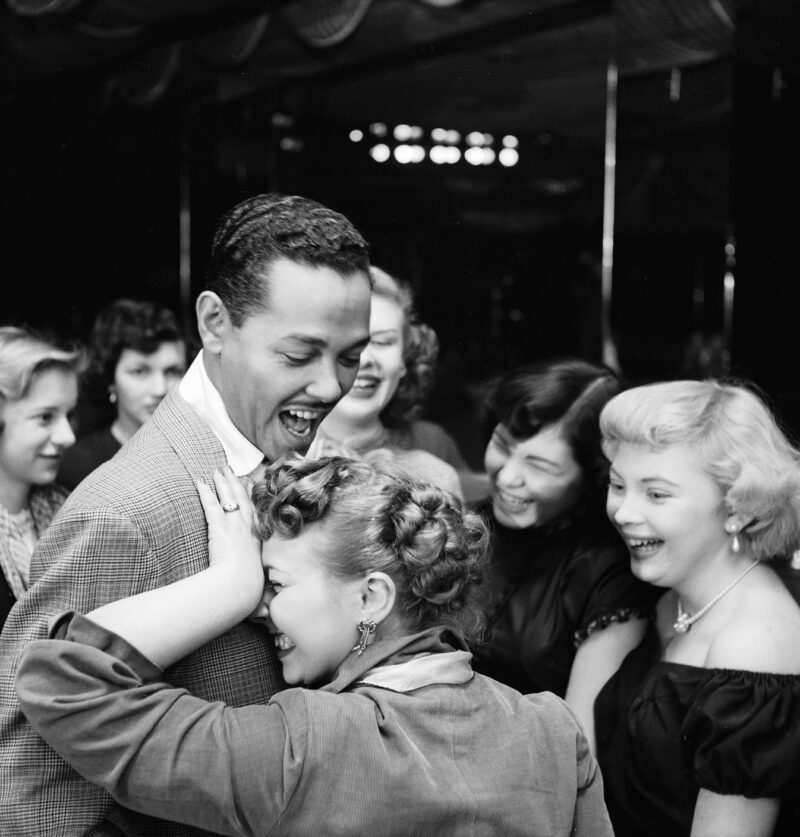
Martha Holmes, photograph from “Mr. B.,” LIFE, April 24, 1950 © LIFE Picture Collection, Dotdash Meredith Corp. Martha Holmes began photographing for LIFE in 1944. On view in the exhibition are Holmes’s 1950 photographs of mixed-race singer Billy Eckstine, including one of Eckstine being embraced by a white fan – a provocative image that Holmes felt was one of her best because she felt that it “told just what the world should be like.” Henry Luce supported this opinion.

Six pioneering women whose photographs for LIFE magazine skillfully captured events on a quickly evolving world stage will be the subject of Greenwich Historical Society’s new exhibition to debut March 6. These photographers enabled the public “to see life; to see the world; to eyewitness great events,” as described by LIFE magazine founder and editor-in-chief Henry Luce.

LIFE: Six Women Photographers features iconic images from these talented women who helped create modern photojournalism through their work as featured in the pages of LIFE magazine. On view through July 7, 2024, the exhibition presents more than 70 photographs by:

Margaret Bourke-White (1904-1971)
Marie Hansen (1918-1969)
Martha Holmes (1923-2006)
Lisa Larsen (ca. 1925-1959)
Nina Leen (ca. 1909-1995)
Hansel Mieth (1909-1998).

“We are thrilled to showcase the work s of these talented photographers who were on the vanguard of a transformative change in how twentieth-century Americans received and understood global cultural and political events,” says Maggie Dimock, curator of exhibitions and collections at Greenwich Historical Society. “This insightful exhibition offers a glimpse into how each of these remarkable women used their camera to capture topics that dominated American discourse through the last century, including U.S. industrial strength, the role of women and the family in modern American society, race relations, World War II, labor movements and the Cold War.”

A long-time Greenwich resident, Henry Luce (1898–1967) was convinced that American political, economic, and cultural power would, and should, dominate the era and that photojournalism, or “photo essays” as he coined them, could effectively shape America as an international power, inspiring its people, in his words, “to live and work and fight with vigor and enthusiasm.” For decades, Americans saw the world through the lens of the photographers at LIFE, and the magazine’s innovative photo essays became the publication’s trademark.

Of the 101 photographers on staff at LIFE during the magazine’s run as a weekly, only six full-time photographers were women. LIFE: Six Women Photographers highlights the work of these photographers while providing insight into the process through which they worked with editors to create visual stories, through the inclusion of photographs, vintage prints, copy prints and contact sheets. Published and unpublished photographs along with select memos, correspondence and other items from Time Inc. records show the editing process behind the final, published stories.

“The topic will provide fascinating historical context to the enormous changes underway today in media,” says Greenwich Historical Society Executive Director and CEO Debra Mecky. “And it will enable us to further our mission to strengthen the community’s connection to our past, to each other and to our future. Henry Luce was a Greenwich resident during the time he was arguably the most influential media figure in the twentieth century and one of the country’s most prominent citizens.”

LIFE: Six Women Photographers has been organized by the New-York Historical Society. The exhibition is curated by Marilyn Satin Kushner, curator and head, Department of Prints, Photographs, and Architectural Collections; and Sarah Gordon, curatorial scholar in women’s history, Center for Women’s History; with Erin Levitsky, Ryerson University; and William J. Simmons, Andrew Mellon Foundation Pre-Doctoral Fellow, Center for Women’s History. The New-York Historical Society holds the research archive of Time Inc., which was acquired by the Meredith Corporation (now Dotdash Meredith Corp.) in 2018

Margaret Bourke-White, photograph from “Franklin Roosevelt’s Wild West,” LIFE, November 23, 1936 © LIFE Picture Collection, Dotdash Meredith Corp. Bourke-White’s photograph of the Fort Peck Dam, a New Deal project in Montana, graced the inaugural cover of LIFE on November 23, 1936. This image of one of the dam turbines was part of the photo essay.

A series of lectures, workshops and discussions, film screenings and other activity related to the exhibition will be presented by Greenwich Historical Society throughout the duration of the exhibition, beginning with two in March:

Women of Photos and Letters: Margaret Bourke-White, Clare Booth Luce and Annie Leibovitz
Thursday, March 14 from 6:00 – 7:00 PM

In honor of Women’s History Month, Louisa Iacurci of the Connecticut Women’s Hall of Fame will explore the inspiring histories of Hall of Fame inductees whose work and lives are intertwined with social advocacy and journalistic activism, including photographers Margaret Bourke-White and Annie Leibovitz and writer, journalist and politician Clare Booth Luce.

LIFE: Six Women Photographers: A Lecture with Curator Marilyn Satin Kushner
Thursday, March 21 from 6:00 – 7:00 PM

In an illustrated lecture, Dr. Marilyn Satin Kushner, Curator and Head of the Department of Prints, Photographs, and Architectural Collections at New-York Historical Society, will expand on the curatorial process for LIFE: Six Women Photographers.

The full program schedule is available online: https://greenwichhistory.org/life-six-women-photographers/

Guided Gallery Tours:
Tours will be offered on select Sundays through June, from 1:00 – 1:30 PM. Free with admission, participants will enjoy an in-depth docent-led discussion of LIFE: Six Women Photographers, that shares insightful interpretation of the photographs on view, and a modern perspective to understanding the complex social backdrop in which they would have originally been seen by magazine readers. Dates: March 10, 24; April 7, 21; May 5, 19; June 2, 16, 30. For more information: https://greenwichhistory.org/event/guided-gallery-tour/

Greenwich Entertainment Acquires ‘Uncropped’: A Cinematic Journey …

Greenwich Entertainment Acquires ‘Uncropped’: A Cinematic Journey …
image

Greenwich Entertainment has proudly announced the acquisition of North American rights to ‘Uncropped’, a documentary that delves into the prolific work of renowned New York photographer James Hamilton. Directed by D.W. Young and produced alongside Judith Mizrachy, with executive production by acclaimed filmmaker Wes Anderson, the film is set to offer audiences an intimate look into the golden era of independent journalism through Hamilton’s lens.

Advertisment

Reviving a Visual Chronicle of Cultural History

For over four decades, James Hamilton has served as a visual historian, capturing the essence of American culture through his work with Harper’s Bazaar, The Village Voice, and The New York Observer. His photographs, ranging from candid street scenes in New York City to intimate portraits of celebrities like Alfred Hitchcock and Patti Smith, reflect not only the spirit of the times but also the transformative power of independent journalism. ‘Uncropped’ brings this rich visual archive to life, showcasing Hamilton’s unique ability to blend art with storytelling.

A Testament to Independent Journalism

Advertisment

The documentary not only celebrates Hamilton’s artistry but also highlights the critical role of publications like The Village Voice in fostering a vibrant culture of independent journalism. In an era where the independence of journalistic voices is increasingly under threat, ‘Uncropped’ emerges as a poignant reminder of the value of free expression and the impact of photography on public discourse. The film’s exploration of Hamilton’s work underscores the necessity of safeguarding spaces where creativity and journalism intersect without constraints.

Looking Towards the Premiere and Beyond

Set for a theatrical opening on April 26 at the IFC Center in New York, complete with Q&As featuring Hamilton, the filmmakers, and special guests, ‘Uncropped’ promises to be a must-see event. Following its theatrical run, the documentary will be available on digital platforms starting May 7th, ensuring that Hamilton’s legacy reaches a wide audience. As Greenwich Entertainment prepares to share Hamilton’s story with the world, the anticipation builds for a film that not only celebrates a remarkable career but also champions the enduring value of independent journalism.

As the curtain rises on ‘Uncropped’, viewers are invited to reflect on the changing landscapes of journalism and photography. In a world where the narratives of cultural history are continually being rewritten, Hamilton’s work serves as a beacon of authenticity and creative freedom. Through his lens, we are reminded of the power of independent voices to challenge, inspire, and transform society.