Photography

Emerging Talent Award Unveils Top Young Photographers: Tariq Sadu …

Emerging Talent Award Unveils Top Young Photographers: Tariq Sadu …
image

This year’s Emerging Talent Award, evolving from the previous Student Photographer of the Year accolade, invited aspiring young photographers to submit their online portfolios, showcasing up to 12 images alongside an artist statement. In a competition that saw entries anonymized and judged by a distinguished panel, Tariq Sadu emerged as the winner, with Edward Matthews and Will Palmer following closely.

Advertisment

Innovative Approach to Portrait Photography

Tariq Sadu, a 25-year-old self-taught portrait photographer from South London, captivated the judges with his creative approach to portraiture. His work, characterized by the use of wide-angle lenses and the depiction of his local environment, particularly council estates, offers a fresh perspective on London’s landscape. Sadu’s commitment to challenging the norms of portrait photography and embracing his surroundings has not only defined his style but also allowed him to produce work that resonates with a broader audience. His achievements include a feature on GQ‘s website, highlighting the impact and reach of his work.

Edward Matthews: From Nightclub to Conflict Zones

Advertisment

Edward Matthews, 25, made a significant career shift from nightclub photography to documenting conflict zones in Ukraine. Motivated by the desire to contribute meaningfully through his photography, Matthews has been supporting grassroots humanitarian aid groups. This transition has allowed him to capture compelling images that facilitate donor funding, directly impacting the lives of the Ukrainian people. Matthews’ journey underscores the power of photography to effect change and the importance of independent storytelling in today’s media landscape.

Will Palmer: Capturing the Essence of Sports

Will Palmer, a 26-year-old photographer from Yorkshire, secured the third place with his exceptional sports photography portfolio. Palmer’s passion for photography began in school and has since evolved into a professional career, capturing moments from major sports events. His work, published in national press and global brand channels, reflects not only his skill in capturing the intensity and emotion of sports but also his dedication to inspiring others to pursue photography. Palmer’s journey from capturing friends at local sports events to working at international levels exemplifies the growth and potential within the field of sports photography.

The Emerging Talent Award has highlighted the diverse and dynamic talents of young photographers today. From Sadu’s innovative portraits to Matthews’ impactful conflict documentation, and Palmer’s captivating sports imagery, these photographers are reshaping the landscape of photography. Their work not only reflects their personal journeys and commitment to their craft but also the power of photography to tell stories, evoke emotions, and drive change. As they continue to explore and define their paths, their contributions are a testament to the evolving narrative of photography and its role in contemporary society.

Bath photographer finds couple featured in sunset pic

Bath photographer finds couple featured in sunset pic

By Jasmine Ketibuah-FoleyBBC News, West of England

imageSimon Lees An orange evening sunset in Bath looking over hills. In the bottom right corner there is a couple sat together looking at the view, facing away from the cameraSimon Lees
The image captures the Bath skyline during sunset

A photographer tracked down a couple he photographed in an award-winning photo only to discover they have since broken up.

Simon Lees’ image of the sun setting over Bath won him the Sunday Times Big Shot competition in 2020.

The mystery couple in the foreground contacted him after seeing his appeal to track them down and give them a copy of “the special moment in time”.

Salam said it was a “hilarious” when he realised it was him and his ex Beth.

“That day we decided to sit there on the hill and chill and chat for a little while we were just having a drink looking at the sunset,” he said

imageSalam SalamSalam
Salam said the picture shows an “amazing” side of Bath

“It was during a time when people were taking in nature more at the start of Covid-19.

“I think it’s the best view of Bath and the picture is amazing – it could be a poster for Bath.”

Mr Lees captured the image of Bath’s skyline while on a walk through the fields overlooking Horseshoe Walk, above the canal in Widcombe.

He said Salem and Beth have both contacted him separately to verify they are the people in the picture.

imageSimon Lee smiling on a Zoom call
Simon Lees said he will donate any money raised from selling the photograph to charity

“They were just in the right place at the right time and it created a story and a romantic twist – but on this occasion the wrong outcome,” he said.

“I think it’s unfortunate they split up as I would have loved to have given them a framed picture as a memento.

“But they’re still in contact with each other.”

The photographer has since decided to give them each a copy of the image and to also auction it off to raise money for charity.

“There’s a lot of cancer history in my family and I recently had it. It affects so many people.

“I also normally raise money for Dorothy Hospice so would like to give some to them too, but haven’t decided yet,” he added.

imagePresentational grey line

Follow BBC Somerset on Facebook and, X. Send your story ideas to us on email or via WhatsApp on 0800 313 4630.


In photos: Barcelona’s ‘daring and ecstatic’ queer Latinx club night

In photos: Barcelona’s ‘daring and ecstatic’ queer Latinx club night

Ahead of its London iteration, we look through photographer Manuel Cardozo’s portraits from Latineo – the queer Latinx party founded in a spirit of radical inclusivity

5March 2024

Colombian-born photographer Manuel Cardozo was not planning on taking photos that evening; bringing their camera was an afterthought. They came to Latineo for the same reason as everyone else, to spend the night perreando with other queer Latinx immigrants of Barcelona. What Cardozo encountered that night – and what compelled them to reach for their camera – was queer ecstasy. Immortalised dancing, sweating, smoking and kissing, the clubbers captured in Cardozo’s portraits stare brazenly at the camera, encapsulating the dichotomy of Latineo: a place of both celebration and rebellion.


Latineo, a queer Latinx party focusing on FLINTA* (female, lesbian, intersex, non-binary, trans, and asexual), founded in 2023 by Chilean immigrants Monserrat Ahumada, Colomba Molina, and Felipe Montalba, was born out of necessity. Europe is filled with queer parties that exist under the moniker of radical inclusivity when, in actuality, they pander to the cis white European male, ostracising a large part of the community. “Latin culture is very diverse from country to country, but we also have so much in common,” says Montalba. “Latineo is a space to celebrate what brings us together; a space to support each other and create a network and sense of family between people living similar difficulties here, as we do being immigrants in Europe.” 

While many events boast the label of a “safe space”, only a handful genuinely embody it. When asked about the creation of a queer Latinx club in Barcelona, photographer Cardozo, tells Dazed, “I feel that big cities are crying out for a queer Latinx space. For me, it is super important that there is this appropriation of sound and space.” As the attendees of Latineo are so diverse, creating a truly inclusive environment is “a very personal experience”.

The roots of Latineo, as evinced in the photographs of Cardozo, can be traced back to its founding principle of community. Co-founder Colomba Molina explains, “We try to make the party a safe space, acknowledging that the community’s daily violence can also move into the club. In this way, I think it’s very important that a culture is being created where we all take care of each other.” Cardozo echoes Molina’s sentiment: “It’s very Latino… it‘s like when you go over to someone‘s house and feel so welcomed, it gives this sensation.”

Cardozo’s photos highlight the individuals – or “iconic characters”, as Cardozo likes to say – that create the foundation of the Latineo community. The icons of Latineo are not trying to perform; rather, they are simply showcasing who they are, an act of resistance and authentic self-expression. Cardozo finds it essential to document these individuals: “During the past six years, it’s been my community and family in Barcelona. This is who I am surrounded by; I want to show and give visibility to these iconic characters.” 

“It’s important to document these things,” says co-founder and resident Latineo DJ, Monserrat Ahumada, “to visualize ourselves, to show our community, to show Latinos taking care of each other in spaces where they are expressing themselves freely, and to have that on record. It makes it tangible. It’s like a statement; we want to record it, and we want to show who the people are that make up our community. In the end, it has to be recorded and shown everywhere, and the world also has to see it and know it.”

The images of Latineo are intimate, daring, and ecstatic. Sunglasses are worn at night, faces are painted, and reggaeton throbs throughout the still photos. They are a celebration of queer Latinx identity, a testament to the power of community, and a call to action – to see, to know, and to celebrate the vibrant souls who make Latineo what it is: a space of liberation, love, and defiance.

Follow Latineo on Instagram for updates. Latineo comes to London on Saturday March 9, 2024. Get your tickets here

Senta Simond’s Portraits Capture an Intimate Collaboration of Strangers

Senta Simond’s Portraits Capture an Intimate Collaboration of Strangers

Titled Dissonance, the artist’s new Los Angeles show blends performances by Roísín Berkeley and Ness Uronich, an Irish harpist and Ukrainian dancer who never met

March 05, 2024

There’s something amazingly honest about Senta Simond’s work. In both her fashion imagery and personal projects, the Swiss artist explores the bodies of her female subjects from every angle, often assuming a vantage point so close or awkward that it teeters on the edge of uncomfortable. Given her prospecting style, Simond’s portraits could easily feel intrusive, yet they somehow never do. Perhaps this is because she approaches her practice with gentle curiosity that strips away any pretence, grasping a raw sort of truth in her subjects – a vulnerability – that could only really be offered up through a mutual state of trust. “What’s most important to me is to find something honest with my pictures: some emotion,” she tells AnOther. “I need to feel a connection.”

Simond’s new exhibition Dissonance at Webber Gallery in Los Angeles, a version of which was first shown at MEP in Paris last year, sees the artist tenderly venture into experimental new terrain. Playing on the idea of musical discordance, it creates a visual and sound dialogue between two women who have never met – Irish harpist Roísín Berkeley and Ukrainian dancer Ness Uronich – whom Simond spent eight months working with separately throughout 2023. Over innumerable FaceTime calls and several trips overseas, the artist shot both women multiple times, as well as inviting them to film themselves in her specific style, resulting in a sensorially textural body of work which explores “our relationships with ourselves, others, and our environment”. Building upon the initial Paris show, this LA exhibit also features a few works from Simond’s debut book Rayon Vert, which investigates the special relationship between the artist and her female subjects. 

“A lot of things happened by chance in this project,” says Simond. “I always wanted to work with a dancer and I knew I wanted to work with a musician. These people just arrived in my life at the same time.” Simond first heard Berkeley while listening to a radio show and was so struck by her music that she felt compelled to reach out to her. “She has a very specific way of playing which is almost deconstructed,” says the photographer. “She’s experimented a lot with her sound and I think it’s really beautiful.” Not long after, she met Uronich in a bar in Paris through a mutual friend. “At first, I didn’t think to pair them together, but sometimes you have to try things out intuitively,” she says. “It’s weird, the moment you’re open and curious, how things fall into place.”

Entering into their respective private worlds, the show presents gestural fragments of the two artists alongside each other. “I never worked in this way before,” she says of the self-shot elements of the series. “You lose a bit of control aesthetically, but I really love the surprise of what came back.” Through a patchwork of video, sound and shots which skew perspectives and “blur the authorship” of the portraits, beautiful flashes of both women range from Uronich’s curled foot peeking out from a frayed pair of jeans to Berkeley’s long red hair tumbling over the edge of her harp as she plays. “Pairing them is not so harmonious, and I didn’t want it to be harmonious, but also in the end [the two] do kind of work together,” says Simond. 

While the two women are different in many ways, Simond seems to admire both for the same reasons – a self-sprung originality to their work and youthful optimism about life. “I think they both have a very anti-conformist and unconventional way of working,” she says. “They’re the same age and are both at building moments of their careers. What surprised me about Roisin is that she’s quite wild,“ she says of the harpist, who comes from a remote rural town called Knock on the east coast of Ireland. “Her family [practice] paganism and are really in tune with the land. They’re quite spiritual and I think she’s a little bit like that, too. It makes so much sense when you listen to her work.” 

Starting out as a model in Ukraine – where she had to return from Paris to be with family amid the conflict – Uronich’s self-taught approach to dance is also totally organic. “She’s like an autodidact,” says the photographer. “She’s got so much energy and she’s so positive, even during everything happening in her country. The energy she brings is very free. It was really nice to work with her.” Amazingly, the harpist and dancer not only met for the first time at the launch event for Dissonance in Paris last year, but they also didn’t know their portraits were being intertwined in the exhibition until they arrived that evening. “They were really touched,” says Simond of the surprise reveal.

Taking on a new life in the LA space, which is filled with more natural light and bigger rooms than MEP, Simond hopes that visitors will experience an atmosphere of intimacy and connection – feelings that have been central to her practice since the publishing of her debut book in 2018, and are felt more strongly than ever in this new project. “The special thing about being a photographer is how quickly you can enter the private world of others,” she says. “I feel it’s a very atmospheric project, because of the sounds, the video, the light. I hope that visitors can really enter the work.” 

Dissonance is on view at Webber Gallery Los Angeles until 13 April 2024.

Church vicars called ‘rude’ and ‘aggressive’ by over 900 wedding photographers

Church vicars called ‘rude’ and ‘aggressive’ by over 900 wedding photographers

Former Archbishop of Canterbury Dr Rowan Williams (head of the Anglican Church) has admitted that vicars can be a ‘complete pain’ and ‘over controlling’ of photographers during weddings following the publication of a petition started by wedding photographer Rachel Roberts.

This follows a growing spate of TikTok videos discussing priests and vicars banning photographers from shooting during the ceremony, apparently regardless of the wishes from the couple. One such posting seems to have been the last straw for Roberts, the widely shared clip of a photographer being told off by an officiant on TikTok.

The photographer, Julieanne Whyte, notes that she debated whether she should post it, but was tipped over the edge by what she saw as a clear attempt to intimidate her from doing a job she had been paid for. This struck a chord with the (dare we say it) clearly media-savy Rachel Roberts who started a petition and who has now had her petition mentioned in numerous global media, and appeared on them.

On the flip side, you can’t exactly credit the former Arch-Bishop of Canterbury with the same savvy, pouring oil onto the fire by commenting. Sure, his remarks – in full – were sympathetic to both sides, also pointing out “The event isn’t staged just as a spectacle to be filmed, but as a personal encounter of a couple with God.” 

Nevertheless, they have of course been clipped enthusiastically by tabloids stoking fire and in support of photographers rather than vicars. At least those media outlets forced by charter to see both sides of a story like the BBC have done so, making it a talking point… (click see more to play

See more

If you’ve already seen the battle online and in the media and been trying to find Rachel Roberts it might help to know she operates Rachel London Photography, based in Lincoln, UK. She also has marketing and communications experience from her job which might have helped gain global attention for this issue.

It doesn’t stop it being an issue faced by a lot of photographers, though. As she herself points out when interviewed, the petition also provided a lot of photographers the opportunity to share their experiences and they’ve not all been good.

Check our guide to the best camera for wedding photographers.

Kenya Crowned World’s Premier Wildlife Photography Destination, In…

Kenya Crowned World’s Premier Wildlife Photography Destination, In…
image

Recent findings from a study conducted by Cape Town-based travel portal Go2Africa have placed Kenya at the pinnacle of wildlife photography destinations globally, with India also securing a spot in the coveted top ten list. This comprehensive analysis, which sifted through approximately 70 million images on Flickr, underscores the rich biodiversity and unparalleled wildlife photography opportunities these countries offer, marking them as must-visit locales for nature enthusiasts and photographers alike.

Advertisment

Global Leaders in Wildlife Photography

Kenya, renowned for its diverse ecosystems and home to over 25,000 animal species, leads the pack as the ultimate haven for wildlife photographers. The country’s national parks and reserves, such as the Masai Mara and Amboseli, provide prolific sightings of the ‘Big 5’ – lions, leopards, elephants, African buffalo, and rhinoceroses. Following closely behind Kenya, Canada, Australia, Botswana, and Tanzania, along with other nations, make up the rest of the top destinations, each offering unique wildlife encounters and photographic vistas. Notably, the study revealed a significant concentration of wildlife photographs originating from Africa, with Kruger National Park alone accounting for 40,965 photos.

Diverse Habitats, Diverse Subjects

Advertisment

While Singapore and India, ranking third and ninth respectively, highlight Asia’s representation in the top ten, their diverse landscapes contribute significantly to their standings. Singapore’s compact yet richly biodiverse rainforests serve as a sanctuary for a variety of species, including monkeys, birds, and otters, making it a prime spot for wildlife photography within an urban setting. Conversely, India’s vast and varied terrain encompasses everything from dense forests to arid deserts, hosting a plethora of wildlife like Bengal tigers, Asian elephants, and Asiatic wild dogs. The nation’s array of national parks, such as Kaziranga and Hemis, provide a backdrop for some of the most compelling wildlife photography on the continent.

Conservation Efforts Underpinning Wildlife Photography

Beyond the allure of capturing stunning wildlife images lies a critical narrative of conservation and the fight against wildlife crime. Initiatives like those spearheaded by the International Fund for Animal Welfare (IFAW) along the Kenya-Tanzania border emphasize the importance of protecting these natural habitats and their inhabitants from illegal activities. These efforts are not only vital for preserving biodiversity but also for ensuring that future generations can enjoy and photograph the world’s majestic wildlife in their natural settings.

As the world continues to grapple with environmental challenges, the recognition of Kenya, India, and other countries as leading wildlife photography destinations serves as a reminder of the beauty that nature offers. It also highlights the crucial role that photography can play in conservation efforts, showcasing the planet’s wonders while advocating for their protection. The findings from Go2Africa’s study not only celebrate the rich biodiversity found across continents but also reinforce the message that preserving these habitats is imperative for wildlife, communities, and global ecosystems alike.

Burt Glinn: Half a Century as a Magnum Photographer

Burt Glinn: Half a Century as a Magnum Photographer

Sarah Stacke knew photographer Burt Glint for the last 8 years of his life, till he passed away in 2008. In her introduction to Burt Glinn: Half a Century as a Magnum Photographer, she reminisces of the influence he had on her how it altered he on life, along with memories of the man himself, and his over 50-year career.

“I remember Burt’s wit and his lopsided grin when he told stories, which was a lot. He loved fine things, especially clothes. He had big opinions, high expectations, and an incredible grasp of the narrative, technical, and administrative aspects of photography .… For more than half a century, Burt covered it all: conflict, celebrities, wildlife, science, corporations, travel, society, culture. Yet, looking through his archive, his interests clearly emerge.”

Glinn was born in Pittsburgh, Pennsylvania in 1925. After serving in the Army between 1943 and 1946 during World War II, he enrolled at Harvard University, where he studied literature. While at Harvard, Glinn became the photographer and photo editor for the Harvard Crimson, the student newspaper. His work for the paper attracted the attention of LIFE, who hired him as a photographer in 1949. By 1950 he had become a staff photographer at the magazine, but he continued as a freelancer, which allowed him to work for other publications like Holiday, Esquire, Paris-Match, and Newsweek.

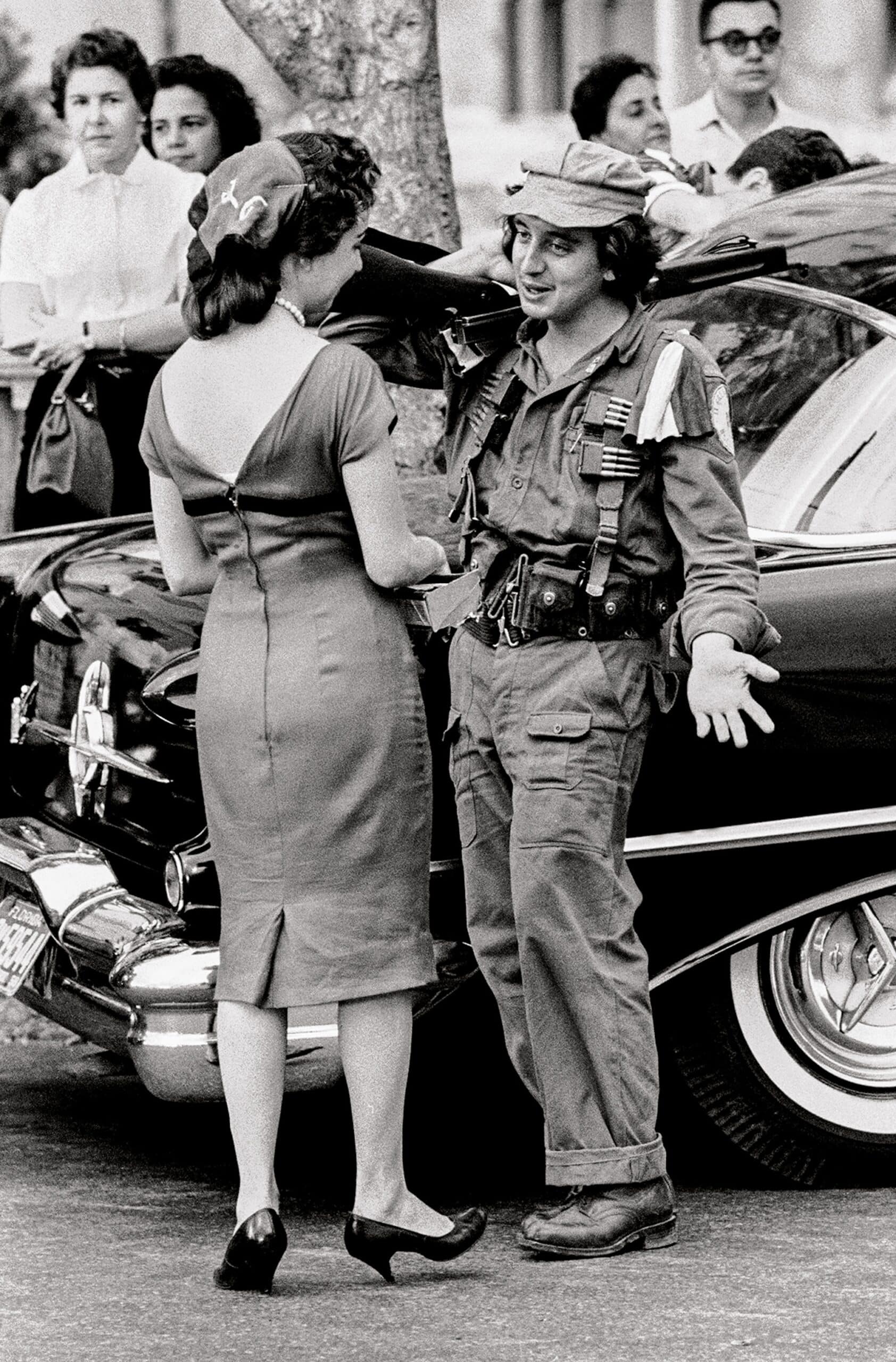
CUBA. La Havana. 1959. Young “guerillero” in from hiding speaks to his first civillian lady. © Burt Glinn

How to see the world

“Burt’s editorial eye is key. He really knew how to see the world by placing himself in it.”

Susan Meiselas

In 1951, Glinn became an associate member of Magnum Photos, along with Eve Arnold and Dennis Stock. Together they were the first Americans to join the agency. Glinn became a full member in 1954. He went on to be the president of Magnum between 1972 and 1975 and was reelected to the post in 1987. Glinn gained recognition for his coverage of the Cuban Revolution and his in-depth color series on the South Seas, Japan, Russia, Mexico, and California, each of which was published as a complete issue of Holiday.

“Burt’s editorial eye is key. He really knew how to see the world by placing himself in it. He was part of the generation who were lucky to work when magazine assignments were still plentiful and long. He came out of that tradition, which meant that he went places, then stayed and documented them over time. His photographs of the Berlin Wall being built were an example of incredibly good work,” says photojournalist Susan Meiselas in an interview with Stacke that is included in the book.

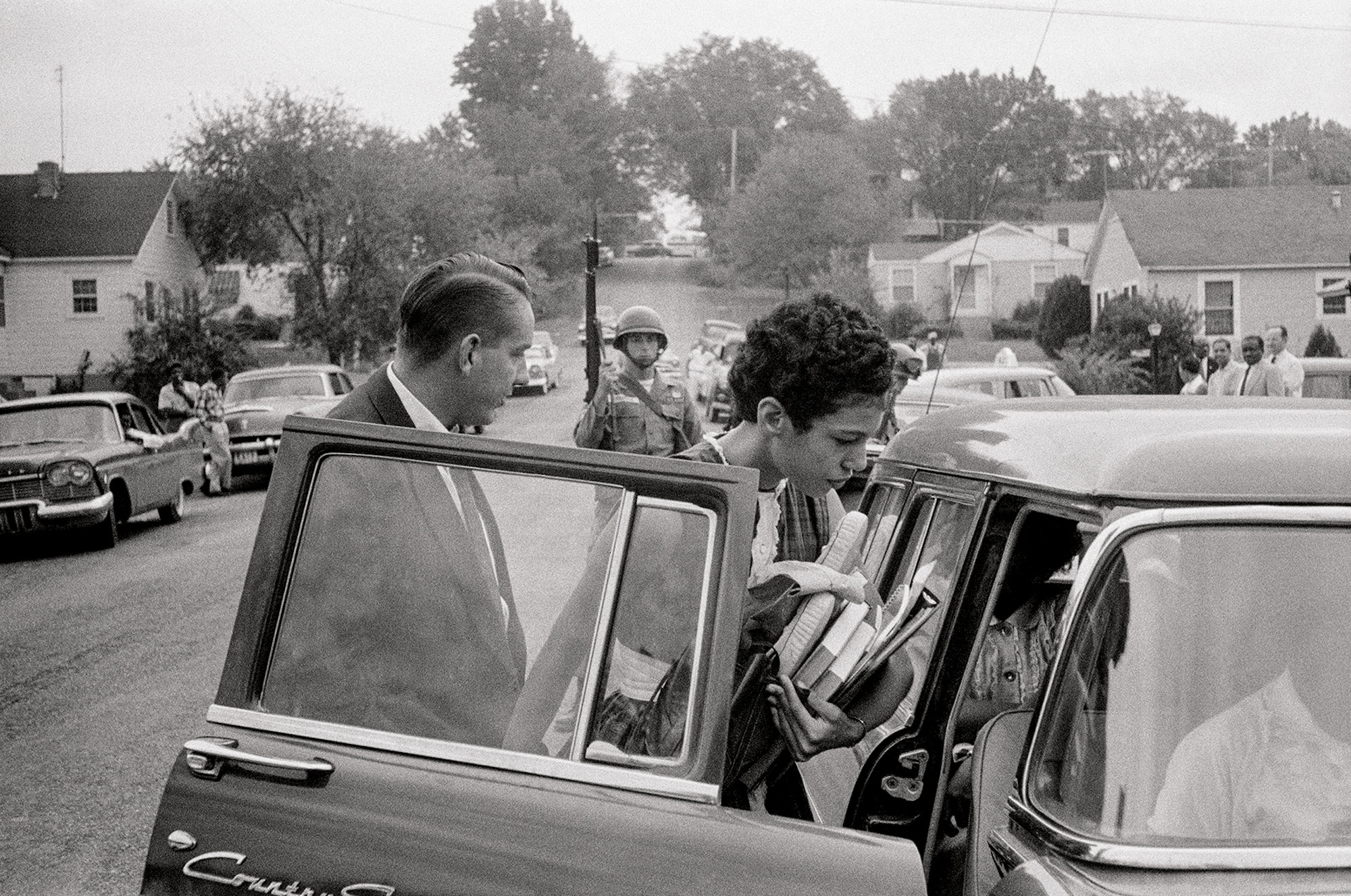
Throughout his career, Glinn regularly covered national and international historical events, cultural icons, and political figures for leading publications. And in the process, he traveled widely to wherever the job required him to be. His subjects ranged from The Little Rock 9 to the Cuban Revolution to the aftermath of the assassination of Martin Luther King, Jr. There is also work covering the building of the Berlin Wall, Queen Elizabeth II visiting New York, along with photographs of musicians, celebrities and sporting events. And there are religious communities, portraits of their leaders, and their events and rituals, which Glinn tried to photograph as much as possible throughout his career.

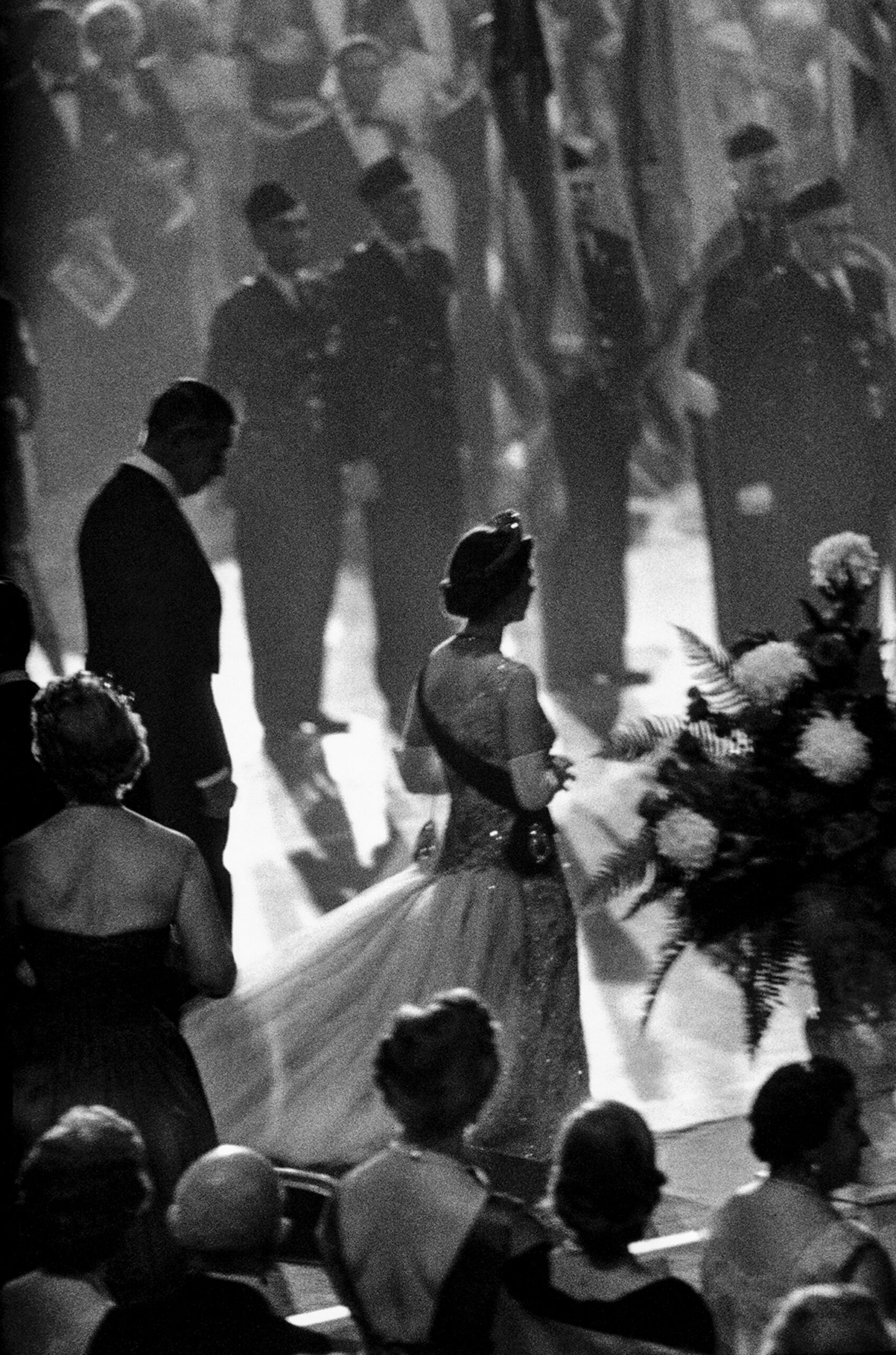
USA. New York City. 1957. Queen ELIZABETH II on her visit to America.
USA. New York City. 1957. Queen ELIZABETH II on her visit to America. © Burt Glinn
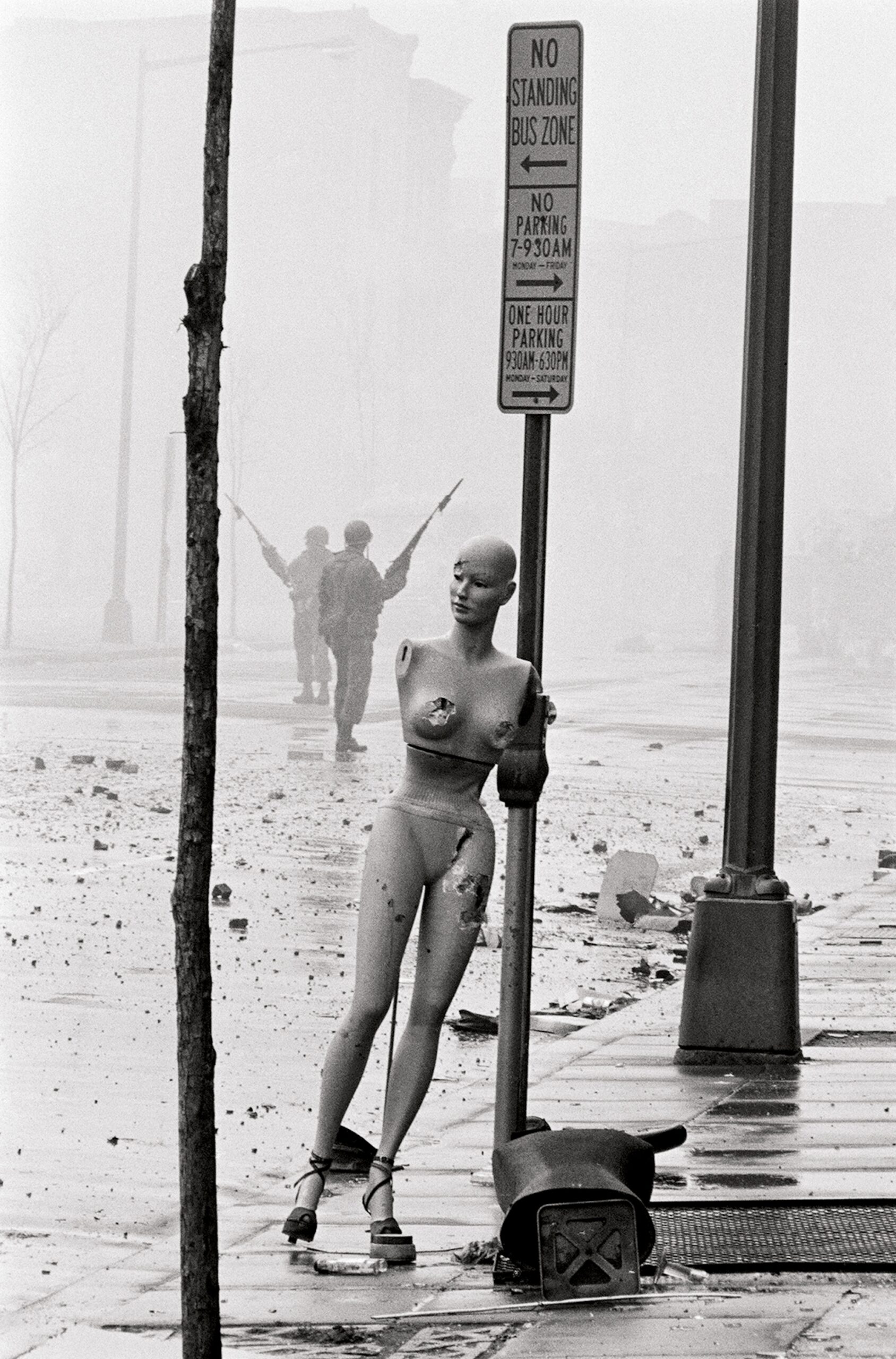
USA. Washington D.C. 1968. Street scene the morning after the assassination of Martin Luther King, leader of the civil rights movement.
USA. Washington D.C. 1968. Street scene the morning after the assassination of Martin Luther King, leader of the civil rights movement. © Burt Glinn

A career shaped by diversity

As Elena Prohaska Glinn, the photographer’s widow and custodian of his archive, recounts in her essay, “Burt began creating annual lists of his stories in 1948 and continued for 60 years. The lists reveal how diverse his interests were throughout his life. As an example, in 1959, one of Burt’s favorite years, he photographed more than 30 stories. It began when he abruptly left a New Year’s Eve party after hearing Cuba’s president Fulgencio Batista was on his way into exile and Fidel Castro was taking control. Burt caught the last Yellowbird flight from New York to Miami, then got a $20 charter plane to Cuba, where he spent nine days on the road with Fidel and his soldiers, documenting their triumphant procession into Havana. After some rest and assignments stateside, he covered the ultrarich and almost famous, often ridiculous, at Badrutt’s Palace Hotel St. Moritz in the haute Swiss Alps. Back in New York, he photographed Sammy Davis Jr., followed by the Beatniks.”

In the 1960s, he became one of the first photographers to enter the field of annual reports. Through that work, done over the next four decades, Glinn created a visual record of corporate America’s rapid growth. Throughout his career, he regularly covered national and international historical events, cultural icons, and political figures for leading publications.

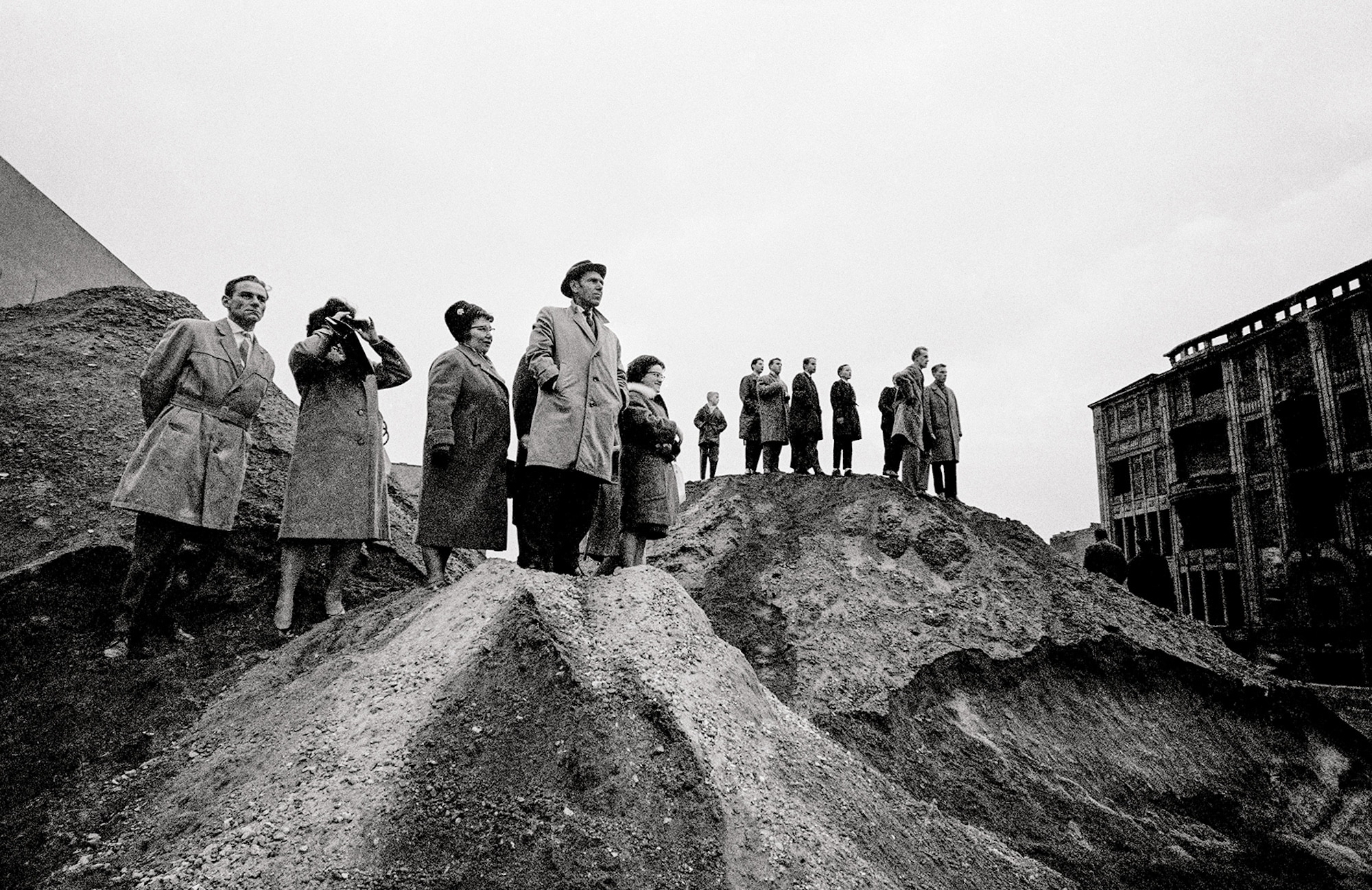
GERMANY, BERLIN, 1961. Westerners watching across the wall while it is still low enough to see over.
GERMANY, BERLIN, 1961. Westerners watching across the wall while it is still low enough to see over. © Burt Glinn

As Meiselas recounts, this change to corporate work was not just a chance for Glinn to explore new work opportunities, but also a chance for Magnum to grow into new areas as well.

“Transitioning into corporate work, he understood something about seizing an opportunity, and that was part of his success and business acumen. The opportunity wasn’t just for himself, but for other members of Magnum too. He wasn’t initially specialized in corporate work. You see him going into Goldman Sachs with an editorial eye. You understand why it was especially valuable to a corporation at that time and why they kept hiring him year after year, over decades. He documented that institution growing and changing as it transformed to become a significant player in the financial world. I think looking closely at change came from Burt’s photojournalistic training and provides insight into his success with corporate work.”

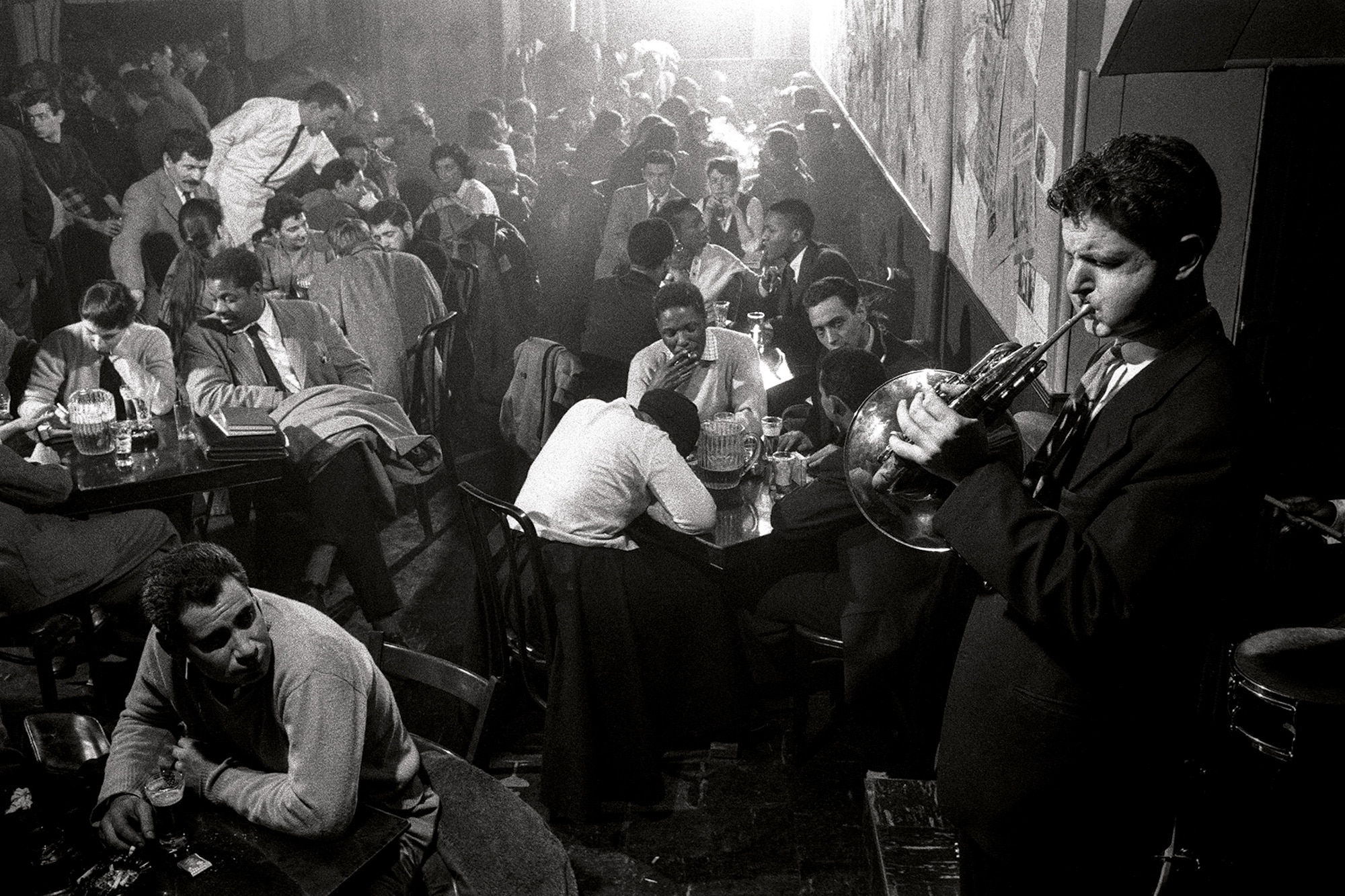
USA. New York City. 1957. David Amram entertains at the Five Spot Cafe.
USA. New York City. 1957. David Amram entertains at the Five Spot Cafe. © Burt Glinn

Generosity is the key

Burt Glinn: Half a Century as a Magnum Photographer is the first book to cover the breadth of Glinn’s career. The book encompasses 100 photographs broken down into 5 major themes that run throughout Glinn’s career. But even broken into groups, the photographs show the depth of the subjects of Glinn’s work along with his technical abilities, outstanding eye, sense of timing, and ability to create dynamic photographs no matter the subject.

Stake described Glinn’s diverse career this way in an email exchange, “I think being able to look at the ebb and flow of Burt’s long career is valuable for emerging and experienced photographers. There were years he focused on editorial work, years he focused on commercial work, and years he was able to combine both. In long careers, there are often chapters with different types of photography work—whether that’s editorial, commercial, non profit, curating, writing, bookmaking, etc.—and that’s a good thing. In Burt’s case, the editorial work helped him be a better commercial photographer and vice versa.  

And in a nod to the photographer himself, and to keep him physically in the book, each chapter is set off by a photograph of Glinn, and a color that harkens back to his sense of style. Glinn was known for his suits and ties and owned a wide range of both. Stacke has a box of some of Glinn’s old ties, which she and the design team used to study the colors that were in Glinn’s personal pallet. And using those as a base, they selected five colors that reflect Glinn color pallet for the chapter colors.

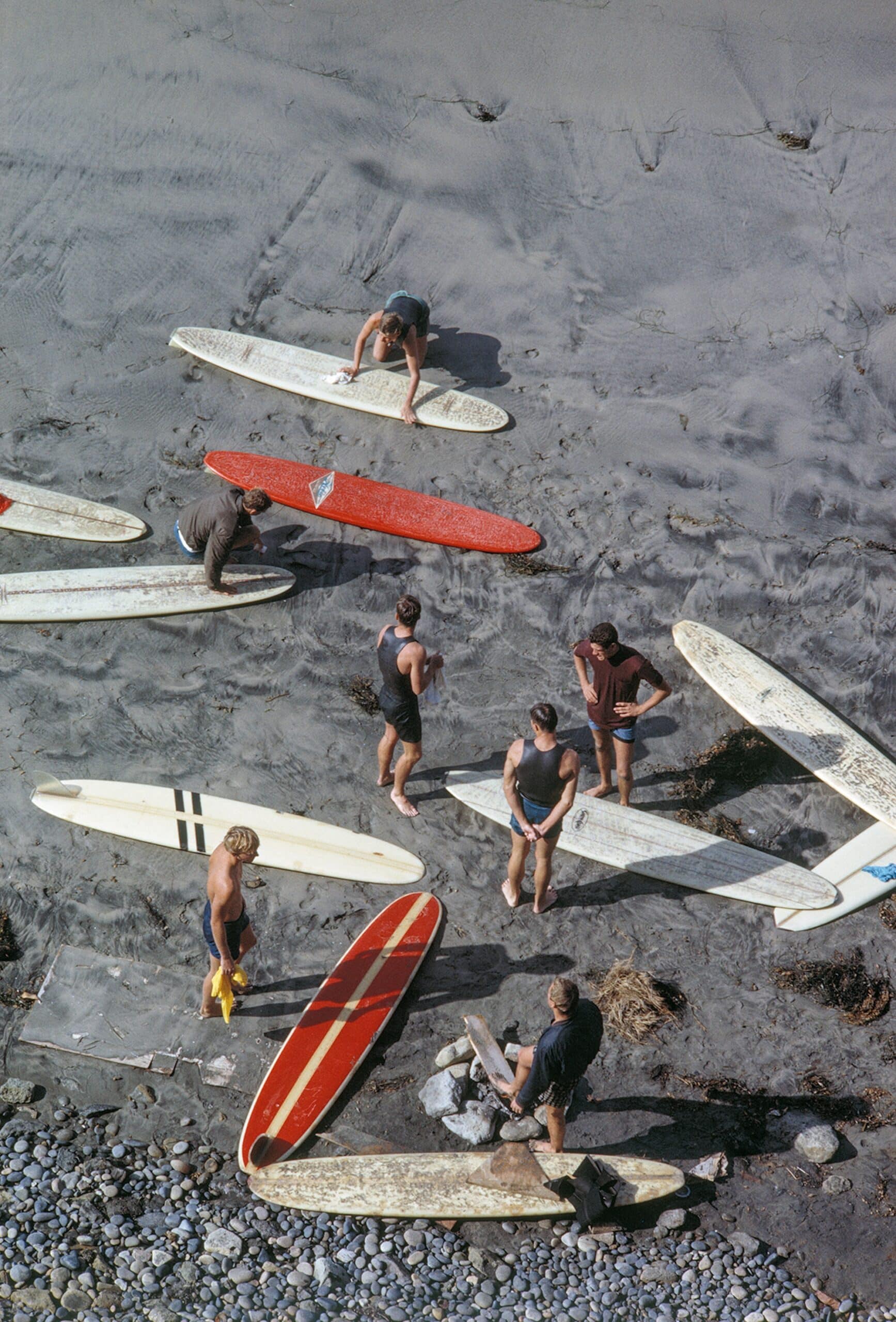
Surfers on the beach. Malibu, California, USA. 1965.
Surfers on the beach. Malibu, California, USA. 1965. © Burt Glinn
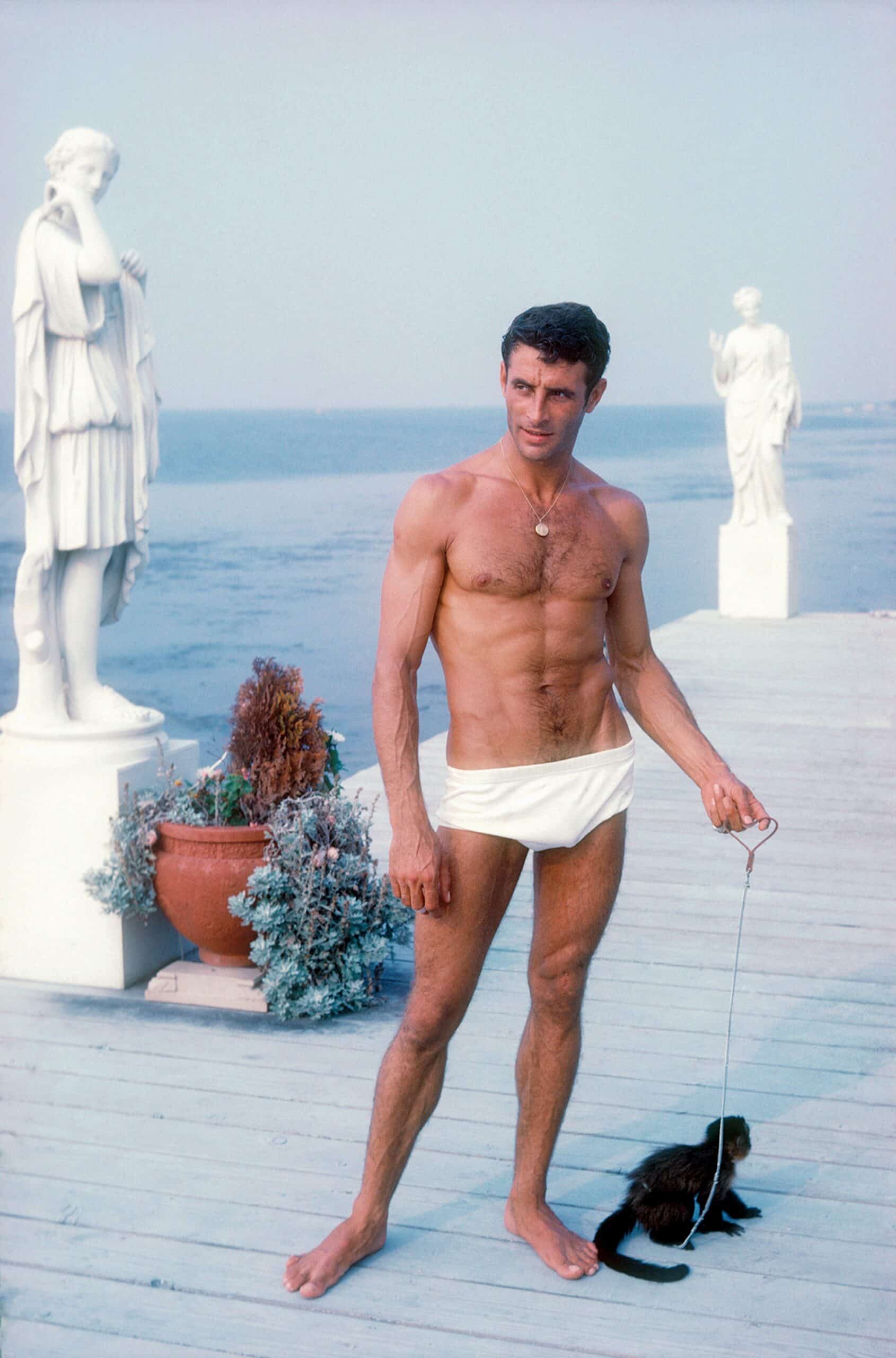
USA. New York. Fire Island. Guest in a bachelors hotels cherry grove.
USA. New York. Fire Island. Guest in a bachelors hotels cherry grove. © Burt Glinn

The other theme that runs through the book, especially in the essays and notes from his colleagues, including Gilles Peress and Larry Towell, was Glinn’s generosity.

Stacke’s memories from her time working with Glinn, as she recounted to me, further reinforce this: “The way Burt was generous with me was as a mentor. He shared his experience and knowledge with me, introduced me to people, and encouraged me to create and show photography work. Knowing how generous he was with me as a young photographer, it was really meaningful to learn that he was also generous with his peers. I think that can be harder because photography is a competitive field, but it’s clear that Burt shared his time, knowledge, experience, leadership skills, and even money with his peers.”

“Burt was one of the most generous members of Magnum. He always made time to help negotiate difficult internal and external situations.”

Susan Meiselas

Glinn was a versatile and skilled photographer whose eye was able to help shed light on some of the biggest stories of the second half of the 20th Century along with simple everyday life. But in many ways, his generosity maybe his greatest legacy in the eyes and minds of those who knew him. He was always ready to help younger photographers, introducing them to others and sharing his knowledge. Even his memorial, after his death in 2008, became a testament to his generosity, in that people who came made small donations that provided some of the seed money for the Magnum Foundation, a nonprofit organization that works to expand creativity and diversity in documentary photography through fellowships and awards. Even in his death he helped the next generation of photographers.

As Meiselas recounts in her interview, “Burt was one of the most generous members of Magnum. He always made time to help negotiate difficult internal and external situations. I’m sure he made connections for certain photographers into the worlds he knew, sharing his contacts and connecting them to his networks. That was my impression, and I think that’s his legacy. That kind of generosity is an inspiration for many to follow.”

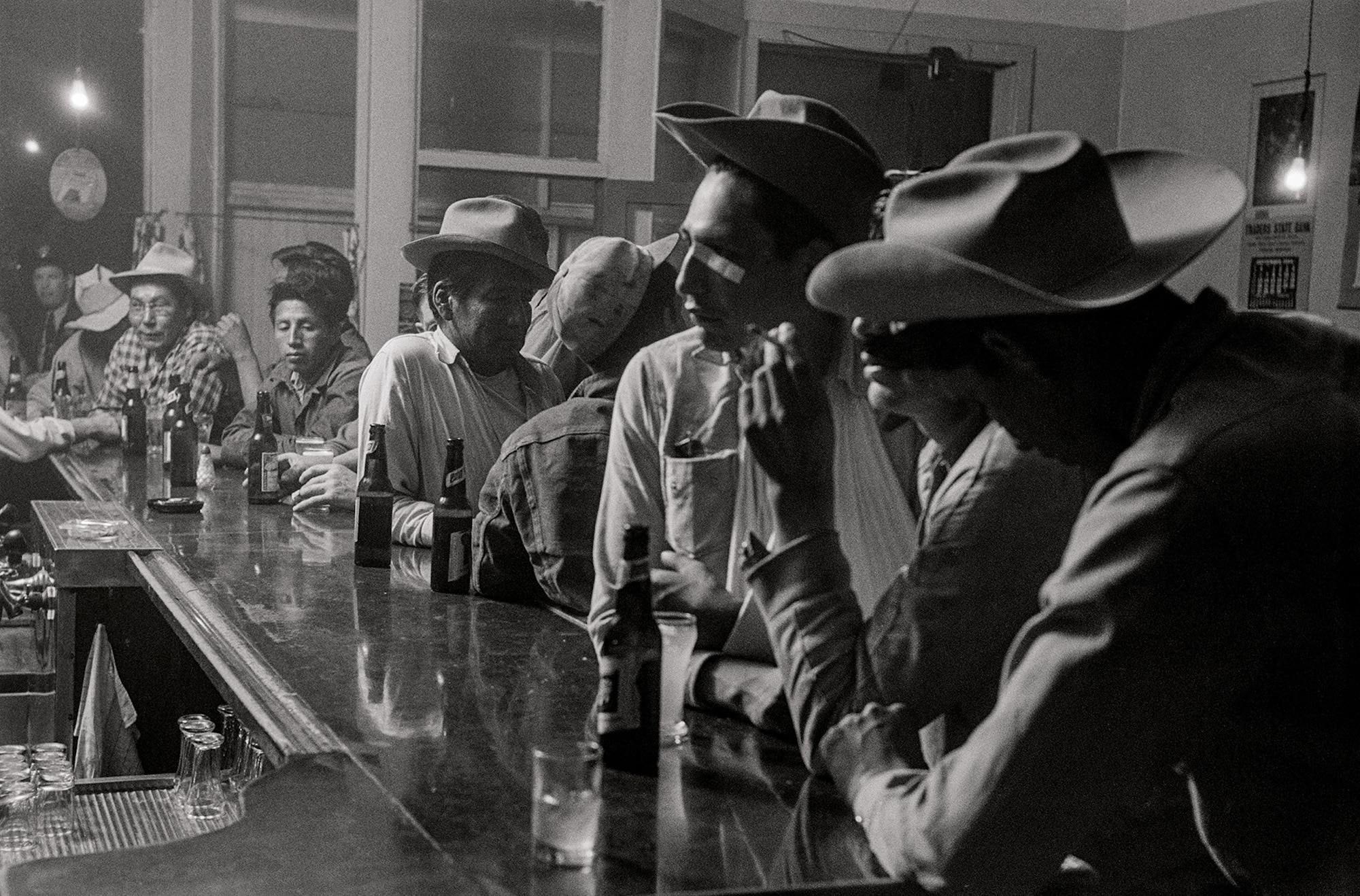
USA. Montana. 1954. Life on an Assiniboine Indian reservation.
USA. Montana. 1954. Life on an Assiniboine Indian reservation. © Burt Glinn
USA. Little Rock, Arkansas. 1957. First black teenagers to attend school at Little Rock High School.
USA. Little Rock, Arkansas. 1957. First black teenagers to attend school at Little Rock High School. © Burt Glinn

Burt Glinn: Half a Century as a Magnum Photographer can be purchased though Elena Prohaska Fine Arts on her website here.

Photo as a Service Market to Reach $74.2 Billion, Globally, by 2032 at 4.5% CAGR: Allied Market Research

Photo as a Service Market to Reach $74.2 Billion, Globally, by 2032 at 4.5% CAGR: Allied Market Research

PORTLAND, Ore., March 5, 2024 /PRNewswire/ — The proliferation of digital photography and widespread use of social media platforms have surged the growth of photo as a service market. With rise in demand for visually captivating content online, businesses, influencers, and individuals seek professional photography services to enhance their online presence. Social media platforms serve as powerful channels for showcasing high-quality images, driving the need for skilled photographers to meet the demand for captivating visual content. Such factors propel the growth of photo as a service market.

Allied Market Research published a report, titled,Photo as a Service Market By Type (School Photography, Event Photography, Wedding Photography, Theme Park and Cruise Line Photography, Photo Restoration, and Others): Global Opportunity Analysis and Industry Forecast, 2023-2032.”. According to the report, the global Photo as a Service Market generated $48.2 billion in 2022 and is anticipated to generate $74.2 billion by 2032, witnessing a CAGR of 4.5% from 2023 to 2032.

Download Sample Pages of Research Overview: https://www.alliedmarketresearch.com/request-sample/A312697

Prime determinants of growth

Advancements in technology and equipment have revolutionized the photo as a service market, enabling photographers to capture higher-quality images efficiently. Innovations such as high-resolution cameras, drone photography, and advanced editing software have expanded the capabilities of photographers, offered new creative possibilities, and met the evolving demands of clients. These advancements have increased the accessibility of professional photography services, thus driving the market growth, as businesses and individuals seek out high-quality visual content for their marketing, branding, and personal needs.

Report coverage & details:

Report Coverage

Details

Forecast Period

2023–2032

Base Year

2022

Market Size In 2021

$48.2 Billion

Market Size In 2031

$74.2 Billion

CAGR

4.5 %

No. Of Pages In Report

300

Segments Covered

Type And Region

Drivers

Increase In Demand For High-Quality Visual Content

Growth Of Freelance And Independent Photographers

Opportunities

Rise In Popularity Of Drone Photography

Increase In Demand From Commercial And E-Commerce Photography

Restraints

High Costs For Technological Advancements

Competition From DIY Solutions

Procure Complete Report (218 Pages PDF with Insights, Charts, Tables, and Figures): https://bit.ly/4ah2uSn

The wedding photography segment to maintain its leadership status during the forecast period

By type, the wedding photography segment held the highest market share in 2022, accounting for more than two-fifth of the global photo as a service market revenue and is estimated to maintain its leadership status during the forecast period. In the photo as a service market, wedding photography trends are evolving with a focus on candid and documentary styles, capturing genuine moments and emotions. However, the photo restoration segment is projected to attain the highest CAGR of 6.2% from 2023 to 2032. In the photo as a service market, photo restoration services are witnessing surge in demand with advanced AI algorithms and machine learning to enhance restoration capabilities, allowing for the revival of damaged and old photographs.

North America to maintain its dominance by 2032

Region-wise, Asia-Pacific held the highest market share in terms of revenue in 2022, accounting for more than one-third of the global photo as a service market revenue and expected to witness the fastest CAGR of 5.6% from 2023 to 2032. The Asia-Pacific photo as a service market experienced surge in demand due to rise in preference for premium wedding photography and school photography. As disposable incomes rise, there is a growing inclination toward high-quality, professional photography services for weddings and school events. 

Leading Market Players: –

  • Lifetouch Inc.
  • Cherry Hill Programs, Inc.
  • George Street Photo and Video, LLC
  • Strawbridge Studios, Inc.
  • Studio Alice Co. Ltd.
  • HR Imaging Partners Inc.
  • Bella Baby Photography, LLC
  • Fisher Studios Ltd.
  • MSP Photography Pty Ltd
  • Carma Media Productions LLC.

Want to Access the Statistical Data and Graphs, Key Players’ Strategies: https://www.alliedmarketresearch.com/purchase-enquiry/A312697

The report provides a detailed analysis of these key players in the global Photo as a Service Market. These players have adopted different strategies such as collaborations, expansion, joint ventures, agreements, and others to increase their market share and maintain dominant shares in different regions. The report is valuable in highlighting business performance, operating segments, product portfolio, and strategic moves of market players to showcase the competitive scenario.

 Similar Reports We Have on Consumer Goods Industry:

About Us:
Allied Market Research (AMR) is a full-service market research and business-consulting wing of Allied Analytics LLP based in Wilmington, Delaware. Allied Market Research provides global enterprises as well as medium and small businesses with unmatched quality of “Market Research Reports” and “Business Intelligence Solutions.” AMR has a targeted view to provide business insights and consulting to assist its clients to make strategic business decisions and achieve sustainable growth in their respective market domain.

Pawan Kumar, the CEO of Allied Market Research, is leading the organization toward providing high-quality data and insights. We are in professional corporate relations with various companies and this helps us in digging out market data that helps us generate accurate research data tables and confirms utmost accuracy in our market forecasting. Each and every data presented in the reports published by us is extracted through primary interviews with top officials from leading companies of domain concerned. Our secondary data procurement methodology includes deep online and offline research and discussion with knowledgeable professionals and analysts in the industry.

Contact:

David Correa
United States
1209 Orange Street,
Corporation Trust Center,
Wilmington, New Castle,
Delaware 19801 USA.
Int’l: +1-503-894-6022
Toll Free: +1-800-792-5285
Fax: +1-800-792-5285
help@alliedmarketresearch.com
Web: www.alliedmarketresearch.com
Allied Market Research Blog: https://blog.alliedmarketresearch.com 
Follow Us on | Facebook | LinkedIn | YouTube |

Logo: https://mma.prnewswire.com/media/636519/Allied_Market_Research_Logo.jpg 

Study Reveals The World’s Best Wildlife Photography Destinations

Study Reveals The World’s Best Wildlife Photography Destinations

Study Reveals The World's Best Wildlife Photography Destinations & India Is Among Them

Kruger National Park in South Africa. Image credit: Fokke Baarssen/ Shutterstock

A recent study by Cape Town-based travel portal Go2Africa has identified Kenya as the best destination for wildlife spotting and photography in the world. Singapore and India also made it to the top ten list, ranking third and ninth, respectively, for wildlife photography opportunities in Asia.

Canada closely follows Kenya in second place, with Australia taking the fourth spot in the list of best wildlife destinations spotting in the world. Botswana and Tanzania secure the fifth and sixth positions, while Lithuania ranks seventh. Namibia and South Africa round out the top ten, holding the eighth and tenth spots, respectively.

Kenya to India: Top destinations for wildlife photography

Top countries for game spotting Go2Africa
Top countries for wildlife photography. Image credit: Go2Africa

The study, which analysed around 70 million images on Flickr, highlights the top ten destinations with the highest number of wildlife photographs. The results reveal that half of the images originate from African countries such as Kenya, Botswana, Tanzania, Namibia, and South Africa, with the highest count recorded at Kruger National Park, totalling 40,965 photos.

Kenya emerges as a wildlife haven, boasting over 25,000 species of animals, 7,000 species of plants, and 2,000 fungi and bacteria. With excellent chances of spotting the iconic ‘Big 5’ lions, leopards, elephants, African buffalo, and rhinoceroses Kenya draws wildlife enthusiasts from across the globe.

While North America, Oceania, and Europe each have one country in the top ten list, Asia is represented by two countries, Singapore and India.

Related Stories

Best wildlife destinations in the world
Sungei Buloh Wetland Reserve, Singapore. Image credit: Danny/ Shutterstock

Singapore, famed for its dense rainforests, offers ample opportunities to spot wildlife such as monkeys, birds, monitor lizards, otters, and crocodiles in their natural habitats. Some of the best wildlife photography spots in the city-state include Bukit Timah Nature Reserve, Sungei Buloh Wetland Reserve, Pulau Ubin, Punggol Waterway Park, and Coney Island.

Kaziranga National Park
Kaziranga National Park, Assam, India. Image credit: Rofeeq.birdinghimalayas/ Shutterstock

India, celebrated for its diverse landscape, boasts numerous wildlife destinations ideal for game spotting. From the majestic Bengal tiger to Asian elephants and Asiatic wild dogs, India’s national parks and reserves offer unparalleled opportunities for wildlife photography. Whether it’s Hemis National Park in Jammu and Kashmir, Kaziranga National Park in Assam, Keoladeo National Park in Rajasthan, or Satpura National Park in Madhya Pradesh, India beckons wildlife enthusiasts with its rich biodiversity.

For further insights into the study, visit Go2Africa.

(Feature image credit: Fokke Baarssen/ Shutterstock)

Related: Into The Heart Of The Wild: Get Up Close With Wildlife At Africa’s National Parks

Written By

Pyusha Chatterjee

Pyusha Chatterjee

A journalist, Pyusha has previously worked with media organisations including The New Indian Express and Hindustan Times. A solo traveller by choice, she loves exploring life more than anything else, after food of course. When she isn’t gardening, writing, reading, cooking or singing out loud, you can spot her watching films and series, debating with ..Read More