Photography

Exploring the Intersection of Photography and Blockchain: Highlights from the World’s First NFT Photo Competition in Istanbul

Exploring the Intersection of Photography and Blockchain: Highlights from the World’s First NFT Photo Competition in Istanbul

In a groundbreaking convergence of traditional photography and cutting-edge blockchain technology, Istanbul played host to the inaugural Awards.Photos event, marking a significant milestone in the art world’s embrace of digital innovation. Held on February 5th, 2024, at the Hilton Istanbul Bosphorus the ceremony celebrated the winners of the world’s first NFT (Non-Fungible Token) photography competition, a venture aimed at reshaping artistic landscapes and safeguarding creative integrity in the digital age.

Organized under the auspices of FIAP (International Federation of Photographic Art), Seed.Photo, Eurasia and sponsored by Bybit NFT & many others, the event attracted photographers from around the globe, each vying for recognition in six distinct categories: Creative Concept, Human, Nature, Open Color, Open Monochrome, and Travel.

Among the distinguished winners were Elina Garipova, whose captivating piece “Daily” clinched the Creative Concept category, and Mehdi Nağaşzade, honored for his evocative portrayal titled “Lily” in the Human category. Ovi Pop’s striking composition “6 Chairs” secured victory in the Open Color category, while Rüstem Rakimov triumphed in Open Monochrome. Jie Fischer’s enchanting depiction, “Happy Days for Polar Gentlemen,” claimed the top spot in the Travel category.

Yet, beyond the accolades and applause, the event served as a catalyst for broader conversations about the role of technology in shaping artistic expression.

 Alex Atashkar, Co-Founder of Seed.Photo, underscored the significance of the occasion, stating: “Awards.Photos transcends mere competition; it heralds a new era by bridging the realms of photography, blockchain, and NFT art.”

Atashkar’s sentiments echo a prevailing discourse surrounding the integration of artificial intelligence and blockchain technology in the art world. As concerns about art theft and digital rights persist, the advent of blockchain offers a promising solution, ensuring immutable protection and traceability for digital artworks.

Parsa Haghighi, Founder of this photography competition commented: “In the luminous world of photography, where each image tells a story that transcends time and space, Awards.Photos stands at the forefront of a revolutionary chapter.  Awards.Photos is proud to lead this transformative journey, championing the rights and creative freedom of photographers everywhere. Together, let’s capture the future, frame by frame, in a world where every photograph is an undisputed testament to its creator’s vision and integrity.”

Ilter Yilmaz, Ambassador of Awards.Photos Turkey, spoke passionately about the event’s broader mission, emphasizing the empowerment of artists in the NFT realm. “NFTs represent a paradigm shift in how we perceive and value digital art,” Yilmaz remarked. “Our goal is to democratize access to this burgeoning market, enabling more artists to assert control over their creations and derive value from their work.”

Against the backdrop of Istanbul’s rich cultural tapestry, the world’s first NFT photo competition stands as a testament to the city’s enduring legacy as a beacon of artistic innovation. As the boundaries between tradition and technology continue to blur, events like Awards.Photos serve as beacons of creativity, illuminating pathways to a more inclusive and equitable art world.

In conclusion, the convergence of photography and blockchain heralds a new frontier in artistic expression, one defined by collaboration, innovation, and boundless possibility. As artists and enthusiasts alike navigate this brave new world, one thing remains certain: the journey has only just begun.

Disclaimer: This article is provided for informational purposes only. It is not offered or intended to be used as legal, tax, investment, financial, or other advice.

Read on CoinCodex
Investment Disclaimer

Exploring the Intersection of Photography and Blockchain: Highlights from the World’s First NFT Photo Competition in Istanbul

Exploring the Intersection of Photography and Blockchain: Highlights from the World’s First NFT Photo Competition in Istanbul
Exploring the Intersection of Photography and Blockchain: Highlights from the World's First NFT Photo Competition in Istanbul

In a groundbreaking convergence of traditional photography and cutting-edge blockchain technology, Istanbul played host to the inaugural Awards.Photos event, marking a significant milestone in the art world’s embrace of digital innovation. Held on February 5th, 2024, at the Hilton Istanbul Bosphorus the ceremony celebrated the winners of the world’s first NFT (Non-Fungible Token) photography competition, a venture aimed at reshaping artistic landscapes and safeguarding creative integrity in the digital age.

Organized under the auspices of FIAP (International Federation of Photographic Art), Seed.Photo, Eurasia and sponsored by Bybit NFT & many others, the event attracted photographers from around the globe, each vying for recognition in six distinct categories: Creative Concept, Human, Nature, Open Color, Open Monochrome, and Travel.

Among the distinguished winners were Elina Garipova, whose captivating piece “Daily” clinched the Creative Concept category, and Mehdi Nağaşzade, honored for his evocative portrayal titled “Lily” in the Human category. Ovi Pop’s striking composition “6 Chairs” secured victory in the Open Color category, while Rüstem Rakimov triumphed in Open Monochrome. Jie Fischer’s enchanting depiction, “Happy Days for Polar Gentlemen,” claimed the top spot in the Travel category.

Yet, beyond the accolades and applause, the event served as a catalyst for broader conversations about the role of technology in shaping artistic expression.

 Alex Atashkar, Co-Founder of Seed.Photo, underscored the significance of the occasion, stating: “Awards.Photos transcends mere competition; it heralds a new era by bridging the realms of photography, blockchain, and NFT art.”

Atashkar’s sentiments echo a prevailing discourse surrounding the integration of artificial intelligence and blockchain technology in the art world. As concerns about art theft and digital rights persist, the advent of blockchain offers a promising solution, ensuring immutable protection and traceability for digital artworks.

Parsa Haghighi, Founder of this photography competition commented: “In the luminous world of photography, where each image tells a story that transcends time and space, Awards.Photos stands at the forefront of a revolutionary chapter.  Awards.Photos is proud to lead this transformative journey, championing the rights and creative freedom of photographers everywhere. Together, let’s capture the future, frame by frame, in a world where every photograph is an undisputed testament to its creator’s vision and integrity.”

Ilter Yilmaz, Ambassador of Awards.Photos Turkey, spoke passionately about the event’s broader mission, emphasizing the empowerment of artists in the NFT realm. “NFTs represent a paradigm shift in how we perceive and value digital art,” Yilmaz remarked. “Our goal is to democratize access to this burgeoning market, enabling more artists to assert control over their creations and derive value from their work.”

Against the backdrop of Istanbul’s rich cultural tapestry, the world’s first NFT photo competition stands as a testament to the city’s enduring legacy as a beacon of artistic innovation. As the boundaries between tradition and technology continue to blur, events like Awards.Photos serve as beacons of creativity, illuminating pathways to a more inclusive and equitable art world.

In conclusion, the convergence of photography and blockchain heralds a new frontier in artistic expression, one defined by collaboration, innovation, and boundless possibility. As artists and enthusiasts alike navigate this brave new world, one thing remains certain: the journey has only just begun.

O Novo Rio: Queer youth culture in the Brazilian supercity in 12 pictures

O Novo Rio: Queer youth culture in the Brazilian supercity in 12 pictures

Photographer William Rice has shared an exclusive look at his recently-released independent photography zine O NOVO RIO (The New Rio) with Attitude.

The diverse range of photos taken between 2015 and 2022 – during the rule of the right-wing Jair Bolsonaro government – tell stories of Brazilian city Rio de Janeiro and its youth.

‘Felipe & Matheus’ sharing a cigarette, 2022’. Queer intimacy is one of the key themes of this collection (Image: William Rice)

Shoot locations include the iconic Ipanema Beach, nature reserves to the far south of the city, the historic Downtown, various favelas and what is claimed to be the biggest queer club in South America. 

The release, which features design by George Haughton, pays particular attention to Rio’s queer communities and how they ‘find agency and intimacy during times of oppression via a combination of identity and self-expression, new Brazilian fashion and the escapism of the night’, according to a book rep.

William Rice on O NOVO RIO

All the photographs in O NOVO RIO were take on trips made between 2015 and 2022. Rio always held a strong attraction which started when I saw the James Bond film Moonraker as a kid. I remember thinking that Rio looked incredible – there was a fight scene on the cable car up to Sugar Loaf Mountain which made the whole city look completely out of this world, literally like another planet. Even though I would later understand the limited narratives that Rio was afforded in western culture, it sowed the seeds of the city and Brazil being places I wanted to explore.

On my first trip to Rio I found it to multi-faceted, diverse and very real in a way at odds to what I’d been shown in media growing up in Ireland. The stories of Rio tended to be somewhat fantastical. Photography had a fairly narrow view of the city, fashion photography especially would show very specific body types with narrow gender/racial/sexual representations, often shot in quite fetishistic ways. This zine is called O Novo Rio (The New Rio), because the narratives within were new to me. I’m not claiming it to be a definitive take on a city that is not mine, but I wanted to explore alternative stories to the ones I’d seen before my first visit.

The photographs touch on the day to day issues that face it’s young stars: religion, politics, sexuality, gender and the realities of life on the peripheries of a huge urban environment. Photographed during the right wing Jair Bolsonaro government ‘O NOVO RIO’ pays particular attention to Rio’s queer communities and how they find agency and intimacy during times of oppression via a combination of identity & self-expression, new Brazilian fashion and the escapism of the night.

A hyper-politicised and hyper-religious society, Brazil reminded me of my own upbringing in Northern Ireland during The Troubles of the late 80s and 90s.

Here, Rice offers the inside story of 12 specially chosen images for Attitude.

‘Hugo, Copacabana, 2022′

This is Hugo Lopes, a ballet dancer based in Rio. We shot at night on Copacabana beach, there was just us and a bunch of kids playing football. A pretty normal night on the beach in Rio.

‘Marlon, Devils Beach, 2022’

Marlon Sales (@marlon.ssales) is a ballet dancer and model from Brazil. He threw some crazy shapes at a place called Devils Beach, a lesser known spot between Ipanema and Copacabana.

‘Beatriz, Barra De Guaratiba, 2022’

This is Beatriz Andrade (@trizandrads), who lives in Rio. She’s wearing a local independent clothing label called Cosmo, who take the colours, shapes and typography typically seen around the city and turn them into beachwear.

‘Ikaro, Barra De Guaratiba, 2022’

Rio is a huge city, you can drive at at least an hour from the centre before you reach the city limits. This is Ikaro Santilhana (@ikarosantilhana), a fearless model, shot in a beautiful place called Barra De Guaratiba, to the far south of Rio.

‘Niara, 2022’

Niara (@caianiara) is a model based in Rio and part of a vibrant trans community in the city. This image was shot a few weeks before the last Brazilian general election and during what would prove to be the dying days of the Bolsonaro regime. He was pro-actively homophobic and transphobic, but this image of Niara shows the resistance and unbreakable spirit of her community.

‘Bruno, Barra De Guaratiba, 2022’

Bruno (@criolofino) is a model and stylist and on this shoot we worked with a local stylist Rafaela Pinah who put together looks based on traditional Brazilian fabrics and styles.

‘Hugo, Copacabana, 2022’

Another shot of Hugo Lopes (@hugoloopes) dancing on Copacabana at night. His freedom of movement reflects something beautiful about the people of Rio and how they express themselves with warmth and openness.

‘Matheus 2022’

Matheus (@furodebala) is from Rio and is becoming a successful model and creative in Brazil. He works under the name ‘Furo De Bala’ which means bullet wound in English. We thought it would be fun to stencil the statue of Christ into his bleached hair.

In Brazil its become a recent trend for women to make their own bikinis out of electrical tape, and wear them to the beach for the day. We thought it would be cool to apply this idea to mens swimwear and ended up with something a little subversive.

‘Felipe, Barra De Guaratiba, 2022’

Felipe (@afrofe) is a model based in Sao Paulo and Rio. The sunshine and shadow of Rio’s tropical climate makes it a beautiful place to shoot.

‘The Week nightclub, 2017’

The Week is the biggest gay club in Brazil, each Saturday night it’s packed with thousands of gay men dancing until morning. It’s electric. Many clubbers dance until its time to go to church on Sunday morning.

Exposure compensation: When do you need it?

Exposure compensation: When do you need it?

Tamron – Need lightweight, compact mirrorless lenses? Tamron has you covered, with superior optics perfect for any situation. With weather sealing and advanced image stabilization, you’ll open up your creative possibilities.

Radiant Photo – Radiant Photo superior quality finished photos with perfect color rendition, delivered in record time. Your photos — simply RADIANT. The way they are meant to be.

AfterShoot – Cull and edit unlimited images for a flat fee, using personalized AI that adapts to your style and preferences. Enjoy a 30-day free trial and an exclusive 10% discount on payment.

Mylio Photos – Access your photos from anywhere, without the cloud! Easily showcase your photos on-the-go, resolve duplicates, find faces and look for those stunning locations.

B&H – B&H is a world renowned supplier of all the gear photographers, videographers, and cinematographers need and want to create their very best work.

MPB – Grab used but perfectly working cameras and lenses for less, or turn your old gear into cash by trading and selling them on MPB!

Photography workshop for kids at Club FM Carnival

Photography workshop for kids at Club FM Carnival

26 February 2024, 05:05 PM IST

2 min read

Read later


The workshop aims at enhancing the creativity of the children

Dubai: In order to introduce the wide range of possibilities of photography to children, Club FM 99.6 will organise a workshop under the banner ‘Through the Nikon lens photography workshop’ as part of its Carnival event here.

The seminar will be held on March 2 at Etisalat Academy in Dubai from 4 pm to 6 pm under the leadership of Arya Chitra, head of the Nikon Youth and Kids Program.

Entry will be for kids aged between 10 and 16 years old. Every topic related to photography and videography such as what is photography, how to operate a camera, and what is a mirrorless camera, will be covered in the seminar which aims at enhancing the creativity of the children.

Arya Chitra- A photography genius

Arya Chithra, also a biomedical engineer as well as a marathon runner, forayed into travel photography through Photo Dubai Travel Tours. Her flair for photography has been proven twice with her pictures being published on the Australia Times Travel Magazine Cover Page. Her photographs are also being published in the magazine often. She is also teaching photography to students aged between 6 and 16 years in her capacity as UAE Nikon Kids Photo Club head in cooperation with the Nikon Middle East.

Apart from this, Arya is also conducting filmmaking and photography camps at various schools in the Middle East and Africa. She has also shaken hands with Nikon Kids Photo Club and other organizations in their venture to conduct photography workshops for children with autism and developmental disorders as part of the Children of Determination Programme. Arya was also a jury member in the 2017 National Geographic Moments competition.

How to register?

Type your name after typing NIKON and send it as an SMS to 2277 or register through clubfm.uae website or clubfmuae app. Registration is absolutely free.

Get daily updates from Mathrubhumi.com

Newsletter

Shining a Light on Black Women Photographers: A Global Movement of…

Shining a Light on Black Women Photographers: A Global Movement of…
image

As we navigate through Black History Month, a beacon of creativity and resilience shines brightly, illuminating a path for black female and non-binary identifying photographers. The person at the helm, Polly Irungu, the dynamic founder of Black Women Photographers (BWP), has taken it upon herself to spotlight the exceptional work of these creatives. Since its inception in 2020, BWP has burgeoned into a formidable global community, boasting over 2,100 members from more than 60 countries and spanning across 35 U.S. states. The mission is clear and potent: to dismantle the industry’s barriers that have long hindered black creatives, paving the way for diversity and inclusion.

Advertisment

Empowering Through Action

At the core of BWP’s ethos is the unwavering commitment to support black women photographers at every stage of their careers. Through an array of initiatives such as educational programs, portfolio reviews, grants, and meet-ups, BWP has created a sanctuary where creativity meets opportunity. This February, the spotlight shines on several photographers whose work transcends the ordinary, offering a glimpse into the diverse narratives that BWP champions. Among them, Farren van Wyk delves into the history of colored communities, while April Alexander captivates with her portraiture and fashion photography. Bre Johnson, Ebun Lauren Andu, Alexandra Obochi, Kourtney Iman, Tola Olawale, and Schaun Champion further enrich this tapestry, each bringing their unique perspective and aesthetic to the forefront.

A Glimpse into the Future

Advertisment

As we cast our eyes towards the future, it’s evident that the impact of BWP and its members stretches far beyond the confines of Black History Month. This movement is a testament to the enduring power of community and the transformative potential of art. The PhMuseum, known for its focus on gender and racial equality within the photography industry, stands in solidarity with BWP’s initiatives. Together, they are not just reshaping the narrative but are actively forging a more inclusive and equitable space for black photographers to thrive.

Challenges and Triumphs

The journey of black women photographers is fraught with challenges, from visibility to access to vital resources. Yet, in the face of adversity, BWP and its members demonstrate unwavering resilience and creativity. The community not only celebrates the triumphs but also confronts the industry’s systemic barriers, advocating for a world where diversity is not just acknowledged but embraced. Polly Irungu’s vision through BWP is a beacon of hope, signaling a new era where black female and non-binary identifying photographers are not just seen but heard, their narratives woven into the fabric of our collective history.

TECNO Breaks New Ground in Mobile Photography with Revolutionary M…

TECNO Breaks New Ground in Mobile Photography with Revolutionary M…
image

As the world congregates at the Mobile World Congress in Barcelona, a groundbreaking announcement from TECNO has set the stage for a significant leap forward in mobile photography’s inclusivity and accuracy. In a remarkable stride towards addressing the longstanding bias in mobile portrait technology, TECNO unveiled its multi-skin tone color card. This innovation, heralded as the industry’s most comprehensive and precise skin tone database, promises to redefine the standards of color accuracy in mobile photography, ensuring every portrait reflects the true essence of its subject.

Advertisment

Championing Inclusivity in Mobile Photography

In an industry first, TECNO’s multi-skin tone color card introduces an unprecedented level of detail in skin tone representation. Developed through the meticulous collection of 2,838 skin color spectral data points and the establishment of 268 skin tone patches, this technology sets a new benchmark in color accuracy. At the heart of this innovation is TECNO’s Universal Tone technology, which leverages the expansive database to enhance the accuracy of skin tones in images, ensuring that every photograph mirrors the rich diversity of human skin tones. The initiative, supported by rigorous scientific analysis and global academic collaboration, including insights from Dr. Kaida Xiao from the University of Leeds, marks a significant step towards removing technological biases that have long plagued portrait photography.

Collaborations and Impact

Advertisment

TECNO’s commitment to capturing the beauty of human diversity accurately doesn’t stop at the development of the multi-skin tone color card. Through strategic partnerships with institutions like BBC StoryWorks, TECNO is pushing the boundaries of what’s possible in inclusive portraiture. These collaborations underscore the brand’s dedication not only to technological innovation but also to fostering a more inclusive narrative within the photography community. By addressing the psychological barriers that have historically undermined the representation of diverse skin tones, TECNO is paving the way for a future where everyone can see themselves accurately and beautifully reflected in the world of mobile photography.

The Road Ahead: Challenges and Opportunities

While TECNO’s multi-skin tone color card represents a significant advancement in mobile photography, it also highlights the broader challenges and opportunities within the tech industry. As this technology sets a new standard for inclusivity and accuracy, it challenges other companies to reconsider how their products may perpetuate biases. Moreover, it opens up new avenues for innovation in artificial intelligence and machine learning, areas that are increasingly crucial in image processing technologies. The journey towards truly inclusive technology is complex and ongoing, but TECNO’s pioneering efforts demonstrate a compelling commitment to leading by example, inspiring others in the industry to follow suit.

The announcement of TECNO’s multi-skin tone color card at MWC Barcelona 2024 is more than just a technological breakthrough; it’s a testament to the relentless pursuit of inclusivity and precision in mobile photography. As we move forward, the implications of this development are bound to reverberate throughout the tech world, challenging long-held assumptions and inspiring a new generation of innovations that celebrate the full spectrum of human diversity.

Sergio Castañeira Finds a New Meaning Through Photography

Sergio Castañeira Finds a New Meaning Through Photography
Spread the love

Here at the Phoblographer, we’re no strangers to what is known as shutter therapy; photography not only meant as a medium to portray our reality with, but as a way to come to terms with it, to ground ourselves and to make sense of an increasingly hostile world. Sergio Castañeira, a Spanish photographer who became tetraplegic after a harrowing accident in 2014, has plenty to say about this.

Sergio Castañeira’s Essential Gear.

  • Sony RX100
  • Olympus MJU II
  • Canon Powershot GX7
  • iPhone

I’ve always used compact cameras, both film and digital, to achieve what I wanted to achieve. I try to get my camera everywhere with me, so I’ve always chosen low-weight gear.

My latest project is entirely done with an iPhone; after the accident, it’s the easiest way for me to create.

The Phoblographer: How Did You Get Into Photography?

Sergio Castañeira: I started to get interested in photography when I was eighteen, as I was doing a film developing course in University. To be honest, I’ve always been a little bit interested in the art, but it wasn’t until I was 27 and I attended a course on Photographic Language and Creation that I really understood the power of the medium to tell stories, documentary or personal, something that transformed photography into way more than a way to get “beautiful photos”.

The Phoblographer: As A Teacher, What Do You Try To Instill In Your Students?

Sergio Castañeira: As a teacher, what I want to achieve is expand the vision of my students beyond the margins, helping them to make their own projects, to tell their own stories in a fluid manner and from their own unique perspectives. I always tell my students that it’s imperative for them to have visual culture; in pretty much the same way a good writer needs to be a good reader, a photographer has to go through different portfolios and projects just to enrich themselves and getting better at the craft.

The Phoblographer: As I Take A Look At Your Website, I See You Favor Black And White. Why? Do You Shoot In Monochrome Or Do You Edit The Pictures Later?

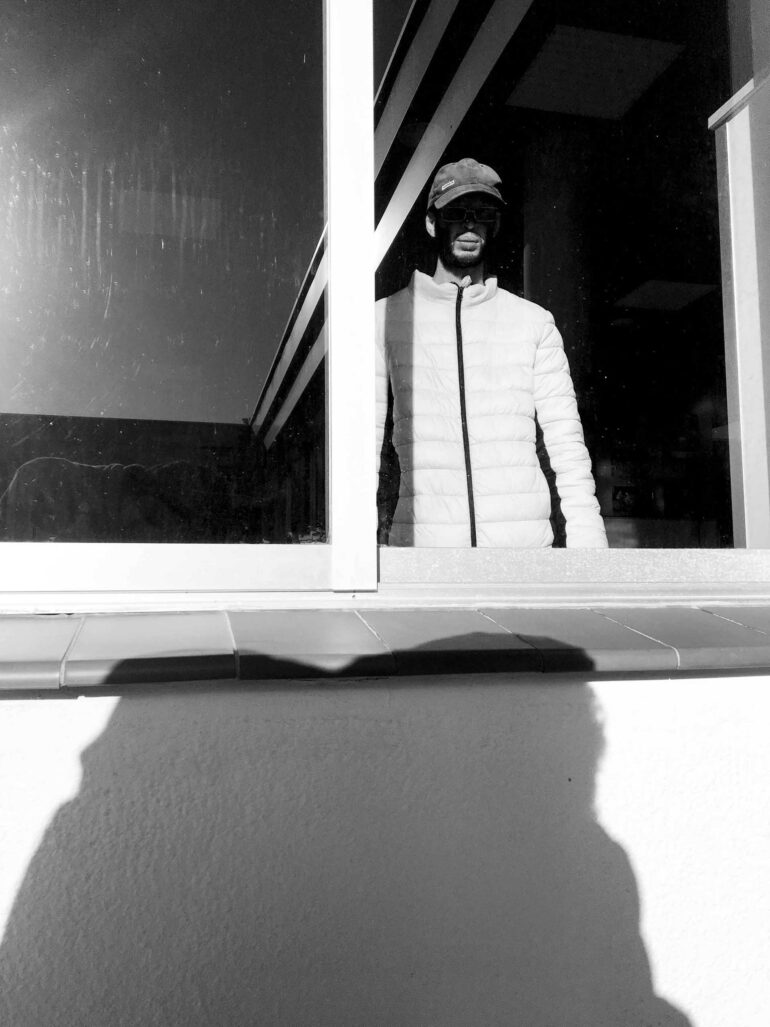
Sergio Castañeira: I think that it’s not about the monochrome, but about choosing a chromatic palette that can help you achieve what you had in your mind. Personally I use monochrome because I think I can create better personal universes in it. You can also use color, but that’s our default vision of the world; black and white can help you disconnect from reality and get into a dreamier, more mysterious world.

I usually shoot straight in monochrome, so I can look better for light and shadows.

The Phoblographer: Let’s Talk About Shutter Therapy. How Did It Help You?

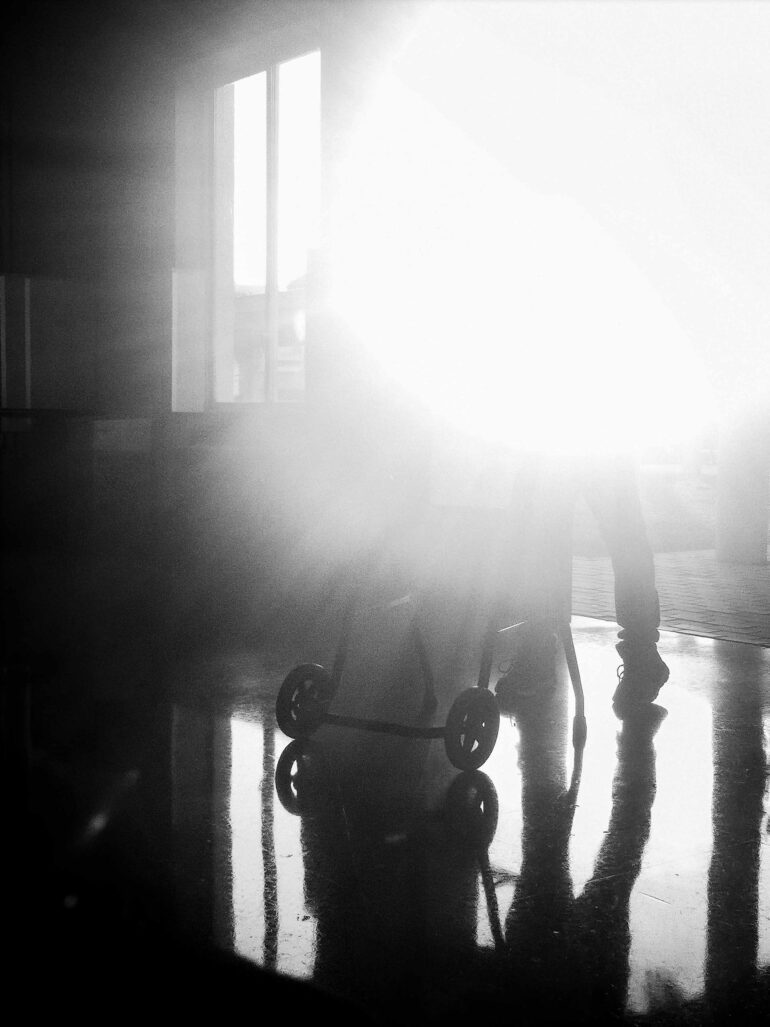
Sergio Castañeira: Photography has helped me immensely, allowing me to internalize and recognize the changes I went through after an accident I suffered in august of 2014. The accident left me tetraplegic, and I didn’t take any pictures for almost a year. After entering a rehab center, I started shooting again as a way to understand what kind of situation I was in. Limbo, the project about to be published as a book, talks about that transition and metamorphosis. Its images allowed me to understand my living situation; while at first I was in a very weird mental state, feeling like I was a ghost, these images and their edition allowed me to find myself again not only on a physical sense, but also with my photographer self, one that had vanished at the time.

Something I learned is that my life has no meaning without photography. It’s always been there, and this project has shown me so.

The Phoblographer: How Would You Describe Your Vision As A Photographer?

Sergio Castañeira: Most of the projects I create are done way after the shooting itself. I don’t like going in with a preconceived idea, and I don’t like to develop projects in a conceptual way. I accumulate images of my daily life, and projects and topics start to work their way up to the surface.

I try to develop visual journals; territories, mental spaces, poetry, or just what I go through day by day. I don’t force myself to shoot pictures, and I always take my camera with me. I’m always alert to a call the meaning of I don’t know.


After taking the pictures, when I’m going through them, it’s when I see the way some pictures start to talk to each other. They are connected through a mental or physical link, as the way I shoot has a lot to do with intuition and sensory input — which leads to contradictions in edition, as that process is more rational.

I think there are two types of photographers, the ones who know that they’re doing while they work and the ones who don’t. I’m closer to the latter. Sometimes I think not knowing what I’m doing is a bit of a curse, but in the end it’s just a struggle with myself and the obsessions I cultivate without a clear goal. That’s the reason I approach these topics in such an unconscious manner.

I believe there’s a deep bond between poetry and image in my work, regardless of what the audience might think.

On the other hand, I’m fascinated by the way I reach those inexplicable, weird spaces. Without capturing that sequence of images, I would’ve never seen them — such an incredible journey from the known to the unknown.

For example, I wouldn’t have done Limbo if it wasn’t because I was living, first-hand, the experience of a patient at a rehab center.

The Phoblographer: Tell Us More About Limbo

Sergio Castañeira: Limbo is about a personal process of adaptation and metamorphosis. Back in 2014, the 15th of august, I suffered an accident that changed my life irreversibly; I fractured my spinal column and I was left tetraplegic.

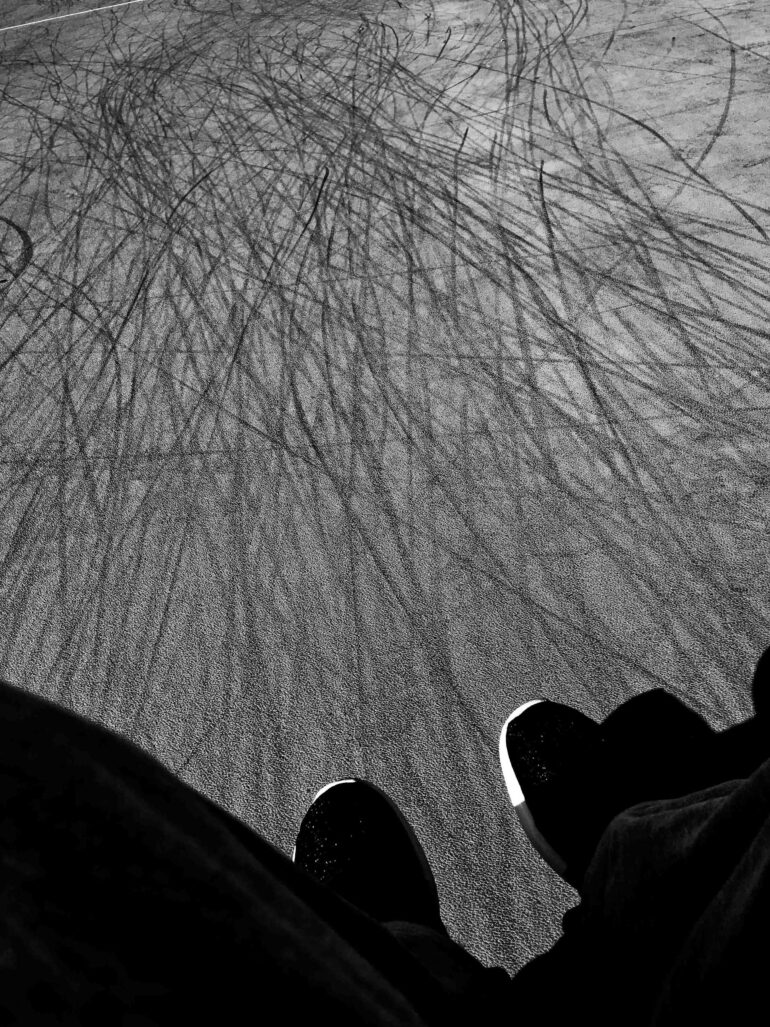
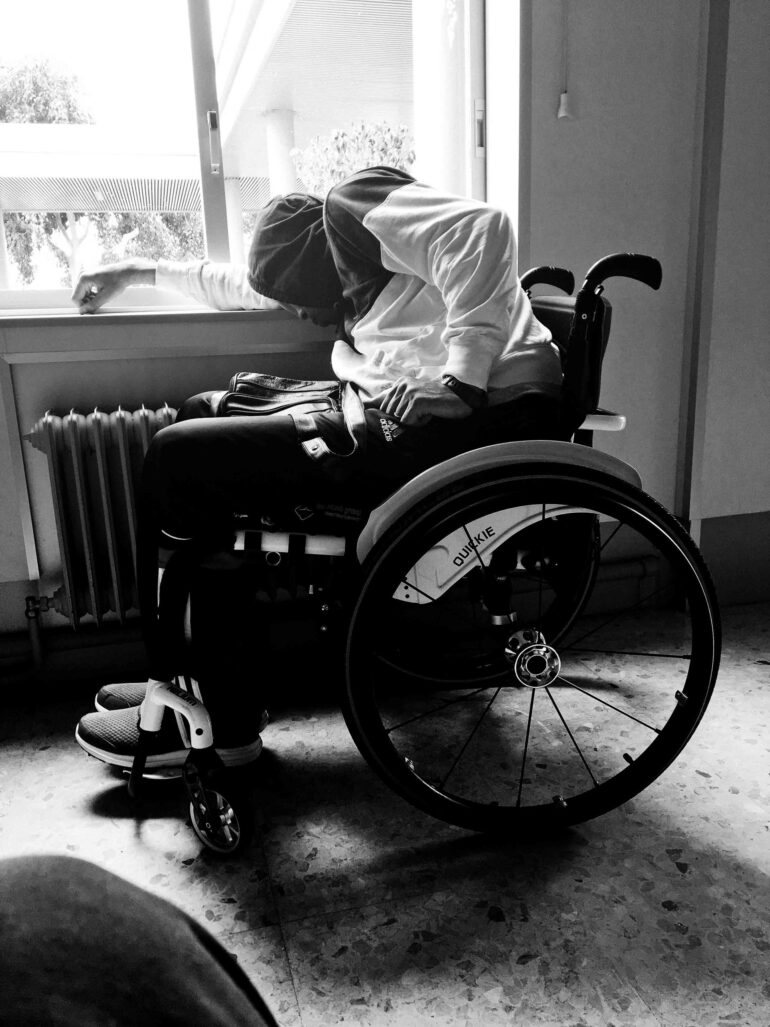
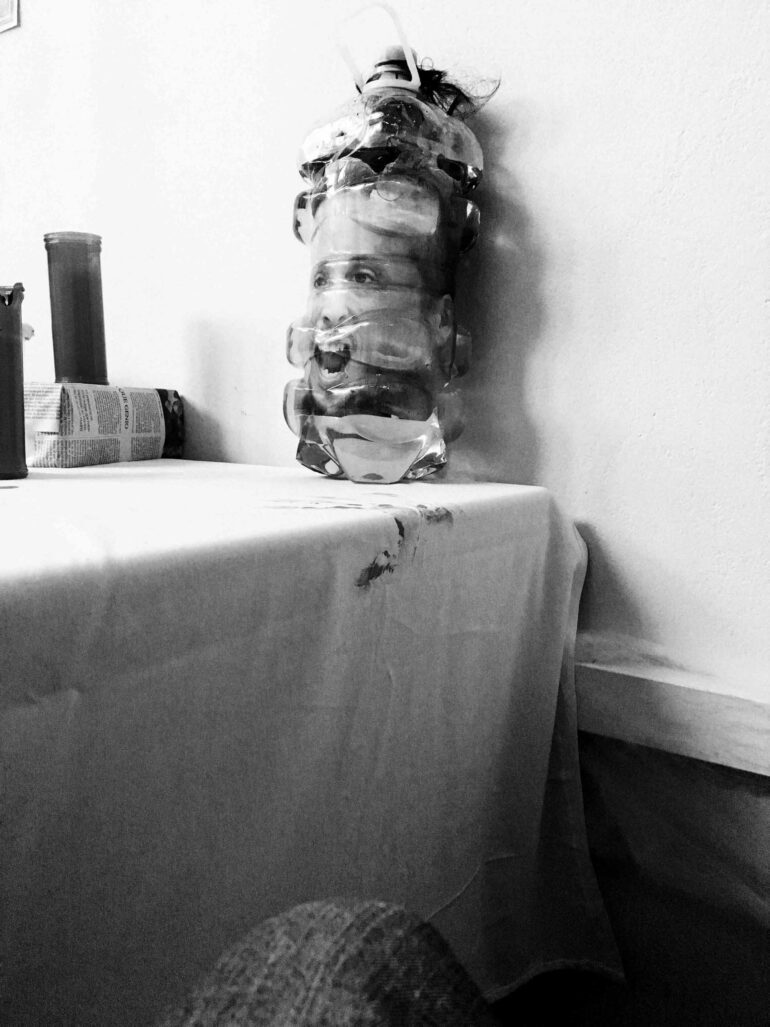
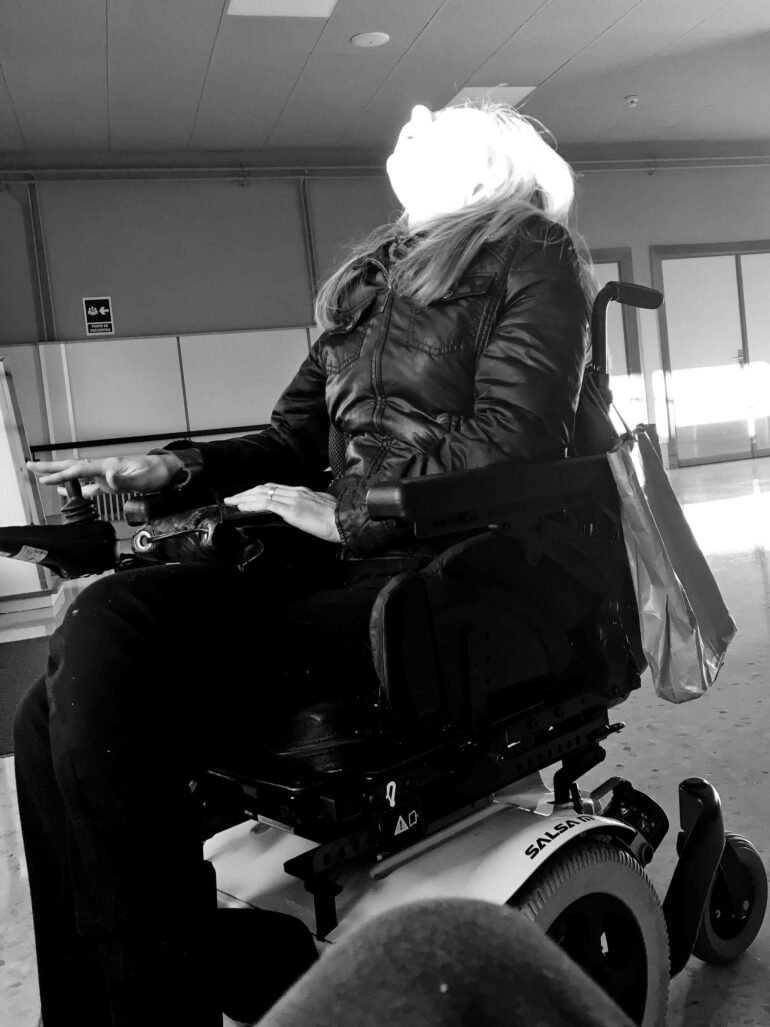
After a year in which I was unable to take pictures, I got into a rehab center for trauma patients, where I started to shoot again. This photographic work was nothing but a way to see and explore the maze I was in. The images that strayed away from the pure documentary and got closer to something intangible started to mean something special to me, something I couldn’t describe. In the project you can see my inner state: desperation, powerlessness, loneliness — as well as some moments of pure light breaking through the darkness, smashing you with hope and calmness.

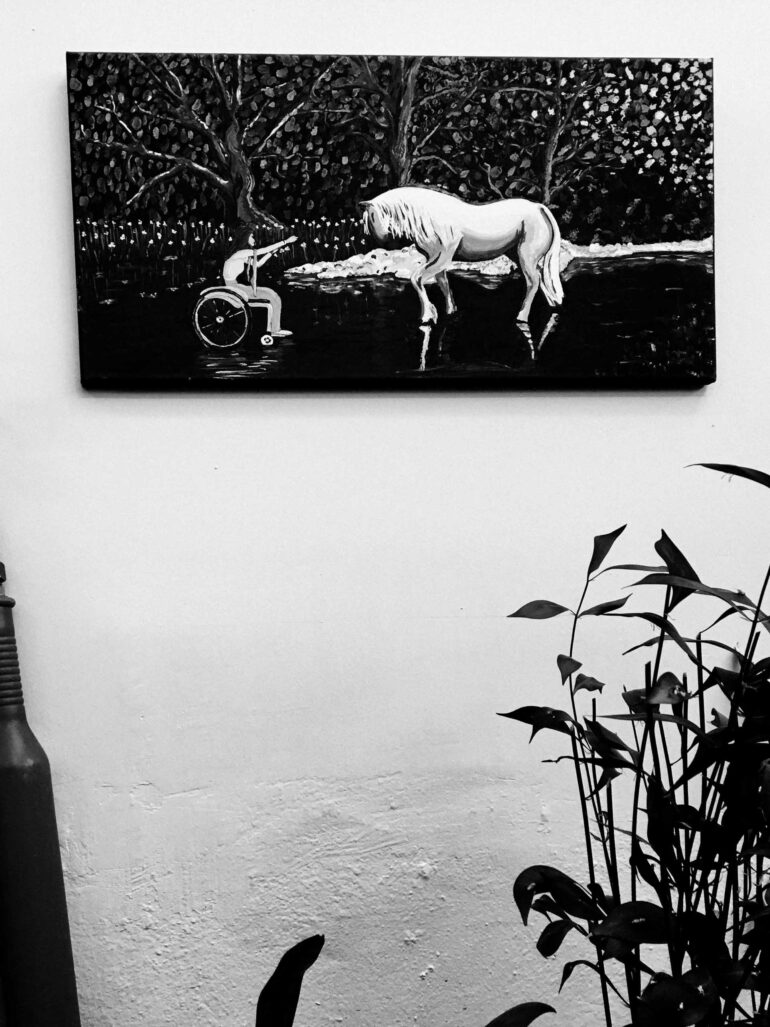
As you go through the photobook, you can appreciate there was always something pushing me forward, helping me survive. Once I left the center, I started to appreciate that the images that worked better were the ones where parts of my body or my wheelchair were in frame, as this project is clearly autobiographical. My fellow patients did also have a part, although more as a mirror than as a window; people I could see myself in, helping me understand my process through them.

As well as shooting these pictures, I was writing small notes, reflections or little poems. This work cannot be understood without the conjunction of the two.

I called the project Limbo because this space where I went from Monday to Friday felt like a kind of bubble related to the normal world I had left behind. According to Catholic tradition, being in limbo means to be in nothingness, a place without happiness nor sadness, without glory nor pain. In Spanish we say “estar en el limbo” (to be in limbo) when we talk about someone who’s spaced out.

I chose this name to reflect that symbolic state between past and future, between despair and hope, between powerlessness and empowerment, going forward with the bits and pieces Luck had seen fit to left me with.

The Phoblographer: We really liked your images partially because, as we’ve been going through various projects, there’s something that’s very human about it. With that said, what are your thoughts about all the AI projects out there these days and “AI photos” as they’re called?

Sergio Castañeira: I’m not sure what to think about this. I think it can be a fantastic tool for visual creators, and there’s projects such as the ones by Philip Toledano that are really attractive — but they stray from what is photography, getting closer to visual art. It’s clear that there’s a lot of AI generated images very similar to photography, and I can’t find it in me to criticize them. Let’s see what happens in the future!

All images posted with permission of Sergio Castañeira. You can see more of his work at his website or on his Instagram account. Limbo, his latest photobook —in a bilingual edition, English and Spanish— is available here. Interview translated by the interviewer from the original Spanish.

Capturing the Depths: Lee Jin-Man’s Innovative Underwater Photogra…

Capturing the Depths: Lee Jin-Man’s Innovative Underwater Photogra…
image

At the heart of the World Aquatics Championships in Qatar, a tale of innovation, collaboration, and artistic vision unfolds beneath the surface. AP Photographer Lee Jin-Man ventured beyond conventional boundaries to capture stunning underwater images, challenging the norms of aquatic photography. His pursuit of unique angles and exposures, coupled with a strategic collaboration with divers and colleagues, has set a new standard for visual storytelling in sports.

Advertisment

Breaking the Surface: A New Perspective

In the competitive arena of the World Aquatics Championships, every photographer aims to snap the shot that stands out. Lee Jin-Man, however, embarked on a quest not just to capture moments, but to immortalize them from a perspective rarely seen. During the men’s 200-meter breaststroke heats, Lee made a pivotal decision to adjust his underwater camera to a new lane. This move, while seemingly minor, was driven by an astute observation of the dynamic play of light and the swimmers’ movements through the lanes. By eschewing the marquee middle lanes, Lee widened his canvas, embracing the entirety of the aquatic battlefield.

Technique Meets Technology

Advertisment

The art of underwater photography in the fast-paced environment of competitive swimming requires more than just a keen eye. It demands a mastery over technology and an intimate understanding of the subject. Lee Jin-Man’s approach to this challenge was methodical and innovative. By adjusting the white balance settings of his camera, Lee was able to enhance the exposure and color balance of his photographs, capturing the fluid grace of the swimmers with a clarity and vibrancy that breathes life into the images. This meticulous attention to detail, combined with Lee’s willingness to shorten the physical distance between the camera and the swimmers, showcases the intricate dance between technology and artistry in the realm of sports photography.

Collaboration Underwater

The success of Lee’s underwater photography at the World Aquatics Championships was not solely the result of his individual talent. It was a symphony of collaboration, with divers and colleagues playing crucial roles in the orchestration of each shot. This teamwork underscores the complexities and collaborative nature of advanced underwater photography, where the photographer’s vision is supported and enhanced by the collective effort of those around him. The resulting photograph from the men’s 200-meter breaststroke heats stands as a testament to what can be achieved when creative minds converge beneath the waves.

Lee Jin-Man’s innovative approach to underwater photography at the World Aquatics Championships in Qatar has not only captured the imagination of viewers worldwide but also highlighted the endless possibilities within the realm of sports photography. By seeking unique angles, embracing technological advancements, and fostering collaboration, Lee has redefined what it means to capture the essence of athletic excellence. His work serves as an inspiring reminder of the power of creativity and teamwork in overcoming the challenges of bringing the unseen beauty of the aquatic world to the surface.