Photography

Portuguese photographer wins Photo of the Year

Portuguese photographer wins Photo of the Year

The British competition, which in this edition had more than 500 participants from more than 40 countries and the submission of more than 6,500 photographs, is considered by many to be the most prestigious underwater photography competition in the world.

The winning photo was taken in April 2022 when a sperm whale about 12 metres long washed ashore seriously injured and a group of around thirty bathers tried to save it, pushing it back into the sea.

Nuno Sá, alerted by a marine biologist friend who witnessed the first sightings of the injured sperm whale, went to the location armed with a drone as it approached the coast, which allowed him to monitor the rescue attempt.

“It was a mix of emotions to see an animal that I am so used to filming, in different parts of our planet on the high seas, injured and dying fighting to stay on the surface. But it was also inspiring to see so many people risking their lives to try to save him. We are talking about an animal that in this case weighed more than 30 tons and was injured. Interestingly, only after landing the drone and getting close to the whale did I realise that my 10-year-old daughter was one of the people trying to save it”, says Nuno Sá, photographer and videographer.

[embedded content]

Nuno Sá was named Marine Conservation Photographer of the Year 2024 by the ‘Save Our Seas Foundation‘, with his photograph ‘Saving Goliath’, taken in Portugal. Nuno Sá’s photograph shows bathers trying to save a stranded sperm whale.

Dr. Alex Mustard, President of the UPY Jury said: “The photo gives us hope that people care and want to help the oceans, but it also warns us that bigger changes are needed.”

Nuno Sá had already won the first edition of the competition, in 2015, being the only Portuguese photographer to win the competition in its 10-year history. A decade later, the photographer and videographer was again awarded, this time winning the ‘Save Our Seas’ Marine Conservation Photographer of the Year category, with a photograph that shows a group of bathers trying to save a sperm whale on Fonte da beach.

Revolutionizing iPhone Photography: SANDMARC’s Telephoto 6x Lens U…

Revolutionizing iPhone Photography: SANDMARC’s Telephoto 6x Lens U…
image

Imagine capturing the intricacies of a distant skyline or the subtle expressions of wildlife through the lens of your iPhone. With the recent unveiling of SANDMARC’s Telephoto 6x zoom lens for the iPhone 14 and 15, this vision edges closer to reality. This leap in mobile photography technology transforms the iPhone into a more versatile and powerful tool, equipping photographers with the ability to bring distant subjects into sharp focus.

Advertisment

The Dawn of a New Era in iPhoneography

The SANDMARC Telephoto 6x zoom lens stands as a beacon for mobile photographers, heralding a new age of precision and clarity in iPhone photography. Its introduction is not just about the enhancement of zoom capabilities; it is about redefining what is possible with a smartphone. The meticulously designed lens features a manually adjustable focus wheel, a pioneering addition that affords photographers unprecedented control over their compositions. This tactile engagement with the device invites users to connect with their subjects on a deeper level, enabling the capture of natural bokeh effects and the intricate details of distant scenes.

More Than a Lens: A Toolkit for Creativity

Advertisment

Constructed with premium multi-coated glass, the SANDMARC lens promises not only to expand the horizons of iPhone users but also to elevate the quality of their captures. It comes thoughtfully packaged with a lens pouch, the world’s thinnest lens case mount, and front and back lens caps, ensuring that photographers have everything they need to embark on their visual journey. Moreover, the announcement of exclusive discounts for the new product underscores SANDMARC’s commitment to making professional-grade photography accessible to a broader audience. This initiative invites both amateur and seasoned photographers to explore the limits of their creativity and to see the world from new perspectives.

Unlocking the Full Potential of iPhone Cameras

While the Telephoto 6x zoom lens is a marvel in its own right, its true value lies in its ability to harness the sophisticated features of the iPhone camera. This synergy between lens and device paves the way for enhanced photography and videography experiences, encouraging users to delve deeper into the art of iPhoneography. By understanding and utilizing the capabilities offered by their iPhone, in conjunction with SANDMARC lenses, photographers can achieve stunning visual narratives that were previously thought impossible on a mobile platform.

In the realm of mobile photography, the advent of the SANDMARC Telephoto 6x zoom lens for iPhone 14 and 15 marks a significant milestone. It not only promises to bring distant scenes into clearer view but also challenges photographers to redefine the boundaries of their craft. As we embrace these new tools and techniques, the future of iPhoneography looks brighter and more vibrant than ever.

This show spotlights queer artists in conversation with Dazed’s archive

This show spotlights queer artists in conversation with Dazed’s archive
image

Later this week (February 23), Dazed is set to host a showcase of queer photographers in celebration of this year’s LGBTQIA+ History Month, alongside a free zine fair (curated by PageMasters) and zine making workshop, all packed into the Dazed Space at 180 Strand.

Featuring the next generation of queer photographers from Dazed Club, the exhibition – titled No Turning Back – spans the work of eight artists, from Janice Reid’s intimate black-and-white portraits, to ethereal images by Lou Vacquié, and Lauren A-Brown’s snapshots of women and non-binary skinheads.

Elsewhere on display are responses to Dazed’s archival covers – which have long championed LGBTQIA+ people, fashion, and culture – including artworks by Manuel Cardozo, Apex Anomaly, Cully Wright, Szymon Stepniak, and Emalea Jones.

Fancy getting more involved? You can do that too, with a (first-come, first-served) zine-making workshop in collaboration with Lewisham’s PageMasters. Alternatively, you’ll be able to browse the tables at an on-site queer zine fair, featuring creatives and publishers including Jesse Glazzard, Theo White’s 6FT, Smut Press, and Grrrl Zine Fair.

No Turning Back will be open to the public – following a private view on February 22 – this Friday, February 23, from 10am to 6pm, at the Dazed Space at 180 Strand. Get a sneak preview of the artworks on display in the gallery above.

Top DSLR cameras: A guide for beginner to expert photographers

Top DSLR cameras: A guide for beginner to expert photographers

Picture your perfect camera for travel, sports, birdwatching and other photography adventures

Reviews and recommendations are unbiased and products are independently selected. Postmedia may earn an affiliate commission from purchases made through links on this page.

Article content

Are you a photo enthusiast? Do you love to hit the parks for an early morning birdwatching session? Or do you love to shoot live-action sports? When selecting the ideal camera, we can help you regardless of your experience level. Much different from smartphones, these cameras use light and shutter speed to take clear or artistic photographs, depending on your point of view. There are many different techniques associated with mastering these mighty machines. This Shopping Essentials guide will help you determine the ins and outs of DSLR (digital single-lens reflex) shopping so you’re set up for success. 

Advertisement 2

Story continues below

This advertisement has not loaded yet, but your article continues below.

Article content

Summary

Article content

Best overall: Canon EOS 5D Mark IV
Runner up: Nikon D850
Sleeper pick: Sony Alpha a7 III
Popular choice: Canon EOS 90D
Also consider: Nikon D7500
Great for outdoors: Pentax K-1 Mark II DSLR Camera
Better for beginners: Nikon D5600 DSLR Camera

The DSLR cameras

Best overall: Canon EOS 5D Mark IV

Canon EOS 5D Mark IV
Canon EOS 5D Mark IV. Photo by Amazon

Specs

Maximum webcam image resolution: 30.4 MP
Photo Sensor Size: Full Frame (35mm)
Image stabilization: True
Maximum shutter speed: 30 seconds
Minimum shutter speed: 1/80000 to 30s
Metering description:  Average, center-weighted, multi-zone, partial, spot
Exposure control type: Aperture-priority, shutter-speed-priority, manual-and-automatic, program
Form factor: DSLR

Why buy: The Canon EOS 5D Mark IV has a 30.4MP full-frame sensor that delivers superior image clarity to other models. Furthermore, its 4K video recording capability adds a cinematic touch to your storytelling. With Dual Pixel CMOS AF, autofocus is fast and precise — a reliable choice for photography and videography. The robust build and advanced features also make it part of the pack. 

Price: $3,099.99
Where to buy: AmazonCanonBest BuyHenry’s

Advertisement 3

Story continues below

This advertisement has not loaded yet, but your article continues below.

Article content

Runner up: Nikon D850

Nikon D850
Nikon D850. Photo by Amazon

Specs

Maximum webcam image resolution: 45.7 MP
Photo Sensor Size: Full Frame
Image stabilization: Digital
Maximum shutter speed: 30 seconds
Metering description: Evaluative
Exposure control type: Manual
Form factor: SLR

Why buy: The Nikon D850 FX-Series Digital Body features a 45.7MP full-frame sensor and 4K UHD video recording. It easily transitions from photography to cinematography, and its dynamic range and low-light performance make it versatile for various shooting conditions. The D850 provides excellent image quality and cutting-edge technology in a single, high-performance package.

Price: Starting from $3,380
Where to buy: AmazonNikon

Sleeper pick: Sony Alpha a7 III

Sony Alpha a7 III
Sony Alpha a7 III. Photo by Amazon

Specs

Maximum webcam image resolution: 24.2 MP
Photo Sensor Size: Full Frame (35mm)
Image stabilization: Optical
Maximum shutter speed: 1/8000 seconds
Minimum shutter speed: 30 seconds
Form factor: Mirrorless
Effective still resolution: 24.2 MP
Optical zoom: 2x

Why buy: The Sony Alpha a7 III is a game-changer for mirrorless cameras. While not a full DSLR, it operates similarly. Its 24.2MP full-frame sensor and 4K video recording deliver quality images and video. The camera’s rapid and accurate autofocus and impressive low-light performance will help you capture the moment. With a compact design and in-body stabilization, the a7 III is perfect for enthusiasts and new photography professionals brushing up on their skills.

Article content

Advertisement 4

Story continues below

This advertisement has not loaded yet, but your article continues below.

Article content

Price: $2,799
Where to buy: AmazonBest BuyB&H Photo & Video (prices in USD)

Popular choice: Canon EOS 90D

Canon EOS 90D
Canon EOS 90D. Photo by Amazon

Specs

Photo Sensor Size: APS-C
Image stabilization: Digital
Maximum shutter speed: 1/4000th second seconds
Minimum shutter speed: 30 seconds
Metering description: Center-weighted average, Evaluative, Partial, Spot
Exposure control type: Automatic
Form factor: DSLR
Effective still resolution: 32.5 MP

Why buy: With a high-resolution 32.5MP APS-C sensor and 4K video recording, it excels in capturing clear photos and video. Moreover, the Dual Pixel CMOS AF provides quicker autofocus features than other models for the same price. It also features a vari-angle touchscreen, making it ideal for social media content creators and influencers. 

Price: $1,299.99
Where to buy: Amazon

Also consider: Nikon D7500 (body only)

NikonD7500
Nikon D7500. Photo by Amazon

Specs

Photo Sensor Size: APS-C
Image stabilization: Digital
Exposure control type: Automatic
Form factor: DSLR
Effective still resolution: 20.9 MP
Special feature: Video recording
Optical zoom: 28x

Why buy: With a 20.9MP sensor and 4K UHD video capabilities, the Nikon D7500 delivers high-quality visuals in stills and motion. Renowned for its exceptional low-light performance and impressive image quality, the D7500 stands out as a tried and true classic for young and experienced shutterbugs. Moreover, its compact and lightweight design, combined with an array of features, makes it an ideal choice for those who demand versatility without compromising image precision and reliability.

Advertisement 5

Story continues below

This advertisement has not loaded yet, but your article continues below.

Article content

Price: $1,199
Where to buy: Amazon

Great for outdoors: Pentax K-1 Mark II DSLR Camera

Pentax K-1 Mark II DSLR Camera
Pentax K-1 Mark II DSLR Camera.

Specs

Maximum webcam image resolution: 36.4 MP
Photo Sensor Size: Full Frame (35mm) millimeters
Image stabilization: Dynamic
Minimum shutter speed: 30 seconds
Metering description: Center-weighted average, Evaluative, Spot
Exposure control type: Aperture Priority, Auto, Manual, Program, Sensitivity Priority, Shutter Priority
Form factor: DSLR
Effective still resolution: 36 MP

Why buy: The Pentax K-1 Mark II marries innovation with reliability. A 36.4MP full-frame sensor and in-body image stabilization ensures sharp, shake-free images in diverse shooting conditions. Weather-sealed for durability, this camera is ready for any adventure, especially hiking or birdwatching. The K-1 Mark II’s commitment to image quality and its lightweight design make it flexible for treks and travels. 

Price: $2,599
Where to buy: Amazon

Better for beginners: Nikon D5600 DSLR Camera

Nikon D5600 DSLR Camera
Nikon D5600 DSLR Camera. Photo by Best Buy

Specs

Maximum webcam image resolution: 24 MP
Photo Sensor Size: APS-C
Image stabilization: Optical
Minimum shutter speed: 30 seconds
Metering description: Spot
Exposure control type: Automatic
Form factor: Compact DSLR
Effective still resolution: 24.2 MP

Advertisement 6

Story continues below

This advertisement has not loaded yet, but your article continues below.

Article content

Why buy: The Nikon D5600 is a stellar choice for those stepping into DSLR photography. Its 24.2MP APS-C sensor captures stunning details, while full HD video recording adds versatility. The camera’s compact design and user-friendly features make it an excellent option for beginners. With built-in Wi-Fi and a responsive touchscreen, sharing and capturing moments becomes enjoyable and easy.

Price: $1,498
Where to buy: Best Buy

Key terms you need to know when using a DSLR camera

Picking up a DSLR camera demands that you learn the key terms and features that will help you take the best photos and videos indoors or out. Here are the essential photography terms that every new shutterbug and aspiring photographer should grasp before stepping out into the field.

Aperture: Consider it the camera’s eye, the hole in the lens where light enters, measured in f-stops like f/2.8 or f/5.6, influencing the photo’s sharpness.

Shutter speed: It’s the duration the camera’s eye stays open, determining the photo’s brightness and clarity and whether things look blurry or clear.

ISO: This is how sensitive the camera is to light, with higher numbers helping in dark places but potentially making the picture grainy.

Advertisement 7

Story continues below

This advertisement has not loaded yet, but your article continues below.

Article content

Exposure: It’s about how bright or dark the photo is, depending on the collaboration of aperture, shutter speed, and ISO.

Depth of field: The range of sharpness in a photo, altered by changing the aperture.

Bokeh: This is the beautiful blur in the background, often created by wide apertures.

Composition: The term involves arranging elements in a picture, encompassing framing and balance.

White balance: This is about fixing colours to look realistic in different lighting conditions.

RAW format: This file format retains all the details in a picture for better editing.

Metering: The camera measures light to achieve exposure, featuring different modes.

Focal length: This measures how zoomed in your lens is, with more significant numbers indicating more zoom.

Rule of Thirds: It’s a guideline for arranging elements and envisioning a tic-tac-toe grid on your picture.

Bracketing: Capturing shots at different settings helps obtain the perfect exposure.

Histogram: It’s a graphical representation showing if your picture is too dark or bright.

Focus points: These are where your camera is looking, providing flexibility with multiple points.

Advertisement 8

Story continues below

This advertisement has not loaded yet, but your article continues below.

Article content

Exposure compensation: It involves changing settings to achieve the desired brightness.

Framing: Using elements around your subject to make it stand out.

Panning: This is when you move with a moving subject, keeping it clear while blurring the background.

Prime lens: It’s a lens that doesn’t zoom, often resulting in sharper pictures.

Long exposure: This is when the shutter stays open for an extended period, capturing motion uniquely.

Recommended from Editorial

  1. A world class resort, Whistler tops our list as the best all-arounder.

    Top three ski resorts in Canada

  2. Learn which hiking boots are best for you.

    Top hiking boots for exploring trails while keeping your feet dry

Shopping Essentials is a category written by research-obsessed shopping experts. Explore product reviews, recommendations and launches — plus behind-the-scenes info on your favourite brands and hidden gems — learn more here or sign up for our newsletter.

Article content

Comments

Join the Conversation

This Week in Flyers

Wedding Photographer Goes Viral With ‘Unpopular Opinion’ Asking For Vendors Table

Wedding Photographer Goes Viral With ‘Unpopular Opinion’ Asking For Vendors Table

A wedding photographer has gone viral with her “unpopular opinion” that she would rather be sat at a table with other vendors for dinner — and not other guests.

In a TikTok video, published last month, Ohio-based photographer Chelsea McFolly, shared footage of the fun she was having at a “vendors table” at a client’s wedding.

@chelseamcfolling As a wedding photographer, I know a lot of people who work in the wedding industry who complain about being sat in the back corner at a vendor’s table during dinner. And I have 2 things to say, 1) if you give me a chair and a meal, THANK YOU BABY, im happy and 2) sit me with my people so i can relax, feel understood, and possibly even network. I LOVE a good vendor’s table. I’m not here to complain about where I’m sat at your wedding reception (as long as i have a chair 😉). #ohioweddingphotographer #weddingphotographer #documentarystylephotography #weddingvendor #northeastohiophotographer #adviceforbrides #bridesof2024 ♬ original sound – Chelsea McFolling

In the clip, it appears that that the newlywed couple had sat the people who were working at their wedding on a separate table at the reception to the standard guests on the big day.

‘Don’t Sit Us With Guests’

In the TikTok video, which has over 3.1 million views, McFolling and the other vendors are seen dancing and enjoying themselves as they eat their dinner together in the corner of room at the wedding reception.

“Unpopular opinion as a wedding photographer: a vendors table is [raising hands emoji],” McFolling captions the clip.

“Don’t sit us with guests. Let us enjoy dinner with our fellow hired friends.”

In a further description accompanying the TikTok video, McFolling says she knows “a lot of people who work in the wedding industry who complain about being sat in the back corner at a vendors table during dinner.”

But, the photographer says that she personally feels that she can more fully “relax, feel understood, and possibly even network” when she is sat with other vendors at a wedding, rather than with guests .

However, in the caption to the video, McFolly made sure to note that she was always thankful and happy whenever her clients simply provide her with “a chair and meal” at a wedding — no matter where that was.

‘Take Care of Your Vendors’

Despite McFolly’s belief that this was an “unpopular opinion,” the TikTok video amassed over 351,000 likes. Many viewers loved the idea of a separate vendors table for photographers at a wedding, rather than seating them with guests.

However, in the comments of the TikTok video, some wedding photographers and vendors suggested that they were lucky just to be fed by their clients on the big day.

Some photographers said that they were often made to eat their dinner “in the back of a kitchen” or alone.

As a result of McFolly’s video, many TikTok users commented on how important it is “take care of your vendors” a a wedding. Some social media users vowed to make sure their future wedding photographer ate at a table with other hired workers.


Image credits: Header photo licensed via Depositphotos.

Walter Pfeiffer Joins Forces with Helmut Lang, Merging Iconic Phot…

Walter Pfeiffer Joins Forces with Helmut Lang, Merging Iconic Phot…
image

In an electrifying fusion of art and fashion, Swiss photographer Walter Pfeiffer, renowned for his captivating 1980s black and white imagery, has collaborated with the esteemed fashion house Helmut Lang. This partnership has birthed a unique collection that transposes Pfeiffer’s signature photographs onto a range of apparel and home decor, including T-shirts, pillows, and blankets. A noteworthy aspect of this collaboration is the commitment to philanthropy, with 15% of all profits being directed to charity. This blend of creativity and social responsibility marks a significant moment in both the art and fashion sectors.

Advertisment

A Glimpse into Pfeiffer’s Artistic Journey

Walter Pfeiffer’s journey into the realms of photography was not marked by conventional paths. Battling with trembled hands since childhood, Pfeiffer developed a distinctive use of flash in his photography to stabilize the images, imbuing them with a unique, summery warmth. His photographic narratives, often spotlighting young men in vibrant, dynamic scenes, traverse the delicate border between dreams and reality. These themes of first love, beauty, and a tantalizing energy resonate profoundly with viewers, reflecting Pfeiffer’s own explorations of identity and perception.

Despite initial skepticism from the art and fashion industries, Pfeiffer’s “simplistic” approach to capturing moments of uninhibited intimacy and lust has garnered a fervent following, particularly among millennials. His work, which spans over five decades, includes not only his iconic photography but also contributions to underground gay zines, marking him as a pivotal figure in both the art and LGBTQ+ communities. Through his lens, Pfeiffer has consistently sought to capture a raw, unpolished beauty, utilizing non-professional models to emphasize authenticity over perfection.

Advertisment

Helmut Lang’s Vision Meets Pfeiffer’s Aesthetic

The collaboration between Walter Pfeiffer and Helmut Lang is a testament to the seamless alignment of their aesthetic visions. Lang, known for his minimalist and deconstructive approach to fashion, finds a kindred spirit in Pfeiffer’s photography, with its focus on intimacy, energy, and a certain rawness of emotion. This partnership not only brings Pfeiffer’s work into a new light but also reiterates Lang’s dedication to integrating art within the fabric of fashion.

The collection, available both online and in stores, serves as a bridge between two influential creators, allowing fans and fashion aficionados alike to experience the convergence of their creative worlds. The inclusion of charity in this venture adds another layer of depth, showcasing a commitment to giving back and supporting causes through the power of art and fashion.

Advertisment

Legacy and Influence: Pfeiffer’s Enduring Impact

Walter Pfeiffer’s influence extends far beyond the confines of photography. His ability to capture fleeting moments of beauty, emotion, and uninhibited expression has inspired generations of photographers and artists. His work, characterized by a palpable sense of warmth and intimacy, challenges traditional notions of beauty and perfection, encouraging a more inclusive and diverse representation of humanity.

As this collection with Helmut Lang reaches audiences worldwide, it not only celebrates the storied career of Walter Pfeiffer but also introduces his visionary work to those who may be discovering it for the first time. This collaboration is a vivid reminder of the power of art to transcend boundaries, whether they be in fashion, photography, or the societal constructs that define us.

In a world where art and fashion continually intersect, the partnership between Walter Pfeiffer and Helmut Lang stands as a beacon of creativity, innovation, and social responsibility. By bringing together the timeless allure of Pfeiffer’s photography with the cutting-edge design of Helmut Lang, this collection not only pays homage to the past but also paves the way for the future of artistic collaboration.

Global Roundup: Greece LGBTQ+ Rights, Black Women Photography Book, Africa Queer Literature, Japan Women’s Maiden Names, Queer Indigenous Artists

Global Roundup: Greece LGBTQ+ Rights, Black Women Photography Book, Africa Queer Literature, Japan Women’s Maiden Names, Queer Indigenous Artists

Curated by FG Contributor Samiha Hossain

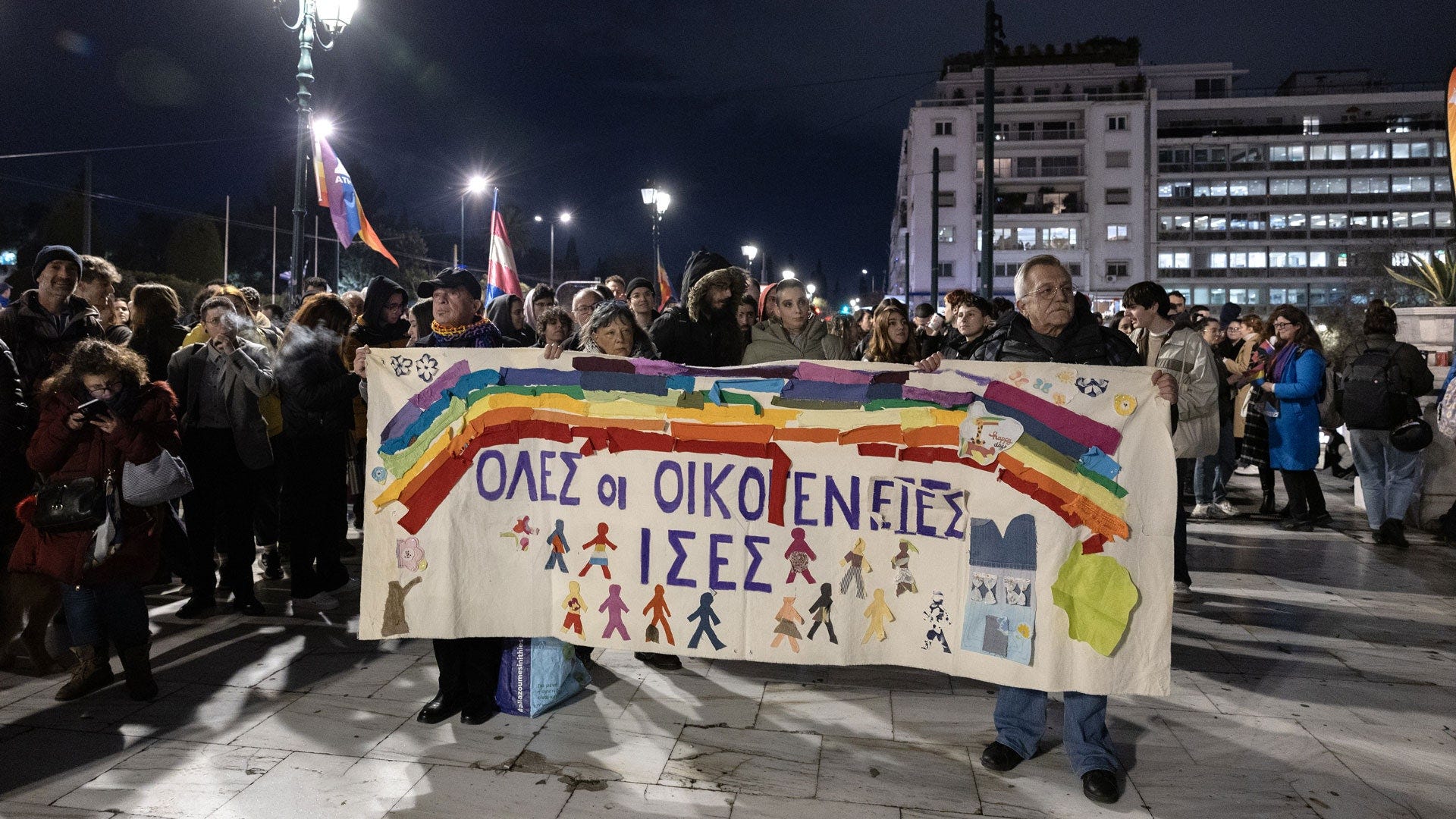
Protesters hold a banner reading “All families should be equal” during a rally in favor of the same-sex marriage bill in front of the parliament building in Syntagma Square in Athens, Greece, on Thursday, Feb. 15, 2024. Photographer: Yorgos Karahalis/Bloomberg via Getty Images

Lawmakers in Greece passed a landmark marriage equality law last week, making it the first Christian Orthodox nation to legalize same-sex marriage and LGBTQ+ adoption.

Although Greece passed laws establishing LGBTQ+ civil unions in 2008 and 2015, activists have contended for years that those laws do not grant full equality. The new law will allow same-sex couples to enjoy the same marriage rights as heterosexual couples, including adoption, which was previously banned for LGBTQ+ Greeks. But the law still leaves prohibitions in place that prevent LGBTQ+ couples from contracting with a surrogate mother, a reproductive option that’s currently only available for hetero couples and single women.

Openly gay president of the SYRIZA party, Stefanos Kasselakis, celebrated the vote by dancing to Katy Perry’s “Firework” at a gay bar in Gazi with his husband Tyler McBeth. The two have openly discussed their hopes to raise children together, whether by adoption or surrogacy.

Violence and intolerance against LGBTQ+ people, especially trans people of color, is still rampant in Greece, where Orthodox Christianity is legally recognized as the country’s “prevailing religion.” Greek law also does not recognize intersex people, restricting legal gender recognition only to “male” and “female.” The country’s first LGBTQ+ cabinet minister, Nicholas Yatromanolakis, left his post in the Mitsotakis administration last year after being appointed in 2021.

Refer a friend

Photographer Suki Dhanda’s “Untitled” from the 2002 series “Shopna,” features in Joy Gregory’s new book “Shining Lights.” Courtesy the artist/MACK

The genesis of photographer Joy Gregory’s latest project, “Shining Lights,” began 40 years ago, at a Valentine’s Day party in London. It was here that Joy, who was the first Black woman to study an MA in Photography at the Royal College of Art in London, first met activist and writer Araba Mercer. After the party and as they became friends, Mercer suggested the pair collaborate on a book about women’s photography.

They presented their plan for the book — comprising the photographs gathered by Gregory, and text by Mercer — to Sheba, a feminist publishing collective focused on Black women’s storytelling that Mercer was a key member of. Sheba was enthusiastic, but the cost of printing all the submitted photographs ultimately proved prohibitive. The idea then, for a book surveying the work of Black women’s photography in Britain in the 1980s and 1990s, lay dormant for several decades. But a 2019 talk Gregory gave at Autograph gallery in London about photographer Maxine Walker’s work sparked renewed interest in the contribution of women of color to photographic art during this period.

The result is “Shining Lights: Black Women Photographers in 1980s–90s Britain,” a new photography book edited by Gregory and co-published by Autograph and Mack. Divided into thematic chapters exploring community and activism, kinship and family ties, travel and landscape photography and more, “Shining Lights” features 57 photographers, capturing the rich breadth of work from this overlooked period and community.

The book includes work by well-known artists such as Walker, whose photographic practice centres on representations of Black womanhood, surrealist artist Mona Hatoum, and Turner Prize nominee Ingrid Pollard, whose images in the book use portraiture to examine gender and sexuality. The project also introduces readers to photographers working during that time who are perhaps not as well known.

What’s really interesting about history, and the way that history is recorded, is there’s always heroes, but actually, it was a collective. And I think a lot of the collective has been written out of the history. -Joy Gregory

Gregory says that while some of the book’s contributors are now recognizable photographers, others have moved on entirely from photography since that era. She adds that it’s because the artists weren’t picked at the time and their stories weren’t being told. For some of the book’s contributors, Gregory says, revisiting that time and the poor treatment they received from the industry was painful. She recalls how those among her network were often shut out of inaccessible arts institutions and forced to work at the margins. 

There was a move to actually educate and help each other, and there was a lot of sharing of materials and knowledge…The way in which people supported each other was really important — well, essential — because the other networks were not open to us. I think as women, it wasn’t open, and I think being of color, it definitely wasn’t open. -Joy Gregory

Gregory feels that in some ways, the landscape today remains similarly inaccessible. She hopes it will be encouraging for younger artists to see the work, perspectives and leadership of those who have preceded them.

Refer a friend

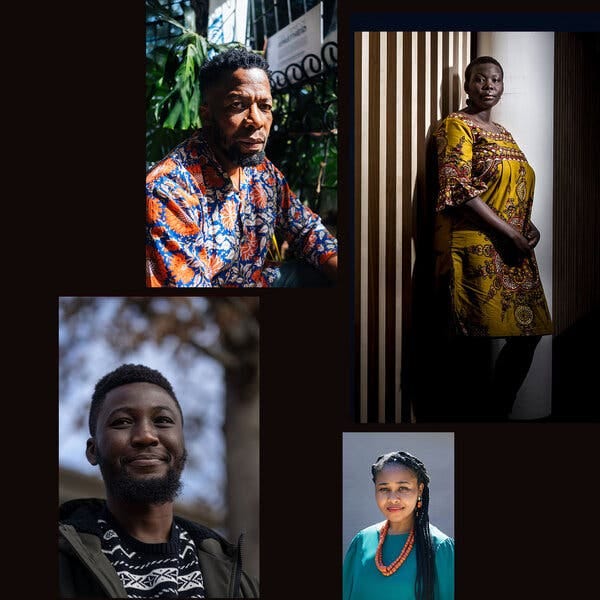
Among the writers who have published L.G.B.T.Q. stories are, clockwise from top left, Kevin Mwachiro, Monica Arac de Nyeko, Chinelo Okparanta and Arinze Ifeakandu.Credit…Clockwise from top left: Khadija Farah for The New York Times; Pepijn van den Broeke; Alyssa Schukar for The New York Times; Cydni Elledge for The New York Times

Queer authors in the African continent are pushing boundaries, finding an audience and winning awards, despite obstacles.

As a queer teenager growing up in northern Nigeria, Arinze Ifeakandu often found himself searching for books that reflected what he felt. After college, he began writing short stories in which gay men battled loneliness but also found lust and love in conservative, modern-day Nigeria.

I have always taken my own desires, my own fears, my own joys seriously. I knew I wanted to write characters who are queer. That’s the only way I am going to show up on the page. -Arinze Ifeakandu

Ifeakandu’s stories gained traction with readers, and with critics. In 2017, he became a finalist for the Caine Prize for African Writing, and last year, his debut collection, “God’s Children Are Little Broken Things,” won the Dylan Thomas Prize for young writers.

Thabiso Mahlape, who founded Blackbird Books in South Africa, has published Nakhane, a queer writer and artist, and “Exhale,” a queer anthology. “So much more can be done,” she said. More Africans are openly discussing sex and expressing their sexual and gender identities. Small Pride marches and film festivals are celebrating queer experiences, and some African religious leaders are speaking up in support of LGBTQ people. Young people, who make up the majority of the continent’s population, are turning to social media to discuss these books, and the big screen is bringing some of them to a wider readership.

The books — fiction, nonfiction and graphic novels — are also being published as a way to push back against virulent homophobia and anti-gay legislation across Africa. By writing them, authors say they hope to engage readers and challenge pervasive notions that homosexuality is a Western import.

These books are an invitation to change mindsets and to start a dialogue. These books are saying, ‘I am not a victim anymore.’ It’s gay people saying, ‘We don’t want to be tolerated. We want respect.’ -Kevin Mwachiro, coeditor of “We’ve Been Here,” a nonfiction anthology about queer Kenyans who are 50 or older

For many of these authors, publishing has brought public recognition and even appreciation. But some have faced harassment or even death threats. Chiké Frankie Edozien, whose memoir “Lives of Great Men: Living and Loving as an African Gay Man” won a Lambda Award, hopes the books will inspire younger generations to read a “dignified and balanced” portrayal of gay Africans.

Books are really powerful, books are really intimate. [And having these queer-centered stories in] libraries for decades to come is great, because the needle has been moved even when it doesn’t feel like it. -Chiké Frankie Edozien

The Nigerian-American author, Chinelo Okparanta, focuses on the coming-of-age story of a young woman during Nigeria’s Biafra Civil War in her 2015 novel “Under the Udala Trees.” The book’s protagonist, Ijeoma, meets Ndidi after finishing school. Together, they attend secret lesbian parties in a church, explore sexual pleasure and even talk about getting married. Okparanta made a conscious decision to end a book centered on a same-sex relationship on a positive note, with one of her characters mulling a Nigeria that is safe for gay people.

There needs to be room for people to have hope. -Chinelo Okparanta

People cross a street in Tokyo’s Ueno district. Photo: AP

A campaign by women in Japan to obtain legal equality for their identities has received a boost after the head of the nation’s largest business lobby expressed support for a change in the law that would allow women to keep their maiden names after marriage.

Campaigners say Japan is the only country in the world that obliges married couples to have the same surname, and unsurprisingly, the man’s family name is overwhelmingly the one chosen. Activists say it is a patriarchal remnant of the legal system held in place by conservative male politicians. However, the head of the influential Japan Business Federation (Keidanren) has come around to the idea of women keeping their maiden names. Keidanren has announced it is drawing up a paper to recommend that the law be amended to allow for different surnames, and that it would be submitted to the government later this year. In 1996, a Justice Ministry panel recommended that the Civil Code be amended to allow for separate surnames. But the panel’s recommendations did not go further, as conservative members of the Diet indicated they would fight it because it would undermine the cohesion of the family unit and weaken traditional values.

These people have always rejected efforts to change the law and allow equality because they are traditionalists and believe that a unified name is important to consolidating the idea of the family. They overlook just how inconvenient the law is for so many women. -Hiromi Murakami, professor of political science 

An editorial in the Mainichi newspaper on February 12 called on the government to “summon political courage” to change the law, pointing out that Keidanren is claiming that the issue is harming the nation’s business. “But the issue extends beyond work and daily life,” the paper said. They added that, “one’s name is integral to their identity. Many feel they have lost a part of themselves, as if their lifetime of achievements has been denied or erased by changing their surname.”

I went through the humiliation of changing my name once when I got married and then, for a second time, when I got divorced. Each time, I had to change all my IDs, bank accounts and even my child’s koseki (family register)…Stories and papers I wrote under my ex-husband’s surname are not credited as my work. I wouldn’t have to go through such humiliation if I had not changed my name. Men do not need to undergo that sort of scrutiny. -Sumie Kawakami, lecturer who focuses on women and gender issues

Refer a friend

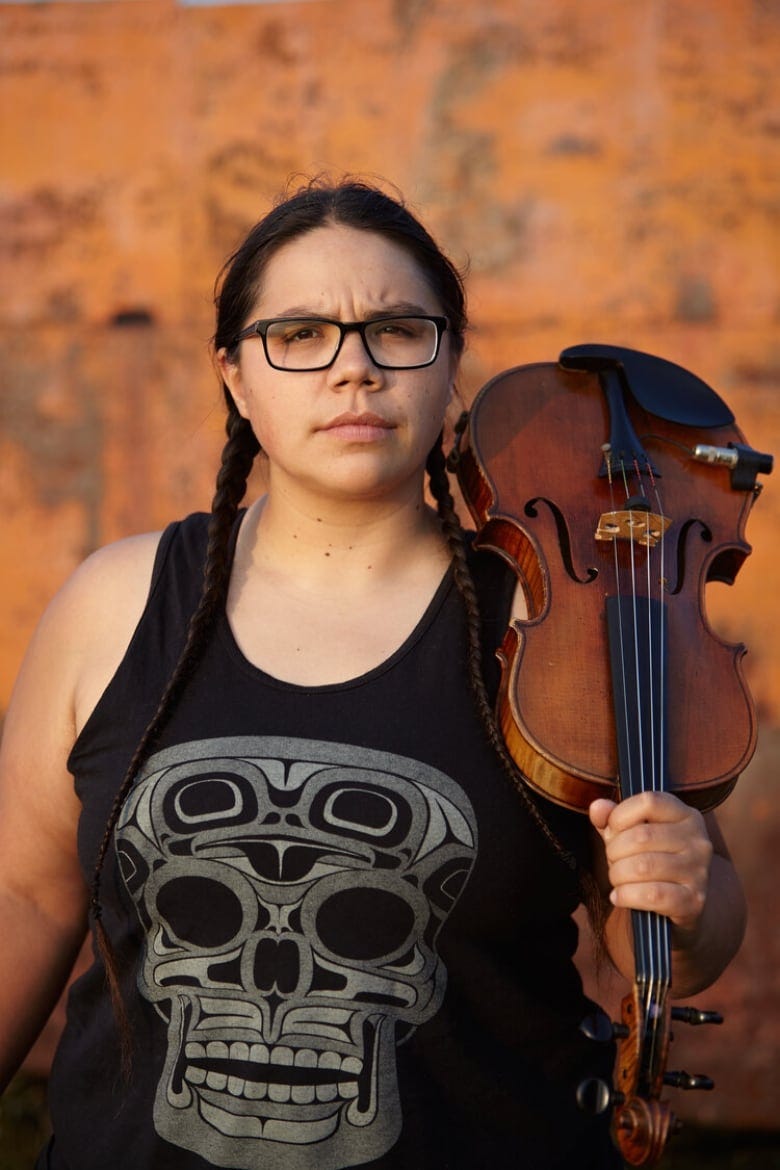
Melody McKiver is adapting Indigenous love songs, originally documented by non-Indigenous researchers, to put a spotlight on queer love. (John Paillé)

Indigenous artists in Canada are putting queer love in the spotlight. When Melody McKiver came across a collection of Indigenous love songs transcribed by anthropologists in the early 1900s, the title of one stood out to her: I Don’t Need You Anymore. The song’s lyrics described a man standing on the shore, while a woman leaves in a canoe, drifting out into the water. McKiver wondered where the woman was going — and perhaps, whether she might be off to meet someone else.

What if she’s not going for another man? What if she’s leaving for another woman? What if she’s leaving for a two-spirit person? -Melody McKiver

Now McKiver is creating new interpretations of these century-old manuscripts, originally documented by non-Indigenous researchers, to put a spotlight on queer love. There’s been an “explosion” of queer and two-spirit literature and film as well as music, making it an exciting time for queer creators even compared to five or 10 years ago, they said.

Love stories abound in entertainment, and are practically inescapable in most genres of popular music. McKiver and other Indigenous artists are part of that broadening conversation by bringing 2SLGBTQ+ love stories to the forefront, changing the tune on a largely heteronormative landscape.

For Jeremy Dutcher, telling queer love stories is about giving people the language to learn more about themselves. After all, “the limits of our language are the limits of our mind,” according to the Juno Award and Polaris Prize-winning artist who is Wolastoqiyik and a member of the Tobique First Nation in North-West New Brunswick.

When I came out really young, all I had access to was the word gay, right? Only when we can name something can we fully come into it. -Jeremy Dutcher

Dutcher’s sophomore album, Motewolonuwok, discusses the intersection of the queer experience and the Indigenous experience with his song Ancestors Too Young. Part of that intersection comes from their respective vulnerability, he said, as Indigenous and queer youth are statistically more likely to die by suicide compared to the wider population.

The place where two discriminations meet is a dangerous place to live. What I wanted to share by speaking about that intersection … [is] to breathe some life into that and just say that, you know, we’re going to sing the song. We’re going to remember the ones we’ve lost. -Jeremy Dutcher

Thank you for reading FEMINIST GIANT. This post is public so feel free to share it.

Share

Samiha Hossain (she/her) is an aspiring urban planner studying at Toronto Metropolitan University. Throughout the years, she has worked in nonprofits with survivors of sexual violence and youth. Samiha firmly believes in the power of connecting with people and listening to their stories to create solidarity and heal as a community. She loves learning about the diverse forms of feminist resistance around the world.

Give a gift subscription

Photographer Captures Leopard Eating Crocodile in Tree

Photographer Captures Leopard Eating Crocodile in Tree

Years of traveling the plains of the Mara have etched countless wildlife encounters into my memory. From the heart-stopping chase of a cheetah to the tender moments in prides of lions.

None however compare to the recent sighting that left me speechless: a grizzled leopard, his age etched in every whisker, balanced precariously in a tree, his prize, a lifeless crocodile. A sheer testament to an extraordinary feat of nature. It was a moment that transcended mere observation and entered the unexpected twists of the wild.

Earlier I had sat at my computer in the Angama photographic studio when a guide came running in and said there was a sighting of a leopard with a possible snake. Later he sent out that he had inspected and it turned out to be a crocodile.

The next day, I drove towards the same area and noticed something hanging from the tree, which was the tail of the crocodile. I waited for hours hoping that the leopard would go back to its reward. Eventually he did and I was able to get some photos. I have never heard of this occurring in Kenya, there are places around the world such as South Africa or maybe Jaguars in South America where this has been recorded and photographed.

The male that has been photographed is named Shujaa, which means hero in Swahili. He is estimated to be about 14 years old, making him quite senior, with most leopards living for 12-15 years in the wild. He was spotted in the Maji ma Chafu area which is well within his territory. His longevity suggests successful hunting starches and adaptability as suggested with this crocodile kill. His dense markings (which resemble a jaguar due to his rosettes) and his eye (which was injured, possibly by another leopard) are some of his distinguishable features.

I watched as he ate the remaining parts of the crocodile and pieces fell into the tall grass. If you look closely you could tell that there was a wound near the tip of the tail of the leopard, likely from a confrontation with the crocodile. From the size of the tail of the crocodile, you can tell it was fairly large. Then what only remained was the thick scaly tail of the crocodile until the last piece fell and it was gone. Shujaa came down the tree and disappeared into the grass. As I drove away I could hardly contain my excitement from the behavior I had just witnessed.

This wasn’t your typical Savannah showdown. Leopards, while agile climbers, rarely hunt reptiles, and crocodiles, masters of aquatic ambush, are seldom found out of their watery domain. Both leopards and crocodiles are apex predators and there have been documented cases of leopards killing crocodile hatchlings, and crocodiles taking down young leopards that come too close to the water’s edge.


About the author: Born and raised in Nairobi to Egyptian parents, Andrew Andrawes spent 15 years in the United States before returning to Kenya to live in the remote Mara Triangle for the last 2 years. He holds a bachelor’s degree in Biology and African Studies from the University of Virginia, and a post-bacc from San Francisco Art Institute, and an MFA in photography from San Jose State University, where he has also worked, along with in various other studios and camera shops.


Image credits: Photographs by Andrew Andrawes

Haunting Image of Whale Skeletons Wins Underwater Photographer of the Year 2024

Haunting Image of Whale Skeletons Wins Underwater Photographer of the Year 2024
Underwater Photographer of the Year 2024
The winner of Underwater Photographer of the Year 2024.

A stark photo of a diver examining the aftermath of a whale hunt has won Underwater Photographer of the Year 2024.

The brutal image taken by Alex Dawson from Sweden beat off over 6,500 other entrants. The image shows a breath-hold diver below a sheet of ice in Greenland inspecting whale carcasses.

Wide Angle

The remains of whaling undertaken by hunters from Greenland. The minke whales there have a stable population and the hunters use almost all of the whale but the skeleton is put back into the sea where marine invertebrates and fish pick the bones clean. Winner of the Wide Angle category and Underwater Photographer of the Year 2024. | © Alex Dawson/UPY2024
A pod of Atlantic spotted dolphins swimming in the Bahamas. Runner up in the Wide Angle category. | © Remuna Beca/UPY2024
A lemon shark rises from the depths at dusk in the Bahamas. Third place in the Wide Angle category. | © Remuna Beca/UPY2024

Macro

A potbelly seahorse in Australia. Winner of the Macro category. | © Talia Greis/UPY2024
A tiny octopus hitches a ride to the surface in the Philippines. Runner up of the Macro category. | © Dennis Corpuz/UPY2024
Two pygmy seahorses. Third place in the Macro category. © Byron Conory/UPY2024

Wrecks

An underwater military museum in Jordan. Winner of the Wrecks category. | © Martin Broen/UPY2024
The wreck of the Kyle Spangler in Lake Huron. Runner up in the Wrecks category. | © Becky Schott/UPY2024
A huge school of fish swarms a shipwreck in Brazil. Third place in the Wrecks category. | © Fabiana Fregonesi/UPY2024

Behavior

A Bryde’s whale picks off the end of a bait ball. Winner of the Behavior category. | © Rafael Fernandez Caballero/UPY2024
Two female Zoarchias major eelpouts fight over a suitable spawning nest. Runner up in the Behavior category. | © JingGong Zhang/UPY2024
A lone tiger shark picks the bones of a young humpback whale’s carcass. Third place in the Behavior category. | © Brooke Pyke/UPY2024

Portrait

A gray whale. Winner of the Portrait category. | © Rafael Fernandez Caballero/UPY2024
A curious cormorant approaches the photographer beneath a kelp forest in Monterey, California. Runner up in the Portrait category. | © Jon Anderson/UPY2024
A swimming macaque in Thailand. Third place in the Portrait category. | © Suliman Alatiqi/UPY2024

Black and White

Members of a synchronized swimming team in a pool. Winner of the Black and White category. | © Jasmine Skye Smith/UPY2024
A great white shark near Australia. Runner up in the Black and White category. | © Matty Smith/UPY2024
Bottlenose dolphins off the coast of Mayotte. Third place in the Black and White category. | © Serge Melesan/UPY2024

Compact

A nudibranch in Bali, Indonesia. Winner of the Compact category. | © Enrico Somogy/UPY2024
A coconut octopus feels the photographer’s lens. Runner up in the Compact category. | © Enrico Somogy/UPY2024
A bottlenose dolphin in an Egyptian lagoon. Third place in the Compact category. | © Ilaria Mariagiulia Rizzuto/UPY2024

Up and Coming

An opportunistic mahi mahi swipes a fish from a baitball. Winner of the Up and Coming category. | © Lisa Stengel/UPY2024
A diver swims into a circle of baby barracudas. Runner up in the Up and Coming category. | © Sarah O’Gorman/UPY2024
A lionfish in Indonesia. Third place in the Up and Coming category. | © Bryan H. Blauvelt/UPY2024

British Waters Wide Angle

Diving gannets off the coast of Scotland. Winner of the British Waters Wide Angle category. | © Kat Zhou/UPY2024
Bass fish. Second place in the British Waters Wide Angle category. | © Kirsty Andrews/UPY2024
A World War II submarine off the coast of Cornwall. Third place in the British Waters Wide Angle category. | © Rick Ayrton/UPY2024

Underwater Photographer of the Year is a U.K.-based competition with categories just for Brits. For more, head to the competition’s website.