Photography

Napping polar bear image captures hearts, wins top wildlife photography prize

Napping polar bear image captures hearts, wins top wildlife photography prize

(CNN) – An image of a napping polar bear curled up on an iceberg captured the hearts of voters to win this year’s Wildlife Photographer of the Year People’s Choice Award.

The photo, called “Ice Bed,” was captured by British amateur photographer Nima Sarikhani off Norway’s Svalbard Archipelago.

While on an expedition vessel, Sarikhani saw the young male polar bear climb onto the small iceberg, and using his paws, carve out a bed for himself. He took a photo of the moment the bear drifted off to sleep, according to a press release.

Sarikhani says he wants his photo to inspire hope that there’s still time to reverse climate change.

“There is still time to fix the mess we have caused,” he said in the press release.

“Ice Bed” was chosen as the competition winner from a shortlist of 25 images. Those were narrowed down from around 50,000 entries.

More than 75,000 people voted in the competition, a record number.

In addition to the winner, there are four finalists. All five images will be exhibited at the Natural History Museum in London through June 30.

The Inspiring Work of the Best Fine Art Photographer from Mexico

The Inspiring Work of the Best Fine Art Photographer from Mexico
image
Spread the love

Photographer Flor Garduño perhaps isn’t as celebrated as many other fine art photographers in the world, making it even more of a treat. Peruse her images, and you’ll find how she used lighting to make flowers look like fire, fruits look like organs, and scenes that have set the bar for many photographers who came after her. Flor’s photographs are at the center of a new pop-up exhibit at SOL LDN, lasting only February 15 – 20th. And that means that you’ve got a very limited amount of time to see her work in person.

All images by Flor Garduño. Used with permission from SOL LDN. Please visit their website for more information. More of Flor’s work can be found on her website.

Sol’s images are a thing of beauty. Born in Mexico in 1957, she was first inspired to take up photography when she was very young. Through the encouragement of a teacher, Flor did more than just make photographs. She got into various types of printing, like palladium platinum and printing her photographic portfolios in silver on gelatin. Unfortunately, these are mostly forgotten processes these days — though if you ever get a chance to see this kind of work up close and personal, you’ll realize exactly what you’ve been missing by being bedazzled by Instagram all day.

Her career has been spent shooting beautiful images and getting to know the life of the indigenous people of Mexico. It involved portraiture, architecture, mystery, and the elements.

Work from Flor Garduño is bound to inspire so many different photographers. If you’re a travel photographer, you’ll understand what it’s like to gain the trust of the people that you’re photographing and to be slow about your work. Documentary photographers will also find beauty in how she frames her images. Those who like black and white are bound to be dumbfounded by the work she does, along with her specific use of lighting to tell the eye where to look in the frame. Flor’s work also involves much portraiture, especially with the female nude form.

Try to search for “fine art photographer Mexico” in Google, and you’ll be presented with not a whole lot of historically great images. Instead, you’ll yield searches on wedding photographers who shoot in a fine art style. But Flor’s work is starkly different. Her images don’t seem to have the idea of a commercial aspect to them being put at the fore. Instead, there are documentary and journalistic credentials that are present. It’s about telling a story that isn’t given a whole lot of spotlight.

However, this exhibit is a pop-up, and you can visit it in London for a limited amount of time. A lot of our readers are based in London and many of our readers tend to travel. So if you’re around, we recommend visiting this gallery and taking in the work.

More importantly, we as photographers also need to understand that this form is starting to go away and deteriorate. All the work that photographers in the past have done to help people realize that photography is art is going to disappear if we don’t make conscious efforts to try to make prints and experiment with alternative processes.

Grand Canyon Photography Club to discuss light influence in photography

Grand Canyon Photography Club to discuss light influence in photography

At the Feb. 13 meeting, members of the Grand Canyon Photography Club will hear a presentation, “And Then There Was Light,” by member John Newell.

The program will begin at the Gmeiner Art & Cultural Center at 7 p.m. after a short business meeting.

Using subjects and lights, Newell will demonstrate some of the ways in which the six characteristics of light influence the visual description of a subject in a photograph.

The six are brightness, color, contrast, direction, diffuseness and specularity.

Learning to consider how each of the six, individually and in combination, contributes to the photographic image will help the photographer in deciding what changes in lighting are required to attain desired changes in how the subject appears in the photograph.

Newell has been interested in photography for many years and began as a portrait photographer. Having worked predominantly with film, he is transitioning to digital.

Joyce Edwards obituary

Joyce Edwards obituary

My mother, Joyce Edwards, who has died aged 99, was a photographer and the landlady of a ramshackle Hampstead home whose actor and artist tenants she captured in thousands of recently discovered portraits.

She supported artists and actors with reasonable rents so that they could concentrate on their careers; among those were Ivor Cutler, the celebrated Scottish humorist; the actor Elizabeth Shepherd; Vladek Sheybal, a James Bond screen villain; and the actor Henry Woolf, a close friend of the playwright Harold Pinter.

Born in Darlington, County Durham, where her father was working briefly before returning home to Ipswich, in Suffolk, Joyce was the daughter of Elsie (nee Postle) and John Fisher, a civil servant. She went to a local convent school, then studied at Ipswich Art School until moving to London in 1945.

While staying at a hostel in Chelsea, she met Jack Edwards, also a civil servant, and they began a relationship and had a son, me, with Joyce changing her surname by deed poll.

In 1949, her father bought her a ramshackle house near Hampstead Heath in north London. Joyce, Jack and I moved into the basement, and the upper floors were rented out. After my parents separated in 1957, Joyce took up photography.

She bought a Rolleiflex camera and began taking photographs of me and others, including her tenants, later moving on to more compact cameras. She set up a makeshift darkroom next to her bedroom, lovingly creating fine prints.

In the early 1970s, she sought advice at the Camden Camera Club but did not enjoy the male-dominated environment. The group occasionally hired models for “figure studies”, and in one session Joyce turned her lens on to the men sweating behind their cameras, the sequence winning first prize in a national competition held by Amateur Photographer magazine in 1973.

She found a more sympathetic environment at Camden Co-optic, taking part in group shows there, and at evening classes at the Mary Ward Centre in Queen’s Square, Bloomsbury.

At the age of 55, Joyce discovered a community of squatters in Bethnal Green, east London, and it became a major portrait project. A photographer friend, Bob Phillips, later helped her digitise these images and collect them in a book, Late 1970s London Counter Culture, published in 2010.

Joyce continued to take photographs, participate in shows at home and abroad, and meet with friends from her groups to discuss their work until the end of her life. However, the extent of her collection, in particular the early images, was not known until recently.

In the last few months of her life, a friend and film-maker, Derek Smith, with a view to mounting a small exhibition for her centenary, went through the boxes of prints, contact sheets and negative files stashed throughout the house, and was amazed by the volume and quality of her work. He is now making a documentary of her life and work, and a solo show of her photographs is planned for 2025.

Joyce is survived by me and a grandson, Antony.

Sleepy Bears and Happy Turtles: The jaw-dropping images that won Wildlife Photographer of the Year award – Photos News , Firstpost

Sleepy Bears and Happy Turtles: The jaw-dropping images that won Wildlife Photographer of the Year award – Photos News , Firstpost

The Happy Turtle: A Balkan pond turtle shares a moment of peaceful coexistence with a northern banded groundling dragonfly in Israel’s Jezreel Valley. The photographer only snapped this image when he noticed that instead of snapping up the insect, the turtle appeared to be experiencing pleasure from the interaction in the midst of the swamp’s murky waters. Image Courtesy: Tzahi Finkelstein/Wildlife Photographer of the Year

Honor Magic 6 Pro Excels in High-Altitude Endurance and Fencing Ph…

Honor Magic 6 Pro Excels in High-Altitude Endurance and Fencing Ph…
image

Proving its mettle beyond the ordinary, the Honor Magic 6 Pro, a forthcoming flagship smartphone from Honor, has demonstrated its robust capabilities by surviving a Near Space journey. The device withstood altitudes exceeding 16,000 ft and freezing temperatures approximating -18 degrees Celsius, while maintaining an impressive 86% battery life after a three-hour journey, during which it continuously played video.

Honor Magic 6 Pro’s Cutting-Edge Features

Apart from this high-altitude endurance test, the Honor Magic 6 Pro has been put through its paces in a series of promotional activities, showcasing its advanced capabilities in the field of photography. The device was used to capture images of the swift and intricate sport of fencing indoors, where lighting conditions are often challenging. The ability of the phone’s camera to take clear, blur-free shots of fast-moving subjects is a testament to its advanced features.

Among the exceptional features of the Honor Magic 6 Pro is the improved Falcon Camera system, equipped with the Motion Sensing Capture 2.0 technology. This technology enables the capture of sharp images of rapid movements, a crucial requirement in sports photography. The phone also incorporates a state-of-the-art Snapdragon 8 Gen 3 chipset and an AI algorithm that enhances the photo-taking process by detecting motion and capturing multiple frames, thus allowing users to pick the best image.

Real-World Sports Scenario

This demonstration was executed in collaboration with Cecilia Berder, a world champion fencer and Olympic silver medalist. The activity highlighted the camera’s prowess in a real-world sports scenario, capturing the intensity and speed of fencing with remarkable clarity. Furthermore, the Honor Magic 6 Pro features an impressive 180MP telephoto camera, further enhancing its photography capabilities.

Global Launch on the Horizon

The official global launch of the Honor Magic 6 Series is scheduled for February 25th. With its superior sports photography capabilities, particularly in capturing fast-paced fencing movements, the Honor Magic 6 Pro is set to make waves in the smartphone market. Its high-altitude endurance and advanced camera system, combined with the AI Motion Sensing 2.0 technology, promise unparalleled image quality and clarity, setting new standards for smartphone performance and capabilities.

Photography at All Costs

Photography at All Costs

Niépce prize, Nadar prize, Bourse du Talent, Prize for the print of the International College of Photography in Paris and, since this year, Camera Clara prize: the Bibliothèque Nationale de France (BNF) has diversified its support for major photographic prizes. For the 3rd year running, each of the prize-winners will be exhibited at the “Photography at all costs, A year of photographic prizes at the BNF” exhibition.

Observers of the contemporary world

The Nadar prize, organised by the association Les Gens d’Images, alongside the Niépce prize, has been awarded to Nous l’horizon resterons seul by Jean-François Spricigo, published by Éditions Le Bec en l’air. Over the past 20 years, Spricigo has been developing an artistic language that blends different photographic styles, fuelled by a dialogue between writing, sound, video and staging. “Humbly, I observe nature and recognise it as the only tangible standard in the face of the mutations of our societies”, explains Jean-François Spricigo, who has an “unconditional love for nature and animals”. For him, there is no hierarchy of respect: whatever form Life has chosen to take, the important thing is Life in the form. “In this way, we can all recognise ourselves as intensely alive”, says the photographer, who describes himself as “often funny, enthusiastic, quick to marvel and quite impatient”.

From Nous l’horizon / resterons seul © Jean-François Spricigo

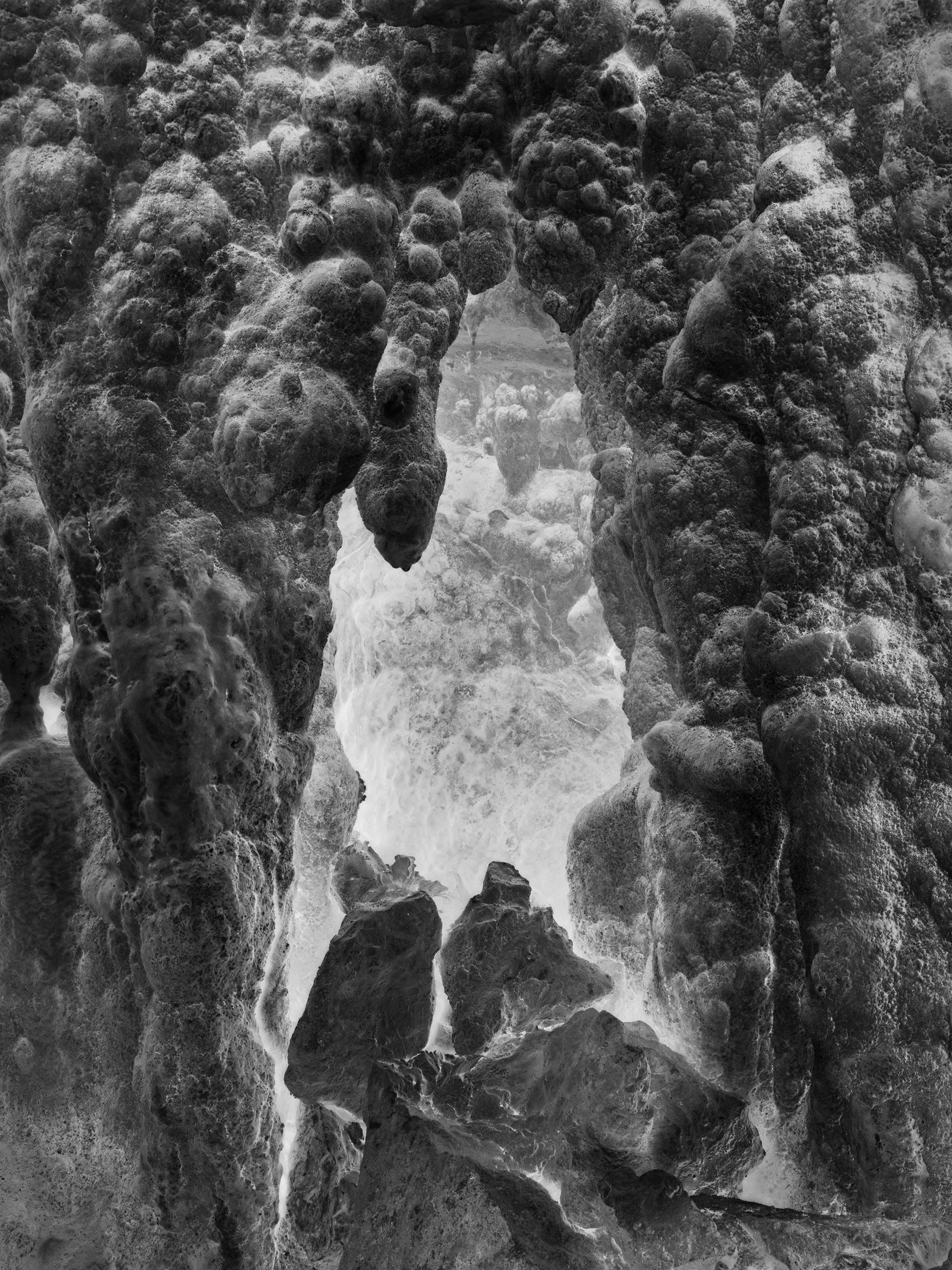
Similarly, photographer Juliette Agnel, winner of the Niépce 2023 prize as a unique artist in the French photography scene, has set out on a quest to “understand the world” through a “global philosophical” approach. From the heavens to the earth, Juliette Agnel draws her inspiration from her relationship with the cosmos and telluric forces. “She photographs what is invisible”, says gallery owner Clémentine de la Féronnière, and “tries to convey what is of the order of feeling and interiority”. “The calm that emerges from them is the most concrete example: they are a machine for passing through time, which also bears the imprint of an ecological evidence.” “The art that moves me has to do with the relationship between reality and the invisible, with the forces that surround us but that we can’t see. It’s a licence to believe in an absolute. In Greenland, Sudan, Dogon country or Finistère, it’s the same quest that I tirelessly pursue: to grasp what unites us at the deepest level, reminding us that the human body is a meaningful fragment of the cosmos”, explains Juliette Agnel on her website.

The child’s hand #23, 2023 © Juliette Agnel
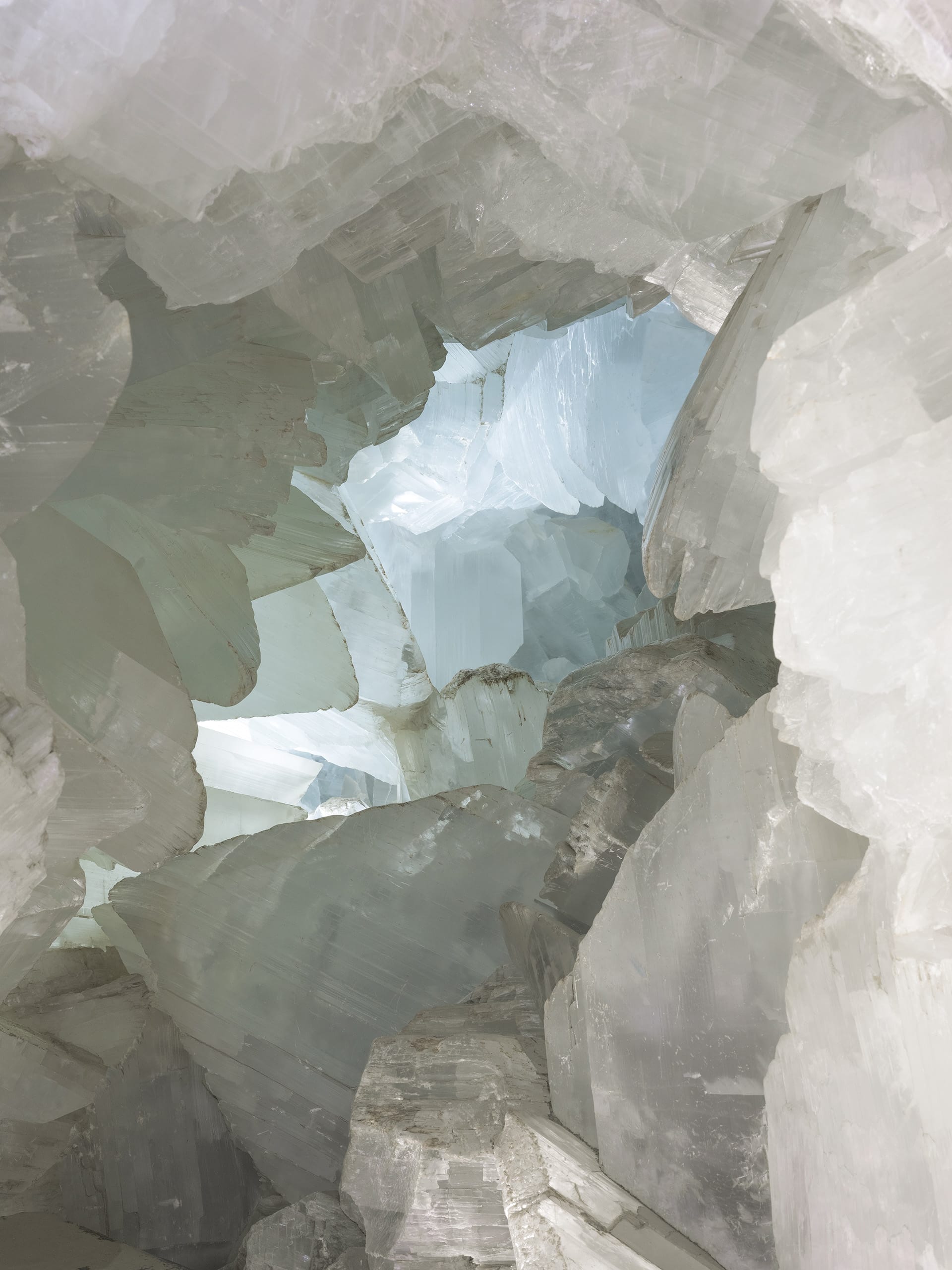
Pulpi geode, 2021 © Juliette Agnel

Created in 1997, this year’s Bourse du Talent showcases three photographers who are also witnesses to the world: Daesung Lee, Florian Ruiz and Kamila K Stanley. Originally from Busan, South Korea, and based in Paris Daesung Lee is presented as a humanist photographer, a witness to peril and a engaged observer. Between poetry and research for meaning, the artist awakens consciences through beauty. Florian Ruiz, a French photographer, has made the opposite journey and now lives in Japan. His photographic work expresses an atmosphere, a feeling or an impression of desolation. Using collage, superposition and assemblage, the artist seeks to make the invisible visible. Paris-based Anglo-Polish photographer Kamila K Stanley also works on societal issues, documenting Brazil’s LGBTQI+ community under President Jair Bolsonaro’s homophobic mandate and questioning European identity in the wake of Brexit. Through her work, she seeks to “raise our sights”.

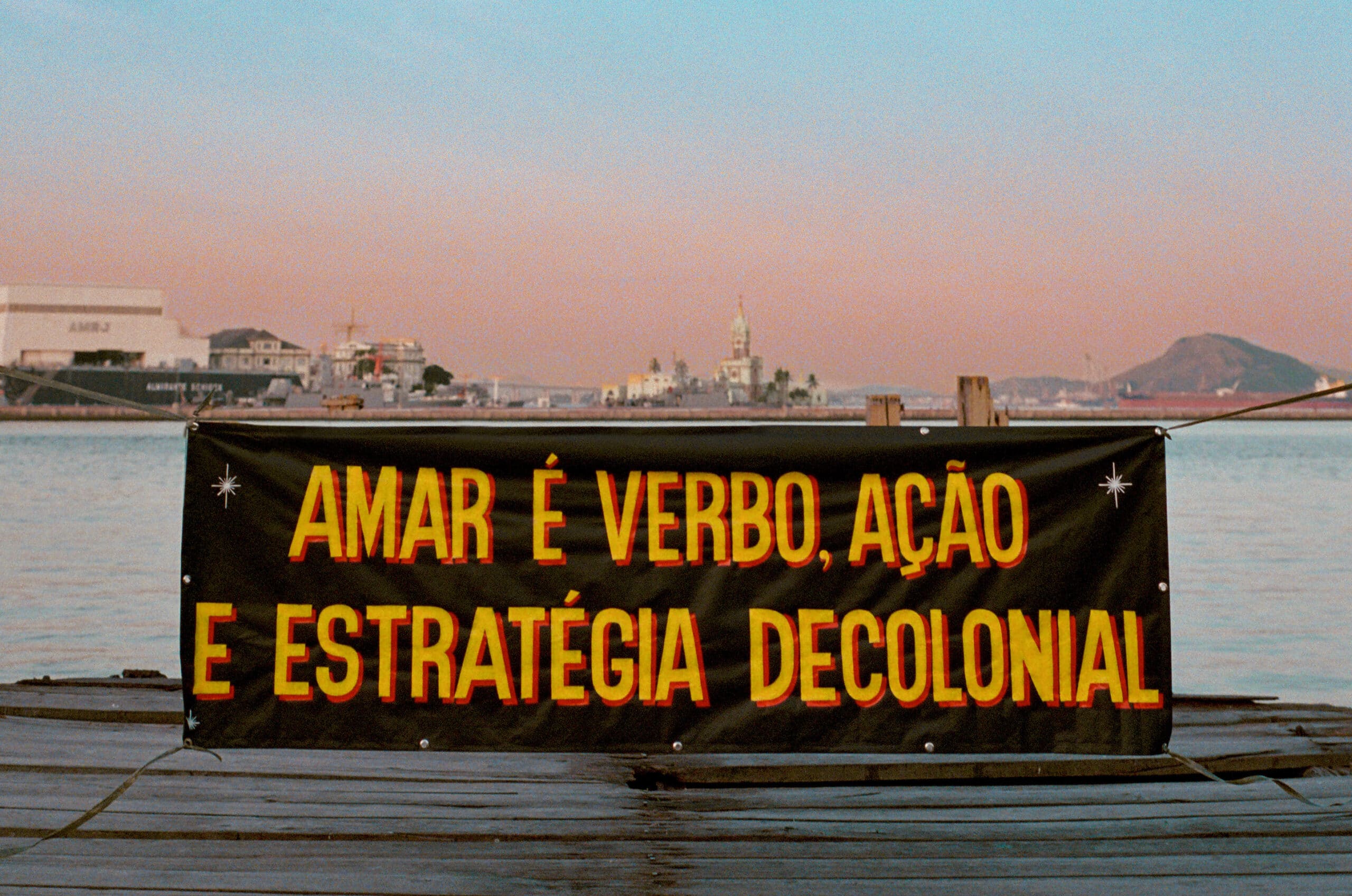
The roots of homophobia and intolerance in Brazil run deep. A society built on slavery, for two centuries the institutions have hammered home the cult of the colonial man: white, Christian, patriarchal. In this hegemonic system, loving outside the cis-heteronormative Western model is often an act of resistance. We have extended this faixa to Praça XV: the historic square where the slave ships of the transatlantic slave trade arrived in Rio de Janeiro, the largest slave city in the Americas. © Kamila K. Stanley
© Florian Ruiz

Based in London, Laura Pannack is the winner of the Camera Clara 2023 prize. Created in 2012 by Joséphine de Bodinat Moreno, this prize rewards artists working in the photographic ‘chamber’, far from the hustle and bustle of contemporary digital images. Slowness is seen as a virtue. The prize rewards “an original work by an artist, presented as a series or photographic ensemble so that it can be judged on its coherence, both in terms of form and content”. “Laura’s remarkable ability to establish a relationship of trust and respect with her subject allows her to express a raw vulnerability that is as sincere as it is difficult to capture”, said photographer Terry O’Neill. Laura Pannack’s work highlights the complex relationship between photographer and subject. This means fully understanding their lives, and ‘listening’.

The exhibition La photographie à tout prix. Une année de prix photographiques à la BnF (Photography at any price. A year of photographic prizes at the BnF) takes place at the Bibliothèque nationale de France until 24 March 2024 in the allée Julien Cain, Quai François Mauriac, in the 16th arrondissement of Paris.

Picture of sleeping polar bear by British amateur photographer bags top wildlife photography honour

Picture of sleeping polar bear by British amateur photographer bags top wildlife photography honour

The mesmerising image of a slumbering polar bear on a small iceberg has been announced as the winner of the Wildlife Photographer of the Year People’s Choice Award.

The photograph was captured by British amateur photographer Nima Sarikhani at the Svalbard archipelago in Norway. Titled ‘Ice Bed,’ the image features a male polar bear who has just laid down to sleep on an iceberg.

Sarikhani said he was honoured to have won the award this year. “This photograph has stirred strong emotions in many of those who have seen it… Whilst climate change is the biggest challenge we face, I hope that this photograph also inspires hope. There is still time to fix the mess we have caused,” he said in a statement.

The Wildlife Photographer of the Year competition, hosted by the Natural History Museum in London, witnessed an overwhelming response this year, with over 75,000 people participating in the voting process.

There were around 50,000 entries from 95 countries, while Sarikhani’s ‘Ice Bed’ was selected from a shortlist of 25 images.

Dr Douglas Gurr, Director of the Natural History Museum said “Sarikhani’s breath-taking and poignant image allows us to see the beauty and fragility of our planet.”

“His thought-provoking image is a stark reminder of the integral bond between an animal and its habitat and serves as a visual representation of the detrimental impacts of climate warming and habitat loss,” Gurr added.

As per the Natural History Museum, Sarikhani spent three days searching for polar bears aboard an expedition vessel, but he was thwarted by thick fog around the Norwegian islands. Luckily, he came across an area of sea ice, where he encountered a pair of bears one younger and one older.

Sarikhani tracked the two bears for almost eight hours until the younger male decided to rest.

Besides ‘Ice Bed,’ there were four other images that were highly commended by voters. All of them will be displayed at the London-based museum till June 30.

The other four images include ‘The Happy Turtle’ by Tzahi Finkelstein, ‘Starling Murmuration’ by Daniel Dencescu, ‘Shared Parenting’ by Mark Boyd, and ‘Aurora Jellies’ by Audun Rikardsen.

FUJIFILM launches palm-sized INSTAX Pal camera for on-the-go photography; see features and pricing

FUJIFILM launches palm-sized INSTAX Pal camera for on-the-go photography; see features and pricing

FUJIFILM India has introduced the INSTAX Pal digital camera, the latest addition to its renowned INSTAX series, aimed at capturing spontaneous moments with ease. The palm-sized camera, available in five vibrant colours, offers mobility and convenience for users on the go.

The INSTAX Pal stands out by removing the printing function, resulting in a compact design that fits in the palm of your hand. It features a detachable ring for better grip and perspective while shooting, or it can be used as a stand.

Packed with features, the INSTAX Pal offers a Standard Mode for unique shots from various angles and heights, activated by pressing the shutter button. The Remote Mode, accessible via Bluetooth and the INSTAX Pal App, allows for remote shooting, selfie capture, and photo customization with emojis, stickers, and text. The Interval Mode captures a series of photos at three-second intervals, catering to different shooting preferences.

The INSTAX Pal is compatible with the INSTAX Link Printer Series and other INSTAX cameras, enabling users to print images instantly in various sizes. Pricing for the INSTAX Pal starts from Rs 10,999 and is available at FUJIFILM India retail stores and online.

FUJIFILM India marks 25 years of its INSTAX instant camera series this year, showcasing its evolution from analogue to hybrid cameras and smartphone printers. With the launch of the INSTAX Pal, the company continues to innovate and expand its presence in the instant camera market, catering to modern photography trends and technology.

Speaking about the new launch, Koji Wada, Managing Director, FUJIFILM India, said, “As the younger and upcoming generations embrace effortless and convenient photography to freeze timeless moments in their fast-paced lifestyle, they are looking for trendy options that match their vibe. Catering to this segment, the newly launched INSTAX Pal ensures that impressive photography fits in everyone’s hands which has been our mission with the INSTAX series for the past 25 years. It also enables users to preserve their beloved moments within their pockets with on-the-go printing.”

“As youngsters opt for convenience while capturing spontaneous moments of joy and happiness, FUJIFILM India is also innovating its INSTAX instant camera series to accommodate this shifting consumer preference. Our palm-sized and pocket-friendly INSTAX Pal camera is here to change the whole scenario of instant photography, turning it into a valuable part of the modern lifestyle. With its compact and versatile design, this camera will be your trusted companion for all future travel adventures, capturing the vivid moments of life on the go,” said Arun Babu, Head of Digital Camera, INSTAX & Optical Devices Business, FUJIFILM India.

Surreal photos that celebrate the joy of self expression

Surreal photos that celebrate the joy of self expression
image

Embodying the existentialist dread that has come to define him, Jean-Paul Sartre once declared the immortal line, “Hell is other people”. While the photographer Eva Stibbe Nunney can empathise with Sartre’s sentiment and agrees that the watchful gaze of the ‘other’ inevitably alters how we present and dress ourselves, she refutes the notion that this performance is merely a bid for attention. In her latest photography series and exhibition, Heaven is Other People, Nunney turns Sartre’s phrasing on its head, devoting her lens to celebrating this very staging of the self.

“I’ve grown up with a love for dressing up, but when I got to secondary school and met some incredible friends that shared my love for experimenting with style, it became an obsession,” Nunney tells Dazed of her nascent exploration of identity through fashion. “Starting with a new piece of makeup, an ugly dress from a charity shop, or a roll of ‘fragile’ tape from Poundland, we’d create these ephemeral characters and immortalise them on the camera I got for Christmas.”

The young artist was soon introduced to the work of artists and performers such as Leigh Bowery, who legitimised Nunney’s own explorations with self-portraiture and reinvention. “I was mesmerised by his flamboyant, iconic club personas but what really stuck with me was how he presented himself in his day-to-day life,” she tells Dazed. “He would wear cheap wigs, change his face with tape and subtle makeup, and transform into ordinary characters that would make you look twice if you passed them in the street. It reassured me that fashioning oneself isn’t bound to vanity or seeking attention but an artistic practice that uses the body as a medium.”

“I’ve grown up with a love for dressing up, but when I got to secondary school and met some incredible friends that shared my love for experimenting with style, it became an obsession” – Eva Stibbe Nunney

In Heaven is Other People, Nunney’s subjects – some covered in saturated reds with Adidas’s signature white stripes cascading down their form, while another is dressed in a faux-muscle t-shirt, holding a golden Tuba or draped in a sari – are an extension of this ethos where the act of dressing up is one rooted in performance and honouring individuality. instead of traditional models, the photographer opted to cast people from her personal life, friends from her time at Central Saint Martins, people she bumped into at pubs or out dancing and those she met on dating apps. Nunney encouraged them to participate in the styling process and contribute their voices to the project. She explains, ”This idea of staging the self is central to this project, so it became crucial to collaborate with models and experiment with the tenets of their personality through clothes, flaunting it and hiding it in equal measure.

In one image, Victoria, who would typically wear Wellington boots and a waterproof jacket, is captured tending to her sheep in a wintry meadow under the grey, stormy sky in a theatrical red gown. “We made this choice to showcase the grandeur of her work and to encapsulate the pride she has in herself and her labour,” Nunney explains, referencing how she uses juxtaposition to emphasise aspects of her subject’s identity. “In another portrait, I was inspired by Lady Godiva, the Anglo-Saxon noblewoman who was riding a horse naked in protest of the taxes her husband had imposed on his poor tenants, and styled my model solely with hair extensions adorned with tiny bows that fell all the way to the floor. And a merkin to match, with a clunky bag and pink heels to emphasise her nudity.”

While the photographs in this series often call upon historical figures or fictional characters that are mischievous, courageous and anti-establishment, to Nunney, these images are not about creating alter egos or paying homage. Rather, her work is rooted in the politics of acceptance amid societal demands to conform and the myriad ways our bodies and, by extension, our interior lives could be clothed and staged to the world. 

Heaven is Other People will be running at Sam’s Cafe in Primrose Hill for two months from February 9 2024 onwards.