Photography

The Best Beginner Flash Photography Kit In 2024

The Best Beginner Flash Photography Kit In 2024

With so many different products on the market, it’s easy to get lost in trying to pick the perfect one for you. So many brands, so many modifiers, and so much to learn. What if there was an almost perfect kit for beginners? Well, this might just be it.

It’s no secret that for as long as I have been shooting images, I have been using off-camera light in one form or another. Be it a torch for long-exposure photography or tens of thousands of dollars in flash equipment, I’ve experienced it all. This experience has always left me wondering, what would be the perfect kit for beginners to use? It shouldn’t be too expensive, but it also should be reliable and easy to use. While it would be great to give every flash photographer a Pro-11 pack and a bunch of kit to play with, realistically, it is impossible.

I am aware of a lot of the flash kit on the market, from the lower end to the top of the top. There are few lighting products I miss. This is both due to my obsession with lighting as well as a constant search for a better light, a more reliable light, and so on. That’s not to say that what I have now and recommend using is unreliable, but it can always be better, right? The kit I recommend is the kit I would personally go out and spend my own money on today if I were starting out in flash photography. In fact, this is almost the kit that I bought back when I was starting out.

Light

Profoto B2 250 AirTTL

More or less, this is the first big boy light that I bought. While you may be slightly surprised to see Profoto in a beginner-friendly kit, don’t let the name fool you. Profoto is far more beginner-friendly than any other brand. Why? It is just so darn simple to use. There are a few switches and buttons that control the main functions of the flash. It is easy to the point of my 11-year-old sister knowing how to control it.

On a serious note, buying this kit can be around $600. It will ship with two heads, two batteries, and probably an extension cord. As this is a battery-powered light, you will be able to take it with you wherever you go.

There are more powerful and cheaper battery-powered lights. However, the reason I advise many beginners to get into Profoto is that it is very much a buy-once product. Besides great build quality and reliability, you also get great performance. With 250W spread over two heads, you essentially get two lights for the price of basically one. Given that the light has both HSS and TTL, you can use it in auto mode without having to worry about power settings. Just make sure you have either an Air Remote or a Connect Pro. The first one can be found used for not more than $150, which is a fairly good price to pay for a remote that is the most reliable and easiest to use on the market. A more in-depth review of the Profoto B2 is in the works for anyone who is interested.

Modifiers

Profoto Umbrella Shallow M + Diffuser

Many photographers might say that the umbrella is something amateur and something to avoid. Indeed, it does not have the same oomph as a softbox does. But I assure you, not only will you get softer light with an umbrella, but you will also be able to travel with it much easier than with a softbox. A used umbrella will run you about $50 and will last you a good five years at least.

The reason I advise you to get a diffuser for it is to produce more even light. This is useful when lighting portraits and trying to create an even light spread on the subject. The diffuser is arguably more useful when using the silver umbrella, as it turns the specular light into diffused light, but even with a white umbrella, it makes a noticeable difference.

A used shallow umbrella will be about $50.

Profoto OCF Beauty Dish White

This modifier is also a highly recommended beginner classic, in my opinion. The OCF beauty dish is unlike many other beauty dishes as it can be used not only as a dish but also as a makeshift octabank. As the inner deflector plate is removable, this modifier is highly versatile. If you use it without the deflector and diffusers, you will get a light similar to sunlight; if you use it with the deflector, you will get classic beauty light. Use it with the plate and the diffuser, and you have a super soft light. In short, there are about ten more ways to use this modifier, making it a truly versatile tool that beginners can experiment with.

A used OCF beauty dish will run about $150 with the speedring.

The Reason To Go To Profoto

Perhaps one of the most common criticisms that I get from my readers is that I promote Profoto far too much in my work. This is fair enough, as there are plenty of other brands that make great lighting kits that deserve attention. However, Profoto is a brand that I personally believe in, same as Capture One and any other company that I personally use. I have not received heaps of gear from them to make me use them; I saved and bought their gear with my own cash.

Profoto provides some of the best and newest features on the market, as well as allowing you to constantly up your game in terms of performance. I am talking not only about their more pro-line lights such as the Pro-11, but also the forgotten Pro-7a or the D4. If you get to a point where you are shooting a lot in the studio, this might be an excellent purchase. The range of modifiers Profoto offers is also second to none, and their rental availability means that you are always able to get something you need in whatever city you are in. Broncolor would be in the same position in terms of availability, however, their features are not up to speed with whatever Profoto is up to.

Closing Thoughts 

Here we have it. This is the kit you should use as a beginner photographer. While it appears to be pricey, it really isn’t much more when you buy it used. The catch is that these are buy-once products that will last you well into your professional days. If it doesn’t work out, this kit holds value incredibly well.

Richard Prince to Pay Photographers Who Sued Over Copyright

Richard Prince to Pay Photographers Who Sued Over Copyright
image

Shortly before trial, Prince agreed to compensate two photographers whose images he had used in an installation.

The artist Richard Prince agreed to pay at least $650,000 to two photographers whose images he had incorporated in his own work, ending a long-running copyright dispute that had been closely monitored by the art world.

Two judgments filed on Thursday in New York awarded damages to the photographers, Donald Graham and Eric McNatt, and barred Prince from reproducing the photographs known as “Rastafarian Smoking a Joint” and “Kim Gordon 1” (of the musician Kim Gordon).

Those images were part of a Prince installation, called “New Portraits,” in which he printed several Instagram photos on large canvases and added his own Instagram-style comments below them.

Graham’s image was incorporated into a work referred to as “Portrait of Rastajay92,” which was exhibited at a New York gallery in 2014. McNatt’s image was used in a work referred to as “Portrait of Kim Gordon,” which was shown at a gallery in 2015.

David Marriott, a lawyer for Graham and McNatt, said the photographers were pleased with the judgments and called the cases “a ‘David vs. Goliath’ matter for the art world, and a story of principle and perseverance.”

Matt Gaughan, Prince’s studio manager, said that the artist “adamantly refused to admit infringement” and had “agreed to settle over eight years of costly litigation for a tiny fraction of what trial alone would cost.”

The photograph “Kim Gordon 1,” by Eric McNatt, was used in a Prince installation.U.S. District Court for the Southern District of New York

The resolution of the cases comes eight months after the Supreme Court ruled on a major copyright dispute that asked whether Andy Warhol’s use of a photograph in his work was considered fair use. Many experts had thought the ruling would have a spillover effect on the Prince cases. But the court’s 7-2 decision against Warhol was narrowly tailored and did not offer guidance about how much of another work an artist can copy.

The photographers suing Prince argued that he had reproduced so much of their copyrighted work that it could not be considered fair use. The trial over McNatt’s lawsuit had been scheduled to begin on Monday, and Graham’s case had been set to go to trial next month.

Prince’s lawyers said the two sides had negotiated judgments under which the defense would agree to pay $200,000 to Graham, $450,000 to McNatt and $250,000 in other costs. (The judgments, signed by Judge Sidney H. Stein of the U.S. District Court for the Southern District of New York, said damages were “an amount equal to five times the sales price” of the photographs.)

Marriott said the judgments showed that copyright law still provided meaningful protection to creators and that the internet was not a copying free-for-all.

“There is not a fair use exception to copyright law that applies to the famous and another that applies to everyone else,” he said.

Susan C. Beachy contributed reporting.

Photographs by Sylvia Plachy in BPL exhibit ‘It Happened in New York’

Photographs by Sylvia Plachy in BPL exhibit ‘It Happened in New York’

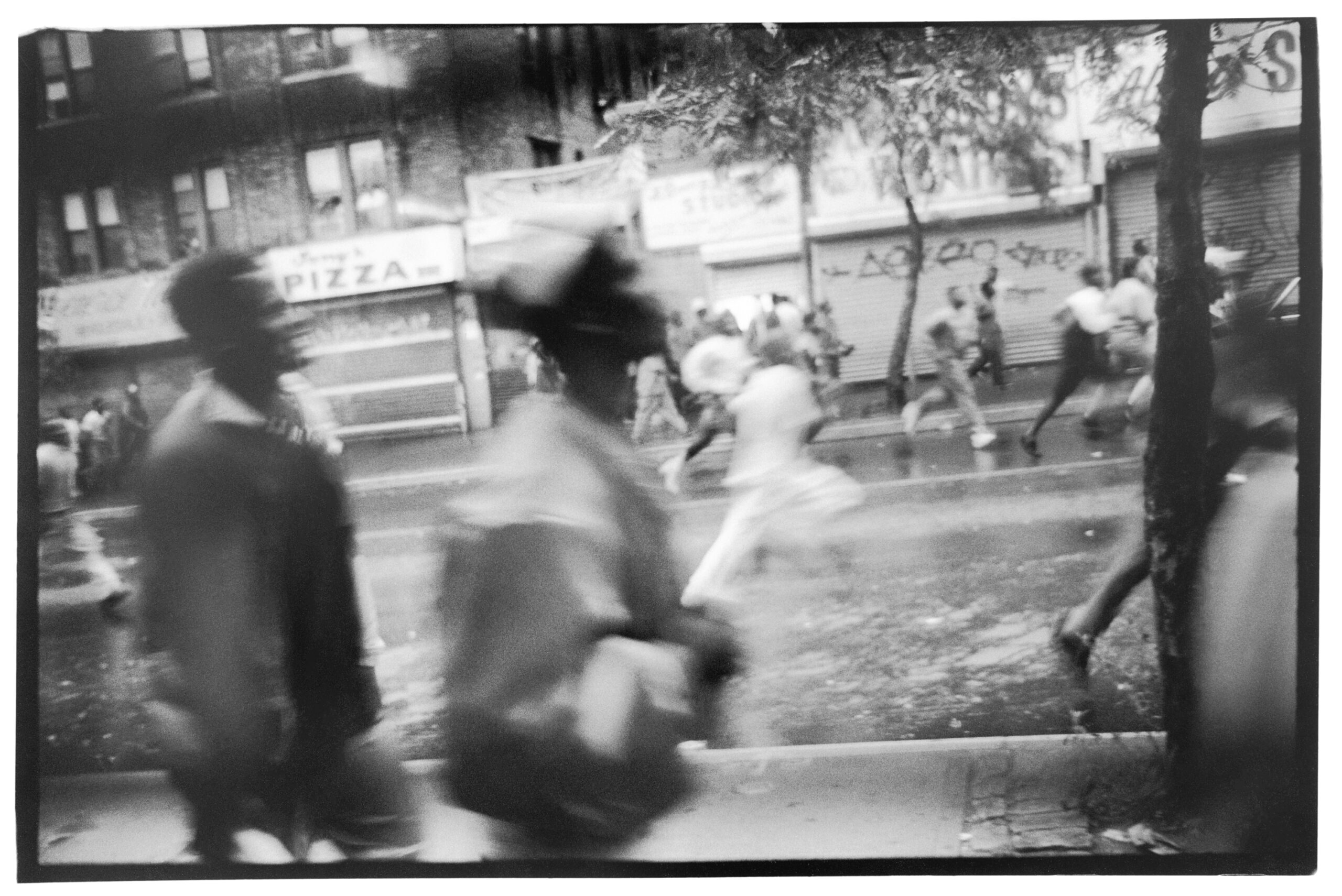
GRAND ARMY PLAZA — Brooklyn Public Library currently presents “It Happened in New York”, an exhibition of photographs by Sylvia Plachy. Between 1974 and 2004, Plachy was a staff photographer for the Village Voice. The exhibition is an ode to New York and Plachy’s immense power of observation.

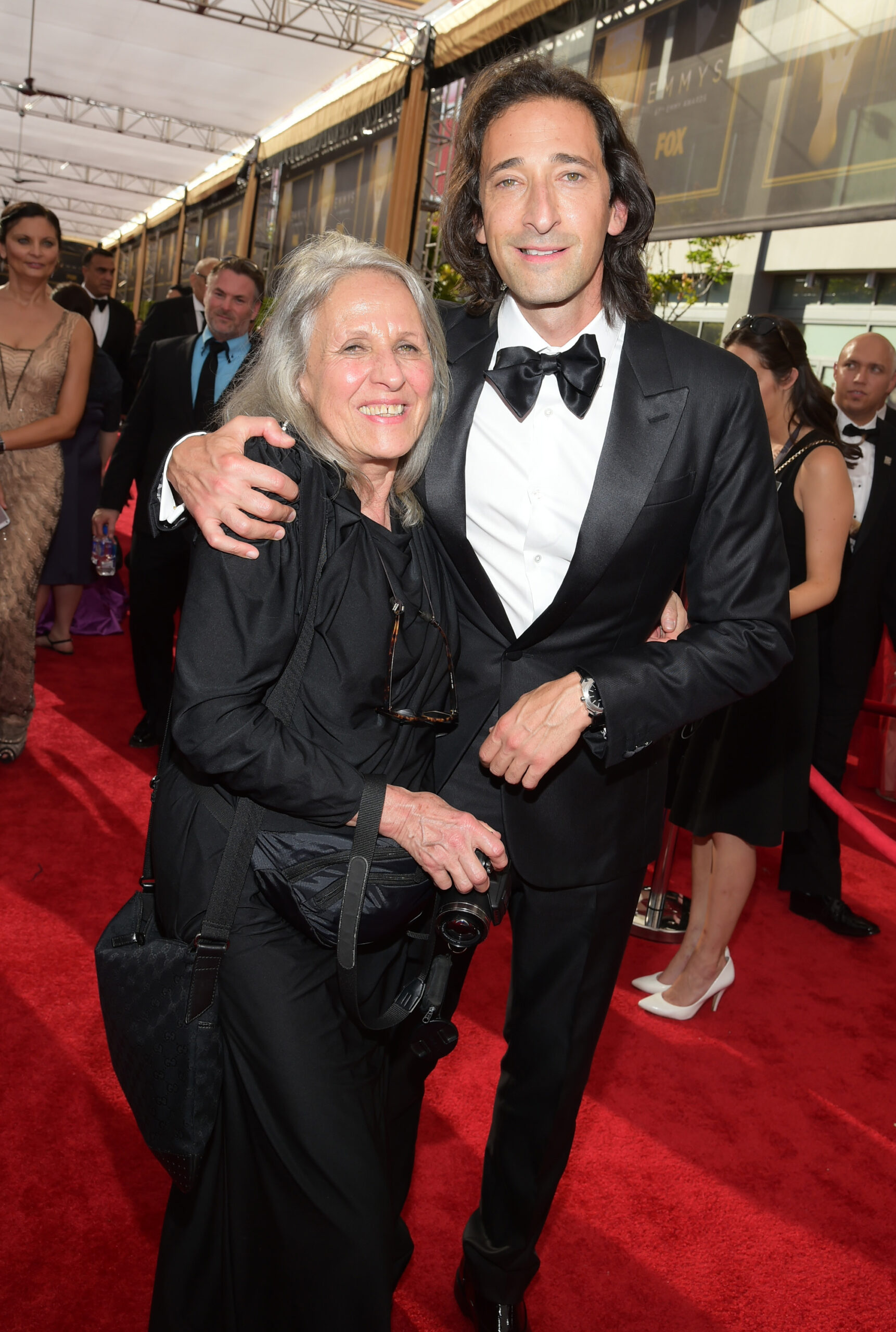
Plachy, who was also a contributing photographer at the New Yorker and a columnist for Metropolis magazine, captures New York’s writers, musicians, artists, and public icons alongside the sidewalk characters who personify the city. Plachy is also the mother of noted actor Adrien Brody.

imagePhoto: Charles Sykes/Invision for the Television Academy/AP Images” width=”400″ height=”595″ srcset=”https://www.mecreates.com/story/news/wp-content/uploads/2024/01/Sylvia-and-Adrien-689×1024.jpg 689w, https://brooklyneagle.com/wp-content/uploads/2024/01/Sylvia-and-Adrien-404×600.jpg 404w, https://brooklyneagle.com/wp-content/uploads/2024/01/Sylvia-and-Adrien-768×1142.jpg 768w, https://brooklyneagle.com/wp-content/uploads/2024/01/Sylvia-and-Adrien-940×1397.jpg 940w, https://brooklyneagle.com/wp-content/uploads/2024/01/Sylvia-and-Adrien-1033×1536.jpg 1033w, https://brooklyneagle.com/wp-content/uploads/2024/01/Sylvia-and-Adrien-1378×2048.jpg 1378w, https://brooklyneagle.com/wp-content/uploads/2024/01/Sylvia-and-Adrien-640×951.jpg 640w, https://brooklyneagle.com/wp-content/uploads/2024/01/Sylvia-and-Adrien-1024×1522.jpg 1024w, https://brooklyneagle.com/wp-content/uploads/2024/01/Sylvia-and-Adrien-1200×1784.jpg 1200w, https://brooklyneagle.com/wp-content/uploads/2024/01/Sylvia-and-Adrien-1920×2854.jpg 1920w, https://brooklyneagle.com/wp-content/uploads/2024/01/Sylvia-and-Adrien-scaled.jpg 1722w” sizes=”(max-width: 639px) 98vw, (max-width: 1199px) 64vw, 400px”>
Sylvia Plachy, left, and her son, Adrien Brody arrive at the 67th Primetime Emmy Awards on Sunday, Sept. 20, 2015, at the Microsoft Theater in Los Angeles.
Photo: Charles Sykes/Invision for the Television Academy/AP Images

The exhibition is comprised of nearly 40 photographs along with clippings from the Village Voice and Metropolis as well as the artist’s books. We meet the bold countenance of a woman named Monet, commanding a pack of Great Danes in front of a Lower East Side building covered in graffiti. In another, Tom Waits poses as a toreador. Margaret Atwood poses in a cape evoking “The Handmaiden’s Tale,” three years before it was written. Break dancers torque their bodies on the boardwalk.

Plachy will walk through the exhibition and talk about her photographs on Thursday, Feb. 1, at 6 p.m. starting in the grand lobby of Central Library. The program is free, but reservations are recommended.

Sylvia Plachy, born in Budapest, lives in New York. She has had one-person shows at the Minneapolis Institute of Arts, the Whitney Museum at Philip Morris in New York, the Queens Museum, The Radvila Palace Museum of Art in Vilnius, Photo España, Madrid, Museo di Roma in Trastevere, and in galleries in Homer, Budapest, Paris, Berlin, Tokyo, New York, Manchester, Arles, Perpingnon and Pingyau.

For thirty years (1974-2004) she was a photographer at The Village Voice, where she had a weekly column, “Unguided Tour,” and where she became staff photographer, reporting nationally and internationally.  She also had a column for several years in Metropolis magazine (“Signs and Relics”) and was a contributing photographer at the New Yorker. Her photographs have appeared in the New York Times, Fortune, ArtForum, Granta, Grand Street, New York Magazine and in many other magazines. She is a Guggenheim fellow and the recipient of Lucie Award. Her photographs are held in collections including the MoMA, the Houston Museum of Fine Arts, the San Francisco Museum, and the High Museum.

Ms. Plachy has had six books published: “Signs And Relics,” 2000; “Red Light,” 1996; “Unguided Tour,” 1990, winner of the Infinity Award for best publication; “Self Portrait With Cows Going Home,” 2004, winner of the Golden Light Award for best book; “De Reojo/Out Of The Corner Of My Eye,” 2007; and “Goings On About Town,” 2007, a collection from photographs in the New Yorker column.

Ms. Plachy was a legacy photographer at the Look3 Festival in the summer of 2009 in Charlottesville. On Feb. 6, 2010, Sylvia Plachy was given the Dr. Erich Salomon award by the German Society for Photography (DGPh). This prestigious prize is given for “lifetime achievement” in photojournalism.

imagePhoto: Sylvia Plachy” width=”1024″ height=”684″ srcset=”https://www.mecreates.com/story/news/wp-content/uploads/2024/01/Crown-Heights-1991-©Sylvia-Plachy-for-Print-magazines-print-scan-1024×684.jpg 1024w, https://brooklyneagle.com/wp-content/uploads/2024/01/Crown-Heights-1991-©Sylvia-Plachy-for-Print-magazines-print-scan-600×401.jpg 600w, https://brooklyneagle.com/wp-content/uploads/2024/01/Crown-Heights-1991-©Sylvia-Plachy-for-Print-magazines-print-scan-768×513.jpg 768w, https://brooklyneagle.com/wp-content/uploads/2024/01/Crown-Heights-1991-©Sylvia-Plachy-for-Print-magazines-print-scan-940×628.jpg 940w, https://brooklyneagle.com/wp-content/uploads/2024/01/Crown-Heights-1991-©Sylvia-Plachy-for-Print-magazines-print-scan-1536×1026.jpg 1536w, https://brooklyneagle.com/wp-content/uploads/2024/01/Crown-Heights-1991-©Sylvia-Plachy-for-Print-magazines-print-scan-2048×1368.jpg 2048w, https://brooklyneagle.com/wp-content/uploads/2024/01/Crown-Heights-1991-©Sylvia-Plachy-for-Print-magazines-print-scan-640×428.jpg 640w, https://brooklyneagle.com/wp-content/uploads/2024/01/Crown-Heights-1991-©Sylvia-Plachy-for-Print-magazines-print-scan-1200×802.jpg 1200w, https://brooklyneagle.com/wp-content/uploads/2024/01/Crown-Heights-1991-©Sylvia-Plachy-for-Print-magazines-print-scan-1920×1283.jpg 1920w” sizes=”(max-width: 639px) 98vw, (max-width: 1199px) 64vw, 770px”>
Crown Heights 1991.
Photo: Sylvia Plachy

About Brooklyn Public Library

Brooklyn Public Library is one of the nation’s largest library systems and among New York City’s most democratic institutions. As a leader in developing modern 21st-century libraries, we provide resources to support personal advancement, foster civic literacy, and strengthen the fabric of community among the more than 2.7 million individuals who call Brooklyn home. We provide nearly 65,000 free programs a year with writers, thinkers, artists, and educators — from around the corner and around the world. And we give patrons millions of opportunities to enjoy one of life’s greatest satisfactions: the joy of a good book.

Lenny Gerard: The Photographer Who Overcame Incredible Odds

Lenny Gerard: The Photographer Who Overcame Incredible Odds

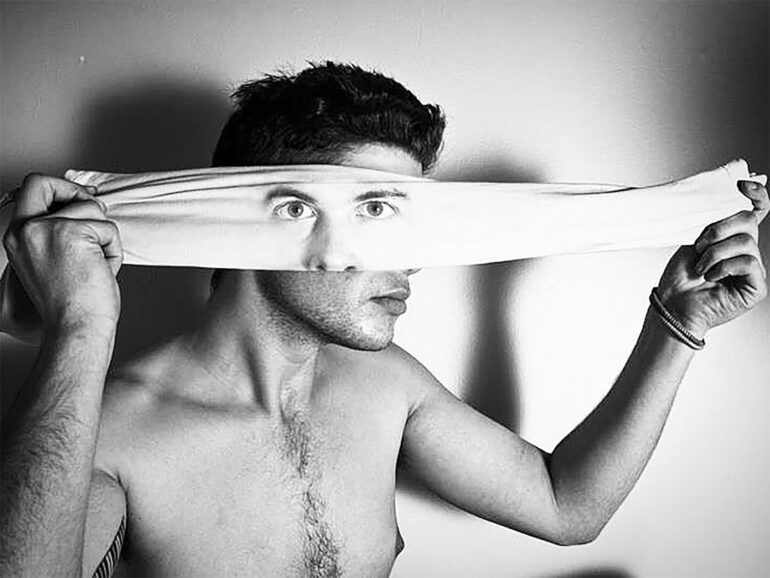
“I think print is more important now than ever,” says photographer Lenny Gerard (he/him) to the Phoblographer in an interview. “A printed photograph encapsulates the essence of a work, bearing immense significance and enduring permanence. It embodies the truest form of photography — something to be displayed, cherished, and preserved eternally.” You wouldn’t assume so about Lenny, but he’s disabled and teaches at the Braille Institute in Los Angeles. Many people don’t believe I’m legally blind by my work. Lenny represents those among us who rise to the top against what society deems incredible odds due to its structure. Would you believe that Lenny has done work for Netflix, H&M, Viacom, CBS, Paramount, DEF JAM, Out, Pride, Snapchat, Burt’s Bees, and so much more? Truly, Lenny’s story is one that’s bound to inspire any photographer who feels like they’re in a dark place and don’t know how to make their own light.

All images by Lenny Gerard. Used with permission. Please check out his website and follow him on Instagram at @lenny__gerard for more.

The Story of Lenny Gerard

From how Lenny tells his story, it seems like it was meant to be. At 8 years old, he inherited his grandfather’s camera collection. It took him a while to fall in love with photography; but what really helps here is that he had a great support system. His mom bought him the first digital Canon Rebel for his 13th birthday.

“I turned what became a hobby into a passion as I started taking pictures of my friends – dressing them up and using props to make each shoot a fashion photograph,” he shares with us. “I was very much inspired by Tyra Bank’s show ‘America’s Next Top Model,’ and often got my ideas for elaborate photoshoots from the TV show.’ Later, he used his fashion photography portfolio to get into a certificate program at UCSD at 16.

While gear undeniably plays a crucial role, I firmly believe that it’s the photographer’s eye that ultimately crafts a stunning photograph.

Lenny Gerard

From there, his work spread on Facebook, and more people hired him. It brought him to get a full-ride scholarship to Parsons School of Design in NYC. ” a pivotal moment that broadened my perspective on the vast and diverse world of photography. “At Parsons, I learned about my favorite photographers like Francesca Woodman and Man Ray,” says Lenny, calling this time a very pivotal point for him. “I even learned about some photographers that also went to Parsons who were making a name for themselves such as Ryan Mcginley, who inspired me greatly.”

These days, Lenny mostly uses a Canon EOS R5 and a 24-70mm f2.8 lens. This is all combined with speedlights, LED lights, stands, etc. “Strobe lights enable crisp, high-resolution images, while continuous lighting breathes life into motion shots and long exposures, enhancing the dynamics and bringing ambient light into every scene,” he tells us about the choice of using both.

But Lenny doesn’t limit himself. He uses everything — and that includes darkroom techniques, Photoshop and other pieces of software. “I’ve honed unique techniques, like utilizing glass, mirrors, and plexiglass to craft captivating reflections in jewelry or e-commerce shots and using Instant Film printers for both Polaroid and Instax Fujifilm to combine Photoshop renderings and photo-manipulation into analog formats,” he tells us. Indeed, we really don’t see this often.

Still, he says that these are just tools. Though they’re important, he attributes his success to masting composition, harnessing light, etc.

The Creative Process

Considering his creative background and breeding, Lenny doesn’t limit himself. “In my creative journey, the distinction between creating art in-camera and through post-processing fades into insignificance,” he tells us. “Both avenues provide an equal sense of accomplishment and joy, for each allows me to craft something meaningful from nothing. The medium doesn’t define the fulfillment; the act of creation itself is what brings satisfaction.” The whole process came from his darkroom and digital photography background.

This is part of how he’s embraced so many different processes combined with creative experimentation. While many photographers look at the world outside and try to create around that, Lenny focuses inward. He doesn’t hold himself against other trends the way that creators on Instagram do. Instead, he’s a photographer. At times, he does video work and still-motion capture work. This level of creative understanding is rarely seen and truly understood these days. Lenny doesn’t make images for an algorithm — he makes them out of genuine creative expression and doesn’t limit himself in any way — which is why his affinity for print is so important!

“Unlike the transient nature of digital images, print photography stands as a tangible manifestation of art, often framed and adorning walls with its captivating presence,” he tells us. While he makes prints and then outputs instant film prints, he also makes more traditional prints as well.

Thoughts on AI Imagery

Many photographers are worried about AI imagery. But Lenny sees it as a passing trend. And indeed, he’s got the work that stands out enough that an AI can’t mimic it. “AI-created content, while technically impressive, struggles to replicate the authenticity and depth inherent in human-made creations,” he shares. “It falls short, particularly in genres like street photography, where the human touch and true moments in time are irreplaceable. I believe the demand for genuine human-driven content remains strong, fueled by a growing awareness of the limitations and biases in AI-generated art.” All of this is said with a deeper understanding of photography as art — which I truly hope spreads to the masses in time.

Authenticity Statement

The Phoblographer works with human photographers to verify that they’ve actually created their work through shoots. These are done by providing us assets such as BTS captures, screenshots of post-production, extra photos from the shoot, etc. We do this to help our readers realize that this is authentically human work. Here’s what this photographer provided for us.

New Staff Photographer Nicolas Galindo makes introduction to readers

New Staff Photographer Nicolas Galindo makes introduction to readers
image

Randy and Shirley Cooper both held leadership roles at two credit unions in Richmond. Shirley recently retired, but Randy is embarking on a new initiative, 424 Vision Shared Legacy. The group’s objective is to close the financial wealth gap in their community.

#lee-rev-content { margin:0 -5px; }
#lee-rev-content h3 {
font-family: inherit!important;
font-weight: 700!important;
border-left: 8px solid var(–lee-blox-link-color);
text-indent: 7px;
font-size: 24px!important;
line-height: 24px;
}
#lee-rev-content .rc-provider {
font-family: inherit!important;
}
#lee-rev-content h4 {
line-height: 24px!important;
font-family: “serif-ds”,Times,”Times New Roman”,serif!important;
margin-top: 10px!important;
}
@media (max-width: 991px) {
#lee-rev-content h3 {
font-size: 18px!important;
line-height: 18px;
}
}

Photographer Captures Rare Photos of Orcas Bathed in Light Rays

Photographer Captures Rare Photos of Orcas Bathed in Light Rays
Orcas in water
Dan Zafra captured this magnificent photo of an orca on a recent trip to Norway.

A photographer who dived into the water with a huge pod of killer whales only had a few minutes each day to capture a rare shot of an orca bathed in light rays.

Shot in a Norweigan fjord, Dan Zafra from Capture the Atlas says that getting the light rays with the orcas was very challenging.

“It’s only possible during the first days of November when the Sun still rises high enough to be over the mountains and to hit the water in the fjords,” Zafra tells PetaPixel.

“This happens for just a few minutes a day, and at the same time, you need a close encounter with the orca and the animal in the right spot where the light rays are hitting. This is a very coveted picture by any orca underwater photographer.”

Orca

orca

orca

orca

Zafra explains that encounters with orcas can be very brief, but some individuals will get curious about the humans in their water world and investigate for a few minutes.

However, before having an encounter, budding underwater photographers must find the fortitude to step into the orcas’ arena.

“The first time I jumped into the water to see the orcas, it was very intimidating. It’s difficult to describe the feeling when you see a giant male dorsal fin coming to you and you have to jump in the water with that enormous apex predator,” says Zafra.

“However, after you spend some time seeing the orcas and their behavior, you can see that they are very intelligent animals and I have never felt nervous or scared, even while being surrounded by them when they were feeding on herring.”

orca

orca

orca

orca

Northern Norway sees the largest gathering of orcas in the world, attracting more than 500 known individuals.

“Until recently, we didn’t know much about where these orcas are coming from as they only spend the months from November to January in the Northern Norwegian Fjords,” says Zafra.

“Thanks to the work of organizations like the Norwegian Orca Survey which does photo identification, we know that some of these individuals spend the rest of the year in waters of the Atlantic Ocean like Iceland.”

orca

orca

[embedded content]

To capture the marvelous photos, Zafra used a Sony a7 III astromodified in an Ikelite housing case. Given how close the encounters are, he used a Sony 14mm f/1.8.

“I was glad I changed the lens and some encounters were so close that even a 14mm was too narrow to capture the animal in the scene,” he adds.

Zafra organizes photo tours that include swimming with orcas as well as capturing the northern lights, details here.

More of his work can be found on his website, Facebook, and Instagram,


Image credits: All photos by Dan Zafra.

These are the 2023 Art of Building photography competition winners

These are the 2023 Art of Building photography competition winners

anchor

National Mosque of Bangladesh by Azim Khan Ronnie. Image: Azim Khan Ronnie

The Chartered Institute of Building (CIOB) has announced winners for the 2023 edition of their annual Art of Building photography contest

Each year since 2010, a pair of People’s and Judges’ Choice winners are selected from an international field of entries open to both amateur and professional photographers of the built environment. A public vote determines the winner of the former category. Both receive a cash prize of £1,500 ($1,900 USD) for their excellence and are joined by finalists in each of three categories: Architecture, Conservation and Heritage, and Human Interaction. 

The CIOB says, “We stand for the science, ethics, and practice of the built environment across the world. […] It is the Art of Building competition that celebrates the creativity of the industry, the passion of the people who work within it, and the impact their work has on those who make use of the final construction.”

Scroll down to see a list of winners for the 2023 competition.

People’s Choice winner: National Mosque of Bangladesh (cover)
Photographer: Azim Khan Ronnie

Photographer’s Comments: “Thousands of people come together to pray over several floors of one of the biggest mosques in the world. Those taking part in group prayers can be seen neatly lined up as they stand, sit, kneel and bow during prayers. The National Mosque of Bangladesh can hold up to 40,000 people, including in the outside open space.”

Bricks by Alain Schroeder. Image: Alain Schroeder

Judges’ Choice winner: Bricks
Photographer: Alain Schroeder

Photographer’s comments: “Bangladesh needs a lot of material to push forward its development, and that is why you can see a lot of brick factories in the country, where men, women and even children work in difficult and dangerous conditions. The men are covered with dust transforming them into earth statues that endangers their health.”

Cosmic Connection by Nina Kloss. Image: Nina Kloss

Finalist: Cosmic Connection
Photographer: Nina Kloss

Photographer’s comments: “At over 3000m, the observatory is a unique architectural design. It serves as a bridge between the terrestrial world and the celestial heavens. The observatory, which also features a hotel, offers an immersive experience, inviting its guests to study the wonders of the natural world in an otherwise remote and hard-to-access area.”

Kaizhou Window by Hongyi Lou. Image: Hongyi Lou

Finalist: Kaizhou Window
Photographer: Hongyi Lou

Photographer’s comments: “The covered bridge that crosses the entrance encourages people to establish a connection between the lotus pond and the hills, using the building as a window to more fully appreciate the surrounding nature.”

F51 World’s first multi-story skatepark. Image: Matt Rowe

Finalist: F51 World’s first multi-story skatepark
Photographer: Matt Rowe

Photographer’s comments: “F51 – named so after its Folkestone-based location – wasn’t supposed to be the world’s first multi-story skatepark. Commissioned by philanthropist Sir Roger De Haan, the original idea was that it should be a multi-story car park, after which plans morphed into a hybrid of the two, before settling on that which everyone wanted: a skatepark set on multiple floors.”

Tulip Staircase by Pedro Luis Ajuriaguerra Saiz. Image: Pedro Luis Ajuriaguerra Saiz

Finalist: Tulip Staircase
Photographer: Pedro Luis Ajuriaguerra Saiz

Photographer’s comments: “This ornate, wrought iron structure was the first geometric self-supporting spiral stair in Britain when it was installed in the Queen’s House, Greenwich, London. Even today the stairs seem to defy gravity, with its captivating spiral linking the upper floors with the dramatic Great Hall.”

Blue Cabins by Alice Barbieri. Image: Alice Barbieri

Finalist: Blue Cabins
Photographer: Alice Barbieri

Photographer’s comments: “In this photo the geometry of the cabins creates a series of images that multiply symmetrically. The blue colour prevails, the roofs of the cabins blend with the sky and the sea to create a very pleasing composition.”

The worlds highest atrium by Jiachen Li. Image: Jiachen Li

Finalist: The world’s highest atrium
Photographer: Jiachen Li

Photographer’s comments: “When the visitors stand in the centre of the hall and look up, the hyperbola core tube rising from the ground leads directly to the glass ceiling at the top of the atrium. The stacked gradient of the atrium facade fully demonstrates the enormous tension of the structure, and the magnificent momentum of the world’s tallest atrium. It is like a waterfall, pouring down from a height of 200 meters.”

Waves by Ursula Reinke. Image: Ursula Reinke

Finalist: Waves
Photographer: Ursula Reinke

Photographer’s comments: “Henning Larsen Architects emerged as the winner of a design competition in Vejle. Their idea was to create an organic and at the same time sculptural form: a wave. Above all, the natural conditions found in the immediate surroundings inspired the architects to create this unusual building shape.”

Nandgaon Temple by Azim Khan Ronni. Image: Azim Khan Ronni

Finalist: Nandgaon Temple
Photographer: Azim Khan Ronni

Photographer’s comments: “Nandgaon is a historical town in the Mathura district of the Indian state of Uttar Pradesh. It is believed that Krishna in his childhood lived in Nandgaon with his family. It was named after Nand Baba, father of Krishna and features lots of famous temples related to the times of Krishna.”

The Ceiling Of Qeysarieh by Farshid Ahmadpour. Image: Farshid Ahmadpour

Finalist: The Ceiling Of Qeysarieh
Photographer: Farshid Ahmadpour

Photographer’s comments: “This is the ceiling of the Qeysarieh Gate, part of the ceremonial site of the Safavid court and a 400-year-old national mansion protected by UNESCO.”

Walk towards the halo by Rong Xu. Image: Rong Xu

Finalist: Walk towards the halo
Photographer: Rong Xu 

Photographer’s comments: “A father and his daughter are walking on the grass where a giant disc-like building is illuminated by the summer twilight.”


Lake necklace by Xuyang Lin.Image: Xuyang Lin

Lake necklace by Xuyang Lin.Image: Xuyang Lin

Finalist: Lake necklace
Photographer: Xuyang Lin

Photographer’s comments: “Located in Shunde, Foshan City, Guangdong Province, when you view the building from above it looks like an ancient necklace and yet it is made of buildings connected in a series.”


Ghost of Nakagin Capsule Tower by Giacomo Farabegoli. Image: Giacomo Farabegoli

Ghost of Nakagin Capsule Tower by Giacomo Farabegoli. Image: Giacomo Farabegoli

Finalist: Ghost of Nakagin Capsule Tower
Photographer: Giacomo Farabegoli

Photographer’s comments: “I took this photo in 2019 of the Nakagin Capsule Tower that was later demolished in 2022. The entire building was already covered with a net since the capsules were almost all abandoned and deteriorated. Now the building is only a ghost of the architects efforts.”

Silk road art gallery by Sen Wei. Image: Sen Wei

Finalist: Silk road art gallery
Photographer: Sen Wei 

Photographer’s comments: “The Silk Road is an economic development strategy initiated by China to promote the common development of various countries, and unique Silk Road Art Museums can be found all over China, with their unique shapes and exaggerated artistic curves, perfectly presenting the characteristics of architectural diversity.”