Goodbye Aaron Rowand – Mangin Photography Archive – rethnea.gr


Today, we’re introducing something readers have asked for for several years: Lightroom Presets. Very few things make us happy, like things that make our lives easier. Here at the Phoblographer, we really like being able to keep shooting with as little post-production as possible. That’s because we know the real magic happens in-camera when you’re working on a set or location. So today, readers of the Phoblographer can purchase our Photojournalism Presets for Lightroom. These were designed after studying the looks we’ve seen in magazines, newspapers, and other places. Mostly, they’re inspired by print.
The Phoblographer’s Photojournalism Presets are a special blend of things that can tackle most situations — just as photojournalists must be adaptable. They have to photograph events one day, then a rally another, portraits in another situation, and sometimes they might photograph food at a restaurant. There’s a lot they have to keep in mind, and these presets were designed for the photographers who want to shoot, edit quickly, and move on to the next thing they need to work on or for those who just don’t want to spend most of their time behind a computer.
There are three options available in our store:
These presets are currently available just for Lightroom, but we’re working on Capture One styles. Later this year, we plan on bringing out our own film simulation presets based heavily off of all the film emulsions that we’ve reviewed on this site.
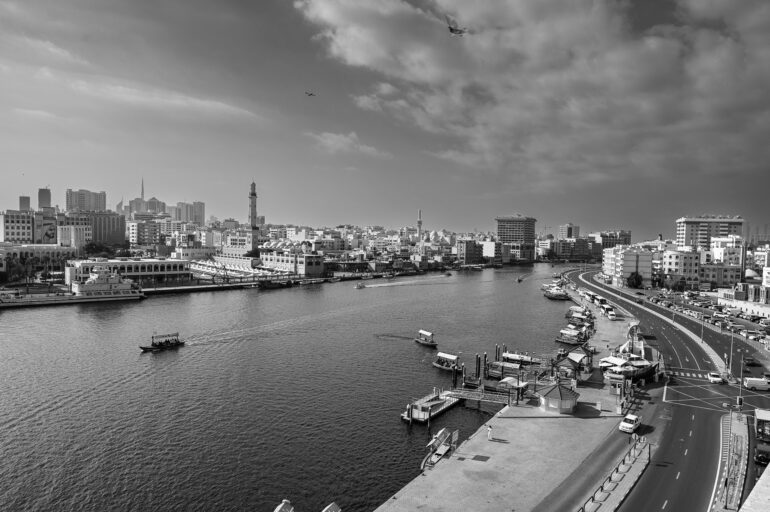
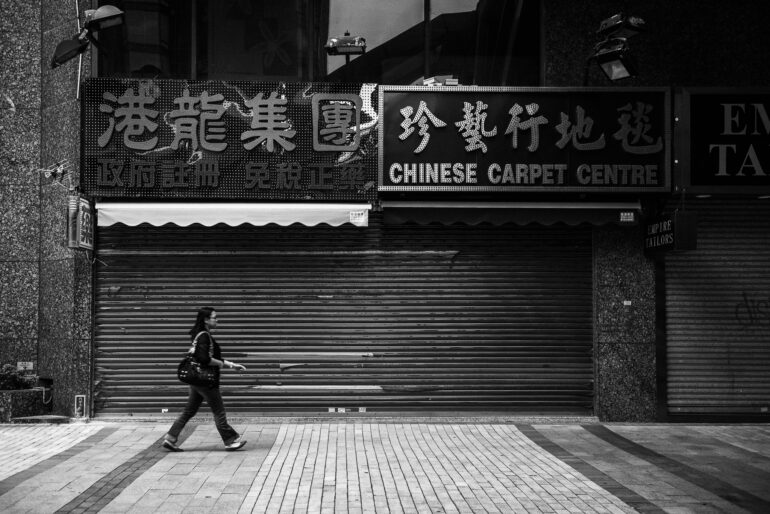
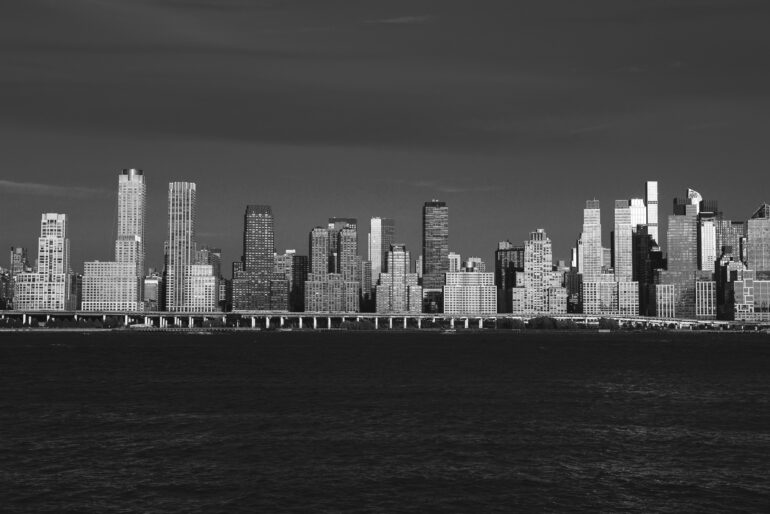
We’ve tested these presets on APS-C, Full-frame, and Medium-format cameras. More importantly, we’ve also tested them with cameras from various brands spanning as far back as the days when DSLRs were the mainstay. So you’ll find something you like in these presets if you shoot Canon, Nikon, Sony, Fujifilm, Pentax, Ricoh, Leica, Hasselblad, Lumix, Olympus, or OM System.
Honestly, any photographer will probably find that they love what these Lightroom presets can do for their images. But they were primarily designed for photojournalistic use. So with that, we think that the following photographers will like them the most:

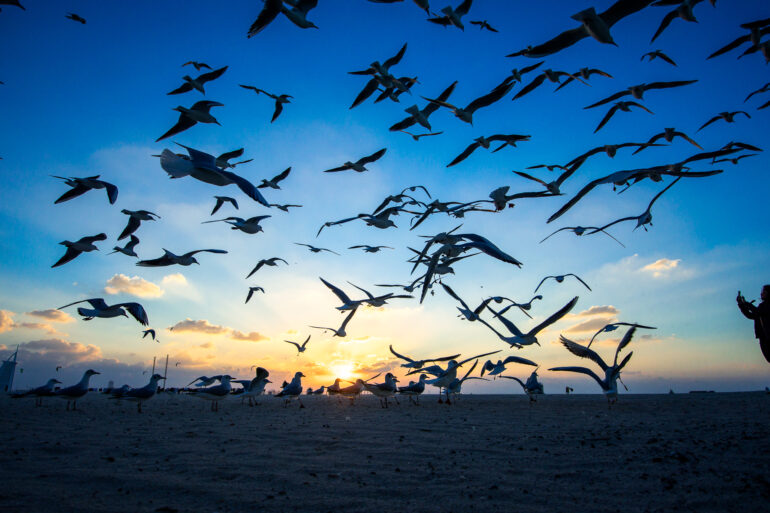
Of course, we invite you to use them as a canvas for your inspiration and then delve deeper into them with your own customizations.
Head over to our store to make a purchase.

On this episode of Project of the Week, we’re back with POTW pro Nate Sheets and his gorgeous work. Today Nate will be taking us on a visual tour of the first certified passive house in Missouri, and giving us some insight along the way!

Nate shares how he got linked up with his client for the shoot. He says “Hoke Ley and I have worked together on a few projects. They are an architecture firm based in Lawrence, KS which is about 45 minutes outside of Kansas City. I reached out to them a couple of years ago to see if they would meet with me and talk about documenting their work. It went well and now they commission me for their projects!”

He continues, “Beacon Hill is a special project to me because it presented many quiet but dramatic moments to me. The design of this home really connected with me and the way I like to photograph homes. It’s obvious that I favor one-point perspectives but this project allowed me to grab lots of depth and interest in those compositions, especially shooting tight to the screen wall.
The homeowner volunteered to be in the photos which was a highlight of the day. They were so patient and willing to work with me to get the exact frame I was looking for. It was also rewarding to see how excited they were about how the photos were coming together. Hoke Ley did a wonderful job on this project and I was super stoked to be the one to shoot it. This home is the first certified passive home in Missouri which was neat to learn about.”


I asked Nate what stood out in his mind about the shoot day. He explained, “Beacon Hill is a really neat neighborhood next to downtown that has been going through some revitalization. With that said, we had to deal with construction next door and the homes are pretty close to each other. So I decided to zoom in and get a more editorial feel for the early morning shot to avoid some of that construction.”

He goes on, “One of the shots was the stairs and upstairs hallway. I didn’t know how this one was going to turn out when I was shooting but my assistant, Jc had a wonderful idea to add a second person up top as I was shooting one going down. Adding the second person really made this image shine and showcased scale and motion. That was my fortuitous moment of the day, that cracked a bit of a smile because it came together so nicely.”

I told Nate that I loved his use of figures and how he incorporated the family into the home without it feeling too forced or distracting. I asked him to tell me a bit about how he incorporates people into his images and how little/much direction he gives when making these sorts of photos.
He said “I wanted to incorporate people throughout the set in a natural way that didn’t take away from focusing on the design. My goal was to have a full set of photos that have emotion, curiosity, and appreciation of the design. I didn’t have to give much direction to how they were sitting or standing. I would set up my compositions and find the spots I felt needed people, then steer them in the general direction. They happened to fall in the right place pretty easily so I just started taking pictures to make sure I captured the right moment.”

He continues “For the dusk shot I called them on speaker phone and directed them from outside so I could see where they were landing in the frame. They were incredibly easy to work with and made the shoot that much more fun!”

A massive thank you to Nate for sharing another beautiful project with us!
As always, you can view Nate’s work at natesheetsphoto.com and on Instagram @natesheetsphoto!
If you have a project you’d like to be considered for Project of the Week, you can submit it here.


And we’re off! 2024 is in full swing. Many shows this month examine various power structures, but some also bring a softer approach, giving reflection to our interior worlds (some even do both). The personal continues to be political. And while the world feels so heavy, art continues to offer me an antidote, a respite, a reminder that I’m not alone – that none of us are. I’m often searching for shows that can elicit empathy – and the shows listed here satisfy this quest.
I write this from Amsterdam’s Schipol airport, fresh from the opening of Felipe Romero Beltrán’s solo show, Dialect, at Foam, a documentary-cum-performance photo and video project that follows young Morrocan migrants in limbo, waiting out the lengthy visa application process in Spain. Back in London, Danielle Brathwaite-Shirley will unveil a new body of work highlighting the trans experience. And over in the US, Clifford Prince King’s first public exhibition will show an intimate series on his experience as a queer man, titled Let me know when you get home, on bus stops and newsstands across New York City, Chicago, and Boston. Until next month!

Pictured is Bruce Fingerson sharing his photography experiences during a reception at the Breckenridge Public Library on Wednesday, Jan. 24. He shared with the crowd about taking pictures of his step-sister’s wedding back when cameras still utilized film. He was nervous with photographing people. Since then, he chooses nature, he wants it to be something he can enjoy.
Breckenridge resident and photographer Bruce Fingerson was at the Breckenridge Public Library, Breckenridge, Minnesota, to present his work Wednesday, Jan. 24.
To those in attendance, he shared his experiences over the years capturing what many of us may not see when we find ourselves in nature.
Fingerson’s picture, ‘An Oriole and an Orange,’ was part of the exhibit that lasted from Monday, Jan. 12 to Wednesday, Jan. 24. The picture demonstrated what Fingerson learned in college about the rule of thirds, where the bird and the orange aren’t quite centered in the picture.
‘Great Horned Owl’ was taken at the Bois de Sioux Golf Course in Breckenridge, Minn., in 2021. Like Fingerson’s other picture, the owl is not quite centered in the frame, which adds a pleasant quality. He has learned that technique from studying photography.
‘Trees and Tracks’ showcases the wintry atmosphere of the Bois de Sioux Golf Course in Breckenridge. Fingerson also discussed how he never manipulates the subject of his picture, unless to move a branch or blade of grass.

The death knell for the Dallas Cowboys had sounded moments earlier, and when the Sports Illustrated photographer covering America’s Team made his way into Candlestick Park’s visiting locker room, he encountered near silence.
“It looked like every player had just lost their mother in a car crash,” Walter Iooss Jr., the legendary sports photographer, told The Messenger in an interview from his home in Montauk, New York, referring to the aftermath of the 1982 NFC Championship Game. “That’s it. It’s over.”
Iooss had covered the Cowboys that entire 1981 NFL season, on assignment for Sports Illustrated, and clicked frame after frame of the franchise’s most famous players of that era — Tony Dorsett, Ed “Too Tall” Jones, Drew Pearson, Danny White (the successor to Cowboys Super Bowl-winning quarterback Roger Staubach) — as well as Hall of Fame head coach Tom Landry. But one of Iooss’ most iconic images, in a career that has spanned six decades-plus, came at the expense of those same Cowboys, and courtesy of San Francisco 49ers quarterback/wide receiver tandem Joe Montana and Dwight Clark.
“Seven or nine seconds, whatever it was, when Joe rolled right, I had him rolling right, and releasing the ball,” said Iooss, recalling the scene unfolding in his camera viewfinder on January 10, 1982. “Suddenly someone comes in from my right-hand view. And then it was over. Most depressing moment of all time. I was like, ‘What the f—?’ ”
The “someone” was Clark, the Pro Bowl wideout, who had skipped across the back of the Candlestick end zone, leaped higher than Cowboys defensive back Everson Walls, and clasped Montana’s floater with his fingertips in the corner for the tying score. Kicker Ray Wersching booted the extra point for the nail in the Dallas coffin. The 49ers went on to win the first of four Super Bowls with Montana behind center.
“I went back to New York. Next Wednesday or Thursday, “The Catch” was born,” said Iooss, recalling the post-assignment film development process in the pre-digital age. “You can’t make it up.”
Iooss (pronounced YO-ss) had snapped a photo that became what he now calls “my most famous picture,” the January 18, 1982 SI cover shot of Clark frozen in air over Walls.
But the Texas-born, New Jersey-raised Iooss was by 1982 already a renowned Sports Illustrated lensman, and his name was affixed to hundreds of the famed sports magazine’s covers and interior story photographs — from golfers Arnold Palmer and Jack Nicklaus to SI Swimsuit Issue goddesses Cheryl Tiegs and Christie Brinkley to NBA stars Bill Russell and Wilt Chamberlain to the cultural icon Broadway Joe Namath, poolside in South Florida on the cusp of fulfilling his Super Bowl III guarantee. (Yes, kids, the New York Jets actually won one.)
Iooss’ SI profile would swell starting in the late 1980s and extending through the late ’90s, when he essentially became NBA superstar Michael Jordan’s personal photographer. Iooss covered His Airness when the Hall of Fame guard led the Chicago Bulls to six championships, when he soared to the basket in the 1988 Slam Dunk contest in Chicago, and even when Jordan took a year off to pursue a pro baseball career in 1994.
The 80-year-old Iooss is still working, and he has several projects in the works, even though he is long removed from his SI staff position. Of course, Iooss also has his trove of photographs encompassing his career — one that evolved from film to digital. He owns the rights to his massive photo collection, and his son is the curator.
The recent news that Sports Illustrated staffers — including writers and editors — would be laid off by publisher The Arena Group, shocked the media world, and spells an uncertain future for the publication. Iooss called the situation “horrible,” and his Sports Illustrated body of work represents part of a bygone sports media era, when the SI cover was king, and the stories and photographs within the pages of the weekly magazine were the Bible for sports fans.
[embedded content]In the age of information immediacy, when athletes can control their own narratives through social media accounts and fans can see highlights of sports events in real time at the touch of their cell phone, the beauty and significance of sports photographs may seem like a lost art. Both of Iooss’ sons — Christian and Bjorn — are in the field, but even Iooss admitted it’s a tricky proposition doling out advice to sports photojournalism hopefuls.
“I wouldn’t recommend it,” said Iooss. “There are a few places to go, like Getty (agency). Newspapers have almost no photographers anymore, the magazine business is decimated. Advertising still exists, but it’s not a good business. I entered at the greatest time there’s ever been, for the greatest publishing company that ever existed.
“You didn’t know it. You know it now.”
Born in Temple, Texas, in 1943, Iooss and his family eventually settled in the New York metropolitan area following his parents’ divorce. Young Walter lived with his mother and grandfather in rough and tumble East Orange, New Jersey, while his father, Walter Sr., lived in Brooklyn. The elder Iooss (the name is Flemish) was a musician and at one point toured with the “King of Swing,” bandleader Benny Goodman, playing bass.
Father and son were huge sports fans, Iooss said, and they went to Brooklyn Dodgers games at Ebbets Field. But the moment that set Iooss on a course to photography came after his father bought season tickets to the New York football Giants, who played at Yankee Stadium. During a home game in 1959, Iooss used an Asahi Pentax camera his father had given him to shoot several frames of the game. After processing the film, Iooss said he was on his way.
He scored an interview with an SI photo editor in 1960, the summer before his senior year at East Orange High. The magazine sent him on what he said were spec assignments, where he’d travel to places like Philadelphia to photograph Cubs Hall of Famer Ernie Banks, when the club played the Phillies. A year later, SI called Iooss two weeks after he got his high school diploma and sent him on a paid assignment — “A hundred dollars, a lot of money back then!” — to photograph octogenarian sailor Archie Chester, who was making an epic voyage. The photo would be for the “Pat on the Back” feature on the magazine’s last page. Iooss said when he arrived for the Connecticut shoot, Chester looked at him like he was from Mars.
“His face, it just dropped. ‘They’re sending a boy to do a man’s job?’ I knew that’s what he was thinking,” said Iooss. “I didn’t like boats. I was so nauseous. But yeah, they printed it.
“Not a portfolio piece.”
It was enough to get Iooss an entry, however, and later in 1961, he was sent to Yankee Stadium on October 1 to cover Roger Maris’ attempt to break Babe Ruth’s then single-season home run record. Iooss said that the magazine ran photos of the historic game from another SI photographer who was there instead. Still, by 1962, not yet 20, Iooss was being sent everywhere. He would often work alongside another legendary Sports Illustrated photographer who was also just starting: Neil Leifer.

“They were sending children out,” said Iooss with a laugh. “I remember we covered the World Series, ‘65 in Los Angeles, and Neil, at the end of the game with [Hall of Fame pitcher Don] Drysdale on the mound, jumped out of his spot and ran out to the field and got between [Dodgers catcher John] Roseboro and Drysdale. The f—ing L.A. press went insane.”
Iooss said the competition amongst peers and colleagues was fierce, and that the SI cover photo was the holy grail.
“We were competitive. It made us better,” said Iooss. “We all wanted the same thing. I’m competitive on everything. My greatest compliment was from Michael Jordan: ‘He’s quick and he’s good.’ ”
Iooss eventually became full-time with SI by the ’70s, but also had a job working for Atlantic Records. He photographed some of the label’s giants then — Aretha Franklin, Led Zeppelin, Sam & Dave — and was Wilson Pickett’s personal photographer. But Iooss said the music business and the exploding drug scene in the late ’60s was “overwhelming” and forced an exit. “I had to stop,” said Iooss.
The popularity of SI’s Swimsuit Issue can perhaps be traced to Iooss’ memorable photos of Tiegs and Brinkley in the ’70s. “I shot the fishnet,” said Iooss, referring to Tiegs’ white, see-through swimsuit that may have simultaneously spiked (with young males) and sunk (with mad mothers) magazine subscriptions. “We went to the Seychelles with Christie Brinkley, oh my God. One of the great trips of all time. Just an incredible place.”
The Sports Illustrated travel budget was flush, and Iooss sai it was not at all uncommon for him to fly first-class for assignments. Sometimes he was treated to an even more luxurious ride.
“I did a lot of Wimbledons, and we had to bring film home on the Concorde. Every year,” said Iooss. “Three hours. You’d arrive earlier than when you left. Nice way to travel.”
In the summer of 1980, the Yankees’ slugger Reggie Jackson was destroying American League pitching. Iooss went to the old Stadium to try and capture Mr. October socking a home run. Iooss let Jackson know he was waiting for him down the right-field line.
“First at-bat, he hits a fly ball deep. But not over the fence,” said Iooss. “He comes out to me in right field and says, ‘How was that?’ I said, ‘It wasn’t good. You didn’t hit a home run.’ Next at-bat, he takes it deep into the stands. I said, ‘That’s it. We got it.’ Cover of the magazine next week.”
After “The Catch” cover was published in 1982, Iooss was approached to work for Fuji, which was trying to fight its way into the color film market against behemoth Kodak. Iooss would be contracted by Fuji to follow the U.S. Olympic athletes as they prepared for the Los Angeles ’84 Summer Games.
“I really did not want to go off SI staff,” said Iooss. “But it was the greatest contract ever. I had total access to all the athletes. If I didn’t get the right Greg Louganis photo, I’d go back again. I stayed at the Beverly Hills Hotel for three weeks for the Olympics. One of the largest bills I’ve ever seen in my life. There was no traffic in Los Angeles, everyone left the city. It was exciting.”
He returned to Sports Illustrated’s staff after the Olympics, and in 1987, Iooss was asked to go to Lisle, Illinois, to photograph Jordan for a cover. The assignment became the first of dozens that involved Jordan over the ensuing decade, and sparked a cordial business relationship between photographer and superstar athlete. As Jordan’s star rose, there is no denying the direct impact his many appearances on SI’s cover had on his ascendency.
Even when the magazine did a cover story on Jordan’s 1994 baseball foray — with the infamous diss, “Bag it, Michael!” — Iooss said he was able to avoid Jordan’s SI freeze-out, a ban that exists to this day.
“There was a moment after that cover. I walked into Jordan’s dressing room. He’s looking at my credential. ‘Who are you working for, Walter?’ If I said anything that was wrong, that was it for me,” said Iooss. “I said, ‘Mike, I had no choice. I couldn’t get a credential. I’m working for SI. What the f— am I gonna do?’ He said, ‘OK.’ If I said something else, I’m gone. Never lie.”
Iooss not only shot Jordan for the magazine, but was hired to do photo work for numerous of Jordan’s endorsement deals, as well as collaborate with him on the 1993 book, Rare Air.
The assignments are fewer these days, but Iooss said he still prepares, just in case. Even as his profession evolves — most would say for the worse — Iooss is up for any challenge behind the lens.
“I don’t know if this year is going to bring anything. I ship my cameras to Florida, like I always do during the winter,” said Iooss, who also has home there. “Last year, I never opened the bag. First time that ever happened. I was like, ‘Wow.’ A reality check. But you know? You’ve got to be prepared. Someone might want to hire you. I’m ready to go.”

Galloway, N.J. – A new agreement between Stockton University and Mercer County Community College
provides students the opportunity to seamlessly pursue a Bachelor of Fine Arts with
a concentration in photography.
Students would spend two years at Mercer in West Windsor earning an Associate in Fine
Arts degree before transferring to Stockton to complete a BFA, according to Robert
Heinrich, vice president for Enrollment Management at Stockton University.
Students would take courses like 2D Design, History of Photography and Digital Photography
at Mercer to prepare for advanced classes at Stockton including Film and Darkroom
II and Senior Project Photography.
“By establishing this agreement, we are ensuring seamless transfer of credits from
the student who is completing an associate degree at Mercer into our program by ensuring
all of the courses are fulfilling graduation requirements,” Heinrich said.
“In fostering academic excellence, our partnership with Stockton University creates
a dynamic bridge for students to cultivate their passion in photography and reinforces
our commitment to providing an affordable and enriching educational path in the field
of Fine Arts,” said Robert Schreyer, vice president of Academic Affairs at MCCC.
The new agreement enhances an existing dual admission and transfer partnership between
the two institutions called Transfer Pathways. Students entering this program receive
conditional acceptance to Stockton while they work on their associate degree.
This innovative partnership Stockton has with 12 community colleges makes higher education
more affordable for New Jersey students by providing a direct, cohesive route to a
bachelor’s degree with easy transfer of credits. Under the Transfer Pathways agreement:
For more information about transferring to Stockton visit stockton.edu/transfer.
# # #
Media contacts:
Stacey Clapp
Director of Strategic Communications
Stacey.Clapp@stockton.edu
609-626-3645
609-412-8069
stockton.edu/media
Mark Melhorn
Associate Director of News and Media Relations
Mark.Melhorn@stockton.edu
609-652-4593
609-569-6026
stockton.edu/mediathway to bachelor’s degree


Joan Donoghue, the president of the international court of justice, and other judges ruling on a request by South Africa for emergency measures for Gaza. Donoghue said the court had decided Israel must ‘take all measures within its its power’ to prevent all acts within the scope of the genocide convention. It must also take immediate measures to improve the humanitarian situation in Gaza
Photograph: Remko de Waal/EPA

Despite their talent continuously being pushed to the sidelines, the world of fashion revolves around those who photograph it. Ellen Stokes is a Colorado-based fashion photographer who has fought her way to the top.
Through years of experience photographing diverse levels of fashion, Stokes has become a legend in the Colorado fashion industry and she possesses a story to be told. From discussing the origin of her love to where she is today, Stokes took her time to share her story with us.

Stokes was born and raised in Colorado Springs before moving to Idaho when she was 18 years old. Over the next few years, she moved around the country — from Idaho to Iowa, from Iowa to Ohio —working in real estate, but as time went on she grew restless.
She felt the need to move back to Colorado and reunite with the mountains she left years ago. It was then, she decided to find a solution to her restlessness and start creating art. In 2018, she officially pursued her passion for photography.

Stokes gained an interest in photography when she was a young kid.
“My mom shot on film and my dad had a Polaroid,” She said. “I always liked it — I liked anything that used light,”
Even though she was too young to fully understand the complexity of lighting composition, she spent her free time messing with anything in her reach that interestingly refracted light. From magnifying glasses to disco balls, Stokes became fascinated with the manipulation of light.
At this time of adolescence, Stokes also fell in love with the world of fashion.
“I grew up in a really strict religion which had certain parameters for what you could and could not wear,” She reflected. However, as time passed, the photographer grew grateful as she had to think outside of the box to discover her style.
“It was challenging, but now that I’ve evolved in my personal belief system, I wear what I want,” Stokes said. “It’s one of my greatest joys—finally being free in that capacity.”

As Stokes grew into her career as a photographer and transitioned to shoot exclusively fashion related content. She felt the need to shoot art with no creative boundaries instead of being restricted by the unspoken guidelines of wedding and family photography. “I want to shoot gorgeous things. I want to shoot what I want to shoot,” She said.
During this time, Stokes also gained an interest in shooting self portraits. She believed it was a tool to help her work on self love and self acceptance. It also allowed to create what she wanted without the fear of failure. The photos were just for herself — there was no pressure to deliver a perfect product.
Stokes effortlessly thrived shooting fashion. She was happier with her work, and as a result, the product was even better. The photographer was able to create her favorite types of photoshoots more often — her favorites being those she found visually and emotionally exciting.
“I wanted my eye to linger on the image,” Stokes said.
 Although Stokes was thriving and her work was growing, she was not immune to the creative slump that occurs in most art-related careers, “I used to feel a sense of failure a lot when I was younger. I would be very self-critical,” She said.
However, Stokes found a way to beat these slumps.
Whenever she struggles to create, she goes within. She sits down and meditates, letting her mind flow with no boundaries. She also dances around the living room with her children.
“Usually when I hit a slump, it’s because I’m ignoring my inner child,” She said. “Once I feel ‘at one’ with myself, the well is overflowing.”
The vibrant-romantic photographer takes inspiration from every form of art, like the way the stars look at night or work from her favorite photographer, Annie Lebovitz.
Stokes has followed Lebovitz’s work since she was 15 years old, falling in love with how the artist uses romanticism and spacing. “I admire her because she plans her shoots to perfection beforehand, so when her subjects arrive, the shoot is quick and energetic. It’s something I want to incorporate into my work,” Stokes stated.

In addition to creative slumps, Stokes said she commonly finds herself drowning in the amount of messages she receives and struggles with inconsistent posting.
“Sometimes I go through week-long stretches of not posting on my photography [Instagram] page because I know if I go on there, people will be mad at me for not responding to all the messages,” She said.
Although the photographer responds as often as she can, she has learned to be picky with the requests she accepts. She tries to choose projects that excite her and fit within her schedule so that she can provide the best product possible.
With this, she wants to ensure that people never fear reaching out to her, “It’s more about keeping my cup full so I can give my best when I shoot.” She constantly looks for other creatives whose visions are more than a few photos on a Pinterest board.
Stokes encourages people to go within themselves and discover ideas that feed into their self identity.
“One of my secrets is that I truly think everyone should be good at capturing the essence of their soul,” She said.
All photos by Ellen Stokes.
To reach Ellen Stokes, send her a message on Instagram.





