Photography

Photographer inspired by ethnicity to snap Koreatown in London : Korea.net : The official website of the Republic of Korea

Photographer inspired by ethnicity to snap Koreatown in London : Korea.net : The official website of the Republic of Korea

By Honorary Reporter Foteini Chatzoudi from Greece
Photos = Kim Chan-yang 

In London, New Malden in the Royal Borough of Kingston upon Thames is home to one of Europe’s largest ethnic Korean communities. The Korean diaspora here has made a substantial impact through stores, restaurants, businesses and cultural establishments. King Charles III visited New Malden on Nov. 8, 2023, to greet President Yoon Suk Yeol, who making a state visit to the U.K. at the time, to honor Korean culture. 

I discovered New Malden through Korean British photographer Kim Chan-yang’s “Dongpo,” a photographic collection capturing Korean expats in the area. His work has been displayed at Bienal ’23 Fotografia do Porto (Biennial of Photography of Porto) in Portugal and the Victoria and Albert Museum in London and in publications like the British Journal of Photography. 

The following are excerpts from an email interview with him from Jan. 5-17.

Introduce yourself and explain why you pursued photography.
I’m a Korean Briton born in Seoul but raised in Manchester, England. While doing my bachelor’s in zoology, particularly the module “Biological Photography and Imaging,” I researched photography and came across the exhibition “British Documentary Photographers.” I grew enamored with this so I studied for a master’s in documentary photography from the University of South Wales. After graduating and returning to Manchester, I started snapping shots of my area, community, friends and strangers.

Women wear Hanbok for a festival (left) and a troupe performs the traditional fan dance buchaechum (right).

How did you learn about New Malden’s Koreatown?
After taking pictures in Manchester for several years, I wanted to take my practice to a different level. I was doing research for my master’s and had to devise a new project. While studying Koreans globally, I discovered that New Malden is the epicenter for Koreans in the U.K. My curiosity was piqued.

Why did you start the project “Dongpo?”
I wanted to document and immerse myself in the ethnic Korean community and after starting my master’s, I moved to London to be closer to the area. On a global scale, Korean culture has experienced a significant surge and continues to do so, covering genres like K-pop, film, TV shows and food. But my aim was to also represent the (relatively) small diaspora in the U.K. and how Korean culture has integrated.

What does your project’s name mean?

In Korean, dongpo means “brethren” or “people of the same ancestry.” This term has a transcendental and transnational quality that embraces the Korean diaspora, stressing links among Koreans around the globe.

What message do you wish to convey through your photos?
Whenever a culture is transposed to a country where it didn’t originate from, people tend to take things as a remembrance or do things in a ritualistic sense. This can be a way to pay tribute to their origins, homeland and identity that have been separated from their birthplace and upbringing. I want to show these things and the people and families who have moved.

New Malden has many refugees from North Korea as well as people from South Korea, but everyone looks like they live together peacefully (though I’m sure the place has its own unique problems like any society). This shows that Koreans have a long history together, complex as it may be, and only recently were they separated due to events outside their control.

New Malden has one of the biggest Koreatowns in Europe.

What explains the nostalgic feel in your photos?
The warmth and nostalgic feelings in my images are a definitive reflection of how I felt walking into a new community and being welcomed. I was instantly befriended and everyone was nice. My images reflect that. A lot of them that I’ve always taken, especially in Manchester, evoke a feeling of being in a community, a large family with loyal friends. I also only take photos using analog film, which helps create a vintage and nostalgic feeling.

What did you gain from this project?
My Korean improves a bit every time I go to New Malden and I’ve met amazing people. My study of history between Korea and the U.K. has also helped me understand my own identity and place in the world.

What are your upcoming projects?
My focus is on completing this project and seeking both a publisher and an exhibition to showcase it. Over the long term, I hope to go to Korea and take pictures of my extended family. 

I’m also researching and visiting ethnic Korean communities around the world. Beginning with Europe, I want to show the threads and branches of the larger diasporic tree of what it means to be Korean today.

jihlee08@korea.kr

*This article is written by a Korea.net Honorary Reporter. Our group of Honorary Reporters are from all around the world, and they share with Korea.net their love and passion for all things Korean.

Our Rodent Selfies, Ourselves

Our Rodent Selfies, Ourselves

When Augustin Lignier, a professional photographer in Paris, was in graduate school, he began to ponder the point of picture-taking in the modern world: Why did so many of us feel compelled to photograph our lives and share those images online?

It was not a novel question, but it led Mr. Lignier to a surprising place, and before long he found himself building what was, in essence, a photo booth for rats.

He took inspiration from B.F. Skinner, the famous behaviorist who had devised a test chamber to study learning in rats. The Skinner box, as it became known, dispensed food pellets when rats pushed a designated lever.

It became one of the most well-known experimental paradigms in psychology. Scientists found that reward-seeking rats became lever-pressing pros, pushing the bar down over and over again in exchange for food, drugs or even a gentle electric zap directly to the pleasure center of the brain.

Mr. Lignier built his own version of a Skinner box — a tall, transparent tower with an attached camera — and released two pet-store rats inside. Whenever the rats pressed the button inside the box, they got a small dose of sugar and the camera snapped their photo. The resulting images were immediately displayed on a screen, where the rats could see them. (“But honestly I don’t think they understood it,” Mr. Lignier said.)

The rodents quickly became enthusiastic button pushers. “They are very clever,” Mr. Lignier said. (He named the white rat, which proved to be the cleverer of the two, Augustin, after himself. The brown and white rat he named Arthur, after his brother.)

But after this training phase, the rewards became more unpredictable. Although the rats were still photographed every time they hit the button, the sweet treats came only once in a while, by design. These kinds of intermittent rewards can be especially powerful, scientists have found, keeping animals glued to their experimental slot machines as they await their next jackpot.

Indeed, in the face of these unpredictable rewards, Augustin and Arthur — the rats — persisted. Sometimes, they ignored the sugar even when it did arrive, Mr. Lignier said, and just kept pressing the button anyway.

To Mr. Lignier, the parallel is obvious. “Digital and social media companies use the same concept to keep the attention of the viewer as long as possible,” he said.

Indeed, social media has been described as “a Skinner Box for the modern human,” doling out periodic, unpredictable rewards — a like, a follow, a promising romantic match — that keep us glued to our phones.

Or maybe being able to keep ourselves busy pressing buttons is its own reward. In a 2014 study, scientists concluded that many human volunteers “preferred to administer electric shocks to themselves instead of being left alone with their thoughts.” Maybe we would rather sit around and push whatever levers are in front of us — even those that might make us feel bad — than sit with ourselves in quiet contemplation.

But that’s precisely the sort of thing that might be too uncomfortable to sit around and contemplate. Especially when there are rat selfies to marvel over — “I found them cute and fun,” Mr. Lignier said — and an endless stream of Instagram photos to scroll through or even, occasionally, enjoy.


Produced by Antonio de Luca and Matt McCann

The Ukrainian children documenting their daily lives with disposable cameras

The Ukrainian children documenting their daily lives with disposable cameras

Ukrainian children are taking the photographic reins in a project run by local non-profit Behind Blue Eyes, a team keen to help children get through trauma with creativity. The team travel across frontline villages and hand out disposable cameras to enable the youngsters to document their everyday lives. The results, then displayed online, are accompanied by the photographer’s wishlist, with Behind Blue Eyes raising funds to try to realise it.

Three Ukrainian children, one eating lolly

Myroslava, three years old, Prymorske, Zaporizhzia region, 2022

(Image credit: Behind Blue Eyes)

For Artem Skorokhodko, co-founder of Behind Blue Eyes, the resilience of the local children amidst ruined places spurred the initiative. ‘This energy and drive felt almost bizarre back in April 2022, so we began cracking our heads [about] how to encapsulate this emotion and share it with other people across Ukraine who might desperately need it. At the same time, we wanted to celebrate and support what we admired in those kids so much. The photography experiment addressed both [aims].’

The resulting photographs capture sometimes idyllic-seeming scenes, jarring when set against the glimpses of devastation behind. The children take photos of flowers, of each other, of their possessions in disarray, ignoring the surrounding chaos.

Ukrainian child riding bike past ruins

Tanya, 15 years old, Lukashivka, Chernihiv region, 2022

(Image credit: Behind Blue Eyes)

‘It’s not even the pictures [that surprised us] as such, although they were extraordinary,’ Skorokhodko adds. ‘We have been majorly surprised to see how these kids opened up and became vocal about the traumatic experiences they had to go through because of the war while they were scrolling through their own images. They spoke about things that would normally be avoided in conversation.’

Tulip blooming amid green grass, in photo at wonky angle

Valya, 11 years old, Lukashivka, Chernihiv region, 2022 

(Image credit: Behind Blue Eyes)

He continues, ‘The greatest moment was to collect all the cameras back a couple of weeks after distributing them [the first time around]. Given that the youngest participant was seven years old, and we [set] absolutely no limits on this creative endeavour, my bet was that only half of the cameras would make it through, while the rest would be lost, damaged, cracked open… I was wrong then and every single time [since].’

theblueyedproject.com

trainers, lettuce and open box on stools

Masha, 10 years old, Lukashivka, Chernihiv region, 2022

(Image credit: Behind Blue Eyes)

cockerel and hens wander around children's bikes on ground

Diana, 14 years old, Lukashivka, Chernihiv region, 2022

(Image credit: Behind Blue Eyes)

child with bike, and ruins and gun in background

Bohdan, ten years old, Lukashivka, Chernihiv region, 2022

(Image credit: Behind Blue Eyes)

Photographer Rankin reflects on his career and charity work

Photographer Rankin reflects on his career and charity work

By Leisha Chi-SantorelliBBC News Culture

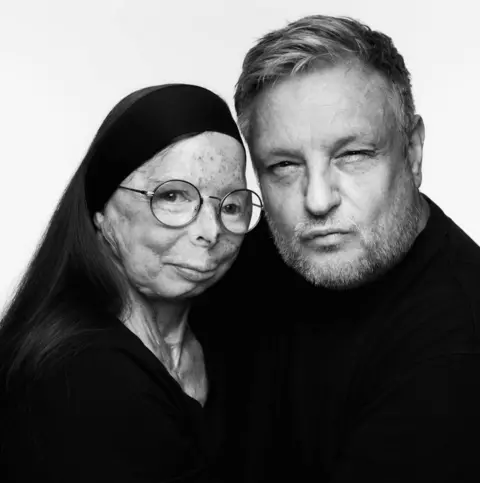
imageRankin/McCann Health London Belgian acid attack survivor Patricia Lefranc and RankinRankin/McCann Health London
“I was very angry that the doctors didn’t let me die. Now it’s different, I know the reason I’m still alive,” Patricia Lefranc, who is pictured here with Rankin, says in the photographer’s new fashion ‘look book’

Over the last 20 years, British photographer Rankin has profiled the world’s most famous people ranging from David Bowie to the late Queen Elizabeth II. Supermodels and fashion shoots helped make his fortune. But it is charity projects that continue to keep him grounded.

Rankin, who was once labelled a ‘bad boy’ celebrity photographer, has mellowed since the Britpop heydays of the noughties and becoming a father. In an interview with the BBC, the Glasgow-born creative reflected on his journey from a working class background to the dizzying heights of fame.

“When my kid was born, and they started to grow up, I was very concerned that I needed to correct that balance of having this incredible job where you do get paid extraordinary amounts of money to do what you love. You need to balance the art of giving something back.”

Rankin, full name John Rankin Waddell, has used his profile to support numerous charities ranging from women’s health issues and combating plastic waste, to recognising the contributions of NHS workers.

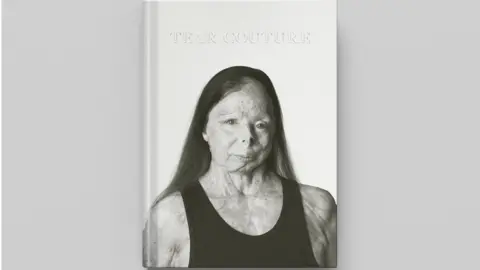
His latest campaign is for the Acid Survivors Trust International (ASTi) where his images are used in the book ‘Tear Couture’ which aims to bring attention to the continued risk of acid attacks as a form of gender-based violence.

ASTi, which counts the Princess Royal as its patron, estimates that more than 10,000 attacks take place globally each year, mostly on women and children. The charity found a large proportion occur in South Asian countries where garment and jewellery industries operate.

Anecdotal evidence shows attacks using corrosive liquids of hydrochloric, sulphuric and nitric acid occur at higher rates in locations where these substances are easily accessible, and where factories use acids in their manufacturing processes.

Some 710 acid attacks were recorded in England and Wales last year, an increase from 421 in 2021, according to ASTi which compiled the data by submitting a Freedom of Information (FOI) request to 43 police forces.

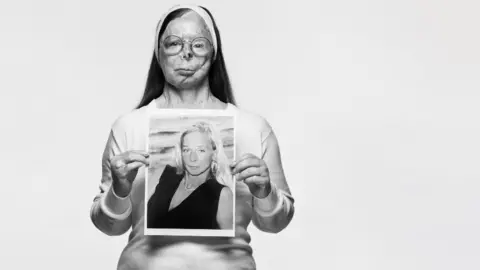
“Some days, I just cry”

imageRankin/McCann Health London Belgian acid attack survivor and activist Patricia LefrancRankin/McCann Health London
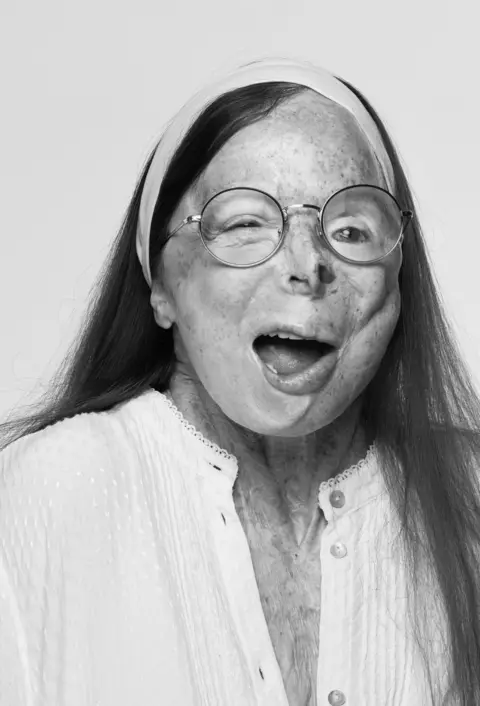
“People stare at me and mock me for my appearance,” model Patricia Lefranc says. She is pictured here sharing a new campaign shot by Rankin, aimed at raising awareness around the link between the fashion industry and acid attacks
imageRankin/McCann Health London Belgian acid attack survivor and activist Patricia LefrancRankin/McCann Health London
A look book is a fashion industry guide to the latest styles and fabrics. There are microscopic tears that have been turned into an immersive virtual reality experience where users can listen to survivors’ testimonials

Rankin said taking on the ASTi charity project adds to his body of work in rethinking beauty standards.

The Belgian activist 59-year-old Patricia Lefranc, his model, has undergone countless surgeries after an ex-lover threw sulphuric acid on her. Few acid attack victims are willing to be photographed.

“I look at these pictures of Patricia and I think they’re beautiful,” Rankin told the BBC. “I want to empower her through those pictures. She was very brave in showing me how extensive her acid attack was.”

“You have to have an empathy for anybody that’s in front of the camera. It can be rather daunting,” he added. “I’m not taking something from them, I’m making something with them together. That’s how I approach every single picture I take.”

imageRankin/McCann Health London Belgian acid attack survivor and activist Patricia LefrancRankin/McCann Health London
The Belgian activist and author was kept in an artificial coma for three months after an ex-lover threw sulphuric acid on her in 2009. He was later found guilty of attempted murder and jailed for 30 years

“My idea of beauty was very influenced by growing up photographing beautiful people all the time,” Rankin admits.

“So to challenge that, which I’ve been doing since the early ’90s, I felt like it was my duty to not just buy into the beauty of the beauty industry or the movie industry. It’s to buy into my own version of that.”

The 57-year-old said he wants to be able to “take pictures that are unexpected and turn people’s heads”.

“I’m trying to change the whole idea of what is beauty. That is the kind of thing that you’re aiming for with these types of pictures”.

Rankin does not take a personal fee for charity work, instead using an expenses-based approach. Reflecting on his success, Rankin said photography remains his favourite medium.

“I own an ad agency. I’ve directed movies, I’ve made commercials, but I come back to photography and it’s the thing that I love the most.”

He warns that younger people need to realise the industry has become even tougher in a digital age where everyone has a camera in the form of a smartphone.

“It’s a very difficult career to manage,” he said. “You’ve got to reinvent yourself again and again and again.”

“You’ve got to remain current and it is a struggle. You have to kind of sacrifice quite a lot in your working life. I don’t think that’s changed.”

imageGetty Images Rankin works with Prince William and Jeff Hubbard, a formerly homeless man who was helped by the charity Crisis, to create an image for 'A Positive View' exhibition at Somerset House in March 2010.Getty Images
Jeff Hubbard, a formerly homeless man who was helped by the charity Crisis, worked with Rankin to take a portrait of Prince William for the ‘A Positive View’ exhibition at Somerset House in March 2010

Rankin also holds the honour of having photographed all the top royals including an iconic image of Queen Elizabeth II marking her Golden Jubilee. At the time, he said in an interview that he worked hard to get her to smile.

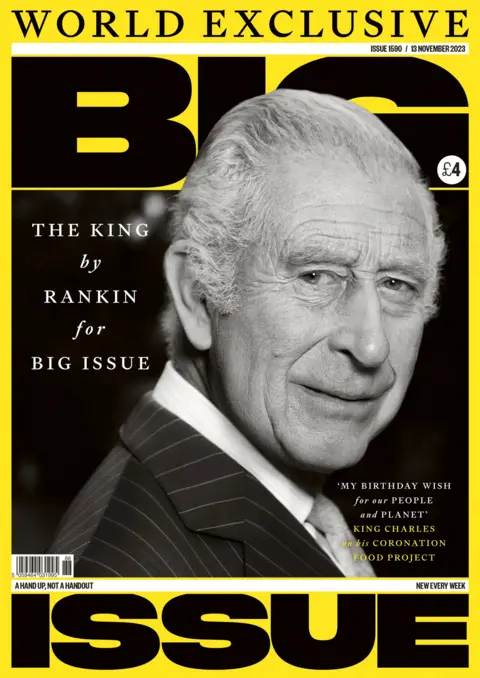
Last year, he photographed King Charles III for the Big Issue magazine which helps the homeless and shared that the monarch was “delightful to photograph and it was very easy to make him laugh”.

Below is a selection of images from charity campaigns Rankin considers close to his heart.

imageRANKIN PHOTOGRAPHY/THE BIG ISSUE King Charles III for the Big Issue magazineRANKIN PHOTOGRAPHY/THE BIG ISSUE
King Charles III was photographed for the Big Issue to mark his 75th birthday and highlight his Coronation Food Project which addresses the growing problem of food affordability and tackling the widespread waste of perfectly good food

“I really love that picture because I feel there’s a resilience to the image that maybe people haven’t seen before. And I think what I’m always looking for is the person behind the Crown, not the Crown.

“I was looking for the person who has been in the wings and has that resilience and has got an opinion,” Rankin told the BBC.

“To be really honest, I think we need some leaders like that in our lives.”

imageRankin Cambodian genocide survivor Sokphal Din BEM by Rankin for [Extra]Ordinary Portraits competition in advance of Holocaust Memorial Day 2023Rankin
A shot of Cambodian genocide survivor Sokphal Din BEM by Rankin for the [Extra]Ordinary Portraits competition ahead of Holocaust Memorial Day which was held on 27 January 2023

Cambodian genocide survivor Sokphal Din BEM had a way of looking at the lens “as though he was reassuring the audience it was OK to talk about such tragedies,” Rankin said in an interview for the Holocaust Day Memorial Trust.

For the charity, Rankin made five images: four of men and women who survived the Holocaust or genocide, and one of the teddy bear who accompanied Holocaust survivor, John Hajdu MBE, through the Budapest ghetto.

imageRankin
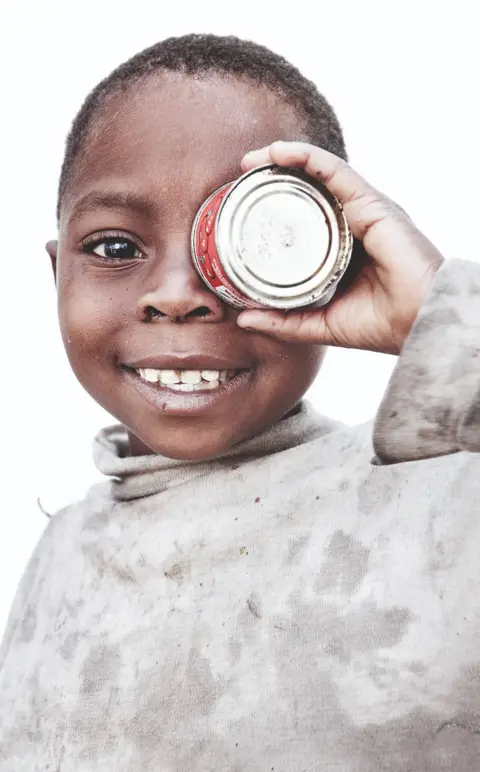
In 2008 and 2009, Rankin travelled with Oxfam to the war-torn eastern provinces of the Democratic Republic of Congo. The photo project aimed to highlight the humanity of people caught in the middle of disease and malnutrition

“I wanted my portraits to do something different. The West has been anesthetised to traditional pictures of disaster zones,” Rankin said in a 2010 interview with Oxfam.

“My style of portraiture is always about bringing people out of themselves, getting them to share something. I chose to photograph the people against a stark white background instead of in their physical environment. The expressions in their eyes and on their faces – their humanity – was what I wanted people to notice and relate to.”

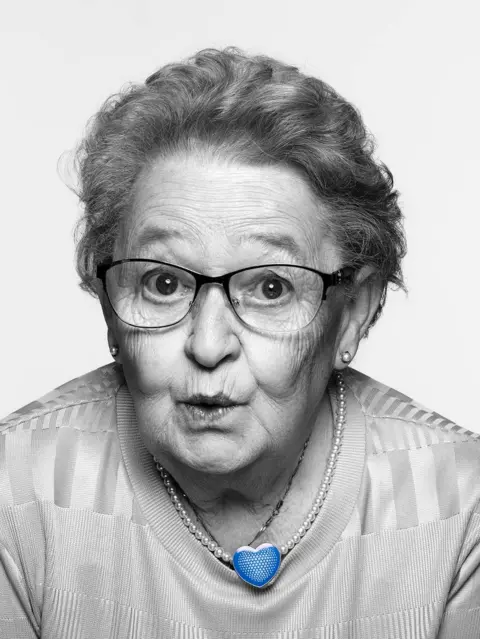
imageRankin For the NHS’s 75th anniversary on 5 July 2023, Rankin shot ‘Love and Charity: A History of Giving in the NHS’ celebrates the vital role charities have played throughout health service historyRankin
Beryl Fairclough, 76, was the brains behind Barnsley Hospital Charity’s fundraising dream team ‘the Sensational Six’, who use their unmatched knitting skills to raise thousands for new NHS equipment, facilities and services locally

“You don’t realise the scale of support that’s out there – they fund research and new technologies, accommodation and support for patients, and extra services so more of us can access better care,” Rankin said about his exhibition celebrating 75 years of NHS charities.

“I used to work in the NHS but honestly had no idea, and it really has been eye opening.”

imageRankin One of photographer Rankin’s most ambitious projects to date, over 150 actors, theatre owners, directors, backstage workers and creatives from make-up artists to stage managers have been photographed in and out of costume over the last month.Rankin
Performance was one of Rankin’s biggest projects where he photographed 150 performers and members of the West End to showcase the talent and resilience of London’s theatres as it emerged from a devastating pandemic shutdown
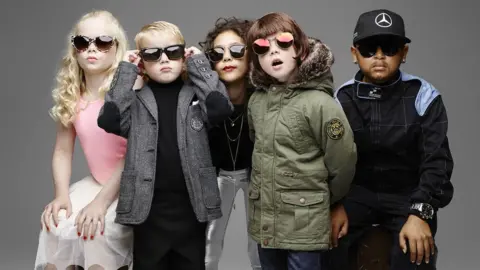
imageRankin Children phototgraphed by Rankin for a 2017 charity auction by Sightsavers.Rankin
In 2017 Rankin was a patron of Sightsavers and snapped children pretending to be a celebrity who had donated sunglasses for a charity auction, including Sarah Jessica Parker, Sir Michael Caine, Liam Gallagher and Lewis Hamilton
imageRankin Dogs with Jobs for the Kennel Club Charitable Trust exhibited at the Saatchi GalleryRankin
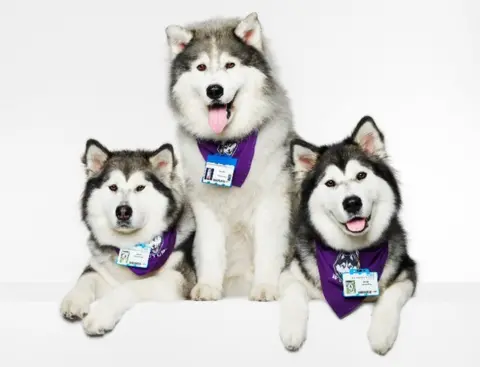
Therapy Huskies which provide end of life care to patients were among the 14 different service ‘dogs with jobs’ that Rankin photographed for the Kennel Club Charitable Trust last year and exhibited at the Saatchi Gallery
imageRankin Rankin self-portrait with Blue Cross horse, Splodge for the animal welfare charity's 120th anniversary in 2021.Rankin
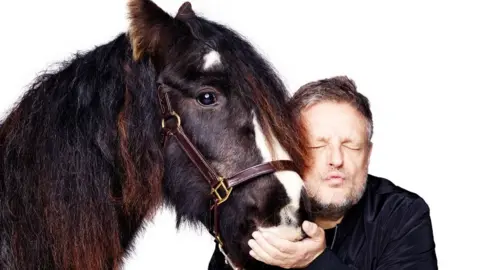
Rankin loves animals and took this self-portrait with Blue Cross horse, Splodge. Celebrities such as comedian Jimmy Carr posed with their pets for a series marking the animal welfare charity’s 120th anniversary in 2021


Copyright 2024 BBC. All rights reserved.  The BBC is not responsible for the content of external sites. Read about our approach to external linking.

Beta Terms By using the Beta Site, you agree that such use is at your own risk and you know that the Beta Site may include known or unknown bugs or errors, that we have no obligation to make this Beta Site available with or without charge for any period of time, nor to make it available at all, and that nothing in these Beta Terms or your use of the Beta Site creates any employment relationship between you and us. The Beta Site is provided on an “as is” and “as available” basis and we make no warranty to you of any kind, express or implied.

In case of conflict between these Beta Terms and the BBC Terms of Use these Beta Terms shall prevail.

Sony World Photography Awards 2024: Student and youth shortlists

Sony World Photography Awards 2024: Student and youth shortlists

In response to the brief Home, Gaston Zilberman, from Argentina, documented the resilience of the indigenous Uru community in Bolivia, who used to live in floating houses on Lake Poopó, before climate change-induced droughts and industrial contamination dried up the lake completely

GASTON ZILBERMAN

Meet the National Western Stock Show photographer who is legally blind

Meet the National Western Stock Show photographer who is legally blind

DENVER — The National Western Stock Show wrapped up its two weeks of shows and rodeos in Denver on Sunday, and one volunteer was there to document the best of it. He wears a cowboy hat like most others, in addition to a leather eye patch.

“I’m a venue photographer,” Hans Watson said.

Watson has been giving his time to the Stock Show for the last 12 years. He’s part of a team of photographers and part of a larger group of volunteers that help showcase the people, the animals, and the experiences of the many events.

“Really just showing how fun the Stock Show actually is,” he explained.

Showing it through his camera lens, and through one of his eyes.

“I’m legally blind,” he said.

Hans had a stroke in 2015. He lost most of his eyesight.

“And as my vision came back, one of the things that they suggested I do was take up photography to try and train my vision again,” he said.

And so he did, starting to photograph rodeos in Texas. When he moved to Denver, he began volunteering at the National Western.

“I’ve got decent vision in the one eye, so the real big difference is, especially rodeos, not be able to see out of this area,” he said, describing his lack of peripheral vision. “I have no way to know if I’m about to be hit by a horse or a bull or something like that.”

So he stays outside the protective fences, turning in impressive action shots of rodeos, along with excited reactions from crowds, or award-winning livestock.

“It’s always an honor when the Stock Show uses some of my images. This year I’ve got one on the souvenir cup. I’ve got a billboard,” he said.

Watson adds that he plans on being back for the 2025 Stock Show, marking his 13th year.


D7 follow up bar 2460x400FINAL.png
The Follow Up
What do you want Denver7 to follow up on? Is there a story, topic or issue you want us to revisit? Let us know with the contact form below.

Elevate your Space: Bringing the Natural Splendor of Maine into Your Home

Elevate your Space: Bringing the Natural Splendor of Maine into Your Home


When it comes to interior design, there are many important elements to consider. One of the most important is the choice of wall art as it can significantly influence the overall aesthetic and ambiance of a room. Incorporating different types of wall art allows you to infuse a sense of your personality and style into your living space. There are many types of wall art ranging from canvas prints to mirrors to metal wall art and nature-inspired wall art.

When it comes to nature-inspired wall art, one must consider using Maine landscape photography as wall art. And why is that? Maine, with its rugged coastline, picturesque lighthouses, and breathtaking natural landscapes, provides a rich tapestry of images that inspire the soul with their beauty. The stunning landscape photography of Maine can transform your living spaces in many ways.

The Importance of the Outdoors in Interior Decorating

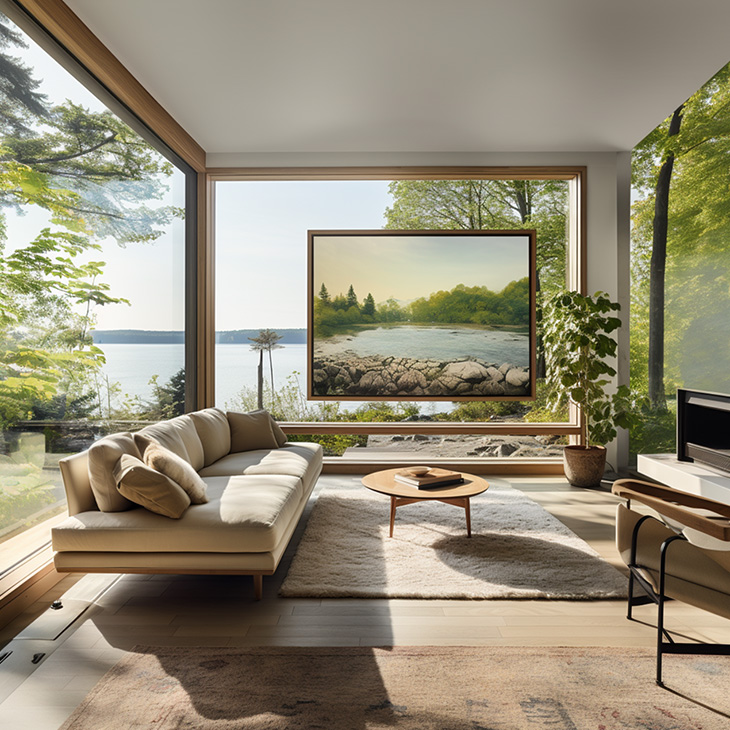
The diverse landscapes of Maine provide you with multiple opportunities to “bring the outdoors in”. There is the calming beauty of Acadia National Park; the quaint fishing villages; and the lighthouses…to name just a few of the nature highlights that help to define Maine. Photos of Maine and its iconic scenery provide the viewer with a connection to the outside world. The photograph tells a story and invites you to connect with the beauty of nature.

For example, think about the stone bridges found in Arcadia National Park. There are several stone bridges in Acadia National Park and one of the most well-known is the Stanley Brook Bridge. These bridges convey artistry and functionality… and create an air of mystery or enchantment to those who see them. If you were looking for a fine art photograph that would provide a calming sense to your room and a connection to nature, then a photo of one of these stone bridges would be a wonderful option.

Maine Wall Art – The Beauty of Its Distinctive Seasons

Maine has four very different seasons with their own charm and color palette. Perhaps the most well-known color palette is the vibrant hues seen in Maine’s autumn leaves – with glorious reds and stunning yellows and oranges. Each curve in the road reveals another breathtaking scene. Fall is followed by the pristine blankets of white snow in the winter—creating picture-perfect Hallmark Card images with snow-covered bridges; farmlands; and horse-drawn wagons and carriages.

But Maine’s beauty is not limited to just the fall and winter. Spring and summer are filled with the vibrant greens of Maine’s forests as well as blooming landscapes with wildflowers that carpet the meadows and fields. There are also blooming cherry blossom trees as well as apple and lilac trees. Their blooms are fragrant and sweet, and create a soft palette of whites and pinks. And we cannot forget the deep blue waters that wash ashore on the Maine coast or the dramatic breaking of the waves at Thunder Hole as they crash up into the skies –hues of blue and white mixed together.

Once again, no matter your color palette interior decorating needs, Maine’s rugged coast and picturesque landscapes would provide you with many options in your search for the perfect wall art.

Maine Wall Art as a Focal Point in Your Room – Creating a Statement

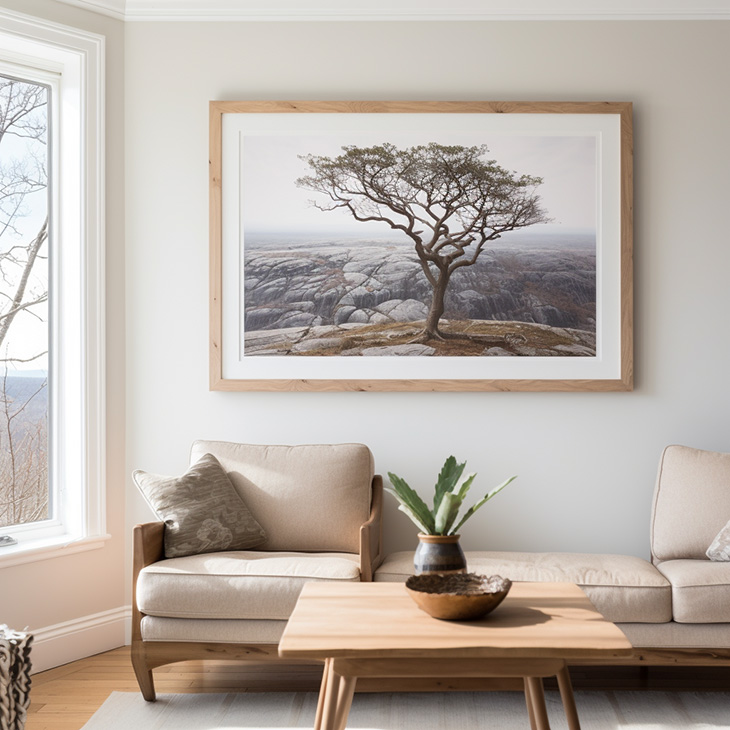
In a room’s interior design, it is important to consider using wall art to create a focal point. This can be a powerful tool to transform a living space from being merely ho-hum to a room that reflects your personality and the desired ambiance of the room. Fine art landscape photography can act as an anchor to your room—providing a certain element that draws the eye to the wall art and creates visual harmony by connecting all the visual elements in the room – it holds them together. Without a focus point, a room may merely seem like a hodge-podge collection of stuff.

Maine wall art, with its rugged coastline and peaceful landscapes, lends itself to being the perfect focal point in your living space. It can help elevate your space and create a lasting impression on those who enter your home or office.

Final Thoughts about Using Maine Landscape Photography as part of your Wall Art Scheme

In interior design, wall art should be more than mere decoration. It pulls the room together and is the finishing touch to creating the ambiance you desire in your living space. Wall art can be a conversational starter. It can be a focal point; it can bring the outdoors inside; it can add a splash of color that will stand out.

Photos of Maine can showcase the natural beauty and distinctive charm of this New England state. No matter what nature scenes are you drawn to…..Maine has them all. There is the rugged coastline; the vibrant fall foliage; quaint fishing villages; historic lighthouses; and so many other scenes that would add beauty and warmth to your home or office space.

By carefully selecting and arranging your Maine landscape wall art, you can turn your home into a living space that reflects your personal taste and style while showcasing the beauty of Maine. The combination of the beauty of Maine with your sense of style will inspire and transform your living spaces into ones you can be proud of.