Doug christie and jackie christie hi-res stock photography and images – Alamy


The University of Arkansas at Little Rock will host a photography exhibit of “Structures That Transformed Education” from Jan. 22 to Feb. 23.
The photography exhibit will be on display in the Focus Gallery in the Windgate Center of Art and Design with a reception with artist Mark Wittig from 5-7 p.m. Thursday, Feb. 8. The exhibit focuses on photographing and building architectural sculptures of schools that played a role in changing education in America from 1724 to 1974. This project is generously funded by Mid-America Arts Alliance, the National Endowment for the Arts, and the Arkansas Arts Council.
“To create the architectural sculptures of school buildings, I use computer-aided design software to layout the parts of the structure, then I use a laser cutter to precisely cut out the parts, and then hand assemble the parts,” Wittig said. “When building the architectural sculptures, I am continuing the precedent set by William Christenberry who translated some of the buildings he photographed into sculptures.”
His work has been displayed nationally and internationally in the academic journal Postdigital Science and Education, the Center for Fine Art Photography in Fort Collins, Colorado, the Millepiani Exhibition Space in Rome, Italy, the Czong Institute for Contemporary Art in Gimpo, Korea, the Milwaukee Institute of Art and Design, the Firehouse Gallery in Baton Rouge, Louisiana, the New Orleans Museum of Art, and the Arts and Humanities Council of Tulsa.
Wittig has worked as an architect, educator, and artist. He holds a Bachelor of Architecture from the University of Arkansas, a Bachelor of Fine Arts in Photography and Drawing and a Master of Fine Arts in Photography and Open Media from the University of Tulsa.
The UA Little Rock Art Galleries in the Windgate Center are open from 9 a.m. to 5 p.m. Monday through Friday, 10 a.m. – 1 p.m. Saturday, and 2-5 p.m. Sunday.
For more information, contact Nathan Larson, interim art gallery director and curator, at 501-916-5104 or nglarson@ualr.edu.

You can own the best iPhone available right now, but there’s really no shortcut to learning the iPhone photography basics. However, you can fast-track your progress by focusing on a few key aspects that will set you on the right path. Photography is a huge subject and if you start off trying to take in everything at once, you’ll likely end up frustrated and confused.
I’ve compiled a list of essential tips and tricks that can be applied to almost any genre of iPhone photography, so you can start making the most of your Apple device straight away. From the importance of composition to dipping your toes into the world of editing to capturing the best natural light, follow the seven steps below and you’ll see instant results.

Mike Harris
I’m Deputy Editor of N-Photo: The Nikon Magazine, but moonlight as iMore’s go-to photography know-it-all. I’ve worked in the photo industry for over six years and have been an avid iPhone photographer since the iPhone 4. I’m a firm believer that iPhone photography is a great starting point for burgeoning photographers, which is why I’ve created a series of iPhone photography basics tutorials, so you can either firm up your existing iPhone Camera skills or embark on a whole new passion.

Composition is the cornerstone of great photography. If you can’t compose an image, it doesn’t matter how good your editing skills are or how cool your subject is, you’ll always leave the viewer wanting. While composition is an enormous and sometimes contentious topic with no one-size-fits-all solution, there are a few easy tips and tricks that will help you to compose better images almost instantly.
Our guide to composition goes into much more detail, but our top beginner picks are: The rule of thirds. This utilizes your iPhone’s 3×3 grid to position your subject on one of four intersection points where the horizontal and vertical lines meet, while placing the horizon on either of the two horizontal lines. Symmetry. This also pays to use the 3×3 grid so you can easily line up symmetrical subjects right in the center of the frame. Foreground interest, which involves framing something in the foreground of your images to break up the monotony of large areas of blank space. Leading lines, which means using elements such as roads, railings and hedges to ‘lead’ the viewer towards the subject. And the rule of odds, which suggests that odd numbers of subjects, say, three flowers in a vase look more visually appealing than even numbers.
Each generation of iPhone seems to take computational photography to new heights. This AI-driven tech automatically edits each photo you take in a matter of milliseconds. Add the small size of a smartphone screen and the incredible quality of Apple’s Retina displays and you’re left with jaw-dropping snapshots that will often look more appealing, straight out of camera, than unedited shots captured on a DSLR or mirrorless camera.
You see, mid- to high-end cameras are designed to capture as much image data as possible so photographers can really make their mark in the editing suite – especially if they choose to shoot RAW (see the next step). But even if you’re using an iPhone that doesn’t shoot Apple ProRAW, this doesn’t mean you can’t tweak your iPhone images to taste.
If you want to edit iPhone photos the right way, the Edit option in the Photos app is a great place to start. You can add filters, crop images to more pleasing compositions and make finer tweaks to processes such as Exposure, Contrast, and Saturation via the Adjust tab. Just be aware that the computational photography has already done the leg work, so most adjustments are likely to be relatively light.
An age-old debate between digital photographers is whether to shoot JPEG or RAW. And now, many iPhone photographers are asking themselves a similar question: HEIC/JPEG or Apple ProRAW. Firstly, you can only shoot Apple ProRAW if you have an iPhone 12 Pro or later Pro models. A lot of enthusiast and professional photographers tend to shoot RAW because the files capture as much image data as the sensor can handle. They’re virtually unprocessed, too, making them look flatter and less vibrant than JPEGs. This is because they’re a blank canvas designed to be edited. The available image data means they’re much more pliable in the edit than HEIC or JPEG files, and Apple ProRAW is much the same.
So what’s the catch? Well, RAW files are much larger than HEIC or JPEGs, because of all that lovely image data. This means your iPhone’s storage or iCloud is going to fill up faster, and file transfers will take longer. You may also notice a short delay before you can capture another image as your iPhone handles those big files. In short, for selfies with friends or situations where you just want to keep shooting and capture the moment, I’d opt for shooting in HEIC or JPEG. For anything you shoot with the intention of extensive edits and obtaining the best quality, Apple ProRAW is the way to go. And if your iPhone doesn’t shoot Apple ProRAW, choose HEIC, which is more pliable than JPEG.
Well-known photographer, Chase Jarvis, published a book called The Best Camera Is The One That’s With You. What camera was he talking about? His iPhone. I personally think the Nikon Z 8 is the best consumer camera in the world, right now, but it’s roughly 2lb 15.3oz/1340g and that’s without a lens. Take it to a sporting event or photograph wildlife and it’s unbeatable, but it’s not the camera you pop to the shop or stroll along the beach with. And that right there is the biggest case for iPhone photography. It’s the camera that never leaves your side. Heck, it probably even sits on your nightstand when you hit the sack.
Before smartphones, photographers were left with a dilemma every time they left the house: Do I take my camera with me? Carrying a camera everywhere can be a bit of a burden. It’s one reason why street photographers often opt for smaller cameras that can be slipped into a bag or even pocketed.
There is a caveat, though, when considering the iPhone’s unrivaled accessibility. I think that we’re so used to our iPhones’ presence that we don’t always take them seriously as cameras. They’re so easy to use, the temptation is to point and click or point and click, click, click, click. The result is thousands of photos documenting our lives, but very few with any photographic intention. Don’t expect to become a better photographer by casually snapping. Photograph often but with intent, and you’ll get better.
Many photographers will tell you never to shoot in harsh sunlight. It is certainly possible to create incredible images in this kind of lighting, but it suits certain aesthetics better than others, such as stylized portraits or black and white images. The best natural light occurs early in the morning or late in the evening, when the sun is lower in the sky and the light and shadows are softer. Around this time, rays of light take on a very warm appearance, most notably during the hour after sunrise and the hour before sunset. Photographers call this golden hour.
Shooting at golden hour will immediately improve your landscapes and portraits, dappling the land with golden pockets of light. During this time, the sky may display a plethora of warm yellow, orange, and pink hues. If you’re shooting a portrait, try positioning your subject with their back to the sun. This will provide backlighting and create a golden rim light around them. You may need to use a reflector to bounce a little light back onto the face, but we’ll touch upon using a reflector next. Finally, you can find all manner of apps such as , which will tell you when golden hour will fall on a given day.
You can enable flash in your iPhone’s Camera app by swiping up in the frame and selecting the flash icon, but I only recommend using it if you’re taking snapshots of friends and family on a night out. Pointing flash directly at a subject is rarely flattering. The results are often flat and washed-out, with shiny hotspots on the skin and in the middle of the eyes. Mid- to high-end cameras usually have a hotshoe to mount a flash unit. These can often be articulated to point away from the subject, bouncing light off the ceiling or a nearby wall for a softer effect.
Flash units can also be positioned off-camera to hit the subject from different angles and distances. This isn’t an option when you’re shooting with your iPhone, so you can either use continuous lighting, like an LED panel such as the Lume Cube RGB Panel Pro 2.0 – or even a lamp – or stick to ambient light.
Plenty of portraits are captured outside using only natural light, but you can shoot with natural light inside, too. Set your subject up next to a large window where indirect sunlight is filtering through. You can even shape light using an accessory called a reflector or make your own using a piece of foam board or a sheet of tinfoil. You then direct your reflector so the window light hits it and bounces softer light back onto the subject to make the shadows look less intense.
You might be tempted to shoot in 16:9 or 1:1 aspect ratios for use on Instagram Stories or your Feed, even though the aspect ratio of your iPhone’s sensor is 4:3. This means that shooting in any other aspect ratio causes the camera to crop into the sensor digitally. Thankfully, you don’t actually lose any data because you can revert back to the 4:3 crop after you’ve captured the photo. Simply open the image in the Photos app’s editing suite and select the Crop tab. From here, you can restore the full 4:3 aspect ratio.
Objectively, the iPhone 15 Pro Max is the best iPhone Apple has ever created for taking photos. It boasts a 48-MP sensor, sensor‑shift optical image stabilization, Apple ProRAW, seven lenses (sort of…) and a 5x tetraprism optical zoom. But when you’re learning the photography ropes, it really doesn’t matter whether you’re defiantly holding onto your faithful iPhone 11 or shooting with an iPhone SE.
Strive to compose better images, practice every day, and have fun editing; you’ll see progress. If you’re lucky enough to own a more advanced iPhone, enjoy playing around with everything it has to offer, but also take days where you strip everything back and allow yourself to use only one lens, for example. Self-imposed limitations can be a great way to kickstart your creativity and learn even faster.

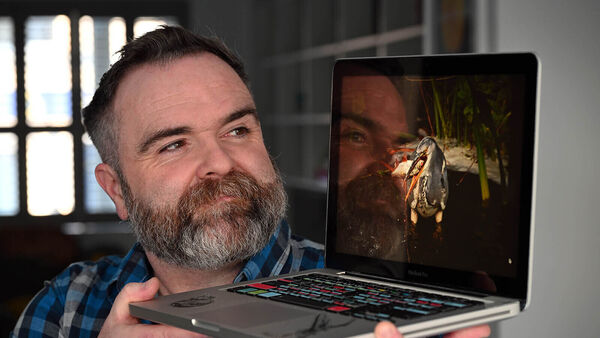
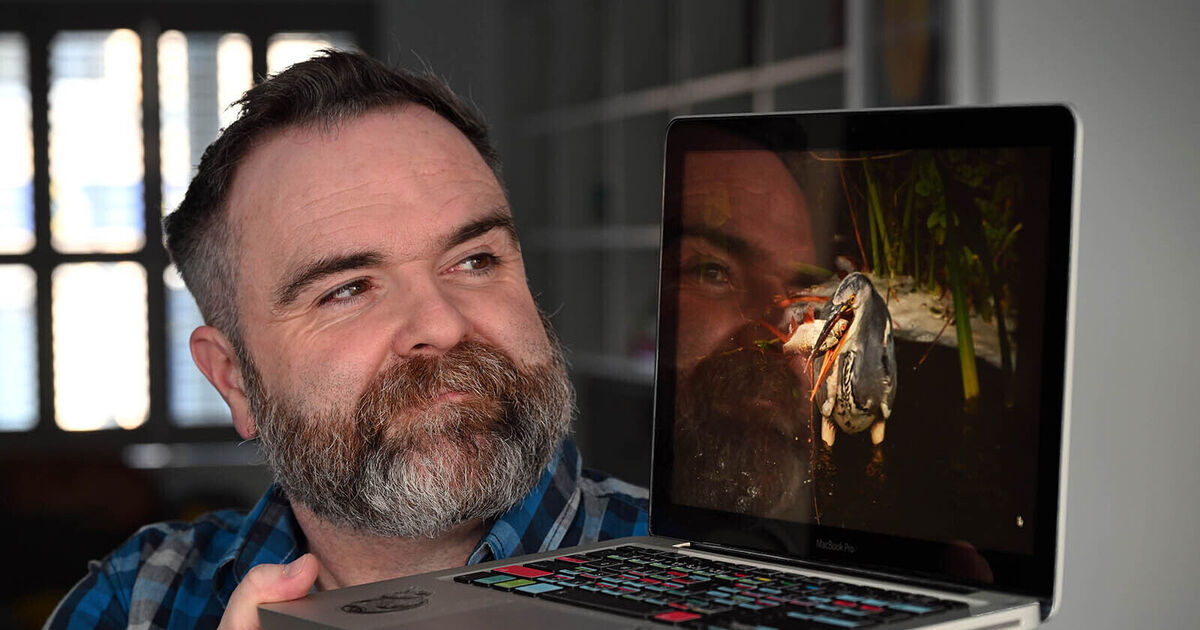
Aheron capturing a fish for its lunch has been named the winner of the Irish Examiner Readers Photography Competition for 2023.
The winning shot was captured by photographer Eoin Fealy along the Galway canals in September.
He told the Irish Examiner that he was fortunate in his timing.
He explained: “It (the canal) is along my walk where I’d normally do every day — you know just to get out and clear the head more than anything and I always have the camera with me.
“It was just the fact that the same heron is usually in the same spot in the canal.”
Mr Fealy explained how the heron had initially gone back into a bank of the canal with his mouth open.
He said: “I got lucky — it was like he went into the tree for a mouse or something. He ended up coming out with a big fish and I was lucky enough to be there with it,
“I was there a little while waiting for him to catch it because he went in and, you know, he’s obviously a good hunter — I thought a mouse would have been cool to catch in the picture but a big fish was better on the eye!”
Mr Fealy said he was “shocked and happy” when informed of his win, which sees him get €1,000 in prize money.
“Usually I never answer my phone! I might bring my kids on a small little holiday to Achill or something similar, we’ll wait and see.”
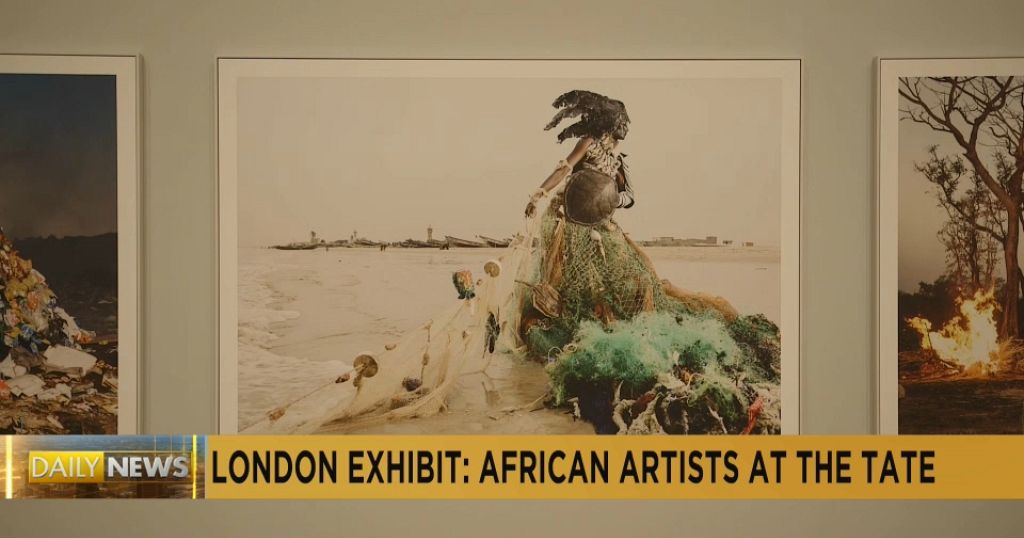
An impressive exhibit at the Tate Modern in London showcasing African photography examines the legacies of Africa’s past through the works of 36 artists.
In the opening room of the “A World in Common” exhibit, queens and kings from Nigeria stare back at the viewer, with expressions varying from interest to regal impassivity.
The series of portraits, shot by artist George Osodi, is a powerful introduction to the Tate Modern’s recent exhibition featuring 36 artists from across the continent and further afield.
‘Nigerian Monarchs’ offers an insight into how African identity continues to be shaped by ancestral legacies and traditions.
Alongside Zimbabwean artist Kudzanai Chiurai’s series ‘We Live in Silence’, which examines monarchy and religion, the photos immediately launch viewers into the exhibit’s broad themes of Africa’s past, present and future.
Curated by British-Ghanaian Osei Bonsu, the exhibit features over 150 works of photography, mixed with videography and installation, and is one of the largest exhibitions to showcase African contemporary photography.
By re-focusing the camera’s lens, artists challenge stereotypical views of the continent and offer up new perspectives on the legacies of its past.
“‘A World in Common’ explores the ways in which artists have used the medium of photography to ‘think the world from Africa’,” says Bonsu.
“While rooted in the present, the project is staged as a dialogue between contemporary photography and historical forms of image-making. It examines the forces of mobility and circulation upon which empires and territories were built, and considers the archive as a vast space of possibility in which alternative forms of storytelling are brought to life.”
Spanning generations and countries, the artists cover a wide array of topics and themes.
A highlight is Ghanaian-born photographer James Barnor, whose work in the 1950s and ’60s showed a society in transition, as Ghana moved towards independence, and “captured the hopes and dreams of a nation”.
Algerian Lazhar Mansouri also documented the changes of a country in a turbulent time, following the start of Algeria’s War of Independence.
These studio photographers changed the way Africans were depicted by the camera, inspiring a new generation of photographers.
Following on from the joys and griefs of the 20th century, many of the artists featured in the Tate take their cue from the likes of Barnor.
From Ruth Ossai’s works in Nigeria, to Atong Atem’s look at the African diaspora, the studio photography of the 21st century reconciles traditions with modernity.
“The first photographs ever taken of Africans were colonial ethnographic depictions that presented the subjects in a really skewed and problematic way,” says Atem. “I wanted to see what happens when we turn the lens on ourselves and subvert that ethnographic gaze. To me, it’s a moment of power and reclamation, and an opportunity for us to celebrate our personal and cultural identities.”
The exhibit comes full circle by ending with a hopeful look at the continent’s future, as Africa’s cities rapidly expand and society is forced to adapt to the challenges presented by the climate crisis.
Contemplating the multitude of environmental issues, the artists “find inspiration in the power of a mythological universe and shared dreams of a new society.”
Through photos that mix the surreal with elements of photojournalism, the exhibit’s final room once again offers a different narrative.
“The world is continually bombarded with the social plight of Africa,” says Aida Muluneh of her work. “My focus in this project was to address these topics without the cliche that we see in mainstream media. In a sense to advocate through art.”
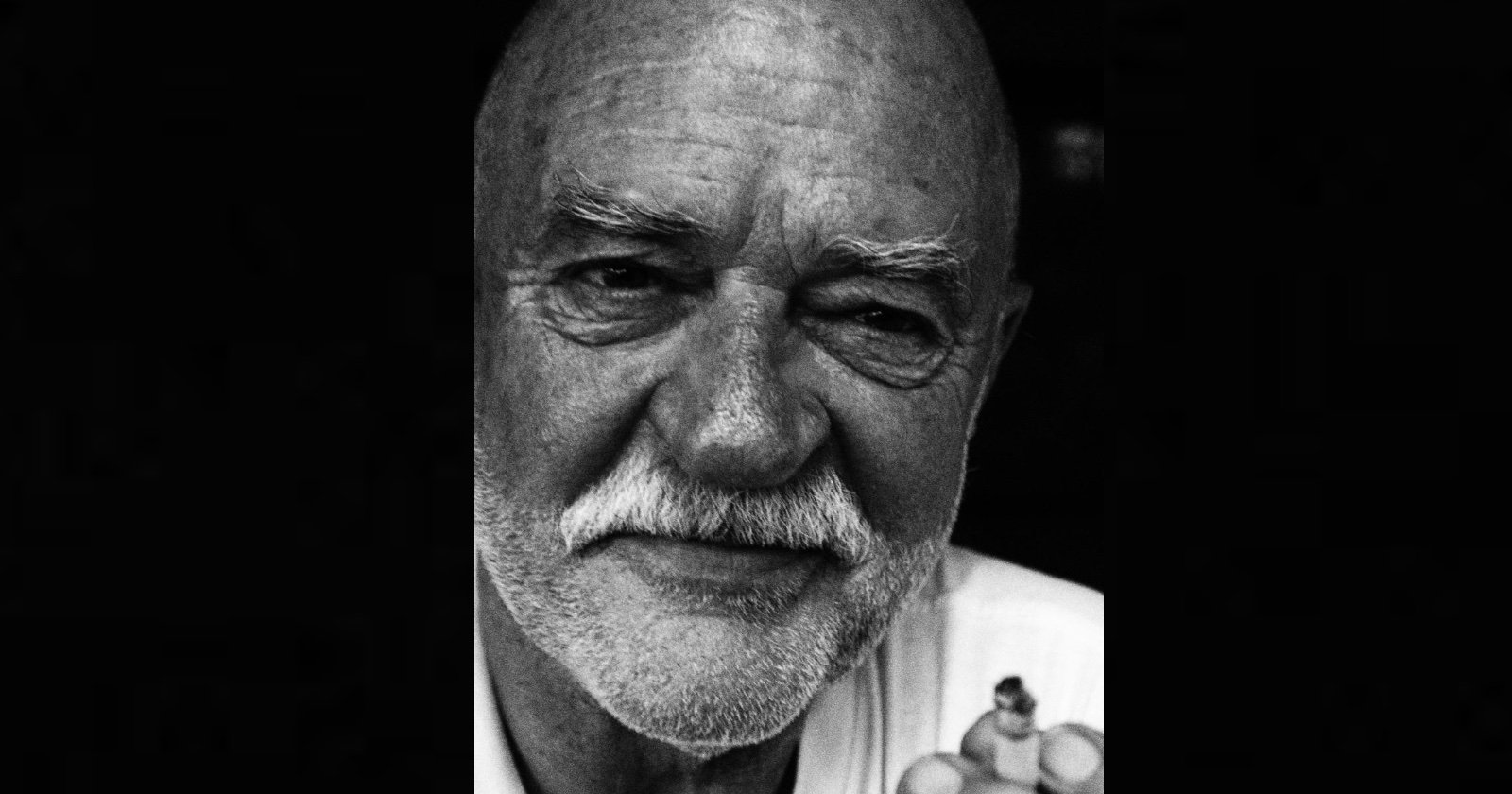
Legendary fashion photographer Hans Feurer, who shot the groundbreaking 1983 Kenzo ad campaign starring supermodel Iman, has died.
The photographer, who had a career spanning five decades, passed away at the age of 85 last Tuesday. Feurer’s death was confirmed by his management on Instagram.
Feurer, who was born in a small town in Zurich, Switzerland, began his career as a graphic artist and illustrator for various advertising agencies in London in the 1960s.
In 1966, he decided to embark on a career as a professional photographer after purchasing a Land Rover and moving to Cape Town, South Africa.
According to The Business of Fashion, during his time on the African continent, Feurer captured moments of adventure and light with his camera — a decision that defined his visual aesthetic as a photographer.
When he returned to London at the end of 1967, Feurer officially launched his career as a photographer — becoming celebrated for his sensual photographs of women that experimented with light and shadow in ways previously unseen.
Feurer landed coveted spots in magazines such as British and French editions of Vogue, Harper’s Bazaar Spain, and Elle France.
In 1974, Feurer was commissioned to shoot the Pirelli Calendar in Seychelles. His innovative images for Pirelli, which used light and shade to create extraordinary effects, are still referenced in fashion photography to this day.
In a remarkable eye-popping shot, Feurer captures rays of light bouncing off a model’s glossy red lips — which we would easily mistake for being the result of Photoshop today.
Marana photographed in the Seychelles by Hans Feurer for the 1974 @pirelli calendar. Click the link in our bio to s… pic.twitter.com/4VLZq2SN36
— u-licious (@licious_u) July 29, 2015
In another image shot by Feurer for the Pirelli calendar, the shadows cast by palm trees overhead look like zebra stripes on a supermodel’s skin.
But perhaps the defining images of Feurer’s career were the ethereal photographs he shot of model Iman in Lanzarote, Spain for a campaign for the fashion brand Kenzo in 1983.
Today, Feurer’s images — which captured Iman as an otherworldly vision swathed in layers of colorful fabric — are lauded for their role in rewriting the rules for photography for fashion campaigns. Feurer’s photographs also helped solidify supermodel Iman’s status as a fashion icon.
Iman by Hans Feurer for Kenzo S/S 1983. pic.twitter.com/YVDsl2lcrO
— Fare_Disfare1 (@alessio_rebecca) June 27, 2021
“Hans Feurer was an icon in photography, an absolute master of natural light that held no secrets for him,” Feurer’s management writes in a statement confirming the photographer’s death on Instagram.
“He saw life in color, possessed great rigor, and knowledge of garment, while allowing a lot of freedom of expression to models he photographed. Everything had to be credible and realistic.
“For him, fashion was about expressing a joy for life, creating emotions, dreaming, all while trying to reach as many people as possible.”
Image credits: Header photo via Wikimedia Commons.
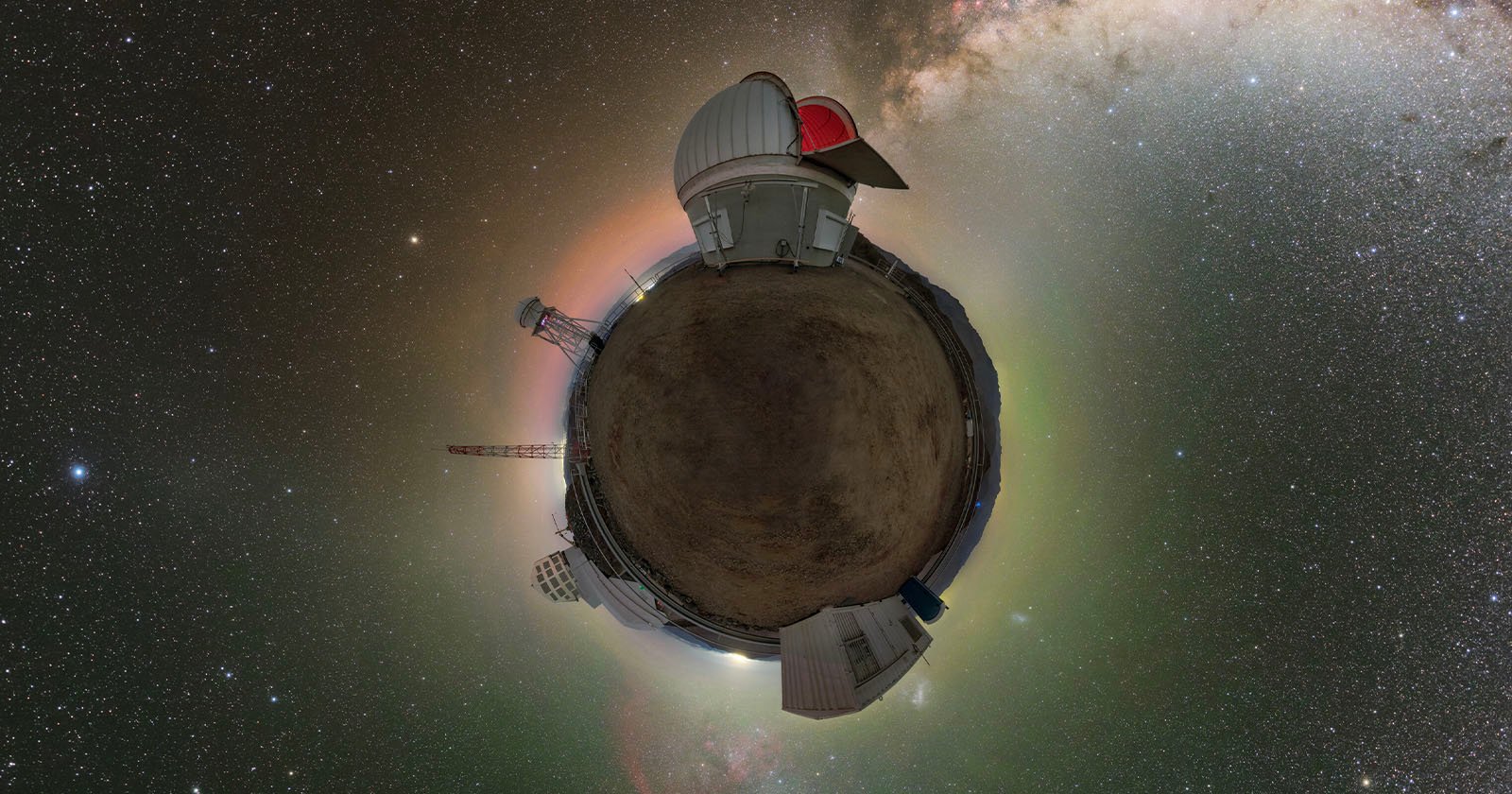
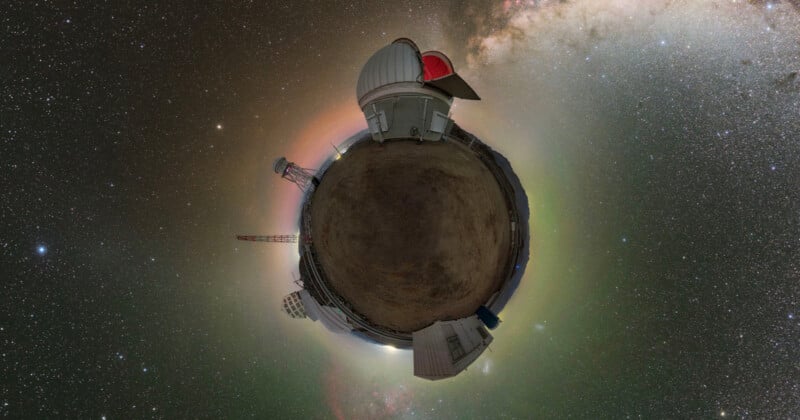
While this surreal image looks like a planet floating in space, it is actually a 360-degree image of an astronomical observatory.
The Vera C. Rubin Observatory in Chile is still under construction but when it’s finished it will hold the most powerful digital camera ever built and make an unprecedented map the Universe.
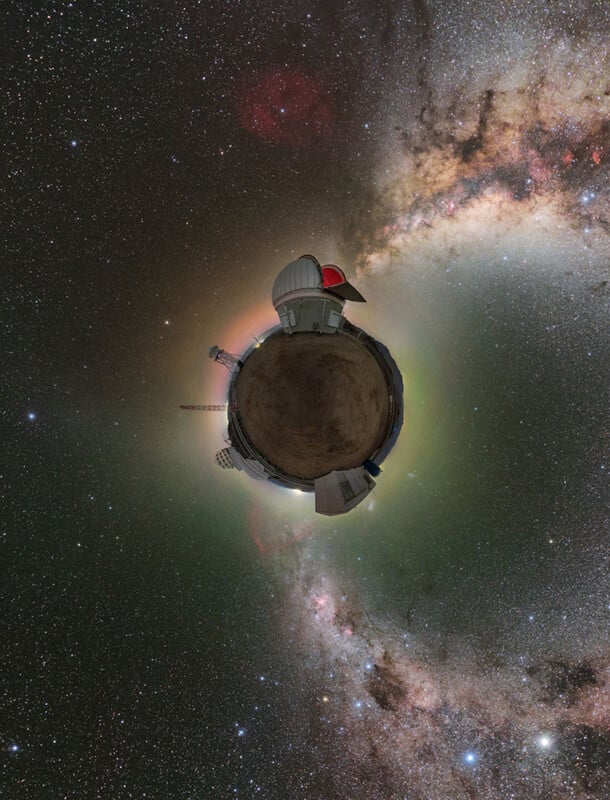
This spectacular view of the observatory atop of Cerro Pachón, 8,850 feet above sea level, was taken by Petr Horálek, an astrophotographer from the Czech Republic who used a Canon Ra camera with a Sigma 35mm lens attached to take a series of 10-second exposures which were then stitched into a panorama.
“Pachon has epic night sky, and I felt I was literally within reach of the Universe … and also photographing something historically epic,” Horálek tells Live Science. “The Rubin Observatory will be the best survey telescope for many years ahead … so what a feeling capturing the new epic history of astronomy.”
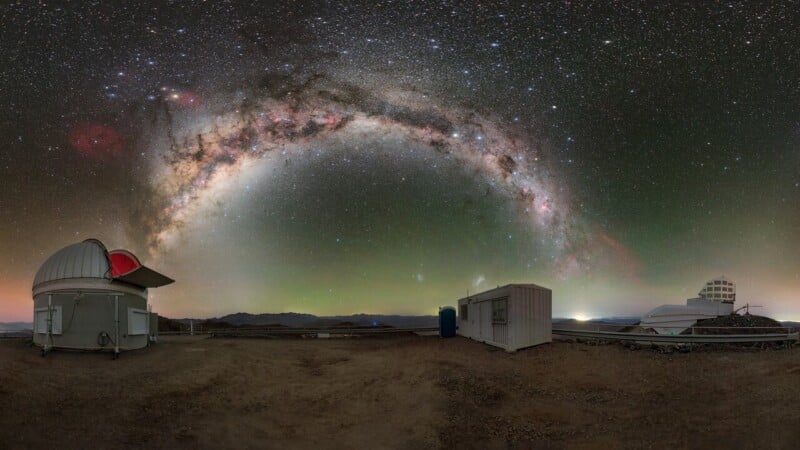
When the telescope comes online in August, it will begin a decade-long survey: the Legacy Survey of Space and Time (LSST), which will scan the sky creating roughly 20 terabytes of data each night.
Scientists hope the LSST will identify anything that moves or brightens, i.e. asteroids and supernovas, but it’s also hoped it will discover 20 billion galaxies and stars.
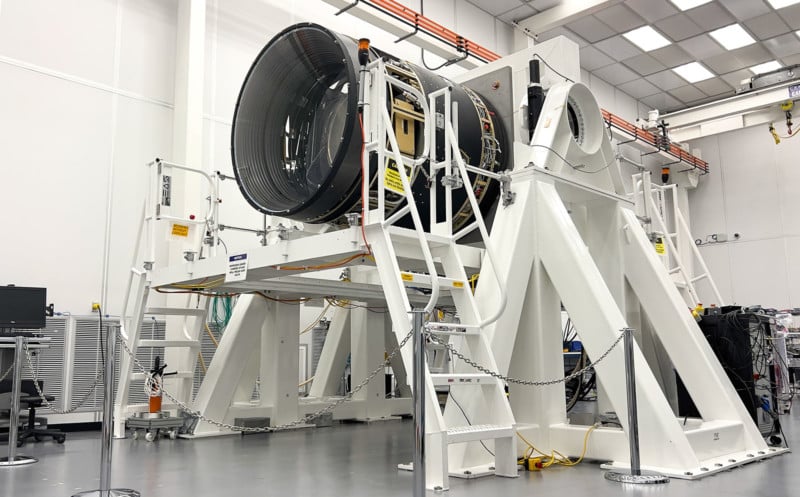
The LSST Camera (pictured under construction above) is roughly the size of a small car and weighs three tons. It features a five-foot wide front lens and a 3,200-megapixel sensor that will be cooled to -100 degrees Celcius to reduce noise.
The large aperture, wide-field optical camera is capable of viewing light from the near ultraviolet to near-infrared wavelengths and is made up of 189 charge-coupled device (CCD) sensors arranged in a total of 21, three-by-three square arrays mounted on platforms called rafts.
The 64-centimeter-wide focal plane corresponds to a 3.5-degree field of view, which means the camera can capture more than 40 times the area of the full moon in the sky with each exposure.
Image credits: Rubin Observatory/NOIRLab/NSF/AURA/P. Horálek (Institute of Physics in Opava)

By Issy Ronald, CNN
(CNN) — Mist rising from the Tuscan hills, a tiny fish staring at the ocean from inside the neck of a glass bottle, and a pangolin tucked contentedly under the chin of her carer are among the winning entries from the 2023 Travel Photographer of the Year competition.
Shot all around the globe, the images illuminate both the beauty and tragedy that arise when humans interact with the natural world.
Judges crowned Slovenian photographer AndreJa Ravnak the overall winner for her depictions of dream-like European landscapes, after considering more than 20,000 images submitted by photographers from more than 150 countries.
Ravnak, an architect by trade, acknowledged the “complex task” faced by the judges and thanked them in a statement for recognizing her work.
“I’ve seen many excellent and creative photos in this year’s TPOTY final and it’s such a great honour to find my work recognized,” she said.
“Congratulations to all the winners; together, we are enthusiastically documenting this wonderful world, and perhaps this is a small contribution, a reminder to preserve its wonder for future generations.”
Other winners included Athanasios Maloukos in the “People and Cultures” category for his photos of shamans performing rituals to connect with spirits in Siberia; Martin Broen in the “Nature, Wildlife & Conservation” category with his photo series of the Mobula ray migration in Mexico; and Armand Sarlangue for his images of Iceland’s roiling landscapes in the “Landscape and Environment” category.
Meanwhile, 14-year-old Caden Shepard Choi won the Young Travel Photographer of the Year award for her black-and-white series of photos depicting the Navajo people of Chinle, Arizona herding sheep, shearing them and then weaving with the wool.
Her fellow American, Lilly Zhang, 17, won the 15–18-year-old category with her ethereal images of a Pennsylvania lake, and the wildlife drawn to it, in the early morning light.
All the winning photos can be viewed online, or at an exhibition held at the NEC in Birmingham, UK from March 16-19 and at Xposure in Sharjah, UAE.
The-CNN-Wire
™ & © 2024 Cable News Network, Inc., a Warner Bros. Discovery Company. All rights reserved.
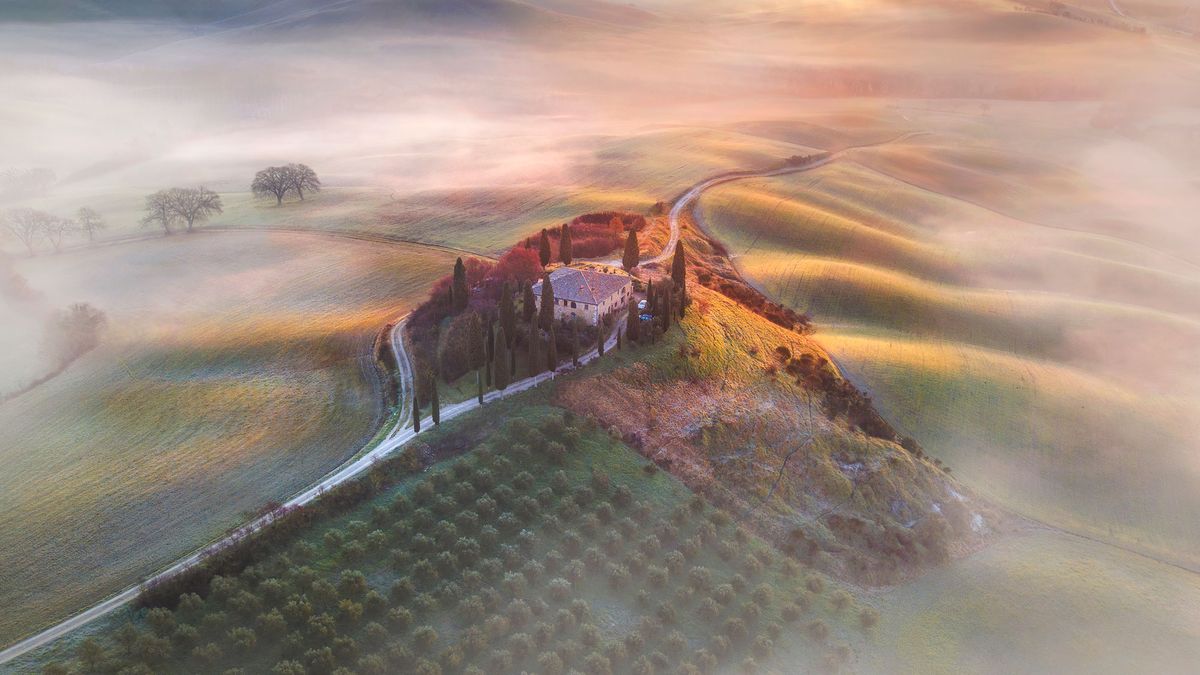
Travel photography is a diverse genre encompassing everything from portraiture, landscape and wildlife to documentary, architecture and food. Since 2003, the Travel Photographer of the Year (TPOTY) award has provided a platform for imager-makers to share their travel camera captures from every corner of the globe and this year’s winning entries combine beauty, drama and human impact. From stunning aerial shots of a misty wheatfield to a heartwarming image of a pangolin and her carer to poignant shots of elephants navigating through garbage dumps, the winning entries are as diverse as they are distinct.
Amateur and professional photographers from over 150 countries submitted more than 20,000 images – and, for the second consecutive year, a Slovenian photographer claimed the overall honors. AndreJa Ravnak impressed the judges with her images of hop growing in Slovenia and rolling fields in Italy and Czechia. Ravnak’s work combines fairytale beauty with architectural landscapes, reflecting her background as an architect.
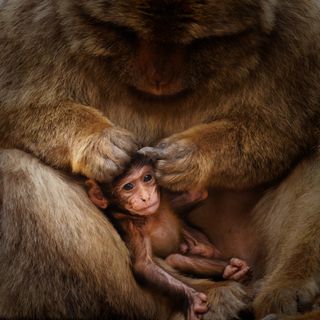
TPOTY founder Chris Coe commended this year’s winners, noting the “subtle elegance” in Ravnak’s portfolios, one showcasing simple landscapes with delicate colors and textural beauty, and the other exploring hop fields out of season. Ravnak expressed gratitude, saying, “Becoming Travel Photographer of the Year is a huge recognition.”
A winner was selected from each of the nine categories including three Young photographers. All hailing from the US, Caden Shepard Choi won the overall Young TPOTY award, Lilly Zhang came first in the 15-18 category, while Zayan Durrani came top in the 14 years and under section. French photographer Armand Sarlangue was crowned the Landscape & Environment winner, Martin Broen took the top spot for Nature, Wildlife & Conservation, while Athanasios Maloukas from Greece prevailed in People and Culture and Alain Schroder (who recently won Photographer of the Year in The Nature Photo Contest) came first in Visual Stories.
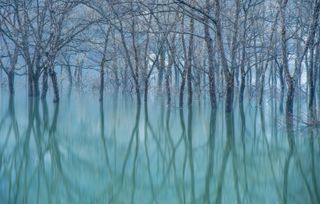
AndreJa Ravnak’s prize includes a £1,000 (approximately £1,270 / AU$1,930) cash bursary, a personalized leather portfolio book or iFolio, Radiant Photo editing software, a portfolio review from New York agent Frank Meo, and more. Caden Shepard Choi was awarded a £500 ($635 / AU$960) cash prize from TPOTY, a Plastic Sandwich leather portfolio book or iFolio, Radiant Photo imaging software, a place on a Photo Iconic photography workshop, and Royal Photographic Society (RPS) membership.
The awards also introduced three MPB One Shot categories, with winners receiving £1,000 to spend on photographic equipment. Ignacio Palacios, Josien van Geffen, and Andrea Peruzzi claimed top honors in A Quieter Life, Above, Eye Level, Below, and Leisure & Adventure respectively. MPB supported the HD Video category, World in Motion, won by Matthew Williams-Ellis for his film Karibu Nyumbani, highlighting the beauty and wildlife populations of the Mara North Conservancy, Kenya.
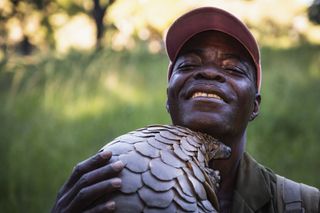
This year’s competition was judged by a 16-strong panel of professional photographers and industry experts, including RPS president Simon Hill and National Geographic photographer Jason Edwards.
All the winning and runner-up images will be on display at The Photography and Video Show at the NEC in Birmingham from 16-19 March, as well as Xposure in the UAE and the winner’s gallery on the Travel Photographer of the Year website.
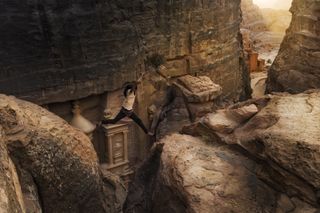
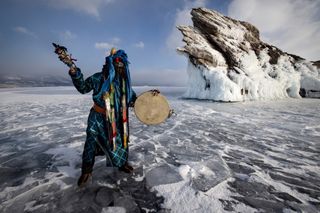
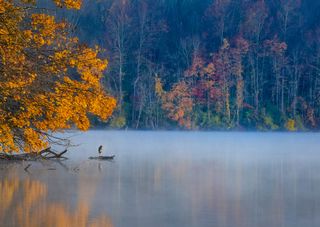
Take a look at the best lenses for travel photography, and if you have a particular passion for nature check out the best lenses for bird photography and wildlife





