Photography

Josef Koudelka Chaos is The Best Black and White Photo Book

Josef Koudelka Chaos is The Best Black and White Photo Book

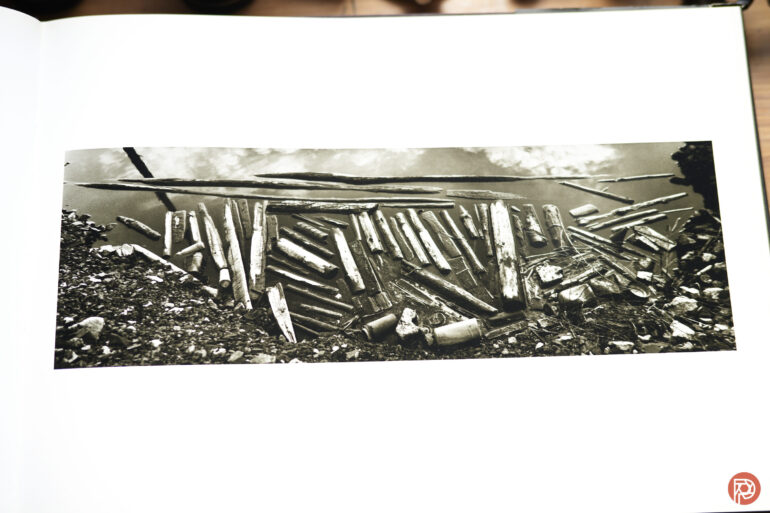
I don’t honestly remember how I ended up getting Chaos by Josef Koudelka that was revised by Robert Delpire; but I’m glad that I did. Admittedly, even as someone who used to work at Magnum, I never knew who Josef Koudelka was. But I’m elated that my first introduction to his work is through this book instead of meandering on a website or social media page. In fact, Josef Koudelka Chaos is perhaps the greatest black and white photography book that I’ve ever seen because it treats his images with the respect they deserve by dedicating a ton of real estate space to the work. This book truly feels like one made by a photographer and not a book publisher.

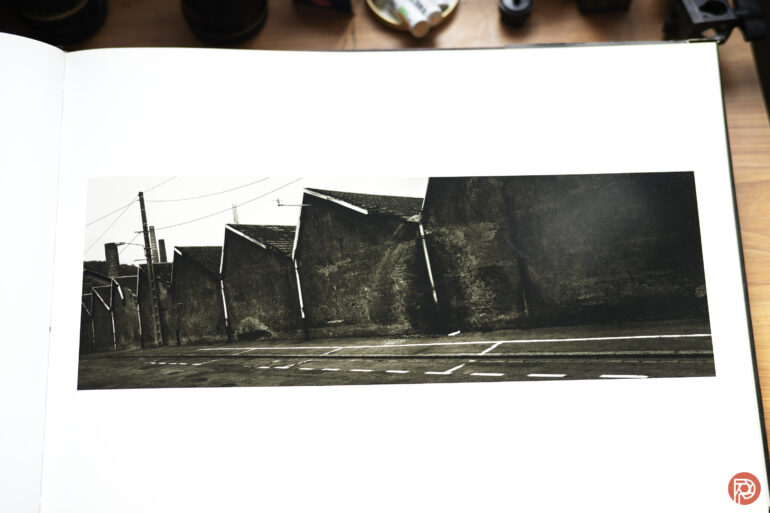
When you look at the book itself, you’ll notice that it’s wider than it is taller. Surely, it doesn’t follow the typical conventional book format. And that’s because the prints are designed to treat the images with reverance worthy an omnipotent being. Cultists who love panoramic photography are bound to gather lovingly hand-in-hand with black and white photography and documenary photography lovers to celebrate and honor the one true Josef Koudelka. I own and am pitched a ton of photography books, but none have struck me like this.

Let me first start of with saying that because I’d never heard of this photographer and the unconventional shape of the book, I was ready to write it off. But that would’ve been a great injustice and truly judging the book by its cover. It’s only when you dive deep into the pages past the first few photos that you really are given a special treat. The consistency throughout the book is just the cherry on top of the sundae.

Josef is a Magnum photographer with a fascinating story; but we’ll let Magnum tell that one.

The Brilliance of Josef Koudelka Chaos

What you should know about Josef Koudelka Chaos is that it’s a book of all black and white panoramic images. I was previously ready to call them landscape — but instead they’re straight up panoramic. These images are shot both vertically and horizontally; and that adds a layer of depth to the images that I haven’t ever seen before done in a book.

First off, very few images are broken down by the middle crease. However, unlike my complaints about it with several other books, it’s done very well here because of the relative thinness of the book. So you rarely ever feel like a page bending a bit is ruining the photograph.

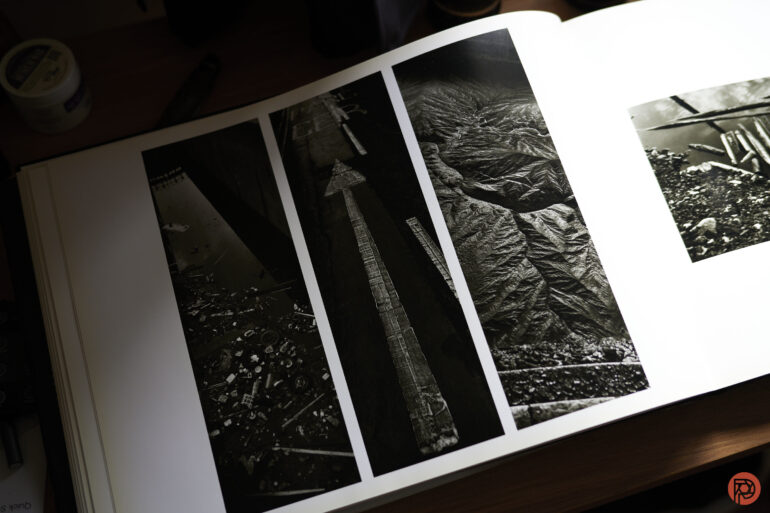
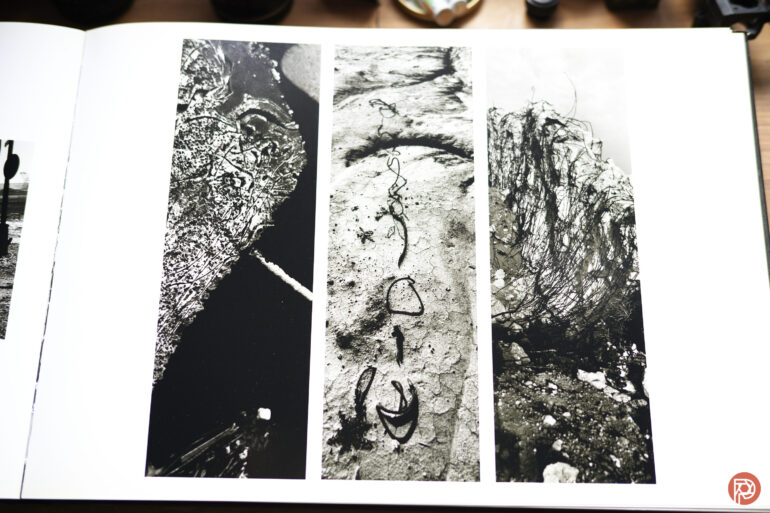
The landscape oriented photos have their own pages dedicated to them unless they’re split across both pages. In contrast, the vertical images are often all placed by one anohter. Because of how they’re placed, your eyes need to sit there and really concentrate on each photo instead of moving from left to right. Your eyes instead focus on the left to right side of the left side, middle, and then the right side. When you look at all three images together, they form giant, unconventional compositions that are both fascinating and worthy of lectures professing their brilliance.
Who Should Buy it?

Photographers that have thoughts against the wars going on will also really appreciate these photographs. While none of the images are graphic, they surely depict scenes that make you think. Those who adore urban geometry and analog film photography will be elated to page through thie book.


Rating: 5 out of 5.

Josef Koudelka Chaos receives five out of five stars and our Editpr’s Choice award. It is absolutely the most brillian photography book that I’ve seen in a long time. Want one? Check it out on Amazon.

The Greatest Black and White Photography Book I’ve Ever Seen
The landscape oriented photos have their own pages dedicated to them unless they’re split across both pages. In contrast, the vertical images are often all placed by one anohter. Because of how they’re placed, your eyes need to sit there and really concentrate on each photo instead of moving from left to right. Your eyes instead focus on the left to right side of the left side, middle, and then the right side. When you look at all three images together, they form giant, unconventional compositions that are both fascinating and worthy of lectures professing their brilliance.
“It’s awesome. It’s also terrible, and that’s what I love about AI photography”

“It’s awesome. It’s also terrible, and that’s what I love about AI photography”

About Benedict Brain

Benedict Brain with camera

(Image credit: Marcus Hawkins)

Benedict Brain is a UK-based photographer, journalist and artist. He is an Associate of the Royal Photographic Society and sits on the society’s Distinctions Advisory Panel. He is also a past editor of Digital Camera Magazine, and the author of You Will be Able to Take Great Photos by The End of This Book.

In the heart of Tokyo, a flamboyant dancer emerges. Gracefully poised, a flamingo glides across the tarmac, its vibrant plumage a mesmerizing spectacle. Nature’s artistry meets the city’s vibrant energy, captivating all who witness this enchanting ballet.

OK, I’ll admit it, that intro was created by ChatGPT with a few simple prompts. And, believe it or not, the image has a sprinkling of AI dust too. I did not actually witness a dancing flamingo on the streets of Tokyo – I created it with the Generate Fill feature in Photoshop.

Using one of my recent travel photographs, I selected an area in the middle of the frame, adding the words ‘photo-realistic dancing flamingo’ in the Generate Fill prompt window. 15 seconds later, Photoshop had scoured Adobe Stock’s archive using AI algorithms to provide me with three versions and the option to try more. It’s awesome. It’s also terrible, and that’s what I love about it.

This version showcases a strange three-and-a-half-legged and two-headed flamingo-like creature. It’s a peculiar amalgamation of many flamingo images from the Adobe Stock library, reconfigured to fulfil my ‘dancing’ prompt and assimilate it into the scene. In some aspects, it has done an excellent job – it has matched the lighting surprisingly well, for example – but it’s the strange, sculptural distortions that I find most alluring. The new configurations of flamingos, re-imagined in some dystopian evolutionary nightmare, are both disturbing and beautiful in equal measure.

There is so much creative potential here. With time (and probably quite quickly), AI will improve, learn and produce more convincing results. In the meantime, I’m intrigued and inspired to explore this further. I’ll no doubt dabble in Midjourney, DALL-E, and anything else I can get my hands on. The technology raises many questions for photographers and artists – but for now I’m more excited than worried by the creative possibilities. We shall see.

• Other articles in the Art of Seeing series

Read more:

Introducing AI image generation into my photography workflow opens up a whole new world of possibilities
The 50 best photographers ever
100 best photography quotes from famous photographers
The best coffee-table books on photography

GMA Gallery hosts Evelyn Mercer photography exhibit

GMA Gallery hosts Evelyn Mercer photography exhibit

#inform-video-player-1 .inform-embed { margin-top: 10px; margin-bottom: 20px; }

#inform-video-player-2 .inform-embed { margin-top: 10px; margin-bottom: 20px; }

TIFTON — Abraham Baldwin Agricultural College’s Georgia Museum of Agriculture will host “Lost To The Ages,” a visual portfolio of rural Georgia from photographer Evelyn Mercer.

GMA curator Polly Huff said that the exhibition will have a soft opening on Saturday, Jan. 13, and will run through May 24.

Mercer is a native Floridian whose love of outdoor scenery and wildlife photography career began over 40 years ago. Her extensive travels throughout the country have expanded her photography and promoted her work professionally in various art shows and literary publications.

Huff said the GMA exhibited Mercer’s Red Wolf photography and some of her photography twice already as a part of the joint exhibitions “Wild at Heart” and “Back Roads of Georgia.” This time, Mercer gets a one-woman show that will celebrate her preservation photography.

“A good photograph shows you a person or a place,” Huff said. “A great photograph allows you to learn more about them. Evelyn Mercer’s photos do just that. Her shots dive into the souls of the very pieces she photographs, as she seeks to preserve them for future generations through her lens.”

The exhibition includes over 30 images taken by Mercer of places, objects, and structures that are about to disappear due to age and deterioration. Visitors will get to explore churches, houses, plantations, barns, commissaries, train stations, grist mills, wagons, old trucks, and gas pumps, all thoughtfully captured “for the ages” through Mercer’s lens.

An interactive corner will feature a large backdrop panel of one of Mercer’s photos, where visitors to the exhibit can take their own photographs.

All of the photographs in this exhibition will be available for sale.

Mercer will be at the GMA Gallery for an artist reception, casual artist talk, and guided gallery tours from 11 a.m. to 2 p.m. on Saturday, April 6 during the GMA’s Folklife Festival. Admission to this event is included with the Folklife Festival ticket that day.

Exhibit hours are 9 a.m. – 3 p.m. Tuesday through Friday, and 9 a.m. – 4 p.m. on Saturdays and admission is free with a valid GMA Season Pass or included with a daily GMA admission wristband. Season passes and daily admission can be purchased at the GMA Country Store.

For more information on this and future exhibitions, interested persons can contact Huff at phuff@abac.edu.

#inform-video-player-3 .inform-embed { margin-top: 10px; margin-bottom: 20px; }

Photos taken by renowned nature photographer on display in new exhibit at local museum

Photos taken by renowned nature photographer on display in new exhibit at local museum

IDAHO FALLS — Community members are invited to walk through the newest exhibit on display at The Art Museum of Eastern Idaho.

The exhibit, known as “Thomas D. Mangelsen: A Life in the Wild,” is sponsored by Green Kids Club and is produced by David J. Wagner, LLC. It features forty classic photographs taken by the renowned nature photographer. Mangelsen’s work will be on display from Jan. 12 to March 30. Chloe O’Laughlin, a spokeswoman for the art museum, said this is his “legacy exhibit.”

“He’s been a photographer for 40 (plus) years but these are specifically the shots that are either the most well-known to the public or the most personal for him,” O’Laughlin explained. “They are giant photos. The photos you can find online of his stuff don’t even do it justice when you get to actually see them in person. The detail is unreal.”

She said the photos include shots of grizzly bears, eagles and moose in Yellowstone, as well as shots from his African journeys of cheetahs, jaguars, tigers and a gorilla.

“There’s a lot of variety in this exhibit of his career but also what he’s done for the areas he’s been to,” O’Laughlin mentioned. “There’s a very detailed description for each photo as well.”

On top of the exhibit, the art museum is holding a “Whiskey, Wine & Wildlife” meet and greet event Jan. 20 from 7 to 9 p.m. The event is sponsored by “Bruce Miller: Naturally Wild Photography.” There will be a selection of Mangelsen’s books available for community members to have signed, and local bar XVIII will cater the wine and whiskey tasting and refreshments.

“It’s going to be a stellar event,” O’Laughlin said. “It’s really rare for people to be able to get in contact with someone who is so well-known in the photography industry and the conservation industry as well.”

Whiskey wine and wildlife
“Whiskey, Wine & Wildlife” will take place Jan. 20 from 7 to 9 p.m. | Courtesy The Art Museum of Eastern Idaho

She added, “It’s going to be a fascinating night to see him retell his stories of how he’s waited hours in the snow to get this particular shot or how he had to hike this many miles to find this family of cheetahs. It’s going to be exciting.”

Tickets for the “Whiskey, Wine & Wildlife” are $80 for members and $100 for non-members. Spots are limited and people are encouraged to buy tickets early. Meet and greet tickets can be purchased here. For more information on hours and admission prices to the exhibit, click here.

Along with “Thomas D. Mangelsen: A Life in the Wild” exhibit, two additional exhibits are also on display in the studio galleries and corridor. There is The Art of Jason Wunderlich, who is a watercolor painter, and TAM’s Museum Artists Group Show which features sculptures, oil, watercolor and graphite work, which are all for sale.

An Upcoming Peter Hujar Film Has Found Its Leading Man

An Upcoming Peter Hujar Film Has Found Its Leading Man

A forthcoming biopic on the late photographer Peter Hujar has cast its lead. British actor Ben Whishaw, best known for his role as Q in the recent James Bond franchise, will play Hujar in the film, which will be directed by American indie filmmaker Ira Sachs.  

The film, titled Peter Hujar’s Day, looks to be based on a 2021 book of the same name by Linda Rosenkrantz, which documents Hujar’s life and activities over 24 hours in 1974. The volume takes the form of a transcript of a conversation between the writer and photographer, who discussed Hujar’s day right down to its minutest detail (“I go and I make another cup of coffee and two pieces of toast with raspberry jelly and now I’m going to call Allen Ginsberg,” and the like). 

The movie, Sachs told Indiewire, is “about the photographer… and his friend Linda in December of 1974 in New York City. This is a film about what it is to be an artist among artists in a city where no one was making any money.” 

Peter Hujar, Christopher Street Pier (2), 1976, gelatin silver print, purchased on The Charina Endowment Fund, The Morgan Library & Museum, 2013.108:1.84. © Peter Hujar Archive, LLC, courtesy Pace/MacGill Gallery, New York and Fraenkel Gallery, San Francisco.

Peter Hujar, Christopher Street Pier (2) (1976). © Peter Hujar Archive, LLC, courtesy Pace/MacGill Gallery and Fraenkel Gallery.

Though trained in commercial photography, Hujar, by the 1960s, had forewent a flourishing commercial career to pursue art. He turned his lens toward the city’s downtown and queer cultures, unflinchingly documenting their complexities in stark, intimate black-and-white images. Some of his most seminal photographs were compiled in 1975’s Portraits in Life and Death, which featured still lifes, cityscapes, and portraits of Susan Sontag, John Waters, and William Burroughs. 

In his day, Hujar formed friendships with peers like Robert Mapplethorpe and Diane Arbus; more notably, his relationship with David Wojnarowicz helped inspire the latter younger artist’s practice. “Everything I made,” Wojnarowicz remembered, “I made for Peter.” 

However incisive and potent his work, Hujar was never widely recognized for it in his lifetime (his 1975 book, for one, sold poorly). But decades on from his death from AIDS in 1987, his reputation has only grown, helped by a slate of publications and shows including the touring retrospective, “Speed of Life” (2017–19). Of this revival, Sachs’s biopic is a part.  

Peter Hujar’s Day will mark Whishaw and Sachs’s second collaboration, following Passages (2023), a romantic drama centered on a gay couple rocked by betrayal. Whishaw is currently on the BAFTA’s 2024 Supporting Actor longlist for his work on the film. 

More Trending Stories:  

Artists to Watch This Month: 10 Solo Gallery Exhibitions to See In New York Before the End of the Year 

Art Dealers Christina and Emmanuel Di Donna on Their Special Holiday Rituals 

Stefanie Heinze Paints Richly Ambiguous Worlds. Collectors Are Obsessed 

Inspector Schachter Uncovers Allegations Regarding the Latest Art World Scandal—And It’s a Doozy 

Archaeologists Call Foul on the Purported Discovery of a 27,000-Year-Old Pyramid 

The Sprawling Legal Dispute Between Yves Bouvier and Dmitry Rybolovlev Is Finally Over 

Follow Artnet News on Facebook:
Want to stay ahead of the art world? Subscribe to our newsletter to get the breaking news, eye-opening interviews, and incisive critical takes that drive the conversation forward.

SnapJAX Stories: Photography becomes therapy for local man

SnapJAX Stories: Photography becomes therapy for local man

JACKSONVILLE, Fla. – It was the photo below on SnapJAX of a woman sitting in the intricate branches of a California coral tree that motivated this latest story. I found the man who took the picture and uncovered he had quite the story to tell himself.

Andre Mills is a Navy veteran and father to eight kids, gentle, thoughtful and creative.

“I took my first picture in Spain, and I was hooked. And I’ve been taking them ever since,” Mills said.

That was in 1989, five years before photography became a lifeline for Mills.

“No knock on doctors, but that’s my therapy, taking photography is my therapy,” Mills said.

Though he has needed all the help he’s been given. Mills suffers from PTSD and also a traumatic brain injury from his time in the military. He was blown off the flight deck by jet exhaust from an F14. Mills landed down on the catwalk unconscious.

“The only thing I remember was waking up down in medical with this big knot the size of my fist on the back of my head,” Mills said.

He was determined to overcome what could have been a life-ending injury.

“I grew up, I had dyslexia. That’s hard to get over. So pretty much all my life people tell me, I can’t do something. I’ll show you that I can,” Mills said.

He said that after the accident, when his neurologist said he wouldn’t be able to handle college, he showed him as well.

“So once I finished college, two and a half years, with my bachelor’s in English and a minor in sociology, I made a copy of my degree. And I went and gave it to him. And I said, ‘You said I couldn’t do it.’ And he’s no longer my doctor,” Mills said.

Now, he’s constantly seeking peace and that’s how he stumbled on the picture that he posted on SnapJAX. The woman was meditating in this tree and that’s something Mills does for an hour daily. It’s a self-care routine that’s taught him patience and resilience.

“If you allow people to push your buttons in your life you’re gonna be miserable. So you got to stay away from people like that and enjoy life. Like the pictures, you never see that moment again. So why let somebody ruin this moment, and it’s gonna mess up your next moments in life so no, you can’t let people get to you,” Mills explained.

This story reminds us not to sweat the small stuff — and it’s all small stuff. What I’m learning is there’s always a beautiful story behind a beautiful picture.

Bombs and beauty: Photographing a Lebanon in flux

Bombs and beauty: Photographing a Lebanon in flux


CNN
 — 

“Since the explosion I feel like a glass of water that overflows constantly,” wrote Lebanese photographer Myriam Boulos on August 20, 2020. A week earlier, a monumental blast — created by the ignition of large amounts of seized ammonium nitrate stored in a warehouse since 2014 — destroyed a large part of the port of Beirut, leaving more than 200 people dead and injuring some 6,000 others. For Boulos, only her camera could stem the flow of anger and despair.

In her debut photobook, “What’s Ours,” Boulos traces a decade-long period of turmoil in Lebanon, from 2013 to 2023, during which corruption, an economic crisis and conflicts over women’s rights have pitched the population against its government. In 2019, people took to the streets in what became known as the 17 October Revolution.

Boulos’ photographs and the accompanying journal entries featured in the book detail the turbulence — demonstrations, riot police, fires and fights — but also explore Lebanon’s exuberant and youthful subcultures and the ardent push for change. “Before October 2019, I felt like we were in a dead end. Everything was silenced, oppressed, and normalized,” Boulos, who is based in Beirut, said in an email interview. “The start of the revolution was a collective awakening.”

Sex and danger often combine in Boulos' compositions.

“What’s Ours” — the title is a statement not a question — references the fight for inalienable human rights: freedom for one’s body and speech. Boulos, who joined legendary photography collective Magnum Photos in 2021, emphasizes the struggle in visually arresting ways: tear gas blows through city parks, a woman stands in the blown-out window of her apartment. Boulos photographs soldiers, fire fighters, protesters, as well as Lebanese flora and butterflies.

She too is a paradox: an introvert with an eye for upheaval. “As a person who can literally spend months in my room, in my own world, and who has difficulties encountering the ‘real world’, photography is the perfect medium for me,” she said, explaining that people, sounds, lights and smells can overwhelm her. “Photography is a way of exteriorizing my thoughts and organizing my mind.”

Balancing art with risk

Boulos was born in Beirut in 1992 and, as a child, dreamt of becoming an illustrator (like her mother) or a musician. Her interest in photography came in her mid-teens. “I met a girl at school who became one of my closest friends, she had this sophisticated camera and I fell in love with the medium,” she said. Boulos’ photographs have since appeared in Time, Vanity Fair and Vogue magazines.

Her work uses textures to create tactile compositions.

Sex and danger collide in her compositions. “I think that sexuality is still taboo in the entire world, and any sexuality that is not heteronormative is oppressed in the entire world too,” Boulos said. While Lebanon is relatively liberal for an Arab country, homosexuality remains illegal. Members of its queer community walk a tightrope of acceptance and feature in many of Boulos’ most striking images: The cover of “What’s Ours,” for example, features two women kissing. A tight frame of faces — eyes closed, immersed in one another — the shot crops out all external forces.

In another picture, two naked men embrace on a foggy mountainside, lit up by a gloriously purple night sky. These images of couples are “collaborations” with their subjects, stated Boulos adding that she, “became very aware of the importance of consent.”

But such pictures also come with risks. “In 2023 there have been campaigns and attacks against LGBTQ+ communities in Lebanon and this is the main reason why we are not distributing the book in Lebanon; in order not to put anyone in danger,” says Boulos.

Her photographs are abrasive in other ways. Textures — shattered glass, cracked concrete, bandages — create tactile compositions. Similarly, Boulos employs an often shocking, sometimes accentuated palette: blood and tattoos color a man’s torso, lipstick scars a woman’s face, a rescue worker in a reflective vest prays amongst the rubble.

And she finds beauty in the chaos. “It is important for me to look for tenderness,” Boulos explained. “I think it is a coping mechanism, a way of resisting and hanging on to desire and magic.” In one gentle shot, a tiny yellow flower sits cradled in the fragile palm of her grandmother’s hand.

Such optimistic aspects are hard to find in light of the Israel-Hamas war, she noted. “(It) has made me question everything, including my approach as a documentarist. I realized one of the things I do while representing Lebanon and the region is humanizing us through personal stories. I am naturally interested in documenting personal stories, but I am tired of trying to prove to the world that we, as Arabs, are human too.”

Eschewing didactic captions, “What’s Ours” instead features extracts from Boulos’ journals and snippets of conversations as well as a quote from Lebanon’s national poet Mahmoud Darwish: “And we don’t dream of more than a life like life itself.”

Does Boulos, the shy revolutionary, have faith that profound societal change is coming? “Hope is not one of the notions I think about in my life,” she observed, adding that, both in regard to intimacy and politics: “I think more about resistance and liberation.”

Myriam Boulos: “What’s Ours” is published by Aperture.

KEY WEST PHOTOGRAPHER RELEASES NEW BOOK OF LOCAL MUSICIANS

KEY WEST PHOTOGRAPHER RELEASES NEW BOOK OF LOCAL MUSICIANS
A release party for music photographer Ralph De Palma’s latest book celebrating Key West’s musicians and live music scene, ‘The Soul of Key West, Volume III,’ will take place at The Studios of Key West on Saturday, Jan. 13 featuring a 15-piece band of local musicians and a book-signing. RALPH DE PALMA/Contributed

Eight years after the now-famous release of photographer Ralph De Palma’s “The Soul of Key West, Volume II,” which was headlined by the return from retirement of Coffee Butler, it’s time to release Volume III. 

The hardcover books are filled with professional photography and insightful details about the musicians, bands, songs and stories that comprise the soundtracks to any night in Key West. These musicians make Key West one of the most vibrant local music scenes in the country, and De Palma captures them all.

On Saturday, Jan. 13, The Studios of Key West will host a book-signing and release party featuring a 15-piece band of local Key West musical treasures. Doors open at 7 p.m., and the music starts at 8. It will be a night of good deeds and musical whims. They will perform original music, cover favorites, pay tribute to many, and in the process treat the crowd to their amalgam of talent.

“The Soul of Key West, Volume III” and the other volumes will be on sale before, during and after the show with the author available to personalize your version. One can also start collecting the autographs of the musicians who will be available during the break and after.

Success! Please check your email for confirmation.

Gritty Portraits of London’s Queer Community

Gritty Portraits of London’s Queer Community

“Photography is a way of making myself feel less alien,” says Evan Purdy of his new exhibition, which captures London’s queer community

January 12, 2024

“Last time I did an interview, it went so dark, and I sounded hopeless,” says photographer Evan Purdy from his home in east London. “Now, I’m conscious I don’t want to add to that hopelessness.” Currently studying Fine Art at Camberwell College of Art, there’s a lot to be pessimistic about – for students, a worsening political and financial climate has led to life on shoestring budgets and diminishing opportunities for creatives. After moving from his home in Manchester in 2020, Purdy immersed himself in London’s queer creative community, making photos that reflected a new generation grappling with a world shaped by the decisions of generations prior. His latest project, I Am Firstly Nothing, captures his gender non-conforming community in large format darkroom prints displayed at south London’s Dilston Gallery, with proceeds going to various LGBTQ+ charities.

There’s a particular unsanitised grit to Purdy’s portraits of youth; each subject is a friend, captured sensitively and authentically, donning their own clothes and striking powerful stances in soulful ownership of their respective identities. Bridging a gap between documentary and fashion photography, Purdy’s magnetic imagery pulls in viewers with a strange sense of desire, and comes loaded with a potent message of self-belief, acting as inspirational totems for people living outside the capital’s liberal bubble. Shooting on location on the streets of east London or in a squat, he eschews the clinical environments of studios in the hopes his subjects take the chains off and forget the lens, capturing an authentic version of the self, unpolished, and imbued with the spirituous emotion of a new generation.

With I Am Firstly Nothing opening on January 13, Evan Purdy sits down to speak about the images featured in his debut exhibition of handmade prints, with all proceeds from the sale of each image going to Papyrus UK, Akt, and Trans Fem Social (TFS).

“Photography is my way of talking to people my age who may be experiencing the same feelings I’m experiencing. I guess it’s a way of making myself feel less alien. I find the world really weird, in enjoyable ways, but also in really scary ways. One way that I can deal with that is by using photography to show people and make them think about how weird the world is, look at how strange the structures are, and look at what that does to the individual. Fear is what keeps these dominant structures alive. It’s a dangerous place we’re making. But on the flip side, I also want to show to people who are in my generation that by looking at these things – by really looking – you can show that when we try to work locally, when we look to our friends, our immediate groups and when we try and look at ourselves, we can make small positive changes.

“My biggest inspiration when I moved to London was the queer community. There wasn’t that big of a scene in Manchester among the young people; I found that people in London were exciting, and kind of brave. People were going to extremes of what they would wear, how they would style their hair, and the way they presented themselves – they knew themselves fully because they were able almost to play an infinite role of characters, knowing that it wouldn’t affect themselves. It didn’t matter how people saw them. 

“I think my practice is a bit more like a painter. I tend to create something in order to say something. Many photographers really fall in love with a way of shooting where they’ve got a camera attached to them all the time and are constantly looking for life to throw them something. Whereas I do it in reverse, I always look around for inspiration and ideas. I let that like sit within me, let it stew, and then try and purposefully like create something.

“When I’m about to do a big series, I need one shoot that ignites the process. For this, I started with Willow. I find them super inspiring because they’re always dressed in the most amazing way, but you can’t remember a single piece that they’re wearing – it’s always about a collection of rogue different pieces put together. I wanted the fashion to be a language of its own, and I think the language is most potent when you use real clothes – clothes people wear. There’s a strong social language with fashion. It’s illegal to be naked in public, so even if you like fashion or not, everyone is forced to communicate with fashion constantly.

“I normally hand-print everything. I realise it’s sad that people never get to actually see my hand-prints, they only get to see the scanned version, and a lot of people may have only ever seen my work on Instagram, which sucks because it’s such a terrible place. You’re on this landscape that is 30 per cent adverts; we don’t realise that we’re all constantly choosing to be with advertisements. Some of my prints are massive, 20 by 24 inches, all framed and handmade. I want people to slow down. Look at it, get close, and I think you get to see the truer picture.”

I Am Firstly, Nothing by Evan Purdy is on show at Dilston Gallery in London from 13 – 14 January. Proceeds from the sale of prints will be donated to Papyrus UK, Akt, and TFS.

WCCO: Gophers’ Amaya Battle sees success on the court as…

WCCO: Gophers’ Amaya Battle sees success on the court as…
Per WCCO:

It’s a Saturday afternoon in January. A top high school hoops matchup is being played in a crowded gym. Battle is there to document it.

“It’s a great outlet. It takes your mind off of things, and it kind of just slows your world down,” Battle said. “Your world can get really hectic with basketball, especially with school, so having an outlet that slows it down is great.”

As the point guard for the Gophers, it’s usually Battle who is the subject of sports photography, but lately she’s reversed roles — shooting games with an expert eye.

“I feel like most hoopers like a certain kind of picture, you know, the one where you’re standing off or something, or a cool action shot. And it definitely helps that I know the game so I can anticipate what’s about to come and be ready for the shot,” Battle said.

Go Gophers!!