Photography

Can The TBC Camera Change the Future of Film Photography?

Can The TBC Camera Change the Future of Film Photography?

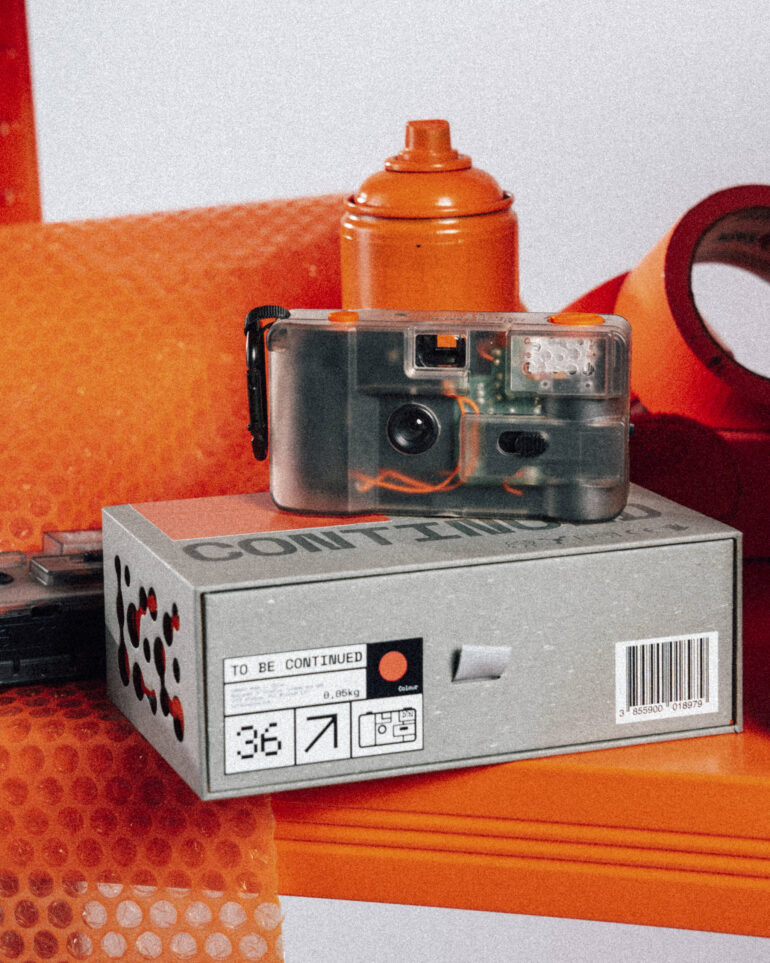
When you think about the TBC camera, you think about exactly what they’re saying: to be used without end. That’s contrary to what so many other disposable-style film photography cameras are. Many of them can be used over and over again. But when we think about that statement, we envision a camera that’s super durable. Indeed, how cool would it be to have a modern point-and-shoot film camera that you could take out into the rain? That begs the question: did the small team at I Used To Dream studios really make what Kodak, Lomography, Japan Camera Hunter, and Fujifilm won’t do?

EXPERTS WE TALKED TO IN THIS ARTICLE

In pursuing better journalism, the Phoblographer is actively working to put our sources up front to combat misinformation and hearsay that otherwise taints the credibility of facts. Here are our sources, along with links to where you can find out more about them, and some information on why they’re considered experts in their field.

  • Marc Morris: A sales representative at Tamron who has been in the industry for several years and knows the ins and outs of cameras like few people do.
  • Ourselves: When talking about the durability of a camera, I, Chris Gampat, have worked with manufacturers to understand how they should be tested and what they can endure for several years. The camera and lens tests done here at the Phoblographer all reflect that, and we’re not shy about showing it off.

TBC Camera: The Camera Without End
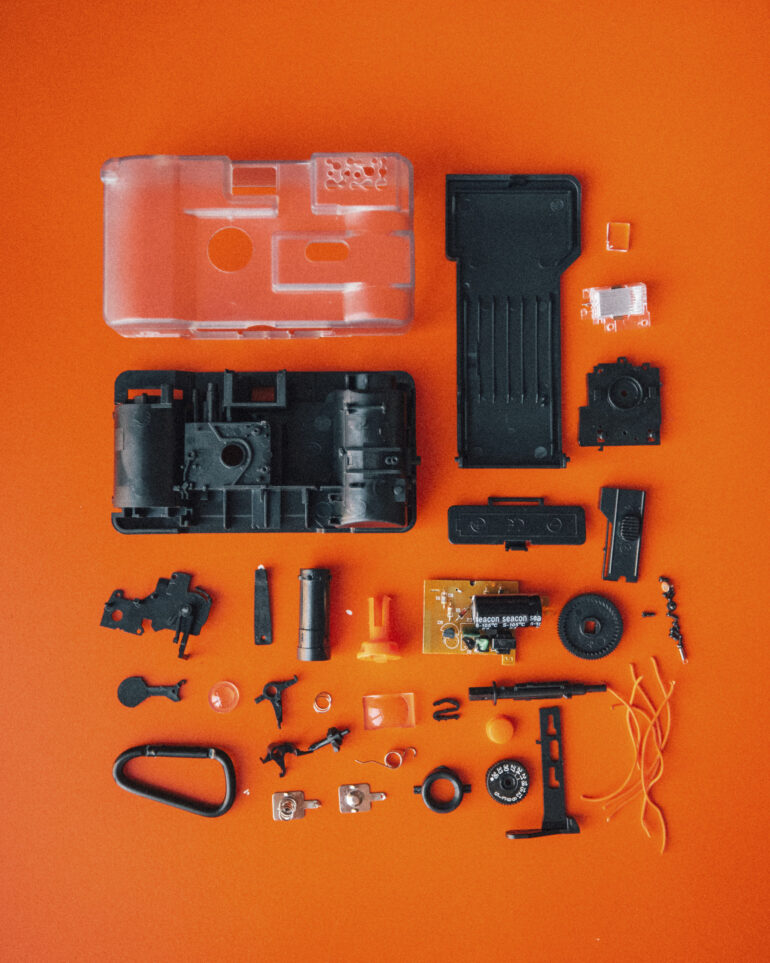
TBC began as a passion project. “Although I studied industrial design, at the time, I was a videographer and photographer,” says Joshua Cirjack, the founder of I Used to Dream Studios, who designed the camera. “I wanted to combine my two passions, and I thought it would be cool to 3D print my own unique film camera. I joined forces with a friend from university, and we would 3D print camera shells after school.” The original run ended up not being durable at all — so they switched to mold making. They had fun with it.

“We want to show people that creating your own camera is something anyone can do with a little passion and creativity.”

Joshua Cirjack

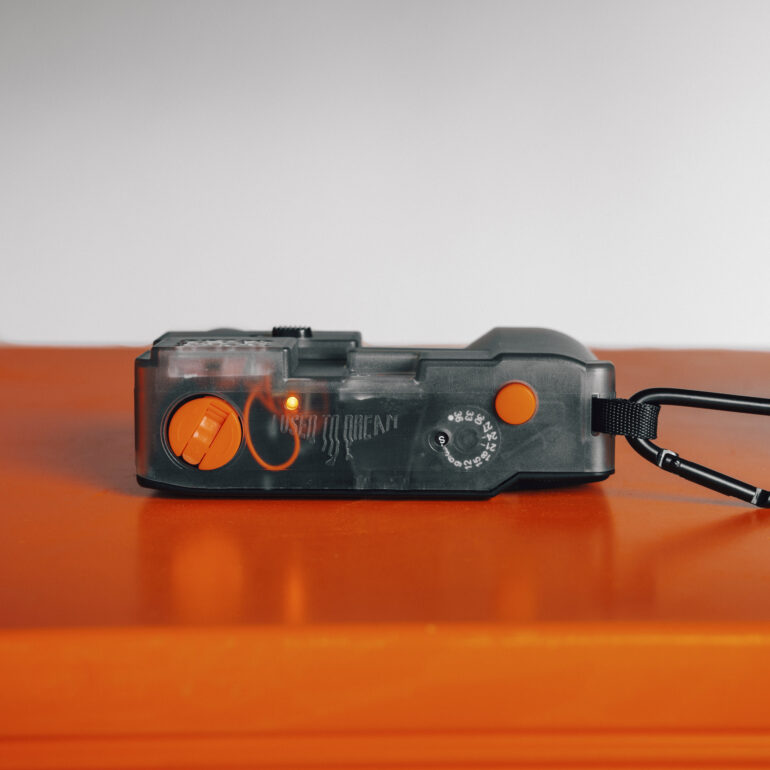
With an original run of around 400 pieces, the TBC camera is truly not a mass-market product. In fact, it’s a niche product already within a niche industry, housed within a niche market segment. By that, it’s the Russian doll effect. Few people buy dedicated cameras. Fewer people buy film cameras. And so many fewer photographers reach for point-and-shoot cameras despite their popularity amongst celebrities of all sorts. But part of why these cameras have taken off is the vibe they radiate. “We didn’t specifically draw inspiration from any specific camera. However, we knew we wanted to make it transparent,” says Joshua. “We are big fans of cameras like the Concord ClearShot and the Ricoh Mycrstal.”

But does the camera really not end? It depends on how you’re looking at it. One could think of it as a camera that can’t be broken, is incredibly durable, or has some sort of lifetime warranty. That’s apparently not the case here, though. “We haven’t officially tested the durability standards, but we appreciate your concern and will look into checking this out as soon as possible,” Joshua tells us. This immediately makes us believe that the camera isn’t designed to be insanely durable.

It’s not that it isn’t possible. Olympus in years past, made many very durable cameras that claimed to be weatherproof, waterproof, and various different kinds of resistant. Unfortunately, that’s not what we’re getting with the TBC camera. Instead, it’s more or less just a name. “When giving our camera the name, we decided to use TBC as an alternative term to a reusable film camera,” Joshua tells us. “Our camera has characteristics of a disposable, but it can be REUSED without an end. By end, we are referring to disposable cameras which are thrown out after they are used.”

It’s a misconception that cameras aren’t weather resistant — which is different language from waterproof. But even during the film era, this was possible. Photographer Barney Smith, who we interviewed, proves this with the old Nikonos V. So too does Brooks Sterling. They’re doing crazier things than most photographers would do by way of underwater film photography.

Waterproof film cameras with added durability are also possible today. The Fujifilm Quicksnap 800, which we reviewed, is the latest and most famous entry.

We can tell you from several years of the industry’s most intense weather-resistance tests that manufacturers gave the green light that weather resistance refers to how the product holds up to dust, moisture, and precipitation. And often, that requires rubber gaskets, seals, and a design that makes it very difficult for that sort of debris to get in, to begin with.

Tamron’s Marc Morris, not speaking to us on behalf of the company but as a long-time sales rep in the photo industry, shared more information with us about the durability of point-and-shoot film cameras. He talked about how it was all similar to today’s sealing processes involving rubber gaskets and all. But there was only less chance of ingress with lots of the cameras that were deemed weatherproof. “Usually, a thicker body shell was used also,” Marc tells us. “In some cases with cameras like the Stylus cameras from Olympus, they’d use the sliding doors as part of the weatherproofing because when the camera was off, the lens was covered entirely by the door.” He continued to say that any lens with a zoom had sweepers around the barrels- basically little pieces of felt that kept them clean.

“The really rugged cameras like the Canon WP-1…most of these cameras don’t have zoom lenses, “Marc states. “It’s basically like a camera within a shell…and you opened the shell to use the camera within it. It’s almost like you opened a brick to use the camera.” Still, though, Marc states that there were occasions when the screws in the cameras would get rust, but that most of the time, they all worked very well, depending on the lifespan of the seals. Despite that statement, he would love to see something like this because the seals on older cameras can deteriorate over time.

Keeping all of this in mind, the lens is a very simple design. According to Joshua, the 28mm f8 plastic lens that’s part of the TBC camera is the same as most reusable film cameras on the market. “This camera is a great starting point for people starting to get into film,” he states. “It is also great to carry around because you don’t have to worry about getting the camera damaged.” In the future, the company plans on making its own custom glass lens.

The Dream
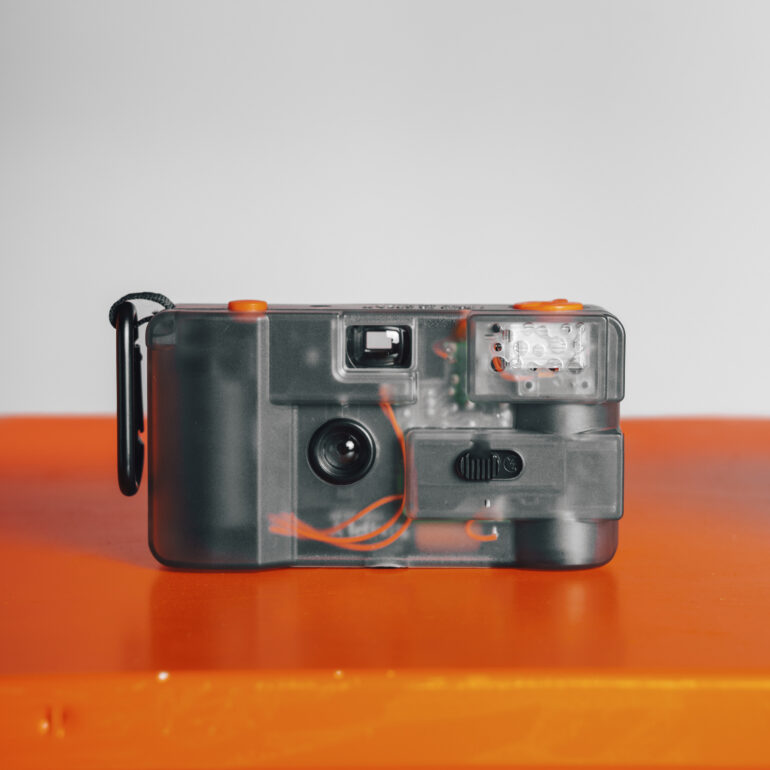
Truly, we don’t know if this camera is fully battle-tested yet or not. But by the way, Josh speaks about it, it’s easy to think that it is. However, the truth is that it hasn’t been put to the durability tests that journalists like us would do. They’re young professionals right out of college, so I’d be inclined to give them a break on this one. However, all marketing standards should be held accountable.

Will we ever see a camera that’s truly weatherproof again? I hope so.

Photography enthusiast? Know what Samsung Galaxy A15 camera offers for mobile photographers

Photography enthusiast? Know what Samsung Galaxy A15 camera offers for mobile photographers

With a powerful 50MP triple camera, an immersive 6.5-inch Super AMOLED display, and robust Knox Security, the Samsung Galaxy A15 5G strikes a balance between cutting-edge photography, visual delight, and user data protection. Check the Samsung Galaxy A15 camera and its price below.

By:
HT TECH
| Updated on: Jan 05 2024, 10:15 IST
Icon


Samsung Galaxy A15 camera
Samsung Galaxy A15 camera: Featuring a 50MP triple camera setup with VDIS, the Samsung Galaxy A15 5G ensures sharp, steady videos and vibrant photos, setting the bar for mobile photography in its price range. (Samsung )

1/5
Samsung Galaxy A15 camera: Featuring a 50MP triple camera setup with VDIS, the Samsung Galaxy A15 5G ensures sharp, steady videos and vibrant photos, setting the bar for mobile photography in its price range. (Samsung )
Icon


Samsung Galaxy A15 Display
Samsung Galaxy A15 Display: The 6.5-inch Super AMOLED display, enhanced with Vision Booster, delivers a seamless visual experience with vivid colors and brightness, making content consumption a delight. (Samsung )


image caption
2/5
Samsung Galaxy A15 Display: The 6.5-inch Super AMOLED display, enhanced with Vision Booster, delivers a seamless visual experience with vivid colors and brightness, making content consumption a delight. (Samsung )
Icon


Samsung Galaxy A15 Security
Samsung Galaxy A15 Security: Built on the Knox Security platform, the Galaxy A15 5G prioritizes user data safety, offering features like Auto Blocker and Privacy Dashboard, along with the Knox Vault chipset for enhanced privacy. (Samsung )


image caption
3/5
Samsung Galaxy A15 Security: Built on the Knox Security platform, the Galaxy A15 5G prioritizes user data safety, offering features like Auto Blocker and Privacy Dashboard, along with the Knox Vault chipset for enhanced privacy. (Samsung )
Icon


Samsung Galaxy A15 Performance
Samsung Galaxy A15 Performance: Powered by the MediaTek Dimensity 6100+ processor, this device ensures a smooth multitasking experience. With 5G connectivity, it stands as a successor to India’s leading 5G smartphone, the Galaxy A14. (Samsung )


image caption
4/5
Samsung Galaxy A15 Performance: Powered by the MediaTek Dimensity 6100+ processor, this device ensures a smooth multitasking experience. With 5G connectivity, it stands as a successor to India’s leading 5G smartphone, the Galaxy A14. (Samsung )
Icon


Samsung Galaxy A15 price and Offers
Samsung Galaxy A15 price and Offers: Priced at Rs. 22,499 (8GB+256GB), the Galaxy A15 5G comes in three colors. Samsung offers a lucrative INR 1,500 bank cashback with SBI Cards, making it an enticing, budget-friendly choice. (Samsung )


image caption
5/5
Samsung Galaxy A15 price and Offers: Priced at Rs. 22,499 (8GB+256GB), the Galaxy A15 5G comes in three colors. Samsung offers a lucrative INR 1,500 bank cashback with SBI Cards, making it an enticing, budget-friendly choice. (Samsung )

First Published Date: 05 Jan, 10:15 IST

Lamasco Microgallery to open exhibition featuring USI alumnus’ photography

Lamasco Microgallery to open exhibition featuring USI alumnus’ photography

USI men’s basketball gets dramatic win over Tennessee …

7 mins ago


.cls-3{fill:#fff;fill-rule:evenodd}

Officials talk State of the Community at Owensboro …

16 mins ago


.cls-3{fill:#fff;fill-rule:evenodd}

USI Growing with the Game

18 mins ago


.cls-3{fill:#fff;fill-rule:evenodd}

Gibson Southern v Boonville

19 mins ago


.cls-3{fill:#fff;fill-rule:evenodd}

Thunderbolts’ dreadful season start flipped on it’s …

41 mins ago


.cls-3{fill:#fff;fill-rule:evenodd}

USI women’s basketball stays undefeated in OVC play …

45 mins ago


.cls-3{fill:#fff;fill-rule:evenodd}

Shoppes at New Harmony Latest

55 mins ago


.cls-3{fill:#fff;fill-rule:evenodd}

Dubois County Drug Bust

57 mins ago


.cls-3{fill:#fff;fill-rule:evenodd}

Kentucky Medical Marijuana Progress

60 mins ago


.cls-3{fill:#fff;fill-rule:evenodd}

Skate for St. Jude

1 hour ago


.cls-3{fill:#fff;fill-rule:evenodd}

OPS Superintendent Search

1 hour ago


.cls-3{fill:#fff;fill-rule:evenodd}

Murder Suspect Files Motion to Vacate Upcoming Court …

1 hour ago


.cls-3{fill:#fff;fill-rule:evenodd}

Japanese photographer Kishin Shinoyama dies at 83

Japanese photographer Kishin Shinoyama dies at 83

Japanese photographer Kishin Shinoyama, known for portraits of Beatles musician John Lennon and his wife Yoko Ono among other celebrities over his five-decade career, died Thursday, people close to him said. He was 83.

Shinoyama, whose real name was Michinobu Shinoyama, photographed iconic figures across diverse genres, including novelist Yukio Mishima (1925-1970), singer Momoe Yamaguchi, actress Rie Miyazawa and Kabuki actor Bando Tamasaburo.

File photo taken in September 2016 shows Japanese photographer Kishin Shinoyama during an interview in Tokyo. (Kyodo)

Shinoyama became a freelance photographer in 1968 after working for an advertising agency. His photo capturing a kiss between Lennon and Ono was used on the album cover of the couple’s 1980 release Double Fantasy.

Also known for taking artistic nude photos, his collection of Miyazawa and another actress Kanako Higuchi, both released in 1991, became hugely popular.

A solo exhibition by the award-winning photographer held from 2012 across Japan attracted over 1 million visitors.

Vintage photos offer rare glimpse of Mumbai’s 1970s red-light district

Vintage photos offer rare glimpse of Mumbai’s 1970s red-light district

Editor’s Note: Mary Ellen Mark took these images 45 years ago, when strict standards for privacy and photographing vulnerable people, particularly children, did not exist as they do today.


CNN
 — 

Mary Ellen Mark couldn’t forget Falkland Road.

The late American photographer was known for her ability to put subjects at ease, but connecting with people in the notorious red-light district on the fringes of Mumbai society proved elusive at first.

“For 10 years I tried to take photographs on Falkland Road and each time (I was) met with hostility and aggression,” she later wrote in the foreword to her 1981 book “Falkland Road, Prostitutes of Bombay” (Bombay being the name the British gave Mumbai before its name change in 1995). In it, she recounted her first trips to India’s most populous city from the late 1960s. “The women threw garbage and water and pinched me. Crowds of men would gather around me. Once a pickpocket took my address book; another time I was hit in the face by a drunken man. Needless to say, I never managed to take very good photographs.”

Falkland Road’s infamous cages, where prostitutes were displayed to passersby and potential customers.

The book, recently reissued with more than 70 of Mark’s images, was internationally lauded for spotlighting the plight of the sex workers, many of whom were peddled by pimps and madams, beaten and vulnerable to diseases. She told the New York Times magazine in 1987 that the book was “meant almost as a metaphor for entrapment, for how difficult it is to be a woman.”

Meredith Lue, president of the Mary Ellen Mark Foundation told CNN via video call that the photographer, who experienced a challenging family life in her youth, found herself gravitating toward — and connecting with — people in vulnerable situations.

“These are often small communities of people, often women or young people that have sort of been left behind or not considered much,” Lue added, saying this is likely what drew Mark to Falkland Road’s sex workers. “A lot of these women didn’t have a family, but they made a family, they found the women who took care of them and the women that I’m sure they would consider sisters.”

As Mark herself wrote of one of her photos’ subjects in her foreword to “Falkland Road”: “Saroja never asked me anything personal. No one did. They wanted to know only my age, why I didn’t wear a brassiere, and why I wasn’t married. I think the reason I was finally accepted was that I was single — alone in the world like they were. One madam told me, ‘We are sisters. You and I are fated for the same life. Every night I say my prayers and I sleep alone.’”

Nepalese girls waiting for customers at one of Falkland Road’s brothels.

Friends in low places

In 1978 Mark returned to Falkland Road. The night before starting her six-week-long assignment for GEO magazine (a German monthly much like National Geographic), she had a dream in which she was a voyeur hiding behind a bed, watching three sex workers make love. She woke up “somewhat reassured,” continues Mark’s foreword. “Perhaps my dream was a good sign.”

At first, the 1978 trip was much like before: Insults and trash hurled at her as she walked up and down the road. But as the days went by, Mark’s presence piqued people’s interest, and she was invited in.

“It was not a welcoming place, and she just sort of stood her ground. Not being aggressive, but literally just being present,” Lue told CNN. “Her persistence gave (the people on Falkland Road) the sense of like, ’OK, she’s interested and she’s not threatening; nothing bad has happened.’”

First, it was the less inhibited street sex workers who befriended Mark. They often met at the Olympia Café, a favorite haunt for the girls. “I spent hours there, drinking tea and listening to Qawwali (Sufi Islamic verses) and Hindi film songs on the jukebox,” wrote Mark, who died in 2015, aged 75. Her initial companions were Asha and Mumtaz, both aged 17, and 15-year-old Usha.

Mark described Asha as one of the most beautiful girls she had ever seen. She was an orphan whose boyfriend, a local pickpocket, was constantly in and out of jail. “Once Asha disappeared for four days. I found out that she had been arrested for soliciting. I got one of the local men to bail her out,” wrote Mark, who, whenever she was on Falkland Road at dawn, would see Asha curled up with one of the other girls, asleep on the street. “I would wait until 8 a.m., then I would wake her, and we would have tea.”

Women who solicited customers on their own were frequently arrested, and without a madam or pimp to pay their fine, they would be jailed. They were also often hungry and sick with fevers, or had pickpocket boyfriends who beat them and took their money. “These girls only have one another; they form close friendships and are very protective of each other,” wrote Mark.

Asha, she said, hated being a sex worker but did not know how else to survive.

“She dreams of being a servant,” wrote the photographer. “I asked friends of mine whether they would hire her, and they told me that, while they themselves wouldn’t mind, their other servants wouldn’t tolerate her being in the same house with them.”

Her closest confidante in the community was a trans madam named Champa, who introduced Mark to the sex workers at their brothel, many of them eunuchs, who allowed her to photograph them putting on makeup and getting ready for the evening.

Trans sex workers getting dressed in a courtyard.

The most challenging group to befriend were the “cage girls” — women put on display on Falkland Road in small roadside rooms with window bars who suffered frequent abuse and ridicule, often from the customers they were tasked with luring. They were considered especially low class, even by other sex workers further inside the buildings, Mark recounted. They made outrageous and obscene poses and gestures to seduce customers, the photographer added, though even the most aggressive were very vulnerable.

So too were the madams who fiercely guarded their girls. One woman, who ran a brothel on Falkland Road, told Mark she had been kidnapped from her village in South India at 12 years old and taken to Mumbai. The former sex worker had gradually saved and borrowed enough money to open her own brothel. (After Mark and her husband, American documentary filmmaker Martin Bell, returned to Mumbai years later to show the woman the book, she appeared frail due to what they believed to be AIDS. The global HIV/AIDS epidemic began in 1981.)

Mark became very attached to her subjects and found it painful to say goodbye when her six weeks shooting for GEO magazine were up. “Saroja and I hugged, and she presented me with an enormous garland of flowers. We all cried” she wrote, adding: “Women waved farewell from their windows. I went by the cages, and some of the women came out to shake my hand.” Mark recalled how Champa, the trans madam, “ran across the street (saying), ‘Send me a wig from America, sister, and every time I wear it I will think of you!’”

As she had one last tea at the Olympia Café, Usha, Asha and other friends gathered around and the photographer began to cry. “You shouldn’t weep,” Mark recalled Asha saying. “You should say goodbye with your head up and proud and then leave.” She walked Mark out into the street to find a taxi and said: “You’d better not forget me.”

Several times a day the madam and her girls have tea, which is brought in from cafes and vendors on the street.

Hidden in plain sight

Mark was always interested in telling stories that wouldn’t otherwise get told, said Lue who, along with the Mary Ellen Mark Foundation, is working to republish and exhibit some of the 60,000-plus images in the photographer’s oeuvre. A retrospective of her work, including images from Falkland Road, is currently on show in Berlin, Germany until mid-January.

“She was drawn to stories from the edge… people you don’t know about,” Bell, Mark’s husband, told CNN, adding: She was able to bring those stories to a wider understanding in society. I think that’s a great thing that she did.”

For Lue, too, this is the magic of Mark’s photography — the ability to bring the often-shunned fringes of society closer to home. Her favorite images from Falkland Road aren’t the explicit ones, but shots that capture the everyday moments and connections. “The ones where you’re like, ‘Right, these are just young women getting ready for work, or just living (their) lives,’” Lue said. “They find things funny. Their life is tragic in a way but also, they live in this community.”

The photojournalist was gentle in her humanizing portrayals of marginalized communities, not only in India but across the world. From street children in Seattle to the patients of Ward 81 (the women’s security ward at what was then called the Oregon State Mental Institution), she stepped into society’s troubled fringes to forge friendships and understand the lives of different kinds of people. But despite the plaudits Mark’s images have received, an age-old question of photojournalism still surrounds her work today: Are photographers like her exploiting those less fortunate than themselves for the sake of art?

“Whether it be women on Falkland Road or women in Ward 81, they’re people and they have stories — and they deserve to be told just as much as any other story,” said Lue. “Maybe even more so because no one is going to pay attention otherwise.” She gave an example of the twins with disabilities whose sister gave consent for them to be photographed by Mark. “The sister was basically like: ‘Thank you so much for including my brothers. They’re not included in anything, because all their lives they’ve been disabled. So, they’ve never played sports or had a lot of friends or anything…. It’s really amazing for me, and for them, to be included in this, because no one’s ever included them.’”

“The girls use a lot of powder to lighten their skin — light skin to them is more beautiful,” Mark writes in her book. “I was often asked. “Why do you always photograph dark-skinned girls?”

When posed the question by the New York Times magazine in 1987, Mark asked whether the poor should be ignored, saying that many of her subjects “eagerly” posed for her “precisely because they wished to be noticed at last.” She added that she never photographed anyone who refused permission.

But she was aware of the complexities, saying to the Times: “I thought, ‘How can I live with myself?’…. But you feel you have to do it,” she added, speaking to her experience photographing people starving during the Ethiopian famine of the mid-1980s.

“There’s something shameless about me,” she continued “And I think all documentary photographers that actually do come back with those pictures — there’s something shameless about all of us…. You feel guilty because these people have really given you something incredible. No photographer can do anything without people letting them take something from them.”

Falkland Road, meanwhile, continues to be a red-light district, but the wider world has changed in many ways since Mark visited in the 1970s. In an afterword to a previous reissue of her book, written in 2005, Mark said: “Today, no magazine would sponsor a project like ‘Falkland Road.’ The real everyday world is — for the most part — no longer seen in magazines. The only documentary photography we see is of war, disaster and conflict. (Almost) everything else has been replaced by fashion and celebrity photography.”

“Access to the explicit and personal world of Falkland Road would be much more difficult today because the world has been connected by the internet and cable television and everyone is much more aware of the power of media. I often wonder how the women of Falkland Road would react to me if I approached them now. Would they be afraid to be labeled or sensationalized? Would they ask me for money? They never did before.”

The reissued “Falkland Road: Prostitutes of Bombay,” published by Steidl, is available now.

Kishin Shinoyama, Japanese Famous Photographer, Dies at 83

Kishin Shinoyama, Japanese Famous Photographer, Dies at 83
Yomiuri Shimbun file photo
Kishin Shinoyama talks about his photo exhibition in January 2017. The poster of the exhibition in the background includes a photo of John Lennon and Yoko Ono, one of his most famous photos.

Photographer Kishin Shinoyama, known for his celebrity photography, died on Thursday. He was 83.

His wife is retired singer Saori Minami, and his second son is actor Akinobu Shinoyama.

According to Akinobu’s management office, Kishin Shinoyama suddenly fell ill around midday on Thursday and was raced to hospital, where he later died.

Born in Tokyo, Shinoyama started working at an advertisement agency while still a student at Nihon University. Having displayed talent with his advertising work, he became a freelance photographer in 1968. In 1970, Shinoyama took photos of Yukio Mishima shortly before the novelist committed suicide. During the 1970s, he raised his profile through his photo books, such as “Nude” and “Olele Olala,” which contained photos he took at Rio de Janeiro’s carnival.

Shinoyama married Minami in 1979 and went on to take photos of celebrities who embodied an era, such as singer-actress Momoe Yamaguchi. Furthermore, he showed his prowess in shooting various subjects, including architectural masterpieces and “Shinorama” — panoramic photos of modern cities which he took using several cameras.

He energetically took pictures of actresses and pop idols, calling the photos “gekisha” (hard shots). Many of those photos graced the covers and the centerfolds of magazines.

The photographer also published photo books featuring nude pictures of star actresses, such as Kanako Higuchi and Rie Miyazawa. In 1991, he published the photo book “water fruit,” which contained nude photos featuring pubic hair. “Santa Fe,” the photo book featuring Miyazawa, especially became a bestseller and caused a social phenomenon.

Shinoyama continued to take photographs of various subjects, from kabuki actors and Takarazuka Revue stars to ballet dancers and sumo wrestlers, as well as Disneyland.

Picturing Maryland: A photo every day in 2024 part 1

Picturing Maryland: A photo every day in 2024 part 1

Picturing Maryland: A Baltimore Sun photography project showcasing the faces, places and events happening around us.

Joanna Pi-Sunyer, sustainability manager for Baltimore City Schools, welcomes Julian Boston, 6, and his mom Jarne Thorne on the first day of school at Cross Country Elementary/Middle, a new city school that opened this morning in north Baltimore. (Barbara Haddock Taylor/staff photo)
Lori Fischer watches as Callan, Gracin and Tyler Fischer hug their father, Major Wes Fischer, after he is promoted at a Baltimore County Police Department ceremony on Wednesday at the Jewish Community Center of Greater Baltimore. Twenty four sworn members were promoted. (Kim Hairston/Staff photo)
A dozen ice skaters enjoy night skating as they glide around the rink at Color Burst Park Ice Rink in the Merriweather District of Columbia. (Kevin Richardson/Staff)
About 30 people take part in the First Day Hike at Cromwell Valley Park led by volunteer trail guide Carl Gold, center in orange, to celebrate the beauty of the Gunpowder Watershed. (Kenneth K. Lam/Staff photo)
Guests watch the ball drop at the Maryland ..Science Centerxe2x80x99s 16th annual New Yearxe2x80x99s Eve Midnight Noon celebration. (Barbara Haddock Taylor/staff photo)
Guests watch the ball drop at the Maryland Science Center’s 16th annual New Year’s Eve Midnight Noon celebration. (Barbara Haddock Taylor/staff photo)