Photography

Night photography on a budget: High-quality gear under $600

Night photography on a budget: High-quality gear under $600

Is it possible to purchase a high-quality camera, lens and even a tripod with a budget of under $600? The answer might surprise you!

To do this, I chose to purchase used items. The prices for the equipment I mention are all from reputable companies such as KEH, MPB, B&H Photo and Video, Adorama, and Used Photo Pro. These companies thoroughly check their gear and offer warranties. You will most likely be able to purchase these items used on eBay and elsewhere from private parties.

Camera

Nikon D700 DSLR full frame camera.
Nikon D700 DSLR full frame camera, one of the old classic cameras by Nikon.

I looked for a professional camera that would still be able to take outstanding night photography photos. I knew I had to find one that was a little long in the tooth to fit the bill. The Nikon D700 fit the bill, although you may be able to find some others. The Nikon D700 full-frame DSLR offers a robust weather-sealed magnesium alloy body, two SD card slots and much more. I used to meet photojournalists who used this because they said that it would never fail them.

Yes, it’s only 12.1 MP. The upside of this is that it does very well in low light. With 12.1 MP, you can still have enough resolution to create large poster-sized prints. I’ve seen night photography prints taken with this camera at poster size, and they looked fine.

As of this writing, I was able to find used Nikon D700s for sale under $200 at reputable companies.

What other cameras can I use?

You may use many other cameras. It doesn’t have to have professional features or full frame, and it doesn’t have to have dual SD slots or a robust build. It does, however, need to have manual controls. Many DSLR or mirrorless cameras have manual controls.

Lens

Rokinon 14mm f/2.8 ultra wide angle lens.

Because I selected a Nikon D700, I chose a full frame lens, a Rokinon 14mm f/2.8 ED AS IF UMC (with AE Chip) Manual Focus Lens. Although inexpensive, it’s surprisingly sharp. It has a wide aperture, perfect if you wish to do high-ISO Milky Way photos. Many night photographers love to capture an enormous part of the night sky, so this ultra wide lens fits the bill quite well.

The lens is manual focus. However, this is not unusual, as most night photographers don’t use auto-focus. The stars are too dim for almost all cameras to focus. Not to worry, there’s numerous ways to focus manually.

For focusing on subjects, you could use auto-focus, of course. But here, you’ll have to light up the subject and focus on it or use several other methods of focusing at night to get your subject good and sharp.

As of this writing, I was able to easily find used Rokinon 14mm lens for around $170.

Tripod

Manfrotto 190X 3-section aluminum tripod
Manfrotto 190X 3-section aluminum tripod. It is shown here with the XPRO Fluid Head.

When you select a high-quality night photography setup, you never overlook a quality tripod. You are going to be fiddling with a tripod almost as much as the camera or lens.

A tripod must be rock solid, both to produce a sharp image as well as to keep your precious equipment safe. 

I went with a Manfrotto 190X 3-section aluminum tripod. This supports 15.4 pounds while still achieving a maximum height of 63 inches.

An aluminum tripod is a little heavier than carbon fiber tripods. However, this can be a good thing, especially in high-wind areas. And as a bonus, aluminum tripods are more inexpensive.

As of this writing, I was able to easily find a used Manfrotto 190X for under $130.

Ball head

Manfrotto 494 Center Ball Head with 200PL-PRO Quick Release Plate

While I was looking for the tripod, I was able to find some great deals when purchasing it with a ball head used. One place sold the Manfrotto 804RC2 ball head with the 190X for $130! If you can find a bargain like this, you could keep this entire night photography kit under $500!

If this isn’t possible, you can find decent ball heads for under $50, even brand new. A new Manfrotto 494 Center Ball Head is also inexpensive but has a load capacity of almost 20 pounds, which is decent.

More thoughts about our $600 night photography kit

The total price for the total price, including the new Manfrotto 494 ball head, is approximately $565. If you shop around or vary the items a bit, it’s possible to get this under $500.

In putting together this ridiculously inexpensive night photography kit, I assumed that you would want to photograph anything that the night threw your way. You would be able to use this to photograph the Milky Way in very dark skies. But you would also be able to use it for other scenarios, such as mixed light urban photography, light painting during full moon photography and anything in between. 

I also wanted it to be robust and offer professional features.

An abandoned church, rural Kansas. I used a handheld light to light paint from numerous angles during the exposure.

Are there other ways to purchase high-quality gear for around $600? Sure. You might be able to find a high-quality, full-frame Canon for around $200. I am not as familiar with Canon, but it’s almost assuredly possible. The Rokinon 14mm f/2.8 lens also comes in Canon mounts, so that would work as well.

And you would almost assuredly be able to find other lenses and tripods as well on the used market.

I have never owned any of the equipment I mentioned here. However, I have done night photography with people who have used this equipment and have seen a lot of photos produced with this equipment.

You probably would want to also purchase SD cards and a cheap remote shutter release. These were not included in the $600 limit, but would not cost too much more, and are things that you might already own anyway. Regardless, you would still be able to keep your budget under $600.

Unless you know the person selling the equipment or the person has a great reputation as a seller, the safest bet is to purchase from places such as KEH, MPB, Adorama, B&H Photo and Video, or Used Photo Pro.

A cold night in Lake Tahoe, California.

NASA releases epic 2.38 billion pixel photograph of a Martian crater

NASA releases epic 2.38 billion pixel photograph of a Martian crater

NASA is celebrating its Mars rover named Perseverance, hitting 1,000 Martian days on the Red Planet with a 360-degree look at the Jezero Crater, the location the rover has been exploring since it touched down there in 2021.

image

The space agency has released a 360-degree mosaic piece of the location where Perseverance is currently stationed, and the image is composed of 993 individual pictures that were all snapped with the rover’s Mastcam-Z instrument. The images were captured across a span of days, beginning on November 3 and ending on November 6. For those wondering about pixels, NASA writes the image is an insane 2.38 billion pixels.

The images and video linked here were captured by Perseverance while it was parked atop “Airey Hill.” The images were captured during the solar conjunction, which is a period of temporarily severed communications with NASA due to Mars moving directly behind the Sun, obscuring any instructions sent from Earth. Notably, the Jezero Crater was once home to liquid water as Perseverance has captured signs of ancient river beds that once would have slow-flowing water that carved its way through the many rocks the rover is surrounded by.

NASA releases epic 2.38 billion pixel photograph of a Martian crater 155

VIEW GALLERY – 2 IMAGES

One tempting target are these light-colored rocks partway up the rim,” says Farley. “They may have interacted with hot water in a hydrothermal environment – another exciting place to hunt for evidence of past life.

Photographer Shinoyama of ‘Double Fantasy’ fame dies at 83 | The Asahi Shimbun Asia & Japan Watch

Photographer Shinoyama of ‘Double Fantasy’ fame dies at 83  | The Asahi Shimbun Asia & Japan Watch

Famed photographer Kishin Shinoyama, whose iconic shot of John Lennon kissing Yoko Ono graced the cover of their 1980 “Double Fantasy” album, died on Jan. 4. He was 83.

Shinoyama, whose real name was Michinobu Shinoyama, also photographed influential author Yukio Mishima at his request shortly before he committed ritual suicide by disembowelment in 1970.

A graduate of the photography department at Nihon University’s College of Art, Shinoyama won fame for portraits of everyone from celebrities to ordinary people, which were published in weekly magazines, women’s magazines and art magazines.

He received the Art Encouragement Prize for New Artists from the education minister for his 1972 collection of photos of Kabuki actor Bando Tamasaburo, whom he became acquainted with through Mishima.

Shinoyama was a speedy photographer, capturing images of things, places and people that caught his eye. 

“I go to people, things and objects that I find interesting at the time and grab a quick shot of the best parts of them,” he said.

The photograph of Lennon and his wife, which he said became “my photograph seen by the most people in the world,” was taken in his characteristic fashion.

Shinoyama said he asked the couple to sit on a bench in New York’s Central Park in 1980, suggested a casual kiss and speedily captured the scene.

Shinoyama traveled around the world with architect Arata Isozaki and published a series of photographs of ancient and modern architectural masterpieces in 1980.

Another series released in 1981 featured photographs he took along the Silk Road.

A prolific photographer, Shinoyama published more than 300 photo collections and other books in his career.

In 1991, he released two collections of nude photographs: “water fruit” featuring actress Kanako Higuchi and “Santa Fe” showcasing idol Rie Miyazawa.

“Santa Fe” sold 1.65 million copies, a rare hit for a photo collection, while “water fruit” gained attention for showing the actress’ pubic hair.

A total of 1 million people visited his traveling photo exhibition, titled “Shashinryoku,” between 2012 and 2019.

Do not disturb: Practicing ethical wildlife photography

Do not disturb: Practicing ethical wildlife photography

When John E. Marriott heard a cougar had been spotted in a meadow near the Trans-Canada Highway in Banff National Park, his heart leapt at the chance to see it for himself. Marriott was in his early 20s, working for Parks Canada and dabbling with photography as a hobby. He quickly headed out to the meadow with his brand-new telephoto lens. He found the animal at an elk kill and, thrilled, began snapping photos. 

Motorists driving the highway could see Marriott, and they began pulling over to try to spot what he was photographing. The next thing he knew, a park-warden friend was on the scene. “What the fuck are you doing, John?” he scolded.

Now, 30 years on, Marriott says he made nearly every mistake in the book that day. He didn’t bring bear spray, he approached too closely, and he caused a traffic jam. He didn’t notice it then, but the cougar wasn’t happy about his presence — when he looks back at the photos, he can see it was stressed, with its ears pinned back.

“I was just so completely clueless, and that happens a lot with wildlife photographers when they start out,” Marriott says. “It was a total eye-opener… . It’s had a huge impact on shaping my career and on how I approach wildlife photography.”

Since then, Marriott has had ethics top of mind — in his own photography but also in his attempts to educate others through his blog, photography tours and position on the ethics board of the International League of Conservation Photographers.

“The journey with ethics has actually been a lifelong thing—it’s spanned my entire career,” he says. “You make mistakes, and you learn from them. The key is just to not repeat them.”

There’s no singular definition for what constitutes ethical wildlife photography, but it generally means having as minimal an impact as possible on an animal. Baiting wildlife with food to bring them closer, as well as intentionally causing disturbance or distress, is seriously frowned upon.

The goal is to act like a fly on the wall while the animal exhibits its natural behaviours: eating, hunting, sleeping. Detailed, thoughtful guidelines for ethical wildlife photography are readily available, and yet photographer faux-pas remain widespread. Last June, for example, a post on the Ontario Parks blog stated that some photographers had smeared peanut butter and cat food on trees to attract pine marten and cut branches off pine trees to get a better shot.

As more and more people take up wildlife photography as a hobby or career, ethics and education become ever more important. Especially as social media enables spectacular images to be circulated more widely than ever before.

“If one photographer uses bird calls to call in a bird and then leaves, the impact’s relatively low,” says Jennifer Leigh Warner, a Texas-based photographer who is chair of the North American Nature Photography Association’s ethics committee. “But when you’ve got dozens of people [making bird calls], and then they’re posting about it online, and other people want to see that same bird they’re using bird calls, it can be a much greater impact. The popularity of nature photography has grown so much. The more people doing it, the more impact we’re going to have.” 

Photographers are often in the field alone, so deciding what’s okay and what’s not frequently comes down to personal integrity. When Brittany Crossman, a photographer based in Riverview, N.B., sees a moose on a highway median, with drivers pulling over to take photos, she refuses to stop and add to the chaos. “Once [the moose] gets overwhelmed, it’s just going to take a split second for it to bolt and run, and if it runs out into traffic along the highway, then that’s not going to be a good situation,” she says.

Crossman often photographs urban wildlife, which she says are typically more used to humans. But if she gets any indication that an animal — for instance, she shoots foxes often — is uncomfortable with her presence, she leaves the area. “Sometimes the animals just don’t want you to take their photo, and you need to respect that and move on.”

When Marriott was working on his photography book The Kootenay Wolves back in the mid-2010s, he made a pact with himself: if a wolf spotted him at a rendezvous site, where they raise their pups, he would never return. About a year into the project, one noticed him and sounded the alarm among the pack. 

“That was the last time I ever went in there,” Marriott says. “You’re the one policing yourself in the end. It’s so easy as a wildlife photographer to get caught up in what everybody else is doing: ‘Well, everybody else was out of their vehicle and chasing the bear into the bush. So I just kind of followed along.’ Try not to get caught up in that and stick to your own guns.”

Ethical behaviour can often vary, too, from species to species or from one population to another.

Yukon photographer Peter Mather knows this first-hand. He spent years photographing grizzly bears in the winter. At Łu Ghą, a Champagne and Aishihik First Nations fishing village son the Klukshu River where many homes have sensor lights, he tried using flash on his camera traps — something he acknowledges you have to be very careful about doing in case it disturbs the surrounding wildlife. The bears were unbothered. When Mather tried using flash in a different location — on the Kluane River, where the bears are much less accustomed to both humans and artificial light — they smashed his camera. “I felt pretty bad about that,” he says. “There are so many of these tricky little ethical questions you come across.”

The ethical dilemmas don’t end once the photos are taken, either. Photographers must also think about the impact of how they’re sharing their photos online.

Jesse and Susan Villemaire own Follow Me North Photography, and they often shoot in Algonquin Provincial Park. They never share the exact locations of animals they photograph, even going so far as disabling geotagging in their camera settings. “I think the smallest thing that you could do to help the wildlife is protecting their safe space,” Susan says.

Truth in captioning is another fundamental of ethical wildlife photography. That means being honest about how you got your photo and providing relevant contextual information. For instance, when Calgary-based photographer Jenny Wong shoots a polar bear as people try to move it away from a hunting camp — by shouting, turning on a snowmobile or firing a gun or bear banger — she’ll post a caption explaining why the bear looks distressed. “When an animal is agitated and you’ve taken an image of it, I think it’s pretty important to be transparent about why it’s agitated,” says Wong, who works with a number of outfitters in the North.

On social media, Crossman often sees photos that she knows were taken at a Quebec wildlife park, “but in their captions on Instagram, some photographers try to act like they were out in the wilderness in Yukon and they came across this wolf,” she says. “And it’s just, like, I’ve seen that animal millions of times.”

There are certain red flags that ethical photographers notice immediately — and that the general public can learn to spot too.

Always look at an animal’s body language. Does it look stressed, or is it licking its lips or pinning its ears back? That’s a sign the photographer may have been too close.

How is it behaving? Is it grazing, hunting or sleeping? These are signals that it’s relaxed and comfortable. If it’s running away, it may be trying to ditch the photographer. Wong puts it simply: “Unethical behaviour often leads to butt shots.”

Certain angles immediately lead to questions. A shot of an owl flying right at the camera, with its talons out? Often baited. A kingfisher breaking the surface of the water to catch a fish? Again, often baited — a photographer puts a fish into a glass tank and puts the tank into a body of water.

“It’s quite disheartening to a photographer like me — I took 30 years to finally get a wolverine picture,” says Marriott. “And I can barely even sell it because all these other images are out there.” He’s referencing the multitude of wolverine shots captured in Finland, where the animals are more commonly baited.

Wong would like the viewing public to look at wildlife photography on social media with a more critical eye. “You should think before you double tap,” she says, likening the “likes” to reinforcing bad behaviour. “It’s setting unrealistic standards and expectations for photographers … and encouraging people to either continue doing it or learn how to do it.”

Another red flag can be when a photographer is overly heroic in their storytelling or their tales often involve scary encounters. “I hear so many stories from other wildlife photographers — ‘I got charged by this bear, or had this thing happen to me,’” Marriott says. “In a 30-plus-year career as a wildlife photographer, I’ve never been charged by a bear…. It’s because I’m being respectful generally and not doing things that cause them to want to give me a bluff charge and try to get me to back away.”

Newer technologies, like drones and camera traps, aren’t inherently unethical, but it depends on what species are being photographed and on how the traps are used. While these tools allow a photographer to be much farther away, they can also be a significant disturbance to wildlife.

Mather frequently uses both, and he’s intentional about when and how he uses them. If he puts a drone into the air and can tell right away that an animal is uncomfortable, he takes it down.

In the field, sometimes ethical photographers come face to face with problematic behaviour, whether it’s a misbehaving fellow photographer or an uneducated tourist. Several interviewed for this story said when this happens, they try to educate — for instance, about how feeding wildlife is dangerous because it habituates animals to humans and often results in the animal’s death.

Sometimes, the interaction goes well and the photographer or hiker steps back, saying they didn’t know. Other times, the person gets defensive or angry.

“There’s only so much conversation we can have with people before it becomes a confrontation,” Jesse says. “You can’t police the internet, and you can’t police the world out there. You can be an ambassador for good ethics, and that’s the best that we can be.”

Abdulla Moussa was hiking in Banff National Park in the fall of 2018 when he came upon a large grizzly feasting on grain that had spilled from a train. Moussa had his 500-millimetre telephoto lens with him and began photographing the scene from a distance. When the bear left the area, Moussa cleaned up what he could of the leftovers, reported the spill to Parks Canada and also contacted CP Rail.

Spills have been an ongoing problem in the park, drawing bears to the train tracks where several have been hit and killed over the years. In a bid to raise awareness about the issue, Moussa posted one of his photos on Instagram in 2002, along with a caption calling it “a very dangerous situation for bears and other wildlife.”

Moussa, who is based in Canmore, Alta., got into wildlife photography because it was a way to spend time in nature — he’d bring his camera along on hikes. Taking photos paired well with his passion for conservation. He saw it as a way he could spread awareness about the challenges local species were facing. It’s one of the reasons he co-founded the Canadian Conservation Photographers Collective.

“I think when people see the images, and they see what exists around them, they’re more likely to care about it,” he says. “And they’re more likely to protect it because they realize what there is to lose.”

When photographers have this conservation mindset — with a desire to act in animals’ best interest — behaving ethically only makes sense. But even for those more interested in Instagram fame, there’s an argument to be made that ethical photography actually results in better photos.

“When you’re putting undue pressure on an animal, it never feels like that moment, that encounter, that you want to talk about for the rest of your life,” Wong says. “It’s not special. It might result in a special image, but there’s nothing special about a bird flying into a tank or an owl that you baited, instead of an owl that you waited years for to look down the barrel of your camera.” 

The good news is that it’s easy to find information on how to do things right. A number of the photographers interviewed for this story offer courses and workshops on shooting wildlife more ethically. Many organizations have also produced comprehensive sets of guidelines.

The North American Nature Photography Association’s field practices recommend being mindful of ecosystems’ fragility and staying on trails, learning patterns of animal behaviour and being a good role model to other photographers. The organization is working on a comprehensive e-book that will cover “everything from how to handle specific types of animals to entering private land to the captioning,” says ethics committee chair Jennifer Leigh Warner. Because of new technology like drones and artificial intelligence, the book draft has had to be revised several times. “It’s a very big team effort putting lots of forethought into basically any ethical situation a photographer might run into,” she says.

The Canadian Conservation Photographers Collective also has a code of ethics for its members. In the field, photographers are to be careful of using flash at night, should not use call recordings to attract animals and should be mindful of disclosing the location of animals, particularly those that are rare or breeding, among other recommendations. When disseminating photos, the code also stresses being truthful in your captions — for instance, disclosing whether an animal is in captivity — and never using digital manipulation to purposely deceive.

“Ethics are really central to what we’re doing,” says Josh DeLeenheer, who co-founded the collective with Abdulla Moussa and others in October 2021 to unite photographers who promote conservation through their work. “We don’t want to be responsible for damaging or threatening wildlife, or even doing anything that would cause harm, while we’re trying to create this message,” he says. “We feel it’s important to hold ourselves accountable.”

The National Audubon Society focuses on the huge genre of bird photography and videography. Its guidelines include removing GPS data from images of rare or sensitive species like owls, not using drones (especially at nests) and using a telephoto lens to keep your distance.

All of the photographers interviewed for this story said something similar: they’ve made mistakes, they’re not perfect, they’re always learning. No one was self-righteous.

“I think a part of being an ethical wildlife photographer is also questioning your own ethics each and every time you go out in the field,” Jesse says. “There’s going to be moments where you’re going to leave the situation and wonder: did I put any unnecessary stress on that animal? Or did I spend too long with that animal in the field? Did I disrupt their behaviour?”

In the winter of 2022, Jesse and Susan’s care and consideration paid off when they had what she calls their “National Geographic moment.” They drove for hours into northern Ontario, looking for snowshoe hare tracks to alert them to the presence of what they were really after: the elusive Canada lynx.

They discovered a family of four yearling lynx kits hunting with their mother, so they strapped on their snowshoes and waded into the waist-deep snow. Using their long lenses and making sure to keep a respectful distance, Jesse and Susan watched the lynx as the lynx watched them. Then the animals began hunting, wandering through brush and fields. They followed and watched in amazement as one of the siblings returned with a snowshoe hare dangling from its mouth.

“It’s those quiet moments with just yourself and the wildlife and just appreciating them and not overstaying your welcome,” Susan says of why she loves this field of photography. “We’re so grateful to have that moment, and if we never have it again, it’s still etched in the brain…. I think you have to find a joy in the doing, in the going out. And that has to be part of it for you, I think, is that time in nature — regardless of if you see the wildlife or not.”

When the Villemaires posted their images online, multiple photographers reached out, offering them money to disclose the animals’ location. Jesse and Susan, of course, refused.

Japanese photographer famous for last pic of Lennon & Yoko dies aged 83

Japanese photographer famous for last pic of Lennon & Yoko dies aged 83

A JAPANESE photographer who took one of the last pictures of John Lennon with Yoko Ono had died at the age of 83.

Kishin Shinoyama spent five days with the couple in 1980 and took the iconic photograph of the music legend months before Lennon’s passing.

Yoko Ono and photographer Kishin Shinoyama pose with the iconic photograph
Yoko Ono and photographer Kishin Shinoyama pose with the iconic photographCredit: Getty

It was one of the last photographs of Lennon before his assassination in 1980.

Shinoyama later revealed it was his idea that the couple kiss for the shot.

The photograph would later be used on the cover of the couple’s album, Double Fantasy.

“I think it was their happiest moment,” he said.

read more world news

“I was fortunate to have been there and I feel privileged to have captured the moment.”

According to Japan News, the celebrated photographer suddenly fell ill around midday on Thursday and was rushed to the hospital, where he later died.

Born in 1940 in Tokyo, he studied photography at Nihon University.

He was married to a Japanese singer Saori Minami and took majority of the photographs for her album covers prior to the marriage.

Most read in The Sun

He energetically took pictures of actresses and pop idols, calling the photos “gekisha”, meaning “hard shots”.

Many of those photos graced the covers and the centerfolds of magazines.

Shinoyama was also known for his artistic nude photography of women.

His collections of star actresses Rie Miyazawa and Kanako Higuchi caused a social phenomenon with the former selling 1.65 million copies.

Shinoyama said he was good at “disappearing” whilst taking pictures which is why his models didn’t mind his presence.

But the renowned artist was tangled up in controversy after his nude photoshoot in a Tokyo cemetery resulted in accusations of public indecency and blasphemy.

The photographer was found guilty and paid the fine, but did not argue, saying: “I have been taking nude photos outdoors since the 1960s.

“But (whether the act is considered an offense or not) is determined by the mood of the time. It cannot be helped,” reported Japan Times.

Outside of celebrity photos, Shinoyama also took photographs of ordinary people and notable architecture and cityscapes.

“I have just taken photos of what I found to be interesting,” he said in an interview in 2016.

He was also famous for a unique shooting method, dubbed “shinorama”, in which multiple connected cameras released shutters at the same time.

A solo exhibition of his work has attracted more than one million visitors since 2012.

Read more on The Sun

Vivo X100 review in 5 points: Good phone for photography enthusiasts

Vivo X100 review in 5 points: Good phone for photography enthusiasts

I have had the chance to dive into the Vivo X100 series, an impressive follow-up to the successful X90. This series, marked its arrival as the first phones launched in 2024 in India alongside Redmi Note 13 series, aims to build upon the X90’s triumphs. There are significant upgrades over its predecessors, particularly in the camera setup, display, battery life, and the powerful Dimensity 9300 processor.Vivo had already made the phones official in India and now they have launched the Vivo X100 Pro and the more wallet-friendly Vivo X100, both promising enhancements over their predecessor.

advertisement

–Design and Build:

Looking at the design of the Vivo X100, it’s a familiar sight for those acquainted with the X90 series. The circular camera module at the phone’s top, with its unique stainless-steel ring and the Zeiss branding, stands out. There is a shift from vegan leather to a silky textured finish for the back panel, especially in the starlight blue color variant I got to review, feels like a refreshing change. However, the texture makes it a tad slippery, nudging me towards using the provided silicone case for better grip. Despite its size, the camera module doesn’t protrude as much as expected, giving the phone a lightweight feel.

–Display Experience:

One of the highlights of the Vivo X100 is its display. The 6.78-inch LTPO AMOLED screen with slightly curved edges presents an elegant yet robust build. The screen’s 3000 nits peak brightness, adaptive 120Hz refresh rate, and customizable color settings offer an immersive visual treat. I have enjoyed watching movies and indulging in gaming sessions, where the display’s graphics quality and responsive touch have been truly satisfying.

–Performance and Battery Life:

Powered by the Mediatek Dimensity 9300 chip, the Vivo X100 holds its ground in daily tasks, surprisingly matching up to the Qualcomm Snapdragon 8 Gen 3 in real-world use. However, during the 3D Mark wild life stress test, I observed noticeable heating, which could be discomforting during extended usage. Funtouch OS 14 on Android 14 keeps things tidy, ensuring minimal bloatware and promising software support. The 5000mAh battery easily stretches beyond a day and supports 100W fast charging,a feature that’s been a lifesaver for quick recharges.

– Camera Performance:

The Vivo X100’s camera setup, comprising a 50MP primary camera, 50MP ultra-wide-angle, and 64MP super-telephoto lenses, shines outdoors, capturing vibrant colors and crisp details. However, indoor photography, especially in brightly lit settings, seemed to struggle a bit, resulting in slightly washed-out images. The telephoto and super macro lenses perform admirably outdoors but show limitations indoors, causing shakiness and reduced stability during digital zoom. The selfie camera also felt underwhelming in low-light conditions, lacking the vibrancy typical of flagship-level selfie cameras.

Should you buy the Vivo X100?

Having thoroughly explored the Vivo X100, it’s clear that Vivo has brought commendable upgrades from the X90 series. It offers a vibrant display, robust battery, and an improved camera setup, all starting at Rs 63,999. Despite occasional quirks like heating during intense use and some camera limitations in specific conditions, it competes well with its counterparts. However, those seeking similar features at a more affordable price might consider exploring alternatives like the iQOO 12.

Published By:

Ankita Chakravarti

Published On:

Jan 5, 2024

Astronomy Photographer of the Year 2024 is open for entries

Astronomy Photographer of the Year 2024 is open for entries

The Astronomy Photographer of the Year 2024 competition is now open for entries, the Royal Observatory Greenwich has announced.

It’s time to put the finishing touches to your best astro images if you want to be named the winner of the Astronomy Photographer of the Year 16 (APY 16) competition.

With a grand prize of £10,000 on offer, the world’s biggest astrophotography competition – now in its 16th year – is open to both expert astro imagers and newcomers alike.

Each of the competition’s eight main categories covers a different astronomical subject – from our nearest celestial neighbours to the most distant objects visible.

See the Astronomy Photographer of the Year 2023 winning images

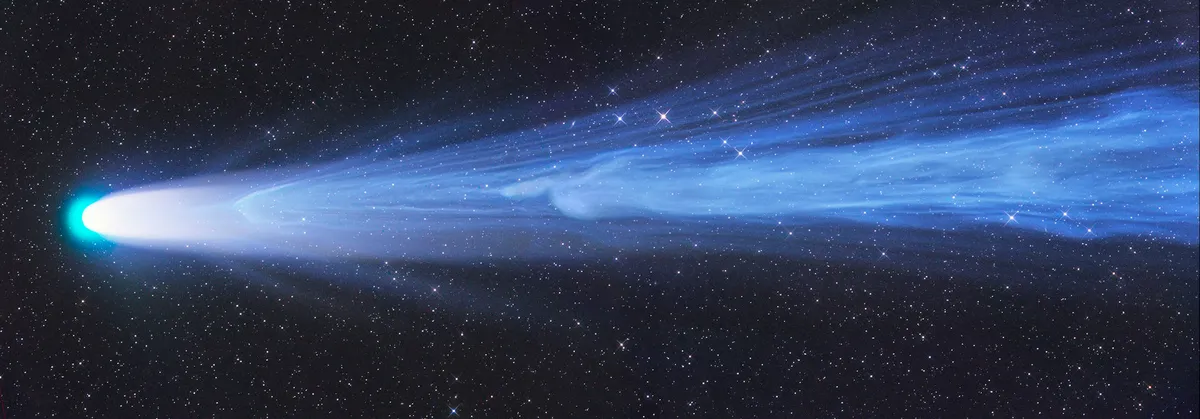
Disconnection Event © Gerald Rhemann, Tivoli Southern Sky Guest Farm, Khomas, Namibia, 25 December 2021. Winner, Planets, Comets & Asteroids, APY 14 (and overall winner). ASA 12” Astrograph telescope, ASA DDM 85 mount, ZWO ASI6200MM Pro camera, 1076 mm f/3.6, mosaic of two LRGB composite panels, 400-second exposure per panel.
Disconnection Event © Gerald Rhemann, Tivoli Southern Sky Guest Farm, Khomas, Namibia, 25 December 2021. Winner, Planets, Comets & Asteroids, APY 14 (and overall winner).

If your image was taken after 1 January 2023, then all you need to do is pick which category it best fits and submit it. 

The best image in each category will take home £1,500, with the Runner-up and Highly Commended winners receiving £500 and £250 respectively.

If you’re a newcomer or prefer to process data from professional telescopes, then you could also be in the running to nab one of two special prizes worth £750 each. 

Younger astronomers needn’t feel left out either, as the Young Astronomy Photographer of the Year competition is open to all entrants under 16 years old.

Young entrants can enter for free and could take home the main prize of £1,500.

With entries now open for Astronomy Photographer of the Year 16, choose from the categories below and submit your image to the 2024 competition.

If you’re new to the hobby, read our beginner’s guides to astrophotography and image processing.

Categories

Planets, Comets and Asteroids

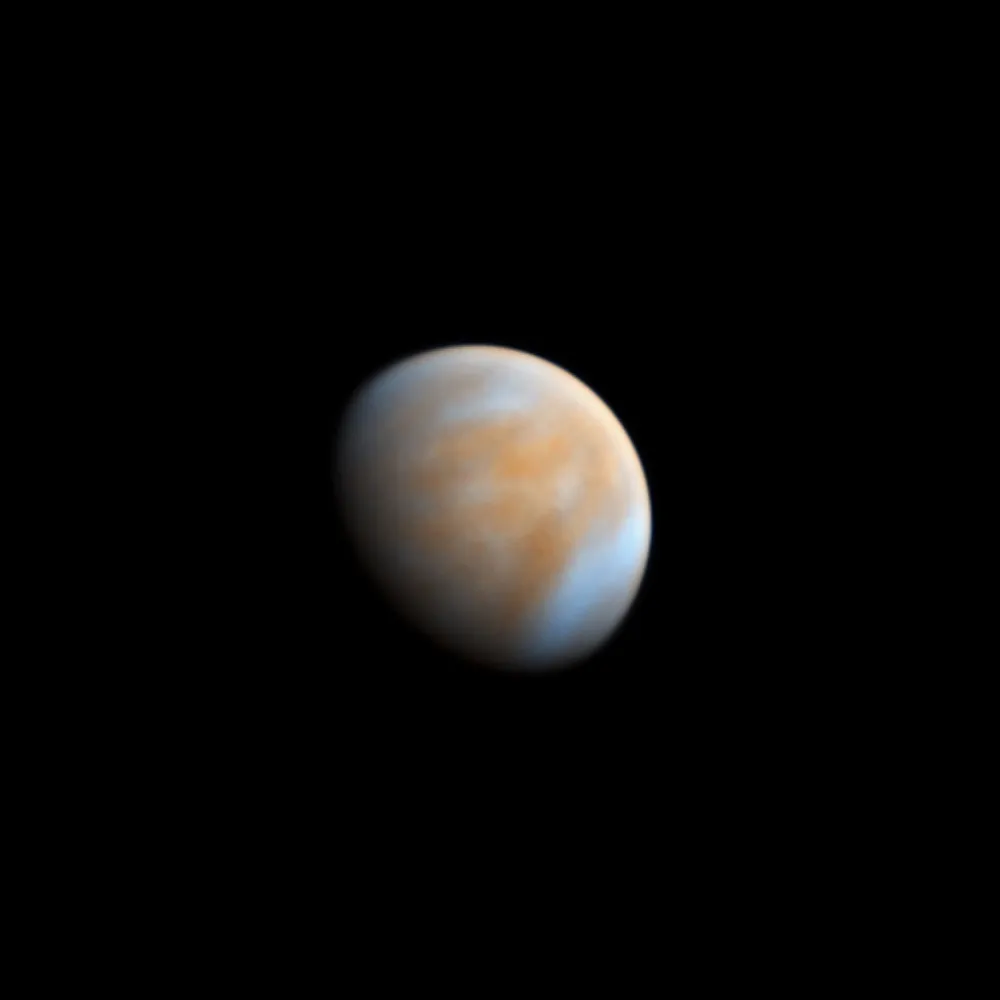
Suspended in a Sunbeam © Tom Williams. Location: Trowbridge, Wiltshire, UK . Winner, Planets, Comets & Asteroids category. Taken with a Sky-Watcher 400P (16”) GoTo Dobsonian Reflector telescope, Baader Bessel (U)BVRI and ZWO IR850 filters, ZWO ASI462MM (Early-Bird) camera, 8,750 mm f/21.5, 5,000 x 5.9-millisecond IR exposures (29.5-second total exposure), 7,500 x 13.9-millisecond UV exposures, (104.25-second total exposure): 133.75-second total exposure
Suspended in a Sunbeam © Tom Williams. Location: Trowbridge, Wiltshire, UK . Winner, Planets, Comets & Asteroids category, APY 14.

It’s been a great time for Solar System observers, with a parade of planets and several good comets visible throughout the year. If you managed to get a good astrophoto of one of our planetary neighbours, enter it into this category. 

Skyscapes 

Grand Cosmic Fireworks © Angel An. Location: Lake Puma Yumco, Tibet, China. Winner, Skyscapes category. Taken with a Sony ILCE-7S3 camera, 135 mm f/1.8, ISO 12800, 4-second exposure
Grand Cosmic Fireworks © Angel An. Location: Lake Puma Yumco, Tibet, China. Winner, Skyscapes, APY 14.

To those of us on the ground, the night sky can sometimes seem a distant, isolated thing. This category brings the two a little closer by showcasing landscapes alongside celestial objects, and is one of the contest’s most popular categories.

Aurorae

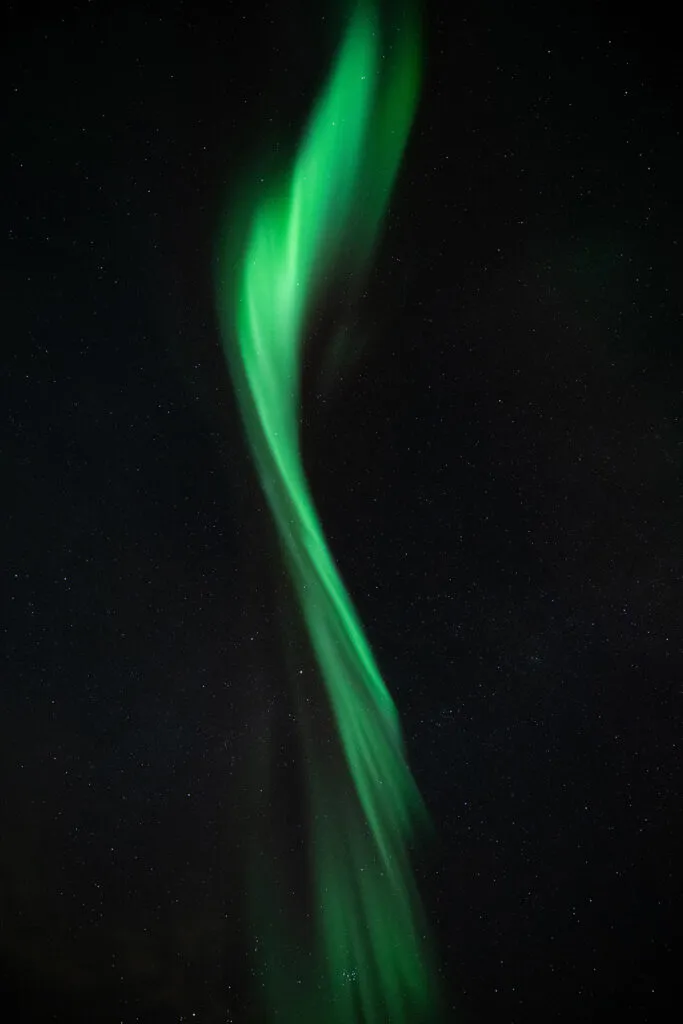
Brushstroke © Monika Deviat. Location: Utsjoki, Lapland, Finland. Winner, Aurorae category. Taken with a Nikon D850 camera, 14 mm f/2.8, ISO 3200, 4-second exposure
Brushstroke © Monika Deviat. Location: Utsjoki, Lapland, Finland. Winner, Aurorae category, APY 14

Recently, the Northern Lights have been seen further south than they’ve been in 20 years, thanks to intense geomagnetic storms. If you’ve captured either the aurora borealis or australis, you could take home this hotly contested prize.

Our Moon 

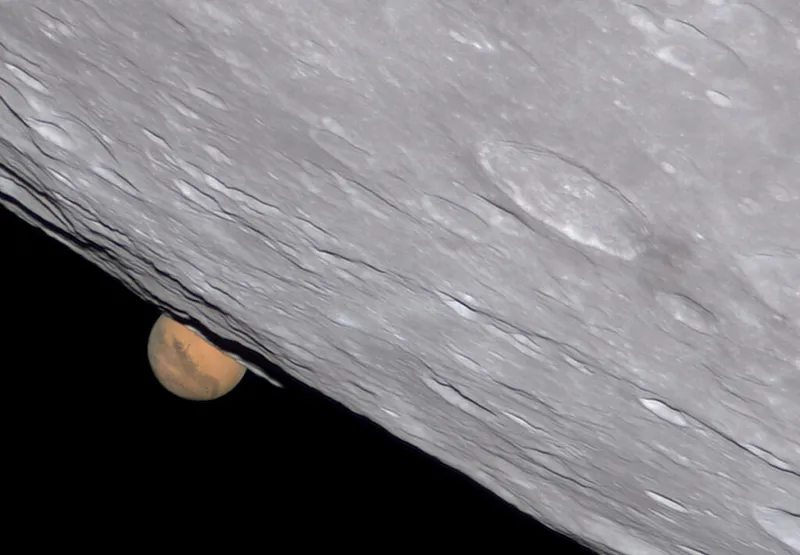
Mars-Set © Ethan Chappel. Location: Cibolo, Texas, USA. Winner, Our Moon category. Taken with a Celestron EdgeHD 14 telescope, iOptron CEM70 mount, Astro-Physics BARADV lens, ZWO ASI462MC camera, 7,120 mm f/20, multiple 15-millisecond exposures
Mars-Set © Ethan Chappel. Location: Cibolo, Texas, USA. Winner, Our Moon category, APY 14.

The changing face of our nearest neighbour offers no shortage of photo opportunities. Its cratered surface offers chances for close-up imaging, while its passage across the sky shows the motion of our Solar System in action. 

People and Space 

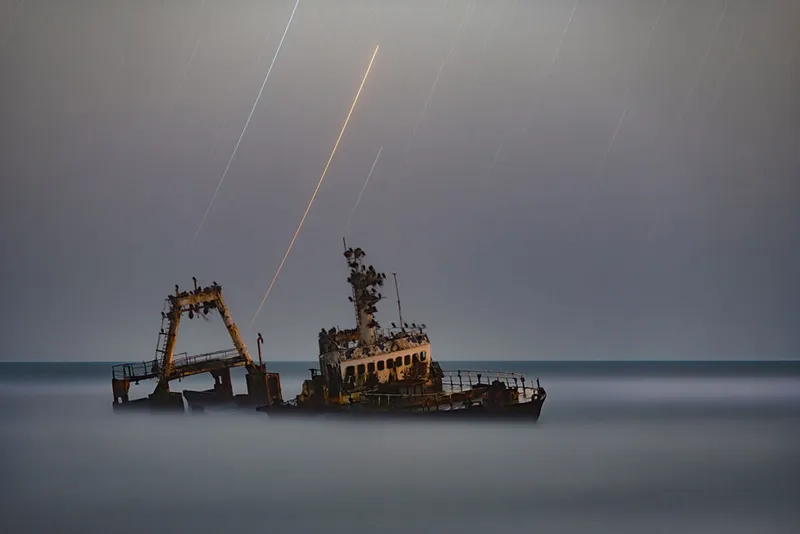
Zeila © Vikas Chander. Location: Heintesbaai (Henties Bay), Erongo Region, Namibia. Winner, People & Space category. Taken with a Nikon D850 camera, 135 mm f/2.8, ISO 200, 30-minute exposure.
Zeila © Vikas Chander. Location: Heintesbaai (Henties Bay), Erongo Region, Namibia. Winner, People & Space category, APY 14.

Stargazing connects us. From our ancestors back through time, to those on the other side of the world today, we all look up at the same sky. This category explores that connection in images that juxtapose humanity with the vast Universe.

Our Sun 

A Sun Question © Eduardo Schaberger Poupeau. Location: Rafaela, Santa Fe, Argentina. Winner, Our Sun category. Taken with a Sky-Watcher Evostar 150ED DX Doublet APO refractor telescope, Daystar Quark Chromosphere filter, Baader ERF frontal filter, iOptron CEM70G mount, Player One Apollo-M Max camera, Gain 100, 840 mm focal length 120 mm aperture, 2 panels of 115 x 3.47-millisecond exposures
A Sun Question © Eduardo Schaberger Poupeau. Location: Rafaela, Santa Fe, Argentina. Winner, Our Sun category, APY 14.00, 840 mm focal length 120 mm aperture, 2 panels of 115 x 3.47-millisecond exposures

Not only did last year see the Sun rapidly heading towards the most turbulent time in its 11-year cycle, but it also included the most watched annular eclipse in recent memory. This year’s Our Sun category should be a particularly exciting one.

Stars and Nebulae

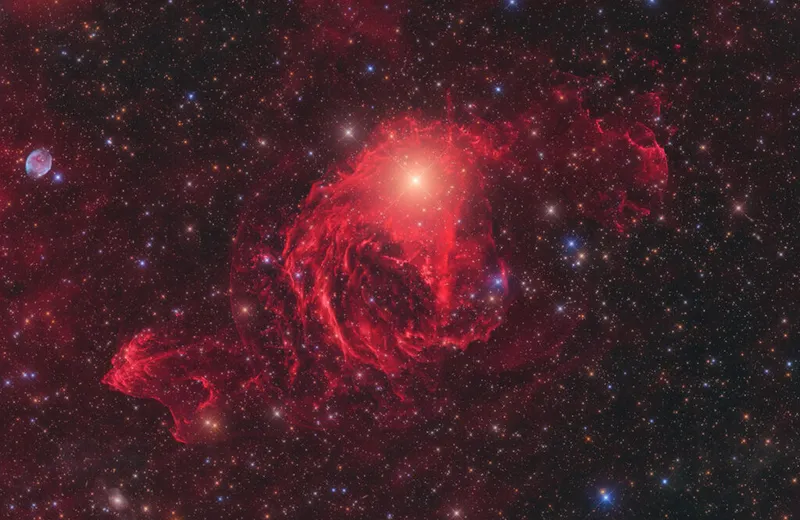
New Class of Galactic Nebulae Around the Star YY Hya © Marcel Drechsler. Location: Ovalle, Chile. Winner, Stars & Nebulae category. Taken with an ASA Newtonian 500 mm telescope, ASA DDM85 mount, FLI ProLine 16803 camera, 1,900 mm f/3.8, 890 x 1,200-second exposures, 672 x 300-second exposures and 15 x 1,800-second exposures
New Class of Galactic Nebulae Around the Star YY Hya © Marcel Drechsler. Location: Ovalle, Chile. Winner, Stars & Nebulae category, APY 14.

To the naked eye, stars appear little more than points of light and nebulae are faint smudges. Astro­photography transforms these objects into fantastical playgrounds of colour and intricate structure. Any image capturing them belongs here. 

Galaxies

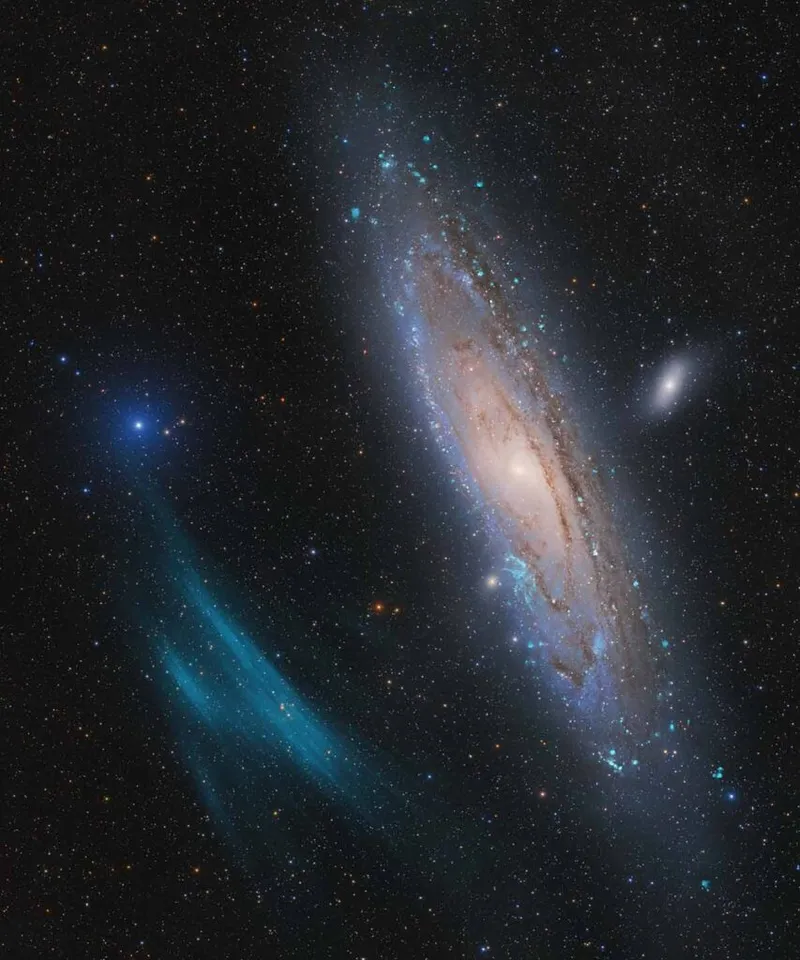
Andromeda, Unexpected © Marcel Drechsler, Xavier Strottner, Yann Sainty, Location: Near Nancy, France. Winner, Galaxies category and overall winner. Equipment: Takahashi FSQ-106EDX4 telescope, Sky-Watcher EQ6 Pro mount, ZWO ASI2600MM Pro camera, 382 mm f/3.6, multiple exposures between 1 and 600 seconds, 111 hours total exposure
Andromeda, Unexpected © Marcel Drechsler, Xavier Strottner, Yann Sainty, Location: Near Nancy, France. Winner, Galaxies category and overall winner, APY 14.

Collecting the light from these distant, vast targets is a challenge on its own, but processing them into works of art takes great skill. If your talent lies in capturing these distant cities of stars, enter your best work into this category.

Young Astronomy Photographer of the Year

The Running Chicken Nebula © Runwei Xu and Binyu Wang. Location: El Sauce Observatory, Río Hurtado, Chile. Winner, Young Astronomy Photographer of the Year. Taken with an ASA N20 f/3.8 Newtonian telescope, ASA DDM85 mount, FLI Proline 16803 camera, 1,900 mm f/3.8, 5.5 hours total exposure
The Running Chicken Nebula © Runwei Xu and Binyu Wang. Location: El Sauce Observatory, Río Hurtado, Chile. Winner, Young Astronomy Photographer of the Year, APY 14.

Just because you’ve started astrophotography at an early age doesn’t mean your work can’t be absolutely spectacular. This special competition is open to any entrants under age 16, to showcase and encourage the great photographers of tomorrow.

Patrick Moore Prize for Best Newcomer

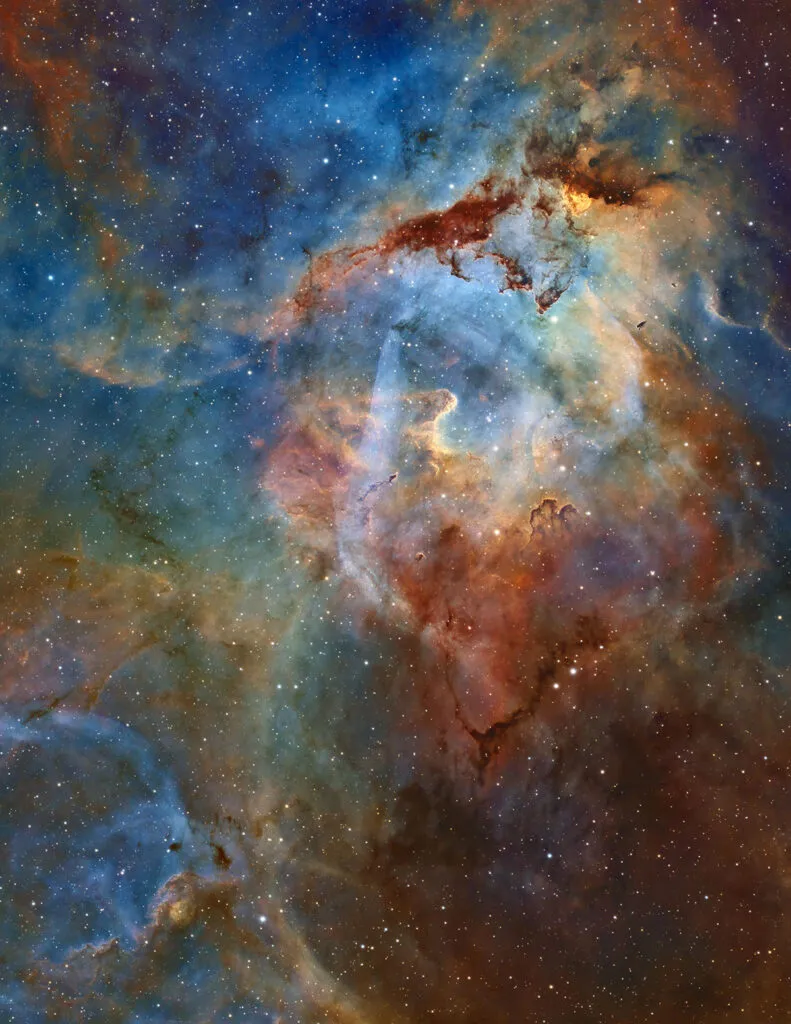
Sh2-132: Blinded by the Light © Aaron Wilhelm. Location: Santa Monica, California, USA. Winner, The Sir Patrick Moore Prize for Best Newcomer. Taken with a William Optics Fluorostar132 mm telescope, Chroma 3 nm/50 mm SII/H-alpha/OIII filters, Astro-Physics Mach2GTO mount, ZWO ASI6200MM Pro camera, 910 mm f/6.9, SII: 87 x 900-second exposures; H-alpha: 92 x 900-second exposures; OIII: 87 x 900-second exposures, 66 hours and 30 minutes total exposure
Sh2-132: Blinded by the Light © Aaron Wilhelm. Location: Santa Monica, California, USA. Winner, The Sir Patrick Moore Prize for Best Newcomer, APY 14.

You don’t need high-end equipment and years of experience to get started in astrophotography. If you’ve just started your night-sky photography journey in the last year, then this special prize gives you your chance to shine.

Annie Maunder Prize for Image Innovation

Black Echo © John White. Winner, Annie Maunder Prize for Image Innovation . Original data from the NASA Chandra X-Ray Observatory, May 2022.

The night sky should be open to all, which is why many professional observatories make all their data open access. This special prize asks you to take that data and process it in a striking and innovative way.
It’s a real chance to let your imagination fly!

Key info

Competition opens: 4 January 2024

Entry closing date: 5 March 2024

Entrance fee: £10 for 10 entries

How to enter and rules: Find out more by visiting the Astronomy Photographer of the Year website

An exhibition of the winning images will be on show at the National Maritime Museum, London from
13 September 2024.

Astronomy Photographer of the Year 2024 entries are now open. Follow the competition on social media using the hashtag #APY16