Photography

Pioneers of Aerial Photography » Explorersweb

Pioneers of Aerial Photography » Explorersweb

Before epic drone shots and NASA satellite images, aerial photography was experimental. Here, we look at some of the earliest methods and pioneers.

French art balloon

An illustration of Nadar taking photos from his balloon. Photo: Honore Daumier/Brooklyn Museum

Balloons

In the 1850s, Nadar, an eccentric Frenchman, decided he wanted to capture an image of Paris from the air. In 1858, he got into a balloon and rose 80m above Petit-Bicêtre, just outside Paris.

Nadar took a picture with a camera that used the collodion wet process. It requires a darkroom environment that Nadar had to create in his balloon’s basket. He was successful, but unfortunately, the photo later disappeared from history. Nevertheless, Nadar may have taken the first-ever aerial photograph.

In 1860, just two years after Nadar’s pioneering feat, James Wallace Black snapped the first successful aerial photograph in the United States aboard a hot air balloon called The Queen of the Air.

Boston aerial photo

1860 aerial photo of Boston. Photo: James Wallace Black

Black had previously attempted a flight over Rhode Island but couldn’t produce a clear photograph. After his failed attempts, he finally took an image of Boston. He called the photo “Boston, as the eagle and the wild goose see it.”

Black inspired subsequent photographers and reconnaissance tactics during the Civil War.

first surviving aerial photo of the British Isles, a view of part of London.

In 1882, Cecil Shadbolt took the first surviving aerial photo of the British Isles, a view of part of London. He used a hot-air balloon.

Kites

In the 1880s, English meteorologist E.D. Archibald and French photographer Arthur Batut attached cameras to kites in England and France respectively.

At the turn of the century, American photographer George Lawrence used this same method to show the devastation of San Francisco after the 1906 earthquake and subsequent fire. He used around 17 kites to lift his camera over 600m into the air. This was perhaps the earliest example of disaster photography. Photos like these helped shape public opinion, evoking sympathy and understanding of distant events.

aerial photo of ruined city

Devastation in San Francisco after an earthquake and a fire. Photo: George Lawrence

Pigeons

Pigeons have carried messages for centuries. But in 1907, Julius Neubronner decided to use his pigeons (which usually delivered medications to his patients) to take pictures from the air.

Neubronner created a little harness and attached a tiny 70mm camera to a pigeon. The camera was on a timer.

Early in the 20th century, the German army used the same method for wartime reconnaissance, forming the Bavarian Pigeon Corps.

Planes and rockets

Some inventors and photographers thought of using rockets. The first designs appeared in 1888 by Amedee Denisse. Alfred Nobel (of Nobel Prize fame) took the first picture using a rocket.

In 1903, German pioneer Alfred Maul created a picture-taking rocket that soared almost 800m, propelled by gunpowder.

The first official aerial photograph from a plane was in 1908. Wilbur Wright flew a plane in Le Mans, France while photographer L.P. Bonvillain took a photo.

During the First World War, planes on both sides fought and did reconnaissance missions. By the end of the war, they had taken more than 500,000 photos.

Space photography

This first photo taken from space was in 1946. Soldiers at New Mexico’s White Sands Missile Range attached a camera to a V-2 rocket, which reached a height of 105km.

earth from space

First photo of Earth from space. Photo: White Sands Missile Range/Applied Physics Laboratory

South African anti-apartheid photographer Peter Magubane dies

South African anti-apartheid photographer Peter Magubane dies


Peter Magubane

Peter Magubane, a South African photojournalist who chronicled decades of violence during the country’s apartheid era including the Soweto student uprising of 1976, died Monday aged 91, his family announced.

Magubane also became the official photographer of Nelson Mandela when the anti-apartheid leader was released from prison in 1990 and until he became president four years later.

One of his most iconic images, from 1956, captured a young white girl sitting on a bench marked ‘Europeans Only’, her black maid sitting behind her on the other side of the bench.

‘He was very passionate about his work, everything else would stop when it comes to his work,’ his daughter Fikile told SABC television.

No cause of death was given, but the SACEF journalists’ association said ‘he passed on today peacefully surrounded by his family’.

Magubane worked in the photography lab of the black urban culture magazine Drum before moving behind the camera, where he quickly focused on documenting the harsh reality of apartheid, and key moments in the struggle for equality.

In 1969 he was arrested while covering protests in front of the prison where Winnie Mandela and other activists were being held.

He was imprisoned and spent 586 days in solitary confinement, and upon release ordered to stop his photography activities for five years.

Magubane was again arrested in 1971 and held for several months, and then continued to work while trying to evade police surveillance.

During the Soweto uprising of 1976 he captured some of the most striking images of the student revolt and gained widespread notoriety.

‘South Africa has lost a freedom fighter, a masterful storyteller and lensman… Peter Magubane fearlessly documented apartheid’s injustices,’ Culture Minister Zizi Kodwa wrote on social media.

More about:

30 Best Perfectly Timed Moments By Street Photographer Pau Buscató (New Pics)

30 Best Perfectly Timed Moments By Street Photographer Pau Buscató (New Pics)
ADVERTISEMENT

Isn’t it fascinating how reality mirrors our thoughts? For example, if you think that everyone is super cheery, you will start to notice more and more people who are smiling. Or if you view life as miserable, everything will seem to prove you right.

Well, for Pau Buscato, a street photographer from Barcelona, the world is full of delightful coincidences. In Buscato’s case, we don’t have to take his word for it, as the photographer captures it all through his lens. In a previous interview, Buscato shared his approach to capturing such images: “It’s a very open process that demands full awareness and fresh eyes, to see the ordinary lives of real people not just for what they are, but also for what they can become when photographed.”

Without further ado, we invite you to dive into the best works by Buscato that were captured between the years 2014 and 2023.

More info: Instagram | paubuscato.com | twitter.com

Fearless Apartheid Photographer Peter Magubane Dies Aged 91

Fearless Apartheid Photographer Peter Magubane Dies Aged 91
[embedded content]

Fearless South African photographer Peter Magubane, who captured 40 years of South Africa’s apartheid era, has died.

According to Reuters, Magubane’s daughter Fikile Magubane said that the photographer died peacefully around midday on Monday at the age of 91.

Magubane was a celebrated photographer across the world. His searing images captured the cruelties and violence that Black South Africans faced for four decades under apartheid.

While his images drew global acclaim, Magubane was punished for his photography at home in South Africa. He was regularly harassed, assaulted, arrested, and spent 586 days locked up in solitary confinement

Magubane was born in 1932 in the Johannesburg suburb of Vrededorp (now known as Pageview).

According to Reuters, Magubane gained prominence as one of the few Black photographers documenting the repressive apartheid era after he joined the South African magazine Drum in 1955.

One of his most renowned images, taken a year later in a wealthy Johannesburg suburb, showed a White girl sitting on a bench with a sign reading “Europeans Only” while a Black nanny sat behind her combing her hair.

Magubane went on to photograph decades of apartheid South Africa, including the 1960 Sharpeville massacre, the trial of Mandela and others in 1964, and the Soweto uprising of 1976 — when thousands of Black students protested against the apartheid government’s law making the Afrikaans language compulsory in school.

A Photographer Who Fought Apartheid With His Camera

According to AP News, Magubane became a target of South Africa’s apartheid government after photographing a protest outside a jail where Mandela’s then-wife Winnie Madikizela-Mandela was being held in 1969.

Following this, Magubane was jailed and kept in solitary confinement for over a year-and-a-half.

The photographer was imprisoned numerous times during his career and subjected to a five-year ban that prevented him from working or even leaving his home without police permission.

Magubane said that he was shot 17 times with shotgun pellets by apartheid police while on a photography assignment and was beaten and had his nose broken by police when he refused to give up the images he took of the Soweto uprisings.

Faced with the option of leaving South Africa to go into exile because he was a marked man by the apartheid regime, Magubane bravely chose to stay and continue taking photographs.

“I said, ‘no I will remain here. I will fight apartheid with my camera,’” Magubane reportedly said in a recent interview with national broadcaster SABC.

Magubane was appointed official photographer to Mandela after the anti-apartheid leader was released from prison in 1990 and photographed Mandela up until he was elected the first Black president of South Africa in historic all-race elections in 1994.

Following news of his death this week, the South African government paid tribute to Magubane — saying the photographer “covered the most historic moments in the liberation struggle against apartheid.”


Image credits: Feature photo licensed via Flickr/BBC World News.

Mobile Photography Awards Have Announced Their Best Photos Of All Time, And Here’s All 43

Mobile Photography Awards Have Announced Their Best Photos Of All Time, And Here’s All 43
ADVERTISEMENT

The Mobile Photography Awards, recognized as the world’s longest-running contest dedicated solely to smartphone camera photography, has once again showcased an astonishing level of quality in its entries this year, rivaling any traditional photography competition.

Frankly speaking, this serves as proof of the advanced capabilities of modern smartphone cameras. As of now, the winners of the twelfth edition are yet to be revealed. Interested participants still have time to register, with the deadline set for January 3rd of 2024.

More info: mobilephotoawards.com | Instagram | Facebook | twitter.com

Photography Contest

Photography Contest

The City of Zephyrhills and the Zephyrhills Community Redevelopment Agency has announced the 2024 City of Zephyrhills Photography Contest, open to all ages, both professional and amateur. Images should depict “how you would jump right in to the #cityofzephyrhills community.” For inspiration, visit ci.zephyrhills.fl.us/288/About-Zephyrhills. The deadline for submissions is Jan. 17 at noon. Prize money will be awarded to first place ($300), second place ($200) and third place ($100) photographs. The City of Zephyrhills also will enter the first-place photo into the Florida City and County Management Association Photo Contest, with a chance to be featured on the cover of the FCCMA 2024-2025 Membership Directory and/or the FCCMA website. For more information, email

*protected email*.

Rogersville native honored as the East Tennessee’s Photographer of the Year

Rogersville native honored as the East Tennessee’s Photographer of the Year
image

Jessica Millard, the creative force behind Jessica Millard Portraits, was recently awarded Photographer of the Year by the Professional Photographers of East Tennessee (PPETN).

This page requires Javascript.

Javascript is required for you to be able to read premium content. Please enable it in your browser settings.


Featured Local Savings


“An autobiographical element can be an interesting way to approach landscape photography”

“An autobiographical element can be an interesting way to approach landscape photography”

About Benedict Brain

Benedict Brain with camera

(Image credit: Marcus Hawkins)

Benedict Brain is a UK-based photographer, journalist and artist. He is an Associate of the Royal Photographic Society and sits on the society’s Distinctions Advisory Panel. He is also a past editor of Digital Camera Magazine, and the author of You Will be Able to Take Great Photos by The End of This Book.

This is an image from my recent trip on a ship, which I wrote about in my previous column. It was taken toward the end of the voyage, and I had been at sea in the north Atlantic for about five days without seeing land. While there were a bunch of passengers and crew, I was traveling solo: on the whole I don’t mind that, but it can start to feel a bit weird after so many days in the ocean. 

This lone rock was taken not long after arriving in the Newfoundland port town of St John, conveniently on Canada Day. It was a glorious day, and delightful to set foot on land again. I chose this image to talk about because, apart from quite liking it, I feel it also has an autobiographical element, which can be an interesting way to approach landscape photography.

I often refer to American photographer Robert Adams. Adams suggests in his wonderful book Beauty In Photography: “Landscape pictures can offer us, I think, three verities – geography, autobiography and metaphor. Geography is, if taken alone, sometimes boring, autobiography is frequently trivial, and metaphor can be dubious. But taken together… the three kinds of information strengthen each other and reinforce what we all work to keep intact – an affection for life.” 

This has stuck with me since reading the book at college over 30 years ago, and something I always strive to achieve. For me, this is what I think Adams means: by ‘geography’, he is referring to the visual record of a place, topography, weather, light and so on. In this case, a rock on another rock in the mist. By ‘autobiography’, he’s asking for an element of personal expression. For me, the lone rock speaks to how I was feeling at the time – maybe a little bit lonely. Finally, by ‘metaphor’, Adams asks if the image can be used to imply an alternative meaning or message, of which there are myriad interpretations. What does it mean to you?  

• Other articles in the Art of Seeing series

Read more:
The 50 best photographers ever
100 best photography quotes from famous photographers
The best coffee-table books on photography

The Camera Trick That Makes Every Photographer’s Life Easier

The Camera Trick That Makes Every Photographer’s Life Easier

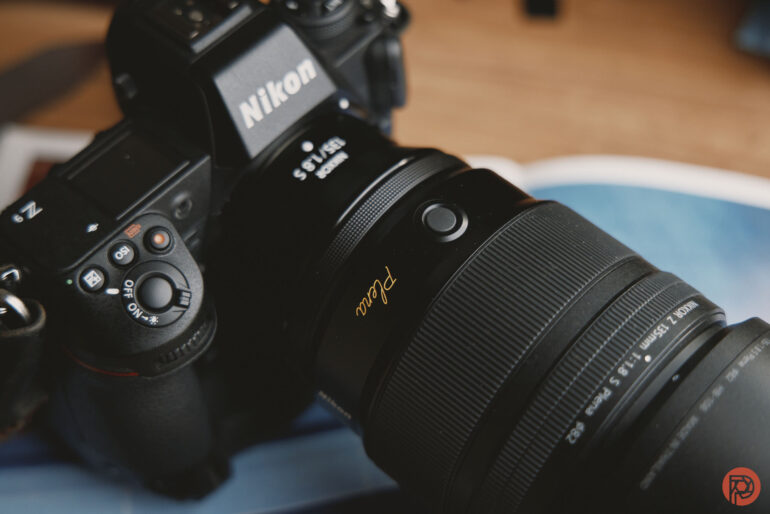
I’ve seen too many photographers these days shoot portraits at 20 frames a second or more. But beyond that, they then need to sift through all those images in post-production. These days though, it’s becoming increasingly ridiculous, with cameras shooting way more images than you possibly need. Years ago, I used to go through and manually delete those photographs to clear up space on my memory cards. But these days, there’s another camera trick you can use that will become much more important: star rating.

The Camera Trick

The camera trick is none other than star ratings. I’ve been using it for years but haven’t seen many photographers using it too. However, it truly does help. Other photographers have used the “protect” feature on their images. But then it’s annoying because those can’t be deleted, so you often need to unlock them afterward when you format the card. With star ratings though, you’re telling yourself that the image you’re rating is one that you think is a winner beyond the others. It can help you cull 1,000 images down to 120 photographs instead.

Compared to several other journalists that test cameras, I don’t tend to shoot nearly as much. But even if I only have 300 images, I don’t want to sit there sifting through all of them. So when I’ve got a spare moment, I’ll look at the images. Then I’ll zoom in and make sure that they’re in focus. If they are acceptably so, then I’ll add a star rating. And even if it isn’t, I’ll add a star rating if it’s a nice enough photograph.

Often, this has more involved, though. If I’m shooting portraits or photographs of a human, it’s all about capturing an emotional moment. The same goes for photographing pets. But if I’m photographing food, a cityscape, or something else, then it’s all about eliciting a feeling in the image. If I can get a feeling from that photograph, then I roll with it.

And if really needed, then I can fix it in post-production. However, I shoot in a way that I often don’t need to do so. This is still really helpful when shooting wildlife, sports, weddings, events, etc.

How to Use the Star Rating Function on Your Camera

Every camera manufacturer does this camera trick differently. However, here’s how I’ve set it up with different camera manufacturers over the years.

  • Canon: I use the rate button. If the camera doesn’t have one, I program it to something else. If you keep pressing the rate button, it will give it more stars. For example, it’s different on the R5 vs the EOS R.
  • Nikon: I rewired the protect button to star rating.
  • Sony: I often rewire one of the buttons to do this during playback. It works like Canon.
  • Leica: Usually, when reviewing photos, Leica cameras let you do this by default with the push of a button. I can usually just give something a star or not.
  • Fujifilm: It’s the most complex here. You have to choose the image, then choose a menu setting, and then assist the star rating using a combo of the buttons and the dials.
  • Panasonic: I set a button to automatically give the image three stars when pressed.
  • OM System: I assign a button to do this. Usually, it’s the protect button

It’s always a lifesaver when it comes to looking at images later on.

What to Keep in Mind

Here are some things to keep in mind when using the star rating camera trick.

  • Make sure you’re viewing the image from the memory card that you intend on importing the photographs from. When you make your star ratings, the ratings will often be applied to this card and not always the other one.
  • I’m legally blind, and a lot of photographers say that they want to view the image on a bigger screen before making their final selections. But if I can do it, then I’m positive that most other photographers can, too.
  • The mindset here involves cutting down on timing. You could just not shoot as many images, to begin with, and get better at understanding the moments in front of you. But an AI algorithm can only really understand what’s in focus or not. We’d know; we’ve tested a bunch. It doesn’t understand the moment — and it really doesn’t understand the context and how it relates to your client or the intent. So, if anything, you can star rate those images yourself or have an assistant do it.

This year, camera manufacturers are just going to keep plugging in all these features that older generations have asked for, and not those that younger photographers have. So get ready for a world where there are tons of frames being shot per second.