Photography

Larry Fink, acclaimed photographer of different social classes, dies aged 82

Larry Fink, acclaimed photographer of different social classes, dies aged 82
image

Larry Fink, an acclaimed and adventurous photographer whose subjects ranged from family portraits and political satire to working class lives and the elite of show business and Manhattan society, has died at 82.

Robert Mann, owner of the Robert Mann Gallery, told the Associated Press that Fink died Saturday at his home in Martins Creek, Pennsylvania. Mann did not cite a specific cause of death, but said that Fink had been in failing health.

“He was a dear friend and a real free spirit,” Mann said. “I’ve known people like Robert Frank and Ansel Adams, and Larry stood out. He was an exceptional and unique individual, a very unconventional man – not only in his personality, but in his photography.”

A “self-described Marxist from Long Island”, Fink was best known for “Social Graces”, a 1979 exhibition at the Museum of Modern Art in which black and white photos of wealthy New Yorkers were juxtaposed against shots of everyday life of families in Martins Creek, Fink’s longtime home. The series was published in book form in 1984.

He would go on to work for the New York Times, Vanity Fair and other publications, photographing such celebrities as Meryl Streep, Natalie Portman and Kate Winslet. He would also spoof former US president George W Bush and other political leaders, while remaining close to a Martin Creeks family, the Sabatines, who appeared often in his work. Fink had solo exhibitions at the Whitney Museum and the Philadelphia Museum of Art among other galleries, and he received numerous honors, including two John Simon Guggenheim fellowships.

Fink, who first took up photography at 13 and later studied under photographer Lisette Model, had a professional life that reflected the diverse outlooks of his parents. He grew up in a politicized family that scorned the free market, while also enjoying stylish automobiles and high-end parties. In the early 1960s, Fink moved to Greenwich Village in New York City, with dreams that he was undertaking not just a career, but a revolution.

“Of course the revolution didn’t quite get there so I was left with a career,” he told Blind Magazine in 2021.

Fink’s survivors include his second wife, the artist Martha Posner, and a daughter, Molly, from his marriage to painter Joan Snyder.

Pick the Best Image in This Nature Photography Contest

Pick the Best Image in This Nature Photography Contest
Image for article titled Pick the Best Image in This Nature Photography Contest
Photo: Axel Gomille / Wildlife Photographer of the Year

Online voting is now open for the People’s Choice Award winner in the Wildlife Photographer of the Year contest, an annual competition developed and produced by the Natural History Museum, London. You can chose your favorite from among 25 shortlisted photos of the near-50,000 submitted to the competition. From mudskippers and bulrushes to lions and jellyfish, the natural world has something for everyone… and it’s up to you which gets the final say.

Advertisement

You can vote for a winner online or in person at the museum. See the impressive lineup here.

Image for article titled Pick the Best Image in This Nature Photography Contest
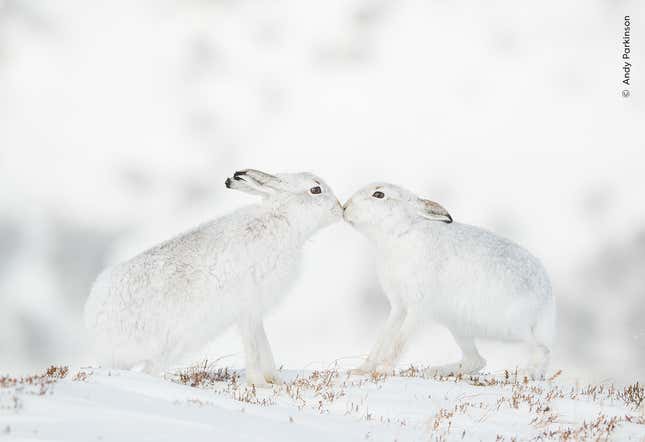
Photo: Andy Parkinson / Wildlife Photographer of the Year

Two courting hares touch noses in the Monadhliath Mountains of Scotland.

Image for article titled Pick the Best Image in This Nature Photography Contest
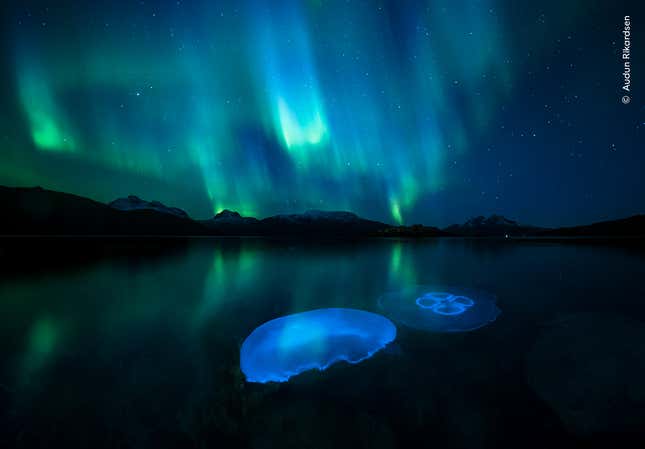
Photo: Audun Rikardsen / Wildlife Photographer of the Year

Two moon jellyfish swim under the vibrant blues and greens of the aurora borealis.

Image for article titled Pick the Best Image in This Nature Photography Contest
Photo: Axel Gomille / Wildlife Photographer of the Year

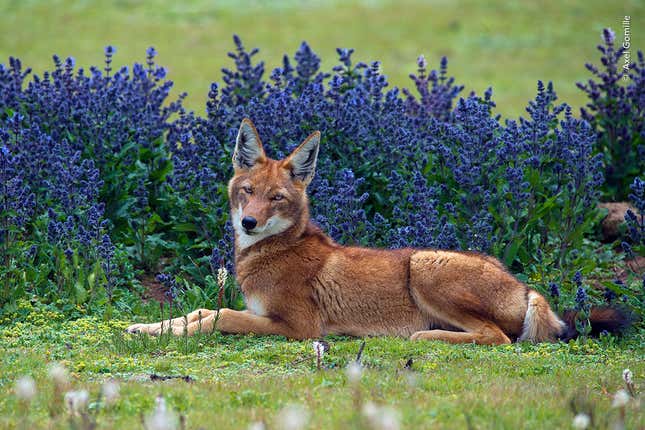
An Ethiopian wolf—an exceedingly rare species of wild dog—takes a break near wildflowers in Bale Mountains National Park.

Image for article titled Pick the Best Image in This Nature Photography Contest
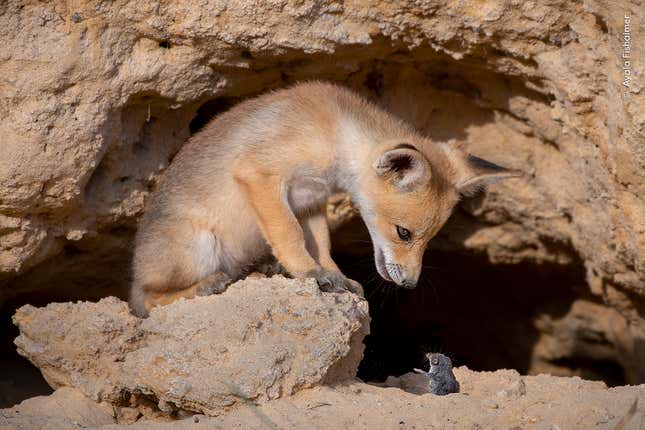
Photo: Ayala Fishaimer / Wildlife Photographer of the Year

A young red fox takes a moment to study the shrew it just yanked out of the ground and threw into the air.

Image for article titled Pick the Best Image in This Nature Photography Contest
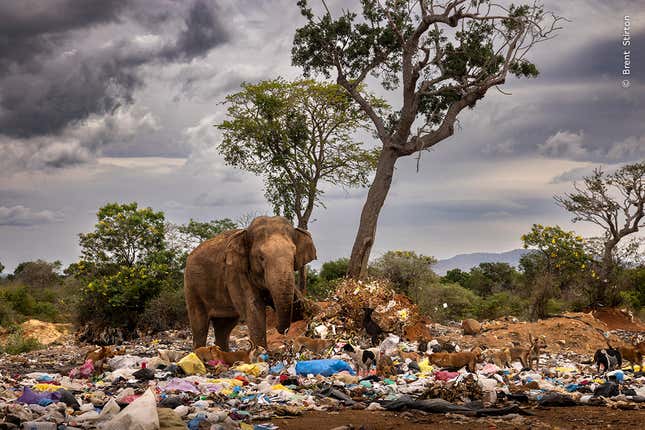
Photo: Brent Stirton / Wildlife Photographer of the Year

A crop raiding bull elephant looks for food in a garbage dump in Sri Lanka.

Image for article titled Pick the Best Image in This Nature Photography Contest
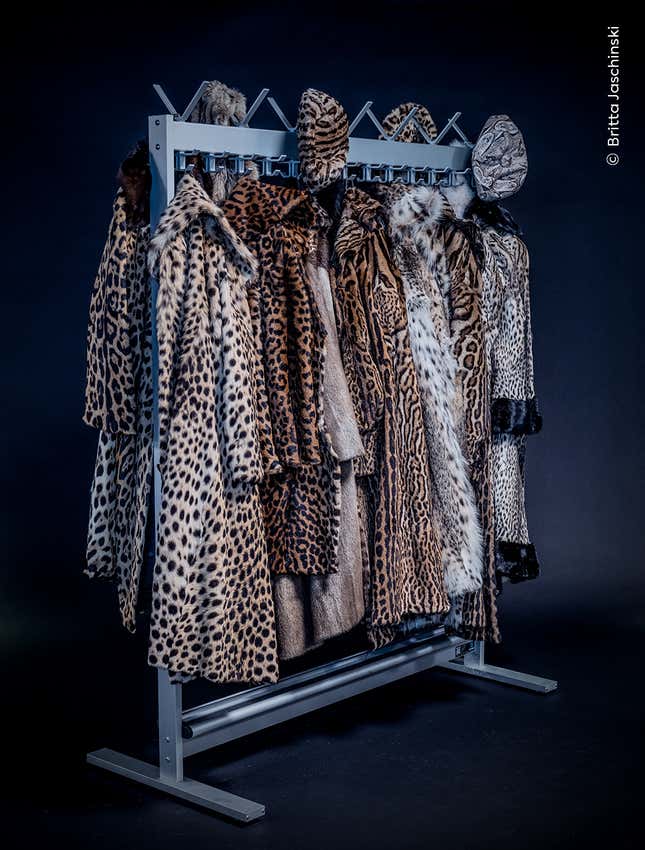
Photo: Britta Jaschinski / Wildlife Photographer of the Year

Coats made from big cat skins hang in Hamburg’s Leibniz Institute for the Analysis of Biodiversity Change.

Image for article titled Pick the Best Image in This Nature Photography Contest
Photo: Charles Davis / Wildlife Photographer of the Year

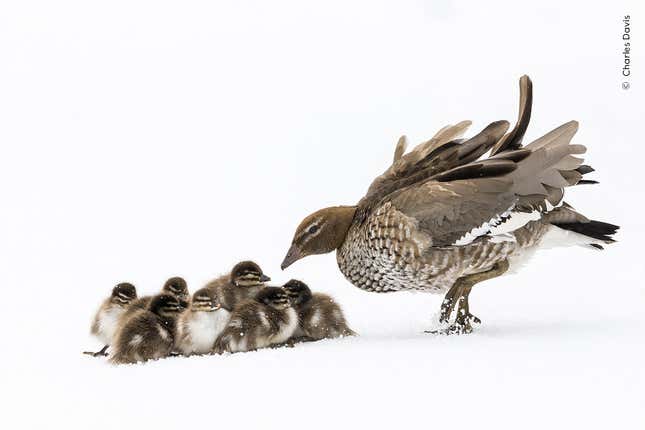
A wood duck checks in on her chicks amid a snowstorm in Australia.

Image for article titled Pick the Best Image in This Nature Photography Contest
Photo: Claire Waring / Wildlife Photographer of the Year

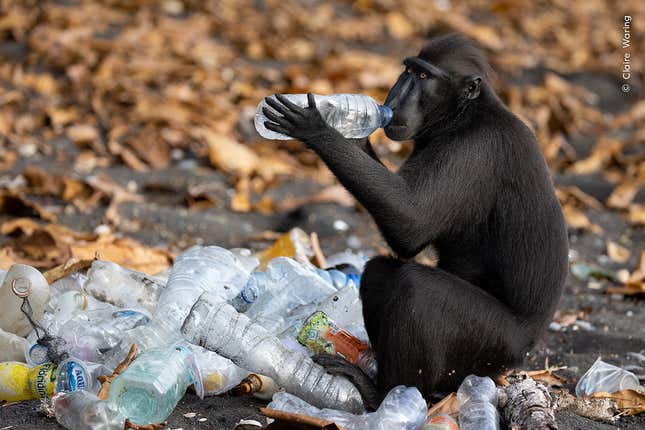
A macaque takes a sip out of a bottle in a pile meant to be recycled on the Indonesian island of Sulawesi.

Image for article titled Pick the Best Image in This Nature Photography Contest
Photo: Daniel Dencescu / Wildlife Photographer of the Year

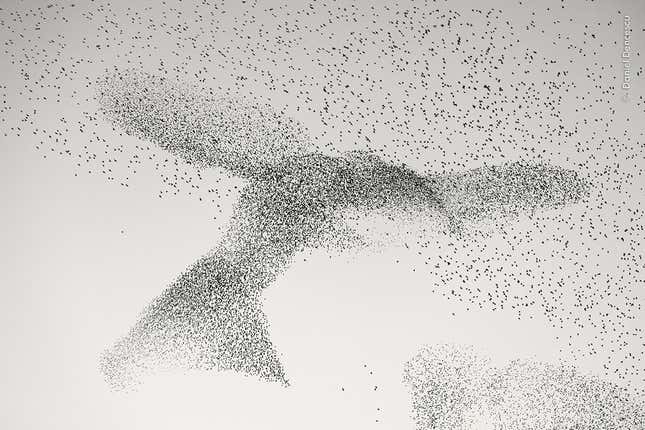
This stupefying shot captures a murmuration of starlings as they fly over Rome. In this moment, the murmuration took a shape reminiscent of a bird in flight.

Image for article titled Pick the Best Image in This Nature Photography Contest
Photo: Deena Sveinsson / Wildlife Photographer of the Year

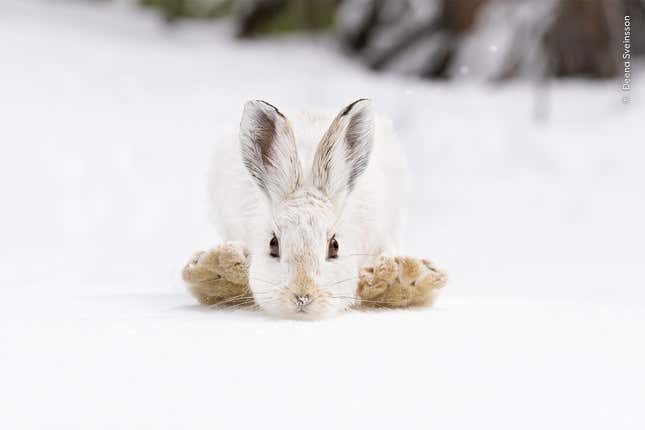
A snowshoe hare’s hind legs line up with its head in this fleeting moment, as the fluffy mammal prepares to take its next leap in Rocky Mountain National Park.

Image for article titled Pick the Best Image in This Nature Photography Contest
Photo: Dvir Barkay / Wildlife Photographer of the Year

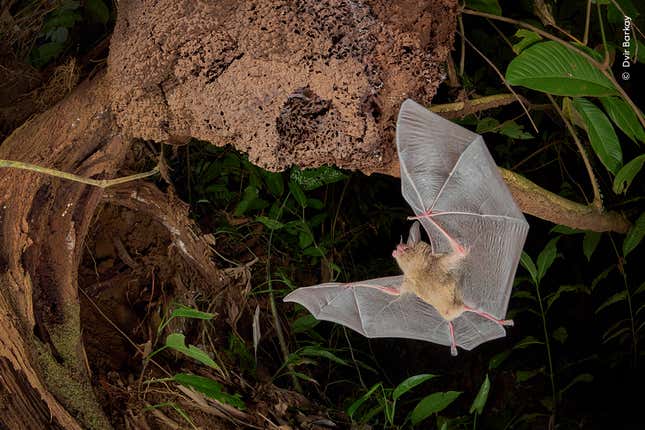
A pygmy round-eared bat returns to its nest, which is carved into the nest of a termite colony.

Image for article titled Pick the Best Image in This Nature Photography Contest
Photo: Frank Deschandol / Wildlife Photographer of the Year

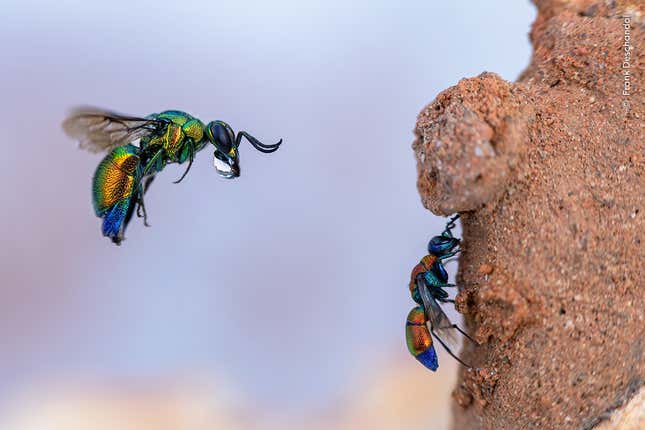
A parasitic cuckoo wasp approaches the clay burrow of a mason bee. The wasp carries a water droplet, which it uses along with its saliva to soften the clay to get at the burrow within. Once inside, the wasp lays its eggs and reseals the burrow; when the eggs hatch, the wasp progeny feeds on mason bee larvae.

Image for article titled Pick the Best Image in This Nature Photography Contest
Photo: Gerald Hinde / Wildlife Photographer of the Year

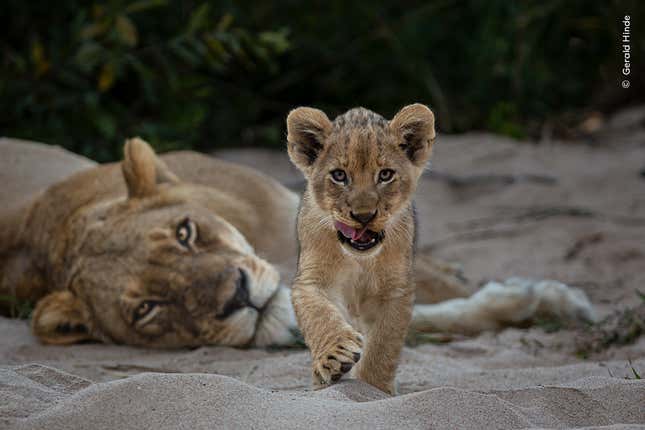
A lion cub checks out the photographer in South Africa’s Greater Kruger National Park.

Image for article titled Pick the Best Image in This Nature Photography Contest
Photo: Hermann Hirsch/Jan Lessman / Wildlife Photographer of the Year

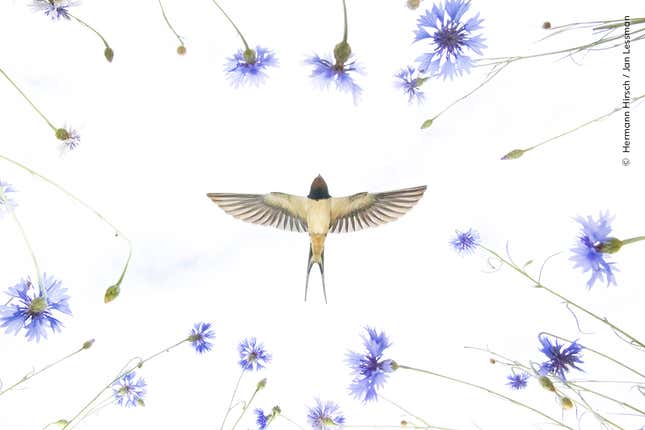
A barn swallow seen from below, flying through a field of cornflowers.

Image for article titled Pick the Best Image in This Nature Photography Contest
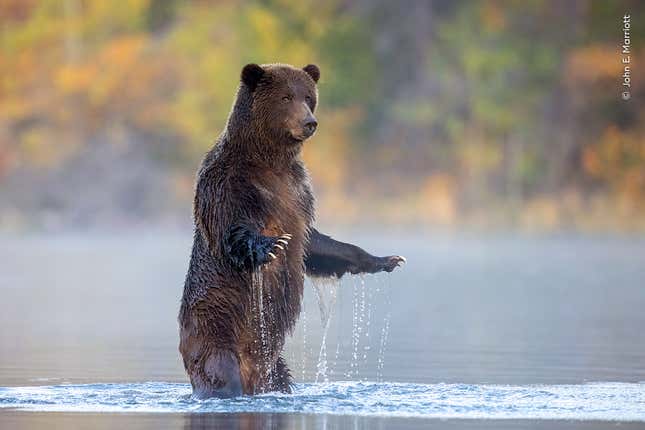
Photo: John E. Marriott / Wildlife Photographer of the Year

A grizzly bear looks uneasy as it’s captured in the photographer’s frame while salmon fishing in British Columbia’s Chilko River.

Image for article titled Pick the Best Image in This Nature Photography Contest
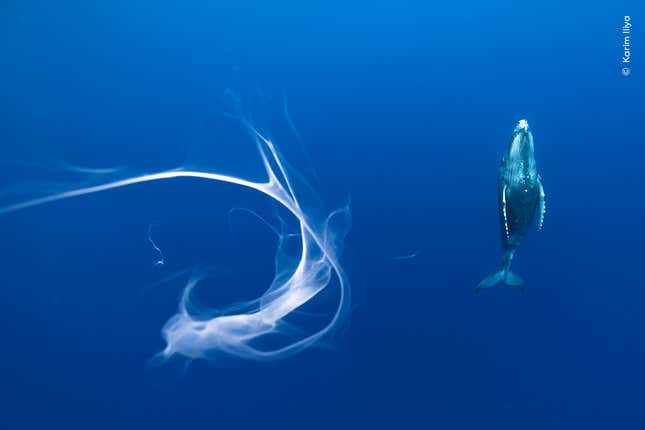
Photo: Karim Iliya / Wildlife Photographer of the Year

A humpback whale calf missed capturing milk from its mother, and it here swirls aimlessly in the currents off French Polynesia.

Image for article titled Pick the Best Image in This Nature Photography Contest
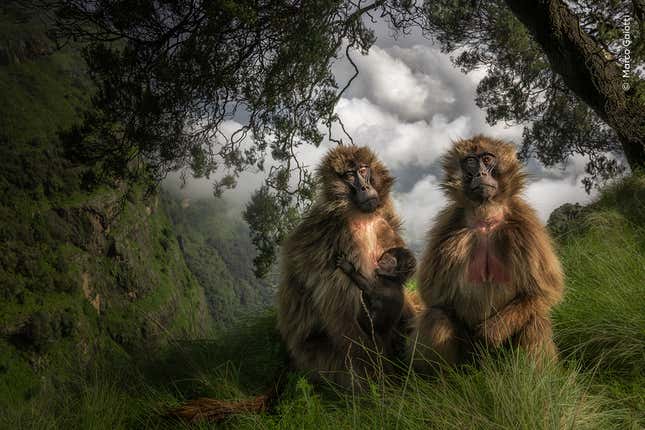
Photo: Marco Gaiotti / Wildlife Photographer of the Year

Three geladas in Ethiopia’s Simien Mountains.

Image for article titled Pick the Best Image in This Nature Photography Contest
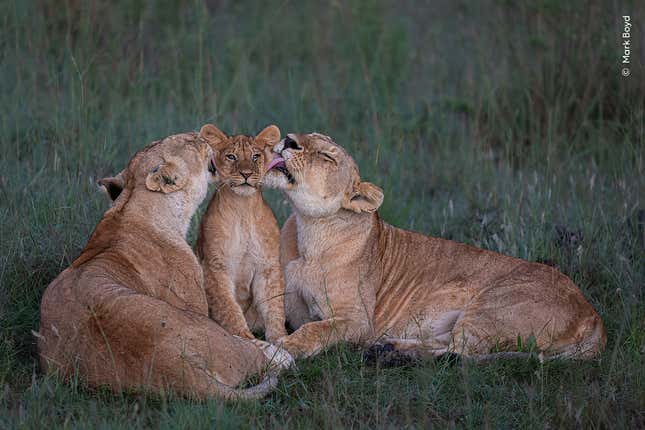
Photo: Mark Boyd / Wildlife Photographer of the Year

Two lionesses groom a lion cub in their pride.

Image for article titled Pick the Best Image in This Nature Photography Contest
Photo: Matt Maran / Wildlife Photographer of the Year

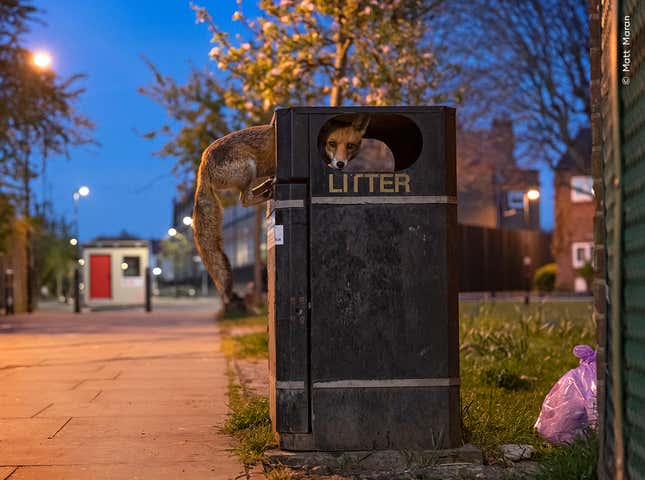
A red fox checks out a rubbish bin in London, England.

Image for article titled Pick the Best Image in This Nature Photography Contest
Photo: Nima Sarikhani / Wildlife Photographer of the Year

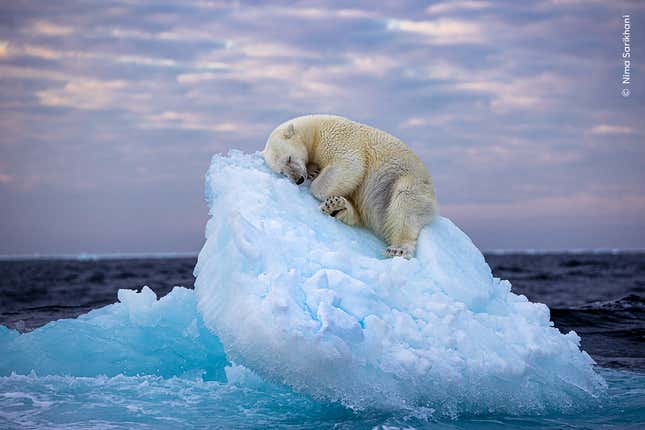
A polar bear finds a surprising place to rest on a lopsided iceberg north of Svalbard.

Image for article titled Pick the Best Image in This Nature Photography Contest
Photo: Ofer Levy / Wildlife Photographer of the Year

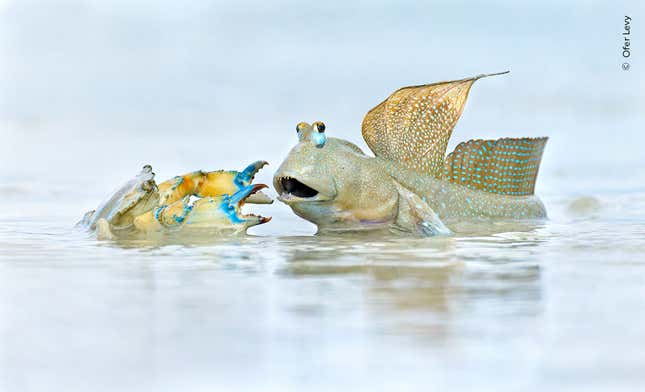
A mudskipper defends itself from a crab in Australia’s Roebuck Bay.

Image for article titled Pick the Best Image in This Nature Photography Contest
Photo: Roberto García-Roa / Wildlife Photographer of the Year

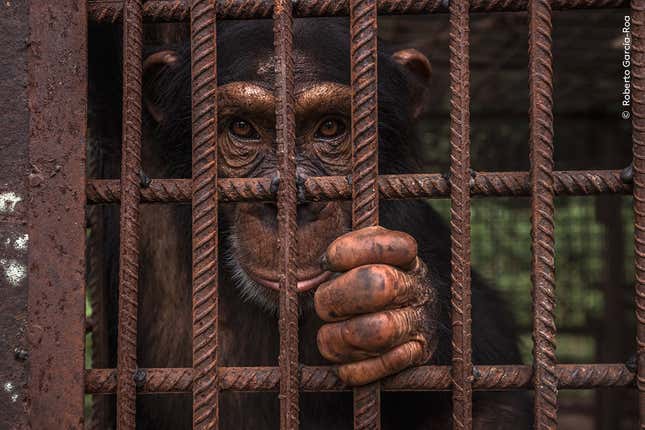
A rescued chimpanzee in the Republic of Guinea’s Chimpanzee Conservation Center. The center houses chimpanzees that were sold as pets after their mothers were killed for bushmeat, according to the Natural History Museum.

Image for article titled Pick the Best Image in This Nature Photography Contest
Photo: Stefan Christmann / Wildlife Photographer of the Year

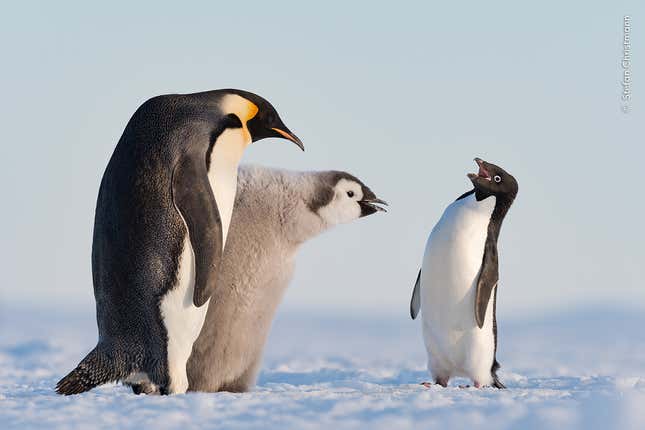
An Adélie penguin approaches an emperor penguin and its chick in Antarctica’s Atka Bay. The smaller penguins sometimes try to opportunistically steal food from the larger penguin species.

Image for article titled Pick the Best Image in This Nature Photography Contest
Photo: Tzahi Finkelstein / Wildlife Photographer of the Year

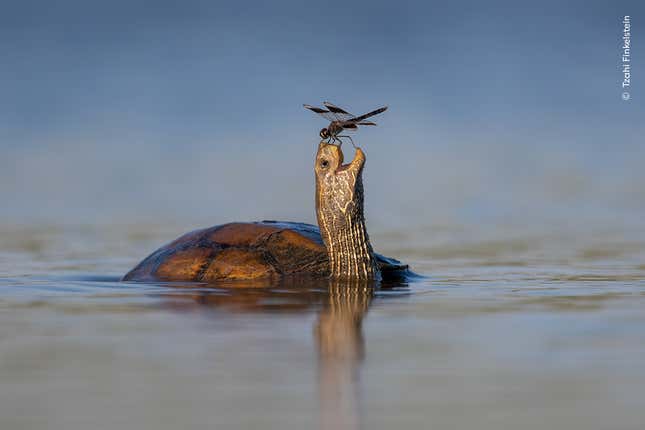
A Balkan pond turtle looks up at a dragonfly balanced on the tip of its nose.

Image for article titled Pick the Best Image in This Nature Photography Contest
Photo: Uge Fuertes Sanz / Wildlife Photographer of the Year

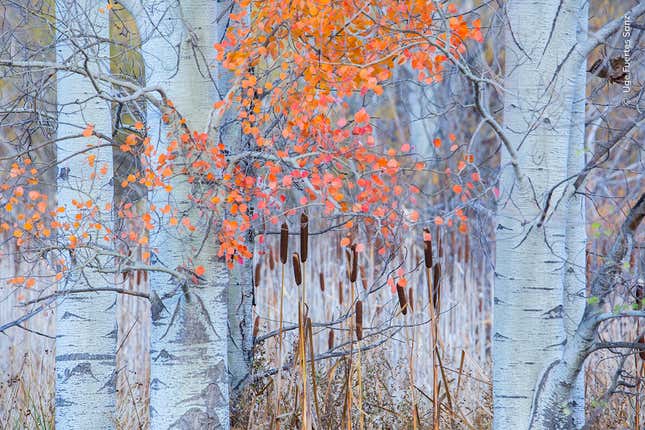
Bulrushes and aspen trees in Spain show the dazzling color palette of autumn.

A sleeping polar bear and some sociable penguins are among the images shortlisted for the Wildlife Photographer of the Year People’s Choice award

A sleeping polar bear and some sociable penguins are among the images shortlisted for the Wildlife Photographer of the Year People’s Choice award

London
CNN
 — 

Will it be a picture that reflects the pristine beauty of the natural world, or one that shows the potentially devastating impact of human beings on their surroundings?

The choice is yours, as fans of wildlife photography around the world are being urged to vote for the Wildlife Photographer of the Year’s People’s Choice Award.

As always, the prestigious contest has a section that it throws open to the public, with the chance to vote from a selection of 25 outstanding images.

These were chosen by the Natural History Museum in London – which hosts the overall exhibition – and an international judging panel. They narrowed the field down from a huge 49,957 entries, sent in from 95 different countries

The public can now vote for their favorites online, choosing from a selection that includes a pair of seemingly kissing hares, a polar bear sleeping on an iceberg and an upright grizzly bear in a shimmering lake.

Also featured are an Adélie penguin approaching an emperor penguin and its chick, and a striking image of a rail of clothing fashioned from some of the world’s most endangered big cats.

Other shots that highlight the negative impact of man on his surroundings include a young fox dining on an overflowing trash can in London and a male elephant striding through a heap of rubbish.

Voting is open online until January 31. The winner and top four images will be announced in February and displayed online, as well as in the in-person exhibition at the Natural History Museum.

Call to Earth is a CNN editorial series committed to reporting on the environmental challenges facing our planet, together with the solutions. Rolex’s Perpetual Planet initiative has partnered with CNN to drive awareness and education around key sustainability issues and to inspire positive action.

‘Photography made me a better man’: Brendan Esposito on 35 years taking photos

‘Photography made me a better man’: Brendan Esposito on 35 years taking photos

Brendan Esposito happily describes himself as a “dinosaur”.

As modern newsrooms demand a workforce of multi-skilled operators – journalists, photographers and camera operators whose roles increasingly blur into each other — Brendan Esposito has, for 35 years, remained steadfastly dedicated to one medium, one style of storytelling — news photography.

This image of a man from a Four Corners investigation into gang violence was among those that won Esposito the Walkley Photographer of the Year Award.(Four Corners: Brendan Esposito)

Starting out as a newspaper “snapper” in the 80s, he now works for the ABC News Specialist Reporting Team, taking photos for a range of digital platforms and programs from daily news to Four Corners.

In 2022, he was awarded the Walkley Press Photographer of the Year Award for a portfolio of images captured around Australia and in Ukraine.

Where once his photos were published on newsprint, now they’re showcased on a smartphone but what Esposito loves about photography has never changed – the ability of an image to grab your attention and make you feel something.

Peter Ristic looks out a screen door.

Peter Ristic was photographed as part of an investigation into the Public Trustee system.(Four Corners: Brendan Esposito)

“A still is called a still because it stops you and you take in the emotional content of that image,” he says.

“It’s a very, very powerful thing when you can hold someone on a page, they can rest, they can observe and take in emotionally what the words will support or carry.

“It’s a collaboration between journalist and photographer and when you get it right, it is extremely powerful.

“With vision, it’s transient, it keeps moving, and that’s not to say that emotionally vision can’t be just as strong as a still but the still allows a story to rest and breathe.”

Man with bright pink powder on face holding camera up to the side of his head.

Brendan Esposito photographing the Holi Festival in India during which coloured neon powder is thrown about.(Supplied: Brendan Esposito)

Over his career, Esposito has captured tens of thousands of news-making moments with his camera.

He’s won a host of awards, including the 2022 Walkley Press Photographer of the Year, 2013 Walkley Portrait Prize, 2014 Pacific Area Newspaper Publishers Photography of the Year Award and Kennedy Awards in 2022 and 2018.

He’s also published several books.

Side shot of a female soccer player yelling in joy with another player jumping on her back.

Esposito loves covering sport and captured this image of Matilda’s captain Sam Kerr celebrating at this year’s World Cup.(ABC NEWS: Brendan Esposito)

While he appreciates the professional accolades, photography has delivered him a greater prize on a personal level.

“Photography has made me a better man,” he says.

“I truly believe that because when I was young and brash and hungry to be the greatest photographer the world ever knew, I went about it the wrong way.

“It’s very, very easy to take a cheap shot, a picture that’s invasive or demeaning to someone and I have been that person.

“I have been the one chasing a career taking pictures that I thought were about them [the subject] but in fact the picture was about me.

“As I matured and understood what it is to be married, have children and to have all the trials and tribulations of a man going through life, photography helped me to be better.”

The family leans on his casket.

This award-winning image was taken while covering the war in Ukraine, a story that affected him deeply.(ABC News: Brendan Esposito)

Dropping the detached, “tough guy” façade he adopted in the early years of his career, has, Esposito says, greatly enhanced his work.

“I’m a very emotional person, I’ll cry at the drop of a hat and for many, many years that was a sign of weakness for a man and particularly in the media,” he says.

“The view was: ‘Suck it up, son, suck it up, don’t show your feelings.’

“I’ve learned that’s wrong.

“I’ve learned to show my feelings, understand I’m emotional and I use that as a force now.

“I use that to understand emotion [in others] and I have made very conscious decisions about the way I photograph.

“I like taking beautiful pictures, refined photographs where I can show how a subject matter is feeling.

“I am the conduit and I take very seriously that I need to understand my subject and allow that to come through me and go out to the public that the ABC serve and I think it was reflected in winning the Walkley last year.”

A young boy sits quietly staring at the ground.

A young boy in a quiet moment in the Lviv Railway Station.(ABC News: Brendan Esposito)

The stories that stay with him

Esposito grew up in Sydney’s western suburb of Liverpool, a place he still calls home.

He started out working as a nurse but in 1988 at age 23, newly married and wanting to buy a house, he was frustrated by the low pay.

Walking past the local Liverpool Champion newspaper office one day his wife, Cherie, suggested he consider making a career out of his hobby of photography.

Man holding a camera with a crowd in the background.

Brendan Esposito started working for a local newspaper before moving on to the Sydney Morning Herald where he became chief photographer.(Supplied: Brendan Esposito)

“I knew nothing about the newspaper industry at all, but I thought, yeah, I’m gonna do this,” he recalls.

“I was cocky, had a bit of bravado about me so I went in and asked for the local photographer and asked him if there was any chance I could do some work experience.

“You’ve got to understand it was a bit easier to do that back in the day.

“He said he needed a darkroom assistant and while I told him I don’t know anything about printing or processing film, he said, ‘no problem, I’ll teach you’.

“So that was the start and — I don’t want to sound boastful – but I was good at it, I enjoyed it and I thought, wow, this is a gateway to an adventurous and exciting life.”

firefighters stand in front of burning shed

Water bombing over homes and a monastery in Penrose, NSW, on January 10, 2020.(ABC News: Brendan Esposito)

He was then offered a cadetship with Fairfax and moved to working for the Sydney Morning Herald, then The Daily Telegraph on the crime beat.

Esposito returned to the SMH and ended up becoming chief photographer with a staff of about 20 photographers to manage and mentor alongside shooting assignments.

There was a stint with AAP and the NRL before news lured him back and he’s been at the ABC for the past five years.

A man wades kayaks through the suburb of Windsor in Sydney's west.

Documenting floods at Windsor in Sydney’s west in 2021.(ABC News: Brendan Esposito)

Over the course of his career, Esposito has covered the full range of news stories — crime, wars, politics, courts, natural disasters and a lot of sport — (Olympic and Commonwealth games, rugby league and soccer to name a few) – always a welcome respite from the death and destruction.

A female soccer players long hair blows across another woman's face and only her wide open eyes can be seen behind the hair.

Sometimes great photos present themselves but most of the time they are the result of good planning says Esposito.(ABC NEWS: Brendan Esposito)

When you meet, witness and record people in the worst of circumstances it leaves some scars on your soul.

“I covered the 2019 volcano eruption in New Zealand and also the multiple killings at Christchurch mosques and they are events that stay with you forever, simply because of the nature of them and the sorrow that occurs,” he says.

“In 2022, I travelled to Poland and Kiev to cover refugees fleeing the war and that really stayed with me because of the humanitarian crisis unfolding there — hundreds of thousands of people fleeing over the border and coming off trains.

“What I witnessed was people who looked utterly shell shocked, lost and confused about what was next.

“They told us stories of horror, how they’d left their homes, schools, businesses, families and how their lives had been destroyed.

“I put these photos out as black and white images as they reminded me of many photographic archives I had seen over the years of World War II.

“I felt like history was repeating itself and I was compelled to record it.”

Children lay flowers after Christchurch terror attack in 2019

Children lay flowers after the Christchurch terror attack in 2019.(ABC NEWS: Brendan Esposito)

While his job is to document what’s in front of him, at times he’s wrestled with photographing people in vulnerable moments.

“I used to feel that it was intrusive and voyeuristic, but news photography is an emotive art form that displays truth and honesty and that weighs very heavily on me in my work,” he says.

“If I’m on a news job and an event is happening in front of me, I capture the actuality and that is ethical.

“I’m not interfering, I’m not manipulating [an image], I’m doing the best I can to show accurately the event that has happened before me and ethically I need to reflect that.

Nicola MacGee wipes condensation away as she looks at herself topless in the mirror.

Building trust between subject and photographer is critical says Esposito. This image of Nicola MacGee was taken for a story on breast reconstruction surgery.(ABC News: Brendan Esposito)

“If I’m doing a portrait of someone, for example someone with a disability, I must always maintain their dignity.

“I give people time to get settled and we work together to produce the best content and it always comes down to truth, honesty, and trust because when you walk into someone’s life with a camera you cannot betray their trust, you cannot.”

The secret to taking a great photograph

In the days of film, which was costly to purchase and process, photographers had to be judicious in their shooting, but the emergence of digital cameras and smartphones has enabled photographers, professional and amateur, to snap away until they jag the best shot or touch it up later.

Queen under a clear umbrella, smiling.

The Queen on tour in Australia.(Supplied: Brendan Esposito, Courtesy Fairfax)

But Esposito argues tools and tech are not what make a great photograph or a great photographer.

“I remember in 2000 when digital came out and we were shooting digital at the 2000 Olympics for the first time,” he recalls.

“It was hailed as his new device that would be way easier for photographers to work and file, you could send your pictures electronically.

“But the cameras became heavier and the choice in editing became harder because you can just click away and click away click away and take hundreds and hundreds of images and most professional photographers hated it.

“So, the medium has changed but what hasn’t changed is the photography and I find a lot of people don’t speak about photography anymore, they speak about how they capture it, they talk about the latest camera, how many megabytes, what they can do in post-production.

“iPhones today have beautiful screens and the photos look unreal – I think the iPhone takes three or four pictures and splices them together so it’s hard to go wrong – but what’s missing now is the thought process.

“True photojournalism is about creating a narrative but so often now there’s no capturing of the narrative and that’s a problem because of the ease of doing it.

“I think images aren’t seen, they are felt and the best camera you will ever have is in your head.”

Boy with optometrist glasses on standing against yellow wall.

A boy at a Fred Hollows clinic in Vietnam.(Supplied: Brendan Esposito)

Capturing the narrative of a news event photographically, he says, relies on mundane practicalities as much as a photographer’s individual flare.

“The key to a great photograph is planning and knowing your subject,” he says.

“There are many great photographs that happen in front of you, but a lot of great photographs don’t present themselves, which is why planning is extremely important.

“So, at an unfolding news event you need to have the ability to position yourself at the spot where things are going to happen, you need to read the play, read the streets, you need to understand the issue, you need to talk to the journalist you’re working with.

SINGLE USE ONLY Nicole Kidman arriving at Supreme Court in NSW in 2007

Knowing where to be to get the best shot is critical, says Esposito, who captured this photo of actress Nicole Kidman leaving court in 2007 after giving evidence about a Sydney paparazzi incident. (Brendan Esposito: Courtesy of Fairfax)

“And then with portraits it’s about communication.

“It’s about me understanding the subject, talking to them and listening to them.

“Time is really important, you need time with a subject for them to actually show themselves and that comes sometimes with being around to the point that they even get bored with you and then you’re able to capture those raw moments.

“I recently spent five days with Miriam Margolyes travelling through Byron Bay and Mullumbimby, photographing her and talent being interviewed for an ABC TV show, Impossibly Australian, which airs next year, and that was memorable because I got on really well with her and I was able to get beautiful daily life and portrait images which were strong and emotive.

“It was a very successful shoot.”

Woman smiling to camera with rural background.

Miriam Margoyles during filming of an upcoming ABC TV program.(ABC NEWS: Brendan Esposito)

Whether for professional or personal use, Esposito argues everyone can improve their photos with a little thought and some simple fixes.

“People just say to someone they’re photographing, ‘stand there’ and they take a pic and there’s a pole coming out of the person’s head or a tree out of their shoulder, or they are standing against a wall where half the window is cutting across the back of their head and it doesn’t look right, or the photo just doesn’t resonate,” he says.

“The best pictures need to be well composed, visually clean and in news photography there should be no manipulation other than cropping the image or enhancing it with contrast, so it looks neat and tidy as we used to do in the darkroom.”

A man wearing a suit and open collared shirt.

Esposito has photographed many famous people over the years, including Bill Gates.(ABC News: Brendan Esposito)

At 59 years of age, when many are thinking about winding down, Brendan Esposito is still pushing himself, paying for weekly sessions with a mentor over the past six months.

He’s also keen to mentor others and one thing he’s learned over his career is not to despair over the mistake or missed shot.

“I was fortunate enough for about 15 years at the Herald to be mentored by Tim Clayton, a master craftsman who I would suggest is the best sports photographer in the world ever, he’s phenomenal.

“Tim always spoke about failing forward and I learned from that.

“I have failed many, many times but failing forward means that you learn, and you take that out of your game.

“You say, ‘OK I failed, but I won’t make that mistake again’.

“I refine my skills and I don’t continue those mistakes and that’s why I sought a mentor at my age because I need to keep evolving.”

Man jumping off horse and reaching towards a cow with horns in a rodeo ring.

Capturing the action at a rodeo.(Supplied: Brendan Esposito)

Which means this “dinosaur” continues to thrive in a constantly changing environment.

“I really enjoy the freedom of creativity that the ABC has afforded me, and I am in a very, very blessed and fortunate position that they do appreciate my skill set.

“I think there will always be a place at the ABC for quality photojournalism.”

The road to Bundanon, with trees next to it, was scorched by the bushfire.

The road to Bundanon after the Black Summer bushfires.(ABC News: Brendan Esposito)

Del Mar College’s Advanced Digital Photography students display work during exhibit

Del Mar College’s Advanced Digital Photography students display work during exhibit
  • Students at Del Mar College are displaying artwork through an advanced digital photography exhibit
  • Community members can enjoy the exhibit from Nov 28-Dec 14
  • Del Mar College Center for Economic Development, 3209 S. Staples, Corpus Christi, TX

A group of thirteen students in Del Mar College’s Advanced Digital Photography course are putting their artwork on display for the community during a exhibit focused on visual storytelling through a lens.

The students began nearly three months ago, learning the basics of digital photography in the intro course offered by adjunct professor, Jeff Janko. Several of the students pursued the intermediate course before taking on the advanced session this semester.

After gaining knowledge in camera aperture, shutter speeds, and camera sensitivity, the students began preparing to showcase their work.

Beginning Tuesday, Nov. 28, at least 60 photographs will be on display at Del Mar College Center for Economic Development, 3209 S. Staples St.

As Janko teaches his students about the world of digital photography, he thought back to when he first found interest in the field as a young boy.

“I have always been a photographer,” Janko said. “I started shooting pictures seriously when I was 11 or 12 years old.”

He taught at Texas A&M University – Corpus Christi for more than a decade before transitioning his creative skills to Del Mar College. Janko said he enjoys teaching students because although he is the teacher, they also teach him about the world through their eyes.

“Everyone sees the world different,” Janko said. “We think we all see it the same. Everyone has a different vision, I want to see the arts in Corpus Christi grow and these students can contribute to that.”

Adriana Bernardo is one of the several students putting their work on display during this season’s exhibit. She said she fell in love with photography in high school and hopes when people see her work, they get a glimpse of who she truly is.

“I think my work does tell my story,” Bernardo said. “I do love reading books and I do love cars and I do love plants. I like the repetition of lines. This work is ‘me.’ “

Lisa Perales said her lens has shown her the beauty in nature, which has encouraged her to follow a path into family photography.

“I was never into flowers and you see the beautiful colors of it through my photos,” Perales said. “The moon, the sunrises, all of it can describe something different. I want to do family pictures. I want to do weddings. And I’ve always been interested in taking pictures, always with our family.”

With nearly 60 photos on display, Janko and his students said they hope the community can see their hard work while also creating a focused vision of their own.

“Their exhibition is the culmination of all of their efforts for working for three months. They’ve concentrated on a theme. I want their family and friends to come and see what they’ve accomplished,” Janko said.

The exhibit will be on-display until Dec 14.

For the latest local news updates, click here, or download the KRIS 6 News App.

Best Wildlife Photography Of The Year: 25 Photos To Vote For Your Favorite

Best Wildlife Photography Of The Year: 25 Photos To Vote For Your Favorite
image

Wildlife photography and nature fans from around the world are invited to vote for their favorite image to win the Wildlife Photographer of the Year People’s Choice Award.

From a mudskipper fish defending its territory and a family of monkeys posing for a Christmas card to a young London fox making the most of a full bin, the 25 unforgettable images from which to choose, explore the beauty of the natural world and the impact of our actions.

The photographs were chosen by London’s Natural History Museum, which develops and produces the prestigious Wildlife Photographer of the Year competition, and an international judging panel considering 49,957 entries from 95 countries.

“Since our panel of judges can only award 100 winners, each year the Natural History Museum chooses an additional 25 photographs from which we ask the public to select the recipient of the People’s Choice Award,” the organizers explain.

This year’s selection also includes the moment an Adélie penguin approached an emperor penguin and its chick, and the striking image of fashion garments made from the skins of some of the most endangered big cats.

“Wildlife Photographer of the Year’s People’s Choice Award always offers an astounding selection of images and this year is no different,” said Douglas Gurr, Director of the Natural History Museum. “We invite the public to join the jury and vote for their favorite. “Whether breathtaking beauty or a powerful story, it’s sure to be a difficult decision.”

The public can vote for their favorite image either online or at the flagship Wildlife Photographer of the Year exhibition at London’s Natural History Museum. Voting closes on January 31, 2024.

The winner and top four images will be announced in February, 2024, and join the winners of the 59th competition announced earlier this year. The People’s Choice Award images will also be showcased in the Wildlife Photographer of the Year exhibition until the exhibition closes on June 30, 2024.

Using photography’s unique emotive power, the annual competition and touring exhibition shine a light on inspiring and impactful stories from the natural world to create advocates for the planet.

The 60th competition is currently open for entries to photographers of all ages, nationalities and experience until December 7.

To celebrate the momentous anniversary, Wildlife Photographer of the Year has announced an entry fee waiver for more than 100 countries, changes to the competition’s rules and a new special prize to encourage hopeful stories of the natural world.

Vote online for the winner of the People’s Choice Award here.

A neighborhood dispute erupts as a mudskipper fiercely defends its territory from a trespassing crab in Roebuck Bay, Australia. Mudskippers can live both in and out of the water as long as they remain wet. They thrive along the intertidal mudflats and mangroves of Western Australia.

These amphibious fish are fiercely territorial, often building mud walls around their territories where they feed and breed. This crab is evidently trespassing and by opening its mouth and raising its dorsal fin, the mudskipper is challenging the intruder, attempting to scare it off with a threatening display.

Taken during the August rainy season as looming clouds threaten overhead, a Gelada mother suckles her baby alongside a female companion at the edge of a plateau in the Simien Mountains of Ethiopia.

The gelada family unit, known as a harem, usually consists of one male and a small number of related females and their young. Gelada monkeys live only in the high mountain meadows of Ethiopia, where they spend most of their time on the ground grazing. However, with numbers of domestic livestock increasing, their grazing grasslands are now diminishing, pushing them into restricted areas.

A young red fox takes advantage of a bin stacked high with rubbish before collection day on a street in London. Over a two-month, period Matt Maran watched as this young male red fox learned that the best time to climb into this street bin was shortly before the weekly collection, when rubbish was piled high and any discarded food was easy to get at.

Contrary to popular belief, an urban fox’s diet is made up of more than 50% natural food, such as earthworms, wild birds, seeds and fruits. As a result, these animals play an important role in the urban ecosystem.

A grizzly bear rises up on its hind legs and glances towards the photographer before returning to fish for salmon in the Chilko River in British Columbia, Canada. John Marriott was leading a grizzly bear photography boat tour on the Chilko River when the group came across this busy bear.

Two courting mountain hares come together to touch noses in Scotland’s Monadhliath Mountains. For 15 years, Andrew Parkinson has been photographing the hares here. But in all that time, he had never witnessed a moment like this. He was expecting the female to repel the male’s advances with the usual explosive boxing behavior.

A mesmerising mass of starlings swirl into the shape of a giant bird on their way to communal roosts above the city of Rome, Italy. Daniel Dencescu, who has photographed the behavior of starling murmurations being attacked by peregrine falcons, was mesmerised by the movements of the starlings as they formed colossal organic shapes in the sky. Each day, as they return from foraging, they perform spellbinding aerial shows, known as murmurations, on their flight home.

“Grouping together offers safety in numbers,” he noted. “Predators such as the peregrine falcons find it hard to target one bird in the middle of a hypnotizing flock of thousands. The starlings also gather to keep warm at night and to exchange information, such as good feeding areas.

There is no leader in a murmuration, the flock behaves as one single entity. To stay united through the different escape patterns, each bird tracks and mimics the behavior of seven neighbors. The group can adapt quickly by focusing on a fixed number of birds, becoming dense or sparse, splitting and changing shape. This is a game of life and death.”

A polar bear carved out a bed from a small iceberg before drifting off to sleep in the far north off Norway’s Svalbard archipelago. After three days searching for polar bears through thick fog, the expedition vessel Nima encountered a younger and an older male and watched them for the next eight hours. Just before midnight, the young male clambered onto this small iceberg and using his strong paws clawed away at it to carve out a bed for himself before drifting off to sleep.

An Adélie penguin approaches an emperor penguin and its chick during feeding time in Antarctica’s Atka Bay. Adélie penguins only appear in Antarctica’s Atka Bay for a short period during the southern hemisphere summer. They’re opportunists and can be a nuisance for emperor penguins and their chicks as they try to cause the adult or the chick to drop its food, snatching any that falls to the ground.

In this serene image among the highland vegetation of Ethiopia’s Bale Mountains National Park, one of the rarest species of wild dogs in the world, the Ethiopian wolf, takes a rest.

Only a few hundred remain, surviving in the low growing, Afro-alpine shrubland of the National Park which supports their largest population. They’re threatened by habitat loss and diseases such as rabies and canine distemper which they catch from domestic dogs.

A Celebes crested macaque investigates the contents of a plastic bottle from a pile ready for recycling on a beach at the edge of Tangkoko Batuangus Nature Reserve on the Indonesian island of Sulawesi.

Rangers had collected piles of plastic bottles for recycling. Most of them had washed up from the sea and despite the sizeable pile, more would soon be added.

The Celebes crested macaques have learned that these bottles contain liquid and are often seen chewing off the caps to reach the contents. They’ve also worked out that the colored bottles are more likely to contain sweet liquid and so pick these. Some even carried bottles away into the forest, frustrating the rangers’ efforts.

A rarely-photographed pygmy round-eared bat returns to its termite-nest home as two well-camouflaged family members look out from the entrance in the lowland rainforests of Costa Rica.

The bats exhibit a unique roosting behaviour, resting in hollows that they carve out with their teeth inside the nests of termite colonies.

A cuckoo wasp is captured mid-air trying to enter a mason bee’s clay burrow containing the bee’s eggs as a smaller cuckoo wasp cleans its wings below. Frank Deschandol set up near the mason bee’s clay burrow but it wasn’t this species he wanted to capture.

Instead, he was hoping to photograph the rare cuckoo wasp that parasitizes these bees. While he was taking some shots, the larger cuckoo wasp flew off, returning seconds later with a drop of water at its mouth. The wasp uses water and saliva to soften the clay so it can dig into the bee’s sealed-up burrow. Once inside, it lays its own egg then closes the burrow up again. When the cuckoo wasp’s egg hatches, it feeds on mason bee larvae inside the burrow.

A wood duck and its brood are caught in a late spring snowstorm in Smiggin Holes, New South Wales, Australia. It would normally be warm and sunny when these ducklings hatch from their nest high up in a tree hollow but thanks to the La Niña effect, things were different this year.

Despite the conditions, the ducklings chose to exit their nest, dropping down into a frozen world. Upon landing, they quickly became lost in a snowstorm as their mother frantically tried to lead them to open water.

Standing on a rock in the Judean Foothills of Israel, a red fox cub locks eyes with the shrew it had thrown up in the air moments earlier. The cub had pulled the shrew out of the sand and had been knocking it around like a ball. Ayala Fishaimer caught the moment the hapless shrew and the fox locked eyes.

A snowshoe hare pulls its large back feet up next to its head to make the next big hop across the soft, deep snow in the forests of Rocky Mountain National Park. Its large feet prevent the hare from sinking into the deep, soft snow, acting like snowshoes —hence its name.

Under the watchful eye of its mother in South Africa’s Greater Kruger National Park, a curious lion cub walks towards the photographer, who was watching from a vehicle. Lion cubs are vulnerable to other predators such as leopards and hyenas, but often the main threat is from invading male lions. For the first six weeks they’re kept hidden away, after which they’re introduced to the pride and protection is provided by all the members.

A barn swallow flies over a meadow of cornflowers, catching insects during springtime in eastern Germany. As their name suggests, barn swallows prefer to nest inside buildings, and usually return to the same spot each year, repairing nesting cups sculpted from mud and clay. Positioning their camera among the cornflowers, Hermann Hirsch and Jan Lessman watched as the swallows continuously flew low over the meadow, catching insects on the wing.

A humpback whale calf misses some of its mother’s milk, which drifts and swirls in the currents off the coast of Rurutu, French Polynesia. In the seven years and hundreds of hours Karim Iliya has been documenting humpback whales, he’s only seen whale milk floating in the water twice, both times here with the same whale and her calf. Humpback whales lack lips, so the calves can be clumsy and on very rare occasions miss some of the milk.

A Balkan pond turtle shares a moment of peaceful coexistence with a northern banded groundling dragonfly in Israel’s Jezreel Valley. The dragonfly unexpectedly landed on the turtle’s nose, but instead of snapping up the insect, the turtle appeared to be experiencing pleasure from the interaction in the midst of the swamp’s murky waters.

Moon jellyfish swarm in the cool autumnal waters of a fjord outside Tromsø in northern Norway, illuminated by the aurora borealis. It’s common for this species to gather in their hundreds under the aurora borealis.

Moon jellyfish are common in all oceans and are easily recognized by their four rings, which are, in fact, their genitals.

A painting-like composition of bulrushes and quaking aspens is framed in a small corner of the Cabriel River in Spain’s Sierra de Albarracín Mountains. The light and the composition of the plants between the trunks, together with the shapes and colors of the autumn leaves, create texture and balance.

A rescued chimpanzee looks on from its enclosure at the Chimpanzee Conservation Center in the Republic of Guinea. The center houses orphaned chimpanzees that have been rescued from being sold as pets after their mothers were killed for bushmeat, with the aim of releasing them back into the national park. Once abundant in Guinea, the western chimpanzee population is declining and the species is now classified as “Critically Endangered.”

A bull elephant kicks over garbage as it scavenges for rotten vegetables and fruit at a dump in Tissamaharama, Sri Lanka. A number of male elephants are attracted to this location not only by the rubbish but also by nearby crops. The scar from a gunshot wound on the upper part of this elephant’s left front leg and another wound high on its back indicate he’s an insistent crop raider.

Human-elephant conflict often escalates from shouting and fireworks to frighten the elephants away from crops and people to shooting. The shots are seldom fatal and deter the elephants for a couple of months.

These coats were made from the skins of some of the most endangered big cats including snow leopard, jaguar and ocelote that were killed to produce the fashion items. They were confiscated by European customs officers and held for forensic tests at Hamburg’s Leibniz Institute for the Analysis of Biodiversity Change before being used for educational events to ensure they never return to the black market.

Larry Fink, photographer who contrasted social classes, dead at 82

Larry Fink, photographer who contrasted social classes, dead at 82
image

NEW YORK (AP) — Larry Fink, an acclaimed and adventurous photographer whose subjects ranged from family portraits and political satire to working class lives and the elite of show business and Manhattan society, has died at 82.

Robert Mann, owner of the Robert Mann Gallery, told The Associated Press that Fink died Saturday at his home in Martins Creek, Pennsylvania. Mann did not cite a specific cause of death, but said that Fink had been in failing health.

“He was a dear friend and a real free spirit,” Mann said. “I’ve known people like Robert Frank and Ansel Adams and Larry stood out. He was an exceptional and unique individual, a very unconventional man, not only in his personality, but in his photography.”

A “self-described Marxist from Long Island,” Fink was best known for “Social Graces,” a 1979 exhibition at the Museum of Modern Art in which black and white photos of wealthy New Yorkers were juxtaposed against shots of everyday life of families in Martins Creek, Fink’s longtime home. The series was published in book form in 1984.

He would go on to work for The New York, Times, Vanity Fair and other publications, photographing such celebrities as Meryl Streep, Natalie Portman and Kate Winslet. He would also spoof President George W. Bush and other political leaders, while remaining close to a Martin Creeks family, the Sabatines, who appeared often in his work. Fink had solo exhibitions at the Whitney Museum and the Philadelphia Museum of Art among other galleries, and he received numerous honors, including two John Simon Guggenheim Fellowships.

Fink, who first took up photography at 13 and later studied under photographer Lisette Model, had a professional life that reflected the diverse outlooks of his parents. He grew up in a politicized family that scorned the free market, while also enjoying stylish automobiles and high-end parties. In the early 1960s, Fink moved to Greenwich Village in New York City, with dreams that he was undertaking not just a career, but a revolution.

“Of course the revolution didn’t quite get there so I was left with a career,” he told Blind Magazine in 2021.

Fink’s survivors include his second wife, the artist Martha Posner, and a daughter, Molly, from his marriage to painter Joan Snyder.
Local Photographer Leads Effort to Raise Money for Local Humane Societies

Local Photographer Leads Effort to Raise Money for Local Humane Societies


GivingTuesday

UTICA, N.Y. — A young local entrepreneur still building her own business has decided that this holiday season, ’tis far better to give than to receive.

So, she and nearly two dozen local businesses have found a way to help people do their holiday shopping while giving back to the community. Specifically, to four-legged members of the area.

“I’ve been working at Anita’s for the past three to four months, and I get the easy end of things. I get to take pictures of the animals and make them look cute and that’s nothing compared to what every other staff member has to do here,” says Tori Risucci, of Risucci Media, LLC. “So, I was going to donate myself, and then I went home, and I thought about it and I thought we could do it much bigger.”

Having fallen in love with the furry faces on the other side of the lens, she reached out to nearly two dozen other local business owners, and they are now selling special merchandise with the brand, “Do Something BIGGER Than Yourself,” which will appear on the front of the shirts and hoodies they sell.

The participating business logos appear on the back of the clothing.

All of the profits from these items sold now through Dec. 7, will go to local humane societies to help care for the animals they serve.

“Every animal needs vet care. Whether it’s minimal or larger scale surgeries and stuff like that, so, whether it goes to vet care, food, improving shelter life or just making the staff’s lives easier, it all directly affects the animals,” says Risucci.

Taking part in the fundraiser, along with Risucci Media, LLC: SAW Property Management, LLC, Lanza’s Woodworks, Strong Physical Therapy, Primps PT, Nutrishop, Peter Macri Paving, Strategic Financial, Skyline Media Co., Uticrews, SPI Fitness, YSM Media, Zielinski’s Asphalt, T5 Insurance, Kilo Construction, Merima Smajic: Licensed Associate Broker with Pavia Real Estate, Silk Cocktails and Desserts, Bradley and Bradley Real Estate, Equip-Co. Unlimited, Greenway Lawn Care and Allied American Abstract Corp.

A young local entrepreneur still building her own business has decided that this holiday season, ’tis far better to give than to receive.


Each participating business is also donating money in order to kickstart the fundraiser. 

Click here to order a Do Something BIGGER Than Yourself item. 

Perfect Power Solution for Photographers on the Road

Perfect Power Solution for Photographers on the Road

A few weeks ago, I reviewed the Bluetti AC60 compact power station. This device was already great on its own. But, I had a critique about its capacity of only 403Wh. Today, I show how to extend the AC60 to become the perfect power solution for the road and the office.

First things first: The AC60 has recently been upgraded to the AC60P, which now has a capacity of 504Wh. It puts it into the sweet spot for a power station of that size. I was just a few weeks too early when I got the AC60. The good thing is that Bluetti’s power stations are extensible, and the perfect match for the AC60 is the B80.

Bluetti B80 Expansion Battery

The B80 expansion battery has similar dimensions to the AC60. It weighs just below 10kg, is weather-sealed with an IP-65 rating, and uses LiFePO4 batteries and a BMS for a long lifetime. Its robust build makes it the perfect travel companion for a long photography trip that involves camping and being off the grid for several days. With a capacity of 806Wh, you can triple the capacity of the AC60 by connecting the two with the included cable. If one B80 is not enough for you, you can connect two of them to the AC60 for a combined capacity of more than 2kWh.

The B80 is not cheap. The original price is $699, but since Bluetti does sales several times a year, you should get it for less than $600 if you time your purchase right. You’d expect more than just an extension to the AC60 at such a price. The good thing is that the B80 also works as a stand-alone battery. It has a 100 Watts USB-C port, an 18 Watts USB-A port, and a 12V – 10A car cigarette lighter port. If you only want to charge DC devices, the B80 is all you need on a trip.

The B80 also comes with a 200-watt solar charging port. This port doesn’t only work with solar. You can use it to charge from your car’s cigarette lighter port while driving, and you can get an additional adapter from Bluetti for charging via a wall outlet. A set of LED lights indicates the current charging status.

The main operation mode of the B80 is via the AC60 or one of Bluetti’s other power stations. Once connected, the AC60 directly shows the combined capacity. In the Bluetti App, the B80 is then listed as an additional battery pack alongside the AC60’s battery. The charging of the B80 now also works via the fast charging of the AC60, and you can power AC devices via the inverter of the AC60. Expect an efficiency between 75% and 85% based on the load. I also tested the efficiency of the B80 alone, using its USB-C output to power my Dell XPS. My measurement showed nearly no loss.

Bluetti PV120 Solar Panel

There might be times when you need to get off the grid for an even longer period. If you own an RV and like to hit the road for a week or more while avoiding powered campsites, the AC60 with the B80 won’t be enough unless you do daily drives to recharge them. You can get one of Bluetti’s larger stations or a portable Solar Panel like the PV120. It is Bluetti’s smallest solar panel, weighing less than 6kg. Its folded dimension is just 53cm by 47cm.

I tested it on a sunny day in November and got 111 Watts of charging power out of it. In late spring and summer, I should be able to charge both the AC60 and the B80 during a cloudless day. If it’s cloudy, don’t expect a too high efficiency. As with all solar panels, the charging speeds will be much slower. As you can see in the video, I got between 20 and 30 Watts with the sun behind a layer of clouds. On a dark day, I assume that it will be even less.

[embedded content]

The PV120 comes with a standard MC4 connector, so it is compatible with other devices that fit its specifications for current and voltage. Bluetti also offers a PV200 panel with 200 Watts. It is larger and a bit heavier but still works with the AC60 and the B80.

What I Like

I’ve now tested three Bluetti products, and the thing I like the most is their rugged build. Those devices are weather-resistant and made for outdoor use. The extensibility provides a lot of flexibility, which allows you to upgrade the system step by step. Up until now, everything worked seamlessly together.

I also love the choice of LiFePO4 batteries. Those are more secure than Li-Ion batteries and have a much longer lifetime.

What Could Be Improved

The connector cable between the AC60 and B80 is too long. I typically use both stacked on top of each other. For this use, I would love to see a shorter, more flexible cable to reduce the footprint of the system.

I would also like to see Bluetti tuning the operation of the fans in the AC60 with an upcoming firmware update. My office setup has a load between 60 and 80 Watts. Most of the time, the fans of the AC60 will be active at a low but still audible noise. It would be great to have an even lower setting for the fans

Conclusion

The combination of the Bluetti AC60(P), the B80, and the PV120 is a very flexible power solution. Depending on the length of the trip, you can choose to bring only the AC60, only the B80, or both. If you want to be completely independent of the grid or your car for charging, add the PV120, and you’re good to go. But this setup is also great for powering a small office. I can get more than 12 hours out of it. I will soon buy a long solar extension cable and use the PV120 to power my office on sunny days.

This power solution comes at a price though. When writing this article, it’s Black Friday week, and the whole kit is available for $1477. The regular price currently sits at $1697. Quality has its price, but I suspect that it will drop over the months with further sales coming up.

4 news photographers shot in Mexico, authorities consider it attempted murder

4 news photographers shot in Mexico, authorities consider it attempted murder

Unidentified assailants wounded four news photographers in the violence-wracked southern Mexico city of Chilpancingo

ByThe Associated Press

November 28, 2023, 4:39 PM

MEXICO CITY — Unidentified assailants on Tuesday wounded four news photographers in the violence-wracked southern Mexican city of Chilpancingo, authorities said.

Prosecutors in the Pacific coast state of Guerrero said all four had been taken to a hospital, but did not say whether their wounds were serious.

All of the journalists appeared to work for local papers or news sites. State prosecutors said they consider it a case of attempted murder.

The press group Reporters Without Borders said the attack occurred just outside the local army barracks, as the photographers were returning from covering an event.

The shooting come just days after three journalists were abducted and held for days in Taxco, also in Guerrero state. They were later released, and there was no information on the motive for their abduction.

Guerrero has been the scene of deadly turf battles between around a dozen drug gangs and cartels.

The shootings and abductions mark some of the largest mass attacks on reporters in one place in Mexico since one day in early 2012, when the bodies of three news photographers were found dumped in plastic bags in a canal in the Gulf coast city of Veracruz. Those killings were blamed on the once-powerful Zetas drug cartel.

Earlier this month, a photographer for a newspaper in the Mexican border city of Ciudad Juarez was found shot to death in his car. His death was the fifth instance of a journalist being killed in Mexico so far in 2023.

In the past five years alone, the Committee to Protect Journalists documented the killings of at least 54 journalists in Mexico.

____

Follow AP’s coverage of Latin America and the Caribbean at https://apnews.com/hub/latin-america

Related Topics