Photography

OPINION: The ethics of AI photography- Australian Geographic

OPINION: The ethics of AI photography- Australian Geographic

In the current issue of AUSTRALIAN GEOGRAPHIC I spoke with Melbourne-based artificial intelligence (AI) photo artist, Morganna Magee, who deliberately makes her images imperfect to impart an “uncanny” feel and to draw the viewer’s attention to their artifice. Morganna is a conservation photographer whose better-known analogue work celebrates the beauty of kangaroos in the hope that more people will advocate against their culling and harvesting for pet meat and leather goods. In her AI image above Morganna creates a humanoid kangaroo warmly embracing a person who, on closer inspection, appears part animal, forcing the viewer to imagine themselves as a kangaroo, the very definition of empathy.

Morganna says she uses AI to supplement what wildlife photographers are already doing to celebrate the wonder of the natural world. She manipulates images to heighten our emotional response – never intending that the viewer think the work is real. In this image, for example, she purposely misplaces an eye and merges a human arm with that of a kangaroo. The background is imperfectly rendered to emphasise the scene’s fabrication.

“I’ve always believed in the power of photography to change things, but its getting harder as we move along as a society,” Morganna says. “Maybe AI is a tool that can help with that. With the flood of citizen photography, wildlife tourism and the rapid way in which we consume imagery, we’ve become a bit sanitised to what we’re seeing. It’s an echo chamber, and different imagery is needed to reach beyond it.” Morganna considers AI to be another visual culture tool, hoping its ability to draw emotions from an audience and heighten our empathy for animals such as kangaroos can only be a good thing.

American photographer Philip Toledano creates deliberately absurd scenes in his series Another America and has become the ‘whipping boy’ for AI. I had showcased Toledano’s incredibly moving personal project documenting his father’s final days while I was working in a previous picture-editor role. Intimately photographing a loved one’s death is as visceral and real as it gets. Fast forward 15 years, and Toledano is creating fictional worlds set in 1940s and ’50s America where apes are sentient beings living amongst us. He uses Midjourney, an AI generator, that Toledano says is like working “with a very talented but very drunk person, and you have to kind of bludgeon it into giving you what you’re asking for”. Toledano explores a post-truth world, deliberately setting his work in the golden era of 1950s photojournalism when truth, he says, was “biblical in its veracity”.

Although he doesn’t regard his creations as photography any more, referring to it as ‘photography adjacent’, the work looks enough like photography to make him the subject of hot debates in photo forums. Toledano sees Midjourney as working in the same way as a photographer works, in that any image that is created is a unique image that is the sum of every other image it has been exposed to, or – in the case of a photographer – of everything they have seen in their life.

In April this year the whole highly charged debate around AI and documentary photography intensified when respected photojournalist and long-time National Geographic Explorer Michael C. Brown published some images of Cuban refugees crossing the 90 miles of ocean separating Havana from Florida.

Although Brown was very clear that he used AI and presented the imagery as photo illustration, his background as a photojournalist led many people to question his integrity. His response was, “This is not journalism, this is storytelling”.

For the past few decades, working as a photo editor on magazines and newspapers, I have seen a distinction, like Michael C. Brown, between journalistic stories and conceptual storytelling. For straightforward reporting, documentary and news stories, there are strict ethical parameters around any assignment. Removing or inserting elements in the image are regarded as violating the industry standards of truth and accuracy in photojournalism. Images are not modified once they are made, except for colour correction, contrast, removal of dust and cropping.

The nature of published photography as a real-world documentary record, with all those layers between what is seen in front of the lens and how a photo is eventually realised on the page, is incredibly complex.

There is always the perspective perceived by the photographer, the style, the approach and the interpretation. Lens choice, what to show and what to exclude in the framing, editing, toning and sequence – all are inherently manipulative. Photo editors choose photographers for a look or feel, and that has inevitably a point of view.

How to keep photography honest has long been a question, well before the advent of Photoshop. National Geographic ignited a fiery debate on the topic after their controversial 1982 cover, where they moved two pyramids closer together to fit the constraints of the cover.

The history of doctoring photos dates back to the earliest days of the photograph. Stalin routinely air-brushed his enemies out of photos, Mussolini had a horse handler removed from a heroic portrait of himself, and China’s ‘Gang of Four’ disappeared from a photo of a memorial ceremony for Mao Zedong.

Life magazine removed a fence to give a 1970 Pulitzer Prize–winning photo of student deaths in the Kent State University protest more impact, and photographer Steve McCurry, best known for his photo of the Afghan girl on the 1985 cover of National Geographic, was accused of breaching photojournalism ethics. McCurry heavily edited his images, even removing people, later leading him to define his practice as ‘storytelling’ rather than ‘photojournalism’.

Wildlife photographer Art Wolfe came under criticism for cloning animals to fill spaces and it was revealed that he had altered a third of his images in his celebrated 1994 book Migrations.

Last year a stunning, and – in hindsight – implausible photo of an elusive snow leopard near Mount Everest proved too good to be true.

Proliferating ‘photography game farms’ further muddy the field for truth telling in nature photography; they enable photographers to stage a photograph, with handlers moving the animal around to look as if they were photographing in the wild.

World Press Photo winner and Australian photojournalist Matthew Abbott says, “Our great asset as documentary photographers is our integrity. This cannot be replaced by AI.” Abbott acknowledges that, “Reality and truth have a complicated relationship with photography…stories with integrity, and photos with integrity, might be a better way to put it.” The types of photography Abbott is referring to are photojournalism, street photography, sport photography – all loosely described as ‘documentary photography’.

We have an expectation that photographs represent the truth, but all images have an agent. “Photography is an incredibly subjective craft. I’ve never met two people with the same truth, nor seen true objectivity ever demonstrably applied to anything,” writes Peter Von Agtmael, a member of the prestigious Magnum Photos agency. “We shouldn’t mistake something factual for something truthful, and we should always question which facts are employed, and how.”

This month a mammoth exhibition on photography opened at the National Gallery of Victoria investigating this very topic, of real versus imagined.

Senior curator of photography, Susan Van Wyk, reflects that, while we have an expectation that photographs represent the truth, she doesn’t know if there is anything that “categorically, hands down, tells you the entire truth of this moment, this event, this person”. The exhibition features works by past photographic greats that call our attention to the artifice of the medium. One of the more famous of these in the show is Robert Capa’s photo, The Falling Soldier, notorious after allegations that the photo was faked.

In magazines, staged photography has also long held a place and been showcased. For opinion pieces and commentary content, photographs often engage people in a different way via stylised set-up photos or sourced through a stock agency, sometimes producing a fictional scene to realise conceptual ideas.

The work of conservation photographer Nick Brandt bears little relation to traditional wildlife documentary. He uses highly conceptual approaches to surprise and reach audiences. “You have to work harder now to create something different. I only embark on a new project if I feel it’s never been done before,” he says. Brandt constructs elaborate, often composite scenes to portray people and animals that have been impacted by climate change. In his ongoing global series The Day May Break, he even concocted a non-toxic fog, especially for the shoots, to symbolise the rapidly disappearing natural world.

Like this kind of conceptually driven, post-documentary photography, perhaps AI imagery may offer a fresh way to address old themes and generate interest in the cultures of indifference and compassion fatigue. Amber Terranova argues that “artists have an opportunity to reach new audiences by showing them something they have never seen before, by creating more and more attention around a particular subject matter through embracing a new technology”.

Michael Christopher Brown argues that AI can help us report on inaccessible places and is a form of photorealistic exploration of stories that are impossible to tell. For him, collaborating with AI allowed him to tell the story of real Cuban refugees without jeopardizing their safety and trust. Earlier this year AI images, generated from eyewitness testimony collected by lawyers from the firm Maurice Blackburn, were used to show the horrors of offshore detention on Nauru and Manus islands. The law firm’s creative agency worked closely with survivors to fine-tune the images to make sure they reflected their experiences, and used Australian photojournalist Mridula Amin to consult on the project. “If we had just generated these images and not engaged with the survivors, this campaign would have felt very thin and would have felt less ethical,” the campaign’s creative director Gavin Chimes says.

From Australian Geographic’s perspective, does AI-generated imagery give our readers the opportunity of imagining something that is impossible to witness, because of either inaccessibility or risk to the subject? AUSTRALIAN GEOGRAPHIC has long used hyper-realistic illustrations to help us imagine long-lost worlds or vulnerable species. In 2022 our photographer Max Mason-Hughes visited a dry rock paddock, outside Gulgong in NSW, as part of an archaeological dig team, and discovered the remains of a 15-million-year-old billabong. Our illustrator Franz Antony was able to bring the ancient billabong to life, showing how the site was once a tropical rainforest full of flora and fauna.

Fossil site McGraths Flat located in central NSW provides unprecedented insight into the time of the Miocene, when rainforests covered most of Australia. A hyper real illustration (left) by Franz Antony allows us to imagine what the billabong looked like 15 million years ago, while Max Mason-Hubers’ photo (right) shows the site in current day.

Perhaps photo realistic ‘reportage illustration’ via AI may allow us to showcase vulnerable species that are difficult to access, or would place the animal under stress to be traditionally photographed. With such large swathes of Australia under pastoral lease, many of Australia’s threatened species are out of sight on private property or in areas restricted for their protection. A prime example are the remaining 315 northern hairy-nosed wombats protected in two rural Queensland properties run by Australian Wildlife Conservancy. Australian Geographic recently shared Brad Leue’s remotely captured photos of this critically endangered species on large digital screens around Australia; the animals were impossible for the photographer to access in person.

Photographer Brad Leue’s remotely-operated camera trap photo of a critically endangered northern hairy-nosed wombat at the AWC-run Richard Underwood Nature Refuge which is not open to the public and established to conserve the species.

Like Morganna, I can see that AI, or synthetic image making – perhaps we shouldn’t call it photography – has value as an add-on to traditional documentary. If AI imagery can be used as a tool leading to positive change by drawing attention to the pressing issues of our day, then embracing AI is surely worth it, but rest assured, we won’t be using it to replace our talented photographers in the field any time soon.


Related: Photographing Australia’s underground town – Coober Pedy

Your Pixel 8 phone just got a big photography upgrade thanks to Adobe

Your Pixel 8 phone just got a big photography upgrade thanks to Adobe

Photography on the Pixel 8 series has gotten better as various Adobe apps now support raw images taken by Google’s flagship smartphone line.

To give you a quick refresher, “raw files are unprocessed image files captured straight from your camera’s sensor.” The format takes more data, such as white balance, than standard JPEG pictures offering greater flexibility when editing. JPEG files, on the other hand, remove a lot of data in an effort to save storage space on a device resulting in poorer quality. The Pixel 8 is capable of editing photographs with its own set of tools, however, it isn’t as robust as something like Photoshop. As 9To5Google points out in its report, this newfound support gives users the opportunity “to go beyond what [Google Photos] offers in the way of editing.”

Moving forward, you can directly upload DNG files, which is the filename extension given to raw images taken by a Pixel 8, to Adobe software such as Photoshop, Lightroom, and After Effects. These apps accept pictures taken by either the selfie camera, wide-angle lens, or the main rear sensor. If you own a Pixel 8 Pro, you can also upload photographs taken by the ultrawide camera as well as the telephoto lens.  

Limitations

There are a couple of restrictions to be mindful of, although it’s nothing major. First, Camera Matching profiles will not be available to Pixel 8 users. These profiles, according to Adobe, can “mimic” unique color customizations implemented on a camera. Currently, the only sources these apps recognize are those from Apple ProRAW files taken by the iPhone 15 Pro

Additionally, the phone’s Camera Raw plug-in must be running version 16.0.1. This can be solved by simply installing the latest software patch on your Pixel. 9To5Google recommends updating whatever Adobe programs you have as well in order to ensure they can accept the raw photos. There are other smartphones that are compatible with Adobe Camera Raw. A full list can be found on the company’s Help Center website.

If you’re in the market for a mobile device that is great at photography, check out TechRadar’s list of the best camera phones for 2023

You might also like

Early Years at NASA Glenn: A Pictorial History

Early Years at NASA Glenn: A Pictorial History

Early Years at
NASA Glenn

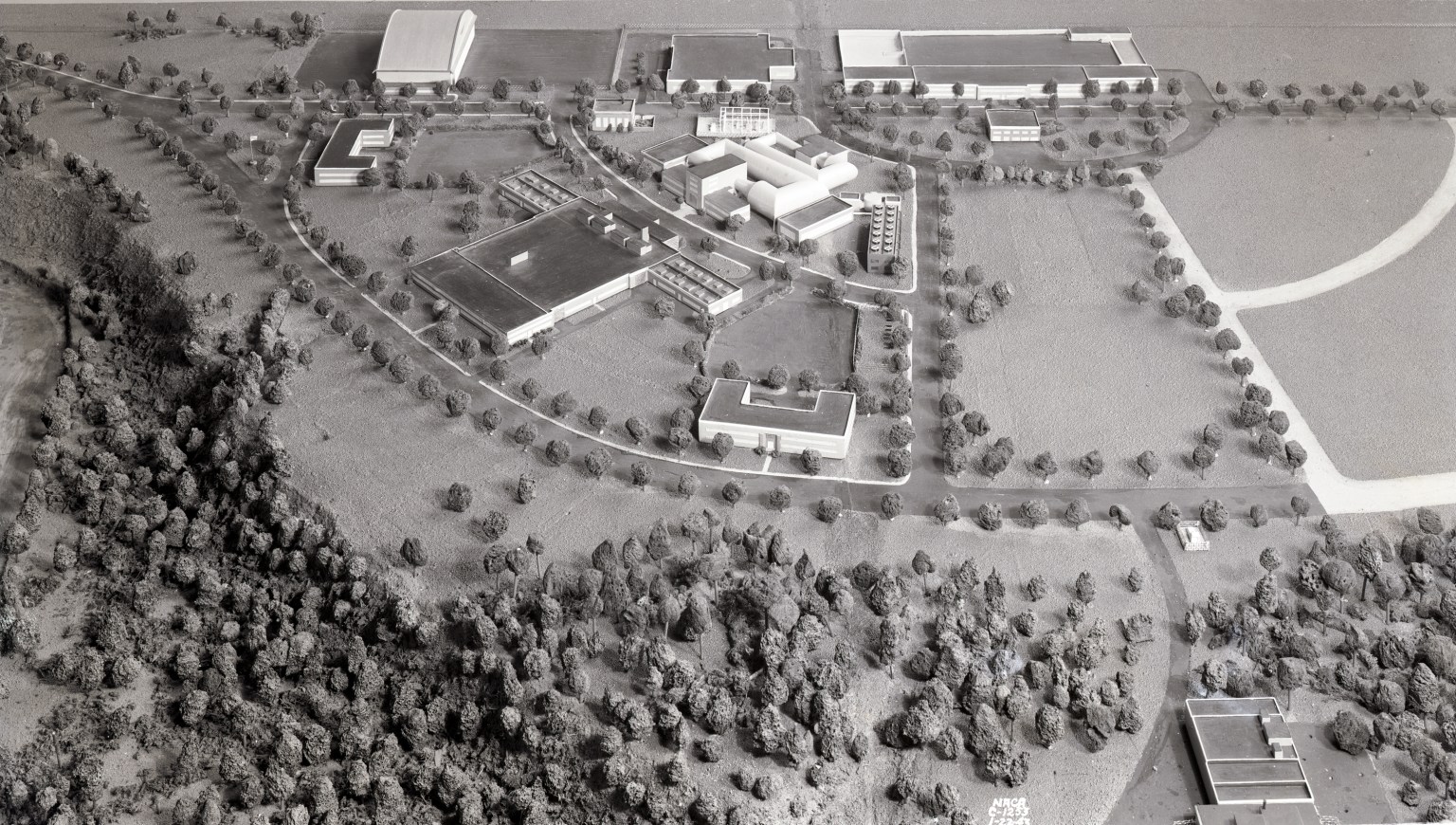
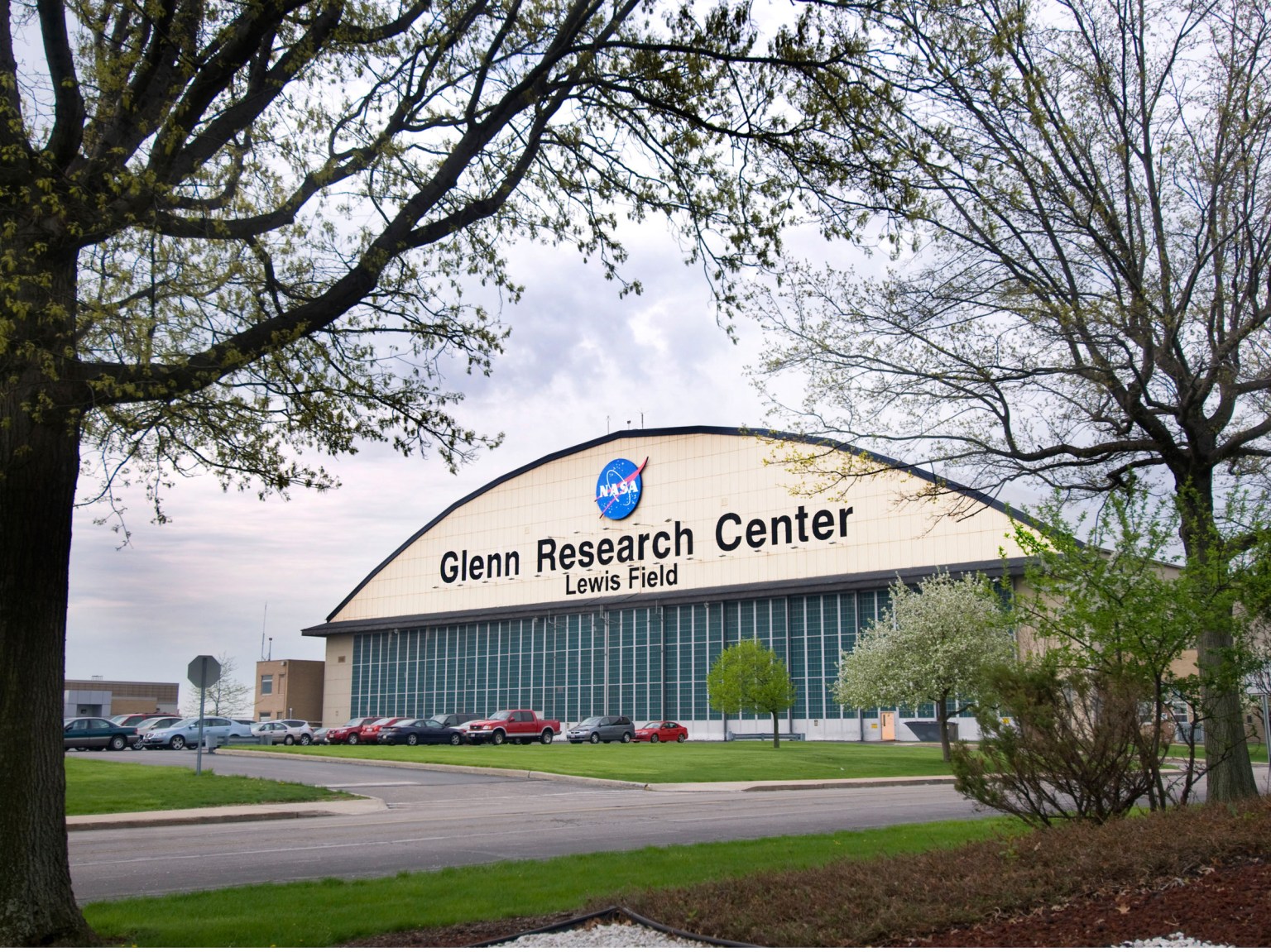
The official photographic archive at NASA’s Glenn Research Center represents a continuous visual and historic record of the center’s facilities, research, and people since its inception in 1942. This website contains nearly 40 years of images selected from a photographer’s perspective.

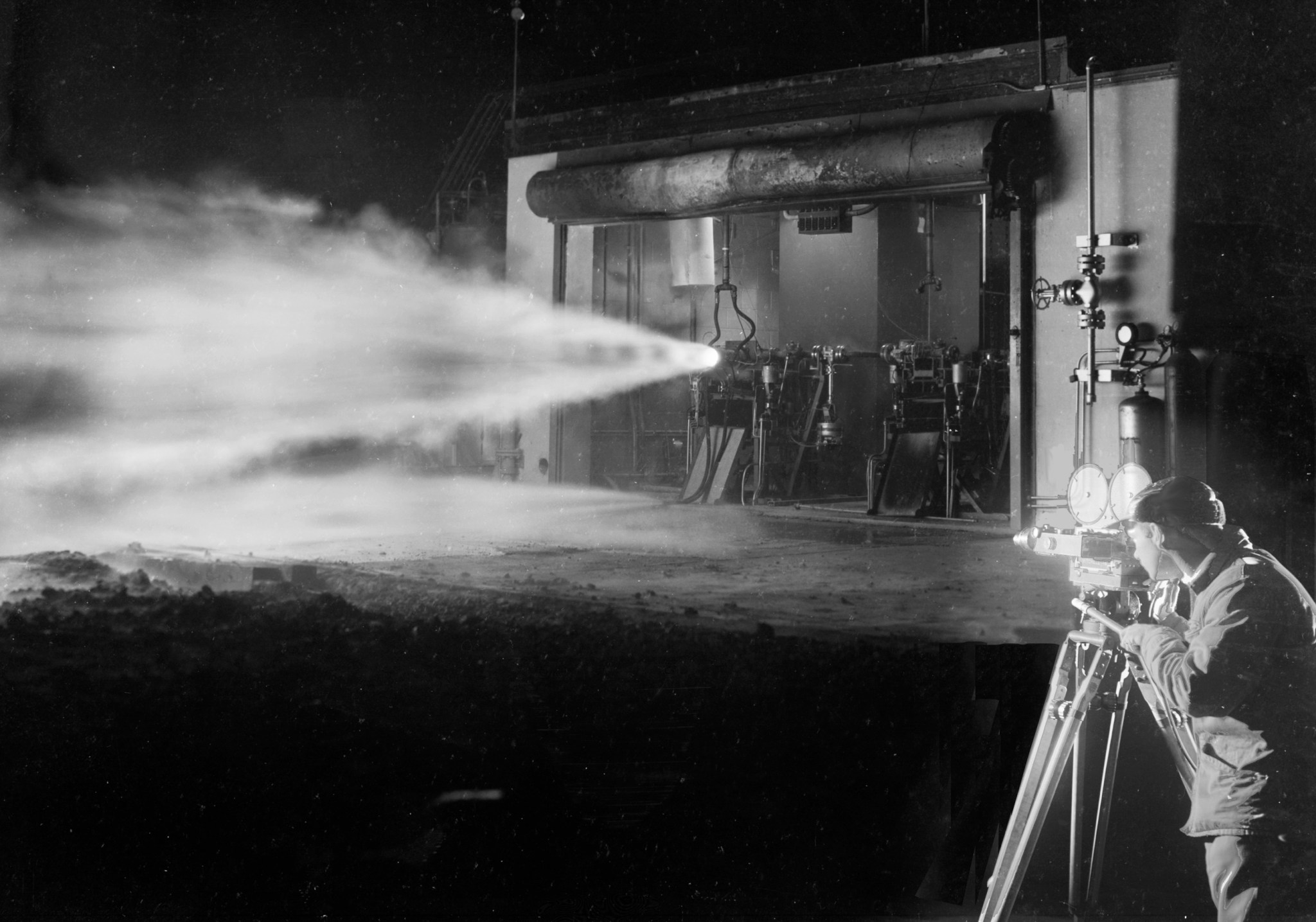
Photographer films engine firing at night.

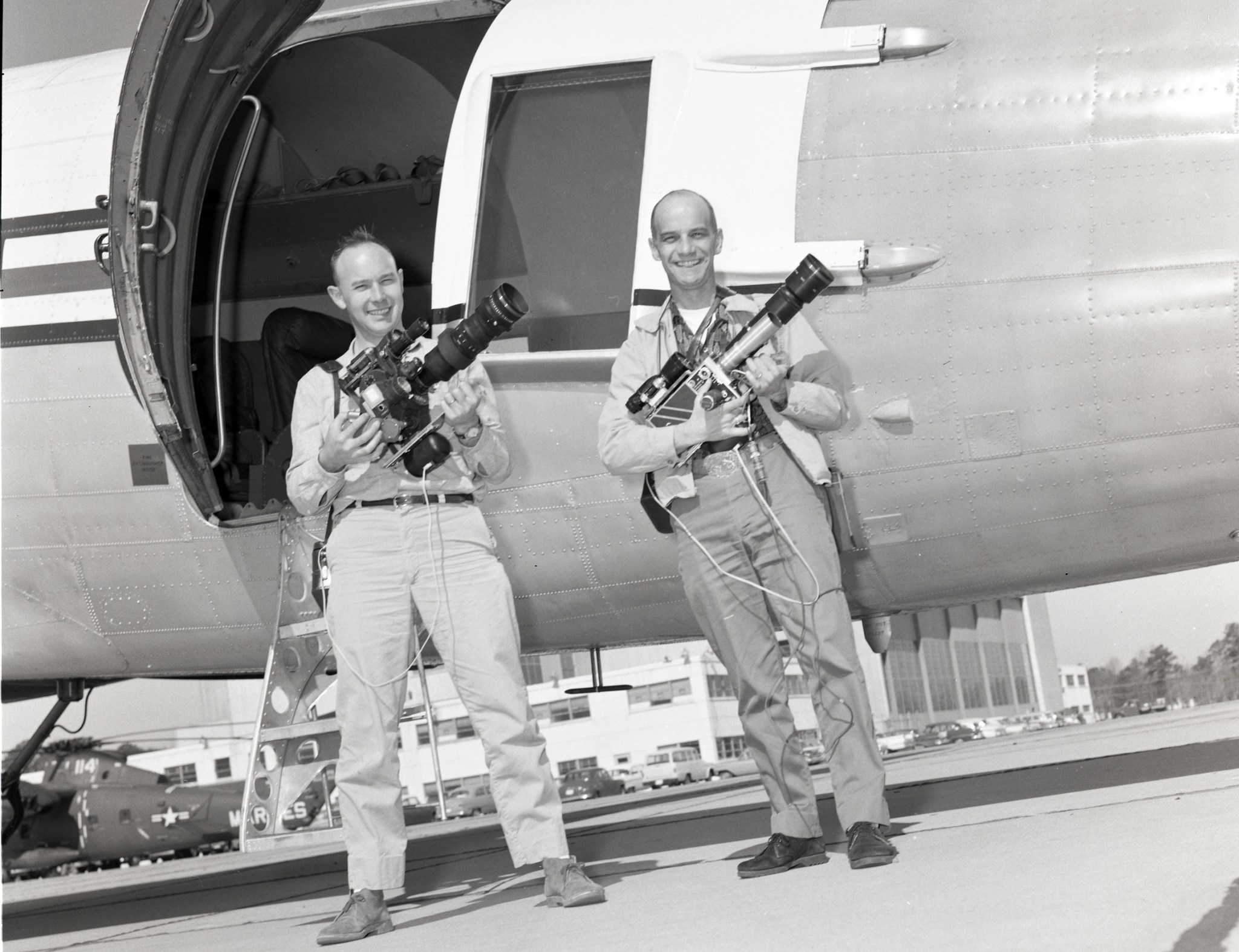
Two men with cameras beside aircraft.
NASA photographers Ernie Walker and Richard Loomis prepare to conduct aerial photography of a missile launch at Wallops Island in April 1961.
NASA

The images selected for these galleries offer an interesting glimpse into both the early research and culture of Glenn Research Center along with detailed descriptions that provide a setting and context for the current research activities at NASA.

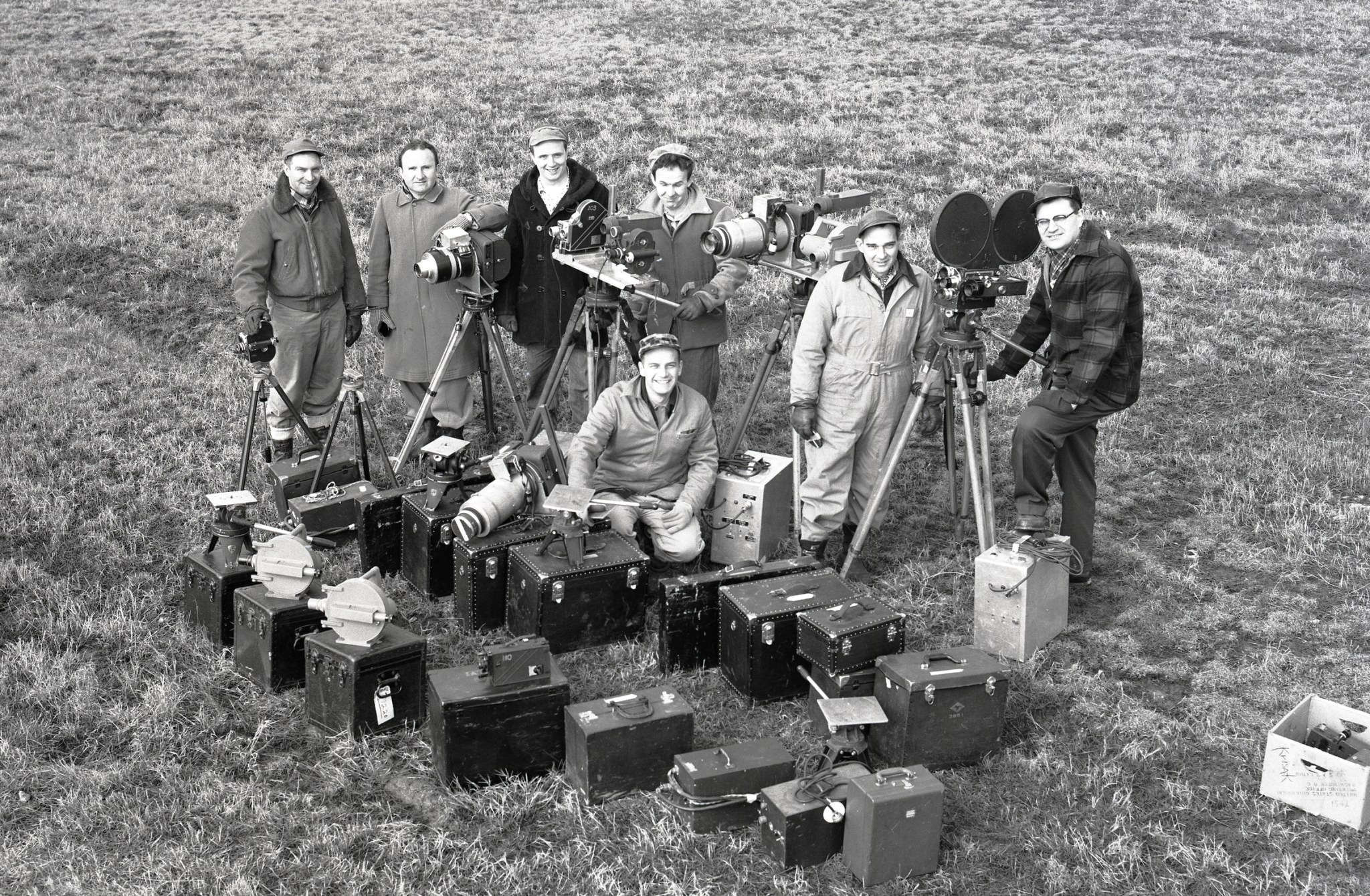
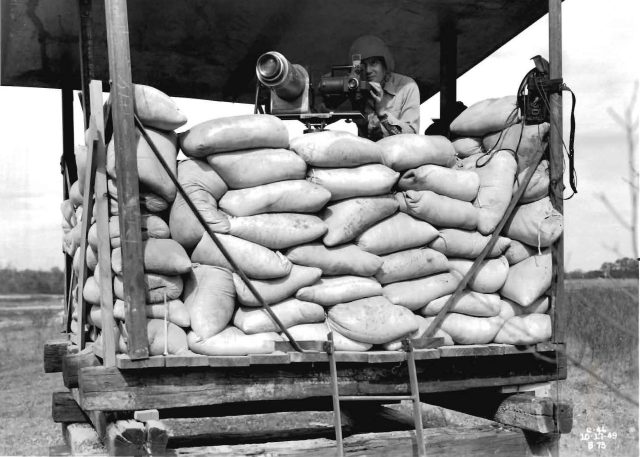
Group of men in field with cameras displayed.
NACA photographers with their equipment to film crash fire testing at the Ravenna Arsenal in 1955.
NASA

By Marvin Smith (former NASA photographer)

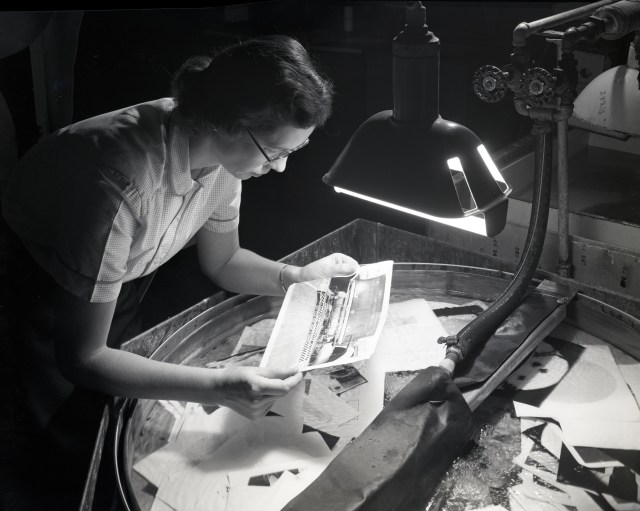
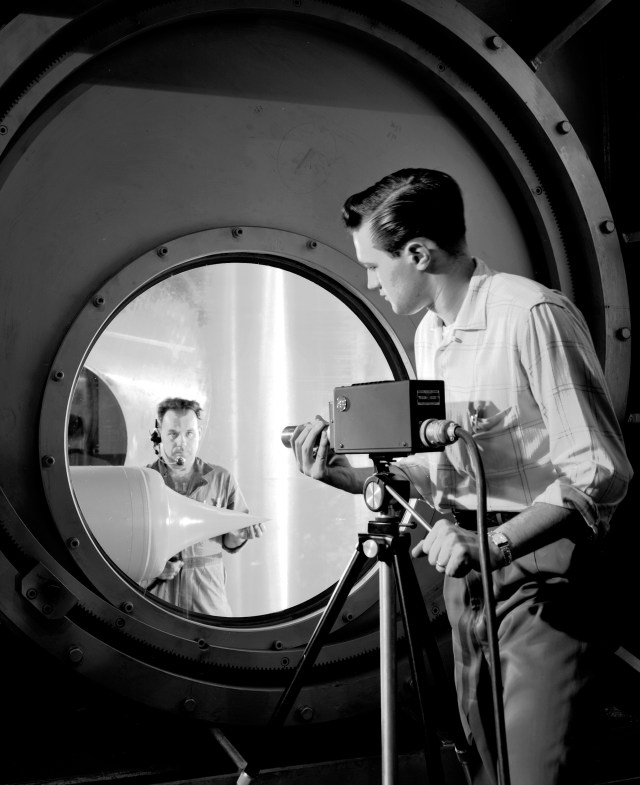
The Lewis Photo Lab was established in 1942. The staff was expanded over the next few years as more test facilities became operational. Many of the early Center photographers honed their skills in military service during WWII. In their new roles as NACA photographers, they were tasked to accompany pilots on test flights, use high-speed cameras to capture fleeting events such as combustion tests, and work with technology, such as the Schlieren camera, to capture supersonic aerodynamic phenomena.

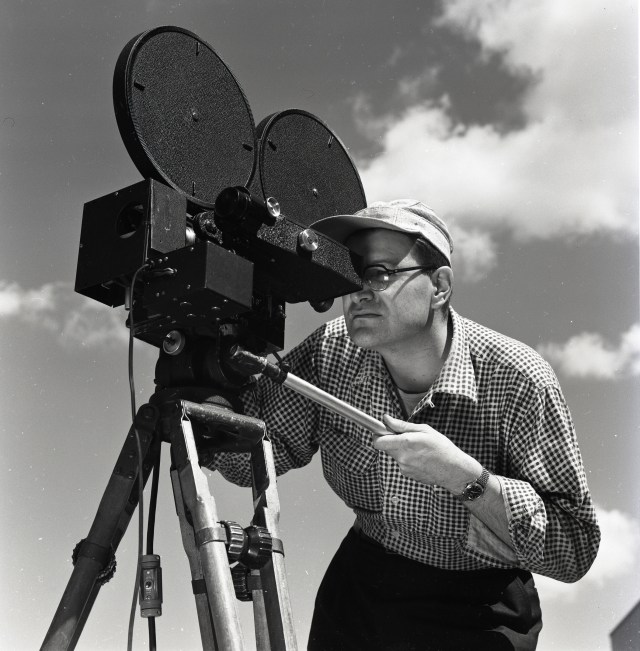
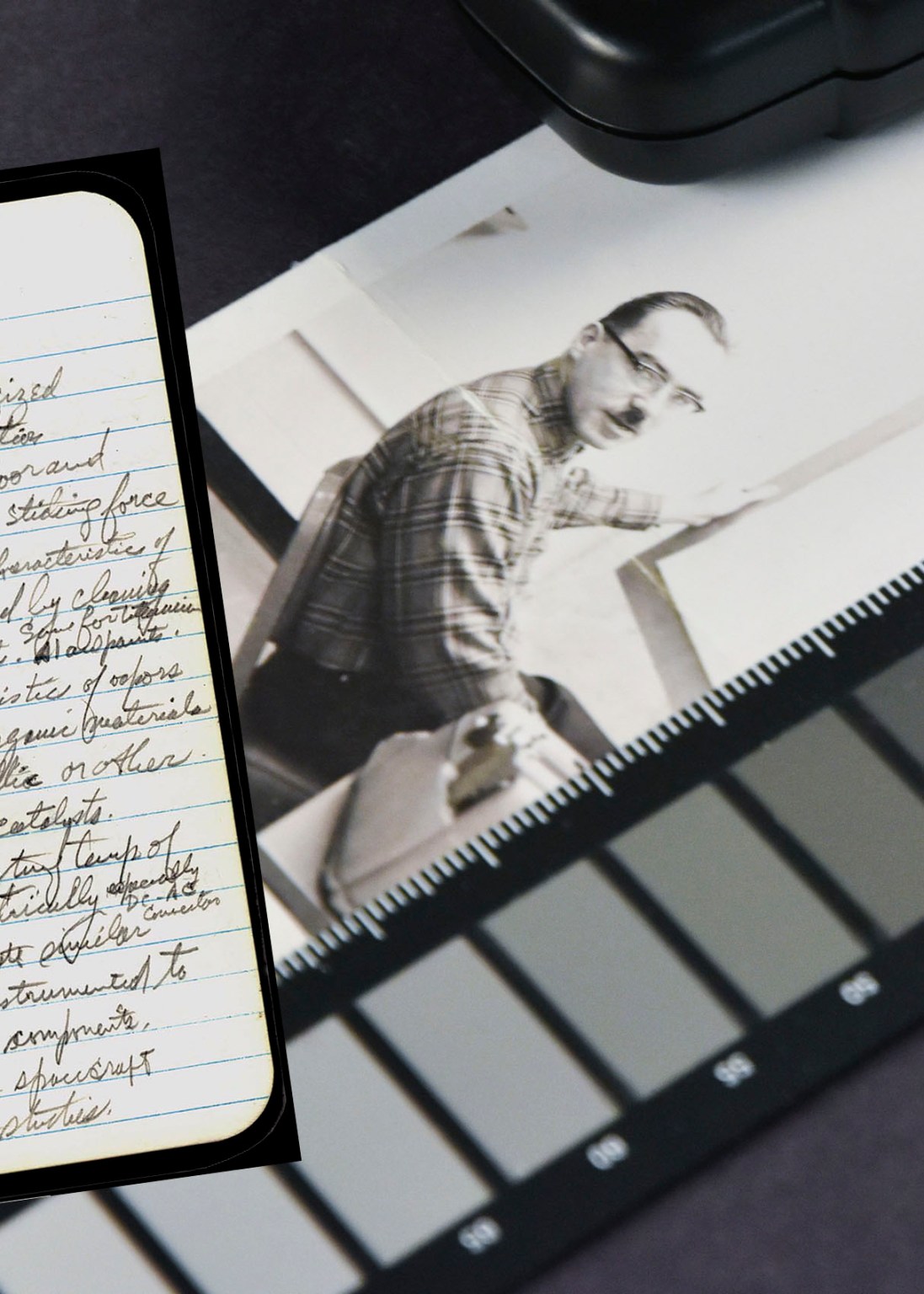
As NACA and NASA broke new ground to define air and space travel, these photographers “wrote the books” on the tools and techniques required to capture images in world-class research facilities. For instance, in 1955 NACA Lewis photographer Bill Wynne developed a method for inserting a timekeeping device on a 16mm camera that displayed elapsed time in the movie footage to one thousandth of a second. While the demands of scientific research drove technical innovation in image capture, the group also documented construction projects, performed publicity work, created images for reports, and photographed data recording equipment. These diverse work situations, coupled with difficult research demands, sparked the creativity evident in many of the images.

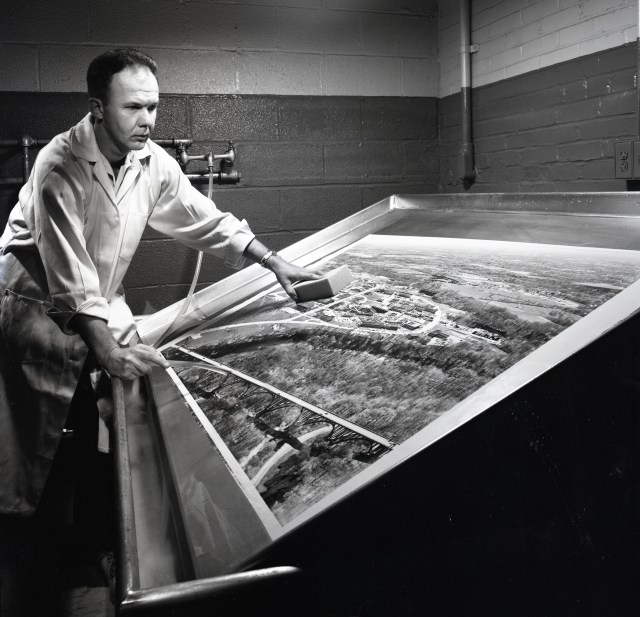
Photographers working primarily with large, field cameras and 8- by 10-inch sheet film created the early images in this collection. When portability was important, 4×5 Speed Graphic and Crown Graphic cameras were used. These cameras became the standard in the early 1960s as color film became more common. Roll film cameras were used starting in the 1970s, but 4×5 Crown Graphic cameras were still the standard for ease in negative handling and storage. More compact 35mm cameras were later used for specific applications requiring a smaller footprint and increased number of shots per roll.

A photographer bends over a camera on a tripod to take a photo of a Mercury capsule.
NASA photographer Arthur Laufman sets up a camera to film a Mercury capsule that was constructed by the Lewis Research Center (now NASA Glenn) staff prior to the Big Joe launch in September 1959.
NASA

While each new generation of camera and lighting equipment altered the photographers’ techniques and the look of the images produced during a given time period, certain image characteristics and an overall aesthetic persist. Strong image sharpness and depth of field are seen, even to this day, in many of the facility research images. Aside from the practical aspect of this technique, wherein all project hardware details are easily identified, the sharpness conveys a highly focused view not typically seen with the human eye. Coupled with high-powered, broad lighting, the images take on an almost formal look that can be striking in and of itself. Additionally, technicians and researchers are often seen posed in these images to demonstrate operations or to provide scale against a massive backdrop of hardware, reinforcing the size and scope of technical achievement.

The Photo Lab’s expertise and specialized equipment were key research tools in the early decades of the center’s existence. The staff conveyed ideas, projects, data, breakthroughs, and even accidents to the research community and general public. What continues to this day is the unique blend of technician, historian, and artist, known as a photographer, opening a window into the fascinating world inside the gates of NASA Glenn Research Center.

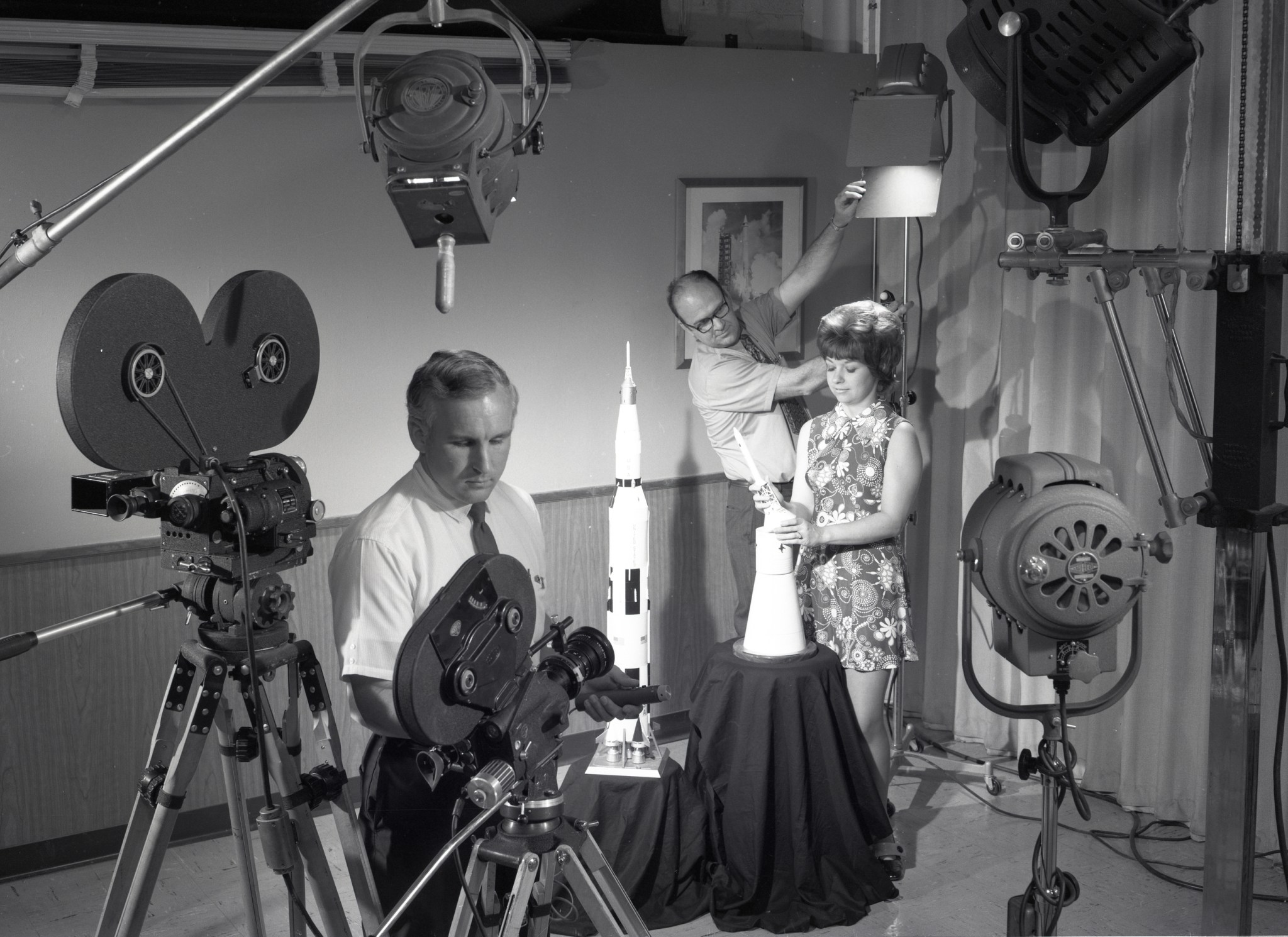
Three people in studio preparing to film.
Members of the Photographic Branch prepare to shoot a scene in the studio (1971).
NASA

Featured Story

NASA Photographer’s Career Documented the War and NASA Research

William Wynne, noted photographer and photojournalist, passed away on April 19, 2021 at the age of 99. His professional career…


Read the Story

The Best Books at Paris Photo Week

The Best Books at Paris Photo Week
During the annual international art fair, one Vanity Fair editor discovers a batch of new photobooks from lauded and emerging artists alike.

November 14, 2023

The Best Books at Paris Photo Week

L-R: Stanley Barker; Loose Joints Publishing; Myriam Boulos, Untitled,2019/Courtesy of Aperture.

Sebastião Salgado Receives Outstanding Contribution to Photography Award

Sebastião Salgado Receives Outstanding Contribution to Photography Award
Sebastiao Salgado wins Sony award
Sebastião Salgado, right.

One of the world’s foremost photographers Sebastião Salgado will receive the Outstanding Contribution to Photography Award from the Sony World Photography Awards 2024.

Brazilian social documentary photographer Salgado is known for his powerful black-and-white imagery incorporating themes of poverty, war, displacement, and the environment.

Marine iguana
A marine iguana. March 2004 © Sebastião Salgado

The Outstanding Contribution to Photography Award recognizes a person or a group of people who have made a significant contribution to photography. Salgado is the 17th recipient of the award joining the ranks of William Egglestone (2013), Elliot Erwitt (2015), Martin Parr (2017), and Rinko Kawauchi (2023).

As part of the celebrations, Salgado’s work will be shown at the Sony World Photography Awards 2024 exhibit which runs at Somerset House, London from April 19 to May 6, 2024.

Salgado personally selected the exhibition works which cover five decades of his career. They include Gold (1986) which documents the harsh conditions on the steep cliffs of the Serra Pelada gold mine in northern Brazil, and Workers (1993) which examines the challenges and demands of heavy manual labor in the oil, construction, agricultural, and mining industries.

Sebastião Salgado photograph
Draped in blankets to keep out the cold morning wind, refugees wait outside Korem camp. Ethiopia, 1984. © Sebastião Salgado

“I am honoured to receive this award, and to know that my work is reaching audiences,” Salgado says.

“Photography is my way of life, it is my language, and throughout my career I have always been interested in capturing the historical moment in which we are living, and telling the stories of our species and our planet.

“A photographer photographs with his heritage, and in my work I seek to explore our shared human experience.”

Salgado photograph
The fight against burning oil wells, Kuwait oil fields, 1991. © Sebastião Salgado

Salgado was born in 1944 in Aimorés, Brazil and embarked on a full-time career in photography in 1973.

He is influenced by his upbringing in Brazil which was marked by the great expanse of nature and open skies. He joined Magnum Photos in 1979, leaving in 1994 to co-found his own agency, Amazonas Images, with his wife.

It’s far from the only award Salgado has received, being honored with numerous gongs in his lifetime.

Last year, PetaPixel interviewed Salgado about his 2019 project Amazônia which was nine years in the making.

Here’s the photo of Tony the spectacled bear that won a Canadian the Nature Photographer of the Year award

Here’s the photo of Tony the spectacled bear that won a Canadian the Nature Photographer of the Year award

Canadian photographer Jacquie Matechuk now holds the title of Nature Photographer of the Year 2023 for a photo of an endangered bear.

The award was given by Nature Talks, a photography agency based in the Netherlands, for her photo titled “He Looks to the Heavens”.

Matechuk also won in the mammals category for the photo, which shows a spectacled bear — named Tony — sitting on a moss-covered branch in the Andean Mountain Range in Ecuador.

“When a gentle rain began to fall across the valley, he stood and turned to look up as though embracing the cool moisture on his speckled face,” Matechuk said in a press release announcing the award. “And for a fleeting moment, the warmth of muted sunlight falls across his face as ‘He Looks to the Heavens.'”

Based in Cochrane, Alta., Matechuk is a full-time sports and wildlife conservation photographer focusing on capturing “the moment” that gives her subjects “a voice to be heard.”

To capture her winning photo, Matechuk went hiking more than 2,400 metres above sea level through the mountains with a local guide who has spent decades learning about and protecting the endangered Spectacled bears, the press release reads.

“In their natural habitat and with our guide’s intimate knowledge of each bear, we were quickly accepted by them. We kept a respectful distance to ensure their comfort and it paid off in spades,” Matechuk said in the press release. “They would nurse, fall asleep, cuddle, forage, and play, seemingly more oblivious to our presence with each passing encounter.”

In this photo by Jacquie Matechuk, a spectacled bear named Tony is letting rain fall on his face as he looks up to the sky. (Jacquie Matechuk via Nature Talks)

Nature Talks chairman Marco Gaiotti said the photo was chosen by the jury because of the “three-dimensionality” of light and colours mixed with the moss from the fig tree, which accentuates the features of the bear.

“The pose of this spectacled bear fits perfectly into the texture of the photograph,” Gaiotti said in the press release.

Matechuk took the photo with a Canon R5 camera using no additional accessories in a “very tight and awkward location.”

She captured the image holding her camera with a shutter speed of 1/125 and an ISO of 3200.

CANADA-BASED PHOTOGRAPHER WINS LANDSCAPE CATEGORY

Another Canadian photographer also earned an award from Nature Talks.

Thomas Vijayan, a Canada-based photographer who originated from Kerala, India, won the landscape category.

Thomas Vijayan (pictured) is a Canada-based nature photographer. (Via Nature Talks)

In his photo of the Austfonna Ice Cap off Norway’s Svalbard Island, Vijayan used a drone to “artfully” stitch together 26 frames of the ice.

The photo showcases what the jury calls the “force of melting glaciers” with a waterfall pooling into the Arctic Ocean from the cap.

According to the press release, Vijayan said he had been to the ice cap before.

“This year, the ice cap began melting earlier than usual, giving rise to this captivating waterfall,” he said in the press release. “While the scenery held an enchanting allure, it simultaneously served as a stark reminder of the ice cap’s diminishing state, likely to vanish within a few years.”

Gheorghe Popa, a member of the Nature Talks jury, said Vijayan’s photo was chosen because of how it highlighted the “majesty” of nature.

“This image inspires a stillness, but also a lot of power,” Popa said in the press release. 

This photo by Thomas Vijayan combined 26 frames from a drone of the Austfonna Ice Cap. (Thomas Vijayan via Nature Talks)

In memoriam: Joy Rosenthal, photography instructor

In memoriam: Joy Rosenthal, photography instructor

Joy Rosenthal, a longtime Virginia Tech photography instructor, passed away suddenly on Nov. 7.

Rosenthal started teaching photography for the School of Visual Arts over 20 years ago and was an integral part of non-majors class offerings for the past several years. Despite only teaching online asynchronous classes in recent years, Rosenthal often showed up to attend face-to-face openings and events. 

Rosenthal, who began taking photos in 1986 when her father gave her a camera for her high school graduation, said about her photography, “I believe in exploring and creating new means of expression.” Her art can be found on her personal website.

“She was the kindest, sweetest, warmest, most loving, most creative, and most giving person,” said Djordje Minic, Rosenthal’s husband and a physics professor at the university. They have two children, Esther and David.

A wreath in memory of Rosenthal was placed at War Memorial Chapel on Nov. 13. For more information, visit McCoy Funeral Home.

Museum Program: Photography program and Thanksgiving closure

Museum Program: Photography program and Thanksgiving closure

Photography Program: Estes Park Enlarged

On Saturday, Nov. 18, at 1:00 p.m. join photographer Mic Clinger as he presents historic panoramic images of Estes Park and Rocky Mountain National Park. Through a panoramic slide show, Clinger will examine the development of this type of photography and why it became so popular. The program will take place in the Estes Park Museum Meeting Room, light snacks and refreshments will be provided. This program is free and open to the public.

Many forms of photography have showcased Estes Park and Rocky Mountain National Park as a beautiful place. One of those forms is panoramic photography. Based on the attraction of a medium that is at least three times wider than a normal shot, panoramic photography captures the beauty of the area. Mic Clinger is an avid photographer, and a co-author of Estes Park and Rocky Mountain National Park: Then & Now, revised edition. He became very interested in panoramics that exists of Estes Park and Rocky Mountain National Park and has studied this form of photography for several years. Mr. Clinger has a background in engineering and is presently employed as a Systems Analyst.

A panoramic shot of Estes Park. (Estes Park Museum/Courtesy Photo)

Estes Park Museum Thanksgiving Closure

In observance of the Thanksgiving holiday, the Estes Park Museum will be closed Thursday, Nov. 23. The Museum will resume normal operating hours, Friday, Nov. 24. Excluding the holidays, the Museum’s gallery hours are Wednesdays through Saturdays from 10:00 a.m. to 4:00 p.m.

Some clean, well-lighted places at the Griffin

Some clean, well-lighted places at the Griffin

WINCHESTER — The main show at the Griffin Museum of Photography has an unusual subject: artist’s studios and photographer’s darkrooms. In “Leaving Their Mark: Studio Practice,” Chris Rauschenberg and Meggan Gould let us see where the magic happens, and the images can themselves be a bit magical.

Actually, the subject isn’t quite so unusual right now. “Creative Spaces: The Photographer’s Studio as Inspiration opened recently at the Museum of Fine Arts and runs through April 28.

Chris Rauschenberg, “In Memory of Robert Frank,” 2010.Chris Rauschenberg

“Leaving Their Mark” and the three other shows currently up at the Griffin run through Dec. 10.

Rauschenberg (yes, he’s Robert’s son) has 11 color photographs of artist studios. The plural applies even within each photograph, since they’re composites of multiple images. Yet those larger photographs don’t look cluttered or jumbled, despite showing several studios. The subsidiary images really do cohere within the frame — assuming, that is, the photos were framed. They’re not, nor are they matted.

The unadorned presentation complements the informality of the subject matter. (What, you thought artists’ studios would look … formal?) Unadorned and informal are especially welcome qualities, since most of the photographs are so big. “In Memory of Robert Frank,” for example, is 58 inches by 12 inches. Somehow Rauschenberg manages to make the pictures seem more inviting than imposing.

Meggan Gould, “Hewlett-Packard inkset (milk),” 2020.Meggan Gould

Gould’s nine darkroom photos are engaging in several ways. There’s the human angle. Each darkroom reflects the personality of its user. There’s the nostalgia angle. In our digital age, darkrooms are throwbacks. There’s the, so to speak, inside-out angle. Darkroom are about being dark, yet Gould shows them in all their clean (if not tidy), well-lighted glory. Finally, there’s the hang-out angle. These are such appealing spaces, full of all sorts of interesting things.

Like Rauschenberg’s photographs, these darkroom images are unframed and unmatted. Gould has eight other photographs in the show, from her ongoing “inksets” series. Those photos are framed and matted. They show items usually thought of as white (marshmallows, tampons, milk), yet here they’re positively candy-colored. What gives?

Gould has opened up ostensibly empty color-printer cartridges, concocted paints out of the pigments that inevitably remain inside, and applied them to those color-absent items. The “cheerfully hued, chroma-toxic” results, as Gould puts it, are both great fun to look at and a reminder of the chemical hazards we leave in our wake.

Janice Koskey, “Blushing Storm.”Janice Koskey

The Griffin likes to have photographers enter into a visual dialogue with work by the museum’s namesake, Arthur Griffin. The latest participant in this “Illuminating the Archive” series is Janice Koskey. She has nine photographs on display, alongside three by Griffin and one by his first wife, Claire. The common theme is nautical: dinghies, the beach, a seascape.

Eight of Koskey’s photographs are in color, which she uses to memorable effect. Sometimes it’s so lusciously saturated as to seem painterly. With “Blushing Sunset,” the veins of orange-rose she’s captured within menacing storm clouds have a quite-ravishing delicacy that recalls watercolor.

David Johnson, “RT 050,” 2013.David Johnson

David Johnson, a photographer, and Philip Matthews, a poet, are collaborators. “Wig Heavier Than a Boot,” a marvelous title, comprises three videos, a dozen or so photographs, and several poems. Some of the photographs are landscapes. Others are character studies of Petal, a feminine persona Matthews … assumes? takes on? performs as? presents? The difficulty in settling on a verb is a reminder of how much persona is a matter of expression, and thus verbal, rather than just one of appearance and presentation.

Cody Bratt, “Alpaha II.”Cody Bratt

Cody Bratt’s “The Other Stories” is a sort of family saga. It focuses on a very dark side — those “other” stories — exhibited by both his paternal great-grandfather and maternal grandfather. There are family photographs, drawings, letters, bits of text: family history as documentation, as lamentation, as indictment. Some of the photographs are torn or distressed, others Bratt has painted or drawn on. The emotional forcefulness on display is unmistakable. Yet the emotions feel inchoate and opaque.

LEAVING THEIR MARK: STUDIO PRACTICE — Chris Rauschenberg and Meggan Gould

ILLUMINATING THE ARCHIVE: Janice Koskey

WIG HEAVIER THAN A BOOT: David Johnson and Philip Matthews

THE OTHER STORIES: Cody Bratt

At Griffin Museum of Photography, 67 Shore Road, Winchester, through Dec. 10. 781-729-1158, grffinmuseum.org


Mark Feeney can be reached at mark.feeney@globe.com.

Photographing the Collars of Ruth Bader Ginsburg

Photographing the Collars of Ruth Bader Ginsburg

On Sept. 18, 2020, we were visiting my Aunt Esther in Kew Gardens, Queens, for Rosh Hashanah when we heard about the passing of Ruth Bader Ginsburg. My 16-year-old daughter Emmanuelle—a queer, hard-core feminist, and mountain of emotions—could not stop crying. Even though we knew that Judge Ginsburg was 87 years old, and battling pancreatic cancer, we were still shocked. We thought she would live forever.

Emmanuelle cried for most of the F train ride home to our stop at 23rd Street in Chelsea. I tried to comfort her. We talked about how Ginsburg touched so many aspects of our lives—as a Jew, a woman, a New Yorker, a feminist, and a fighter for the issues we care about deeply: LGBTQ rights; gender and racial equality; and reproductive and parental rights. Her words, “Women will only have true equality when men share with them the responsibility of bringing up the next generation,” were brought up in discussions with my husband and children.

Ginsburg was also a daughter of immigrants, much like my own children: I moved to New York from Israel in 1995; my husband, also Israeli, joined me shortly after; and our son and daughter were born and raised in the U.S. Ginsburg’s achievements broke so many barriers, and her story held special significance for Jewish women like myself who dreamed of living a life that combined career success with motherhood—and, in Ginsburg’s case, also practicing the principle of tikkun olam, a concept in Judaism for repairing the world.

The week after her death, I felt an urge to create work inspired by Ginsburg, but I couldn’t find a way to approach it. Much of my personal photographic work has revolved around intimacy, family, motherhood, and women, but how do you capture the legacy of a personal hero? So when I was approached by Katherine Pomerantz, TIME’s director of photography, about taking on the assignment of photographing the justice’s collars for the magazine, it felt like a prayer was answered. For me, this was the equivalent of documenting a superhero’s costume, with all of the significance it held for myself, my family, and millions of Americans.

image
Ruth Bader Ginsburg RBG's Collars

I spilled my heart out to Katherine and shared the strong connection I felt to Ginsburg’s legacy. After she gave me the assignment, I ran to my daughter’s room and we both burst into screams of joy. I asked my husband Eran, also a graduate of the photography program Bezalel Academy of Art in Jerusalem, to help me on this shoot. This assignment was now a family affair.

Ruth Bader Ginsburg RBG's Collars

It was important for me to do my own research before the shoot. I learned that Ginsburg initially started wearing these collars as a way to distinguish herself from the male justices and represent her female identity. “The standard robe is made for a man because it has a place for the shirt to show, and the tie,” she told the Washington Post in 2009. “So Sandra Day O’Connor and I thought it would be appropriate if we included as part of our robe something typical of a woman. So I have many, many collars.” I studied photographs and videos of Ginsburg to familiarize myself with the different materials, colors, and shapes of the pieces.

image
Ruth Bader Ginsburg RBG's Collars

On Oct. 28, Eran and I drove to D.C., arriving a day before the shoot. I hardly slept that night. There was so much I was thinking about, to be honest, and also worrying about. I would have six minutes to shoot each collar, and the lighting, exposure, and composition would all need to be perfect. There was no room for miscalculation. The next morning we arrived at the Supreme Court. My heart was pounding as we were escorted through the corridors of the highest court in the land, where life and death decisions were made, and where Ginsburg spent the last twenty-seven years of her professional life. My arrival also coincided with conservative Justice Amy Coney Barrett’s first day. I recognized the significance of this timing. As an immigrant, I felt a sense of pride: I came to America from another country and now I was taking photographs at the Supreme Court.

I treasured every moment in the spacious room in the glorious Supreme Court building, listening to the stories about Ginsburg by those who worked alongside her. A set of drawers was rolled into the room, accompanied by a delegation of staff. There was silence in the East Conference room. We could feel the presence of the collars in that space. Each drawer held so many stories, memories, and meaning.

I got to work.

RBG collars

Elinor Carucci is an award-winning fine art photographer whose work has been featured in solo and group exhibitions worldwide and The New York Times Magazine, New Yorker, Time, W, Aperture, and ARTnews, among others.

Adapted from “The Collars of RBG” by Elinor Carucci and Sara Bader, published by Clarkson Potter, an imprint of the Crown Publishing Group, a division of Penguin Random House LLC, New York.