Photography

Obituary: Dan Rios, longtime newspaper photographer who chronicled San Diego County history, dies at 84

Obituary: Dan Rios, longtime newspaper photographer who chronicled San Diego County history, dies at 84

Dan Rios, a longtime North County newspaper photographer who donated his 1 million-image collection to Cal State San Marcos in 2018, died Sept. 6 at his home in Escondido. He was 84.

From 1968 to 2001, Rios shot roughly 43,000 assignments for the Times-Advocate and North County Times newspapers, ranging from wildfires to U.S. presidential visits to murder trials. Sean Visintainer, head of special collections at CSUSM, described the vast collection of image negatives as “an exceedingly important” chronicle of the region’s people, places and historical events.

Over the past eight years, Rios battled kidney failure with thrice-weekly dialysis treatments. Three weeks ago, he chose to end treatments and enter hospice care. Theresa Rios, his wife of 42 years, said that in her husband’s dying weeks, he hired workers to complete an unfinished home remodeling project to ensure that nothing was left undone when he died.

“He was very good to me, and he was a good man,” she said. “I loved the way he always kept his word on anything he promised me to the end.”

Born April 10, 1939, Rios was one of six children born in the San Joaquin Valley town of Hanford to a day laborer and housekeeper. The family moved to San Diego for the weather when Rios was 13, settling in a house near the Ocean Beach Pier. He dropped out of school in the eighth grade to work for a landscape maintenance company. Two years later, he started his own gardening business that became so successful, he hired his father after the first year.

But at age 21, he realized he had hit the ceiling of what he could accomplish in his career because he couldn’t speak or read English, couldn’t do complicated math and didn’t have a high school diploma. So he returned to school to earn his degree, then enrolled in community college, studying for a degree in civil engineering. When a professor encouraged him to find a hobby to enjoy when he retired, Rios bought one of the cameras he had been admiring at a nearby Sears and enrolled in a photography class at City College. At 26, he knew instantly that he had found his life’s calling.

“I loved everything about it,” he told the Union-Tribune in 2020. “I loved shooting; I loved working in the darkroom. I’d buy 100-foot rolls of film and go through them so fast. I’d spend eight or nine hours a day in the darkroom without even realizing how much time had passed. It was so much fun.”

Dan Rios goes through his photo negatives in 2020 with archivist Laura Nelson at Cal State San Marcos.

Dan Rios goes through his photo negatives in 2020 with archivist Laura Nelson at Cal State San Marcos. He passed away on Sept. 6, 2023, at the age of 84.

(Don Boomer/For the San Diego Union-Tribune)

His college photography teacher helped him get a job taking photos for an advertising agency for $1.50 an hour. That’s where he learned to shoot and develop color photos, which made him a hot commodity to the Times-Advocate, which in 1968 was looking to hire a photographer who could help the newspaper transition from all black-and-white photos.

As chief photographer at the T-A, Rios saw through the paper’s transition to color; its transition from an afternoon to a morning newspaper in 1990; and the merger with the North County Blade-Citizen in 1995 to create the North County Times. He also oversaw the paper’s transition from film to digital photography in the 1990s. He retired in 2001.

Among the many images he captured during his career were visits to the region by several U.S. presidents, wildfires, flash floods, courtroom trials, sailings of the Star of India, Chargers games, animal births at what’s now the San Diego Zoo Safari Park and the opening of the Coronado bridge. Asked in 2020 to pick a favorite image, Rios said he couldn’t choose because he loved them all.

Retired marketing manager Laurie Brindle, who worked with Rios at the T-A and North County Times, said she remembers him as someone so full of life, laughter and joy that “you couldn’t help but smile when you saw him. He was just the greatest guy, so much fun to work with. He lit up the room. And he was such a good photographer because he was so sensitive to the people he captured on film.”

Rios began storing the newspapers’ negative archives at his home in 1977 when T-A editors decided to throw them out to make room for a newsroom expansion. He credits his college photography teacher with instilling in him the value of the archive, saying: “Your negatives are the most important thing you have. Don’t sell them, don’t give them away and don’t ever lose them.”

Photographer Dan Rios uses an eye scope device to look at negatives at Cal State San Marcos in 2020.

Photographer Dan Rios uses an eye scope device to look at negatives at Cal State San Marcos in 2020.

(Don Boomer/For the San Diego Union-Tribune)

Around 2012, a group of Escondido historians affiliated with Escondido Library’s archive center, The Pioneer Room, began encouraging Rios to find a permanent and public home for the negatives, which at the time were stored in nearly 800 cardboard banker’s boxes in his garage.

In 2017, he began working with the Special Collections staff at CSUSM on a plan to donate his archive and work with the staff to help catalog the images. Over the past several years, and with the help of the public, the images have been logged and identified, and those spreadsheets are in the process of being uploaded online. Only 1 percent of the images themselves have been digitized so far, but the online database can be used to request images in the collection at archivesearch.csusm.edu/repositories/3/resources/8.

“Dan and his family were kind enough to donate us the copyright, so the images are freely available to the public for nonprofit education purposes without charge,” Visitainer said. “It’s really a great public good that Dan left North County. We’re happy Dan thought of us and we were able to make it available.”

Besides photography, Rios was also an active gardener and furniture-builder.

Rios is survived by his wife Theresa, his three children and Theresa’s four children, as well as many many grandchildren and great-grandchildren. He was pre-deceased by one son. Rios’ remains were cremated at his request. His family is planning a private memorial.

pam.kragen@sduniontribune.com

Global Street Photography Contest Highlights Slice-of-Life Snapshots

Global Street Photography Contest Highlights Slice-of-Life Snapshots
Women carrying baskets on their head at market in Ghana

“A delicate balance” by Regula Tschumi. Finalist.
Location: Ghana

With its monthly photography contests, The Independent Photographer promotes talented photographers around the world. Judged by American street photographer Richard Sandler, the March 2023 Street Photography competition demonstrates the high quality of the work creatives submit. From a barber on the streets of India to a colorful market in Ghana, these candid moments are incredible snapshots of life across the globe.

Photographer Alain Schroeder won the contest for his image of a man curled up for a nap in a narrow alleyway in India. Schroeder’s ability to snap the photo at the perfect moment captured the judge’s imagination. “This is my kind of masterpiece,” Sandler admits. “The formal composition and the people within the frame are in a perfect, yet uneasy, balance. The light within the picture is varied and painterly and subtle so that the air feels dream-like and evocative. The best pictures, like this one, ask more questions than they answer.”

Sandler also appreciated second-place winner Daniel Ramos’ ability to bring clarity to a complicated situation. Bringing chaos into order, Ramos is able to capture the instant that cotton candy is being whipped up for a crowd as the sun sets in Mexico City.

All of the top 10 photos demonstrate the ability to quickly make observations and take pictures that immortalize a moment in a manner that transforms them into a work of art. Be sure to check out all of The Independent Photographer’s monthly photo contests, which are all judged by esteemed photographers like Sandler, Steve McCurry, and Jimmy Nelson.

And if you are a street photographer yourself, there is a new edition of the contest running during the month of September. The September Street Photography competition is accepting entries until September 30, 2023.

Check out the incredible winners of The Independent Photographer’s Street Photography Contest.

Award Winning Street Photography by Alain SchroederAward Winning Street Photography by Alain Schroeder

“Dreamland” by Alain Schroeder. 1st place.
Location: Varanasi, India

Cotton Candy Being Made in Mexico CityCotton Candy Being Made in Mexico City

“Untitled” by Daniel Ramos. 2nd Place.
Location: Mexico City, Mexico

Dogs seeking shelter from a storm in KolkataDogs seeking shelter from a storm in Kolkata

“Shelter from the Storm” by Jonathan Jasberg. 3rd Place.
Location: Kolkata, India

Street barber in KolkataStreet barber in Kolkata

“A Close Shave” by Arpit Mehrotra. Finalist.
Location: Kolkata, India

This contest is one of 12 monthly contests that the photography site runs.

Woman wearing fashionable sunglasses in Piazza di Spagna in Rome.Woman wearing fashionable sunglasses in Piazza di Spagna in Rome.

“Untitled” by Gian Marco Venturi. Finalist.
Location: Rome, Italy

Traveler girl from Ireland posing for the camera at a playgroundTraveler girl from Ireland posing for the camera at a playground

“The Playground” by Joseph-Philippe Bevillard. Finalist.
Location: Galway, Ireland

Men on horses in ChennaiMen on horses in Chennai

“Untitled” by David Keith Brown. Finalist.
Location: Chennai, India

Street Photography in Trinidad, CubaStreet Photography in Trinidad, Cuba

“Puppets” by Johannes Maechtel. Finalist.
Location: Trinidad, Cuba

Image of a commuter taking the stairs to catch the subway in ChicagoImage of a commuter taking the stairs to catch the subway in Chicago

“Subway Light Play” by John Yuhas. Finalist.
Location: Chicago, USA

The Independent Photographer: Website | Facebook | Instagram

My Modern Met granted permission to feature photos by The Independent Photographer.

Related Articles:

24 Dynamic Winners of the World Sports Photography Awards

Eye-Opening Winners of the Close-up Photographer of the Year Contest

22 Winners and Finalists of the 2023 Sony World Photography Awards Open Competition

Winners of the 2023 BigPicture Natural World Photography Competition Embrace Our World’s Biodiversity

New Portrait photography feature to adjust subject focus not exclusive to iPhone 15

New Portrait photography feature to adjust subject focus not exclusive to iPhone 15

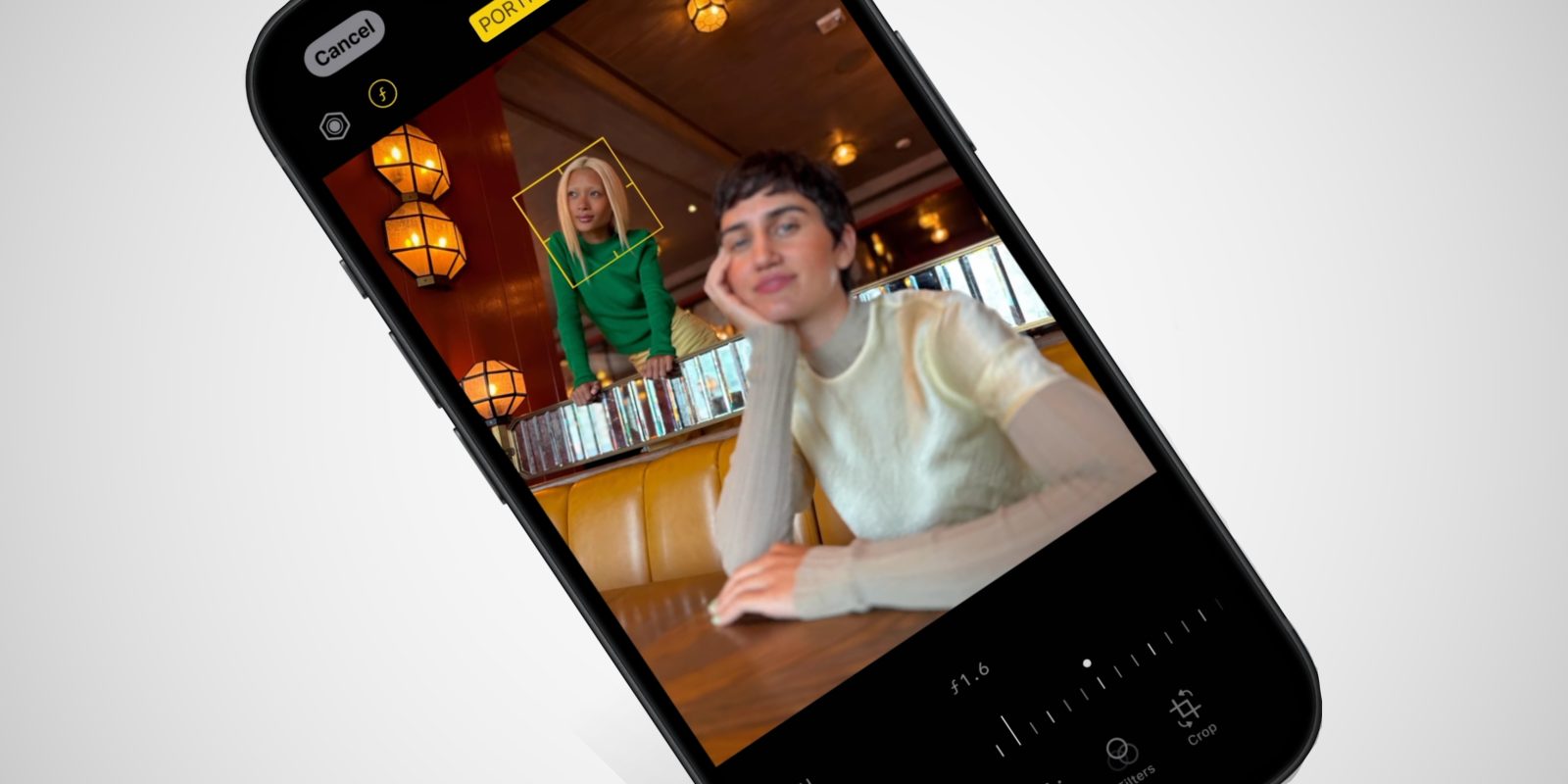
During the September keynote event, Apple touted a whole bunch of new Portrait mode features for the iPhone 15 series, like automatic capture of Portrait mode shots while using the main shooting mode in the Camera app and the ability to change the subject in focus in the Portrait mode shot after you have taken it.

Well, it turns out that at least some of that stuff is also coming to older phones too. Twitter user Dylan pointed out that on the iOS 17 release candidate build, iPhone 14 Pro users can also refocus their Portrait mode shots after they have been taken.

This story is supported by Mosyle, the only Apple Unified Platform. Mosyle is the only solution that fully integrates five different applications on a single Apple-only platform, allowing businesses and schools to easily and automatically deploy, manage, and protect all their Apple devices. Over 38,000 organizations leverage Mosyle solutions to automate the deployment, management, and security of millions of Apple devices daily. Request a FREE account today and discover how you can put your Apple fleet on auto-pilot at a price point that is hard to believe.

“This

Until this week, if you took a Portrait mode shot, the desired subject was “baked in” at the time of taking the photo, so the same foreground region would always be in focus, and the same background region would be blurred. Users could adjust the intensity of the blur, though, or remove it altogether.

But now, when you edit a Portrait photo, you can tap on a part of the image to change the focus altogether. If two people are in the photo, for example, you can switch which person is blurred out by tapping on their faces.

This is one of the big marketing features of the iPhone 15 and iPhone 15 Pro camera system, but it’s actually enabled wholly through software, and Apple has also made it available on iPhone 14 Pro devices. You can even change the focus on old Portrait mode shots in your library, not just newly taken images.

It makes some sense that the feature is also available on the 14 Pro, as the iPhone 15 and iPhone 15 Plus are powered by the same A16 Bionic chip as the 14 Pro. Last night, we reported that the HEIF Max setting is also present on the iPhone 14 Pro and iPhone 14 Pro Max.

But owners of iPhone 14, iPhone 14 Plus, and the iPhone 13 series will also be pleased to hear that Depth and Focus Control is also available on those phones too, according to Apple’s iPhone Compare page.

However, other parts of the new iPhone 15 camera stack are not available on older models. For instance, the 14 Pro does not seem to automatically take Portrait mode shots while using the main camera. Neither does it get the ability to take 24-megapixel photos that balance detail and light capture.

iOS 17 will be available to download for free for iPhone and iPad users this coming Monday, September 18. iPhone 15 goes up for pre-order on Friday and deliveries start from September 22. All iPhone 15 models will come with iOS 17 preinstalled.

FTC: We use income earning auto affiliate links. More.

A Picasso Masterpiece That Visitors Can Finally Photograph

A Picasso Masterpiece That Visitors Can Finally Photograph
image

The Reina Sofía museum in Madrid has lifted its ban on photographing “Guernica,” saying it hopes to enhance the experience for those viewing the antiwar painting.

“No foto!” was long the refrain from guards at the Reina Sofía museum in Madrid if a visitor dared to attempt to take a picture of “Guernica,” Picasso’s 1937 antiwar masterpiece. But as one couple took a selfie on Wednesday and another woman adjusted her hair while smiling shyly into her phone’s camera, those guards were relaxed, offering tips about audio guides rather than yelling.

The museum lifted its longtime ban on photos of “Guernica” this month, belatedly joining the Instagram era. Still prohibited in Room 205.10 are the use of flash, tripods and selfie sticks, out of concern that the 25-foot oil painting could be damaged.

“Allowing photographs to be taken of ‘Guernica’ is intended to enhance the experience of viewing the painting, bringing it closer to the public and allowing what has been possible in other museums for a long time,” a spokesman from the Reina Sofía wrote in an email.

The spokesman added, referring to advances in technology, “The fact that the means have advanced and that they do not endanger the work did not justify, at this point, the prohibition.”

Ten minutes after the museum opened its doors on Wednesday, a crowd of about a dozen people gathered in front of “Guernica.” Many of them stood close to the painting before shifting away for a different perspective.

The black-and-white Cubist painting depicts the horrors of the Spanish Civil War.Ben Roberts for The New York Times; © 2023 Estate of Pablo Picasso/Artists Rights Society (ARS), New York
Picasso lent “Guernica” to the Museum of Modern Art in New York for decades while Gen. Francisco Franco was in power in Spain.Ben Roberts for The New York Times; © 2023 Estate of Pablo Picasso/Artists Rights Society (ARS), New York

Ronny de Jong, visiting from Rotterdam, the Netherlands, spent about 45 minutes taking in the work, a black-and-white Cubist painting that depicts the horrors of the Spanish Civil War and disturbed those who saw it at the 1937 World’s Fair in Paris.

De Jong said that he loved to remember his museum visits through photos, and that he was slightly annoyed that the nearby Prado museum, home to many of Spain’s most important pre-20th-century artworks, banned photographs altogether.

“I did make some pictures — like stealthily — and no one was harmed,” he said.

Another visitor, Flavia Morelli of Rimini, Italy, praised the Reina Sofía’s recent decision to allow photographs of “Guernica.” “I think it’s a way to create a stronger link between people of varying levels of culture and art,” she said.

The Reina Sofía did not explain the origins of the ban on photographing one specific painting, but museums have long struggled with how best to conserve artworks and manage resources while trying to remain relevant to the public. For example, visitors cannot take photos inside the Sistine Chapel in Italy, and photography and filming are prohibited in some special exhibitions at museums because of copyright or lending concerns.

Nina Simon, the author of “The Participatory Museum,” said one reason museums originally banned photos was a fear that people would not visit in person if they were able to see the images online. That worry has abated, she said, but there is still genuine fear that works could be damaged by distracted visitors, and that their photographs could fundamentally alter museum programming.

“There becomes a concern that the museum becomes the backdrop to your perfect Instagram life,” Simon said, “or that the museum shifts the design of exhibits to cater to create great Instagram moments, which could be seen as cheapening in some way.”

Along with the vocal guards, visitors to the Reina Sofía have traditionally been separated from “Guernica” by a long divider that spans the length of the artwork.

But the painting, which Picasso lent to the Museum of Modern Art in New York for decades while Gen. Francisco Franco was in power in Spain, has not always been so restricted. When it was on view at MoMA in 1974, Tony Shafrazi, an artist who later became a successful art dealer, sprayed “Kill Lies All” in red foot-high letters on the canvas.

The painting, which avoided permanent damage because of a heavy coat of varnish, was returned to Spain in 1981.

One visitor to the Reina Sofía this week praised its decision to allow photographs: “I think it’s a way to create a stronger link between people of varying levels of culture and art.”Ben Roberts for The New York Times
Museums have long struggled with how best to conserve artworks and manage resources while trying to remain relevant to the public.Ben Roberts for The New York Times

Seema Rao, who leads Brilliant Idea Studio, a firm that focuses on museum experiences, said museums must learn to keep up with the demands of visitors who have traveled from around the world to see works like “Guernica.” “If you can’t hold on to that, it doesn’t matter, it doesn’t feel like it has value,” she said.

“Museums are basically becoming dinosaurs,” Rao continued. “They are so behind the times. In order to be a part of society they have to update these policies.”

One visitor at the Reina Sofía on Wednesday, Richard Rottman of Los Angeles, called “Guernica” an important Picasso shortly after someone tapped his shoulder.

“I was in the way of their photo,” he said, laughing.

Mariah Robertson’s Fantastical Abstractions Flip Photography on Its Head

Mariah Robertson’s Fantastical Abstractions Flip Photography on Its Head

When the contemporary artist Mariah Robertson first started playing around in her darkroom with light-sensitive paper, hand-applying chemicals and trying out different exposure techniques, a whole new world opened up. Colors bled and burst. Streaks and specks were features, not bugs. All the carefully laid out rules of traditional photography now felt mutable. “I thought, This is totally insane,” she says. “I had no idea this was possible.”

In the 15 or so years since those first happy accidents, Robertson has honed her practice of camera-less photography, creating ferocious photograms with explosions of pigment that slingshot you to another dimension. Thirteen such transportive works go on view today at Van Doren Waxter in New York. The featured photograms in “Everything counts & local reality,” all made this year using a type of photographic paper called RA4, conjure distant galaxies.

Mariah Robertson. 2016 191 2023. Photochemical treatment on RA4 paper.

Mariah Robertson. 2016, 191, 2023. Photochemical treatment on RA4 paper.Photo: Charles Benton

To make her large-scale experimental pieces, Robertson has to cede much to chance. “A lot of photography is holding on to things,” she says. Her process is the opposite: she has to let go of control. It’s a concept she thought about a lot while making the new pieces for this show.

Many of the works are spliced together from cut rolls of paper, with their jagged, curling edges exposed. These are part of Robertson’s ongoing Lost Puzzle series. In 364, 365, 366, 367, 368, 369, 370, 371—Robertson’s titles nod to her image-sequencing process—the glossy blues and greens erupt like algae bloom. The luxurious 481, 482, 483, 484, 485, 486 reminds me of melted, molten candy.

iPhone 15 proves the key battleground in smartphone photography is character

iPhone 15 proves the key battleground in smartphone photography is character

Apple’s iPhone 15 and 15 Pro lineup debuted on Tuesday, and both feature big improvements to the camera systems they boast. Apple has been putting a lot of focus on photography for the past few iterations of its main moneymakers, likely because changes in other aspects of the devices are relatively modest year-over-year.

The cameras on both the iPhone 15 and the higher-end 15 Pro line both got better this year, as expected, but Apple also introduced new features and options that highlight another trend which I’d anticipate all camera makers lean into even more in future: Photographic character. There aren’t any flagship smartphones from major manufacturers that take bad photos anymore, and even among mid-range phones, high quality cameras are increasingly becoming a given. Differentiation, then, lies in lateral moves and creativity – and more than ever, in making sure users can create a look that’s at least somewhat unique to them.

New to this year’s iPhone lineup is the ability to set a default focal length for the main camera on the 15 Pro, choosing from between 24mm, 28mm and 35mm equivalents. Photographers will recognize those as the most commonly preferred focal lengths for fixed lens cameras aimed at general use and street photography. They translate to a fairly wide-angle view, all the way to a tighter focal length typically associated with print photojournalism and documentary capture.

The ability to set these as the default is yet another step Apple has taken to make it possible to venture away from what the company chooses as the best ‘standard defaults’ for the built-in Camera app. Already, you can create your own photographic style by tweaking things like contrast and color to apply an instant visual effect to everything you take, and you can also opt to have the camera default to a RAW format that allows for much greater editing flexibility after the fact. New this year is an option to capture photos in Apple’s default HEIF high-efficiency format but at the max 48 MP resolution the sensor is capable of capturing, too.

A default focal length option might not seem like much, but changing the framing of your shot changes a lot about its character – in a way that’s less obvious than futzing with things like contrast and saturation, but that actually has just as much potential to give your photos a hard-to-quantify ‘quality’ that others can identify and associate with you over time.

Photos for many people are just ways to freeze a moment they want to be able to look back and and recall, but the quality of memory is not static, nor is it neutral or uncolored by personality and perspective. Making it possible to inject photo capture with individuality and identifiable character is not just a nice-to-have for smartphone camera systems going forward – it’s where the majority of differentiation will occur, and could become the biggest selling point in a market where many of the other technical and performance problems are long-solved.

Photography, leadership go hand-in-hand in Daniel Caron’s Six O’clock Series Seminar

Photography, leadership go hand-in-hand in Daniel Caron’s Six O’clock Series Seminar
image

“Is your leadership just a 9 to 5 situation or are those possibilities out there 24/7?” Daniel Caron asked those in attendance at the first Six O’clock Series of the semester this past Monday.

Caron stressed the ties between leadership and photography, along with how one can impact the other.

He shared his definition of leadership as, “taking people to a new and better place.”

In the realm of photography, Caron suggests that leadership deals with taking a new stance. He then dedicated a portion of his seminar to showing students that the stance a photographer chooses to take can create a different photo entirely.

One of the main points Caron focused on in his seminar was the pressing moment of the window of opportunity. From that, he crafted an analogy describing the suggestion of jumping at opportunities and new experiences.

Many pieces of advice were given to the students at the seminar, one snippet of them being, “My question to you as students, why not create a piece of artwork that might end up behind a magnet on the fridge…. why not create something from your heart?”

Shifting the topic of discussion to the growing spread of AI in professional settings, Caron highlighted what his inspiration and fear might be. The use of common technology. Though easily accessible, technology in photography can take away from the experience that Caron, and many others, have lived through and thrived in.

“Family connections. I just think it’s just a powerful, special, thing, and I don’t ever want it to get any medium or any process to the point where it’s so common it doesn’t have value,” Caron explained.

“I realize the best photograph that I can take will never match the beauty of what it is. And that’s also part of the humbling thing,” Caron commented on why he so deeply enjoys the art of photography.

“I want to be the best photographer in the world, but you know what? It [the image] will never replace the real thing.”

The IUP’s six o’clock series is held every Monday at 6 p.m., usually in the Elkin Hall Great Room. Next week will be a roundtable discussion on the Constitution featuring the actual, literal Founding Fathers in the Ohio Room of the Hadley Union Building (HUB).

Local photographer selected for Art For The Health Of It exhibit in Blessing Health Hannibal

Local photographer selected for Art For The Health Of It exhibit in Blessing Health Hannibal
image

HANNIBAL — The September/October Art For The Health Of It exhibit at the Hannibal Arts Council’s satellite gallery in Blessing Health Hannibal features works by Hannibal photographer and Alliance Art Gallery member J. Barry Wright.

Wright combines the reality of photography and a selective focus of imagination to illuminate the beauty in everyday objects. The result is a work that celebrates repetition of forms and combination of colors, transforming the familiar into the fantastic. Wright received his first camera at the age of ten and immediately fell in love with the art of photography.