
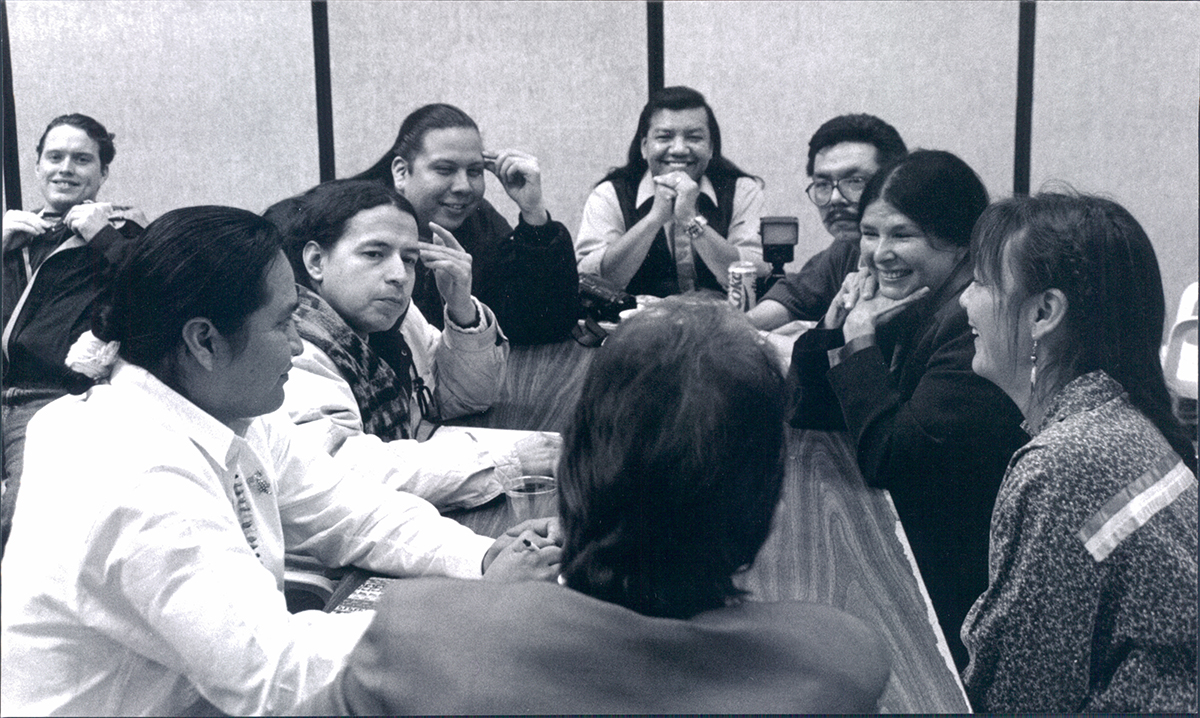
In addition to the films showcased, the In the Tradition: New Dimensions in Native American Film panel (moderated by writer, activist, and curator Paul Chaat Smith) brought together emerging and veteran artists, who discussed appropriation of Native stories, Native representation in the film industry, production opportunities, and the possibilities for change.
Panelists included Tantoo Cardinal, Alanis Obomsawin, Norman Patrick Brown, David Poisey, and Suzan Shown Harjo. Cardinal, who served as a Dramatic Competition Juror and starred in the Festival film Where the Rivers Flow North, also starred in seven other films at the Festival including award winner, Smoke Signals, and most recently, she acted in Martin Scorsese’s Killers of the Flower Moon. Obomsawin’s documentary Kanehsatake: 270 Years of Resistance was part of the 1994 program and she screened six other films at the Festival over the years. Brown and Poisey screened their films Awakening and Starting Fire with Gunpowder, respectively, during the Festival. And though Harjo did not have a film in the Festival, she shared insights from her career in journalism, policy advocacy, media, and film.
The Native Cinema section, later known as Native Forum, continued highlighting Native and Indigenous work during the Festival until 2004, screening over 160 films from artists around the world. The Festival retired the section in 2005, choosing to incorporate a steady stream of selected Native and Indigenous films into other Festival categories. In turn, the Indigenous Program, which formally began nearly 30 years ago, continues to support and elevate Indigenous artists and their stories. Recently the director of the Program highlighted accomplishments over the last year in his blog post An Indigenous Infinity: A Dispatch from Adam Piron.





