Elk-cellent sculpture
By Admin in Art World News
Not far from where cranes loom over ascending towers of multimillion-dollar condos downtown, a scrappier, grass-roots development is taking shape. A pedestrian-friendly arts destination is gaining momentum in the Limelight District long Lime Avenue between Fruitville Road and 12th Street.
Right now, the district’s fourth boundary juts in and out along Waterloo Avenue to accommodate residential buildings. But this border is in flux as the Limelight District, officially recognized by the city in 2020, works to extend its western boundary to encompass galleries around Princeton Street.
The Limelight District recently raised its profile with the March 30 opening of the Palmer Modern at 925 N. Lime Ave. The arrival of the new gallery with artist spaces follows the February addition of a second space by arts collective Creative Liberties at 927 N. Lime Ave. Its flagship is nearby, at 901B Apricot Ave.
Twenty-one artists call Creative Liberties home, including co-founders Barbara Gerdeman, who specializes in photography, acrylic painting and mixed media, and Elizabeth Goodwill, who creates book art, fiber art and mixed media. Their new building houses 10 studio artists, gallery space and the Creative Academy classroom.
“Thanks to a huge amount of support from the community—the public, artists, arts advocates and the media—we have been able to grow Creative Liberties in a short time period,” says Gerdeman.
Commercial businesses are taking notice of the artistic ripening of an area formerly known for auto repair shops. Recent months have seen the arrival of Sunflower Market on Lime Avenue, a WaWa convenience store on Lime Circle and Sun King Brewing on Mango Avenue.
The arrival of Sun King has prompted Kim Livengood to add Friday night hours for her dog-friendly Hamlet’s Eatery. The food truck-cum-brewpub is located at Livengood’s The Bazaar at Lime and Apricot along with roughly 40 other tenants. Opened in 2018, the Bazaar is considered the catalyst for the area’s evolution.

Kim Livengood, owner of The Bazaar at Lime and Apricot, takes a breather on the emporium’s signature truck.
But wait. This story is about art, not business. Actually, it’s about the intersection of art and commerce, and what urban planners call “placemaking,” community development that’s easier said than done.
In the case of the Limelight District, a braintrust of sorts has come together. Its members include Livengood, real estate developer and arts patron Howard Davis, Creative Liberties proprietors Gerdeman and Goodwill, Palmer Modern owner and artist Craig Palmer and his wife, Jen Palmer, president of the Sarasota Studio Artists Association.
There are others in the mix as well. You can be sure that those with a stake in the future of the Limelight District will make their voices heard. Anyone with land or a business in the area can join the Limelight District’s association for a newly instituted membership fee of $100.
Davis has been approached by investors who want to be part of 925 Lime Ave. and other properties that Davis and his wife, Sherry, may acquire in the Limelight District in the future. But they prefer to go it alone, turning down investors and even shunning bank financing with one exception, Howard Davis says.
“When you’re investing your own money, it keeps you very focused,” he says. “And there is no such thing as a silent partner.”
A high-profile real estate developer who spent most of his career in Boston, Davis cut his teeth in Sarasota with the transformation of an abandoned furniture store he bought in 2016 in what is now called the Rosemary District. In 2021, he sold the lovingly refurbished Mid-Century Modern building, The BOTA (for Boulevard of the Arts) Center, at 1570 Boulevard of the Arts, for $4.35 million.

In some instances, the impetus behind placemaking comes from local government. But the Limelight District’s birth can be attributed to Judy Alexander, Kim Livengood’s mother.
Alexander spent most of her life as an indefatigable community volunteer. But to hear her daughter tell it, Judy Alexander’s dream was to own a warehouse. “One day my parents were driving down Lime Avenue. My mom saw the building and said to my dad, ‘Let’s buy it.’ My dad never said no to my mom.”
Livengood’s father, Barry Alexander died in 2019, but lived to see that warehouse become a vibrant venue for artists and craftsmen to sell their wares. Fronted by an old school pickup painted lime and apricot and decorated with a mural painted by artist Karen Chandler on a neighbor’s building, the arts-and-crafts mall is hard to miss.
Thanks to the efforts of tenants as well as tourist development and artists groups, the Limelight District is becoming a destination for locals and tourists alike, particularly on the Second Saturdays organized by the Sarasota Studio Artists Association, which has more than 50 members.
Spearheaded by Jen Palmer, the group has created a map of art galleries not just in and around the Limelight District but all over the city.
Right now, the Limelight District has the lure of plentiful, free parking. Who could ask for more?
Actually, there are some things that Livengood & Co. have on their wish list.
Every arts neighborhood needs colorful banners hanging from city streetlights and Livengood wants some. “But you wouldn’t believe what it costs —$100 each and liability insurance in case one of them falls down and hurts someone,” she says.
The banners, when they are hung, will carry a new Limelight District logo, which is in the works along with an upgrade of the website. Fortunately, there is no shortage of branding, design and marketing expertise among members of the Limelight District’s braintrust.

Creative Liberties co-founders Elizabeth Goodwill and Barbara Gerdeman take an artistic approach to moustaches during one of their open studios events.
Livengood and both Palmers have marketing experience while Creative Liberties co-owners Gerdeman and Goodwill worked alongside each other at the Art Center Sarasota.
As the Limelight District grows up, its backers want knotty zoning issues to be hashed out by the city council. Current code permits heavy industrial businesses that might not fit in with the arts district, some of them auto-related.
However, some gallery and shop owners like the idea of auto repair shops in the area because people getting their cars fixed must leave them for a few hours, creating the opportunity to explore the budding artsy neighborhood.
Also on the zoning front, Davis and Palmer see the need to accommodate work/live spaces for artists. Davis is offering entrepreneurial artists such as Palmer, Gerdeman and Goodwill the opportunity to lease space at below market value. They in turn are subdividing the space and renting it out to artists and craftsmen.
Davis and others envision a future for the Limelight District where artists burning the midnight oil can sleep on a a pull-out sofa without running into trouble with the law.
Well acquainted with working with local governments from his career in real estate, Davis says the Limelight District is also asking the city for help on issues such as sidewalk improvements, better streetlights and sewage system upgrades.
Some Sarasotans, especially second-homers and new transplants, may not realize that there are still some houses near downtown using septic tanks. Such outmoded waste disposal has the potential to foul the air and streets, not a good look for the Limelight District.
Unlike other arts destinations across the country that sprung up in warehouse districts, the Limelight District is not plagued by crime. Maybe the auto repair shops in the neighborhood do a good job of outfitting cars with anti-theft devices. But for whatever reason, safety isn’t a concern right now, Davis says.

Craig Palmer and Jen Palmer, partners in life and in promoting the arts scene in Sarasota.
When you ask members of the Limelight coterie about their vision for the district, the answers overlap and involve common goals. Inclusion ranks high on the list for Jen Palmer as well as the Creative Liberties co-founders Gerdeman and Goodwill— “art for all, not just rich people,” says Palmer.
Craig Palmer says the Limelight District’s artist studios can help creators build relationships with potential buyers, a factor that he sees as increasingly important in a high-tech, post-COVID world.
“Some of the most interesting conversations are when visitors observe my work and explain to me what they see,” Palmer says. “It made me aware that everyone has their own unique interpretation and experience of abstract art, and I like to believe that it helps inspire creativity for the viewer.”
Palmer Modern features an art gallery and includes a studio for Craig Palmer as well as affordable studios for five additional artists. The artists have access to a kitchen, lounge area, space to publicly display their work, and private, secure studios.
For Davis’s part, the placemaking happening along Lime Avenue is about the “three C’s — creativity, community and collaboration.”
Perhaps pioneer Kim Livengood sums up the goal the best: “We’re looking to create a neighborhood where you can park your car, walk around, watch art being made, buy some stuff and get something to eat or drink,” she says. Oh, and don’t forget your dog.

Golga Oscar intends to explore different forms of the Yup’ik collection ranging from headwear to footwear and capture them through the lens of photography.
Golga Oscar of Kasigluk and Tununak and Nicolette Corbett originally of Bethel are two of seven artists that have been named grantees for the Museums Alaska, the state’s museum association, first round of the new Access to Alaska Native Collections (AANC) grant with $21,000 awarded to Alaska Native artists and museums across Alaska.
This year, Museums Alaska has begun managing a new grant program for The CIRI Foundation that provides travel funding to Alaska Native artists so they can visit Alaska Native collections in museums.
One of Museums Alaska’s goals has been to provide resources to the field that help build stronger relationships between museums and Alaska Native communities. Providing this grant program to the Alaska Native artist community and museums is one way to do so.
“When The CIRI Foundation approached us about managing this new program, we were excited for the opportunity,” said Dixie Clough, director of Museums Alaska. “Museums are honored to care for and steward Alaska Native belongings, but many of these collections are far away from the communities that created them. This fund makes the collections more accessible to Alaska Native artists across the state who may not otherwise be able to visit them.”
The grant program is supported with funding from the Journey to What Matters program at The CIRI Foundation, which seeks to add Indigenous stories, perspectives and voices in exhibition and collection spaces, and provide community members better access to the material belongings that museums hold.
“Historically museums have collected, exhibited and cared for materials without much involvement from Alaska Native communities,” said Nadia Jackinsky-Sethi, program director for Journey to What Matters. “Thankfully, we are in a period where this is changing as museums become more aware of the importance of working with Indigenous community members.”
“Our hope is that this grant program will provide Alaska Native artists access to material culture that can inspire and teach new generations important information about cultural heritage, design elements, aesthetic principles, construction techniques and technologies,” Jackinsky-Sethi continued.
Through this grant program, artists will receive grants of $2,500 or $3,500 to visit museum collections this summer. The museums also receive a stipend to cover the expenses of the visit.
In total, seven artists have been awarded grants to visit six museums and cultural centers. Further information on these visits can be found below:

Nicolette Corbett has been awarded a grant to visit the Alaska Native Heritage Center to study the piluguk/kameskak collection. Photos courtesy of Museums Alaska
● Nicolette Corbett has been awarded a grant to visit the Alaska Native Heritage Center to study the piluguk/kameskak collection from the Yukon Kuskokwim Delta Region. Since starting her sewing business, Sew Yup’ik, in the summer of 2015, it has taken off. In addition to creating and selling qaspeqs, bags of various sizes, and other small sewing pieces, Nikki has taken on a new role teaching qaspeq workshops across the state of Alaska. In the last year, her focus has been to work on skin sewing projects and especially those that are of the lost art, like piluguks/kameksaks (hard sole bottom shoes). She is hoping to learn the art so that she can share that knowledge with others and keep Yup’ik traditions alive. Learn more about Nikki and her work at https://sewyupik.com.
● Golga Oscar has been awarded a grant to visit the Anchorage Museum where he intends to explore different forms of the Yup’ik collection ranging from headwear to footwear and capture them through the lens of photography. A self-taught artist with a huge passion for his culture and tradition, Golga enjoys revitalizing traditional designs with careful observation. Through revitalization, he observes the material, technique, and significance behind the clothing with a goal of bringing back what was once discontinued since the impact of westernization. Golga’s goals are to pursue cultural awareness teaching and get into the fashion industry. He aims to showcase the Yup’ik cultural art and bring recognition of Yup’ik clothing and traditions to the “American” mainstream. Follow Golga on Instagram to learn more: https://www.instagram.com/quki92/?hl=en.
● X̱’unei Lance Twitchell has been awarded a grant to visit Ketchikan Museums to study with Nathan Jackson while continuing to document his life and work through video and photo. He will work closely with staff of the Totem Heritage Center and the Tongass Historical Museum to organize visits with the intention of documenting both the work and Nathan Jackson’s comments on the artwork. X̱ʼunei will also photograph the collections in the Totem Heritage Center and the Tongass Historical Museum for both individual artistic study and teaching at the University of Alaska Southeast and in workshops with the Goldbelt Heritage Foundation and Sealaska Heritage Institute. These visits will greatly increase X̱ʼunei’s ability to continue to grow as a visual artist and to produce new works in design, sculpture, fashion, regalia, and more. Learn more about X̱’unei Twitchell at https://troubledraven.com.
● Erin Ggaadimits Ivalu Gingrich (Koyukon Athabascan and Inupiaq) has been awarded a grant to visit the University of Alaska Museum of the North. Erin is a carver, an interdisciplinary artist, and is expanding her practice to include other artforms and more complex narratives. She is currently pursuing her MFA, and the visit will allow her to engage in museum collections to ground her work in that of the Indigenous artists that have come before her. Erin hopes to visit a variety of collections including historical cultural belongings, photographs, carved objects, animal representations and animal specimens that are culturally connected to her many homelands and Indigenous heritage. You can learn more about Erin and her work at https://ggaadimitsivalu.com.
● Elaine Kingeekuk has been awarded a grant to visit the Alaska State Museum for three days of collaboration with conservator Ellen Carrlee on gut conservation and care. Elaine will also spend time in collections storage, freely opening cabinets and drawers to see and handle dolls, sewing tools, jewelry, toys, footwear, garments, and any other items in the museum collection that may promote her artistic and teaching goals. Elaine has been sewing dolls, baskets, clothing, boots, toys, and other small items since her childhood in Savoonga on St. Lawrence Island. She learned sewing and its cultural values from her mother (Ruthelle) and grandmother. Elaine has been working with scholars and museums for nearly 20 years. In addition to visiting the collections, Elaine is considering hosting a public program at the museum, and getting the word out about a teaching studio she would like to open in Savoonga. Elaine will also take time in Juneau to connect with old friends and the land through berry picking and other cultural activities.
● Chloe Bourdukofsky and Carter Price have been awarded a grant to visit the Museum of the Aleutians where they will visit the archives and pieces that include their family history and art. Qaadax Chloe Bourdukofsky was raised by her grandparents and great grandma who taught her how to speak some Unangam Tunuu, to crochet, about traditional foods, and an Unangax way of life and community. To this day she wishes to continue to teach others about traditional Unangax dance, sewing, foods and community life as her relatives did for her growing up. Carter Price over the past 2 years has begun creating Unangan model Iqyaxs (kayaks) to connect with his culture. More recently his art medium has taken form in ivory. He grew up connected to his culture, but only surface level. Since diving into the connection with culture and art Carter’s overall well-being has increased. His goal for the future generations is to provide a space separate from school, to connect, educate, and create whatever their passions are. Chloe and Carter hope to photograph artwork—like basketry—to learn from and share with their fellow Unangans in Unangam Tanangin who do not have this opportunity to visit. The visit will also provide a wonderful opportunity to visit with relatives on Iluulux (Unalaska) to gain oral information on Unangax history, stories and art to also connect with the local Unangans on the Island. Learn more about Chloe at https://www.qaadax.com/about-me.
By Admin in Photography
There aren’t many modern Fujifilm lenses that really bring me a lot of joy to use. And that’s not to say that they’re bad, but they’re big deviations away from what we’ve known Fujifilm for for years. Many of the new optics just don’t feel retro enough. However, the Laowa 25mm f0.95 CF APO not only feels retro, but nails it on image quality. And if anything, I think it could be the best lens for Street Photography available to the Fujifilm X mount.
The Phoblographer may receive affiliate compensation for products purchased using links in this blog post.
There are a lot of wonderful things going for the Laowa 25mm f0.95 CF APO. First off, there’s the super shallow depth of field ability. And when you want to use it for street photography, you just stop it down to f5.6, focus it to five or six feet away, and then zone focus all you want. Couple all this with metal build quality, small size, and affordable pricing. Then also consider the fact that this lens has an apochromatic lens element inside to make your subjects pop even more.
Of course, while that’s also positively phenomenal, it’s not all perfect. The lens doesn’t have AF/AE contacts, and so the exposure won’t be communicated to the camera. That makes used it with a flash much harder if you’re shooting TTL. And more importantly, it’s not weather resistant, and so the build quality that your otherwise weather-resistant Fujifilm camera has is more or less voided.

We’re giving the Laowa 25mm f0.95 CF APO four out of five stars. It’s about time that Laowa really starts adding weather resistance to their lenses. Want one? They’re $549 on Laowa’s website. Phoblographer subscribers get a special discount as a membership benefit.
We tested the Laowa 25mm f0.95 CF APO with the Fujifilm X Pro 3, the Tiffen Color Intensifier filter, and Profoto B10. The lens was on loan from Laowa, and the rest of the gear is ours.
Where the Laowa 25mm f0.95 CF APO is really innovative comes with it having a few things: first off, there is a quick and easy option to set the lens to have a clicked or de-clicked aperture. Additionally, there is an apochromatic lens element, that really makes subjects that are in focus pop. This is something that only Leica ever uses in their modern lenses, though Sigma has used it in at least one of their lenses. And, of course, this is an f0.95 lens for Fujifilm. While it’s not super rare, it’s very uncommon.
The Laowa 25mm f0.95 CF APO looks a lot like the company’s other Argus lenses; which seem to be the highest end options for them. If you look at it directly from above, it will appear like most other manual focus lenses with zone focusing markers, a depth of field scale, apertures, distances, etc.
The lens hood attaches to the front of the lens and doesn’t allow you to use a lens filter at the same time. That’s an odd part of the design.
On the bottom is a switch that transforms the aperture from clicked to de-clicked easily.
While this lens isn’t weather resistant, it’s made of metal. And when mated to Fujifilm cameras, it feels right at home. The lack of weather resistance is consistently my biggest problem with Venus Optic lenses. I really wish that it had it to ensure that I can shoot with these lenses all day and every day. In fact, I’d use these over Fujifilm’s own lenses.
This is a manual focus lens. So you can either use focus peaking combined with the power of fervent prayer, zone focusing, or you can use magnification with Fujifilm cameras. Either way, it’s a bit difficult to use when shooting wide open. But if you’re stopping down and doing zone focusing, this is by far one of the best lenses you can and will ever use for street photography with Fujifilm.
Honestly, in the hands of a skilled photographer, this lens will be faster to capture moments than Fujifilm’s own lenses.

Like all other Laowa lenses, this is a manual focusing lens. And if you don’t like that, then consider Fujifilm’s own lenses. Otherwise, you’ll realize pretty quickly that the zone focusing abilities of this lens make it really useful for street photography and candid shooting.
Because of the design being a wide-angle lens, the focus goes from zero to infinity really fast. At around 5 feet away, the lens will really become its most useful. But if you want to zone focus anything a bit further than that, you’ll have a heck of a time.
What’s more, if you’re photographing people and shooting wide open, you really need to be super careful. The focus peaking might tell you that you’re in focus, but many times you really won’t be. It’s one of the most annoying things about this lens and you’re buying it partially for the f0.95 aperture, but it ends up not being very useful at that f-stop.

There is a lot to love about the image quality of the Laowa 25mm f0.95 CF APO. Of course, photographers will want to shoot wide open with it a lot. But when you’re stopping it down, it will probably perform best, not only in terms of ease of use but also image quality. Combined with Fujifilm’s film simulations, it’s really difficult to take a bad photo with the Laowa 25mm f0.95 CF APO.

I mean, look at that! Wow! The bokeh is creamy, flarey, there’s character galore, the apochromatic lens element really makes the subject stand out. You can’t say anything bad about the bokeh.

The Laowa’s color rendition also comes from Fujifilm’s sensor. I used the Classic Chrome and Classic Negative film simulations a lot. And they performed exactly how I’d expect when underexposed, overexposed, etc. They’re beautiful.

The Laowa 25mm f0.95 CF APO doesn’t exhibit problems with fringing, but you’ll get a bit of swirly bokeh when you’re shooting wide open. For what it’s worth, I’m not opposed to that.

Stopping the lens down to f4 and f5.6 makes it feel a lot more serious. Combine that with off-camera flash and you’ll be very happy with the results you get.
From day one, The Phoblographer has been huge on transparency with our audience. Nothing from this review is sponsored. Further, lots of folks will post reviews and show lots of editing in the photos. The problem then becomes that anyone and everyone can do the same thing. They’re not showing what the lens can do. So we have a section in our Extra Image Samples area to show edited and unedited photos. From this, you can make a decision for yourself.


Truly, the only people I think will benefit most from using the Laowa 25mm f0.95 CF APO are street photographers. But keep in mind that the build quality isn’t weather-resistant.
Taken from Laowa’s website.
| Specifications | |
| Format | APS-C |
| Focal Distance | 25mm |
| Aperture Range | f/0.95-11 |
| Angle of View | 58.8° |
| Lens Structure | 14 elements in 9 groups |
| Aperture Blades | 9 |
| Min. Shooting Distance | 34cm |
| Max. Magnification | 0.15x |
| Focusing | Manual (MF) |
| Filter Thread | Ø62mm |
| Dimensions | About Ø 71.5mm * 81mm |
| Weight | About 575g |
| Mounts | Sony E/ Nikon Z/ Canon RF/ Fuji X/ Canon EF-M |
By Admin in New Mexico Art
World Art Day was bright and beautiful with many visitors to the galleries and various activities including the installation of the Flower Sculpture Garden where twenty artists participated. PhotoZozo and Malkerson Gallery 408 along with others helped Cindy Johnson, the conductor, to orchestrate the day’s events.
By Admin in Art World News
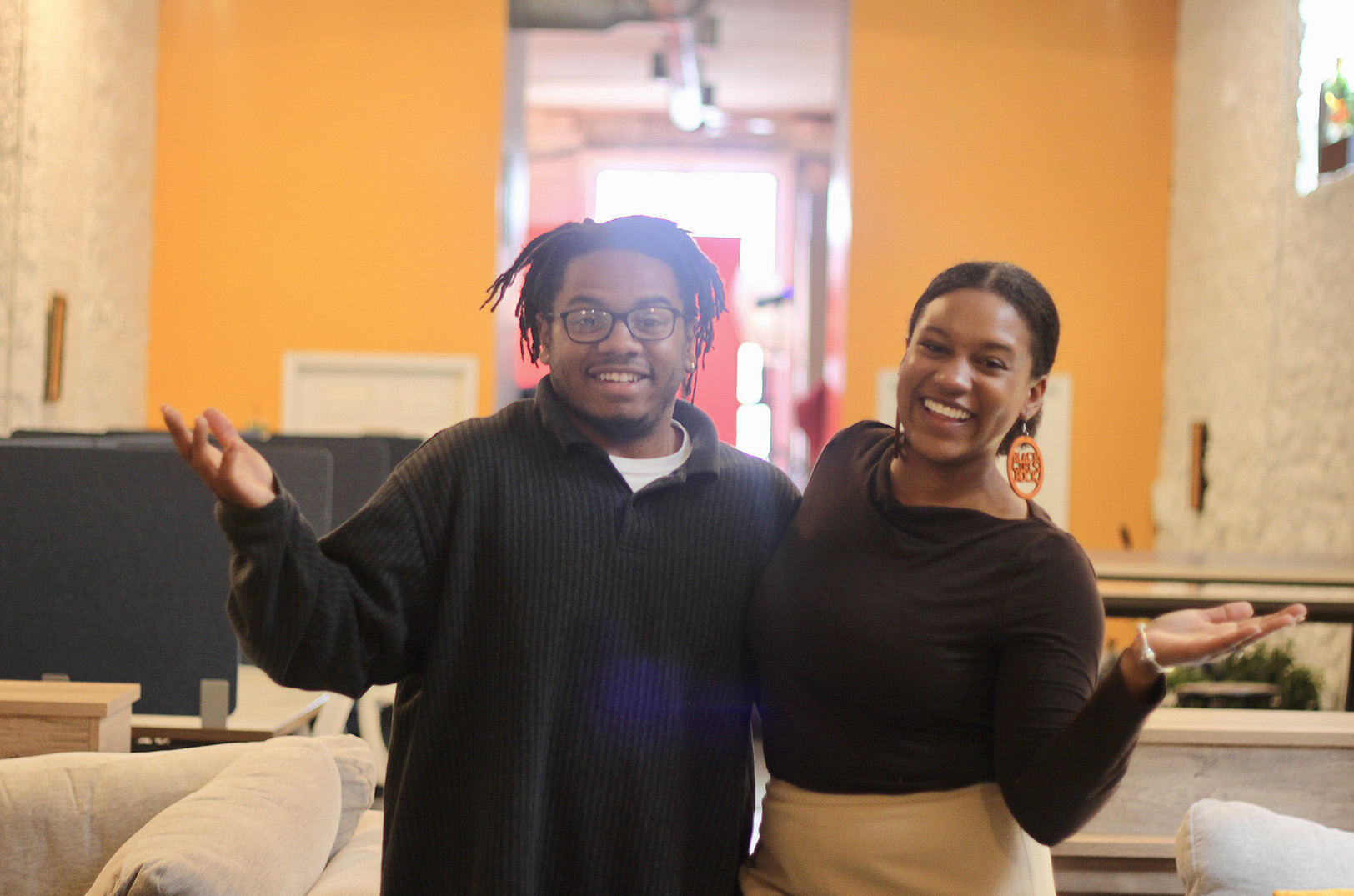
The Midwest needs more resources to help creatives start their own businesses and keep them thriving, said Taylor Burris and James Spikes, who designed a one-stop art incubator to give artists’ innovation a fresh canvas.
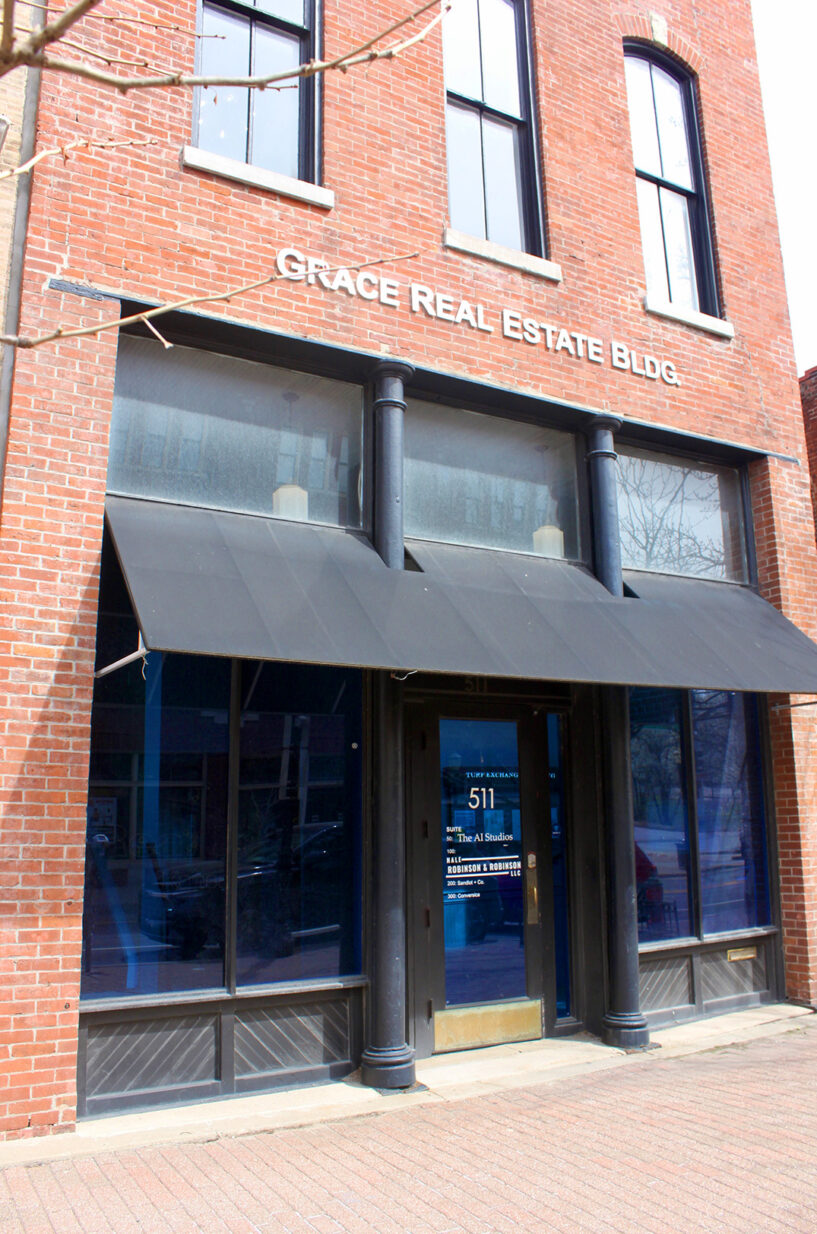
The husband-and-wife team opened AI Hub — powered by IRIS Creative Projects Agency and with funding from The Porter House KC’s Alchemy Sandbox — in September in the Grace Real Estate Building in River Market to ease entry into the business world.
“We’re creating a place that answers the call that we needed starting out as entrepreneurs, specifically in creative entrepreneurship,” Spikes explained. “What do you need? What do you not have access to? What types of things could I have benefited from? We’re just trying to put that all into one place and business model and provide it for people.”
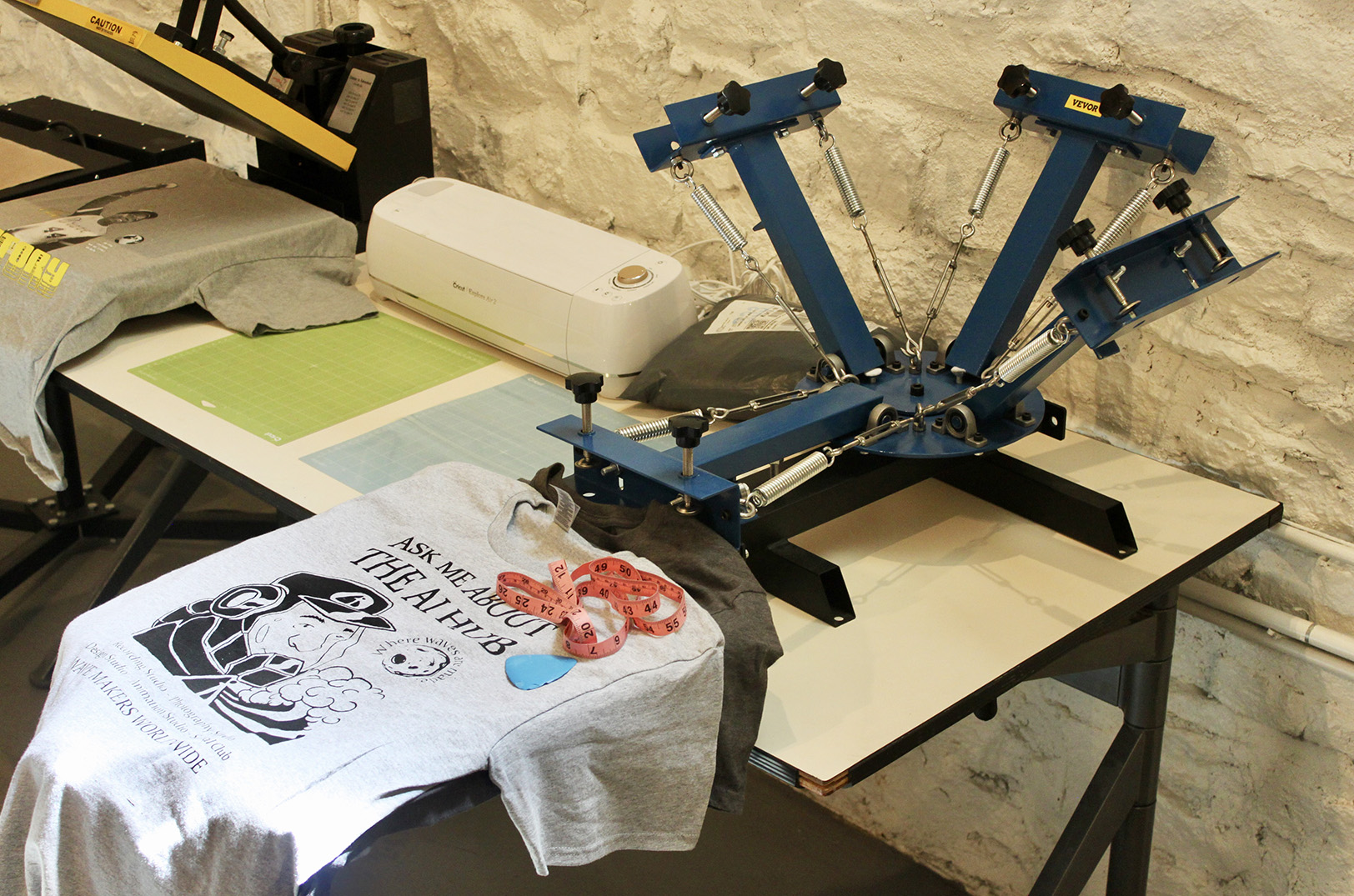
The AI Hub — which offers membership and day pass options — includes a photography studio, digital design lab, audio recording studio, apparel design hub, co-working space, and classes, Burris said, noting the space’s crossover amenities.
One member, for example, is a fashion designer who uses the software programs in the lab — which includes the full Adobe suite and 3D modeling programs — for designing, the apparel hub — including a sewing machine and dress form — for fittings, and then take photos in the dedicated studio — featuring a camera, tripod, lights, and backdrop.
Click here to learn more about the AI Hub.
“So instead of going from studio to studio, you just come here and get it all done,” she added. “We try to make it as easy and accessible as possible.”
Burris and Spikes — who met while attending HBCUs in Atlanta and moved to Kansas City in 2020 — also offer graphic design and marketing services through IRIS, which they founded in 2021 after merging their separate creative services businesses.
“There is a gap that’s happening between starting a business and actually scaling a business and making it successful,” Burris said. “Of course, we’re not experts. This is our first time having a physical brick and mortar, but at the end of the day, we have a lot of skills that can support these other businesses and really put them on the right track instead of just letting them fail. So as we grow, we try to help other businesses grow, as well. As much as we soak in, we want them to soak in.”
The couple said they also help members secure contracts to grow their businesses and set up events like Hub Talks — which are an immersion of art, music, and culture — and Sound Gallery — which is an underground music series, plus galleries featuring local artists.
“A lot of what we do is to put our community and our members on the map, basically,” noted Burris, who was a participant in this year’s HERImpact pitch competition and on The Blox, a locally-produced, globally-reaching entrepreneurship reality competition series.
RELATED: Meet the six competitors pitching for $50K in funding in HERImpact’s return to Kansas City
With the help of Donna Mandelbaum, the KC Streetcar Authority communication director and Art in the Loop board member, the AI Hub also has a partnership with Art in the Loop, Burris and Spikes shared, to train and provide resources for the local artists chosen to provide art along the streetcar route.
“They’re just very supportive of what we’re doing here,” Burris added. “We try to feed our pool to them — and vice versa — as much as possible.”
Kansas City and beyond
Spikes — who grew up in the South — and Burris — who is from Virginia but has family in Kansas City — moved to the metro during the pandemic for their daughter, who they call a Children’s Mercy baby. They quickly realized a place like the AI Hub was long overdue in this area, they said.
“Having a place that is a literal art incubator to cultivate your craft should be normal,” Burris said.
“I think what people miss — because they’re outside of the community in the Midwest and in Kansas City, more specifically — is that it’s a very artistic place and has a very thriving artistic and creative community,” Spikes continued. “I think that the marquee things like food and culture and sports may oversaturate what people know about Kansas City, but there are a lot of creative people and programs and minds that people don’t get a chance to see.”
They shared that they plan to continue to invest in and support the creative community in Kansas City and hope to expand the AI Hub to an arts campus and then eventually expand to other cities.
“We’re just excited to just help people transform as Kansas and Missouri transforms,” Burris added.
Milwaukee Art Museum announces new Herzfeld Center for Photography show
Wondering what’s the importance of PDF editing software for photographers? Hop inside this guide to find out!
The loon traveled from Los Angeles to its permanent home in the Twin Cities.
A new beetle species has been named to honor a fellow Husker, bridging the worlds of academia and wildlife conservation.
Silversea, a premier brand in experiential luxury and expedition travel, recently concluded the inaugural season of its first Nova-class ship, Silver Nova,
The Desert Foothills Land Trust (DFLT) is proud to announce a special presentation event featuring acclaimed botanical photographer Jimmy Fike on Saturday, Oct. 12 at 6:30 p.m. at the Sanderson