THE glorious setting of Greys Court is once again the backdrop for the Oxford Sculptors’ Group’s summer show. Thirty-one artists will be participating in the sixth annual Sculptures in the…
Garden sculpture show returns to Greys Court


advertisement

The camera industry is changing, but old-school camera stores like Garland Camera will be there through its ebbs and flows. Today, mobile phone cameras democratize photography, but film and digital cameras are still a strong force in the market for those who appreciate photography as an art form.
Within the past decade, film photography has become king once again. The 35-mm revival led to Eastman Kodak more than doubling its production of film rolls between 2015 and 2019, according to an NBC interview with Kodak general manager Ed Hurley. The increase was felt locally in Dallas-Fort Worth and continued long after 2019.
Garland Camera, at 1401 Northwest Highway since 1962, has seen the photography industry through a lot — to say the least.
“Film [was] brought back more so due to the pandemic because you had people at home digging through the closets finding something to do,” says Kirk Meca, who has owned Garland Camera for 8 years. “We saw a lot of parents and grandparents giving film cameras to their children and grandparents, and really help perpetuate the art of photography. So a whole generation came into film processing who had no idea what film was or how it works.”
Nostalgic trends meant the expansion of disposable cameras as well, according to Meca, but the more classic point-and-shoots or manual film cameras gained popularity too.
“We saw a lot of exposed film because people didn’t understand how this works,” says Meca.
These brief failures prove an apt time to pass knowledge between the generations, though, and keep the lifecycle of photography moving forward.
“We spend that time, and we try to educate the younger consumers, and it’s kind of neat,” Meca says. “They started out with the disposable, then they went to the point-and-shoot film cameras, and then up to the manual cameras.”
Devotees trade in camera after camera; the next person inherits the former’s previous camera and the cycle continues.
“You have to understand, there is an entire generation that grew up digital, so the analog world is somewhat intriguing to them,” Meca explains.
But, as he sees it, film photography has reached peak oil.
“We are fortunate because we’ve always done film processing here. We saw it go from 5–10 rolls to where we are today, doing around 100 rolls a day. But I don’t see that maintaining forever,” says Meca.
This expect decline may be due to the steep increase in the price of film. Meca says that film priced at around $6–7 a roll five years ago goes for $20 a roll now.
“I don’t think it’s going to go further just because financially it’s not going to be feasible for everybody,” Meca says. “It’s going to be a rich kid’s sport.”
You’ve probably heard the cries from the town square (Twitter) or thought leaders (talking heads): post-pandemic inflation is rampant. So, this rise in film makes sense, neatly packed into the larger trend.
However, Meca cites another reason the price of film has increased. Despite being headquartered in Rochester, New York, Kodak — the company responsible for most of the film stock in the U.S. — has moved much of its manufacturing to China over the past years.
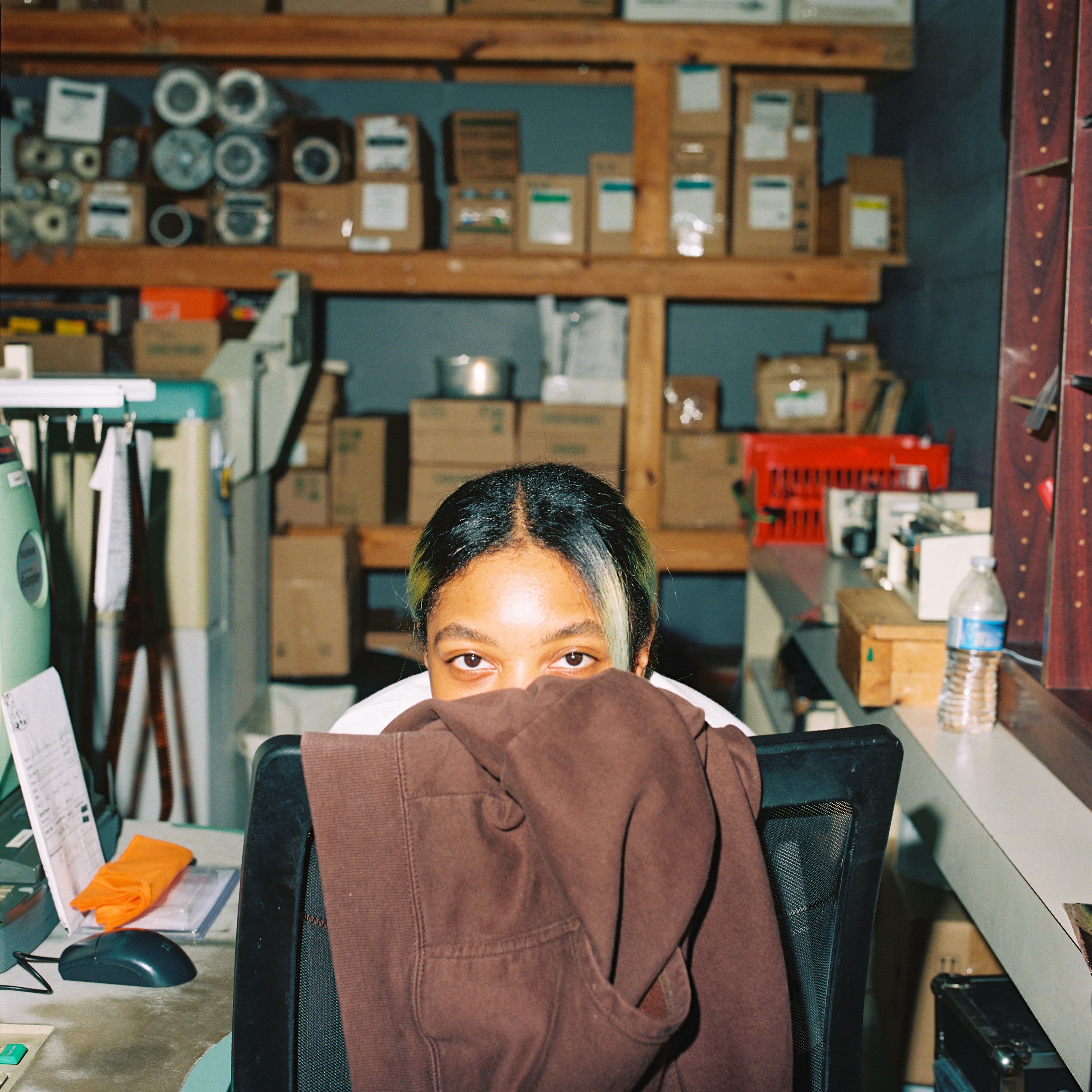
Jaylen Allmond takes a quick photo break from scanning film at Garland Camera.
Brennon Holbrook
“Rochester, New York, is producing some film, but it is being exported back to China for packaging and repackaging,” Meca says. “Some of this will go into disposable cameras. The others will just go into other types of cameras. They are going to be packaging Fuji with Kodak product inside.”
Because of this change, the price of Kodak film has increased significantly. The higher cost of film, perhaps married with TikTok’s recent Y2K undercurrent, now means a newfound interest in digital cameras.
“We are going from the disposable film cameras to the little compact digital cameras from the early 2000s. We buy those on a daily basis, and they are really starting to move,” Meca says.
Having the resources to keep up with the micro trends of photography is difficult. Materials are costly, and expertise is necessary. Luckily, Garland Camera provides all of its services in-house, so the staff can cater to industry changes.
“The neat part about it is that I took over when the film side was still pretty much dormant, and, as it evolved, we were able to evolve with it because we had everything that people were looking for,” Meca says.
As an old-school camera shop, Garland Camera offers film developing; buying, selling and trading of cameras and gear; a darkroom and studio supplies; and in-house camera repairs. This versatility means adaptability.
“Things that you can’t get done at CVS and Walgreens any longer, we still do, Meca says. “Things that Costco and Sam’s don’t do, we do. That’s the most intriguing part of it because it’s the preservation of an entire generation as well as the culture of the industry. There are very few of us left in the country. Camera store-wise in the country, there is probably less than 200 total.”
Acting almost like conveyor belts of knowledge tucked into unsuspecting storefronts, small stores like this one keep a skilled art form alive, especially among new generations.
“It is a younger clientele,” Meca says. “We have the young to interface with the young and the old … we’ve hired a lot of the individuals who have grown with the trend.”
Eight years into owning Garland Camera, he is proud of its service to the area.
“I bought this company to preserve and perpetuate its legacy in the community and DFW and beyond,” he says. “We’ve grown progressively at a steady rate over the last few years — just enough to handle it, but not enough to where we have customers lose faith in what our capabilities are. It’s who we are. It’s old school. We are not new and fresh and pretty. It’s just who we are.”

Zachery Runnels manning his station on the sales floor at Garland Camera, an old-school gem.
Brennon Holbrook


Cars and spectators turn out for the 2022 Mount Clemens Car Show and Cruise. At press time, the 2023 event was set to take place June 2-3.
MOUNT CLEMENS — For those looking for weekend fun this summer, Mount Clemens has you covered in June.
From start to end, there’s more than enough going on in the city to entertain all month long.
On Saturday, June 10, the New Street Urban Fair brings a unique art show and vendor experience to the New Street corridor. Businesses along the street juried the art submissions and vetted the vendor list, all of which is shaping up for what Weiss calls a “fun and funky” event marking a post-COVID flourishing of New Street’s businesses.
“With New Street being full now … they just said, ‘We’d like to do something down by us,’” Michelle Weiss, Mount Clemens Downtown Development Authority marketing and events coordinator, said. “Most of my art shows and vendor shows are on Macomb Place.”
The New Street Urban Fair runs from 10 a.m. to 6 p.m. Businesses supporting the event include the Bohemian Goat, Yaya’s Plant Shop, TinyTree Gallery, Weirdsville Records and Paperback Writer Books.
Juneteenth falls on a Monday this year, but the celebration of slavery’s end begins on Friday, June 16, and runs through the holiday on June 19. The city of Mount Clemens is hosting its first-ever official Juneteenth festival running downtown on June 16 from 11 a.m. to 8 p.m. and on June 17 from 10 a.m. to 6 p.m.
“We’re trying to make this educational,” Weiss said. “We’re trying to inform the public as to what exactly Juneteenth is and why they celebrate it.
She added, “When I started this journey, I was surprised talking to people, how many people did not know what it was and thought it had something to do with Martin Luther King Jr. I thought this was quite interesting and maybe this is a good thing for people to understand what it is.”
The city’s event will take place along Macomb Place, similar to May’s Made in Michigan show, and entertainers will perform on the Fountain Stage.
Juneteenth celebrations have been hosted in Mount Clemens centered around the Cairns Community Center, and event planners for the Mount Clemens Juneteenth Celebration have ensured this year’s event will run all weekend long.
“We wanted to focus on embracing unity and togetherness … something fit for family,” Malea Howard, 2023 Mount Clemens Juneteenth Committee chair, said in a statement. “We have games, great food, music, guest speakers, mental health care resources, arts and crafts for the children, and so much more.”
Dubbed “A Community Family Reunion,” an evening dinner on June 16 kicks the weekend off. Saturday, June 17, is a “Family Game Day” with activities inside and outside the Cairns Center from 4 p.m. to 8 p.m., while Sunday, June 18, is “Desserts with Dad,” allowing for a fun Father’s Day evening from 6 p.m. to 8 p.m. Juneteenth Monday’s theme is “Free at Last” and runs from 2 p.m. to 6 p.m. The Cairns Center will be packed with activities inside and out ranging from bounce houses, to food trucks, to business and resource vendors.
Finally, June ends with a series of bright and loud bangs as the Riversight & Sound Concert & Fireworks lights up the sky on Friday, June 23. Running since the 1980s, the fireworks have always taken place on the fourth Friday in June. Fireworks will be launched from the One Crocker Place parking lot and audiences can watch the show from the opposite bank. Northbound Gratiot Avenue will be closed and the open lot next to the Macomb County courthouse will be open for seating. R&B and funk group The Circle of Sound will play the concert prior to the fireworks.
For those looking to dance their nights away, Friday night concerts will happen at the Fountain Stage on Macomb Place on the nights of June 9 and June 16 as well as throughout July and August.
For more information about the Mount Clemens DDA and events in the city, visit mountclemens.gov/dda. For more information about the Mount Clemens Juneteenth Celebration, email mcjuneteenth@gmail.com.

Hundreds of people visited Indigenous artists, dancers and musicians at the fifth annual Native Arts Marketplace at the Driftless Historium in Mount Horeb over the weekend.
Hosted by the Little Eagle Arts Foundation and the Mt. Horeb Historical Society, the marketplace featured seven Indigenous artists, including painters, leather workers, bead artists and jewelers, as well as traditional dance performances and contemporary music.
“We’ve had just a great crowd. People have been amazing,” said painter Terri O’Connor of the Stockbridge-Munsee Band of Mohican Indians.
O’Connor, who grew up on the Stockbridge-Munsee reservation and now lives in Poynette, works in a variety of media, including pencil drawings, watercolors and oils.

Ho-Chunk painter Christopher Sweet, whose recent work focuses on large mural pieces like the memorial mural for the ancestors buried under the UW-Stevens Point campus, said he appreciates the chance to sell things like prints and notecards.
“It’s really nice to do these setups to share my smaller works,” he said. “The fun part of it is you meet new people from all over the place.”

Master beadwork artist Sayo’:kla Kindness-Williams of the Oneida Nation was also on hand, with her award-winning work “Uplifting Peace in 2022, the Year of Genocide.” The panel, depicting the traditional Tree of Peace with weapons of war buried under it and an eagle atop, took her nine months to create — “the time it takes to birth a baby,” she said.

The event was co-hosted by Little Eagle Arts Foundation, a 10-year-old organization based near Baraboo that helps Indigenous artists promote their work and become arts entrepreneurs.
Founded by retired educator, artist and 1980 Miss Indian America Melanie Tallmadge Sainz, LEAF works with artists of all 11 of Wisconsin’s federally recognized Indigenous nations as well as Wisconsin artists who are members of other nations. It does not receive funding from the nations, however; most funding comes from private donations and contracts.
Tallmadge Sainz said LEAF has about 50 aritsts on its roster currently, and several of those showing at the event this weekend also serve as mentors for emerging artists.
“It’s a very supportive group,” O’Connor said. “We encourage each other. (Art is) a part of our lives. It’s our culture, it’s part of our heritage. We love sharing it with others … It’s a great thing for us to always learn from each other.”
“LEAF has always been a real big supporter of my work and pushing me into different projects. They’ve helped me get established, pretty much,” Sweet said.
“You don’t always have the time to do marketing or events. LEAF took care of all of that so I’m really really thankful,” Kindness-Williams added.

Tallmadge Sainz said the first hurdle to success for many young Indigenous artists is their own self-doubt. She said she often approaches young artists and encourages them to take their work to larger regional and national shows.
“The first thing they’ll say is when I see their art, they’ll say, ‘I’m not good enough for those type of shows,’” she said. “So it’s really boosting their confidence, and encouraging them as much as possible.”


With the exhibition “Peter Keetman. Vintage Photographs from the Gerd Sander Collection”, Galerie Julian Sander is presenting one of the central figures of post-war German photography. In 1949, Keetman was one of the founders of the fotoform group, whose experimental, graphically incisive works echoed the photographic avant-garde of the 1920s. Keetman knew how to combine the influence that the “New Photographers” of the Weimar period had on him with his own individual perception of the reality that surrounded him and to translate it into a new, contemporary aesthetic. During his photographic activity, which spanned several decades, he focused his gaze on recurring subjects. He was interested in visually appealing phenomena that nature and the world of things have to offer: the transparency of a drop of water, the diffuse smoke of a cigarette, condensation in which the light refracts, crystalline ice formations, reflections, steam and fog. Through the lens of his camera, he isolated these optical phenomena and translated them into images of austere, graphic beauty. “We are surrounded – whether we take note of it or not – by a world full of lawful wonders” Peter Keetman recorded in later years. To make these wonders visible was what he saw as his task as a photographer.
The nearly fifty photographs, all of which are vintage prints produced close to the time the negative was taken, come from the estate of Gerd Sander, who died two years ago, and have recently been rediscovered. Sander, who was just establishing himself as a photo gallerist in New York at the time, had acquired most of them from the photographer himself around 1980. Among them are some of Keetman’s most famous, widely published photographs, but also works that are less well known today, but nevertheless of the highest aesthetic quality. Thus, the exhibition should be able to reveal one or another discovery for the interested collector.
Peter Keetman : Vintage Photographs from the Gerd Sander Collection
April, 22 – June, 30, 2023
Galerie Julian Sander
Bonner Str. 82
50677 Köln, Germany
www.galeriejuliansander.de






