When a renovated East Oakview Elementary welcomed students in Fall 2022, art teacher Amy Tefft was excited to see what amounted to a blank canvas…
Painting on the walls encouraged here


In 2022, an old toll house in Milan, Italy, that flanked a monumental city gate, was transformed into an exhibition space for design gallery Caselli 11-12—its name corresponding to the numbering of the buildings. The historic spaces of the gallery have harboured research and experimentation through a carefully curated programme of partnerships and exhibitions. December 2022 marked the inception of a discourse surrounding the materials and techniques that forge contemporary design: Makers 1. The series advances in its second episode, Makers 2, taking the stage in the gallery’s majestic interiors. Restating the same hands-on, three-dimensional approach to design that defines the series, Makers 2 delves into a territory that unites furniture and sculpture-making. The show will remain on display from May 10 – June 30, 2023.
Caselli 11-12 specialises in contemporary design through the curation of cross-disciplinary projects. The gallery has hosted collaborations with national and international design studios, fostering emerging and established practices alike through a program of alliances and research-based exhibitions. For Makers 2, 39 international designers, artists, and architects present unique takes on the concept of creation or ‘making,’ and cultivate a repertoire that kindles ties between traditional and non-traditional materialities. The furniture design, lighting design and objects focus on historical materials such as ceramics, glass, stone and metal. These classic ingredients are then juxtaposed with hybrid and unconventional materials including milk, eggs, paper, cement, and wax. What ensues is a repository of functional assemblies that resonate much more with sculptural art than with industrial product design.
The thematic exhibition unfolds as an investigation of fragility and strength in furniture and sculpture—making realism and abstractions set dialogue under the same roof. Several designs fool the viewers into believing their deceptive appearances, perceiving an object to be soft when it is in fact, rigid, and vice versa. Dutch designers Tejo Remy and René Veenhuizen present Flexible Formwork, a series that encompasses designs that appear inflated but are cast entirely in concrete. Coffee tables and stool designs by Berlin-based designer Illya Goldman Gubin are a blend of paper, fibreglass and resin. The table designs that emulate crumpled paper surprise the onlooker with their solidity and sturdiness. The pastel pink wax silhouettes by Robert Wallace sit in harmonious contrast with the metallic coldness of the ‘Foil Mirror Cabinet’ by Brussels and Antwerp-based design studio destroyers/ builders. Decorative objects such as ‘Double Lines’ by Maria Bang Espersen, ‘Sketch of a Vase’ by Danny Cremers and ‘Candelabra With Ornament’ by Alexander Kirkeby push the limits of their materiality through their eccentric forms. As the viewer meanders through the diverse spaces, they encounter a range of lighting designs donned in different expressions illuminating the way.
Makers 2 injects both curiosity and doubt into visitors’ minds. When they witness mundane materials used in disguise and with a trompe l’oeil effect, the perceptive memory of familiar objects and matter, is questioned—and altered. What one expects to be brittle unpredictably displays strength, and what one assumes is soft, is rigid. The anthology of approaches that unravels in the show at Caselli 11-12 transcends preconceived boundaries of each medium, inviting onlookers to reconsider their notions of furniture and sculpture—and if they are different at all.
‘Makers 2’ will remain on display from May 10 – June 30, 2023, at Caselli 11-12 in Milan, Italy.

PIQUA — There’s no doubt that the Piqua Arts Council has experienced significant growth over the past few years, despite some of the challenges that businesses, non-profits and organizations have faced due to the coronavirus pandemic. Beginning as an organization of an executive director, a Board of Trustees and a handful of event committees and volunteers, PAC has been due for a personnel increase. In 2021, the staff expanded with the addition of Marketing Director Lily Stewart and on June 5 of this year, MiMi Ryan joined the PAC team as their new Program Director.
With over 15 years of event planning experience, Ryan came to the Arts Council as a professional wedding planner. One of her joys has been her unique opportunity in planning weddings and other events from the tops of the Rocky Mountains to the sandy beaches of the Atlantic Coast. Ryan has a special love for events and art, having planned over 425 live events from weddings to live music events, fundraisers, art shows, corporate events, tea parties and more. Her passion, attention to detail and drive for excellence has already been apparent in the short time that she has been with the Arts Council.
Ryan is responsible for the coordination and execution of PAC’s community events and programming. Currently, the Arts Council offers 12 annual programs that will produce 22 events for 2023. MiMi had a hand in this year’s Rock Piqua last Saturday, June 17, which was one of the most successful yet.
“MiMi’s personality and enthusiasm will be an incredible asset to PAC,” said Piqua Arts Council Executive Director Jordan Knepper. “With her background we expect great things out of her and look forward to her putting her own touches on our events.”
Ryan’s focus has shifted to the Arts Council’s first ever Pastel Workshop with Jill Stefani Wagner in July, along with the new event: Art 4 Everyone | 4 KIDS. More information about these events can be found here: www.PiquaArtsCouncil.org.

Every year, the famous ‘The Big Picture’ photography contest, organized by the California Academy of Sciences and Biographic, brings us closer to the work of some of the best nature photographers in the world. The 10th-year contest winners and finalists have been selected, and we are more than happy to share the amazing nature shots with you that made the cut.
Overall, there were 7 categories: Art of Nature, Aquatic Life, Winged Life, Landscapes, Waterscapes, and Flora, Terrestrial Wildlife, Human/Nature, and Photo Story: A Matter Of Time. The Grand Prize was won by Corey Arnold, a commercial fisherman and photographer from Washington, United States, with a photograph of a bear in a backyard called “Backyard Friend”.
So without further ado, we invite you to immerse yourselves in these beautiful photographs, and for last year’s awards, see the post on Bored Panda here.
More info: bigpicturecompetition.org | Facebook | twitter.com | Instagram

Skjverøy, Norway.
“This photograph is a perfect demonstration of evolution and ecology: carousel feeding by Norwegian orcas. A behavior first coined with respect to bottlenose dolphins, carousel feeding is a hunting tactic wherein a pod of marine mammals work together to herd prey into a tight ball, or, as it appears in this photo, a donut-like shape. As the ball is herded tightly by one or more individuals, the rest of the pod will whip their tails into the school in order to stun, and then feed on, the fish within.”

Isle Royale National Park, Michigan, United States.
“An intimate portrait five years in the making: A majestic moose (Alces alces) reveling in the water where it spends most of its time during the summer months. The moose population in this area has grown sharply in the last few years due to a decline in gray wolves—their only predator. This single-prey, single-predator relationship in Isle Royale National Park has been closely studied by scientists for over 50 years.”

Shiqu, Sichuan Province, China.
“A difficult scene shows a snow leopard (Panthera uncia) and a Pallas’s cat (Otocolobus manul) both engaged in a struggle for survival—one to feed and the other to stay alive. It is remarkable to see them together at all but especially in this light, as they are typically not active during the daytime. Unfortunately for this Pallas’s cat, she picked an inopportune time to go hunting for pikas for her kittens, and even more unfortunate, these squat felids cannot outrun a leopard due to their stocky bodies. This photographer, with help from forest rangers and permission from the local government, fed her orphaned kittens with road-killed pikas from the area until the cats were able to fend for themselves.”

Zin Desert, Israel.
“As there are less than 5,000 of them left in the world, finding any Nubian ibex (Capra nubiana) is a challenge—let alone battling adult males. This photographer has witnessed numerous juveniles bumping heads as practice, but before this moment had never seen adult males battling at full power for the right to breed.”

Borgarfjörður Eystri, Iceland.
“As this surreal photo demonstrates, Atlantic puffins (Fratercula arctica) are well known for being some of the most photogenic birds on the planet. They’re also highly social and mate for life, and while their primary mating ritual is a behavior called ‘billing,’ where they rub their beaks together, puffins also give gifts to their partners, such as a choice feather as seen here.”

Asheville, North Carolina, United States.
“With a wildlife corridor passing through their property, a retired couple living on the outskirts of Asheville, North Carolina frequently find four-legged visitors at their back porch, including this beautiful American black bear (Ursus americanus). In fact, residents of Asheville are known for their close relationship with wild black bears in the area. This photographer theorizes that through this coexistence, these bears may be growing more intelligent and increasingly bold—resulting in close contact like that featured here.”

Maui, Hawaii, United States.
“An astonishing image: four green sea turtles (Chelonia mydas) serenely swim through the waters of Maui. While it’s not unusual to see them in Hawaiian waters, where they thrive thanks to strict protections, it is extraordinarily rare to spot more than two swimming together. Green sea turtles are primarily solitary creatures once they reach adulthood, coupling only briefly for courtship and to breed.”

Xiamen, China.
“Xiamen City is home to thousands of egrets, earning it the nickname ‘the island of the egrets.’ At first blush, this image captured there appears to be a simple photo of an egret getting a surprise jump from its prospective meal. Then, a moment of delight—the meal is chasing a meal of its own!”

Tossa De Mar, Spain.
“Miquel Angel Artús Illana is a photographer from and trained in Barcelona, currently residing in Tossa De Mar. He has always been fascinated by landscapes, traveling weekly since he was very young to the native forests and mountains of his home.”

San Francisco, California, United States.
“A gaze of raccoons perk up as a car peels by in Golden Gate Park—where you might catch at least twenty of these critters on any given night. It’s not uncommon to observe this many together in the wild, but it used to be unusual to see this many at once in a city—no doubt a direct result of the large amounts of unsecured garbage available in urban areas.”

Moreai Rurutu, French Polynesia.
“Here, even in rough waters, a humpback whale (Megaptera novaeangliae) calf playfully rolls while its mother sleeps just out of frame. While this is an extremely rare sight—and even more remarkable photo capture—not much is known about why humpbacks roll. This photographer notes that he’s spent hundreds of hours documenting these beautiful creatures, yet had never seen this behavior demonstrated before.”

Rangiroa, French Polynesia.
“A serene moment of paddletail snappers (Lutjanus gibbus) swimming in the largest atoll in the Tuamotu Islands, this masterful image captures the many layers of a healthy, thriving ecosystem—above and below the surface—in a single frame. Not only is this photo a testament to the beauty of the ocean, but it’s also a powerful example of what it looks like when our watery world is protected.”

Kosi Bay Lake, South Africa.
“An image years in the making: Seemingly coy hippopotamuses (Hippopotamus amphibius) sit below the surface of the water, eyes fixed on the camera. After extensively researching this specific family, including taking underwater drone footage of their behavior, this photographer eventually felt comfortable enough to jump in and take this image. Why all the preparation? These hefty creatures kill more people per year than sharks, making an underwater image of them as spectacular an endeavor as it is dangerous.”

Osaki-shi Miyagi-ken, Japan.
“Even up close, it’s clear to see why Japanese hoverflies (Monocromia pleuralis) are often mistaken for honey bees or wasps; however, as their name suggests, they are members of the fly family. It’s hypothesized that they have evolved to resemble bees and wasps as a form of protection, but they do share a similarity with their lookalikes: they’re exceptional pollinators, making them an integral part of their local ecosystems.”

British Columbia, Canada.
“What they lack in size they make up for in feistiness! Rufous hummingbirds (Selasphorus rufus) are notorious for their relentless attacks on both flowers and other hummingbirds, but here we get to see a moment of pause during flight. This unusual perspective allows us to see a softer side of this finger-lengthed, yet mighty, species.”

Yamagata Prefecture, Japan.
“So-called ‘Himebotaru,’ fireflies endemic to Japan, ethereally float in a forest. The photographer set off to snap this midsummer night’s dream through multiple long exposures in camera, allowing him to more meaningfully capture their incredible illumination.”

Asheville, North Carolina, United States.
“Young black bears in take a brief break from foraging to play with a family’s tire swing.”

Joey and Bat Sanctuary, Beveridge, Victoria, Australia.
“Lit by natural light, a veterinary student cradles and nuzzles a newly rescued, four-month-old common wombat (Vombatus ursinus) named Maude. Baby wombats, with their highly sensitive noses, especially appreciate such close contact. Despite their name, the number of wombats like Maude are on the decline, making this tender photo an even starker reminder of our greater role in their species’ survival.”

Anilao, Philippines.
“So named for the transparent webbing that connects to the female’s arms, the blanket octopus (Tremoctopus violaceus) is a curious cephalopod. They exhibit one of the most extreme displays of sexual size dimorphism in nature, with females, like the one pictured here, reaching up to nearly 6 feet in length—while the males only grow to a paltry inch.”

Reynivellir, Iceland.
“Naturally, this photographer had high hopes of seeing the Northern Lights while in Iceland. Unfortunately, due to gray skies and the low intensity of the lights, he wasn’t able to capture them in the sky; however, he later found a surprise in the sand of Iceland’s volcanic black beaches—a shock of green that closely resembled the iconic Arctic phenomenon.”

Besigheim, Baden-Württemberg, Germany.
“Impossible to see with the naked eye, this microscopic view of a lesser stag beetle (Dorcus parallelipipedus) shows what it looks like from head to chest. While these beautiful bugs look deceptively smooth on the surface, a closer look reveals a symphony of scales and textures.”

White Mountains, Arizona, United States.
“This year’s Art of Nature winner serves as a photographic Rorschach test! The photographer mentions a range of reactions and theories as to what the mesmerizing lines might be part of. A coastal scene with waves crashing on the cliff or sand rippled with waves in the deep desert? We’ll keep you in suspense no longer: It’s the underside of a mushroom, likely a member of the Lactarius family. The photographer notes that he was drawn back to the unusually vibrant colors displayed on the gills, the blue color in particular, which might indicate the presence of psilocybin or psilocin. Trippy indeed!”

Carmel Bay, United States.
“Urchins are often vilified in media coverage of changing kelp forests—they’re the most visible cause of kelp forest loss, devouring algae and replacing lush forests with spine-studded barrens. But in this remarkable photo, we see how urchins belong to kelp forests as much as the kelp itself does; more importantly, they play a crucial role as detritivores—eating dead algae and feeding marine life higher up the food chain. Ultimately, urchins are trying to survive in changing seas just like kelp; the loss of their kelp forest homes is a consequence of climate change from which they also suffer.”

Bwindi Impenetrable National Park, Uganda, Africa.
“Capturing an image of a week-old mountain gorilla (Gorilla beringei beringei) is no easy feat, as the mothers are understandably protective of their offspring and the number of such gorillas in general has shrunk. After surveilling this gorilla family at a distance for many days, the opportunity to snap a shot of the newborn presented itself, resulting in a solemn reminder of both the beauty and fragility of nature.”

Lake Clark National Park, Alaska, United States.
“Looking for a change in scenery while traveling for the first time since the pandemic began, this photographer wasn’t disappointed by Alaska or this Alaskan Peninsula brown bear (Ursus arctos gyas). However, she did have to practice patience, as most days were dominated by cloudy conditions. Finally, the sky gradually started to change color, making the ground appear as though this majestic animal was walking on clouds and allowing the photographer to capture this breathtaking, ethereal image.”

Sabah, Malaysia.
“Exhibiting a behavior that’s all-too human, a proboscis monkey (Nasalis larvatus) hugs another after preventing it from falling out of a tree. Endemic to the jungles of Borneo, these highly social animals are on the brink of extinction, making their embrace all the more heart-wrenching.”

Tromsø, Norway.
“An Arctic moth perches on a leaf in the night, theoretically on the lookout for a mate. Thanks to the freezing temperatures, and flanked by the ethereal tendrils of the Northern Lights, it moved very slowly, allowing the photographer to capture it. If only we could all be afforded such a view while looking for a date!”


Gulf of Mannar, Sri Lanka.
“From a bird’s eye view, this is an artful, geometric perspective of greater crested terns (Thalasseus bergii), but it reveals a tragic scene. Upon closer inspection, one sees the terns in a frenzied flight to save their hundreds of eggs—laid on the sparse sand patches—from being washed away into the sea.”

Región de Atacama, Copiapó, Chile.
“Even the driest non polar desert in the world is teeming with life if you look closely enough. After various trips to the area, this photographer camped out for three days in order to capture this breathtaking image that shows how the mist and fog roll over the seemingly barren desert of Atacama.”

Oldervik, Tromsø, Norway.
“In an intimate photo of an extensive forest, a kaleidoscope of autumn; birch and fern intertwine, demonstrating how each colorfully cycles through life.”

Lake Matheson, Fox Glacier, Westland National Park, New Zealand.
“A mesmerizing, yet deadly, spore scene. This beautiful, mushroom-forming fungus (Armillaria novae-zelandiae) is a member of the Physalacriaceae family—one of three Armillaria species native to New Zealand. This highly invasive species is often found on decaying wood and capable of causing root rot in plants with which it comes into contact.”

Steigen, Norway.
“A powerful, haunting image of eelgrass being dragged back into frigid Arctic waters during extreme high tide on Brennviksanden Beach in Steigen, Norway.”

Nehalem Bay State Park, Oregon, United States.
“Reminders that we are all made of stardust can be found in the most unlikely of places: Including this Pacific sea nettle, (Chrysaora fuscescens) that has washed up on the beach. As the sun glints and radiates against its beautiful body, a galaxy shines through.”

Lwiro Primate Sanctuary, Kahuzi-Biega National Park, Congo, Africa.
“A Congolese care worker swaddles two rescued chimpanzees (Pan troglodytes) as she might her own children. This photographer spent several weeks working in and around Kahuzi-Biega National Park, including at the associated Lwiro Primate Sanctuary, where over 100 rescued chimpanzees have been given a second chance at life. The result of this time is a remarkable photo that not only tugs at the heartstrings, but reminds us that we are more alike than different.”

Amatitlán Lake, Guatemala.
“We’ve been conditioned to think that when it comes to nature, green is good; unfortunately, in the case of Amatitlán Lake this couldn’t be further from the truth. Each year, enormous quantities of untreated sewage and sediment are carried into this lake from Guatemala City. The result is this disarmingly neon green and undoubtedly toxic lakefront view, visible from the air.”

Kalo Chorio (outside Nicosia), Cyprus.
“This photographer had always hoped to capture the inside and outside of an owl tree nest at the same time. With this exact photo in mind, he took years to construct an appropriate camera trap and bird box and wait for these Cyprus scops owls (Otus cyprius) to use it. And use it they did. The pictured owl alone returned to its offspring nearly twenty times a night with all manner of prey in tow, including this unlucky gecko.”

Shiprock, New Mexico, United States.
“A humbling display of the true scale of a storm as it rips through the landscape of Shiprock, reminding us that nothing escapes the powerful forces of nature.”


Helsinki, Finland.
“What might have been a lost Yayoi Kusama painting before the color was applied, is in fact a pool of common frog (Rana temporaria) eggs which await the next stage of their metamorphosis.”

Fagradalsfjall, Reykjanes, Iceland.
“A hypnotic scene as viewed from a neighboring mountain: New lava flow branches off to run its course, the pattern reminiscent of tree roots. The photographer muses that volcanoes are one of the few places where you can watch the land change and grow over the course of seconds, when typically geology takes thousands or millions of years, existing on a timescale far greater than that of humans.”

Anilao, Philippines.
“With camera settings focused on the goby she was chasing, this photographer stumbled upon a much more alluring subject: rainbow cynarina coral (Cynarina lacrymalis). These incredible single polyp corals are highly sought after by aquaculturists, and are also known as button or donut corals thanks to their circular shape with contrast-color center.”

London, United Kingdom.
“After spending weeks observing this young red fox as it learned optimal trash-picking time (before the weekly pick-up), this photographer was finally able to capture a photo of it opportunistically raiding the overflowing bin. Despite what this image might lead you to believe, Vulpes vulpes are not typically garbage eaters, but actually omnivores—meaning their diet ranges from fruits and grasses to smaller animals. Thanks to urban development, that diet has now expanded to include ‘fast food scraps.’”

North Carolina, United States.
“A brown bear (Ursus arctos) cub enthusiastically grips the edge of its cage, as though inviting the photographer forward for a photo. Though this initially may not seem gut-wrenching, this photographer notes that this cub’s parents live below in a concrete cell, where they can only hear one another, nothing more. She hopes that by seeing this photo, the viewer will ensure they do not patronize roadside or other unaccredited zoos.”

Sørfolda, Norway.
“When they coined the phrase ‘whale of a tale,’ they must have been thinking of Hvaldimir—a beluga whale (Delphinapterus leucas) with one incredible backstory. After surfacing off the coast of Norway in 2019 wearing a Russian harness and a camera mount, locals believed that Hvaldimir had been trained as a spy. Beyond this theory, not much else is known about him, but as this image suggests, he’s gotten into a fair amount of trouble with humans. As he’s no longer part of a pod due to his domestication, he seeks out human interaction, which can be quite dangerous.”

West Chicago, Illinois, United States.
“A female coyote crosses a freight train bridge. Urban coyotes in Chicago have distinct territories they claim as their own, often using railroad tracks to avoid crossing busy highways in order to travel between green spaces and abandoned lots where they hunt for rabbits, rodents, and other urban food sources.”

South Lake Tahoe, California, United States.
“A bear lives under an abandoned house that serves as its homebase to access food resources in South Lake Tahoe, California.”

San Francisco, California, United States.
“A coyote yips aggressively at a dog being walked in the distance at an off-leash dog park in San Francisco, California.”

San Francisco, California, United States.
“This raccoon maneuvers between two buildings, giving new meaning to ‘crawl space.’”


If names like Yeti, Tundra, and RTIC strike a chord, you’ve likely gone through the sticker shock associated with deliberating between very large rectangular blocks of insulated plastic. Ice coolers fall under the product category of “you wouldn’t believe how much these things cost,” at least when considering options amongst a top performing tier of coolers attached to price tags of hundreds of dollars. Oyster, a new Norwegian brand will still set you back $500, but it introduces a uniquely smaller and more efficient design aiming to suck out the air from its larger and bulkier competition.
Typically thermal energy is circulated within a cooler very slowly, affecting the overall temperature within. The Tempo thermal circulation is 380x faster than a comparable hard cooler, the equivalent of 190 watts/meter Kelvin versus 0.5 watts/meter Kelvin.

The Tempo is the most engineered ice cooler, inside and out, with an intelligently designed accessories system allowing easy and fast switches from a metal carrying handle to the included shoulder strap with only a couple turns of a dial. This assembly/disassembly construction also makes cleaning the cooler simpler and more thorough.
Even the best hard cooler requires pouring large amounts of ice to retain a cold drink temperature for hours, making for a laborious haul, ironically heating the carrier while attempting to keep the contents cool. The Tempo proposes something a bit wild: subtracting ice out of the equation. That is, if you start off by throwing in cold drinks or food to begin with. The Tempo’s patented double-wall vacuum insulation technology is so efficient in preventing heat transfer from occurring – keeping cold temps within from escaping and warmer ambient air from intruding. The cooler can keep cold foods or drinks chill for hours without ice… or for much longer aided by two included ice packs.

Two ice packs designed to fit perfectly into the Tempo are included, helping keep food and drinks cold(er) for longer periods. The precise fit of the two accessory packs into the aluminum lined interior illustrates the level of detail the Oyster team put into developing the Tempo over the span of six years. Photo: Gregory Han
The sleek extruded aluminum cooler essentially works just like those popular double-walled metal flasks you might already carry around everywhere to keep your coffee hot or water cold throughout the day, creating an insulated and vacuumed sealed interior large enough to fit 36 cans of beverages within. The only caveat of the design is if you dent it, it’s going to wear the signs of your mishaps forever (but that’s what strategically placed stickers are for).

The cooler’s rectangular shape is in itself an innovation; previous attempts to manufacture anything beyond a cylindrical vacuum-insulated shape would fail to retain their shape over an extended span of time. Oyster stands by their design so confidently, not only will they replace any broken parts, they claim their replacement policy even extends out to damage if your cooler is “mauled by a bear.”

The lid locks into a vacuum seal by securing two long handle hinges on both sides. Leave one in place and the lid levers open in a clamshell configuration. Photo: Gregory Han

Photo: Gregory Han

A strap or handle can be switched out quickly and easily thanks to the Tempo’s twist dial securing system. Photo: Gregory Han

A red nylon shoulder strap attaches easily to the Tempo for longer, heavier hauls after loading the 12.3-lbs (empty) cooler for outdoor destinations. Photo: Gregory Han
Outward appearances may give off the impression the Tempo is designed only for modest loads. But because of the thin-walled design, the Tempo offers three times the capacity compared to other rotomolded coolers of similar size.

Photo: Gregory Han
As the owner of an enormous and unwieldy rotomolded cooler, the Tempo’s manageable size is revelatory, and to be frank, suitable for more than 80% of our typical hiking, camping, or picnicking adventures. Pair that with the Tempo’s extraordinary ability to keep contents cold without bagfuls of ice, the quick-switch handle or strap carrying system, superior portability, and its subjectively standout industrial good looks, and the Tempo is arguably the coolest cooler on the market.
This post contains affiliate links, so if you make a purchase from an affiliate link, we earn a commission. Thanks for supporting Design Milk!


With nature’s renewed bloom, flower photography is the ideal medium for capturing the beauty of the flora that surrounds us. You only need to leave your house to be able to photograph flowers from every angle.
However, while taking snapshots of flowers is easy, getting the shot right takes a bit of skill. If you’re going to take macro photo of flowers, there are a number of conditions you’ll need to meet in order to succeed: the choice of lens, composition, settings, angles of view, time of day, and so on*.
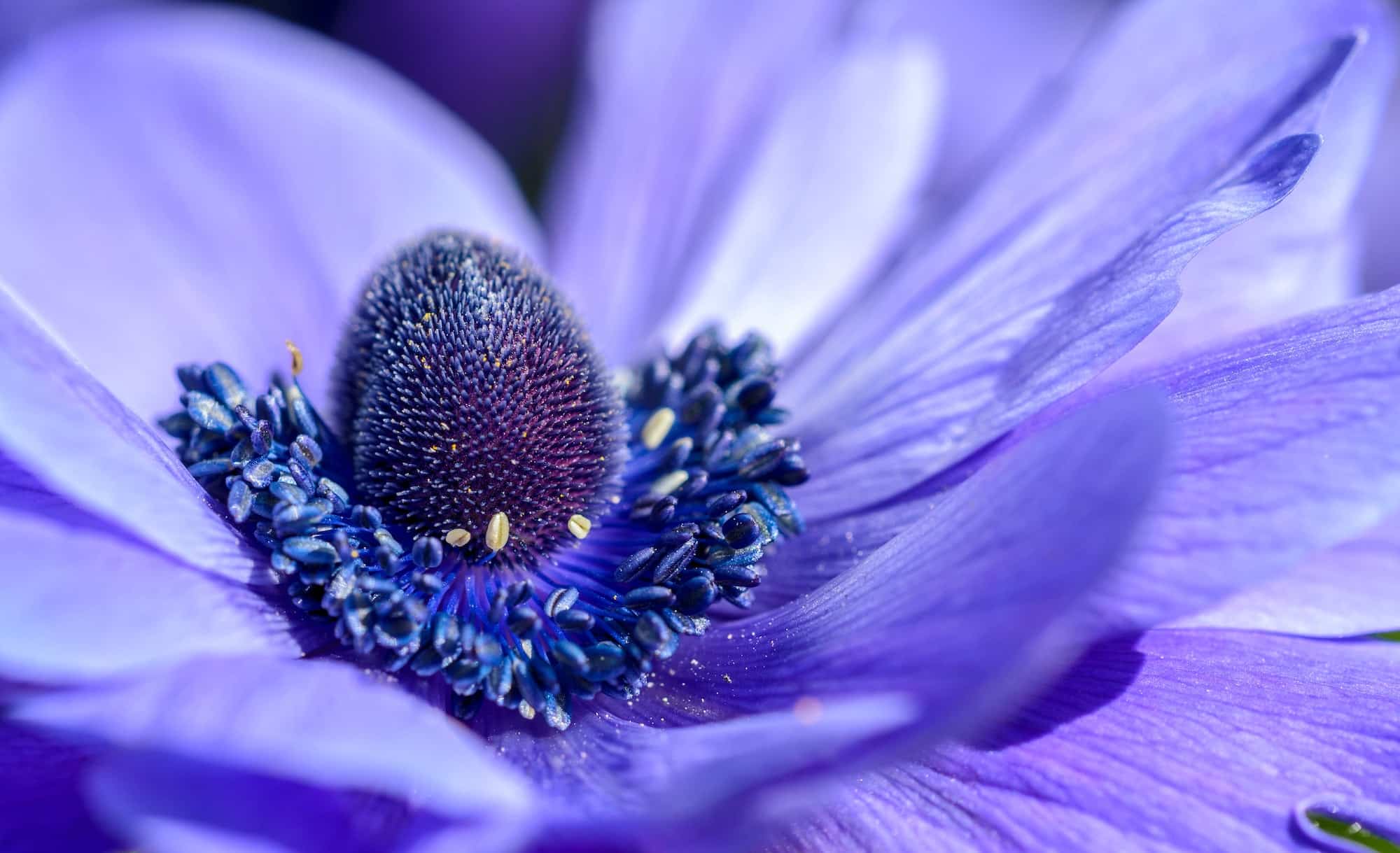
Flower photography is divided into classic and macro photography. Macro photography, or simply macro, refers to an image with a magnification ratio of at least 1:1, that is, a life-size image.
Macro flower photography allows the photographer to get as close as possible to the subject, to enlarge it and capture every minute detail, even features invisible to the naked eye. It brings the miniature world of flowers (pollen, stamen, pistil, micro-insects, etc.) into perfect focus.
More technical than classic photography due to the demands of proximity, macro photography requires specific equipment, which we will look at below.
To get the best flower photo, it’s important to determine the following conditions:
• When best to shoot flowers?
• Where to photograph flowers?
• What are the optimal conditions for flower photography?
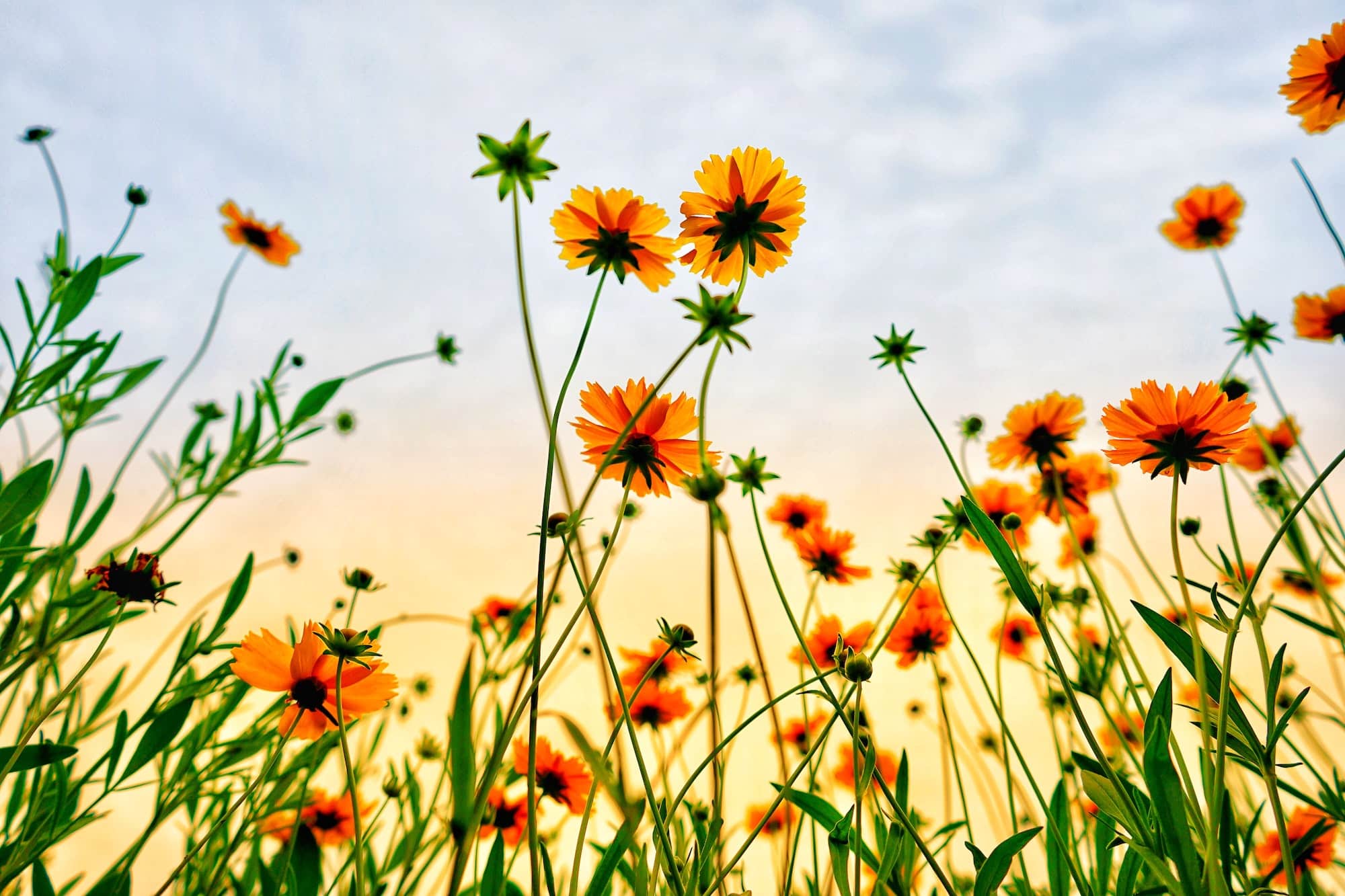
The optimal time to photograph flowers is in spring, when flowers and trees are in bloom. This is the best season to enjoy and capture nature’s explosion of color. Flowers can, however, be photographed all year round, since every season has its own species and its specific color palette.
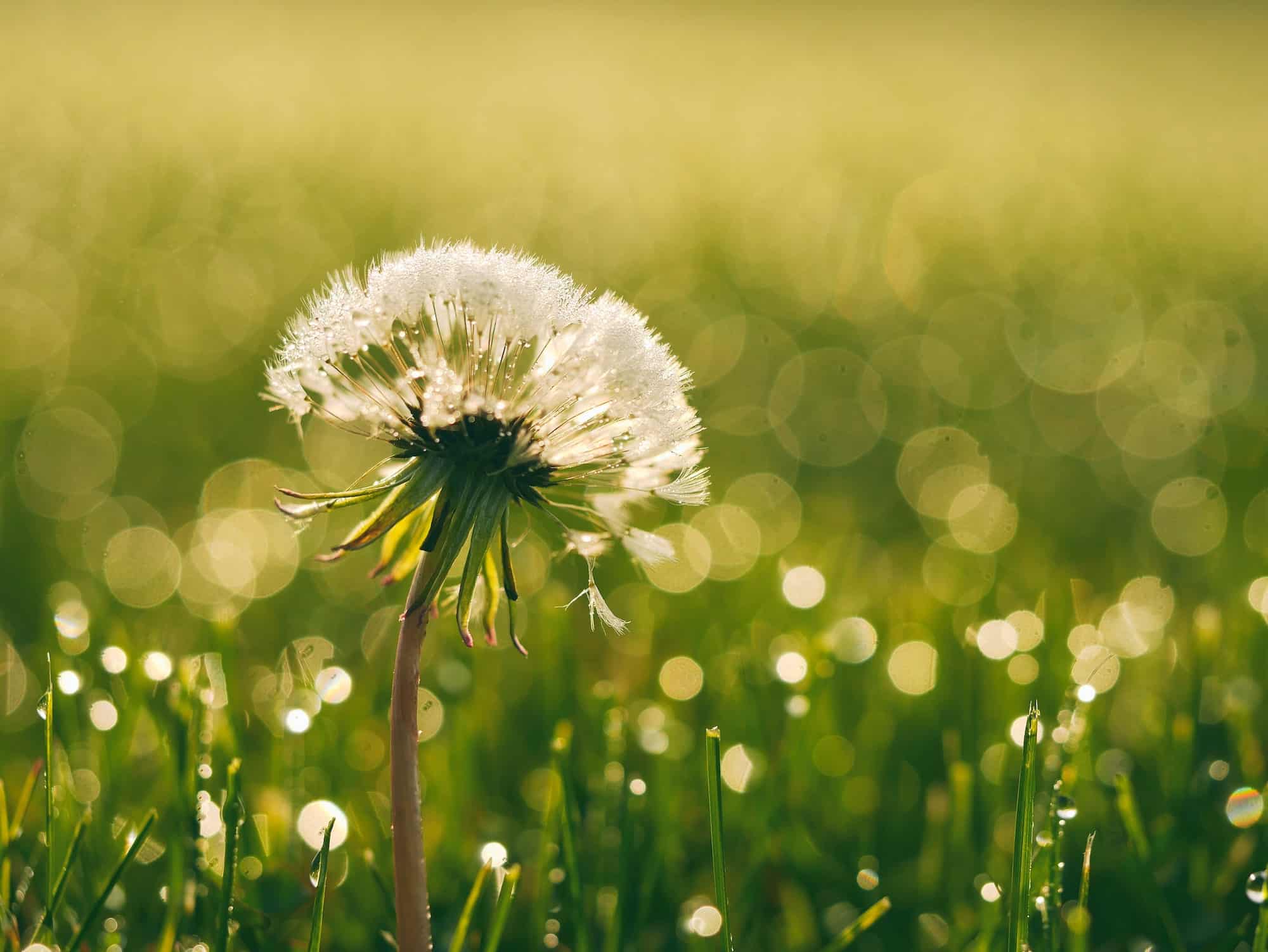
On the day of the shoot, head out the door early in the morning, just after sunrise, or later in the evening, before sunset. These times of day are known as the “golden hours,” because the light is soft and warm, and it enhances the colors of flowers. Early-morning flower photography allows you to capture dew drops on the petals, adding an extra touch to the composition.
Found anywhere you look, flowers are the easiest photography subject to find. Whether at home or in your travels, you can find flowers in any garden, park, forest, on a mountain walk, near a beach, etc… You can also photograph flowers indoors, at home, arranged in creative ways (a bouquet, in a watering can, etc.).
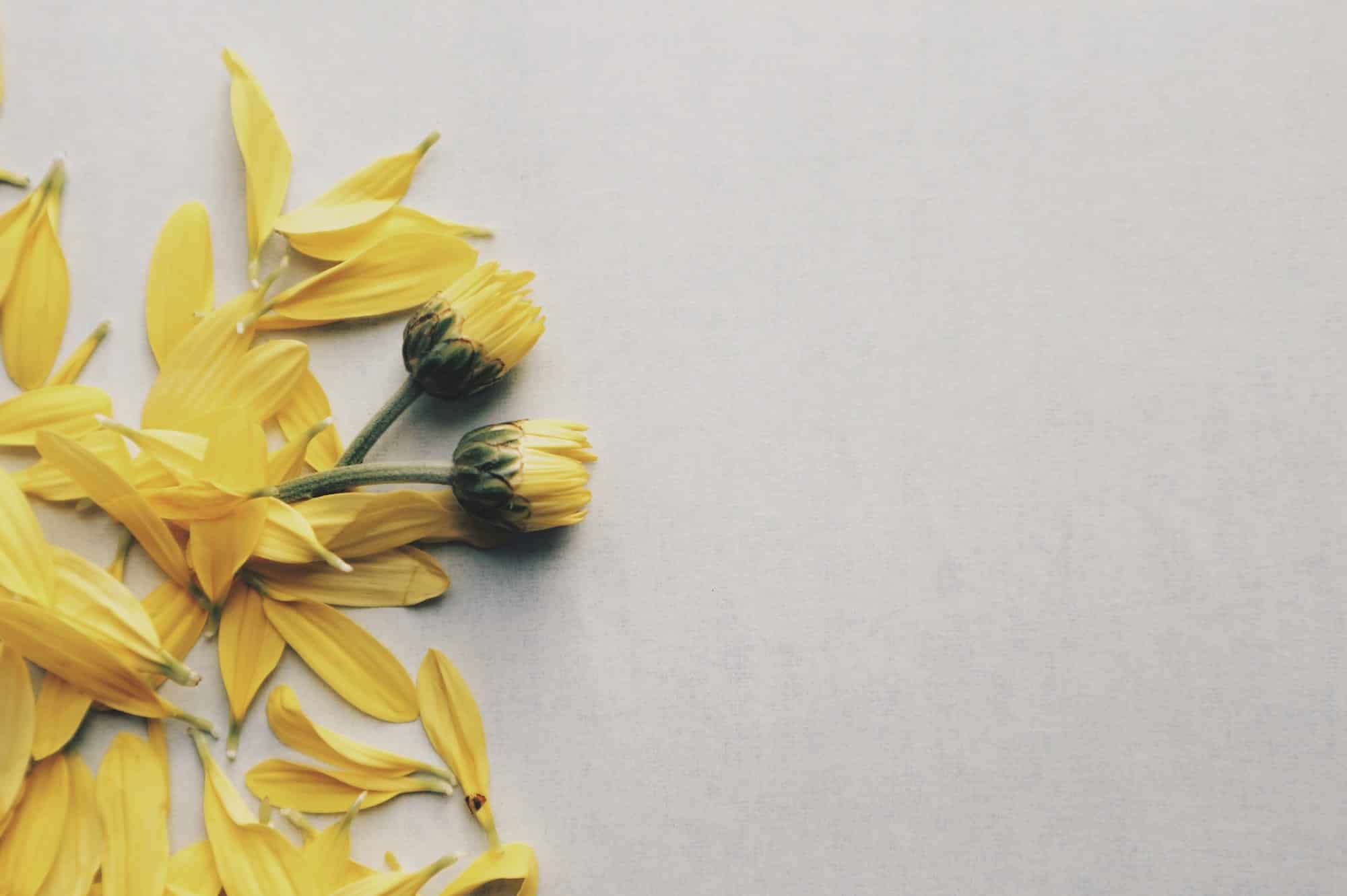
While garden-grown plants and exotic wildflowers lend themselves best to photography thanks to their vibrant colors, we should not underestimate dead flowers. Wilted petals, filaments, and seeds offer a great opportunity for beautiful still life photographs.
The ideal conditions for flower photography are overcast skies with no wind. The presence of clouds (the more overcast, the better) diffuses and softens the light, yielding a well-exposed, more natural and uniform image. Soft light also brings out the color and detail in your flower species.
By contrast, on a bright sunny day, especially at midday, strong direct sunlight can exaggerate the contrast of your photos, deepening the shadows and obscuring the details (shapes, textures, imperfections, etc.). You need to pay attention not only to how strong the light is, but also where it’s coming from (behind, overhead, facing you) to properly manage the exposure of your flower photographs.
Make sure there’s no wind when you’re out photographing flowers. If it’s windy, you won’t be able to focus properly and get a perfectly sharp image because your subject is constantly moving. If you want to take a flower photo on a windy day, make sure you have a windscreen (a reflector or a simple piece of cardboard).
Finally, the presence of rain can enhance your flower photos, since flowers balancing drops of water offer creative photo opportunities. You can shoot during the rain or just after, before the drops dry. If you want to recreate the effect of rain or dew, you can bring a spray bottle and mist your flowers.
Although soft light is ideal, depending on your flower photography project, direct light can generate interesting effects. This is the case, for example, when flowers are backlit (sun located on the other side of the flower), which might create halos of light and highlight the translucent fragility of the petals. Similarly, a slight breeze can create an interesting aesthetic.
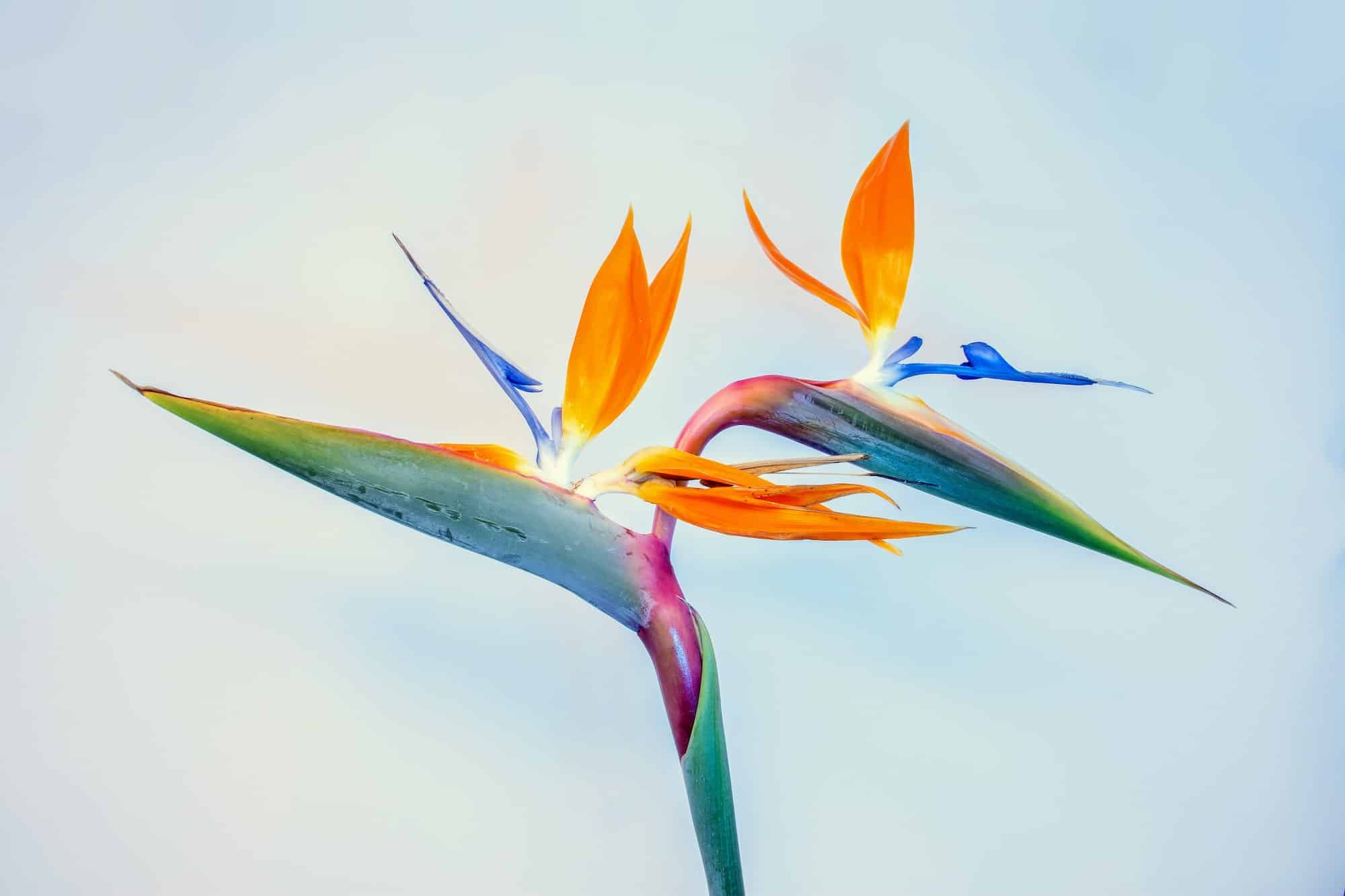
Flower photography is very accessible and doesn’t require any special equipment. However, if you want to take more elaborate photos, particularly for macro flower photography, you’ll need to equip yourself with quality equipment, whether in terms of cameras, lenses, or accessories.
For flower photography, you can use any type of camera: smartphone, compact, SLR, hybrid, film, etc. With the right settings, a great picture is in the bag. So you don’t need a professional camera.
However, it is recommended that you use a camera that allows you to change lenses and that has a manual mode, so that you can adjust your settings and optimize your image. This is particularly important in the case of macro flower photography, where a reflex or hybrid camera is ideal.
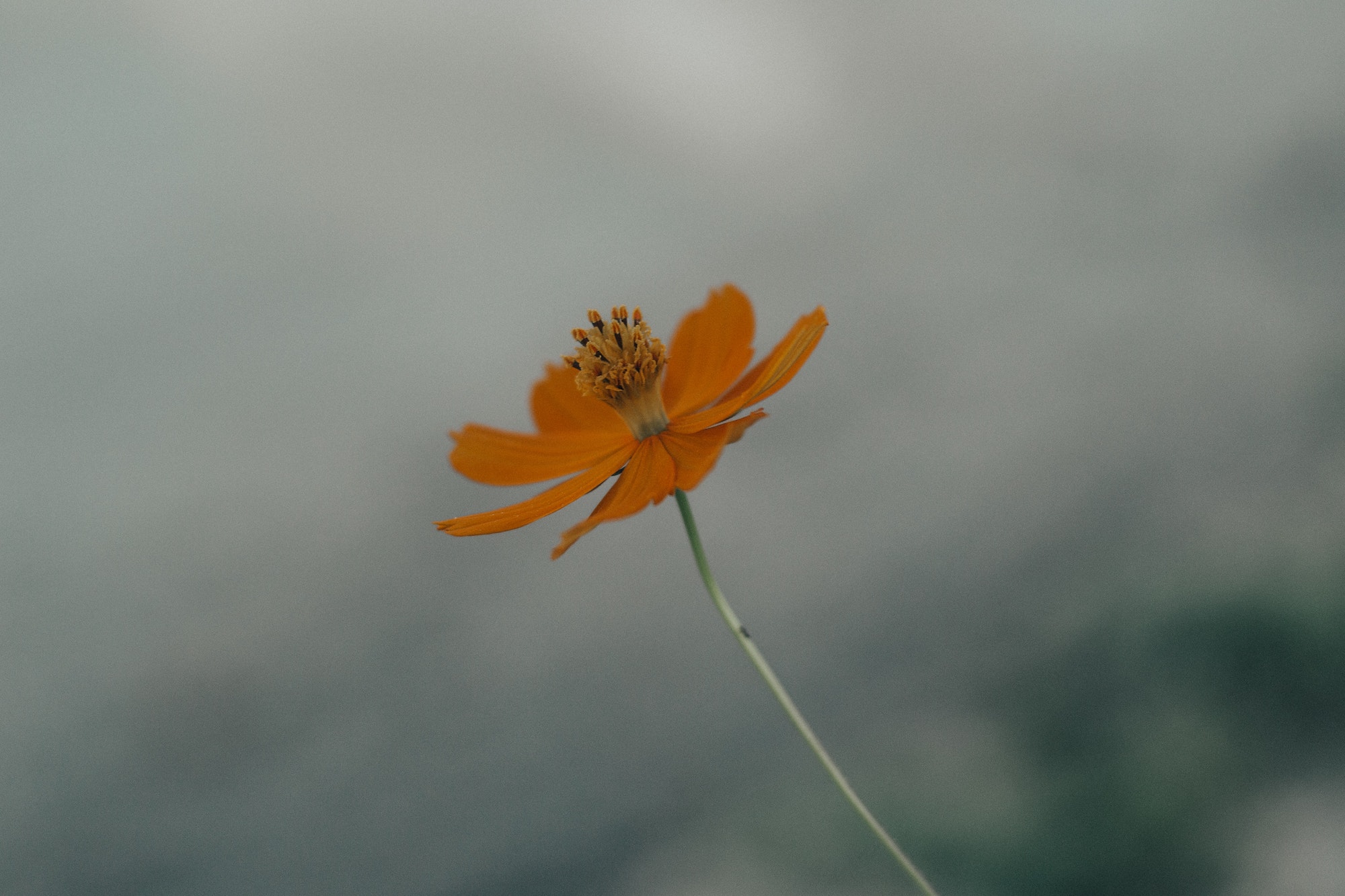
Long focal lenses are the best choice in flower photography. They give you a narrow angle of view and blur the background to make the subject pop. They also allow for optimal focus, even when the lens is nearly touching the flower.
However, you can take beautiful flower photos with any lens, whether standard (e.g., 18–135 mm), wide-angle (less than 50 mm), or telephoto (between 90 mm and 600 mm). A wide-angle lens, for example, allows you to capture flowers in their environment, creating interesting distortion effects.
In the case of macro flower photography, since you need to get as close as possible to your subject to capture all the details, you’ll need a macro lens. Usually with a focal length of 50 mm to 180 mm, macro lenses enable you to focus precisely on your chosen flower and achieve perfect sharpness, even at close range.
Whatever your choice of lenses, the important thing is to find one that is best adapted to your creative project and to measure the distance between you and your subject to optimize your focus. Experiment with your lenses (readjusting your settings every time) and figure out what works best for you.
To facilitate your flower photography, you can equip yourself with certain accessories, the importance of which will depend on your approach, the weather conditions, and your ideas:
• A tripod: Although not essential for flower photography, the tripod’s stability will help you steady your frame and stay in focus. In macro flower photography, a tripod, unaffected by movement, is essential to maintaining optimum focus and perfect sharpness.
• If the light is too bright, you can use a lens hood to shade your lens and ensure even illumination. You might also get a light diffuser to soften the light, or a reflector to help reflect the light back towards your subject (to accentuate contrast, intensify the color, etc.).
• Flash: To obtain ideal illumination when taking close-ups, use a small aperture. When the light is insufficient, the flash offers extra illumination. In macro photography, the flash helps to obtain natural light and compensate for the absence of light in extreme close-ups.
• Remote shutter release: If you’re using a tripod, it will allow you to shoot without having to touch your camera, once you have adjusted all your setting. Since it avoids vibrations or the risk of changing focus, a remote shutter release makes it easier to get a perfectly sharp flower photo.
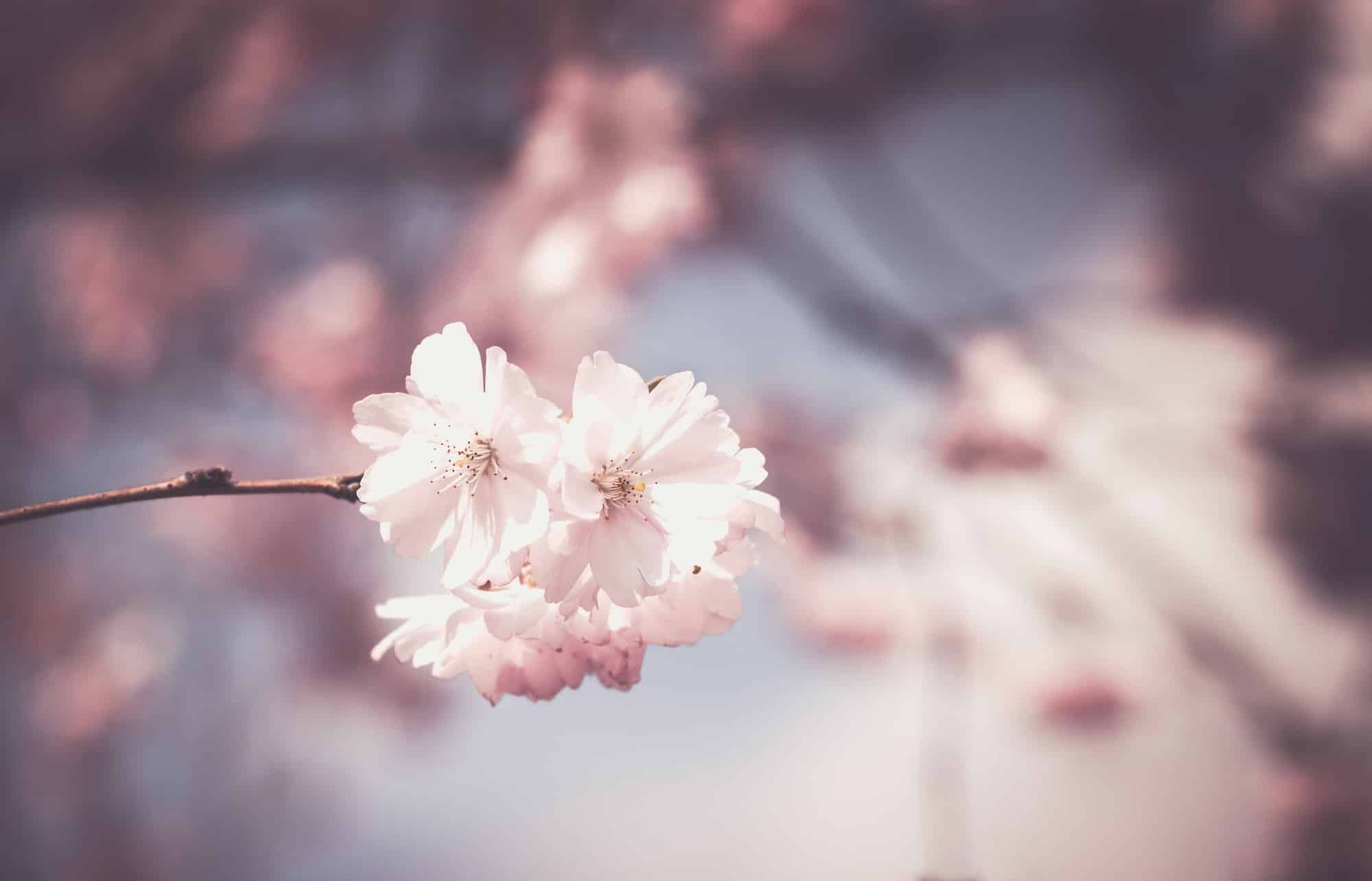
While you can go out and take a flower photo without thinking about the settings on your camera or smartphone, these settings are essential to improving your technique and getting interesting images. In flower photography, there are three main parameters to consider: aperture, ISO sensitivity, and shutter speed.
While it’s perfectly possible to take beautiful flower photos in automatic mode, especially if you’re a beginner, only switching to the manual mode will allow you to improve your shots. Depending on your distance and the context of the photo (low light, wind, etc.), automatic mode might struggle to obtain an optimal focus.
In manual mode, you can finetune all the settings you need for a successful shot. Because of the very shallow depth of field in macro flower photography, manual focusing is a must to prevent any potential movement.
The aperture controls the amount of light entering your camera lens and is represented as an ƒ-number. When it comes to flowers, photography needs to emphasize the main subject, setting it apart from its background using blur. To foreground the flower, a shallow depth of field is required.
This shallow depth of field is achieved with a large diaphragm opening, recommended between ƒ/4 and ƒ/2.8, to isolate the flower from its environment.
In macro flower photography, the very shallow depth of field means that a large part of your frame will be out of focus. You can then reduce the diaphragm aperture to ƒ/16 or ƒ/22 to obtain greater depth of field and thus better sharpness. This will, however, limit the light, which you will need to compensate with other settings.
To set your aperture, you can use your camera’s manual mode or use the Aperture Priority mode, available on many cameras. Run a few tests and find the aperture that best suits your flower photography project and ensures that your main subject is crisp and clear.
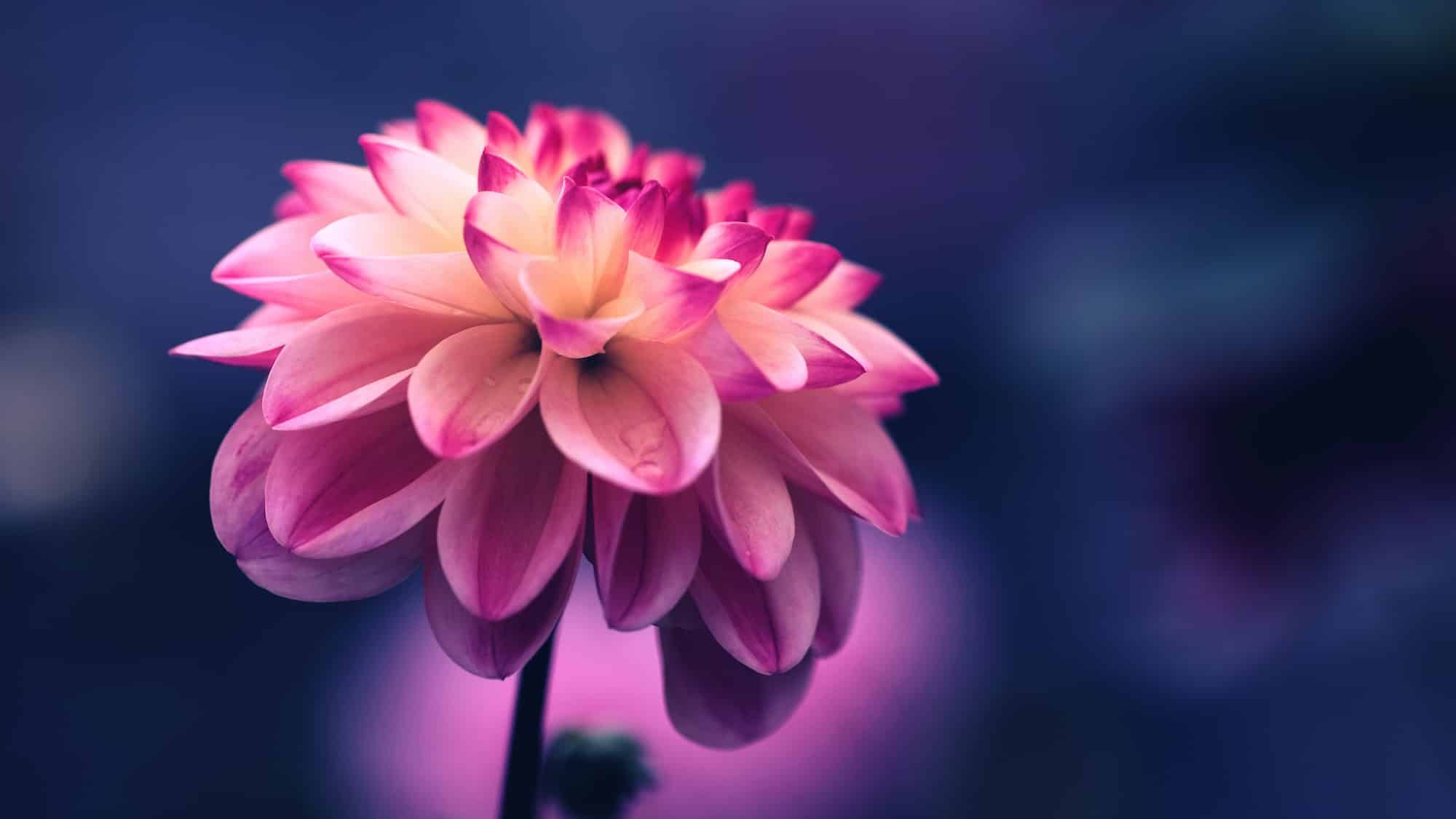
Like aperture, ISO allows you to control the amount of light captured by your camera, yielding a more or less illuminated, detailed image. When it comes to flower photography, depending on the conditions (time of day, the weather) and your aperture and shutter speed, you will need to adjust your ISO sensitivity (a low aperture will require more light).
In general, if you’re photographing a flower on a sunny or overcast day, you won’t have to worry too much about ISO, which can be kept low (between 100 and 800) since the sensor receives enough light. In the early morning and late afternoon, on the other hand, you will need to adjust your ISO to capture as much light as possible and compensate for low levels of light.
Depending on your needs, you can go up to ISO 3200 to get a very sharp image without too much risk of digital noise (grainy picture). Try several ISO settings to find the sensitivity that gives you the best results without graininess.
The third major setting to consider on your flower photography outings is shutter speed. Like the other parameters, shutter speed allows you to control the amount of light hitting the sensor by adjusting the length of exposure. Generally, and in flower photography specifically, the longer your focal length, the shorter your exposure time, especially in macro shots.
To secure a sharp shot that freezes the action and brings out the details of your subject, you will need to pick a high shutter speed, i.e., a short exposure time. We recommend setting your shutter speed between 1/200s and 1/1000s.
The longer your exposure time, the more light your sensor registers, and the better it captures the movement of the flower and its surroundings (nearby branches, insects, etc.). If your exposure time is too long, you will likely end up with a blurred or streaky image. This effect is magnified on windy days.
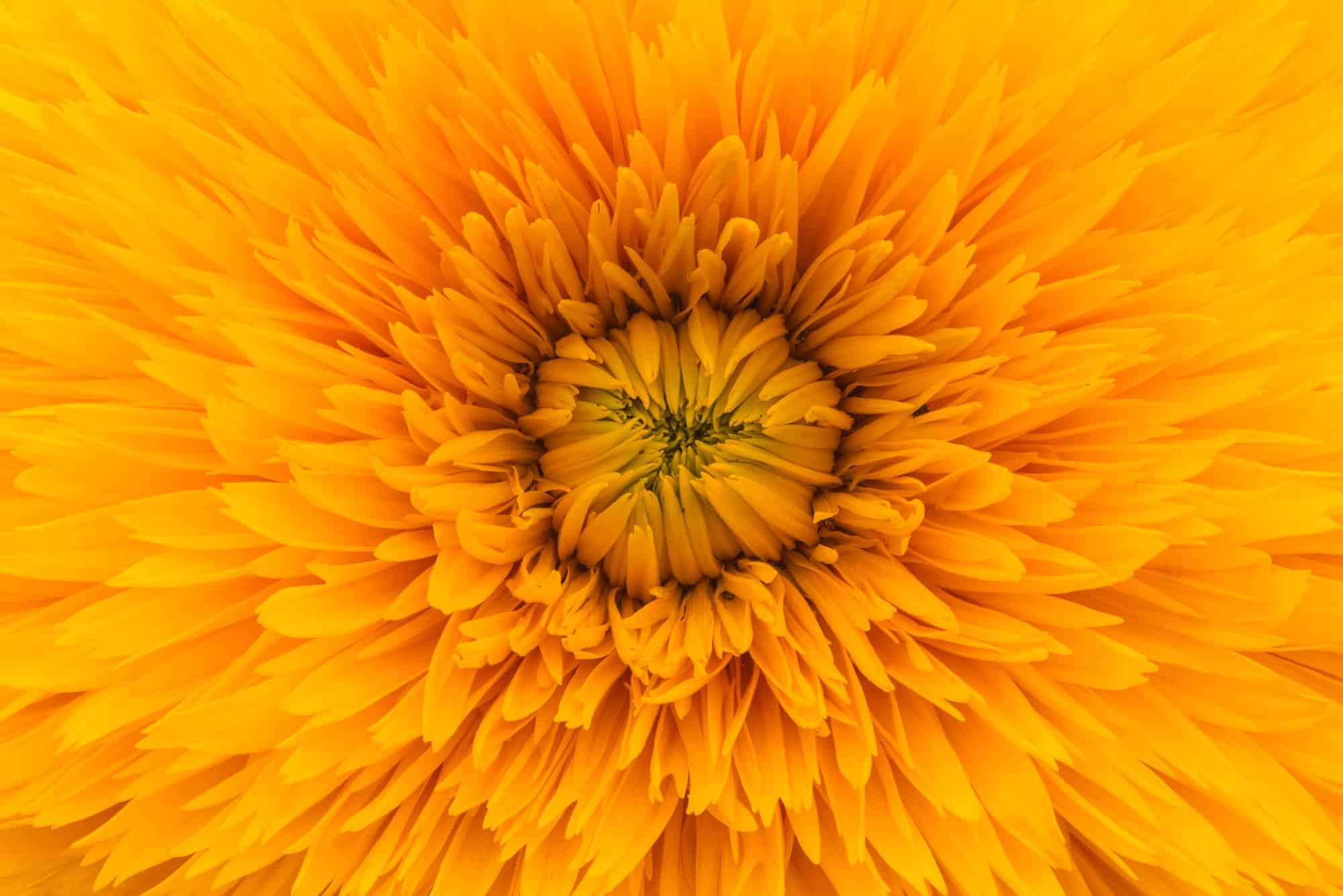
If you’re planning to process and rework your photos on your computer, you should shoot in uncompressed RAW photo format. Unlike JPEG, which has a limited value in post-production, the RAW format preserves all the details of the scene.
Once you’ve chosen the right equipment and set up your camera properly, before you press the shutter release, you need to prepare your photos well: background control, frame, composition, etc.
Because flower photography depends so much on the location, the season and the bloom calendar, the time of day, and the weather conditions, it’s important to prepare your outing in advance. Check the forecast for sunshine, cloud cover, wind or rain, and so on.
This will make it easier for you to determine what equipment to bring (sunshield, reflector, spray, etc.), as well as what to wear. In general, choose clothes that you won’t mind getting dirty, so you can sit or lie down to frame your shot. You might even bring a small kneeling pad.
To make sure your subject stands out and is immediately visible, you need to be attentive to your background. It should complement your flower, be uncluttered, so it doesn’t distract from your subject and overwhelm your flower photo.
A busy background can have a large number of objects in the frame (stems, grass, branches, other flowers), a distracting human background (buildings, walls, fences), areas that are too bright or too vivid, spots of light, etc.
When photographing flowers, the shallow depth of field needed to bring the subject into focus calls for a blurred background. This harmonizes the photo, masking any flaws and immediately drawing attention to the subject. Depending on your photo projects, you can also fill the entire frame with your subject, thus minimizing the background.
To enhance or clean up your background, especially if it’s too busy, you can set up a solid-colored backdrop that will contrast with the bright or pale color palette of your subject and create a unique setting that will foreground and enhance your flower. You may also take advantage of other flowers in the background to create creative patterns of shapes and colors.
For highly creative flower shots, you can play with the depth of field and create a foreground blur, letting your subject recede into the background or shooting it over another flower. Play with distance and depth of field to achieve unique, interesting results.
For successful and memorable flower shots, in addition to paying attention to your background, work on your framing and composition; in other words, set the stage for what happens in your image.
There are no rules for framing or composition. Anything in your frame can contribute to a beautiful photo. The important thing is to know what you want to emphasize and to capture what you like.
Whether to obtain a wide shot, a close-up of a single flower or a bouquet, a profile or three-quarter view, a bird’s eye or worm’s eye view, in portrait or landscape mode, don’t hesitate to move around the flower and try out different angles. In general, it’s best to position yourself at the level of the flower, or close to the ground, for greater immersion and a more intimate, natural flower photo.
When composing your flower photo, show the extent of a field, look for details (petal transparency, textures, etc.), the presence of insects (bee, butterfly, ladybug, etc.), or play with contrast, colors, symmetrical shapes, etc.
Whether you use analog photography, black-and-white, accessories, or high color contrast; highlight the flower’s imperfections or create original mises-en-scène, the important thing in flower photography is to unleash your creativity and get exceptional shots that you bring you satisfaction.
While flowers offer an incredible field of possibilities for taking photos and perfecting your technique, you mustn’t forget that you’re in a natural environment. Respecting nature means refraining from trampling, or pulling out, other flowers and grasses only to get closer to your subject and taking care not to disturb the wildlife around you. May your photos be the only trace of your presence.
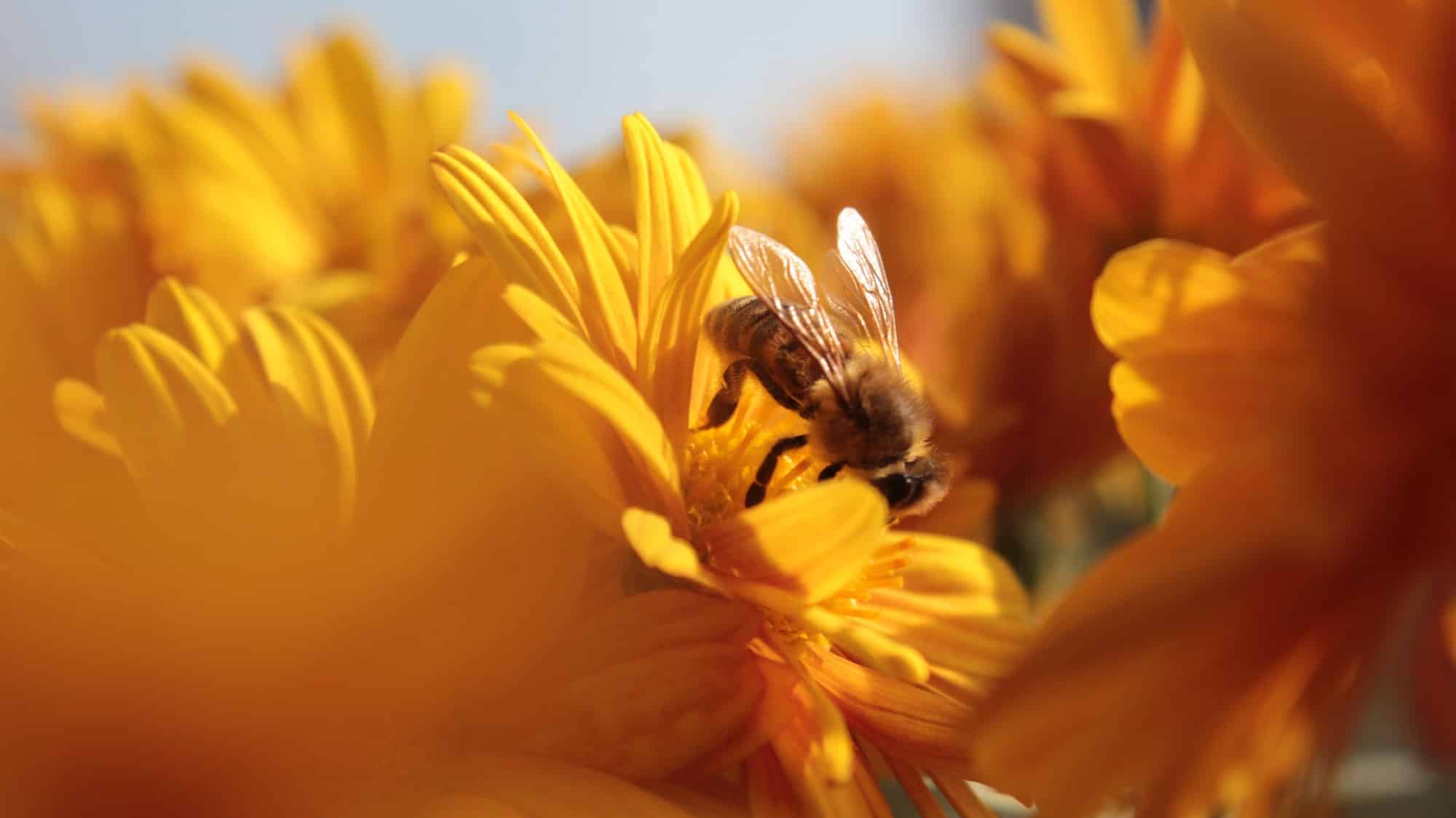
To perfect your flower photos, you might want to process and retouch them using photo processing software, such as Lightroom, Photoshop, etc. While reworking your photos is optional, it can enable you to correct flaws, balance or enhance the colors, and create original montages.
• Cropping the photo,
• Adjusting the exposure,
• Increasing contrast,
• Increasing brilliance,
• Adjusting the white balance,
• Harmonizing or enhancing colors,
• Correcting defects or imperfections (pollen, dirt, etc.),
• Reducing digital noise.
Play around with the different settings and experiment to get your perfect flower photo. Remember to edit your photos in RAW format for best results.
Now you know the ins and outs of flower photography. Take advantage of the natural surroundings to refine your technique, try out new perspectives and settings, and, above all, enjoy the beauty of plants and their individual characteristics.
*Article produced with the expertise of the MPB photo equipment resale, purchase and exchange site.
With nature’s renewed bloom, flower photography is the ideal medium for capturing the beauty of the flora that surrounds us. You only need to leave your house to be able to photograph flowers from every angle.
However, while taking snapshots of flowers is easy, getting the shot right takes a bit of skill. If you’re going to take macro photo of flowers, there are a number of conditions you’ll need to meet in order to succeed: the choice of lens, composition, settings, angles of view, time of day, and so on*.
Flower photography is divided into classic and macro photography. Macro photography, or simply macro, refers to an image with a magnification ratio of at least 1:1, that is, a life-size image.
Macro flower photography allows the photographer to get as close as possible to the subject, to enlarge it and capture every minute detail, even features invisible to the naked eye. It brings the miniature world of flowers (pollen, stamen, pistil, micro-insects, etc.) into perfect focus.
More technical than classic photography due to the demands of proximity, macro photography requires specific equipment, which we will look at below.
To get the best flower photo, it’s important to determine the following conditions:
• When best to shoot flowers?
• Where to photograph flowers?
• What are the optimal conditions for flower photography?
The optimal time to photograph flowers is in spring, when flowers and trees are in bloom. This is the best season to enjoy and capture nature’s explosion of color. Flowers can, however, be photographed all year round, since every season has its own species and its specific color palette.
On the day of the shoot, head out the door early in the morning, just after sunrise, or later in the evening, before sunset. These times of day are known as the “golden hours,” because the light is soft and warm, and it enhances the colors of flowers. Early-morning flower photography allows you to capture dew drops on the petals, adding an extra touch to the composition.
Found anywhere you look, flowers are the easiest photography subject to find. Whether at home or in your travels, you can find flowers in any garden, park, forest, on a mountain walk, near a beach, etc… You can also photograph flowers indoors, at home, arranged in creative ways (a bouquet, in a watering can, etc.).
While garden-grown plants and exotic wildflowers lend themselves best to photography thanks to their vibrant colors, we should not underestimate dead flowers. Wilted petals, filaments, and seeds offer a great opportunity for beautiful still life photographs.
The ideal conditions for flower photography are overcast skies with no wind. The presence of clouds (the more overcast, the better) diffuses and softens the light, yielding a well-exposed, more natural and uniform image. Soft light also brings out the color and detail in your flower species.
By contrast, on a bright sunny day, especially at midday, strong direct sunlight can exaggerate the contrast of your photos, deepening the shadows and obscuring the details (shapes, textures, imperfections, etc.). You need to pay attention not only to how strong the light is, but also where it’s coming from (behind, overhead, facing you) to properly manage the exposure of your flower photographs.
Make sure there’s no wind when you’re out photographing flowers. If it’s windy, you won’t be able to focus properly and get a perfectly sharp image because your subject is constantly moving. If you want to take a flower photo on a windy day, make sure you have a windscreen (a reflector or a simple piece of cardboard).
Finally, the presence of rain can enhance your flower photos, since flowers balancing drops of water offer creative photo opportunities. You can shoot during the rain or just after, before the drops dry. If you want to recreate the effect of rain or dew, you can bring a spray bottle and mist your flowers.
Although soft light is ideal, depending on your flower photography project, direct light can generate interesting effects. This is the case, for example, when flowers are backlit (sun located on the other side of the flower), which might create halos of light and highlight the translucent fragility of the petals. Similarly, a slight breeze can create an interesting aesthetic.
Flower photography is very accessible and doesn’t require any special equipment. However, if you want to take more elaborate photos, particularly for macro flower photography, you’ll need to equip yourself with quality equipment, whether in terms of cameras, lenses, or accessories.
For flower photography, you can use any type of camera: smartphone, compact, SLR, hybrid, film, etc. With the right settings, a great picture is in the bag. So you don’t need a professional camera.
However, it is recommended that you use a camera that allows you to change lenses and that has a manual mode, so that you can adjust your settings and optimize your image. This is particularly important in the case of macro flower photography, where a reflex or hybrid camera is ideal.
Long focal lenses are the best choice in flower photography. They give you a narrow angle of view and blur the background to make the subject pop. They also allow for optimal focus, even when the lens is nearly touching the flower.
However, you can take beautiful flower photos with any lens, whether standard (e.g., 18–135 mm), wide-angle (less than 50 mm), or telephoto (between 90 mm and 600 mm). A wide-angle lens, for example, allows you to capture flowers in their environment, creating interesting distortion effects.
In the case of macro flower photography, since you need to get as close as possible to your subject to capture all the details, you’ll need a macro lens. Usually with a focal length of 50 mm to 180 mm, macro lenses enable you to focus precisely on your chosen flower and achieve perfect sharpness, even at close range.
Whatever your choice of lenses, the important thing is to find one that is best adapted to your creative project and to measure the distance between you and your subject to optimize your focus. Experiment with your lenses (readjusting your settings every time) and figure out what works best for you.
To facilitate your flower photography, you can equip yourself with certain accessories, the importance of which will depend on your approach, the weather conditions, and your ideas:
• A tripod: Although not essential for flower photography, the tripod’s stability will help you steady your frame and stay in focus. In macro flower photography, a tripod, unaffected by movement, is essential to maintaining optimum focus and perfect sharpness.
• If the light is too bright, you can use a lens hood to shade your lens and ensure even illumination. You might also get a light diffuser to soften the light, or a reflector to help reflect the light back towards your subject (to accentuate contrast, intensify the color, etc.).
• Flash: To obtain ideal illumination when taking close-ups, use a small aperture. When the light is insufficient, the flash offers extra illumination. In macro photography, the flash helps to obtain natural light and compensate for the absence of light in extreme close-ups.
• Remote shutter release: If you’re using a tripod, it will allow you to shoot without having to touch your camera, once you have adjusted all your setting. Since it avoids vibrations or the risk of changing focus, a remote shutter release makes it easier to get a perfectly sharp flower photo.
While you can go out and take a flower photo without thinking about the settings on your camera or smartphone, these settings are essential to improving your technique and getting interesting images. In flower photography, there are three main parameters to consider: aperture, ISO sensitivity, and shutter speed.
While it’s perfectly possible to take beautiful flower photos in automatic mode, especially if you’re a beginner, only switching to the manual mode will allow you to improve your shots. Depending on your distance and the context of the photo (low light, wind, etc.), automatic mode might struggle to obtain an optimal focus.
In manual mode, you can finetune all the settings you need for a successful shot. Because of the very shallow depth of field in macro flower photography, manual focusing is a must to prevent any potential movement.
The aperture controls the amount of light entering your camera lens and is represented as an ƒ-number. When it comes to flowers, photography needs to emphasize the main subject, setting it apart from its background using blur. To foreground the flower, a shallow depth of field is required.
This shallow depth of field is achieved with a large diaphragm opening, recommended between ƒ/4 and ƒ/2.8, to isolate the flower from its environment.
In macro flower photography, the very shallow depth of field means that a large part of your frame will be out of focus. You can then reduce the diaphragm aperture to ƒ/16 or ƒ/22 to obtain greater depth of field and thus better sharpness. This will, however, limit the light, which you will need to compensate with other settings.
To set your aperture, you can use your camera’s manual mode or use the Aperture Priority mode, available on many cameras. Run a few tests and find the aperture that best suits your flower photography project and ensures that your main subject is crisp and clear.
Like aperture, ISO allows you to control the amount of light captured by your camera, yielding a more or less illuminated, detailed image. When it comes to flower photography, depending on the conditions (time of day, the weather) and your aperture and shutter speed, you will need to adjust your ISO sensitivity (a low aperture will require more light).
In general, if you’re photographing a flower on a sunny or overcast day, you won’t have to worry too much about ISO, which can be kept low (between 100 and 800) since the sensor receives enough light. In the early morning and late afternoon, on the other hand, you will need to adjust your ISO to capture as much light as possible and compensate for low levels of light.
Depending on your needs, you can go up to ISO 3200 to get a very sharp image without too much risk of digital noise (grainy picture). Try several ISO settings to find the sensitivity that gives you the best results without graininess.
The third major setting to consider on your flower photography outings is shutter speed. Like the other parameters, shutter speed allows you to control the amount of light hitting the sensor by adjusting the length of exposure. Generally, and in flower photography specifically, the longer your focal length, the shorter your exposure time, especially in macro shots.
To secure a sharp shot that freezes the action and brings out the details of your subject, you will need to pick a high shutter speed, i.e., a short exposure time. We recommend setting your shutter speed between 1/200s and 1/1000s.
The longer your exposure time, the more light your sensor registers, and the better it captures the movement of the flower and its surroundings (nearby branches, insects, etc.). If your exposure time is too long, you will likely end up with a blurred or streaky image. This effect is magnified on windy days.
If you’re planning to process and rework your photos on your computer, you should shoot in uncompressed RAW photo format. Unlike JPEG, which has a limited value in post-production, the RAW format preserves all the details of the scene.
Once you’ve chosen the right equipment and set up your camera properly, before you press the shutter release, you need to prepare your photos well: background control, frame, composition, etc.
Because flower photography depends so much on the location, the season and the bloom calendar, the time of day, and the weather conditions, it’s important to prepare your outing in advance. Check the forecast for sunshine, cloud cover, wind or rain, and so on.
This will make it easier for you to determine what equipment to bring (sunshield, reflector, spray, etc.), as well as what to wear. In general, choose clothes that you won’t mind getting dirty, so you can sit or lie down to frame your shot. You might even bring a small kneeling pad.
To make sure your subject stands out and is immediately visible, you need to be attentive to your background. It should complement your flower, be uncluttered, so it doesn’t distract from your subject and overwhelm your flower photo.
A busy background can have a large number of objects in the frame (stems, grass, branches, other flowers), a distracting human background (buildings, walls, fences), areas that are too bright or too vivid, spots of light, etc.
When photographing flowers, the shallow depth of field needed to bring the subject into focus calls for a blurred background. This harmonizes the photo, masking any flaws and immediately drawing attention to the subject. Depending on your photo projects, you can also fill the entire frame with your subject, thus minimizing the background.
To enhance or clean up your background, especially if it’s too busy, you can set up a solid-colored backdrop that will contrast with the bright or pale color palette of your subject and create a unique setting that will foreground and enhance your flower. You may also take advantage of other flowers in the background to create creative patterns of shapes and colors.
For highly creative flower shots, you can play with the depth of field and create a foreground blur, letting your subject recede into the background or shooting it over another flower. Play with distance and depth of field to achieve unique, interesting results.
For successful and memorable flower shots, in addition to paying attention to your background, work on your framing and composition; in other words, set the stage for what happens in your image.
There are no rules for framing or composition. Anything in your frame can contribute to a beautiful photo. The important thing is to know what you want to emphasize and to capture what you like.
Whether to obtain a wide shot, a close-up of a single flower or a bouquet, a profile or three-quarter view, a bird’s eye or worm’s eye view, in portrait or landscape mode, don’t hesitate to move around the flower and try out different angles. In general, it’s best to position yourself at the level of the flower, or close to the ground, for greater immersion and a more intimate, natural flower photo.
When composing your flower photo, show the extent of a field, look for details (petal transparency, textures, etc.), the presence of insects (bee, butterfly, ladybug, etc.), or play with contrast, colors, symmetrical shapes, etc.
Whether you use analog photography, black-and-white, accessories, or high color contrast; highlight the flower’s imperfections or create original mises-en-scène, the important thing in flower photography is to unleash your creativity and get exceptional shots that you bring you satisfaction.
While flowers offer an incredible field of possibilities for taking photos and perfecting your technique, you mustn’t forget that you’re in a natural environment. Respecting nature means refraining from trampling, or pulling out, other flowers and grasses only to get closer to your subject and taking care not to disturb the wildlife around you. May your photos be the only trace of your presence.
To perfect your flower photos, you might want to process and retouch them using photo processing software, such as Lightroom, Photoshop, etc. While reworking your photos is optional, it can enable you to correct flaws, balance or enhance the colors, and create original montages.
• Cropping the photo,
• Adjusting the exposure,
• Increasing contrast,
• Increasing brilliance,
• Adjusting the white balance,
• Harmonizing or enhancing colors,
• Correcting defects or imperfections (pollen, dirt, etc.),
• Reducing digital noise.
Play around with the different settings and experiment to get your perfect flower photo. Remember to edit your photos in RAW format for best results.
Now you know the ins and outs of flower photography. Take advantage of the natural surroundings to refine your technique, try out new perspectives and settings, and, above all, enjoy the beauty of plants and their individual characteristics.
*Article produced with the expertise of the MPB photo equipment resale, purchase and exchange site.


Jason Lyon, an engineer, examines Loo Garden, a temporary subterranean creation designed to represent a future, healthier River Thames, in a section of the Thames Tideway tunnel commonly known as the Super Sewer
Photograph: Toby Melville/Reuters





