-
Published4 hours ago
 Image source, Michel Zoghzoghi/Comedy Pets
  Image source, Masayoshi Yamamoto/Comedy Pets


 Image source, Michel Zoghzoghi/Comedy Pets Image source, Masayoshi Yamamoto/Comedy Pets

The Banff Centre for Arts and Creativity, a space for artists to incubate work, hone and evolve their practices and cross-pollinate with leading artists from across the globe, is this year celebrating its 90th anniversary. This past April Canada-born Chris Lorway, former executive and artistic director at Stanford Live in California, took to his post as the centre’s new President and CEO, making him just the 8th president in the Banff Centre’s history. In Toronto on the evening of June 19 the lush garden of Susie Kololian, Chair of the Fundraising & Development Committee and a Director of The Banff Centre Foundation, and her husband Vahan, managing partner and founder of TerraNova Partners LP, was the backdrop for a reception to celebrate Mr. Lorway. Adam Waterous, who chairs Banff’s Board of Governors, was also a host.
After remarks were made, a pair of performances were on offer, firstly an opera performance by Julia Dawson and Elliot Madore, who were accompanied by Sandra Horst on piano. The piece performed was a duet from Don Giovanni, which is the focus of the Banff Centre’s 2023 Opera in the 21st Century program. Later, slam poetry artist Ian Keteku, who was attending as a guest, was moved to take to the stage for an impromptu performance of a piece that he has developed in part at Banff Centre.

Tuku Matthews and Ian Steaman.TOM SANDLER/Handout

Adam and Jen Waterous.TOM SANDLER/Handout

Julia Foster and Ian Keteku.TOM SANDLER/Handout

Robin Anthony and Daniel Faria.TOM SANDLER/Handout

Samara Walbohm and Joe Shlesinger.TOM SANDLER/Handout

Sue Kidd and Kitty Scott.TOM SANDLER/Handout

Vaughan and Susie Kololian with Chris Lorway.TOM SANDLER/Handout
On the evening of June 28, a photography exhibition titled RESILIENCE launched inside the historic Tin and Copper Smith Building on Yonge Street in Toronto. The works, which celebrate Greece’s strong relationship with nature, including the olive tree, grapevines and the sea, are the work of His Royal Highness Prince Nikolaos of Greece and Denmark.
Prince Nikolaos, who has exhibited work internationally for nearly a decade, was in attendance to launch the show, alongside his wife Princess Tatiana of Greece and Denmark. Central to this latest exhibition, which was curated by Marilena Koutsoukou and sponsored by the Polydor Foundation, is a photographic mosaic fabricated using upcycled ocean plastic debris. Titled Sea Cred, the piece was made in collaboration with environmental organization Parley for the Oceans, in an effort to boost awareness of the devastating plastic pollution in our oceans. RESILIENCE runs through the end of August in Toronto.

Marilena Koutsoukou.Ryan Emberly/Handout

Robyn Scott and Princess Tatiana of Greece and Denmark.Ryan Emberly/Handout

Ted Manziaris and Anastasia Manziaris.Ryan Emberly/Handout

Susanna Manziaris.Ryan Emberly/Handout
Editor’s note: A previous version of this article misidentified Vahan Kololian. This version has been corrected.


‘Muddy Alligators’ (1917) by John Singer Sargent
Photo: Worcester Art Museum
Worcester, Mass.
Think “art museum,” and big-city institutions like Washington’s National Gallery, the Art Institute of Chicago and New York’s Metropolitan first spring to mind. But the current “Watercolors Unboxed” show at the Worcester Art Museum in central Massachusetts makes you realize that regional museums throughout the U.S. often harbor treasures that rank with those of the majors.
Watercolors Unboxed
Worcester Art Museum, through Sept. 10
Founded in 1896, the Worcester Art Museum not only boasts admirable collections of European and American painting and sculpture, superb mosaics, some 3,700 Japanese woodblock prints, and the famed John Woodman Higgins Armory Collection—it also houses a celebrated trove of watercolors, which because of their fragility and sensitivity to light are rarely displayed.
Through Sept. 10, WAM is presenting a choice selection of 40 European and American works created between the 1870s and 1950s representing a variety of artistic approaches to this subtle but challenging medium. Organized by
Nancy Kathryn Burns,
WAM’s curator of prints, drawings and photographs, the show features rarely exhibited watercolors by such American luminaries as
Childe Hassam,
Winslow Homer,
Rockwell Kent,
John La Farge,
John Singer Sargent
and
Andrew Wyeth
(his riveting 1957 “The Rope,” a study for “Hay Ledge”). It also includes examples by artists less known for their activity in watercolor and gouache (also called “opaque watercolor”), notably
Amedeo Modigliani,
Gustave Baumann
and
Ernst Ludwig Kirchner.
These newly unboxed paintings range stylistically from Sargent’s bravura brushwork to the deliberate poster-like rawness of social commentator
Jacob Lawrence’s
1943 “They live In firetraps.” Also featured are examples from WAM’s collection of watercolors painted or influenced by members of the San Ildefonso school, a collective of Native American artists working in the Southwest during the first half of the 20th century. Because most of these pieces have so long been safely archived, they are in prime condition, their fragile pigments fresh and unfaded. Moreover, beyond reflecting over 70 years’ progression of watercolor styles, they illustrate a variety of techniques employed by the artists to achieve their effects, some not always obvious to viewers. Informative technical discussions are included in the wall cards.

‘Yonkers From the Palisades’ (1916) by Childe Hassam
Photo: Worcester Art Museum
For example, Childe Hassam’s 1916 “Yonkers From the Palisades,” a panoramic view looking across the Hudson River from New Jersey’s craggy shore, achieves textural contrast between the quick, fragmented brush strokes of the cliffs and their autumnal foliage and his flowing, idealized blue water. To paint the river, Hassam applied layers of blue and yellow-green wash, before tamping them down with a bit of sponge or other absorbent material.
Similarly, Rockwell Kent’s 1926-27 “Boy on Cliff” demonstrates wash manipulated to create a different effect: Here, a lone youth, precariously balancing on a narrow rock outcropping, ponders the sea below. Kent surrounds the boy’s head with a mystic aureole of light against the picture’s glowing polychrome sky. As Ms. Burns observed to me, “he produced that sky by brushing adjacent washes of various hues, and most probably using a similar absorbent material to apply further layers of blue and rose tones.”

‘Venice’ (1911) by Maurice Prendergast
Photo: Worcester Art Museum
Altogether different in mood,
Maurice Prendergast’s
effervescent “Venice” (1911) exemplifies his well-known use of staccato dabs of color with which he recorded the view outside his Venetian hospital window while recuperating from emergency surgery during a painting holiday there. Characteristically, he makes the mosaic-like dabs scintillate by leaving surrounding areas of the cream paper visible.
Not surprisingly, Sargent and Homer are easily the show’s stars. Sargent’s “Muddy Alligators” (1917) is among his most exceptional watercolor essays, painted during a trip to Florida after he had essentially abandoned portraiture for the landscape painting that had long been his great love. Over graphite outlines, he loosely deploys quick patches of watercolor to capture a group of these fearsome reptiles lolling about their swampy habitat. Sargent pools some patches and scrapes away others—notably to form the sharp teeth of the open-mouthed gator in the foreground. Hanging alongside the painting, three of Sargent’s detailed pencil sketches of alligators reveal the intensive preparatory study behind the artist’s apparent spontaneity.

‘Rum Cay’ (1898-99) by Winslow Homer
Photo: Worcester Art Museum
Created during Homer’s second visit to the Bahamas, “Rum Cay” (1898-99) shows a muscular Bahamian running past a large sea turtle against a minimal beachscape comprising three spare horizontal bands of color wash. Apart from the oblique reference to Aesop’s tortoise and hare, the runner bespeaks Homer’s consummate skill at capturing the athletic human body in action, from the splendid delineation of the man’s face and sunlit torso to the flexed toes of his left foot.

Homer’s ‘Old Friends’ (1894)
Photo: Worcester Art Museum
In contrast, Homer’s “Old Friends” (1894) conveys the deep emotion of a rugged old woodsman contemplating a massive ancient tree. Homer’s expressive rendering of the man’s upturned face underscores the emotional link. The composition illustrates his use of “subtractive” painting: Though Homer evidently depicted the Adirondack woodland surrounding the man and the enormous trunk, he subsequently scraped away the paint at the left of the sheet, fashioning a br ight white cloud out of the white paper’s now roughened surface to emphasize the great tree’s majestic presence. Having first seen this profoundly moving work when it was lent by the WAM, along with Sargent’s “Muddy Alligators” and “Bathers,” to the 2017 show “American Watercolor in the Age of Homer and Sargent” at the Philadelphia Museum of Art, I can declare on seeing it this time that familiarity certainly has not bred contempt.
—Mr. Scherer writes about music and the fine arts for the Journal.


In a world saturated with photographs, where everyone has a camera at their fingertips, one genre continues to stand out: fine art photography. This captivating medium transcends the realm of mere documentation, elevating photography to the level of art. Fine art photography is an artistic expression that combines technical prowess, creative vision and often a distinct message. Let’s delve into the essence of fine art photography, exploring its characteristics, significance and the endless possibilities it offers to both photographers and viewers.

Fine art photography encompasses a broad spectrum of styles and approaches, ultimately united by the intent to convey a deeper meaning or evoke emotions in the viewer. Unlike commercial or journalistic photography, the primary purpose of fine art photography is to ignite introspection and ignite the imagination.
Often, combining a painterly feel or even additional textures bring a unique charm to each piece of art. It may be a portrait or a landscape image, but this approach will take an image from a mere photo to something a little more unique.

Fine art photography exhibits several key characteristics that set it apart from other forms of photography. First, it emphasizes the creative vision of the photographer. Rather than capturing a literal representation of reality, fine art photographers employ techniques like abstraction, manipulation and experimentation to create unique and imaginative compositions. They often use elements such as light, color, texture and form to evoke mood and provoke thought.
Another important aspect is the attention to detail and craftsmanship. Fine art photographers meticulously plan and execute their images. They pay meticulous attention to composition, framing and technical aspects like exposure and focus. They approach their work with a high level of skill and technical proficiency, which allows them to effectively translate their creative vision into a tangible form.

One of the remarkable aspects of fine art photography is its ability to evoke subjective interpretations. Each viewer brings their own experiences, emotions and perspectives to the image, resulting in a unique and personal interaction. Fine art photographs are often open-ended, inviting viewers to ponder the narrative, symbolism or metaphor behind the image. This interplay between the artist’s intent and the viewer’s interpretation adds layers of depth and complexity to the photograph.
Fine art photography also serves as a powerful medium for social commentary, cultural exploration and self-expression. Photographers can use their images to address issues such as identity, gender, race and environmental concerns. By presenting their perspective through artistic imagery, they encourage dialogue and challenge societal norms, offering fresh insights and alternative viewpoints.
They offer the viewer a sense of introspection or at the very least to stop and ponder the artistry for a few moments. They are often otherworldly or even dreamy and ethereal, at times, shocking and thought-evoking.

Fine art photography has evolved significantly over time. Initially confined to traditional darkrooms and chemical processes, it has embraced digital technology and post-processing tools. The advent of digital cameras, advanced software and online platforms has democratized the genre, enabling a wider range of artists to experiment and share their work globally.
As we look to the future, this genre will undoubtedly continue to push boundaries and defy conventions. It will embrace emerging technologies, explore new techniques, and incorporate diverse influences from various art forms. Moreover, as society evolves, fine art photography will reflect and challenge the ever-changing cultural landscape, provoking thought and fostering dialogue.

Fine art photography is a captivating genre that goes beyond mere documentation, offering a unique and thought-provoking perspective on the world. With its emphasis on creative vision, technical excellence and subjective interpretation, it bridges the gap between reality and imagination. By engaging viewers on an emotional and intellectual level, fine art photography sparks conversations, challenges norms and inspires new ways of seeing. As we continue to explore and appreciate the world of fine art photography, we embark on a journey that is both visually stunning and intellectually enriching.
But, is there business to be made from this genre? Yes, I believe for some there can be. Not everyone makes a living from it, not everyone enjoys it. But I believe that for a few who are passionate about it, it is more often the process and the end results more than the financial benefit that is rewarding. But perhaps that’s just me.
Please note: All artworks shared in this post are all original fine art by me (without AI); some have not been seen before and are shared with permission.
Here is a list of other fine art photographers you might enjoy:


There’s an old handball court at Venice Beach that David Ingraham – a musician as well as photographer – describes as a “quintessentially southern California location”. It is, the Young Dubliners drummer says, “always busy and wonderfully diverse, packed with people from all over the world, making it a prime street-photography spot”.
He doesn’t see this particular shot, which he captured back in 2015 on an iPhone 8, as a product of good luck, however. “I had an idea in my mind’s eye of what I wanted, so I positioned myself accordingly and then observed, waited, shot, repeated,” Ingraham says. “Taking a quick shot and then moving on rarely results in anything worthwhile. I couldn’t have got something like this without doing my homework first, studying the work of the masters of the craft, such as Alex Webb and Henri Cartier-Bresson.”
It was the latter who coined the term “the decisive moment”, which is what drew Ingraham towards this location in the first place. He says: “These courts, with their strong geometric lines and graphic numbers, seemed bursting with potential for a decisive moment.”
He shot using the iPhone’s Noir filter, saying he feels he works better with tones than with colour. As for how he hopes the image makes others feel or think, he says: “It conveys a bit of the simple, serendipitous beauty of day-to-day life, which is constantly unfolding all around us if we just choose to stop and take notice.”

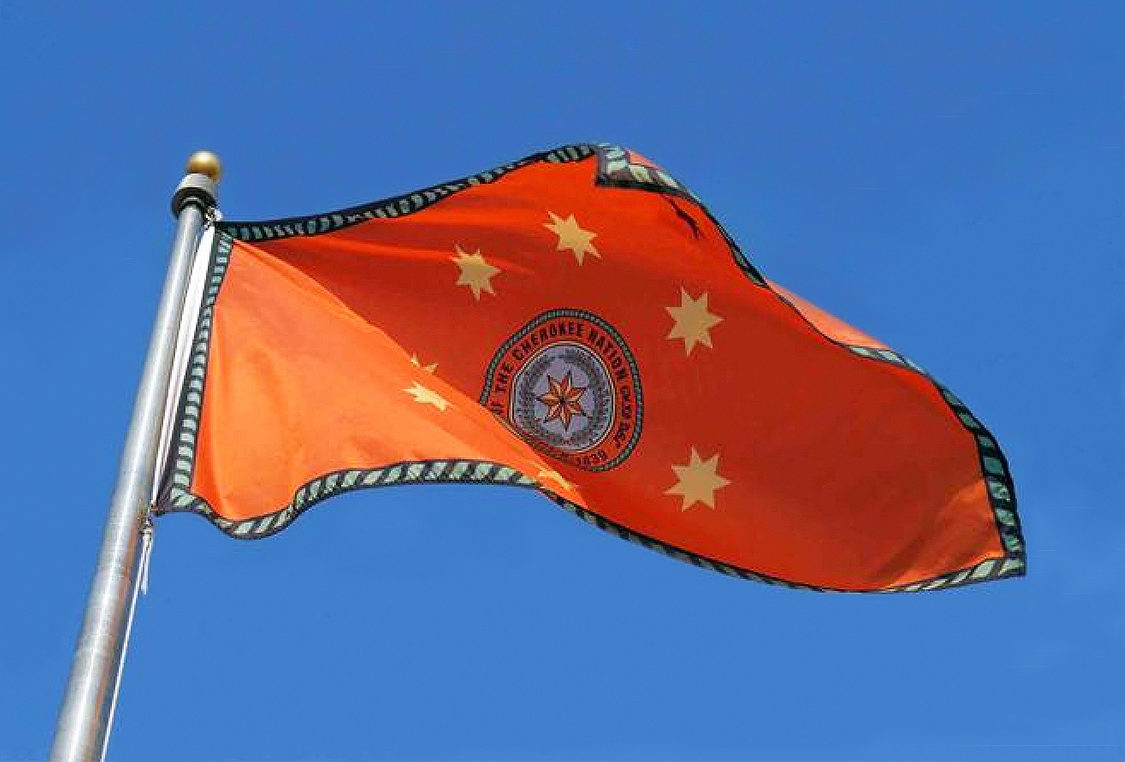
TAHLEQUAH, OK – Cherokee Nation is investing $3 million in the Cherokee artist community as outlined in the Cherokee Artist Recovery Act (ARA) to help recover economically from the COVID-19 pandemic. Signed into law in October 2022, the act is the largest single investment in the Cherokee art community in history.
“Cherokee artists serve a vital role in the preservation and promotion of Cherokee culture,” said Cherokee Nation Principal Chief Hoskin, Jr. “Through their work, we are sharing our story with the world. But the pandemic had a significant impact on their ability to survive economically. The pandemic led to the cancellation of many art shows and festivals, which resulted in a loss of income and put them at risk financially. It is our responsibility to invest in their recovery so that they can continue to invest their time and energy to their art and the promotion of our culture.”
Introduced by Chief Hoskin during his 2022 State of the Nation Address at the 70th annual Cherokee National Holiday, the act boasts various key initiatives, beginning with the acquisition of $1.5 million of original artwork from Cherokee artists over the next two years through a public bid process.
The first public bid is open now for 2D and 3D work and is open to all Cherokee Nation artists, with allocations for both large-scale installations and general art to enhance tribal facilities.
Additional key initiatives include:
“We couldn’t be more excited for this investment in the arts and have worked hard to ensure these funds are impactful for artists today and in the future,” said Cherokee Nation Deputy Chief Bryan Warner. “It is with admiration and appreciation that we created the ARA, and we’ve worked hard to develop programs that will benefit our artists, increase the visibility of Cherokee art within our communities, and showcase the talented work of Cherokee artists.”
Artists selling their art or participating in programs under the ARA must be citizens of the Cherokee Nation. Preference is given to Cherokee artists who have been designated as Cherokee National Treasures.

TOKYO — On a side street just off the main shopping arcade in Koenji, a residential neighborhood west of central Tokyo, a giant eagle spreads its wings over lush trees and a sparkling stream.
The larger-than-life eagle, in a soft shade of pink, is the centerpiece of a massive mural that covers the side wall of a privately owned five-story building. Painted by WHOLE9, a two-person artist unit based in Osaka, the mural, titled “SYNC,” depicts the people of Koenji in the form of an eagle surrounded by abstract forms representing the diversity of life.





