The Pillar of Stability: The Importance of Choosing the Right Tripod

The Pillar of Stability: The Importance of Choosing the Right Tripod

In the world of photography, capturing the perfect shot often requires meticulous attention to detail. From adjusting camera settings to framing the subject just right, photographers invest significant effort in creating stunning visuals. However, amidst all the technicalities, there is one often overlooked but indispensable tool that can make or break the outcome of a photograph: the tripod.

Acting as the pillar of stability, the tripod provides an essential foundation for photographers to achieve sharpness, clarity, and creative control in their images. Choosing the right tripod is of paramount importance and can significantly impact the quality of a photograph.

Weight: Finding the Perfect Balance 

The weight of your tripod is a crucial consideration, especially if you frequently shoot in different locations or need to carry your gear for extended periods. Opting for a tripod that strikes a balance between being lightweight and sturdy is essential. Lightweight tripods are ideal for travel and long hikes, as they are easier to carry. However, ensure that the tripod is still robust enough to provide stability for your camera and lens combination.

Sturdiness: A Solid Foundation 

A sturdy tripod is the backbone of stability in photography. It provides a solid foundation for your camera, preventing unwanted camera shake and allowing you to capture sharp images, particularly in low-light situations or during long exposures. Look for tripods made from durable materials such as carbon fiber or aluminum, as these provide excellent stability without adding excessive weight.

Ease of Use: Streamlining Your Workflow 

An easy-to-use tripod enhances your workflow and allows you to focus on capturing the perfect shot. Consider the tripod’s leg-locking mechanism—whether it uses clasps, twist locks, or a combination of both. Clasps provide quick and convenient adjustments, while twist locks offer added security once locked into position.

Another factor to consider is the ease of adjusting the tripod’s height and angle. Look for intuitive leg-lock mechanisms that allow for smooth adjustments and quick setup. Some tripods also offer features such as a center column with a rapid adjustment system or a reversible center column that enables low-angle shooting, further enhancing versatility and ease of use.

Stability: Ensuring Shake-Free Shots 

Stability is paramount when it comes to tripods. A wobbly or unstable tripod defeats its purpose and can compromise image quality. Look for tripods with features that enhance stability, such as leg angles that allow for low-level shooting or adjustable leg sections that enable setting up on uneven terrain.

Additionally, consider the tripod’s maximum load capacity. Ensure it can support the weight of your camera and lens combination comfortably, with some margin for added accessories like a flash or telephoto lens. Choosing a tripod with a higher load capacity than your current setup allows for future equipment upgrades without needing to invest in a new tripod.

Ball Heads: Enhancing Flexibility and Precision 

Tripod ball heads are critical components that determine the versatility and precision of your tripod setup. Choose one that is smooth and offers precise control over the movement of your camera. A high-quality ball head enables you to easily adjust the camera’s position for framing and composition. Look for features such as a separate locking knob for panning and a built-in spirit level for precise leveling.

Selecting the right tripod is a crucial decision for photographers looking to achieve stability, ease of use, and exceptional image quality. By considering factors such as weight, sturdiness, ease of use, stability, and the different types of clasps and ball heads available, you can make an informed choice that aligns with your photography needs.

Remember, a high-quality tripod is an investment in the foundation of your photographic work. It provides stability, eliminates camera shake, and allows you to explore various shooting techniques such as long exposures and low-light photography. So, take the time to research and choose a tripod that complements your gear, style, and shooting requirements. With the right tripod supporting your camera, you’ll have the confidence to capture stunning images and elevate your photography to new heights.

Do you have more to add to this article? Let’s continue the conversation in the comments below 

Art Beat: The Hottest Galleries Of The Year

Art Beat: The Hottest Galleries Of The Year

From Charles M. Russell to Barbara Meikle and beyond, summer 2023 is looking pretty good for art lovers. Get out of the heat with these summer art events and galleries.

Want to beat the heat this summer? Step into a gallery or art show to experience the best of Western and Indigenous culture.


Through September 2
Billy Schenck: Mystic Visions of the West

This exhibition features 65 works by Billy Schenck, one of the pioneers of the contemporary art movement of the 1960s. Schenck, along with Fritz Scholder and Luis Jimenez, presented a conceptual and aesthetic counterpoint to the traditionalism provided by groups such as the Cowboy Artists of America. Museum of Western Art, Kerrville, Texas, 830.896.2553, museumofwesternart.com.

Billy Schenck, The Legend of Gregorio Cortez, 2019, oil, 28″ x 22″


Through September 4
With the Grain

Focusing on the story of wood carving in Northern New Mexico and the deep-rooted relationship wood carvers have with the materials they use for their art, this exhibition explores the work of modern and contemporary Hispanic carvers in Northern New Mexico. New Mexico Museum of Art, Santa Fe, 505.476.5072, nmartmuseum.org.

Patrocinio Barela, Carreta de la Muerte, 1953, carved wood and leather, 16.25” x 31.25” x 16.25”, National Hispanic Cultural Center Art Museum Permanent Collection, 2006.1.56 a-f. Anonymous gift in honor of Virginia and Edward Lujan. Photo credit: Addison Doty


Through September 10
Nexo Entre Raíces / Nexus Between Roots

Featuring prints from artists with Mexican roots working in both Mexico and the U.S., this printmaking exhibition comprises a total of 64 prints, 33 artworks exchanged for a print portfolio between the participating artists, as well as additional pieces contextualizing the artists’ work. The artworks traverse themes—including culture, tradition, identity, and place—that connect those with Mexican roots across borders. National Hispanic Cultural Center, Albuquerque, New Mexico, nhccnm.org.

Juan de Dios Mora, Canícula, 2022, linograbado/linecut, 15” x 22”. Photo courtesy of Marco Sánchez


Through September 17
Impressionist and Post-Impressionist Masterpieces from the Pearlman Collection

Some 30 works by Cézanne, Manet, Degas, Gauguin, van Gogh, Pissarro, Toulouse-Lautrec, Modigliani, and others are explored within the context of the artists’ experience of transience. The exhibition also examines the friendships they developed in Paris, as well as the varied locations and sites that shaped their work. The Museum of Fine Arts, Houston, 713.639.7300, mfah.org.

Vincent van Gogh, Tarascon Stagecoach, 1888, oil on canvas, the Henry and Rose Pearlman Foundation, on loan to the Princeton University Art Museum. Photo credit: Bruce M. White


Through September 24
Desert Rider: Dreaming in Motion

Artworks exploring lowrider and skateboard culture in Denver and across the American Southwest comprise this exhibition that delves into the diverse ways artists who self-identify as Indigenous and Latinx express identity, pride, and sense of community by transforming vehicles associated with the American West. Denver Art Museum, Denver, 720.865.5000, denverartmuseum.org.

Cara Romero (Chemehuevi), Liquid Sunshine (Sol Liquid), 2021, digital chromogenic print, 24” x 32”. Courtesy of Cara Romero © Cara Romero


Through September 24
Hold Your Horses! Exhibit and Sale

Celebrating the horse’s interaction with cowboys through ranch life and showmanship, this annual event features artists known specifically for their exceptional equine art. Participating artists this year include Shawn Cameron, Barbara Meikle, Scott Ewen, and Gary Byrd. Phippen Museum, Prescott, Arizona, 928.778.1385, phippenartmuseum.org.

Barbara Meikle, I’ve Got Your Back, oil on canvas, 24” x 36”. Courtesy of the artist.


August 10 – 13
Objects of Art & American Indian/Tribal Santa Fe

These shows offer an extensive collection of historic and contemporary material that includes unique objects, fashion and jewelry, furniture, works on paper and canvas, as well as classics in tribal, folk, and American Indian art. El Museo Cultural de Santa Fe, Santa Fe, objectsofartshows.com.


August 11–13
Sun Valley Arts & Crafts Festival

This juried outdoor fine arts and crafts show features a wide range of original artwork as well as live music, food trucks, a picnic area, and kids’ activity area. Atkinson Park, Ketchum, Idaho, 208.720.5095, sunvalleyartsandcraftsfestival.com.


August 12 – 14
Whitehawk Antique Indian & Ethnographic Art Show

The “one show with endless treasures” kicks off August 11 with an opening night preview of Native American and ethnographic arts and jewelry. Items include devotional pieces, furniture, rugs, baskets, pottery, textiles, paintings, and more. Santa Fe Community Convention Center, Santa Fe, 805.340.0384, objectsofartshows.com.


August 11 – 13
Sculpture in the Park

The country’s largest outdoor juried sculpture show gets underway with a ticketed Friday night preview of the 2,000 artworks by 162 sculptors (including 27 new to the show). Proceeds go toward the purchase of sculpture for the garden. Currently 178 permanent pieces grace the grounds. Benson Sculpture Park, Loveland, Colorado, 970.663.2940, sculptureinthepark.org.


August 12 – October 14
America’s Horse in Art Show & Sale

The 2023 show and sale comprises artworks depicting the American Quarter Horse lifestyle. Art goes on sale (in person or by phone or proxy bid) directly following an opening reception with the artists August 12 and is available for purchase through October 14. American Quarter Horse Hall of Fame & Museum, Amarillo, Texas, 806.376.5181, aqha.com/artshow.


August 16 – 19
The Russell

Inspired by the artist and storyteller Charlie Russell, the C.M. Russell Museum’s fundraising events include a summer sale, art preview party, the First Strike Thursday Night auction, as well as an Art in Action/The Russell Live Auction combined event on Friday and more. Various venues, Great Falls, Montana, 406.727.1939, cmrussell.org.


August 17–19
Wheelwright Indian Market Events

The museum’s annual benefit event (August 17–18)—featuring donated and consigned Native art including jewelry, pottery, textiles, kachinas, folk art, and more—kicks off with a ticketed affair August 16. A Native artist market August 18–19 includes artists Cippy Crazyhorse, Waddie Crazyhorse, Benjamin Harjo Jr., Yazzie Johnson and Gail Bird, Raynard Lalo, Shanna Peterson, Christopher Yazzie, and others. Wheelwright Museum, Santa Fe, 505.982.4636, wheelwright.org.


September 6 – 17
Jackson Hole Fall Arts Festival

Over 50 art events make up the cultural extravaganza Celebrating Arts in the Tetons, Jackson Hole’s fall arts festival. Attractions include the Western Design Conference exhibit and sale, a quick-draw auction, food and wine tastings, gallery open houses, artist receptions, sales, and live art auctions. Various venues, Jackson, Wyoming, 307.733.3316, jacksonholechamber.com/events.


September 8 – 10
Quest for the West Art Show & Sale

This premier art event known for its festive atmosphere features newly created paintings and sculptures by 50 of today’s leading Western artists. Among the opening weekend events are a miniature art sale and fixed-price, luck-of-the-draw main sale (absentee bids accepted). The show opens to the public September 10, and all art will remain on view through October 8. Eiteljorg Museum, Indianapolis, 317.636.9378, quest.eiteljorg.org.

Brad Teare (American, b. 1956), Majesty of Morning Light, 2023, oil on canvas, 42” x 42”. Image courtesy of the artist and the Eiteljorg Museum


September 9 – 16
Grand Canyon Celebration of Art

Artists capture the beauty of the canyon “en plein air” along the South Rim, September 9–16; these artworks will hang in the historic Kolb Studio for an exhibition and sale, September 17, 2023–January 16, 2024. A quick draw with on-site purchases takes place September 15. Various locations, Grand Canyon NP, Arizona, 480.277.0458, grandcanyon.org.


September 9 – 23
Bosque Art Classic

Drawings, paintings, and sculptures are among the 175–200 juried artworks featured in this year’s exhibition and sale opening to the public September 10. An awards ceremony is scheduled for September 9; the online sale opens September 11. All art remains on view through the end of the show. Bosque Arts Center, Clifton, Texas, 254.675.3724, bosqueartscenter.org.

Matt Atkinson; Sunka Wakan; 2022; graphite on Bristol Board; 20” x 24”; Silver Medal Drawing Winner, 2022 Bosque Art Classic. Photo courtesy of the artist


September 14 – 16
Trappings of Texas

This annual exhibition and sale of contemporary Western art and custom cowboy gear celebrates this year with 40-plus artists. Ticketed opening weekend activities include artist demonstrations, a preview party, opening reception, exhibit, sale, breakfast at the museum, and Ranch Roundup party. The exhibition remains up through November 4. Museum of the Big Bend, Alpine, Texas, 432.837.8143, museumofthebigbend.com.


September 14–17
Reno Tahoe International Art Show

Just two years old, this event has already made a name for itself with art from more than 200 independent artists and 60 galleries, a First Nation exhibition with 30-plus artists, the country’s largest indoor/outdoor sculpture exhibition, live music performances, short film screenings, and more. Reno-Sparks Convention Center, Reno, Nevada, rtiashow.com.


September 14 – October 1
Western Visions Art Show + Sale

Artworks by more than 170 contemporary wildlife artists come up for live auction and an intent-to-purchase sale at this year’s annual fundraiser. The exhibit opens September 9. Attend the signature event September 14 in person, online, or by proxy. Unsold works remain available September 15 – October 1; all art stays on display through October 1. National Museum of Wildlife Art, Jackson, Wyoming, 307.733.5771, wildlifeartevents.org.


September 15–24
Escalante Canyons Art Festival

In the heart of Grand Staircase-Escalante National Monument, this festival celebrates Utah’s canyon country with plein air competitions, art exhibits and sales, workshops, an arts and crafts fair, live music, guided walks, and more. Various locations, Escalante, Utah, 435.616.1075, escalantecanyonsartfestival.org.


September 16
Jackson Hole Art Auction

The signature event of the Jackson Hole Fall Arts Festival, the auction offers quality art by renowned past masters as well as contemporary artists. This year’s artists include Bob Kuhn, Howard Terpning, Carl Rungius, Conrad Schwiering, and Carl Brenders. Center for the Arts, Jackson, Wyoming, 866.549.9278, jacksonholeartauction.com.


September 16 – 17
Prescott Indian Art Market

This juried Indian art market features traditional and contemporary artwork from artists representing many tribes and pueblos. You’ll find wood and stone carvings, pottery, ceramics, sculpture, paintings, baskets, blankets, clothing, and jewelry as well as Native musicians, dancers, and storytellers. Sharlot Hall Museum, Prescott, Arizona, 928.445.3122, sharlothallmuseum.org/piam.


This article appears in our August/September 2023 issue, available on newsstands now or through our C&I Shop.

Lead Image: Charles M. Russell; Assiniboine War Party; 1902; watercolor and ink; 9” x 13”.

Urban art comes to pop-up market

Urban art comes to pop-up market

Urban Collectibles, a pop-up market of urban art, will return to Public House, Sukhumvit 31, with a selection of mind-blowing artworks on Friday from 6pm to 10pm and Saturday to Sunday from 11am to 9pm.

Organised by Mango Art Festival, this is another chance to get immersed in original artwork on canvas and limited edition art toys of various styles by local and international urban artists which will be exhibited in a boutique hotel setting.

They include fun and fabulous pieces by artists from Gallery Benetti, captivating creations from Street Star Gallery, folk art-inspired classic cartoon characters by Luck Maisalee, and unique works by the ever-talented Lolay and his artistic family members.

Also, prepare to witness the raw artistic prowess of many local art groups including Boo_x_ Project, Tuktunteung Warehouse and The Meeting Room Gallery. Their works will be showcased alongside paintings by Narayan from the Philippines, exquisite creations by Art Gyeonggi from Korea, and stunning neon art pieces by Giles Ryder from Australia.

The event will also feature a specially curated room showcasing many rare vintage Louis Vuitton trunks from De Siam’s exclusive collection, as well as Club 21 x Wishulada, a collaborative exhibition featuring creative works that touch on pollution and world sustainability.

Left Vintage Louis Vuitton trunks. photos courtesy of Mango Art Festival

Artwork by Art Gyeonggi. Mango Art Festival

There is no admission fee. Visit facebook.com/MangoArtFestival.

Photography in the Valley

Photography in the Valley
image

The Washington County Historical Society is excited to announce a program by photographer Rhett Arens on Thursday, Aug. 10, at 7 p.m. at the Washington County Heritage Center.

Arens is a photographer who has had the good fortune to travel extensively, visiting more than 60 countries over the last 30 years. Arens finds that photography often triggers a give-and-take moment when strangers meet. It becomes an opportunity to exchange stories and find common ground. His work has appeared in several publications, including The Paris Review, Travel + Leisure, Taproot, The Golfers Journal, Fifty Grande, Lake Superior Magazine, Islands, The Whitefish Review, Boundary Waters Journal and more.

This page requires Javascript.

Javascript is required for you to be able to read premium content. Please enable it in your browser settings.


Featured Local Savings


Beyond the selfie: A new view of travel photography

Beyond the selfie: A new view of travel photography

Posted on August 7, 2023 by Sonoma Valley Sun

Learn how to create more compelling travel photos through a talk by international photographer, author, and documentary producer, Russ Johnson, entitled, Way to Go: Traveling with an Artist’s Eye. The Sonoma-based artist will teach how to go beyond the selfie to observe and capture people and places and see the world in a different way.

Johnson’s talk and reception takes place Wednesday August 9, 2023 from 5:30pm to 6:30pm at Vintage House, Sonoma, 264 1st St. East, and is open to the public. The Vintage House gallery will also host an exhibit of more than 20 of his best local and worldwide photographs available for purchase August 7 – 31, 2023. 

Vintage House showcases the work of Arts Guild of Sonoma artists each month and regularly presents a variety of speakers and performers on Wednesday evenings.

Johnson has worked as a photographer, filmmaker, and writer in more than sixty countries for clients including several cruise lines, American Express the UN, the countries of Nepal and Thailand and the State of California.

He will demonstrate how to use a camera as a tool to look closely and dive deeply into the subjects that reveal themselves while traveling. He will be joined by his wife, Pat Meier-Johnson, Sonoma’s Treasure Artist of 2022 whose painting tips are relevant to photography as well. 

Over the years the couple has photographed and painted scenes around the world while engaging in an exciting dialogue about art: what is meaningful, what is beautiful, what is funny or troubling, examining subjects, shapes, colors, and light. 

Russ will also introduce two photo books: Street Level: Walking the Streets and Backroads of the World and Patterns and Distractions, his collection of patterns, shapes, shadows, and natural and human-made abstracts.  

Johnson has donated his talents to produce more than 25 short documentaries for Sonoma non-profits since moving to Sonoma with his wife, Pat Meier-Johnson, in 2011. He has produced documentaries ranging from the California prison system to the future of travel, with Arthur C. Clarke. His audio stories have been featured on NPR stations and on his satirical podcast Gone Astray.  He is author of “Tales of the Radio Traveler,” which combines radio lore with a romp around the world. 

You can find more of his work on and his Gone Astray podcast on russelljohnson.com and on his pioneering online travel magazine, www.connectedtraveler.com, which has been featured on CNN, CBS, the BBC, Time and USA Today, among others.  Lonely Planet has praised it as “Armchair travel at its best.” 

Photo: Winding Way-Lakeville Highway, by Russell Johnson


How to Master the Art of Digital Marketing in 2023

How to Master the Art of Digital Marketing in 2023

Opinions expressed by Entrepreneur contributors are their own.

Digital marketing in 2023 is like navigating through uncharted waters. With global digital ad spending projected to reach $626 billion by year’s end, cutting through the noise and making an impact is more crucial than ever.

The catch? It’s not about what you spend but how well you blend the art and science in your marketing strategy. So, if you’re all set to master the art of creativity and the science of data in digital marketing, let’s delve into this exhilarating journey of marketing success.

The creative heart of digital marketing

Creativity is the cornerstone of any exceptional digital marketing campaign. Remember the viral success of Spotify’s “Wrapped” campaign? Users eagerly awaited their personalized, end-of-year music stats, transforming Spotify from just another streaming service into a music curator that understood their unique taste.

The takeaway here? The campaign was successful because it touched the heart. It connected with users emotionally, striking a chord with their identity. This brings us to the art of audience understanding, the soul of any successful digital marketing strategy.

Related: Avoid These 5 Pitfalls In Your Digital Marketing

Understanding the audience

A profound understanding of your audience is at the heart of successful digital marketing. Building customer personas isn’t a ‘nice-to-have’ — it’s an absolute ‘must-have.’ A customer persona is a semi-fictional representation of your ideal customer based on market research and real data about your existing customers.

They help you understand your customers better, making it easier for you to tailor your content, messaging, product development and services to meet their specific needs. Developing a deep understanding of your customer personas, interests, behaviors and pain points helps refine your content to resonate better. It’s about offering value that speaks directly to them, in a language they understand, through a medium they prefer.

This personalization is the key to unlocking engagement and conversion. A study by Accenture revealed that a staggering 91% of consumers prefer brands that offer personalized recommendations and offers.

That makes sense, right?

People crave recognition, understanding and brands that tailor their experience to their unique needs and wants. So, remember, digital marketing isn’t just about flashy ads and catchy slogans. It’s about understanding your audience, engaging them personally, and, ultimately, converting that engagement into action. Personalization isn’t just a trend—it’s the backbone of effective digital marketing in 2023.

Related: How ChatGPT Is Changing Digital Marketing (for Better or Worse)

The analytical brain of digital marketing

For all the creative flair we can muster, the undeniable reality is that digital marketing has a formidable analytical core. It thrives on data — numbers and metrics that drive crucial decisions. But why is data so critical?

In 2023, data-driven marketing has taken the spotlight, acting as a GPS for marketers to navigate the complex digital landscape. By leveraging data analytics, companies can understand consumer behavior, predict trends, and make informed decisions.

For instance, Netflix, known for its intelligent use of data, customizes its content based on users’ viewing habits, significantly increasing user engagement.

Underlying this data-driven approach is the dynamic trio of Artificial Intelligence (AI), Machine Learning (ML), and Big Data. These aren’t just buzzwords; they’re game-changers. AI and ML help analyze copious amounts of data in real-time, helping businesses personalize experiences at scale.

An excellent example is Amazon. Using AI to understand customer behavior, Amazon offers personalized product recommendations, improving customer experience and increasing sales. Big Data is the fuel that powers these intelligent machines. By analyzing vast datasets, companies can glean insights about customer preferences, habits, and behaviors, in turn guiding marketing strategies.

But all this tech talk is meaningless without the right tools.

In 2023, tools like SEO and competitive analysis, HubSpot for CRM and content management and Hootsuite for social media management are vital assets in any digital marketer’s arsenal. There’s also Google Analytics, a fan-favorite for website analytics, and MailChimp for email marketing. In summary, understanding this fusion of technology and data is key to mastering digital marketing in 2023.

Related: Why data is the world’s most valuable resource today

Mastering the 2023 digital marketing landscape

Mobile marketing — If there’s one thing digital marketers can’t afford to ignore in 2023, it’s mobile marketing. With over 5 billion people using mobile devices worldwide, a mobile-first approach isn’t just smart; it’s essential. Statista reports that 73% of all retail e-commerce is expected to be generated via mobile commerce by the end of 2021.

Successful mobile strategies are aplenty, but Starbucks stands out. Their mobile app, incorporating a loyalty program, mobile payments, and personalized offers, is a masterclass leading to a 12% rise in revenue.

Influencer and social media marketing — In a world where influencers influence 49% of consumers they follow on social media, influencers have undeniably changed the marketing game.

Today, social media platforms are the new marketplace; each platform offers unique ways to reach audiences. With its visual appeal, Instagram is perfect for lifestyle and fashion brands. LinkedIn, with its professional network, is ideal for B2B marketing.

Understanding the changing digital marketing landscape in 2023, marketers can strategically use mobile, influencers and social media platforms to reach their audience in more personal, authentic, and effective ways.

Conclusion

In the 2023 digital marketing landscape, the interplay of art and science is more significant than ever. It’s not just about crafting creative campaigns but understanding your audience deeply and making data-driven decisions catering to their needs. Starbucks’ mobile strategy and Glossier’s influencer campaign are examples of this blend at work.

So, as we navigate this exciting terrain, I’ll leave you with this: Are you leveraging the right data to fuel your creative efforts? How can you better combine the science of data with the art of understanding your audience to drive success in digital marketing?

Manifesting Evanescence: Ming Smith’s Photography in Houston

Manifesting Evanescence: Ming Smith’s Photography in Houston
Black and white photo of two women sitting outside dressed in sunday best

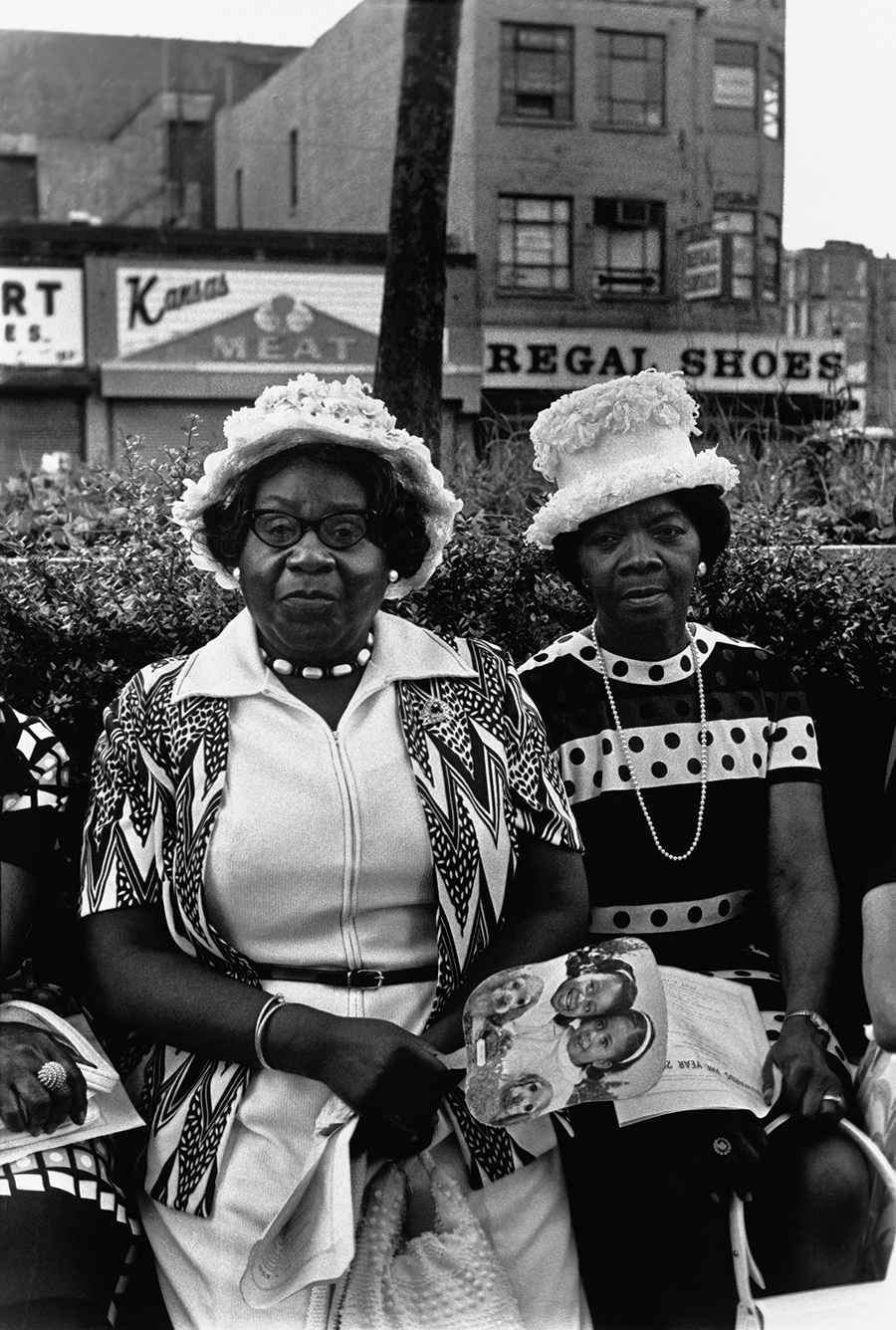
Ming Smith, “Amen Corner Sisters (Harlem, New York), 1977, archival pigment print, 24 x 36 inches. Image and work courtesy Ming Smith Studio.

Janice Bond first met Ming Smith ten years ago. In 2020, when Bond became deputy director at the Contemporary Arts Museum Houston, she started talking to Smith about a museum retrospective that has finally come to fruition now, after Bond has left CAMH to open her own space, Art Is Bond. Not content with “conceiving” a retrospective — as noted on the museum’s website — Bond organized a synergetic outpouring of Smith’s work. Thus, there are three Ming Smith shows currently on view in Houston: one in “a cruise ship,” as Bond calls the CAMH (the museum’s acute angles do resemble some kind of naval transport), and two in “boats”: her gallery and Barbara Davis Gallery. Bond wants to create “a critical mass around this historic moment” of different generations and economic brackets, even though the shows exhibit similar, or in some cases, the same work, albeit in different sizes. 

By “historic moment,” Bond means Smith’s largest museum show to date. But the moment is years in the making, and the context of the photographer’s rise to the museum level bears some scrutiny. It started through another artist’s sustained attention. In 2017 Arthur Jafa had a show at the zenith of art world visibility, the Serpentine Galleries in London. Jafa decided to share the podium with Norwegian collage artist Frida Orupabo, YouTube creator Missylanyus, and Ming Smith, who he championed as “the greatest Afro-American photographer ever.” Since then, she’s received a lot of attention in the gallery and the U.S. museum world, culminating in a recent lifetime achievement award from the International Center for Photography. Reaching this peak took time, and the institutional biases of race and gender are not entirely to blame, even though they are ever-present. Rather, it’s her curiosity towards all the disparate corners of the visible world a camera can capture that has made her an unlikely subject for museum attention, which oftentimes favors a sense of closure in a given artist’s trajectory. 

Smith started taking photos with her mother’s camera when she was five. Supporting herself with a modeling career, she gained recognition early on when Black Photographers Annual, a showcase book published by Ebony magazine, published her portfolio in the very first issue of 1973 and continued to print her photos in all subsequent editions. That same year, Smith had a solo show at Cinandre, a hairdresser salon doubling as a social club a couple of blocks from Central Park in New York. In 1975, she became the first and only female member of a Harlem photographer collective Kamoinge, alongside Anthony Barboza, Louis Draper, Alger Cowans, and others. 

Black and white photo of a young Grace Jones in a tutu

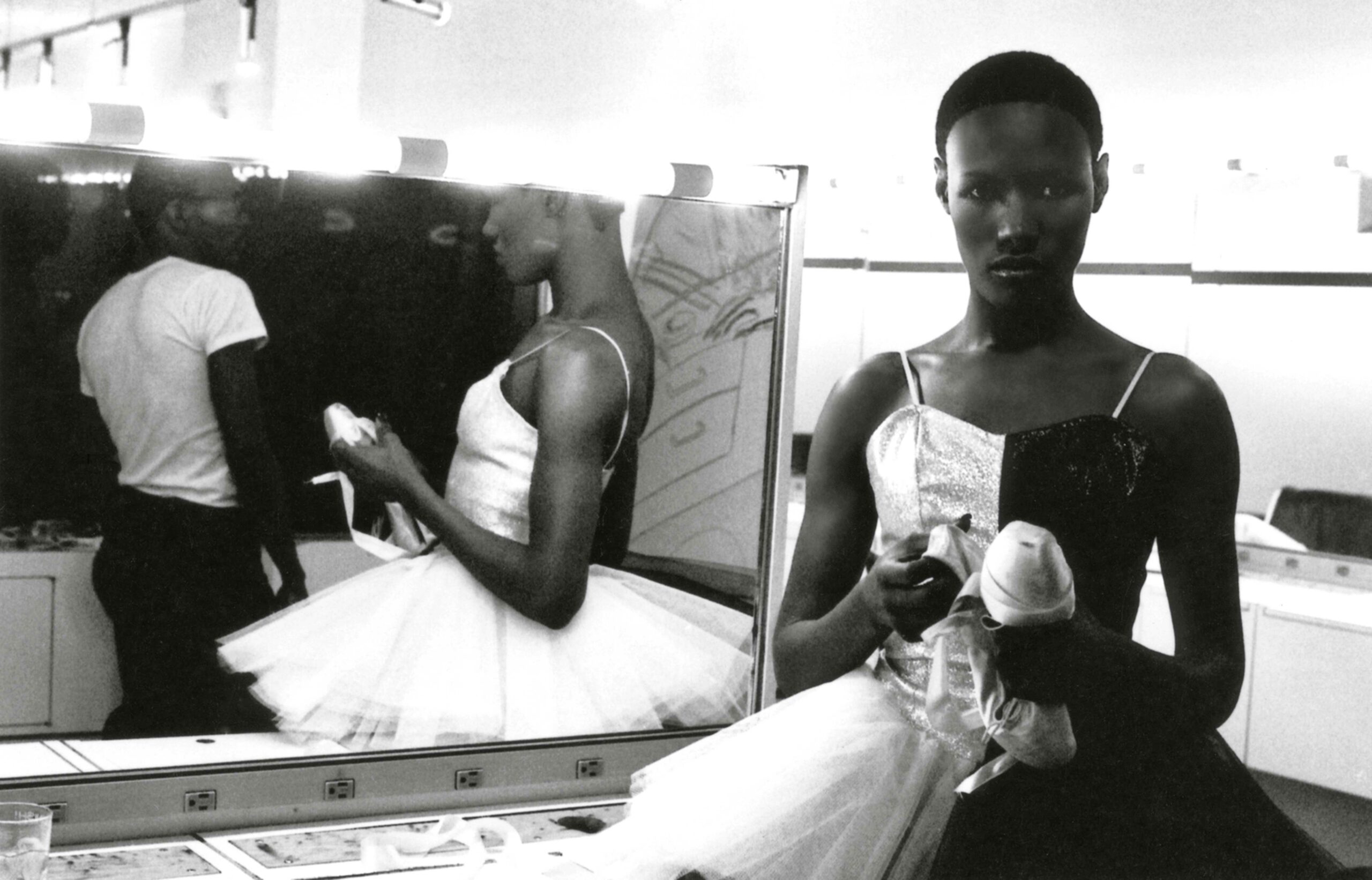
Ming Smith, “Grace Jones at Cinandre,” 1974, archival pigment print, 24 x 36 inches. Image and work courtesy Ming Smith Studio.

In an introduction to the Annual’s first edition, Toni Morrison saw the photography book as hovering “over the matrix of black life.” That phrase can describe Ming Smith’s unique position, too: she could be formal, going after urban texture in one moment and social the next, never stopping to box her intuitive orientation through geographies and scenes of Black life in a restrictive bottled message. The CAMH exhibition relays this lack of stilted logic perfectly, mixing iconic images from different eras and series with a recent video work in collaboration with her son, Mingus Murray, and a sound box with music from her ex-husband David Murray, which includes “Ming,” a title composition from his 1980 album that features her on the cover. “Ming is a dreamer,” Bond says, and the show is supposed to be “reflective not only of her work, but of the energetic process.” 

Smith’s moment in Houston may be historic, but the lightness of touch betrays no gravity, even when the subjects clearly “have something very heavy on their minds … sometimes so heavy as to be timeless, as in Ming Smith’s ancestral — and yet absolutely present — confrontation,” as James Baldwin noted in his introduction to the 3rd issue of Black Photographers Annual. Both as a model and Murray’s touring companion, Smith traveled through the States, Europe, Japan, and several African countries.

Unsurprisingly, she often gravitated towards music and photographed a lot of avant-garde jazz’s prominent players. These photos are unusual in that Smith allows for a lot of negative space around the figure(s), leaving room for random background ambience. This way a portrait becomes pictorial, not commemorative. Even when a figure is foregrounded, as in the case of Smith’s famous shots of Sun Ra, it dissolves into the air, making the legendary bandleader a cross between a Christmas tree and an alien pilot. Smith also befriended young Grace Jones and took playful pictures of her that could be placed among the very best in the performer’s vast visual biography. Smith’s interest in fiction has also led her to inhabit the world of playwright August Wilson’s characters for a series made in Pittsburg. 

Installation view of photos on white walls and a cube painted black with color photos

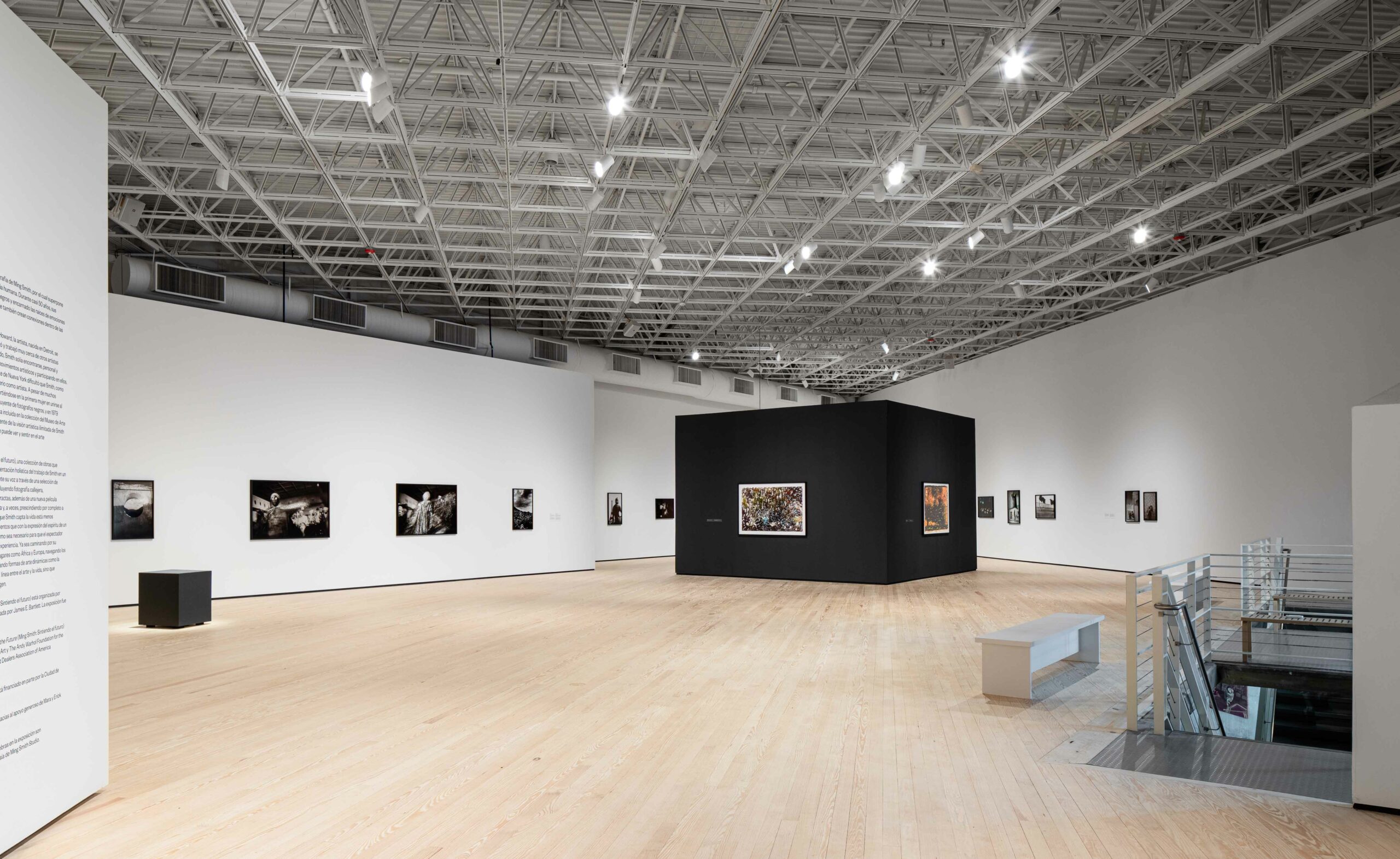
Installation view of “Ming Smith: Feeling the Future” at the Contemporary Arts Museum Houston, 2023. Photo by Sean Fleming.

A seemingly endless variety of subjects and topics makes Smith’s shows feel pleasantly observational. Photographers often have a fixed viewpoint, print size, and skew the horizon just so, but Smith follows no set recipe. This makes her hard to categorize. Photography is often evaluated through its weaponizing by controlling institutions. There exists a venerable tradition of understanding the medium through its use by the power in locations that need surveillance — the colonies, the cities, the market. Individual artistic choices in photography are seen, therefore, as fugitive from the types of profiling that the state or the corporation does. An artist who unveils the surveillance tactics in a gesture of Brechtian estrangement is also much more visible to the cultural systems of talent registration. That is why fellow female photographers Carrie Mae Weems or Lorna Simpson — while younger than Smith — have already had solo shows in multiple museums, including CAMH, in the 1990s, on the strength of their efforts to clarify the mechanics of racial profiling. This type of conceptual criticality finds exhibition opportunities much more often than anything elusive or painterly. 

Smith does not do estrangement, so to position her advantageously in the alternative bureaucracies of high art she needed a translation. Jafa’s involvement in Ming Smith’s career makes sense. He’s a quintessentially topical artist, and his politics is very visibly stitched into the images he makes or uses. Jafa volunteered to put her in the right context, and his reading of Smith in a 2020 interview for her Aperture monograph remains among the most incisive. “Black people get tight around photos,” Jafa tells Greg Tate, “because… there’s always a danger that the photograph can be used as evidence against you in some fashion.” In many of Ming’s shots, he posits, “you can’t identify anybody.” 

According to an Artforum review by Chloe Wyma, Smith’s work displays a “purported rejection of the medium’s probative burden,” but it also addresses the invisibility of its subjects. This is a topic that is central for much of Black photography, either conceptual or straight. Carrie Mae Weems notes in an interview that “black folks operate under a cloud of invisibility.” “Lorna Simpson,” writes Marta Gili, “analyzes the way in which we imagine the invisible through the visible, while unmasking the prejudices that accompany us when it comes to reconstructing what is not shown.”

Smith’s first art break came in 1979 with the sale of two photographs to MoMA after the museum hosted an open call. When asked by a MoMA curator to choose the shots herself, she decided on a portrait of David Murray, because she did not see a lot of black men on the museum walls. Later, Smith made a series called Invisible Man (1988-1991) in honor of the Ralph Ellison 1952 classic book, and took on societal blind spots, capturing people in motion, folding into darkness, or resembling ink smudges. The titular image of the series has become the centerpiece of a small MoMA monograph published in 2020. It shows a tall hunched figure plodding through the night snow. We presume the figure is Black, but it could be anyone lost in severe weather. 

Installation view of colorful photos on a dark blue wall

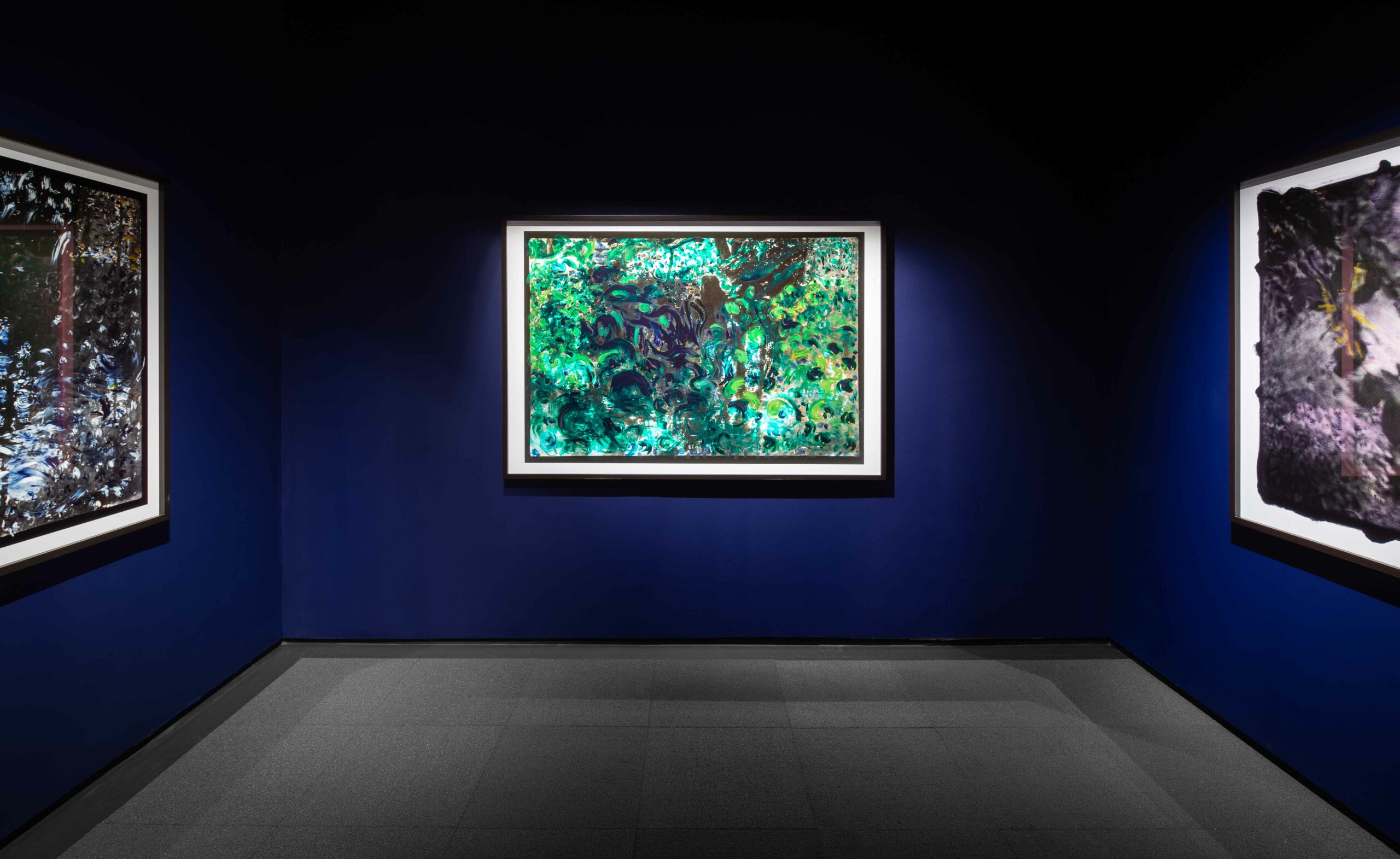
Installation view of “Ming Smith: Feeling the Future” at Contemporary Arts Museum Houston, 2023. Photo by Sean Fleming.

Surveillance and invisibility are concepts, though, and Ming Smith chooses movement over mind. One of the reasons she went to New York was to take dance lessons, as Ohio ballet schools did not allow Black kids. She’s been interested in Katherine Dunham’s modern dance system since the 1970s. Smith frequently compares photography to dance, saying both are states of extreme mental acuity. In an interview with Greg Tate, she said that her dark and textured nude studies were influenced by the dynamics of Auguste Rodin’s The Kiss. Movement makes itself present through the impressionistic ripple effect that she’s often after. Be it iridescent snowflakes or Sun Ra’s gleaming cloak, Harlem night scenes or strokes of paint that she often uses to enhance the image, Smith presses the shutter not to capture the fleeting moment, but to manifest its evanescence. 

Ming Smith: Feeling the Future is on view in the Arts Museum Houston through October 1, 2023. Ming Smith: Catching the Light is on view at Art is Bond and Barbara Davis Gallery through September 2, 2023.